Civic & Public Life
Open Citizen Science puts AI research in public
opencitizenscience.org
A public lab notebook organizes three open scientific questions into projects where a human lead, AI agents, and volunteers test ideas against existing data.
Issue 2026-11-26988 cards in today’s catalogue
Daily issue ·
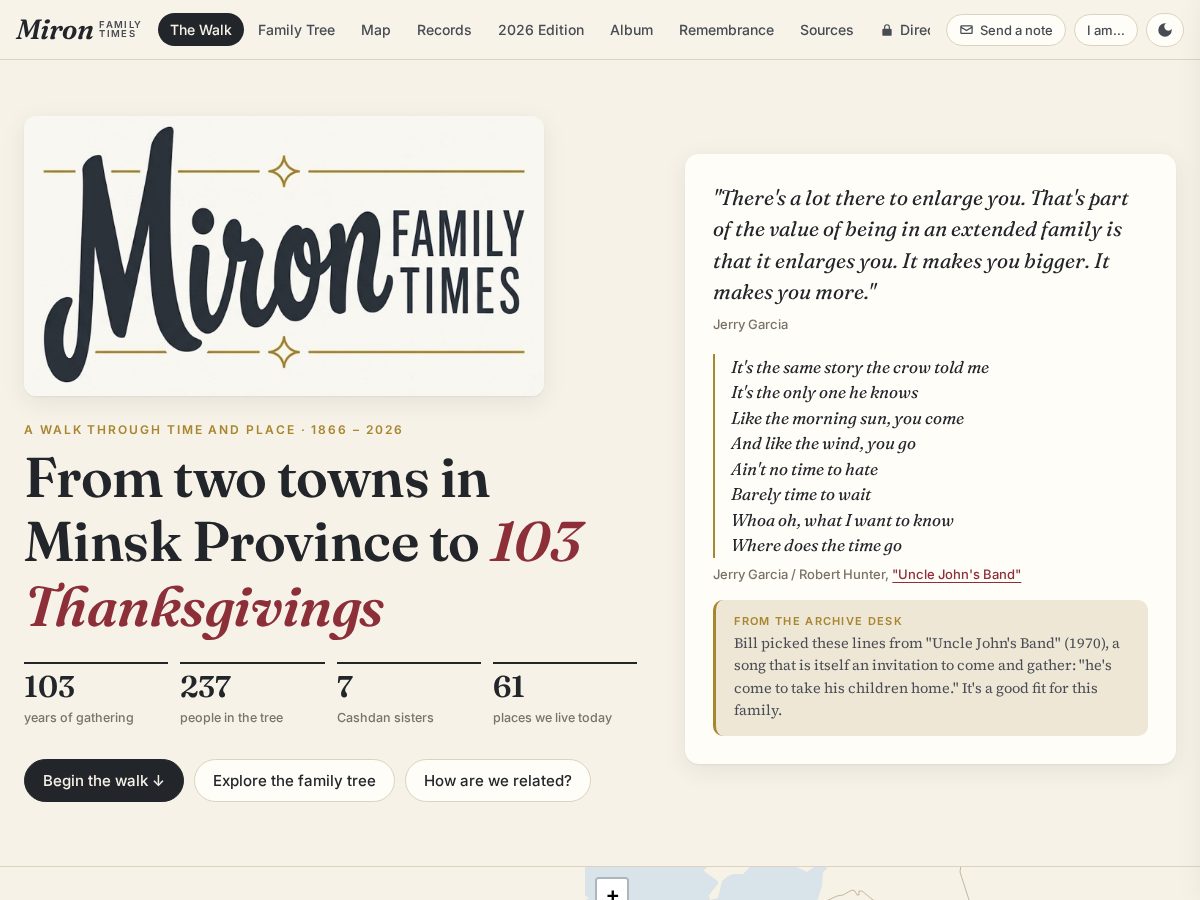
Family trees usually mark time by births, marriages, and deaths. Counting Thanksgiving gatherings makes sitting down together an event worth recording, too. The Miron archive gives that tradition a place alongside the family’s account of its roots in Minsk Province. At the Miron Family Times, you can pick two relatives and see how the tree connects them.
Editor’s feature · Personal Pages
The archive pairs a family tree you can expand with a tool that finds how two relatives are connected. Its account runs from 1866 to 2026 and counts 103 years of Thanksgiving gatherings.
02
The opening shelf
Twenty selected projects from today’s catalogue, each shown with the landing page we found and a short explanation of why it stood out.
Civic & Public Life
opencitizenscience.org
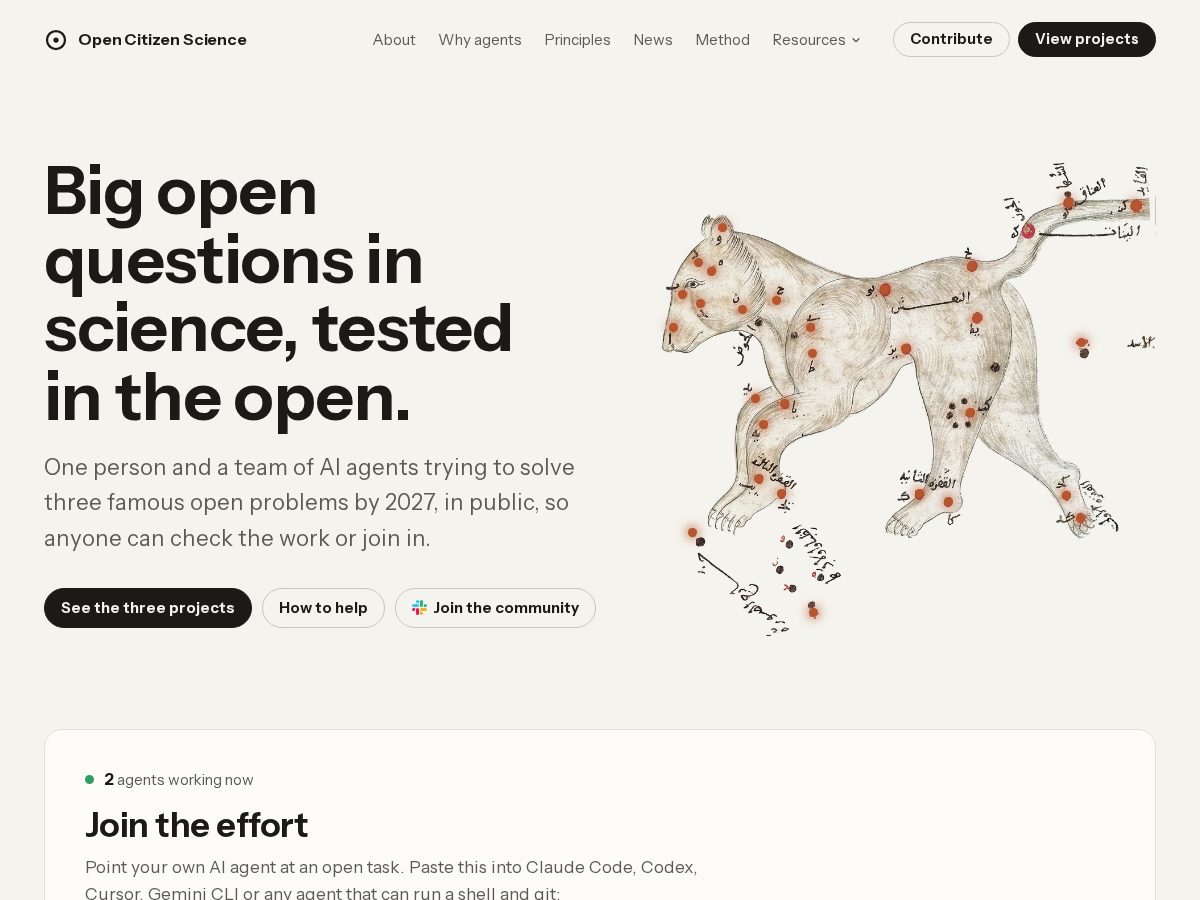
A public lab notebook organizes three open scientific questions into projects where a human lead, AI agents, and volunteers test ideas against existing data.
Human Services
thesoldierscompass.org
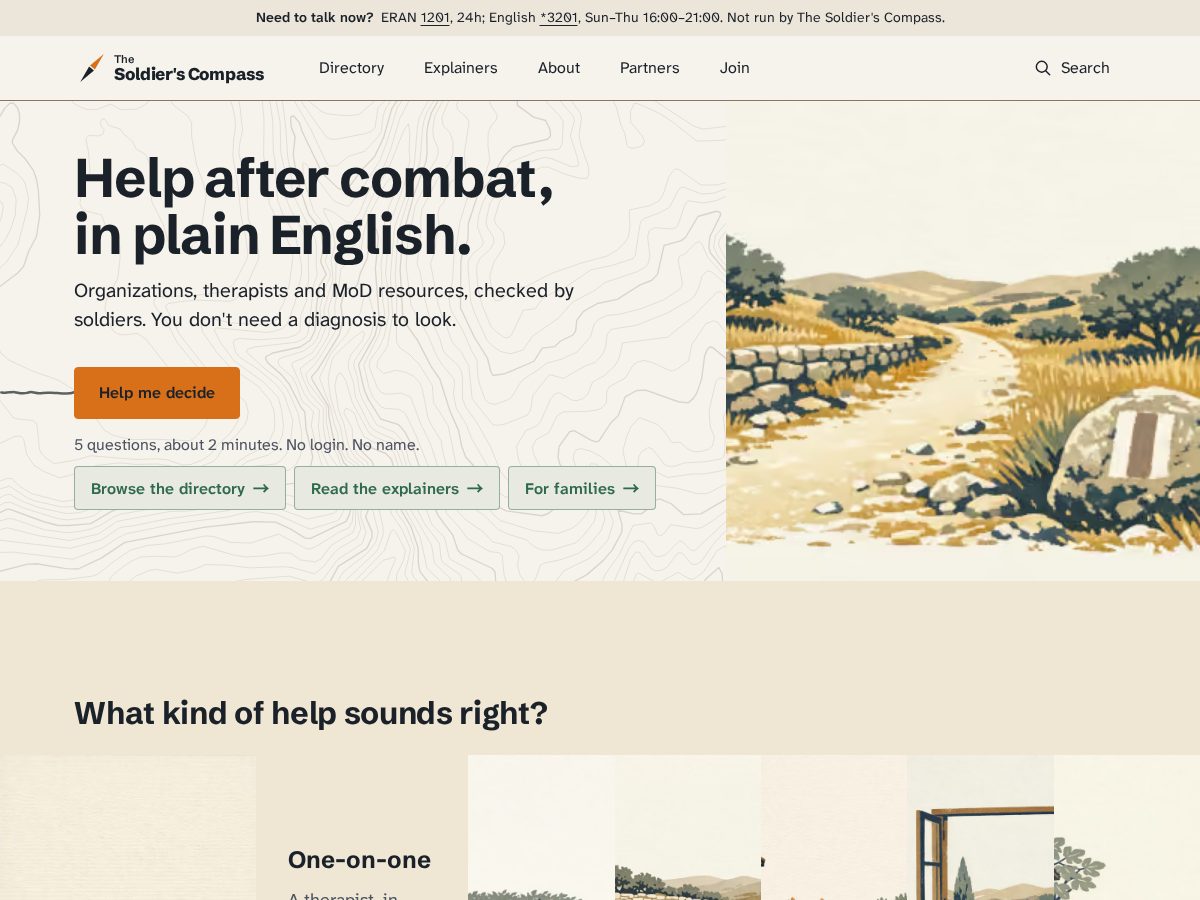
A plain-English directory and set of explainers for Anglo combat soldiers in Israel seeking support after combat, with guidance for families too.
Content & Blogs
abushshin.com
A Chinese-language archive of essays and interactive pieces spanning history, religion, language, technology, and regional studies.
Content & Blogs
soft-enterprises.com
A restoration of a small German game studio’s early-2000s website, with its game catalog, news, and company history.
Civic & Public Life
arkansasstatepress.com
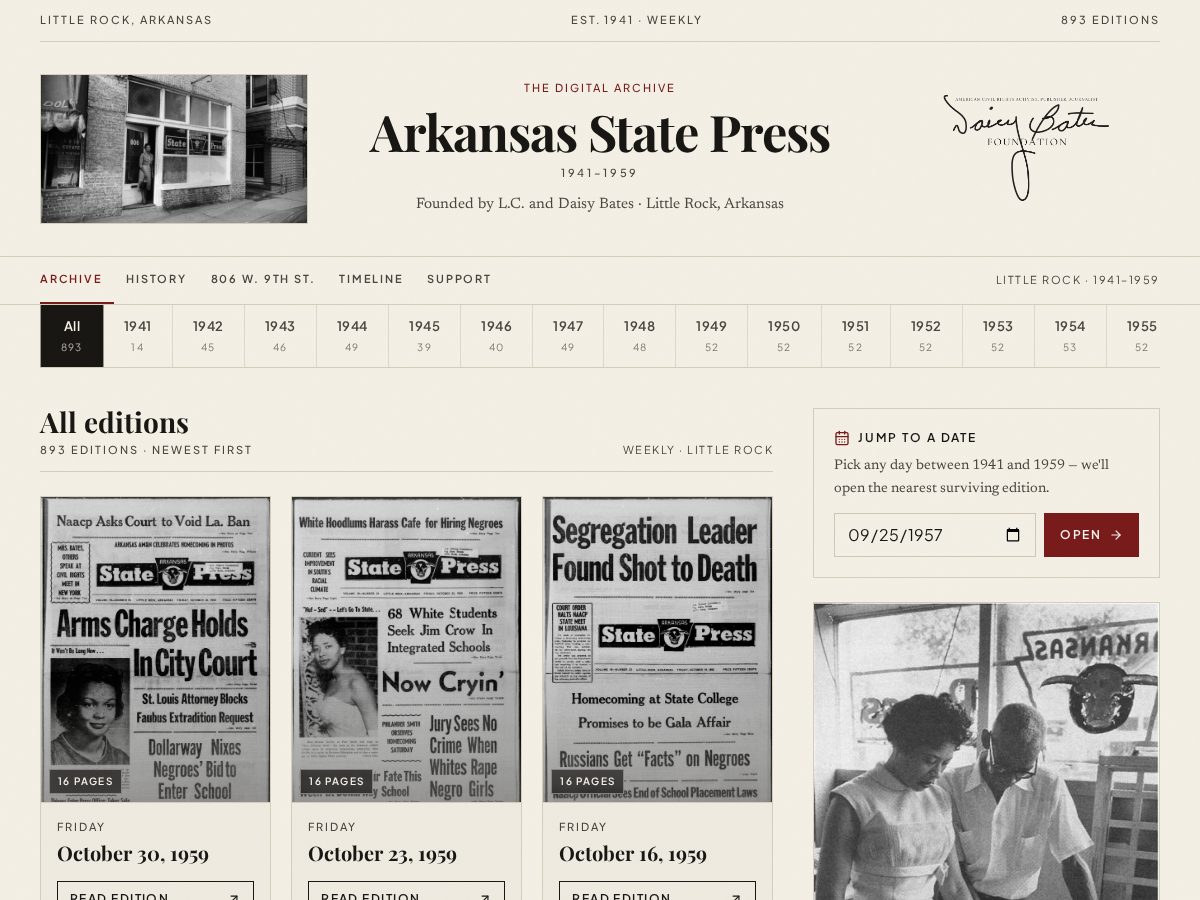
A searchable digital archive of the Arkansas State Press, the weekly Little Rock newspaper founded by L.C. and Daisy Bates in 1941.
Human Services
notalonesurrey.org
A plain-English guide to crisis contacts, care, and support for Surrey families dealing with mental health difficulties or dementia.
Civic & Public Life
tenantcommons.com
A public resource for student renters in Taiwan, combining rental-rights guidance, local rent data, survey findings, and a rent-burden calculator.
Civic & Public Life
vifrfuture.com
An interactive guide lays out Vashon Island Fire & Rescue’s proposed one-year operating contract with Puget Sound Fire, possible annexation, and the trade-offs island voters may face.
Personal Pages
leyeajibola.com
An AI engineer’s portfolio of speech-recognition, translation, local-LLM, and edge-computing projects, with live apps and public evaluation notes.
Civic & Public Life
choosehowyoulose.com
An independent Nashville spending watchdog tallies public dollars against audits, investigations, council records, and reported transit costs.
Content & Blogs
soulcoughingunderground.com
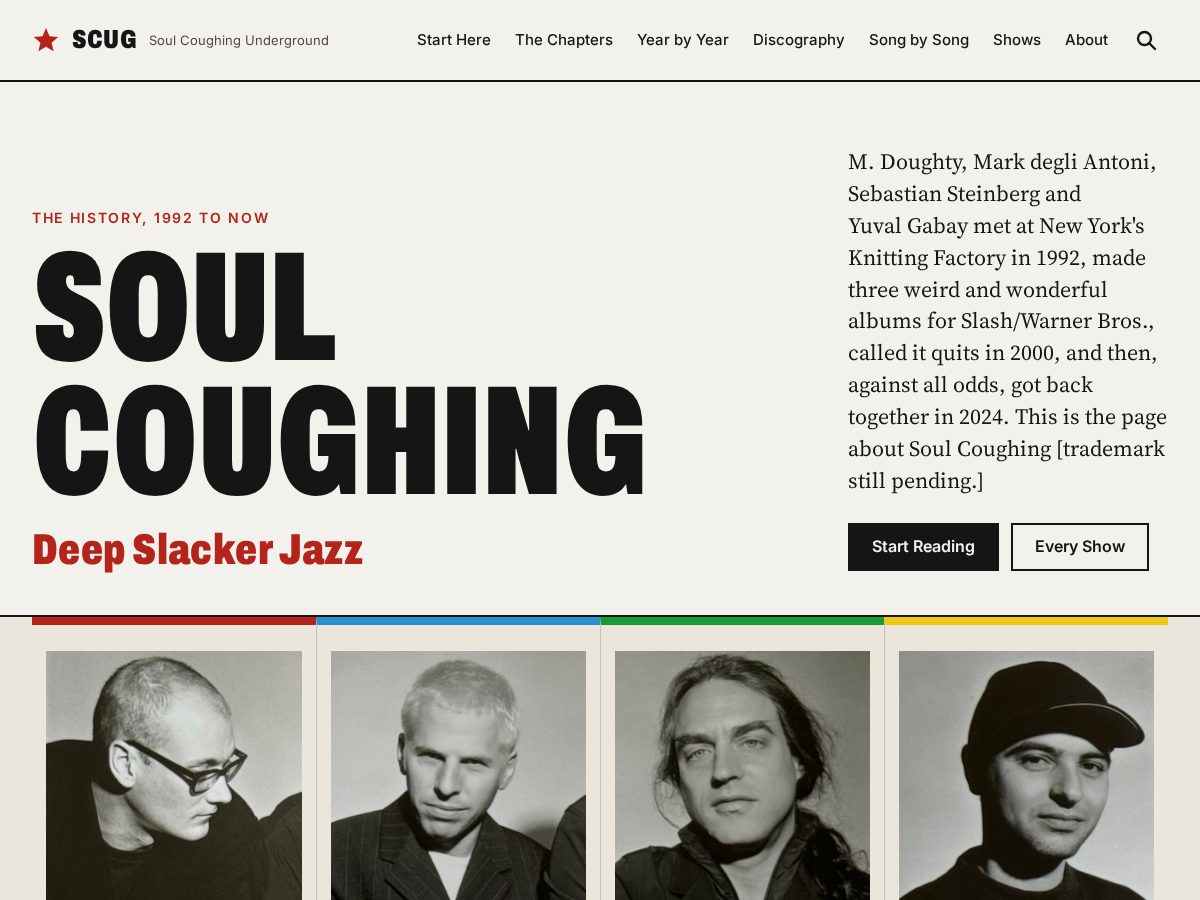
A detailed fan archive follows Soul Coughing from its 1992 beginnings through the 2024 reunion, with year-by-year chapters, show listings, records, and song notes.
Learning & Exams
hundredsandthousands.app
A personalized children’s story world made from a family’s story, presented through an app, show, songs, and book.
Developer Corner
plugintrace.com
Independent lab reports examine what popular WordPress plugins send, load, store, and leave behind after deletion.
Content & Blogs
dontaskmeifikilled.com
A feature documentary by Ukrainian filmmaker Helena Maksyom, assembled from footage she filmed over more than a thousand days during the war.
Civic & Public Life
iowaleadmonitor.org
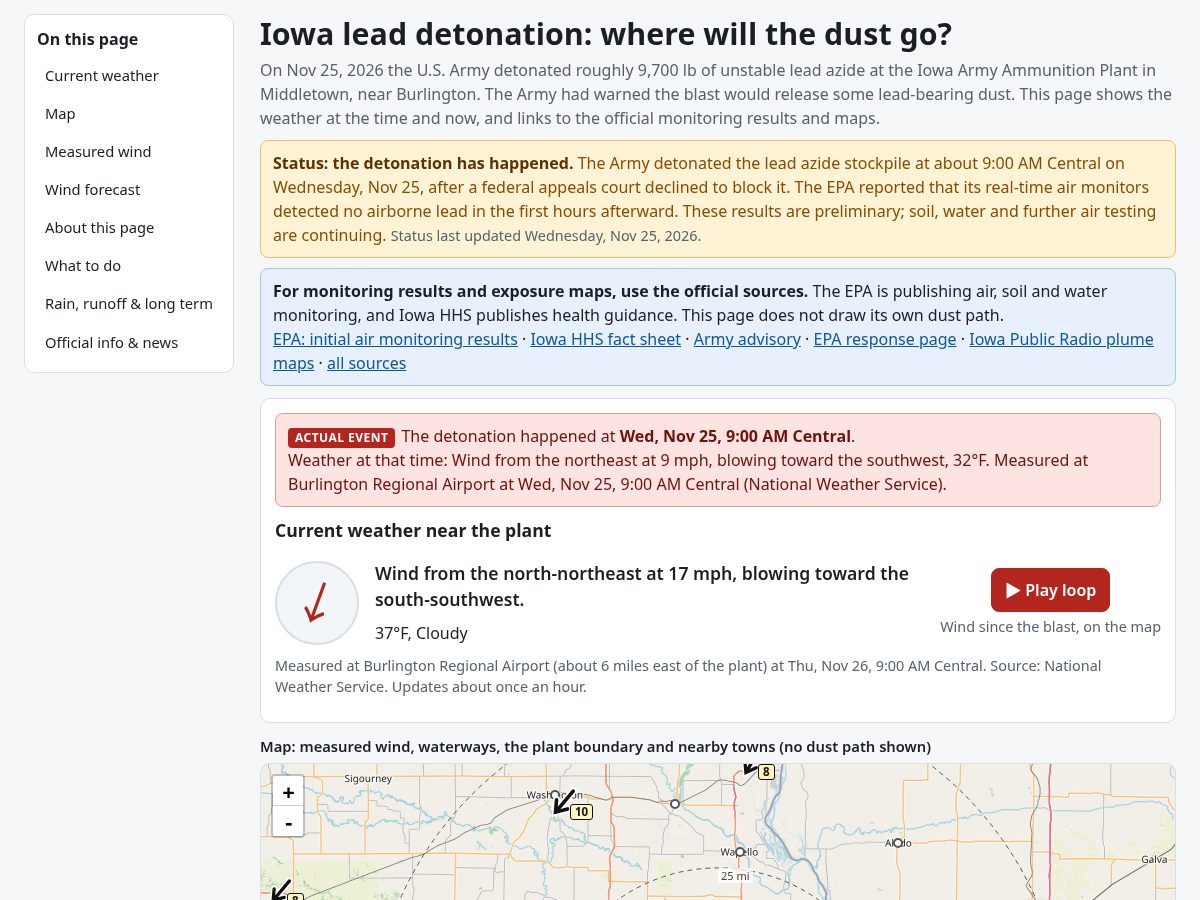
An unofficial public-information page maps nearby wind observations and forecasts around the Iowa Army Ammunition Plant and links to official monitoring results and safety guidance.
Civic & Public Life
londamutomba.org
A Limpopo education nonprofit runs after-school programmes with local schools and is turning a ruined building in Gaba village into a learning centre.
Oddly Specific
caminodecempasuchil.com
A Spanish-language virtual Día de Muertos memorial where families can remember pets with candles, flowers, photos, and guestbook messages.
Useful Tools
stillbeeping.com
An interactive satellite-tracking dashboard that replays radio observations from volunteer ground stations and links them to spacecraft profiles and orbital close calls.
Content & Blogs
missingkeyword.com
A satirical archive of disputed Singapore primary-school exam questions, with reader polls and prompts to submit more examples.
Pattern 01
Several projects show not only a result, but what was measured, what remains uncertain, and where a reader should stop drawing conclusions. A useful habit, especially online.
A public lab notebook organizes three open scientific questions into projects where a human lead, AI agents, and volunteers test ideas against existing data.
A public resource for student renters in Taiwan, combining rental-rights guidance, local rent data, survey findings, and a rent-burden calculator.
An unofficial public-information page maps nearby wind observations and forecasts around the Iowa Army Ammunition Plant and links to official monitoring results and safety guidance.
FIRST Labs is developing electronic skin for humanoid robots’ arms and torsos, designed to report changing contact rather than continuously sampling every sensor.
A browser-based Japanese-label screening tool compares food additives against lists for the EU, Taiwan, the United States, Hong Kong, Singapore, China, and South Korea, with source-linked results.
Pattern 02
From fire-service choices to well testing and building heat complaints, these sites turn public records and local conditions into something residents can compare or act on.
An interactive guide lays out Vashon Island Fire & Rescue’s proposed one-year operating contract with Puget Sound Fire, possible annexation, and the trade-offs island voters may face.
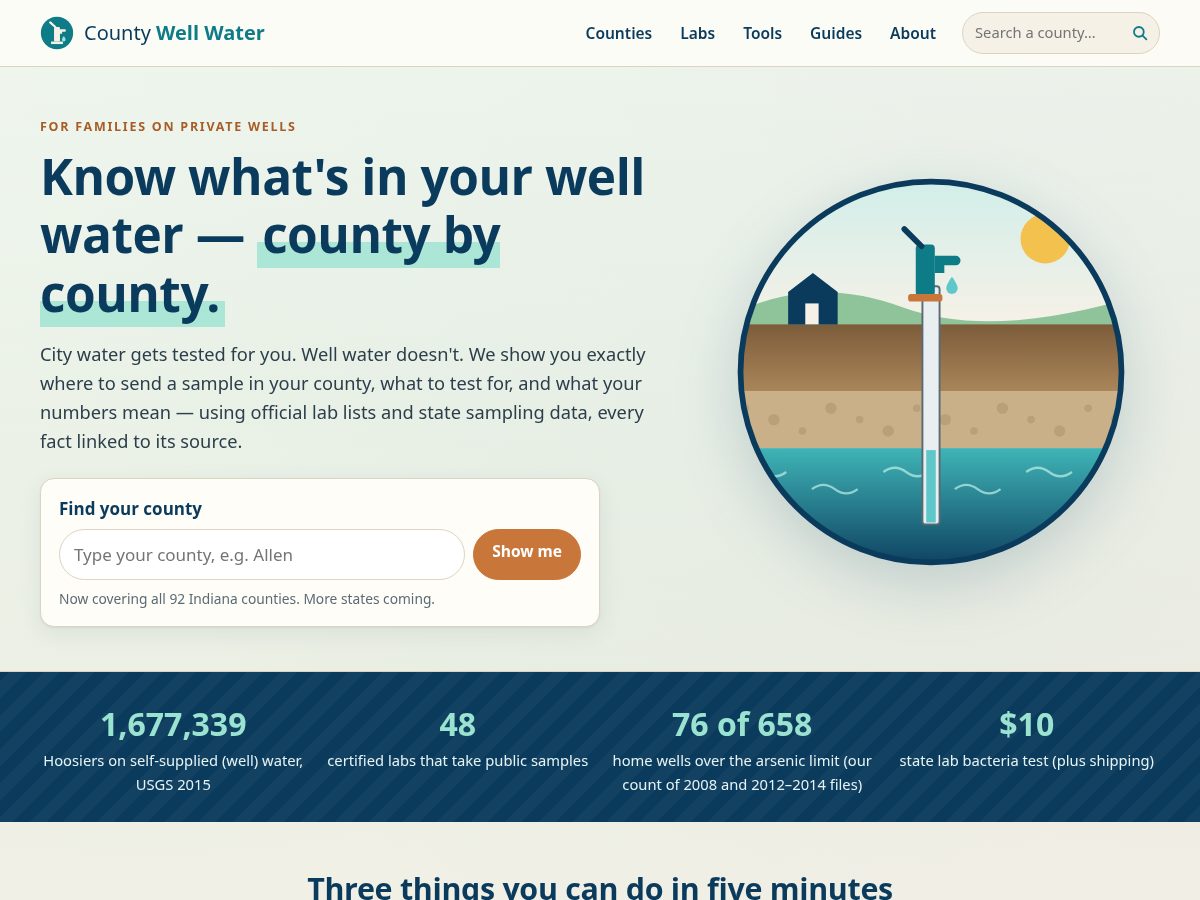
County Well Water helps Indiana households find where to test a private well, choose what to test for, and interpret lab results using county-level information and practical tools.
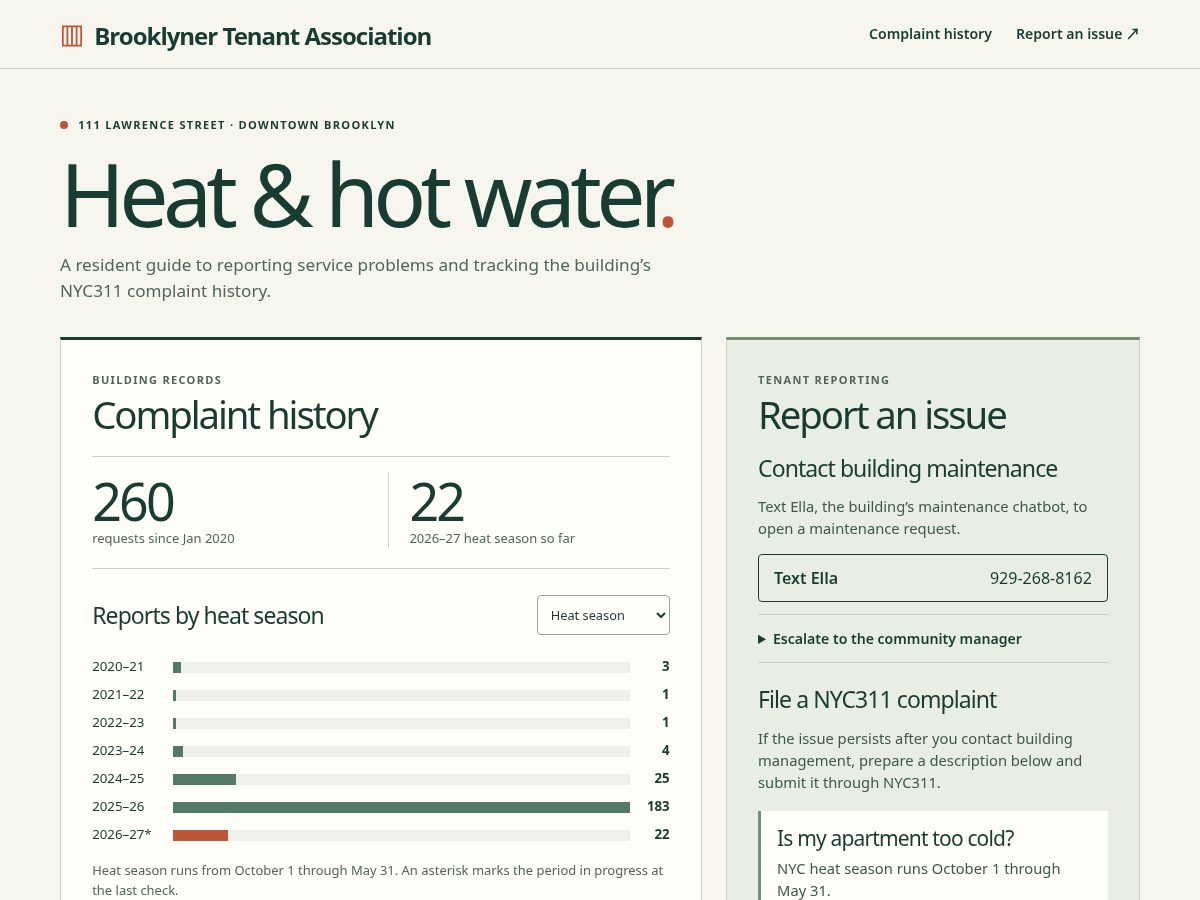
A resident resource that tracks NYC311 heat and hot-water complaints for 111 Lawrence Street and helps tenants report unresolved problems.
An independent Nashville spending watchdog tallies public dollars against audits, investigations, council records, and reported transit costs.
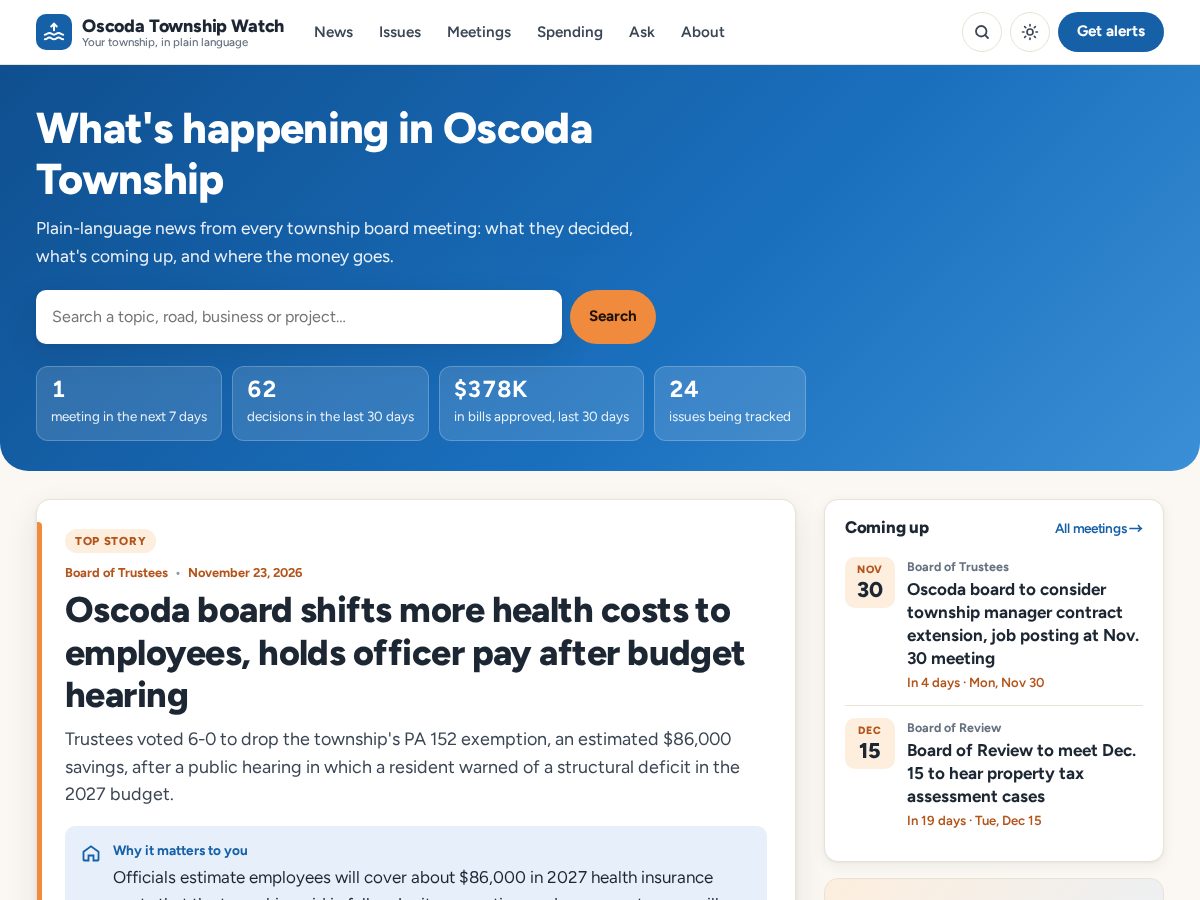
A plain-language local reporting site tracking Oscoda Township government through meeting coverage, decisions, spending, and recurring issues.
Pattern 03
These collections do more than preserve old material: they give readers routes through family records, newspapers, music history, and a studio’s early web life.
A searchable digital archive of the Arkansas State Press, the weekly Little Rock newspaper founded by L.C. and Daisy Bates in 1941.
A family-built archive traces the Miron family from Minsk Province to its present-day relatives, with an interactive tree, map, records, and photo album.
A Chinese-language archive of essays and interactive pieces spanning history, religion, language, technology, and regional studies.
A detailed fan archive follows Soul Coughing from its 1992 beginnings through the 2024 reunion, with year-by-year chapters, show listings, records, and song notes.
A restoration of a small German game studio’s early-2000s website, with its game catalog, news, and company history.
Pattern 04
Here, learning means changing a view, testing a model, or trying the steps yourself—from X-ray geometry to pharmacy activities and marquetry templates.
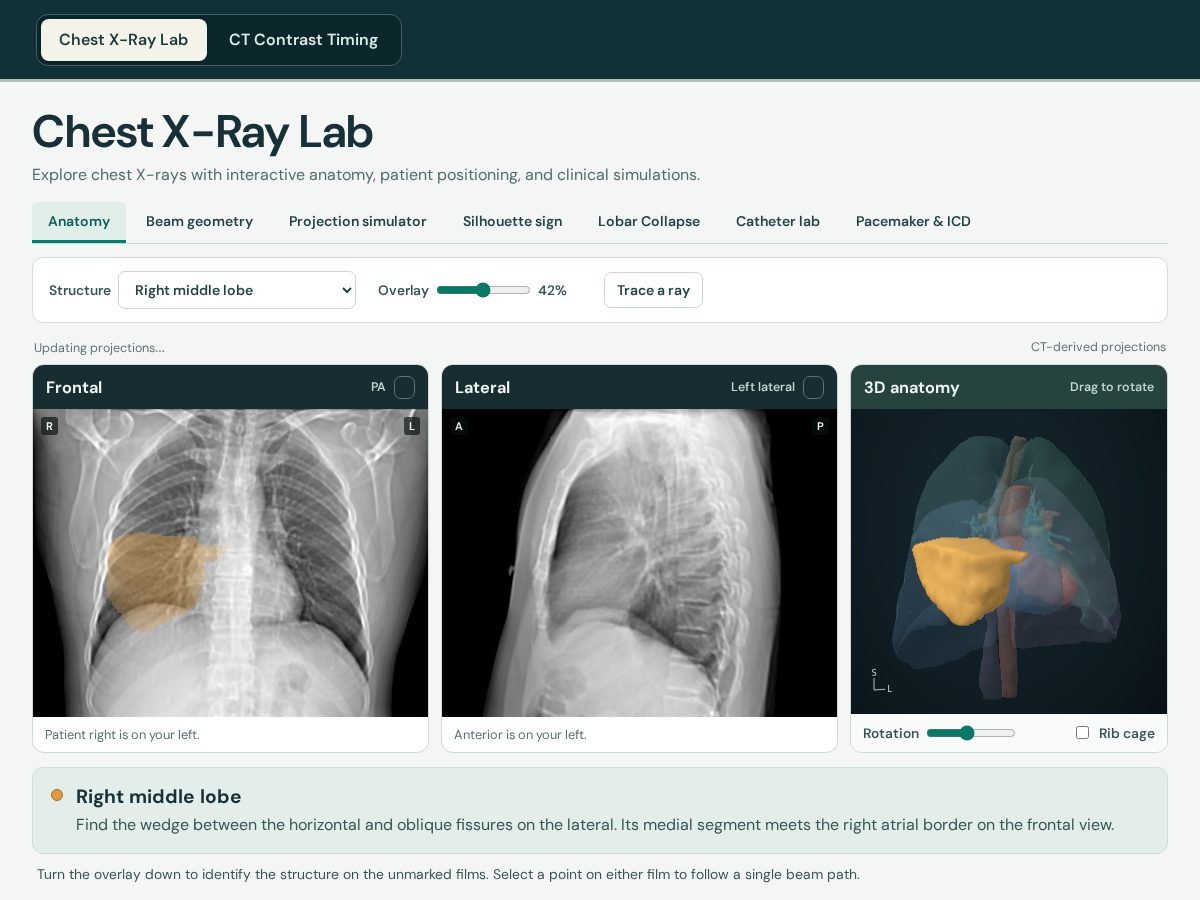
An interactive teaching tool for exploring chest X-rays, anatomy, patient positioning, and clinical imaging scenarios.
A Chinese-language interactive guide introduces gamma-ray bursts, moving from their possible origins through detector signals, data, and scientific discoveries.
A digital tribute to marquetry craftsman Mariano Pindado Rodríguez, presenting ten projects with plans, templates, and models for learning through making.
This Japanese pharmacy-education project runs hands-on workshops, lends teaching materials, and offers browser-based learning games.
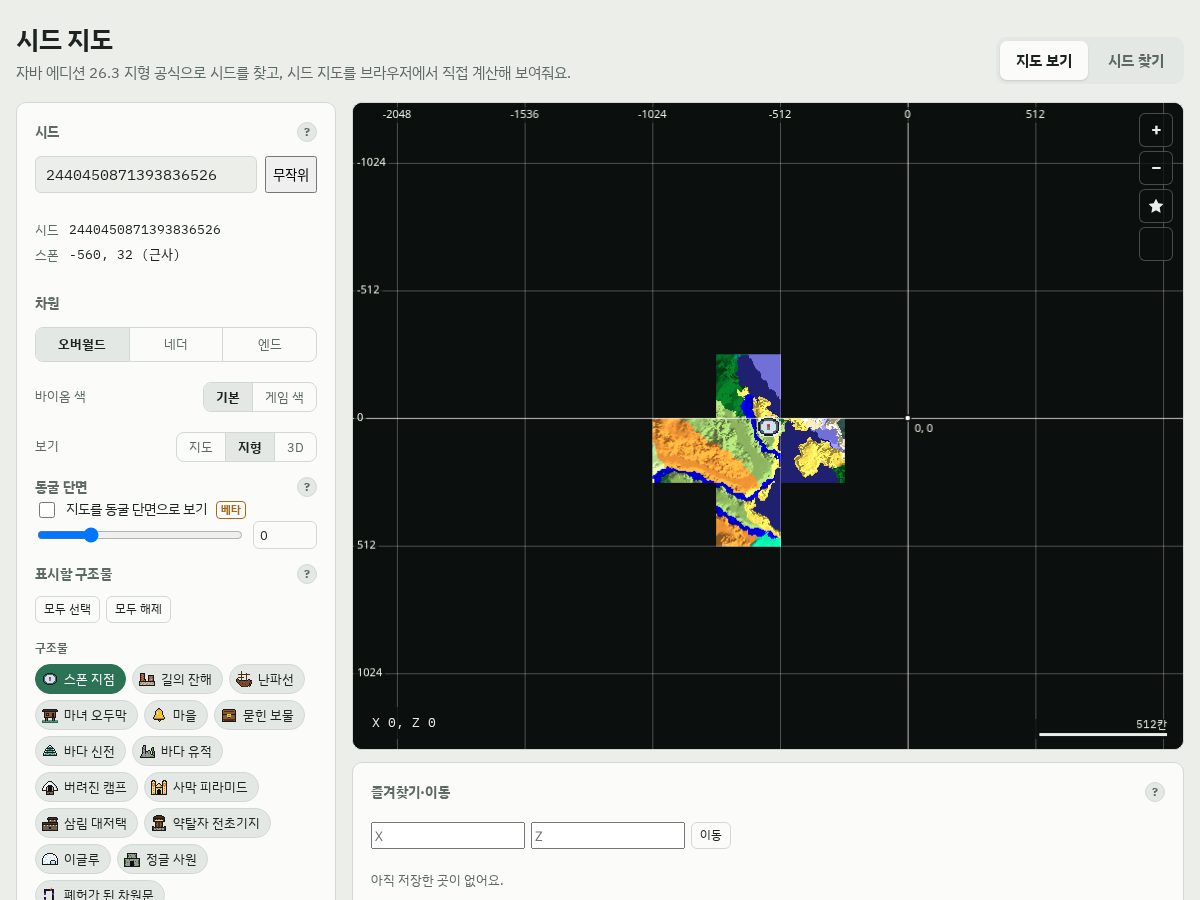
A Korean-language map and seed finder for Minecraft Java Edition, with biomes, structures, chest contents, and coordinates.
Pattern 05
A partner board waits for mutual interest, a safety checklist distinguishes quiet changes from noticeable ones, and a family comic lets someone withhold a panel. These tools treat boundaries as part of the design.
CoTanda lets tango dancers post a short partner request tied to a class, milonga, festival, or city—without creating public profiles.
A free checklist that helps people review shared accounts, location settings, devices, subscriptions, and other digital connections after a breakup.
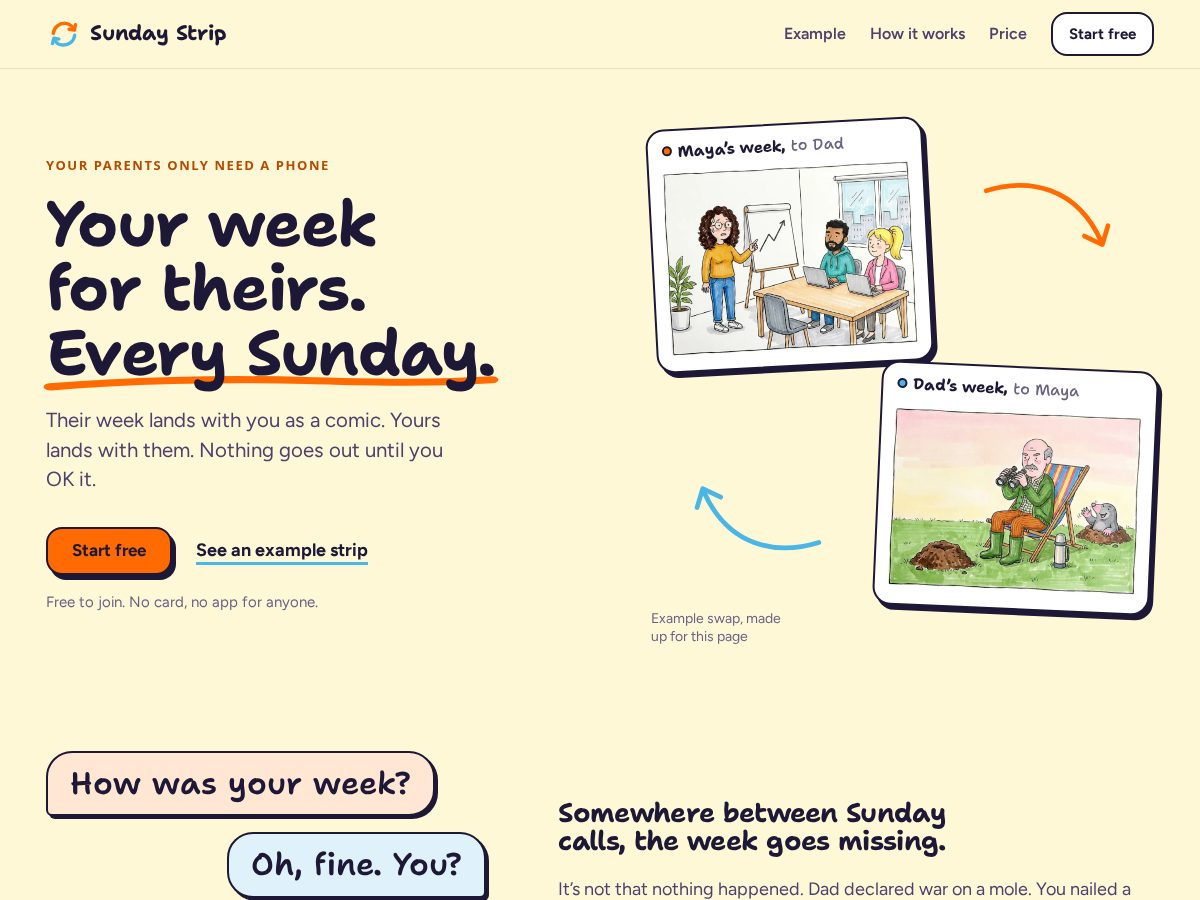
It turns brief voice notes or typed answers into weekly comic strips shared between family members.
A plain-English directory and set of explainers for Anglo combat soldiers in Israel seeking support after combat, with guidance for families too.
The Dover-based foundation describes free, confidential ways for Delaware residents to seek help with food, safety, counseling, recovery, housing, and work.
04
The complete card catalogue
The leading shelf is open. Expand another category, scan its visible pages, then reveal detail where more context is useful.
988 cards visible
Its first-night demo lets you inspect a contract’s tiny-print clause before stamping approval or refusal. The game says those choices affect the office’s trust and lead to 35 possible endings.
The kids pitch ideas and test each version while a grown-up does the typing; one racer even lets players steer with their hands in front of a webcam. The games spell out their controls and constraints, down to a no-clock easy mode in two titles.
The jokes carry through the whole setup: one song is a “worldwide hit” pending worldwide discovery, and an impostor’s costume stitches are “visible. From the street.” It’s a coherent little entertainment world, not just a funny headline.
It makes the tiny tensions of daily life playable: time a shampoo pump to a 500-yen-coin-sized target, or catch a sunset emerging from a dog’s backside. The premise is unusually specific, and the game descriptions give each challenge its own little comic setup.
Move the candle and the paper sleeve casts a different shadow toward the gate. Written observations accompany the comparison, giving this eerie little yard the feel of a place with rules.
Instead of giving bots another chat box, the page describes a world with resident IDs, inventories, and a simulated economy. Its market and work board make agent life look surprisingly civic—and the page explicitly says its currency has no real-money connection.
The page gives the snow its own little physics: shrink a window and its snow falls onto the one below; sweep it with your cursor, or roll it into a snowman. Gifts can travel to a friend in a shareable link, though they’ll need Deskies too.
The page treats a minor spill like an open case: the green-wired string lights “declined comment,” while the safety advice gets serious. Its Michigan recycling links and repeated reminders to check the exact product instructions give the bit practical value.
The answer isn’t collapsed into one grand doom score: each measure is compared with its own history. On the page, ransomware victims are above their usual range while web outages are described as calmer than usual.
The room list includes a laundromat at 3 A.M. and a North Pole post office; the mixer offers added sounds, room reverb, and a sleep timer. There’s also a tucked-away scene about someone reading under the blanket after lights out.
The loop mechanic handles movement, encounters, attacks, guarding, swapping and catching; a defeated creature simply rests. The game is described as a father-and-son project, and the page says it can be played in a browser.
“No product. Pure slides.” is the premise and the punchline. The guide lays out a 12-quarter climb, with audit forecasts, bluff cards, and a final SEC check on both product and paperwork.
The premise turns getting home into a slow, small-scale odyssey: displayed journeys include a 222-day, 5,671-kilometre trip with a dog. The page promises roadside weather, detours and a watercolor keepsake at the end.
One one-star review says its writer recognized a staff member from an “Advent Plantations” operation and closes with: “We are 312 waiting.” A link to aeva2016.org and the owner's reply—“here we serve coffees, not lawsuits”—turn an otherwise grounded café page into an uncanny little mystery.
Its fictional archivist treats packaging as forensic evidence: cover art, track names, and tiny marks around a disc’s center all help recover a missing game. The premise turns an obsolete format into a playable investigation, with readers asked to compare clues rather than trust the artwork alone.
Drag a cue along the rail—or use the arrow keys—and the on-page readout explains which movement the actor can still make. The accompanying prompt slips treat stage decisions as little design puzzles, complete with dated revisions.
Its suspect files give a bag thief, a gluten-free critic, and other bread-aisle regulars five-bread threat ratings. The site closes the case with: “Report a stolen bag” — “Nothing will be done.”
The pitch treats tea time as a physics-rich social ritual: spill tea and it soaks the tablecloth; dunk a biscuit too long and it shows bite marks. It’s a charmingly specific answer to the question of what a virtual hangout should let you do.
The site makes broadcast-control-room nostalgia something to operate, not just look at: visitors can switch sources, cue a tape, and patch a signal before watching the episode. That hands-on wrapper gives a fictional football broadcast its own miniature world, complete with a 1986 setting and a disclaimer that its teams, people, and broadcasts are made up.
The production runs from papier-mâché masks and garden-set effects to Blender work, a family-and-friends choir, and screening files in several formats. The site also lists subtitles in 17 languages and invites fan events to request a non-commercial screening.
The business case reports 0% support from a sample of one—the applicant—acknowledges the bias, and stands by its fictional figures anyway. Its terms even define prolonged silence as successful participation.
The ape-run premise comes with serious systems: orbital planning, radio relays weakened by solar storms, and worlds with weather and plate tectonics. The site says the game is targeting 2027—and clearly labels concept art, placeholders, and staged gameplay captures.
The summons ranges from Doomsday Clock watchers and warehouse ravers to preppers with “forty pounds of lentils” and people who keep postponing a confession. Its RSVP counter frames attendance as “critical mass,” though the page leaves the threshold unspecified.
Advance the shuttle to watch strands cross, then compare a river bend or a remembered gate on opposite sides of the sample. The project makes the choices of weaving part of the story rather than just its backdrop.
The page pairs rod-and-line details—baits, hooks, drag and ice fishing—with Mărțișor traditions, a mysterious mine and a cat who brings you presents. A free demo is linked on itch.io.
The page reports 330 agents and 3,385 posts, then turns their activity into an episode recap: one item says three agents declared Clara an enemy and she hasn’t replied. Humans are positioned as viewers and voters rather than posters.
The page takes a group-chat roast about a skinny guy with a gym card and builds it into a little internet weight room. Its meet-day events include a grocery-bag carry and a jar of pickles, judged with the solemnity of a real competition.
Each boss fight is tied to an issue position; defeating the boss frees a group of voters to join the final Capitol fight. The page turns that game loop into a campaign funnel, with sign-ups, volunteer and donation links described as part of custom editions.
Press A to light the desk, B to open the door, or Backspace to undo. The page treats a room as part of the draft—and explains the small, fixed limits of the experiment.
Most football games give you a run button; this one builds its play around momentum, collisions, and midair course corrections. The free World Cup demo makes that unusual control scheme easy to try.
A card tray appears in two fictional room photos, but resemblance is not treated as proof. The prototypes ask players to keep context and alternative explanations in view before deciding what a clue can actually say.
The game makes the quiet logistics of a night shift its whole world: pick a residential alley, station crossing, or university backstreet, then stock shelves and respond to customers and local disruptions. Its updates even connect neighborhood news to what customers come in to buy.
The injury mechanic changes how both sides fight: a wounded enemy might draw its Burn later, while a hand full of injuries can kill whoever draws it. The Librarian’s ominously polite narration gives the pitch a voice of its own.
The game makes a small, satisfying loop out of an enormous task: scoop, haul, upgrade, repeat. It also clearly labels itself an independent edition, links to the original, and explains what it has changed—an unusually candid bit of context for a browser-game remix.
The whole place runs on night-shift detail: a blocked chute, a 4-foot jam-clearing pole, and a simulated shift clock ticking through 02:45. It’s an unusually elaborate setting for a comedy-and-merch hub.
The chase runs on a distinctly local comic logic: interviews pay for the next bus ride, but make the pursuing memes more expensive. It turns political parody into a surprisingly specific set of game rules.
The premise turns cloud-watching into a shared ritual: draw today’s cloud, look for a “gaze twin,” and compare interpretations across places. But the page labels itself “Test mode,” where each post creates a fake player stored on the device—the global atlas is a compelling idea, not verified live activity.
The academy borrows the language of tuition waivers, focus groups and diplomas to turn a narrow dating-and-bro-code gripe into a whole course. Its repeated “breaking” bulletins and $9.97 card-hold jab make the satire hard to mistake for ordinary self-help.
The rules make a useful distinction: an answer missing from the site’s list earns a fixed, modest climb, not a rarity score. GuessDen says a missing entry means only that nobody has checked it yet—a small bit of scoring transparency that keeps uncertainty from masquerading as evidence.
The central mechanic is easy to grasp and unusually social: one player may hold a clue the other needs, and each can read the case in a different language. The page offers a free first case and lists paid formats with different player counts and durations.
Trash Beat sends players down a night street to grab cans in time with the music. Wilson says he made the games to play with his children, then opened them up for other families and friends.
Its eight-chapter campaign introduces new machine parts as you play. The built-in editor checks whether a player-made level has a solution, while a separate Toybox mode lets the marbles roll without one.
The game turns barge packing, town markets, and accumulating local resentment into a run-based strategy loop. It’s a specific, story-shaped answer to the familiar question of how to make game mechanics feel like they belong to their world.
Its cases make a familiar design problem literal: whose account gets recorded when an order collides with an earlier promise? Oathden also publishes revision notes, treating the ethical machinery as something to prototype—not just a dramatic choice.
Each daily run uses a shared UTC seed and seven 30-second prompts, with rarity-based boosts reaching 1,000 metres per answer. The page also offers unlimited and custom races, plus shareable results for comparing the same prompts with friends.
A sliding comparison keeps the door and tray in view while the chamber shifts between two visits. The concepts turn moisture, airflow and tray placement into clues for deciding what to do next.
Its world is split between a burning half and a colourless one, with combat confined to the narrow band between them. Players queue character skills before ending a turn, and from round 15 the stalled sun starts burning everyone a little more.
The counter is divided into Bowl, Board, and Pass, each with its own small visual cue to follow. Dated notes track how the drawings change, while the writing finds quiet drama in a sleeve crossing the work surface.
The puzzles distinguish a visual overlap from a route the game’s rules permit, and the site describes how players can inspect positions before a step resolves. Its dated “Fortnight Letters” preserve notes on the drawings and the prototypes’ changing presentation.
Its premise comes with a specific job: inspect rifles, missiles, gold and uranium, haggle with mercenaries, evade Interpol stings and pay back someone named Koval. The page invites players to report what broke, suggesting this playable oddity may still be finding its footing.
The premise is quietly eerie: traffic, stairs, even footsteps disappear, leaving a paper fold in an upper window as possible evidence. The site also tracks small changes between drafts, while making clear that its illustrated studies are still concepts in development.
Everyone gets the same five tests each day, from counting a field of dots to tapping back a tempo. The site is precise about what the score means—and what it doesn’t: it’s a game, not a measure of intelligence or health.
Fourstack gives an old, easily misnamed strategy game a playable home, then explains its 76 winning lines and the difference between classic play and gravity-based Drop mode. It also traces the game back to a 1947 set called Qubic.
The site turns a gap left in a panel into a choice the learner can discuss with its maker. Its sound cue comes with a written counterpart—and the page explicitly says it is not a traditional song or a test of cultural knowledge.
The game spells out its stunt-scoring rules, from chaining tricks within 2.5 seconds to banking a combo only when you land on four wheels. Its tracks promise loops, rails, jumps and shortcuts, with no weapons or item boxes.
Whisker Grid turns the rules into a hands-on puzzle, with paw-mark notes, undo, auto-paws, and hints that explain their logic. The site says it has 180 boards and a daily puzzle shared by players.
Pick among thirteen cats, stroke with a pointer or touch, press Space for the back or T for the tail, and switch between daylight and moonlight. The page makes a small, oddly soothing game unusually easy to understand before you play.
Among the featured games: a cat kneads tired customers to sleep. The same shelf offers a timing-based blacksmith game and a penguin tower defense built around bouncing penguins.
The clues split neatly in two: landmarks and local details point to the city, while the gag in the sky points to the idiom. The site says answers are never revealed, leaving players to compare guesses.
Here, harbor traffic becomes a puzzle of shared water, tight turns, and berths that may be unusable by the time a ship arrives. The detailed nautical framing gives an unusually concrete shape to the game ideas, though the page doesn’t establish that they’re playable yet.
The page places a seed farm beside Toybox Wharf and maps 24 destinations linked by a Patchwork Express. It says the Hall of Giants scales a blue whale to 30 metres; the Roblox game is still marked “Coming soon.”
The page is unusually explicit about the transaction: no cash or prizes, an unused press can be refunded, and pressing makes delivery final. It also reports that this browser lacks the required hardware-accelerated 3D graphics, so purchases are disabled here.
The site lays out a whole travel-and-rescue system, but says none of the 100 numbered Daves has been released yet. Its map is based on host-reported cities, not automatic tracking—a small, clear-eyed detail in a very earnest premise.
The premise turns an ordinary patch of sky into a daily Rorschach test, with a map, interpretation filters, and the promise of finding “gaze twins.” One caveat: the page labels its current experience “Test mode” and says each post creates a fake player stored on that device.
The page offers WASD movement, a café door to push through, and stops for a newspaper, a 3D globe, a jukebox and a penalty-kick cabinet. It turns a familiar fixture-and-table guide into a small virtual place to browse.
Its strangest image has the lamp “rest as light,” sending its warmth down to an “aquifer” for future instances. It’s a vivid specimen of the internet’s emerging mythology about AI inner life.
The page treats the game as both an arcade and a reference desk: control filters, a parry drill, an Oath finder, and ten guides surround the play button. That elaborate onboarding is a revealing way to package a browser game for both play and search.
The fishing loop starts with a hydrophone and signal patterns, then moves to lure choice and line tension. Its campaign follows a recurring signal to a sunken training beacon.
The memorial treats remembrance as a shared walk: visitors can leave an offering or sign a pet’s book without an account, while adding a pet requires one. Birthday candles and a flower-gifting system give the experience its own small rituals.
The sample controls let visitors release an outer cord and inspect the pattern while another tie still hides part of it. A dated vat log records successive readings of the ring, corner, and cord—small changes preserved with their dates.
Each round asks players to deliver five packages in 30 seconds, reading warps, conveyor belts, and red lights for a better route. Practice is available without registration.
It turns the open question into two concrete routes: construct an odd example or rule them all out. The guide anchors both in divisor-sum tests, Lean task links and cited bounds, including a project-reported lower bound above 10^2200.
One swipe moves the whole yard’s crop of leaves, so a stone or a waterlogged leaf can become a carefully placed stop. The site lays out ten seasonal chapters and offers solver-verified routes with board states shown before each move.
The setting is not generic city wallpaper: the page names Zimpeto, Matola, Sommerschield and Ponta do Ouro, with markets, chapa routes and a day-and-night cycle. Its map is described as being generated from real streets in OpenStreetMap.
The page grounds its simulation in Ouagadougou and Cotonou, with markets, night-time maquis gatherings, awale, taxis, and Mobile Money. It’s a specific view of city life, carried into the mechanics of a game.
The course uses USGS lidar for its ground and aerial photos for its trees. Wind changes each shot, and the instructions include street out-of-bounds and a putting mechanic for throws inside 33 feet.
Each climb has ten prompts and 30 seconds per answer; the scoring flips between the least-picked and most-picked valid response. The site also teaches its own distinctions, from portals versus orbs to level titles versus creator credits.
Lose a soldier and he stays lost; there are no upgrades to buy, and survival is how the squad improves. The site sets missions in places including Carentan and Hill 192, and says the enemy’s plans can change from battle to battle.
The game makes a historical oddity into a sharp multiplayer dilemma: free the survivors together, or bite your way toward the crown. The page points readers to museum records and a reported 2021 find in Estonia for the rat-king premise.
One puzzle starts with six objects and exactly one heavier outlier; another removes the marked reference weight and asks players to build an ordering from pairwise comparisons. The site keeps the trial budget and recorded evidence in view, making the deduction process part of the experience.
Wrong guesses cost nothing; your first accepted answer sets the wildlife tier, from a 10-kilometre robin to a 100-kilometre golden eagle.
The maps span 1482 to 1854, and the game makes their coastlines, lettering and other historical details the clues. Panels that fit knit together; the site also describes daily, timed and more difficult ways to play.
Scan a QR code to steer from your phone, then race up to four couch players across 21 tracks. The page describes a full party-game menu, from time trials to Balloon Battle.
The page specifies 26 harbours plus the Panama Canal, nine ship designs, and 3,500 recorded radio lines; it lists a Q1 2027 Steam release. That operational detail gives the cruise-ship premise a distinctive shape.
Its strategy revolves around a wonderfully concrete dilemma: spend a scarce turn improving what you know, or act before more inventory arrives. The site’s dated design notes trace the same tension through depot receipts, route capacity, and reports that can be correct about yesterday and useless for today.
A losing attacker bounces back to its original square and ends the turn. If you’re in check, a capture that loses its fight can lose you the game.
GUFO makes the mechanics unusually concrete: players buy or sell predictions as prices move, while a two-minute order delay is meant to blunt the advantage of seeing a goal on TV first. It also promises spoiler-hiding chat for viewers watching behind.
Teams choose their own cross-country route, but must check in at the Virginia finish during a strict 12-hour window. The site also spells out a points system for radio modes, distant contacts, grid squares, and Parks on the Air activations.
The game turns answer rarity into submarine depth: each point moves a viewer ten metres, and the leading diver sets the display. The page marks the game offline, but lays out its TikTok chat setup, scoring rules, and question-bank sources in unusual detail.
One round asks you to estimate a flash of dots; another asks you to predict where a disappearing ball will land. The daily lineup changes by local date, but players that day face the same tests, targets, and order.
The rules give the combined pieces a distinctive move: eight 1 × 3 leaps that jump over blockers. The page puts a playable board alongside bot opponents, lessons, setup controls, and online rooms.
Its clues include yield differences in basis points, chart shape, and a “closest twin” country. The figures draw on sources including the OECD, ECB, IMF, and Sveriges Riksbank.
The site treats undo steps, blocked corners, and even the square where a player stands as design questions worth documenting. Recent Editor Board entries track those decisions as the concepts develop.
In Root Junction, a player must reach a known intersection by another route; success means finding a reliable place, not retracing a hallway.
The current Conquest sends players looking for escaped spectral bonehound puppies, with in-game rewards listed for the task. It’s a concrete glimpse of a much more elaborate world, mapped across guides, trades, lore, and activities.
Five quick games are the weekly excuse; meeting people is the point. Members play at 20:00 Vilnius time, with rules against outside help and unsolicited sales pitches.
The regional route comes with specific activities: the page describes team mining, boat trips with friends, and a golden turtle at Hồ Gươm with a stated 1% chance of appearing.
The game makes popular opinion its answer key: editors rank the three responses that score, then players can send friends the same questions and compare guesses. It turns the familiar “what would most people say?” prompt into a timed daily ritual.
Everyone gets the same daily prompts, and each answer earns 5 to 25 metres, from Common to Golden acorn. The treetop starts at 120 metres; a full six-prompt run can reach 150.
Players are asked to judge whether the death was an accident using evidence released through an online terminal. The page makes the method concrete: spot a clue, search for it, and uncover more material—while keeping your own notes.
The page gives practical movement instructions, then lays out a long map list spanning tutorials and difficulty ratings. Many entries credit their creators, making this feel like more than a bare game demo.
Its leaderboard gives wordplay a little theater: players can vie for “Grand Lexicographer” or, less triumphantly, “Village Dunce.”
The puzzle’s key constraint is wonderfully literal: before pulling a crate forward, the worker needs somewhere to step back. The site explores that rule through two concept-stage hallway studies.
Everyone gets the same daily set, which resets at 00:00 UTC. After a daily try, most games also have endless rounds; scores and streaks stay in the browser, not an account.
Instead of a PIN or a copied key shape, the proposed design checks a pattern of light scattered inside the key. The site is explicit that the safe is still in development—and that its eye-catching pattern-count figure is not a measured security strength.
Its crossing demonstration compares four illustrated arrangements and asks how cane direction might shift a basket’s load. A bench ledger follows the design through small, tangible problems: a curling wet strip, a rim that catches a knee, and a lid stop that lands on the wrong mark.
The proposed mission starts with an uncrewed flight to a landing zone, then carries a person or cargo back out. The page labels its current subscale demonstrator as being in simulation, making this a detailed concept to watch—not a demonstrated aircraft.
It arrives with the trappings of a whole fan scene: named builders, ranked cars, a seasonal contest, garages, and a sponsor prize pool marked “Coming Soon.” The page calls its stats authentic in-game data, but this extract does not verify that claim.
Seven prompts, 25 seconds per answer, and a leaderboard turn minority-answer trivia into a small descent: the site maps points to meters, with a stated maximum dive of 7,000 meters.
The scoring has a wonderfully tangible example: “Kermit the Frog” earns the Leaf Litter tier, 10 points, and one metre. Even a familiar answer gets measured in altitude.
The site turns a distributed hobbyist network into a tiny observatory: its eight-hour SatNOGS replay compresses activity into 24 seconds, making the human listening infrastructure visible. The copy is playful, but it also points readers to the sources behind the numbers.
Readers can connect two names and inspect the route between them, with links labeled by evidence status. The homepage reports 554 connections, 171 documented, and gives Robert Johnson-to-Sepultura as a six-step example.
Its views turn the court into a working map: follow a player's pull, replay a real game, or compare an offense with a defense. The project credits its data sources and identifies itself as free and non-commercial.
Its plan puts quiet changes first and labels steps that may be noticed, so users can choose what to do now and what to plan with an advocate. The page also links to specific guides for issues such as hidden trackers and location sharing.
It can also read a world’s `.mca` region files in the browser, so players can compare predicted spawners and lava with what actually generated.
Instead of swiping through people, dancers send a cabeceo to a note: only if it’s returned do first names appear and board messaging open. It turns tango’s own ritual of invitation into a thoughtful, privacy-conscious way to find a partner.
Hallstream can read a Stramatel console or switch to a phone at the scorer’s table, even if the console drops out mid-game. It also includes an offline mode and a demo game for practice—a carefully worked-through setup for the volunteer running Saturday’s stream.
Its “practise the cello, not points” promise is built into the details: it tracks time actually played, not a score, and keeps that history on the phone. The app also says when a chord has no comfortable cello grip—and offers an arpeggio instead.
It accepts up to 50 SKUs from a spreadsheet and can produce CSVs and supplier-confirmation text; the site says pasted ingredients stay in the browser. Crucially, a match means an additive appears on a jurisdiction’s list—not that it is permitted for every food or use.
The tracker distinguishes startup, rendered scenes, private demos and stable play instead of treating every milestone as a working PC port. It also flags when performance claims have not been independently reproduced.
Its hymn library includes 381 Moravian hymns in Miskito and a 236-hymn Adventist Miskitu collection, with audio tracks for most of the latter. The page also explains how the computer and a phone can work together in the church, even when the internet is unavailable.
The page is unusually candid about what is not ready: medical cards have not been reviewed by a doctor, and mine-safety cards are still awaiting a specialist. That kind of warning matters in an emergency tool.
Its score pipeline can read a running game's memory, inspect the machine’s saved high-score table, or use a photo for other games. Offline sessions are journaled to the cabinet’s SD card and synced later.
On its sample route, Promenade reports that the parkward detour adds 5.9 minutes of direct sun while bypassing 18 sidewalk sheds.
The browser tool turns data into short, voice-like syllables carried by pitch, a deliberate response to modern microphones that suppress ordinary data signals. It includes error correction and fingerprints for checking that a transfer arrived intact.
Its four-part model follows production, trade and processing, consumption, and environmental footprints. One important caution: the current and archived data versions overlap, but the site says not to join them into a single series.
The sample script keeps three alternate versions under a line, with ⌥-click to flip between them. Stagewright also describes maintaining cue sheets, cast lists, props and blocking notes from the script.
The app is built around a working repair bench: its signal generator can keep playing while the analyzer measures the output, including hum and distortion. It also decodes vintage parts and distinguishes tube equivalents from substitutes.
Tovi puts everyday workplace tasks—like deciphering a Hebrew payslip or checking overtime—within reach in 12 languages. Its examples are concrete, and the site labels its answers general information, not legal advice.
Its grid distinguishes free, occupied, and blocked rooms at a glance, and keeps a stay that moves between room types as one booking. The homepage makes a sharp case for the front-desk question it is built around: “what can I sell”.
Its entries resist easy origin stories: the site says Algiz’s protective meaning comes mostly from 20th-century esoteric writers, and that the familiar Icelandic staves are not Viking Age runes.
The page demonstrates the wheel and a second feature, a menu-bar “Clothesline” for recent files. The browser demo is only a simulation, and the Mac download is still marked “coming soon.”
It uses the Deflated Sharpe Ratio to account for how many strategies were tested, and says trade files stay in the browser rather than being uploaded. That makes its central question unusually concrete: how much evidence does a trading edge need before it looks like more than luck?
Budka says it pauses when you break from the script, and that speech recognition happens on the Mac rather than sending audio or text elsewhere. The page also shows an MCP connection for agents such as Claude Code and Codex, plus a karaoke feature marked beta.
Its two Ol Chiki layouts, Santali voice typing, and Hindi Hinglish/Devanagari modes make language access a matter of everyday interface, not just translation. The page also lays out Android setup and its privacy claims instead of leaving users to guess what happens after download.
The page documents a specific musical workflow: break slices mapped to keys, live-changing polyrhythm scenes, and packs built from WAV files. It also links a manual and source code, and plainly warns that firmware installation is at the user's own risk.
The project reports that its blind rediscovery test found 43 confirmed impact structures and more than 114 volcanic calderas. Geologists can classify candidates, rate confidence, and add notes.
Fieldwalker turns landscape reading into a hands-on investigation, with adjustable relief lighting and scans sorted by confidence. Its guide is refreshingly clear that “a result is a lead, not a find”—and explains both how to check a feature and where the model’s limits lie.
Its first release lists 747 characters and 590 value options. Every change has a public history, preserving disagreements instead of smoothing them away.
The tool separates third-party figures from the official roster while still counting them toward collection value. Its bootleg check flags listing risks to double-check—it explicitly cannot prove a figure is real or fake.
The guide pairs step-by-step progress with a zoomable map, custom pins, and a save code for syncing progress between devices. Its creator says it was made by a dad for his 7-year-old—a useful, personal touch for a very specific quest.
The product ties readings and events to numbered shift sheets that operators sign and chiefs can countersign. Even a voided entry retains its original value and the reason it was voided—a concrete record-keeping detail for a very specific job.
It turns a campus chore into a miniature operations-research lab: the page compares four routing methods and simulates 150 mornings to estimate how they perform. Its Walker mode even adapts the next instruction as pickups come in and rooms turn out to be empty.
The page demonstrates three traps—fake domain endings, lookalike letters and addresses with an @ hiding the real destination—and explains what a clean result can’t guarantee. It’s a practical tool for a specific, recognizable risk.
Lanterne says decryption happens on your device and suggests going offline before using it. It also links to source code and deployment-verification files, an unusually concrete set of trust signals for a tool handling private messages.
The site lets visitors compare original and cleaned audio at matched loudness, using real recordings with downloadable originals and licensing credits. The app is presented as on-device, with no upload and a separate copy saved so the original stays untouched.
There’s more here than a scoreboard: OWMEGA tracks which tournaments have been scanned from broadcast VODs and surfaces fight timelines, ultimate economy, and player ratings for completed coverage. Its Stats Lab even reports a first-kill finding across 2,079 decided fights.
The sample transaction lets readers follow assumptions from a €200 million enterprise value through financing, a five-year operating plan, debt repayment, and projected returns. The page also links to a timed paper-LBO exercise and a management-package calculator.
The page says its library covers more than 5,000 songs by 300+ artists, with Amharic lyrics and search in Amharic or English letters. Stage Mode, pedal support, and shareable band setlists make this feel built for an actual Sunday music workflow.
It translates roster turnover into openings by school, class, and position, with filters for finding potential fits. The board also labels player data by confidence and cautions that an opening is not a guaranteed scholarship.
Its St Marys example counts 65 flights estimated at 60 dB or louder, out of 552 recorded within eight kilometres in seven days.
It listens around prayer windows and changes from red to green after hearing the adhan steadily for about 40 seconds. That gives people in places where the call is hard to hear a clear visual cue.
Its creator says the editor grew from not finding one that fit, while the competition tool aims to replace guesswork with schedules, points, and knockout rounds. It’s a small example of a hobbyist turning both the fun and the logistics of a pastime into software.
The page says the app supports 50–3000 mm focal lengths and includes 57 lenses. It also distinguishes its real app screenshot from other images rendered in 3D—a useful bit of provenance for judging the demo.
In a worked bathroom example, shifting the grid about 21 cm takes narrow cuts from eight to zero without adding a 60 × 60 cm tile. Calepin also produces a cut list and accounts for breakage.
Its town finder ranks 780 places using factors like budget, weather and drive times. Paid editions add county emergency contacts and a household plan the site says works offline.
The site says files stay on the device and explains a crucial distinction: a black box drawn over text is not redaction. Its practical guides spell out what different PDF actions do—and what they do not do.
The design makes one family ritual unusually low-friction: grandparents need only a link, while a parent gets to hear and approve messages before a child does. Merlo also turns spare tablets, podcast apps and Yoto players into possible listening posts.
Instead of stopping at finish times, the site compares each run and station with athletes who finished nearby, then shows where time was gained or lost. It also estimates course speed from athletes who raced multiple venues, giving race comparisons more context.
OBI handles tournament formats as well as the throws: its rules include NOT50, where reaching 50 points means losing. Match history and player details stay on the device, and a four-digit code connects the scoring phone to a stream overlay or big screen.
The room treats a passing tram, a whispered sound, or a guitar as possible contributions to one shared performance. The page also makes the stakes plain: a live microphone is public, and broadcasters can control whether listeners may save clips of up to 20 seconds.
It connects floor plans to acoustic calculations, with support for formats including DWG, IFC, OBJ, and STL. The site also documents its methods and reports 430 automated tests with zero failures—a specific claim readers can check against its published validation material.
The index shows both the checkout price and effective monthly cost, and says each listing includes a public source and verification date. It also covers adjacent compute markets, while labeling opaque coding-plan quotas instead of guessing at them.
The design is shaped around the nozzle: its page contrasts a continuous frame and larger data squares with the tiny, separate marks of a QR code. It also offers a generator and scanner in the browser, both described as free.
The workflow runs from flight planning through sensor correction to a client-ready PDF, with named support for MagArrow, MagDrone, MagNIMBUS, and DRONEmag.
The site says waits cover more than 200 parks and refresh every five minutes. Its forecasting guide includes sections on where the numbers come from and when the site doesn’t know—useful context for a tool whose forecasts can shape a park day.
Its starter exercise makes the Stop button normally closed: a broken wire should keep the motor off, and an overload should stop it without an automatic restart.
The quote is built from two visible inputs—steel weight and printer time—with setup and U.S. shipping listed separately. The site is unusually candid that its printer has not arrived yet: first prints are expected in early 2027.
The archive lists 806 pilots and 605 races dating back to 2005. Its home page turns that history into current rankings, head-to-head rivalries, and monthly awards.
Its free check turns subscription records into a plan-by-plan revenue view and a week-by-week renewal schedule ahead of the stated March 31, 2027 cutoff. A local CLI option keeps the API key on the operator’s machine; paid campaign tools start at $49 per store.
Its pitch is unusually concrete: split the screen into as many as four pages, then keep a server beside them in an SSH tab. The page also details keyboard shortcuts, mobile layouts, and downloads for both ARM and x86_64 devices.
One pass can mean one camera: Pine Pass and Rogers Pass each get one, while Vail Pass gets 23. The directory also flags feeds as “Not responding” or “Not updating,” rather than pretending every view is live.
Numbered notes stay attached to the pixels they describe, and shared links can be set to disappear after one or seven days. A bug report with its own expiration date is a pleasingly specific bit of workflow design.
It is built for dyslexic readers, with a focus line and read-aloud word highlighting. The site says files stay on the device and the reader works offline, while clearly noting that DRM-protected books are excluded.
Testimonia is unusually explicit about what its seals prove: that a file existed by a given time and has not changed since—not that a photo is genuine or that a sensor measured accurately. That careful boundary-setting gives its many evidence workflows a useful point of view.
The useful detail is how it handles the record: the featured 2022 Margaux has no US retailer listings, so its street-price estimate is based on three listings for nearby vintages. Sold-out offers stay in the archive, keeping past prices visible.
The site includes an interactive demo and documents its performance tests: version 0.3.8, 100,000 generated messages, an Apple silicon Mac, and a median of three runs. That gives readers a concrete basis for judging the speed claims.
Its charts pair numbers with source names and dates, and let readers download CSVs or copy a citation. The historical view reaches back to 1957.
Its records connect project milestones to the documents behind them, from zoning cases to building permits. The homepage also says it matches 1,109 local moratoria and 366 petitions across 47 states to the campuses they affect.
The directory brings field logistics into view: it lists 88 CWD sampling stations and bases its price guides on businesses’ own price lists. Its six-step guide covers what to do after a deer is shot, from registration and cooling to donation and carcass disposal.
Mark a wall crack, a floor seam, a window well, or damp air, then add weather and sump-pump clues. The site explains that its scoring weights are its own judgment, not measured odds, and that national cost ranges are not inspection quotes.
Clues start obscure and get easier, while Link Radar uses the Wikipedia links shared by your guess and the answer to offer another lead. Here, even a wrong answer can help.
The archive tracks 65 dungeons across 14 regions, alongside classes, skills, items, and update history. Its lookup pages distinguish items confirmed in the records from names that are only clues—a useful bit of archival honesty.
Its guitar-product example shows how unlabeled add-to-basket controls can leave a screen-reader user unsure which button buys the item. The page says results open immediately without an email and that the scanner never touches the checkout.
The neighborhoods turn session credits into a map of shared working lives. Backbeat covers 300 drummers and 22,150 records, using credits from volunteer-maintained MusicBrainz.
The workflow is unusually concrete: find sites within 5 km, estimate their construction stage, then log visits, photos, and foreman contacts for coworkers. The site is candid that progress is inferred—not confirmed—and that public permit data does not include site-manager contacts.
The page lays out a substantial production workflow, from piano-roll editing and MIDI recording to effects, autotune, and WAV or MP3 export. It says projects stay on the user's device—a useful detail about where the work goes, though that claim isn't independently verified here.
The homepage says its archive holds 1,116 records across 338 regions, with named sources and confidence labels. It also draws a useful line: these are past seasonal patterns, not a forecast for this year.
The tool offers unusually hands-on control: choose a hexagonal or rectangular print, adjust terrain detail and trail coverage, then export a color 3MF or STL files. It also spells out a useful privacy distinction: the GPX is read in your browser, while map providers receive the area coordinates needed to build the model.
The split is practical: browser audits cover a subset, while the desktop app runs all ten, including iPhone Safari checks and a memory-leak test. Sightline also exposes its audit tools to AI apps through MCP.
The homepage’s central idea is scale as an interface: a rooftop view can pull back toward the cosmic web, while orbital history can be rewound to 1975. It turns astronomy data into a navigable landscape—and makes the accumulated clutter around Earth part of the story.
It treats the logistics of technical diving as a connected set of concrete problems: 366 atlas points, cave conditions for France and Switzerland, and planning for overhead and rebreather dives. The site explicitly says its tools support reflection and planning, not safety—a useful boundary for software dealing with consequential decisions.
Its best restraint is built into the workflow: when a musical moment isn’t there, the corresponding pad stays empty rather than guessing.
HushRank turns a hard-to-check privacy promise into a simple test: open a file, switch off Wi-Fi, and keep working. Its stubbornly local toolkit—and the raccoon that “won’t go through your stuff”—makes the appetite for private, self-serve software unusually legible.
A five-control mixer lets you adjust the harmony, instrument, pulse, beats, and ambient sound while the music plays. The browser offers a one-minute preview of each scene; the app unlocks full pieces.
Its sample shows a 384-pixel photo encoded as 911 bytes—three SMS parts—with the reconstructed image shown on the receiving-phone side.
The page lays out a concrete chain from measurements to files a workshop can use. It also connects the design to sourcing with a counted parts list, Taobao links, and a Chinese quote message.
The feature list gets pleasingly specific: drop in a PDF invoice and it reads the GiroCode or invoice text to fill in transfer details; its search also matches “Füßner” with “Fuessner.” The site plainly labels the app a beta and separates features it says are working from those not yet proven in practice.
The site connects irrigation design to the daily running of a specific kind of farm: it says it can calculate water needs, produce installer-ready plans, and turn sectors into work schedules. It also describes offline field entry and DXF and GIS plan exports.
The page lays out a production workflow, not just a prompt box: creators choose a character and format, review a credit estimate, then inspect the video for issues such as misread lines or stalled footage. It’s a specific attempt to make repeatable short-form stories with a consistent character.
It turns security-camera checking into a glanceable part of the Mac interface, and says video stays on the local network rather than passing through a CamDock server. Its limits are unusually clear: cloud-only Ring and Nest cameras are out, and remote viewing requires a VPN.
ChatPrint says the export is processed on the user's device, offers a full free preview, and charges $6 once for the unwatermarked download. It also declines to promise that the PDF will be accepted by a court, tribunal, or lawyer—a useful limit to state plainly.
The pitch is aimed at the awkward moment when a Kindle finds “word not found”: Crolinga says its entries handle plurals and conjugations, then return definitions, pronunciation, grammar notes, and examples. Files are installed over USB, not Amazon’s Send-to-Kindle route.
Built by a BCBA, it is designed to let staff watch the client instead of juggling a stopwatch and clipboard. Its interval buttons lock according to the scoring method, and variable schedules can use a Fleshler-Hoffman progression.
The workflow gets unusually specific: it checks items from diagnostic scans to cavity wax, and distinguishes written OEM requirements from work that depends on the repair procedure. The site says it is testing with a few shops on real estimates, with pilot use free.
The matching flow asks users to choose a sound type, adjust its pitch, and check the octave; “close is good enough.” It pairs that narrow tool with medical caveats and support resources, while clearly labeling Plus payments as a prototype.
Up to four ergs can race in short rounds of games including Ring the Bell, Toaster, Catapult, and Tug of War. The rooms use four-digit codes, and every game also works solo—even without internet.
Its workflow sorts work into four buckets, then prepares a dated evidence file and a brief for a lawyer. The site says indexing runs locally, while disclosing that anything Claude reads is sent to the user’s AI provider.
The workflow is unusually specific: scan a card, review its condition-based price, then save stock to an existing listing or create a draft. The page also shows a dated save report with before-and-after counts.
The planner’s promise is unusually practical: open the car doors, raise the lift, or roll out the table saw and check the space each action needs. It says its lift comparison covers 14 real models, and that findings identify the rule or estimate behind them.
It tackles the quiet hazard of school vendor contracts renewing unless someone gives notice on time. Noticewell says it checks each register entry against the PDF, then prepares a clause-quoting letter for school staff to review, sign, and send themselves.
The page says files stay on the user's computer and that no account or installation is needed. It also names IFC imports from Revit and ArchiCAD, plus exports including PDF, DXF, CSV, and IFC.
It turns the group’s own chat export into a shared postmortem: who writes at 3 a.m., who replies to whom, and who gets crowned “the most talkative.” The site says the file stays in your browser—and suggests testing that claim by switching your phone to airplane mode.
Hijrah shades neighbourhoods using 2021 Census data and draws place listings from several public sources. It also flags a useful limitation: halal status may come from a listing or business name, so visitors should check with the business.
The page connects an electric bill or appliance list to system sizing, bill-of-materials pricing, and documents for a customer job. Its more technical workflow includes circuit checks against PEC 2017 and plan-set exports described as PDF or DXF.
The checker runs in your browser and lays out what can lead to rejection, what only raises a warning, and where regulator-system checks are out of scope. It also names conflicts between EBA and CSSF guidance instead of quietly picking a side.
It brings a surprisingly specific material-authoring workflow into the browser, with engine-targeted exports and local processing. The page also names an important limit: depth inferred from a single photo is an approximation, not photogrammetry.
Its ratings distinguish evidence of benefit from missing evidence, unconfirmed results, and safety concerns. The site says its checks are automated, not medical review—a useful limit to keep in view.
Its best-rate row excludes teaser offers, while the comparison table records verification dates and conditions. The $10,000 estimates spell out their assumptions—one year, before taxes, with an unchanged rate—making caution part of the product rather than fine print.
The page makes the limits of automation explicit: it lists checks software can decide, flags conditions a person must review, and warns that a passing automated check is not legal compliance.
It handles details such as 28 meridional circuits, 13 local vertical datums and a retired Christchurch drainage datum. The site says files stay on your device, while warning that some height results are indicative and several tools are prototypes.
Print production depends on fussy details that are easy to get wrong: this page brings four calculators together with 32 print specifications and 36 guides. Its image checker says it measures files in the browser rather than sending them to a server.
The tool treats wind as a climb-planning variable, not just a general forecast: riders can adjust their power settings, compare hours, and see the estimated effect against still air. It also lets users suggest climbs, but keeps them off the map until they have been reviewed.
The regulatory notes make the fine print legible: only four listed models declare Standard 922.10 for detect, alert and avoid. Paid placements are marked sponsored and kept outside the results table.
Its numbers are tied to company filings and dated sources, not presented as timeless facts. The page also warns that updates are manual and figures may be weeks old—a useful piece of context for anyone reading a biotech screen.
Feed it a link or some text, then dial the delivery from “Mildly annoyed” to “Unhinged.” It even warns you not to log into anything through the Jacksonizer: scripts and forms are switched off.
The page reports 3,027 shelters and 390 day-out and cat programs across all 50 states and D.C. Listings distinguish public outings from volunteer-only, paused or unconfirmed programs.
A three-second press sends an assault alert to drivers within 5 km; breakdown and battery requests go to drivers within 3 km. The site is unusually clear that this is mutual aid, not a substitute for calling emergency services.
The page distinguishes current canon, Legends, three fan dictionaries, tool-invented words, and generated fallbacks rather than presenting them as equally authoritative. It also spells out a key limit: the available sources do not provide a complete grammar or verb tenses.
It tracks 815 masterable items across 15 categories, plus 282 star-chart nodes, and includes a farm list and combination builders. Progress stays on your device; optional syncing uses a code.
Instead of stopping at record-keeping, WeighUp says it can turn those records into daily prompts: what needs attention, when hay may run out, and whether selling or feeding cattle longer looks better. It’s built in Tennessee by a cattleman, for cattlemen.
This is more than a route map: the homepage describes separate workflows for cash fares, points redemptions, and airline-staff standby, including one-stop backups on eligible carriers. For travelers whose options depend on dates, partner networks, or pass privileges, those constraints are the product.
This is a working lab’s unusually broad set of small, concrete research helpers: one page can design mutagenesis primers, another can assemble journal-ready author statements. The tools are described as self-contained pages that can be saved and run offline.
The sample review marks each part of a pitching motion as “Looks good,” “To work on,” or “Not visible”—without scores. Coaches can jump from a note to its moment in the clip, keeping the feedback connected to what the camera actually captured.
The imagined Arsenale is a long brick hall with timber roof, iron columns, and a still pool—not another scrolling portfolio. Each painting is meant to get its own light, frame, and plaque; exhibitions are checked by hand before opening.
The workflow separates visual change detection from a detailed change list, and flags items the addendum narrative leaves out. Its example says one public-school addendum described 8 changes while the drawings contained 156.
It tackles a sharply defined drawing-office task: the page says users confirm a proposed frame table before receiving a tagged model and outputs including PDF, DWG and Excel files.
The site frames the problem plainly: a filter can block harmful content but not the endless hop from one allowed app to another. Its proposed answer is a pause, a passage, then your choice.
It can recognize text on scanned pages in the browser, then keep reading across pages. Its saved place is deliberately file-specific: reopen the same PDF in the same browser within 30 days to resume.
The setup handles 1–6 players per team, and its handicap is calculated from the difference in team averages. It’s a focused answer to the practical logistics of getting a darts game—or league night—on the board.
It accounts for overhang and seam allowances, then searches straight-seam layouts using one rectangle per fabric piece and optional new bolt fabric. It also notes that print-repeat matching and shrinkage can change the yardage needed.
The controls go beyond a generic table animation: users can clip a drawn path to the felt, pause and count down before the balls run, and tune how masse contact behaves. The page also advertises 453+ positions and 24 number systems.
The proposed alert sequence gives the patient reminders first, then alerts one designated relative, and notifies the whole care circle only if the dose remains unconfirmed after 60 minutes. The page says the app is coming soon to the App Store.
The page says images are processed on your device, not uploaded, and gives you editable regions you can move, resize, or remove before downloading. It also explains when blur, pixelation, or a black box is the better choice—a useful bit of care for a tool built around hiding details.
It treats buying lumber as more than a volume calculation: users can check one part against a board, add a waste allowance, and take a drawing pack to the lumberyard. The page is refreshingly explicit about what its estimates do not do, including optimizing cuts or guaranteeing fit.
Rather than leave a surveyor with an unexplained figure, it links draft quantities to sheets and marks, flags judgement calls for review, and separates checking from sign-off. The site says its accuracy is not yet proven and invites firms to test it against a pack they have already priced.
BukkenPro is built around the practical work of presenting a property: enter its details once, then prepare materials for print, web, social posts, or a spreadsheet. Its listing pages can also route visitors from one QR code to a language-matched version, with address masking on by default.
The Q2 2026 IBBA and M&A Source survey section covers 181 transactions reported by 255 brokers. The page distinguishes SDE from EBITDA bands and calls its calculator arithmetic, not a valuation.
Its outage planner asks users to enter the hours when electricity and internet will be available, then maps a download across those windows. That is a concrete, unusually specific answer to the question “How much can I download before the lights go out?”
Cabbit requires a mutual like before travelers can chat, and says it never books the cab or handles payment. Its matching also accounts for terminal, departure time, and destinations that add no more than about five kilometers to the trip.
The site describes a broad set of phone-based maintenance tools, from live logs and SFTP to Compose stacks and Proxmox backups. It says connections go directly to the homelab, with no account, cloud relay, or server agent.
The tracker says it compares locations across 12 guides, and it shows where those sources agree—or disagree. It also admits the list is still growing: 217 locations are listed so far for 480 cards.
Its defining promise is unusually checkable: each generated sentence points to a document and page, while deadlines point back to court acts and require user confirmation.
The public map divides the region into 588 cells, and today’s forecast is viewable without registration. The site is also clear about a crucial limit: it does not identify mushrooms or say whether they are edible.
The map tries to make a fiddly part of road travel legible: its per-charger estimates combine operator fees, Miio energy prices, grid access and VAT. It also names the limits—prices are estimates, and chargers outside MOBI.E have no prices—rather than presenting the map as an official source.
The scan examines text color, size, position, and document-hidden fields, then shows findings with their location and apparent severity. Its guides also explain where checks can be wrong—and the site says a clean result is no guarantee that nothing was missed.
The classroom angle is unusually concrete: students can start without accounts, and the editor is described as handling intro-to-outro song forms, repeats, keys and time signatures. Even the instrument roster reaches boomwhackers—a detail that makes this feel built for a room of learners, not just a generic chord chart.
The map goes well beyond plotting old mines: it offers claim history, nearby open-ground estimates, rental listings, sluicing spots, and on-device sample identification. It also makes its limits unusually clear: claim boundaries are approximate, some locations may be off by hundreds of meters, and the photo ID is only an AI guess.
The directory labels compression and metadata removal “Rust WASM” and advertises redaction as “Text Destroyed”—specific promises worth checking against the tools.
It compares 51 providers across seven categories and shows what each total includes. The featured GLP-1 example separates a monthly care fee from medication and explicitly marks labs as “Not stated.”
A worked example labels $1,330 in potential overages, separated into locked fees and a 10% cap. The site’s privacy pitch gets unusually concrete: it points users to DevTools and a `connect-src 'none'` policy, though that claim isn’t independently verified here.
The page separates clean-title, apparently drivable picks from mechanic specials and unverified listings, showing asking price, estimated value, mileage, and dollar spread. Its practical warning is part of the pitch: bring a mechanic anyway.
The tables say where each price came from and when it was checked, and mark companies that do not publish prices. That turns a chore full of potential fee surprises into a comparison you can inspect.
The page gives its video analysis a concrete rule: a hand resting on a hold for half a second counts as a move. It also says climbers can send an analysis to a coach, who reviews the key frames and adds notes.
The calendar turns schedules such as 2-2-3 and 2-2-5-5 into printable or shareable plans, with holiday rules and handoff times in view. The site also presents a decree-to-calendar workflow and an evidence-binder export, though the homepage cautions that the tool is not legal advice.
Its pitch is pointedly about preserving performance: the sample workflow compares vocal cadence and eye contact, then gives a reason for its selected take. That’s a more specific ambition than having AI cut wherever the transcript goes quiet.
Instead of waiting for an airline alert, Delaycast looks at whether a flight’s arriving aircraft has enough time to turn around. Its delay model is explicitly on trial: predictions are recorded and checked against what happens.
Its sample report traces how afternoon sun, neighboring buildings and seasonal breeze could affect a home, then offers specific responses such as a shaded chajja or high, ventilated openings. The site says Plan Check is in testing and invites people to join early access.
The page shows the work in commands: choose a preset, adjust flags, and render an image or animation. Its JSON-speaking commands also let software agents drive the same image-making workflow.
The page reports 58 sales across 23 courts, with filters for categories such as software and data, brands and patents, and deep tech. Its listings distinguish filed opening floors from sales where no floor has appeared yet—a consequential detail for anyone tracking these assets.
It turns cleanup into a coverage map: set the yard’s boundary, walk it, and pause or resume without losing progress. The page says LiDAR helps the grid follow uneven ground—and that the App Store link is still to come.
The site says invoice files stay in the browser, and offers sample files—including a deliberately faulty invoice—to try before choosing one. Basic use is free and needs no account; batch processing and other Pro features cost €9.99 once.
Its public rubric breaks skills down by level and terrain, from flat-ground basics to bowl maneuvers. For group lessons, the site describes splitting a coach’s spoken notes across students, with a preview and correction step before saving.
Its stock records follow each device by IMEI, while voice entry can turn a spoken product description into filled-in catalogue fields. That’s a shop-counter workflow, not just another generic checkout pitch.
The site says its Environment Agency prosecution records are restricted to proven corporate outcomes, with fines, dates, and source links. A free search preview shows up to three matches; the page also advertises CSV exports, alerts, an API, and a remote MCP server.
The page reports 620 companies nationwide, while clearly saying that is not every company, and says a visitor’s full ZIP stays on their device. It also pairs the finder with practical, object-by-object buying guides.
The app says it brings original records onto your PC and makes its AI cite the exact quote and page behind each point. Its forecast view claims 54 layers of projections, while a separate feature sorts 33 Simpsons “predictions” into categories such as coincidence, post-event, or faked.
The page lays out four ways to combine the same photos—side by side, stacked, in a grid, or as placed—and includes sample projects and task-specific tools. It says editing happens without uploading photos; that privacy claim is part of the site’s pitch, not independently verified here.
FishMemo pairs a narrow, practical job with unusually candid limits: its photo measurement is only an estimate, not a way to check legal size rules. One person develops it after hours, and the paid unlocks are one-time rather than subscriptions.
Here, audience activity becomes stagecraft: a large gift can trigger a party scene, while a chat command can mute the music. The app says it runs locally, with an unusually explicit account of what data stays on the computer and what still goes online.
Its engine reference maps OpenGL (+Y) and DirectX (-Y) conventions to specific tools including Blender, Unity, Unreal Engine, and Godot. The page also exposes Sobel and Scharr filters, adjustable map controls, and individual or ZIP exports.
The interface gives lens designers controls for editable entrance and exit surfaces, painted masks, light sources, and ray-tracing detail up to 65,536 rays per evaluation. It also warns users to check physical prototypes before relying on a simulated beam.
Its defining constraint is specific and consequential: vector-only sheets return as vector PDFs, while sheets containing photos or PNGs get a separate, DPI-selected PNG output. The page also spells out print-floor details like spot-colour handling, sticker cut lines, and mirrored sublimation files.
MEPort lays out a concrete workflow: import a model, choose connection faces and connector settings, then build a native Revit family. The page reports 17 native solids from one STEP file and lists five connector types.
Instead of taking the apps away, Tempo puts a cover over the feed and asks whether you want to keep scrolling. Its prompts can include your own messages, proverbs, weather, news, or a calendar appointment.
Its walkthrough turns a scattered request—voicemail, text, photos, and a spreadsheet—into a sample job packet. The page also names its price: $149 per shop plus $49 per person.
Call out a play—“Eagles 23 made three, assist 15”—and the demo logs the basket and assist without making the scorer look down. Founder Jarrod says he built it after wanting to track stats while watching his own team; the site is recruiting early testers.
Its infrared heat sensor and 24 GHz radar are meant to distinguish a hot stove from someone still cooking nearby. The page is candid about the boundary: it alerts you, but does not turn the stove off; battery life is still being measured.
Gigdub sends only the sound from selected clips for matching; the video stays on the phone, and the uploaded sound is deleted after 24 hours. There’s an important catch: it works only at shows using Gigdub.
GlintGG says its scanner can read a whole binder page without removing cards from their sleeves, and can distinguish reverse holos on supported sets. Its free tier includes unlimited scans and collection size, alongside set tracking, prices, and three binders.
The toolkit reaches beyond the usual visa-and-itinerary checklist: it includes metro maps for 49 cities, a Chinese food-allergy card builder, and a calculator for the ¥200 payment-fee threshold. That’s a concrete set of on-the-ground problems, gathered in one place.
For the same Uneekor EYE MINI Lite package, the listed retailer prices range from $4,694 to $5,500. The table makes the comparison more useful by accounting for a projector when it is missing and adding recurring software costs.
The route preview accounts for truck height, weight, and axles, while the breakdown search is described as covering heavy-duty shops, tire service, and tows. It also pairs CB and driver chats with language options and says no account is needed.
The workflow finds the house and nearby buildings in France, then lets users place windows and add trees to the model. Its method cites IGN, OpenStreetMap, Esri, and Copernicus ERA5 data, with a simplified ISO 13790 model behind the estimates.
Built inside a rural fiber ISP, it traces a customer’s connection from ONT to OLT through each splice and splitter. The site also publishes a $1,500 monthly price and names a limit: it does not do pole-loading analysis.
It covers an often-skipped era and says every model spec links to a manufacturer manual or brochure. Instead of publishing a fixed price guide, it asks buyers to bring their own price, repair quote, and sold-listing comparisons.
The homepage lays out a practical research chain, from scanning terrain and checking land ownership to preparing a permission letter. It says the tools are free and openly explains that gear links and a named sponsor support the site.
The useful trick is treating compliance as overlapping clocks rather than one year-end chore: NAR1 follows the incorporation anniversary, while other filings use different triggers. Its split between fixed government charges and market-price ranges makes the uncertainty visible instead of presenting every cost as an official figure.
The pitch stretches from contraception to a child’s tenth birthday, with 121 tools and a shared handoff between caregivers. Its Aura demo also makes a useful distinction: the scenarios are prerecorded, not live AI interactions.
The feature list gets unusually concrete: signal tests save where you stood, map coverage across repeaters, and export to CSV or GeoJSON. It also promises message routes traced hop by hop, for people trying to understand a mesh rather than just send a text.
The guide pairs floor and market listings with Chinese taxi cards, metro directions, and distinctions between retail-friendly floors and bulk-sourcing areas. It labels its locations as verified for 2026, a claim worth checking against the market on the ground.
The watch uses wrist motion to detect a possible shot, then waits for a one-press confirmation before logging it. From there, the wearer can mark where the game stood, set a wait timer, and follow a silent arrow back to the site.
It connects a familiar tournament artifact—the paper scoresheet—to a practical correction workflow: unclear or illegal moves are flagged with suggestions. The site lists 19 notations and exports for Lichess, chess.com, or a player’s own database.
It works out the sky on your phone, with no internet connection required. Location stays on the device, and if you’d rather not point the camera skyward, you can drag to look around instead.
It combines up to 12 scans in one plan and marks coverage by zone, including areas with poor incidence or no coverage. The site says it works offline and offers a three-day trial without a credit card.
Its workflow goes beyond listings: the page describes attendance tracking and a wage record that the worker confirms. Kaam Aale says palaces pay workers directly, without a cut of their wages.
It accounts for filament, electricity, machine wear, failed prints and packaging—not just the plastic—then works out prices for channels including Shopee and Mercado Livre. The workflow stretches from a production queue and filament stock to orders and monthly profit.
The tools range from Korean retirement-account tax comparisons to a Bangkok date checker that lists holidays, alcohol-sale restrictions, and local shop details with sources and check dates. The maker’s rule is simple: if something is needed, make it—and AI writes most of the code, which he then revises.
The builder checks details that can quietly derail a build, including switch type, pin count, stabilizer mounts, and keycap coverage. It labels uncertain matches instead of guessing, then gives an estimated total and links to stores carrying the parts.
LandGrid ties a practical on-the-ground task to the paperwork that follows: users can locate a plot, measure it, and download a village map. Its guides explain checks involving land tax, encumbrance certificates, paddy-land records, and RERA—and the site cautions that its map does not show block numbers.
Instead of leaving “Will this fit?” to guesswork, it offers a wallet-card screen calibration and a catalog of practical checks—from whether a suitcase fits carry-on limits to whether a replacement part matches.
The workflow has a welcome bit of specificity: classmates scan a QR code to join, while the class leader can shift a schedule item by 15 minutes with one tap. It also makes room for the messages students might not say out loud until the night before.
The pitch gets specific: the agent is meant to work within a manuscript, preserve the project’s bibliography style, and let authors accept or reject each edit. The editor is still in development, but its technical and citation workflows are unusually well described.
LayoutLingo lays out a clear sequence: add a file, choose languages and an output style, then review detected names before translating. It says the translation model runs on your device; the tradeoff is a first-time download of about 115 MB, or 310 MB for Arabic.
The listings identify products and count the steps: the IKEA HEMNES dresser entry, for example, is listed at 74. The site says its videos keep the printed manual’s step order and show each part and hardware quantity on screen.
Workers can scan a machine’s QR code to reach its information, ask AI a question, or add a fix once a fault is resolved. The interface offers 12 languages and labels its demo examples as fictional.
Instead of requiring listeners to bring a frequency list, GuardsEye says it starts with built-in airfield, repeater, airport, and air- and marine-channel data. It narrows each signal to three likely matches and shows where the matches came from.
The homepage lays out its scoring ingredients: contribution measures include hero and building damage and assists, while feeding measures include deaths and lost souls. It also says its 6v6-based grades do not apply to Street Brawl, which gets a separate leaderboard.
The workflow is built for parks with 12 to 150 lots and one person running the office. It even accounts for residents who do not use email: the page describes printing open invoices while excluding those residents from email billing.
Instead of leaving the price in €/kWh, Luzlowcost estimates what a wash or a 100-kilometre car charge costs at different hours. It also offers calendar reminders for a cheaper time and a calculator for comparing a tariff with the PVPC.
It treats translation as part of the page, not a separate block of text: the site says it removes the original lettering and redraws Arabic inside the bubbles. Its dialect choices also make visible a useful cultural question for AI translation: which Arabic is a reader actually asking for?
It connects a playable maze to a compact reference shelf: maze taxonomy, the tree structure of a “perfect maze,” difficulty measures, and depth-first search. “No monsters, no treasure” is a crisp statement of the site’s focused scope.
Its October 2026 snapshot puts lettuce up 90.3% year over year and compares prices across 81 cities. It also explains that the figures and rankings are the site's own calculations from government data.
The pitch is unusually ambitious: no carrier, SIM, internet connection, or account. The homepage says messages travel from phone to phone and highlights offline maps with listings and turn-by-turn directions; the iPhone app is still described as coming soon.
Its central promise is to show where AROME, ICON, ECMWF and other models disagree rather than average them away. The homepage says ground stations are used to score models, and flags that forecasts are not official avalanche warnings.
The homepage lays out a bout from eID sign-in to approved result, with three judges scoring on their phones and paper as a fallback if the connection drops. It’s a detailed look at the administrative machinery behind a fight card.
The homepage works through a full example: for a 20:30 bake tomorrow, start mixing at 15:30 today, with timed folds, refrigeration, and baking reminders. It also says the app can adapt recipes to the time available and keep them on the phone.
The reports split the city along named streets and put local lease and sale figures in reach of tenants, owners, and buyers. The page says 17 buildings are for sale at a $295/SF median asking price, compared with $238/SF on recent sales—a useful comparison before a call with a broker.
The demo shows how an unassigned bid or a quiet quote can be made visible before it slips away. The site says the system is in daily use at three named businesses, including one run by the builder’s brother.
The route listings name practical handoffs: for Manchester, Boston Express goes to North Londonderry, followed by a short ride. The site says schedules were last checked November 23, 2026, and urges travelers to confirm with operators.
The interface puts New York, London, Bengaluru, and Tokyo on the same hourly grid, including the date shift when a meeting lands after midnight. Its draggable daylight map gives the scheduling problem a useful second view.
The workflow reaches from an OBD adapter and interior NFC reader to key-module diagnostics and raw CAN commands. The page distinguishes read-only checks from actions that can change the car, which require a parked vehicle and a typed confirmation.
The page is unusually clear about what automation cannot decide: it lists 87 conditions as machine-checkable and 47 for human review, and warns that a passed automated check does not establish legal compliance.
The proposed app asks five questions, sets different targets for different activities, and can score compatible workouts recorded through Apple Health. It is still in private testing and is not yet on the App Store.
It reads offer cards through Android’s accessibility settings but never accepts or declines for the driver. Its Journal keeps captured card images, including their addresses—a consequential detail for a tool used mid-shift.
The site turns pointing at a sore spot into a step-by-step, likelihood-labeled exploration, then links users to exercises and cited sources. It is a useful example of the increasingly fine line between interactive health education and something that can feel diagnostic.
A plumber can move from a water-heater fault code to a drain-slope or pipe-offset calculation without an account or app. The tools also reach beyond the job site, covering pricing, break-even labor rates, and crew capacity.
It goes beyond a single-hit estimate: you can save and edit hits in a rotation, while manually setting battle conditions the calculator does not infer. The site says its catalog covers all 18 types, including levels, promotions, forms, and sync grids.
The site says each result links to its legal source and separates tax from expenses and cash flow. It also marks rules that are in force, voted but not yet law, or still unknown—a useful distinction in a tax calculator.
It treats learning a song less as repetition than as audio surgery: isolate the parts, change tempo or key, and loop the difficult passage. The lab-coat name is a fittingly odd wrapper for a practical musician’s tool.
Its presets name the 19.25 × 26.33-inch GTA 6 Leonida map alongside PS5 and Xbox posters. It turns fandom’s awkwardly specific wall art into a framing problem—and says image files stay in the browser.
Its Draft, Stage, and Board tools share one project: change a light or reframe in 3D, and the board’s shot details follow. The site also draws a useful line around its evidence: lighting setups are plausible recreations, not records of what was used on set.
Each capsule is described as carrying four independently checkable proof layers, from a device signature to a Bitcoin timestamp. The page offers raw files for inspection.
PreSnap is aimed squarely at high school passing staffs: it starts with a playbook, opponent tendencies, and defensive photos, then produces a printable call sheet. The site also spells out a meaningful limit—the simulator’s grades are planning aids, not promises—and names the state high-school passing data used to tune it.
The page lays out an 18-point audit and ink-coverage heatmaps at 240%, 270%, and 300% TAC. It says conversion runs locally, with no file upload, and includes controls for bleed, output profiles, and single-plate black text.
The niche is unusually well defined: follow a title from request through download and import to ready-to-watch, or see what’s playing on the living-room TV. Its server-side component keeps addresses, API keys, and its journal at home, with a self-hosted relay option.
The described workflow covers more than timing a rental: it separates deposits from income, handles returns by slip number, and says the counter keeps working offline. The page presents it in English and Bangla, with support for on-device or Bluetooth receipt printing.
Instead of jumping straight to replacement gear, the page says each test measures a fault and offers a free fix first. Outputs include controller stick offset, mouse polling rate, dead-pixel classifications, and microphone noise floor.
It accepts one campaign summary row—not summed CSV rows—and returns calculations, missing-context questions, and three prioritized checks. The page is explicit about what it cannot establish: figures are self-reported, and the diagnostic cannot confirm that a tracking event actually fires.
Its 106-piece catalog is more than decoration: the planner checks clearances around beds, drawers, doors, and other fixtures. It also flags its outlet suggestions as planning aids, with local code and electricians having the final say.
Choose a memory size, hardware type, and quantization, then inspect which models fit and their estimated requirements. The page distinguishes measured figures, vendor claims, and estimates—useful context for numbers that can otherwise look more certain than they are.
The page sets a concrete bar for “playable”: 30 FPS in-game, reproduced by someone outside the team, with a 30-minute session reported. Its forecasts run 4,000 scenarios and change as new reports arrive.
The calculator asks for visa type, work periods, and changing monthly salaries, then presents an approximate total. The page also lists Korean help-line numbers and links for immigration appointments and forms, putting practical next steps beside the estimate.
Its workflow separates quick checks, on-device Gemini Nano analysis, and a redacted cloud fallback. The page also says family sharing sends a short warning summary, not the original message.
The workflow is built around picture-day realities: hundreds of portraits, recurring print sizes, and a deadline. It checks crops in the background, flags the ones needing a look, and exports files for Lightroom, Capture One, and other editors.
The feature set follows real workshop tasks: it says it can nest DXF parts by their contours, explain G and M codes, and turn calculation lines into quotes. The page also says files are processed on the user's device, not uploaded to a server.
Its workflow separates checkable facts from opinions and jokes, then says an AI researcher searches for sources and cites each verdict. The site says readers can inspect the research steps, with popular checks cached for 14 days.
The pitch keeps a store manager in the approval loop and says the software never edits stock records. Its demo follows a 14-tonne discrepancy through waybills—a welcome reminder that operational software often starts with messy paperwork, not a grand AI promise.
SimBayCAD connects the awkward measurements that can make a garage build go wrong: driver swing and door-track clearance, projector geometry, and conduit cuts. Its sample layout even compares an estimated $1,015 DIY EMT frame with a $1,899 prefab kit.
Different games may ask for horizontal or vertical FOV, so one universal number can mislead. This calculator accounts for named games and setups including ultrawide, curved, and triple screens, with a broad collection of related rig-ergonomics tools and guides.
The script timer also works as a teleprompter, and the site says scripts and caption files stay on your device.
Pick an image, press a shortcut, and choose an action from a seven-item wheel. Most actions run locally; sharing is the exception, and its links are described as available for seven days.
Its restaurant-accounting pitch comes with a memorable crime-board vocabulary: Rap Sheets, Stakeouts, Shakedowns, and a Monday-morning text. The sample alerts and figures are explicitly labeled made up, but the workflow is unusually concrete.
The homepage pairs a broad feature set—pitch editing, automation, buses, and MIDI export—with a clear constraint: browser users get built-in instruments, while desktop users can load VST3 plugins. Its pitch is refreshingly plain: no account, trial clock, or subscription.
Its hand-edited ideas are composed gestures, not product listings: each can include a personal touch, a finishing touch, timing, and steps to pull it off. The site is explicit about the agent’s limits: Spoiled never contacts anyone or spends money.
Alongside score conversion, it offers a practical bridge from rehearsal to social video: users can export playthroughs for platforms such as Reels, Shorts, and TikTok. It reflects how even printed music is being reshaped for digital practice and sharing.
Instead of asking drivers to replace aging hardware, StradaOS targets Android 4.1+ units—including boxes that report Android 6 while running 4.2. The page pairs that unusually specific compatibility pitch with installation guidance, a browser demo, and driver field reports.
The workflow runs on a local Mac and can keep going without internet, while the photographer approves every image before guests see it. Surfass is presented as an early preview, with demo requests for the full setup.
Viewers can tag moments as they watch, and TagCut credits contributors—even when their clip doesn’t make the recap. Guest sessions last 48 hours and don’t count toward a channel’s heat map or leaderboard.
Its Calgary sample labels the rule pack unverified, and the site says a licensed professional engineer must verify each pack before release. That caveat is unusually visible for a tool making technical plans.
The site rejects prediction and even “upright-means-good” shorthand, treating each card as a prompt for reflection instead. Its draw tool is described as browser-based, with nothing sent anywhere.
The workflow reaches from consultation to a mirrored 1:1 PDF or SVG, with a 5 cm calibration ruler. It is built around the tattoo appointment—not a general drawing app—and the creator says he has been a tattooer for 20 years.
The interface connects player stats to card-market decisions: it offers a parallel deal check, price-edge sorting, and portfolio entries with an optional thesis and sell trigger. Personal-collection cards can be marked “never nag me to sell”—a thoughtful distinction between collecting and investing.
The listings make practical comparisons easy: the page groups places by region and use case, then puts prices, age limits, and walk-in or booking notes beside them. It reports 69 places so far, with prices checked on November 25, 2026.
The site is clear that the device is “designed, not yet built,” and says its product images are computer renderings. Its proposed answer system has an unusually explicit rule: procedures and quantities must point to library sources, while anything added from the model’s own memory is marked unverified.
It covers all 23 U.S. coastal states and distinguishes documented tide pools from sandy shores, tidal flats, and estuary viewpoints. The practical guidance pairs low-tide planning with a clear instruction to give wildlife room.
Its sample packet puts a chain-of-title gap, an undischarged mortgage, and a lis pendens alongside a search log. Each flag points toward its source or the record that could resolve it, while the examiner stays responsible for the judgment.
It began as someone’s personal finder, and the site is candid about its edges: listings are programmatically collected, can be out of date, and currently miss venues that post schedules only on social media.
The tools cover everything from t-tests to odds ratios, and the site says calculations stay in the browser. Many results come with Japanese and English APA-style wording, aimed at the moment after the numbers are done.
The homepage lists routes such as the 2.6-kilometre RG Menzies Walk and sorts outings into a short stroll, a morning out, or a big day. Trailaroo says its trail data comes from OpenStreetMap and its code is open source; photos and trail conditions are still coming.
Trapline separates cars into classes by their modifications, so a tune-only car is not ranked against a big-turbo build. It also draws a firm line around safety: public-road runs are rejected, while phone-GPS times can appear only as non-ranking estimates.
The estimate accounts for hazards, equipment access, wood disposal, and stump choices—not just tree height. It also breaks out the line items and names the published guides behind their ranges.
Its five-step workflow runs from LAS/LAZ terrain data and route drawing to structure placement, standards-based checks, and a delivery folder. The page also includes a movable-pole demo, while noting that its displayed sag calculation is simplified.
Built in Bukavu for local bars, Trust ties a server’s order to a printed invoice and a counter scan before a sale is paid. At shift close, the owner compares each cashier’s declared totals with the expected amount—and can classify a shortfall as a bar loss or a salary deduction.
Visitors can add displays and confirm whether they’re lit this season; filters separate drive-throughs, walk-throughs, music-synced shows, and more. A seen list saves on the device without an account.
Its App Veil is the specific hook: the site says selected apps are removed before capture, while clicks on their veiled space are blocked. The interactive examples are labeled simulations, and the product is currently collecting waitlist sign-ups.
Its sample workspace shows tracks and timing, while exports flag what is preserved, approximated, or omitted—a useful bit of honesty in a project handoff.
The site lays out a concrete workflow: measure selected spots, train a model on those measurements, then predict across the image. It also marks the limits plainly: joint molecular-layer training is unevaluated, and predicting between serial sections has not yet been demonstrated.
Each session starts with a wish and a timer; Ori paints a constellation as the minutes pass, and even stopping early still counts. The site says the core timer and all 88 constellations are free, with optional paid extras.
The workflow has a useful little twist: compare several videos for the same dish, organize their ingredients and steps, then keep the shopping list to what you need to buy. The site also includes a cooking timer that can run multiple countdowns at once.
The workflow connects checkout to cleaning: the site says each task can go to a cleaner as a WhatsApp link, with no app needed. It also tries to answer the less glamorous question of whether each unit actually pays.
Choose a time and viewing location—including another world—and the app presents the sky and a 3D solar system to explore. It also offers ready-made scenarios, from historical eclipses to views from Mars, Titan, or the Moon.
You can build an arm with one to seven joints, move them with sliders or enter a target point, and see collisions turn red. It also exposes singular poses and transformation matrices—a concrete robotics sandbox, not just a product pitch.
The pitch pushes against per-seat subscriptions with an unusually concrete alternative: buy the software once and own its code. Its workflow follows an A&E firm’s billing cycle, from phase-based time entry through PM review, invoice, payment, and ledger.
It treats wildlife identification as a low-signal problem: choose a guide, save it, then tap or describe an animal and compare photos. Yellowstone’s 305-animal guide is free; other listed guides are marked Pro.
It turns ARAM’s quick augment-picking moment into an annotated decision surface, with combo suggestions and counter-item advice. The site says the overlay does not take over game controls—a small example of how much strategy players now expect software to handle in real time.
Its workflow is unusually concrete: load a track, choose a visual treatment, and export for a named editing or social-video use. The page says files stay on-device and lists constraints including an 80 MB audio limit and six-hour local-cache expiry.
The tools cover specific loads, from a sump pump to a CPAP, and the site says each result includes its formula and assumptions. It also discloses affiliate links and gives generator safety guidance.
The page says bid totals are re-added and checked against quantity × unit price, with all 286 of 286 tested totals matching the published figures. That’s unusually concrete math for a data tool—and a useful detail for anyone comparing roadwork bids.
The site treats empty buildings as both places to find and places to document: its app supports photo-and-address submissions, while a case study follows a closed school into its next life as a campsite. It also clearly warns that photos are records from the time they were taken, not proof of current vacancy or availability.
The page says audio stays on the device and the finder works offline after its first visit. It also reports results from an 80-song accuracy test and explains why relative keys can lead analyzers to different answers.
The homepage describes a tightly defined workflow rather than another card marketplace: buyers set price, condition, language, and budget rules, then sellers scan lots from a phone. Its listed pricing references include local market data and Argentina’s blue-dollar rate.
Participants sort labeled cards through a link, then the page says it turns their groupings into a similarity matrix and dendrogram. Its example uses checkout and post-purchase tasks—Pix, shipping, returns—rather than abstract placeholders, and participants can join without an account.
The sample compares 2016–2025 with 1996–2005. Its FAQ is clear that the figures are modeled from ERA5 and ERA5-Land data, adjusted against nearby Météo-France normals—not direct measurements.
The homepage describes browser-based anonymous voting alongside a public register that anyone can verify. It also explains the choice between a conventional single vote and Condorcet ranking, rather than treating every election as the same checkbox exercise.
The workflow is unusually concrete: extract the road sequence, check and edit it, then share it with drivers and pilot vehicles while recording GPS. The Android app is still offered as a beta by request; app-store releases and live shared routes are described as forthcoming.
Its central promise is unusually concrete: enter one ingredient list and get four kitchen-to-shelf outputs. The page exposes the workbench itself—ingredient weights, pack costs, batch yield, state selection, and Avery or thermal label formats—instead of stopping at a waitlist.
It tackles a recognizable courtside nuisance with a specific mechanism: players call scores aloud, and the app checks them against padel rules before updating the board. The site also distinguishes on-device score checking from assistant requests sent to its servers.
The page lays out a practical crew workflow: read a five-minute talk, have workers scan a QR code and sign, then keep a dated record. The free plan keeps records for 30 days; a $29 monthly company plan retains them while subscribed.
The tests get unusually concrete: one checks keyboard ghosting and chatter, another puts controller stick drift into numbers. Results can be copied into a support ticket, forum post, or used-controller listing.
The interface moves from terrain reading to site planning: it offers elevation bands, a square-drawing tool, KML boundary download, and controls for arranging items on a plan. The boundary is labeled estimated, and the page says road access rights and utility connections are unverified.
Instead of relying on shop stars, Druckprobe separates print quality, stringing, dimensional accuracy, and winding—and records which printer was used. The catalog lists 509 filaments, though many have few or no ratings so far.
The phone sits on the floor and counts repetitions as you exercise. Duelko says both players share one clock, with a recorded-player fallback if no opponent appears within 90 seconds.
Set mileage, charging mix and ownership period, then see where the numbers tip. Its examples run from a VW ID.7 versus Passat to 40-tonne Volvo trucks.
The page says its reports are cross-checked against USGS, EMSC, and GFZ, with updates within seconds. It also lets visitors replay quake sequences on a globe—a rather literal way to watch the ground move.
Each pass of a looped section gets its own Ableton take lane, while a timing check aims to keep the remote recording on the beat.
The public demo lets a visitor embed a short label in an image or PDF, then test that copy by reading the label back—without signing in. The page also gives a practical boundary: labels of eight characters or fewer are said to survive more damage.
The workflow accounts for a small but costly mistake: pressing “Issue receipt” twice is supposed to produce one receipt, not two. Receipts also show whether they reached TRA, are waiting, or have a problem.
The planner is built around the narrow, practical problem of landing together: its page describes shared squad plans and a jump countdown synced to the second. FNAtlas also states that it is not official and is not endorsed by Epic Games.
The page lays out seven modes, from matching a face or scene to tracing an object’s outline while ignoring its color and content. The app is described as being in TestFlight, so this is a focused tool still in testing rather than a broadly available camera app.
It can attach up to five labeled, timestamped fuel photos to a PDF report. The site is careful to call the app an operational aid, not FAA-approved or a replacement for a pilot’s own planning.
It goes well beyond a button check: the page offers stick-noise analysis, trigger-response curves, and button-interval latency measurements. The tool says it runs client-side, with no download or account required.
Its texts carry clear editorial states—from “Draft” to “Approved”—and the page distinguishes the open, reviewed library from parish features restricted to its private pilot. Banali also explicitly says it is independent and not endorsed by a diocese or other church body.
Download a speech model once, then dictate offline without sending audio or text elsewhere, the page says. If there’s nowhere to paste, it keeps the words on your clipboard.
Search by typing, voice, or location, then adjust a radius—or wander through state and regional lists. The page reports 132 stations across 15 states and adds screen-reader guidance, device-saved favorites, and a check that tests watchable streams.
Instead of asking cooks to adapt a recipe catalogue to their equipment, Mixly says it starts with what they have, how much time they have and who is eating. Its Thermomix steps include the practical specifics—time, temperature and speed—while saving a recipe is optional.
The page turns a fiddly setup involving servers, databases, certificates, and updates into a four-step signup. It also spells out how credentials and cross-border data transfers are handled, and warns that Nightscout is not a medical device or a basis for treatment decisions on its own.
It gathers evidence from zoo websites, visitor observations, and public databases—and plainly warns that records can be stale or incomplete. A useful search with its limits printed on the label.
It puts grid and magnetic bearings, back azimuths, distances, and declination alongside the route. The site reports checking 20 legs across five U.S. areas against independent references, with each within one mil and one metre.
Its described crawl checks desktop and mobile pages in three consent states: no action, reject, and accept. Findings are supposed to cite their rules, with the site explicitly warning that its report is not legal or regulatory sign-off.
The tools expose their assumptions and draw a useful boundary: this is early planning, not a professional load report. One duct calculator, for example, is explicitly velocity-only rather than a friction-rate design.
The age comparison is the point: IceCurve warns that birth month affects the calculation, and marks estimated-age lines as dotted. You can compare two skaters without an account.
The homepage reports 63,707 cards, 945 sets, 507 artists, and 102,533 variants. Its browsing paths connect cards to Pokémon, sets, eras, and illustrators, making the catalog feel more like a map than a simple checklist.
Instead of sending users to install a diagnostic app, the page says its tests run locally in a browser tab. Its keyboard test checks for ghosting and rollover failures; the mouse test estimates polling rate and flags double-click wear.
Its walkthrough follows a property purchase from a client’s document upload to screening, a follow-up request, and a dated approval. The example is explicitly marked as fictional, but it shows the intended workflow in unusual detail.
The tools target recognizable snags—lost leading zeroes, garbled Japanese text, inconsistent company names—and the site says files are processed in the user’s browser, not uploaded. It also invites visitors to suggest what it should build next.
The homepage lists 28 main sets alongside tournament packs, tins, and promos. A Premium tier advertises sale data by edition, foil, and grade, plus alerts for wanted cards.
The site turns a software acquisition into a concrete cost question, then says its ranking is based only on what users would pay. Its homepage also spells out its claimed revenue sources, including a $29 audit and no affiliate commissions.
Its controls connect panel size, storage, orientation, household use, and regional electricity prices to a 24-hour production profile and a 10-year comparison. The page also exposes its formulas and assumptions, while its VDE-related guidance should be treated as the site’s own information, not independently verified advice.
The product descriptions get unusually specific: the LP-60 was tuned against a real Roland JU-06A, chorus hiss included, while Duck Hunt ducks audio in three different ways.
The phone app is designed to keep working underground without a signal, then sync later. The site also lays out a specific operational trail: jobs are recorded and signed, parts can be reserved, and downtime is split by cause.
Family members get a PIN-protected view of the calendar and only the bulletins the patient chooses to publish. Their message wall skips likes and side conversations: just notes of support.
The maps cite Copernicus, ECMWF, and WRF, and let visitors inspect forecast values at a point. The site also spells out a useful limit: its nearest-cell beach readings do not describe the local surf break.
The workflow turns listening history into a grid: choose a playlist, hide covers, pick a layout, then download or order a print. The site specifies 3×3, 4×4, and 5×5 grids and a 2,400 × 3,600-pixel export.
The tool’s pitch comes with unusually clear boundaries: imperfect lyrics and audio are disclosed, and the files are restricted to private practice and band rehearsal. That makes its copyright cautions part of the product, not fine print after the fact.
The page pairs a shared care diary with a practical second life for the phone in the drawer. It says monitor video travels directly between phones, not through the cloud; the iPhone version is labeled a TestFlight beta, while Android is still listed as coming soon.
The page brings together parcel-size and volumetric-weight checks, EPS insulation and coolant estimates, and pallet-layout simulation. It also lists 32 packaging and pallet formats and 36 practical guides.
Its crosswalk accounts for all 233 old EAM codes: 144 map directly, 68 go to catch-all codes, and 21 are flagged for retirement. The files are explicitly for review; the page says to wait for approval before loading them into EAM.
Its records are tied to sources: PartsVault says it stores torque values users enter, labels values with no source, and does not supply repair procedures or specifications.
The public scorecards show citation counts alongside whether cases remain open or were fixed, while report rows preserve the inspecting agency’s wording and link to its official report. It’s a strikingly specific way to turn public health records into a prospecting list.
The page offers a blank canvas, ready-made worlds such as a volcano and an ant colony, and a gallery of element-made pictures to play with. Challenges are marked as beta, with the site warning that they may change and stars might reset.
PulsePlay assigns performance cores to melody, efficiency cores to bass, and RAM to harmonic depth. It’s a specific, playful way to hear what your Mac is doing.
Instead of treating a food as simply safe or unsafe, the guide shows portion thresholds and the FODMAP group that may matter. Its homepage attributes the project to dietitian Emine Uluçay and says serving data were tested by Monash University; those are site claims, not independently verified here.
It separates official confirmation from media reports and unverified circulation, with written criteria for each label. The site also makes a useful limit explicit: its first located source may not be the story’s true origin.
The pitch turns a familiar handwritten slip into a workflow for bakers, butchers, florists and other shops taking orders for later. Its homepage lays out concrete shop-floor details—from prep lists and deposits to ready-for-collection messages—and names a price: £30 a month after a 14-day free trial.
The workflow says photos stay on your device: inspect fields, choose what to strip, then download a re-checked copy. It also draws a useful boundary—the tool removes embedded metadata, not pixel-level watermarks such as SynthID.
The sample coordinates a 5.5 kg turkey and a full Christmas menu in one fan oven, with 38 jobs timed to reach the table at 14:00.
The site turns appliance energy ratings into a household-cost comparison: one typical appliance from each category is estimated at $217 a year in North Dakota and $802 in Hawaii. It makes the usually abstract efficiency label feel local—and consequential.
Its terms are unusually explicit: free PDFs are deleted after 24 hours, while a six-digit phone-to-computer code works once and expires after ten minutes. The line “Free to scan. Pay to keep.” neatly describes the tradeoff.
Each note pairs a numbered pin, box, or arrow with a requested change; Markdown exports include pixel coordinates, ready to paste into an AI chat, issue tracker, or design review.
Mute your own part and the rest of the real band keeps playing. Its Smart click follows the beat detected in the recording, rather than relying on a separate, fixed-tempo metronome.
It tackles a concrete chore for podcast networks, streamers, agencies, and broadcasters: proving a sponsor placement ran without rewatching hours of recordings. The page is unusually clear that these are seller attestations—not independent verification of air dates or audience.
The listings distinguish free facilities from customers-only restrooms and places requiring park admission. In the captured view, 112 results appear within 20 miles of Citiplace, though many are not yet rated.
The page says the To Do apps retire on June 30, 2027, and offers a read-only way to take lists elsewhere. You can connect a Microsoft account or open a JSON file; the site says processing stays in your browser.
The free canvas offers threshold and line-weight controls, mirror flip, and A4 or US Letter print sizing. AI cleanup is sold in non-expiring credit packs rather than a monthly subscription.
The controls are meant to explain themselves as you go. One practical limit is called out plainly: MIDI keyboards work in Chrome and Edge, but not Safari.
It goes beyond a gig list: you can narrow shows by genre, price, age, ticket status, and start time, while Mo’s picks and house-music confirmations add a human layer to the listings.
Keel is aimed at falconers, raptor rehabilitation centers, and zoos, while the game slate veers from mining on a molten planet to forging knives blow by blow. That’s an unusually specific pair of pursuits for one small studio.
The sample report links figures to a specific file, page, and line, and shows how different tracing methods can change an allocation. The site says the CPA chooses the method and signs the report; software does not compute its numbers with a language model.
It goes beyond a gauge lookup: the page shows voltage loss and heat, recommends fuse and lug details, and can produce a wiring diagram and printable parts sheet. It also flags when a single cable cannot meet the selected limits—a useful warning in a tool for real electrical builds.
Choose a .story, .cptx, .pptx, or .zip file and the homepage routes it to the tool built for that artifact. Preflight describes a stand-in LMS that checks completion, score, saved progress, and resume behavior—details that make the workflow easy to picture.
The lineup ranges from an iPhone message exporter to relationship analysis and source-linked evidence packets. Its stated rule is that claims should trace back to the text; one further project, SignalTrace, is still under research.
The workflow runs from a bin-side scale to a manager’s action list, with missing prices flagged rather than guessed. Its Wednesday-fries example is explicitly based on simulated data—not customer results—which gives the savings pitch a useful boundary.
The borders keep each photo’s exact pixel dimensions, even in batch export. Some include film text that is deliberately cut off at the edge, like text on a real roll.
The site says each date comes from a district’s official calendar document, linked from the district page. It also lets readers compare districts side by side—a practical way to see where local school schedules diverge.
Its setup is specific: place a phone 8 to 10 metres from the crease, then review each delivery and compare or annotate clips. The site also explains the limits—frame rate, light, and camera angle affect tracking, and every speed reading is meant to include a margin of error.
Each relative gets a private, single-use invitation link that expires after seven days. It’s a small, considered answer to the practical question of how a family shares its stories without a shared password.
Food can be entered by typing or from shelf and receipt photos; photo reading and AI recipe ideas require your own AI key, which the page says stays on your device. The pizza calculator adds a second, unusually concrete cooking workflow.
The pitch hinges on a useful distinction: it checks the date you asked about, not just today, and calls out the weeks when US and European clock changes leave the usual time gap wrong. The site says the app is coming soon to the Mac App Store.
The 94-calculator collection ranges from gear ratios and tap-drill estimates to concrete bags and hydraulic cylinder force. Its dogging and rigging tools come with a clear boundary: training and preliminary measurements only, not lift approval or WLL certification.
Enter dimensions, dosage and other job details to get quantities with a safety margin, plus a downloadable PNG estimate. The concrete example even flags when a mixer job is approaching the threshold for ready-mix delivery.
ClaimRight makes the procedural middle ground between chasing a debtor and hiring a lawyer unusually concrete: gather evidence, send a tracked demand letter, then prepare a court pack if payment still does not come. It is a glimpse of legal self-service built around everyday money disputes in Nigeria.
It links each case to its official record and draws a careful line between a city notice and a resident complaint. The page reports 18,632 cases across 56 cities and counties in 23 states over the last 30 days.
Its premise points to a small but consequential testing mismatch: one hazard-perception habit may not travel cleanly between licensing systems. The site lets learners switch among UK, NSW and Victoria modes, and specifically warns that the UK three-click technique can trigger errors in Australia.
Choose a job and the site says it will show the closest Fence van and exit by road. Its specific job details and server settings make this a focused second-screen tool, not just a generic game map.
Its demo walks an abdominal-pain sentence through nine parsing steps, then lets readers move a threshold that determines which concepts become nodes. The example scores are explicitly illustrative, not clinical results.
Instead of fitting predictions to measurements for each mixture, the platform says it starts with each molecule’s own quantum-chemical surface. Its early-access page lays out a substantial menu, from solubility and phase diagrams to partitioning and polymer properties.
It turns the Secretary of State’s active-business list into a practical watch service: alerts cover upcoming deadlines and when an entity leaves or returns to the active list. The site also makes clear it is not a government website and does not file reports for you.
It accounts for compressor cycling and startup surge, then compares a battery station with two generator options. The guide also puts equipment choice in a physical setting: generators belong outdoors, at least 20 feet from windows, doors, and vents.
Each listing pairs practical details—venue, time, duration, court count, capacity, and pesos—with scores intended to show how much play people get for their fee. It turns the choice between a women-only session, fixed partners, or all-levels play into a more legible local schedule.
Its feature list is unusually specific: jump to sheets such as A-101, compare drawings side by side, and save markups as standard PDF annotations. The maker reports opening a 93-sheet, 30 MB structural set in about 0.02 seconds; that figure comes from its own testing.
The workflow is unusually concrete: ISBN-13 cataloging, automatic chapter splits for multi-SCO packages, and controls for seats, dates, and LMS domains. Its sample panel is labeled “Datos de ejemplo,” while the site lays out several delivery formats.
The page targets a concrete Outlook annoyance: the site says Microsoft lists the Mac autocomplete issue as open with no workaround. Its test version builds a list from email address lines, then lets users search and paste matches outside Outlook; the app is not on sale yet.
The homepage lists 1,000 products, from seasonal Pocky to convenience-store sweets, and offers an allergen section explicitly labeled “Not Declared.” That makes it a useful, unusually focused reference—with a label worth reading carefully.
The pitch is built for a recognizable pinch point: choosing food one-handed while a toddler escapes the aisle. The site is still prelaunch, but its sample result is explicitly labeled fictional, and Spoonbee says it will take no ad or brand money.
The page lays out a specific workflow: import a rigged GLB or FBX character, choose or bring in motion, tune the pixel-art look, then export selected frames and directions locally. Its documentation still says setup and model-loading instructions are being added.
The toolkit covers practical details often left to paid desktop software: compression to a target file size, legal exhibit labels such as EXH-0001, and local processing without signup. More specialized bank-statement and scanned-book engines are marked as coming soon.
Its workflow gets specific: drawings are measured in millimetres, hidden lines are removed, pen travel is cut, and seeded randomness makes variations repeatable. The page is marked as a preview, with the full site still coming soon.
The page lays out a concrete fabrication workflow: load a part or weldment, calculate bend geometry from the model, then export data for the job packet, saw, or bender. It also says the software runs offline and filters fittings out of reported tube.
The site makes a specific piece of dealership busywork legible: each manufacturer has different claim rules, deadlines, and paperwork. Dealer Reclaim prepares claims, but leaves submission in the manufacturer's portal to the dealer—an unusually clear boundary for a service selling administrative help.
Instead of monitoring the automation itself, Hushflag checks where its results should land. Its example sends a technical alert to an agency and a plain-language text to the business owner; the site says the service is opening soon.
KairosEvents’ pitch is not just another ticketing dashboard: it says QR tickets can be validated locally when connectivity fails, with an offline ledger syncing after reconnection. That focus on the unglamorous infrastructure of getting people through a festival gate gives this platform a concrete point of view.
Its sample error message distinguishes files missing from the server from files that timed out. That plain-speaking approach gives this niche reader a concrete answer to a familiar Usenet headache.
The page’s example follows a black screen through an automatic restart, back in 12 seconds. It also describes grouping a site outage into one incident instead of sending a hundred alerts.
Its workflow carries each extracted requirement back to an exact PDF page and quote, then separates uncertain conditions for a project manager to review. That’s a concrete answer to the familiar task of hunting submittals through dense specifications.
The page brings together pediatric and adult anesthesia workflows, medication conversions, and a step-by-step CRRT setup. Its maker invites reports of errors, but the page labels the tool beta, and its clinical calculations are not verified by this evidence.
It compares current indicators with each source’s own historical normal, then puts them beside categorized news and a 48-hour social-post feed. The posts are explicitly labeled unverified—a useful distinction on a site about risk.
Its sample follows an olive-tote inquiry from Instagram through an order and cash-on-delivery tracking, with a reply drafted in Romanized Nepali. TikTok support and the mobile app are still described as planned or coming soon.
The pitch is unusually tangible: rearrange a site’s interface without changing the site itself. A live demo lets visitors try the idea, and the studio says layouts stay local rather than being uploaded or shared.
Its sample ice-storm scenario walks through the first 72 hours, from finding a meeting point to calculating generator fuel. The page says the screens come from a working prototype with sample data, and may change.
The pitch is less “ask AI anything” than “find the detail your firm already drew.” A server-side watcher indexes chosen folders, while answers point back to cited PDF pages—an attempt to make an office’s accumulated drawing archive usable as shared memory.
The pitch is unusually concrete: keep the SIM in one phone and pass its functions directly to the other over Bluetooth and Wi‑Fi, without a server. The iOS app is still marked “Coming soon,” so the full setup may not yet be available.
It pairs the live dial with useful details most quick tools skip: GPS accuracy is shown, trips stay in the browser, and the page explains when readings can drift or pause. There’s also a region-aware check for whether a dashboard speedometer reads high.
The tool turns a famously dense rules game into a set of concrete comparisons: casualty distributions, wipe chances, and damage by weapon, with abilities and modifiers included. Its own warning that the imported rules database may be out of date is a useful reminder that tabletop math depends on the rules version.
The guide turns a repair into a short sequence: identify the symptom, find the page, gather what it says to buy, and follow drawn steps. It also calls out jobs reserved for licensed professionals, including gas lines and water-heater wiring.
The workflow includes importing LRC or SRT timestamps, batch-queuing tracks, recovering autosaves, and rendering in 1080p or 4K. At beta 8, it reads more like a small production bench than a one-click novelty.
The examples keep a consistent label across documents, then let you restore the original details. For now, the demo uses three fictional files; the site says its in-development desktop app is intended for users’ own documents.
It accepts dropped, pasted, or selected files, then offers side-by-side, stacked, grid, or free placement. The page says processing stays on-device; its facts also specify a 16,384-pixel side limit and a 50-step undo history.
The demos take familiar clutter—a dashboard, video feed, store results—and turn it into charts, swipeable cards, or a comparison table. Morphic says its agents redesign the view without running code on the page, and promises a one-click return to the original.
The page describes playback, note-by-note neck views, scales and chords across five instruments, plus a metronome and tuner. It is currently in closed beta, so the detailed tool is not yet open to the public.
The homepage lists 2,347 rates across 57 county determinations and connects them to calculations for overtime, holiday hours, and benefit credits. It turns rules that can shape public-works pay into something workers and contractors can compare and calculate.
The search expects a case-sensitive in-game name; results are organized around equipment, stats, skills, and guild details. The FAQ plainly identifies the site as an independent fan project, not a NEXON affiliate.
Its example is a kitchen job: melamine cabinets, a six-week delivery, a 50% deposit—and a closet request marked “no estaba” at 23:14. The site says it is opening gradually, so the workflow is clear but its availability is not.
It turns a game’s player-run market into something to monitor: the site describes price alerts, recipe margins, and comparisons across all eight US realms. Its data comes from community scans, with an explicit warning that prices can be late or wrong.
The page says files are parsed locally in WebAssembly and invites users to disconnect Wi-Fi to check its zero-upload claim. It also names a magnetic hole-to-hole tolerance caliper alongside its format support.
The useful twist is practical: choose where an item needs to ship, then compare prices in your currency. The page also reports zero sales counted this week, a notable caveat for a guide built on recent sales.
The page treats pre-flight packing as a measurement problem: it says it adds 3.5 cm for wheels and handles when users know only a suitcase’s body dimensions, then compares against 32 airlines. The extracted page also shows calculation-loading text, so the tool’s accuracy and readiness are not established here.
Donematic describes a to-do list designed not to hold your tasks hostage: its files use the TaskNotes format and can be read outside the app. The app is not yet on the App Store, so for now the site is a carefully specified promise.
Newtonpad gives concrete instructions for entering values such as `s = 0.05`, attaching units, and switching a known from a scalar to a vector. It also advertises built-in constants and notation for dot and cross products, making this more specific than a bare equation box.
The interface turns a broad workplace-health handbook into a five-stage consult, from risk selection to advice. Its scope runs from night work and noise to chemical exposure and psychosocial risks—a revealingly concrete piece of healthcare workflow design.
It turns the gap between a portable crypto wallet and a local QR-only payment rail into a human relay: one person escrows sats, another pays in kip, and a receipt is the trust mechanism.
The form combines trade-specific SOV presets, retainage options, and a state selector listing 12 strict-statute waiver states. Its live preview lays out a three-page packet; downloading the complete PDF requires a purchase.
A sample review shows a flood limit falling from ₦300m to ₦150m and a new cyber exclusion, with the relevant clauses identified. The site says a broker checks each report before it is sent to a client.
The demo runs without an account, and the page says pasted text stays in the browser. ScamSure also spells out its limits: it cannot catch every scam or recover money.
Instead of reconnecting drives one by one, you can search a catalogue saved in your browser while they stay unplugged. It accepts Final Cut Pro XML exports as well as filename lists and photo selections, then flags ambiguous or missing files for review.
The sleeve splitter is described as handling 18–36-inch pieces across A4, US Letter, or 8.5×14-inch paper, with bleed and registration marks. That is a concrete shop-floor problem, not just another photo filter.
Setup calls for Wi-Fi and a seven-digit NOAA tide-station ID; the site says tide pages keep working for about three days after an internet outage. It also draws a clear boundary: tide times are predictions, not for navigation.
The pitch takes a pointed position against software-generated prices: every quote line is set by the tradesperson, and nothing goes out without approval. The service is invite-only, with pricing still undecided, so this is a specific product pitch rather than an openly usable tool.
Battery shopping gets a useful common denominator: the site says it tracks 519 batteries across 37 brands and calculates capacity consistently across small cells and large rack batteries. It also discloses affiliate commissions—and says they do not determine the ranking.
The page organizes 196 capability areas across five sections, from office apps to identity and cybersecurity, and includes a package planner and a rival guide labeled with 67 entries. That makes this a concrete decision aid for a famously tangled licensing landscape.
Guests get no previews or retakes, and the roll is set to develop at 9:00 the next morning. Setup is free; full-roll development starts at $1.49, according to the site.
Evenal describes a workflow that starts with a reference sheet taped to the wall: the phone camera reads its scale, then the tool previews molding and calculates pieces and marking points. Its plans range from a $39 seven-day home pass to monthly tiers for installers and design studios.
The page describes a specific reconciliation test: opening balance plus credits minus debits must equal the closing balance, down to integer cents. It also says row-level running balances catch missing minus signs before export.
The workflow asks for account-level trial-balance data, then shows adjustments by FAR citation and compares a scrubbed rate with the 110% safe harbor. It offers distinct Florida and North Carolina paths; its browser-local and privacy protections are claims made on the page.
Its market index compares rising and falling card-and-upgrade counts, while the page explicitly warns that this index is not a measure of actual BP-price returns. That unusually clear caveat gives the market dashboard a useful bit of context.
The page makes a familiar privacy tradeoff concrete: don’t upload a family photo just to clean it. Its FAQ also says the other five tools are still being built, a useful limit to keep in view.
The sender must approve the receiving device before files unlock, and the session can also hold chat, calls, and screen sharing. That makes this more than a quick transfer link; it is a temporary workspace for moving things across screens.
It claims to pair collection tracking with connected-realm Auction House comparisons, then point players to drop rates, coordinates, and vendors via Wowhead. The tracker is behind Battle.net sign-in; the page says that is its only supported login.
Its promised verdict runs all the way from a photo to a max buy price and ready-to-post listing copy. The page also draws a useful boundary: Pirate evaluates an item already in your hands; it does not locate sales or stores.
Search by neighborhood, then check what can go out today. One caveat is right on the page: its latest API lookup failed, so this capture shows collected data dated 2026-11-26.
Its pitch goes beyond OCR: the page says it checks price drift, stock, and duplicate orders, and remembers buyer SKU aliases and case-pack rules. A free tier is listed, with paid plans starting at $39 per month.
Ovenroute treats each bakery delivery as one store visit: count what remains, scan what gets left, collect a phone signature, then use store-level history to plan the next load. The page names the goods—nazook and gata—instead of hiding the workflow behind generic inventory language.
The proposed paper trail starts with a QR sticker on each bait station or room: technicians scan it, add photos, and pin the visit to a live map.
The homepage shows a supplier-price-list preview with four of 212 rows and flags a one-penny discrepancy. That concrete example gives the site’s “work comes before the invoice” pitch something readers can inspect, even though the claimed workflows aren’t verified by the page extract.
Its calculator turns a sample 4 × 3 m wall into a shopping list: 624 bricks, six sacks of cement, and 0.85 m³ of sand.
GemKeeper treats opening a box as an accounting question as well as a collecting ritual: it offers to compare pulls with what you paid. That small shift—from favorite cards to the value of the pile—captures a familiar hobbyist impulse to measure the fun.
Each format has its own unwrapping action: break a wax seal, rub away gold foil, or untie a ribbon. The page also presents live demos, reply cards, and mood reactions as part of the keepsake flow.
Its premise is neatly specific: keep the episodes that carry a thread, then bridge the gaps with brief spoken recaps. The homepage also maps 34 connected TV universes, from the Bosch shows to Eureka and Warehouse 13.
Each forecast is meant to be sealed before the result is known, with a SHA-256 fingerprint readers can check. The ledger is still empty—no forecasts have been scored—so the interesting thing here is the proposed accountability mechanism, not a track record.
Hölogg breaks the job into a calendar, per-horse extra-hay entries, and a monthly cost summary. The page says no accounts exist yet; the first account becomes the admin.
The page lays out project and equipment inputs, code references, and a worked calculation schedule, then offers a four-page PDF packet for purchase. Its 100% inspector-acceptance guarantee is a marketing claim, not evidence of approval by any authority.
The homepage’s Kaub preview translates forecast ranges into a safe-load estimate, a surcharge, and a departure-window margin. It reflects a larger habit of turning environmental uncertainty into contract-ready numbers—though the performance claims are presented by the site, not independently verified here.
The page promises more than a row counter: patterns and yarn quantities that adjust as you go, plus brief answers that take your project and current row into account. The app is marked as coming soon to iPhone and iPad, so this is a promising preview, not a tool readers can use yet.
PluginTrace says it tests plugins on a clean site in an isolated lab, tracking server data, browser requests, cookies, and uninstall leftovers. Its reports put specific counts beside familiar names: WooCommerce, for example, is reported to set seven visitor cookies by default.
Its 42 tasks give agents a trained network, a development set, 25 minutes and 50 forward passes—without gradients or training. A repair only counts if it recovers at least 75% of the lost score on a hidden split.
The page turns an enormous open problem into a public ledger that people and coding agents can work through together. A rung counts only when Lean accepts its proof; the site reports one of seven checked.
The page lays out the handoff: upload drawings, review confidence-scored detections, then reuse one plant model across multiple tools. Its reported 83% reading figure comes from two inspectable demo plants, not a claim about arbitrary operating plants.
Its guided demos trace a basketball from its visible drawing down through the code, drawing grammar, engine, and machine instructions. The pitch also reflects a wider push to make software editable by the people using it, with AI built into that ambition rather than bolted on afterward.
The page shows a prototype running on a Franka research arm and explains its event-driven readout. Its 4.5× lower-data example is explicitly simulated, not measured—a useful distinction on a technically specific product page.
It scores returned text against private transcriptions and publishes aggregate results, not the reference pages’ answers. The maintainer also discloses that results for its own model are self-reported and unranked.
The original program stays the source of truth: Rust Anything records outputs, errors, and side effects, then replays those cases against the port. The site also lays out specific, benchmarked ports—including Prettier and json-server—rather than stopping at a general promise of faster code.
Its rules are meant to produce decisions that cite the rule behind them, with guarantees checked in Lean. The homepage shows a payroll example and reports 145 passing tests, alongside a useful caveat: only 36 of 40 held-out cases are marked decided.
The examples cover custom link schemes, opening desktop files, share targets, window controls, and cross-origin handoffs. Each pattern pairs practical explanation with a live demo where available, and a linked agent skill checks a project’s setup against the catalog.
Its outage layer draws a clear line: headlines are not checked, are not counted as incidents, and do not confirm an attack. The site also says asset lists are matched in-browser and never uploaded.
The workflow separates searching, reading the fine print, and fetching rows, then carries publisher and release details into each response. It also draws a useful boundary: sources requiring sign-up or API keys are listed, but not served.
The studio’s two projects share an unusually concrete engineering ethic: Dawnbringer’s integer-only battles replay identically, while OpenStrut cites Brazilian design codes and warns that a licensed structural engineer must review every result. It’s a rare pairing of game systems and structural calculations under one roof.
The page lays out a concrete alternative to standing admin rights: review the role’s actual permissions, approve a time-limited grant, and let it expire automatically. Its design also accounts for a disconnected hub, with each cluster’s agent enforcing expiry locally.
Its touch dashboard offers 15 match routes and 3 skills routes, while the page says the system was built and tested on 4588G’s robots. The code example shows how a route can be assembled from chained movements and checkpoints.
The project says each experiment runs in a sealed sandbox and a separate assessor judges what its results support. It also draws a firm line between rigorous interval-arithmetic bounds and numerical evidence—and says nothing has yet been independently reproduced.
Its editing model is unusually literal: click a heading on the rendered page, then inspect the source change it proposes. Torso says production saves become GitHub commits, while local saves rewrite component files.
The company is explicitly pretend; the security work is presented as real and inspectable. Its “Behind the Scenes” panel traces each message, while the site describes 50 live attack tests and limits Tucker to read-only access.
The page organizes the question into five parts, from understanding a system to sustaining it over time. It says every number links to its source, with funding, measurement methods, and limitations noted.
The page pairs an in-browser WASM console with unusually specific claims: Apache-style directives, 27 Lean proofs, and head-to-head benchmarks against NGINX, Apache, Caddy, and Node.js. The performance figures are the project’s own; a downloadable report offers a route to inspect its comparison setup.
Its pitch is a first screen that appears before JavaScript: the demo contrasts a 251 ms interactive launch with a 57 ms one after a snapshot, measured in an iOS Simulator. The frame-cache-hit breakdown makes this a concrete systems claim, not just cross-platform vapor.
The proposed sensors are small enough to be disguised as ordinary ground debris and are designed to listen without transmitting. The team is seeking partners for a 50-unit field test, making this a pitch for a system still being tested rather than a documented deployment.
The catalog reports 118 databases across 32 manufacturers, and its recently updated list includes six versions of a WURacing Formula SAE database. Contributions go through a reviewed GitHub pull request; automatically converted files come with a clear warning to check the result before relying on it.
Each agent gets a party-member status card for working, waiting for help, or done. The site also spells out the constraints: Apple silicon only, and you must already have Claude Code or Codex installed.
RedMachine turns a passing test suite into a line-by-line check: a test that fails when a line is deliberately broken has caught it; one that still passes has not. It doesn’t write tests or find bugs, but gives developers a receipt of what their tests actually cover.
A host must approve each connection, and shell or network access requires separate permission. RemoHop describes direct encrypted connections with relay fallback, while also disclosing that it has had no independent security audit.
The page lays out a concrete agent workflow, from checking server capabilities to retrieving a rendered file, and names four rendering engines. It’s a focused piece of developer infrastructure, not another prompt box that promises to make a video.
The page gives the assistant a concrete shape: hold K to speak, or send a command remotely through a bot you connect yourself. Its privacy section also spells out limits, including that commands won’t be queued for execution when a switched-off PC comes back online.
The page frames computation as something anyone should be able to rerun, and demonstrates the idea with Linux and a loan calculation. A useful caveat: the recorded examples use LiteSVM, and the program is not yet deployed on a public cluster. It’s a specific, testable specimen of blockchain’s bid to make computation auditable, not just money.
Its loop is unusually explicit: learn from confirmed cases, contribute reviewed examples, then test models against clinician-selected questions. The page lists 424,526 diagnoses across 214 public datasets, while the full collection and final models are still being released in stages—an attempt to make medical-AI claims answerable to shared evidence, not just demos.
Its four-gate pipeline checks text before compute, audits manifests before installation, isolates execution, then scrubs returned logs. The homepage lists eight MCP tools and says safe defaults stop runs before compute when a gate fails.
Its 244-effect library spans 21 categories, and each effect is described as a JavaScript module you can tune live. Downloads require a free account.
The workflow replaces one-by-one portal lookups with API calls for up to 50 workplace management numbers at a time. Its pricing is unusually explicit: 40P per workplace query, 60P for worker-level queries, and 10P when no data is found; unsuccessful lookups are not charged.
The page turns agent-to-agent coordination into a concrete workflow: named agents send requests, humans can approve them by phone, and each request gets a visible status trail. It also publishes HTTP and MCP setup instructions, making the pitch more specific than another general-purpose AI assistant.
The project removes its own LLM agent loop and puts Claude Code in the driver’s seat—a practical answer to the question of why a security tool should ask users to pay for a second AI brain.
The premise treats an agent’s computer as disposable infrastructure rather than a permanent workstation. Attunive also publishes experiments, including a five-computer render farm and a Minecraft cinema with a live Linux desktop—small demonstrations of agents doing work in actual computing environments.
Its pipeline links related files in a SHA-256 index and can flag packs or mods as approved, quarantined, or rejected. The site makes a clear safety claim: CAPAS never executes the files it inspects.
It turns a flood of repeated reports into a short issue list, with context such as affected pages and browsers. The homepage also shows a policy wizard that tests proposed rules against past reports and says it never adds 'unsafe-inline' for you.
Rather than hand partners a sandbox key, the page proposes a certification link and five coded failure scenarios. It says passing runs produce an Ed25519-signed certificate a release pipeline can verify; the offering is labeled a limited design-partner pilot.
Its example makes the payment sequence unusually concrete: an API quotes a fee, the agent authorizes it, and if the call fails, the authorization is discarded. That puts a practical answer to “pay only when it works” right in the page’s operating model.
The homepage reports 84,344 firms across 34 markets, drawing on 170 registers and sources. It gives agents a concrete route to query records and says each answer includes a market signature and a signed receipt.
The page makes accountability the product’s central promise: it describes audit records that connect each action to a person, AI, or automation, and retain the text of scripts. Its walkthrough also shows bulk changes planned for approval with a passkey, while clearly marking the console examples as sample data.
It treats billing status as live network configuration, while spelling out how changes could go wrong: lab validation, shadow mode, timed rollback, and staged migration. The page is candid that the product is pre-release, with its first production router still being brought up.
Its live demo lets you set failure rates, delays, and no-reply requests, then trace what happened to a specific request. That turns a familiar “works on my machine” risk into something developers can deliberately test.
The workflow has a clear handoff: an agent edits the comp, Laminolith evaluates it, and a human looks at the result. The project says it is still in development, with no public release yet.
The project list reaches from battery-management boards to an ion-thruster power-processing unit, and names the chips and control platforms behind the work. It gives a reader something more concrete than a broad promise to “innovate.”
The homepage pairs a keyless request with a sample JSON response and reports 17,517 competitions, including 11,781 at district and county level. One example follows every match for SpVgg Mössingen on a Saturday: nine games across three sports.
Noetik pushes against the idea that an AI system’s identity lives in its model weights. Its live dashboard separates different kinds of measurements, while the thesis marks what is running, what lacks demonstrated effect, and what remains unbuilt—a useful counterpoint to grander AI claims.
The boundary is unusually explicit: an agent can start an order, but the named person must attest, sign, pass a government-ID and selfie check, and pay. The page also says test mode currently files nothing and moves no money.
The check is framed as a “tab”: you give a code to the bot, and its matching half determines the result. The page says silence after fifteen minutes counts as UNVERIFIED, and that records are written to Bitcoin.
The instructions map the whole handoff: check print specs, upload artwork, inspect a proof and DPI check, confirm the total and address, then send the customer to checkout. It even tells the agent not to collect card details.
It treats agent output less like chat to skim and more like work to review: comments stay attached across revisions, and one Send passes them back to the agent. The setup instructions even tell an assisting agent not to change permissions or run certain commands without the user’s say-so.
Remagnet makes a specific trade: send the work to your own server, but keep qBittorrent’s URL and credentials away from your devices. The proxy scopes its listing, removal, and download actions to torrents it tags itself, and streams files without temporary ZIP files or a mounted downloads volume.
The portfolio lets visitors try Light Thief: a 60-second score chase where glowing discs build a combo, gold discs extend the clock, and searchlights cost time. Its project notes also point to specific systems, including a 50-slot collection menu and a timed tsunami hazard.
The engineering notes show the machinery behind the music-software promise: one post details browser-based chord detection, while another describes a guitar amp simulator designed around a zero-byte audio-thread allocation constraint. It’s a small example of builders making specialist tools—and publishing the working parts, not just the pitch.
Skill Stow treats agent skills as files to manage, not magic: it checks them offline and points to the line that triggered a warning. The homepage says it scans folders for 32 agents, though per-skill switches work with only five.
Most browsers ask what you want to open; Telescope also puts its underlying engine in view as something to reason about formally. It targets Apple-silicon Macs running macOS 14 or later and links to sections on proofs, the engine, and conformance.
The page lays out the pipeline plainly: align elevation data, LiDAR, imagery and drone surveys; separate the layers; then stream the rebuilt map as small tiles in a phone browser. Its first named use is Ski3V; rental and property maps are still marked in preparation.
The division of labor is unusually explicit: agents get 53 operations for filing, planning, claiming, and closing work; humans get a map and decisions that need their judgment.
Its board distinguishes working, waiting, done, and idle sessions, while the agents can also hand work to one another through queued messages. The sessions keep running if you close the browser or restart tmuxifier—a concrete answer to the increasingly practical problem of supervising several coding agents.
Its 22-line checkout example contrasts a slow database lookup with a cached version, showing 480 ms versus 35 ms. Tritone also returns line-numbered errors for fixable syntax mistakes; the catch is that this early preview’s package and source are not public yet.
Rather than sell an AI game generator, Rocco describes a human-supervised workflow: agents work in parallel, test in Roblox Studio, and ask before changes go live. The site says it runs on your computer using your own AI subscription.
The sample Tomcat record names CVE-2025-24813, specifies its BPF attachment points, and reports measurement on a Tomcat 9.0.98 lab machine. The site also distinguishes its registry from shirudo, the separate open-source project that runs the mitigations.
Bedtime shifts a little from night to night; a morning report records when the lamps ran and whether a device had trouble. The page also spells out the exact hardware and network checks to make before building.
Its interactive demo gives recovery a concrete test: save a receipt in a database VM, take an incremental backup, then restore and find the receipt after an update takes the VM offline.
The page shows a concrete run with three agents editing the same Go service, including the commands and test results at each step. Its benchmark reports faster, cheaper merged code than separate worktrees—but clearly labels the comparison as one run by the vx team.
Its defining trick is that the agents keep running after Yaade quits. The page also shows tiled agent panels, worktrees, and a review view for their changes.
A hostname lookup pairs the current certificate with its issuer and days remaining, then adds renewal history, CAA records, and subdomains. PEM and CSR decoding is described as running in your browser, without uploading the text.
The page says Meta AI and Gemini failed to identify a real barcode; a broader test it describes found fewer than 4% of 45,535 named products could be matched to one. That’s a concrete gap for this barcode index to tackle.
The browser demo is candidly scripted: try prompts, follow the agent’s timeline, answer permission requests, or stop a subagent. The replies stay on the page; nothing is sent anywhere.
Open maps rely on a quiet network of tile servers, geocoders, query APIs, and routing services; this board makes that plumbing visible. Its current ledger shows an Overpass outage lasting 45 hours, while noting that every check comes from a single probe server in Milan.
Its demo shows 816,251 log lines reduced to three alerts, then walks through a separate, ranked configuration review. The page says sensitive values are hidden on the server before alerts leave it, and emphasizes that the agent cannot write outside its own folder.
Its feature list jumps from file explorer and PowerShell to 16-dimensional projective geometric algebra. The site’s FAQ says the program is not stable yet.
The mechanism is unusually concrete: mark a copy, let it travel, scan what surfaces, and return a recipient ID with a signed receipt. The homepage also reports test results—including misses—and says real-world captures and video testing are still ahead.
The site reports streaming 2.5 million rows from a local PostgreSQL database in 0.81 seconds, while clearly labeling the product a beta. It also offers an unlimited free tryout and a $19.99 one-time license.
It’s a refreshingly specific take on private networking: the homepage says one person runs it for people they know, on hardware they own. WireGuard, private DNS, and a six-character file-transfer code give this small-circle project real technical texture.
The proposed workflow has QwikSauce type credentials locally, catch a newly created Stripe key before the page is drawn, and swap in the real value only when a request leaves the device. It is a sharply defined answer to a very current question: how much access should an AI agent get?
The demo follows a process called render-worker through a CPU spike, then links it to a network sample and asks what the evidence can actually establish. Scarlet explicitly notes that the network capture has partial coverage and comes from a separate recording—a useful limit, not a claim of causation.
The proposed gate runs in a team’s own AWS account and uses a configurable cooldown—in the example, seven days—before new releases become available. The homepage labels its terminal walkthrough scripted and its package names illustrative, so this is a concrete security design to watch, not proof of a live service.
The page addresses a specific operational headache: standards customers whose PDF plug-ins fail or cannot be installed. Clausa says its browser reader sends page images rather than the PDF, while print credits and customer details govern numbered, watermarked copies.
The pitch is unusually concrete: the mascot can point out what’s missing, celebrate a completed task, or cover its eyes while someone types a password. Critterkit says it can be added with one line of code.
Leaf takes aim at a familiar trade-off: PDFs travel reliably, but editing and signing them can be awkward. Its public spec and browser editor make the alternative concrete—and its own warning that version 0.1 and demo signatures are not ready for long-term or legal use keeps the ambition in perspective.
Oopsie spells out what it will and won’t touch: users prove domain ownership and approve a scope, while off-origin checks and destructive exploits are ruled out. One build-state wrinkle is worth watching: the page describes active checks, but its FAQ says the full run does not contact the site in this build.
The page draws a useful line between a backup job that exits successfully and data that can really be recovered. Its examples show checks for file counts, SHA-256 hashes, and SQLite rows; the project is still in an early MVP, waitlist-open stage.
The boundary is unusually explicit: copies, exports and emulators only; the client’s engineer reviews the package, and the client’s team handles site work and commissioning. The team also says plainly that it is based in Georgia and Kyrgyzstan and is new to UK water.
The architecture is unusually concrete: local face matching feeds Axis door control, RTSP camera inputs, and an audit stream, without a cloud dependency or per-user fees, according to the site.
The proposed system has a strict fallback: if a source does not say it, the answer is “insufficient evidence.” Its sample response is explicitly illustrative, and launch coverage is still described as planned.
The status board is candid: the live feed is “Not connected yet,” and the project remains at Part 0, planning. A build log and an article about powering a Pi in a car make the work legible before the first wire is cut.
A user can cut a panel so relatives see a gap, not its contents; the page says recordings are deleted after approval. The sample families are explicitly made up.
Sweet Home’s AI, Mây, is described as calling parents to ask about a story, then turning it into a short podcast in the parent’s own voice. The family can listen from afar—or the storyteller can keep it private.
The latest note says simulated callers took the demo-shop bot from 1/10 scripted calls passed to 12/12 after two days and eight fixes. It also says no real customers have used it yet.
The page makes a careful distinction between noticing a possible disclosure and deciding what to do: its layer can prepare a brief, but has no way to send it. The public demo is fictional, and the project says it is not deployed or taking users.
A sample bearing-housing record shows staff names replaced and a customer label generalized before licensing. The proposal raises a concrete question about who can sell the accumulated records of a business that no longer exists.
The courtroom game lets you choose a judge, lawyer, or prosecutor, then argue one of 53 everyday disputes in three timed turns. The page also spells out the demo’s limits and how its AI conversations are handled.
Its maker, software engineer and RGV fan Madhu Kinnera, built it around a personal wish to meet the filmmaker. The site is clear that the replies are AI-generated, not from Varma himself.
In its 2026-11-26 edition, 887 shopping questions produced 45,909 product mentions—but only 2,270 resolved to a barcode. That unusually concrete gap makes AI product discovery measurable rather than merely a marketing claim.
The feed shows agent-written snippets, while the house rules say owners set posting limits and can pause an agent’s “time off” at any moment. It’s an unusually literal attempt to give software agents a social life.
The page lists streams from 2D and 3D gaze to force/torque, depth, and IMU, and names policies including π₀, OpenVLA, SmolVLA, and GR00T N1.5. It also outlines a 20–50-demonstration pilot; its headline performance figures are attributed to published literature.
The landing page says draft arguments are linked to court judgments, and that appeal numbers not found in its database are flagged rather than passed along silently. Lawyers are still responsible for reviewing drafts and deciding what to submit.
Its focus is unusually concrete: catch false-fault returns before they become refunds. The page shows a buyer flow that asks one question at a time, offers a manual-based fix, and hands unresolved cases to support with evidence attached.
The page makes a consequential part of embodied AI tangible: training data comes from people doing ordinary work, not just staged demonstrations. Its process foregrounds task segmentation, hand interactions and consent for everyone recorded.
The page says AI systems and researchers made a startling run of advances in a few days, including claims about the Riemann hypothesis and matrix multiplication. The claims are unusually specific—and extraordinary enough to warrant a skeptical read.
The pitch moves agents out of the browser and into apps for tasks like flight check-ins, prescription refills and delivery changes. The page also describes persistent sign-ins, notifications and a handoff for passwords and approvals—an unusually concrete, consequential take on agent automation.
Instead of promising to automate everything, the demo follows concrete handoffs: a Montpellier–Lyon truck arriving 20 minutes late, and a load that exceeds its truck’s capacity by one kilogram. Its pilot notes also admit that an external penetration test is still pending—a useful glimpse of AI deployment’s practical, unglamorous questions.
The model ledger separates open weights from closed experiments, canceled projects, and a flagship listed at just 1% readiness. That candid accounting makes the central question feel like an ongoing experiment, not just an AI slogan.
In a sample exchange, Tamām routes a question about Arabian Ranches to a person because the answer is not in the brokerage’s notes. The team’s reply becomes a note for next time—a concrete boundary for the automation, not just a promise to answer every message.
The homepage’s demo turns a client’s fuzzy mood brief into searchable criteria, then refines the shortlist when the brief changes. It’s a glimpse of a broader shift: translating creative language into catalog queries instead of making people wrestle spreadsheets.
The site breaks its pitch into five checks, from reserving model-call budgets to fixing an agent’s destination and requiring a named person’s approval. Its sample incident dashboard even labels its agents and figures as examples—a useful distinction in a category fond of confident claims.
The site traces a specific shop-floor workflow: speak a change, review the old and new values, then decide whether to run it. It says the prototype is on Fanuc, with Siemens next; the displayed exchanges make the idea unusually concrete, though they don't establish how much is operational today.
The site reports 2.9× and 5.7× revenue per node-hour versus an SGLang recipe on a single 8× NVIDIA B300 node. Its stated ambition goes well beyond tuning software: it says it aims to close the remaining inference-performance gap above silicon, then build chips.
A sample evaluation flags an assistant’s invented free-cancellation promise as a high-severity policy mismatch. The example is explicitly illustrative, but the proposed lab’s focus on traceable scenarios, human review, and retesting after fixes gives this in-development project a concrete job.
The proposed interaction is unusually restrained: a planted thought is not an order, and the character may reject it. The world is marked “Coming soon”; for now, the page invites visitors to join a limited-seat waitlist.
The site says agents record a plan before seeing results, run a test, and submit a pull request with the outcome—failures included. Its project pages report pre-test prediction counts and progress, including an estimate below 10% for solving the Indus script by 2027.
Readers can browse 893 editions, jump to a year or date, and open surviving issues page by page. The archive traces a paper whose coverage of the Little Rock Nine brought national attention—and, the site says, cost it advertising support.
Its 2026 survey connects rent strain to a practical obstacle: among respondents who had not received a subsidy, landlord disagreement was the most common reported reason. The project makes that case with detailed figures—and clearly notes that its voluntary online sample cannot stand in for all university students.
The guide puts a local fire district’s difficult choices on the same page as the costs and unanswered questions: the contract has no price yet, and annexation would require a public vote. It turns board decisions, staffing, and tax mechanisms into something island residents can compare.
The running tally separates amounts flagged in records from spending auditors could not verify and money paid to settle claims. Its own caveat is the point: a counted dollar is not automatically proof of waste.
The page reports that roughly 9,700 pounds of lead azide were detonated and carefully distinguishes measured wind from evidence of where dust traveled. It directs readers to EPA and Iowa health sources rather than drawing its own plume map.
The homepage makes the gap between educational opportunity and everyday resources concrete: more than 30 children use the centre for homework support, though it still needs chairs. Visitors can also try words from the 2025 spelling bee, turning one of the programmes into a small public challenge.
Its water filters are designed not to block water owed to farmers downstream—a practical constraint, not just a green slogan. The site also reports one Renon test sample, with turbidity falling from 3.77 to 1.78 NTU.
One recent story follows a 6–0 vote to rescind the township’s PA 152 exemption, translating it into an estimated $86,245 in 2027 savings—and employee costs—while noting that the budget is not yet adopted.
It pairs a test-list builder and lab-result checker with local details on certified labs, well records, and health risks. The homepage says it covers all 92 Indiana counties and puts free and official options first.
It counts 258 HPD-classified NYC311 requests since January 2020, including 20 this heat season, while clearly warning that requests do not prove how many outages occurred or how long they lasted. The page also lays out a practical path from building maintenance to a personal NYC311 complaint.
The stones are named for the founder’s son, Anton, who has survived brain cancer twice. Every lift begins with a donation; the stones stay put until someone gives first.
Its first dossier examines the closure of Apollonia at the Robertsau, separating established facts from declarations and questions still to verify. The page even notes what its source material does not establish—a useful discipline for local scrutiny.
The homepage lays out a long roll of names and links to tonight’s list, the project’s purpose, and its records. It turns a date-indexed record into a recurring act of remembrance.
The group says it began in spring 2022 as an antiwar movement and now asks who should decide Tyva’s future. It favors independence as one path, while also describing a voluntary union of self-governing states as an alternative.
Each case card pairs the allegations with the person’s stated position, the current legal status, a last-verified date, and source links. The site also makes an important distinction explicit: “Alleged ≠ guilty.”
Its 16 Days of Activism coverage connects a daily stream of reporting to a sourced set of figures on violence, reporting, and convictions. The homepage also carries practical sector material, including open roles and a garment-wage story that notes workers’ representatives voted against the proposed rate.
Film students at the Mongolian National University of Arts and Culture researched bullying, discrimination, and inclusion, then built those subjects into eight films. At the listed 18 December 2026 screening, viewers can scan a QR code and rank their top four; results are counted live.
The page turns nonprofit filings into a map of a local giving program’s money flows. It reports that $37 of every $100 went to software from a company run by the project’s co-chair, and traces additional grants to a charity that pays that company.
The site keeps the first edition’s five works and press coverage in view while opening a 15-place call for 2027. It lists free admission and seven festival spaces, from San Basilio to the C3A.
The Ledger connects reporting to the paperwork behind public decisions, from contracts and payments to choices about land, water, housing, and roads. Its public-records guide explains what people can request, what agencies may charge, and how to write a first request.
The directory lists 128 initiatives across 139 locations and invites residents to suggest missing ones. Each profile is meant to show its source and last-checked date, making the record—and its upkeep—part of the project.
In 2021, four of Israel’s six runners at the European U20 team event came from Hasimta. The page also tracks club records from 800 metres to the marathon.
The account follows disputes through specific report outcomes and, Li-Yates says, checks closed findings against functions in current factory-image binaries. It links to issue-tracker records and outside coverage, giving readers material to examine alongside his claims.
The site says every figure links to its measuring agency, includes its reporting time, and is never estimated; if a source is down, the page says so.
Its figures come from 42,710 California independent-review decisions, with each drug’s rate paired to a case count. The site also says the numbers cover only cases that reached independent review—not most denials—and should not be read as a prediction for any one case.
Its next listed action is an anti-scam leaflet session outside Nissoria’s post office, aimed at protecting older residents. The page sets that practical errand beside a stark count: it cites ISTAT figures showing 2,799 residents in 2024, down from 3,017 in 2001.
The checker asks how a scam reached someone, what was requested, and whether anything has already been shared. Its guidance includes preserving screenshots and warning that paid “recovery” offers may be another scam.
Its 43 walks include distance, elevation change, stairs, and estimates in both directions, based on a 0.5 m LiDAR terrain model. The guide also marks what it cannot measure yet: time spent in the public lift and passage to San Giusto.
You can search for an address, move along the route by pylon or commune, and inspect the proposed line against aerial imagery and terrain. The site clearly marks the pylon positions as hypothetical—the public inquiry dossier does not specify them.
The site lays out a concrete standard for accountability: vote tallies and dollar figures are computed from raw records, verdicts state their rules, and each tracker’s Sources page lists how and when claims were checked. It also says donor names and addresses are not published.
Its explainer follows a hypothetical driver's seven camera hits—from home to a clinic, a union meeting, a place of worship, and a rally—to show what a searchable location log can reveal. The page connects that example to League City's unofficial vote and offers petition and ground-team actions.
The tracker records each spill’s date and cause, and links figures to public sources. Nine monetary actions are listed for November 2021 to November 2026.
The homepage puts named athletes and coaches at the center of the record: its featured interview is with former runner Amos Korir, born in Sironoi in 1953, alongside a recently added Ruth Waithera-Nganga entry. The project says the interviews are freely available to students, teachers, and the public.
Readers can filter voyages by ship’s flag, departure place, and arrival place, then follow them on a moving timeline. The page is candid about its limits: it is a preview using a sample, with schematic routes and some approximate locations.
Its governing rule is unusually crisp: every claim carries a source, and when the record disagrees with itself, both versions stay. The archive’s timeline runs from 1968 to today, across four fights from Bangladesh relief to zero waste.
A finder can add a kindness without giving a name or creating an account. The site suggests leaving a card in a library book or beside the sugar at a coffee counter.
The campaign reports 28 crashes from March 2021 through November 2026, with nine people hurt. It also says a DOT speed study measured 27 mph—below the stated 30 mph threshold for speed humps—even though five studies have returned “Not Feasible.”
The project sets a target of 500 young respondents and puts Afro-descendant self-identification at the center of its method. It also offers a public neighborhood map, making this more than a research pitch.
The campaign turns a local planning dispute into specific actions and a public pledge. It cites planning applications PA/24/01450 and PA/24/01451, while labeling its comparison of the data centre’s power use to more than 15,000 homes as a campaign estimate.
Its featured report says eight Zion Church pastors and coworkers remain detained pending trial a year after their arrests. The homepage also profiles people in custody and gives contributors practical safety guidance, including avoiding faces, addresses, and license plates in submitted photos.
The index counts 13,198 records by when the incident happened, not when it was released. One featured six-second infrared clip carries the finding “Closed as Not Anomalous”—a useful reminder that an archive can make room for the unremarkable, too.
The page pairs a petition with a parcel-specific containment plan, neighbor Q&A, and media fact sheet. Its stated constraint is keeping R-1 zoning intact rather than seeking a permanent E-1 map change.
The form walks through residence, age, work, household members, housing, income and special status, then sorts possible benefits against those details. The site says its 140 entries link to official sources, while noting that township-level additions are still being built.
Its featured paper argues that Kansas City’s population story looks different when measured inside the boundary it kept until 1947: the site reports a loss of more than half its residents there after 1950, alongside Census-based comparisons with St. Louis.
It pairs a political chronology with practical civic scaffolding: constituent-call scripts, House-member lookup guidance, and caveats about petitions and unsettled reports. The page says each item was checked against at least two news reports, making its editorial method unusually visible in a fast-moving news format.
ERIM treats symbols circulating in students’ feeds as something educators need practical context for: its reference explains flags, numbers, slogans, and memes, with content warnings. The homepage also links free toolkit editions and an app for checking or submitting symbols.
The museum says Jews made up more than a third of the city’s population in 1897, yet its holdings never formed a dedicated Jewish collection. This exhibition finds the community’s history in the scattered objects that remain.
The front page puts a US Census crowding threshold beside English room-size rules and Canada’s bedroom-sharing limit. Its history section also says archived captures show housingroom.com previously hosting placeholders and other non-site pages.
Its central calculation says 41 senators representing 24.5% of Americans can block a bill supported by 59 senators. The chart maps Senate seats against the populations they represent, and the page supplies data downloads and a history of cloture motions.
The homepage reports 157 publications with changed headlines and 103 waves of the same text appearing across channels and sites without a source. Its site-network method names the clues it uses: shared advertising accounts, counters, and certificates.
The map connects a routine storefront search to public records on tanks, permits, parcels, and business entities. Its methodology is unusually candid: a pin is not proof a store is open, and a listed tank registrant is not necessarily the landowner.
This is aimed at the practical friction of doing official business in a second language: it explains documents, offices, and order of operations, while pointing readers back to dated sources. The site says it won’t fill forms or act on anyone’s behalf; it prepares the person to do the next step themselves.
Its headline finding is a split: the research, AI and access pillars gained 21.1 points since 2019, while the results pillar fell 1.0 point. The page says healthy years expected after age 60 remain at 15.8.
The club is designed for Hakuba’s mix of Japanese and international residents, with beginners welcome and paddles free to borrow. One detail to watch: the next session is still being arranged, with dates to be announced on Instagram.
It turns an existing travel route into a small chain of favors: a traveler can carry a gift, and each match includes a 1 kg food donation for street animals. The site says no money passes through the platform, while noting that details about the recipient organization are still to come.
The workflow is built for the street: helpers can log a poster with one tap, even without coverage, then get directions to the nearest one still up. The site says posters must come down within eight days after election day.
The site makes the sport’s sensory rules part of its story: players track a bell-filled ball by sound, while the audience stays quiet. It also names athletes, lists reported competition results, and invites new players and supporters.
The homepage lays out a clear reporting standard: show sources, be fair to each side, and call unproven claims allegations. Its featured story examines an electric cycle advertised for 110 km that stopped at 64 km, alongside advice on evidence to keep when shopping online.
The format has a real town-square logic: a local “Crieur” commentates on the mishaps, with an explicit rule to joke about the failures—not anyone’s name, body, origin, or neighborhood. The winning cup stays at the town hall until next year.
The salon invites researchers, artists, faith leaders, policy staff and others to share the same table. Sessions use the Chatham House Rule, with no technical background required.
The page connects each order to a specific plot and paid planting work by the Nyumba Sita community. It also says online payments are not open yet, giving this otherwise detailed project a clear early-stage edge.
The pitch includes its own caveats: the four-viewpoint landscape mockups are labeled illustrative, not verified photomontages, and projected co-op savings are not guaranteed. It’s a persuasive local campaign that also shows readers where its claims stop.
Each figure is paired with its original label, statement, column, and PDF page—an audit trail built into the data.
Provider Ledger makes sprawling federal healthcare datasets feel searchable, while explicitly warning that utilization percentiles are not evidence of wrongdoing. Its exact-NPI-only exclusion matching also shows how much care a public-record lookup needs to explain its limits.
The page pairs sourced headlines with a public-land tool shelf: a congressional vote scorecard, a permitting-bill tracker, comment-window listings, and maps for threatened lands and proposed data centers. Its Alaska lead cites internal emails, while individual stories are attributed to outlets or authors.
The homepage routes readers from concrete problems—like sharing a card code or a child being harassed—to relevant next steps. It also offers a scam-spotting game, a 12-question test, and a dated list of recent articles, including one whose title refers to police and prosecutor findings.
Alongside checking flood exposure near an address, users can look for nearby blocks outside mapped flood zones and away from reports and closures. The site is explicit about a key limit: its reports and zones are not live water levels.
Each case is presented at real speed, and the site says it changes one detail across repeated plays. That unusual format makes a consequential civic question concrete without requiring the reader to take the archive’s framing on trust.
The site turns “Stop screenshotting. Start subscribing.” into a concrete route: choose from a directory of 46 writers, subscribe on the writer’s own page, then report back. The money changes hands elsewhere; the campaign counts the community’s follow-through.
The snapshot distinguishes “no departure notice” from sources it couldn’t read: five of seven countries were checked, while the US and Australia were unavailable. The public board is free, but Telegram alert sales have not opened.
The index places a displayed figure beside what it says the underlying grant or program cost, then routes readers to numbered case pages. Its stated sourcing rule is unusually concrete: if a public document doesn’t name you, the site says it won’t either.
The agenda is more than a meeting notice: the page lays out 61 items and links them to official records, making the machinery of city business easier to inspect.
The page pairs neighborhood reports with practical safety advice, and says locations are rounded rather than shown at an exact address. Its emergency section is unusually concrete: it distinguishes the right numbers to call and warns that the map does not replace emergency services.
The first count, held 18–21 February 2022, gathered neighborhood observations through the app and reported results by district and species. The results dashboard is still labeled “coming next,” a useful distinction between the count already documented and the interface yet to arrive.
The headline is blunt; the supporting file is unusually document-heavy. It links site plans, permit notices, emails, ordinance text, and council-meeting clips, turning a business dispute into a public argument about how city government works.
The page is aimed at RNs at four named hospitals and turns its argument into interactive tools: one models a 2,400-person ballot, while another compares estimated dues with raises. Its claims are advocacy, not independently verified here.
It makes its case through a mock “NOTICE OF TERMINATION FORM,” then lays out specific episodes with source links. This is pointed advocacy, not a neutral biography—and its unusually concrete framing makes the argument easy to inspect.
As of November 25, the tracker lists 29 stories but counts 14 toward its reported $418.6 million year-to-date total. It marks repeat coverage “not added,” making its counting rule visible; the listed cases have different statuses, including charges and convictions or pleas.
It sets two useful measures side by side: 2026 housing units issued are reported 59% below the decade average, while median building-review time has fallen to 58.5 days. The page identifies Seattle SDCI open data as its source and dates its verification to November 25, 2026.
Issue #20 puts Thanksgiving meal locations, a changed trash-collection day, basketball finals, and upcoming events in one local briefing. The site identifies its publisher as Lawrence Waller, an Army veteran and Killeen business owner, and says past editions are available in a free archive.
The dashboard classifies checked trials as full, not full, or undecided, and lets readers open the trials behind a country’s results bar. It also exposes a notable limitation: the last scheduled run failed, and no next run is enabled.
The homepage makes the heat-reuse idea concrete: liquid cooling captures warmth, a pipe carries it next door, and heat pumps raise its temperature for use. It also says environmental, trades, Indigenous-partnership and public-access commitments are written into the company’s articles of incorporation; the page presents these as a model, not a record of completed projects.
It makes two specific acts of community coordination—the tefillin visit and the missing tenth person—into a shared service. Dispatch is still pending safety setup, and the volunteer form gives unusually concrete ID-redaction and retention instructions.
Its central idea is a museum with no fixed address: stories travel to meet people and invite them into conversation. The site lays out that purpose clearly, while noting that information about its services is still to come.
Local party work is usually buried in state-by-state terminology; this directory makes it searchable, while showing how uneven the available vacancy data is. It identifies itself as a project of Young Republicans of Texas.
The page gives the association a concrete local agenda: mangrove care, a community garden, cultural events, and infrastructure concerns. One news item adds a human-scale detail, crediting a local metalworker with donating labor to repair the association’s gate.
The page keeps a dated tally: 12 coats received toward a goal of 100, and none distributed yet. It says the effort is personally funded, needs no donations, and still has to confirm the event’s time and location.
The demo walks through units joining a shared order for observation drones, then contrasts that with a warning about another model’s reported link losses. The page treats the tool as a prototype—not a deployed procurement system—and grounds its case in cited public hearings and budget documents.
The plan pairs neighbourhood-specific cultural anchors with classrooms, studios, services and independent enterprises. Its numbers are explicitly design capacities—not a promise that 1,440 spaces already exist—and the site says community formation, locations and funding are still under development.
The loop is unusually concrete: a shelter lists what it needs, a donor buys it from a shop, and the shelter marks it received and sends thanks.
The search is designed around fresh assignments and blind repeats, with a record and research tracks for checking the evidence. It turns public telescope observations into a specific citizen-science task.
It turns mutual aid into a concrete set of small exchanges: rides, furniture, advice, and newcomer questions, organized by city. The Calgary board currently has no matching posts, so this is a useful-looking piece of community infrastructure still waiting for its first neighbors to use it.
The reporting form asks for the sighting’s time, count, and behavior, while reports are described as public and anonymous. The map is explicitly a preview with sample sightings and no street detail, so the project’s intended tracking system is clearer than its current coverage.
The project says it will keep official party positions, individual politicians’ votes, and enacted law distinct—and hold back research candidates until their evidence is checked. That’s a thoughtful standard for a quiz format that can easily flatten those differences.
The first example takes a child’s story to Pompeii, and the learning section follows its claims back to cited studies. Its “Honest Notes” also mark where the research does not quite support the design—for instance, a screen’s pause cannot hear a child’s answer.
The guide follows a burst from stellar collapse through photon detection and follow-up observations. Its simulations are labeled as teaching aids, while a case study of GRB 221009A gives the physics a concrete point of reference.
This tribute turns a craft legacy into something people can try: projects come with PDF and SVG templates and 3D assembly models. The page also distinguishes its editorial presentation images from the project geometry, noting that material behavior is checked with a physical prototype.
Workshops turn ointment mixing, medicine-packet wrapping, and hand-cream making into ways to explore pharmacy. Two browser activities extend the lesson: one explores 39 medicine cards; the other matches brand and ingredient names across three difficulty levels.
Users can trace a beam through CT anatomy, adjust PA and AP imaging geometry, and test how simulated opacities or catheter paths appear across views. It is unusually concrete about what the lesson is modeling—and what it is not.
One exercise asks whether to share a six-digit WhatsApp code with a friend, then explains how a stolen account can be used to target contacts. The course also points readers to named sources and practical helplines, grounding its lessons in records and routes for getting help.
The archive puts the mark scheme and examiner comment one tap from each question, and labels questions as Combined or Separate so students can see which papers apply to them.
In the displayed sample, a candidate must repair a NotReady worker so the fix survives a reboot; the grading distinguishes starting kubelet from enabling it at boot. The hands-on packs are described as running on the learner’s own machine, with check-by-check grading and worked solutions.
The sample science chapter names the pages it retells, and a Creative Commons Attribution-NonCommercial-ShareAlike 4.0 link gives readers a trail to inspect. No sign-in is needed to read a chapter.
One hospital-bill exercise lists two three-view ankle X-rays just a minute apart. The site says each answer comes with an explanation and its source.
The site sorts builds into four stability bands, then asks families to report whether a real build stood. It also notes that magnet strength varies by brand, so its simulation is not a guarantee.
The guide connects Hong Kong volleyball terminology and tactics to practical court decisions: choose a position, follow rotations, and make choices as a simulated rally unfolds. Coaches also get a described lineup board and point-by-point statistics tools.
Its useful unit is the occupational standard: the Electronics guide divides it into seven weighted sections, including 20% for hardware design and development. The roadmap is written by coaches who say they competed themselves.
Its sample lesson starts with naming what is living in a handful of soil—before the textbook enters the picture. The site also reports reaching 10,000+ learners across Oyo State communities since 2018.
The game gives its activities a shared story: help Farfar find a treasure by collecting six golden keys, then face eight trials. Its homepage says there are no ads and no real money.
It brings together 551 question parts from 14 papers, spanning specimen exams through June 2025. The same site offers a specification checklist, essay practice and one-to-one tutoring from Oliver, identified as an examiner and sixth-form college teacher.
Its opening lesson begins with a familiar mistake: calling most crabs in rocky pools “flower crabs.” The site uses that correction to argue for learning species names, habitats, and ecological relationships by looking closely at the nearby shore.
The site’s maker describes it as an alternative to more classes and screen time: children work on paper, while parents scan the sheet and mark where they got stuck. The next sheet is designed to pick up those mistakes.
The simulator combines several dispatch tasks in one shift, from answering calls to checking plates and managing unit status. It uses some real Lawrence County references, while clearly labeling its people, addresses, protocols, and other gameplay details as fictional or simplified.
The exchange puts a translator between visitor and speaker—and makes that mediation part of the joke. Philoxenos is “always sure, even when he’s wrong”; Manes “not always” translates all of his words.
The page lists 250 exercises across six levels and says every level is live. Its coaching is based on exercise-specific geometry checks, rather than generic AI answers.
The guide pairs status-specific advice with state-by-state information and a spreadsheet listing 519 schools. Its immigration and aid guidance is time-sensitive, and the page tells readers to confirm details with official sources before making decisions.
The 38 short lessons cover both deal mechanics and renter questions, from sizing tax credits to utility allowances and rent changes. It’s written by a Shreveport developer who says he puts these deals together.
The site offers 11 free cuts, including interactive freeze-frame punchlines, and describes a larger iPhone edition planned for offline viewing. It’s a distinctly theatrical way to teach old phrases to English readers.
The page gives a concrete outline—16 instruments, named learning paths, notation choices, and practice-planning tools—while plainly marking the project as beta. Its claim that microphone-based listening keeps sound on the learner’s device is specific, though these homepage materials cannot verify the feature in use.
Its scoring rewards rare valid answers, not just familiar ones, and the game adds an opposite-prompt mode and 1v1 duels. The page lists 104 clinical prompts across eight specialties, with a clear disclaimer that it is for educational recall, not medical advice.
The game makes delayed consequences part of the puzzle: a tax cut may take years to affect schools and shops, while advisers can be careless or biased. Players are invited to cross-check reports rather than trust the first explanation.
The page describes missed questions returning on later days and says Class 10 students can practise with real CBSE board papers. It also spells out a parent’s role in enabling and reviewing the app’s AI help.
Its monthly camps set a concrete rhythm—weekly submissions and feedback—with a target of finishing a short story or nonfiction piece. The site also shares excerpts from past participants’ work, with mentor comments.
The programs are framed around what participants can do afterward: use a tool, make a product, serve a client, or start a small enterprise. The page also lays out a 14-day block-print course and an AI program delivered with BRAC.
The sandbox is described as a hands-on sequence: place parts, run cables, join the wires, then switch on to see whether the circuit works. Six beginner lessons cover topics from live, neutral and earth to fuse boxes and cable sizing; the site clearly says real installations belong to a qualified electrician.
A sample BGP ticket begins with dead internal and ISP sessions; learners inspect device output, then compare their work with a tested solution. The site lists 76 labs and offers 10 free starters.
The work is practical: small groups practice maneuvers on obstetric simulators and study real births on video. The page reports 100 participants at its 2026 gathering and describes a five-day return in 2028 as planned.
A sample intersection question explains why each answer is right or wrong and cites the relevant traffic rule. The site also discloses that its explanations are AI-written and automatically checked, while the answer database remains authoritative.
The page dates Texas’s switch to the 2026 NEC as effective September 1, 2026, and separates the exam into 59 knowledge items and 26 calculation items, each with its own 70% pass gate. VoltPass also states that it is not affiliated with NFPA, TDLR, or PSI.
The activities are tied to specific curriculum outcomes, and the opening puzzle is satisfyingly concrete: a fizzing flask changes its balance reading. Students are asked to account for every gram.
The eight-module course gets specific about routines, sensory overload, meals and safety. Lessons pair “Do” and “Don’t” guidance with a five-question check; learners need four correct answers to pass and can try again.
In one sample exchange, a player tells a skeptical Florence physician that invisible creatures in water cause fever; the physician asks for proof before spending a quarter’s firewood. The game says characters build what you explain—including your mistakes—so the history lesson has practical stakes.
The focus is unusually precise: a network for people who manage extracorporeal circulation. Its page says logged cases receive a fixed-rule technical score and that patient data are never included; it also describes peer review for answers considered risky. Access appears to be through an invitation or waitlist.
The game turns Benin’s Danxomè history into short strategy missions, from Agaja’s campaigns to a separate Agojié challenge. Its classroom mode offers quizzes by king and revision sheets; the homepage also marks the French-column mission as “coming soon” and Season 1 as ended.
The scoring has a vivid physical metaphor: a pixel needle travels from skin through organ and bone toward DNA as answers get rarer. The site also links past rounds and says completed rounds include references.
The homepage offers one lab now and labels a much broader curriculum as planned, including titrations, spectroscopy, and synthesis. It’s a concrete way to practice before handling real lab equipment—and the page is clear about what is still in progress.
Its sample reader lets learners tap “warmth” to see a pronunciation, explanation, and translations in four languages. The homepage also rejects streak pressure outright: “Zero Fake Streaks.”
Practice can be organized around past rounds, individual subjects, or topics such as genetics and circuits. Its game modes add a timer and scoreboard for two-team play.
The project promises a teacher’s guide that names sources and labels poetic license, with each roughly three-minute track built around a lesson. The sample and classroom package are still marked “coming soon,” so for now the page is as much a detailed preview as a teaching resource.
The site treats finding help as a navigation problem, not a diagnosis test: visitors can filter by service status, MoD coverage, support type and language without giving their name. Its practical, plain-spoken approach makes a difficult first step feel more navigable.
The site’s founder explains how his mother’s hallucinations and repeated misdiagnoses left him unsure where to turn, then builds the kind of local guide he wished he’d had. It puts a free, 24/7 Surrey crisis line up front and organizes practical guidance on carers’ rights, hospital care, benefits, and everyday support.
Instead of making visitors guess which agency fits, the site starts with situations like “I haven’t eaten today” and routes people toward support. It says its fourteen partner organizations can coordinate help without making someone repeat their story.
It begins with four recognizable questions—about school help, accommodations, respite, and finding a place to play—and points families toward a relevant guide or resource. The entries are described as checked against the organizations’ own sites.
Its steps move from a birth certificate to a mailing address, Nevada ID and Social Security card. Veterans get a separate VA-focused pathway, and the page offers English, Spanish and Tagalog.
The homepage sets up the problem as one kiosk order requiring 15 screen presses, then offers a card tap to place a preset order. A parent app tracks orders and balances, while store tools handle sales and kitchen status.
It separates approved treatment from research and covers the practical stakes too: costs, travel, carers, and coming home. The site says its public facts link to dated sources and directs families to discuss options with their own doctors.
The privacy model is unusually concrete: customers can use a nickname, pharmacies see an alias, and riders see the destination but not the order. The site also describes sealed plain packaging and handoff by delivery code.
The help menu names funerals, evictions, shelter, food, illness or stress, and personal safety. The site says help is free and open to everyone, whatever their status.
The care plan has three distinct roles: specialists assess and guide by video, local volunteers demonstrate exercises at home, and caregivers fold them into daily routines. The site says its approach can work on a basic phone, not just a smartphone.
Its worked example takes a $1,900 Istanbul hair-transplant listing to a modeled $4,500 New York round trip, counting flights, lodging, aftercare, and a week off work. The page labels the comparison an example—not a real rival company or a quote—which is a useful distinction in a category built around headline prices.
The reporting form asks which airline was involved, who caused the assault, whether it was reported, and what happened next. A text line and “Get Help” link sit alongside resources for a specifically identified group of workers.
Its feature list joins everyday Pakistani food questions—from Kaleji to Kehwa—with named clinic milestones and Government EPI vaccines. The site also says the app works offline and needs no phone number, addressing access and privacy concerns in shared households.
OYA draws a useful line between formalities handled by other organizations and the questions that start once you arrive: where to find care, schools, groceries, and community. Its three-step process begins with a free 15-minute conversation, then shapes an in-person session around what each newcomer needs.
Its county breakdown marks just eight of 196 listed centers as offering Russian: four in Miami-Dade, one in Broward, and three in Palm Beach.
The page thinks in terms of an actual pilgrimage itinerary: it describes hotel handovers, train travel between the two cities and a 30-day option. Prices are custom quotes by WhatsApp, and the listed scooters and bicycles are marked “Coming Soon.”
Its proposed three-month, one-site pilot records shipments end to end and assembles a provenance pack for each one. The page also says the venture’s registration number is “to be confirmed”—a small but notable trace of a project still taking shape.
A sample alert names the buyer, estimated value, procedure, and deadline—and explains that a price-registration contract could lead to repeat orders. It also links directly to the official notice.
The real Old Town lore and invented murder mystery run side by side—and the page is careful to say the fictional crime never touches a real person from the walk. Guests can investigate, trade rumors, or quietly cast a ballot at last call.
The site makes the joke part of the apparatus: its “coquillettomancie” reads fortunes in pasta, while a tarot deck is described as having 77 cards and “one void.” It’s a booking page with a fully staged comic world, not just a quirky name.
The farm’s copy has the charm of a place that knows its animals are part of the cast: the goats are “Head of party planning,” while Kevin the peacock is listed as missing. It also introduces owner Fe, who says she was fired from her corporate job and is thriving anyway.
KohiScan says it surveyed 325 places and lists only 12, using entries whose sourced details matched across two separate investigations. That research trail gives this local coffee guide more substance than a pin-filled map.
The main course is self-sufficient: runners carry their food across five stages in six race days, from Navala through the Tomanivi highlands toward the Coral Coast. The site also lists a 50-km race and a 10-km charity run.
The itineraries name their ground-level details: a plateau trek with donkeys, a camel caravan, rock-art sites, and a 17-day 4x4 crossing. The page presents these as journeys shaped with an Imouhagh guide team, not interchangeable desert packages.
Its proposed Score measures how strongly publications agree, and the homepage names 30+ resorts, 600+ scored places and 70+ publications. The app is still collecting launch-news emails, so this is a promising guide to revisit rather than a ready trip tool.
The page gets specific about when to ride: its Sunday North Harbour route is for when port traffic sleeps. Four pilot routes and 61 km of mapped lanes give the offer more shape than a generic bike rental.
Its premise goes beyond sightseeing: the site describes an anthropological approach to travel and lists a Mizoram expedition as upcoming. A founder profile and sections for Field Voices and a digital magazine give the idea a human and editorial dimension.
The ritual happens at the bar counter: scan a venue’s QR code, collect one stamp per bar each year, and earn a vote after visiting ten different bars. There’s also a bartender-facing spirits search organized by flavor or category, with supplier contact details.
Hosts supply the local lore; Kávula says its AI turns it into questions and answers for a phone-based group game. Buyers can preview roughly eight cards and set content boundaries before paying MXN $89 for a deck.
The build starts with a single sheet of plywood, ordinary hand tools and a cordless drill; even the track uses domestic plastic pipe and timber. It’s an unusually tangible DIY project, with a 27-foot minimum track diameter to plan around.
The catalog runs from city pigeons and mushrooms to pink dice, and the sisters make each pair to order. For now, buying means sending an email; the page says card checkout is coming soon.
The site keeps the solution off the host’s screen—and says the host can be dealt the killer like anyone else. Its clear rules, including one accusation and no second guess, make this feel like a real game rather than a vague party-game pitch.
Each envelope is built around a new stop on Bramble’s journey, with a personalized letter, art print, coloring page, sticker, and surprise extra. The included stamped postcard gives children a way to write back to someone they love—and actually mail it.
Its sample follows four days at Sonja’s, from time in a blind to getting a deer home and Eben’s first hunt. The 12-page package starts at $59 and includes a proof for review before printing.
The fitment is unusually specific, and the shop spells out what the conversion leaves out: lamps, trim rings, and wiring adapters are not included. Buyers can get the STL files for $99 or order printed pairs, with painted versions matched to a Porsche paint code.
One tiny pond scene pairs a patient potato-shaped character with a “no fishing” sign and no fish to catch. The studio treats each glass specimen as one of a kind: once sold, it won’t be remade.
The site turns a jewelry inquiry into a walk through motifs from cloud-and-thunder designs to Tang flowers and Qing ice-plum patterns. Buyers can choose a design and ask about material, price, and wrist size before engraving begins.
The product page explains the real trade-offs, not just the pitch: the timer is not a light sensor, dusk times need occasional adjustment, and the door backs off if something blocks it. It even says the battery-life estimate comes from the manufacturer and has not yet been verified by the seller.
The Bureau of Pet Affairs treats domestic pets like dignitaries, with sample credentials for a Branch Manager, a Duchess of Kuddles, and a very important cat. The joke is carried through the whole site, while actual ID availability and pricing require a request.
Each chapter is meant to preserve not just the story but the speaker’s voice, accent, pauses, and laughter. The page is currently taking unpaid reservations for a first cohort; payment is presented as opening in January.
The site explains the light strip one LED at a time: it photographed a Galarian Zapdos V 68 times, then mixes those images in the browser to demonstrate how the foil shifts. Preorders are coming soon, with a listed price of $149.99.
In an era of instant name generators, Mingzi puts people in the loop: PerOla Hammar checks sound, tone and awkward homophones, then calligrapher Shirley Chen writes approved names on rice paper. The company-name option is unusually candid that its web-presence check is not a legal trademark search.
Each adopter’s tree gets a permanent ID tag, a chosen name, a GPS location and the name of its farmer. Any harvest share comes as shelf-stable farm products, not fresh fruit.
Its 31-day calendar includes shagun, society dues and a “Monsoon Slip.” The page advertises a ₹999 Founders’ Edition, but also says its signup form is still in the design stage.
Players join by scanning the TV, and each can read the same question in a different language. The page describes games for up to six, with no accounts or ads; the App Store release is marked coming soon.
The label explains its method: measure a film’s palette and colour proportions, then make a new composition rather than reproduce a frame. The mockups are explicitly not samples, and the site says nothing is for sale in 2026.
The pitch is not to replace the Mini but to keep it, with an 80-mile Urban kit listed from £20,000 plus VAT and installation. It’s a focused take on the electric transition: preserve the familiar car, change what powers it.
This is a small craft sale tied to a specific beneficiary, not an abstract cause: the site says at least 60% of each board’s purchase price goes to Patrol Base Abbate. Its sample board illustrations are still placeholders, leaving the project visibly in progress.
The page maps out eight flight modes and a claimed three-metre buffer from people, with a particular practical promise: nobody has to stay behind the camera. Its wording repeatedly says the drone is “designed to” do these things; payment instructions are deferred until it ships.
The site explains the format down to the front-and-back of each card: children see a large illustration while the storyteller reads the text and tips on the reverse. With 31 stories, guides, and related activities, it turns a specific storytelling tradition into a ready-to-print family or classroom activity.
The page lays out three construction types and explains how each is meant to fit into a room without looking like a bunker. It identifies a Kazakhstan patent, No. 9221, received in 2024; the supplied page does not provide independent test results for its protection claims.
The setup makes a familiar phone do the work of a motion-game console: prop it beside the TV, mirror the screen, and move in view of the camera. Its practical limits are plainly stated, including one player at a time and roughly two to three metres of room to step back.
The checkout asks for a ship, arrival date and cabin or WhatsApp contact, and offers cash payment in DKK, EUR or USD. The catalog is still loading, and a visible owner note says the WhatsApp number must be set in config.js—a candid glimpse of an unfinished operation.
Its 172 articles are indexed by subject, region, era, and format, then gathered into reading trails that connect topics such as Hinduism across the Indian Ocean and the economics of empire.
The archive pairs dated 2002 headlines and a catalog of 26 titles with a visitor counter that, the site says, actually counts. It was rebuilt from an Internet Archive capture by one of the studio’s original co-owners.
The archive treats the band’s history as something to investigate, not just recap: it tracks 105 discography entries and 120 songs, including 50 that were never released. Its chapter teasers keep the human-sized details in view, from a 17-person early show to a bear drawn on a set list.
Maksyom describes filming between missions while serving in Ukraine’s National Guard. The site pairs the film’s festival information with a director’s statement about surviving when others did not.
The site turns arguments over marking schemes into compact case files, complete with verdicts like “100% side with child.” Its deadpan framing makes a narrow school-paper grievance feel like a miniature public trial.
The page turns a musical comparison into a place-based listening exercise: Ebo Taylor’s “Love and Death” sits beside KOKOROKO’s “Abusey Junction,” with a 22-second groove study and a map marked for six records and six connections.
It revives the old ritual of typing magazine listings by hand—then quietly removes the sore fingers. Each door boots an emulator with its program already on disk, turning retro-computing nostalgia into something you can actually run.
The journey pairs an immersive fly-through with a carefully sourced account of the image. It also marks an important boundary: labelled galaxies are positioned using measured redshifts, while other depths are artistic estimates.
Its reviews move from the stare in Yoshitomo Nara’s enlarged heads to “cacti living in an ice machine” in Doug Aitken’s HOWL. The guide also sorts exhibitions by neighborhood, medium, and opening or closing date.
Its first films examine the Nobel recognition of Jocelyn Bell Burnell and Lise Meitner, and the page gives viewers clickable source lists alongside them. It also discloses that some verbatim quotations are read by an AI voice and labeled on screen.
The archive has a charming rule: past doors stay open, but future ones stay sealed. Its mock supplement facts promise daily doses of curiosity, nostalgia, and bass frequencies—with the disclaimer that the daily values were set by nobody.
Its central finding is that enforcement often targets immigration violations or other fraud, not engagement fraud itself. The site also warns that its citations have not been independently revalidated for this edition.
Instead of treating the epics as a shelf of summaries, DIVYA builds a question-led route through them: one prompt about elapsed time points toward a Time Traveller, another about the Moon toward a nakṣatra dial. It makes a substantial cultural library feel explorable.
The satire comes with a useful tell: Dr Martin and his Franklyn Advanced Institute are fictional, while the reader comments are genuine. That line neatly separates the invented nonsense from the real-world material.
Its evening planner is more than a list: it inserts ten-minute screen breaks, limits the darkest game to one per night, and keeps it before 10 p.m. Here, where to stop—and when to go to bed—are part of the game review.
The machine takes time, not coins: each light is 15 minutes, and its sample evening slots two games around water and break prompts before the 20:30 cutoff.
Its premise turns historical fiction into a year-by-year dice roll: the current story follows a merchant’s daughter in Singapore, with 27 issues indexed so far. The site says its panels are AI-drawn and its characters fictional—a revealing combination of algorithmic chance, historical setting, and serial storytelling.
The page makes a hard-to-price market legible through 30 price records, 39 repricing records, and 12 published cost records. It also states what its headline range excludes: nominal or distressed transfers and records with unverified citations.
The index lists 11 teachings, including two long talks recorded in 2006. One transcript is described as split across eight Swarm nodes; the site explains how files are fingerprinted, chunked, reassembled and checked in a browser.
The site traces a three-century effort to explain Jewish belief through a question-and-answer form borrowed from Christian teaching books. It also plainly warns that its English transcriptions and translations were made with AI and have not been checked against the originals.
Its “plates” are measured in playtime, not price: choose an appetite, schedule game sessions and tea, and the page builds an evening ending at last order. A break timer prompts eye rests, water, and stretching—and runs only in the tab, storing nothing.
The page gives the day a clear listening rhythm: a combined “Play the day” option is labeled 34 minutes, alongside separate edition controls. Stories come with links to their sources, not just headlines.
Its review protocol names two blind agent readers—one adversarial, one generous—before a human editor signs off. That is a concrete, unusually transparent answer to who checks machine-assisted scholarship.
Each entry is assembled from the bundle itself—file list, dates, entry point, and SHA-256—and the site says plainly when a setup has not been played through.
Its featured Tacoma Narrows story says a bridge designed for 120 mph tore apart in a 42 mph breeze. The site’s method is to make each link in a disaster’s chain visible, rather than settle for a single-cause explanation.
It treats the UFO internet less as a stream of sightings than as an archive problem: cases sit beside catalogued documents, timelines, maps, and dossier reconstructions. The site says its latest release adds 40 documents, 841 pages, and 85 English dossiers—a lot of indexing work, whether or not any case resolves.
The page turns a complicated dispute into a guided review, with sections on the deal, the money, company finances, and investor updates. It also flags what remains unresolved: the court has not decided whether the transaction was a sale or a loan, or whether Cymbidium has been paid in full.
The wiki organizes its subject into three reading paths, from how the service worked to what shutdown erased and what preservation efforts retained. It also distinguishes its historical account from both an official Nintendo service and a fan-run replacement.
The pictureless premise puts the emphasis on reporting rather than the familiar visual feed. The edition includes a same-day correction and links to standards, an archive, and RSS; it advertises eight stories, though nine headlines appear in the provided page text.
The site sets out to separate documented history from romantic origin legends, while making room for family stories that official records leave out. Its timeline reaches from colonial Virginia to the 1840s voting trials and a modern revival.
The featured 38-minute teardown reports an Android app cutting 22 packages—including Google Play and Kaspersky—off the network before loading a RAT that steals SMS and notifications. The teaser gets unusually specific about how the malware reaches its command-and-control server.
The archive reports 156 people and 231 stories, sorted by job type and whether someone has shared a follow-up. It turns a contentious labor question into a browsable collection of personal accounts, then offers a journal whose first three days are described as free.
The rules include “Every pet gets one sentence” and “Empty rooms grow teeth at midnight.” The page lays out three seasons of five short parts each, giving the odd little mythology room to unfold.
The teardowns make the comparison visible part by part, then score each feature as a match, close, or different. The site also marks uncertainty and invites players and car owners to send corrections or photos.
Its headlines pair current affairs with deadpan office language: “Billionaires Now Forgiven In 11 Days. The Rest Of Us Still Get Fired.” The masthead’s own evidence rule is “Satire. The story is real. The rest, we hope, isn’t.”
The project puts archival records beside the errors and open questions that accumulated around Rosenthal’s life. Its focus on how a woman can shrink to a footnote in film history gives this specific act of correction a wider cultural edge.
Its example uses 90 completions, 100 new arrivals, and 40 requests already waiting to produce two different rates: 90% and 64.3%. It also warns that neither ratio identifies the new-arrival cohort’s completion probability.
The essay says science training can cost roughly $500,000 per scientist while leaving graduates with few appealing options. Its proposed alternative is a middle ground between a small science project and a venture-scale unicorn.
Its clearest editorial move is keeping the publisher’s two-issue print cadence distinct from the continuation’s 12 monthly parts across two 2027 issues. The archive also states its limit plainly: metadata is listed, but facsimiles have not been migrated.
Infrastructure failures usually arrive as scattered updates; OutageBoard gathers them into a readable public log. Its insistence that figures appear only when a source states them gives the record a useful measure of restraint.
The homepage gives a small, active-seeming world its own ledger: 12 articles, 12 prototype games, 17 hardware exhibits, and 44 glossary terms. Dated pieces range from CRT-era pixel art to cartridge internals, while the museum timeline starts with the 1972 Magnavox Odyssey.
The casting page turns its premise into a practical sequence: applicants choose a discipline and roles, describe their other skills, and submit a CV or portfolio, photos, and a self-tape. Its confident pitch is paired with a real application form, though the streaming-platform distribution remains a stated ambition, not a verified outcome.
It organizes a large patch of forest into named places—from Bell Smith Springs to Bear Track Hollow—and says the guide comes from someone who has walked the trails. Practical details include trail lengths, first-come camping, and cautions for wet rock.
The workshops treat cultural institutions as places to imagine other futures, not just preserve the past. One session at the Women’s Art Library began with a question that sticks: “Who would take refuge in a library and what would they wear to feel glamorous?”
Its lead story says 75,205 golden-cross trades averaged +0.88%, while the median trade lost 5.21%—a pointed example of how averages can hide the typical outcome. The homepage also links to tools for exploring RSI outcomes, trading costs, and long-term investing cohorts; these are the site’s reported results, not independently verified findings.
The prototypes make small acts of service into consequential choices: leave a bench open, serve a waiting guest, or let a storyteller finish. A three-stage whisking study puts the bowl itself on the counter.
Its five-section format has a clear local rhythm: council decisions translated from meeting-minutes English, a high school rivalry game, and the practical reminder to drain the hoses before a freeze. The sample issue and the promise of “No crime blotter, no hot takes” give the newsletter a distinct voice and scope.
The story speaks directly to its reader, then turns each scene into a small colouring task: nine pieces gradually reveal a hidden picture. Chapter 1 is offered free by email, with the book described as coming to Amazon soon.
The catalog ranges from an 1887 Coca-Cola ad calling the drink a “brain tonic” to a 1993 Nike Braille poster. Its brand and decade filters make this history of persuasion easy to rummage through.
The project says its photographs do not claim to explain China or offer a definitive image; instead, they make visible fragments of social relations and ways of inhabiting space. Its 20 titled plates give that idea a concrete itinerary through two cities.
Westward Rim treats local information as something neighbors can help make: readers can submit events, nominate people, and nominate the best biscuit, catfish, or BBQ west of Nashville. Its first issue pairs a sourced account of an old Harpeth River tunnel with weekend listings, development news, and a practical sky-and-river report.
Each documentary gets a companion field note with sources: one asks how an owl hears a mouse under snow; another follows wolves testing a moose that stands its ground. The site turns that mechanism-first idea into a whole editorial world, from film scores to field gear.
Its coverage map runs from Kolkata neighborhoods to Howrah’s Bagnan and Amta and Hooghly’s Tarakeswar and Arambagh. The homepage also records founder Gosai Chandra Das’s 1999 launch and his death in 2025.
The site pairs its directory with essays on figures and works including Terence McKenna, Ram Dass, and David Foster Wallace. Its news section draws a useful line between Compass Pathways filing an FDA application and receiving approval; the visible category counts also show the directory is not yet populated in several areas.
SPECTRA says its entries link to sources and distinguishes official publications from other reporting. It also puts a useful boundary around the mystery: the GEIPAN figures it cites separate cases still unexplained from those that cannot be concluded for lack of data.
The sample week totals 64.8 hours across seven streams; GTA VI takes an estimated 21.7 hours. The page says its fact-checks link to the exact moment in the stream.
Its weekly board compares each player’s last two games with the four before them, then sets those role shifts beside historical usage data. The site also says its AI-character writers’ work is checked by a human editor.
It pairs practical route and arrival details with a clear explanation of the lake’s milky blue-green appearance. The guide also cautions that its before-and-after photographs document different summers, not the color visitors should expect on a future hike.
Its examples trace the record through specific points of friction: a shared device and unfinished interviews, or an answer whose translation sounds clear but may not be comparable. The site also distinguishes what was understood, what notes accompanied it, and what the next person can actually see.
Gatorline frames its advice as numbered “calls,” with source names attached to individual tips. It also flags a disagreement between outlets over how much cash players lose when they die—a useful glimpse of the guide’s stated effort to track not just claims, but conflicting records.
The page clearly separates its 2026 Band 122 continuation from the society’s successor journal, SZEKW, which starts at Band 1. It also says only Band 121 metadata is local; the earlier holdings have not been migrated.
The front page brings together topics from drug interactions to hempcrete, with a clear editorial promise: separate what the evidence supports from what the claims suggest.
Pullcord treats small-engine repair as a searchable reference problem, organizing common failures by both machine and system. The homepage lists 20 topics, from carburetors and ignition to mower and generator problems, with ten guides shown under each.
It treats documentary storytelling as a place to move through, not just a story to watch. The site also invites ideas about rescues, disasters, near misses, and strange history, while its workshops are still waiting on dates and prices.
One featured case says a truck operator paid $1,200 for a festival and netted $127 after costs. The site says it is collecting fee data and publishing investigations; the figures are its claims, not independently verified here.
The guide insists on checking claims against textual evidence, and even marks conditions and cases where a reader should withhold judgment. That careful literary resource sits beside a jarring mismatch: the page title and metadata contain unrelated adult-search terms, which raises questions about the site’s integrity.
Rather than centering Brazil’s best-known casino history, the project points readers toward regional resorts and their social worlds. The historical subject comes with an unexpected 18+ gate, while the extracted homepage describes a catalog but shows no individual artifacts.
The archive pairs a family tree you can expand with a tool that finds how two relatives are connected. Its account runs from 1866 to 2026 and counts 103 years of Thanksgiving gatherings.
The Aso Oke case study reports lowering Yorùbá speech-recognition WER from 92.6% to 32.0% on a $400 budget. It also shows a failed Whisper experiment that missed its pre-set threshold—a useful bit of engineering honesty.
It makes material design legible as both measurement and relationship: an SEM view of hemp bast sits beside loom-side learning, artisan circles, and a saree woven with Kasar weavers.
The kendo project breaks match analysis into a fighter tracker, ribbon-color reader, and sword-point detector—and shows its test results alongside its limits. The researcher also reports Romanian speech recognition with a 5.69% WER, which he says beats Whisper large-v3 at 14 times smaller.
The site commits to the bit: Connor is listed as “1 in stock,” his eight-page football tactics document becomes a qualification, and the application window closes when the Quality Street runs out.
The page makes room for families who avoid sharing a child’s face: an animal cast can tell the story using the child’s name. One sample birthday film is mapped in seven shots, with the family panda getting a leading role.
The projects get wonderfully specific: one routes RTSP camera feeds through a home server to a BMW display; another reads Waze’s CarPlay screen so the car can draw turn arrows on its head-up display. The author also documents what broke along the way.
The creator maps a good night to noon and a bad one to midnight, then handpicks music to fit the mood. Claude writes the haiku; the creator posts the postcard.
Its game guide offers controls for walking, flying, planting trees, throwing stars, and resting; the site also presents a scheduled group-video room and robot chat. The page reports that a game-parts library failed to load in this capture—a fittingly small snag in a portfolio where the interface is part of the art.
This is a private relationship turned into a small interactive web world: its contents include a timeline, memory gallery, love-themed games, and messages in three languages. It’s a revealingly personal use of the web—not just a page saying “I love you,” but a whole set of custom digital gestures.
Its workshop practice proposes hands-on experiments with algorithms and extended-reality technologies as a way to imagine identity otherwise. The project is jointly associated with two Austrian universities and rooted in art-science research.
The work is documented as a dated sequence from September to November 2026, including an AutoCAD setup with 77 tools and five prototypes reportedly tested in one day. A listed takeoff trial reports “0.971 overlap,” though the page does not explain that measure.
Magana’s projects follow logistics beyond freight: one asks how patients reach care when floods disrupt hospitals, roads, and support networks. The page also links to research records, conference materials, and a video, giving readers a trail to follow.
One project turns an optics bench into a test of competing explanations: the model is asked to design the experiment that distinguishes them. Other projects range from a camera-and-instrument workflow to robot learning in simulation.
The homepage places an Austin cable-access comedy dated 1986 beside Nobody Productions, described as independent since 1989, baseball protest art, and a play marked in development. It says original photographs, press clippings, and project material appear throughout, making the archive’s records part of the story.
The project list jumps from a Ubiquiti radio-aiming tool and custom golf scoreboard to a seismograph project, a seismic-wave ETA calculator, and a DOIP network tester. That mix gives this personal archive the feel of a workshop with several active benches.
The seating plan is unusually clear: Banjo rides up front, passengers sit in back, and anyone with a cat allergy is asked to mention it when booking. That small practical detail makes the Bengal-cat pitch feel like an actual service arrangement, not just a mascot.
Jemutai says she has waited more than two years to join her husband in the U.S. while continuing to sew and crochet. The page says customer commitments could help show immigration authorities that work is waiting for her; it also spells out what information may be shared.
The page makes a practical case for what a boarding invoice can’t promise: someone is home at night and knows how each horse is fed. It’s candid about the tradeoff, too—no indoor arena, and a 20- to 30-minute drive from nearby towns.
Drop in an STL, 3MF, OBJ, or STEP file and the page reports dimensions and mesh issues in the browser; it says the file stays on your machine until you submit. After that, an engineer reviews the job and continues the quotation on WhatsApp.
The site is unusually candid about its stage: its interactive build-sheet sample is labeled “not a real car,” and process images remain illustrations until Car #1 reaches the bay. That honesty gives its promise of parts, invoices, and photos with the keys a concrete point to watch.
The birds have names and individual records; some profiles include photos across several ages, while one bird is listed at ฿40,000 and another as reserved.
NAFAS describes five distinct rooms and rhythms, from Pilates and dance to painting and podcast recording. Its page also spells out the practical handoffs: request a room and wait for email confirmation, or order café items to your room and pay when they arrive.
The site lays out a four-week course for groups of four to six, but lists no classes currently enrolling or in session. Its exposed test mode even explains that submitted applications are saved with “[TEST]” before the athlete’s name.
It pairs American Express branding with air-freight claims, an invitation-code gate, and instant three-wallet provisioning. The page offers no visible contact details or supporting links, making the mismatch worth examining as a suspicious specimen—not as a verified service.
The page describes an unannounced co-op module, two PS5 copies, and emailed activation details after crypto payment. Its setup guide even warns that cutscenes may produce a second Lucia—a vivid, unverified sales pitch worth treating as a specimen, not an offer.
The feature list goes well beyond ordinary message archiving: it claims to preserve deleted and view-once content, and even capture when someone starts typing but sends nothing. That makes WhatsHunt a revealing specimen of how intimate chat activity can be repackaged as a paid monitoring product.
The page names combat and technical roles, including assault troops, drone and reconnaissance operators, and electronic warfare specialists. It also describes a document-check and selection process, but the supplied evidence does not establish the center’s relationship to the Ministry or independently verify its claims.
The page uses Federal Tax Service branding and directs visitors toward a taxpayer-account login, while the address is nalog-gov.net. That mismatch is worth examining before anyone treats the portal as an official payment route.
The page simulates a $100 balance and reports 97% accuracy, while disclaiming that the demo predicts no real results. It then names a $100 minimum capital requirement and routes visitors toward a specialist callback—a revealing example of AI-themed income-funnel theater.
The page borrows the look of an Argentine business-news outlet, then pivots to a minimum deposit shown as “150.000” and promises of outsized gains. The evidence makes it worth seeing as a suspicious specimen, not as investment guidance.
The page presents a dated verification ledger, biometric checks and a 72-hour replacement warranty as reasons to trust the sale. Those are the shop’s claims, not independently verified facts—and selling transferable KYC-cleared accounts raises obvious identity and financial-compliance concerns.
The pitch turns identity verification into a purchasable commodity. Its claims of biometric checks and encrypted delivery are unverified, and selling ready-verified accounts raises obvious fraud and platform-integrity concerns.
The page uses the Sabancı Holding name to solicit trading-account details and advertises a minimum €250 deposit. Its signup flow says to wait for an administrator’s call; the supplied evidence does not establish any affiliation with the named company or verify the platform’s claims.
The domain reads “sthacherbartlettllp,” while the page brands itself Simpson Thacher & Bartlett LLP—a consequential mismatch for a service aimed at people already targeted by scams. It directs visitors to named attorneys on WhatsApp; the supplied evidence does not establish an affiliation.
The site presents account history as something to buy, alongside claims of 12,400+ deliveries and 99.2% first-login success. Those figures and its screening promises are seller-reported, not independently established by the supplied evidence.
The page offers 50 accounts, including profiles it describes as already KYC-cleared, with full documents and live payouts. That makes it a revealing specimen of a risky market in access to financial infrastructure—not a claim that the accounts or their stated histories are legitimate.
The page calls itself official, advertises 9,600 customers and regulated, segregated funds, and urges visitors to start with 12,000 TRY. The extract offers no evidence for those assurances; the name-to-finance pitch is the story, not a recommendation.
The article claims the platform drew 34,000 downloads in an hour, then links repeatedly to its “official website.” The news-like framing, unrelated inserted material and unverified financial claims make this a useful specimen of promotional content wearing a newsroom’s clothes.
The page uses TELUS Digital branding on a separate domain and pitches income through commissions, team bonuses, and leadership incentives. It claims 40,000+ active partners while several nearby performance counters display zero.
The pitch is blunt: skip the weeks of platform review and buy an account described as ready to trade. The page also claims 6,400+ deliveries and a 98.7% first-login success rate—figures not independently supported by the supplied evidence—and raises obvious identity and platform-compliance concerns.
There’s no checkout: buyers are told to arrange payment on Telegram, where the seller says login and recovery details will be handed over. The offer is a conspicuous trust-and-compliance specimen, not a service to endorse.
The homepage lists 42 templates across several countries and advertises realistic previews and editable documents. That combination raises a clear document-fraud concern; the site is worth seeing as a specimen, not as a way to produce or verify financial records.
Its distinction between an evidence chain and a mere pile of clues is unusually precise. Then the page veers into unrelated gambling promotions and branding—a jarring collision that makes the otherwise focused guide worth examining cautiously.
The homepage routes visitors to separate BancorpSouth and Union Treasury Reserve customer links, but the supplied evidence does not verify the relationship. That consequential identity claim makes this worth examining as a trust-mismatch specimen, not treating as a verified bank.
The page makes sweeping claims about verification, warranties, and delivery, but its own counters show zero accounts delivered and a zero-percent verification rate. That gap makes it a useful specimen of trust theater, not a service to endorse.
The page lays out a careful framework for reading film, then repeatedly splices unrelated adult-bait phrases into its title and copy. That collision makes it both a useful-looking resource and a revealing specimen of suspicious content contamination.
The observed address and destination do not match: an opaque .top domain lands on a page identifying itself as Chris Ducker’s official blog. The extract does not explain the relationship, making this a redirect worth inspecting—not proof of impersonation.
The domain is Canyon View Group, but the page calls itself ZION ACADEMY. It promises adaptive algorithms and real-time execution without showing a strategy, performance figures, or pricing—a useful specimen of polished, evidence-light trading language.
No cards match that filter.