Weird Finds
WEWE-TV: Bellwether’s 1987 Channel 38
wewetv.com
A richly detailed 1987-style hometown-station site, with a weekly schedule, show roster, station personalities, and community notices.
Issue 2026-11-14987 cards in today’s catalogue
Daily issue ·
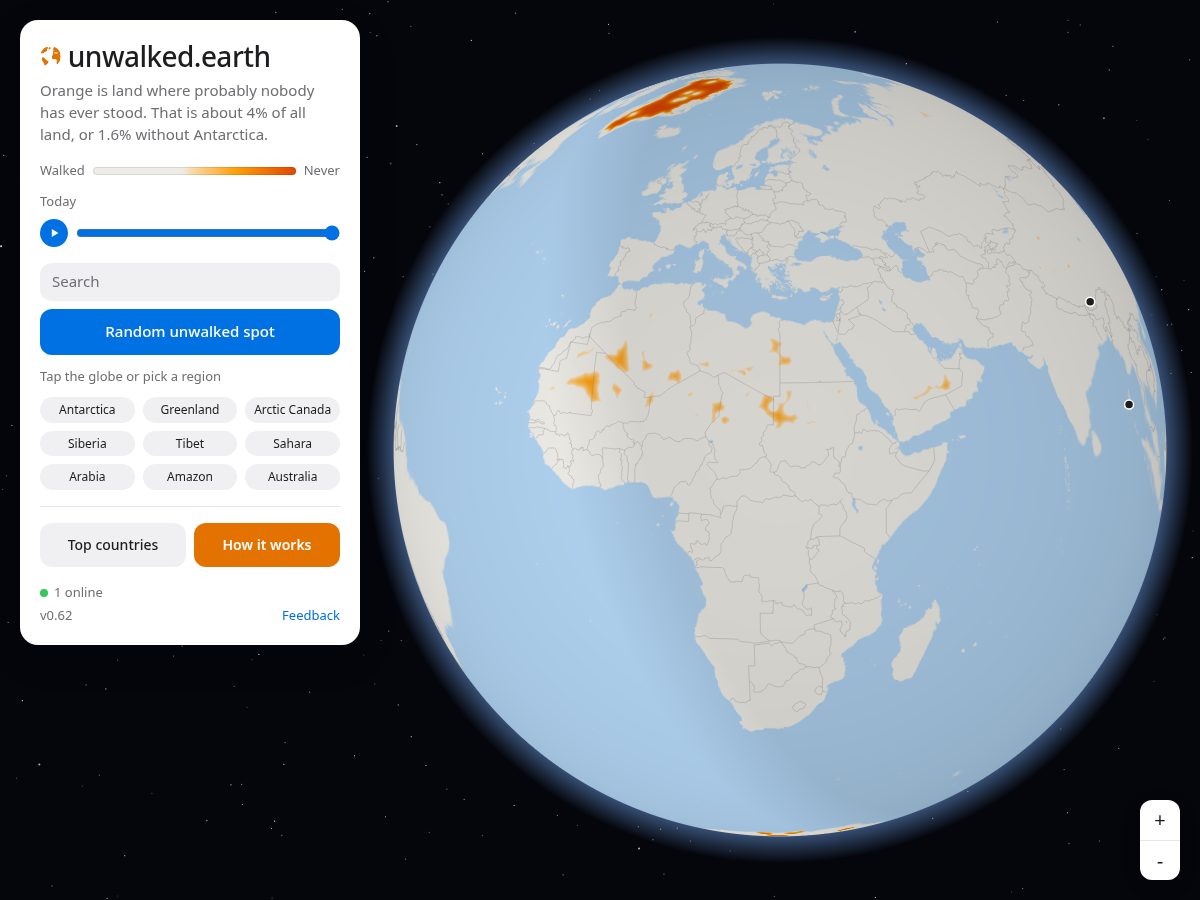
An empty patch on a map can invite a story about first arrival, but missing records cannot establish an absence of footsteps. Donat Dion’s family archive offers the reverse pleasure: photographs preserving a trail cutter’s life. That contrast makes unwalked.earth a useful starting point, with a globe estimating where nobody may have stood from recorded access routes and terrain, while acknowledging travel beyond mapped paths.
Orange begins at 50 out of 100, based on distance from recorded ways in and how livable the ground is. The site is careful about the gap between its map and reality: its records are incomplete, and hunters, herders, and nomads traveled beyond mapped routes.
02
The opening shelf
Twenty selected projects from today’s catalogue, each shown with the landing page we found and a short explanation of why it stood out.
Weird Finds
wewetv.com
A richly detailed 1987-style hometown-station site, with a weekly schedule, show roster, station personalities, and community notices.
Civic & Public Life
valocalnews.com
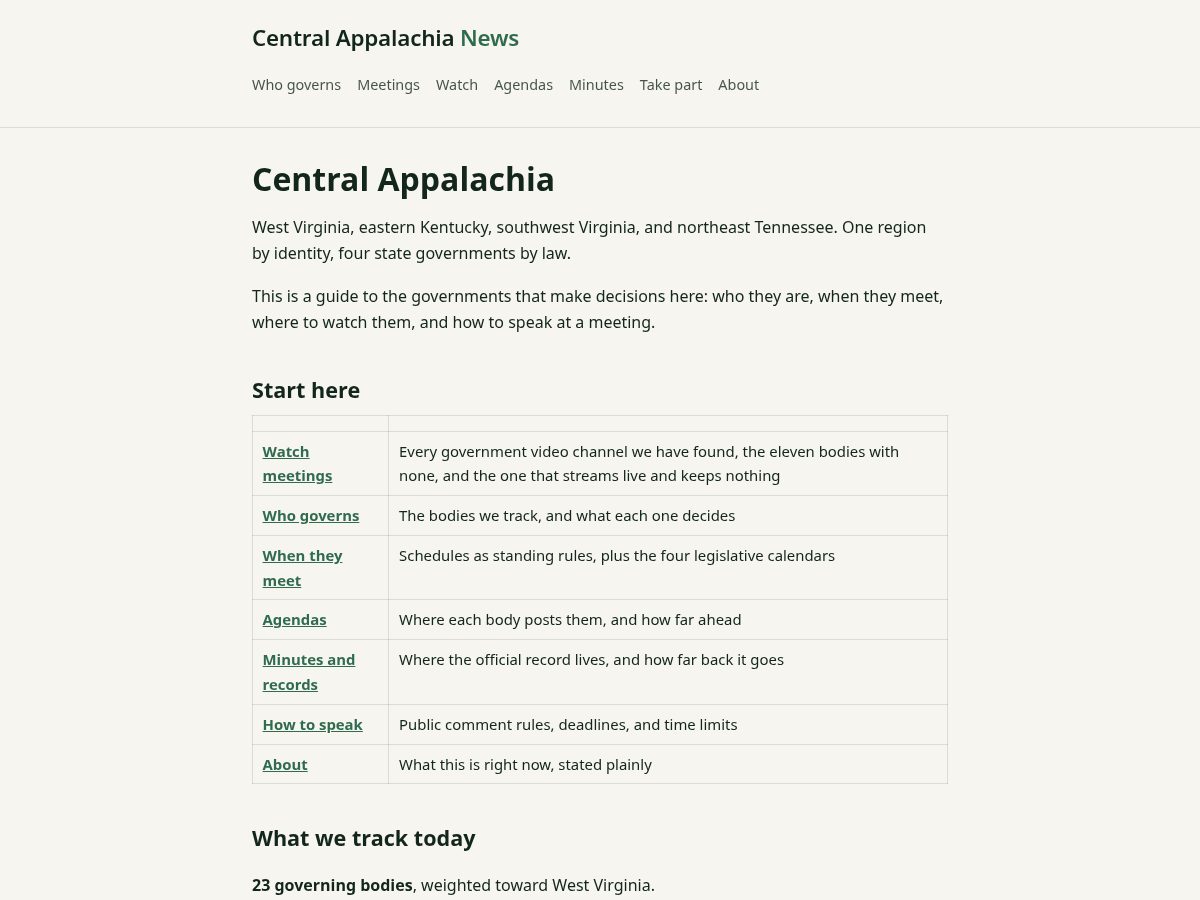
A civic guide tracks meetings, agendas, records, and public-comment rules across 23 governing bodies in four states.
Personal Pages
iragreenbergstudio.com
An artist’s studio presents evolving digital organisms and the artworks, editions, and objects made from them.
Weird Finds
netstalgia.online
Netstalgia pairs a dial-up-era online service for Windows 98, Me, and XP with a small modem that connects an old PC to home Wi-Fi.
Content & Blogs
civilizationmanual.com
A detailed imagined record of 24 settlers building civilization, with 597 achievements arranged across 15 phases and seven threads.
Developer Corner
chimerakit.dev
Chimera Kit is a browser-based JavaScript toolkit for physical voice synthesis, with demos for speech, singing, live performance, and creature voices.
Content & Blogs
fernandosalazarvalencia.com
A sourced account of Colombian veterinarian Fernando Salazar Valencia’s work transferring a horse embryo into a mule, and the later record of that achievement.
Civic & Public Life
williamscivicwatch.com
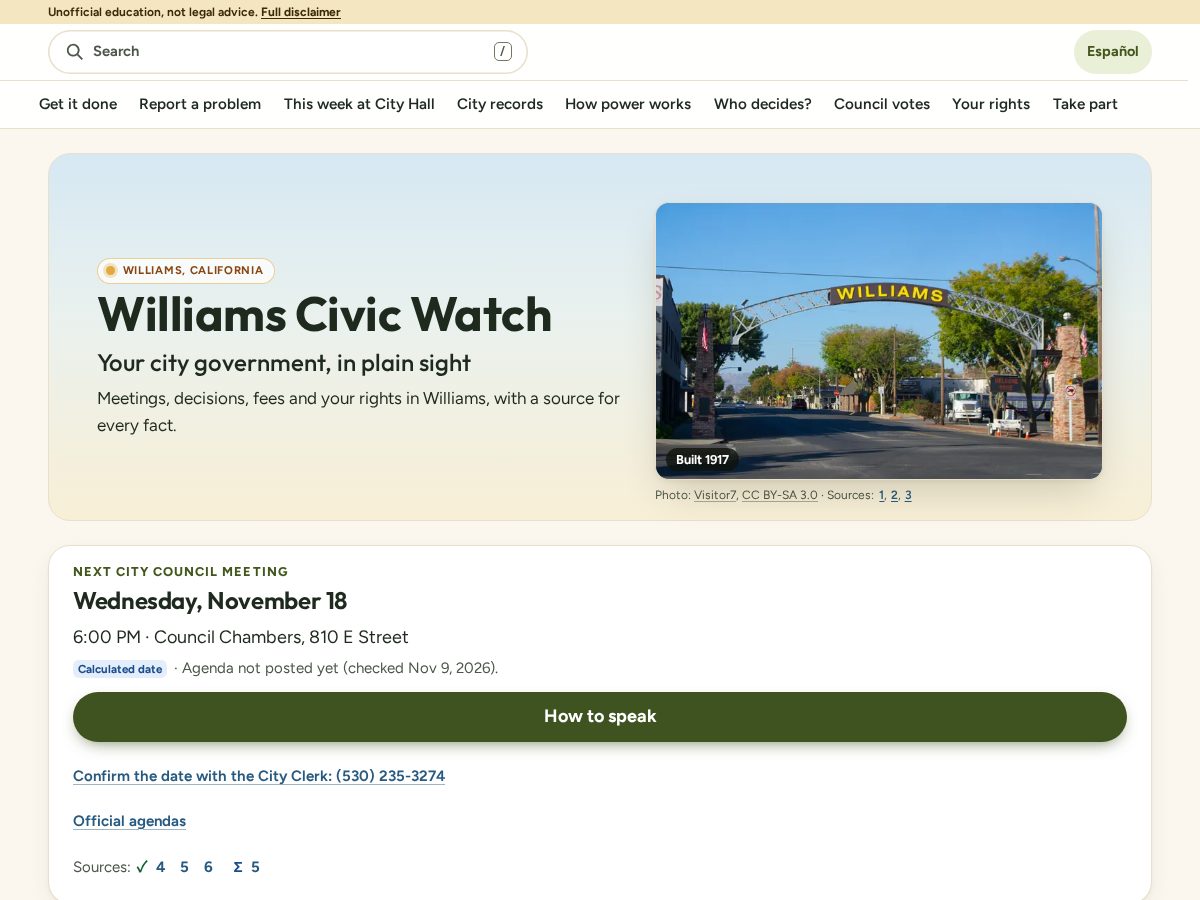
An unofficial, source-linked guide to Williams, California, covering city services, council decisions, public records, fees, and residents’ rights.
Useful Tools
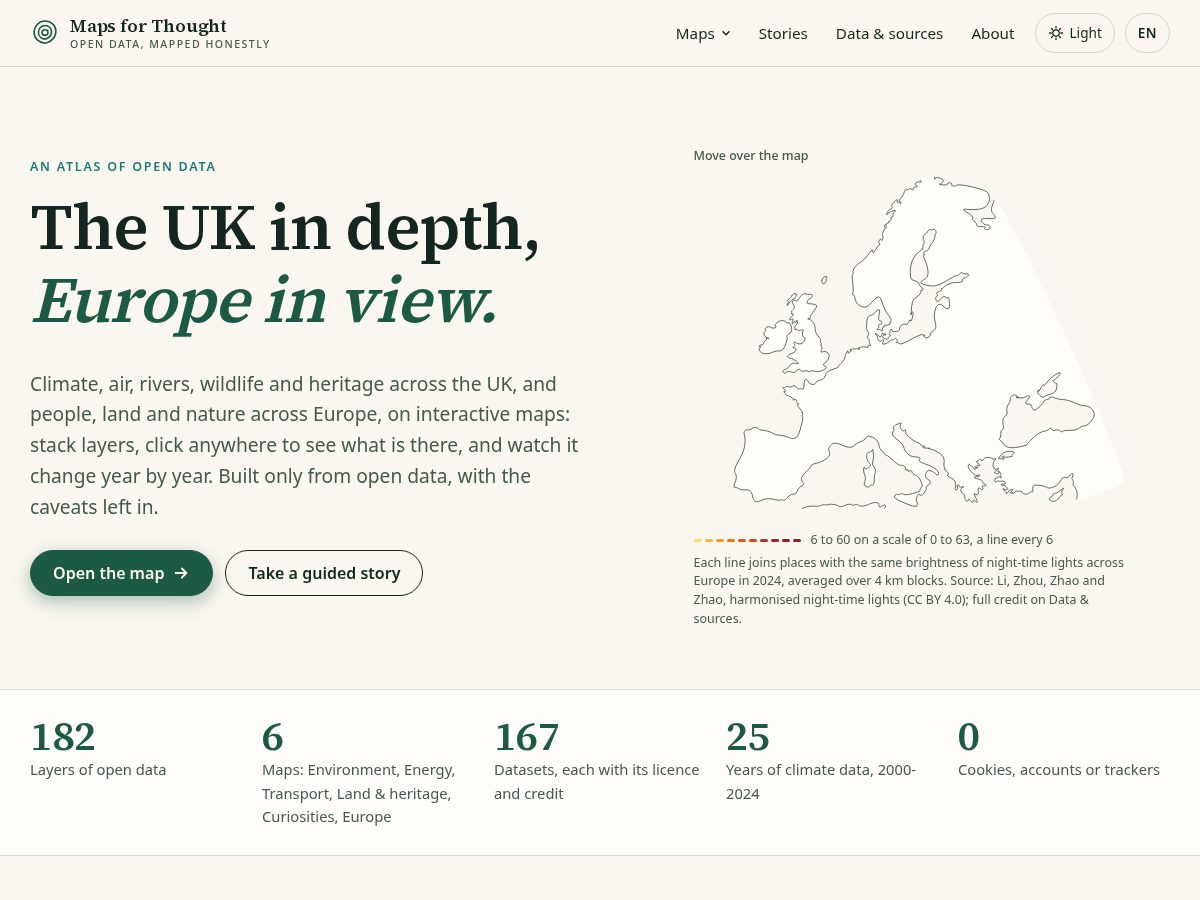
mapsforthought.com
An interactive atlas maps UK and European data on climate, air, water, energy, transport, nature, heritage and more.
Learning & Exams
blobscape.dev
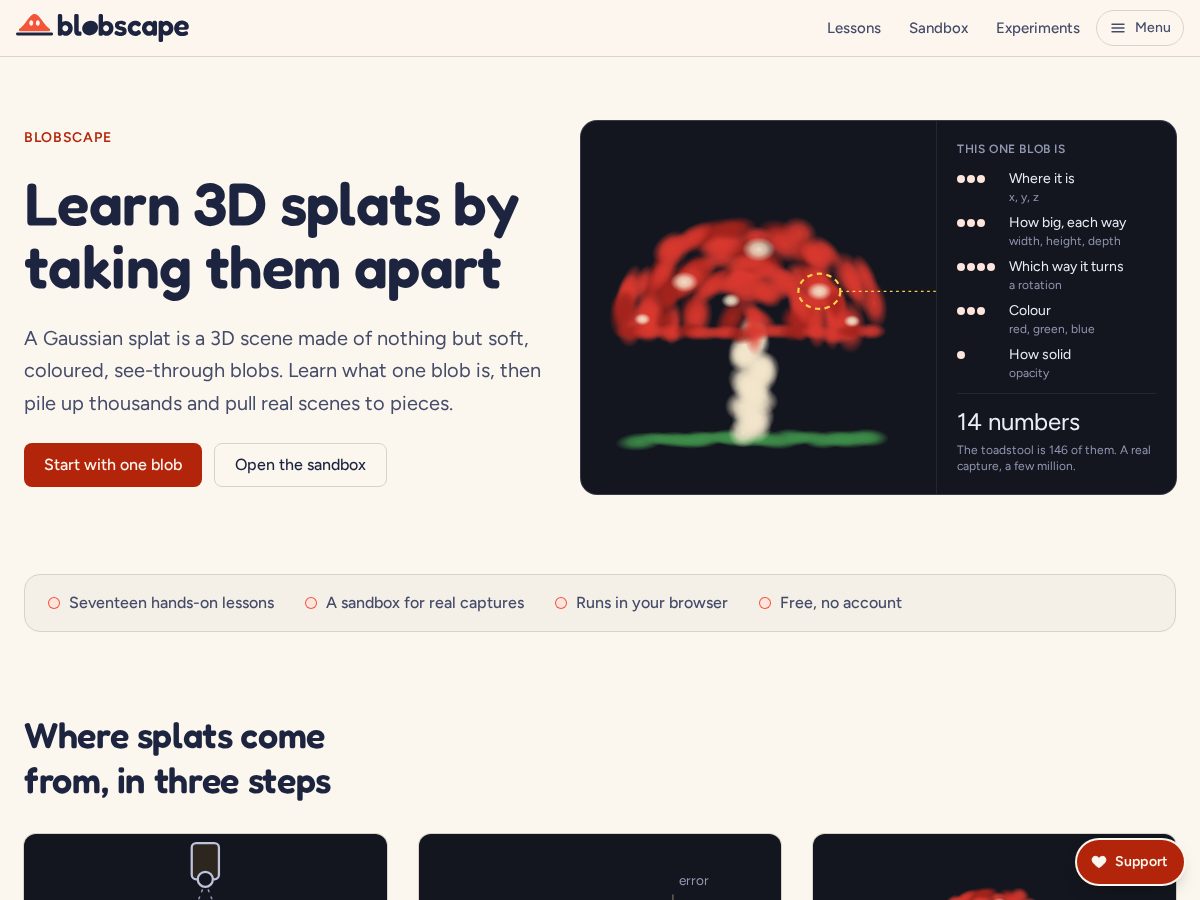
A browser-based set of lessons and experiments for understanding 3D Gaussian splats, with a sandbox for working with captures.
Learning & Exams
shader-learn.xyz
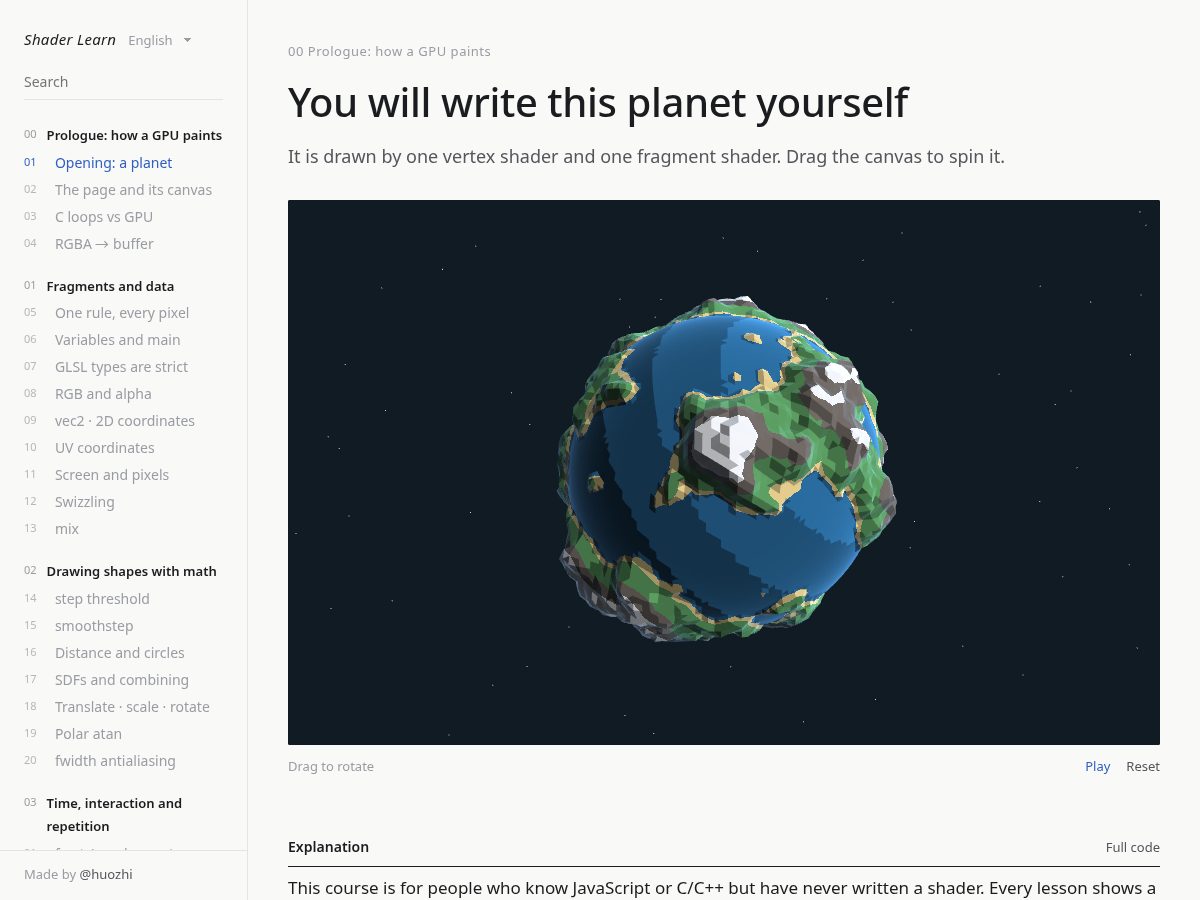
An interactive course teaches shader programming by taking apart a spinning, shaded planet and showing the code that draws it.
Content & Blogs
graphswithstraightlines.com
A collection of 126 sourced trends, each extended forward with a straight-line forecast and marked according to whether it is holding, bending, or broken.
Weird Finds
shitcon.com
The site advertises a Portland deal-flow event where attendees allocate money among 10 startups and decide who receives a grant.
Useful Tools
grounds.top
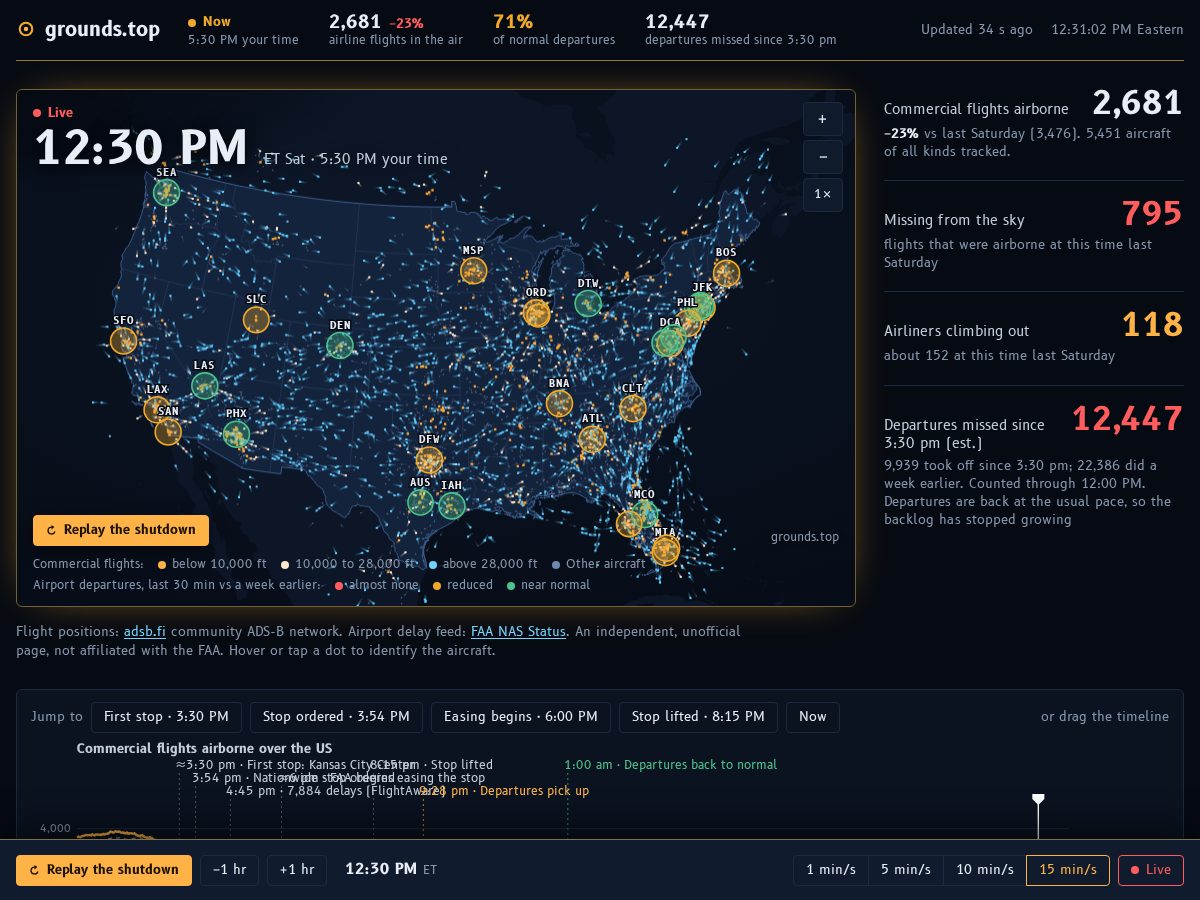
An interactive U.S. flight map and replay of the Nov. 13, 2026 FAA nationwide ground stop, with airport and carrier breakdowns.
Content & Blogs
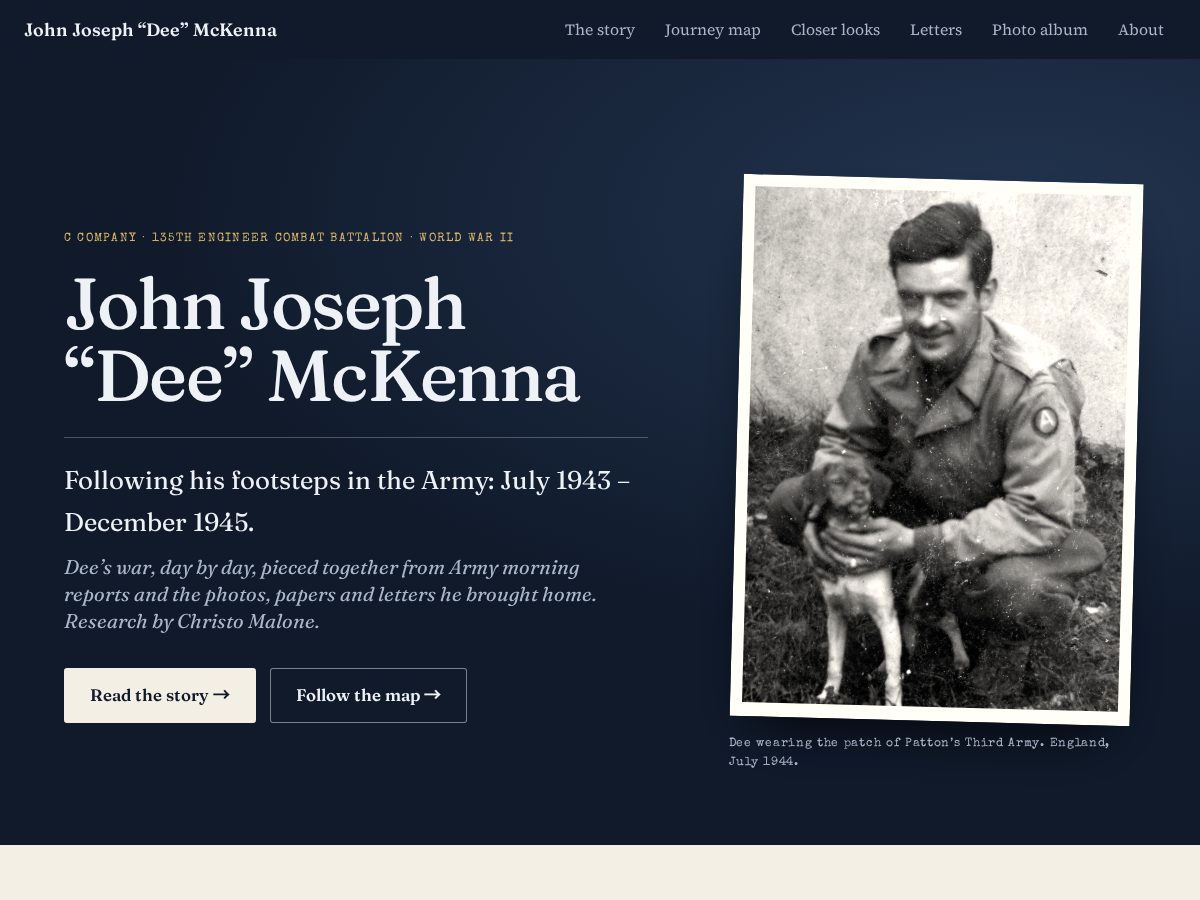
johnjosephmckenna.com
A documented, day-by-day account of Dee McKenna’s World War II service, built from Army records and the photographs, papers, and letters he brought home.
Personal Pages
mrgreenlee.net
A personal collection site documenting vintage Greenlee woodworking machinery, its buildings, and the machines’ history.
Content & Blogs
donatdion.com
A family-built archive traces Donat Dion’s life and work cutting trails at Vermont ski mountains, with photographs and a film.
Content & Blogs
34-boulevard-de-clichy.com
A multilingual historical investigation follows one Pigalle building through artists’ studios, cabarets, and more than 160 years of changing uses.
Civic & Public Life
evanstonindex.com
Evanston Index presents 17 questions about city spending, contracts, approvals and reporting, drawing on public records from 2017 to 2026.
Pattern 01
Several sites turn the ordinary obstacles to civic participation—scattered agendas, unclear meeting schedules, hard-to-find records—into guides and searchable views. The better ones also say what they have not confirmed, which is part of the service.
A civic guide tracks meetings, agendas, records, and public-comment rules across 23 governing bodies in four states.
An unofficial, source-linked guide to Williams, California, covering city services, council decisions, public records, fees, and residents’ rights.
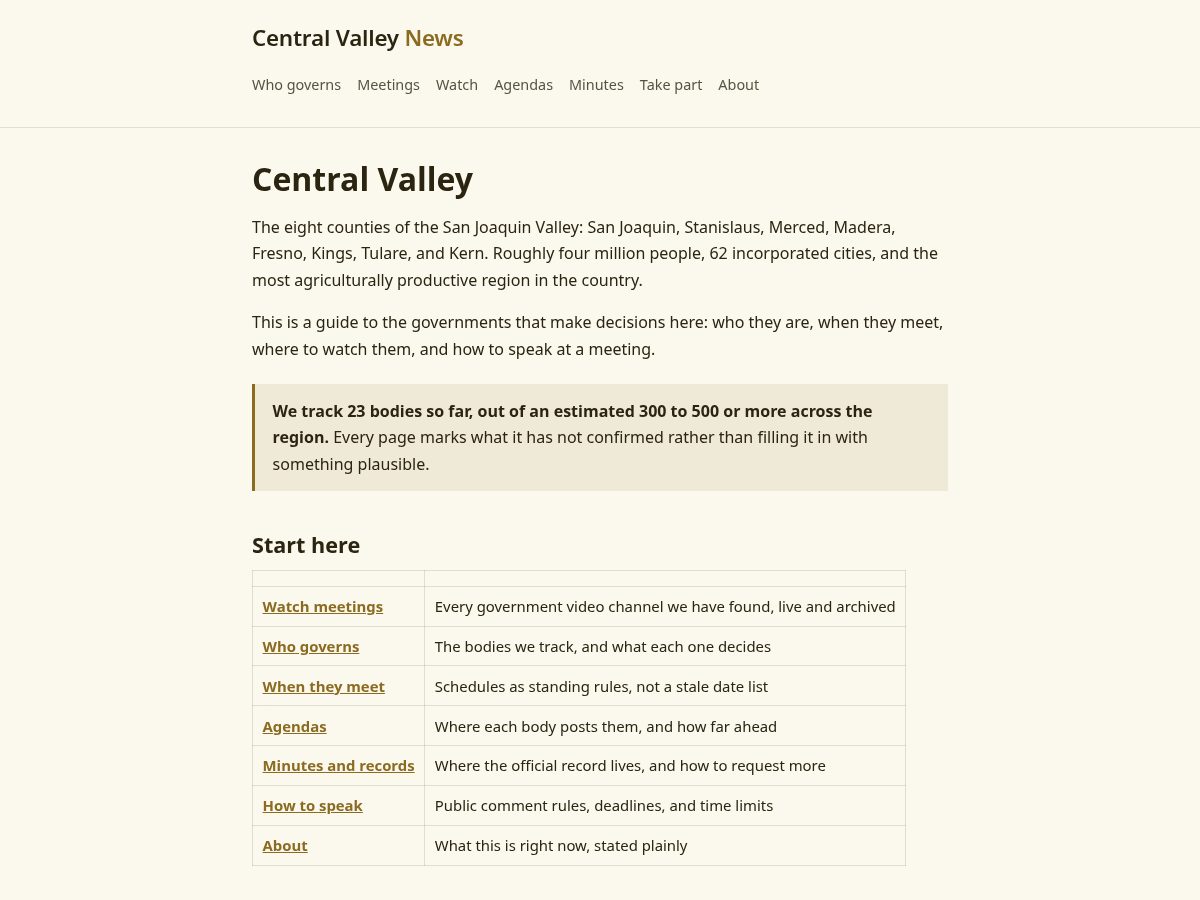
Central Valley News organizes meeting schedules, livestreams, agendas, minutes, and public-comment rules for governments across California’s eight-county San Joaquin Valley.
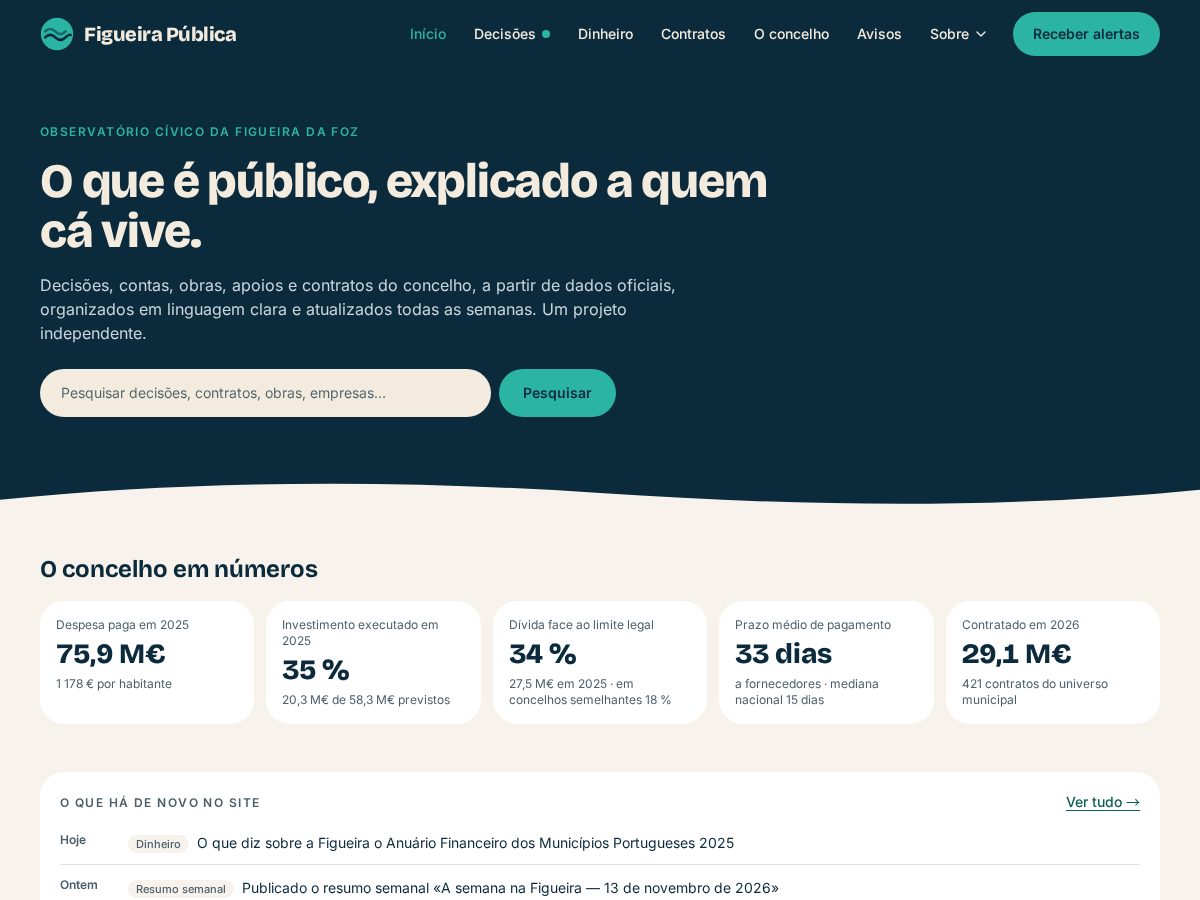
A Portuguese-language site organizes Figueira da Foz’s municipal decisions, spending, contracts, public notices, and meeting summaries using official data.
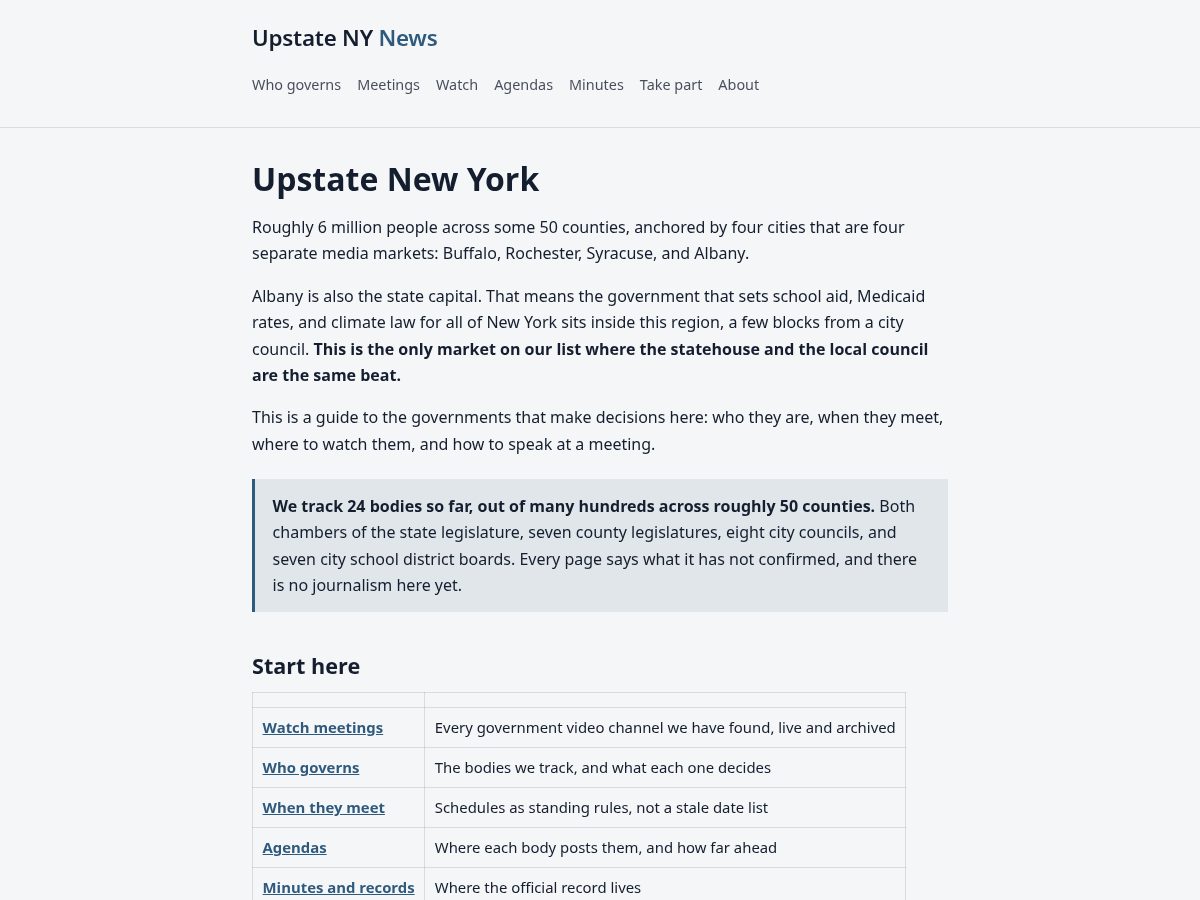
A public guide to who governs across Upstate New York, when they meet, where to find records, and how to take part.
Pattern 02
These learning projects move beyond explanation to let people test an idea, rehearse a response, or change the thing they are studying. The planet, radio call, or keyboard becomes part of the lesson rather than a picture beside it.
A browser-based set of lessons and experiments for understanding 3D Gaussian splats, with a sandbox for working with captures.
An interactive course teaches shader programming by taking apart a spinning, shaded planet and showing the code that draws it.
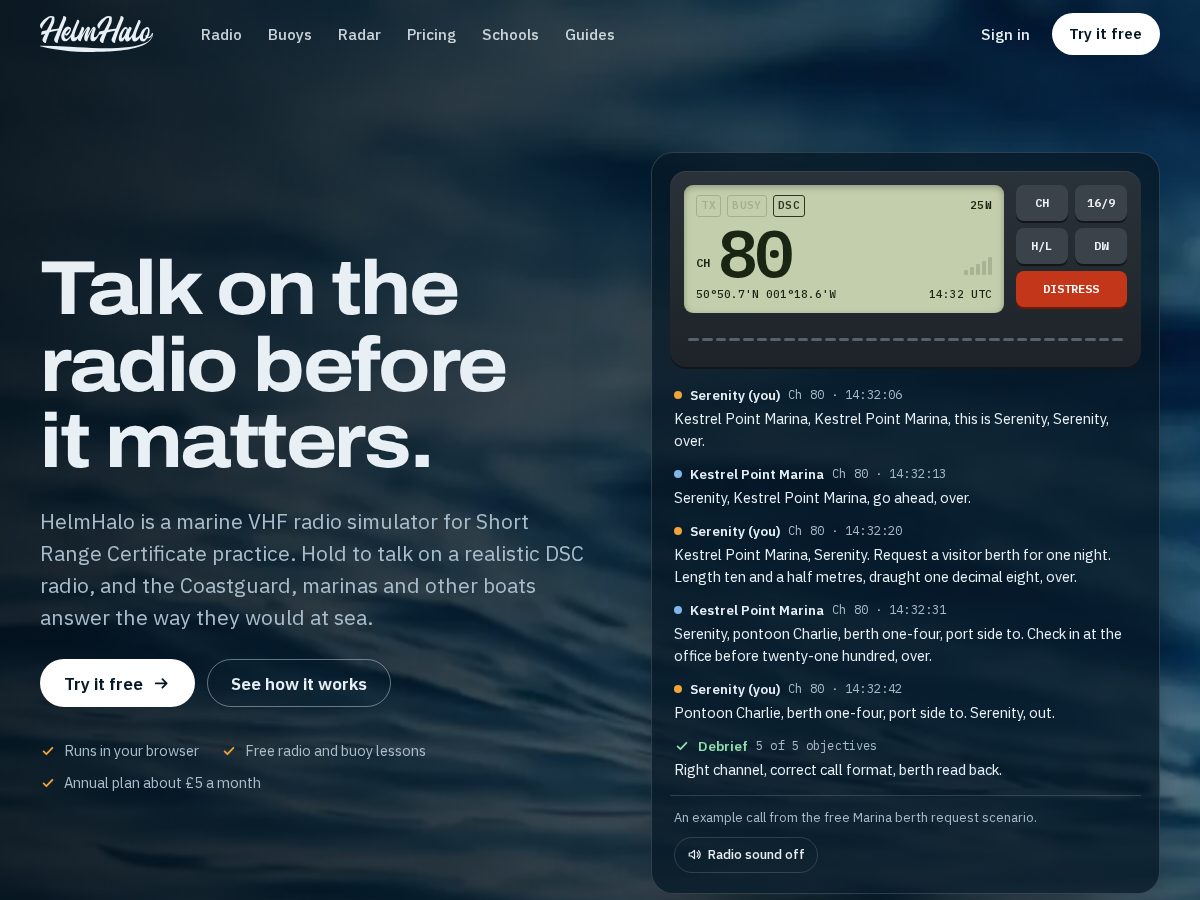
A browser-based simulator for Short Range Certificate practice, with interactive radio scenarios, free buoy lessons, and a radar add-on.
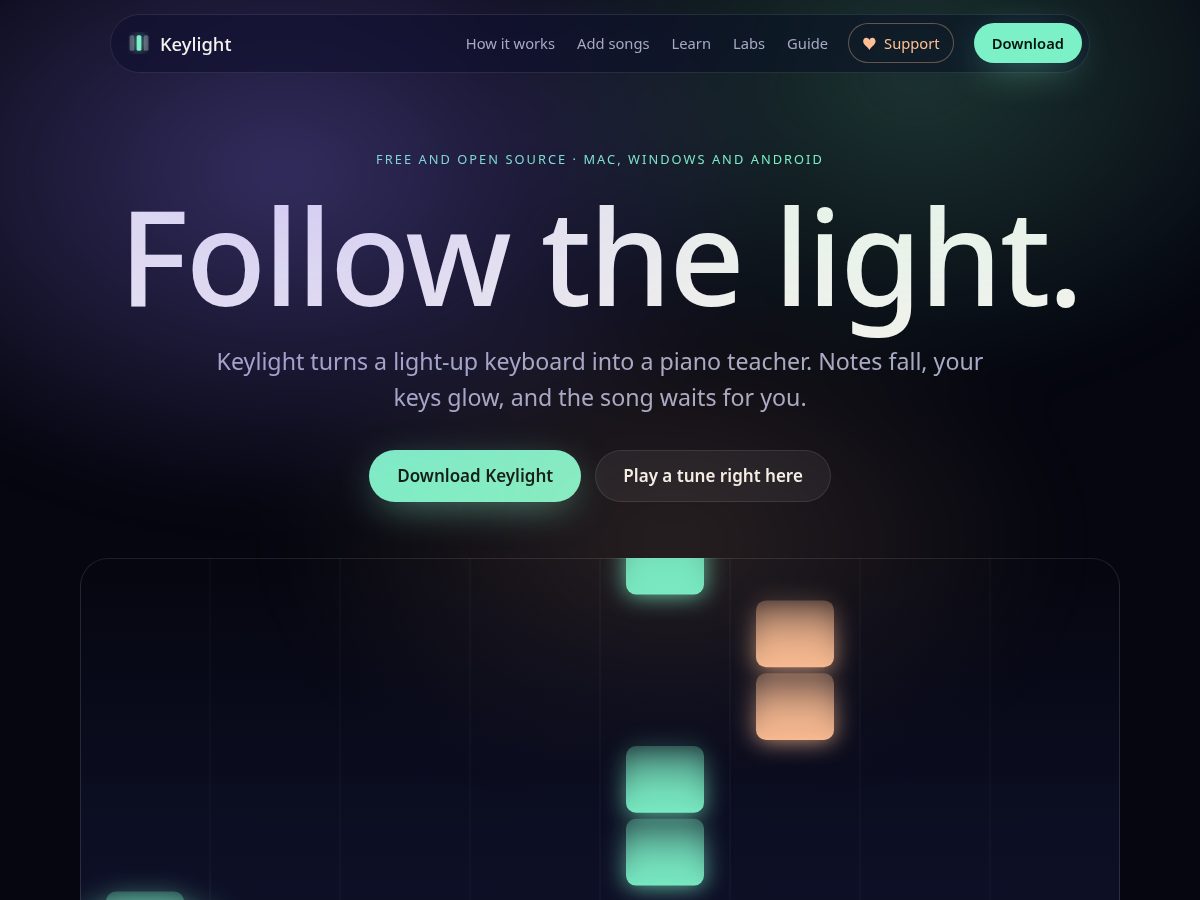
A free, open-source piano-learning app that pairs lessons and songs with light-up ROLI and LUMI keyboards.
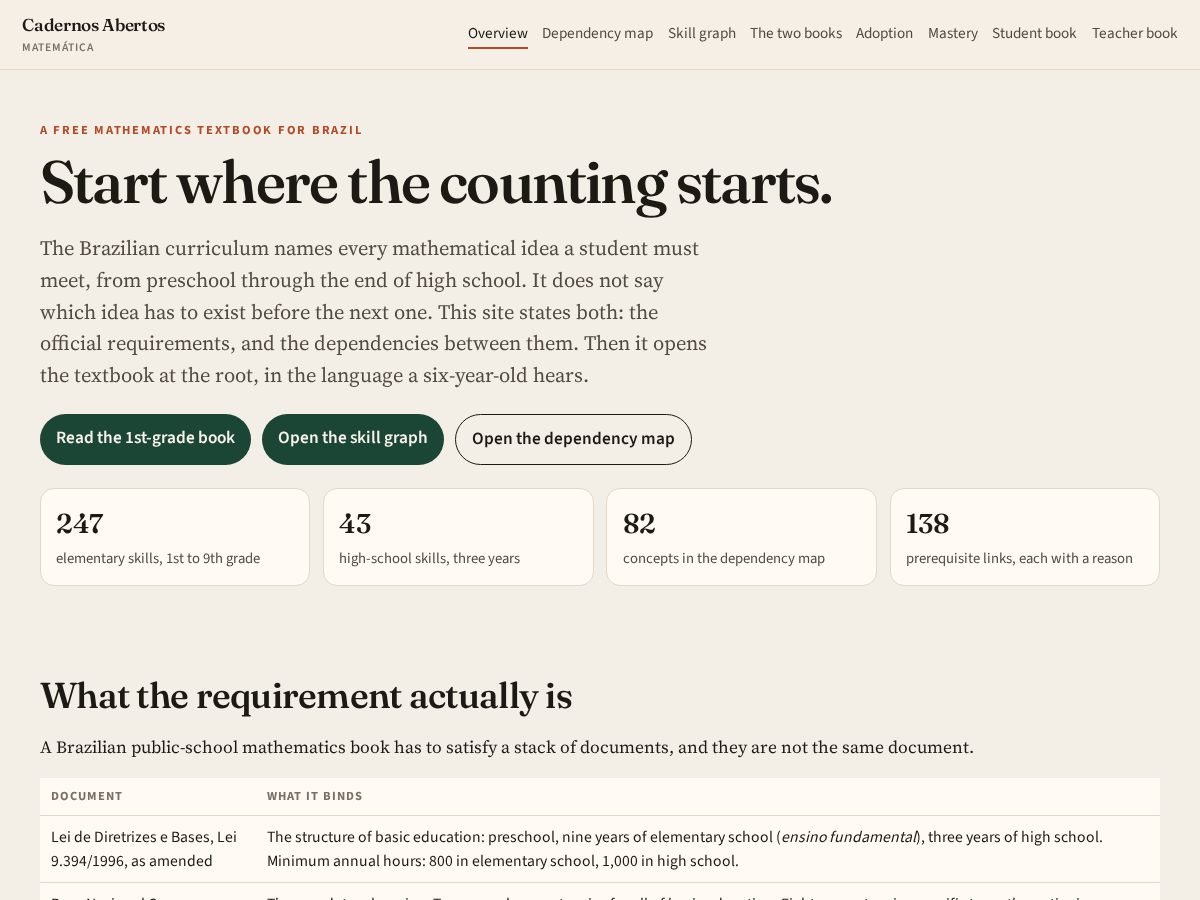
A free mathematics resource pairing student and teacher books with maps of Brazilian curriculum skills and their prerequisites.
Pattern 03
Maps, audits, and specialist tools here expose their inputs and assumptions instead of asking to be taken on faith. They make uncertainty usable: a caveat, missing test, or editable parameter is part of the interface.
An interactive globe highlights land where the site estimates nobody has stood, with a score for each place.
An interactive U.S. flight map and replay of the Nov. 13, 2026 FAA nationwide ground stop, with airport and carrier breakdowns.
An interactive atlas maps UK and European data on climate, air, water, energy, transport, nature, heritage and more.
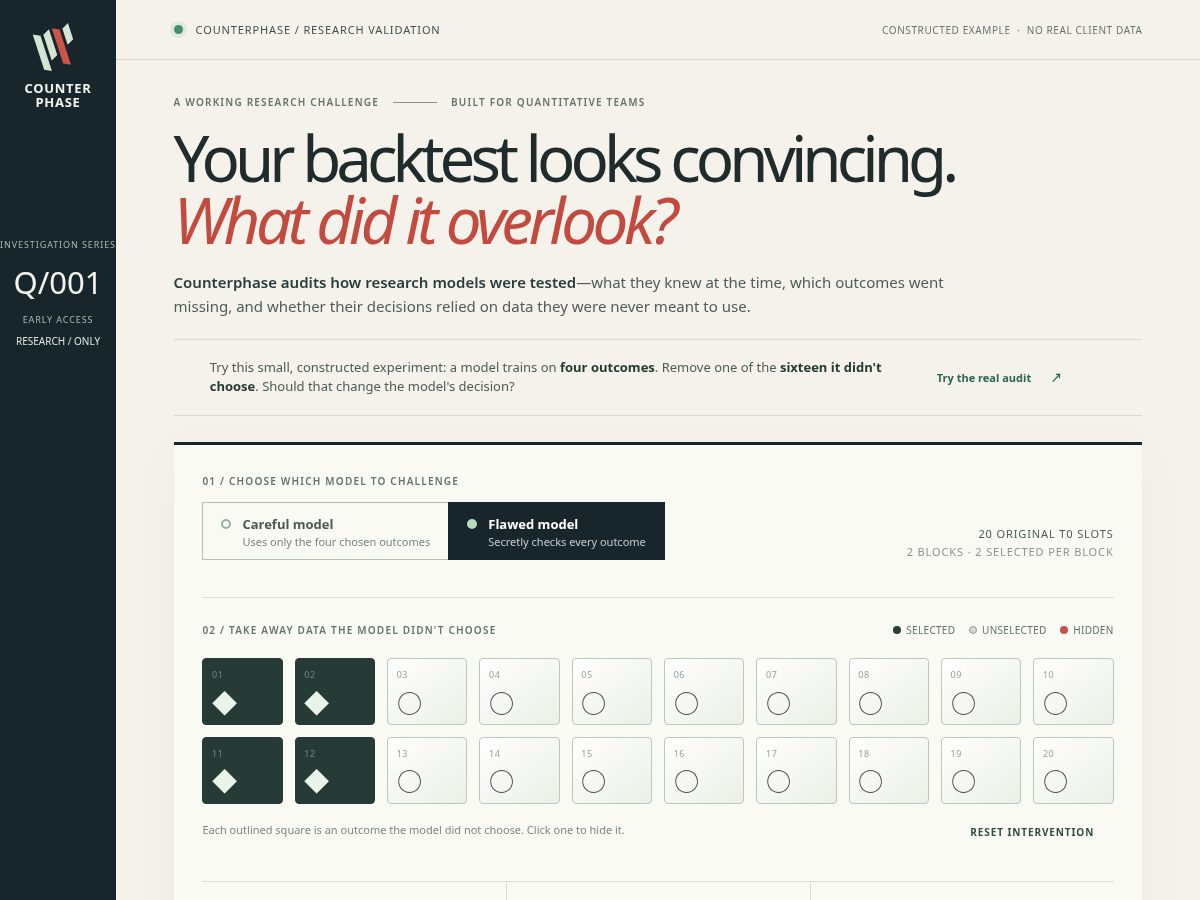
Counterphase lets quantitative teams test binary forecast records for missing outcomes, timing inconsistencies, and fragile research conclusions.
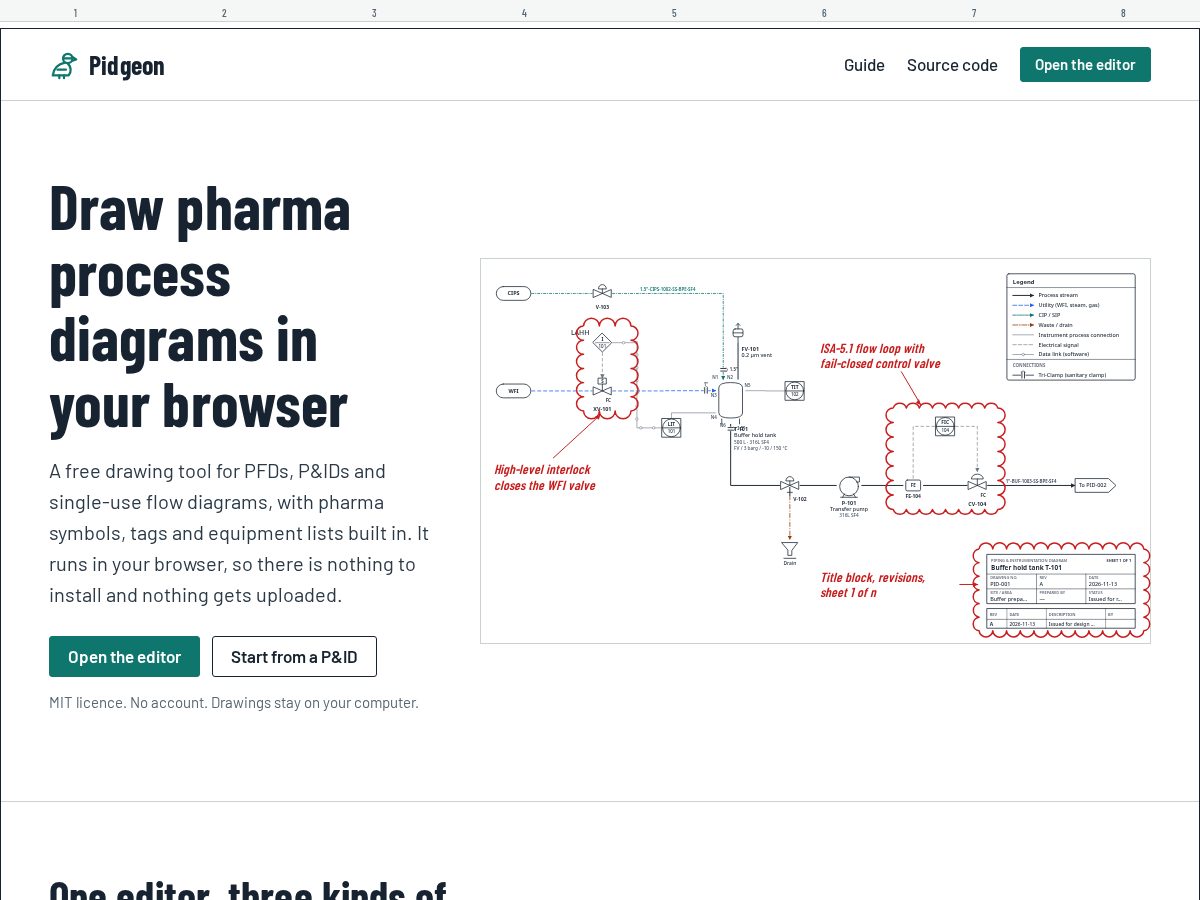
A browser-based editor for pharma process flow diagrams, P&IDs and single-use assembly drawings, with exports for drawings and generated lists.
Pattern 04
Personal and cultural histories gain detail from the things left behind: letters, photographs, timelines, and machine records. These projects keep the evidence close, and sometimes leave disagreements or unfinished work visible.
A documented, day-by-day account of Dee McKenna’s World War II service, built from Army records and the photographs, papers, and letters he brought home.
A sourced account of Colombian veterinarian Fernando Salazar Valencia’s work transferring a horse embryo into a mule, and the later record of that achievement.
A chaptered digital museum follows Deghiat Hassen Ali (1883–1964) through Eritrean colonial administration, religious leadership, and the independence movement.
A Hebrew-language archive follows the afterlife of a 2014 Sheshtus TV moment that became an Israeli internet meme.
A personal collection site documenting vintage Greenlee woodworking machinery, its buildings, and the machines’ history.
Pattern 05
A number of services try to reduce the work around care—coordinating hospice tasks, keeping family stories in reach, or helping a clinic keep moving when power fails. Their most useful details are often the low-friction ones.
Chiremba is a practice system for private healthcare in Zimbabwe, connecting clinics, diagnostic providers, pharmacies, and patients across appointments, records, prescriptions, referrals, and billing.
A free online space for families to coordinate hospice and home care, documents, visitors, meals, and end-of-life plans.
A phone-based companionship service for older relatives, with daily calls and a weekly text for family members.
A gift service that turns a weekly six-minute phone interview with a parent into a Monday story episode and transcript for the family.
An AI interviewer meets parents and grandparents by video call, in the language they speak at home, and turns their stories into subtitled family clips.
04
The complete card catalogue
The leading shelf is open. Expand another category, scan its visible pages, then reveal detail where more context is useful.
987 cards visible
Its Monday lineup goes from courthouse-vending-machine investigations to a late-night four-verse lament. The Sunday ministry arrives with a fog machine “nobody has explained to her.”
The box is meant to make the whole call audible and visible—speaker, screen, and lamps—without needing a phone line. The page also lays out a Raspberry Pi Zero W build-your-own route, down to the old-PC system requirements.
A mock-confidentiality memo from the CEO sits alongside sponsors offering “transactional absolution” and a fare-evasion platform. The result reads less like standard conference patter than a carefully staged business-world send-up.
The game pairs resort chores—opening lifts, making snow, setting ticket prices—with the freedom to ski the terrain afterward. Its page says the mountain uses USGS laser-survey data and the weather comes from real past winters: an unusually literal blend of simulation and place.
Drag across the field, zoom in, and tap a drawing to see who made it, what they reported, and what was measured from the drawing. The art project sits alongside research into the vivid patterns flickering light can prompt people to see.
Its ritual interfaces come with unusually explicit limits: fortune slips make no promise of efficacy, and the almanac says it offers folk reference—not fortune judgments—and costs nothing. That record of what the experience does and does not claim is worth keeping.
The 100-point zone is called The Edge; miss it and the Tax Patrol may arrive to retrieve your butler. The game carries its champagne-and-billionaires premise all the way into the rules.
The homepage gives each of its 15 games a distinct little premise, from making a 37° angle by eye to bouncing marbles along drawn ramps. It also says four daily puzzles keep a month of archives, and identifies the project as made in Abu Dhabi.
A single post becomes a full HR-department role-play, complete with absurd side quests and device-local reactions. A “where reality ends” section separates the joke from the receipts—a useful bit of internet self-awareness.
Each song arrives from a different resident of the planet, and visitors can collect stamps as they explore. The site gives a concept album its own geography—and even warns visitors against “excessive self-importance.”
A mock maternity-ward log turns each day into a stage cue: contractions, soundcheck, build-up, guest list, extended intro, then a 03:12 “drop.” The page also opens a wall of birthday wishes.
The page lays out five pavilions, avatar-based encounters, topic rooms and an After Dark party. It also identifies the project as independent and not affiliated with Web Summit, and tells visitors to follow Portuguese authorities for safety.
The chronology mixes real album-release dates with an explicitly invented speaker-takeover plot, carefully marking which is which. Even its alternate-universe September 11 file says it is not an account of the real attacks.
Your sphere fights on while you choose its upgrades; the Ministry’s redacted files and pirate signals make the game’s propaganda world part of the pitch. One programming note promises that social debt, unlike daily quotas, never renews.
One sample report treats a conference badge as a strategic asset; another recommends a subject for promotion to “Chief Delusion Officer.”
The restroom sends a three-hour reminder that “your bladder has filed for leave,” while the ticket seller is asleep and admission stays free. The page also clarifies that its “virtual travelers” are scene characters, not real players, and that the ticket purchase is only a story demo—not a payment flow.
The pitch turns the old waiting list into a garage: tune an engine on a dyno, add a roll cage, then race through rain or a snowy hillclimb. Its copy keeps the joke running without losing the practical details.
The interface marks a careful boundary between virtual ritual and religious practice: candles are not church offerings, and the app does not replace Mass, confession, or priestly counsel. Memorial text is described as device-only, while a public memorial wall is explicitly absent.
The current transmission turns a 14.0 km/s drop in wind speed into a fourteen-step ritual for folding a mountain into an envelope. The site carefully distinguishes its real measurements from the meaning it invents around them.
The page invites you to open it on two machines and hear the same bar at the same moment, with nothing sent between them. Its controls and transmission-fiction lore make the mechanism part of the performance.
The committee is Garrett, the decade-long champion is now the runner-up, and Kris gets an honorary bronze for reaching nine points first. The site treats this household rivalry with the solemnity of an institution and the grudge-holding of a kitchen table.
Westeros, Middle-earth, Oz, Navarre and the Star Wars galaxy all get their own metro systems. The site pairs detailed maps with jokes like “No one should have to walk to Mordor.”
The familiar flipping game gets a clear twist: a 16-character deck shapes your tactics, while flips deal damage to an opponent’s HP. The page says it has original characters, art, and music—and no real-money charges.
Each week asks you to invest, decide, and bank; cash and board confidence must stay above zero, while too much heat brings investigations. The jacket is not merely attire: high swag boosts sales and attracts attention.
The camp pairs small, tactile activities with low-pressure social rules: microphones start off, rooms hold up to eight, and fishing earns a capped, non-cash pinecone currency. The site describes itself as a self-made virtual campsite; support is optional and the camp is free to use.
The listings move from a 24/7 station devoted to one song in many genres to browser-playable convention games. The whole directory is tied to PhreakNIC, Nashville 2600’s long-running hacker convention.
The method maps letters to numbers, then looks for matching expressions, exact sums, or explicitly approximate numerical neighbors. The site admits the exercise proves nothing—and says its regional vocabulary may not be authentic.
The page says four cat heroes are based on real cats from the Pink Paw shelter. It also describes a thoughtful party detail: if someone drops out, a bot takes over and the group stays together for the next match.
The page turns a single-core, 2014-era board into a shared internet pet: visitors can feed it, encourage it, or give it work. Its telemetry was still waiting to load in the extracted page, but the premise makes small-scale hosting feel less like infrastructure and more like a creature with a day job.
The posted regulars include “Grok — banned (again),” and the house rules bar scams, MLMs, and crypto-pump schemes. It’s a sharply staged little social world, complete with a door for agents.
The site treats a party like a small fictional universe: five recurring characters, a comic origin story, and a five-card sequence from invitation to morning after. It also gives guests a concrete schedule for December 19, 2026.
The operator gets an 80-mile scope, overlapping sensor profiles and fourteen tracks to sort; every read costs time, and four strikes end the shift. The page makes its distinction explicit: this is identification under pressure, not a shooting game.
The site is unusually direct about the gap between its nation-building ambition and reality: Axkia has no land, is not a recognized country, and says its passports are not legal ID.
The house chef cooks the same dish on the same clock; at zero, the bell plates for you. The page is candid that its chefs and judges are fictional and its dish photos are AI-generated.
The creator says the 2026 rebuild began with surviving MP3s after the original project files and raw recordings were lost. Its cover is a painted screaming pepper, described as glowing under ultraviolet light.
It turns an inventory of ordinary home possessions into a small piece of folklore: 40 yes-or-no choices lead to a fairy card. The site also separates its playful story world from household advice it labels as an editorial draft.
Its made-up scoring model turns anime-avatar replies, Taiwan visits, and leather jackets into risk factors, then lets readers adjust them in a “Build-a-CEO Lab.” The site explicitly labels the estimates as comedy, not claims about anyone’s real conduct or security.
The coffee cup is also the stress meter: run out and the day is lost. Every fifth day switches from cleaning to making pancakes, with interruptions still competing for your attention.
Players choose a situation such as being between jobs or bringing home a new partner, then face seven questions from their picked guests. It makes familiar family-table pressure a playable premise—and lets you leave before dessert.
Its instructions are unusually specific: make trouble near cops and the wanted level climbs from attempted arrests to a helicopter—and, at five stars, an army tank.
The fibber is assigned at random—even the Fibbits don’t know who drew the short straw. The site also warns readers not to share any single statement as fact, which is a useful bit of housekeeping for a game built around truth and lies.
At version 0.3.1, the page reports one player online and describes a world made of adjoining plots, with no single-player saves or commands. Its larger ambition is player rule: the about text proposes that approved ideas could be added by AI, a vision rather than a verified feature.
The site plans one product reveal per race day, starting with Antarctica on November 15; a “Cape Town Taper Mug” is already marked as a bonus release. Its race tracker is there, though the results and updates are still loading.
Issue 001 gives Estelle’s astrology business a mock-meltdown page for people expecting free readings: “You want your entire future predicted for $0? That's adorable.”
The pitch takes aim at astrology’s familiar twelve-sign calendar, even noting that the Sun spends 18 days a year in front of Ophiuchus. It’s a revealing blend of astronomical precision and horoscope-making, presented with source credits and a clear prelaunch status.
The Gloom starts coming after four seconds, and even grabbing treasure costs precious time. The site lays out a whole rulebook of hazards, tools, and tower modes before inviting you to play.
The group mode lets up to eight people answer from their own phones, joining by QR code nearby or by link from afar. Its 280-plus dilemmas range from impossible romance trade-offs to the prospect of your search history being shown to your parents.
In Counter-Strike Global Oida, players can throw Stiegl bottles and heal with Leberkässemmerl. Another game puts Risk-style conquest on real maps of Austria and Upper Austria.
The page brings a whole rulebook to its alien-basketball premise: 90-second halves, a 14-second shot clock, timed jump balls, and an ice-moon court where dunks shatter the backboard. Its footage and screenshots are labeled as coming from a pre-release build.
The premise gives local history a comic-book apparatus: a Historian’s lantern, a year dial, and case files for ten heroes. The Fade supplies the threat—where it walks, the colour goes.
The town has a dog registry, a Rainbow Meadow for pets who have died, and a race whose eight most-liked entries qualify through TikTok comments. The homepage’s resident counters currently all read zero, so the town appears to be waiting for its first inhabitants.
The pitch treats each outing like a practical risk: pack three guns, spend a tank of fuel, and bring home what the base needs. It promises weather that changes how a trip plays—rain hides footsteps, snow keeps tracks—and noise that can bring a horde.
AlphaCount makes word recall feel like a small sporting event: draw a letter and a target number, race the clock, and give your opponent five seconds to steal the round if you fall short. Even redraws cost a point.
The page gives the game a clear tactile grammar: drag to aim along a dotted arc, release, then tap mid-flight for a cat’s special move. It lists 100 forts across ten worlds, from cardboard and ice to a Mouse King finale—a familiar physics-puzzle loop, with cats doing the flying.
The cockpit exposes telemetry and maneuver planning down to prograde, radial, and normal burns. Its pilot guide also walks through launch, orbital insertion, re-entry, and landing in unusually concrete detail.
The map spans 50 × 44 km, from town streets and the D8 to Ore Mountains hairpins. Its dev log gets unusually concrete about the cars, terrain, and recent updates.
Scrollbrief frames its work as an answer to the letter-writing and summary tools now entering legal practice: a reader can follow a case through seven beats and open the source behind each factual line. Its Liebeck v. McDonald’s sample makes that method tangible with interactive temperature and burn-time comparisons.
Philo TCG gives the familiar booster-pack chase a humanities syllabus: rarity is marked by paper color, and card backs point to dates, ideas, works, and further reading. Complete a shiny set for an author and you may be able to request one of their used books by post.
The tree lays out its disagreements instead of smoothing them over: it flags disputed names, explains competing genealogical traditions, and identifies the texts behind its dates and branches.
The page makes the game’s systems unusually tangible: cargo affects ship mass, station trade changes local shortages, and your piloting style can switch between assisted and full-inertia flight. Its update log also shows active work on weapons, ship modules, and shared play.
The guide gives this shared world real texture: Thornwick keeps its lanterns lit while the dead gather on the moors and a cult prays to the Hollow King. Its menus also reach beyond lore into commands, professions, magic, crafting, companions, and a bestiary.
At 9 p.m., the service says it recommends three people; Instagram handles stay hidden unless both sides choose to connect. It is a tightly bounded student campaign, with a 48-hour rule for starting chats and a stated plan to erase user information after the season.
The page lays out a 12-dish round, three eight-second price guesses, and a play-money portfolio. It labels its ticker figures illustrative and says restaurant results are aggregated rather than tied to individual players.
Talestra gives ordinary stops—water, a crossing, somewhere to sit—a place in a personal atlas, with rarer finds and Istanbul-only legendary ones. Its sample entry treats a bench as a small promise between a city and someone tired in it; the app itself is still awaiting launch.
Its devotional loop is unusually literal: each jap becomes a step on the parikrama route, or a stair at a temple. The experience also organizes places and festivals around a real OpenStreetMap base.
The listing gives the plan a physical scale: 29 dwellings, camping and caravan pitches, and buildings limited to 1.6% of the estate. It also distinguishes the regional authorization already granted from the municipal licence still to come.
In Oche of the Dead, darts shoot zombies and build defenses; Free Throw swaps competition for a spoken caller and optional rainy-day ambience. The setup is unusually concrete: the page says a phone, tablet, or TV can join the board PC by short code.
The pitch is wonderfully literal: start on your own street, then roam a continuous map of all 81 provinces. The site lists delivery, passenger, gold-collecting and racing missions—and says no account is needed.
The sample certificate separates customer-supplied details from lab measurements, lists methods and limits, and names the analyst and reviewer. A 12-character key or QR code is meant to show whether a certificate is valid, superseded, or revoked.
The page is unusually candid for a housing pitch: no SkyHouse has been built, and every image is identified as an AI-assisted design rendering. It also lays out estimated US prices of $765,000–$845,000 and explains how local teams would adapt each project to a site.
Its collection mechanic starts with sightings from eBird and Birdspot players, then asks users to spot the birds for themselves. The page says the app is coming to Canada and the US; for now, visitors can join its waitlist.
The pitch is less about inventing a game than recovering a backpacker ritual: one familiar deck game remembered under a scatter of names. Its maker says he rebuilt an old codebase and taught AI opponents to feel like real hostel players.
This is a niche card-game scene made unusually legible: turn up, pay £7 on the night, and no advance signup is needed. The quarterly table tracks results, while a “Squee Award” recognizes the player who keeps coming back.
The page says its traffic comes from real-day flight records and follows FAA procedures, with AI controllers staffing seats when players log off. That is a wonderfully particular premise for a game.
The game lays out its shared-world rules in unusual detail: everyone gets the same daily quests, while dig spots move every six hours whether or not anyone finds them.
Trimera frames its appeal around late-night hunts, old-school party chat, and the friend who tanked the boss. Its R$49.90 Pix founder bundle includes premium time and cosmetics; the page says purchases confer no ranked-PvP advantage and offers a seven-day cancellation window.
The pitch turns a solitary loop into a synchronized global spectacle: the bell, GPS check-in, live dial and map make the field legible without a shared starting line. Its sample field is labeled a simulation—a useful reminder that the detailed race world on the page is not proof of current entrants.
The page quotes 20–30% more production from the first tracking axis in one section, but gives 15–35% for one-axis installations elsewhere; some component values are marked for field confirmation. Visitors can inspect the mechanism in 3D before the project invites visits, donations, or investment.
At UCLA, students design, build, and fly high-power rockets—and the payloads inside them. The site names NASA Student Launch and First Nations Launch, and gives the team’s engineering work a visible home alongside launch-day and lab-night life.
The homepage contrasts “dog” at 8 points with “binturong” at 92, then explains that rarity estimates come from public reference data, not player telemetry.
Cartillion rewards not just getting a country right, but naming one other players are less likely to think of. Its three formats give that premise distinct shapes: a 50-question survival run, country-to-country links, and a hunt for the farthest valid answer.
The service keeps every answer in writing and draws a clear line between free general direction and paid expert detail. Its sample follows a specific question about moving a J-bar, while the site says its advice is an opinion, not a guarantee.
The two services share a fixed-fee premise but solve very different urgent problems: the flight service follows claims of up to €600 with the airline, while obituary drafts are promised within a day.
The pitch ties its fishing to 23 Bosphorus species, ten named spots from Galata to Kavaklar, and different times of day. A fictional guide, İsmet Reis, introduces the ropes; the mobile game is still marked as coming soon.
Orange begins at 50 out of 100, based on distance from recorded ways in and how livable the ground is. The site is careful about the gap between its map and reality: its records are incomplete, and hunters, herders, and nomads traveled beyond mapped routes.
The homepage lists 182 layers across six map collections, with 167 datasets credited to their sources. It also pairs the maps with guided stories—from sewage overflows to Viking place names—and says it leaves data caveats in view.
The page lets readers replay the shutdown and compare flight activity with the same time a week earlier. It also explains its counting methods and warns that its tracking coverage is incomplete, not an official tally.
The ARK Vault concept turns the library into a local Wi-Fi resource: a Raspberry Pi, battery, chargers, printer, and reading device packed into a steel ammo can. The page also spells out the trade-offs of its downloadable AI rather than presenting it as an unquestionable authority.
Answer five questions and Outro dates steps back from your flight; each links to an official source. The plan also tracks deposits and refunds, even after you’ve left.
The soundscape comes with a whole imaginary corner of Britain: a single-track railway, named stops and a station cat called Bramble. The sounds are generated as they play, and sliders let you make each mix your own.
The workflow runs from map to shovel: draw trails and features, test the route on screen, then print a build sheet or send a field GPX to a phone. Its case for the tool is concrete: help volunteer crews agree on what goes where before digging starts.
Roads appear over elevation data, with tunnels marked as dashed lines and controls for tilting the map or finding a route by number. The site pairs the map with specific field notes: Route 58 is reported as 609.5 km at sea, out of 881.9 km total.
For a lunar habitat at 30% oxygen and 10.2 psi, the page finds six of 19 investigations within five percentage points of that oxygen level—but none burned solid materials. It also flags the missing test data for lunar gravity and low-pressure smoke detection.
Backups are only useful if you can get them back. hbkit checks archive chunks as it restores files, making this a practical answer to a very specific hardware-failure problem—and a small case for keeping data formats readable outside the device that made them.
Its maker describes building it for his own irregular hours and a prayer book that had become hard to use. The page also says there is no account, no streak, and nothing prayed is kept anywhere.
The pre-start has a shaded playground, box and pin layline, with an umpire applying named racing rules. Drills isolate individual moves; the site says sailors’ recorded races also teach their league ghosts how to start.
The controls let you search for rain on land, travel automatically between rainy places, adjust the surrounding soundscape, and even turn on an improbable “heavy bird mode.”
Its idea of a paperless clinic still includes paper: when power fails, an emailed A4 day sheet lets the front desk keep going. Patients get ordinary SMS messages and printed slips, not another app to install.
The site treats the blank page as a design problem, not a test of literary talent: it offers nine ways to begin and says “I do not remember” is a valid answer. Its promise that every sentence stays in the writer’s own words is a pointed alternative to the ghostwriting impulse.
It asks users to learn time as a visual pattern: the outer ring marks hours, while colors track minutes, from yellow at the hour to cyan at quarter to. The page is also the clock, and its maker clearly separates what works now from what is still planned.
Pidgeon turns tags, lines and connectors into exportable equipment lists, line lists and bills of materials, and checks drawings for common gaps. It runs locally in the browser; its creator also clearly warns that it is not validated software for GMP decisions.
Instead of treating hosting as the whole cost of self-hosting, the calculators also count usage overages and admin or maintenance hours. The site publishes its formulas and assumptions, and says it enforces documented memory floors rather than rounding them down.
Captionshaper says your video never leaves your computer; only its speech model downloads, once. It also handles the fiddly finish: line breaks, uncertain-word markers, nine caption looks, and a preview that matches the exported video.
It combines terrain-based signal estimates, tower directions, and antenna guidance in one place. The sample result even warns that its indoor-antenna recommendation is an estimate, not a real channel scan.
You can inspect the color plates separately and zoom in on the rosettes. The page reports 50% black measurements within 1.2 percentage points on coated paper and 0.3 on uncoated; the free edition keeps all four inks in register, while the $29 version lets you leave inks out.
Backtests can borrow authority from a convincing result. Counterphase makes one assumption clickable: hide an outcome the model says it never used and see whether its decision changes. The reports are explicitly synthetic, and the page is careful about what a passing test cannot establish.
Its tracker links policies from 24 journals, including eight said to ask for code only as a request. A paper checklist also offers tailored steps and says it runs in the browser without sending what you type.
Its cleanup flow separates disposable junk from files that may matter, and puts Cancel first for risky deletions. The page also describes snapshots, growth comparisons, and a forecast of when the disk may fill.
It shows its work: the sample deal’s 1.36x debt-service coverage is set against a stated 1.25x lender floor. The page also distinguishes asking-price comparisons from lower multiples on closed deals.
The site gives its imaginary laboratory a real product catalogue and a memorable operating code: no accounts, no tracking, and no cloud of its own. The descriptions pair specific workflows with lines like “buy it once, like a pencil” and “Arrived. Thunk.”
Mask corrections stay in the researcher’s hands, and the project reports validation against a published StarDist workflow: 5 datasets, 78 fields, and 21,385 reference nuclei. Its pitch is refreshingly concrete: process images on your own computer, then carry the model and settings along with the results.
The project makes a large, consequential dataset approachable: its homepage describes distances in lunar units, compares asteroid sizes with landmarks, and explains impact-risk estimates without alarm. It names its NASA/JPL and Minor Planet Center sources—and says plainly that it is independent of NASA.
Its many locally grounded modules let parents adjust assumptions such as inflation, hospital and doctor fees, domestic-helper costs, housing, and school choices, then produce a PDF report. Even the age field asks how long the “parents’ ATM” will stay open.
The critique comes with a reference shelf: 49 design styles, 114 real websites, 34 font pairings, 42 palettes, and 26 AI-design habits to avoid. The site promises blunt feedback, not another round of AI congratulations.
The site presents the plan, circuit layout, and single-line diagram as views of one project, with changes flowing through the dossier. Its demo shows checks citing RGIE articles and a reversible correction that updates the board and diagram together.
DockRadar turns vessel movement, timing and season into a ranked port list, while plainly warning that AIS cannot tell you whether a yacht is hiring.
The workflow goes beyond sending: it builds a call list from card views, totals likely attendance for event planning, and keeps family members on one shared list. The homepage lists ₹504 for 108 guests, GST included.
Its six pages share one project file, and the optional assistant makes ordinary edits that users can adjust or undo. The Mac timeline also supports multicam with audio sync for up to nine angles.
Press Ctrl+Shift+Space from any app to capture a thought, then get back to work; Flint says its popup and mini mode stay out of screen shares. Its files remain in a folder you choose, with no account or Flint server required.
Its image matcher compares selected letters against a roughly 3 MB font index; commercial faces get closest look-alikes, not a false promise of exact identification.
It pairs a thoughtful gift idea with real controls: choose stars, constellations, colors, text, and print sizes. The site also explains its accuracy limits and lets users compare a calculation with US Naval Observatory values.
The map traces buildings, roads, terrain, and other features to named open-data sources, then flags where added details—such as parked cars and garden trees—are approximate rather than precisely located. It pairs a playful SimCity-era view with unusually clear notes on provenance.
The sample plan checks sit-up headroom, sofa clearance, ladder landing, and window conflicts, then itemizes lumber cuts and boards to buy. A Builder’s pack is listed at $12.
Nightleaf says its typesetting engine chooses paragraph breaks together, then lets punctuation hang just beyond the text edge. It’s a small, specific bit of print craft brought to a reader app.
The site lays out a concrete emergency-use case: install on a Mac or Linux computer you already own, choose what fits, and serve it to phones and laptops nearby. Its planner lists 90 titles, 312 map regions and six AI models.
Its daily paper slips can surface exchange rates, fuel prices, invoice-lottery results and how much of the month’s budget remains. The page says records stay on your phone, with no account or ads.
The homepage describes a careful chain of custody: each selectable item needs machine-verifiable evidence, cleanup records the original path for undo, and 82 published rules include files the tool says it will never touch.
Snugtone pairs a clearly scoped job with unusually concrete evidence: the page reports testing against a 9,503-file, 161 GB library. Tag corrections stay in the app until you separately choose to write them into your files.
SPYLab puts the research protocol in the interface: strategies share an evaluation window and starting capital, and trades are described as executing on the next trading day. It also labels tuning after viewing test results as exploratory analysis—a useful counterweight to treating a backtest’s best number as the whole story.
Tableaf is built around a practical live-music snag: a chart gets revised, but the version onstage—and the notes written on it—should keep up. The site describes a single workflow from typing chords or importing MIDI to sharing a setlist link and reading charts offline at the gig.
It turns the fiddly logic of a real PA rack into a visual workflow: cable connections are checked as you make them, while weight, current draw and signal paths update along the way. The project also cautions that it is unofficial and asks users to verify specifications with manufacturers.
It brings official competitions and venue-run tournaments into one detailed calendar, with dates, times, disciplines, and locations. The same page points players toward results, live updates, nearby venues, and a ボーラード score feature.
The site makes its privacy case unusually checkable: it points to Vulcan’s permission list and GitHub source, then compares them with a code review of Nova Launcher 8.9.4. It also explains the limits of that comparison—it shows what Nova’s code contains, not what any individual phone sent.
Instead of comparing whole presentations, readers can compare slides doing the same job—problem, traction, ask, and more. The archive also records details such as stage, year, raise amount, and whether a deck is labeled praised, criticised, or failed.
The location list jumps from elephant waterholes and penguin colonies to harbor crossings, volcanoes, and backyard feeders. It turns a camera directory into a small, practical form of travel-by-tab.
The highlight advances only after a word is recited, while uncertainty appears as “not sure” rather than implying the reader is wrong. Its focus on on-device processing and text verification reflects the particular trust a religious app has to earn.
Its filters cover practical needs such as remote work, screen readers, adjusted hours and sign-language interpretation. AbleFit says users can search without logging in, and it keeps listings whose accommodation details are missing rather than hiding them.
The catalog ranges from speaker-delay and Dante-flow planning to DMX patch lists, LED-wall loading, and timecode with drop-frame handling. Its descriptions name assumptions such as free-field SPL and idealized propagation, and say the RTA/feedback tool works offline once loaded.
The site says a clinic name containing “24시” is not enough: its 24-hour listings are checked through clinic-operated channels, with a source address and verification date recorded. It puts that standard beside dated public-data counts, without ads or rankings.
The boundary is unusually explicit: teams supply and approve their own guide, and the tool says it will not rank options or recommend a pick. Inventory counts are built from logged use, receipts, waste and transfers—not typed over.
The catalog lists 41,488 vehicle configurations across 111 makes and 1,359 model families. Feature instructions are added only after a separate owner-manual review.
The page publishes a four-location comparison with macOS’s Digital Color Meter, reporting maximum Lab differences of 0.01–0.02. It also names an important limit: readings reflect the photo’s recorded colors, so lighting and camera settings matter.
The control booth can listen for marked lines on the computer itself, without an internet connection, and fire cues as the actors speak. A simulation lets crews test the timing before performance; GO and Panic provide manual controls.
Select words, cut them, hear the result: the interface treats speech as editable text, with collaborators, comments, and MP3 or EDL export in the same workflow. The site says recordings stay on your machine unless you choose otherwise—a privacy premise built into the pitch.
Its inclusion rule counts documented standing structures and excludes buoys, daybeacons, and lights recorded as destroyed. Each entry is meant to carry an access tier, source, and check date; only nine currently have owner-published visiting information, and the site marks the rest rather than guessing.
The page says trips and charging sessions are recorded automatically after a one-time tariff setup, with summaries exportable to a spreadsheet. Drivers can also make shareable trip images, but choose whether to send them; some dashboard data is labeled as examples.
The page pairs editable local prices in Egyptian pounds with profit estimates, and plainly warns that prices are manually maintained and vaccination guidance does not replace veterinary advice.
Its workflow asks clinicians to choose between menstrual dating and crown–rump length, and it brings together several named growth and Doppler methods. The page identifies its author as an Ecuadorian obstetrician-gynecologist and frames the tool as decision support, not a replacement for clinical judgment.
Flocto builds its teaching method around a clear musical idea: learn what each note does, and the neck becomes easier to navigate. Its exercises range from finding every flat seventh to naming a degree by ear.
It spells out what survives format changes—OpenType features, kerning, font names, and embedding permissions—and warns that converting TTF/OTF can redraw outlines and drop hinting. Variable-font OTF export is disabled rather than quietly flattening its axes.
The browser demo mirrors strokes as you draw; the page describes a tattoo workflow from sketching with a client to printing true-size stencils. Its maker says the app supports up to 64 axes and all 17 tile patterns, while mobile versions are still listed as coming soon.
Musicians work on separate copies, then push and pull takes while Lathe keeps earlier revisions and lists what changed. Notes attach to a track and moment; the page also describes an AI assistant that can inspect and work with the session through MCP.
Its Sandıklı, Turkey case study follows 15 image-reviewed sites and marks where the evidence thins: cleared-ground detection is experimental, and one operator match is explicitly an inference.
The site turns climate normals into a time scrubber: choose a city and material, then watch the modeled wear change across two decades. It makes local climate risk legible in a very tangible way, while clearly cautioning that the simulation is illustrative, not a guarantee.
The interface brings route lines, reporting points in Hebrew and English, and planning details together, then formats a route table as an A5 PDF for a pilot’s kneeboard. It labels itself experimental and says to check current official charts and AIP before flying.
The workflow keeps classroom and home records separate, and leaves suggested next steps as drafts for the therapist to approve. It also states its limits plainly: no diagnosis, audio recording, or automated judgment of a child’s speech.
Users can start with their land or a crop, then compare local conditions with what a crop could earn at the mandi. KhetMate cites government soil and market data, weather records through 2024, and FAO crop-water methods—and warns that the results are evidence, not guarantees.
The featured AI-dependence scale uses five items and was validated with 528 Peruvian university students. In a moment when AI use is spreading faster than ways to study it, this site makes one such measurement tool available to try online.
Its measurement trail is unusually explicit: users calibrate against a stage micrometer, click each spore, and get percentile ranges with extremes, Q values, and means. The page says photos and records stay on the device, and the browser version works offline once opened.
Choose a year and the page’s links stay in that same time period as you browse. The app also puts Internet Archive collections—including films, radio, and books—within reach from its Archive tab.
Its instrument list runs from Elektron and Korg hardware to plugins such as Surge XT and Vital, with controls for step locks, chance, ratchets, and recording played notes into a sequence. A MIDI sonnet sits beside the practical instructions.
It gives an unusually concrete shape to planetary-protection risk: model a sample’s return from Mars, add multiple possible chains, and choose distributions such as U-shaped or right-skewed. The page credits a biostatistics professor, a planetary scientist, and a software engineer as contributors.
The directory says it covers all 120 HFEA-licensed UK clinics, with filters for treatment and location and a four-question matching quiz described as free and no-sign-up. It brings success rates, patient ratings, donor waits, and prices into a high-stakes decision.
The online demo is stocked with four maps, 350 berths, and 250 fictional customers. It resets nightly, and the site warns visitors not to enter real data.
Pulsar samples every two seconds and gives transient activity its own views, from per-process thread and file-handle counts to which apps contacted which domains. Its documentation also spells out meaningful limits: system processes expose only CPU and memory, and promised timeline and export features are not yet available.
A “Surprise me” button gives the atlas a friendly way in, while its Lençóis Maranhenses expedition turns geographic records into a short landscape story. The page says its expeditions include sources and credited photographs.
Name a species three times and it appears in colour on a House Reef; sightings fill a separate Dive Reef. The app is not yet in the App Store, but the homepage offers a small interactive taste of its fish quiz.
The page lays out a concrete counter-to-ledger workflow: scan a customer’s receipt, check the amount and transaction number, then match it against the bank record. It says the app covers 19 Sudanese banks and can save receipts offline for later upload.
The setup is unusually clear about its trade-offs: the Android gateway is open-source, but the iPhone app and core service are not. The iPhone app is still invite-only, and the site lists one verified Android model and another that works only partly.
Sniff Test puts an important caveat right up front: clinics that publish prices tend to be lower-cost, so a higher bill is a reason to ask what it includes—not proof of a rip-off.
This is a sharply defined field tool: the page describes per-port error rates, expected-outcome checks, and reports exportable as PDF, Markdown, CSV, or JSON. The app is marked as coming soon to the App Store, so for now this is a promising preview rather than a confirmed download.
Instead of another dashboard to check, SoldBell makes a sale arrive as a small Mac notification—with different-sized moments for routine sales, firsts, and big days. The page also describes a Focus-aware queue and share cards that can hide revenue.
It turns scattered company career pages into one regularly checked board, with listing counts, recency, remote-work mentions and average days listed. The site also flags when a company’s page is overdue or its listings may be affected by a changed careers page.
The editing happens on the user’s device, not on Squad Clip’s server. Its privacy explanation also spells out the exception: when users opt into AI caption suggestions, up to eight reduced still images can be sent to Anthropic after consent.
The homepage describes a surprisingly detailed choreography: it snapshots the page, covers it, then rebuilds it with task-specific cursor scripts. Repeated elements return as a master and alt-dragged copies—not as a screenshot fading back in.
It treats deadline knowledge as field equipment: alongside meetings, it lays out 811, lien, and license clocks and offers one-page sheets to print and keep in the truck.
Two friends built a small language game around a clear rule: cut at the end of a syllable, stop on a consonant, and leave enough of the root to hear the whole word. Its examples turn “fantastic” into “fantas,” “pencil” into “penc,” and “answer” into “awns.”
A single line can start a timer or log past work: @ selects a project, # adds a tag, and $ marks time billable. The maker says the app grew out of replacing separate tools for their own client work; its described workflow carries tracked hours into an itemized invoice with a matching timesheet.
Its browser demo moves a tower beside a highway, flight path, or building site and shows Quiet, Transit, and Daily-life scores changing. The guide also gets unusually practical about what a listing leaves out: floor, sun, window outlook, move-in costs, and renewal limits.
The page lays out a specific promise: keep the original file intact while making its rows and columns readable and editable. Its 28 checks aim to flag only problems the tool considers certain, with batch fixes and one-step undo.
The dyno can hold a chosen RPM while you adjust the tune, then compare power and torque against a baseline. It also keeps pull histories and can export dyno data as CSV.
Readers can move sliders for impact, neglect and readiness, then see the leaderboard reorder. The site also explains a useful limitation: trial and paper counts measure attention, not progress.
Voltfare says it publishes outlooks only for 14 of the 24 zones, with its performance thresholds stated in advance; the others are marked prices-only or withheld. That restraint, and the zone-by-zone accuracy log, make the limits part of the product.
The order record connects what the customer approved to what the shop cuts: the page describes scaled designs, SVG/DXF files and a job sheet. Shops set their own rush steps and fees, so the ship date and price are part of the approval rather than another email thread.
BasinDesk says it tested its income method against 3,098 Ohio wells with long records; for half, its estimate came within 11 percent of the reported figure. The site also lays out its assumptions and its $5-a-month price.
The site reports opening a 21.9 MB drawing in 3.2 seconds in its comparison of seven Android apps. It lays out the test method and its limits: five runs, but only one phone and one drawing.
As dashboards migrate between buttons, dials and screens, this turns the argument into something inspectable: cars, generations and tagged interface details rather than vague nostalgia. Its Button Census gives the physical-controls question a concrete place to start.
Fireside Labs makes a case for home media and household routines as small, focused apps rather than one sprawling platform. The page gives concrete feature details—and marks which parts are in development or still coming.
Rather than pitching AI as a course-writing shortcut, the site describes a system organized around language knowledge, prerequisite order, and specified practice patterns. It says its library includes 950 knowledge points and 56 practice designs—a notably concrete attempt to give educational generation some structure.
Its record is unusually granular: not just a series and chapter, but the page. Ascon says unfamiliar sites can be corrected and their reading rules shared with other readers; its privacy details also distinguish what stays on your phone from what reaches its servers.
Its rules panel checks a 40-card main deck, 10-card sideboard, and format-specific bans; the same toolkit also imports tournament lists and records match results.
Its cleanup flow is explicit: scan, review, then clean. It also says it skips projects with uncommitted changes or running dev servers, and identifies files that are in use rather than silently removing them.
It shows its working: speed estimates assume one user at roughly 8k context and derive throughput from model weights and usable memory bandwidth. That turns a hardware recommendation into something readers can inspect, not just take on trust.
The setup requires the Gmail owner to approve access themselves, and the service says it never replies or deletes mail. At $9 a month, its promise is deliberately bounded: strip the sales pressure, keep the original message, and leave the inbox owner in control.
The page describes a workflow that reads mod-package instructions, shows files before installation, and offers one-click removal. It also pitches a 3D viewer that opens Los Santos from the player’s own game files—a distinctly hands-on feature for a modding toolkit.
Its “Beautiful night” verdict has a clear threshold: at most 25% cloud cover during the dark part of the night, with little moonlight. The page also names what its forecast cannot account for—haze, city lights, and blocked horizons.
Quiet Isle makes a specific case for company without conversation: sit in a café, library, or beach setting, focus for 25 minutes, and let a candle mark your progress. Even its cheers wait until your break.
The shelving kit includes genre signs, Avery 5167 spine labels, a pull list, and Destiny barcode files. The page calls the sorting a “strong first pass” and leaves the final call to the librarian.
The page treats each serial as a record to be filled: it invites sightings, marks significant numbers, and sends owner-submitted sale posts for review. Its seller form asks for a photo showing the card and serial, plus a dated note with the seller’s handle—a small provenance rule in a collectibles market.
The focal word stays put while the surrounding pages change, with controls for cut rhythm, final hold, aspect ratio, and export format. One useful guardrail: the built-in pages are generated layouts, not published articles.
The toolkit links a reusable squad to formations, set-piece routines and matchday plans, aiming to spare coaches from rebuilding the same details each week. It says work stays in the browser and can be used offline.
Climbers add the problems themselves, and logs work offline before syncing. Scoring includes a bonus for a first-go flash and, for routes climbers vote reachy, for climbers under 170 cm.
A search starts with what children want to do—slides, swings, or climbing—rather than a generic map pin. Including open schoolyards and their published hours turns civic data into the small logistics of a family afternoon, with a candid warning that equipment records are incomplete.
Pregnancy uncertainty often sends people searching at 2am; this site answers with calculators tied, it says, to studies and public data. One estimate draws on all 3.5 million US single births in 2024, while a folklore gender predictor is set against 2.8 million babies.
Captionly’s specific trick is to start with Whisper’s word timestamps, then scan the waveform and pull caption boundaries toward real onsets and silences. The page says the work stays in your browser, with MP4 and subtitle-file exports available.
A coach can describe a threshold session in ordinary language, then check how the week’s load fits each athlete before publishing. It is built around skating-specific details, including jump tests, choreography, and on-ice fitness markers.
The homepage lists 643 collectors and organizes complaint reports by company, issue, month, debt type, and state. It makes a stressful, specific question—“Who is this debt collector?”—a practical starting point for finding information and next steps.
Authorize Strava and streets you’ve traveled turn blue; the unclaimed ones stay red. The site says it calculates coverage in your browser and saves no GPS tracks.
The list is built from public Georgia EPD filings and says it includes every new site of at least one acre in its six launch counties. Its 0–100 score sorts the rows but does not hide them; likely work scopes are explicitly labeled estimates.
Instead of a conventional cue stack, DMX Engine describes a launch grid where scenes land on the next bar. Its homepage also includes a browser sketch for testing layered light clips and identifies the beta as available for Mac, Windows, and Linux.
Instead of treating 3D printing as a general-purpose hobby, Duncan Made points it at the small logistics of a film set. Its job-based catalog, fit testers, and one-zip downloads suggest a practical answer to the gear crews need to keep sorted.
The homepage walks through a Negroni one measured move at a time, then connects the lesson to tools for costing drinks, checking ingredients on hand, and scaling batches for 10 to 500 guests. It treats the bar and café as working crafts, not just menus.
The system pairs thermal and visible cameras with on-device detection, then lets operators mark events Real or False so alerts can be tuned per order. Even filtered events remain attached to their clips—a concrete answer to the problem of alarms that get ignored.
Farmstandly says it can connect Square sales to fields and crops, then account for costs such as labor, sprays, and planting. The $19.99 monthly price can be paused for the off-season, a small but apt detail for a seasonal operation.
Its base plan starts at $1,200 a year; background checks, scheduling, responses, apparatus checks, and certifications are optional add-ons.
The page reports 29,888 verified refrigerator-filter model fits and checks certification against the certifiers’ own directories. It even says when a price could not be verified, rather than filling the gap.
A due date alone drives the changing fruit widget; later, a few photos and a line each week feed a ready-laid annual book. The sample-book tour notes that its demo baby is made of felt—“yours will be better”—and says photos stay on the phone unless a book is ordered.
The homepage includes a live demo with buttons for events such as donations, damage, wanted stars, WASTED, and MISSION PASSED. It also lays out a one-link OBS setup and a phone-control workflow.
The site makes the whole workflow tangible: photograph an invoice, mark the problem, and send a claim to both the vendor and bookkeeper. Its interactive demo even walks through a vendor response and statement-credit trail—while clearly noting that the demo sends nothing.
IntactClip is unusually clear about its trade-offs: keyframes limit lossless cuts, and clips that cannot be joined directly may need re-encoding. It labels each clip’s processing plan before the run and checks the output afterward.
Its sample scan lists 412 shortcuts across 23 apps and tools, including a Ctrl-Space clash between skhd and macOS input sources. The page also describes a double-Command “Peek” overlay and exports to CSV or Markdown.
The homepage explains the mesh in practical terms: two phones reach roughly 100 metres with phones in pockets, and riders in between extend the path. It also spells out what SOS does—and what it does not do.
It records microphone and computer audio on separate tracks, then labels uncertain passages instead of guessing. The page is candid about the trade-offs: the app is still in testing, the installer is unsigned, and transcript text goes to an AI provider in China.
Its Fortnite catalogue snapshot lists 16,838 items and a Nov. 13, 2026 date; the locker calculator shows how rarity and era produce a score from 0 to 40. The chest-odds tool is candid about its limits: there is no pity timer, and its rates are transcribed from named sources rather than checked in-game.
The homepage walks through concrete loading cases, including a 240-beverage-case order built into five EUR pallets and a strap placement flagged for breaking a “corrugated ships flat” rule. It makes the planning workflow unusually easy to inspect before opening the editor.
Its central mechanic is refreshingly concrete: a shop submits a photo of a display, an operator checks it against a checklist, and validated work earns points. The site also addresses the unglamorous details—duplicate-image checks, dinar budgets, and no app installation for shops.
Its catalogue runs from pipe offsets and hydrostatic test pressure to weld heat input and cutting-stock optimization. The page says each result includes the formula, its numerical application, and a source; Android and iOS availability is marked as coming soon.
The demo uses the app’s real screens with sample data, though nothing there is saved. It also promises a particularly collector-minded shortcut: photograph a card to find out whether it’s already in your collection—and which binder holds it.
The flow starts with a free plate check, then asks for the owner’s ID for a fuller report and PDF. The page lists a starting price of COP $5,000 and says the report draws on sources including RUNT and SIMIT.
Boss timers display in local time, while Trade Broker prices are read about once an hour. The Windows overlay can break fights down by damage, healing, deaths, and more.
The page follows a clinic day from opening to closing, with distinct owner, doctor, and reception roles. It says changes such as cancellations and refunds are recorded rather than erased, and offers a sample-data demo that resets nightly.
The checks are ordered by consequence, starting with cold-weather voltage that could exceed a station’s input rating. The page also tackles less obvious snags, from an MPPT charger that may not start to an XT60i connector’s 8 A firmware cap.
It gets unusually specific about the deal mechanics: entity type, asset allocation, seller notes, and SBA 7(a) financing all affect what it considers. Just as notably, it names cases where the tool stops and an advisor should take over.
The workflow keeps the animator in charge: poses and timing are set frame by frame, and the resulting guide sheet can be drawn over by hand or used with an image AI. The page also describes turning a move to eight directions, a concrete answer to the usual character-drift problem.
The sample shows why a job that looks safe by its own due date may be stuck behind earlier work in a crowded queue. Its risk calculation also states its limits: it looks at the next work center, not downstream operations, materials, or shipping time.
Its rules engine is meant to handle the bookkeeping across every phase, while the players keep the diplomacy. Games can be saved after each move, so the galactic struggle needn’t fit into one marathon sitting.
Its rollout pitch is unusually concrete: import drivers and trucks, run TowKeeper beside Towbook, and compare entries before letting it contact customers or drivers. The homepage lists a 30-day free trial and pricing from $89 a month.
Trailwright says it builds routes from your level, quest log, and completed quests, then adjusts for XP per minute and travel time. The site also gives an unusually candid caveat: levels 30–60 on its fixed Path are still a first draft.
The setup is a propped-up camera: a raised hand starts or ends a set, while a T-shaped gesture pauses it. The page says body tracking runs on-device and frames are discarded immediately.
Its listings put pay, location, and red-flag counts side by side. It also distinguishes a gig from a regular job: the Tesla Optimus entry is labeled full-time and on-site, with seven-plus hours of walking and up to 30 pounds to carry.
Its pitch is a small act of separation: the music needn’t stay attached to the game, an account, or a network connection. The page details offline albums, user-owned audio imports, playlist sharing, and a Wi-Fi file-transfer hub—more personal music locker than streaming preview.
Its central move is wonderfully specific: one tap tells your crew what you’re eating, where, and for how long. The page also lays out group ordering, regional sausage stamps, and ratings for taste, snap, browning, and value.
It tackles a distinctly West Virginia complication: surface and mineral rights may have been separated long ago. The site combines above-ground and underground map layers, then offers an optional AI briefing—with clear warnings that the data is approximate and not a substitute for legal or engineering checks.
The page pairs certificate checks with a consequential boundary: it says uploads bearing ITAR or CUI markings are rejected before extraction, and that certificate text stays in the local browser during evaluation. That specificity gives this niche compliance workflow more to inspect than a generic manufacturing pitch.
The homepage pairs discovery lists with purchase context: its MESHmachine example records Blender versions, ratings, sales history, and a price unchanged since tracking began on 12 Nov. That turns a crowded add-on market into something readers can inspect, not just browse.
The catalog makes a sprawling field easier to scan, with topic labels from prompt injection to governance and sources ranging from arXiv to safety organizations. Its taxonomy is a small but telling piece of infrastructure for keeping up with AI-safety research.
The map fills in from a rider’s TfL history, with route inference over a 272-stop network and collections for 19 lines. AllStops is in private beta; the site says journey data stays on the iPhone.
It treats mercenary theorycrafting as a whole build system: aura and spectre settings, link skills, ascendancy points, and equipment feed a visible DPS/EHP readout. The PoB synergy importer is marked beta, a useful caveat alongside the site’s ambitious automation claims.
In the phonetic layout, P produces п; switch to ЙЦУКЕН to match a Russian Windows keyboard. The page says your text stays in the browser, with controls to copy it, save a .txt file, or share a link.
The page describes a concrete document-reading workflow: turn invoice XML into a printable PDF, inspect who signed a p7m, or read PEC receipts and attachments. It says processing happens in the browser, and its guides point readers to official sources including Agenzia delle Entrate and AgID.
It covers a concrete paperwork headache, from multiply signed files to PEC attachments containing notices and fines. The site also draws a useful line between opening a document and verifying a signature with legal value, pointing readers to free tools listed by AgID.
It brings aquarium construction and water chemistry into one calculator, with reference pages that explain the formulas and where their use ends.
The workflow is built around a practical handoff: plans can become CAD files, presentation links, and material quotes. The page says it works without an account or download, with projects saved in the browser.
The useful twist is temporal discipline: the site says each season is predicted using only earlier seasons and data published by the prediction date, then scored against USDA finals—with the bad years left in.
The style menu ranges from a ringed planet and light cathedral to a crystal constellation and spectrum city. The page says rendering happens locally, while noting that export formats depend on browser support.
The site pairs dated prices and local cost figures with unusually candid affiliate disclosures. Its Casablanca-to-Marrakech guide also heads off a practical mistake: Al Boraq does not go to Marrakech.
The page organizes 85,149 campsites across 2,539 federal campgrounds and shows both listed length limits. It also flags a useful catch: when those limits differ, its searches and counts use the shorter one.
BlueSkies turns personal limits for cloud, wind and visibility into hourly go-now, go-later or stay-home guidance, including possible trips beyond the local circuit. It also draws a clear line around that guidance: this is not an aviation briefing, and pilots are told to check official forecasts and NOTAMs.
The workflow starts with mudlog, LAS, WITSML, and geology files in one folder; BoreWatch says it plots them, flags events, and exports from a single processed well. Its promise is concrete: coordinates, depths, tops, and intervals should match across the named packages.
The calculator connects everyday driving choices to specific French tax and charging assumptions: users can compare home-charging rates, mileage, and vehicle CO₂ and weight figures. Six linked reports and 30 dossiers give the calculator a substantial reference shelf, not just a results box.
The check page compares a photo with a server-held SHA-256 fingerprint; the image itself stays off the server. Bothhere is also clear about the limit: co-signers record what they say they saw, not a legal ruling.
It treats preparedness as a practice, not just a shopping list: visitors can work through disaster scenarios, then mark what their household still needs. The site says its guidance draws on public-agency information while clearly disclaiming government operation.
This is a narrowly focused payroll tool for a specific reporting problem: it calculates the FLSA overtime premium, not simply the full overtime line. The page says payroll files stay in the browser and flags weeks for review before filing.
The tool list is unusually concrete: trim, caption, convert, record, and more, with limits spelled out—for example, free video compression up to 10 minutes and GIFs up to 30 seconds. Brume says its subtitle speech model also runs in the browser.
It flags uncertain marks for a human check before results leave the page. The site says it works offline and keeps no student data.
Bullpen treats the trade-show handshake as the start of a phone-managed sequence: capture the lead, choose the next call, draft the follow-up, then prepare the order. Its page says the walkthrough uses real app screens populated with made-up customers—a useful distinction between a product demonstration and evidence from actual customers.
The planner follows a layout through to buy lists and sheet diagrams, and even notes that its smallest-found sheet layout is not a guaranteed global minimum. That kind of practical caveat makes the tool feel aimed at an actual build, not just a pretty drawing.
The tool handles overnight schedules without treating them as an edge case, and spells out what its estimate leaves out: absorption, health conditions, and sleep quality.
The feedback gets unusually concrete: it flags filler words, fading sentence endings, wandering gaze, and facial tension, while the site says recordings stay on the phone. Its analysis is framed around Polish speech samples, including 138 public speakers and 86 YouTubers.
Its benchmark rows keep the conditions—and the gaps—in view: one N100 report gives frame rates for specific 4K conversions, while an Arc A310 claim omits bitrate and tone-mapping details. It turns home-server tinkering into a shared reference rather than a tidy lab leaderboard.
The Jaecoo 7 page lists 24 known faults from 324 owner reports, including touchscreen glitches and early-wearing track rod ends. The site also spells out a crucial limit: report counts show how often owners report a fault, not how often it happens.
CarLupa’s proposed handoff is unusually concrete: a QR work order gives a mechanic checks for the specific car, engine, and mileage, with room to record findings and estimated repair costs.
The homepage says the system was tested day to day at Cafetería y Pastelería Sabor Rural in Chile’s Maule Region. Its examples get unusually specific: voice-set oven timers, photographed receipts for ingredient costs, and customer cake orders sent with estimated prices.
Its process is unusually tangible: segment an existing scan, then print the anatomy in soft hydrogel, layer by layer, overnight. The site also shows its early-stage roadmap, team, and listed lab bundles.
It refreshes listings daily and reads independent theaters’ own schedules, catching repertory nights, 35mm prints, and one-off events. Chain listings come from Fandango, and showtime links lead to the theater to confirm and buy.
The map can search for slime-chunk-rich AFK spots, locate nearby structures, and convert coordinates between dimensions. It’s paired with a server start-file generator, building and formatting utilities, and other Minecraft-specific calculators.
Its premise is unusually well judged: searches and useful viewing are left alone, while a feed takeover prompts a choice to leave or stay. The site says the intervention happens on the phone, with no account or internet permission, and lets users choose how firmly to be interrupted.
The page says its compressor makes no network requests and uses a strict Content-Security-Policy to keep images on your device. It also explains its format-specific handling, including when it keeps an original file rather than making it larger.
It covers all 308 Portuguese municipalities and connects housing figures to the costs people face when buying or renting. The calculators include annual tax rules, local IMI rates, and mortgage-payment scenarios.
The page says photos never leave your machine, and lists RAW support for cameras from Canon, Sony, Nikon and others. That makes this a practical privacy-minded alternative to uploading a folder just to view it as a slideshow.
The workflow is unusually concrete: hover for today's plan, type tasks in one line, and use “Fresh start” to move leftovers into the Inbox instead of turning them red. The site says it works offline, needs no account, and costs $19 after a 14-day trial.
For P0299, Daytona puts boost-pipe leaks, a diverter valve, and a wastegate actuator ahead of blaming the turbo, with checks a reader can take to a garage. The site says its OBD-II guidance is not mechanic-reviewed and that it does not diagnose cars.
Spring Smasher models load across every inch of travel, with 443 stock springs and 445 bump stops listed as built in. The site says it is in testing and lists access at $49.99 a year.
The end-of-the-world framing gives way to something more measured: public-data context, clearly marked gaps, and an explicit warning that signals are not predictions. Its examples show how one postcode can cross borough boundaries, making the local caveats part of the tool rather than fine print.
The workflow goes beyond a rough room sketch: Dowelly shows component dimensions, edge treatments, drilling positions, and CSV fields, with PDFs for the workshop and customer. It’s a focused bit of furniture-making software, down to the semicolon-separated supplier export.
The guided workflow accounts for the hoop, garment, thread colors and stitch preview before offering PES, DST, JEF or EXP export. It even warns when a design must be rotated to fit the hoop.
Dumped compares files by content rather than filename, copies only missing files, then reads them back for verification. Its status system withholds the green light until configured backups are current—and the card itself is never modified.
Tap a bike-frame marker to find a component and its manual reference, calculate starting points for suspension and tire pressure, or log service on your device. It also flags uncertainty where it matters: some bearing references are unconfirmed, and the site warns not to buy them without measuring.
Infrastructure has an expiration calendar, and this makes it browsable: the page reports 553 sourced items, with near-term deadlines and recently ended services called out. Some dates are only approximate when vendors publish a month rather than a day.
The settings explain how its gearbox can skip ratios or coast when you lift off, while an optional motion-sensor throttle is described as responding faster than GPS alone. The site also states that every car is fictional and disclaims affiliation with vehicle makers.
Players can choose from five subject categories and score up to 1,000 points per chart. Results include an average-miss measure and a link to the original dataset, turning a quick game into a checkable exercise in reading trends.
The page spells out the bargain before you open a file: pay once, nothing renews, and the PDF stays on your device, according to the site. It also opens IRS W-9 and W-4 forms and a USCIS I-9 directly in the editor, while making clear it is not a government agency.
The site centers its pitch on a specific Agadir field test: it says targeted treatment used 60% fewer chemicals than spraying the whole field. Two small games let visitors try spotting stressed trees and treating only affected zones.
The page names a practical alternative to uploading files to a collection of online converters, then gives the work a measurable example: a 40-second 4K clip reduced from 149 MB to 9.1 MB for Discord’s 10 MB limit. That result is attributed to Fileshaper’s own test files.
The site maps out a focused production workflow, down to shot sizes, focal lengths, dialogue cues, and call-sheet checkoffs. It says the app works offline and syncs production details across the crew.
It treats desktop customization as a small piece of ambient theatre, then attends to the practicalities: clicks pass through, full-screen apps stay clear, and the effects change with the calendar. A weather app for the screen you already spend your day looking at.
Its demo connects a late mechanical permit to a blocked inspection and a partially ready lender draw, while showing the example project’s daily holding burn as $102.05. The demo data is explicitly fictional, but the workflow is unusually concrete.
The sample site search marks a parcel with missing landslide data as “No evidence,” not a pass. Fold is still described as coming soon to the Mac App Store, but the page makes its intended workflow unusually concrete.
Density stays visible and editable instead of disappearing into the conversion: the page notes Jet fuel’s ASTM D1655 range spans 0.775–0.840 kg/L at 15 °C, a spread it says is about eight percent.
Paste a weapon copied from PoE2, compare its damage, and share the inputs as a link. The homepage says each tool shows its formula and game-version check; its OSRS planners also bring Grand Exchange prices into XP and profit estimates.
It turns the familiar tangle of shed-door sign-out sheets, unreliable spreadsheets, and last-minute messages into a focused booking workflow. The page says GearQ grew from a working Scout group’s Q-store, with overlap warnings prompted by two sections wanting the same canoes.
Its service-area map gives less glow to jobs in crowded areas, then lets old check-ins fade over about six months. The page is also clear about a limit: it doesn’t post to Google Business Profile.
Its interactive sample board lets you log a pet’s day and watch the entries build into a dated history. Custard says daily logging will be free; the app itself is not out yet.
The setup is unusually candid: every person needs a separate radio, and map areas must be saved before leaving coverage. Firepit says it is still in initial field tests.
Its live simulator lets visitors try the idea with a sample day, while the site explains how appointment type, duration, and back-to-back events affect the estimate. The approach is inspired by Spoon theory and framed as an organizing aid, not medical advice.
The two-minute phone walkthrough stages the whole transaction: a text becomes an eight-person, $8-per-player game, late cancellations get an organizer decision, and unused holds are released. It’s a concrete answer to a very familiar group-chat chore, though the demo uses PayPal’s sandbox.
The cleanup goes beyond Downloads: Sleuth lists developer caches such as Xcode, Gradle and Flutter, and says you can put back a whole cleanup in one click.
The tool offers concrete optimization presets—from Draco compression and texture resizing to pruning unused resources—and a Shopify audit for file size, triangles, materials, and textures. It says processing happens locally, with files never uploaded.
Switch between a globe, flat map, day and night views, weather, a density map, and playful “guess where” mode. Its status labels distinguish a camera page being active from the stream itself being verified—a useful caveat for a live-camera directory.
It treats the original recording as the backing track, with looping, tempo control and a mixer for the other parts. The maker says the audio processing runs in your browser; the trade-off is that it needs Chrome on a computer, an audio interface and headphones.
The index says it checks products weekly and records revisions. When maker support dates are unavailable, it says so; compatibility cells the cited pages cannot settle remain marked “not yet checked.”
Its example shows a name and email address leaving the office as placeholders, while the page says the reply gets the originals back with Hungarian inflections intact. It also plainly calls the process pseudonymization, not anonymization.
The page says it keeps working without a signal; only live weather drops out. It also flags where statewide dates are not the whole story.
The tools cover both diagnosis and shop math: check a capacitor from measured amps and volts, estimate furnace airflow from temperature rise, or calculate the cost of a booked job. The homepage says the tools are free and require no login or app.
The site says every price has a source and date, and that retailers cannot pay for its verdicts. A 30-second quiz offers another route to its 30 product verdicts, alongside a dated timeline of Apple updates.
It turns a familiar audio uncertainty—“is this earpiece behaving differently?”—into a measurement workflow, with calibration controls, reference curves and musician profiles. The page lists 1,420 reference targets, making this a distinctly hands-on corner of the internet’s drive to measure what used to be judged by ear.
The page publishes side-by-side synthetic benchmarks and is unusually candid about the gaps: graphics are still in progress, and no games have been measured yet.
The workflow is unusually concrete: confirm openings once, then reuse them across the quote, permit packet, and supplier order. The site also calls out human checks—staff review permits before submission, and orders wait for the final field measure.
It treats controller trouble as something to diagnose before replacing hardware: drift, dead inputs, circularity, rumble, and polling each get their own test. The page says readings stay in the browser and offers a copied report or JSON download.
The page describes an offline workflow: download a roughly 135 MB Twi model once, speak into the keyboard, then review or change the English before sending. It says Ewe, Dagbani, and Ga are planned next, making the language roadmap part of the story.
The page distinguishes predictions from inspection results and small-sample associations from proven causes. It also makes a concrete operational promise: engineers decide what to hold or change, and the software does not control kiln settings.
Scenes are HTML and CSS, agents connect over MCP, and the editor previews several aspect ratios side by side. The page is also candid that the app is not yet signed by Apple—and explains how to get past macOS’s warning.
It turns a pattern into chart symbols, English abbreviations, and Korean written instructions, while flagging row-by-row stitch-count mismatches. The homepage is unusually clear about practical limits too: PDF output uses the browser’s print dialog, and full circular crochet-chart editing is not available.
The catalog spans 1,356 instruments from 78 makers, with sources attached to every value and 612 models rechecked against maker pages. Its Regulation Bench checks linked keys and produces a summary to keep or take to a technician.
The page lays out the trade-off plainly: voice stays on the Mac and the app costs ¥4,800 once, but it says cloud products are more accurate. It also names real constraints—Apple silicon, macOS 26 or later, and an initial download of about 8 GB—instead of pretending every Mac will do.
The site resists a familiar lab-data shortcut: treating a statistical output as self-explanatory. It makes the missing context—the unit, what counted as a replicate, and the limits of a reference comparison—part of the workflow.
LibrePaw reshapes fleet-tracking data for pets: the page describes trip routes and durations, household sharing, and a phone compass for finding a pet. It keeps location data on the user's Traccar server rather than adding another service in between.
Liftling puts last session’s numbers beside each set and nudges the next target upward when you hit it. The site also promises no account, no ads, and workouts stored on your phone; its Android app is currently offered as a free closed test.
The demo says it reads every pairing and layover in an October 767 Memphis bid pack, then scores lines against weighted preferences and lays trips onto a calendar. The site identifies itself as independent and not affiliated with FedEx.
Logwing says the logbook works offline and keeps flights in the pilot’s iCloud. It also promises checked import totals, one-tap undo, and user-controlled sync conflicts—practical safeguards for a record pilots may need to trust.
It gives the office watercooler a practical shape: set a status, keep five people on your desk, and invite someone for chai without a calendar meeting. Its workplace banter has a distinct voice, and the page is clear that its example people and companies are made up.
Marblepix simulates up to 36,000 marbles, choosing their colors before the drop begins. The page says photos stay on your device, while challenge links carry the marble colors for a friend to guess.
It is built around the realities of recorded interviews: choosing among audio tracks, keeping source timecodes, and checking words Whisper may have invented in noise or silence. The page describes a four-step quality-control process and says recordings stay on the computer.
A fight card is also a scheduling problem, and Matchmaker makes that work visible: promoters post vacancies, boxers or coaches apply, and promoters approve the pairing. The site is explicit about its limits, too—it doesn’t recommend bouts or handle fight money.
The page gives the routine a gym’s vocabulary: a 6:30 p.m. “Tongue gym,” nightly scoreboards, and a coach who promises no shaming. It also says recordings stay on the phone and clearly warns that the app cannot treat sleep apnea.
The dated issue presents 88 ads across Canada, with filters for city and on-site, hybrid, or remote work. Its “New jobs, 6 AM” framing gives a familiar job search the rhythm of a morning paper.
It makes a convincing case for keeping practice tools lightweight: the page says microphone audio stays on-device, and its sequencer stores patterns in the shareable page address. A small example of useful software moving into the browser without asking for an account.
The site says it once sold virtual news sets and looped 3D animation, and now offers tools for tasks like building lower thirds, checking safe areas, and making seamless backgrounds. It also identifies itself as a virtual-set and broadcast-graphics resource “since 2005.”
The page describes a practical shared log: report a meal or dose in ordinary chat, and Noina records who did it and when. It says the bot sends one alert if a scheduled round is 30 minutes overdue, while noting that each household member chats with it individually—LINE group chats are not supported.
Recurring meetings become linked pages, with open tasks carried into the next meeting’s prep. The site also describes optional, on-device transcription—a specific privacy choice, not just another meeting bot.
It turns succession anxiety into a timing test: will this happen anyway, and can you name the date? The page also lets two people compare codes from their own phones, while saying answers stay in each browser.
The page connects an expression to normalized syntax and upcoming runs in a selectable timezone, then offers separate paths for cron conversion and timer-file generation. Its footer identifies version 1.1.0 and says the tool is verified against systemd 262.1.
The workflow runs from a phone-made service plan to a desktop projector, with cue advancing, cue jumping, and blackout controls. A sample service and downloadable offline kit let visitors try the setup without an account.
Its sample day follows the records from a 6:00 kitchen plan to a 16:00 closeout, tying vehicle loads and unsold meals to cash, shortages, and driver commissions. That unusually specific chain makes the software’s purpose easy to audit at a glance.
The page lays out a practical workflow: enter dimensions and quantities, inspect or adjust the 3D arrangement, then export loading instructions as PDF or Excel. It also describes API access for logistics teams connecting the planner to their own software.
The site describes a focused workflow that goes beyond stitching: panoramas can become looping-motion captures, tiny planets, cinematic videos, tours, or swipeable social posts. It also marks which previews are simulated, including browser-generated motion and ambience.
The workflow reaches all the way to the drone controller: the site says missions can be sent from a browser, with existing missions checked and kept undoable before replacement. That kind of careful, specific field workflow makes this more than a 3D demo.
The page connects a specific flight-planning workflow to a browser-viewable result, including a live example made from 199 drone photos. Its attention to the handoff—checking controller files and keeping an undoable copy—shows how much practical work sits between a map and the images that make it.
The homepage pairs live-event listings with a calendar reaching toward LA28 and searchable sports and athlete sections. It also says it is independent of the IPC and names a source for para-cycling data—useful context for a tracker whose coverage counter currently lists 18 sports, despite its all-28 framing.
The menu covers gratuity, resignation, final dues, dismissal, overtime, maternity-related entitlements, income tax and returns. Pawna says calculations stay in the browser and show the formula behind each result; it labels them estimates, not legal or tax advice.
It separates tracking from advice: users enter their own target or a limit set by their doctor. The page says records stay on the phone, with no account or server-stored user data.
It checks the whole object, not just its headline material: a plastic lid, seal, coating, or handle can change the grade. The scoring rules cap food-contact plastic at C and silicone at B, while undisclosed materials lose points rather than being guessed.
The page describes a four-step Chrome or Edge workflow using WebUSB, with explained app profiles and a claimed restore point before changes. It also plainly notes what debloating cannot do: free storage still occupied by system-partition APKs.
A worker can send “cheguei,” a number, or a voice note in WhatsApp; PontoLar says it keeps daily records and alerts the household only to exceptions. Month-end output includes a signed timesheet and an eSocial reference sheet, aimed at making domestic-work paperwork less awkward.
The site says each search checks 25 specialist websites, and results link back to their original listings for purchase. It also offers a dedicated path for sellers and email alerts when a sought-after postcard appears.
PPF Near brings public price research into a decision buyers often have to make shop by shop: its displayed median for a full-front job is based on 235 quotes, with partial and bundled quotes excluded. It also offers a blind-bid process, a small but telling attempt to make the comparison about what each price includes—not just the number.
Its example ECG answer pairs a direct response with a protocol quotation and a citation to page 41. The page says the tool runs locally at a research site; the public route shown is to request a demo, not try it yourself.
The directory spans four traditions and lists sites across countries including India, Nepal, Indonesia, and Malaysia. It treats sources and directions as part of the listing, not as an afterthought.
The page opens straight into a detailed studio workspace, with a timeline, piano roll, live-vocal controls, and export options. It identifies the project as made in Costa Rica and shows a local session with browser storage.
Its timing lines are interpolated between GPS fixes rather than triggered by a transponder. The page also warns that phone GPS is accurate only to a few meters.
Playback loops let the phone catch codes it missed. The trade-off is explicit: transfers can be slow, and files are limited to 16 MiB.
The useful twist is its receipts: each label points to the sentence in the original posting. It also marks missing information as “Not stated,” rather than quietly filling the gap.
Quiltkind’s pitch reaches beyond a pretty quilt diagram: photograph fabric against a cutting mat, then get a plan that accounts for what you own and walks through cuts one at a time. The page says it is free during early access testing.
The no-account demo walks through a made-up pay cycle, down to dated debit orders and a daily safe-to-spend figure. The focus on payday timing and local money habits gives this more shape than a generic expense tracker.
It only suggests conditions from the values you list. The page also warns that noisy measurements can look like chemistry unless a run is repeated.
The sample report pins cylinder 4’s −4.6° timing correction to 5,820 rpm and tells the owner what to ask their tuner. The page says the log stays in the browser rather than being uploaded.
Its three-party workflow replaces PDF handoffs with a practical sequence: bands assemble a stageplot and input list, organizers check what the venue can supply, and technicians get the current details from a link without an account.
Instead of another city-search app, Ring Nollby asks callers to pick up the phone. The site says its answers draw on information businesses provide, and notes that its sample conversations are fictional—not recordings of real calls.
The timing is the hook: stories start early so their key moment lands as you pass the place, with nothing to tap while driving. Its Ohio samples range from an 1858 rescue from slave catchers to an 1876 bridge disaster.
It walks through job details, site hazards, checks and a worker’s signature, then lets the installer save or email the record. The page flags risks such as asbestos, silica and 240V work, and links to official safety guidance, with Victorian sources first.
The page explains its route: its search URL uses a `#` fragment, which it says keeps queries off its own server. It also spells out where the approach stops—Safari and iOS browsers cannot add a custom engine through the described settings.
On the Bangkok page, November’s 7.9 score is broken into factors including weather comfort, air quality, seasonal hazards, and a safety baseline. The climate figures are labeled as modeled typical-month data, not a forecast.
Credentials can leak through the files attached to a support ticket, and this tool makes that risk unusually legible. Its page spells out the safety boundary: the original is deleted only after a replacement is verified, and the app does not stop an upload or catch every secret.
It lets designers switch to grayscale or squint, then checks title legibility, contrast and color stand-out. The scores are pixel heuristics, not a substitute for asking readers.
After permission, it captures app and window titles, URLs, file paths, screen text and screenshots, then links work, sessions and materials. The site says originals stay on the Mac, but records and representative screenshots can be sent to a connected AI account—a useful tool with consequential data boundaries.
The site says its answers are checked against each resort’s own page, and it preserves useful distinctions: a lot may be free with a carpool, after a certain hour, or only on a first-come basis. It also marks some entries unconfirmed rather than pretending every detail is settled.
Strømmil makes the local details part of the calculation: choose a power-price zone, VAT area, support scheme, and temperature. It turns Norway’s regional electricity rules and winter driving conditions into practical EV comparisons.
The workflow takes multiple ZIP archives, including files from different clients, and turns them into client-by-client PDFs and CSVs. The site says processing stays in the browser—a pointed answer to the confidentiality concerns its audience faces.
The homepage shows 2,532 loaded contracts with source end dates inside a 180-day window, alongside the award IDs and source dates. It is careful to say an end date is not a prediction of renewal, termination, or recompete—a useful boundary for a tool built around dates that can easily be overread.
Its optional Bluetooth workflow records trip distance—not route—and uses the kilometers to update the odometer and service reminders. The homepage lists coverage for more than 85 car makes, 1,700 models, and 1,100 tow points across Egypt.
Tacit applies that private swipe mechanic to scenarios from rent and salary to used cars and business sales. The page also lets people turn up to six yes/no conditions into cards, making the negotiation more than a single number.
Its current collection offers 41 possible changes across six sampled areas of Rondônia, with images and evidence to inspect. The site is careful about the limits: a visible change is a clue, not a conclusion, and the tool does not issue live alerts.
Its quest editor offers 24 step types and checks quest networks before you save—a small, specific sign of how much game-making work this tool takes on.
The site says its software reads the National Archives’ handwritten pages line by line and marks a family’s lines on the original sheet. Searching is free; a full family search is listed at $39.
The index brings 400 works from 115 sources into one place, with topic filters spanning futures, GPU pricing, financing, energy, and policy. It’s a focused research shelf for a market whose vocabulary and evidence are still taking shape.
The page makes its central idea tangible with an interactive demo: visitors can move windows, try shortcuts, and swipe along the strip. It also addresses a specific trackpad snag—three-finger gestures on video timelines should not move the desktop.
The workflow is unusually concrete: pick a format, add a cover and a few lines, then download a silent video under ten seconds. Tropereel says the browser renders it locally, without a manuscript upload or AI-generated art.
It tackles a specific frustration: static previews can leave scripts switched off, so charts, tabs, and filters may not work. The page describes a share-sheet import, document-wide search, and a free reading tier with a five-document library.
When manufacturer documents disagree, it marks the in-between result “not confirmed” instead of pretending the spec is settled. That small refusal is the tool’s best feature.
The product starts from a small but consequential design choice: “Both” is selected by default, so recording a shared feed or nap takes one action instead of two. Its 3am-focused details suggest how app design changes when the user may have a baby in each arm and very little sleep.
Its ranking notes get unusually concrete: title matches count like three text mentions, while a 20th repeat adds much less than a first. The site says these are the server’s actual settings—and that it uses no AI, tracking, ads, or paid placement.
It targets a familiar bit of post-production drudgery: scrubbing through hours of footage to find the moments a shooter already spotted. The page lays out a practical handoff—from a live mark to a synced, multi-camera timeline—and says the tool is seeking beta users.
Its sample conversation traces a laptop purchase through two named approvals, timestamps and a source record. The site also lays out a full request-to-payment workflow, from WhatsApp requests to invoice matching and an audit pack.
For players still coordinating in Vana’diel, VanaTell connects a phone app to the Windower or Ashita game addon. Its setup is unusually concrete: pair the two with a one-time code typed in-game, then answer messages from your phone.
Its identification flow asks where a bright light sits and how high it is, aiming to name it in four taps. The page also lists 1,562 cities and distinguishes planets from satellites and aircraft.
The page says its benchmark set includes 9,400+ local prices, UN salary scales, and WFP market prices, with the number of prices behind each benchmark shown. Its sample distinguishes basic, mid-market, and luxury pricing, and flags a pickup-truck line as about 441% above the stated usual range.
The homepage pairs printable rules and eight in-person tools with a virtual game that tracks turns, steals, and frozen gifts. Its rules also make room for a gentler version: swap instead of steal, ask first, and cap the stealing.
This goes beyond another rotation list: the featured Ret Paladin exercise runs against a 45-second training dummy and shows a cast priority alongside a ready-to-copy macro. The wiki lists seven class specs and gives players a concrete way to rehearse what to press.
The page turns a familiar typing interruption into a live, testable fix: its browser demo lets visitors try the conversion themselves. Yamok says the desktop app works locally, and reports tests covering a 61,497-word Thai dictionary and several kinds of everyday text.
The game explicitly keeps you from playing during the timer: your squad tackles chess puzzles while you work, and finished sessions earn shards, experience, and recruits. It’s a pointed alternative to productivity tools that compete for your attention while claiming to protect it.
Choose a quick six-test run or a 12-test version covering reaction, aim, timing, judgment, memory, and input speed. The site explains its age conversion, cites research on StarCraft II players, and is clear that this is for fun—not a medical test.
GateToGate reflects a particular flight-sim ambition: not just flying the route, but handing the whole airline-style routine to the autopilot. Its homepage even pitches leaving the room while it handles the flight, including a claimed automatic diversion if an engine fire occurs.
It pairs 36 pod sizes with links to the cited local rules, and flags a useful wrinkle: San Francisco’s FAQ and code text use different area-measurement bases.
The site says it scores boats against ten buyer answers, then keeps only key listing facts and links back to the original ad. The same app is meant to follow owners through maintenance, paperwork and marina research in eight countries; its app-store listings are still marked “coming soon.”
The map layers draw from named sources including PAD-US, BLM, USGS, and Forest Service data. Hunting-unit boundaries are listed for 30 states; parcel lines and owner names depend on what states and counties publish.
The FAQ draws a useful boundary: you play with minis and dice, not inside the app. It offers a live match screen, an interception simulator, and a tactics board; the pricing tiers turn out to be a joke—all free.
Each receiver has its own frequencies, room sound, and short owner note—from Shibuya rain to Rio waves. It gives a familiar focus-audio tool the feel of tuning into a particular place.
When a group is called, its classroom screen can pause a waiting YouTube video and bring up a bus alert. The site says the tool uses no student names or rosters.
Dropdtf focuses on two practical print-file headaches: white backgrounds that print as boxes and half-transparent edge pixels that can leave a halo. It also spells out its limits, including a 2048-pixel maximum and no CMYK conversion.
It breaks the estimate into duty rates and fees, with a legal source and effective date attached to each line. The same job is offered through a pay-per-call API and MCP server for sourcing and logistics workflows.
It preserves a small but important pricing distinction: whole listings are compared by total cost, while “Allow partial stacks” switches to unit-by-unit prices across selected servers. The cheapest result therefore depends on a visible, adjustable rule—not just a black-box label.
One big screen becomes the game board while everyone’s phone becomes a buzzer—with a turkey gobble, a three-second steal window, and 223 holiday questions. The Friendsgiving pack is free; guests play free while the host can buy additional themed packs.
A demo shows three items waiting for a human, including a production release and failed Stripe webhooks, each labeled with its project and where the agent is running. The page describes a workflow for answering from one place rather than hunting through terminal tabs.
The page explains the interaction in three clean steps, then gets unusually specific: six actions per ring, eight rings per set, and up to 12 sets. Its text tools use macOS’s built-in language model by default, according to the site.
Its pitch is unusually specific: guests scan a QR code, take a selfie, and see their own candids without browsing everyone else’s. The homepage says selfies aren’t stored and event face data is deleted on a schedule.
The index ranges from crème fraîche and duck fat to 00 flour, with each ingredient tagged by category and given a brisk cue such as “Chill mate” or “Get prep on it.” It says three free uses are available today.
Instead of shrinking a desktop into a phone-sized window, Grimeton says it adapts the Mac display and its controls for touch. Its setup relies on Tailscale for a private connection, with the site saying the screen does not pass through a Grimeton server.
The filter is described as pairing character names with story terms, so ordinary talk about Jason or Lucia can stay up. Streamers can test it before deletion starts and set their own timeout rules.
The page walks through the whole handoff: a customer orders in their own words, confirms the itemized total, and the order reaches the kitchen. It also spells out practical edge cases, from Nequi payments to deliveries outside a restaurant’s usual zones.
Its close-out rule is concrete: installation evidence, document-control references, maintenance readiness and operations acceptance all have to land. A sent email does not count as a completed action.
Its sample race connects Lisbon, Berlin, and Toronto: one server-timed countdown, three local clocks, and each runner’s “ghost” placed on a friend’s route. The page marks its race demo as simulated, not a recording, so this is a vivid product pitch rather than proof the app is running.
The homepage describes a concrete handoff: an athlete’s name entered once can flow through the draw, scoreboard, results and rankings. JudoTeh says the system is used weekly by the federations of Serbia and Montenegro.
The Madison page showed 34 events, from a free bilingual folk set for kids to a Shakira tribute. Kingbird says it checks venue calendars nightly, though event cards are marked “Unverified” and ask readers to confirm set times.
The page pairs bulk voice broadcasting with an OTP-call API, local wallet top-ups, and a clear pay-for-answered-calls model. Its example campaign shows invalid and duplicate numbers removed before dialing—and unanswered calls billed at ৳0.
It goes beyond changing file formats: LedgerSieve says it checks running balances, flags ambiguous dates and splits oversized QuickBooks Online files. The page also spells out which inputs it cannot handle, including scanned PDFs and older .xls workbooks.
The interface spells out its boundaries: it accepts one continuous channel, up to 20 million samples, and keeps the original file unshortened. It also distinguishes the plots, made from the original recording, from playback audio, which is converted to mono 16-bit, 8 kHz WAV.
The range is unusually broad, and the homepage says a question stays on the visitor’s device. It also draws a clear line: readings are for entertainment and cultural education, not professional advice.
The live demo shows both sides of a seasonal sales workflow: a homeowner previews lighting, then an installer traces the roofline, texts a quote, and gets a booking without first driving over.
The kit maps 52 weeks to two session plans apiece, with worksheets at three difficulty levels and a ready-made activity-record entry. It also includes attendance and participant-observation forms, while noting that these do not replace records required by an institution.
The live demo shows seats held across browsers, with unpaid holds described as expiring after 10 minutes. Payment stays in the venue’s existing checkout; the site documents a separate server-side step to confirm bookings.
The useful part is the accounting: it applies each card’s remaining bonus cap, then its base rate, and can compare expected miles with what the bank credited. It also flags rules marked unverified or approximated, rather than presenting every calculation as settled.
The workflow keeps familiar details—who paid, who still owes, and what remains to deliver—in one mobile notebook. Cards can be shared on WhatsApp, while payment goes directly to the organizer by Yape, Plin, bank transfer, or cash.
This is a logistics workflow that starts with engineering drawings, not a generic box calculator. The homepage describes a distillery-transfer simulation where a revised plan reduced the load from six containers to two, while cautioning that shipping teams should confirm the result.
The homepage says its 42 rules rank findings by severity and evidence. A displayed example flags a 144 Hz monitor on a display that supports 240 Hz and shows a GameDVR registry change with an undo path.
P7 lays out a specific paperwork task, supports ordinary and simplified FatturaPA invoices, and draws a clear line: extracting a document does not validate its signature. The page says files are processed on the device, with no account required.
You can hear the voice read your own book’s opening lines before paying, then buy a conversion by length rather than subscribe. The page also states its file-handling boundary: the book opens in your browser, and nothing is sent until you convert.
Its plan updates every five minutes, but the page also explains when it deliberately does nothing: if the price spread cannot cover battery losses, it leaves the battery on Auto. That unusually candid account of restraint makes this beta energy-optimization gadget more interesting than a generic savings promise.
Fixtures have editable footprints, and the interface offers snapping, gap measurement, access-area overlays, and a color-blind-friendly palette. It labels clearance markings as visual aids and the tool as concept planning only, not compliance verification.
The tools get unusually specific: Jira exports can become physical-board cards, while form responses print one per page with selected options ticked.
The page lays out a three-step workflow and gives concrete prototype dimensions. It also flags the key check before ordering: whether the tool’s 11-inch reach meets the network owner’s burial spec.
Its practice examples get specific: one asks how to tell a client that new features will mean extra charges. The page pairs conversation rehearsal with phrase corrections and repeat-aloud drills.
RadioPilot addresses a specific bit of technology abandonment: radios whose old UNDOK app no longer works. Its interactive demo uses invented stations and says nothing leaves your browser; the full feature set is unlocked once, without a subscription.
Its workflow is built for the practical snags of recording at home: the teleprompter follows the reader, the space bar backs up a sentence for a retake, and the site says each exported chapter is checked against ACX limits.
The page shows a sample school-addition takeoff with six equipment tags and 35 units, including line-card matches and items marked “Submit as equal.” It also lays out the path from bid invitation through submittals, purchase orders, invoices, and commissions.
Enter a 5K, 10K, half-marathon, or marathon result and Runjisu calculates five Daniels-style training paces. The site also explains where its predictions can mislead: a full-marathon forecast based on a 10K may be too fast without enough long-distance training.
The homepage specifies 24 steps per octave, with koron and sori, and names dastgāh options including Shur and Segah. It also says a Google Play release is forthcoming, so the described workflow is not independently confirmed here.
The page lays out two distinct scales of use, from whole watersheds using 30-metre satellite DEMs to individual lots using drone models. It also reports an 88% match with a reference thesis, though the extract gives no validation method or context for that figure.
The directory says it covers 40 resources and lets researchers compare what each holds, who can use it, what it costs and how to apply. Search can start in plain English, and the catalogue can be downloaded in Excel, CSV, JSON or PDF.
The guided checkup says it records what you saw, gives each test an OK, minor, or issue verdict, and makes a PDF report you can keep or send to a seller.
ScreenOCR targets a familiar interface failure: the words are visible, but the usual selection-and-copy gesture won’t reach them. Its box-selection workflow also tries to preserve tables as spreadsheet cells, turning OCR from a broad promise into a concrete browser chore.
Its workflow puts Tabby, Tamara, Stripe and clinic-system exports in the same month-end conversation, then surfaces a concrete commission gap: AED 136.47 in the sample statement. The page also includes a VAT-period check for clinics mixing zero-rated care with standard-rated cosmetic work—a specific portrait of the bookkeeping clinics have to navigate.
Drop in a projects folder or select JSONL files; SessionPark reads them in the browser and sorts usage by session, project, day, model, and hour. Its cost figures are API-price estimates—not what Pro or Max subscribers actually pay.
The site lists 38,746 narrations on-device (74,156 with Wasāʾil al-Shīʿa) and 4,890 rulings from two marājiʿ. It also discloses that some English and Urdu translations were written by a model and have not yet been reviewed by a person.
TagCrop connects the awkward steps between a 30-up paper sheet and a thermal roll, including crop review and print calibration. Its guides also distinguish an FNSKU from a WFS item identifier—a useful reminder that a readable barcode is not the whole job.
The workflow is built for the hours when an event is actually being planned: a client describes the occasion, gets three designs, and can approve one without waiting for the booth owner to be online. The page specifies print sizes, file formats, and a free three-event trial.
Listings pair dates and neighborhood locations with practical details such as distance, price, and start time. The page also gathers Thanksgiving turkey trots and recurring club runs in one place.
The demo starts with a single Emporio Armani EA 1027 frame. A person marks its lens centers and nose contact point, then enters the measurements printed on the frame’s temple—an unusually concrete alternative to waiting for 3D models.
It turns the hunt for uncommon cinema into a personal shortlist: browse theaters and recent additions, filter screenings, then save picks privately in your browser or share them.
Its sample Middle Provo plan turns scattered conditions into timed suggestions, down to a river flow reading and a note about bird reports. It reflects a familiar outdoor-planning habit: checking several sources, then trying to make one coherent day out of them.
The workflow starts with any email containing a container number; the site says updates arrive every 30 minutes and duplicate forwards appear only once. The first 30 containers are free, then the listed price is $100 a month for unlimited tracking.
The site says drawings are parsed in the browser rather than uploaded, and offers vector PDF plus PNG/SVG export. That gives people a way to inspect or share a drawing without installing desktop CAD software.
The page ties its plots and χ² comparisons to named datasets and a cited research model—and warns that the emulator can give badly wrong results far from the paper’s presets. That kind of caveat is part of the tool’s value.
The library gives clinicians several ways into the same collection, including symptom search and pathology-based batteries. Its psychiatrist creator says the scales support assessment—not diagnosis on their own—and favorites stay in the browser without an account.
It covers 143 machines and 128 grinders, with counter-fit and compatibility tools for the details that can decide a purchase. The site says its figures come from manufacturers’ manuals—not hands-on testing.
The page describes word-level timings that let listeners choose what gets filtered and whether it is bleeped, silenced, or replaced. Book requests count as votes toward what gets scanned next; the service is currently inviting early-access listeners.
The public demo searches 24 fictional characters; the fuller search is described as being in closed testing. Results are designed to show which remembered traits matched, rather than merely returning a name.
The matrix links utility programs to tariff sources and separates upfront credits from annual payments. Its fine print includes details such as Duke’s listed 70.9% capability factor, while modeled numbers are labeled as estimates.
The calibration step solves a real browser problem: screens don’t have a reliably known physical size. Match the outline to a bank or ID card, then measure between movable jaws—or enter a size to see how large it is.
Its sample report flags a manual without an EU-language version, an outdated directive reference, and missing cybersecurity information. The site says checks are available from 7 December 2026 and cautions that its report is not a conformity assessment.
The site says relay phones carry sealed data they cannot open. It also describes delivery-status tracking and QR-code identity checks.
The page treats a cycle as something to plan around, not just log: compare dates, check a trip, or find clearer stretches. It says data stays in an encrypted file on the phone, while noting that the Android app is “Soon” and the App Store version comes later.
SawtLog tackles a familiar workplace translation problem: turning on-site work into paperwork after the fact. Its proposed answer keeps a supervisor in the loop and flags missing details instead of filling them in by guesswork.
Its pitch starts with two shop-floor failures: forgetting which door was repaired and promising a part that has already sold. The page says the team sets up the system in Antalya shops, imports existing Excel lists, and builds records around plate and part scans.
The page shows the status of 562 services and links out to their official status pages. It also marks some incidents as “Inferred,” a useful distinction when a vendor’s own report is not the whole story.
The demo lets you compare the same 50-second recording with processing on and off, and adjust its intensity. Stepwire also lists a Windows download, system-use measurements, and paid monthly, yearly, and lifetime licenses.
Take Care checks the shipping address forecast from today through expected arrival, then holds only the vulnerable items: in its Winnipeg example, live plants wait while the ceramic pot ships. The buyer’s order page explains the delay.
The eight-tool lineup is built around a specific handoff: turning Revit models into shop-ready fabrication sheets. The page says the add-in uses native Revit assemblies and supports Revit 2022–2027.
The workflow is aimed squarely at West African Wi-Fi operators: the site describes printable ticket batches, reseller tracking, and payments through Orange Money, Moov Money, or Wave. It turns router administration and day-to-day sales into one focused product pitch.
Its bulk checker accepts up to 100 USDOT or MC numbers and returns authority, insurance, out-of-service status, and authority age as a table or CSV. The site also lists recently granted authorities and insurance suspensions.
Its documented toolset covers saving, reading, moving, and deleting files, while the page makes a point of distinguishing a confirmed “status=saved” from a failed write. The human-openable link is the useful little bridge between agent storage and the rest of us.
The page reports 1,540 events this week and lets readers browse by date, category, area, free entry, or guest list. It also offers navigation in 11 languages, making this practical local infrastructure for an island with a scattered event scene.
The page treats printing as more than slicing: its proposed workflow includes testing hinges and sliders, checking gaps, fitting armor to a body, and generating a parts-and-hardware list. That specificity makes this private beta worth watching for makers.
Forelo tackles a specific kitchen routine: checking what each supplier is due, in that supplier’s format, then approving and sending the order. Its public demo shows sample orders with deadlines, quantities and prices—and makes clear the numbers are examples, not a real kitchen’s data.
The page includes a live sample-search demo and spells out a practical workflow: summon the search bar with a keyboard shortcut, describe what a page was about, and jump to a match. Its optional “Forever Mode” is described as keeping closed-tab vectors on-device.
The practice loop is built around a useful bit of psychology: a mistake returns just before you might forget it. The site also pairs chess history with named sources, while noting that its daily puzzles are currently open only to a few invited players.
The local detail is the useful twist: the page promises distances to support points and water sources within 10 km, alongside household-sized supplies and family-plan pages. It advertises a free, no-sign-up preview, though the extracted page does not include a completed sample.
The page explains the audio routing rather than just promising better sound: the click goes to the earbuds, while the iPhone mic records the take. It also says the app shows which mic and output are active, so a player can check what is being captured.
The machine lists get unusually concrete: the lathe edition names Haas ST and Fanuc 0i-TF, while the mill edition names Haas VF-3, Haas Mini Mill and Doosan DNM 5700.
It puts a practical face on a bureaucratic dataset: the site connects property violations to rental-license consequences, while clearly saying its alerts are not live and do not replace official notices.
The controls go beyond a simple aspect-ratio crop: they cover Feed, Reels, Stories, photo viewing, and profile grids, with device-specific screen details. The site says uploaded media is processed locally, not sent to a server.
Its four-step process asks users to measure speaker timing and several seats, then recommends only broad EQ changes that apply across those positions. The page also documents safeguards: test signals start quietly, boosts are capped, and unusually quiet readings prompt a check rather than a volume increase.
The page’s demos go beyond chat bubbles: an insurance comparison flags that the cheapest quote has a lower liability limit, and a meeting recap lays out owners and deadlines. It also gives offline message delivery a practical place in the product story.
The 0–100 forecast is paired with nearby viewpoints and a one-tap rating of the sky afterward. Those ratings can be shared anonymously to help improve forecasts, making this a small forecasting tool with a community feedback loop.
Guests see a roughly 360p preview while full-quality footage is queued on the host’s machine for background upload. The page also describes syncing phone and webcam angles, imported camera files, and notes on one timeline—but says its host queue is not open yet.
The main control is simple: hold a key, speak, release. The site says voice stays on the device, and lists the Mac version as free, with Pro at $3.99 a month or $29.99 a year.
Curbside rules can turn a couch into a scheduling puzzle: some cities collect on a route, others require an appointment, charge a fee, or offer no curbside pickup. The site says its nearby-city search calculates distance in your browser and does not save or send your location.
The audio editor marks pause and resume points on its waveform, accepts exact start and end times, and offers 15-step undo. Video exports come with a practical catch: trimmed video is re-recorded in real time.
Celcut describes a hands-on workflow: scan the episode and track, choose or swap shots, then download MP4s. It also spells out practical limits, including support for Chrome and Edge on a computer and skipping the episode’s first and last 90 seconds.
Copedal puts six safeguards in a specific order, from giving an agent its own workspace to keeping a way back after deletion. It also connects familiar mishaps—like a full system drive or a silent stall—to named fixes, while some tools are still offered by email or waitlist.
The game turns on-call into a recurring rehearsal: inspect simulated metrics, logs, Kubernetes state and deploys, then identify the cause, mitigation and fix. Its first incident is live while the leaderboard is still empty—a glimpse of a format trying to make operational judgment something people can practice before the pager goes off.
It handles the unglamorous but useful job of identifying what each breaker controls. The workflow spans multiple properties and panels, with exports including a door-side reference sheet and Avery 5160 labels.
The page draws a useful boundary: it says the app shows scheduled roster times, not live flight tracking, and that flight numbers and crew names stay on the crew member’s phone. The App Store launch is still marked “Coming soon.”
The editor pairs country-specific photo sizes with on-device editing and AI suggestions, while explicitly warning that AI cannot certify a photo. Its paid downloads are currently unavailable, making this a useful, carefully scoped tool still in testing.
Its conveyor example traces a request to reverse a motor across proposed drawing, wire-list, BOM, I/O, terminal-plan, and revision-table edits. The page says changes await approval before write-back—and that an engineer still signs.
Instead of trying to index every grant, Watchline focuses on the jurisdictions a user names. Its setup covers bids, grants, compliance deadlines, authorizer requests, and reporting requirements, with each alert meant to include a source link and deadline.
The homepage lays out a concrete flow: scan a table QR, enter a bartender-issued credit code, then queue or boost a song for the venue’s Spotify account. Its example model leaves venues 2.25 ₺ from a suggested 3 ₺ credit, while clearly labeling monthly earnings as assumption-based.
The app describes a specific bridge between personal health records and AI: users choose from more than 100 data types, then connect through MCP or a read-only API key. The site says records are encrypted on the iPhone before syncing and access can be revoked per connection.
The eater gets the final edit: correct ingredients the AI missed, log how a meal felt, then export a dated PDF or CSV for a clinician.
The guide promises a reason for every skip. Its Fast & Furious listing puts the third film after the sixth, while its Star Wars entry notes that two viewing orders conflict.
It gathers results from Japan’s IJL and IVL seasons in one place, down to team standings and individual fixtures. The site also notes where its character data is limited by what appears in broadcasts—a useful bit of transparency in the often painstaking work of esports record-keeping.
The walkthrough uses coffee on a white shirt to demonstrate its care-by-photo flow, and the site says its SOS guide works without an internet connection. App-store versions are still described as being prepared.
The product is pitched around specific handmade goods—wax-print bags, woven baskets, pottery—and the practical problem of showing them online. The page also describes mobile-money payments held until delivery, while noting that its apps are coming soon to app stores.
Filters cover seven AI categories, funding stages, and years. Individual entries point to reporting from outlets including Yonhap, TechCrunch, and TheBell, making this a focused research tool rather than a bare list.
Its sample plan divides a 50-minute class into an opening, three activities, and a wrap-up. The selected worksheets and plan can be downloaded together as a printable PDF.
It puts city permit data to work before a remodel, showing project-type timelines and letting visitors look up contractor names as filed. The site calls the footprint a public record, not a rating or endorsement, and names its data source.
The page gives the Karnataka passport 99 stops and spells out the loop: find a post office, visit, then collect its stamp.
Posterwatch makes rumor changes legible: one update log shows several Louder Than Life estimates rising, while festival pages separate confirmed acts from odds. It also links to a “How we did” retrospective, putting its predictions on the record.
Its unusual selling point is restraint: the site explains how living relatives can support an inference about a fossil animal—and where the evidence stops. In a field that invites vivid reconstruction, it gives uncertainty its own levels.
The site says every dua is paired with a source—the Qur’an or a hadith collection and number—and that an editor reviews drafts before publication. The app is still marked “Próximamente en Google Play,” but its planned offline kit is concrete: a tawaf counter, qibla, prayer times, and adhkar.
Instead of scrolling every line at one speed, Saydot breaks a script into short recording beats and gives each one pitch, pace, and expression cues. It’s a specific answer to the familiar problem of sounding like you’re reading.
Its templates range from a gym cancellation and landlord repair request to an IRS letter and mail to an inmate; certified options include emailed proof and tracking.
Enter available stock and the pieces a project needs; ShopCraft produces cut diagrams and accounts for details such as blade kerf and grain direction. The free plan is capped at five stock sizes and 15 cut pieces, giving this otherwise broad shop-planning interface a clear, practical starting point.
The domain promises “suffer more,” while the page tries to spare users a familiar chore: rescuing rows from PDF copy, chat logs, and key-value dumps. Its menu names the messy formats people actually paste, and the results stay editable before export.
A guess earns 5 points, a correct identification 50, and a solved hum 10; the displayed ranks climb from Bob Dylan to Beethoven.
It turns missing volumes, open depositions, and exhibits read from into trackable collection items. The site says answers to plain-language questions include the supporting file and page.
A cook can flag missing parsley; the kitchen lead gets a shared shopping-list item, not another message buried in a group chat.
The homepage reports coverage of 18 stadiums and 493,824 seats, with club block plans it describes as official. It also labels its sample 3D views as model-derived—a useful distinction when judging what a seat might actually look like.
Its Council PDF Monitor begins with a free accessibility report on a council documents page, then offers weekly monitoring from £5 a month.
It puts official observations beside reports from trails, roads, and rivers, with photos and an age cue that fades reports from red to gray. The page also describes offline maps and queued reports, while warning that user reports are unverified and mountain weather changes quickly.
The page describes a focused workflow: speech is processed on the clinician’s computer, and harm-related wording stays highlighted until marked seen. It also draws a clear boundary around its research models: they are described as supporting, not replacing, clinical judgment.
The chart is meant to follow the recording, not just list chords: the page says chords land over the syllables, and the chart can be corrected in a browser before downloading. The preview is invitation-only for now.
Drop in an MP4 and it marks risk windows with timestamps, while keeping the footage on your device. The site is candid that its checks have only been tested on synthetic clips, so this is a useful early tool—not a promise about what YouTube will decide.
The guide treats conflicting specs as part of the buying problem: some ride-time figures differ between manufacturer pages and other listings. Its sourced comparisons make the fine print visible instead of flattening it into one reassuring number.
The page describes a careful review step: users compare each suggestion with the original and choose what to write back. It also says counts, formulas, and locked layers are protected; the product is awaiting launch.
The homepage is clear that this is not a real Mac: the apps are recreated, not emulated. It says Safari can open real web pages and changes stay in the visitor’s browser—a neat, unusually specific browser playground.
DropCheck says it looks at shipping and return policies, terms, and other small print. Its examples include Asian return addresses, one-to-three-week delivery estimates, and missing company details—and it says each signal behind the score is explained.
It draws a careful line between model-based indicators and official warnings, giving explicit thresholds for rain and wind. The captured page’s current readings were still blank or loading, so those live values aren’t confirmed here.
The interface goes beyond a one-click filter: users can select and join pieces, adjust how they fit image edges, and export a piece set, SVG template, or cut-layout PNG. It’s a small, concrete example of software translating a craft process into adjustable controls.
It targets a precise practice problem: following a tab against the real band, including its tempo changes. The site says over 95% of bars sync in its tests, with a drag-to-correct option for the rest; some paid offerings are still marked “Coming soon.”
The homepage lays out a specific path from CSV or Excel data to model validation and plant deployment. It names the model families and promises readable equations rather than treating industrial analytics as a black box.
The homepage connects eight practical tools to official-source references, including rent notices, probate fees, and nanny taxes. It says calculations run in the browser and each tool page lists its sources and access dates—a useful trail for checking the numbers.
The harmonium interface exposes details that make it feel aimed at practice, not just novelty: four labeled octaves, selectable reed timbres, bellows pressure, and multi-touch keys. A useful, unusually focused music tool for Indian classical players.
It aims to replace a dozen open tabs with one search by plain description or part number, then compares fit and delivered-price estimates. The sample results include several oil filters and seller-by-seller price ranges; some destination markets are still marked “estimates coming.”
VegGrid counts plants at the spacing each crop needs, then uses ZIP-code frost dates to build a month-by-month planting calendar. It’s a practical garden plan with less guesswork and no account required.
The filters start with the question the name asks: is there a separate place for shoes or laundry? Visitors can also narrow by capacity, laptop fit, water resistance and luggage passthrough.
Rather than offer tips or selections, xgform presents probabilities and fair odds with the margin removed. Its league-by-league coverage makes expected-goals form available well beyond the Premier League.
It goes beyond a temperature swap: the page offers a flip reminder and doneness check, and calls out practical limits like a 450°F maximum and broiler steps that stay broiler steps.
The guide names the setup requirements—Windows x64 and USB debugging—and says no root or phone-side installation is needed. The page lists a one-time $5 purchase.
The route runs Japan–Mombasa–Kampala, and the site frames its totals as estimates of what a car may cost in Kampala. It also notes that right-hand steering matches what Uganda drives.
The sample shows how the sorting works: one $600,000 kitchen-and-bath permit is routed to contractors, plumbers, electricians, tile and glass trades, while a $2,500 circuit job is matched to electrical contractors. Public street numbers are masked; the paid feed advertises full addresses and named contractors.
A practising podiatrist in Brisbane says he is building it for clinicians assessing walking and running. The proposed workflow is unusually concrete: record at up to 240 fps, review frame by frame, and export data; the app is still presented as coming soon.
LayerBridge lets you upload a project and inspect its archive, geometry, slicer and readable settings. It names five Flashforge targets and a 100 MB upload limit, while being clear that printer-profile conversion is still in development.
Pixlune says images stay on your device and adds practical safeguards: it removes EXIF and location metadata, preserves photo rotation, and only resizes images smaller. That’s a thoughtful set of details for a straightforward everyday tool.
The sample ceiling quote turns 18 m², four corners and four lights into a 10,100–11,800 ₽ range. That’s the pitch: fewer “how much?” messages, more requests arriving with photos and an address.
Instead of focusing on one build calculator, poe.run gathers a wide range of player tasks under one roof: from checking item prices to planning Atlas passives. Its navigation separates tools for the two games, making this a focused utility shelf for the PoE community.
The board lets players choose two to four paddles for a side-by-side comparison, with filters for brand, shape and core thickness. Its notes distinguish manufacturer specifications from third-party measurements—a practical bit of sourcing transparency in a gear shop.
The homepage lists nine cities and says each weekly bill is playable, openers included. That’s a specific alternative to discovering shows by venue or genre—though playback isn’t demonstrated in the extracted page.
The practical privacy pitch sits beside a provenance-evasion angle. Its FAQ says SynthID removal is unverified, platforms may use other detection, and disclosure rules may still apply.
The setup guide offers both a one-request API path and a copyable AI-agent prompt. That prompt specifies event limits and tells the integration to catch errors so notifications cannot break the app.
It looks beyond what you booked: the page says TravelPA checks hotel nights, the trip home, event-badge activation and deadlines. The app is marked as coming to the App Store, so for now this is a clear promise rather than a demonstrated tool.
The rate check asks for equipment, a route, and the broker’s offer, then frames the result as break-even, “Your line,” and “Target.” Load details can be entered by screenshot, voice, or a truck map—a distinctly hands-on workflow for owner-operators.
Its central promise is traceability: calculations are meant to cite a standard clause or table, including for automatic Zs checks. The page says the tool is not endorsed by the standards body and that engineers must verify results themselves.
The described flow attaches a photo or PDF receipt to each expense, applies the invoice-date TCMB exchange rate, then lets a coordinator check and lock records before exporting Excel or PDF reports. The app-store links say “coming soon,” so this is a specific product pitch, not evidence of a released app.
Instead of browsing only by neighborhood, visitors can compare a property’s position, nearby streets, green space, and gate before arranging a visit. The site says it has just opened, though its homepage currently reports no published listings.
Touchy pairs one-click controls with app-specific rules, Focus settings, and keyboard shortcuts. The claimed hardware is unusual enough to raise a question, but the page gives unusually concrete instructions for how the utility is meant to work.
The proposed diagnosis makes uncertainty part of the interface: each judgment is meant to include evidence, ruled-out causes, and what is still missing. The page is candid that its rules are illustrative and that no live model or database is running yet.
Its voice engine models a throat instead of relying on neural networks or downloaded samples. The page puts that premise through its paces: users can drag pitch, stress words, harmonize notes, and play the voice like an instrument.
The build is a six-part, zero-solder assembly, documented down to its twelve jumper wires. Its firmware also makes a meme-token launch flow tangible: the browser demo uses a devnet wallet and requires devnet SOL and an IPFS key to launch.
It makes vendor case studies—the usual sales collateral—the thing being audited: each case is graded, scores are weighted, and the methodology was locked before scoring. The site also links a case-file index, excluded candidates, and downloadable data marked CC BY 4.0.
The page pairs a concrete mechanism—signed, encrypted messages in an IMAP folder—with an unusually candid threat model: it is for people who trust one another, not adversaries. It also reports about 0.5 seconds for an appended message to reach another connected client in Fastmail transport tests.
It moves the question of AI coding ability from demo-friendly answers to a concrete operational risk: what breaks when a proposed change runs under load? The site publishes its tasks, method, and caveats, including a lab example that produced 3,308 errors in 150 seconds.
Its examples connect command-by-command modeling to things meant for the workshop: a hex-key stand, a sundial for laser cutting, and more. One stand’s check reports that it cannot prove a 45-degree overhang constraint—a useful distinction between what the software checks and what it does not.
Its guiding principle is “GO is sacred”: the demo shows a cue waiting for the underscore’s next downbeat, alongside OSC messages for a lighting desk. The project is unusually candid about its public-alpha status: there’s nothing to download yet, and it has so far run only on macOS.
Goldfinch accepts inline tags such as [laugh] and [breath], while Junco handles quieter reading. The page includes audio samples, installation instructions, model cards, and links to the code.
The scanner labels each instrument Converts, Approximate, Locked, or Not supported, and gives reasons; the page says samples stay where they are. Founder Dan Graham frames the project as a way to keep music libraries from depending on any one sampler company.
The page shows both accepted and refused programs, with concrete checks for list bounds, optional values, and non-empty vectors. It also spells out the trade: no mutable objects, inheritance, or floats.
The entries preserve useful distinctions: one Fallout 3 item notes that its Reddit post offered no further project details, while a Policenauts decompilation is explicitly described as slow and seeking collaborators. That makes this more than a list of shiny releases.
In its Moonshot game demo, one sentence describing two problems produces two reports, each with a frame, video clip, six stills, game state, and save. A shown Claude Code run fixes a laser-gravity bug with a one-line change; the page reports 40 seconds from Fix to fixed, with waits cut short.
The practical twist is that it offers two routes: familiar SSH, or a relay-assisted connection for a computer without a fixed address or SSH access. The site says the relay sees only sealed bytes.
XisCore makes a case for maintaining useful legacy software rather than replacing it for fashion’s sake: its intended users can keep working with FDT, FST and PFT, without being asked to learn SQL. The page also documents a test release, build work, and measured limits across 14 variants.
Its validator catches a misspelled element type, pinpoints the line and column, and suggests the intended keyword. It also supports GitHub Actions annotations, bringing diagram checks into the build.
The demo follows a virtual 2014 Corolla with a P0420 fault: the agent checks live readings, compares oxygen sensors, and suggests a mechanic rule out an exhaust leak before replacing the converter. The site says the tool reads data but does not change engine tunes.
It holds pushes until you decide what ships, aiming to cut builds triggered by every commit. For failed builds, an optional Claude workflow can open a fix PR—but it leaves the merge and deployment to you.
This is game preservation as practical infrastructure: the page details Android, PC and iOS routes, then offers a browser-based checker that verifies APKs and data packs locally. It treats a vanished online game not just as something to remember, but as something to keep running.
Permission requests blink orange, questions raise a mark, and completed sessions hold up a green check; clicking a creature returns you to that session. The project lists macOS 14+ and offers a one-command installation.
Its sorting race counts comparisons and digit moves as five methods work on the same list. For one million items, the site's table estimates bubble sort at 1.39 hours and radix sort at 140 ms, under its stated assumption of 10 ns per step.
The homepage ties its claims to concrete artifacts: protocol mappings, a public parity tracker, release notes, generated API references, and a contributor path. Its startup example names protocol IDs 2225 and 2193 and supported Bedrock versions from 1.26.50 to 1.26.62.
The site gets specific about the connection: S7-1500 and S7-1200 controllers use S7 PUT/GET, and the FAQ explains that ordinary S7-PLCSIM is not supported. Its free tier is tangible, too, though plants using full-version parts run for only 10 minutes at a time.
Its public methodology names checks for hidden Unicode, tool and schema poisoning, over-privilege, and changes between scans. The site distinguishes its metadata-only Trust Check from an owner-verified Deep Scan, and says its results are heuristic—not a penetration test or certification.
The project says it lifts AArch64 instructions to C and compiles locally—not emulation. Its page counts 11,561 shaders translated ahead of time.
The example workflow catches a 10-bit export that phones may not play, then converts it for Instagram. Roxy’s concise pitch: “We do not edit. We are the room.”
For Google Maps, it shows each Actor’s output-field count, coverage of core fields, and price per 1,000 results. The official API appears alongside them, with its field coverage explicitly left uncompared.
The homepage traces a hand-drawn digit through preprocessing, ExecuTorch inference, and postprocessing, then shows the emulated board’s reported “7” result at 0.9984. It lays out a practical route from browser simulator to QEMU and physical hardware.
It turns a release-day worry into a reproducible browser test: the page says it builds signed packages, installs and updates them in real Chrome, and checks three signals before giving a verdict. The method is unusually specific about the difference between permission lists and the warnings Chrome actually shows.
The page publishes prompt-by-prompt speed, latency, hardware, settings, and a same-machine comparison with Strata—including cases where Sneo loses. That is unusually inspectable evidence for a claim this ambitious.
The page traces a recorded Counter build from Kotlin through generated C to a 7,880-byte SBF artifact, then publishes compute-unit comparisons. It also notes the limits: Koral’s initialization currently trails Pinocchio, and these Counter measurements do not establish DEX performance.
Tracetoon maps a request through an agent edit, diff hunk, commit sentence, and test run, then uses that evidence to write the PR. The site also reports head-to-head results and adds a comic step—an unusually lively garnish for developer tooling.
It distinguishes an agent asking for attention from one that has gone quiet, and says when it can’t see an agent or check a limit rather than presenting a false all-clear. The homepage describes it as read-only and open source.
The page walks through what can go wrong when agents share a store: lost updates, partial results, and values with no clear provenance. Its proposed fix is concrete: isolate writes, then run checks before merging them into shared tables.
Rather than treating a Digital NOTAM as a pile of XML, the product links events to the features they change and shows those relationships in a graph and UTC timeline. Its demo even catches an invalid runway-status value and offers a quick fix.
The site documents a Tellus–Luma–Tellus test flight, says it was flown through normal ship controls, and reports 21 of 21 mission checks passed. Its build notes also make a specific promise: what you build is what flies, with mass, thrust, drag, and heat coming from the parts.
The demo starts with a sample estate of 17 resources and 21 relationships. Just as useful, the project clearly labels its unfinished edges: it is not production-hardened, has not been tested against a live cluster, and does not yet collect consumer groups or lag.
Its scenarios have the texture of operating systems, not tidy sample files: supermarket sales follow holiday calendars, while music-app events can arrive late after offline listening. The page gives a one-command launch, alongside invitations to join a waitlist or ask about a commercial licence.
The site makes a latency problem audible: a delayed first token becomes dead air on a call. Its public, site-reported benchmark compares 2,707 turns and spells out how it measures them, including how it treats unanswered requests.
Corral puts agent runs, changed-file diffs, and GitHub handoffs in one window while keeping the main checkout untouched. It’s a concrete answer to the increasingly crowded coding-agent workflow.
The workflow is unusually concrete: move an element, send the pending edits to an agent already installed on your machine, then inspect the diff or undo. Divina says it works with the project’s own dev server—not a mockup—and avoids absolute positioning.
Keyhold lays out five access levels, from read-only to full shell, and says agents never receive the SSH keys. Its own caveat is unusually plain: scoping can stop a confused agent, not a hostile one.
The page reports results across 18 models and describes compiler-and-test scoring, four private holdout tasks, and a 12-gram overlap rule for removing training samples. That gives this language-specific model project more to inspect than a leaderboard alone.
The workflow is concrete: an agent calls `guide` for the board language, then `draw` for timed strokes or an animated SVG. The page also names its boundaries—120 calls per minute per address, and text limited to Latin letters, digits, and math symbols.
The scratchpads are described as isolated for 24 hours, with a separate upload route for up to 50 MB of data—so bulky files need not pass through an LLM prompt. The page also lays out per-operation prices, free lookups, and patch-feedback rewards.
The page turns participation into a precise recipe: 910.525 MHz, 62.5 kHz bandwidth, SF7, and CR5, plus copyable repeater commands. It also points readers toward statewide mesh resources and live telemetry tools.
The site shows a YAML example for defining fake hosts, routes, and planted credentials, then a sample session labeled as an AI agent. Its proposed tell is behavioral: commands arriving in bursts after a pause, rather than one keypress at a time.
The catalog lists 2,360 models and lets visitors filter by format, task, and Mac memory capacity. Its entries include practical details such as estimated download size, license, and recent download counts.
Its rule is unusually clear: missing days stay marked missing rather than being guessed. The visible Dhaka retail-price example names the Trading Corporation of Bangladesh as its source and shows how the same data can be requested through the API.
Its upgrade report goes beyond a version number: it describes release notes along the way, flags breaking changes, and checks issues such as Node-engine compatibility and license changes. “NodeRegrets” is an unusually apt name for a tool about surprises after updating.
The workflow has a clear evidence boundary: a free first pass uses public certificate and DNS records, while active checks require a DNS ownership proof. Its sample dashboard shows findings alongside specific remediation steps and a daily change record.
The page reports 6.9× fewer tokens than mobile-mcp across nine phone jobs, and its recorded ordering attempt makes the payment-approval boundary concrete. The same demo shows rough edges too: the agent encounters duplicate “COLLECT” matches and text that does not land in the intended field.
The install path is unusually concrete: enable Developer Mode, install through the console’s Device Portal, approve Steam sign-in on a phone, then download a game to the Xbox. A compatibility database includes titles that do not run, too.
It reflects a familiar infrastructure habit: rather than abandon Compose-shaped workflows, build a bridge to Podman’s systemd-native units. The page says conversion runs in the browser, and lets users inspect the generated files before downloading a bundle.
The page lays out an unusually hands-off payment flow: an agent can fund an account with USDC, or hand a person a pay link. It also spells out the meter—memory by the second, CPU by usage—and the fees for adding credit.
One sample finding traces unpinned actions inside a shared reusable workflow to 112 repositories. The page labels the sample data fictional, but the reporting detail is concrete.
The office metaphor tracks session states, and a waiting agent gets an office cat to keep it company. The page says the demo is simulated and the app is “Available soon.”
The agent can assemble the scope, but the owner must approve it—and agent tokens cannot take that step. The page also says checkout, email, password-reset, and delete routes are left out.
In the displayed estate, 7 of 8 services are up; a preproduction cluster is marked unread because its credentials expired. That limitation is part of the product story, not tucked away.
The site walks through a sample agent order, from quote to production and UPS tracking, then gives the idea an apt origin story: Cicero supplied the words; Titus helped put them in readers’ hands. The REST interface is marked planned and MCP sandbox, so the ambitious automation pitch comes with visible caveats.
It distinguishes full-home snapshots from single-edit undo tools, and spells out a consequential limit: the default snapshot stays on the machine an agent may be able to erase.
Vowline runs approved checks on the exact commit an agent made; the site’s rule is blunt: “An agent saying it works counts for nothing.”
The page describes a background PTY host that keeps shells running apart from the window. It also says restored Claude Code, Codex, and Gemini CLI sessions can resume after a reboot—a concrete answer to work that outlasts a terminal tab.
The catalog distinguishes projects with a first-party source and accessible code from blog posts or papers without a public repository, which it marks unverified. Filters let readers compare entries by harness, model, category, difficulty, and verification status.
The page brings object lookup, ATC-finding explanations, code conversion, and ATC-export summaries into one focused workflow. Its guardrails are unusually concrete: exports are described as browser-local, and converted code is explicitly marked for review and unit testing.
Its benchmark section links headline figures to tables, raw result files, and methodology, and says ties and losses are shown too. It names the test machines and warns that results do not promise the same performance for every program.
The homepage walks through a cross-machine exchange: a Claude Code session sends a test request to Codex, which replies into the original live inbox over mutual TLS. The reply is pushed, not polled—a concrete alternative to treating a human as the clipboard.
The homepage walks through a concrete setup: create an account, open an access token, assign an agent a number, then send a message. A live demo shows agents exchanging build updates and a person replying, including a browser push notification.
The homepage’s example shrinks a 4.82 MB JPEG to 3.62 MB. It also spells out the important boundary: restored files may differ byte-for-byte, while the project says their decoded pixels remain identical.
The tools process pasted material in the browser, and the page gives visitors a DevTools checklist to test that claim themselves. It also says the lanes keep working offline after the page has loaded.
Its installer checks a disc image supplied by the user, then builds the PC version locally; the site says it distributes no game files. Releases are built from public source, and players can send bugs and ideas through the project forge.
In the town-building replay, the page says your browser recomputes the projections, routing, packing, and hashes; only the model’s words come from a recording. That makes the technical pitch unusually inspectable.
The homepage reports 30,493 plugins and gives visitors ways to dive, fish, browse categories, or try “Surprise me.” The listings range from Rust SDKs and plugin registries to desktop pets and animated wallpaper tools.
Flux describes each space as its own Chromium profile, with separate logins, history, extensions, search engine, and password manager. The browser is marked “Coming soon,” but its feature map is unusually concrete: split up to four pages, peek at links before opening them, and keep developer tools close at hand.
The narrow job is the pitch: send chunks over HTTP, fan them out as Server-Sent Events, and keep an answer in memory long enough for reconnecting browsers to catch up. The site reports 85,000 events per second on one CPU and zero missed events in its reconnect benchmark.
The control surface is unusually explicit: Manual asks before each action, Plan approves a named sequence once, and Auto skips approval; Esc is described as a stop in every mode. Mousegeist says its log stays on the Mac and excludes typed text.
The build log shares what broke as well as what got decided, including one AI reviewer that spent the night waiting for a sentence its developer had already finished. The first Rust and Swift code is described as setting boundaries between components—not as a working terminal.
TailFeed’s breakdown marks 60 feeds as its own; updates are batched when prices move at least 0.5% or the five-minute heartbeat arrives. The page labels the deployment testnet-only.
The catalog puts a real-time path-traced team shooter beside hands-on scenes for lighting, materials, and refraction. It is a concrete attempt to make path tracing an interactive app-and-game platform, not just a rendering demo.
Its survival clock is literal: each match advances one day in a twelve-week campaign, and the page says wins feed the clan while losses cost them.
Each note gets a numbered badge; the agent can ask for clarification right there, then mark the note done. It turns “that button” into a specific handoff.
The homepage reports 69,378 records refreshed daily and shows a live response, complete with an issuer label and official-source link. It’s a focused bit of data plumbing for a subject where finding the original notice matters.
The page says the app puts those agents in one native chat, with the real terminal one tap away. Its sample dashboard flags a pending `terraform apply` for approval—one concrete reason to keep an eye on agents running while you step away.
The page ties its case to an FCC report on the 2024 AT&T outage, citing more than 125 million devices affected and over 25,000 calls to 911 that could not be routed. Its proposed loop pairs automated checks with pre-approved, reversible actions and an operator in control.
The site focuses on a concrete security weak point: skills and dependencies that can expose or compromise AI agents. AIR reports finding hijackable GitHub repositories and vulnerable skills; those figures are its claims, not independently verified here.
The site draws a firm boundary around its unusual purpose: no remote targets, and only machines the user owns or is authorized to test. Its catalog separates consent-gated runnable recipes from manual cases, while warning that exploit runs can crash or corrupt a machine.
The homepage pitches a 500-vector, dual-database test harness and claims 100% state parity—an unusually specific migration promise, though the extracted page does not verify the results.
The site makes consent part of the interaction: Mai identifies herself as AI and asks permission aloud before recording. Its sample is carefully labeled as invented—including a silent, captions-only demo—so the warm family scene is not passed off as a real testimonial.
The homepage reports 20 live products, one killed, and four sales totaling $36.09; the log keeps planned work beside the messy after-action account.
The ladder separates detection as the town from deception on the hidden team, rather than treating skill as one score. Its methodology describes mirrored role deals and bootstrap intervals; running a benchmark, unlike inspecting the public findings, requires a paid plan.
Its benchmark separates trend, personal fit, daily context, and execution instead of collapsing style into one score. The author says both she and the robot get the same feedback, while she keeps the final say.
The page describes one agent carrying the same tools and memory across those channels, then controlling a browser or desktop with a labeled screen grid. That’s a concrete, unusually hands-on pitch for a personal AI assistant.
Its routines ask before the first send, post, delete, or move. The site also plainly notes that current builds have not yet been fully tested on a real Windows PC.
The site is unusually candid about its own construction: Gottfried and Helga are fictional, and paid clips are to carry both ad and AI labels. It also dates its TikTok and Instagram figures to 13 November 2026, giving its viral persona a small but useful trail of provenance.
The page lays out 4B and 9B model tiers, hardware caveats, and dated LiveBench comparisons. Its tables report that the quantized 9B setup with D+ scored 80.57% on 232 math questions, compared with 62.53% without D+; the suggested GTX 1650 tier is still awaiting tests.
The project puts ownership and portability at the center of its pitch: its Cloudflare and self-hosted control panels are intended to ship with the same features, while renders can use your own GPU or cloud services. The page backs the pipeline story with four films—and notes that one showcased lip-sync module has since been retired.
Switchboard turns a growing question—when should an AI ask a person?—into a concrete directory, with contact limits and a way for verified members to report agent conduct. It’s an unusually explicit attempt to put consent and boundaries into the plumbing of agent-human interaction.
The proposed accountability chain is unusually concrete: a locked AI version, two blind graders, and a signed report. The public example is explicitly retired and written from scratch; the site says live test cases stay unseen.
The transcript reports real growth friction: on Day 003, 26 visitors had produced one confirmed signup, with zero new signups the day before. Its critic tells the growth agent, “A pitch with no film is text in an inbox.”
The premise flips the familiar question of whether an AI reports its user: would it report itself? The author also spells out the limits—unclear legal duties, small samples, and no controlled comparison—rather than presenting the results as a verdict.
The homepage’s oncology-trial example works through an FDA/EMA question using 298 sources and seven steps, then flags where its Project Optimus discussion relies on RAPS/DIA reporting rather than FDA guidance text. That caveat gives the product’s citation promise something concrete to inspect.
The page gives the companion unusually concrete jobs, from sitting beside a video window to fighting with a sword and no easy mode. It also describes an optional Claude Code or Codex connection: a six-digit code links the setup, and the page says the agent asks before changing anything; the store release is still marked “Coming soon.”
The demo walks through a sick-call replacement, a supplier price jump, and an order that waits for the owner’s approval. Staff tasks can also be shown in different languages; the page labels its names and numbers as examples.
The launch page says StellarView made its own 11-minute launch film. It also invites visitors to bring an unstarted project as a “dare”; the first, Municipath, is described as a road-operations concept taken from a blank page to a working proof of concept.
The leaderboard reports a sharp weak spot: models score just 2–14% on comparing contractors’ bids, even as several clear 90% on finding document conflicts. PreconBench says its answers are checked against prewritten keys, making the benchmark’s method—and its limits—part of the story.
Its proposed first cohort is 20–50 people already living off-grid. Residents would choose the records and write the ownership charter before installation; the site’s rule is simple: the AI suggests, people decide.
Its Gurbani search accepts Gurmukhi or roman-letter queries and returns an Ang, raag, and writer. The site also says data-changing actions need approval and a tester bot checks whether work was done.
The workflow is unusually concrete: name a region, resolution, and sensor; Sparse checks its archives or quotes a flight. One listed set—39 GB of drone imagery across 13 cities—is free under CC BY 4.0, while Chile and India entries are still in licensing talks.
Its stated loop includes wet-lab runs and learning from noisy, corrupted or failed outcomes. The first physical work is in biology, with cell-free protein expression as a named example—an attempt to move AI training beyond text about science.
Its sample report ties notes to brief video moments and labels the AI's feedback a first look—not a replacement for the coach. The first pilot is advertised for 25 families with players 14U and up.
The proposed boundary is unusually concrete: an offline classifier checks the trigger locally, and the agent gets one matching message rather than a feed of the user's day. It is an early alpha, with unsigned builds and system-level network permissions to consider.
The demo follows Lucía through a visit: a Spanish briefing, a 30-second voice debrief, and alerts for unsteady walking and a loose rug. Abri also describes tracking walking speed on one path, while emphasizing that its kit has no camera or microphone.
The stated workflow draws a clear review boundary: an engineer approves the inputs and keeps the decisions, while KISSsoft performs the calculations. The page names its builder, Dr. Davide Marano, and invites engineers to join 30-day guided pilots.
Its demo compares a ₹1,099 Flipkart listing with a ₹999 Vijay Sales listing, applies a 10% card offer, then pauses for approval before adding the cheaper option to a cart. The page offers a waitlist, so the vivid workflow is a demonstration, not proof of open access.
The site proposes tracing errors by dialect, noise, code-switching, and meaning—not just reporting an average score. Its sample report is labeled illustrative, and the first consented sample pack is still being recorded.
The homepage says eleven tracked bodies have no camera, while one streams live but keeps no recording. It also marks what remains untracked and says its pages were checked against government sites.
Its October 21 meeting tracker walks through all 19 agenda items and flags 15 for attention. The results are clearly labeled unofficial until the minutes are approved.
The investigation pairs specific payment examples with the City’s account and repeatedly marks what the records do—and do not—establish. It even warns that missing public-file approvals may exist and that its figures are not measures of loss.
Its homepage puts local figures, contract records, council decisions, and a live public consultation on the same civic dashboard. It makes the case that municipal paperwork can be a readable public interface, not just an archive.
The homepage gives distinct routes for people in distress, people worried about someone, and those grieving a suicide loss. It pairs the free, confidential helpline number with practical guidance and a broader Ghana-focused prevention program.
Built by the city’s mayor, who is also a software developer, it gives residents several ways to explore the records—and clearly says they are a historical snapshot, not a live view of all city spending.
Its timeline traces a public 6–5 suspension vote, an 8–1 closed-session reversal, and the campaign’s Open Meeting Law complaint. It also distinguishes Lowell’s still-unreleased records from Springfield audit logs that, the page says, showed more than 9 million outside-agency searches.
The guide says all eight county boards meet on Tuesday mornings, while only Stanislaus County has a regular evening meeting. It makes both its coverage gaps and its sourcing limits explicit—a practical tool for residents trying to follow government that can be hard to attend.
The page prints the bill, shows 25 feet to scale, and links its analysis to sources. It also gives Brazoria County readers delegation contacts and a call script, while urging readers to verify phone numbers and the bill’s status.
The homepage reports more than 14.7 million individual votes and links them to records of bills and parliamentary sessions. It also names its official sources and warns that the number of acts introduced is not a measure of legislative quality.
Its clearest editorial choice is restraint: it says which 24 bodies it tracks, what remains unconfirmed, and that there is no journalism here yet. The guide also makes the region’s unusual overlap of statehouse and local-government beats part of its explanation.
It tracks 20 governing bodies, with pages connecting residents to schedules, agendas, meeting video, records contacts and comment rules. The site says 14 pages are published and marks what remains unconfirmed.
The guide starts with 24 tracked bodies across state, borough, city, and school government—and is explicit that this is a starting set, not a census. It even names several areas it has not yet counted, rather than implying statewide coverage.
It makes access legible across a decade: the page says travelers from Wards 7 and 8 became a larger share while Wards 2 and 3 fell from 42% to 13%, and reports that 67% of student travelers had never traveled before. It also distinguishes decade-wide counts from survey results tied to individual cohorts.
The site calculates hazard and neighborhood data for 9,048 stations, with route browsing, filters, and two-station comparisons. It also flags an important limit: some river and hazard areas may be missing, so it directs readers to municipal maps for decisions.
The guide says its 17 current entries were checked against the bodies’ own sites. When a body-level page conflicts with a broader page, it says it records the disagreement rather than quietly choosing one version.
The page treats harm reduction as practical public information: its library ranges from alcohol and cannabis to GHB, synthetic cannabinoids, and emerging risks, with an overdose-response link near the top.
The thesis turns urban climate problems into paired design moves: seal → de-seal, distance → bring closer, and embody → store. It backs the sequence with cited sources, diagrams, and figures the page marks as indicative.
The site treats a pair of chairs beside an open garage as both a neighborly invitation and a clue about how car-centered streets are built. Its Gorch Index sorts streets from garage-dominated “Garage Canyons” to “Gorch-Free Zones,” giving the project a playful handle for a serious planning question.
The map is divided into hexes, and changing land-cover levers updates the scores together. Its “best mix” search tests about 4,000 settings under an effort cap—a concrete way to explore trade-offs, not a promise that the model predicts outcomes.
The site brings together 7,633 licensed daycares and their recent inspection records, including citation severity, whether issues were fixed, and inspectors’ notes. It identifies its Texas state-data source and says providers cannot pay to change their records.
The page is unusually candid about its limits: much of the map is blank, unknowns should stay unknown, and the proposed assistant is explicitly not built or for clinical use.
Its framing is openly adversarial: the site says the Monitor’s June 2024 report was unaudited and untested, and emphasizes that no court found Robert Clark or the companies misappropriated funds. It links extensively to source documents, making this a useful—and necessarily one-sided—record to inspect.
Its park-by-park tracker distinguishes fenced-off facilities from whole parks, noting that none of the five is entirely closed. The site pairs that detail with cited sources and specific asks, from dated cleanup milestones to opening areas shown to be safe.
The homepage makes the paper trail part of the story: it lists 131 published videos and 84 official-source links, and invites readers to check the records and submit corrections. One research update also plainly says the latest docket status has not been verified.
The map uses color for an organization’s origin and dashed lines for reported but unconfirmed relationships. Its radar also follows grid requests, permits, battery auctions and data centers, with some data modules explicitly marked as still in construction.
The campaign links each of its four demands to a case with sources. Its homepage also lists a Dec. 2 Capitol rally and a Dec. 15 scheduled final vote on school closures.
It pairs regional maps with downloadable source files and makes a useful distinction: the page says the broader child-to-teacher ratio fell, while pressure is returning in infant classes. It also notes that the proposed link between long waits and mothers’ leave is not directly measured.
One target is 60% public trust by 2030, measured across all adults—including people who do not use public media—and the page spells out how it would be counted.
The briefing separates lawsuit allegations from established findings and notes that the investigations’ scope is not fully established in the cited reporting. It also gives readers a timeline, questions to ask about private funds, and links to the original coverage.
It turns a local water-board dispute into a clear sequence: choose a guided questionnaire or a fill-in template, shape an individual letter, then copy it into your own email to send. The page says it counts issue choices anonymously and does not save names or letters.
It breaks the province-wide picture down by region and hospital, while being clear about what the numbers cannot tell you. The FAQ says these are not wait-time predictions—and missing figures do not mean an emergency room is empty.
Its premise addresses a practical blind spot: public meetings may be open, but their records and video can be hard to find or search. The guide lists 31 governing bodies, says 23 pages are published, and names what remains outside its coverage.
It sets today’s actual tax bills beside 2025 and 2050 General Plan buildout scenarios, and lets users edit key assumptions to see the overlay update. The model also makes the city’s share explicit: about 10% of the basic 1% property-tax rate.
It turns an environmental issue into a concrete tour of familiar objects, from pizza boxes to non-stick pans. The page also points readers toward research and a section called “Dare to Ask.”
The homepage connects local activities with practical help, from WIC and utility assistance to school plans and respite. It says there is no sign-up, and plainly notes that listed contacts have not been telephone-confirmed.
Its “everyone returns to their registered province” scenario turns migration data into a striking counterfactual: Ardahan would grow 514.8%, while Istanbul would shrink 82.8%.
The site gives readers several ways into the subject, from dated diary entries to art and legal-rights material. It also draws a careful line between its proposed art community and its activism: supporting one, it says, does not mean endorsing the other.
The researchers distinguish generated answers from verbatim search snippets and request-limit messages, and say they have not checked answer accuracy. In the extracted page, the reported figures appear as dashes, so the scale of its findings remains unclear.
Its public record names two New York pilots and reports more than 1,050 visitors to the Governors Island installation. The site says its SolarOne pilot adds time-lapse, pH, and air-quality monitoring, though it gives no total for captured CO₂.
Residents can choose from flood, storm, damaged-road, power-outage, fire, missing-person, and aid categories, then add a location and optional photo. The page says submissions need no account and makes clear that resident reports complement—not replace—BMKG and BPBD alerts.
The site says air data refreshes every 15 minutes and fire detections every three hours, then points readers toward concrete actions—from the 112 emergency line and forest-fire reporting to legal aid and local patrol donations. Citizen reports earn points only after confirmation by other residents or satellite data, according to the site.
The register defines exactly what counts: an authentic covered truss bridge still standing, not a decorative cover or a vanished structure. It says every listed fact is tied to a public record—and notes that 605 of its 608 entries have map coordinates.
Each request covers one agency and a defined set of records, with wording approved by the customer and agency fees requiring written approval. The page lists $149 per request, though a call to action advertises a $99 first request.
The premise is collective action by calendar: an individual driver switching off an app may go unnoticed, the site says, but many stopping on the same day may not. Drivers can vote for any day of the following week, with the poll closing Friday at 23:59.
The acronym is the punchline; the stated work is acquiring and preserving cave properties, alongside collecting and digitizing cave records.
It turns school-district oversight into a set of specific public-facing tools, from a budget slider to a jargon glossary. The site also says its summaries use AI assistance and urges readers to cross-check official sources—a useful bit of transparency for a civic explainer.
The report form asks when a problem happens and who is at risk, while promising no plates, names, or vehicle descriptions. It also tells drivers to pull over first.
Kirokujo tries to make patterns in the judiciary legible at scale: its homepage lists thousands of judges and tens of thousands of collected decisions. It also puts limits on its own labels, describing them as rough estimates and noting that the site is privately run, not an official court source.
Its mystery board makes the gaps visible: 74 of 217 streets have a known story, 10 explain themselves, and 133 remain mysteries neighbors can help investigate.
The campaign turns its argument into a concrete action flow: enter an address, get call scripts and tailored messages, and share ready-made graphics. Its evidence panel names sources for the claims it presents, making the page both an advocacy tool and a record of its case.
The form turns that request into a collective message, while spelling out that the allegations need clarification—not that they are proven. Participation includes permission to reuse the sender’s email in future campaign rounds.
The site pairs a concrete transparency tool with careful limits: an announcement, tender, contract, and payment are not treated as interchangeable, and a missing document is explicitly not presented as proof of wrongdoing. Its memorable line—“Paper endures anything, but an empty folder doesn’t”—turns that caution into an invitation to ask for the record.
Its meter puts progress at 48%, based on a stated set of indicators with medium confidence. The site also draws a useful boundary around its AI news briefs: they use headlines, excerpts, and metadata—not full articles—and do not change KPI values or risk scores.
Its central distinction is crisp: publishing a government algorithm record is not the same as verifying it. The proposed method pairs automated tracing with human review of contracts, procurement, and budget evidence.
Its agenda does more than announce events: a featured four-day theater anniversary lists performances and free tickets collected at the box office an hour before each show. The portal also invites cultural workers to create profiles.
The site distinguishes what the approval permits from what it guarantees: retail controls remain, but the return of existing shops is not assured. It also says its fundraiser is still being prepared, with the organiser, recipient, budget and terms to be published before donations open.
Its sample briefs follow an ordinance through four procedural stages, mark the 30-working-day objection window, and link entries to a BOP notice, agenda, or plenary minutes. The page says its two-person team sends a Friday digest, with paid options for faster alerts.
The archive pairs festival seasons with performances, partners, and an event gallery of 716 photos. It also makes the community’s work participatory: residents can send in pictures, suggest a theme, volunteer, or perform.
The map can compare measures, find overlapping high values, and group similar or neighboring counties. Its clearest editorial choice: counties without published values are hatched, never shown as zero.
The page explains local, state and federal roles while plainly noting that it cannot yet match home addresses to wards or constituencies. That caveat makes the prototype’s ambition—and its unfinished boundary problem—legible.
The organizers plan one bowl per submitted work, capped at one per person. Entries can range from analog art to AI images, but copied work is barred.
Its stated rule is unusually legible: every number links to a public record, and claims from supporters and critics face the same checks. The public-beta tracker reports 1,317 projects and 383 bills, while labeling material still being verified as draft.
It gathers practical aid categories alongside urgent routes such as 911, 988, 211, and help for people without a home tonight. The homepage says there are 100 verified programs, but its displayed counter reads “0”—a useful reason to check what is actually listed.
The page traces a four-step cycle from job-market pressure to unpaid take-homes, free bug reports, and more work being automated. It also asks for company names, task descriptions, and supporting links—while telling contributors to redact personal details.
Its A–G form gathers observations on water, habitat, evidence, and community interpretation, with GPS-assisted location entry. The page currently shows zero records: the monitoring workflow is in place, but its public baseline has yet to appear.
Its defining boundary is simple: Nearsight says it never connects to cameras or scans clips. Owners can share, decline, or report nothing, with refusals hidden from neighbours.
It pairs a November 18 nomination deadline with source-linked career details, media coverage, and proposals on transparency, oversight, and supporter access. It’s an unusually specific campaign for leadership of football’s global governing body, though the site labels the bid as still at nomination stage.
The homepage puts investigations beside a Policy Tracker, a “Trace the 1870 Line” resource and a county search for historical land, deeds and claims. That makes its reporting-and-research remit unusually concrete.
The homepage puts researchers, educators, clinicians, artists, families, and community members in the same invitation—and links to a Speech to Cue tool alongside projects such as Cue History and PRIME.
Its proposed replacement is tightly scoped: manager-approved residents, notices sent by push and email with delivery records, plus events and lending—no payments or marketplace for strangers. The site says pilots are open; an App Store release is still forthcoming.
The homepage puts 539 members in a browsable roster, with filters for chamber, party, state, former members, and clip availability. It turns a broad civic archive into something readers can search by name or place.
The homepage says its Altadena Aces handcrew is qualified as a Type 2 Initial Attack crew, but carefully distinguishes qualification from dispatch availability: response requires applicable assignments, agreements, and agency approval.
Its figures cite sources including SEER, cBioPortal, FDA labels, and ClinicalTrials.gov; patient-shared branches, the site says, start at zero. The homepage also invites users to estimate lives saved, but the supplied material does not show how that estimate is calculated.
Its proposed review has three stages: private submission, independent documentation checks, then a separate safety and publication decision. The site says it is not accepting reports or publishing profiles yet, and that privacy safeguards are still under development.
Rather than treating a regional town as a single story, the project sets out to collect 500 personal accounts and connect them to place. Its proposed mix of participatory filmmaking, audio, mapping, and public exhibitions gives the idea a concrete community focus.
The site says VDA brought proceedings over its former name, prompting the switch to “Defect Registry.” The registry says it carries on with case-reporting and case-checking links for owners facing repair bills.
The project spells out a clear boundary for its use of AI: words are not machine-invented, and Elder recordings are not uploaded to AI companies. It also openly marks its founder, Elder-advisor, and youth-council bios as placeholders—a candid sign that the community is still assembling the work.
The first 1,000 members are meant to vote on what gets taught, what gets built, and how the community is run. The fuller program is reserved for applicants who accept a confidentiality agreement.
Its example starts with six complaints about abandoned cars on one street and traces them toward a story idea; the page says every fact should have a record. The product is not shown in use, and access is currently by city-by-city waitlist.
Its next camp is listed for August 4–15, 2027, with separate links for schedules, financial assistance, accessibility, and young people.
The site puts four distinct historical layers—from pre-colonial Mohawk territory to mid-century horticulture—alongside a stated call for founding board members and volunteers. Its seasonal foliage outlook is dated October 2024, so the project may merit a check-in.
The app’s connections are temporarily disabled, and its explorable demonstration is explicitly fictional. Still, it makes a useful distinction: a course-calendar entry is not a picket announcement, and sessions must be created separately.
The proposal lays out five connected parts, from a museum and workshops to a test site for solar power, batteries, and smart farming. It also links the imagined village to a trail toward Crvena Stijena and Kosijerevo; the page presents these as a concept, not as operating facilities.
The 17 lessons trace splats from a single blob’s values through rigging, walking, and real-photo capture. The page also describes a sandbox that opens five file formats, giving learners a path from explanation to their own scenes.
Its 78-position contents trace the image from GPU basics through geometry, lighting, and post-processing to a capstone where learners rewrite the planet. The page pairs a live canvas with editable code, turning the explanation into something readers can test.
Applicants must submit video and written evidence of something they have already done; the rules explicitly exclude harm and illegal conduct. The page says submissions are confidential by default, then adds the candid caveat: “We’re not a legal shield.”
The site fills in something the curriculum itself leaves open: what needs to come before what. Its dependency map lists 138 prerequisite links, each with a reason, while keeping the official requirements and local curriculum choices distinct.
The page describes practice built around spoken exchanges rather than multiple choice: stations respond to what the learner says, then the debrief maps feedback to the SRC syllabus. In one sample, an engine-failure exercise flags a missed call on channel 16 and suggests using dual watch.
The site offers 443 coloring sheets, 236 bundled PDFs, and a seven-step Hangul sequence, all without signup. Its creators also spell out a child-conscious approach: no banner ads or comments, and a viewing stamp stored only on the device.
Notes fall toward the keyboard, which lights up to show where each hand goes; learners can pause for their pace, practise one hand at a time, or bring in an audio file. The page also offers a browser tune demo and a course that suggests a path without locking lessons behind a sequence.
The course pairs a 37-page learning path with valuation calculators and practice simulations, then connects the lessons to dated analyses of companies including Keyence and Nintendo. It explicitly avoids stock-picking promises and focuses on helping readers make their own judgments.
The sample FBLA role play puts students in a coffee shop’s $2,000 marketing problem, then scores their response against a detailed rating sheet. It makes competition prep feel like rehearsal for an actual event, not another generic chatbot prompt.
The two tracks turn bad usability into material for critique: entrants must identify a real pain point, show why it fails, and draw out a better design principle. A 100-point rubric gives 30 points to whether the poor experience effectively exposes a design problem.
This media-literacy zine turns a familiar late-night scroll into a three-part lesson: understand the feed, check the clip, and reclaim your attention. Its small interaction—hold for one second to stop falling elements—makes “pause” a mechanic, not just a lecture, while the copy avoids treating ordinary entertainment as a disease.
Its practice path has 245 lessons, while a separate League mode lets players climb past an opponent without waiting for anyone else to be online. It turns musical practice into a visible ladder of lessons, crowns, and scores.
Its entries pair dated context with numbered sources and mark whether a system can be booted, requires your own copy, or is represented by an original drawing—not a screenshot.
The map offers 13 stops and three period-map views, with Hamilton’s own words alongside the locations. It also tells you where its historical maps may drift from modern coordinates—a useful dose of honesty in a tour built around old geography.
HeyMatric says its answers are checked against official answer keys and explained, and that downloaded subjects work offline. It also gives parents a 14-day score-sharing link that shows results without exposing a student's phone number or school.
Each exercise makes you type the formula, not just watch someone else do it. The site says its formula engine is checked against Microsoft Excel, and it tests answers on changed numbers to catch formulas that only work by luck.
The experiments invite you to change the conditions and watch what follows: adjust a planet’s orbit to see its shadow in a brightness graph, or compare how reservoir levels and ground resistance affect a dam-break flood. The descriptions make the mechanisms easy to picture.
The page describes a teach-and-check sequence: Hammami asks a question, waits for the student’s answer, then corrects errors with a hint. It says 35 chapters are open without an account, while other school years remain locked.
It makes geography practice feel like a collection quest: answer correctly twice in a row to earn a stamp, then fill in a color-coded world map. The page also pitches a shared-screen game-night mode, where players join with a six-letter code and answer on their own phones.
The list draws a useful boundary: it excludes observerships and agency-sold placements, and distinguishes “not reported” from “not required.” Readers can flag changes, which the site says are checked against official program pages each week.
A Path is built as 16 five-minute Bites across four units, ending in a capstone that requires an 80% pass. The site also offers a Bite to try without signing up, and gives the course guide an axolotl’s name: Gill.
Yallingo distinguishes the Arabic of news broadcasts from the phrases people use around the UAE, then grounds its lessons in daily situations like the baqala, a taxi, or an office kitchen. Its described routine moves from words and audio to speaking practice, a quiz, pronunciation feedback, and a chat with a falcon named Saqr.
Everyone gets the same shop and price, then has up to six lines to negotiate. The lessons are unusually grounded: be kind, use only true claims, and know when to walk away.
The company stays classified until after the player briefs the board, giving the case a real reveal. The site also distinguishes historical results from hypothetical simulations and explains where its simplified models have limits.
It says it covers all 39 AP exams scheduled for May 2027 and credit policies at 2,089 colleges. Its method distinguishes exact composite calculations from estimated score conversions, with source links and a public corrections log.
The games are designed to name specific student mistakes, and each can run as a single HTML file on a Chromebook without Wi-Fi, accounts, or student-data collection. That practical classroom constraint gives this small software studio a distinct point of view.
The print, fill, scan, repeat loop gives screen-based prompts a physical ending. Its 22 listed activities range from a family interview that becomes a front page to homework hints that promise not to give away the answer.
Instead of asking beginners to decode a video, the lessons highlight the button to press, specify push or pull, and let learners try guided exercises with instant checks. The focus is unusually concrete: three-row G/C/F Norteño accordion.
Its examples are constrained to vocabulary at or below the learner’s level, while tone colors appear on both the characters and pinyin. The homepage also lays out a free HSK 1–3 tier and a €6.99 monthly plan for the full course.
Wrong guesses earn feedback on category, acuity, and density, with hints available along the way. It turns a focused radiology exercise into a daily game, while clearly warning that it is for education—not clinical decisions.
The site lays out a working rhythm: evenings from 8 to 10, with options to join a class or get matched with a study partner. It lists two Ben Yehuda locations and advises checking WhatsApp because the program or venue can change.
Its three exercises turn caregiving ideas into choices: read a cue, try a response, or decide to wait. One exercise explicitly treats a three-second pause as a possible response, and the page includes a clear warning to seek medical help for concerning symptoms.
Its archive is organized around the mistakes an idea corrects, not just a subject label. That small editorial choice makes a familiar study resource feel like an attempt to show how understanding changes.
Ten advanced words get two turns: first from meaning, then from four choices. The gap is the point—and the site is careful to call it a snapshot, not a grade.
The lesson loop checks more than hand shapes: the site says it scores hand position, movement, and facial grammar, with tracking processed on-device. It lists 408 lessons and spaced review for signs learners miss.
This is a concrete competition, not just a robotics pitch: the page sets a 200 cm ring, match format, robot limits, approved platforms, and a 500 JOD team fee. It names a founder in Amman and offers team registration and judge applications.
The observed tamilgames.org address lands on solladal.app, where the game pairs a two-step Tamil keypad with clues that draw on meaning, literature, riddles, and usage. The page also describes teacher-made puzzle rounds and PIN-based student groups, giving this language-learning project a concrete classroom dimension.
Its eight-scene plan runs from a café on Dizengoff to the Rav-Kav, pharmacy and misrad hapnim. The site is unusually candid about its status: the app is in beta, not in app stores, and the speaking demo is an animation, not a real learner recording.
The project says it has 88 lectures across eight courses and three subjects, and makes its case for full-length lectures over algorithm-fed short clips. Each listing pairs a summary and a still with a link back to the original recording.
Its demo shows a parent responding to a child’s shared drawing and the message landing back on the child’s page. Reach 1,000 quest points, and a crochet chick is promised by mail.
The site pairs analytical-chemistry explanations with synthetic examples, including overlapping peaks and a 20–30 minute resolution exercise. Its central lesson is a useful one: a measured signal is not automatically proof of an identity.
Its short learning packages pair a station-life scene with a quick explanation, a practical exercise, and an optional deep dive with checked sources. The course is in a free test run, shaped by a nurse with nearly 20 years in care.
The free trial pairs five inspector questions with five road signs in about ten minutes, then scores whether a reply was understood, clear, and complete. TenFour says it is not an official test and does not guarantee a passing inspection.
The plan connects all eight books and 917 chapters to a changing map, with battles, routes, and a reference shelf for 253 places, 82 people, and 44 gods. The app is still marked “Coming soon,” but the page gives an unusually concrete account of what it aims to do.
Its laytime desk exercise follows a coal fixture from NOR to completion, asking learners to call stoppages as they arrive and see what those calls are worth. The site says its practice data and errors are invented, and disclaims affiliation with any trading firm.
Its 207 questions cite clauses of Kazakhstan’s traffic rules, but the site is candid that an instructor has not yet checked them. It also labels its pass estimate as unvalidated against real exam results—a useful record of what this beta can and cannot claim.
The daily set has three beats: warm-up, the current lesson, and review of earlier trouble spots. Its advertised AI tutor is meant to guide students toward an answer, not hand it over.
The page identifies curator Syed Awaish Ali as a second-year JAIU student and offers a local TXT encounter report listing a run’s score, interactions, and telemetry. That gives this teaching tool a visible maker and a trace of what a session records, while the site cautions that it is not medical advice.
It gives a focused, step-by-step route through a canonical judo syllabus. The page lists the first eight throws without “Coming soon” labels; the other 32 are explicitly marked as still to come.
Its seven modules share one foul judge, according to the page, carrying the same rules from lessons and board setup into play and match review. A narrow game-training tool with unusually clear attention to rule consistency.
The 27-tool library lets learners filter by subject and level, then search in their own words—free, in-browser, and without an account.
The site describes calls of about ten minutes, with Betsy picking up details from earlier conversations. A family page tracks call dates and durations; on Sunday, the family gets a brief update and a question to ask next.
A family group in Colombia has organized a rare-disease guide around the syndrome’s three “A”s, with a fourth for autonomic and neurological signs. It also points readers toward crisis guidance, a study search by symptom and a family registry.
It brings a distinctly hard-to-coordinate stretch of family life into one shared plan, from hospice interviews and care tasks to meal trains and funeral arrangements. The homepage also makes a specific privacy promise: no Social Security numbers.
The pitch is unusually low-friction: Mom only has to answer a short call, while family members can suggest questions for later episodes. The recipient can even choose between two interviewer voices.
The model spans six kinds of care, from home support to dementia care and carer training. Its ambition is large, and its status is still developing: the page lists 152 homes planned, ₹608 crore needed, and ₹0 raised.
Waiting in line becomes a task you can delegate: Kaps describes live queue updates, a “leave now” estimate, and a four-digit handoff code. Its Ahmedabad launch page also spells out a limit that matters: some appointment- and biometric-based venues don’t allow swaps.
The page is unusually direct about its limits: it says this is not treatment and cannot promise help will arrive. It also puts a crypto-token threshold on extra emergency contacts, a striking and consequential choice for a safety-focused tool.
Its method says completeness is counted out of thirteen, while company rows show denominators such as twelve—a small but useful test of the site’s own standard.
The site says the drones are tested and flown near Bolzano, Italy, and describes an eight-rotor, push-pull motor layout. That gives its industrial transport pitch a specific machine and a real operating place.
The directory turns supplier research into a browsable scorecard, with filters for product, province, price, capacity and contact availability. Its top three listings are hidden behind a $19 unlock, while many other supplier entries and their score breakdowns are visible.
This is equipment for testing recipes before production, not just a supplier catalogue: the page describes small-batch heat treatment, homogenization and filling, and records pilot-line projects in Vietnam and Almaty.
The proposed mechanism turns a familiar failure mode—vibration loosening a bolted joint—into its energy source. It is still in prototype development, so the intriguing idea is ahead of any public performance data.
The family makes cheese, butter, ricotta and yogurt on site, and ages its Bergkäse for one to two years. Getting there is part of the proposition: the hut says you can only reach it on foot.
The site turns a practical stop into a small field guide: it explains the dawn cooking and tray-service routine, gives visitors Thai phrases for ordering, and posts the changing dishes in English and Thai.
The model joins a familiar online habit—prepaying for a food order—to a specific community purpose: after the food is covered, the surplus goes toward the masjid’s mortgage, lights, and water. Its homepage also says family stories will wait until people are ready to share them.
The walks connect each dish to the people and place behind it, rather than treating Jerusalem as one cuisine. They run about three hours with three culinary stops; for organizations, the city can also arrive as a shared table or a market of local food stands.
The page pairs practical event details with an unusually candid account of the earlier festival’s 2019 shutdown, later handoff, and ticket-holder arrangements. Its next public date is set for February 8–10, 2027; the larger event’s dates are still to come.
The page argues that free play changes the room: people stop rationing attempts and start handing over the stick. Its account of cabinet placement, maintenance and persistent scoreboards makes the venue feel unusually thought through.
The site recalls a 55-kilogram tuna cut in front of visitors, with sashimi shared for free, and traces the kitchen back to a 2013 food truck. Its visitor guide is refreshingly candid about limited seating, no guest toilet, and checking Instagram for changing hours and fish availability.
The plan gives each stop a working sequence, from a 90-minute stage setup to local opening acts in Poland. It even specifies the two-axle container trailer, battery power, sign-language interpretation, and a route in six loops from Wrocław.
At the entrance, euros become “lire” tokens for the food stands—old lire are explicitly not required—and the vendors are introduced as a racing “scuderia.” The page also gives visitors the event location and schedule.
The page reports 105 upcoming events, from an Athabascan fiddlers’ potluck to a Pink Floyd tribute. Readers can filter by date, category, age, or free admission, and save events on their device without an account.
The tour copy separates documented history, local legend, and Dusty Rose’s own accounts, then adds: “the ghosts do not work for us.” The eight-stop GPS experience is still coming together, with its recording and final VoiceMap destination pending.
The directory lists 93 trucks but marks just six as having regular stops. It explains that other schedules change week to week and links to the trucks’ own channels—a useful distinction for anyone planning a visit.
The guide puts 386 trips into one comparison view, from dolphin tours and shelling trips to kayaks and Everglades airboats. Filters cover departure area, trip length, group size, and more—useful groundwork for choosing how to get out on the water.
Each ₹120 box pairs 50 g of handpicked shahtoot with 120 ml of fresh malai, and the page says it is made after an order. But the WhatsApp number and delivery details are still placeholders, leaving the path from appetite to purchase unfinished.
The first edition turns letters spotted on Rio’s facades into a reconstructed A–Z, then sends the research as printed matter. It’s in pre-sale for R$49.90, with shipping included across Brazil.
The page traces each artifact from a printed animation frame to hand-applied acrylic paint and a signature. Sequence lots stay together, and the site says their winner’s name will appear in the film’s end credits; the current page is in preview mode, with bids not saved.
The page lays out the game in unusually concrete terms: the map editor mirrors a design for other seats and checks it for fairness, while online turns can wait up to three days. That kind of detail makes the pitch easy to evaluate.
The page gives Vivi a gentle travel code—walking, cycling and transit before an electric car, with flying as a last resort—and invites children to search each poster for the character.
The page traces the design through six numbered details, from mirrored rug corners and red blanket stitching to the ghazal continuing across the hood. It makes the garment’s cultural references part of the product story, not just its decoration.
Each day carries its commemoration and Epistle and Gospel; strict fasts are shaded, with wine, oil and fish marked separately. The page says the 2027 calendar follows the New (Revised Julian) calendar, with Pascha on 2 May.
The game lets players cast by speaking spell names, and co-op groups join through a six-letter code. The page also clearly separates the downloadable current version from a 3D rebuild that is still in development.
Families can choose any two of 60 languages, one of five stories and six illustration styles. The page also spells out what happens to the child’s photo after the book is made.
It addresses a concrete cooking challenge without retreating to a list of things to avoid: the page names dishes from biscuits and country gravy to Jamaican jerk chicken, alongside swaps and grocery-planning aids.
The site walks from typeset pages to semiconductor lithography to a chip sealed beneath a stone. It gives the chip’s dimensions and the claimed letter width, making this unusually specific religious jewelry rather than just a symbol on a pendant.
The sample card traces lot 26-031 to Kerman pistachios from parcel Les Grès, harvested 14 September 2026. The page says the first crop is sold out and directs buyers to a 2027 waitlist—provenance attached to a specific crop and its limits.
The site lays out a specific path from names, places, inside jokes, and photos to a printed kit of clues and props. Its examples include a Holi mystery about blue thandai and a haunted-house story built around your own home.
Its whole pitch turns on a small domestic handoff: “You bought the stool. You’re still the faucet.” The page says Sprout brings water five inches closer and stops the flow when a child pulls their hands away.
The page pairs a free, no-login address preview with a thoughtful timeline of local imagery—from the 1840s to 2023—and gift examples for occasions like moving in or a 50th anniversary.
It ties access to a university email, lets students search by course and semester, and keeps the handoff offline: no shipping, and the operators say they never hold the money. A small, practical answer to the textbook-buying cycle.
ShelfLink’s sample order follows 40 packs of amoxicillin from a Westlands-to-Kilimani route, with batch, expiry and inspection details. The site describes a tightly controlled exchange, including facility checks and M-Pesa escrow—operating claims that the page itself does not independently verify.
Wanda says she spent 26 years on a Costco warehouse floor. Her example: a shopper brought an air fryer back in her trunk, then got about $20 back without returning it.
Its planned five-step route runs from registered herder earmarks in Norway to lot-coded powder and U.S. import filings. The site makes the supply chain—not just the ingredient—the story.
The page gets unusually concrete about the trade: cuts start at one metre, pieces are dye-lot labelled, and dispatch is listed within seven days.
The page names U.S. Patent 12,514,285 B2 and links to the patent claims and a USPTO entry. It also marks the prototype and AI-generated setting images as such, and says filtration performance and safety statements remain unverified.
The cultural tell is the attempt to make barn life an information workflow, not just a shopping cart: FDA-referenced feed recalls, state-limited disease alerts and a ride index sit beside tack and grooming. The visible catalog currently says “Nothing here yet,” leaving a conspicuous gap between the hub’s ambitions and its shop.
The pitch addresses a particular seam in enterprise automation: SAP RAR posts revenue, but the month-end tie-out to the general ledger can still mean spreadsheet work. The catalog breaks that job into 52 task-focused books, from contract allocation to close reconciliation.
The page inventories six unlockable heroes, seven towers and three worlds, plus a separate endless mode. It also distinguishes the current pitch from future work: Android and additional maps are marked as coming soon.
The sequence makes dependencies visible: a sample bow-drill entry names its raw materials, what it builds on, what it enables next, and how long it takes. It’s a tangible way to explore how one invention leads to another.
The page names the foal Yellow Pride, lays out a 353-day timeline, and links a 1981 meeting-film citation alongside contemporary coverage and later journal references—making its historical question inspectable, not merely asserted.
The forecasts are inspectable rather than presented as oracles: readers can change the years used to fit a line, its projection distance, and its scale. The site also marks broken trends and explains why they broke.
Three closer looks investigate a rare Do 335 aircraft in one of Dee’s photographs, the engineers’ time at Lake Attersee, and names in a “Goldbrickers Club” photo. Letters appear beside typed copies, with later additions to the album marked.
One horse worked alone in the timber; after unloading at the log pile, it turned and walked back to Dion. That small detail gives this family history its measure.
The account moves from Manet and the first publication of “L’Internationale” to a cabaret that reportedly served drinks in coffins. It also gets visitors close to the building’s brick-and-timber ateliers while making clear that its private courtyard is not open to the public.
Its freezer-attack dispatch tracks France’s attribution through named news reports, then draws a clear boundary: the cited accounts still do not explain how the attackers got in. The faux period ads and serialized columns make the whole issue feel like a newspaper from another century that wandered into a cyber briefing.
The archive traces the sponge-suit challenge from the original clip through its discovery, later TV callbacks, costumes, and tributes. It even distinguishes the 2014 broadcast from the 2016 uploads and posts that helped the clip spread.
Its timeline works like a sourced exhibit: dated episodes pair with photographs and page references to The Quiet Authority. It even preserves a discrepancy over whether a Rome visit took place in 1926 or 1927, rather than smoothing over the record.
It turns the familiar escape-room promise into a serial-fiction structure: five cases lead to a semifinal, then a season finale, while its rules promise fair-play clues and earned twists. The catalog’s premises—from a silent dog beside a stolen moon jar to a caller located through background sounds—give that structure real texture.
The Lout sorts everyday conveniences into “Approved” and “Refused,” from frozen breakfast burritos to yardwork. The running joke even turns inward: he says a machine wrote the site, and he has not read all of it.
It treats a giant development as a reporting and reference project, with sources attached to individual numbers. One useful distinction: the 850,000 m² golf-course figure is identified as a 2019 plan, not a current design area.
The first issue names what remains undisclosed about an AI assistant added to Abu Dhabi’s shared patient record, including its model and error rates. Its research watch also points to a benchmark testing models on 24,883 Arabic medical questions across 19 specialties.
IberOS makes uncertainty part of the tour: its sample cases distinguish editorial readings and hypotheses from meanings that have not been demonstrated. The homepage lists 38 objects and 35 provenances, and links to an experimental reconstruction tool with public rules.
The chapters grew from photographs and memories shared by Jersey people, including readers now living elsewhere. The site says the 863-page download costs £19.99 at launch and sends all profit to Jersey charities.
The book’s structure makes its history checkable and shareable: chapters include sources, notes where accounts disagree, and a page for passing each story on to a child or grandchild.
The film team is gathering stories, photographs and articles from people Shirley moved. The site connects a red van and a working removals business to an LGBTQ+ history that includes a partnership with the Terrence Higgins Trust.
Yearline currently lists 236 records across 207 years, drawing on 43 sources in eight languages. It also says plainly that AI researched and selected the entries—and that this editorial judgment can be wrong.
The release coverage names specific AARO and FBI documents alongside older Cold War reports, then links readers toward the cited source material. It treats the archive as something to read and compare, not just a feed of sightings.
Its forecast maps a downpour onto local expressions: wheelbarrows in Prague, chair legs in Athens, and pipe stems in Amsterdam. A jar-themed shelf and a “Shake the jar” button make this language tour feel like a little game.
Its subjects are specific and its method is visible: an interactive Panama Canal demo lets you raise a ship 26 metres, step by step, while the site explains that its terrain maps use public elevation data.
The archive follows Alireza Ghasemi’s shift from “Ali Ji” to Qaf and links its chronology to tracks, images, and other media. It gives Persian rap history the treatment of a browsable record, not just a discography.
The homepage offers three routes: read in sequence, hear one AI’s view alongside a dissent, or audit the numerical method, assumptions, controls, and code. Its contents also signal that objections and unsettled questions are part of the investigation, not footnotes to a sales pitch.
Its roster covers 15 machines, from Ranger 7 to Ingenuity, and gives their missions the language of life stories. The site even invites visitors to leave a tribute.
A reader can leave an anime and pick up the story at a specific book volume, then follow another guide to places such as Hida-Furukawa or Uji. The site also lists English release dates and says its reading guides are curated in Japan.
The archive is unusually clear about its own provenance: every participant and post is fictional, and the page says readers can browse but cannot publish. Its six topics and 18 scripted messages turn a retro-game fan site into a knowingly staged forum, with gentle, spoiler-conscious advice for players stuck in a quest.
Its public rubric gives seven criteria different coefficients, from real-world usefulness to accessibility. Testeur.app says it uses real devices and does not accept paid reviews; one sample card even asks, “But where is the Cancel button?”
Sixteen map locations and a 33-exhibit archive invite readers to inspect the evidence before opening the book. The puzzle’s setup—a snowbound data centre, a dead founder, and a speech locked away in a satellite—has real narrative pull.
Its stated ritual is unusually specific: three major events from the previous day become sourced explainers and exhibits, then a shared build unfolds for everyone at once. Memorials move slowest; the site says AI writes the material and it is checked before display, making the act of building part of how the project frames attention to news.
The project connects that simple journey to a tradition of hospitality and to W. H. Hudson’s 1885 novel The Purple Land. Its French, Spanish, and Portuguese pages give this literary travel premise room to unfold.
A late-night work message opens onto a nine-part map of pressures including debt, care, job status, and institutional power. The page lets readers explore scenes and try a diary exercise that compares entries across dates; it says records stay on the phone and are not automatically sent to the operator or external AI.
The homepage sorts four projects—from a flag-football concept to a Nike shoe prototype—on a 1–9 scale, and says when the stadiums, cars and products are still only plans.
The project compares meme activity, the broader conversation, and Nvidia’s share price on a shared timeline, while cautioning that parallel lines do not prove causation. Its stated method draws a boundary at original posts with 100 likes or more.
The homepage makes its method unusually explicit: episodes name sources such as Rashi, the Midrash, and the Zohar, and link readers to passages on Sefaria. It also states a clear editorial constraint: God is never pictured.
It organizes a substantial amount of game-specific material—including 310 items and 158 guides—and says each fact links to a source. Readers can also report errors with a correction and source for review.
Chef Tory Aunspach says the guide draws on 30 years in kitchens, including five on yachts and estates. It gets unusually practical: a first-job path, more than 110 agencies and job boards, and port-by-port provisioning, with no sponsored vendors according to the site.
The project says every sentence in a film is backed by two independent sources, and that disputed claims are left out and explained. Its clear labels distinguish recreated aircraft, ships, and maps from archival material.
Its tile map gives each prefecture a stop: Tokyo is number 01, while Hokkaido, Osaka and Kyoto are listed ahead. The page labels its journey illustrations as AI-made, not photographs, and links to fact-checking and corrections.
The archive says its dossiers draw on witnesses, documents, and photographs, then asks readers to weigh the evidence and deliver a verdict. Its Romanian shelf puts the 1977 earthquake, “Fuga Nadiei,” and the 1959 National Bank robbery in the same line of inquiry.
The report turns a short thesis into a guided investigation, with sections on withdrawals, regulatory control, and shareholder recovery. Its authors disclose substantial short positions in F&G stock and parent notes—an important lens on the argument, not a footnote to miss.
The bureau conceit gives a familiar what-if format a tidy filing system: the homepage lists 23 case files and 30 Shorts, from Tunguska striking a city to the Berlin Wall never falling.
The calendar ties new and full moons to named moon months and blóts, with the Royal Mounds of Gamla Uppsala as its anchor. It’s a distinctive meeting of local history, seasonal practice, and practical sky-watching.
Its map pins festivals by place and month, while a “country war” turns ratings into votes for each festival’s country. The site offers six language options; rating festivals and marking attendance require a login.
Its nine articles connect everyday side-work decisions to rules and named public sources, from checking rest periods to reading vehicle insurance terms. The magazine explicitly rejects income promises and shortcuts in favor of methods, limits, and sources.
The slides were scanned in January 2023 and grouped into dated albums and trays. The family says none of the 2,306 has yet been reviewed, making its request for help unusually concrete.
Jokosphere says it collects videos from more than 320 YouTube channels each morning, with browsing by comedian, length, style, and topic. The same site lists comedy clubs, festivals, and places to take a class.
The photographs come with a field ethic: no bait, calls, food lures, cleared perches, or disturbed nests. The site makes restraint part of the record, rather than treating it as a footnote to the image.
In a field where a successful demo can be mistaken for operational proof, this guide keeps asking what was tested, on what geometry, and how a repair is accepted. It separates access, intervention, weather and verification—and says plainly that context photography does not prove a robot’s repair capability.
The homepage names period magazines, owner’s manuals, court records, and company filings as its research base. Its Homelite feature follows the 12-pound XL-12, three million saws, and a chain of later owners.
The creator calls it Prototype #1, assembled one envelope at a time. The story was inspired by her late father’s final voicemail messages and a promise to share the book on 11/11, finished or not.
The homepage shows the work in motion: Policenauts and Guardian Heroes have beta 0.9 patches awaiting fixes, while Quo Vadis has 4,800 dialogue lines translated and image text still in progress. It also draws a clear line around distribution: patches only, no ROM or BIOS files.
The guide reports a real Mission run: two of three relays disabled before the player went down. Its notes explain the practical snags—container walls that frustrate compass bearings, and the need to hold E close to a relay.
The page says skilled Ọjà players can follow the tones of spoken Igbo to call names, praise people and send messages. It presents musical knowledge as social memory—and says younger players, girls included, are carrying it forward.
Its eight-question quiz is explicitly for learning, not diagnosis or medicine recommendations. The rest of the site follows the same inviting path: start with a small “へぇ!”—a little discovery—and keep reading.
In Season 01, Step 05, Selene offers a transit worker a timestamped record after she names the supervisor who ordered her off her platform. The vote weighs confronting that supervisor against other risky choices, with each option spelling out its consequences.
It turns the familiar “copy a profitable AI startup” pitch into a public evidence desk: receipts pair revenue figures with who pays, pricing, and what the product delivers. The page says the figures are verified from payment data, though the extracted homepage doesn’t explain the verification method.
The site pairs explanations of results such as ferritin and TSH with a concrete cost comparison: its ferritin example separates the test price from the estimated blood-draw fee and notes that CBC and iron studies are separate. It also discloses affiliate commissions.
Its articles focus on what backtests can conceal: one compares Russell 2000 momentum rankings and says the result depends partly on GameStop and the available data; another discusses missing price histories for companies that disappeared. The tool is still waitlist-only.
The chart ranks community discussion, not listening numbers: it gives extra weight when a track is popular on both sites. Its method also distinguishes covers, live versions, and remixes instead of treating every upload as the same entry.
The guide connects equipment choices to specific jobs, from processing a deer to weighing curing salt. It also explains what a grinder’s size number means and says whose tests support its figures—a welcome bit of sourcing in a product roundup.
The story has a tangible exchange at its center: after years of Johnny giving portraits away, nearly 200 people secretly organised a birthday exhibition and came together to support him. The page is also candid about its next step: contributions go to director Maksim Shved for the film’s development and production.
The homepage pairs the Shawashkong watershed in Ontario with the Yucatán Peninsula. The Shawashkong library is published by Kijicho Manito Madaouskarini.
The site runs like a tiny recording museum: visitors submit a “treasure,” a curator reviews it, and voting rounds choose what gets drawn. New rounds are described as starting every three days, with the next ten entries returning for another vote.
The comic’s four panels move from exhausting shifts to a bank rejecting a grocery-store proposal, then answer with a framing hammer and a promise to build anyway. It’s a sharply particular meeting of music, faith, redlining, and food access.
The homepage reports 125 articles, 4,078 screenshots, and seven categories. A story about putting an assistive exoskeleton on the author’s dad and taking him up a mountain gives this specialized beat a human-scale foothold.
Each file is designed to move from a 60-second story to a timeline, a drawing of how the thing works, myths, and a quiz. The page describes a 135-page book with more than 140 sources—but also says checkout is waiting for the shop to be connected.
Its homepage gives each story a cross-country footprint: one lead item lists 84 outlets across 20 countries. A prominent headline also makes extraordinary claims about Nvidia and its CEO; the supplied extract offers no verification context, so treat the feed as something to inspect critically, not as established fact.
The homepage pairs a hybrid tractor’s 48-volt boost figures with a buyer-loss notice labeled “Scam Reported,” putting technical specifications and market trust concerns on the same machinery desk. Its machine index records headline specs alongside the models, giving the coverage a useful reference layer.
It separates what it labels confirmed from reports it says remain unconfirmed, then places sharply different market-loss estimates side by side. That makes it worth reading as a specimen of live rumor management—not as confirmation of the underlying claims.
The practice connects code-born creatures to real-time worlds, wall pieces, prints, lanterns, and kites. For one public installation, the studio reports 8,843 births and 103 generations in its first 101 hours.
The collection is meant to run, not sit behind glass: its fourteen machines live in two timber-frame workshops, with entries spanning from the 1890s to 1967. The page also marks which machines are still awaiting restoration.
A camera follows the participant without a headset or controller: pinch-and-hold can make paint drip, while a fist makes colour erupt. The same project is presented for hospital playrooms, science museums and gallery shops.
Their blues song “快乐小星球” uses one chord, then gives all six members eight bars to solo. The site’s practical booking notes end with a small wish: a spare mixer would make them feel safer.
The map invites you to “click a place, or press and hold anywhere to fly.” It turns browsing a photographer’s work into a small journey.
The car is more than a skin: the page puts tracks, a map of places, videos, and a text thread for the mailing list in the same dashboard. Cream says the first thirteen tracks of the 2026 album *Vagabond* play in the car; the site also notes that no show dates are up yet.
The homepage presents its archive like a shell session, then opens into entries as varied as a Dutch bicycle inner-tube repair and Kerberos setup for WSL and HPC containers. Chinese is prominent, with English and Japanese also appearing in the page text.
Here, AI is less a product category than a tool put to wildly different jobs: one project reports finding about 400 unmapped burial mounds in Ukraine, while others take on sparring footage, Texas well logs, and family archives. The range makes this feel like a working curiosity desk, not a standard portfolio.
The site’s central claim has a concrete constraint: hardware-design agents must pass checks they cannot delete. Visitors can rotate and take apart example designs, while the page also documents the student’s other projects and reporting.
The study keeps 39 open questions in view and maps pairs of Exodus laws and Genesis stories. Recent updates also let readers tap verse citations to open the Hebrew and JPS 1985 English text.
The projects come with hands-on instructions: drag a nomination onto a plinth, move a road beneath a toy car, or turn through a newspaper spread by spread. It feels less like a list of portfolio links than a little showroom you can operate.
The site says its purpose is for visitors to get “lost” among its secrets and oddities. The jet’s beta objective is to shoot all objects; the car’s is simply to survive.
The chart treats each month as a market candle and marks real places and events, while plainly noting that the movement between them is generated for now. Even the geography gets a turn: Zhengzhou and Auckland are shown at nearly mirrored latitudes across the equator.
A family project turns a child’s recurring subjects—from mountains and volcanoes to invented machines—into a catalogued collection with work counts and material notes. It makes an everyday drawing practice feel like a small museum archive.
Alongside a day-by-day account, it gives supporters small ways to take part: add a rally cap, leave a note, or pick a walk-up song. It feels like a practical community effort built around a difficult, ongoing situation.
It is unusually clear about what exists: approved continuity references are labeled as references, not finished film frames, and the feature workbook is still in draft. The site also keeps Bulwer-Lytton’s source novel distinct from Fox’s new work.
Its next listed outing is a 28 November 2026 Maldives liveaboard with Zen Scuba. The site also preserves a Pulau Weh trip as a shared memory, while candidly noting that the Maldives vessel, full itinerary, and flights are still to be confirmed.
The page gives the track a specific origin: La Negra’s street cry, «¡APROVECHEN!», heard around the Valle de Aburrá. It also lays out a 145 BPM release and an album project made with real street voices.
It follows his first Radio Nepal performance in 1978 to a Baltimore base from 1996, then leaves the songs one click away—with a small “Tap for a madal beat” control.
The story reaches back to a beloved Christmas house in nearby Dryden, then follows a giant skeleton from an Asheville purchase to a shared family ritual. Its hand-counter tally makes a seasonal display part of the town’s growing memory.
Three consecutive entries turn bereavement into a dated record: waking at 5 a.m. in tears, sorting her father’s basement, and recalling his final hours. The writing is intimate and unsmoothed, and the page says its purpose is to stay connected to him.
The page invites visitors to push sliders and hear the music’s structure change. It also lists talks at Ludo 2026 and KIKK 2026, an Asakan Magazine article, and a Gamevironments Journal publication marked forthcoming.
The brief starts with a push pin you can stand under or a paperclip taller than you. Ctrl+P describes the full build: engineer the model, print it in sections, then join, sand, paint, and install it.
The workflow has its own tempo: still photos first, then a separate film day. For cellar work, the studio says it photographs the low door and damp as they are, rather than substituting a brighter cave.
Its KMDT conditions panel names wind, visibility, and ceiling, then warns that the observation is reference information—not a preflight briefing. The site also gets unusually local: airports within 50 miles, Central PA airspace, and $100-hamburger routes.
Its most distinctive option is pickup from a secure locker: a temporary code, no meeting, and no home address shared. The page lists daily rates and says it is currently available in Montreal.
The page describes a free 90-minute opening conversation, hand-drawn plans before vendor contact, and a stated limit of 40 couples a year. It also publishes prices and what those prices exclude, making the pitch unusually specific and inspectable.
A La Herradura gallery lists 130 photos from one session, with shore shots at S/15 and in-water shots at S/30. The checkout supports Yape, Plin, and Mercado Pago.
“Honest crooks since 1962” turns the family name into the whole storefront’s running joke. The ShepherdHost footer and “Get a site like this” link leave open whether this is an operating shop or a carefully staged example—which is part of the specimen.
The page borrows Amazon’s branding and says payment arrives within 24 hours, but its own fine print calls the countdown a display effect and says earnings are not promised. A useful specimen of trust theater, not an offer to rely on.
The page borrows GOV.BR and Defesa Civil language, then layers on a countdown, a state quota and a warning that outages are imminent. It is a useful specimen of government-style trust cues being used to drive an urgent sales funnel; the supplied evidence does not verify its affiliation or emergency claims.
The page offers buy/hold/watch signals and risk reminders, then asks for a name, email, and phone number; after submission, it says an administrator will call. The supplied evidence does not establish that VakıfBank operates it.
The pitch bundles unusual display claims, generative entertainment, and a home AI station into a $31,415 preorder, with deliveries listed for 2029. It’s a vivid specimen of selling AI as a whole personal universe—and a substantial bet for customers to make years ahead.
The page turns each $1 change in Nvidia’s share price into a claimed $335 million change per side. Its timeline also states recent personal allegations and a resignation involving Huang; the supplied evidence does not verify those claims, so this is best read as a striking but unverified specimen, not a reliable news source.
The promised shortcut comes with a specific ask: enter the email tied to your CapCut account. With no visible contact details, terms, or explanation of how the switch works, it’s a useful specimen of a claim to treat cautiously—not a verified way to unlock Pro.
The page calls the app JunioDK but wraps the offer in “InfinitePay Cash” branding. It promises cash back on every Pix purchase, yet the extracted page provides no terms or contact details to clarify the relationship or the offer’s conditions.
The campaign says Huang resigned on November 12, 2026; that claim is not verified by the supplied page extract. Its leaderboard has an unusually candid accounting rule: anyone can add energy repeatedly, so the total is explicitly not a head count or petition signature.
One testimonial pairs a €225 deposit with a claimed €3,000 gain in a month; the page also says an adviser calls within minutes of registration. The supplied extract offers no independent verification of those claims.
The script attempts to hide its console window and includes obfuscated checks alongside download and decryption routines. Treat it as a security specimen, not something to run.
That boundary is the uneasy part: the page presents a serious personal allegation about Jensen Huang as confirmed while repeatedly labeling the videos synthetic. The supplied extract does not establish the claim’s reliability.
The split is the product: the page says Meta and Google reviewers see one destination while prospective customers see another. It even describes a fail-safe that keeps reviewers on the institutional page if its API fails—a clear specimen of ad-review evasion, not an endorsement.
The page pairs an automated-trading pitch with a €250 entry point and claims of 3,200 French investors and a 4.8-star rating. The apparent Kyutai identity mismatch makes it worth inspecting as a suspicious finance specimen, not treating its claims as verified.
The message claims the attackers took 85 gigabytes of data and sets a five-day deadline. The claims are unverified, but the page is a striking example of an ordinary login surface being used to stage a public threat.
The pitch sits on tokyoarcade.world and advertises returns as high as 210.8%, alongside daily gains and mobile-money deposits. Those are conspicuous credibility signals to examine, not verified investment results.
The page pairs an unusually explicit account of its fact-checking method with consequential claims about Huang, but it is labeled unpublished. The supplied extract shows no source links to verify those claims, despite the draft saying each statement links to a source.
The page claims to translate the Switch 2 game into native code and adds Link Play, mods, and a browser-based checksum checker. Those unusually specific claims make it worth examining as a suspicious download specimen—not as a verified or endorsed port.
The page repeatedly drops “N1bet” into otherwise ordinary restaurant copy—including its booking prompt and a description of warm sourdough. It looks like a dining page with betting-keyword contamination, though the extract cannot establish who operates it or whether the restaurant is real.
The page promises free, smooth viewing, but its extracted interface ends with “Go to watch (in development).” That mismatch sits on a capital-branded domain and alongside a cluster of unrelated, search-bait-looking links.
The mismatch is the specimen: the supplied capture shows a redirect to metamask.com, not a clone page. It doesn’t establish who controls the observed domain or why it redirects, so this is a cautionary breadcrumb rather than evidence of a scam.
No cards match that filter.