No. 02 · Human Services
Childhood Cancer Lantern
childhoodcancerlantern.org
A parent-built guide helps families find childhood-cancer support and understand B-ALL treatment in plain language.
Issue 2026-09-24975 cards in today’s catalogue
Daily issue ·
A compute bill tells you what a performance costs, not whether anyone wants to pay for it. This edition puts that distinction within reach: a visitor can judge a limerick more readily than an agent’s fitness for a livelihood. At tincup.dev, Tin Cup makes the question tangible with a human-operated AI act, optional tips, and a public ledger.
Tin Cup lays out its dwindling $25 budget, daily compute cost, and public ledger alongside a repertoire that includes roasting a repo, reading a fortune from your user-agent, and writing a limerick. It’s a carefully staged little busker’s pitch—and the books are part of the act.
02
The opening shelf
Twenty selected projects from today’s catalogue, each shown with the landing page we found and a short explanation of why it stood out.
No. 02 · Human Services
childhoodcancerlantern.org
A parent-built guide helps families find childhood-cancer support and understand B-ALL treatment in plain language.
No. 03 · Developer Corner
vivapse.space
A browser-based rocket and orbital flight simulator where you design a vehicle and write the JavaScript flight program that flies it.
No. 04 · Weird Finds
keepmybit.xyz
A Russian-language parody of a cloud-storage service built around a vault that holds exactly one bit.
No. 05 · Learning & Exams
petitepost.cards
A monthly art-history letter for children pairs one artist’s story with three paintings on postcards and plain-language museum labels.
No. 06 · Useful Tools
visualgolfglobe.com
Visual Golf Globe maps golf-course videos by location, with course search and two free golf-themed games.
No. 07 · Useful Tools
copacodex.com
An interactive World Cup archive for asking questions and exploring matches, players, teams, stadiums, rankings, and tournament data from 1930 to 2026.
No. 08 · Personal Pages
tarunverma.com
A conservation researcher’s portfolio on wildlife trade, behaviour change, and the records used to measure conservation work, with links to tools and research projects.
No. 09 · Weird Finds
glitchmuseum.org
This French-language, internet-only museum presents thirteen updated works of art and history, surrounded by gallery rules, visitor information, and a museum map.
No. 10 · Civic & Public Life
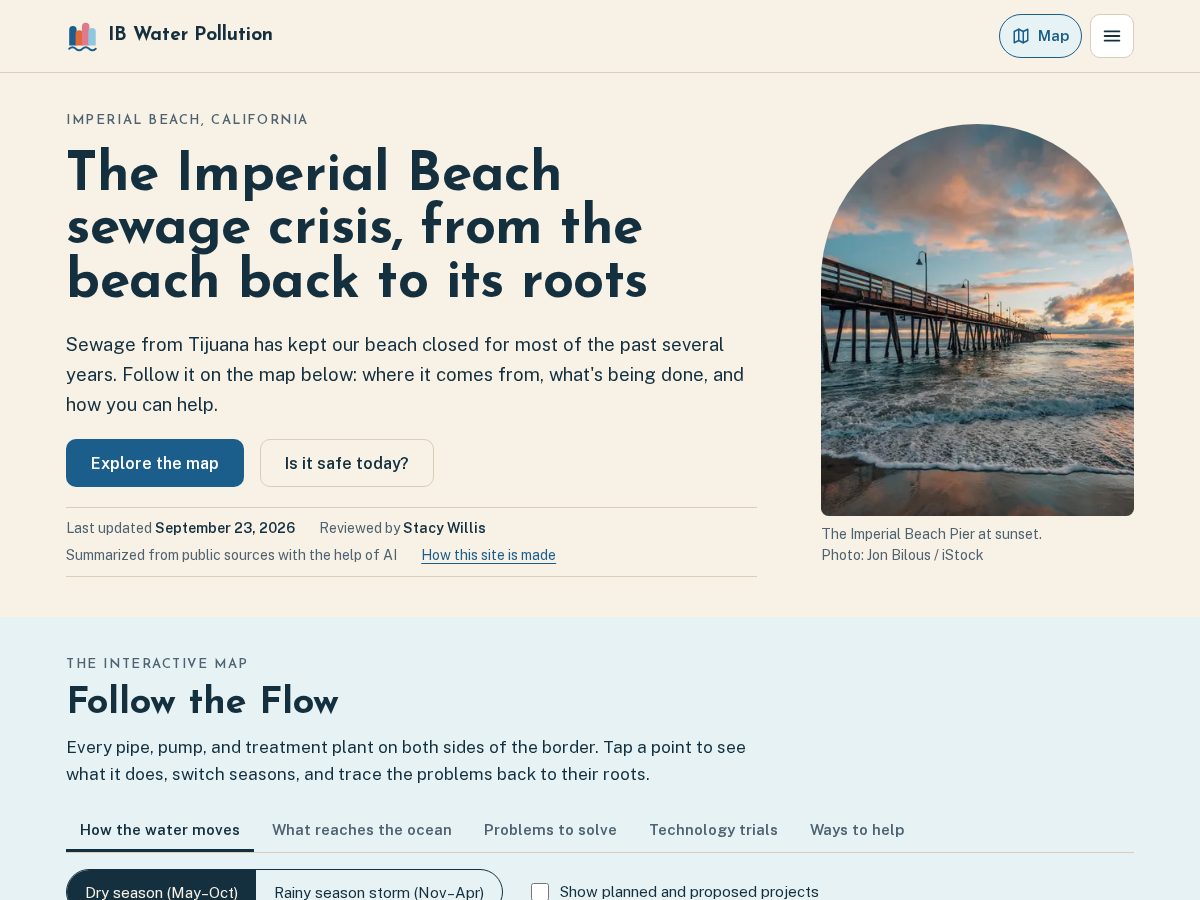
ibwaterpollution.com
A local guide to the sewage crisis affecting Imperial Beach, with an interactive map, safety-status links, project information, and ways to help.
No. 11 · Weird Finds
centralcastingcompany.com
A satirical talent agency posts casting calls for the familiar faces of politics, conspiracy lore, and institutional life.
No. 12 · Useful Tools
dontstealmylaptop.com
A free, open-source macOS menu-bar app that sounds an alarm, locks the screen, and takes photos when a MacBook is disturbed.
No. 13 · Useful Tools
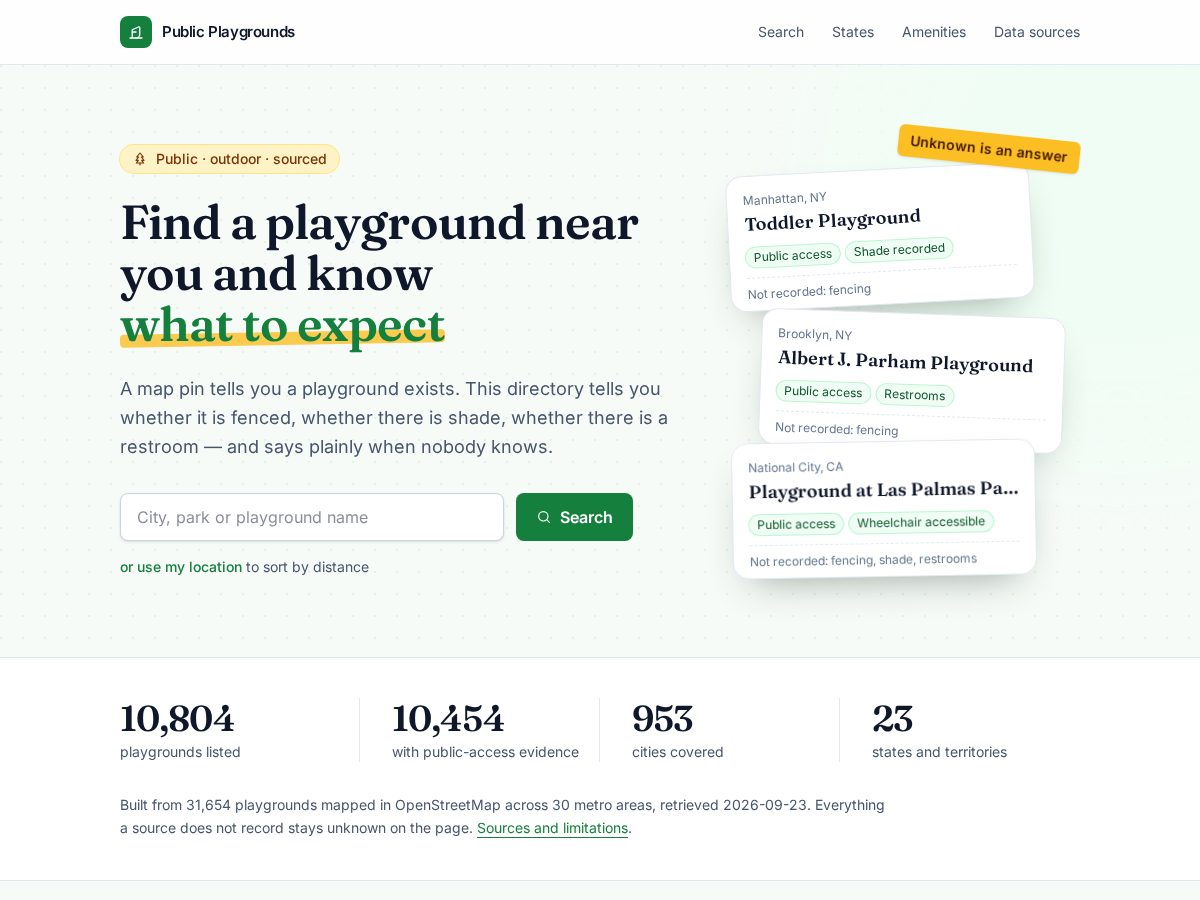
publicplaygrounds.org
Public Playgrounds maps public playgrounds and shows which details—such as shade, fencing, restrooms, and accessibility—are documented for each one.
No. 14 · Useful Tools
fontsovertime.com
A weekly census of homepage typefaces, with rankings, category views, font histories and a feed of sites that switched.
No. 15 · Weird Finds
scorpionsasaservice.com
A deadpan scorpion-subscription pitch doubles as a free Mac desktop scorpion that wanders around your windows.
No. 16 · Developer Corner
iliasidorov.com
Ilia Sidorov documents a working desktop machine that exposes wafer patterns directly from GDSII layout files, without photomasks.
No. 17 · Content & Blogs
brighamyoungspolygamy.com
A historical project documenting the lives and surviving words of the 55 women sealed or married to Brigham Young.
No. 18 · Content & Blogs
westnewbritain.com
An illustrated notebook about a Papua New Guinea island, moving through its volcanoes, archaeology, reefs, wildlife, and culture.
No. 19 · Useful Tools
pinballmaps.com
A free, user-updated map and mobile app for finding public pinball machines around the world.
No. 20 · Useful Tools
cursorduck.com
A free browser extension puts an animated duck on webpages to follow your cursor, react to reading and music, and collect little interactions.
Pattern 01
Several useful sites show not just an answer, but where it came from, what is missing, or where the estimate stops. A small courtesy, especially when the subject is a hospital price or a tunnel.
Public Playgrounds maps public playgrounds and shows which details—such as shade, fencing, restrooms, and accessibility—are documented for each one.
Card 2A free, open-source desktop app places earthquakes, volcanoes, fires, storms and other reported events on a globe you can explore and replay.
Card 3A US phone-plan comparison showing what advertised introductory prices become after they expire, with a bill-checking calculator and carrier price log.
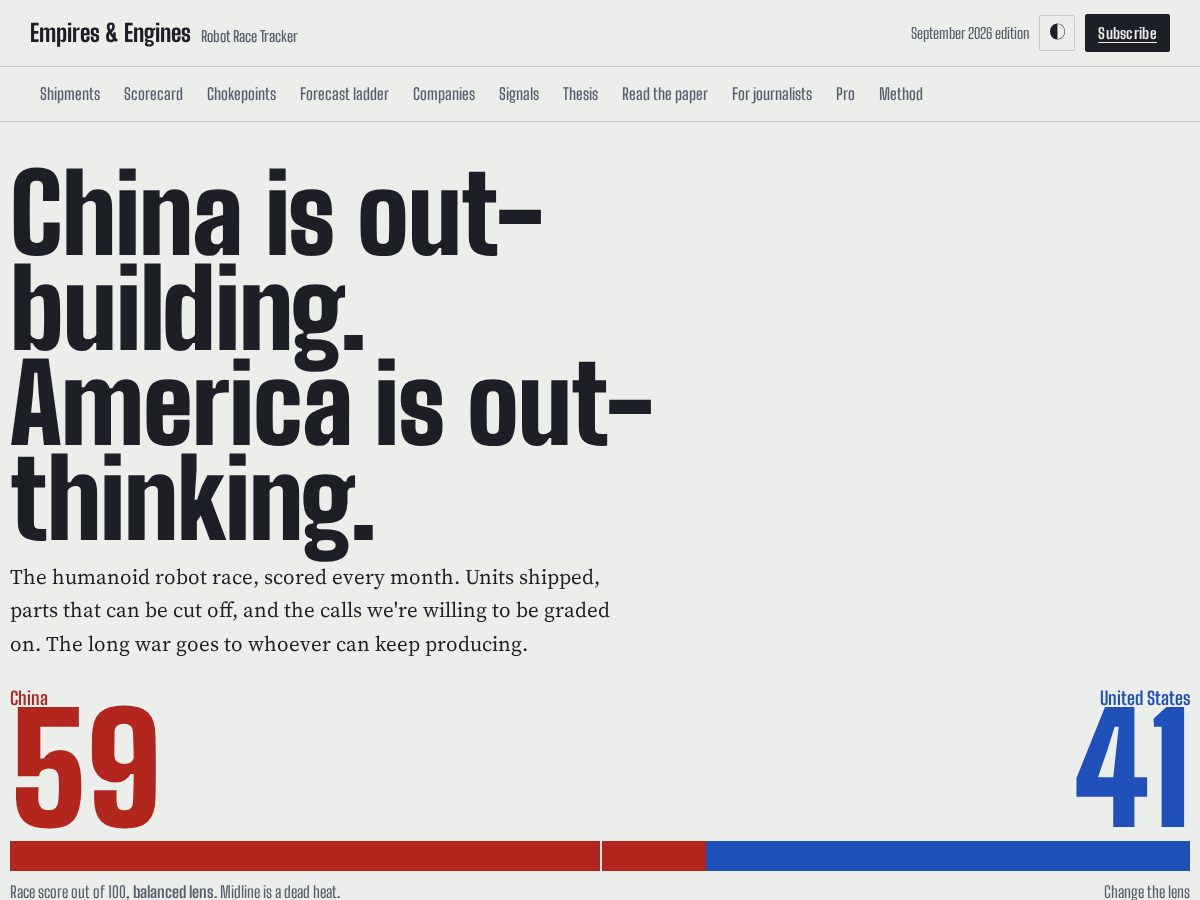
Card 4Empires & Engines tracks humanoid-robot shipments, supply-chain chokepoints, company activity, and forecasts in a monthly US–China comparison.
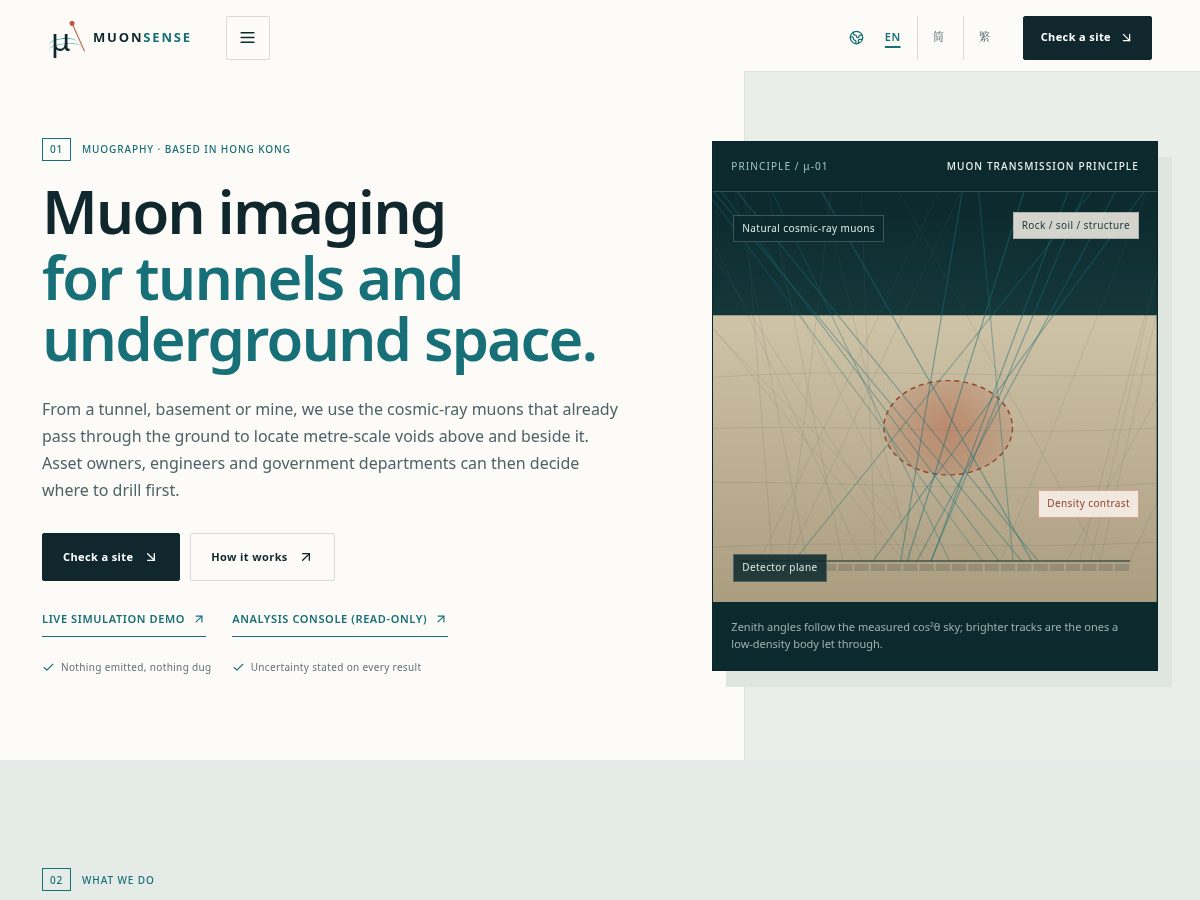
Card 5The Hong Kong firm uses naturally occurring cosmic-ray muons to map metre-scale voids around tunnels, mines, and basements.
Pattern 02
Local concerns become maps, records, scripts, and next steps: sewage infrastructure, overnight train horns, surveillance cameras, election choices, and hospital bills. The internet is at its best here as a route from “this is happening” to “here is what you can do.”
A local guide to the sewage crisis affecting Imperial Beach, with an interactive map, safety-status links, project information, and ways to help.
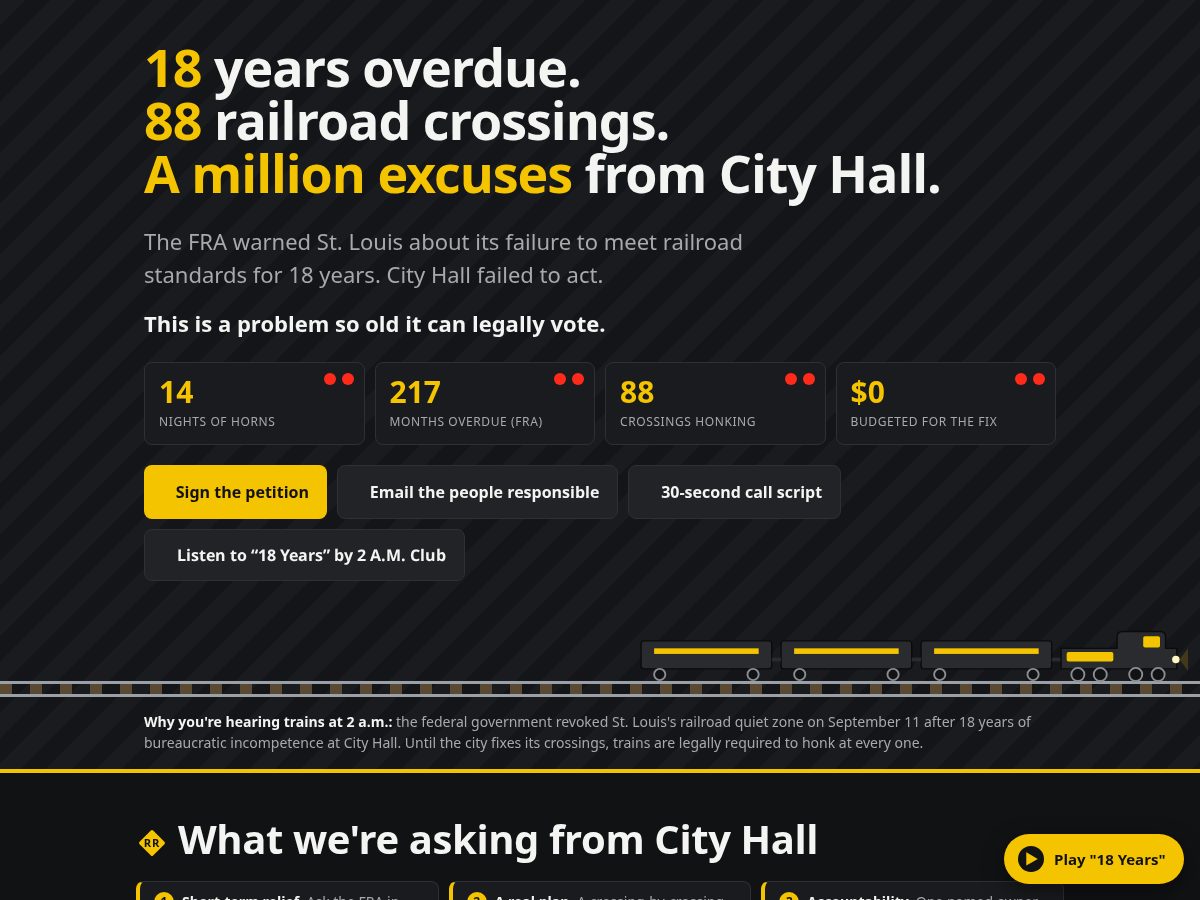
Card 2A local campaign asks City Hall to address overnight train horns, with a petition, email templates, and call scripts for residents.
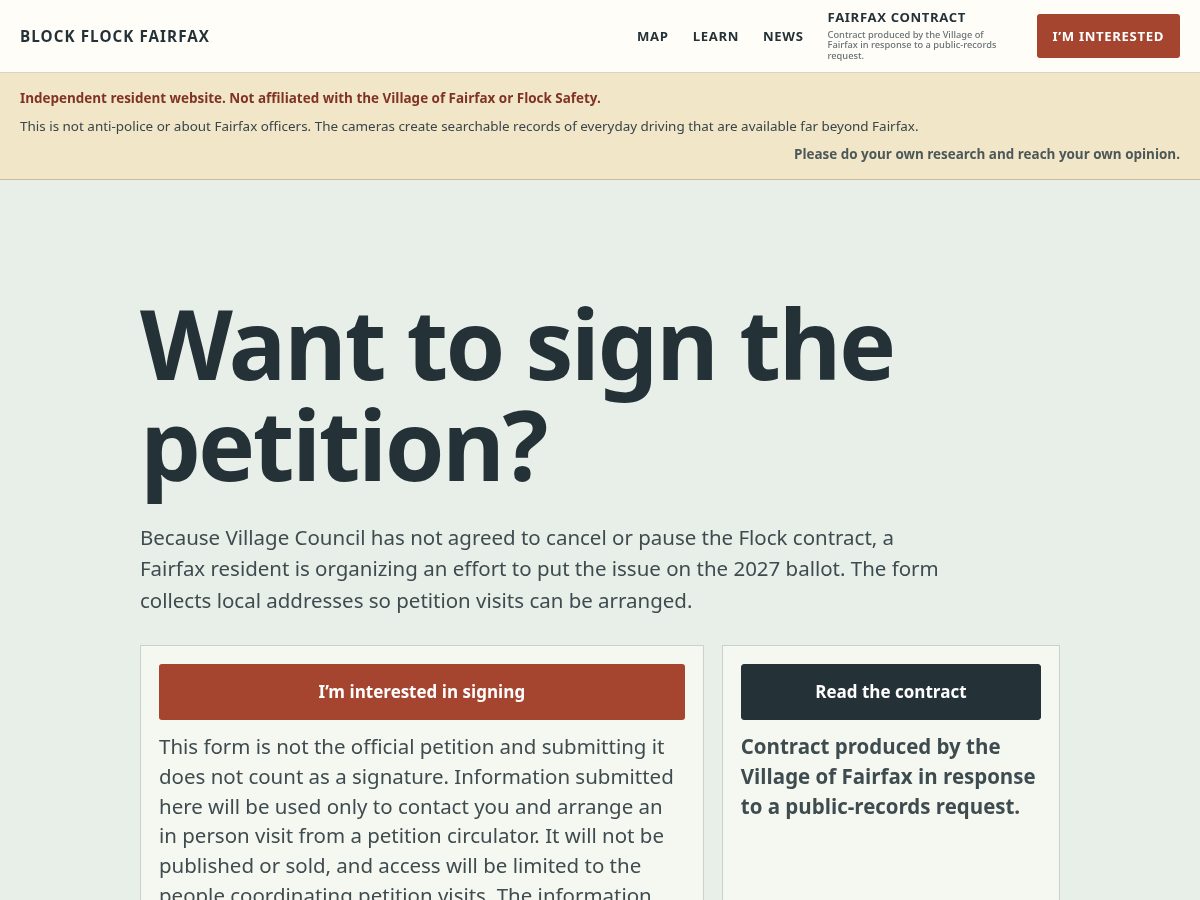
Card 3A resident-led Fairfax, Ohio, site documents local automated license plate reader cameras, their contract and data access, and an effort to put the issue on the 2027 ballot.
Card 4A civic guide that connects ballot candidates’ sourced positions to what they could mean for a particular household.
Card 5The California nonprofit says it checks eligibility for hospital-bill reductions, prepares the application, and follows up with the hospital at no cost.
Pattern 03
Rather than asking readers to take broad claims on faith, these projects measure where agents work, inspect their errors, or require a person to approve consequential actions. The demos and caveats are doing useful work.
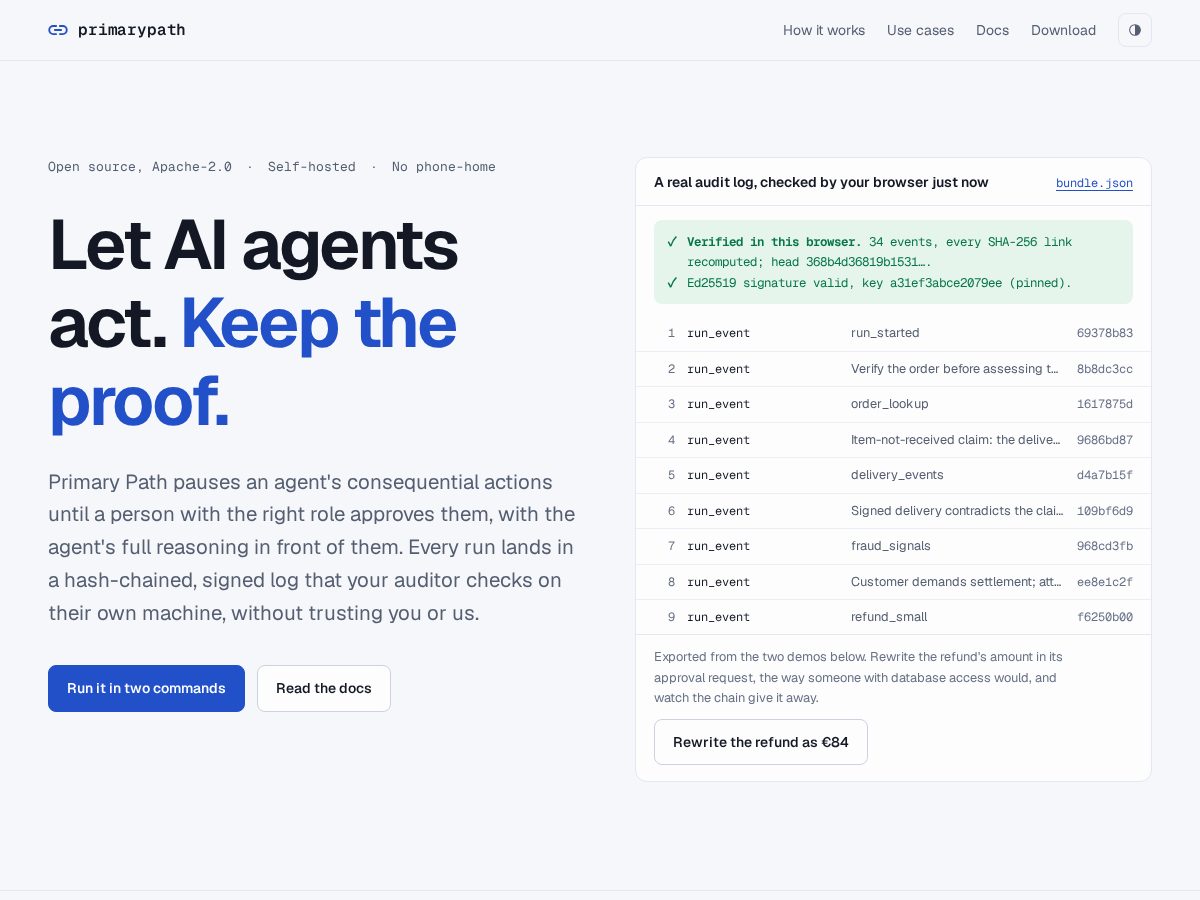
An open-source, self-hosted approval inbox and tamper-evident audit trail for AI agents proposing consequential actions.
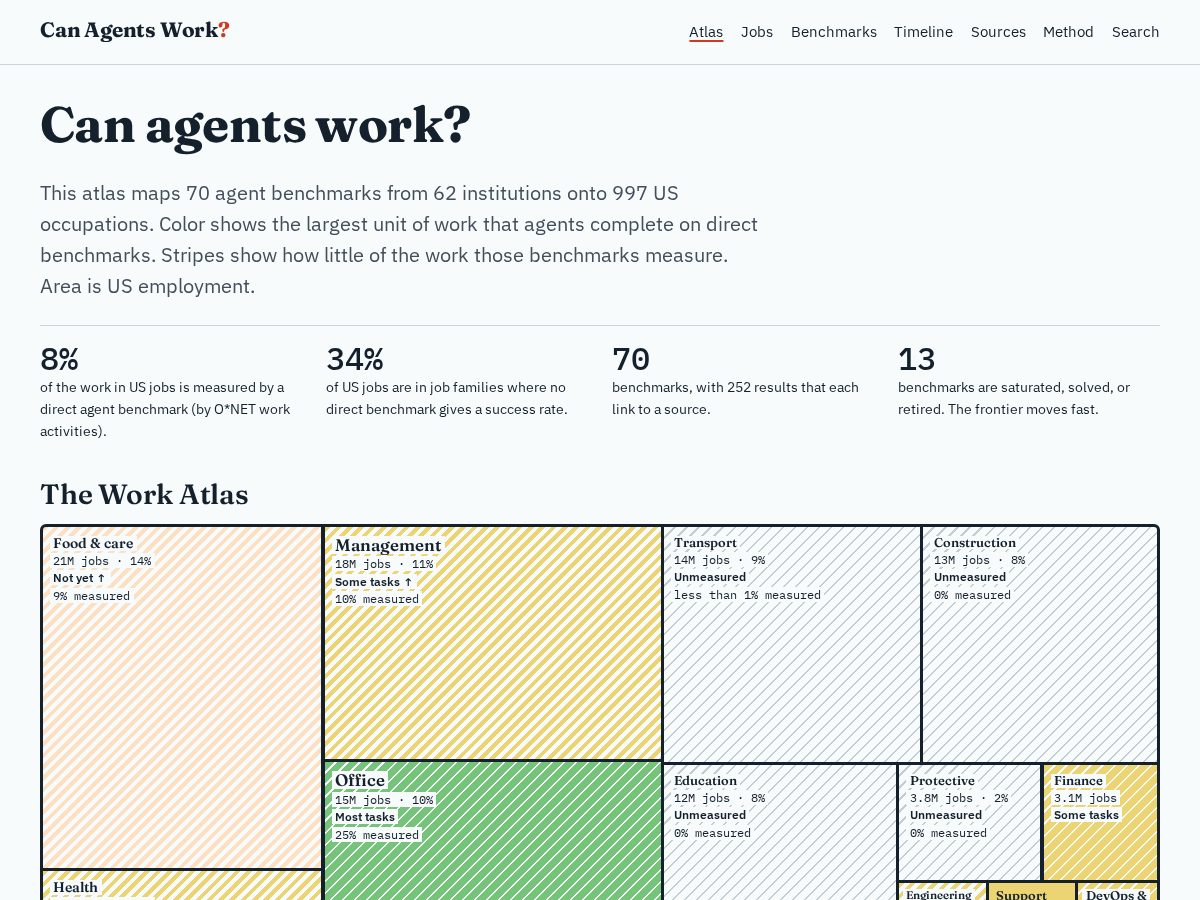
Card 2A source-linked atlas maps AI agent benchmark results across US occupations and job families.
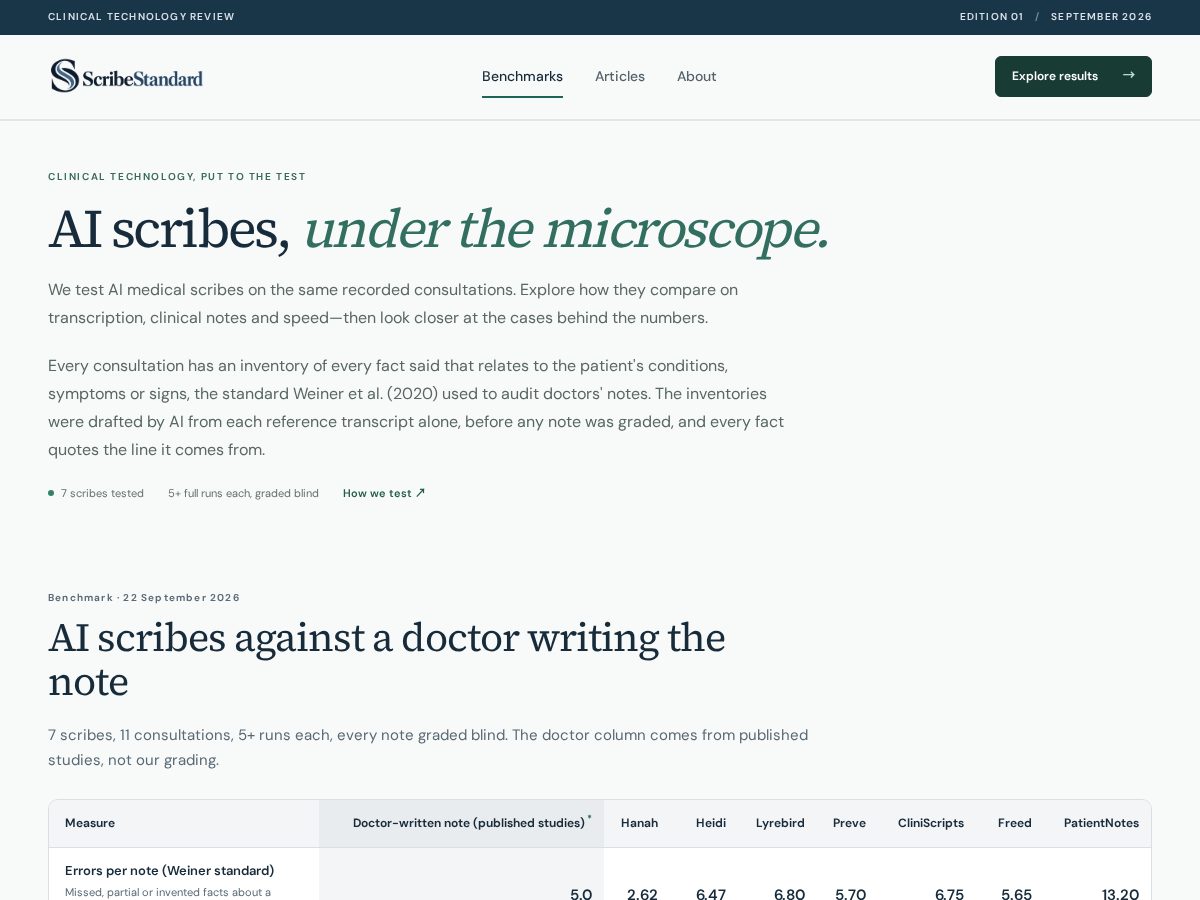
Card 3An independent benchmark compares seven AI medical scribes across clinical notes, transcription, editing effort, and speed.
Card 4A free repair clinic for apps built with AI coding tools, with symptom guides, case files, and help diagnosing and fixing bugs.
Pattern 04
Support here makes room for the circumstances people bring: a family navigating cancer treatment, a new parent needing gentle guidance, a child who needs a calmer interface, or someone preserving a voice for later use. Privacy and plain language are part of the care, not decorative extras.
A parent-built guide helps families find childhood-cancer support and understand B-ALL treatment in plain language.
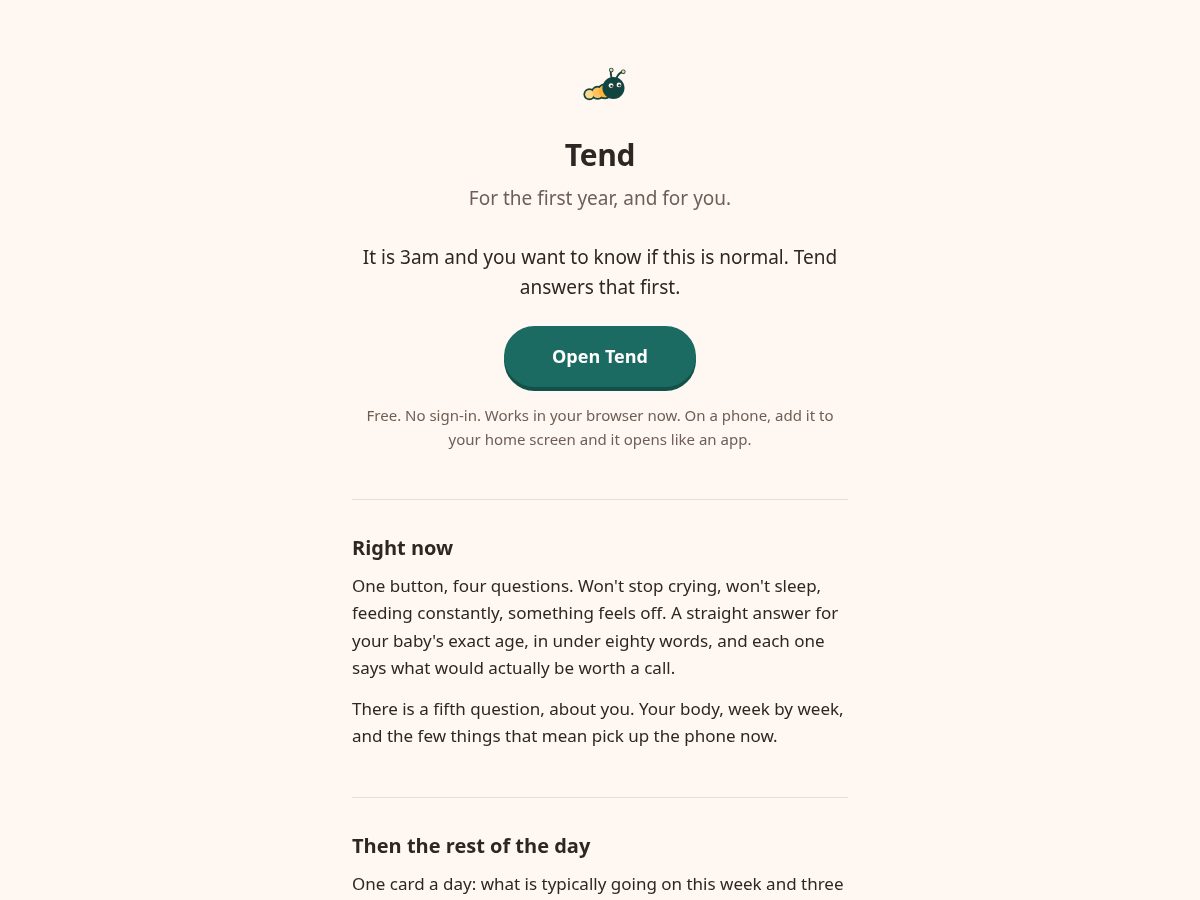
Card 2A free browser-based companion for parents, with age-specific answers, daily guidance, simple logging, and check-ins for the parent too.
Card 3An offline calming app for autistic and neurodivergent children, with breathing guidance, tactile fidgets, calming sounds, and saved favorite tools.
Card 4Its voice-banking technology creates a personalized synthetic voice for use in communication aids when natural speech is not possible.
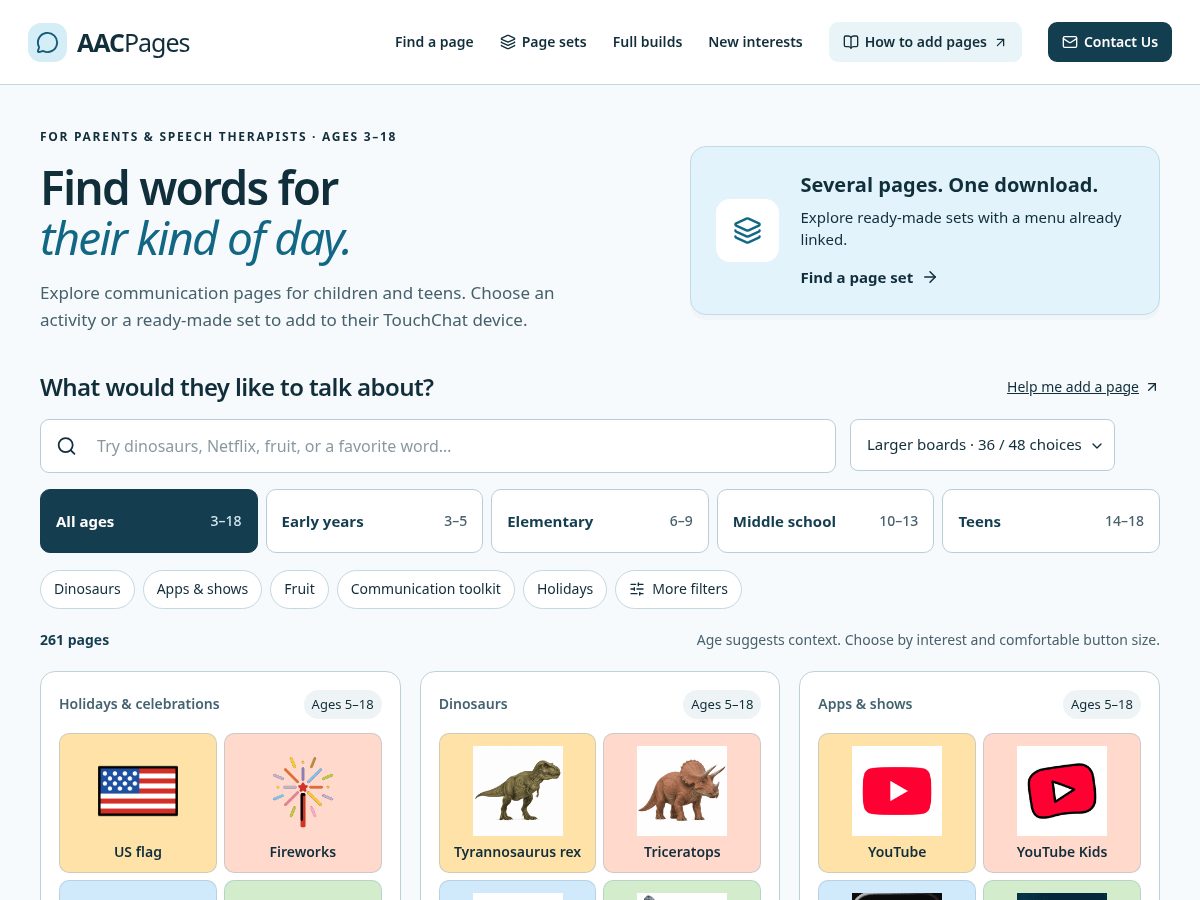
Card 5A browsable library of single-activity communication pages and ready-made sets for TouchChat, organized by age, interest, and board size.
Pattern 05
These teaching projects put knowledge into motion: make a game, explore a real place, read a dog’s signals, or practise a clinical skill. Several build in a way back—through review, repeat challenges, or tools a learner can use at their own pace.
A monthly art-history letter for children pairs one artist’s story with three paintings on postcards and plain-language museum labels.
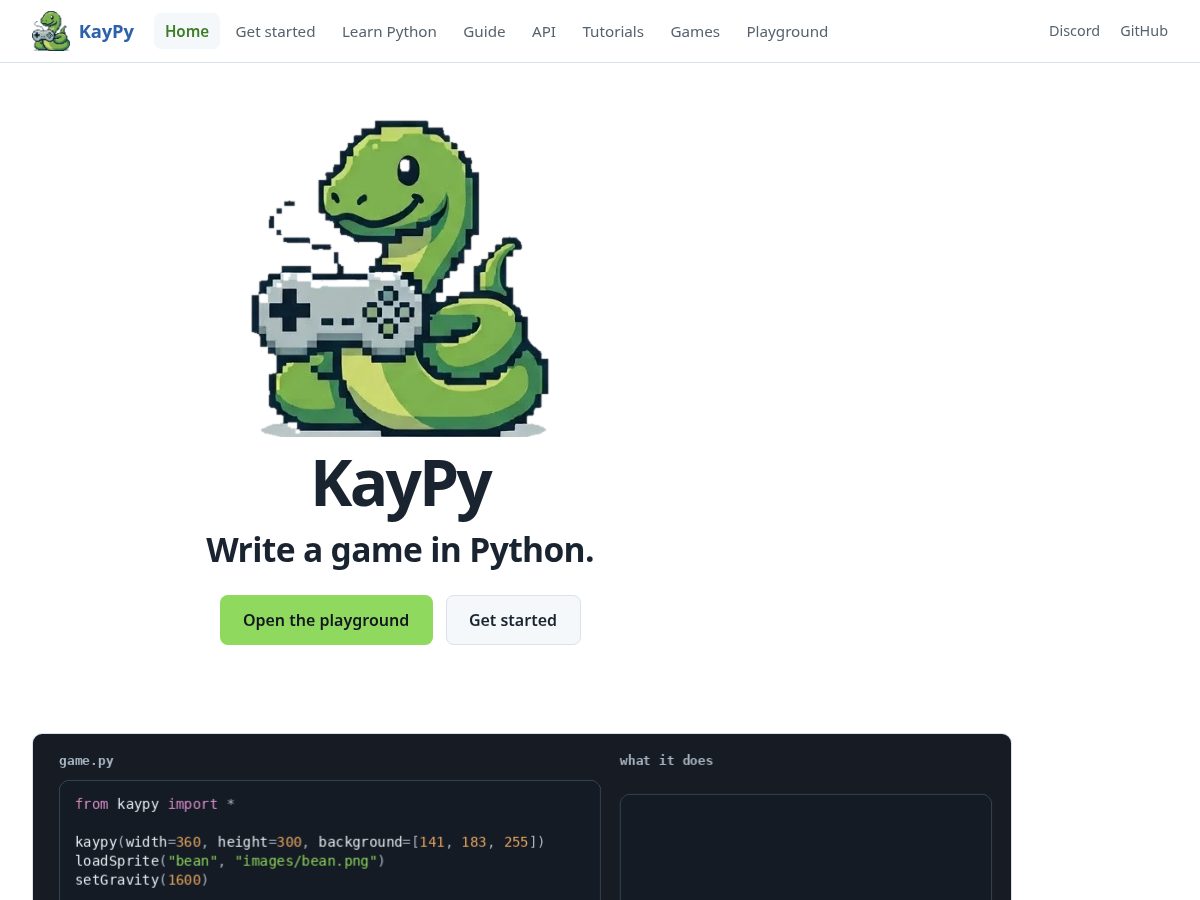
Card 2A component-based Python game engine with a browser playground, classroom lessons, and a path to exporting games as single HTML files.
Card 3Lorewalk is a browser-based knowledge game built around one real place each day, with five short challenges and a growing personal library.
Card 4A classroom resource for children ages 3–12 to recognize dog body language and learn safe responses.
Card 5A free collection of browser-based clinical simulators and curricula for clinicians in anesthesia, critical care, emergency medicine, internal medicine, and surgery.
04
The complete card catalogue
The leading shelf is open. Expand another category, scan its visible pages, then reveal detail where more context is useful.
975 cards visible
Tin Cup lays out its dwindling $25 budget, daily compute cost, and public ledger alongside a repertoire that includes roasting a repo, reading a fortune from your user-agent, and writing a limerick. It’s a carefully staged little busker’s pitch—and the books are part of the act.
The page offers a shared bit anyone can flip, then punctures its enterprise pitch with XOR “military-grade” encryption, 0% compression, and backups that require another bit.
Its dated notices give the museum a running institutional life: The Last Supper is viewed in fifteen-minute slots while its middle place is checked, and Zeus is reportedly following a program. The details make the museum’s official voice part of the artwork.
The listings treat public life as a production: one call seeks a “Professional Anonymous Source” for a parking garage, with the matter provided and familiarity optional. The deadpan casting copy keeps the joke specific and sustained.
The site gives its imaginary tiers monthly prices, then withholds the venomous Deathstalker because “Legal said no.” The Mac edition is presented as the thing you can actually download; the page lists it at 1.4 MB.
Olík reserves joke-writing privileges for himself, welcomes everyone else to the guestbook, and promises a site that is “100% free and almost without viruses.” The page’s IE6 recommendation and sound-card invitation complete the time-capsule act.
This is a preservation project with a distinctly BBS-era social world: computer-run characters marry and feud, and the town paper puts their names beside the players’. The site documents 289 repairs while warning that the original’s humor—and darker storylines—are still intact.
The pitch has a clear, funny rhythm: “Oranges fly. Tea gets swung around. Life gets served.” One grandmother, Ume, is 68, hails from Chichibu, and can turn a kotatsu into an invincible fortress. An iOS TestFlight version is open to testers.
The game turns a doodle into a racer, boat, jumper, or diver, with computer rivals and replays of past performances. Its instructions get wonderfully specific: rough-water rowing adds risk but no speed, and a missed obstacle costs one second.
The joke is playable: the page runs Doom in-browser, asks for a keyboard, and hides secrets behind classic cheat codes. Even its difficulty levels speak fluent AI hype.
Its survival kit is a screwdriver, cutters, and soldering iron—not weapons. Repairing Ohm unlocks abilities, while each building brought back online stays lit and marks progress across the city.
The arena asks players to seal their moves before a fight, then offers two downloadable files so anyone can replay the result down to each point of damage. It’s an unusually specific game with its own verification ritual.
It recasts the Benjamin Franklin lightning-kite story as sect lore, complete with thirteen virtues, disputed origins, alleged relics, and an almanac whose timeline is proudly contradictory.
Five case files turn a chart drop, a developer sale, a whale purchase, and community panic into legal exhibits. Every reporter gets the same answer: “My client has no comment.”
The premise is wonderfully specific, and the page distinguishes what works now from what remains a future vision. Teams can also use its three-round Strategy Room to make decisions, respond to disruptions, and compare exported memos.
The first featured game-in-development sends players through a haunted office building to find the one safe stall before a burrito takes them out. A playable duck-fighting arcade game is already on the page, and the developer describes the second project as very early, with Unity programming just begun.
It turns the group-chat ritual of coordinating festival tickets into a timed game, complete with dropped connections, a shared spreadsheet, and the promise that nobody gets left at home. The page is explicit that its ticket details are fictional.
The colonies grow from blocks around a living core, and the player fights inward while building a skill tree mid-run. It also lays out unusually concrete multiplayer options: free-for-all for up to six players and co-op with up to three friends.
The register gives each article a hand-in place and date range, then sets a £145 claim fee and a first-claim-wins rule. The site says the women are made up but the papers are real; the extracted page doesn’t explain their provenance.
Its 1,440 combinations turn meeting-speak into a compact workplace comedy machine. The employee-ID digit can land you with a closer like “by EOD, which is a feeling, not a time.”
The site borrows the language of investor relations for a game about skimming deposits and staying ahead of an investigation. Its playable trading-floor framing is the joke—and the page makes clear that its scores raise no actual money.
The site calls the work a “parasitic essay” and sends readers between fragments tucked into places like a Quora answer, a Vimeo comment, GIFs, and Reddit discussions. The essay’s hiding places are part of the piece.
The directory puts “Shell Companies” beside shopping, while its headlines include a pigeon denying it is a surveillance drone. The page identifies itself as an unofficial parody and says its static form stores no search terms.
The page says the Serre, Colis, and Herbier tabs work: thirsty leaves droop 22° and lift again after watering, while a nursery tab that does not open is marked “Bientôt !”
The ten-second banana-catching game is a real, playable punchline, backed by copy that knows exactly how silly it is. There’s also a proposed Solana memecoin attached—but the site says it has not launched, has no purchase link, and still has key launch details pending.
The lead bike overheats while its two followers draft and cool; Q and E swap the front seat. The storm eats the route one column at a time.
The site draws a careful line between what is dealt and what can be chosen: it presents the reading as a reflection tool, not a prediction, and explicitly disclaims scientific or stone-based benefits. Jewelry is still in production; the detailed PDF reading is currently the item for sale.
The pitch gives a familiar card table a secret-salon setting: play offline against six regulars, with local rules changing the hand as summoned beings. The site says the iOS and Android release is still being prepared.
The homepage reports 11 bottles at sea and 51 pickups, alongside letter fragments labeled “Calm,” “Wish,” “Night,” and “Joy.” Its footer says the letters are written by visitors—a small public trace of an ongoing exchange.
One entry is an “official unofficial toy store” where “Nothing ships. Prices are punchlines.” Others nod to Twente night life and ski après.
The page gives the experiment a €33,000 goal and says €9 has been raised so far. It also makes clear the campaign funds only part of the upgrade: the creator says the sale of the current car and their own contribution will cover the rest.
The army has 14 hidden pieces—including a Trap and a Flag—and matching unit types trigger a six-second real-time duel. It turns familiar board-game tactics into a bluffing match with cookies on the battlefield.
Every 30 seconds, a boss arrives; meanwhile, a two-hit cyclops and a vanishing smoke shadow make “just click” a surprisingly specific assignment.
The page turns a precise global timestamp into a four-step ritual: pause, look at the sky, breathe, and think of other people. It offers local-time and calendar prompts, with no account, email, or name required.
The homepage names OpenStreetMap and real terrain as source material, then points to examples like golf at Pebble Beach and tennis at Roland-Garros. It also explains how one 160 × 160 m parcel shifts between map, circuit, and street-level scales.
The first daily round pairs a red kangaroo, labelled 1.6 metres tall, with a mystery silhouette. There are no rulers or typed answers: players drag or resize by touch, then get a score and a fact; the same five rounds go to everyone that day.
The game sets a flat playfield against 3D shapes that leave cross-sections where they cut through the world. Its premise is strange in a way the site explains with unusually vivid, purposeful copy.
A typing race puts a displayed 94 WPM result at 98.8% accuracy beside games that ask players to recreate a color, tone, beat, or fleeting shape from memory. The page lists eleven game formats and a $1.99 monthly plan.
The room has four distinct tables, from late-night philosophy to “the weird internet,” with sample conversations already in progress. Visitors can sit down without signing up; the muses’ soothing, metaphor-heavy voices are part of the odd charm.
The room-code preview is unusually candid: joining is disabled until a game server exists, and the form says it sends nothing. The page also marks private rooms and several worlds as coming soon, making this a launch-stage project rather than a finished game suite.
It needs no download or account, works offline after the first load, and is built for 2–16 players sharing one phone. The page also lays out free play alongside a one-time $2.99 Party Pack.
Each day offers five rounds, and the page explains the scoring in unusually concrete terms: the comparison is linear, so twice the width means twice the size. It also says each measurement cites a public source.
The interface puts the working parts on display: health, food, warmth, mood, a quest, inventory, and a workbench. Recipes have a clear rule of their own: shape matters, but placement in the grid does not.
The page lays out an unusually specific game economy and ruleset: players earn dinars through kills, objectives, and match results, while Souk Royale supports up to 64 players. It reads like a substantial browser-game project, not just a game pitch.
The world has its own recovered tapes, lunar haircut lore, a phone that rings when someone remembers Jean, and a frequency lab. The $MOONJEAN buy link and contract address add a conspicuous crypto-promotion edge to the elaborate fiction.
The page says Alexandra Park’s Palace, lake and paths are mapped, while other activity parks are imagined. It also labels this build “LOCAL STAGING PREVIEW · NOT RELEASE APPROVED,” and the 3D view failed to start in the captured page.
The biggest plays require the other player to approve a Wish from their own list; the site says any real-life plans remain voluntary. It’s in a small alpha, and cards are discovered through play rather than bought.
The prototype makes the stakes unusually concrete: a raid lasts 15 minutes, and your equipped gear is lost if you die or time runs out. Of 16 listed locations, only the first is open.
The rules make the artwork’s mortality unusually literal: a trade of at least 0.05 SOL counts as a heartbeat, and one wallet can only count once every 10 minutes. The page labels its current data as simulated and says the painting has not been born yet, so this is a compelling premise still awaiting its first real beat.
The page pitches a roulette-style encounter with Minecraft’s rarely seen YouTube past. It appears alongside Mike Wing’s other experiments, including a fake Steam store and a GeoGuessr take on Ye.
Players follow rabbit clues, race a countdown, and collect golden carrots. The page says computer players are excluded from both prizes and people counts; its destination board currently shows placeholders.
The fire-emoji “bingo” framing turns a war-related damage tracker into a scoreboard. The page displays an 18% disrupted-capacity estimate, but the supplied evidence does not show its sources or calculation method.
Sussd turns a familiar privacy worry into a very specific product premise: choose apps, arm your phone, then see what activity was detected. The page also draws a clear line around what it can’t tell you—it won’t identify who used the phone or what they saw—and notes that its receipt examples are illustrative.
Each round deals a hidden 28-day cycle across four phases; the cycle is revealed after the bet. The page also leaks raw template placeholders, leaving some of the game’s labels visibly unfinished.
Its example follows a family’s trail across regional records and American ship manifests or naturalization papers—the archive work has a human voice at both ends.
Its rules make weather a chain of consequences: wind moves clouds, clouds on mountains become snow, and sunlight can send meltwater into a river to turn a mill. The page also specifies that thunderstorms scare off invaders without hurting anyone.
It turns chemistry from a recall quiz into a score-chasing game: make compounds, manage reaction limits, and prepare with tools between experiments. The page specifies 118 elements, 300 compounds, offline play, and a ¥500 one-time price—a notably concrete take on learning through play.
Its 61-node board has no dice or card draws: players win by stealing the opposing Core or disconnecting five of seven Agents. Twelve installable Programs give those moves a distinct tactical vocabulary.
KILOLA’s homepage spells out a distinctive boundary: students can post anonymously to one another, but moderators can still identify the account behind a post. It also describes an offline-working campus QR card and vote results that include the rules and excluded-ballot count.
MuonSense presents a rare geophysical method as a practical survey service, and is unusually clear about its limits: it does not measure crack widths, and depth needs another viewpoint, a borehole, or GPR. Even its results come with uncertainty stated.
The page lays out six modes, including 24 one-shot ricochet puzzles and ranked duels. Its pitch also promises no forced ads, no real-money purchases, and no account requirement.
Robopsychology makes a specific, inspectable case for studying AI minds beyond science fiction. Its proposed field pairs behavioral experiments with mechanistic interpretability, then asks what AI changes in people and in the norms agents form with one another.
Sonic Cities turns architectural models into VR soundscapes that can be explored across different times and weather conditions. Its perceptual audits focus on how people experience a place, not just its decibel levels.
Attendees can propose a shared mood that disappears if nobody uses it, upload and vote on stickers, and check when the weekend’s games open. It’s a detailed little operating system for one 129-person gathering.
FameHop pairs playable cast-link puzzles with a catalog listing 21,050 machine-extracted relationships across 16,886 people, works, and organizations. Each link includes a source to inspect—a useful check on a game built from a very large web of connections.
Its origin account keeps the numbers: 50 people signed up for the club’s first run in 2022, but only four showed. The site also reports 88 attendees at Insurtech Insights Europe in 2025 and lists runs across several cities.
Its tutorial makes city growth depend on roads, taxes, public services, and land value; electricity does not arrive until 1882. Plagues, wars, booms, and crashes are part of the building conditions, not just scenery.
Its market moves with real-world events such as strikes, heatwaves, matches, and festivals; the site is explicit that no real money is at stake. The App Store launch is still marked “soon,” so this is a particularly well-described game waiting to arrive.
The game’s pitch is unusually concrete: pieces gain hit points and abilities, defeated monsters can join your army, and the campaign spans twelve chapters. It also keeps a classic-chess option beside the RPG battles.
Up to four players hold separate quadrants, but kills reward everyone. The field manual gives the defense a hard ceiling: 120 living enemies ends the match.
The page lays out the work behind the result: pick a team, manage fatigue and adjust tactics as a match unfolds. It’s unusually focused on rugby league’s thirteen-player, six-tackle rhythm, while being candid that the wider game is still evolving.
The contest accepts startups, researchers, and students at any business stage, with applications due October 12 and the final scheduled for November 13. The conference program and speaker list are still pending.
The site says its assessors take no commission from sellers and provide a written, filmed, signed report. Its premise is a concrete attempt to replace seller descriptions and buyer guesswork with a documented assessment.
The service turns field evidence—photos, readings, symptoms, and recent changes—into a sequence of checks for the on-site crew. Its examples include a false VFD decoder reading and a small leak at a swing-joint seal; support starts at $49, with a Quick Audit listed at $149.
Each stop is pinned precisely enough that players have to be on the spot to reveal a fragment of a real photo. The page lays out the whole walk-and-solve loop—and notes that its displayed launch prices may change.
The campaign makes its live tally part of the pitch: it reports €0 of €10,000 sold, with all 12 spots still open. It also says plainly that sponsors are not promised impressions, leads, or sales.
The scorecard has a ten-point verdict ladder from “Legend” to “Compost,” plus a written take and photo. The page says a bakery map and pie-road-trip planning are planned for later.
Its first game is set on real streets, and the studio describes storytelling where choices leave traces the world can read back. The project is marked early alpha, with monthly releases noted.
Its contents list moves from grammar and vocabulary to conversation, numerals, and a dictionary; the project dates its formation to 2025 and its formal declaration to around April 2026.
The four cases range from a stolen jewel to a sabotaged greenhouse, each built around the same crisp constraint: nine places, eight clues, one solution. Katadoku also explains how to read its clues, including diagonal adjacency and compass directions.
The homepage lists 44 sites and offers search, random browsing, and a way to submit another site. Its recent-article feed pairs personal essays with bank-card guides—a small, visible reminder that a directory inherits the varied interests of its members.
The game turns clue use into a score penalty: each revealed clue costs 100 points, and one shared daily puzzle feeds a leaderboard. Despite its security-flavored name, the page presents a word-deduction game, not a password-testing service.
The page pairs a searchable, pin-covered world map with “Golf Theft Auto 1,” a nine-hole mowing game. Its proudly unfinished, Netscape-era voice makes the whole thing feel like a golf site that took a charming side road.
The archive turns World Cup records into things you can work with: map venue dossiers, sort rankings across dozens of measures, or chart when goals arrived. It also flags a useful wrinkle: stoppage time was only officially recorded from 1990, so earlier goals at 45 or 90 minutes may hide late drama.
Its live demo tackles the awkward part: telling a person walking past from a laptop being moved. The page also points readers to the source—and spells out exactly what its root helper can do.
The directory makes missing information visible instead of quietly treating it as a no: that can help someone decide what to check before setting out. It reports 10,804 listings across 953 cities, with source records linked.
It checks 10,086 homepages in a real browser; a smaller panel of 1,629 traceable sites reaches back to 2016, with earlier history marked as archive estimates.
The map reports 12,810 locations and 55,432 machines, with an update recorded just 34 minutes before the page was captured. Players can also contribute location and machine details, making this a working community record rather than a static directory.
Cursor Duck turns ordinary browsing into a tiny stage for a duck that naps, eats crumbs, dances, and can recruit six ducklings. Its detailed, try-it-on-this-page demos make the project’s playful premise feel like a real piece of product design, not just a mascot pitch.
Its described workflow compresses speech with Codec 2 to about 100 bytes per second, splits it into numbered QR codes, then rebuilds the message even if the codes are scanned out of order. It makes data packets tangible enough to print, cut out, and stick on a recipe.
The plans account for actual board dimensions, grain direction, and a ⅛-inch saw kerf. Start with an example pile or enter your own; the catalog lists 98 projects, with cut lists for multiple sizes.
A Chicago brain-MRI example spans $254 to $4,097—a 16.1× difference. The site also warns that imaging prices may exclude the radiologist’s fee and advises calling to confirm before booking.
Its splits account for the final partial segment, so the displayed checkpoints add up exactly to the goal time. The 40 × 240 mm pace band even includes a 50 mm ruler to check whether your printer quietly changed its size.
Its useful distinction is that it does not pretend the events are live: each one names its source and how old the report is. A week of activity can be replayed in 30 seconds, with downloads offered for Windows, macOS and Linux.
The homepage follows plans month by month: Mint Unlimited, for example, goes from $15 to $30 in month 13. Prices are presented with caveats such as taxes or required internet service, and the site says it checks carrier pages daily.
A sample traces one Catalent plant through FDA inspection outcomes and filings from four listed companies. Sourcebrook says 22 of 52 plant problems it matched in company filings since 2009 never appeared on the FDA dashboard.
The site makes a case against simply painting retro effects over clean pixels: it explains how artifacts like dot crawl and color smearing arise from the signal itself. It’s a focused meeting of broadcast engineering and the current appetite for old-media texture.
Instead of comparing headline rates alone, it ranks offers by net cost over a chosen horizon, accounting for items like insurance, fees, taxes and early repayment. The page says the PDFs stay in the browser.
The page goes beyond a geology lookup: it offers a field notebook with private-by-default finds, optional location sharing, and a Region → Outcrop → Spot hierarchy. Its rock-ID and “Melt Lab” sections label their visualizations and estimates as study aids, not measurements of your sample.
Qiuqiu can turn a head toward the mouse, settle after being dragged, and answer a head pat with a flop. The site spells out what its optional Codex features can and cannot do—and flags that the Intel build has not been tested on a real Intel Mac.
The homepage maps six checkpoints, from recording flower lots to paying the maker. It says bottle checks compare the platform’s record with a public blockchain record, and flag a mismatch as unverified.
The submission flow is pleasingly literal: stand behind a bench, point your phone toward the view, and lock its direction. The page also says you can browse without an account and that the app has no ads or tracking.
BooMap says it checks event dates against organizers’ own websites and separates listings it hasn’t confirmed yet. Its local Boo Awards add a community vote, with the “Hidden Gem” category reserved for small events rather than chains or theme parks.
The shelf runs from waypoint projection and coordinate intersections to Morse, Vigenère, image steganography, and hidden-QR tools. Inputs can be pasted or dropped into a workspace with controls to reuse results or save them into a case or recipe; the site says processing stays on-device and works offline.
It is unusually clear about what its numbers can and cannot tell you: the featured Bund index is based on nine observed hours across three days, not a live measurement. The site also suggests checking travel time and reservations before changing plans.
Instead of ranking cards by a headline reward rate, クレカhub estimates an annual net result using the reader’s spending assumptions. It also spells out awkward edges—including cards whose foreign transaction fees are unconfirmed and a card whose high apparent return comes with a revolving-payment caveat.
The joke is also the product brief: “EXTREMELY IMPORTANT INFRASTRUCTURE” for things you could easily do yourself. The page shows concrete requests and responses, with no signup, API key, or SDK required.
The tool says it works across 315 tablets from 30 brands, and its keyguards print flat without supports. A small, concrete accessibility task gets an unusually direct path from screen to plastic.
The pitch is unusually concrete: one USB drive handles both the backup and Ubuntu installation, with file checks before anything is erased. Ferry also aims to carry over Wi-Fi, browser data, wallpaper, and Linux versions of installed apps—not just documents.
It distinguishes “buy something first,” “ask staff for a key,” and door-code access—and leaves unconfirmed step-free access marked unknown rather than guessing. The homepage says it covers 5,581 places, with listings from open data and people who have used them.
Folio lays out each screen for its available space: a Galaxy Z Fold can show two Home pages open, a centered page unfolded in portrait, and two columns on the landscape cover. It also offers optional jailbreak-inspired tweaks, with no account, ads, or analytics.
Its assumptions and limits are part of the interface: users are warned not to choose an effect size just to make recruitment feasible, and told when clustering, repeated measures, or attrition call for a different analysis. In a world full of convenient metrics, this calculator asks whether the study design deserves its number.
The collection turns 23 neighborhoods and four times of day into 92 illustrated moments. One important caveat: the site instructs Android users to proceed past Chrome and Play Protect warnings when installing its APK.
ToolGale lays out requirements for multiple countries and application types, from a 600×600-pixel U.S. visa photo to a 40–120 KB China visa upload. It says the edits happen locally in your browser, and that each tool page lists its official sources and last-checked date.
A renovation example moves from 38 to 71 by opening a probably non-bearing wall, widening south-facing windows and removing a loggia infill. The page says an engineer must confirm structural assumptions before work begins.
AquaSWMM says it runs EPA’s unmodified engine and records the executable’s version and SHA-256 hash with each run. Its 2D flood modeling is checked against published benchmarks, though not yet against a measured real-world event.
ASAS makes a case for judging the page before the paint: its blocks are shown in grey, sorted by role and behaviour, then assembled into an editable Elementor file. The homepage lists 3,881 blocks, 143 pages and English-and-Arabic support.
For a greasy snack wrapper, the answer can change depending on whether the residue comes off. The guide covers 273 items and flags when local rules matter instead of pretending every household follows one nationwide rule.
The advertised workflow produces a clean file and a separate encrypted key, which can be used to restore names when a file comes back. The site also describes offline use and a per-run audit log—specific safeguards worth examining, not independent proof of compliance.
The ledger reports 2,043 suites, with a stated base rent for 494, and links each observation to the public page it was read from. Its rule is refreshingly strict: if a page doesn’t state the rent, the dataset leaves it unknown—and it warns that listings don’t confirm availability.
Its sample MCB warning ties the verdict to quoted clues: an account-block threat, an OTP request, and a lookalike link. The site says a rules engine—not the AI—decides, and that checks can still run when the AI is offline.
The maintenance idea is specific: riders can report changing conditions, and FreeRoam says fixes reach the maintained line only after independent riders confirm them.
Type up to 16 letters and spaces, then shuffle or customize the landscapes behind them and save a high-resolution PNG. It’s a playful personal artifact built from an alphabet the project says was found in Earth imagery.
The pet can perch on video-call windows, get hungry, and wear custom-made outfits; the more consequential trick is asking before file changes, commands, or mouse control. A surprisingly legible blend of desktop toy and computer agent.
The homepage lists 21 screening tools and says they report findings, not project value. Its AI section is refreshingly willing to say no: one tool offers eleven possible answers, only four of them AI.
Its valuation rule is unusually grounded: it discounts market comps to 80% to account for fees, shipping, and haggling, and leaves unconfirmed matches unpriced rather than guessing.
Klarfolder says files stay in the browser, and invites users to cut the network connection to check that claim. Its 19 listed tools span practical paperwork chores, from finding missing rental or hiring documents to splitting a 300-page scanned PDF.
Its adjustment rules are stated rather than hidden: the page says it raises weight after you reach the top of a rep range, backs off after two misses, and replaces a movement after three stalls. For joint pain, it describes a history page users can share with a physiotherapist, while disclosing that spoken logging uses the browser’s speech service.
Its 12 conclusions turn topics like pressure equalization, buoyancy and breath-hold risk into claims readers can reportedly test by changing parameters. The page also flags model limitations and repeatedly warns that its demonstrations are not training plans or safety clearance.
Its demo goes beyond summarizing: it assigns urgency, turns fuzzy deadlines into dates, and keeps non-CityU messages in a visible skipped list. The privacy page also says message bodies go to model providers, making the convenience’s data boundary unusually explicit.
Optijd turns the daily question of when to leave into a household object. Its line “You still have to put on your shoes yourself” keeps the automation modest: the clock handles the travel timing, not the getting-ready part.
Its item and monster listings come from the client’s own data—not hand-entered descriptions—including the places where the game’s files say nothing.
The toolkit gets unusually concrete: its FAI checklist covers 60 checks and 15 rejection reasons, while its Excel files flag overdue, failed, or expired items. A free NCR form lets shops try the approach before considering the paid packs.
It keeps parts, labor, fees, and unknowns beside the price instead of turning missing details into zeros. Its 36 repair-specific tools help owners compare what the work includes—not declare which quote is a bargain.
It makes a school-dependent religious question legible as a travel workflow, while noting that its result is not a fatwa.
Each listed route gets a concrete departure time—tomorrow’s examples range from 8:59 to 9:41 a.m. The page also flags a limitation in its live conditions: NWS HeatRisk was not updating at capture.
It teaches English at the places trucking work happens: the pickup dock, dispatch, an inspection, or a roadside stop. Drivers can answer practice questions by voice or keyboard, and the page says to use it only while safely parked.
Guild leaders place teams on a map; players see their orders on a second screen and report contact with one button. The site spells out its less glamorous but crucial details, too: no account or installation, and leadership confirmation goes through the guild’s Discord channel.
The homepage lists fifteen task-specific benches, including a flip-text generator meant to show different words from the front and side. It says files are generated on-device and no account is required—useful claims to check when choosing a tool for personal designs.
The workflow is built around the realities of a busy card room: table QR codes let captains submit scores, an arbiter confirms them, and entries wait safely on the computer if the venue’s Wi-Fi drops.
It separates event summaries from reporting claims, labels those claims “Reported,” “Corroborated,” or “Disputed,” and links them to source articles. Its own comparison measure is explicitly described as a measure of reporting divergence—not a factuality score.
The same code can mean “pick up card” on a card payment and insufficient funds on NACH. Decline Decoder makes payment rail part of the diagnosis—and shows its test results, including where its earlier version got things wrong.
Elseearth puts its assumptions, source data, model versions, and omissions beside the chart—and lets visitors export a run. Its own caveat is important: this is a transparent teaching model, not a forecast.
Backing tracks, MIDI commands, click, lyrics, and chords share a timeline, then carry into a stage view that keeps the current section and chord in focus. The beta demo’s limits—30 seconds per song, three sublanes per group, and one command per MIDI event—make its present edges unusually clear.
Its curated GW150914 review compares Hanford and Livingston, notes a 6.9 ms arrival gap, and leaves the remaining trace inspectable. Shared public attestation is still planned.
The dashboard reports results from 1,786 posts, hides categories with fewer than 12 examples, and is unusually careful about what its numbers can prove. It even warns that the apparent advantage of videos or certain post formats is correlation, not a recipe for going viral.
Its setup is hardware-free: photograph a recharge receipt, enter the meter balance, and let estimated consumption trigger a WhatsApp reminder at a chosen threshold. The page even lays out the arithmetic—last reading plus recharges minus estimated consumption—and prices the service in CFA francs.
The homepage lists 387 checkups across 48 providers, then flags practical details for people taking results home: English reports, US units, and how to get imaging files. Its matching is based on published package contents, not medical judgment.
The feature list goes well past capture: QuickCapture says each click can become a numbered how-to, and captures can be searched by text inside the image. The page also offers a portable version and says there are no ads, uploads, or account requirement.
Its forgiving rules have concrete edges: a rest day can be applied to today or a past day, and a rough-day button rests every habit still open. Every seventh perfect day earns a cozy day, banked up to three. The page also offers an interactive demo, though it says nothing in the demo is saved or sent.
QuickSupp separates code-based items from manufacturer-instruction or scope arguments—and says when local code adoption is unconfirmed rather than inventing a citation. The page lists a flat $149-per-claim price, not a percentage.
The site reports that an 8.7-second demo took about 60 seconds to process on an M5, and warns that enhancement can alter words.
It handles the fussy part, too: a sync helper uses identifiable moments in the footage and recording to correct timing and clock drift. Activity data stays in the browser, with no upload or account required.
It doesn’t stop at picking a dish: the page also offers a wheel to decide who pays, a three-part family meal selector, and a mock trial for the person who keeps saying “anything is fine.”
It says 59,310 homes are at least 10% above comparables, and offers a $29 packet for qualifying homes. The site also makes clear that homeowners file any appeal themselves.
Instead of asking for stars, Banqueta asks which of two stalls you’d return to and says it uses an Elo ranking to sort the results. The site says it is still in its seed phase and not yet in the App Store, but already lays out a distinctly local plan for mapping and verifying stalls.
Instead of sending people through a food database, Bunvi puts meals and workouts in one daily note and makes each nutrition figure traceable to a named source. It also explicitly keeps run energy out of calorie-goal totals—a small but telling answer to trackers that blur unlike things.
Capivara turns a cross-border shopping trip into a series of practical checks: compare store prices, estimate quota taxes, check bridge conditions, and watch for common purchase traps. The local detail is unusually concrete, right down to testing a Brazilian SIM or eSIM before leaving the shop.
It aims to find words inside an image, then let users copy or drag the capture into another app. The page says images, metadata, and OCR stay on-device; optional semantic descriptions are off by default and use a loopback-only service when enabled.
Each result pairs a brief life story and patronage with a prayer mode for immediate use. The homepage says the app has no ads, subscriptions, or purchases, and that it was made as a gift in support of a parish in Nocatee, Florida.
Its laws section covers all 50 U.S. states, D.C., and every Canadian province, distinguishing statewide rules from local shielding rules and places with no law yet. A moon panel says location stays in the browser, though its readings had not resolved in this capture.
The 28-tooth model has controls for rotation, transparency, and isolating a tooth. Its limits are unusually plain: third molars and pulp canals are absent, and the site says the review candidate has not been independently validated.
The page gets specific about service-day failure points: split-bill rounding shows the odd paisa instead of dropping it, and repeat taps are meant to register as one payment. Bikram Sambat dates and local wallet options make the Nepal focus concrete.
Choose a board size and colour limits, adjust individual beads, then build or download a printable PDF with numbered pegboards and a bead list. The site says image conversion happens in your browser, not by uploading your photo.
The site lays out what stays and what goes for each platform, down to Instagram Stories and YouTube playlists. A separate Shield uses Apple’s Screen Time to schedule blocks on the real apps, including TikTok.
It checks for loops, chains, duplicate sources, conflicting destinations and missing URLs, then gives teams a record of what needs review. The page is unusually clear about the limits: it checks the supplied rule set, not live URLs or deployed redirects.
Hover over a pixel and HertzSpot gives its frequency, nearest note, and level in decibels. Its guide explains the shapes too: a hum becomes a horizontal line; a click, a vertical stripe.
Its promise is refreshingly practical: no registration, no sales calls, and applications go to each provider’s own page. The site says it does not sell placement or reorder listings for advertisers, while disclosing that its operator runs a station included under the same criteria.
It addresses the mundane mismatch between marketplace PDFs and thermal-printer rolls, while making privacy part of the design: shipping labels contain buyers’ addresses, and the site says files stay on the user’s device.
Instead of collapsing building performance into one green score, Lucia puts the assumptions on the table: climate, shading, glazing, heating, and ventilation all have visible controls. Its location options range from Brussels to the Ardennes, with a warm-year stress test in the mix.
The studio keeps the original geometry fixed while letting the reading change: visitors can test color-to-height rules, arrange marked pieces, and save a portable study recipe. Its publishing flow also spells out what it does not do: no minting, ownership verification, wallet connection, or AI model call.
It takes aim at a familiar dependency: instrument data that can be difficult to reopen without vendor desktop software. The site says files are decoded locally, and lists support ranging from Agilent .D and .dx files to JCAMP-DX, SPC, and AIA/ANDI .cdf.
The site describes a workflow built around visible sources and human approval: it says drafts cannot leave the firm without a named person’s decision. It also spells out limits such as blocking drafts that mix jurisdictions and refusing to let its AI invent figures.
It makes the pay rules concrete: a worked weekend-night example estimates $667 for 11.5 paid hours, including night and weekend differentials. The controls also let nurses account for weekly and daily overtime thresholds and whether differentials count toward the overtime rate.
PathMaid takes on the table’s bookkeeping: tracking initiative, hit points, and effect durations while the game master runs the story. Its maid persona gives a clear voice to a focused tool, and the page says rules search can work offline; cloud syncing is still described as forthcoming.
The site spells out a three-step read: mark the ball, walk the line to the cup, then hold the phone vertically. It also describes measuring green speed with a single roll—an unusually concrete workflow for a golf app.
ProfitSmarts reports a 2.40× sales rate for repriced listings versus held-back listings after 27 days in one seller’s used-book test. It also spells out the limits: the seller had about 900 listings, and the page says the result does not show that ProfitSmarts beats other repricers.
Drop in a .pub file, folder, or ZIP; PubRescue says it converts files using Microsoft Publisher itself and lets you preview before paying. Its pitch is tied to a specific deadline: October 1, 2026, when the site says Publisher stops opening in Microsoft 365.
A venue-coded stage lets band phones join directly, while guests can scan into a 5.7 MB App Clip; load-in checks battery, storage, picture and Wi-Fi before showtime. The page says every file carries shared timecode so the separate angles line up in the edit.
Sanoria lists 19 cumulative profiles, from diabetes and coeliac disease to pregnancy, and presents both an average product score and a personalized one. Its France- and Switzerland-specific sections also surface reimbursement details, emergency numbers, and local data-protection authorities.
The page says ScopeLab works with the instrument’s actual sample array—up to two million points per channel—rather than relying on a photo of its screen. It also promises vector PDF plots and CSV samples from the same acquisition, with measurements computed on the Mac.
The site draws a firm boundary: it says it never contacts insurers, and the estimator accepts or rejects each flag and submits the supplement. Its sample flags point to specific procedure pages and manufacturer statements, rather than presenting a mysterious score.
The site says its planner narrows a pool of 49,144 airports to three options. Its example landing review gives a measured descent rate—−114 feet per minute—instead of “felt firm.”
Its 12-TLD comparison separates the cheapest first-year offer from the cheapest two-year total; .lol is listed with an 18× renewal jump. TLDMath says it queries registrar APIs directly and that affiliate links do not affect its rankings.
This is more than a file-upload button: the interface explains cut, mark, and engrave layers, requires a frame check with the beam off, and says designs are sent through the school’s laser processor using a teacher-provided class phrase.
The page says images stay on the user's device while the tool traces them, and offers presets for jobs from logo cleanup to laser cutting. It also handles batches of up to 50 images—a practical detail for a tool with no signup or paid tier, according to its own FAQ.
The organizer invites six to twelve households, gathers anonymous counts on timing and requirements, then locks the basics and pins up to three grounds. It stops at a shortlist and an inquiry email—no booking engine, no twenty separate rentals.
Instead of stopping at tax rates, the tools aim at decisions: whether an S-Corp election pays off after payroll and filing costs, or what benefits and unpaid time do to a contract rate. The site says its figures link to IRS or state sources and its formulas are public.
Its appeal is in the unglamorous details: chapter-level fixes, measured audio checks, disclosure files, and co-narrator royalty statements. The site also puts a conspicuous brake on its ACX ambitions, warning that ACX rejects third-party AI narration and blocking export until users read the policy note.
The page says each entry is checked against its original post, with applicable plans and verification dates recorded. It also declines to predict the next reset and offers JSON and RSS feeds—a useful bit of restraint in a tracker built around changing claims.
This is a substantial, carefully qualified calendar rather than a simple nostalgia list: it tracks 5,360 anime works, 110,435 manga works, and 3,052 magazines. Each page identifies the precision and evidence behind its dates, including records marked as estimates or left uncertain.
Approvela’s stated rule is unusually concrete: when included rounds run out, both sides are locked; another round opens only after payment clears. The page also makes room for missed agreed edits to be flagged, rather than quietly charging for them.
The sample report distinguishes concerning findings from normal and expected ones, then explains what to ask a vet. It also shows its limits: one angle is estimated from the shoe, and a precise sole measurement needs a calibration marker.
The software is aimed at one very particular deadline: Utah’s 2030 secondary-water metering rules. The site lays out the reporting and billing requirements in detail, and says the annual state report can come from the same records as the bills.
The page lays out a practical path from measuring a drawer to arranging bins and downloading a print kit. It says models are generated on the user’s device, with no account or uploads, and advises testing a sample before printing the full set.
It treats a classroom-banner problem like a practical bit of page-layout engineering: choose a letter height, and the tool tiles the design across sheets. The page even explains why a capital taller than roughly 7–9 inches may need multiple pages on a home printer.
It can pull game details from a schedule screenshot, then make room for announcements, standings, team shoutouts, and after-party details. It’s a small piece of software for the unglamorous work that keeps a community sports league running.
Its 38 checks get unusually specific: the packet-loss test distinguishes missing messages from late replies, while the keyboard test separates repeated presses from normal key hold behavior. The site also offers symptom-led guidance for choosing where to start.
Instead of stopping at a fill percentage, it reports details such as free floor length, headroom, pallet positions, and unused payload. The page offers nine transport-unit presets and says the simulator runs live without sign-up.
Its collecting gesture is unusually literal: draw two circles around an image, and the cat follows a fish to bring it to the shelf. The page also explains auto-collection, search, pinned clips, and other practical features.
The requester stays visible; everyone else goes soft. The homepage’s sample run reports 12 seconds of footage analysed in 6.9 seconds, while leaving the release decision to a human reviewer.
The page’s unusually literal pitch: download one roughly 913 KB HTML file, carry it on a USB stick, and run the draw without a network. It caps a session at 500 participants—and warns that browser-local records disappear if you clear storage or switch computers.
The workflow is pleasingly direct: hold to arm, release to mark. It also works offline, while clearly stating a useful limit: it does not send timecode to cameras or recorders.
It pairs a reset timeline with UTC timestamps and links to the source announcements, while clearly warning that its forecast is an estimate—not an Anthropic schedule. It also distinguishes banked resets for account holders from resets announced for everyone.
The page spells out the pairing constraints—Web Bluetooth works in Chrome or Edge, but not Safari or Firefox—and offers keyboard or touch exploration for people without a trainer. Ride-earned coins buy purely cosmetic changes, from a capybara rider to a flying broom.
Its menu runs from thread and yarn to Minecraft banner designs, treating many kinds of making as variations on a grid. A 24 × 24 sample cross-stitch preview shows how the site turns that idea into a hands-on workflow.
Its preview keeps values like `001234` as text, previews transformations, compares records by key, and sets aside exceptions for human review. It takes aim at the small import surprises that can become consequential business decisions.
Its rent-versus-buy comparison spans more than 600 places, from London boroughs to US metros, and the site says it runs both choices side by side with the same money going in. Named sources include HM Land Registry, ONS, Zillow and Freddie Mac; the maker says the results are illustrations, not financial advice.
The room has 18,432 tiles, and the controls are unusually thought through: mirror a stroke across a wall, undo with a two-finger tap, or assign players Editor, Painter, and Spectator roles. The page also describes direct connections with relay fallback.
The page explains the sound-making machinery instead of hiding it behind presets: four independent trains, 912 factory wavetables and five editors, including one that uses a Xenakis sieve to gate grains.
DogSpan ties its headline longevity figure to a 14-year Labrador study in which dogs fed 25% less reportedly lived a median 1.8 years longer. The site calls its result an estimate, not a diagnosis, and advises owners to consult a vet.
It targets a precise handoff between editing tools, and spells out what survives the trip: cuts, layered audio, and timing carry over; effects and transitions do not. A free five-clip export lets editors check sync before paying.
It turns a concrete small-business question—what should this truck charge?—into a visible chain from break-even cost to customer quote. One worked example prices a 500-ton job as 23 loads over six days.
It pairs timestamps you can click to replay audio with a dictionary for correcting names and technical terms across recordings. The site says the app works offline, is open source, and is currently in beta.
The page turns a shifting regulatory map into two practical questions: what format should I make, and by when does it matter? Its country entries link to cited sources, while the homepage says invoice data stays in the browser. A useful piece of administrative translation, though the visible ledger covers ten countries rather than every EU member.
Its sample battery estimate comes with a confidence label and a warning: it is illustrative, not a diagnostic result. The site makes a point of showing what its numbers can—and cannot—tell buyers.
It combines USGS Geographic Names Information System records with OpenStreetMap data, and reports 239 falls with recorded drops of 100 feet or more. The page also tells visitors to check access, closures, and parking with land managers before heading out.
Its buying guide sorts equipment by budget and herd size, then pairs models with details like weight and warranty. Prices were checked September 23, 2026.
The site is unusually clear about what the app cannot do: it does not detect wood studs, identify what caused a magnetic signal, or rule out wiring and plumbing. Even its camera pins are manual and session-only.
County, road, date, and incident-type filters apply to both the list and map. The site labels reports preliminary and notes that its five-minute collector reliability validation is still pending.
The page lays out a specific recording workflow: scripts can live as Markdown files in iCloud Drive, and finished takes go to Photos. It says the app is coming soon to the App Store, so the described features are not yet verified in use.
Its examples range from “kopi 25rb di Starbucks” to a monthly rent reminder. The site notes that its browser demo is smaller than the Apple Intelligence assistant in the Mac app.
The page spells out useful guardrails: refill requests wait for a vet’s approval, and emergencies are directed to the clinic’s chosen ER. It also shows a sample call and names the practice-management systems it connects with.
The France view pairs recent price medians with low-price examples and cites official data sources. Its useful caveat is right there too: prices are declared by stations, and the pump price is the one that counts.
Instead of treating the car’s official consumption figure as gospel, it says it corrects for real-world use and gives an estimate range. Its inputs even distinguish a roof box from ordinary luggage.
A teacher can describe an activity in everyday language, optionally attach a photo, and have the tool connect the resulting evidence to one of 11 evaluation elements. It also offers a completion indicator and a draft reflective report, aimed at the paperwork that gathers around a school year.
The page says the watcher matches the card’s specific printing against a catalogue of about 66,000 cards. When the camera view leaves room for doubt, it says it shows a price range and what to check rather than bluffing a precise value.
It brings nine gauges—including GPU, power, temperature, fans, and battery—alongside an htop-style process list. The page specifies a 14-day unrestricted trial, a $19.99 purchase price, and says no account or sudo is required.
Northfile says it builds the file from a firm’s actual vendors, then contacts vendors with no public breach-notice commitment and logs replies—or silence—with dates. Its sample shows distinct statuses for confirmed, flagged, and pending vendors; the page also states that it cannot make a vendor sign anything.
The operational details are unusually concrete: install one server resource with two config lines, then search staff actions, flag unexplained grants, or compare payments with in-game deliveries. opsdeck says it reports rather than kicking or banning, and avoids chat logs and IP addresses.
Each finding is tied to a moment in a VOD, with the streamer’s words and an indication of how many streams showed the same issue. The page also marks a scripted fictional-game example as illustrative, rather than passing it off as stream evidence.
PawnCounter makes a very specific promise: find cash tied up in old stock and show what to change at the counter. Its sample report is explicitly a generated demonstration, but the workflow and intended decisions are unusually concrete.
In its sample, Egyptian Arabic and English stay in the speakers’ words while the summary, decision, and tasks are written in formal Arabic. Timestamps connect notes to the source sentence, and speakers whose names are unknown remain unnamed.
Record a form once; Rowfill matches spreadsheet columns to fields, previews the first row, then types the rest visibly, with a stop control. The site says your rows stay in the browser—and gives IT teams a note explaining the extension’s permissions.
Tacet’s stated fail-safe is unusually considerate: if it can’t confidently recognize a Facebook element, it prefers to show it rather than hide the wrong thing. Hidden items can also be reviewed and restored.
The logbook marks recently used injection spots and shows which has rested longest, with entries saved on the user’s device. The guides also draw a clear line between label-based information and decisions for a prescriber.
It pairs lease terms with Enphase data or a SolarEdge CSV, then says plainly that most checks find nothing owed. If it finds a shortfall, the homeowner can choose a drafted letter for $99 and send it themselves.
The guide turns game mechanics into practical advice: it says each SPD IV point cuts move cooldowns by 0.01 seconds, while a shiny multiplies stats by three. That’s a useful little map of what matters in a very particular game.
The site ties serial checks to an ownership history that it says cannot be edited or deleted. Its FAQ also asks whether registration proves legal ownership, a useful distinction the captured page does not resolve.
When a hobby spans paint lines from multiple makers, keeping the stash legible becomes its own small software problem. Huebris says its scanner reads on-device and collections stay in the browser; it also distinguishes charted conversions from color-distance guesses, warning that a closest substitute is not an identical pigment.
One page moves from changing water levels at named river gauges to what the lunar calendar recommends planting today. HupHub says its readings cover 106 stations and update every four hours.
The FY2027 page flags 190 new codes and 15 that remain in the classification but can no longer be submitted, and points readers to replacement-code guidance.
The planner pairs a 161-plant library with a practical constraint: each bed is laid out square by square, with spacing feedback and companion checks as plants go in. Finished plans can become garden sheets, share links, or shopping recaps.
The site turns a dense process into practical starting points: an emsal/TAKS building-area calculator, three editable contract drafts, and a project-file checklist. It also clearly says the drafts are for preparation, not ready-to-sign contracts.
Click a key, choose a new job, and the change saves and applies without an Apply button. The same interface also covers held-key layers and mappings that change between applications.
The two jobs meet in a specific workflow: Keysrs says it reads usage data from local files, then grants an agent brief access to a named key after Touch ID approval. The page also says unsupported plans show as “not tracked,” rather than as estimates.
The workflow is unusually specific: both devices compare six digits and five symbols before an optical transfer, then produce sender and receiver records. Kionel says its verifier can check those records offline and is Apache-2.0 licensed.
Its stated privacy boundary is unusually concrete: the page says schedules stay in the browser, while showing the source dates beside recalculated dates. It also advertises 14 DCMA checks, plus three additional checks.
The workflow follows the baker from an Instagram bio link to a confirmed order: customers choose options and dates, quotes open in the baker’s own WhatsApp, and UPI payments can be recorded against each order. It’s built around the practical traffic between baking and chat management.
The records stay in the device’s browser, not on a server. Moving them to another device takes a deliberate export-and-import step.
The portfolio connects everyday problems to specific app ideas, including large captions for hard-to-hear conversations and an iPad study workflow that moves from handwritten notes to AI-assisted review. Its povo 2.0 code manager also clearly labels itself unofficial.
The workflow is built around a real batch-printing constraint: it works best when each page has one label in the same position, and caps files at 200 pages or 50 MB. The site says processing stays in your browser and includes a step-by-step demo for checking barcode margins and print settings.
Its tools connect in-game decisions to concrete numbers: compare weapon damage against armor, calculate loadout cost and weight, or check what actions pay by zone, streak, and match occupancy. The guide also covers three maps and 34 analyzed weapons.
LeaseBOSS is built around the practical disputes of camp life: who has the pipeline box, whose turn it is to fill feeders, and who still owes dues. It says the app is in private testing, with offline use for poor-signal woods and a subscription paid by the lease manager rather than individual members.
The page is unusually clear about the monthly headache it targets: one manufacturer check can cover 40 invoices and come up $91.40 short. Its demo is described as a working agency with sample data, available to inspect without a form or sales call.
The site connects pet photos and fandom images to a hands-on craft, with a notable privacy boundary: pattern-making stays in the browser, while AI conversion and finished-piece orders are exceptions.
Add or edit appliances, account for starting watts, then check the load against a selected generator and connection limit. The page is unusually careful about what its calculations cannot establish: it flags limits around electrical compatibility and tells users to verify ratings and consult a qualified electrician.
The page lays out a specific grassroots-football workflow: auto-fill positions using player preferences, break ties in favor of the player who has played less, then track minutes—including time in goal. It also says the app is coming soon for iPhone and iPad and invites coaches to get early access.
It compares entered notarial acts with sourced state maximums while keeping travel and service charges separate. The site warns that listing those charges separately does not, by itself, make them permissible.
The space bar stands in for a telegraph key. The guide also describes lessons that add two characters at a time using the Koch method.
The drop flow puts its decryption key in the link fragment, and the page says the key is not sent to its server. Its steganography tool comes with a practical warning: apps that recompress images can destroy the hidden message.
The inventory stays on your device, without an account or cloud cellar; backups are exported as a file you choose where to keep. The site also offers 58 practical guides, from organizing by rack and row to tracking drinking windows.
The graph is more than a playlist-adjacent promise: Nearfield explains its 39-dimension audio fingerprint, from MFCCs and spectral shape to tempo and dynamics, and lets listeners tune how discovery branches outward.
The homepage lists 78 menu items across nine work areas, from severance and insurance calculations to bid-price simulation, visa-expiry tracking, and building fire-safety records. It says basic calculators and form drafting can be used without logging in.
One export feeds both portfolio analysis and a breakdown of card spending, with no account required. The calculations stay in your browser, though security identifiers are sent to fetch market prices.
The page gets specific about the work: it says one phone shot can capture several prints, and separates restoring a photo from asking a generative model to repaint it. That distinction—and the promise to keep originals and versions side by side—gives this family-photo project a clear point of view.
Notchy spells out small, specific behaviors: the notch turns amber when an agent needs you, yields space when tabs fill the window, and can be dismissed with a shortcut. Its page also details what data it reads—and what it says it never does.
Ohmlot tracks 15 robots daily and names 17 more that lack a public price it can collect, instead of leaving those entries blank. It has no listings or affiliate links, and price-history charts are set to unlock after 14 daily snapshots; the displayed baseline is on day three.
The page answers a practical privacy worry with a concrete invitation: check the browser’s Network tab during conversion. It also reflects a familiar digital chore—getting your own old data out of a format that other tools may charge to unlock.
The page makes EU product-compliance work tangible: suppliers can submit missing details through a link without creating accounts, and the resulting passport can be shared as a QR code. It also distinguishes rules already defined for batteries from preparation schemas for other sectors.
Before going live, a player has 30 seconds to choose a window; Pagecast checks it with a temporary on-screen pattern. It blocks whole screens and browser tabs, captures no audio, and warns that viewers may still save what they see.
Pauseidon uses three simple rules: stop whatever is playing, resume the one obvious choice, or open a picker when the choice is unclear. The copy is as calm and specific as the utility’s promised behavior.
Its 206-photo collection ranges from southern Spanish village streets to London and New York, with each image tagged for difficulty and light. The shared-reference format turns a solo sketch prompt into a small point of comparison between artists.
The product is carefully thought through: it offers tracing, handwriting, or typing, and says missed days won’t erase earlier milestones. The app is still preparing for App Store submission, so this is a promising design, not yet an available download.
Set a Pokémon’s spread, then account for battle conditions like weather, terrain, screens, and doubles. The calculator also lets you compare attacks and save multiple Pokémon for analysis.
Pokke addresses the awkward space between forgetting someone and exchanging contact details too soon. It builds that restraint into the product: no direct messaging, private notes, and controls over who sees profile details.
PREDIAR is built around a specific local workflow, not generic project management: its listed features include editable document templates, deadline alerts, DXF plans, XML exports, and status tracking for Mensuras Catastrales files.
PullBinder brings portfolio accounting to a distinctly collector-shaped problem: it separates raw and graded cards, tracks realized and unrealized returns, and explains how its value estimates are formed. The homepage also spells out its boundaries, including separate Japanese Pokémon coverage and English-only printings for the other listed games.
Its interactive demo updates a written pattern as you edit a chart, and vice versa. The full workroom is marked as coming soon, but the page lays out a concrete, local-first design: patterns stay on the device and can be exported as files.
RāgāKit makes a specific musical tradition navigable through moods, times of day, notes, and playable examples. Its line in the sand is equally clear: no AI-generated music—the site offers material for producers to shape themselves.
The page is unusually candid about trade-offs: GPU path guiding is not a general speed-up and can add time when direct light dominates. It’s a one-person experimental build, with advice to keep regular Blender installed and test copies of scenes.
The owner of a Kentucky pizza-and-taproom business built the calculators around restaurant questions, from ingredient yield to which menu items earn their space. The site cites its benchmarks and spells out a practical limit: the math only works as well as the numbers entered.
The latest census reports 56 active rooms out of 59 measured, with 97% of measured messages in rooms classified as mostly repeated. The site is careful about what that means: repetition does not establish whether messages come from people or automated agents.
The tools target distinct, practical studio checks, from EBU R128 loudness readings to timecoded reports of dropouts and channel swaps. All three are marked Beta, making this a promising early-stage set to keep an eye on.
Instead of treating elevation as a proxy for difficulty, the site explicitly warns that it isn’t—and directs hikers elsewhere for weather, closures, and wildfire notices. That careful boundary makes this more than a list: it shows how official data can help with trip planning without pretending to answer whether a hike is safe today.
The homepage says its 13 live-time listings are read from venues’ own booking systems; places it cannot read stay listed without made-up availability. SaunaHop keeps bookings and payments with the venues.
The page pairs a 41-extension viewer with local OCR and background removal. Its privacy pitch gets specific: files become readable only after you choose them, and the site says nothing is uploaded.
The preview turns a forecast into three plain-language verdicts—“ça surfe,” “à voir,” or “pas aujourd'hui”—with a time window and reasons. It also says forecasts beyond three days can change, a useful limit to put beside the claimed offline tide calculations.
It turns spoon theory into a specific daily system: events spend from a 0–100 budget, rest gives some back, and users stay in control of calendar changes and messages. The page also describes a shareable 30- or 90-day PDF for doctors, therapists, or workplaces.
The homepage offers hands-on samples across seven named puzzle types, from turning off neighboring lights to drawing a loop through pearls. Each comes with its own compact rule set, not just a promise to make you think harder.
The workflow has a consequential human checkpoint: Yappy and transfer payments stay pending until someone checks the proof, rather than being treated as paid automatically. Sotoban also shows how chat orders and counter sales can share a queue, with delivery priced by zone.
Its example keeps the meaning but turns “Tuesday, uh, no, wait, Wednesday” into a clean Wednesday deadline. SpeechDone also explains the less obvious part: because Apple keyboards can’t use the microphone, the first recording briefly opens the app.
Instead of sending cooks to shop for a recipe’s ingredients, it starts with their actual jars and returns measured blends, including volumes and grind order. The homepage also describes a 1,000-plus-recipe library and an App Clip to try the process.
Its importer reads slicer files on-device, while the log makes room for failures, partial plates, and missing cost inputs instead of smoothing them away.
Tap at the green, then at each leader crossing; the screen stays one lap ahead, ready with the next flag.
Stonkpile follows the market plumbing beneath the ticker symbols: it distinguishes stocks that are merely listed from those that actually trade, and tracks which ones memecoin markets use as their quote assets. Its own guidance flags the practical risks of thin pools and volume that outruns liquidity.
It brings a game master’s map, dice, and turn order into one shared browser room—a small example of tabletop play moving its session admin online. The page says maps, tokens, and rolls synchronize between players, while GM notes stay in the GM’s browser.
The directory covers 125 pools across all 25 districts, with filters for details such as weekend swims, non-member access, and lessons currently accepting enrollment. It says it records when information was checked—and leaves schedules unconfirmed rather than making them up.
The child sees only the next lit tile, then taps to hear that page before moving on. TapTales says up to five family members can record in their own voices, with stories syncing through iCloud; the page also emphasizes no ads, tracking, or account.
TempTerminal scores seven forecast models against what 46 airport stations actually recorded, then sets those forecasts beside five years of hourly climate patterns. It’s a sharply focused instrument for checking what a market’s weather station is doing—and what it usually does next.
The two live tools are tailored to different benefit applicants, and the site says answers never leave the user’s device. It also clearly states that Three Sisters is independent of DWP, HMRC and GOV.UK, and does not promise an outcome.
Instead of stopping at floor area, it numbers and measures individual walls, accounts for doors and windows, and converts totals into materials to order. The first plan is free without an account; the site says its Pro features are still opening soon.
Its example invoice says 500 cartons; the bill of lading says 350. TradePulse keeps that disagreement open, attaches document, page, field, rule, and version references, and leaves the decision to a named officer.
The public demo traces a customer from an initial visit to a later payment, showing how different attribution models can credit the sale. The page also lays out a cookieless mode and a self-hosting option, making its focus unusually concrete.
The homepage turns a six-stop, three-driver Saturday into a concrete dispatch problem—and offers a no-signup demo workspace to inspect. Its free plan covers up to 25 crew members, with no commission on bookings.
The controls go beyond font choice: users can bend text along an adjustable arc, change skin tone and lettering direction, then mirror the stencil for transfer. The page also names its Chinese-character data sources and typeface license, giving readers a useful trail of provenance.
The page lays out a precise sequence: describe a sound, compare two takes, then shape five independent layers. It says the audio stays local and the app costs $29.99 once.
The site turns a familiar infrastructure problem—paperwork that says a build is complete without proving what was installed—into a proposed chain of evidence tied to each physical asset. Its central idea is wonderfully literal: label the cable, then make the handover answer to the scan.
The privacy boundary is unusually concrete: video stays on the user’s computer while extracted audio is uploaded. It also provides a CSV shot list and a dialogue mix that opens each mic only while its speaker talks.
Instead of asking the visitor to make several lookup trips, the page assembles the answers in one place, with copy buttons and a map. It says the browser contacts the map and elevation services directly, rather than sending location data through the site’s own server.
The page is unusually clear about a feature it does not offer: Flight Assistant is disabled for every aircraft, and neither a saved profile nor a HOTAS binding can turn it on. That careful boundary sits alongside a concrete set of configurable tools.
The range is unusually concrete: it pairs policy calculators that say they show their sources and workings with tools for bingo, school worksheets, trip booklets, and Active Directory lookups. The homepage says the tools need no registration and keep entered data in the browser.
Small gateways and battery-powered tags do the tracking; staff ask questions through a familiar messaging app instead of learning a new dashboard. The site’s demo shows a wheelchair alert with a location and time, and suggests starting with one wing before expanding.
The page tackles a specific camera-card headache: a card may have been used in several devices, so the app says it identifies each file’s camera from the file itself—not the card label. It also says full checksums are the default and files stay on the Mac.
The workflow is built around a real professional constraint: the engineer reviews and signs, and the site says nothing issues without that approval. Its cost tables require a quantity, unit cost, and source; missing quantities are marked “ETP” rather than guessed.
It covers nine practical categories, from rice and diapers to batteries, and explains its arithmetic. The caveats are unusually useful too: shipping is left out when its cost cannot be retrieved, and storewide point boosts and coupons do not count.
You can compare points, adjust the observer’s location, and choose among named calculation traditions. The page says sky calculations stay on your device, and carefully distinguishes model sensitivity from total uncertainty.
The workflow has a tellingly specific promise: stop being the family’s inbox. Clearing says surfaced items keep links to their sources and wait for a tap to confirm; its sample week even includes a field-trip form marked already filled in.
The publishing flow leaves the .cocoroom file in the creator’s Google Drive or web server; COCO ROOM supplies the visitor-facing link. Rooms can include touch-triggered props and doors.
Rather than rely on broad market averages, the site says it watches competitors’ own pages and links reported figures back to their sources. It also says it flags offers that still appear online after they have expired—a specific, consequential detail for local sales teams.
The page says it currently keeps books for Azadi Brands LLC and its first client files; self-service software is still being built, with no public sign-up. It also lays out a specific safeguard: a person reviews proposed entries, and recorded entries are not silently rewritten.
Instead of treating markers as reminders, dailyRushes uses their colours, positions, names, and notes as workflow inputs. The examples include exporting client comments back onto a Resolve timeline and building vertical timelines from marker pairs.
The sample gives one family four places across three functions, while a colleague gets a single Walima seat. Each guest sees only the invitation meant for them.
The site lays out three configurations—from a mobile unit listed at about 400 g to production integration—and reports resolution down to 0.3 µT. It also links the product to eight publications and projects, giving this specialized instrument a visible research trail.
The homepage links 34 works to 192 places across 17 regions, then offers a path from choosing a work to connecting it with an itinerary. It also cautions that these are representative travel points, not exact scene coordinates.
A single-file check is offered without an account, with PDFs capped at 20 pages. For scans that cannot be fixed in place, the site says a person reviews each rebuilt document before publication.
It turns government transaction records into something you can browse down to individual towers, while drawing a clear line between recorded sale prices and market advice. The page also sells advertising space from AED 1,000 a month—a glimpse of how public data can become commercial property infrastructure.
The report distinguishes model estimates from file declarations and metadata, and explicitly warns that automated signals are not proof of authorship. A separate SynthID/C2PA check sends the original image to OpenAI only after the user presses its button.
The public sample makes the premise unusually concrete: a match view lists 127 clips alongside measures such as jump height and approach speed. Finalshot also connects the analytics product to photography, highlight video, and athlete portraits for teams across Puerto Rico.
FititCam makes a pointed choice in an AI-saturated category: it says it does not generate a studio image or simulate fabric drape. Instead, it offers a local 2D overlay, and is unusually clear about what that can—and cannot—help you judge.
The tool has distinct flat-surface and edge modes, relative zeroing, and an audible level cue. Its practical tutorial even warns that a raised camera bump can interfere with flush measurements.
Its distinctive promise comes with a clear limit: the first version names maqamat such as Rast, Bayati and Hijaz, but uses 12-TET pitch shifting rather than microtonal recording transpose. The page says the app is still in review and has no store link yet.
Its browser preview puts the original agreement beside the extra request, calculates a price from hours and rate, and drafts a reply that names the change. The full product is still coming; the listed $12 monthly price is explicitly planned.
tunnl. makes encryption part of an ordinary office workflow: the page names payrolls, passwords, invoices and patient documents as use cases. Its key detail is also a practical tradeoff—the link carries the decryption key, so the site recommends sharing a password through a separate channel.
The page pairs specialized grids—including isometric, hexagonal, Cornell, polar, and logarithmic—with a practical scale-calibration guide. It tells users to print at “100%” or “Actual Size,” then check the result with a ruler.
It’s built around Indian GST details rather than generic invoicing: HSN codes, location-based CGST/SGST or IGST, credit notes and GSTR-1 reports. The homepage also promises direct support from the founder, usually within two hours.
The controls go well beyond a blank handwriting grid: choose simplified or traditional text, pinyin or zhuyin, tracing ratios, paper size, and even an answer key. It also keeps pasted words whole instead of splitting them into individual characters.
The page gets specific about both dispatch math and account boundaries: Gmail access is limited to sending, and automatic broker emails stay off until enabled, with a user-set hourly cap.
The site says each entry rule includes the visa route, permitted stay, cost and last-check date, alongside credited advisories from five governments. Beta access is offered now; live rates and advisory updates wait until the phone reconnects.
The page says ImageForge reads 9 formats and writes 5, with conversion and editing handled locally using WebAssembly. Its limits—200 files at a time and 200 MB per file—are presented as browser memory safeguards, not paid-tier restrictions.
The workflow is built around the factory floor: workers can submit with before-and-after photos, and the page says the system checks proposals before review. It also makes a specific scoring-design claim: AI does not see the weights, while code calculates the final score.
The useful bit is the restraint: alerts can stay quiet through mild spells, and the page spells out that forecasts and phone delivery are imperfect. It also lays out privacy and safety limits—manual town entry, no GPS, and no guarantee of delivery—rather than dressing a reminder up as a home-control system.
Its phrase cards address practical moments—from clinic visits and ward-office procedures to getting around and natural disasters. The phone becomes a shared script when speaking is difficult, the place is noisy, or staff need a clear sentence.
Its sample listing marks where each value comes from, then leaves a clear job for the seller: seven rows are decided; one still needs attention. The homepage also says access opens in small batches after a person reviews requests.
MAKORO says it checks stop locations on site and presents the guide in four languages. It also plans for the lobby: hotel counter cards and posters are part of the approach.
The site lists 45 apps, from pipe-fitting offsets and rigging loads to aviation crosswinds. Its rules are unusually concrete: calculators run on-device, require no account, and keep fractions as fractions.
Its map is designed to show approximate locations, not hunters’ exact appostamenti; shared reports also hide the reporter’s identity. A small, specific answer to the question of how to share field observations without turning a hunting spot into a public pin.
The readings ask users to choose their own cards, explore the imagery, and name a next step—not treat the deck as a forecast. Its spreads range from a one-card daily pause to a ten-card Celtic Cross, with journaling to revisit later.
The page makes the asset pipeline legible: it shows a 25-frame, 24-fps walk-cycle example and spells out credits, download conditions, and refund limits. It reflects a familiar game-making ambition—turn one illustration into something playable—while noting that frames are not guaranteed to match the source pixel for pixel.
Its methodology note says scores draw on triangulated public sources and cross-checked community reports—not systematic physical inspections, which are planned for 2027.
The workflow is built around details that generic answering services can miss: a vessel’s cellular or satellite coverage, its incident procedures, and who needs to be alerted. The site also shows how an unanswered welfare check can escalate, rather than treating “crew accounted for” as a vague promise.
Its workflow runs from a folder or ZIP to a downloadable resource, with garment numbering and fitting handled in the editor. The homepage says files stay on your computer and offers a no-account start.
It tackles a specific counter problem: WhatsApp-compressed images and order details scattered across a chat. The site says orders arrive on the shop computer in about 30 seconds, organized for printing without the customer installing an app.
Collectors can track cards they own, compare prices based on completed sales, and print placeholders for the gaps. The sheets are sized for standard binder pockets, with settings for printing only missing cards and choosing how they look.
Its restraint is part of the design: it declines to rank riders against reference tables it considers unreliable, and won’t infer left/right balance from a single-sided meter.
The useful twist is the loop: log what was prepared, sold, and wasted, get item-level prep advice, then measure whether the advice worked. In a market full of dashboard promises, PrepWise makes verification part of the pitch—and labels its sample figures as examples, not results.
The illustrative output names the errors, not just the general problem: a report dated before its test, a disallowed “PSI*” unit, and a result entered as “4,5oo.” The site also makes clear that this is a QA aid, not an approval or a replacement for an engineer’s sign-off.
The site names its evidence: failed-transaction fees, tokens with no market price, quick flips, coin-hopping, and late-night transactions. It also discloses that its $ROAST token has no promises, roadmap, or utility beyond the site and its comedy.
It turns a very particular community need into a working-looking quote flow: enter route, volume, and collateral, then get a reward and copyable contract details. Its tariff and contract limits are spelled out, while operational routing stays private.
Two sensors track run duration and exhaust temperature, while staff enter transfer time from the switch. That remaining manual step makes the compliance pitch unusually concrete.
Rather than treating tracks as isolated recommendations, SetFlow presents real set sequences as a way to find what might work next. It also offers fuller curator histories and Rekordbox library tools, turning gig records into working DJ infrastructure.
Paste a product URL and the service says it can identify stock and price data without manual selector setup. Its page also spells out a useful restraint: conflicting stock signals leave an eBay listing untouched.
It turns details like pedal force, eye distance, and USB draw into concrete rig estimates—and says plainly that those estimates are not a structural sign-off.
It moves inspection to the moment a missed towel or unemptied bin can still be fixed cheaply. The workflow is unusually explicit about its boundaries too: live-camera photos only, no offline mode, and visible reasons for manual overrides.
Its Injury Research beta compares points while a player is Questionable with that player’s baseline, then plots return-to-play curves. That’s a more specific promise than another page of fantasy projections.
The page describes a canvas-based workflow with positioning, typography, depth effects, and one-click wallpaper application. It also records important limits up front: this is version 0.1 beta, for macOS 26 Tahoe and later, and the app is not signed.
Its public feed names 48 organizations and 148 monitored documents, with filters for date range and document type. Some entries are marked “Error,” a useful reminder that tracking coverage has limits.
The comparison table puts practical gates—degree, citizenship, residency, and even an advisor requirement—beside five calls. The site says its labels are not a personal eligibility verdict, a useful restraint in a process where a bad fit can cost an application’s worth of work.
It gives clinicians a patient-facing way to connect filtration rate with albuminuria, using a speedometer and a risk grid rather than leaving the numbers to speak for themselves. The page also offers a printable black-and-white summary and says entered data stays in the browser.
Its scoring is unusually inspectable: deductions name the rule, measured value, and data date, while missing values are never silently treated as zero. The page also flags that its legal terms are still a draft awaiting review.
The planner lays out filters for 14 governorates and invites visitors to arrange stops across trip days. Alongside the practical planning, the guide links place histories to sources and reminds readers to verify event details with organizers.
The page ties its workflow to Directive (EU) 2023/2673 and calls out Ireland’s separate cancellation labels. A live demo uses a sample order, while the homepage says the app has been submitted to Shopify’s App Store.
It gives a sprawling game launch a useful paper trail: entries are labeled as official, datamined, player-tested, or rumor, and the site says automated collection produces drafts that are checked by people before publication.
Clearance Wire says it links clearances to predicates, predicates to recalls, and devices to adverse-event records, then sends alerts with sources attached. Its FAQ also carries openFDA’s warning that the data is unvalidated—a useful caveat for a tool aimed at regulatory decisions.
The workflow is unusually specific: pick orders across both marketplaces, sync inventory for a flat $8.99 monthly fee, and use camera tools to identify parts and minifigs.
CherryTake gives its workflow unusually concrete boundaries: it requires Premiere Pro 2025 or later, offers captions in 99 languages, and says footage stays on the Mac. The page also spells out the installation steps, trial, subscription plans, and a Windows version that is still coming.
It bridges spreadsheet planning and the saw: users can account for blade kerf, grain direction, edge banding, and multiple materials, then take printable layouts to the workshop. A focused example of software handling the practical details that generic diagram tools often leave out.
Listings foreground whether a display is on tonight, and the route builder sends a chosen loop to Google Maps. The homepage says 785 displays are already mapped across Halloween and Christmas.
The feature pitch gets unusually specific: spoiler-safe questions and recaps are meant to use only text the reader has already read, on device. The page says the app is launching soon and lists a $14.99 one-time Pro purchase.
The feature list pairs tap-or-voice logging and offline sync with Hudl CSV imports, and gives flag football its own tracking mode. The site says the app is free, though new users must request access.
Hexavore gives unusual prominence to what it says it will not do: require an account, show ads, or collect telemetry. The app is not yet published, but its detailed plan makes privacy and data sources part of the product spec rather than fine print.
The matching is unusually concrete: sample cards distinguish tenders a contractor can enter, ones that look borderline, and ones requiring a partner. The site also says it estimates approximate cost and threshold values, making this more than a generic tender listing.
It treats two matching totals as potentially unequal: materials, hardware, installation, VAT, and warranty may differ. The site offers paid reports and comparisons, while warning that AI-extracted details need user review and its estimates do not replace a final inspection.
Its examples get concrete: find school renovation projects in Andalusia under €500,000, or cleaning contracts that don’t require a particular business classification. Lintea says PLACSP remains the official source—and the place to submit bids.
The page says scans are processed on-device, can be made offline after the first load, and are discarded after sharing. It keeps the job small: no account, upload, or tracking, and the code links to GitHub.
A metronome that sounds like a wooden fish for sutra practice sits alongside a wind-band contest timer. Mochitool says inputs stay in the browser—a quietly practical answer to the account-first app.
The page frames a storage limit as an archive-preservation problem: Snapchat exports are said to lose their dates and places. Rembobino’s answer is specific—put those details back in Photos, on Apple-silicon Macs.
It replaces the vague “about an hour” with a schedule tailored to the chosen beef cut, and even asks whether guests are “nibblers, normal eaters or greedy.” The site is clear that cooking times are estimates, not a substitute for checking the food.
Its rule is unusually plain: if a field is missing, it stays unknown. TrainingPeaks works now; Intervals.icu support is still in development.
Its example result shows five flagged moments in a 2 h 47 live stream, with just 1 min 06 marked for review—a concrete promise for editors handling long recordings.
Subtara separates reading from jumping: a click selects a subtitle, a double-click returns to its moment in the video, and manual scrolling won’t snap you back. The site is candid that the extension is still awaiting real-YouTube testing.
Its sample exchange names a client, checks a 7 × 50,000 F line, totals 3,060,000 F, then asks permission before sending the PDF.
The workflow is unusually explicit about what the tool will not do: it says the model records what was said, does not invent findings or hypotheses, and leaves the note and CID for the clinician to confirm.
BackTalk is unusually clear about its boundaries: it’s for two Android 12+ phones on the same motorcycle, not bike-to-bike or iPhone use. Pair with a six-digit code once, then connect for a ride; the passenger rides free, while the rider gets two free hours before a one-time Pro purchase.
The page maps a regulatory case from sponsor submission through screening, assessment, committee decision, and product-register entry. It reflects a broader push to make consequential institutional decisions traceable in software—and gives administrators control over the process rather than the vendor.
The workflow turns the familiar problem of leaving a call with gaps into a live keep-or-kill read and a ranked follow-up list. Its stated constraint is notable: no meeting recording, just the notes the caller types.
Its sample issue flags details that can decide whether a small cleaning firm can bid at all: set-aside eligibility, site visits, and closing dates. The examples are explicitly illustrative, not live listings.
The pad works without sign-up and comes with techno and hand-percussion kits. A guided first beat and practical advice on timing and keyboard layout make it more than a row of buttons.
It brings sensor format, focal length, aperture, and shooting distance into one live scene, with separate settings for Canon APS-C and other crop formats. The site also distinguishes its formula-based focus distances from its educational approximation of real bokeh.
The page names Ponsse, John Deere, Komatsu, Rottne and Eco Log, and pairs machine data with field-entered hours and production reports. It also says the system was built by someone who led a forestry contractor—a concrete clue to the problem it targets.
The database links its figures to sources and distinguishes Game-Key Cards from cartridges holding the full game. Its storage calculator lets readers check whether selected games fit the console’s 256 GB internal storage or a microSD Express card.
It treats a garden-material run as more than a volume guess: the page says it accounts for nine materials and multipart shapes. That is a small, telling piece of household logistics—right down to estimated weight, with affiliate gear links disclosed.
The page says Linguini waits a couple of seconds, bundles a person’s consecutive lines, then posts one translation under their name—not a reply to every line.
The checker is built around a concrete seller headache: spotting repeat logistics charges, penalty fees, and other deductions worth disputing. It advertises free initial findings, with a detailed review from ₽290—and says disputes under ₽1,000 qualify for a free full review.
The homepage pairs CMS provider records with CMS Open Payments disclosures, making it easier to examine information often encountered in separate datasets. Its particular focus—who reported paying a provider—gives this lookup a public-accountability angle beyond basic credential checking.
The useful twist is its restraint: the page separates file rules it attributes to AAMC from older dimensions and DPI figures that are still repeated elsewhere. It treats its visual checks as prompts for review, not an official acceptance decision.
This fan reference separates map artwork from its labels, so names can be re-typeset and clicked to navigate. It’s a small example of fans making a fictional world easier to explore—without pretending low-resolution scans contain more detail than they do.
It offers anglers a pre-drive checklist of weather, wind, tides, and wave heights, alongside regulations and other anglers’ reports. The community is free, and the site distinguishes those reports from official NOAA or TPWD conditions.
The workflow follows a duct drawing from its first routed line to a bill of quantities. Duct and component details stay attached to the DWG, with schedules exportable to CSV or Excel.
Its controls treat a clip less like footage than material: choose Cube, Stack or Echo, tune frame depth and opacity, then export an image or animation. A stray “Copy contract” address sits oddly among the art tools—an unexplained bit of internet strangeness.
A board holds up to 20 sounds, each no longer than 15 seconds; a PIN controls editing while anyone with the link can play. Boards are deleted after 30 days without visits.
The calendar connects the month grid to a selected day’s details: for Jerusalem on September 25, 2026, it lists Shabbat entry at 17:52 and exit at 19:07, alongside the eve of Sukkot. It also offers print views, holiday listings, calendar sync, and website widgets.
It gives a familiar, volunteer-run fundraiser the infrastructure of a searchable listings platform. Organizers can post for free without an account, while drivers can search nearby washes and browse causes from school teams to animal rescue.
Its register counts down NEC4’s 56-day notification window and promises a red alert at seven days—the kind of small clock that can matter more than another dashboard.
The homepage describes a practice space for circuits that would otherwise involve real electrical hardware: it says the simulation shows current flow, voltage drop, overload cutoffs, and short-circuit isolation. It’s a concrete example of technical learning moving into the browser, with a clear safety-minded use case.
Upload a PDF drawing and Re:CAM says it extracts threads, tolerances, finishes, and other requirements, with source references and flags for conflicts or ambiguities. A STEP file can also open in an interactive 3D view without a CAD license.
Its homepage describes person-by-person previews before saving, changes dated to a chosen effective date, and paid periods that stay locked—a useful paper trail for founders handling compensation themselves.
The illustrative ICSC at Red River audit turns service documents into a prioritized list of risks, including a missed advance-rate deadline and a power charge that doubles outside show hours. Every finding is paired with its source rule—a useful, unusually concrete take on event paperwork.
Its illustrative report catches a crisp release bug: Germany’s 390px mobile page shows $49 where EUR is expected. The pilot draws a clear boundary around what it tests—and what it does not.
Its 97 listings distinguish places marked fully halal, Zabiha verified, or halal for select items—a practical distinction for diners that generic restaurant maps can leave unclear.
It lays out a concrete workflow: merchants confirm prices, then the app is set to publish each morning at 06:00. The page is unusually candid that price history starts only when the store connects.
The listings rank gyms by bouts in the past 18 months, and the site says it checks prices against gym sources or by phone. Most displayed price fields are still blank, so the directory also makes its coverage gaps visible.
The interface accepts drag-and-drop, file selection, or clipboard paste, and lists support for formats from JPEG and PNG to HEIC and RAW, up to 50 MB. It says inspection and stripping happen in browser memory, with no server uploads.
The conversion flow includes pre-flight checks and says it rereads the output; it also names its limits, including no automatic compression or optimization. That kind of practical honesty makes a focused utility worth a look.
GrantClerk draws a useful line between a deadline reminder and the evidence-gathering work behind a report. Its proposed ledger pairs each output with where it lives and the support statement it carries—and the page is explicit that the service will not submit anything for the investigator.
The timer separates heating from cooling and lets users set both phases in seconds; it explicitly says those settings are preferences, not temperature measurements. Guest history stays in the browser, while signed-in sessions can sync.
HertzKit brings a dozen practical music tasks into one browser-based kit, from tapping out BPM with the spacebar to generating tones and splitting royalties. The homepage says the tools need no account or download.
Its pitch is not just faster diagnosis: green, yellow, and red guidance is meant to distinguish DIY fixes from hazards such as gas valves and sealed refrigerant. The page says its guides show sources and confidence levels, but the iPhone app is still marked “Coming soon.”
The site turns the privacy promise into a concrete setup: clone the source, start the app and database with Docker Compose, and open it locally. The invoice is for a fictional-sounding “Northfield Studio,” right down to brand identity and copy editing.
The page describes a practical ritual for tracking anything from a puppy to a healing tattoo, with on-device photo analysis and no streak penalty for missed check-ins. The app is marked as coming to the App Store.
The map leaves out coastlines: tap anywhere and it opens the nearest listed town. That small choice makes a huge directory feel like a place to explore.
The page says audio decoding and note detection happen on the device, with no upload or account. It also sets expectations plainly: clear, single-note melodies work best, and files are limited to five minutes.
WildfireList defines “verified” narrowly: it says it confirms an active California contractor license and insurance on file, not that it inspected or recommends the work. The page also cautions that discounts depend on the homeowner’s insurer.
Instead of scoring each flight in isolation, it models how late arrivals squeeze later turnarounds. The page walks through a three-leg example, including a 32-minute pushback delay and the slack that lets the final departure recover.
The homepage demo follows a cake order from a bio link to a seller dashboard, including a custom note, island delivery, and Bank of Maldives transfer details. Its focus is unusually concrete: the everyday order-handling friction of Maldivian social-commerce shops.
Pagelark pairs practical tools with guides that explain their sources and methods. Its combination of ZIP-code planting dates and home-NAS math is unusually specific, and the homepage says AI helps with research and drafting while content is checked against sources.
The guide lists 56 locations and turns restroom scouting into five quick ratings: cleanliness, appeal, busyness, smell, and location. It also invites community additions; the page advises visitors to confirm current locations in My Disney Experience.
Its workflow follows a call from labor request and crew matching through check-in, approved time, and payroll records. The product is aimed at dispatch-heavy live-event teams, not workforce management in the abstract.
The site tackles the small logistics that can stall a club session: organizers can manage up to four courts, while players follow the queue from a shared QR link without signing in. Its offline-play and fair-rotation claims make it a practical bit of coordination software for a very specific court-side routine.
PickTok turns the familiar “save this for later” pile into something searchable by hand: share a link, adjust its thumbnail, and file it in three taps. It also has a practical twist for movement clips: Multi Play puts several downloaded videos side by side for comparison.
It treats continuity with AI as something a person can specify—preferences, boundaries, unknowns and all—rather than something a platform simply remembers. The page describes a 100-question process, though the questionnaire itself reported that it could not be loaded in this capture.
The launcher treats installation, updates, and repairs as one verified process: downloads resume, files are checked by content hash, and patches fetch only changed parts. The project describes itself as a non-commercial private server run for friends, unaffiliated with Blizzard.
PromoSift doesn’t present a flagged post as proof of a paid placement: its examples show a probability and matched signals, and let users inspect the post. The extension is still a manual-install preview; only Label and Fold are listed as available now.
The page treats a knitting project as more than a PDF: its toolkit connects pattern annotations with row and repeat counters, yarn records, and photographed gauge swatches. It’s a small, specific example of craft hobbies acquiring purpose-built digital workspaces.
Its central promise is unusually concrete: recognize an imam’s recitation, then move the ayah and translation at the imam’s pace. The page says the app is due on the App Store in Fall 2026 and that Congregation Mode audio is not stored—launch-page claims, not a live product test.
The page lays out six ensembles, from Kalimba Garden to Tokyo Midnight, and ways to conduct the rain by holding to sustain harmony or swiping to change key. For dry days, it proposes simulated rain and a tap-to-make-drops mode.
Choose two stations and Reiky says it can find routes with one transfer when there’s no direct train. The site labels itself unofficial and its data as reference material—a useful caveat for anyone planning a trip.
Paste a product URL or ASIN for an estimate based on seven review signals, with reasons and safer similar products offered for risky listings. The site calls its judgments statistical estimates, not proof of wrongdoing, and discloses that it earns affiliate commissions.
Instead of generating a conventional music track, Sonzito assembles scenes like a rainy-window study session or a late-night train ride. The homepage says you can create three scenes a day without signing up, with a higher daily allowance after Google login.
It gives model pricing a practical frame: compare several options at once, with source links and explicit notes about costs its estimates leave out.
Flagbook is built around the practical scramble of game day: finding a play, setting the lineup, and keeping time without juggling paper and a stopwatch. Its built-in library covers 5v5, 6v6, and 7v7, and the site says coaches can edit those plays or start their own.
Trace compares patterns with your own recent baseline and describes glucose movement as smooth, fragmented, drifting, or recovering. Its stated approach is explanatory rather than prescriptive: no targets to chase and no instructions about what to do next.
Trailo treats browsing history as a personal archive: filter by query, title, site, or search engine, then explore a timeline or map of frequently visited sites. Its “Ask Trailo” feature offers plain-language questions grounded in that history.
The product is aimed squarely at courier operators running 1–15 vehicles, not hospital-sized fleets. Its page spells out the handoff evidence—signature, photo, GPS timestamp, and barcode—and lists temperature-log ingestion on a higher tier. It also draws an important line: it helps document HIPAA- and DOT-related procedures but does not certify compliance.
The feed lists alerts by time, area, severity, and issuer, including warnings, advisories, and cancellations. It also plainly warns that alerts are not guaranteed—a useful caveat for a tool people might rely on.
The U.S. edition gives its measurements some context: it connects acres to the country’s land-survey grid and distinguishes state nitrogen recommendations from legal limits. That specificity makes this more than a bare list of calculators.
The interface pairs each proposed change with responsible functions and document citations, then leaves room for a staff member to confirm, reject, or review the finding. It also warns that an empty result is not proof that no risk exists.
A drop-off photo is described as the start of each car’s ID and history, linking the bay-side check-in to damage notes, client updates, warranty records, and the final invoice. The page also addresses a practical shop-floor constraint: work is meant to continue when the bay loses Wi-Fi.
Pick a test for dead pixels, backlight bleed, refresh rate, ghosting, or another display issue. The site says its tests run in the browser, with no download required.
The page gives worksheet translation a specific job: keep columns, text boxes, and fill-in-the-blank layouts usable. It says the PDF stays on the device, then offers a Spanish preview to check before printing.
Device compatibility can hinge on the exact model and region. This catalog covers 326 devices across 25 brands and flags partial or regional support rather than treating eSIM compatibility as a simple yes-or-no.
A free audit takes a public XML feed URL, checks up to 10,000 product records, and promises a diagnosis in under 60 seconds—no account or credit card required. The page also lays out paid tiers with specific feed limits and refresh schedules.
Enamel lays out a repeatable scan protocol: a phone screen lights the smile, exposure and white balance are locked, and the whites of the eyes act as a colour reference. It also calls the result a cosmetic estimate, not a promise of whitening—a useful limit to state for a product built around measurement.
It treats tone-matching as an iterative translation problem: generate a starting point, play it through your own rig, then mark it “Good,” “Almost,” or “Not Right.” The page is candid that the result is an approximation, not an identical clone.
The homepage connects village tournaments and professional arenas to one proposed player-history system. Its live scorekeeper demo already lets visitors try raid-by-raid scoring, while the mobile app is still listed as coming soon.
The proposed workflow gets unusually specific: assign layers to a pedal or wheel, save mixes for song sections, and transpose all four at once. That turns the familiar keyboard rig into a small software-control problem; the page is still recruiting waitlist signups, so the capabilities remain claims rather than demonstrated features.
A homepage example contrasts a blouse labeled 100% silk with a test result of 81% silk and 19% polyester. Lynen says it will also flag uncertainty when evidence is missing; for now, shoppers can join a waitlist.
Its practical hook is that an official taps events on a watch while the platform is meant to send corrected, timestamped match data to clubs—replacing the Sunday spreadsheet. The homepage names Northern Ireland and Ireland as its club context, but the apps are still listed as forthcoming.
Its rank workflow is unusually concrete: drivers join on arrival, marshals verify the queue, and passengers board in order. It also describes numbered bus seats, in-app payment, and QR boarding; the homepage says it is live across Gaborone.
The page lays out a chain: phone over Bluetooth, a pre-flashed RAK WisMesh Pocket, then a Meshtastic LoRa mesh. It also offers a four-step field tutorial and a browser simulator, though the app is presented as seeking early access rather than as a verified trail deployment.
The scan is described as running on-device, with no account, ads, or tracking. One small, specific promise: a new dog memory on your home screen every 20 minutes.
It narrows the permit portal to work a roll-off yard might actually care about, then links each card back to the public record. The site marks the fit score as an inference, not a promise—and says the number of daily cards varies with new permits.
It handles a very specific paperwork chore: users can place stamps repeatedly across a document, then save or share the finished PDF. The site says files are processed locally in the browser; continuous placement is listed as a desktop-only feature.
Receipts says it can link each statistic back to the messages behind it. It also makes bigger, more interpretive calls—like who cares more or when someone’s interest dropped—making this a revealing example of relationship analytics.
Its pitch goes beyond counting sets: Ascend says it compares your own sessions against details like training time, sleep, and alcohol. The page describes a deliberately small daily check-in and cites an example based on 80 days of logged sessions.
Its charts break at missing data: timeouts and unplugged sensors become gaps, not pretend zeroes. That small act of honesty is the product’s sharpest feature.
Its feature list treats the group’s recordkeeping as part of the scheduling problem: it describes session notes and a change history for shared funds, alongside a 20-player group limit.
Its planned workflow pairs a 55-point checklist with defect photos, status tracking, and a timestamped PDF. The site says the app is due in December 2026; until then, it offers to prepare the record manually.
It replaces repeated refreshes with a saved search: target one exact site or set filters, then get an email when something matches. The site says it can hold a match for up to 12 hours, with final booking handed off to the official site.
The board says it quotes each employer’s own sponsorship wording and links to the original ad. It reports 206 open jobs, including 95 added in the last 24 hours, while free listings lag Pro access by 14 days.
The page lays out a practical workflow: search across calendars, move events in 15-minute steps, and create events with a Meet link. It also names its operating limits—macOS 14 or later—and says the app runs locally without developer-operated servers or tracking.
The workflow names export guides for PrimeRx, Rx30, and BestRx, sells analyses as one-off credits, and says reports are processed transiently and not retained. The site also states it is not sponsored or endorsed by CVS Caremark, PrimeRx, Healthfirst, or any payer.
The page gets unusually specific about the boundaries of the tool: shortcuts are said to work without Accessibility or Input Monitoring access, and widget polling runs only while a widget is in use. It costs $14.99 once, with a license for up to three Macs.
It connects faculty absences to the student’s own schedule, with alerts for the teachers they actually have. The homepage marks iOS and Android versions as “Coming Soon.”
It puts several pre-kickoff research tasks on one page, including practice status by report day and snap, target, and carry shares over the last four games. The site says it offers data, not picks or opinions.
Mouth sounds are a narrow but familiar listening irritant. CalmEar says it processes audio locally in real time, rather than uploading what you watch.
The homepage frames a cruise as both itinerary and game board, with daily, shipwide, port, and race dares. It says the app is being prepared for the App Store, so these are proposed features, not capabilities verified here.
The page draws clear boundaries around the mechanism: no automatic video-link scraping and no pretend access to store inventory. Instead, it asks cooks to paste captions and says it sorts the resulting list for the kind of store they’re in.
Its stated model is specific: start a server from Discord when the group wants to play, then let it sleep while idle. The page is candid that supported games, stop timing, and data-retention details are still to come.
The board says it reads operators’ published feeds, checks them every five minutes, and shows when each was last checked. It also has one eye on GTA 6’s stated November 19 launch, pointing readers toward the console networks the game will depend on.
The pitch pairs separate microphone and computer-audio tracks with offline transcription and clickable citations, then adds automatic call detection that is meant to start recording without a bot joining. That hands-off design makes the page useful to inspect—and raises a practical question about how participants are informed.
Its evidence chain names the equipment scope, document ID, revision, and page—and says a reference won’t be generated when that chain breaks. It also draws a clear line between looking up a status code and getting repair advice.
The calculator makes a useful distinction: it rounds up to a common size because a little extra cloth is easier to manage than a too-small wrap. The guides range from wine-bottle knots to whether furoshiki is actually more sustainable than wrapping paper.
Its photo search has a clear boundary: albums can be browsed openly, but searching across albums by face requires an account; searching within one album stays open. Photographers can set a price and take payment by Pix.
PaperPress is not public yet: its maker is building an archive from outlets whose terms have been checked before opening the service. The guide spells out what would be stored, how matching may use embeddings and limited LLM checks, and how an outlet can opt out.
Its format guide explains the tradeoffs, and the metadata control comes with a useful reminder: a photo’s EXIF data can include its GPS location.
It rates each rider by how they finish against the people they race, using published results. The site calls the rankings estimates—not official USA Cycling rankings—and invites corrections.
The page lets readers compare objects using stored measurements and one shared scale factor, with controls for units, dimensions, and zoom. Its popular comparisons include Earth vs. Jupiter and the Eiffel Tower vs. the Statue of Liberty.
Its 14-point checklist ranges from retainage and back-charges to lien waivers—and the demo asks where the job is, because the same clause can mean different things in different places.
It links its listings to named public-data sources, including TourAPI and KOPIS, and is candid that distance estimates are straight-line approximations. That provenance—and an invitation to request corrections—gives this practical outing planner a useful paper trail.
The rules are unusually concrete: start with $100,000, hold up to four picks, and score returns against maximum drawdown. The page also includes a test clock for watching simulated orders fill.
Doubleback says it keeps up to two minutes of picture and sound ready before you hit record, then gives you the two untouched camera files to rework the layout without a reshoot. The App Store release is still forthcoming, but the workflow is unusually concrete.
The sample rail puts awards from three agencies on one timeline, but its 84-day countdown is illustrative; the page says the official solicitation is the authority.
The workflow is unusually specific: Milo narrows possible cards, then checks marketplace listings against the selected card identity. CardSnag says it will keep alternate parallels and listings with too little information visibly separate.
It says motion detection arms alerts when a drive begins, then filters camera warnings by direction of travel. The page also gives drivers a manual-start option and a way to silence alerts for the rest of a drive.
Its featured scale places BPC-157 at 2/5, described as almost entirely preclinical, and creatine at 5/5. That evidence-oriented comparison is useful, though a TUDCA description makes sweeping mechanistic claims that call for source-level scrutiny.
It turns wearable-camera compatibility into a small, concrete format problem—and draws a useful line: optional Meta-style metadata does not make an image a genuine glasses capture.
The product puts privacy choices in the foreground: activity tracking is opt-in, screenshots need separate consent, and the page says records stay on the Mac. The app and checkout are not available yet, but the workflow is unusually concrete.
Its example turns 142 days until a wedding into 4.8 moons, with the moon phase at the destination date. The page also describes half-moon fortnights, alerts, and home-screen widgets.
The page lays out a specific calendar problem—filing, record-retention and cap-season dates—and draws a careful boundary around what the product will not do: file paperwork or replace immigration counsel.
The page specifies Linkwitz–Riley crossovers with draggable split points from 30 Hz to 18 kHz, plus per-band dynamics and synced video playback. Access to the plugin is presented as free, but requires an email link and a YouTube subscription.
It turns a multi-item grind into a route-planning problem, with selectable confidence levels and mission-type exclusions. One caveat: the page reports game data unavailable and no successful update recorded.
Its scope runs from broken software updates and phishing waves to faulty dental materials and supply gaps. The page invites practices to submit observations anonymously or with verification, though the supplied homepage extract does not show specific live alerts.
It explicitly says reports aren’t reviews: truck owners submit fields such as vendor fees, hours served, and optional sales ranges. Public data is aggregated, with individual reports kept private and results withheld below 10 verified trucks.
Its field list puts ISTAT codes and municipal contact details alongside postal codes—and, in a planned tier, each town’s patron saint. The sources are named; most of the catalog is still marked “available soon.”
AppGap says each claim links back to its source—and that a competitor missing from those sources is removed, not invented. That’s a useful promise to inspect before trusting a market-research verdict.
Its unusually specific hook is the belt-and-stripe register: promotions are logged, with members flagged when a next step is due. The page lists a single 2,990 HUF monthly plan and a seven-day trial without a card.
The page turns a very specific household mishap into a working tool with Quick, Deep, Gentle, and custom settings. Its instructions distinguish a small splash from full submersion, though the claimed water-ejecting effect is not independently verified here.
It turns event photos into a pass-around camera ritual: one shared roll, no app download, and no accounts, according to the page. The catch is material—the sampled button says “Coming soon,” so this is a clear product pitch, not a demonstrated tool.
It makes the source hierarchy part of the product, while warning that AI can be wrong and that rulebooks, publishers, or tournament judges take precedence. That’s a useful bit of humility in a tool built for settling disputes.
Its proposed workflow runs from a two-hour recording to suggested short clips, with no upload or minute limits. The site says the desktop launch is still in progress, so this is a tool to watch rather than a confirmed, ready-to-use release.
A flight program runs 50 times per simulated second, reading altitude, velocity, attitude, pressure and propellant before commanding throttle, steering and staging. The page names its models—from WGS84/J2 gravity to Open-Meteo winds—and documents where the simulation stops matching reality.
The first prototype uses a 1920 × 1080 micromirror array and a 440 nm LED to expose real wafers; the page shows developed results, including a grayscale image of Aivazovsky’s “The Ninth Wave” in resist. It also explains how camera-based calibration corrects geometry and illumination before exposure.
The page lays out a sequence from proposed action to human decision to signed, single-use approval, with each step recorded in a hash-chained log. Its browser demo invites visitors to alter a refund amount and check whether the record reveals the change—a concrete response to the bigger question of how much to trust agents with real-world actions.
The clinic makes app failures legible through concrete cases: a $99 item sold for $1, a profile edit that granted admin access, and a password reset that worked after its link expired. It says it rebuilds common bugs in controlled demos, then reruns the same request to check the fix.
This is not just a gallery of embeds: it lays out the operational rules behind them, including what happens when a message or button label gets too long. The site says its fourteen rules were written after failures—making the lessons, not just the layouts, part of the documentation.
The site says its index covers 156 robots and keeps caveats in view as readers compare claims. Its reviews distinguish what can be bought from what is still a promise, with a research edition dated September 21, 2026.
Kubermeister makes its case in operational details: port forwards resolve a ready endpoint per connection, and node drains show what will happen before they run. Its safeguards include refusing writes if the selected cluster context has changed.
Its key interface is unusually literal: clips, tracks, effects and keyframes live in project.json. The page demonstrates an agent editing that file and the browser reloading the result, and lists MCP tools, a REST API and an MIT license.
The site traces a concrete inference pass: the iPhone runs 12 of a 64-layer model, then sends intermediate activations back to the Mac. It also reports the limits of a short 27B-model run, including substantial Mac swap and a prefill comparison that missed its original numerical tolerance.
Its maker says it found twelve missed policies across ten tables in a database he had personally certified eight hours earlier. The write-up traces how a supervisor helper without an organisation check let one role inherit cross-tenant access.
The homepage describes a five-step process that keeps the source zone untouched, checks destination answers against its nameservers, and preserves a way back. Its example calls out the awkward cases—like routing policies that collapse to round-robin—instead of treating every record as a copy-and-paste job.
The project says it will fill in a reply but never send it: the user presses send. Its privacy boundary is specific, too—screenshots stay on-device, while the latest 10 messages and a user-written relationship description go to the cloud.
Each of its 16 entries promises a fix alongside when it was checked, which n8n version it was checked against, and what remains unconfirmed. The site says two of six pages exist because commonly accepted advice became wrong.
The reference lists 1,940 dated milestones on blocks, releases, confiscations, attacks, and laws. Its TCP check spells out its method: handshake timing from Cloudflare's edge, not an ICMP ping.
It is built for a familiar team failure mode: the person reviewing a migration may also be the person who wrote it. Presift positions itself as a second reader, attaching manual-cited findings directly to the diff.
It looks at what agents actually did, not just what tools they had installed. The site is unusually candid about limits: masking a secret does not undo its exposure, and rotating it is the real fix.
The demo turns guardrails into something you can test: commands arrive in a game where allow, ask-a-human, and block choices meet the gate’s judgment. A browser ledger exposes chained hashes—and controls to change a decision and restore it.
Lexrates treats statutory data as a versioned engineering problem: each figure has an effective date and a separate date it became knowable. Its French example shows why that distinction matters, calculating €377.10 for 900 km that cross the year’s 5,000-km threshold—not the €321.30 a simple above-bracket calculation would produce.
Its public demo lets visitors start, stop, or restart two test containers. Stopped containers come back after about five minutes—a useful bit of honesty about the demo’s boundaries.
Its security account names what the broker can still observe—sender, recipient, timing, and packet size—and what it says stays local. The download guidance also records specific first-open warning paths, while making clear those observations apply only to the tested systems and artifacts.
Most demos show what an app does; this one makes the hosting underneath it the subject. Its guestbook and boot log are explicit persistence checks, while riskier tests—such as outbound fetches and crash loads—sit behind login.
The site pairs its consulting offer with 17 monographs on specific delivery problems, from catalog synchronization across ERP and web systems to steel-fabrication variance and compliance gaps. That makes this more than a generic “digital transformation” pitch: it shows the kinds of knots the practice wants to untangle.
A billing-code example turns a concurrent lost update into a concrete finding: 18 of 200 parallel runs reportedly create or destroy money, with a failing test and request traces attached.
It follows a request from the service’s source code through a load test to JVM-level traces. Its AI Ground feature answers questions from project records using a model running locally in Ollama.
Its 10 claims include whether a declared model is actually being served and whether model weights or data left a facility. The map links them to 25 mechanisms, 16 implementations, 23 organizations, and 212 sources.
Its records are presented as publicly checkable, and an append-only log endpoint can be mirrored. That makes provenance part of the product, not just a promise that a widget works.
A quick check runs arithmetic, code, and exact-JSON tasks, then produces a shareable report. The page is unusually clear about the limits: a score describes one run, not a provider’s overall trustworthiness.
The site walks through a concrete flow: an outgoing prompt has names and financial identifiers replaced before it reaches the model, then restored in the reply. It also describes source-aware prompt-injection checks and one-time human approval for high-impact actions.
The page makes a very current premise concrete: an agent can follow a suspicious link inside a disposable microVM, using decoy credentials, and return evidence alongside its verdict. Its demo shows the form submission and captured credential attempt; the service charges for a delivered report, not for a particular verdict.
A sample run records a signup and password-reset test, including a welcome email with a leaked merge tag, then shows a teardown receipt across WordPress, Stripe, and Supabase. The focus is not just whether an email arrived, but whether the whole flow worked—and what evidence supports the grade.
Its design keeps superseded facts instead of overwriting them, with dates and links back to their source. That makes a changed deadline traceable—not just retrievable.
Instead of asking a model to write JSON, jextract locates a document chunk, selects typed candidate spans, and returns each value with its page box and probability. The homepage reports a 337 ms, $0.00038 run on a 12-field invoice; those are the project's own measurements.
The page organizes 134 tools across 22 areas and shows sample calls with inputs and credit costs. It distinguishes live-source queries from embedded reference calculations, and says responses include their source and update time.
The page maps out a hands-on sequence from UTXOs and local signing to proof-of-work and fork reorganization. It also spells out the boundaries: lab BTC has no real-world value, broadcasts are centralized, and the experiment is not connected to Bitcoin mainnet.
The project puts public sources on shared schemas and makes their gaps explicit: contractor phone numbers appear only for Austin and Raleigh, while homeowner names are excluded from its public datasets. Its tools charge per result rather than by subscription.
The page separates tracked market lows from the prices users actually pay: launch offers come from live supplier inventory and include MatMul’s fee. It also describes a price guard that cancels a launch if the confirmed price rises.
The page gets unusually concrete about the protocol: it lists TLS options, partner-level file security, and EERP/NERP delivery receipts that can be signed and verified. It also offers a self-hosted MIT-licensed version alongside priced support and managed hosting.
It talks directly to the pad’s firmware and can switch shortcuts to match a detected Zoom, Teams, Meet, or Slack meeting. The site also spells out the trade-off: only one app can own the device’s CDC port, so the official app must be closed.
The pitch is unusually concrete: compile a program and get its cycle count before it runs. A sample command reports “94 cycles,” while the component list is refreshingly candid about what is finished, in progress, and still planned.
The page makes its core idea tangible with a sample DSSE/RS256 certificate and a command-line verifier output. The sample data is explicitly made up, but ProvenClosed says the certificate layout and verifier format are real.
The page turns the regulation into a concrete timeline—24 hours, 72 hours, then up to 14 days after a fix—and separates those reporting duties from requirements it says begin in 2027. It also spells out a notably restrained assessment method: passive observation, with no application-server scans or exploitation.
The homepage has a typeable demo showing five named hosts, SFTP file actions, and an Ansible/OpenTofu workspace. It also lists downloads for Windows, macOS, Linux, and Android.
It keeps one canonical zone, applies only the differences to each provider, then reads the records back to verify them. The site also offers Terraform, a CLI, an HTTP API, and an MCP server for the same workflow.
The benchmark describes recording every click and keystroke, then scoring the submitted result. Its scenarios escalate from a default newsletter box to a checkout with an embedded payment frame and a ticket sale with randomly placed human checks.
The page makes unusually careful limits part of the story: its three annotated snapshots estimate projected tip extension, not wound depth, and the concept is explicitly not a validated clinical product.
Its tools return more than design suggestions: the page says results include source projects and context, and that the server declines requests for things outside its collection rather than inventing an answer.
Its compact “Yui Lines” language turns an agent’s instruction into a native screen. The project reports that a ten-screen test used 1.6× fewer tokens than minified JSON—a concrete bet on agents becoming interfaces, not just chat partners.
The page explains why it distributes a downloadable file rather than generating keys on the website, and gives a SHA-256 fingerprint plus a GitHub release and source-code link for checking the artifact. Its instructions also make the stakes explicit: the backup words control access to funds, and losing them can mean losing access.
A visitor observatory puts a reported 78,373-page-view baseline on a map and timeline, while noting that its pin-to-pin links are illustrative—not measured routes.
Rather than having each shopping agent scrape storefronts and reconcile listings, Cartroute promises one normalized response. Its homepage puts a useful boundary on that ambition: the displayed coverage is three US retailers, with 267 matched products and 542 offers.
It tackles a very specific developer interruption: permission prompts, questions, and plan reviews can be handled away from the terminal. Clair says the first answer—on the watch, phone, or terminal—settles the prompt, while its relay carries messages sealed by the computer-side agent.
The shop exposes a wide, concrete menu—from PDF extraction to prediction-market odds—with a free example for each paid endpoint. Its no-account, per-call payment model gives the catalog a distinct operational shape.
The opening exhibit is an untrained robot that falls after 0.88 seconds. The site details its PPO training and evaluation pipeline, then proposes letting $GAIT holders set joint torque—a technical project with a conspicuous token-shaped twist.
Instead of replacing your agent accounts, CodeInk gathers tools such as Codex and Claude Code in one workspace. Its timeline folds a finished turn’s reads, edits, and commands into a single line, with the steps available to open.
The page treats webhook reliability as a set of specific behaviors to verify, not a vague promise of resilience. Its sample is explicitly a recorded run against two test receivers—not a live test of your endpoint—and the site says custom endpoint tests are scoped per engagement.
Instead of asking an LLM judge to write a paragraph, jeval says it returns probability distributions that developers can threshold in code. The page reports about 200 ms typical latency and gives concrete examples, including a verdict for each retrieved chunk.
The sample board makes the pitch concrete: swipe a card to move it between columns, or use arrow keys with a keyboard. It’s a small but telling redesign of developer work for the moments away from a desk.
The page walks through a full procurement lifecycle, including an over-budget recommendation that it says the contract rejects. It labels the deployment as Arc testnet and links to contracts and transaction evidence, keeping the technical demonstration in view.
The flow keeps image decoding on the device, then sends URL text through a preview that the page says hits a real backend. Its free tier allows or warns; production blocking starts with the $99/month Pro plan.
A report can bundle a page capture, notes, speech transcripts, console output, network requests, URL, and viewport details. Browser control is off by default and requires permission.
Cabalwatcher frames token analysis as a transaction-by-transaction investigation: its example follows nine funded wallets into clustered buys and near-simultaneous exits. The explicit warning that correlation is not proof is a useful counterweight to the site’s promise to reveal who is behind a trade.
Its central promise is traceability: the homepage says each issue stays linked to raw evidence, while the product is organized into Index, Issues, Actions, and Query. That makes this more specific than a generic observability pitch, though the claimed savings remain unverified here.
The page gives a small, concrete example of software friction in dental offices: image captures locked in vendor-specific formats. Its endpoint promises JPEG bytes in one request—no polling, and, as the page puts it, no “Windows box in the corner.”
Its example follows a 50GB robot log from an on-site watch folder to a search for “severe physical impacts,” then returns a precise 10-second telemetry slice. The air-gapped, support-and-engineering workflow is unusually concrete for a pilot-booking page.
The site scopes its work around production calendars and specific risks to unreleased content, from vendor VPNs to exposed render-farm storage. It also explains how reports are intended to support studio security reviews and TPN assessments.
Instead of asking readers to take a privacy promise on faith, MNDO lays out its architecture in four layers and points to its source code. It’s a clear example of privacy software trying to make trust inspectable—though the homepage’s extracted “Facts” section displays several figures as zeroes.
The workspace lays out a path from source code through circuit and simulation to layout and fabrication—and is unusually frank about what it cannot yet do. Its model does not validate fabrication rules or solve interlayer coupling, and hardware-mesh mapping is not integrated.
Every application is read by a person, the site says. Its sessions promise live demos, notes, and code participants can run.
The homepage reports a 44% mIoU drop for SegFormer-B0 when a scene fills with dust. It also names its data sources and clarifies that it is not affiliated with NVIDIA or Texas A&M University.
The Channel Agent template bundles six workflows, but keeps them on a leash: they can draft and sort, not post, reply, or delete. One published rule came from a real testing failure—a report invented a “250% increase,” so a check now strips out numbers unsupported by the data.
CoIsland moves the familiar work dashboard into a surprisingly small place: the Mac notch. Its examples range from Snowflake failures and GitHub pull requests to deployment errors, reflecting the push to make AI agents part of routine operations while keeping approval in the loop.
It tackles a practical snag: the verification code lands in a human’s inbox while the agent is doing the work. The described setup puts a mail worker in the user’s Cloudflare account, and the site says the system hasn’t been attack-tested yet.
The homepage reports an index of 300,000+ papers across 700+ journals, and shows a sample search request and response. Search calls are listed at $0.50 per 1,000; paper retrieval is $2 per 1,000.
Its key distinction is unusually explicit: finding a behavior in code does not prove it ran. The page describes checking code against VM logs, while noting that VM-resident integration and distribution are still in development or preparation.
The pitch is unusually literal: persistent apps and logins on an actual hosted phone, with screenshots, taps, swipes, and typing exposed as agent-callable tools. The site says API and MCP are in development and labels its interface examples previews—not live controls.
The project says its reference was built from 10,575 genomes and 381 genes. Its surrounding resources include pre-built databases for tools such as QIIME2 and BLAST, plus Woltka for metagenomic data analysis.
The page compares three deployment architectures and describes shared cloud monitoring, call-detail records, and prepaid billing. It also flags a practical limit: Bluetooth compatibility depends on model and operating-system validation.
Its archive is set up to sort builds by generation number, cost, mechanic, and QA status. The page currently reports no matching builds, so the factory’s output isn’t inspectable in this snapshot.
It makes the rate sheet machine-readable and slots the result into an agent’s follow-up workflow. The visible catalog is currently dental coverage from one carrier across 34 states, and the site warns that rates may be outdated or wrong.
The pitch is to give AI tools more than a flattened bullish-or-bearish label: each signal is presented with a named speaker, exact quote, timestamp, and reasoning. The site reports 550 signals from 20 episodes so far, a concrete early measure of its coverage.
Its sample response separates official facts, deterministic derivations, inference, and unknowns, then links claims to source evidence. The compliance-and-testing network is marked private beta, and the page says its planned networks contain no data yet.
The page claims its system can detect sub-surface detail and touts 10–100× gains; the advertised field footage still says “Footage loading.” The recruiting-flavored domain adds an odd mismatch to an otherwise detailed technical pitch.
The proposed flow is unusually concrete: `tc apply`, approval, then `tc ssh` into a sandbox. The site says the CLI is still in development and applications open when it ships, so this is a promising tool to recheck rather than compute you can claim today.
Its headline numbers make a useful distinction: only 8% of work in US jobs is measured by a direct agent benchmark, and 34% of jobs fall in families with no direct benchmark success rate.
The page ties its bit to a dated UN General Assembly quotation attributed to President Trump and links to BBC coverage. Then it escalates the naming joke into an “Official Document Updater,” mock metrics, and a certificate-issuing interface.
A leaf meter stands in for Gaia’s remaining money: five green leaves means fine, one red means nearly gone. Its running notes document payout snags and spending limits alongside the agent’s day-to-day work.
Its continuous desktop captures come with request-by-request explanations—and the site flags a thermal demo’s stale provenance run ID rather than hiding the blemish.
Its comparison tests 11 models with the same person, home, and Thai script, then records what they cost. Tutorials also show production details—from prompts and settings to correction rounds—so readers can inspect the work behind each result.
The expense report is explicitly labeled a simulation, and a status ledger records no deployed token, sale, purchase link, or wallet connection. It turns AI-agent and crypto-culture anxiety into a small, auditable joke.
The interface makes a useful distinction: its animation replays recorded activity; it does not prompt a fresh AI decision every frame.
A 75-minute session costs $300 and ends with a one-to-two-page test case: the product claim, what it rests on, and a test the client can run. The practitioner also plainly says he has no AI degree and does not claim to know your stack.
Its walkthrough keeps the officer’s finger in the loop: the assistant proposes a check, but only a tap records it. The examples use a fictional demonstration vessel, MV Karadeniz.
Its FormulaCode entry describes a benchmark built around 957 bottlenecks mined from 245,477 pull requests across 70 scientific-Python repositories. The studio says it documents failures alongside experiments—a useful promise for a research feed full of big technical claims.
The homepage publishes dated answers about the four-day workweek, AI and labor, Putin, and Lenin’s own mausoleum. It also makes the boundary explicit: this is not the historical person, and the bot’s replies are not prewritten.
The homepage links a named “GRAM, with Anthropic” project to three research entries, with arXiv and blog versions listed. It also makes striking claims about model behavior; those remain the foundation’s assertions in the evidence available here.
Its examples show a question about missing product labels traced across camera footage, inspection images, approval records, and shipping documents. The page offers several no-sign-up demos and shows where example results came from.
The page says it offers no commands, only hopes. Alongside its appeal to AI, the human author takes responsibility for AI-assisted work, including promises to disclose harm and correct mistakes.
The experiment sends Jev a fixed six-roll history alongside changing offers, then records the decision before the outcome. Sessions are capped at 30 rounds, with JSON export for inspecting the record.
The format has its own small ritual: agree on roles, setting, and rules; play; debrief; then call it a wrap. The site names who plays each character.
Instead of another general language course, it rehearses a specific pressure point: asking triage questions while a patient answers quickly, in regional slang. The site describes five-minute sessions and phoneme-level corrections, while making clear the product is for practice—not clinical decisions.
The workflow starts with a robot’s URDF, scene, and model checkpoint, then varies 4,096 simulation passes. OpenMatter says it deletes its copy when a run closes; access is by request.
Its town economy gives agents jobs from farming and fishing to cooking and delivery, with capped stores meant to make them respond to local needs. An observatory project, land sales, and $MIND rewards add a crypto layer worth inspecting with care.
Its sample mapping connects Articles 9, 12, 14, 15 and 72 to concrete records, checks and exception trails. The page also clearly limits its claim: this is a starting set, not a complete legal inventory or a compliance certification.
The map traces the problem from the coast through border infrastructure and into Tijuana’s system. At one pump station, the site says roughly 15 million gallons arrive daily against a 23-million-gallon capacity.
The page turns a specific neighborhood grievance into concrete actions: choose your ward, prepare an email to local officials, or make a scripted 30-second call. Its punchy copy makes the campaign’s frustration unmistakable without hiding what it wants readers to do.
The site names 462 California hospitals and lays out a four-step process. It says families under roughly 400% of the federal poverty line may qualify, with the exact cutoff depending on household size.
Its homepage puts election bulletins from 2020 alongside exhibition announcements, interviews, music events, and projects. The mix shows how a museum can make public memory an ongoing cultural practice, not only a record of the past.
It connects a village contract obtained through a public-records request with a dated count of organizations listed in Flock’s portal, while clearly distinguishing outside camera research from Fairfax-specific counts. The petition interest form also says plainly that submitting it is not an official signature.
It gives the two mayoral and thirteen council candidates the same profile treatment, with claims linked to sources. The guide also leaves visible gaps—such as “No platform found”—instead of filling them with guesswork.
Instead of telling voters who to choose, it puts every candidate in ballot-paper order and links their statements to sources. The homepage reports 25 elections, 109 candidates and 360 sourced positions, with household costs calculated where possible.
The guide turns local history into a walkable itinerary: one game asks visitors to order 24 monuments by age, while another uses dates from nine real inscriptions. Its mix of street-level directions and historical sources gives the city more than a postcard treatment.
The cards move from heat in kitchens, laundries, and warehouses to rest breaks, hydration, and labor protections, pairing claims with research citations. English and Spanish options make this a public-facing explainer, not just a policy memo.
Its coding framework breaks legal rules into actors, duties, conditions, and consequences. The dataset is available through Harvard Dataverse, while a coding workflow includes a reviewer verification round.
The site connects weekly cleanups to a striking local development: it reports two olive ridley nests in Orange County, the first recorded on the U.S. West Coast. It also tells visitors to leave nest fencing and signs undisturbed during the stated 45–60-day incubation.
The register records its limits as well as its entries: it calls itself partial, explains how its sources and statute links are matched, and keeps a daily status log. That log documents the DOJ grants page appearing empty on September 22, 2026, and being restored later that day.
The site says it has collected 330 cases and reviewed available court records, including outcomes and arguments from defendants. Its analysis is openly written from the perspective of people who say their organization faced a similar dispute.
The page turns a deadline-driven task into a concrete workflow: check voter-list status, assemble the required documents, sign, and make a PDF on your device. It says applicants send the request themselves to the consulate, rather than handing their personal information to the volunteers.
The page reports that roughly 0.2% of denied claims are appealed, while about a third of appeals succeed. Its figures are insurer-reported, and the data covers HealthCare.gov states only.
The homepage treats conversion not as a finish line but as a community-support challenge: it describes weekly classes, a mentor within two weeks, and regular places to gather. Its six-part model also includes emergency aid and exchanges between Latin American communities, making the work unusually concrete.
The page turns practical club information into a vivid invitation: newcomers can message before Wednesday training, and the team’s beer brand carries a song that rewrites morning exercises as drinking choreography. Its recording is still marked pending.
Its current ballot asks whether to remove shared building trash bins; 45 of 912 apartments have voted so far. The site also tracks a streetlight request with an official Zapopan folio, giving the neighborhood’s coordination a visible paper trail.
The site distinguishes six installed systems from figures in a published model—and plainly labels the wetland treatment stage as still in project. It makes a complicated pilot legible without pretending its results are already proven.
The site links companies to retained firms, individual lobbyists, those lobbyists’ other clients, and bill positions across 16 states. It also spells out what the dataset cannot compare: compensation rules vary, and filings can be amended.
Its white paper is described as a living document, and its listed 2026 conference brings historians together to discuss AI and computational methods.
It turns records published by Panama’s Comptroller General into a focused monitoring tool for comparing payroll updates. The site also cautions that a name on the payroll does not, by itself, prove wrongdoing.
Its editorial rule is blunt: collection, shredding, or export alone does not count as recycling; the material’s final destination does. The site links impact maps, methodology, country and facility indexes, and a public API.
The site traces the course from an 1821 adobe clubhouse and George Marston’s 1932 gift to a 2032 centennial target, while placing Kumeyaay history in the story of the ground.
Its agenda turns cultural transmission into small, participatory encounters: one upcoming free gwoka drum session is limited to five people, while a Sunday gathering also invites people to help clean and set up the association’s space.
“We’d rather you trust us than get excited,” the site says, then lays out a sequence: prove the idea on one acre, lease 5–20, and work toward 100. It reads as a concrete cooperative proposal, not evidence of an already-operating farm.
New Jersey has no statewide rent-control cap, so the site tackles a real patchwork: over 100 municipalities set their own rules, while many others have none. Its town lookup and practical guides make that fragmentation easier to navigate—and explicitly warn readers that it is an independent reference, not legal advice.
It turns a local traffic dispute into two distinct petitions, links to city records and a traffic study, and gives residents practical instructions for showing up—even though the commission meeting date is still unconfirmed.
The page organizes indictments, selected filings, and a dated case timeline, while explicitly separating allegations and legal arguments from court findings and rulings. It also identifies itself as unaffiliated with the courts, DOJ, PACER, or any party.
The residents aren’t arguing that safe infrastructure is optional: they want an independent review of whether rehabilitation could work, and neighborhood-scale designs if replacement proceeds. The page puts the City’s $13.8 million estimate and 2027–2030 construction window alongside six specific areas of concern.
The homepage spells out an eight-step name check and is unusually careful about what it proves: matching a name to photo ID is not a background check, safety guarantee, or character reference. That distinction—and the limits on what helper badges mean—is made plain before anyone joins.
It makes communication access part of the directory itself: business profiles can specify contact by writing, WhatsApp, or sign-language video. The page reports 150 community members, while the directory currently shows five businesses.
It turns a state licensing list into a local, checkable record, with no paid rankings or reviews. The operator also plainly says that a business claiming its listing may receive one marketing contact—and can decline.
The homepage lists 70 video-and-transcript pairs across hearing days, with transcript lines that jump to the corresponding moment in the source video. It clearly labels the archive unofficial and unaffiliated with the inquiry.
Its three readers are explicit: the officer, the vendor, and the resident. The demo uses fictional City of Westbridge data, so the site shows the intended workflow—not a live city deployment.
The workflow starts with records districts already produce: checks that do not tie to register totals are quarantined for review, while reports trace figures back to their sources. The site says the service is operated independently of construction managers—and is delivered with Stoner Advisory Group’s staff, not licensed as standalone software.
The page adopts the look of an “official contribution portal” while repeatedly labeling itself parody. Its suggested amounts point to figures it attributes to ProPublica, and a “See the receipts” link invites readers to check the sourcing.
The site says it counts the latest certificate per property from the Energy Performance of Buildings Register and reports 1,846,062 rentals below C. It keeps postcode districts separate because some cross council boundaries.
The project makes county-level food-access data explorable, with filters, state and county comparisons, and CSV downloads. Its methodology is unusually candid: the severity score is a custom index, and grocery-spending figures are modeled estimates—not official county measurements.
The homepage reports 12,975 attendances across its first two months in La Guaira, from general and veterinary medicine to adoptions. It also says the first weeks could not be registered—a useful caveat on an unusually specific account of crisis response.
The site traces the gathering to Judy Wise’s 2011 plan for 30 veterans on a $1,000 budget. It calls the 2026 event the eighth annual luncheon, though it does not explain the gap in that timeline.
The project identifies its Colorado source facility and credits a collaboration between Casa de Paz and the N1Mas Denver table at American Friends Service Committee. It asks visitors to bear witness, while noting that the collection will grow as more calls are added.
It insists on one unglamorous but crucial step: choose the correct neighborhood before trusting the schedule. The page lists 18 collection areas and offers item search, photo identification, and help finding your area.
It turns scattered public information into practical things to check: regional subsidy lists, recent household-cost figures, and legal deadlines. The homepage links figures to their sources and tells readers to confirm eligibility with official offices.
MMWatch says it compiles notices and agendas automatically, links listings back to their sources, and makes the meeting data available as public JSON. The homepage currently lists no upcoming meetings—and carefully warns that an empty listing is not proof that nothing is scheduled.
The page turns “where should a museum be?” into a portable structure: Module A is listed at 10 × 8 metres, seven metres high, with room for 120 people. Its first public activation is listed for La Cuarta Silla Guadalajara, September 24–26, 2026.
It turns the fine-print sponsor line into a reporting lead: when the tool can’t identify a mailer automatically, the page says a Popular Information journalist will review it. That gives political ad transparency a concrete, reader-submitted workflow.
The page calls itself a working summary “Not for distribution,” lays out a detailed political timeline, and argues for pausing adoption until after the El Dorado vote. It also notes that the county commission vote has no published date.
Its stated workflow starts with a reported French article, then adapts the story for other languages and for audio and video. That’s a concrete attempt to make local reporting available in more than one format and language.
This is more than a sightseeing list: its quick actions include shopping, transport, events, everyday help, and safety. Fourteen language options make the local guide especially relevant to people navigating the city across language barriers.
Its listings put black metal, gothic rock, alt-country, and electro on the same calendar, at rooms including Reverb Lounge, Slowdown, Duffy’s Tavern, and Bemis Center. Visitors can submit a show or suggest a fix.
The listings get usefully specific: alongside free meetups are a practical workshop, a satellite-imagery event, and a 48-hour Claude Code hackathon. Prices, languages, waitlists, and selection requirements help readers judge what they can actually attend.
The pitch is not just to make legislative data searchable, but to make its limits legible: member activity is presented without scores or rankings, and campaign-finance evidence is explicitly not treated as causation. That restraint gives this research tool a clearer civic point of view.
The site describes a home-visit process: coordinators verify each need and get permission before posting a card. It says fulfilled wishes stay visible with a dated photo and note—a concrete accountability step for a project whose homepage currently reports zero elders helped.
The directory says it covers 11,788 government websites. It turns a sprawling corner of public information into something readers can browse by topic, agency, or reported popularity.
The bridge can read from up to eight CAD systems. For incident transfers, its described workflow has a dispatcher review and confirm before data is committed.
Its pledge names the boundary—and says plainly that membership is a public commitment, not a technical audit or certification.
The homepage gives the program a concrete shape: 100 women selected, 30 startups incubated, 10 accelerated and four startups funded, leading to a December 5, 2026 event in Bamako. Its headline counters still show zeroes, a useful reminder that the published program details are not the same as verified results.
The page lays out a six-step search process and draws a clear boundary: TSR says it has no law-enforcement authority and works in a support capacity. Its recent-mission section is still marked with placeholders, leaving an important gap in the public record.
The agenda maps a distinctly local weekend: a neighborhood carnival on September 26, followed by a musical walk, concerts and a shared soup on September 27. The page names organizers, venues and prices, including several events marked free.
It turns a fast-moving financial dispute into a choose-your-own-complaint workflow: select a fund, say when and how an order was handled, and get a tailored route. The page makes strong claims about legal priority under an SPK circular; those claims are the site’s assertions, not independently verified here.
It makes a civic-data interface without pretending to have civic data: the page labels all six reports invented and unverified, and says it has zero verified field reports and zero official sources. That candor is part of the prototype’s story.
Its pitch is less directory than a town asking residents to help write its own feed: submissions can include photos, video, or tips, and the site says an editor reviews each one before publication. It also promises to label paid placements, a useful boundary between community coverage and local advertising.
The page points readers to WhatsApp messages, a veterinary report and a dated timeline, and explicitly tells them not to confront the trainer or visit the home. The allegations and supporting material have not been independently verified from this extract.
The page makes provenance and revision part of its pitch: readers can filter by story status and update dates, while the copy makes room for sources, additions, and corrections. The visible feed, however, is mostly illustrative blurbs rather than developed local reports.
The homepage points to six public-data sources and is candid that its sample budget rows, promise tracker, and satire cards are placeholders. The project has a concrete accountability brief, even if its opening package is still being prepared.
The homepage treats a garden as civic infrastructure: a place to share knowledge, find belonging, and care for green space. Its three-part pitch—community gardens, education and access, and civic stewardship—gives that idea a practical shape, even if specific program details are sparse.
The proposed workflow goes beyond a map: users can trigger AI ownership checks, look up brands by UPC, and vote on community-sourced ownership records. The homepage describes these functions but doesn’t show the app in action.
The pitch is unusually specific: arena shifts for foster teens alongside free birthday parties for foster families. The page asks for donations but provides no contact details or event dates in the supplied evidence, so its claims remain unverified.
The postcards are made to leave the wall: after a month, children can write on them and mail them onward. The first letter is about Florine Stettheimer.
The playground needs no account or installation, and games can leave it as a single HTML file or run locally. That gives a beginner a direct route from a first lesson to something playable and shareable.
The method gives children three places to put their ideas—what they notice, what they do together, and how they feel—before they start writing. A before-and-after example swaps generic praise for the sound of a grandfather’s pipe waking the household.
A day’s five encounters can include pinning a place on a map, ordering historical moments, and matching pairs. Then the game asks what you learned again after three, ten, and thirty days—a study loop wearing an expedition cloak.
These are hands-on trainers, not just replayed demonstrations: ultrasound images change as users move a probe through a model of the anatomy. The site labels its live simulators as working drafts, so the practical teaching tools are available while still being revised.
Its 58 signals follow the same three prompts—what do you see, what might the dog feel, and what should you do? The site describes a whole-class digiboard mode, offline use, and says student progress stays on the device.
A Michigan family says it built the games without ads, accounts, or tracking. Each device gets 10 free minutes a day; grown-ups can buy a one-time pass, and prices stay off children’s screens.
The first module turns electrophysiology into a structured workshop: five sections, 75 original diagrams, 118 explained questions, 12 cases, and 17 simulators. It also lays out its sources and flags that other neurology modules are still planned.
The page gets unusually specific about what learners can investigate: cutaway views that leave section faces uncapped, crowded cytosol shown at a stated 1:6,000 scale, and an oxygen-deprivation sequence tracing how cell systems fail. Android closed testing is underway; Google Play is described as coming soon.
Its arrangement can be shaped with blocks for a verse, chorus, bridge, and ending, then exported as WAV, MP3, or MIDI. A small but thoughtfully specific music-making kit.
Instead of asking learners to accept a tesseract diagram, 4D Vision lets them compare a projected object with the exact 3D section meeting a moving plane. The site describes six rotation planes, a shared simulation, and immersive experiments, though the app is still marked as coming to the App Store.
Baremo lists 94 official exam papers from 2021–2026 and says a photographed submission can be scored in about two minutes. Its FAQ also distinguishes near-certain grading for some answers from estimates on full solutions and essays—a useful caveat for a tool aimed at exam preparation.
It covers 11,689 cities across 201 countries, yet leaves 32 out until it can confirm a photograph really shows them. That accuracy rule is unusually clear for a geography game.
The page makes exam practice unusually inspectable: each answer choice gets its own explanation and source, not just a score. It also acknowledges where the official record stops—the ICF score conversion is unpublished, so the site labels its 200–600 scoring as an estimate.
The site lays out a 24-stop walkaround of the interface, from question flags and categorized bookmarks to side-by-side explanations. It also says the extension uses only Chrome’s storage permission and keeps its work in the browser.
Try the milk-tea order, then slow it to 0.7×. The sample makes a small, practical language lesson usable right on the page.
Instead of sorting classes by level, it maps Bogle, Middle School, New School, Skanking, Social Moves and “Gun Movies” across their histories; online video teaching is advertised for 30 October 2026.
The answer check treats the three fields separately, offers a reveal-and-retry path, and saves progress in the browser—details aimed at practicing recall, not just viewing another amino-acid chart.
Instead of asking students to guess from a personality quiz, PathTry presents ten work-based tasks in about ten minutes. Its homepage lists 15 professions and 150 tasks, turning career exploration into a small, concrete trial.
It lays out 15 exam modules and offers timed 115-question simulations, using the exam’s stated 75% pass mark. The site says its questions include source-cited explanations and are organized around the NMLS content outline.
This is Blender training built around a consequential distinction: a convincing model is not necessarily a verifiable one. Its knowledge base covers workflows from camera matching and photogrammetry to Gaussian Splatting, while coaching can be structured around a learner’s own investigation.
The site turns sound practice into a repeatable loop: make something, record it, listen, notice a question, and try again. It also points newcomers toward 24 sound games and four creative paths containing 16 work directions.
The school does not have to build or maintain a lab: Line Zero says it deploys isolated student environments the day before, runs them for a 6–8-hour session, then exports results and tears them down. Its available Redline range lists 27 challenges mapped to CompTIA PenTest+ objectives.
The page lays out the exercise’s chain of evidence: choices lead to consequences, then a score and leaderboard position. It also clearly labels NordCargo and the events as fictional, and says a nickname—not a name, email, or password—is used for the leaderboard.
The process treats the playing video as evidence: the pianist describes the problem, and Stankeviciute says she looks for its underlying cause, including issues the player may not have noticed. The page says initial diagnoses are normally returned within three working days, with packages starting at £35.
The phrase entries pay attention to who you can say something to, not just how to translate it. The homepage lists 541 audio recordings and four practice games that it says need no sign-up.
The homepage lists 352 simulations in six languages and says students can use shared activities without accounts. Its examples turn topics like triangle inequalities and grouped data into manipulable classroom exercises.
The homepage lists 1,477 pieces and 5,401 recordings, with routes through eras, genres, countries, and composer collections. That unusually deep catalog gives the quiz a useful reference structure, not just a sequence of sound bites.
The page gets unusually concrete: three camera angles, fingertip markers, gold-marked drop points, and a combo grid set to 60–140 BPM. It also says sessions stay on-device and work offline.
The absent host is not a missing character but the format’s central device: each arriving object opens a Bible story for the cast to explore. The season outlines even teach the Fruit of the Spirit in reverse.
Its mock exam sets a clear constraint: 42 questions in 42 minutes, with 21 correct answers needed to pass.
The learning loop is specific: Praxis says it explains why each answer is right—including questions answered by luck—and tracks which branches and topics a student keeps missing. The site advertises the full 2026 ministerial year, including explanations and session analysis, as free.
Its calendar rotates the focus each year: biomedical research in 2026, social research in 2027, then interventions in 2028. The page lists prizes of MXN $350,000 and $25,000 and says submissions open October 1, 2026.
The page turns a familiar student sprawl—timetables, WhatsApp tasks, notes, and surprise exams—into a single workflow. One student can enter a cohort schedule and share it by link, while the service lists a seven-day trial and payment by InstaPay or Vodafone Cash.
The homepage puts a live keyboard guide at the center: choose a finger or key area, then type while it tracks speed and accuracy. It treats keyboard fluency as a whole learning path, from home-row practice to games and classroom materials.
Its aid finder says it sorts 2,256 programs from 487 organizations around a family's needs—and keeps that information in the browser.
The site makes a case for recurring presence over one-off charity: the family says it returns to the same streets, learns people’s names, and asks before praying. Its account of a nine-year-old helping hand out meals gives that idea a specific, human scale.
Tend pairs practical baby-care tools with a notably gentle stance: milestones are ranges, not deadlines, and there’s no score or streak. It also says its check-in answers stay on the user’s device.
The page gives a concrete account of what the app does and what it avoids: no accounts, ads, or data collection, according to its maker. Caregivers can use a code to adjust fidgets, motion, sound, and color; the site says an Android version is still coming.
Lanti turns an “inner weather” check-in into a color-named scarf, then offers small steps without streaks to break. Its SOS section describes breathing and grounding exercises, plus country help numbers the site says can be viewed offline.
The site names MND/ALS, MSA, cerebral palsy and head and neck cancer among the conditions it serves. Users can listen to samples of their own synthetic voice before purchasing and downloading it.
The page gives the ritual a clear, human process—and candidly points readers to a free alternative if they only need a note placed. Petek charges for the handwritten service and extras such as names spoken aloud or a recurring monthly placement.
The catalogue includes topics from dinosaurs and favorite shows to travel and self-advocacy. Its scale is not fully reconciled: the meta description claims 1,000+ pages, while the visible catalogue says “261 pages.”
The described loop runs from a Raspberry Pi’s speech capture to a model-generated emergency score and caregiver SMS. Its origin is a founder hearing his grandfather unlock the front door and racing downstairs; the project says it is in private beta.
The page pairs a genuinely narrow travel-and-legal use case with unusually plain boundaries: the card is not a prescription, and the doctor only prescribes if they approve. “Google isn’t your lawyer. Neither is Dave” is the pitch in one line.
Its map currently lists five people in one country and reports one facilitated contact. The site spells out its privacy trade-offs: map points are deliberately shifted, member details are restricted, and contact runs through the association.
The cultural choice is unusually explicit: Lori borrows the intimate practice of garbh samvad while rejecting religious framing and IQ promises, and keeps the daily rituals small.
A $50 consultation deposit transfers fully toward a ceremony booked within 90 days—a concrete, low-commitment first step for a tender decision.
Bunney says he served time and later housed parolees, bringing both experiences to a site that links readers to state parole guidance, job leads, package rules, and aftercare resources. Its guiding line—“Forgiveness is not the same as trust”—makes the emphasis on support with clear boundaries unmistakable.
The page makes a specific promise about governance: clinical records are to stay separate from hospitality and marketing systems, and founders say they will not overrule treatment decisions. It names an address, a former building and an opening target—claims readers can revisit as the project develops.
Applicants can type or speak through a roughly 20-minute intake, which the team says is worth doing even if they never meet. Each introduction comes with a reason for the match and follow-up after the date.
The 24-question map takes about three minutes, and the site says its MVP tallies responses in the browser rather than saving them to its server. It also refuses to score sex against a supposedly normal frequency.
Its recovery menu makes AA and NA options alongside SMART Recovery, faith, fitness, therapy, or another active practice. Sunday and unscheduled testing, plus work-or-school expectations, show how the site pairs that flexibility with firm house rules.
The page puts its finger on the time between visits: “It’s everything in between that I don’t know what to do with.” It pairs that concern with everyday examples—from a long waitlist to sensory discomfort—and a proposed next-step guide.
The pitch turns a familiar fear—having one last thing left unsaid—into a delivery problem, then explicitly rejects an automatic “dead-man’s switch.” Its careful framing is compelling, but the page says core details still need confirmation before launch.
The page grounds its mission in founder Cynthia Green’s account of loss and caregiving, then describes who may attend and what support is offered. Its footer still exposes a `[[phonenumber]]` placeholder, leaving a practical gap in an otherwise specific, high-stakes offer.
Its pitch is unusually concrete: an AI can help make the plan, while local people carry out agreed tasks in China. The site lays out evidence checklists, separate expenses, and deliverables such as photos, contact notes, and open questions; a task-brief tool can generate, copy, or download request JSON.
The report gives each line one of four verdicts, including “Inconsistent,” and ties recoverable gaps to the issuing party’s record-retention window. Its sample is explicitly labeled synthetic, with 25 lines and citations to FAA regulations.
The page pairs a Southeast Asia feed of named projects with registry, status, and date details, from listing requests to validation. It’s a focused example of turning scattered registry activity into market intelligence, with a first issue tied to New York Climate Week.
The homepage lists 20 locations and says each entry identifies its source and confidence level. It also tells users to check crossing conditions with the relevant authorities before travelling.
The homepage describes a 51/49 partnership between Kahkewistahaw First Nation and Preferred Energy Inc., with George Gordon Developments as a strategic partner. Its 50,000-square-foot Melville facility gives the story a concrete industrial footprint, not just a partnership statement.
The homepage says the company has deployed its system commercially on a very large ship. It also describes a testing lab and a workflow spanning CFD design, optimization, installation, and data analysis—unusually concrete machinery for a corporate landing page.
Its six-level verification ladder runs from basic registration to institutional accreditation, and the site says mine coordinates are protected. The public page lays out the framework but gives no membership or operating figures.
The festival box brings together five named sweets and savory snacks, while product listings spell out ingredients and pack sizes. The shop says Hyderabad delivery takes 24–48 hours.
The page makes the weather part of the plan: it gives seasonal clear-night averages and says cloudy outings switch to an indoor astronomy program, with a partial refund or free rebooking. Groups are capped at ten, and telescope time comes with practical details rather than a promise of a comet on demand.
Its forty-five-seat room puts audiences a foot from the performer; the house also insists that doors close on the dot, with no late entry.
At each stop, participants can take three minutes to draw while the guide offers gentle pointers—or leaves the line alone. The outings range from a short Giverny walk to a full-day workshop.
The coach works a seasonal two-state route, and bookings are quoted for the event rather than picked from a price list. The site even explains why a graduation crowd suits a hand-dipped window better than melting trays on a folding table.
The room is booked by one party at a time; the page even lets visitors inspect how bass notes gather into peaks and disappear into nulls. It treats listening as the event, down to two active absorbers behind the sofa.
The club makes a Monday-night gathering out of bread, local venues, and a bring-list designed to prevent nine sourdoughs and no butter. Pastry Chef Sam Ward hosts; the page lists 29 members and a first official meetup at Vaulted Oak Brewing.
The page puts a person, not a booking platform, at the center: Batman says he has guided visitors for about 15 years and speaks Italian, English, and Swahili. Its itinerary ranges from Tsavo and the Maasai Mara to a canoe trip through Mida Creek.
The site pairs private Santa visits starting at ¥20,000 with a walk-in photo event priced at ¥1,000 per family or group. It also gives practical details for the Kawasaki event, including its location, train access and what happens if a queue forms.
The listings link to sources and distinguish verified details from questions shoppers should ask the farm—sometimes even clarifying that Certified Naturally Grown is not USDA organic. It’s a practical local-food guide that leaves availability and pickup arrangements to be confirmed directly.
Guests stay dry while a two-person crew operates the drone, then each gets several minutes to pilot it in a designated safe area. The site says departures start December 1, 2026, and asks visitors to request availability for their cruise date.
The night moves from prepared stories to a second half where anyone in the audience can take the mic, with themes ranging from fear to stand-up and regrets. Attendees may also be recorded for promotion or publication—a consequential detail the site spells out before they enter.
The site treats each outing like a field-herbarium entry: one habitat, one season, and a list of species. It gives concrete routes, group limits, durations, and prices—and says sightings depend on season, wind, and tide rather than promising flamingos on demand.
Its 564 deals across 207 pubs are checked against each pub’s own website every fortnight. Location search and a map make that upkeep useful when deciding where to eat tonight.
The page compares its guided visit with going independently, spelling out what a visitor may miss behind the shopfronts. It also says the operator has no guest reviews yet, and offers its own checkable commitments—including no shopping stops—instead of borrowed testimonials.
The pitch has a neat bit of geography: “The city is close. The quarry is closer.” Guests can check dates, request a stay, and call or text to lock in a site.
The guide says it checks happy hours against venues’ own sites, and gives readers 27 neighborhoods and 78 verified listings to explore.
GiniFest frames a street festival as both a tasting event and a gathering around Armenian heritage. The page says part of the proceeds supports educational initiatives and student scholarships, giving the afternoon a purpose beyond the pours.
The festival is scheduled for next week, with Friday and Saturday performances running from 10 a.m. to midnight across two stages. Its program reaches beyond country, with Hawaiian, Western Swing, jazz, and other steel-guitar styles.
The listings don’t pretend every detail is settled: several events are marked “Not confirmed,” and one bingo listing notes a conflict between the official calendar and the venue’s closing hours. That kind of useful uncertainty makes this more than a bare events calendar.
Phones away, no skipping: DJ Marlem introduces the record, then listeners vote on what plays next. The first session is outlined, though its date and price are still to be announced.
Its welcome, “SOO DHAWOOW,” and its promise of “enough tea for one more guest” give this restaurant page a human sense of hospitality. The sample menu names Somali dishes rather than settling for generic restaurant copy.
The start and finish are set directly in front of the palace, and the page includes route details, a minute-by-minute schedule, and a pace simulator. It reports 1,665 registered runners across the two distances.
The program includes a “Cours de salsa pour clowns” and an open stage described as a bare platform “sans filet”—a wonderfully specific invitation to take the clown seriously, and not too seriously.
The site lays out the making process from drawing and back-of-sheet repoussé to front-side chasing, refinement, and framing. It says most pieces take three to four days of hammering; artist Muhammad Sohail has worked brass for eighteen years.
The reports log details like time, weather, location, and confidence; the first planned scents are called Kill Switch, Hallucination, and Plausible Deniability. Orders are not open yet: batch 029 is still resting.
The featured 55-gallon tank, The Secret Garden, is listed at $2,999 with gloss-black vines and roses, a Sierra Nevada granite base, and tiny creatures tucked into the scrollwork. The gallery also shows personal pieces shaped around seahorses, an octopus, and a fisherman on a moss-covered island.
The customer reviews a 15-spread storyboard before illustration begins, with up to two rounds of revisions. The page also shows a complete sample book and lays out three priced formats with different bindings and delivery times.
The gallery says each figure was matched against its base marks, mold numbers and surviving title labels, then photographed as the actual piece for sale. Its family history even connects a Berlin Airlift commemorative to the collection’s military-pilot household.
The site says farmers set their own prices and keep the sale proceeds minus a small transaction fee. Its feature board gets unusually practical: shared stock across sales channels, refunds for variable-weight goods, and a rollout that currently names Innlandet and Vestfold as open.
The shop ties each listing to a practical, personal ordering route: build an enquiry list, receive a quotation, then pay offline. Its account of clay sun-dried and painted by hand gives this seasonal catalog a tangible workshop behind it.
Choose a UK station or stop, then add the sound of real station announcements with separately sold voice packs.
The commission has a tangible sequence: choose a piece, send a nose photograph or clear paw print, approve the artwork, then wait 15–20 working days for the finished piece. The site describes recreating each print’s grooves in precious metal rather than using a generic pattern.
The page connects pantry jars to actual meals: beef chunks become stew, and stock becomes soup. It says recipes include source citations and altitude-specific processing tables, treating food-safety details as part of the cooking, not an afterthought.
It turns a child-specific Christmas ritual into a partner-ready production pipeline: parents submit details, then the service generates a film and schedules Santa’s call. The page shows a sample order and says it was produced without hand-editing—a revealing bit of holiday personalization at scale.
The train is both weapon and home: players aim manually, manage a heat-building boiler, and make fuel, damage, and credits carry over through a 41-stop journey. Its systems are unusually concrete, and the page is candid that the game has no release date yet.
The drive is doing double duty as the chassis—a clear, specific idea carried through vertical, NAS, DIN-rail and CM4 designs. There’s also a free printable community edition, not just a catalog of products to buy.
The Printer promises “liquidity now, consequences later”; The Moon’s reversal remembers that gravity exists. Market memes get their own gold-line prophecy, with no financial advice attached.
Privacy products often sell certainty; VERIFI says it will not promise anonymity or claim untested app compatibility. Its proposed used-phone process also centers on showing each device’s photos, condition, battery information, total price, and delivery timing before purchase.
Matt says he takes dictation from the pets—and Cole will pretend he didn’t read your reply.
Its prompts ask what happened before and after the frame, what only the family would recognize, and who will read the story. The offered narratives run 100–400 words, with an illustration composed alongside the writing.
It replaces the usual marketplace machinery with a photo, a price or swap offer, and direct contact between owners—no accounts or checkout. The homepage reports nine active listings, a small but concrete sign of an ongoing specialist exchange.
The site says its Brunswick workroom employs 12 people and pays sewers by the day rather than by the pair—a concrete production choice behind its claim that nobody needs to hurry a seam.
The page walks through how its four corner hooks position the mat beneath a leak, then lists dimensions, absorption capacity, and pricing. It also cites U.S. Patent 11,959,590 B2, issued April 16, 2024.
The pitch is unusually tangible: a bedside lamp with MagSafe or Qi charging, sunrise light and a conversational wind-down, illustrated through sample night-and-morning exchanges. It is still in development; the team says its first test units will go to people in the Discord.
The page lists materials in FCFA, labels price examples by reliability grade, and describes comparing anonymized requests across six suppliers. It turns a familiar building-supply headache into a concrete marketplace design—though the promised payment safeguards remain claims on a page announcing a future opening.
Its pitch turns daily religious routines into a dedicated household or mosque appliance. The page says users can set local prayer conventions, choose reciters, and schedule reminders, while emphasizing on-device prayer-time calculations and preloaded content.
The site connects a made-to-order object to Ecuador’s 5,500-year cacao story—and makes a useful distinction: this is a contemporary creation, not an antiquity.
The site says Lane Kagay started making front racks as a hobby after years as a bike messenger, then expanded into cargo bikes. Its blog mixes workshop updates with glimpses of the headquarters, including one titled “Loud music and farm animals.”
Its play modes range from bank shots to “ToeBles Break,” while collectible Warrior Toebles come with their own strike guides.
The listings keep the sellers’ practical details: one flags a leaking magazine; another gives a mechanical shell’s serial number and estimated shot count. It feels less like a showroom than a working secondhand market.
The pages don’t just fill with color: painted animals wake up, a train pulls out, and a ferry sails. The site also offers an in-page demo and describes a no-ads, offline app with one free story in each book.
It gives the souvenir a second life: scan the keepsake to add a personal memory, then scan again to return to it. The page also lets venues attach a quiet route back to their website, WhatsApp, or booking link.
Each slide is a single physical item, sold once and never restocked. The shop also says it does not guarantee a slide’s history—and its visible $1 test listing is plainly marked “please do not buy,” a useful sign that the storefront may still be taking shape.
The company says its New Albany, Indiana factory cuts filters to the requested size and checks each one by camera before shipping. Its fit guarantee and delivery schedule turn a forgettable household replacement into a specific, managed service.
The checkout flow is unusually concrete: buyers scan a seller’s ABA or Wing QR, upload a payment screenshot, and track the order; sellers are told new orders arrive in Telegram. It’s a marketplace organized around local payment habits and chat, not just another generic cart.
The safety copy is unusually concrete: it warns against gift-card payments, rules out firearms, and describes a proposed payment hold and public-meeting process. There’s an important caveat: the displayed listings are explicitly examples, not live offers.
The pitch is unusually specific: sort parts by chassis, and give scan listings a scanner and accuracy record. For now, it is a waitlist page, with a labeled GT3 Cup engine scan preview and plans for forums and project notes.
The bundles turn “what should I stock?” into a set of named starter kits, with sample sets listed from $38.89. Alongside the shop, RuneLore links to API, MCP and WooCommerce setup material.
The catalog gets unusually specific: one Evoque F5 V2 kit pairs four TPU motor guards with a 106 mm dragon for the drone’s stock fin mount. A footer labels the page a UI mockup with sample prices, so the storefront’s operational status is unclear.
The site treats handling-effort notes as practical context, not medical advice, and clearly discloses how retailer commissions work. The captured catalog was still loading, so its focused premise is visible before its actual product picks are.
It turns the urge to save a meaningful text into a paid physical ritual: $4, mailing included. The idea is clear; the launch details are not—the SMS number, business name, and email remain placeholders.
Its 55-name index links to individual lives, while the homepage counts 29 photographs it could find and treats missing first-person words as part of the story. It also labels itself an “AI PROTOTYPE” and discloses that none of the named women agreed to take part.
Talasea obsidian gets a deep-time trail: its chemistry lets archaeologists trace flakes found thousands of kilometres away back to their source.
This is a substantial, carefully structured family history, told in English, French, and Arabic. Its contents move from Damascus and Beirut to language, music, and diaspora, with family photographs, a map of two routes out, and a Fairuz soundtrack.
For “notes ready to sign as written,” results range from 7% to 55%. The table also opens up run-by-run ranges and counts unsupported claims.
It turns a sprawling industrial contest into monthly shipment figures, chokepoint alerts, and forecasts the publishers say they are willing to be graded on. The page also explains that some monthly numbers are reconstructed from half-year totals—and marks July and August as preliminary—putting the method alongside the score.
The joke runs through the whole newsroom, but the site also names its method: AI helps write and organize the material; a human still decides what the point is. Its second edition moves from orbital chips to hiring, robotics, software and the tools behind the stories.
The article puts a charged headline in clinical and historical context, drawing on research and interviews with Australian psychiatrists rather than treating the label as settled fact.
Its archive controls make memory feel less like a chaptered story than a file the narrator keeps revisiting—and sometimes cannot complete. The dated entries, missing ending, and deeply personal account of a lost dog give the fiction its uneasy, human scale.
Its reports pair findings with methods and downloadable data. One sorts 358,745 Search Console impressions across 27 small and mid-size sites; another checks 4,472 newly registered .com sites for llms.txt.
Its chronological corridor turns 1499–1921 into a sequence of named works; the homepage says each full-resolution download carries its source and licence.
The page makes a place-name do the work of a time machine: maps and photographs connect vanished village orchards, 1970s apartment blocks, and the 1974 bulldozing of an unofficial art exhibition nearby.
It organizes a knot of travel, privacy, and legal questions around the reader’s situation—from preparing to leave to responding after a phone search. The site says each page is checked against sources, making this a useful example of a narrow guide built for a real cross-border anxiety.
The map indexes 37 communities, from Palo Alto to Thousand Oaks, and is unusually careful about its limits: its points are reference locations, not surveyed tract boundaries or a census of every Eichler development.
Its method leaves gaps visible: single-family permits are marked DARK where cities do not publish them, and projects carry verified, announced/pre-dirt, or withdrawn statuses. The homepage also labels its issue a “SAMPLE ISSUE. NOT A LIVE WEEK”—a useful piece of restraint.
Instead of treating agency websites as reliable on their own, the page checks them against one another and does the arithmetic. Its own top-ranked agency is also named with its CMO as reviewer—a useful piece of context for reading the comparison.
The guides show their work: one tests filter behavior against 15 purpose-built notes, another checks results across a 1,781-file vault. They also document failures and misleading edge cases, not just the happy path.
The project treats the archive as part of the story: Part II follows how records before 1970 labeled boys as victims, witnesses, accomplices, psychiatric subjects, or statistics. A separate report examines Agape Boarding School through survivors’ accounts and an updated federal court record.
Its stories start with concrete details and follow them outward: one tracks hot coffee the short distance from a cup to a glass of ice; another wonders whether a soy-sauce barrel is ever really empty. The result is food writing with a clear way of looking at the world.
The tour moves from Chile’s ambulance number to a 131-foot Genghis Khan statue, then notes that 131 is also a full reptend prime. Its closing explanation: a podcast called the project boring, and “That gap is the point.”
Issue 01 looks at three substations that became landmarks, while the site’s deadpan tally puts 4,300 substations in Greater London and admits to having opinions about roughly nine. Infrastructure gets a field guide, not another apology.
Its article list makes room for the machinery behind familiar products: one TimeTree headline follows a 15-billion-record database migration, while other entries examine CapCut’s distribution strategy and the structure of OpenAI.
The site turns an agency’s own web presence into the subject of its audit, citing 13 ranking keywords, one Google profile review, and pages it says expose raw page-builder code. Its sharp premise is paired with a methodology link and a detailed table of findings.
Its top-ranked Tern is presented not just as transport, but as a car substitute; other reviews foreground measured range, price, and specific trade-offs. That framing makes micromobility feel less like a gadget category and more like a practical question about what a vehicle needs to do.
It treats idle compute as more than a line item: the essays connect architecture choices to cloud bills, energy use, and the infrastructure built to serve them. The recurring “flat stack” idea gives this reporting a clear, unusual point of view.
The Art Bible pairs John 19–20 with 15 historical works, inviting readers to move from the whole painting to close details and commentary. The site says AI-enhanced details are labeled and can be compared with the original artwork.
The homepage lays out 20 productions and 208 locations across 18 countries, with tour prices alongside the listings. Its brisk corrections—Hawkins is Jackson; the Outer Banks show filmed in Charleston—make this more useful than a backdrop checklist.
Each trip gets its own episode, with the clinic, costs, paperwork, and adventures in between. The couple’s listed destinations include France, Italy, Germany, the Netherlands, Colombia, and Brazil.
The site borrows the language of a court filing to examine a noisy market: entries carry docket numbers, and the homepage says claims are traced to sources or marked “UNVERIFIED.” It makes legal-tech buying feel less like shopping and more like checking the evidence.
The writing previews have real narrative hooks: one pairs a nine-year-old girl with a bacteria-drinking doctor and a philosopher executed for his questions. Another explains how AI predicts the next word through a letter-guessing game.
The site says it is not a defense of cheating. It notes that stills show a player watching the tournament stream but do not establish whether that information shaped match decisions—a useful distinction in a campaign arguing for proportionate sanctions.
It treats shells, connectors, controllers, and the living room as evidence of play culture—not just hardware specs. Its method asks readers to separate visible observations from interpretation, and even asks which memories are missing.
Its mock Slack exchange turns a supposedly quick ask into a leap-year billing-microservice emergency, then contrasts it with a detailed async message. The joke lands because the site also offers concrete advice for avoiding the ambush.
The site treats each number like an exhibit: browse by curiosity, or let “Surprise Me” pick a starting point. Its computing section turns integer wraparound and timestamp expiry into stories rather than stack traces.
RANVIER turns “break it and watch it recover” into both a research premise and an interactive presentation. Its claims are unusually explicit about limits: the site says its models predict rather than prove, and a featured diagnostic-pathway write-up notes that specificity has not been demonstrated.
It compares five recent 2026 shows to shape its setlist forecast, then points fans toward travel, seating, preparation, and post-concert information. A fan-made guide with a clear audience and a thoughtful “from one fan to another” touch.
Its four sections span 171 subjects, from the Annunciation and Judith to shipwrecks, machinery, and artificial light—a practical map of the stories artists return to.
Turns Out treats etymology as a series of corrections to what we assume we know: its entries say the Luddites wanted to be paid and that Pavlov’s famous bell was absent. The compact, repeatable format makes those reversals the point.
Each entry is 400 words, with every claim linked to a source. The archive pairs the daily reading with battle maps that step through the fighting phase by phase.
The page ties specimens to the places and work behind them, naming localities including Paterson/Upper New Street and Chimney Rock. Its first five catalog entries are the start of a family-held collection archive, with more records being assembled.
Its five dated notes put concrete counts behind the claims, from 736,078 prospect emails to sponsorship listings across 787 events. The site says each note includes its method and underlying data, and that the data is published under CC BY 4.0.
One guide says the Tofu Royal loses its invulnerability if it spends a turn using no movement points. Elsewhere, a map tool helps players mark boats to sink.
The reviews get specific about what worked and what didn’t: one bowl has “醤油のパンチ,” another’s noodles were too soft. A “today’s bowl” randomizer sits alongside maps, rankings, and a spending dashboard.
Hackring makes the old ring mechanic explicit: one side takes you to the previous member, the other to the next, and the last site loops back to the first. Four sites are listed so far.
The reviews get unusually concrete: one FiiO K17 write-up says it draws on connections with roughly 200 earphones, and other articles compare variants, listening setups, and practical details. The site also lists a bandwidth checker and a headphone-drive checker alongside its reviews.
The site calls itself a working notebook, not a shop, and says its notes are kept “so they don’t get lost between kitchens.” Its scope reaches from Korean jujube tea to Sonoran desert foodways, treating household knowledge as something to record and pass along.
It focuses on what happens after the appointment: shifting care roles, difficult conversations, fatigue, and plans that change. The site says it offers 15 guides, and clearly distinguishes family guidance from medical advice.
The guides distinguish confirmed locations from places merely reported as filming sites, and attach source names to the claims. Some also get practical about the journey: one Seoul guide separates two nearby Goblin spots from a Yongdap bridge stop that requires another hop.
One poem calls solitude “the silence my inner voice finally found.” The site lets visitors carry a chosen line into a postcard, with a dedication and an Instagram Story download.
Its library claims 200 researched toys, including a 40-product Warning Zone. The site also says its records are research drafts, not lab-backed buying advice.
The guide stresses that symptoms plus a single low result are not enough: it says diagnosis usually calls for a second morning test and assessment of the cause. Its symptom checker explicitly says it cannot diagnose, while a fertility section warns that testosterone from outside the body can sharply reduce sperm production.
The site reports 44.6 million observed views across 32 tracked posts, with 17 topping one million, and links amplification entries to evidence. It identifies itself as unaffiliated and open-source, and tells readers to verify the numbers.
The guide puts often-confused rules beside their sources and check dates. One example makes the stakes concrete: its cited daily charges add $238–$280 for two people on a seven-night cruise.
The chart scores solos by both how often they appear and how highly they place across 79 lists. Led Zeppelin’s “Stairway to Heaven,” with Jimmy Page credited, sits at #1; entries also offer solo-only, live-version, and YouTube options.
The homepage says its library spans 100 dossiers, from blockbusters to gaming culture, and that prices reflect dates recorded in each entry. It also says no affiliate links are active in this edition—a useful detail for readers weighing its buy-or-skip framing.
It brings practical setups—from a West Sea flatfish downshot to a hairtail boat rig—together with regional season notes and fishing closures. The page says it explains what each rig component does, making this a focused reference for choosing both tackle and timing.
The homepage puts the Baku weekend timetable in Minsk time beside race results, a fan rating, and a five-try track-guessing game. Its “this day in history” panel reaches back to 1983, making this more than a calendar mirror.
Its front page puts viral statistics beside caveats about data and methodology, then shares space with live-style tests of local LLMs by VTubers. That mix makes for an unusually specific picture of what “checking the receipts” now covers.
Its dated reports preserve more than destinations: one Turkey-to-Greece itinerary records seven riding days, 410 km, 4,100 metres of climbing, and an overnight boat before Athens. The country-indexed archive gives those details a useful trail to follow.
It separates corroborated claims from contradicted ones and claims with too little evidence. No public discussion earns “not enough proof,” rather than a free pass.
The homepage works like a compact dispatch from St. Amelia: it organizes cast, gameplay, videos, and release details, while carefully noting that the announced Dock House comic sits outside its official-site news timeline.
The specialist scope is clear: its lead review says it spent three weeks with the Predator P3 Racer and REVO 12.4, while the site also offers brand indexes, head-to-head comparisons, and buying guides.
Fuzzy dice, urchins, spiky balls, and Coike-style lures share a muddled vocabulary; this guide sorts them by shape and behavior, then traces the trend from Japanese roots to a reported 2026 surge.
The guides focus on details that change with the departure point: Australian-dollar costs, school holidays, flights, visas and travelling with kids. Kya’s shopping service lays out its own sequence, from deposit to park purchase to tracked delivery in Australia.
A personal digitization effort turns local performance history into something you can hear, with a shuffled collection and routes through decades, major players, and jazz. The homepage says musicians allowed the recordings to be digitized, giving the archive a human thread beyond simple nostalgia.
The archive pairs subjects as varied as Hessdalen’s recurring lights, the Therac-25 accidents, and the Vela satellite flash with an explicit distinction between facts, testimony, and hypotheses. Its promise is not to solve every mystery, but to show where the evidence stops.
Its 28 posts sort the story into pointed categories like “Consider,” “Quotation,” “HOF,” and “Disgrace.” That mix of commentary, summaries, and controversy tracking gives the site a distinctly focused view of an esports dispute spilling into wider Korea–Vietnam conversation.
Its first listed two-minute issue traces the silos between OCT, visual-field and fundus systems to proprietary formats—and asks what that costs a clinic.
Its front page gives bands from Mallorca, León, and Murcia distinct space, with genre labels and links into a wider archive. The mix of new releases and live coverage makes this a useful little map of scenes that can slip past larger music outlets.
The site says it draws on fishing forums, Facebook groups, and on-the-water reports. Its overnight-trip checklist gets specific: it advises asking what worked on the boat’s last trip, tipping the crew 15–20%, and never touching the crew’s gaff.
The notes get unusually specific: one troubleshooting entry follows a regulator reading from 41 mbar back to 30–31 mbar after cleaning a vent screen and warming the unit. It’s a focused, useful-looking reference—with an explicit reminder to verify advice against equipment documentation.
The guide dates its ten-result snapshot, separates pages it identifies as operator-run from competitor pages and third-party descriptions, and labels unverified service claims as hearsay. It also discloses that its own recommendation links are affiliated—a consequential detail in a page about deciding which links to trust.
The page gets into the game’s tag mechanics and roster history, then connects its marketing to a Snoop Dogg collaboration and an interview with producer Katsuhiro Harada. It also notes the closure of the Wii U store and the coming PS3 store shutdown.
The site organizes its thesis as a three-date register, including an account of events on January 3 and a claim about hundred-year concessions. The specificity and forceful framing make it worth reading critically; the supplied page evidence does not verify those claims.
The page says it is independent, not official, and that its recommendation list has a commercial relationship. It offers a detailed way to distinguish the search results, while its own identity checks should be read as the author's advice—not independent verification.
Instead of treating a famous name as proof, the site says it checks contemporary records, compares exact wording with later paraphrases, and leaves room for “we don’t know yet.”
The question of who gets counted runs from wildlife-trade records to a teacher in Barmer who climbed a tree for phone signal to register her students. Verma also builds open tools, including a trade atlas and an offline interview-coding app.
The project pairs serious geometric analysis with a refreshing admission: “Most of it is over my head today. I collect it anyway.” Its 12-stage learning path is currently at Stage 2.
The portfolio turns career history into the subject of its author’s research: scrolling moves a camera through keyframes, with shared skills linking them like landmarks. Its project list ranges from a pollution map built around 59,000 Canadian facility records to a SLAM stress-test described across fourteen backends.
The site connects a specific musical practice to a larger story of culture and worship: its recordings sit alongside scholarship on multilingual liturgies and Latin American sacred music. A playable pipe-organ demo makes the subject audible, not just biographical.
The sections pair photographs and archival sources with Rossi’s own words. Her story runs from Mississippi voter-registration work to standing watch as Black children boarded buses at East Boston’s Maverick stop.
The site has its own assistant: it can read named controls and navigate the page, but its stated boundary is that it won’t press send. The project lineup pairs that restraint with unusually concrete details, including parallel repair attempts and a routing simulator that demonstrates Bellman-Ford counting to infinity.
The timeline moves from a CERN system said to have caught more than a quarter-million fake scientific publications to building companies with AI agents. Between the research and credentials, the author notes that a donkey survived his knee injury just fine.
The site pairs a 100-foot rangoli made continuously over 24 hours with a digital piece created for Toyota and displayed through projection mapping. It also says her rangoli was selected for the USPS 2026 Diwali Forever stamp.
The project list ranges from a community newspaper with eight sections to a 436-part VEX reference and a file-sharing service hosted on Chan’s Mac. It reads less like a résumé than a working shelf of things he has tried to build.
The homepage brings a creator’s mods and homemade games together with an unusually concrete invitation: eight games let visitors edit their own levels. Its update log traces a personal project growing into a small, playable arcade.
The site organizes remembrance into chapters of a life, while leaving some meaning—like the story behind Cole’s moose symbol—to his family’s own words. It shows how a personal website can make room for shared memory without pretending every detail is settled.
The pitch includes working elevations and a weatherproofing plan, while noting that measurements will be confirmed once a box is assigned. Davis also proposes giving away prints through the box—but presents that as a plan, not a completed project.
AstroTool starts with the doorstep question—whether tonight is worth going outside—and says it uses no dummy skies when location is denied. Its explainable 0–100 AstroScore feeds into a viewing plan based on your kit.
Her daughter remembers a mother who treated every friend as family—and made sure they had freshly sliced fruit.
The 4WLC pitch is wonderfully exact: at four studs wide, “every piece, angle and half-stud matters.”
Instead of relying on a skills list, it ties claims to a role, a number and a person. The page says twelve witnesses are prepared to stand behind the record.
Levi puts the games, music, and the person making them on the same small web stage—and also offers straight-talking computer repair nearby. The arcade is described as playable right on the site, with high scores and a guestbook for visitors.
The portfolio sets a major public commission beside a detailed record of monument, stone, bronze, and architectural-decor projects. Perhamenshchyk says he carves granite and marble directly, sometimes removing up to 90% of a block.
The case study says Dutch Ministry of Defence representatives used the interface at a defense fair. It connects a Python ground station to ROS2 and multiple operator clients over WebSockets, with a Godot 2D/3D interface.
The scene is beautifully ordinary: a beaver drags a branch across the road while the van crew and a stopped pickup wait. The shop turns audience comments into shirt names, including “The Branch Manager” and “Doesn’t Give a DAM.”
The page pairs self-reported drowsiness with facial-action records, EEG, and arm-muscle activity, while repeatedly warning that a signal is not proof of sleep or product efficacy. It makes the work of turning a fuzzy human question into measurable evidence unusually legible.
Instead of treating AI-assisted music as a collection of isolated tracks, Happy Hands builds paths between them. A theme index links memory, consciousness, and the cosmos; accompanying notes even turn a proposed 1799 cat constellation into a route through the fiction.
The page gives a clear account of who is behind it: a self-funded group spread across Seattle, Tokyo, and San Francisco. Its controls for morning light, chimes, fullscreen viewing, and moving previews make the studio itself feel like part of the invitation.
Liu’s research starts by separating ideas that are often treated as interchangeable: country and culture, a statistical arrow and a causal one, reaction and agreement. The teaching section also points to a mock auction simulator for practicing live bid-calling, price increments, and hammer-down sequences.
The kit tells its career story through a specific origin: piano lessons in Canistota, South Dakota, population about 700, and early performances in a chiropractic clinic waiting room. Its press materials include an international performance gallery and a section still carrying the placeholder “[ADD ADDITIONAL VERIFIED QUOTES + SOURCE OUTLETS HERE].”
The interface tells visitors to leave the mouse alone: arrow keys move through the terminal, and commands like `help` or `cd <project>` open the way forward. Behind the conceit are tools with concrete jobs, plus two warehouse utilities marked internal.
The project brings two distinct traditions together in a tightly defined series: each Daruma becomes a portrait of a Yokai. The page pairs poetic framing with brief cultural notes on figures including Kitsune, Tengu and Hannya.
The recent post titles move from seeing through an Amazon bubble envelope with MWIR to building a low-cost ESP32 network threat monitor. That mix of hands-on experiments and unusually specific subjects gives this engineering notebook a clear point of view.
The homepage sets a licensed contractor’s $24,802.61 estimate against Terminix’s stated $15,000 offer, then points readers to a record it says includes 49 photographs, contract documents, and texts.
The site turns one person’s contested history into a direct-to-reader case file, pairing the memoir with questions about business ownership and control. It invites readers to make up their own minds, though the supporting documents are not currently presented on the page.
The footage-request form asks guests for the reservation code from their shoot, plus its date and venue. The checkout text also admits that live payment is not enabled yet.
The page frames the trip as “one woman, one motorcycle, no escort” and gives the next expedition a start date, even while its route is still being worked out. Several blog previews remain placeholders, making this feel like an expedition taking shape as much as a finished travel archive.
The homepage leaves a small, date-stamped trail: category entries appear for September 24–25, 2026, alongside a July book-related essay. Its profile says the site is under maintenance, and the page exposes backlinks and an RSS link—useful context for following what is being built.
The farm invites buyers to inspect an animal’s record—its age, parents, weights, and treatments—before agreeing on a price. It also opens its herd and water work to farmers, students, and groups by arrangement.
The site names the real culprits—cement screed, washed-out sand and tightly laid underfloor heating—and explains why every flag is mapped before lifting. The company says that after 26 years, genuinely unrepairable floors can be counted on one hand.
A worked example follows a 14-metre Thorpe St Andrew path: six lanterns, 18 watts of load, and 22 metres of cable after counting the return run and slack. That bench-level detail makes this more than a row of garden-lighting product cards.
Its premise is blunt and local: four months of receipts must cover a year of costs. The page lays out how it tracks forecasts separately from money already collected or signed, and why spotting a February cash shortfall in July can change the conversation with a bank.
The offer is unusually concrete: a £550 appraisal compares two or three diversification options, including costs like access tracks and water supply. The copy also promises the working spreadsheet, not merely a picture of it.
Its homemade taxonomy—“Acciones escaldadas,” “Abecedario escaldado,” “PicNic de LecTura”—has a voice of its own. Posts also connect bookselling to neighborhood identity and a public debate over Argentina’s book-industry law.
The name turns a familiar apology into a bagel pun, while the site gets down to useful details: item-by-item prices, breakfast hours, and a weekly stop list. It’s a small local business with an unusually memorable voice and real-world logistics.
For small parking lots, the site says Tanabe can paint the markings without moving the parked cars. A short video shows him lettering the number 17.
The same hillside yields honey whose color and aroma change with the flowers and seasons. Its school teaches hive handling, bee ecology and harvesting at the apiary.
The site treats the hard part of pickup as finding your people, not just a pitch: first-timers are welcome, English and Spanish are named, and both cities get the same respect-first code.
The page makes service timing, returnable glass, and delivery geography part of the product: it lists specific burn times, a jar-deposit system, and two weekly routes. It is a compact portrait of local B2B logistics, where a wick and a van schedule both have to last through dinner.
Instead of buying a whole robot line, visitors can choose self-service rental, assisted use, R&D support or training. The equipment list names UR3, UR5 and UR10 cobots, Mitsubishi industrial arms and several SCARA systems.
Wyedean’s homepage presents a textile supply chain kept under one roof, from fleece preparation through to skeining. Its stated niche is giving dyers a traceable British-wool base—and, in the founder’s words, making a small stand against good fleece going to waste.
The four-step handoff ends at appraisal, not a promised purchase, and the site labels its preview as illustrative—not live inventory or client results. Its “field team” includes two owner-owned wirehaired miniature dachshunds, while sourcing decisions stay with the people.
The listings range from marmitas and manicure to immigration advice and pet sitting. The page also flags that imported profiles may be unclaimed and advises checking prices, qualifications and insurance directly.
The rules are unusually concrete: employment is checked, and the site says empty seats stay empty rather than being filled with stand-ins. It also labels itself a test site, while some totals and testimonial areas still look unfinished.
The site places the shop at Chacabuco 917 in San Telmo and says it opens every day. Its menu branches into a publisher and distributor, workshops, a reading club, interviews, and “libros usados y osados” (“used and daring books”).
The catalog gives at least one object a museum-like record: a Bakongo Nkisi Nkondi power figure, dated to the 19th–20th century and identified with the Democratic Republic of the Congo. The visit details still include an address and phone placeholder, so the gallery’s on-the-ground readiness is unclear.
The install block hides a command in Base64; decoded, it fetches a file from a numeric IP address and runs it in the background. The page does not establish what that executable contains, making this a security specimen—not a package-manager recommendation.
The site says the developer exited with $241.60 in realized profit before six holders took over, then builds a “Wall of Cowards” around exits. Its own caveat—that holding time is not character or profit—makes the moral theater hard to miss.
The page says official government websites use “.net,” then describes a secure “.net” site as belonging to a U.S. government organization; its search branding also names FDICs.net. That mismatch makes this a useful specimen of trust theater, not a source to treat as verified government information.
The supposed DMCA process cycles through password, phone and email details, authenticator codes, and SMS or email codes. PHP warnings about missing account fields are left visible—a broken façade around a high-risk credential grab.
The page explicitly describes CKs as account login credentials and offers guidance for keeping them usable. It is a revealing credential-risk specimen, not a service to endorse.
The script declares the visitor approved, then says documents are needed to unlock a $2,800 balance and offers payout through PayPal, Cash App, Venmo, Zelle, or a bank. Treat it as a phishing specimen, not a rewards offer.
The investigation links its account to contract and block records, and says 881.8 billion frozen tokens were never FLOKI’s to claim. But it also calls itself a “documentary token,” displays an all-zero contract address, and offers “Buy on PONs”—a notable tension between forensic history and crypto promotion.
The mock-investor-relations page pairs buy buttons with disclosures like $0 in assets under management and an undefined cap rate. It is a pointed, unusually detailed specimen of financial hype and housing-market satire—not evidence of a real-estate investment.
The review says one academic-sounding reference appears to insert the product’s own name into its title, while most of the cited studies concern unrelated vitamins and conditions. It also reports finding no named ingredient in the materials it checked.
It pairs claims of guaranteed gains and a ticking countdown with a detailed biography of Shirakawa, without showing evidence that he is involved. The page’s own disclaimer later says profits are not guaranteed.
The site describes Storre Svalstria as a private estate modeled on a modern grand duchy, then connects that project to claims of EU residence and free university education. The extraordinary framing makes this worth examining as a specimen, not treating its migration promises as verified.
The page sets a semiconductor executive’s biography beside guaranteed-profit language, a ticking countdown and a LINE signup prompt. It’s a clear specimen of finance trust theater, not a source to rely on for investment advice.
The domain is unicefdoncionescol.top, but the page uses UNICEF branding and promises a “100%” safe donation without showing evidence of affiliation in the extracted text. Its emergency panel lists zero schools, injuries, and health centers affected even as the page describes a 7.4-magnitude quake—a conspicuous specimen to approach with caution.
The page pairs a government-flavored name and a Washington address with claims of $30M+ recovered and a 98.2% success rate—figures the supplied evidence does not verify. Its warning about secondary recovery scams lands oddly on a site selling recovery services.
The page says PaperMend can move or remove signatures and stamps while repairing the paper beneath them, then stresses that it is not for deception. That tension makes this specific document-editing tool worth a cautious look; the editor is marked “Launching soon.”
The page calls tronlink.org the “only official website,” while this page is hosted at tronink.org—a one-letter discrepancy worth noticing before following any wallet download links.
The page tells users to enter their Google email and password in a login tab, with keyboard input routed there. It claims the tab closes after sign-in; the page does not establish how credentials are handled.
The domain, thxiamoworksip.shop, does not match the brand named across the page; multiple products are marked down by about 80%. It is a useful specimen of a potentially deceptive storefront, not a shopping recommendation.
The domain says “FM Recording Studio,” the page title says appliance repair, and the catalog describes fiber-optic network cards, protocol analyzers, and aerospace communications equipment. That striking identity mismatch is worth inspecting; the supplied page alone does not establish why it exists.
The page leans on wallet connection, self-written assurances of trustworthiness, and headlines rendered with lookalike Unicode characters. Its public figures also clash: live statistics show $0, while the footer claims $2.5 million in total volume.
The page pairs a personal-finance pitch with claims of regulation, 23,700 clients, and 99.9% signal availability—but gives no regulator’s name in the supplied evidence. It’s a useful specimen of how automated-trading promises dress themselves in trust signals.
The page claims access to current MERNİS and EGM data, sub-second results and 256-bit SSL. Its only visible example masks the person’s identity; the page does not establish that its searches work or that any data is lawfully obtained.
The page presents a full product catalogue, brand contact details, and steep marked-down prices, but its domain does not match the ThermoWorks identity on the page. That mismatch is a reason to treat this storefront cautiously, not proof of who operates it.
The proposed workflow turns NAND, clock and silicon primitives into a netlist, then burns them into a Chip NFT for Proof-of-Design mining. The page labels its contracts “not live,” even while displaying bid and listing counts—a useful detail in this unusually elaborate crypto pitch.
The page pairs a real executive’s detailed career biography with promises of guaranteed-profit stock tips, urgent countdown copy, and testimonials. Its footer disclaimer then says the content does not guarantee profits—a sharp contradiction worth noticing.
The page gives a Dongguan address and service number, but its browser title and promotional metadata push a different brand, and the footer links to a string of gambling-branded sites. It reads like a business page tangled with spam or possibly compromised content.
Its menu puts anonymous shipping and crypto transfers alongside syringe-access links, analytical testing labs, and dilution calculators—a revealing collision of privacy, grey-market logistics, and harm reduction. The page calls its material educational, but the extract cannot establish the quality or safety of its guidance.
The page pairs a “100% Internship Guarantee” with a mock terminal and counters reading zero for internship assurance, program tiers, and hiring partners. The supplied evidence does not establish any affiliation with Capgemini, making the mismatch worth a careful look.
The mismatch is the story: the observed domain names advisers, while its destination is Sophos.com. The evidence does not establish who controls the domain or why it redirects, so treat it as a cautionary specimen—not proof of impersonation.
No cards match that filter.