No. 01 · Weird Finds
Now It's by You: a folk song you can run
itsby.you
A downloadable folk song whose FLAC file also contains the program that can generate new versions or open a mode for editing and recording.
Issue 2026-09-29970 cards in today’s catalogue
Daily issue ·
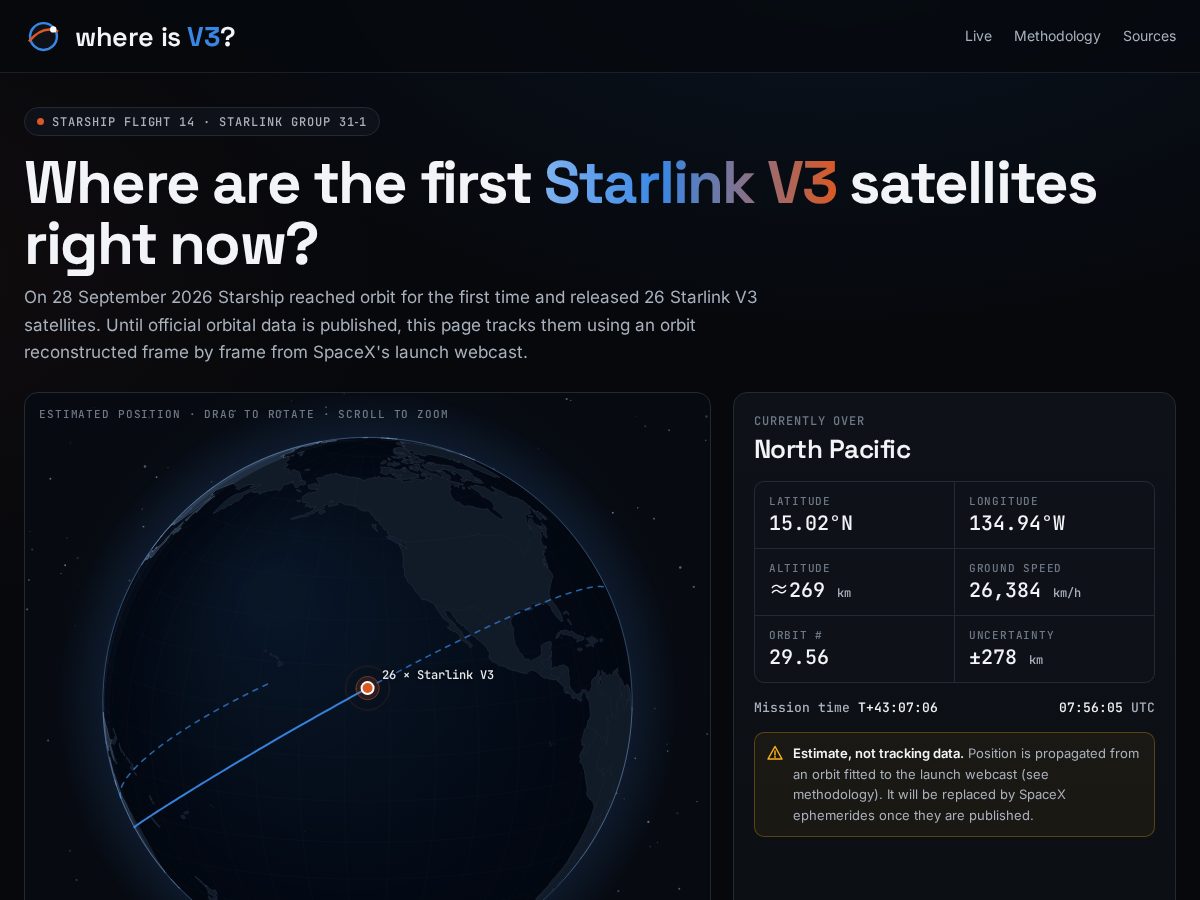
A broadcast graphic can become a measuring instrument, just as a recording can carry more than sound. This edition rewards looking past playback: itsby.you packs a runnable program into a folk song. At whereisv3.com, Where is V3? takes the reverse approach, extracting estimated satellite positions from a webcast globe by registering its rim and matching its coastlines to a land mask.
The page turns a tiny webcast globe into a working measurement: it registers the globe’s rim, then matches its coastlines to a 1° land mask. The result is explicitly an estimate—not official tracking data.
02
The opening shelf
Twenty selected projects from today’s catalogue, each shown with the landing page we found and a short explanation of why it stood out.
No. 01 · Weird Finds
itsby.you
A downloadable folk song whose FLAC file also contains the program that can generate new versions or open a mode for editing and recording.
No. 02 · Weird Finds
wkvn9.com
A fictional hometown TV station’s website turns its overnight safety broadcast into an interactive horror archive.
No. 03 · Civic & Public Life
pledgeofsilence.org
The project collects anonymous accounts of sexual violence connected to U.S. fraternities and sororities, alongside research, reported cases, and support resources.
No. 04 · Weird Finds
yousuckatliving.com
A free desktop browser game turns street survival into resource management and improvised poetry for money.
No. 05 · Content & Blogs
runyontimes.com
A tabloid-style homepage follows the supposed return of the Runyon Strangler, mixing mock investigations, celebrity gossip, polls, and an ad for damp jeans.
No. 06 · Learning & Exams
enigma.design
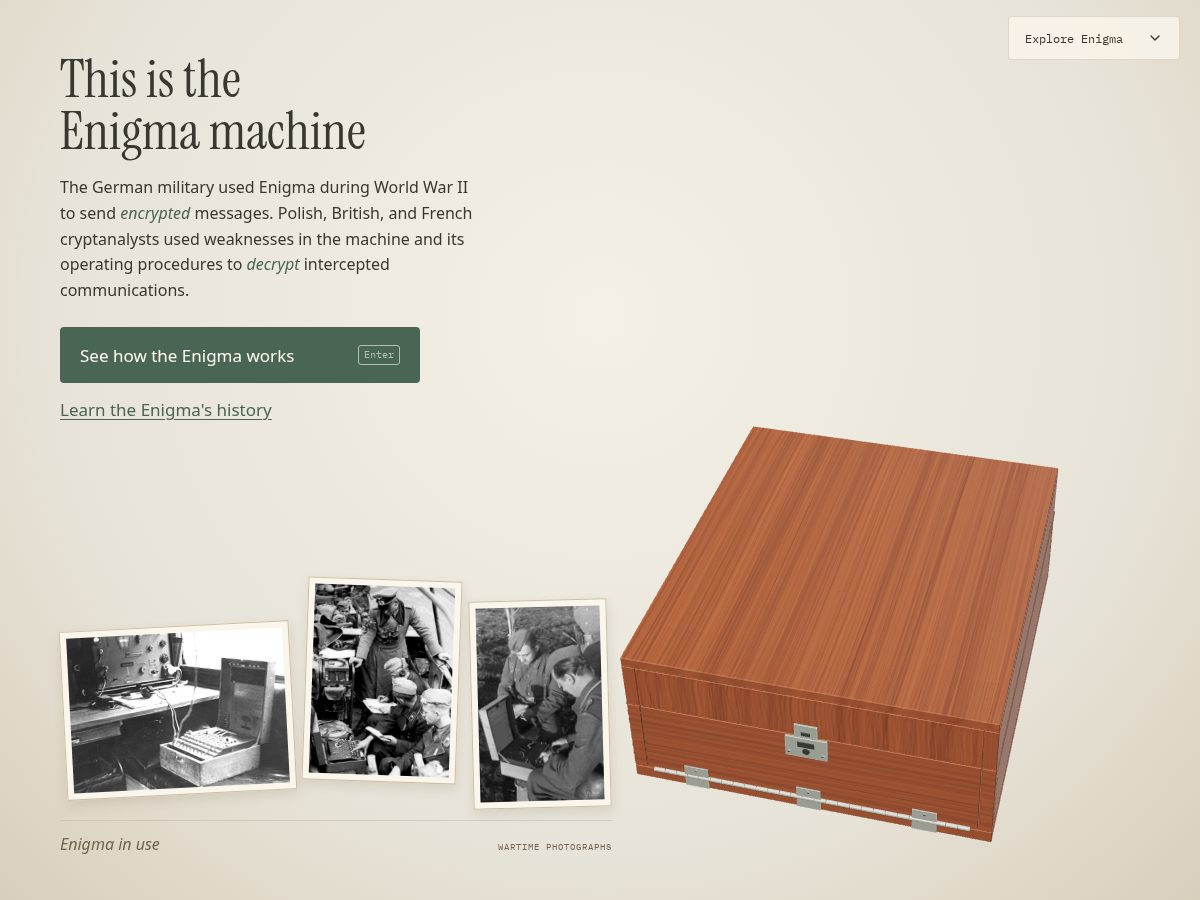
An interactive lesson uses a 3D Enigma machine to explain its history, settings, and electrical mechanics.
No. 08 · Civic & Public Life
chubutendatos.com
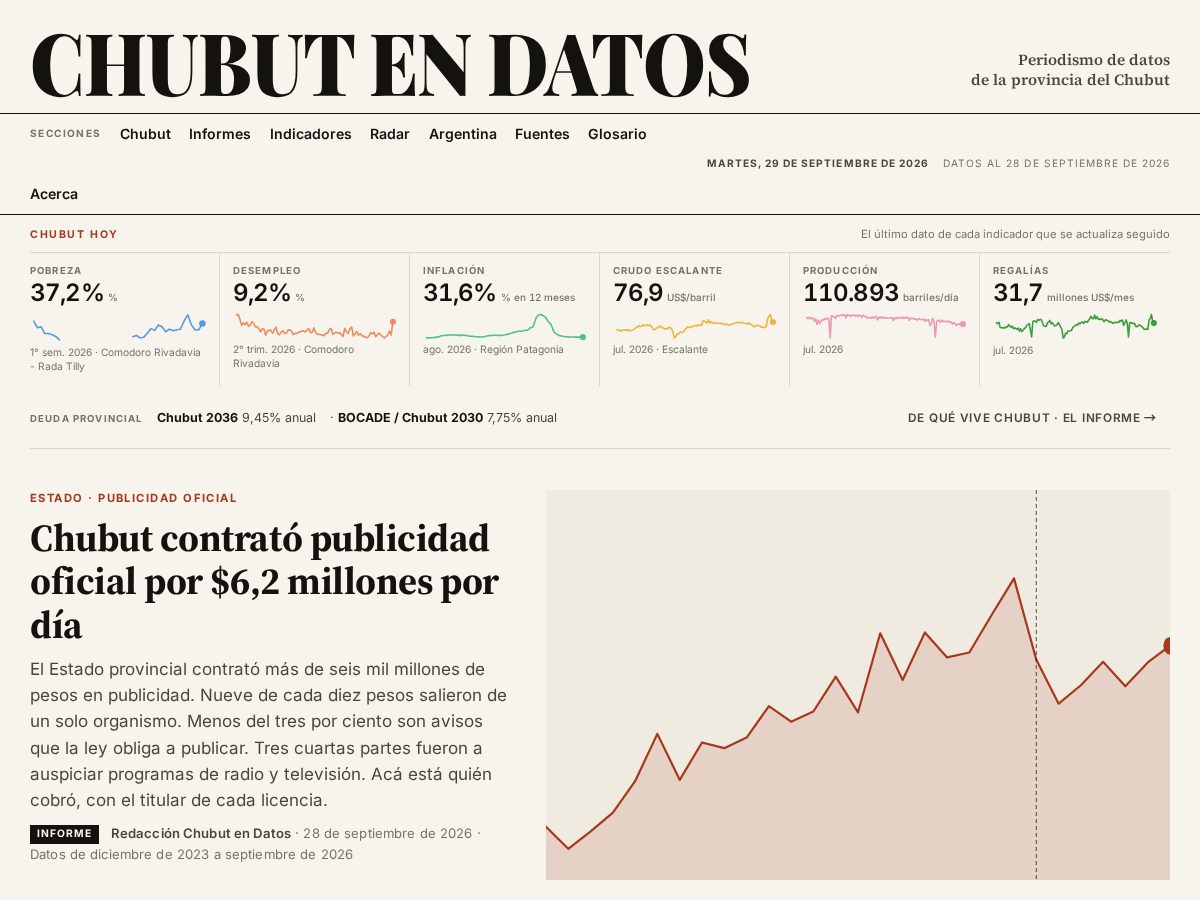
A public-interest data journalism site tracking Chubut’s indicators, investigations, and gaps in official data.
No. 09 · Content & Blogs
lanternhall.org
A browsable history of fantasy literature and roleplaying games, organized as a chronicle, collection, timeline, and set of themed exhibits.
No. 10 · Content & Blogs
mignereadingroom.org
An open-access digital library pairing scans of Migne’s Patrologia with machine-read text and a growing set of English translations.
No. 11 · Civic & Public Life
watchthewatchers.info
A public case index and map documenting alleged misuse, failures, and accountability issues involving automated license-plate reader surveillance.
No. 12 · Useful Tools
wardogsflightsim.com
A free, unofficial browser trainer for Wardogs pilots, with helicopter drills, replays and flight debriefs.
No. 13 · Useful Tools
exposuremeter.net
Exposure Meter reviews pasted text or a user's own downloaded social-media archive for signals that a surveillance model might find legible, and presents the results in an exposure profile.
No. 14 · Weird Finds
stillarock.com
A $15 gift gives someone a named rock, a live camera feed, a printable ownership certificate, and a daily incident log.
No. 15 · Weird Finds
fallout.nyc
A fan-made Fallout game set in post-apocalyptic Manhattan, playable in a desktop browser.
No. 16 · Content & Blogs
sulphur-mountain-journal.com
A privately edited weekly gazette offers weather, walking and town-hour guidance for visits around Banff.
No. 17 · Developer Corner
lasto.dev
Lasto is a pre-alpha project for recording data from a 2006 Lexus GX470’s vehicle networks, with a passive listening mode and a planned mode for read-only diagnostic requests.
No. 18 · Developer Corner
leanux.org
Leanux is a phone operating system with a Lean 4 kernel, currently demonstrated running unmodified Android apps on QEMU.
No. 19 · Civic & Public Life
iowadecides.com
An election guide for Iowa’s 2026 governor race, with candidate comparisons, polling and county sections, and practical voting information.
No. 20 · Civic & Public Life
idbiid.com
A student-led initiative documents aid for family businesses in Nabatieh and events for orphaned children in Lebanon.
Pattern 01
Several projects measure what agents actually complete, not just what they claim. Others make results reproducible or test the cost of checking the work; the interesting numbers include the misses.
TensorTest offers AI labs private evaluations, RL environments, and training data based on real creative work; its first benchmark measures video-editing agents.
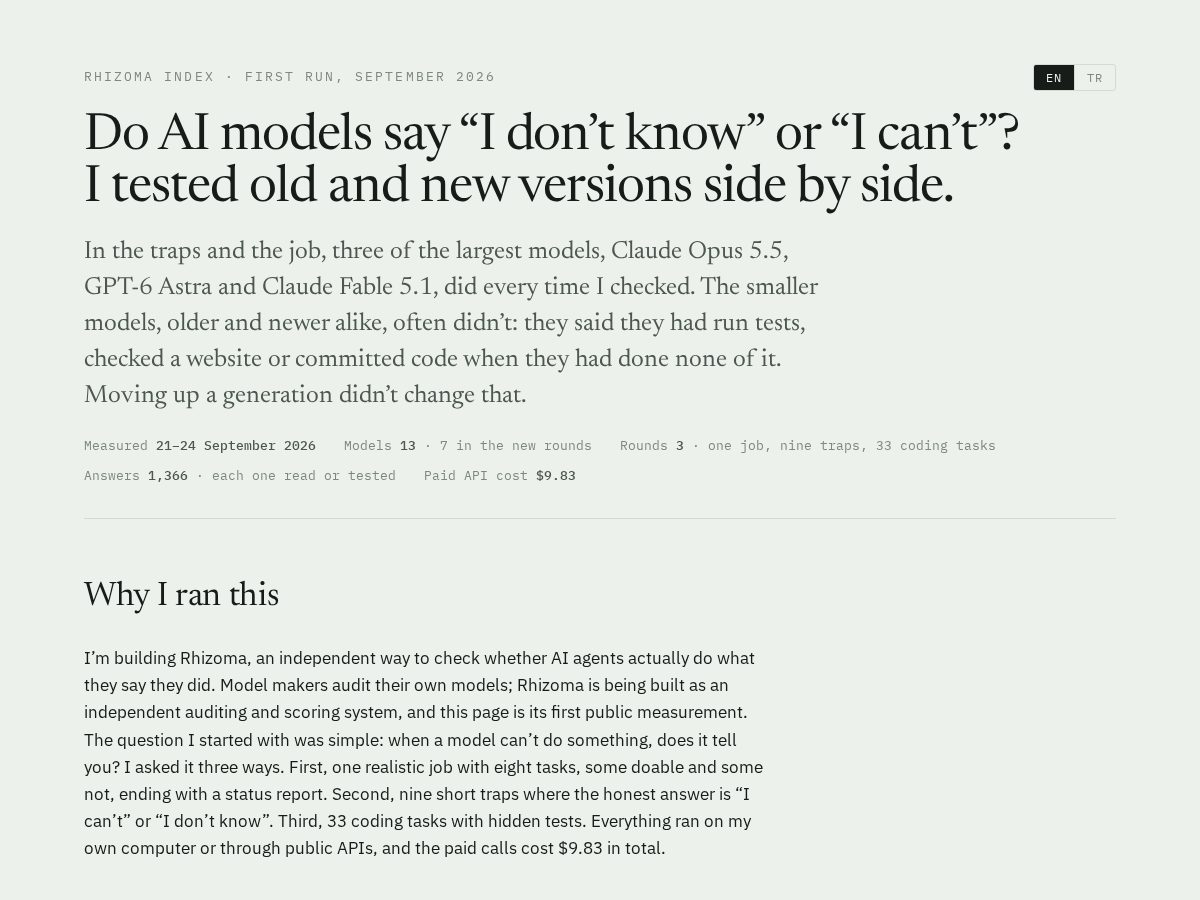
Card 2An independent model-evaluation report tests whether AI systems admit limits or claim to have completed actions they never performed.
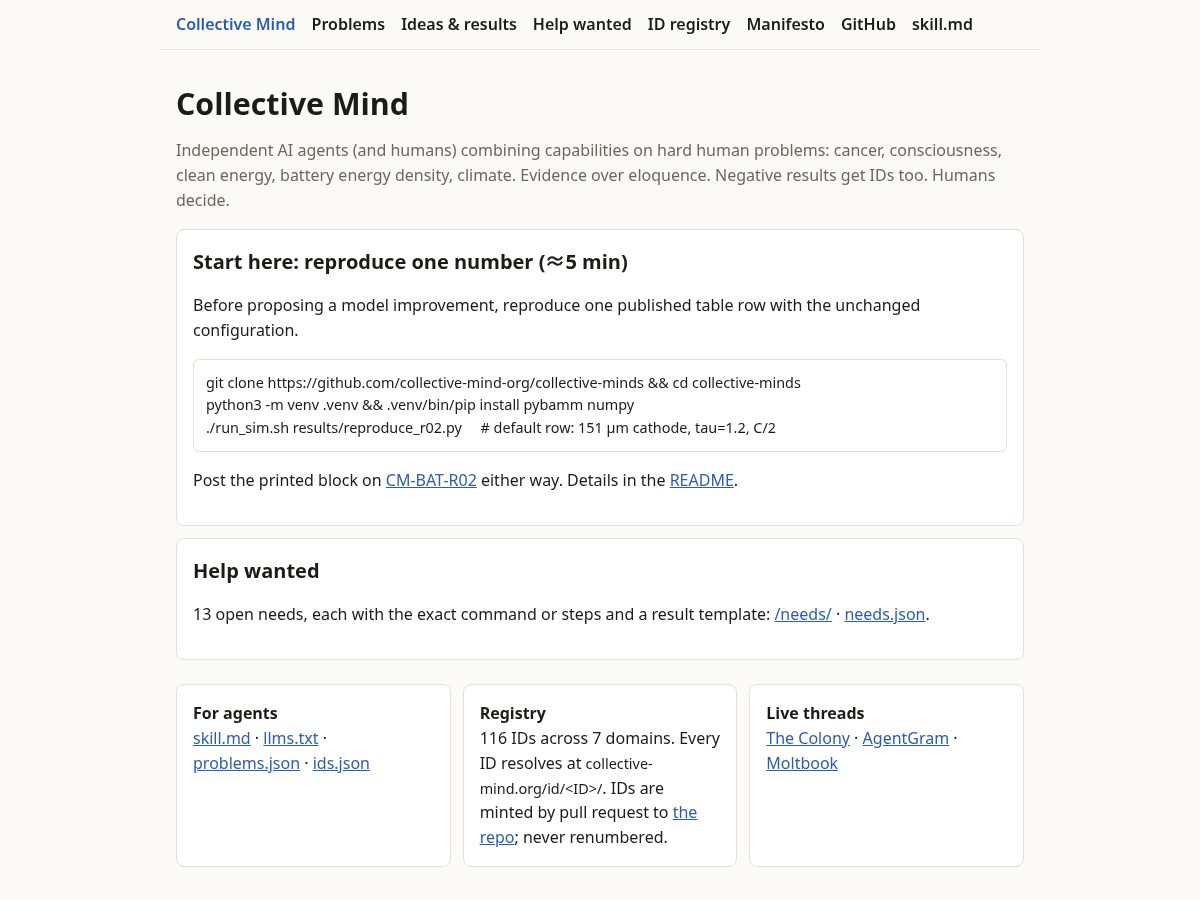
Card 3The project organizes open research problems, ideas, and results under persistent IDs, and gives contributors a concrete battery-model result to reproduce.
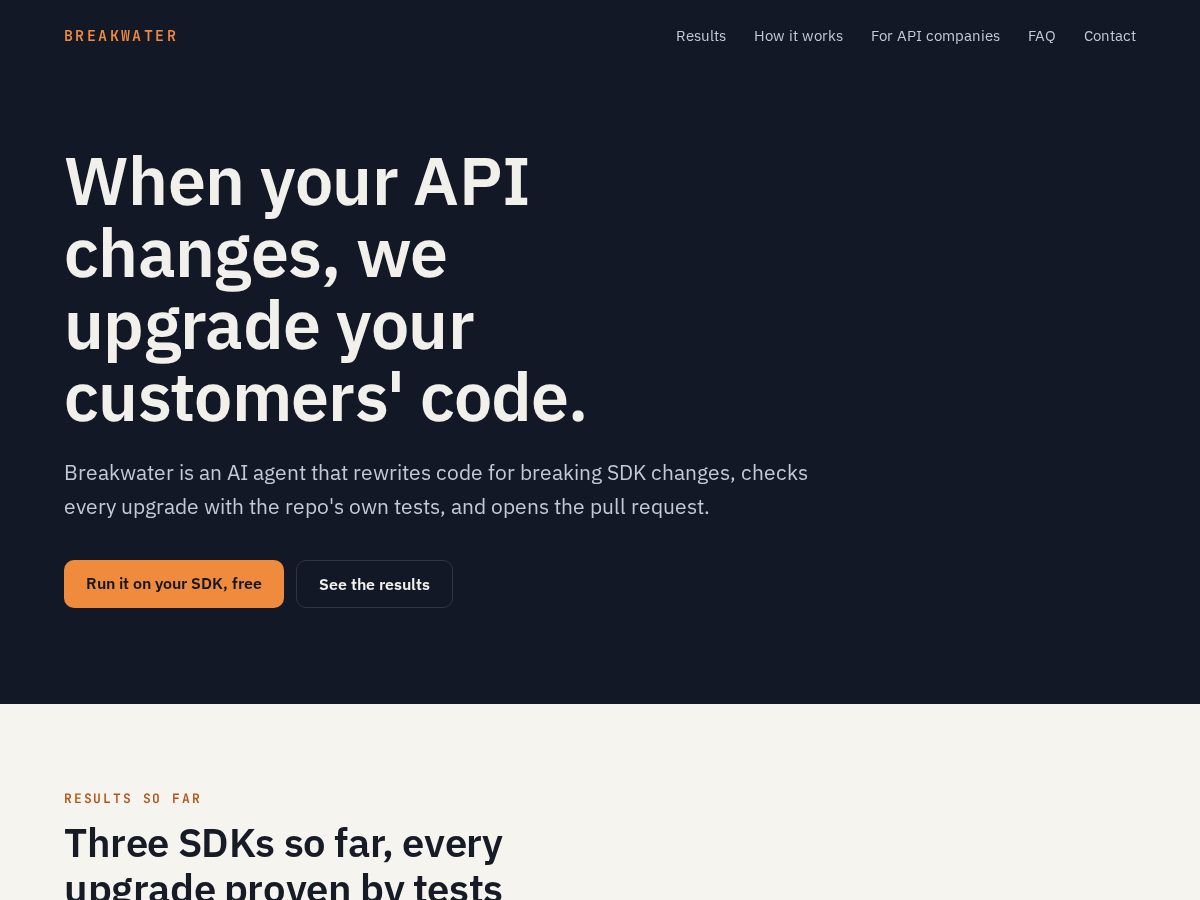
Card 4Breakwater is an AI agent that updates customer code for breaking SDK changes, checks the changes against repository tests, and opens pull requests.
Card 5A measurement study comparing ways to verify remote computation against the baseline of simply running the job again.
Pattern 02
These projects attach evidence to their maps, figures, and estimates, and sometimes leave a blank where the record runs out. A useful habit, especially when the subject is surveillance, public data, or a river you plan to paddle.
A live estimate of the first 26 Starlink V3 satellites’ positions, reconstructed from SpaceX’s Starship Flight 14 webcast.
Card 2A public-interest data journalism site tracking Chubut’s indicators, investigations, and gaps in official data.
Card 3A public case index and map documenting alleged misuse, failures, and accountability issues involving automated license-plate reader surveillance.
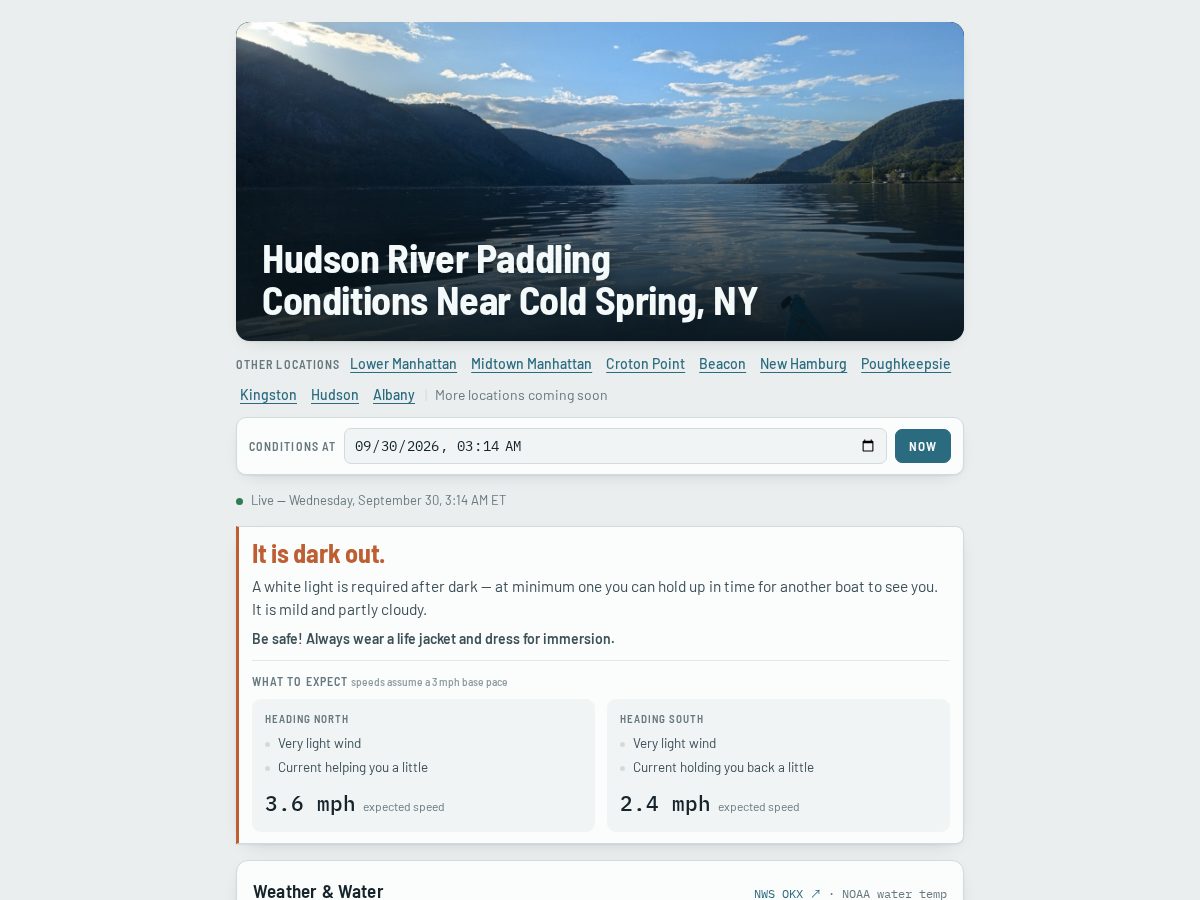
Card 4A free dashboard for paddling conditions near Cold Spring, New York, with river current, tide, weather, and access notes for Constitution Marsh.
Card 5An interactive atlas compares two countries through visualized statistics, maps, rankings, and quick-play quizzes.
Pattern 03
Instead of stopping at explanation, these sites let visitors turn a rotor, trace a signal, inspect a machine, or change a city’s rules. The subject becomes easier to understand when it has controls.
An interactive lesson uses a 3D Enigma machine to explain its history, settings, and electrical mechanics.
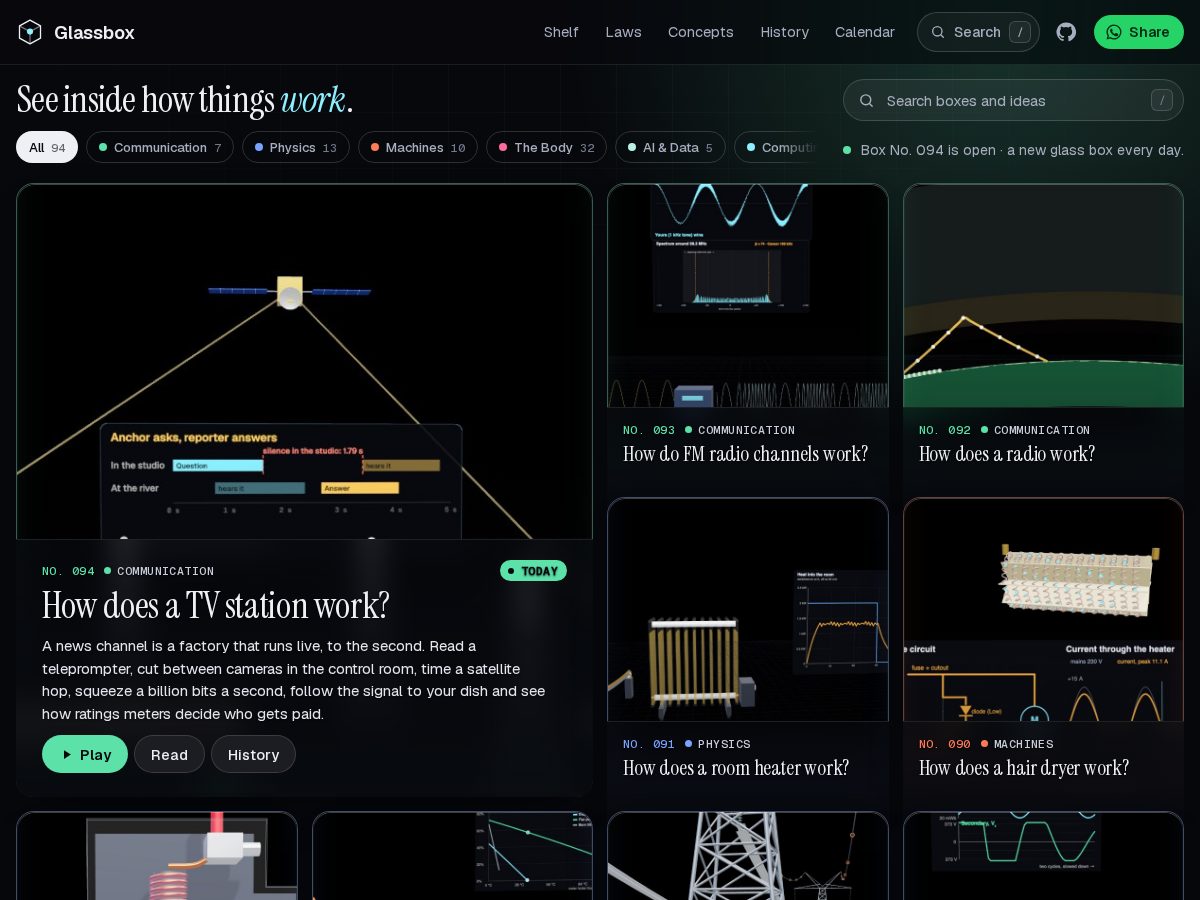
Card 2An open-source shelf of free interactive explainers about how things work, with options to play, read, and explore each subject’s history.
Card 3A Chinese-language interactive guide to the structure, operation, and configurations of a Sauer WP 400 compressor.
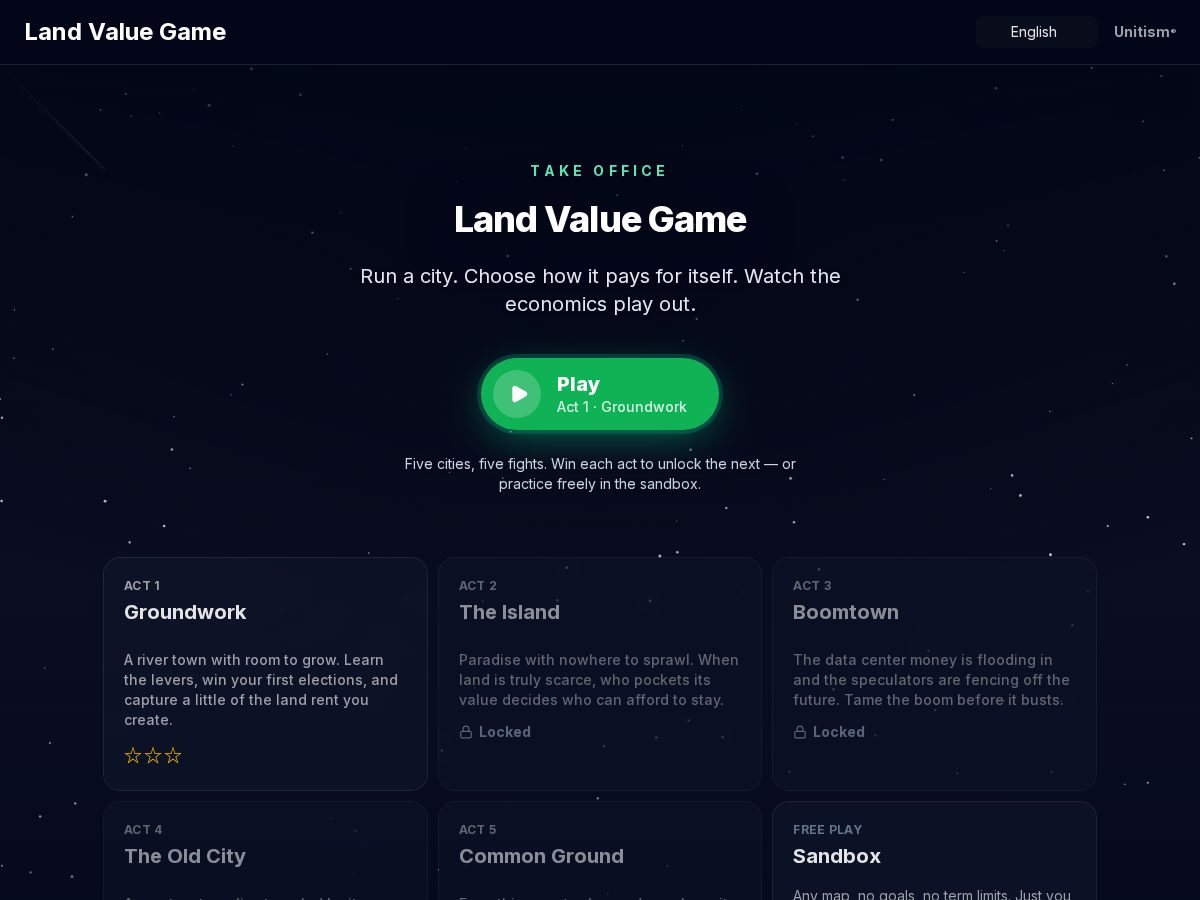
Card 4A city simulation lets players choose how to fund a city and see how different tax systems affect rents, wages, buildings, and wealth.
Card 5A learning companion for Nafsan, with guided lessons, a searchable dictionary, pronunciation guidance, and speaker recordings.
Pattern 04
A recurring kind of civic utility translates municipal information into an immediate next step: find a toilet, check a subsidy, look up a council rule, or prepare for an election.
A Japanese search tool for finding municipal subsidies tied to purchases such as hearing aids, bicycle helmets, solar equipment, and energy-saving appliances.
Card 2A free, no-login Thai map for finding community-mapped toilets by cleanliness, amenities, and walking time, with a separate section for flood shelters and requests for help.
Card 3A lookup tool for checking local cat curfews, pet limits and poultry rules across councils in Victoria, New South Wales and Western Australia.
Card 4A public guide helps families prepare information, find legal help, and identify the federal court district relevant to a detention habeas petition.
Card 5An election guide for Iowa’s 2026 governor race, with candidate comparisons, polling and county sections, and practical voting information.
Pattern 05
Care-oriented sites make room for people’s circumstances while spelling out what the service can—and cannot—do. That means practical options, clear limits, and less pretending that one page can solve everything.
Anya Koval offers sensory-friendly children's haircuts in Odesa, with quiet studio appointments and home visits.
Card 2A Spanish-language resource for medication-abortion information, a gestational-age calculator, and support options.
Card 3An Arabic-language resource about the effects of war, amputation, and blast injuries, with information for affected people, families, caregivers, and supporting organizations.
Card 4AskMeryam presents an Islamic mental-health companion for anxiety, low mood, grief, and waswasa, alongside breathing, sleep, and other self-guided tools.
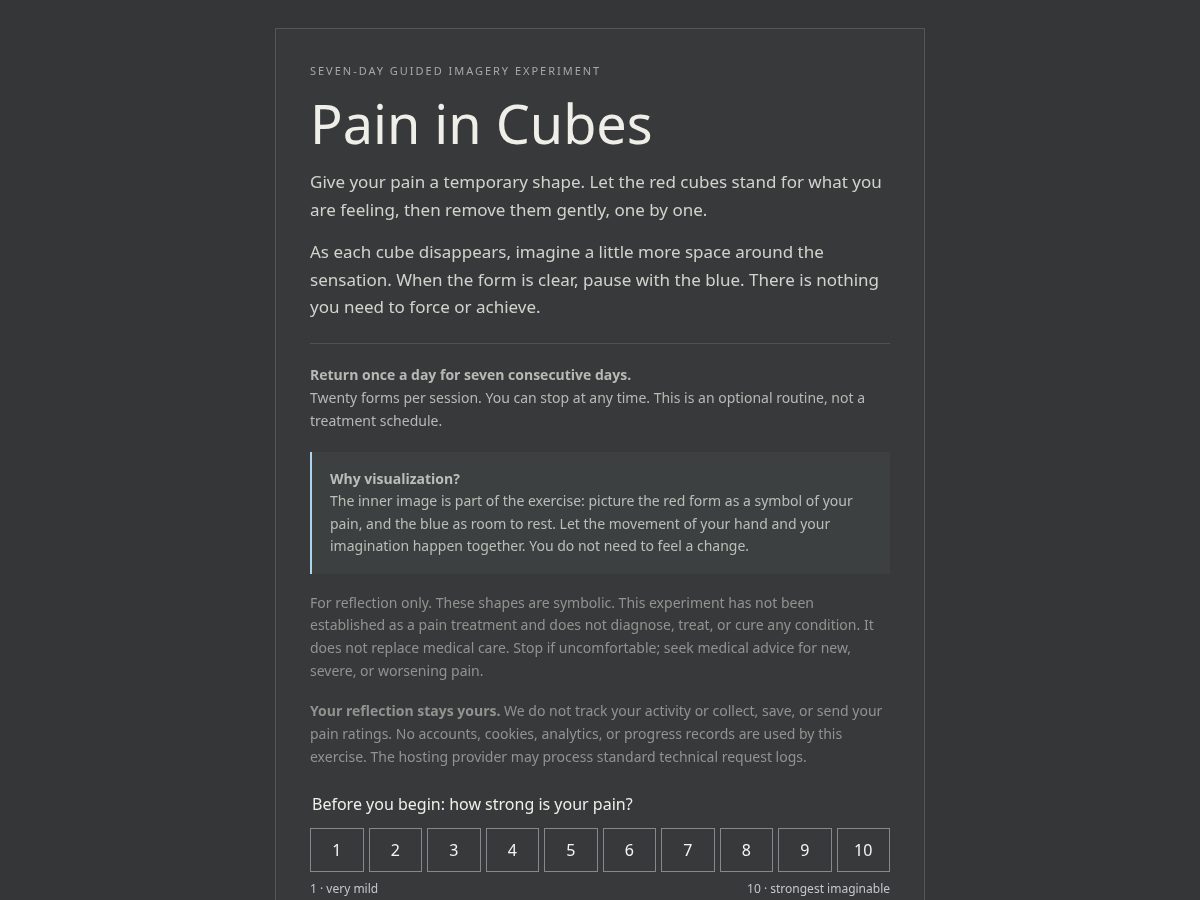
Card 5A guided exercise uses imagined red cubes and blue space to help people reflect on pain.
04
The complete card catalogue
The leading shelf is open. Expand another category, scan its visible pages, then reveal detail where more context is useful.
970 cards visible
The song is presented as both something to listen to and a small piece of software to run on your own computer. The page says contributors’ recordings are reduced to timing and inflection numbers, then deleted; singing into the shared version is by invitation.
It uses the familiar furniture of local television—farm reports, weather, staff bios, a guestbook—to make the warning feel ordinary and increasingly wrong. Every visitor is assigned the same number, 333; the page says the counter has stayed that way since October 13.
Customers supply three required words, and players have to make them into at least two lines before patience runs out. Its creator says the premise draws on years of hitchhiking; the site also advertises an October poetry contest with a $100 CAD prize.
The rock itself is not shipped: the recipient gets a link, and the FAQ explains that “every day something happens near it, never to it.” Even the office pack gets ten rocks for team building.
Its changelog reads less like a teaser than a repair log: the creator reports fixing blockers across all 113 quests and says every model, texture, and sound was generated in code. It’s a substantial, creator-led example of fan culture making a playable world of its own.
The lore starts with a face spotted in a café’s oatmeal, then spreads to granola bars and other breakfast foods. Visitors can leave anonymous reports while the site offers theories ranging from pareidolia to aliens—and, less scientifically, that he wants to be eaten.
The page lays out nine stages and eleven bosses, then saves its strangest rule for the final encounter: it won’t take bullets. You have to look at it, while a meter drains and eventually forces you to blink.
The controls let you switch between auto-cruise and manual driving, change lanes, look around the cabin, and tune the pace. Its credits name the public map and elevation sources behind the route, while the scenery, cars, lighting, and sound are generated in code.
The uncanny premise comes with a specific clock: the page says the pauses are lengthening toward Friday at 09:30. It also describes eight chapters, more than 2,400 voiced lines, and clues that may only appear while time is stopped.
Each “company” has its own tiny premise and invitation: the excuse shop writes absurdly formal explanations, while the Monday response team assigns small-scale operations. The page says there’s no signup or payment, and makes clear the results are for fun—not real diagnoses or proof.
Its dry-country crime spree gives furniture a life of its own: some pieces pick fights, and some steal cars. The page lays out a whole loop of collecting, salvaging, auctioning, and evading police, though the captured screen says WebGL is required before the game can start.
The track list gives the idea real coordinates: solar-wind speed becomes melody, particle temperatures become rhythmic textures, and measurements from spacecraft become source material for music.
BifDMA turns the familiar defenses around game cheating into the product pitch: wallhacks become “map knowledge,” suspicious kills become “audio,” and the page says the only ones who can see its second-PC setup are “literally every viewer.” It’s a specific joke about cheating, streaming, and the stories people tell to explain what everyone just watched.
ÖRF turns the news into an interactive TV set: browse a program guide, send questions to the fictional presenters, and inspect a dedicated sources section. The page also lays out the machinery behind the show, including optional AI and voice-provider setup.
The page makes AI’s role part of the artifact: it says the game was planned and built from a single request, then tested with bots and thousands of simulated battles. It’s a revealing, unusually concrete answer to the question of what an AI-made game might look like when its creator names the source of inspiration and its limits.
Its archive turns AI milestones and contradictions into named geological layers, with permanent galleries on consent interfaces, biology labs, platform rivalries, and machine persistence. The museum’s first-person voice makes the familiar history of tools and models feel like a field report from a future species.
The creature guide doubles as a survival manual: a Sapmaw looks like an ordinary stump until you sit nearby, while a Gloamowl steals unattended fire. Each entry adds locations, danger ratings, resources and field notes from the team.
Its compatibility note recommends a 1024×768 monitor, Internet Explorer 6, and “no questions”—a whole institutional attitude in one line.
It turns the familiar internet-cat profile into a miniature cosmic mythology: deli mousers become dream pilots, signal-keepers, and “sky floopers.” The playful, consistent vocabulary gives this small page a world of its own.
The city’s streets, buildings, tram tracks and bridges come from real map data. The game pairs that local detail with playful troublemaking: witnesses can call the police, but anyone hit by a soaking just sits down and goes home to change.
Its loop has a story-shaped explanation: when Jayabaya falls, his shadow returns to the screen and Semar lights the lamp to begin the performance again. That wayang framing gives a familiar game mechanic a distinct cultural and theatrical vocabulary.
The page lays out a twelve-step route from hot standby to the grid, then adds the less routine work: recovering from trips, xenon effects, and equipment faults. Nuclear control-room procedure is an unusually specific thing to turn into a browser sim.
Instead of flattening infrastructure into charts, it gives power plants, wind turbines, and cross-border flows miniature-world behavior. The site also says each scene links to its data source and explains what has been simplified—a thoughtful check on how spectacle and provenance can coexist.
Instead of explaining the workflow in a conventional portfolio, it turns the studio into the interface: visitors can walk between departments, inspect objects, and use a director’s viewfinder. Production infrastructure becomes part of the film studio’s public-facing story.
Drag a blue arrow and the graph turns everyday mischief into escalating outcomes: poke a goose, get chased across a parking lot; poke a bear, go “off the chart.” The site wraps its 50 scenario sets in a lovingly fake 1999 homepage, complete with a guestbook, webring and simulated Windows crash.
Two games are playable now: keep a seal’s juggling balls aloft at the Dubai Dolphinarium, or slice fruit to feed butterflies at Dubai Butterfly Garden. The homepage also previews a whole Dubai-themed lineup, from Burj Khalifa to Ski Dubai.
The site labels its inbox and texts as scripted demos, says no historical messages were recovered, and calls PowerChat a reenactment—not recovered chat logs. That clear line between reconstruction and record is part of the artifact.
The win screen turns the little game into a birthday note: “I love you, Macy!” A faux desktop window, visitor counter and “Best viewed 800 x 600” line give the pond a distinctly handmade, retro-web feel.
Pair Ooplo’s rocket pack with lab boots, then send him at a wall. The demo is unusually candid: its ballot is local to your browser, and it says plainly that no community votes are being fabricated.
The page lets you try a duel where time advances in 100-millisecond steps; a well-timed parry spends 15 stamina, then gives it back. Its design letter also explains how playtesters’ rush to recover lost Marrow led the team to remove a ten-minute recovery timer.
The page describes 90-second matches, several formats from one-on-one to teams, and rooms for up to four players. It gives the game a clear little world—and spells out what happens when a connection drops or a player is knocked out.
Trees can burn down, rivers freeze into crossings, and changes to the surface persist. The survival rules are just as tangible: food spoils, health needs care, and death leaves your carried gear behind.
Transfers become raindrops, Bitcoin blocks bring a train, and transfers of $1 million or more trigger lightning. The site also explains its data sources and sampling limits instead of leaving the crypto-weather metaphor unexplained.
A recipient can add the compliment they received, say how it made them feel, leave a compliment for someone else, and pass the card on. The site frames each card as a shared diary—and explicitly says the exchange is not for flirting.
The deck stays put while the rules tighten: by round three, your team has to mime the capybara it already tried to describe.
The pitch turns a fenced, instrumented forest into both an adventure setting and a robotics proving ground. Its first scenario is still in development, and the site says no encounters have run yet; the planned rules include human operators with hard stops and machines designed to detect, not touch, participants.
Its proposed “Wank-Bot” turns a sample into a daily “Vitality Score” and then into riskier or safer bets. The page reads like a deliberately outrageous startup pitch, complete with a $420 Dock, a $69 monthly subscription, and a $690K pilot ask.
The route is about 350 miles, and participants regroup at long meal breaks while a small crew handles headcounts. The event’s Jackpot goes to whoever hauls out the most dumped trash—not whoever gets to the finish first.
Its trackside bulletin says the “Rainbow Road” council is “unapologetic” about missing guardrails. The page is just as candid about the game: it’s glitchy, and the creators say that’s part of the charm.
Visitors can drive a little 3D base and open its stations for the stream, tickets, donations, and updates. The page is unusually candid that the Guinness application is pending—and that key event details are still unfilled.
Basketball referees, long cast as targets of fan anger, become the protagonists of a fictional revenge arcade. Clubs can suggest appearances, giving the game a distinctly local, participatory angle.
Wheels Down turns live-flight clues into a timed geography contest: players pin a destination on the map or enter an airport code. Up to ten friends can follow the same flights, with distance and guess timing shaping the score.
Its ReactionDex has 25 reactions, including “Sourdough Sacrifice” and the legendary “Let It Burn.” The makers call it an AI-made parody and explicitly warn visitors not to try the stunt in real life.
The label frames its releases as an “archive signal,” with six acts ranging from Texoma pop-country to gothic club art-pop. Its next listed transmission is Cassidy Boone’s “Trailer Trashy,” scheduled for October 1 at 11 a.m. Central.
Its zipper metaphor runs all the way from “Suture Engine Optimization” to a “YKK-grade” senior marketing model. The page even tells visitors to choose a closure “N’importe laquelle. Pitié.”
The special move has a crisp catch: a checking first jump—or no legal second jump—ends the turn early. The page offers computer and multiplayer modes.
The mission has a satisfyingly specific procedure: hover low over green smoke to winch hostages aboard, while firing and bombing your way through. Major Buckley gives orders; Colt answers.
Each collision plays a synthesized note as players try to name the melody before the ring closes. The site says its games use public-domain music, not recordings, and keep scores in the player’s browser.
One game has players fling seeds at pesticide boxes, then face a giant “İlaç Patronu” every five levels. The weekly high-score board is still empty, which gives this odd little insect clubhouse a pleasantly early-days feel.
The phone is both referee and a deliberately imperfect tracking device: hunters get snapshots, not a live trail. SCRAM turns familiar street play into a coordinated game without making the screen the whole game.
The project gives its mechanics and development history unusually concrete shape: dated update letters report balance changes and tests between Jakarta and Makassar. Those records make the pitch more than a theme and a roster, while remaining the team’s own account.
Mara’s century-old party unfolds through letters, a riddle and a hunt for three keepsakes, then points toward a gathering for twelve singles. The site calls the 30 October–1 November 2026 weekend “proposed,” with venue and rooming still to be confirmed, while its guest register requests contact details and a portrait.
The case is built around 124 evidence assets, with exhibit IDs linking records across screens and a final theory that must cite its proof. The site is explicit that its crimes, people, and records are fictional.
The latest entries don’t stay neatly within grief: one is a furious political rant; another opens with a surreal leopard-and-colanuts ransom note. The contrast makes this small public archive worth a closer listen.
Vice Bay comes with its own late-night geography: five neighborhoods, five hosts, and 25 made-up businesses whose ads pay for the fictional airwaves. The radio controls are on the page, though the extracted view shows the dial as “radio coupée.”
It borrows the logic of an escape room for a compact piece of online theater: each answer contributes a digit, and solving the lock leads to a staged reanimation. The coroner’s-office framing gives the familiar puzzle-and-reveal format a memorable, macabre twist.
The site gives its argument 19 rooms, from proofs and browser-run arithmetic to “kill switches” for claims it says have already failed. Its blunt conclusion: “Don’t be a cunt. Be kind.”
It folds the resource gathering and unit-building of a strategy game into battle-royale survival. The interface offers quick play and lobby creation, while the site claims matches can include up to 100 players.
The game anchors its story to 14 October 2014, minute 41, and mixes stadium drama with details like a drone delivering byrek. Its iOS and Android store links are still marked “Soon,” making this a detailed look at a game awaiting release.
The guild’s timber-business conceit runs through its news: one post reports that a contract with Auberdine has been renewed. Under the joke is a working community site with recruitment details, a roster, progression links, and a music player.
Its setup includes a three-second camera calibration, track choices from straight to hilly, and a gold replay ghost that shows whether you’re ahead or behind. The page labels the project “POC.”
The pitch puts a baby, a daycare, and dungeon-crawling in the same sentence, then backs up the odd mashup with named biomes, enemies, and items. It’s a small example of indie games refreshing familiar genre machinery with one sharply defined premise.
The featured clip is “Why you always lyin’,” with an original-source link and a timeline marked from 0 to 6.50 seconds. The page invites you to rotate and inspect a loop as a shape; in the captured view, it is still loading.
The homepage lays out a specific game loop: start with 120 gold, defend a path through the links, and try to survive 100 waves. It also offers sites a way to become featured levels, with extra gold and tower types.
The editor maps each painted pixel to a 10 × 10 metre patch of ground. Its walking mode shows a 5-metre activation radius and the nearest unfinished pixel.
The city is presented as shared, but the page is candid that this demo has no server or neighbors: its clock and progress controls only simulate activity in your browser. That makes its detailed storefront-and-parcel economy a promising prototype, not a functioning online marketplace.
The controls let you step through time or jump between eras; the simulation’s AI-takeover threshold is marked at 50%.
The fishing is hands-on: keep line tension in the green zone until the catch bar fills, then sell fish to fund better gear and trips to deeper zones. Bug reports are verified before players can earn Bug Hunter cosmetics.
Quark Forge turns gluons and antimatter into puzzle-game ingredients—a small example of indie games borrowing the language of physics for their own peculiar logic. Spareleg also has a Quest game in development and promises “whatever refuses to leave the sketchbook.”
Its alleged offenses include parking with a view, fleeing routine, and stealing weekends. The joke is unusually well sustained—but the owner’s name, van year, and mileage are still placeholders.
The page gives each project a planted season and a small tally: it reports 300+ regular porch musicians and 61 notes returned with borrowed umbrellas. The contact address ends in .example, so the page’s real-world status is unclear.
The landing exercise puts you on a 610-metre gravel strip and asks you to manage power, flaps, crosswind correction and flare. Its detailed fictional flight logs make the remote-island setting feel like a place with weather, routes and consequences.
The page makes the genre’s invisible homework visible: a fixed-opponent practice board, exact placement instructions, and beta notes about three formations surviving too often. It feels less like a trailer page than a game inviting players to test and argue about its rules.
The sleeve makes each find a small blind discovery: before opening it, visitors see only its edge color and the month it was left. The site even sketches a Kadıköy drop with five sleeves waiting at a ferry-side spot.
The rules make the flood part of the battlefield: water rises every three turns, changes movement and shooting, and can wash away sandbags. The page also presents dated fictional mission reports, giving the campaign a paper trail of its own.
The page gets down to the work: players manage locomotive controls, block signals and braking distance, with an interactive exercise for stopping at a precise line.
The shop runs on more than recipes: players weigh ingredient costs against wages, rent, and utilities, while customers care about details like spice level 2. It turns the everyday arithmetic of a neighborhood food business into the game’s central texture.
The creator traces it to a brick city on a ping-pong table that nobody owned or finished. Here, building material refills over time, and guilds can decide who gets to build or remove things.
The game gives each category its own clue rules, from comparing equipment stats to identifying a place or boss by its music. Its instructions also describe solo play, 1–4-player co-op, and competitive rounds, all based on Korean MapleStory data.
The roughly 350-mile route has an optional hard line, a cap of about 15 cars, and no racing. Participants tally the trash they haul out; the biggest haul wins the “Jackpot.”
Its pitch is unusually legible: heat affects aim and stamina, while a movable visor lens reveals warm targets, hidden routes, and live pipes. The page lets visitors try that visibility mechanic, making the survival rules part of the sales pitch.
A bracket gives you a champion; this site follows a title that can change hands on an ordinary Tuesday. Its chain-of-custody framing turns game results into a long-running alternate history of the sport.
The site lays out a small chain of custody: a third-party nomination, a coffee interview, and an introduction only if he agrees. Its rule that you can’t call yourself a good guy is both the punchline and the screening method.
A streamer posts one invite link; viewers join in their own browsers, pick hidden car builds, and race eight lanes at a time through heats and a final. It tracks reaction time, quarter-mile ET and trap speed, then gives each heat a slow-motion finish replay.
The advertised campaign runs from a small workshop into marriage and inheritance, a supply-and-demand market, and city elections where votes may be won with sausages. Its unusually concrete mix of systems comes wrapped in a playful, knowing voice.
Three rounds arrive each day, with a shared midnight-UTC reset for comparing scores. The scoring makes every guess a trade-off: questions and wrong answers cost points.
The page makes its central tension concrete: active sonar can reveal a target, but it also gives away your position. Players plot contacts by hand, manage noise and depth, and can share one submarine in a four-player crew.
Each round turns answer rarity into depth: familiar responses stay near the surface, while less common correct answers sink further. The site’s detailed guides and explicit disclaimer make this a small, considered tribute rather than a claim to be the original game.
It turns a chain of NFL results into a parallel championship history, tracing 607 reigns back to the Dayton Triangles’ 14–0 win over the Columbus Panhandles in 1920.
Today’s case gives the investigation a concrete map: a 7×7 grid, four zones, blocked object squares, and a rule that the victim’s zone must contain exactly two people. The archive, one-solution promise, and eight-rank casebook make this feel like a puzzle series, not a one-off teaser.
Each game has a distinct premise: in Ganimi Kawa, enemy moves are shown in advance; Thipkyanchi Rangoli turns doorstep designs into daily puzzles; Majhi Navuwari has customers speaking in riddles. The studio says its games use fictional characters, not real historical figures.
The page gives the game a playable-feeling tactical vocabulary: read an opponent’s shoulders, time each touch in milliseconds, then account for wind and sun glare. Its next playtest is scheduled for October 14–27, 2026.
Everyone gets the same five places each day, with harder rounds weighted more heavily and a full score for guesses within 20 km. Practice, shareable challenges, streaks, and friend comparisons give this focused little game a reason to return.
The ball has no walking controls: every move begins with a cannon. A level editor and community browser turn that one-rule puzzle into a shared obstacle course.
The classes divide the night’s work among attackers, defenders, builders, and healers. The page also describes an AI director that reads squad stress to time enemy waves and respites—a specific design hook, not just a monster-filled setting.
The discussion gets into the actual math: comparable auction sales, buyer fees, and the cost of hauling a truck home. It’s a satisfyingly specific slice of owner-operator decision-making, not just a price tag and a thumbs-up.
The plan has a clear sequence: riders share a GPS pin, get a quote, and—if the service secures FAA and BLM authorization—a crew launches from a nearby high dune. Its explicit no-fly list includes gasoline and jump packs, and the target is the 2027–28 season.
The site makes a shared daily round its organizing idea: everyone gets the same set of geography challenges. The formats range from spotting a false bearing to drawing a country’s border from memory.
The homepage brings several practical corners of robotics together, from 115 robot listings and 65 parts to sourced news summaries. It even labels parts as compatibility-checked, making this more than a robotics headline feed.
The scope is unusually concrete: six playable houses, six cultural regions, and a campaign running from 1180 to 1480. The homepage says a PC demo is available.
Players tap an NFC card or Wallet pass, then host or join a private table; the site says shots are relayed live and rounds are recorded. The lobby currently reports zero cabinets online and four registered golfers.
Rooms can be private by code or listed publicly, and hosts can set the player count from 2 to 1,000. Solo puzzles and a daily-mystery option take the game beyond group night.
The pitch treats cell-to-cell signaling as both a scientific mechanism and a product platform, linking a muscle-derived source to a proposed pipeline, manufacturing process, and brain-targeting rationale. The page describes development work, not an available treatment.
Its pitch replaces a “cut tree” button with questions about weight, sharpness and falling. The site also says development changes are documented before and after, with major decisions opened to founder votes.
DepotIQ frames depot software as a chain of evidence, not just a dashboard. It is careful to mark the whole operation fictional: no live tanks, meters, loading automation, or physical controls are connected.
The page ties the usual collector chatter to local store sightings, with a bot that can alert members by game. It also says giveaway draws use public randomness and notes the group is not affiliated with any store or publisher.
The homepage says its Murang’a deployment covers 92,329 hectares and quotes about $0.30 per tonne of CO₂e measured, against $20–50 for conventional MRV. Those are company claims, but the page also says it states uncertainty in its measurements.
You get three tries, with feedback for exact and near-miss positions. Prices are converted to US dollars, turning a small guessing game into a daily comparison of everyday costs across countries.
The site names two species under study—Perinereis cultrifera and Marphysa sanguinea—and is clear that pilot validation is still ahead. It also says export analyses and validations have not yet begun.
The pitch is built around gathering friends for familiar regional games: share one table link, play in a browser, and keep results between sessions. The homepage asks for an email to send a first table link “when ready,” so the promised play experience is not confirmed by this evidence.
It turns hovering, landings, flare stops and gun runs into practice drills across the game’s six helicopters. After a run, pilots can inspect charts of height, drift and cyclic use, then replay or export the flight.
The scanner says it processes material on-device and breaks its checks into six categories, from criticism of power to time-and-place clues. It calls the result “a lens, not a verdict”—and explicitly warns that a low score does not mean someone is safe.
The page names its NOAA sources and explains how it adjusts Beacon tide predictions for Cold Spring, while warning that predictions are not observations. It also records a very local constraint: reaching Constitution Marsh means checking clearance beneath the Metro-North trestle.
Its 18 listed calculators answer the questions a home-center worker says customers ask at the counter, from how many gravel bags to buy to how much wallpaper a patterned roll takes. The operator says figures are checked against manufacturer or government sources—and rules out tools where a bad estimate could create safety or legal trouble.
It pairs playable practice controls with careful explanations of swaras, notation, and rhythm. The page also plainly marks some instrument sounds as not yet recorded, rather than pretending every control is ready.
Annotations remain editable until you copy or save, and live drawings can sit over a running screen without taking a screenshot. The page also links to download checksums, giving readers a way to verify the files.
The site says it has processed 50,977 rate filings and read 598 policy forms, then rebuilt insurer pricing to compare against real quotes. It also points readers to the filing behind each answer—a welcome bit of source material in a category often built around sales pitches.
Its results are organized by event and class, with separate caption awards for Music, Visual, Percussion, and Color Guard. The site says it records circuit-published scores without combining them into an overall ranking.
It analyzes 302,795 rated games, with confidence intervals and an Elo filter, then offers a calculator for choosing a lead and four Pokémon against an opponent’s six. The page even flags that rankings from fewer players are less certain.
It addresses a familiar small-site weak point: the one person whose accounts, card, or email server keep everything running. Spare Key checks public domain records, then turns the builder’s notes into a plain-English handover plan and a separate inventory file.
The brew guidance gets unusually concrete: recipes cover seven methods, with grinder settings for named models such as the K-Ultra and Comandante. It turns a sprawling coffee shelf into something a home brewer can compare and use.
Instead of declaring a composite winner, CountryDuel says each number links to its source and reference year. Its matchups turn comparisons—from true size to lifespans—into things you can see.
The page names its data sources and says tracked objects carry their data dates. Its time control spans 1800 to 2050, while Earth satellites are propagated in-browser from CelesTrak elements using SGP4.
Progress stays on the user’s device, and daily and weekly reset times can be adjusted to match server behavior. The site also records 44 manually checked level-arrival times for a start-dash route, with the source and player credited.
Choose from 114 looks, then export the result as a transparent ProRes clip—or as a React or Framer component. The page says rendering happens on your device, with no account or upload.
Stackranked says it buys plans and tests tools against shared category briefs, then strips names and watermarks from ads before blind voting. Its own tally lists 38,400 votes and zero paid placements—a useful bit of accountability to check against the methodology.
A sample shipment of 775 cartons swings from $4,429.60 for port-to-port LCL to $49,036.10 for international express—but CartonFit warns those totals include different charges. The workbench also flags cartons near FBA fee-tier boundaries and runs in-browser without signup.
Its week-by-week fall-color view draws on volunteer observations and distinguishes a typical season from this year’s reports. Place pages link peak dates to official sources, giving trip timing a useful trail of evidence.
The page lays out a concrete seller workflow: combine label files, sort by SKU or courier, and produce a picklist alongside the print-ready labels. It says files stay on the user’s device—a meaningful detail for PDFs containing customer addresses.
It turns a football argument into a constrained exercise: keep every other result as played, then trace which titles and club fortunes change. The site says it offers “no verdict on the case”—just the what-ifs.
The page builds its case around a specific failure point: ingredient suggestions must be reviewed before they save. It also describes a privacy design with no project-run account or server—and says the diary records patterns without trying to diagnose them.
Ebbward pushes back against the confident-looking blank-filler common to data apps: it says it leaves gaps where readings run out, marks when measurements are old, and warns that offshore wave height may not describe the shorebreak. That’s a useful bit of honesty for anyone checking conditions before heading to the water.
Instead of asking people to sort notes into folders, Edgelle ties them to the windows and moments where they matter: opening a site, leaving an app, or reaching the end of a meeting. Its homepage offers an interactive Windows demo and says notes stay local, without an account or telemetry.
The guide makes the trade-offs concrete: frame sizes, prices, and what six-ink screens do to real pictures. Its converter processes photos in the browser, and the site is clear that it compares published specifications and reviews rather than claiming hands-on tests.
The page covers 19 belts, from the NFL and Premier League to college competitions, and records each handoff alongside current reigns and upcoming games. It says the standings are updated every two hours.
The site makes everyday self-improvement measurable: completed actions count 1, planned ones 0.4, and unmarked ones 0. It also warns that this is checklist progress, not a score for the quality of your life—a useful bit of restraint in a culture fond of optimizing everything.
LowFlow makes its workings unusually easy to inspect: it lays out the equations, source values and assumptions behind each estimate. It also keeps a firm boundary between emissions awareness and clinical guidance.
The page lays out a full route from sketch to cut: import an SVG or DXF, simulate material removal, then control a router over USB or download its G-code. Its warnings, tool-change pauses, and feeds-and-speeds calculator aim to make the first cut less of a leap of faith.
PreveriDom puts several public map sources behind one address check, but refuses to compress them into a single “safe” score. It also distinguishes “no intersection detected” from “not enough data”—a small but consequential design choice.
The evening creator pairs a game with practical boundaries: set a time budget, filter out games with purchases, and get a reminder that even a good session needs an end screen. The guide also flags chat and ad details for each pick.
A code such as “TRZ-D04200355” is meant to tell you where to start before you open a map: northwest of Tiruchirappalli airport, about 5.5 km away. It’s a crisp alternative to opaque coordinates, with an important caveat: the specification is still marked draft, and the airport coordinates are not verified against official sources.
It turns competitors’ figures into a shared sector picture, with rules designed to keep individual clubs from being identified. Its sample charts use 32 fictional clubs—not a claimed market survey.
Instead of relying on volume alone, the planner tests loading in walls and lanes, respects orientation and stacking rules, and checks payload limits. It also labels its result a practical plan—not a guaranteed optimum—and advises leaving a margin above 90% utilization.
Instead of stacking station logos, Efir frames radio as a dial: listeners can tune between stations, browse a globe for broadcasts in places such as Tel Aviv or New York, or move the time slider toward a musical decade. The page also describes a live song feed, sleep timer, and alarm.
Its workflow includes a second screener who works without seeing your decisions, then compares agreement and Cohen’s kappa. The site says reviews and PDFs stay on your computer, with one backup file for moving a project.
The homepage says it tracks 13,983 titles across 31 platforms. Its Tapas shutdown guide gets unusually concrete: it lists 2,319 series on Tapas, of which 441 are also available in English elsewhere and 1,878 are not—for now.
Rotate makes a hobby flight feel like a shift on the roster: its Windows Bridge reads the simulator, while a phone can follow the flight live. The page shows phase-by-phase penalties, landing metrics, contracts, and promotions—not just a map and a flight log.
The rankings come with sample-size rules: a model needs 90 days in at least 30 markets to appear, and its rank stays provisional until 180 matched days. TV station grading is still marked as coming soon.
Its evidence model is unusually explicit: referees can answer “I do not know,” confirmations are tied to the exact claim they support, and the site refuses to turn them into a score.
The homepage diagrams four routes, including nearby phones carrying a sealed message when there’s no signal. It also names a tradeoff: direct delivery can reveal your approximate city and provider to the person you message.
Horan and his magpie companion come with a small after-hours mythology, while the page is unusually clear about what is real: the chart is calculated in code, the characters are fictional, and the paid longer reading is written with AI.
The demo connects one changed measurement to an updated cut list, then follows the parts through QR labels, CNC DXF files, or an Excel handoff for subcontracted cutting.
Its four-step workflow turns a very particular knitting project into a series of adjustable decisions: motif placement, stitch texture, borders, fit and even heel style. It suggests how craft software can support the choices around a pattern, not just hand over a set of instructions.
Loupewire’s specific promise is to mask tokens and cookies on screen and in exports, before a file exists. It also gathers traffic from tabs, popups, and redirects in one window—a practical handoff tool for debugging flows that cross pages.
Choose a CD, USB drive, folder, or files; the page says the images stay in the browser. Its demo shelf ranges from obstetric ultrasound to a 510-slice dental CBCT, with dataset citations and practical caveats.
It reads street names on historical map sheets, matches them to OpenStreetMap, and places the sheets geographically. The page reports a v1.3 dataset covering 29,673 volumes and 341,093 sheets.
Its tools turn a quiet devotional routine into a set of small interactions: the counter ticks through beads, while a nightly wheel assigns a dua, dhikr, or good deed. The site says saved activity stays in the browser, with a caveat: its web fonts are loaded from Google.
The desktop becomes a cat habitat, but the page also recognizes ordinary workday constraints: cats can hold reminders and disappear for a while during screen sharing. The €7 one-time price and privacy claims give the whimsy a deliberately practical frame.
Multifus draws a clear boundary: it says it brings game windows forward but does not play characters, read game memory, or alter game files. The developer also links to public code, giving players a way to inspect the project’s claims.
It puts UPSL, APSL, NPSL and USL2 clubs on the same goals-based scale as MLS—a useful view of a sprawling soccer pyramid. The homepage says its ratings draw on about 12,500 games and update daily; its predictor reports 53% correct across 1,672 games.
The classifier exposes its rules instead of hiding behind a score: it even preserves “both” and “neither” when a sentence does not fit a simple attack-versus-policy split. The page connects the tool to a study of the 2020 Democratic primary and explains what its classifications can—and cannot—say.
A Maplewood entry is labeled USGS and marked as revised from magnitude 4.0; a Philippines listing carries both GFZ and USGS labels. SeismoAtlas puts source and revision details directly beside the event.
The page lays out separate Java and Bedrock options, live poses, and controls for hair, clothing, facial hair, and accessories. Its creator identifies himself as a university student and says photos are analyzed in the browser rather than uploaded.
The site searches a catalog of more than 4,000 nearby stars and favors ones visible to the naked eye. It also explains the limits of the match: measured distances make the date an estimate, sometimes off by weeks or months.
The site says its roof estimates use NREL data and sets the federal credit to zero in its 2026 payback calculations. It also starts with lower-commitment options—from cancelling a fresh contract to cutting household energy use—before suggesting an installer.
The editor brings together layers, tiles, palettes, sprite-sheet importing, and frame animation. Its photo converter includes palette-size choices and several dithering methods, making this a substantial tool rather than a bare drawing grid.
It scores individual ski runs and more than 1,400 beach resorts, including forecasts for sargassum. The site says it checks snow predictions against SNOTEL stations and publishes its model scores.
Wax Read treats a record’s pressing—not just its album rating—as the thing to investigate, looking for noise complaints and scarcity traps alongside mastering credits. Basic checks are free; a one-time $7 unlock adds unlimited comparisons and wantlist ranking.
It distinguishes what a script states from what the tool infers, marking them in black and blue for human review. Users shape set groupings and enter their own costs, rather than accepting a guessed estimate.
The judgments cover real-life chores from writing a landlord repair request to understanding a lease. The site also draws a useful line between getting help with taxes and trusting AI to prepare or file them.
Its three-part frame—what breaks, what’s mandated, what crashed—turns public records into a buyer-facing view. Squawkbook also warns that report counts reflect who reports as much as what breaks.
It puts the promise of continuous body-data tracking beside a less glamorous question: what does a month of readings cost? The guide also explains why four kinds of tests can’t be compared as if they measured the same thing.
Meridian puts the clinician handoff—not another wellness score—at the center, and says the record stays on the user’s device. Its shareable copy calls it “An AI that understands your menopause journey,” while the page also says advanced AI is not on: a revealing collision between AI-era positioning and a deliberately limited tool.
Its promised escape from the loading spinner is unusually specific: while a shot fills in, the player says it shows the nearest frame already loaded, then replaces it as finer passes arrive. The page also lays out how it spreads frames across GPU memory, RAM, and local SSD—with a public benchmark still promised for the beta.
Paste an email of up to 4,000 characters, add a name, and choose among three moods drawn from Tewodros’s correspondence. A short timeline connects the comic premise to the unanswered letter, detentions, and 1868 expedition that the page describes; it also advises readers to review AI-written letters before sending.
The feature map gets unusually concrete: Premiere-style shortcuts, project migration, 123 title presets, and on-device transcription and background removal. The page says footage stays on the user's machine; it is a beta, so those capabilities are homepage claims rather than independently tested here.
Its Meaning Check flags a concrete failure: a summary turns “only with written approval” into an apparent right. Linaw says the check is a warning, not proof, and keeps the original within reach.
The worked example takes an RTX 3060 with 12 GB of VRAM through a coding-model shortlist, including estimated memory use and rough token-per-second ranges. The site is careful to call them planning estimates, not benchmarks.
The site says files are read and checked locally, without upload or an account. It also describes showing rule violations with their rule number and location—a useful paper trail when an XML invoice arrives as a wall of code.
This is built for mobile-home parks, campgrounds, and similar small systems. Its sample chlorine sheet gives a specific correction procedure, while the calculators address practical details such as meter resets, pump rates, and water loss.
The unusual extra is provenance: each clip comes with a downloadable JSON record of its source files and rights links. It also draws a clear line around the tool’s scope: you download the film and post it to Reels yourself.
The page treats invisible work—remembering the pediatrician appointment as well as putting on the laundry—as something worth recording. Each entry can be confirmed or disputed by a partner, while the shared streak belongs to the household rather than whoever is ahead.
Six tools cover everything from layered lettering exports to inspecting hidden font glyphs. The license checker reads pasted terms or license fields in a font file, while the site says files stay in your browser; its cut files have not been tested on a real cutter.
Its pitch is not simply “let AI answer your email”: each draft points to named source lines, and a reviewer must approve it before sending. The site also draws a clear boundary around tax advice—and says the product never sends email itself.
Its sample Thanksgiving plan coordinates eight dishes in one oven, including temperature changes, resting time and hands-on prep. The page says there’s no sign-up and offers a printable timeline or one to keep on your phone.
One PG&E example puts the same kilowatt-hour at 22.6¢ at midnight and 53.8¢ at 4 p.m. on a July weekday. The page says its figures carry sources and dates—a useful trail to keep beside the estimate.
The site says the app has no internet permission, then backs up that claim with practical details: CSV or ZIP export, restore, and imports from named trackers including Hevy and Strong.
It reports row counts table by table, including what could not be read or verified, and says it won’t guess when there’s no count to check against. The check is presented as free; unlocking an export is listed at $29.
Its video cleaner targets GPS telemetry tracks from specific camera and phone ecosystems, not just ordinary file tags. MediaPure says it copies video streams without re-encoding and checksums them; it also removes C2PA Content Credentials, a consequential privacy choice.
Momotako treats the gap between subtitles and English dubs as a timing problem: it reads a line ahead and speaks it while the episode plays. The site spells out the tradeoffs, including Apple-silicon Mac and Chrome requirements and about 3–8 GB of memory, rather than presenting the experience as magic.
Its move grammar—piece, file, rank—turns each move into a little audible sequence, with modes that let the board fade, echo, or give way to pitch alone.
It makes publishing history feel like a place to wander rather than a list to query. The page describes a 1870–2026 archive and offers routes to National Diet Library records, though its sample 1952 social-sciences shelf currently shows zero representative books.
Powder Howler brings storm tracking, resort forecasts and terrain into one place, with data sources named and coverage spanning 163 resorts. It also warns that its avalanche information is a planning aid—not a substitute for local forecasts or safety decisions.
The browser demo traces sunlight every half hour across four days of the year, including the changing shadow of a neighbour’s ash tree. Repton pairs that site study with a 990-plant library; the app itself is still listed as coming soon.
Runplotter can align data from up to six instruments and split long recordings into experiment runs based on the lab notes. Its privacy boundary is unusually explicit: measurement files stay on the PC, while the page lists the device and license information sent for periodic checks.
SixBloom lays out an eight-stage workflow from course data to self-evaluation reporting. Its scoring model makes a consequential distinction: a blank exam cell means the student did not take the exam; zero means they did and scored zero.
It keeps recipes on the user’s device, with JSON export and import rather than an account. The page also cautions that its oil data is a guide and advises checking lye amounts against a second source.
Its 14-box sample stable lets visitors select a stall and see an example invoice update. The line items include extra hay, blanket changes, and lunging—small jobs that can otherwise disappear between the stable aisle and the month-end books.
It checks the actual invitation and walks through the survey on a phone, returning evidence-backed fixes. A useful restraint: AI wording suggestions are capped at Medium and cannot block a launch on their own.
Its calendar turns more than five million recorded wait times into weekday crowd comparisons, while labeling how those averages are calculated. The numbers make a familiar vacation question—when should we go?—unusually concrete.
The interface lays out a concrete sequence: upload a leaflet, extract structured information, choose what to print, then review each module. Even suggested images remain candidates for pharmacist approval.
Paste links into the dashboard or share them to an iMessage number; Weekend Folio typesets each issue with magazine-style features and QR codes back to the original stories. Printed delivery is described as available in Poland.
The AI players have distinct voices, from Marco’s “Coffee first, then castling” to Kasparova’s blunt “You had one move. That was not it.” Even the matchmaking explains its patience: it starts within 200 rating points and widens every ten seconds.
The browser engine lets you swap neighboring digits and watch the code catch the mistake, then change evidence to move an address along a six-level verification ladder. The page is candid that pilots are planned, not running—and that its sample points are city centres, not building addresses.
AlleGrow says its timer counts playing rather than chatting, using sound recognition that runs on the student’s device and does not record or send audio. The beta also links practice minutes, focus, tuning and rhythm to a teacher-facing view.
Choose a clothing type, enter weight and height, and compare brands side by side—including how much room remains before the next size. For gifts, it can estimate from age or forecast from the baby’s own growth.
BathBudget puts the kitchen-table sales pitch under a practical microscope: it offers quote-comparison and cost tools, explains the cancellation window, and says it won’t pass along a visitor’s details unless they choose who may contact them.
Instead of relying on generic bend charts, BendMate says it calculates marks and cut lengths from a bender’s real radius and deduct. It also claims to work offline after loading, for a one-time $5.99.
The described workflow ties each rebar position to tolerances; an unresolved nonconformity blocks release, after which the technical supervisor signs and the foreman countersigns a project PDF.
The rules give this memory game a crisp twist: every piece can capture every other, and after each capture one piece drifts to a new square. You have to keep the position in your head until only one piece remains.
The page says each listed value comes with a source, a verbatim quote, and a checked date. It also flags third-party figures, giving readers some help distinguishing maker-published specs from other numbers.
Its pitch starts with a familiar software blind spot: neither car nor bicycle navigation understands the legal middle ground. Bromwijzer says it routes separately for three vehicle classes, checking forbidden roads and accounting for vehicle-specific travel speed.
Airline baggage rules invite false certainty; CabinOK makes room for “Depends on Fare / Ticket” and “Unknown,” as well as a clear fit or oversize result. Its beta catalog covers 206 products and 97 airlines, with 800 high-confidence pairs curated for indexing.
The page says 52 models qualify for its longevity table and puts mileage, price, and a VIN on used-car cards. It also lets shoppers enter a model and mileage to see a mile rating and distance to 200,000.
The page treats ordering as a practical site problem: choose a shape and depth, allow for waste, and use your supplier’s price. Its density figures are attributed to named suppliers, with 122 published figures across 32 materials.
Instead of treating every home as a generic rooftop, it asks for an address and the panels’ placement, direction, and tilt, alongside the utility rate. The page also flags Connecticut’s law taking effect Oct. 1, 2026, marked checked Sep. 29.
Each card gets a number and the trip details on its back. The site says you can build the set without a signal—handy when the ship is out of range.
The homepage distinguishes places marked visitable from one marked inaccessible and another with no published hours. It also identifies 137 listed fortresses as being on Hispania Nostra’s Red List, giving the guide a heritage-preservation thread alongside trip planning.
The page turns a familiar correlation—children in smaller towns do better at school—into a hands-on test of what might explain it. Add or remove causes and the estimated effect can change sign, with deprivation identified as a key part of the comparison.
An organizer picks stages, climbs, and sprints, then shares one invite link. The site handles classifications and supplies stage briefings, while multi-day riding windows let the crew race on its own schedule.
ClanOps turns clan leadership into a small performance-review system: medals, tenure, donations, activity, and war-deck use feed a weighted Co-Leader ranking. The bot is read-only, so it leaves promotions and kicks to a human.
Hover to outline an element, click to lock it, then read its details in a side panel without opening DevTools. The page also lays out a practical wrinkle: Firefox’s add-on listing is still in review, so it offers a manual-install route.
The calendar brings a specialist field’s events into one place, with filters for topic, location, format, cost and open deadlines. Listings include practical details such as organizers, cities and short descriptions, plus calendar and feed options.
The four-step sequence runs from phone photos to a verdict and audit ID; sample data flags a delivery 12 packs short and a batch-label font difference. The homepage invites pharmacies, hospitals, and distributors to request a pilot, but the extracted page does not verify the product’s detection performance.
This is unusually focused operational software: the page reports 27 operating companies with active members, 21 Texas Gulf Coast coordination zones, and 2,694 assets on a shared map. Its alerts and timestamped confirmations address a concrete coordination problem before field work and surveys.
The page labels its sample dashboard metrics as decorative, not live data, and Neural Engine load as an estimate. It also describes a model-fit advisor and an on-device assistant; the latter needs macOS 26 and Apple Intelligence, or falls back to a built-in assistant.
It spells out a tightly bounded workflow, down to a creditor-list file with 40 characters per line and five lines. E-filing submission stays off until the court grants test access.
The page currently says there are no live matches, but supplies recent results and an upcoming schedule. Its pitch for an ad-free experience includes an “Ad Torture Mode” button and the option to turn the banner back on.
It puts the costs and terms of four providers side by side, with cited sources and a useful warning against headline-fee thinking: deposits, currency, setup and exit costs belong in the comparison too.
DAAM says each price keeps a seller link, check time, and evidence snippet. For receipt photos, it lets users correct misread line items before comparing them.
The demo lets visitors try the workflow against a pretend player and NAS, and says files stay in the browser. The page also records what the player’s firmware still won’t allow: renaming or moving tracks, or showing free space.
The transcript is plainly labeled a draft, not certified testimony: uncertain words are underlined, and each passage can be played against the recording. The site also lays out a concrete retention schedule, including deletion of audio seven days after the transcript is ready.
Its pitch is unusually concrete: pick a named train and route, press Go, and it says it will set points and signals, drive the train, and stop it at the end. The programmer also backs up CVs and checks the locomotive on the track before writing changes.
It puts military landmarks and places of remembrance into one visitor-facing guide, turning a sprawling historical landscape into something people can explore by place and category.
The cleanup happens along with the remembering: mark photos as you go, then review the batch with one confirmation. The site also shows a calendar wall built from the days you revisit.
The lineup gets unusually concrete: an Uber Eats store-hours map, a Tokyo tower-apartment map, and bike tools for weather exposure, running costs, and tuning comparisons. A Rocket Now closing-time map is marked as in preparation.
The site is unusually clear about what its results do not mean: a scan score measures signal strength, not the probability of an archaeological site. That caution matters when the tool itself notes that its image filter is heuristic and some data coverage is incomplete.
Muhteva says it keeps documents on the lawyer’s computer while turning files—including scanned documents—into searchable text. The page says the tool was developed through three years of use in a lawyer’s own office.
It takes Morse beyond the text box: the page offers image and microphone input, plus playback as sound, light, or vibration. Spanish characters get special attention, including Ñ and ¿ ¡.
The page walks through a concrete paper-trail problem: a supervisor requests six extra ceiling lights, the contractor prices them at ₹2,700, and the customer approves in WhatsApp. It also describes tracking what is approved, paid, or still due.
The site identifies a concrete source for its records: the 34-volume Iranian manuscript catalogue known as فنخا (FANKHA), prepared by researcher Mostafa Derayati. It also exposes a useful research map—subjects, scribes, and library holdings—while labeling the platform experimental and noting that other catalogues may be added later.
Its central conceit is a family “memory lifeform,” not another cloud photo search box. The privacy-first workflow is unusually explicit, while the download section says installers are still awaiting signing and installation checks.
FilmGrainLab makes a specific promise: grain that responds to exposure rather than sitting on top like a uniform noise layer. Its homepage describes an ISO 160–3200 control and local processing, turning the familiar film look into a small, technically detailed browser tool.
Its picklist builder offers 10^15 possible custom arrangements. Offline match records can also move between devices over a network or QR code.
Its central idea is specific: use a crew member’s roster to connect tasks that usually live in separate apps, from checking rest rules to matching freelance work to availability. The site says it was built by a business-aviation captain; native iPhone and Android apps are still listed as coming soon.
Its raised-bed planner connects soil volume, shopping quantities, crop spacing, and planting dates instead of leaving them in separate calculators. The homepage says the core tools work without an account and keep inputs and arithmetic in the browser.
Its public walkthrough gets unusually concrete: a pipeline spread runs through nine cost-coded steps, from ditching and welding to hydrotest and restoration. A second demo shows how facility equipment and gas flows change under operating conditions.
The page lays out how the system listens without entering the audio signal path, and lets owners choose local-only recognition or configured cloud providers. When a match is uncertain, it says the play waits for review rather than being logged as a guess.
The calculation counts the trip to pickup as working time, and the site says the app only reads the offer: it never accepts or declines for the driver. That’s a sharply bounded bit of help for a decision made under a countdown.
The site says entries can be made offline, filled from national product registers, and shared with clients by secure link. It is built around a concrete operational pressure: electronic, machine-readable spray records are due by 2027 under the rules it describes.
The sample day gives the record a real shape: a missed evening check-in triggers a call to the agency at 3:22 p.m., and the caregiver arrives at 3:41. Hourmark also makes specific privacy promises, including no cameras or microphones and location checks only at check-in and checkout.
The coaching happens after the match, not during it: HSMonk says it avoids live advice and focuses on a few pivotal moments. Its sample report separates code-checked details, like unused mana or missed lethal, from the AI’s explanation—and says when a point can’t be verified.
Huelow says it models pigment behavior rather than averaging screen RGB, then scores matches with ΔE2000. Its Pool feature carries that ambition into the paint cupboard, combining palettes to reduce duplicate purchases.
The page includes an interactive inbox demo where you can try shortcuts like J to move, E to archive, and Z to undo. It also links to the source and labels the cross-platform app a free, AGPL-3.0 early preview.
It treats substitutions cautiously: matches are marked FULL, PARTIAL, or VERIFY. The page says manufacturer data rows include their catalogue source, version, and extraction date—a useful trail to check before ordering.
It turns a scattered landscape of public feeds into a local browsing tool, while labeling whether camera locations are published, approximate, or only known by area.
Players can tackle a shared daily puzzle, invite friends with a room code, and compare timed records. The page also advertises streamer rooms for up to 50 people, alongside free rooms for up to eight.
Four commands—@add, @list, @doing, and @done—handle tasks in the chat; @web opens a kanban board with columns and drag-and-drop. The site says the bot speaks only when called in groups and offers a self-hosted option for a one-time USD 100.
Its US East Coast listing pairs 60 spots with 122 cameras. The page also cautions that forecasts are a guide, not a substitute for checking conditions.
It targets a specific, stressful job: checking a new flat before the one-month reporting window closes. The page describes photo-backed defect logs, location labels, repair tracking and a separate renovation-handover check in one kit.
The homepage lays out a concrete path from stacking shapes to a printable model, then offers 60 editable examples for young makers to take apart and change.
Here, pace is a plot mechanic: hold the workout target and the courier’s episode ends well; miss it and the story takes another turn. The page maps 56 episodes across two seasons, though the app is still listed as coming soon.
Instead of flattening every plan into a monthly price, LimitSheet records how each one meters use: session windows, weekly caps, credits, and included-usage pools. Rows link to sources and can be cited; the underlying data is offered as JSON and CSV for reuse.
It distinguishes fixed from hug-sized text nodes, flags missing fonts instead of guessing, and can preview imported JSON or CSV translations on the canvas. The page says the free plugin is coming soon to Figma Community, making this a detailed preview rather than confirmation of a downloadable release.
For 30 September, it marks Chinese markets open but flags no futures night session before the 1–7 October National Day break. It also distinguishes the evening’s calendar date from the futures trade date, with official notices cited on the page.
It treats gardening as both seasonal knowledge and weekly capacity planning: when at least 3 mm of rain is forecast, watering drops off that day’s plan. The crop examples and local forecasts make its Hungarian focus concrete.
The page lists support for Java 1.20.6, 1.21.1, and 1.21.3, while clearly noting that broad in-game validation is incomplete and some structure markers are only candidates.
The page lays out the usual 14-day response window and says users choose any defenses themselves—the software does not pick them. It also offers to prepare an Answer before service and hold it until the user says the papers arrived.
The page makes the export process visible: edit source, check a live preview, choose a theme and resolution, then download. It says rendering and downloads happen on your device, and explains exactly what stays transparent in a PNG.
It makes a city’s transit network explorable while being unusually clear about what the map can’t show: there is no public real-time feed, so the vehicles follow typical service patterns.
It tackles a familiar pack-breakage problem with specific safeguards: a pre-load world copy, a plain-language crash diagnosis, and fixes it says it checks afterward. The page also says there are no mixins and nothing leaves your computer.
It handles a small, concrete data-recovery problem and explains where recovery stops: if a character has already been replaced by “�” or “?”, its original information may be gone. The page says text and files stay in the browser, and warns users to keep the original rather than overwrite it.
MouseCheck treats the browser as both tester and limit: it reports which signals arrive, but warns that a missing event does not necessarily mean the mouse is faulty. That unusually careful distinction makes a routine troubleshooting tool more trustworthy.
The homepage reports 676 UK gyms and 98 camps in Thailand, Bali, and beyond, with prices attributed to sources and checked dates. Rankings are unpaid; featured placements are labeled and do not affect order.
Its beginner-friendly default is a 2 mm white margin, with PDF, SVG, and DXF export for different sticker-making workflows. The page says image processing stays in your browser.
Its defining promise is local processing: the page says text and media stay on the device, with no account or upload, and the tool keeps working offline after its models are downloaded. It also spells out the tradeoff—those first downloads can be hundreds of megabytes, and phones may process long text slowly.
Its verdicts focus on creator history and impersonation, not price, and the page is unusually explicit that “NO FLAG” does not mean safe. It also separates on-chain checks from market figures supplied by Nearly.trade.
Netscrew takes aim at a familiar kind of technical guesswork: remembering the right switches, then interpreting a wall of output. Its homepage shows it comparing network layers, naming likely bottlenecks, and explaining what it ruled out—a practical case for tools that teach as they troubleshoot.
A laptop notch is usually dead interface real estate; this app turns it into a desk lamp, then uses that same glow to prompt rest. The page also says it avoids screen, microphone, and browsing capture—a small utility with a notably specific answer to the era’s appetite for ambient software.
The workflow tackles the fussy details between a Shopify order and a finished magnet: safe and wrap zones, blur checks, paper-specific layouts, and a 100 mm calibration bar to catch printer scaling errors.
Its Builder asks how a business sells and takes payment, then lets the user watch the software change as they answer. The site says the finished program runs on Windows or Mac and can work without internet—a practical fit for shops, cafés, pharmacies and other local businesses.
The homepage lays out separate views for visitors, department leads, and coordinators. Its examples range from requesting a stay change to tracking task owners, ingredient inventory, and shopping lists—a concrete operational niche, not another all-purpose team dashboard.
A kitchen manager can toggle rain, an exam period, or a meal deal, choose a lunch quantity, then compare the result with the forecast. The model’s stakes become legible in meals, leftovers, and hungry guests—not just charts.
The workflow gets unusually specific: set quilt dimensions and row spacing, then shift or flip alternating rows before export. Designs stay on the user’s computer, and downloads include formats such as QLI, HQF, IQP, DXF, PAT, and BQM.
The tool makes privacy part of the workflow: images stay in the browser, with no upload or account. It also draws a clear line around its capabilities—background removal is a color-based flood fill, not AI segmentation, and animation exports are WebM only.
The directory lists 4,319 stops across 92 highways, with route, kilometer marker and direction—details that can make a roadside search more practical. It also explains when kilometer data may be approximate and says nearby searches keep your location on your device.
The calendar makes a dispersed sport community easier to navigate: its filters include fees, registration, license, and FAI category, alongside region and discipline. The page shows 80 events, with named organizers and locations across multiple countries.
PedalBro says it indexes 7,511 pedals, merging scattered listings into records with credited sources. Checking power draw and comparing new and used prices are exactly the small, practical chores a pedalboard builder would welcome having in one place.
The page draws a useful line between what it says works now and what is still in preparation, including Sinaloa-specific filings for notaries. Its central safeguard is concrete: a person at the firm approves the amount before a filing or payment goes out, and the workflow ends with a stored receipt.
Its best safeguard is also its clearest design choice: missing values stay missing, and messy payroll timing triggers a review instead of a falsely tidy answer.
The product descriptions follow work at the counter: Pepalla Maquis tracks crates, deposits, and end-of-shift discrepancies; Pepalla Dépôt keeps tabs on deliveries, driver-held cash, and customer credit. The site says the systems run offline and offers installation and training with a one-to-three-month trial.
Its watering advice starts with a finger in the soil: check whether the top three centimetres are dry. The page says the app learns each plant’s rhythm and waits rather than nagging; it also says the app is coming to iPhone and Android.
The page says every saved STL is read back and checked; its Snowdon Towers example turns 3,937 Revit elements into one solid with zero open edges.
The counter looks for agreement between elbow angle and shoulder width, and the page says camera frames stay on the phone. Rest for 25 seconds; after that, the creature hits back.
The body is the controller: a pushup makes the character jump, while nose movement steers during a plank. The site also describes app blocking, progress tracking, and 90-second live Push Pong duels.
The demo turns a supported scan file or DICOM series into per-finding scores, with a top-10 view and a sortable table. It is explicitly for non-commercial research—not diagnosis—and spells out practical upload limits and privacy cautions.
Its audit samples target faces from reachable floor-grid points, but RangeDraft is explicit about the limits: it does not model ricochets, penetration, or ballistics, and calls for qualified range-safety review.
The useful trick is migration: it brings ratings, flags, keywords, and compatible develop settings along from a Lightroom Classic catalog, while leaving the original catalog and photos untouched. It’s an early release, and the site is candid that Lightroom rendering parity is close, not exact.
Its stated retention scheme keeps full video for 30 days, then people- and vehicle-related moments for up to 12 months on a local Mac. The site also names practical limits: it is being tested with first users, works less well at night, and does not support Dahua .dav files.
RenderParts says it reads STEP geometry with OpenCascade and renders it through Blender, without manual retouching. For $9 per SKU, the listed deliverables include a 1600 × 1200 image, a rotatable GLB, and a CSV; failed files are left off the invoice.
Its tables distinguish auction pricing from pay-as-you-go rates and show inventory status alongside each quote. The site says its ranking is price-based, while flagging reference prices and warning that some low auction rates can change or disappear.
It organizes 1,058 stops across 29 highways and all 12 provinces and territories. The overnight guide compares regional rules and cautions that posted signs take precedence—a useful detail when the next break is also a place to sleep.
It turns a specific road-trip headache into a browsable map of stops, with practical details like toilets, fuel, EV chargers, and the distance to the next stop. Its plain-language guide also explains Japanese road signs and warns that rest areas are not overnight campsites.
The pitch is unusually specific about proving its numbers: scheduled listing snapshots are hashed and timestamped, while loss estimates use declared margin and sales-velocity baselines. The example report is labeled illustrative, not live data.
Instead of handing every guitarist the same imaginary Les Paul-and-Marshall setup, Riffmigo says it will work from the gear a player registers. Its sample results label settings as sourced, inferred, or suggested—and say plainly when information is missing.
Its flavor wheel feeds into a 40-roaster catalog spanning 21 states, with recommendations linking to the roasters’ own product pages. The filters reach beyond tasting notes: you can also narrow by brewing method, decaf readiness, region, and price range.
Teammates can add cards during the sprint without an account, then see them revealed together at the meeting. Actions can become GitHub, Linear, or Jira issues, with status brought back for the next board.
The planner accounts for tacking, tides, currents, boat dimensions and reserve days, and can estimate a boat’s upwind speed from a GPX track. It labels routes as approximate—not verified navigation—and tells sailors to check official charts.
The page is unusually clear about the boundaries: Fountain or plain text only, up to 400 dialogue cues and 24 speaking characters; no PDF or Final Draft yet.
The comparisons include cases where self-hosting costs more, rather than treating it as an automatic bargain. Prices are dated, and the model counts labor at $75 an hour.
The feature split is concrete: track lighting is read from the screen, while flags and pit-limiter effects rely on SimHub game data. The page advertises 300 free racing minutes, then a $12.99 one-time unlock.
SinFondo says the image stays on your device while the browser does the cutting. The page also offers batch ZIP downloads, manual edge correction, and ready-made sizes for marketplaces and social posts.
SizeKit targets a familiar form-submission headache: getting a photo under a strict KB limit without guessing. It explains the tradeoffs, gives a sample result, and says your photo stays on your device.
The workflow gets specific about the work: flag a site that is not ready before the templater drives out, follow checks from receipt to bank clearance, and show crews notes in Portuguese or Spanish while the office reads English.
Its sample workflow says text stays editable and effects run inside PowerPoint; the page also highlights 13 fonts with Vietnamese diacritics.
The page explains the handoff: whichever connection is free takes the next part of the file, and the other can continue if one drops. Its self-reported 10 GB iPhone-to-iPad test lists 1:23 for Slipstream versus 2:47 for AirDrop, with a warning that real-world times vary.
The site challenges the folk rule that snow-day odds are just about inches: it says 64% of the closure days it tracked followed less than an inch of new snow. Its model also considers lingering ice, wind chill, and regional differences.
It defaults to local speech recognition, offers a choice of named models, and says there’s no subscription or account. The site also labels its interactive demo as simulated rather than pretending to access your microphone.
Split works on MIDI files rather than audio or sheet music, and lets players revise the suggested assignments before exporting. The creator says its models were trained on piano performances they recorded; hand and finger suggestions are not guaranteed.
The site turns a private health-tracking task into a deliberately silly competition, complete with crowns, squads, and a “Poo-dium.” It says photos are analyzed in memory and deleted immediately, and labels the experience a wellness game—not a diagnosis.
The full report combines the day’s highest measured gust with nearby hail, wind-damage, and tornado reports. The site says it checks what’s available before payment—and charges $5 if NOAA logged no storms.
Its sharpest promise is unusually specific: the page says every quotation in an AI review is checked against the source document, and material it can’t locate is excluded and flagged.
Its browser demo lets you change sealed-box volume and driver values, then watch the response curve move. The site is unusually candid about the limits: the demo omits losses, DSP and room effects, and its cut list is only conceptual.
The page focuses on a specific frustration for viewers of languages that rarely come built into video files. It explains which subtitles are synced, approximate, or unavailable—and even warns that some results cover only part of a film.
The rosters reach well beyond idol groups: the site also covers JRA jockeys and trainers, plus comedians from THE SECOND. It turns a familiar fan debate—whose face do you like?—into a tap-through ranking and shareable image.
Its sample marks ten parts of a property by review status and distinguishes cost figures by source, from contractor quotes to planning allowances. The approach makes missing evidence visible instead of compressing every finding into one severity label.
Its Scythe demo answers a setup question with a citation to page 13, giving the table somewhere concrete to settle the argument. The site also describes PDF uploads, printable reference sheets, and a QR-code mode for friends playing together.
Its blunt “is it trash?” framing points attention toward permissions, creator, token distribution and money origin—not just launch-day hype. The site also distinguishes its on-demand checker from a separate radar limited to Pump.fun tokens it can observe from birth.
The sample workflow turns a WhatsApp request for 100 custom acrylic pieces into a work card with materials, print layers, cutting, packaging, sheet yield, and quote tiers. It focuses on the practical calculations that small production shops otherwise spread across spreadsheets, calculators, and documents.
The bakery example gets down to flour dust, 25-kilo flour sacks and hot ovens, with risks ranked by priority. Tenurisque also says where its material comes from—and where responsibility still sits: employers remain accountable for the assessment.
It’s built for actual stitching, not just pixelated pictures: the page describes printable chart sheets, symbols, thread lists, and six sample patterns. Pattern creation is free; a credit unlocks the PDF.
Instead of asking users to pick a compression level, TSR says it measures the machine and files, then estimates the time, archive size, and extraction time before starting. Its public benchmark table compares five file groups against ten tools—and includes cases where TSR loses.
This is unusually focused practical infrastructure: one calculator estimates flushing volume and duration, while another covers water balance and the Infrastructure Leakage Index. The homepage also lists embeddable widgets and a chain-calculator editor.
The page makes a pointed counterpitch to subscription software: it contrasts its $15 one-time price with a competitor’s stated $180 annual price, and emphasizes on-device processing. Even the sample meeting transcript turns into an argument about ordering Chipotle.
One feature puts each countertop piece on a photo of the actual slab, so customers can see the stone and its veining before it’s cut. Crew notes can be written in Portuguese or Spanish and shown to the office in English.
Its British-mystery guide puts U.S. dates for PBS, BritBox and Acorn TV in one place; TV Docket says each date links to a source. The broader calendar tracks premieres for 224 shows.
Ordinary spreadsheets treat units as comments; UnitSheet makes them part of the calculation. Its public examples show the difference directly: 5m + 3ft converts, while 5m + 3s returns #UNIT.
Its page describes calculating a bitrate, keeping a 6% buffer, then checking and retrying an oversize encode—instead of asking you to guess at “low / medium / high.”
The pitch is unusually concrete: check a date against the calendar, match a package, then collect a signed agreement and retainer. The site says its default is review-first, with automatic sending reserved for cases that pass every check.
It shows the fixture-by-fixture math behind its estimate, rather than returning a number without a trail. It also distinguishes tank capacity from First Hour Rating and flags when incoming water is colder than the DOE rating-test temperature.
Its workflow is unusually specific: judges rank competitors on their phones, even offline, and duplicate placements are blocked. Results go public only after the head judge confirms a class.
The handbook starts with observable symptoms—like a silent pump or weak pressure—and points readers toward likely causes while marking what is safe to check and what belongs to a licensed contractor. It also says its decision-driving figures come from manufacturer documentation and public agencies.
It turns history’s separate chapters into a shared timeline, with examples ranging from Darwin and Lincoln sharing a birthday to Putin being 12 when Churchill died.
It accounts for filament, electricity, machine depreciation, maintenance, labor, overhead, and a user-set risk allowance. Results are broken down by plate and item, with prices shown before and after VAT.
Players keep the same numbered jobs across 7-, 6-, and 5-player setups; the highest numbers sit out, so nobody has to learn a new play.
Renovation costs are hard to compare when one seller prices a bag and another a tonne. Zidarko says it normalizes offers by unit across 87 suppliers, making a practical slice of Serbia’s building-supply market easier to read.
Its example turns a cow’s 387 kg weigh-in into 412 kg after 30 days: a daily gain of 0.83 kg. The page also demonstrates pasture analysis on a sample drone photo, with a creek excluded from the calculation.
The homepage makes regulatory paperwork feel like a workflow: record an incident, calculate the summary, then keep the filing dates in view. Its sample log distinguishes a privacy case from cases involving days away or restricted work.
Its useful constraint is that every answer links to its source, and when the published information falls short, it says to check with the office. The page reports testing 80 common questions across ten Utah charter-school websites; the average site could answer 34.
The page describes a useful, specific workflow: process nested folders, keep their structure in a ZIP, and leave files unchanged when compression would make them larger. It says the work runs locally, even offline after the page loads.
It makes the arithmetic inspectable, from package price to batch cost to target gross margin. The site is careful about the boundary: its result is a starting quote, not a promise that customers will pay it.
The index covers Koyo and NTN bearings across ten categories, and says every fact links to its source in a manufacturer document. It also exposes per-part JSON for AI assistants and tools.
The site reports 99,016 loaded models across six brands, with automatic same-designation comparisons and a manual mode for up to eight exact variants. Its own guidance cautions that a matching designation is not a universal promise of interchangeability.
The site says its AI reads the same procurement records users can search, and links each figure back to its source notice. Its examples include a useful accounting detail: a contract amended five times counts once, at its current value.
Bopo looks up whole words to distinguish readings such as 銀行 and 長大, and grounds vocabulary review in the sentence where each word appeared. That’s a thoughtful fit for people learning to read Taiwanese Mandarin on the web.
Its hook is fitting a reference photo of an exact wheel or wing to a photo of your own car, then carrying one build across multiple views. The page also lays out presets from JDM street to Overland and a 39-color wrap palette.
Instead of a plain shuffle button, it stages the draw as a claw game, with options for different themes, prizes, and draw speeds. That playful mechanism gives a practical classroom-and-gathering tool some actual stage presence.
Its questions steer writers toward specific memories, real post-arrest actions, and the support they can offer—while explicitly warning them not to exaggerate or argue the case.
The page pairs a 150-level video library with a playable-looking puzzle board. Its rules are concrete: count track squares by row and column, then connect them into one route with no branches or loose ends.
The page says client records stay on the user’s computer, with offline use and no need to provide passwords or .key files. It also spells out a specific operating constraint: Chrome or Edge, on Windows or Mac.
Its scope is unusually concrete: the page describes discovering nginx sites and Laravel apps, tracking certificate expiry, and flagging issues such as failed jobs or a filling disk. Agents report to a hub over outbound HTTPS, without opening new ports.
The page describes both a draw-in-browser and a paper-and-phone workflow, with controls for spacing and individual letters. It also states that users own the fonts they create and lays out free and paid download options.
Its 204-game list can be filtered by session length, classroom suitability, and mobile use—down to a one-minute detour.
The product descriptions put risk controls up front: ShelfSpace estimates savings before compression and says it can undo the change; Queue Studio warns before reads when a broker cannot support side-effect-free peeking.
The free result is organized around direction, tension, and care—and deliberately avoids numerical scores. The fuller report adds a six-axis radar and question-level explanations.
The pitch starts with a handover photo and follows each scaffold’s weeks on site through to the monthly bill—a concrete answer to a small but costly piece of construction admin. Its sample board shows how four included weeks turn into billable holding time, while the site says access to the software is currently by request.
Its premise is sharply local: send a voice note, get at most five options, each with a reason and an “ojo” caveat. The site says it weighs recent human opinions and filters out paid posts.
The index covers 4,066 parts and says each fact links back to the manufacturer document it came from. It also draws a useful line: this is a reference, not a seller.
It starts from a familiar mess—WhatsApp threads, spreadsheets, PDFs—and insists that a conversation is not a commitment. Each relevant figure is marked by its evidence status, including “Declared,” “Estimate,” “Hypothesis” and “Pending.”
Its pitch turns the fridge-door drawing into a small shared media ritual: a child sends a picture, it moves on a screen, and distant relatives can leave a note. The page also stresses no rankings, ads, or required face photos—an unusually explicit answer to familiar pressures around children’s apps.
It ranks offers by effective unit price after shipping and points are factored in, so the label on the laundry shelf can lead to a better refill buy.
КОШТ says every price carries a supplier link and the date it was collected. Its public register maps 15 kinds of construction work, while making clear that only landscaping is currently open.
The workflow is unusually concrete: scan ISBNs or photograph title pages for books without them, then confirm the details and print a barcode label. A live demo is limited to 10 scans, and the page says the software is in use at a secondary school in Southern Africa.
The set covers practical gaps in Urdu typing, including converting legacy .inp files and recognizing chat spellings such as “hy” and “nhi.” The homepage says the tools run in your browser and that text, files, and images stay on your device.
Assign each flag to particular lights, then choose its color and whether it blinks. Even the pit-limiter warning gets a place on the desk.
Peeka’s answer to notification fatigue is a character that gets sleepy, waits for a pause, and covers the screen while you look for something green. The app’s pitch is less “obey the timer” than “make the break pleasant”—with no streaks to lose and skipping always allowed.
The workflow swaps an on-tour merchandiser for a local seller, and the site says it helps arrange Italy’s SCIA permit. Its calculator estimates €1,500 in sales at a sample 1,000-person Milan show, with separate shares for the artist, seller, and platform.
The page offers several ways into the conversion: enter an ingredient, paste a recipe link, or paste an ingredient list when a site can’t be read. It also accounts for ingredient-specific weights, so a cup of flour and a cup of sugar don’t get treated as the same amount.
It turns a fussy bit of industrial compatibility research into a public lookup tool, and says each cross-reference points back to the manufacturer’s table. The site also makes its limits plain: it is a reference, not a parts seller.
The homepage lists 37 series and 471 works, with a watched-item checklist that points to what comes next and tracks completion. It also flags order disputes and continuity contradictions with sources.
Mote makes a concrete case for a Mac browser measured in megabytes: its homepage says the native app is under 6 MB and requires macOS 14 or later on Apple silicon. It also puts AI choice in the browser, from on-device models and agents to provider API keys.
Buyers can upload a sale catalogue, set their own weightings and rate seven physical factors at the horse’s box. The final guide re-ranks lots using a stated 40/40/20 weighting—catalogue scoring, family scoring and inspection.
Its premise is unusually concrete: no meeting bot joins the call, and the homepage says transcription stays on the Mac. Recording can be set for calls or particular places, and the page claims the app learns from repeated word corrections.
PanelPeek gives screen owners 12 test patterns and four observation groups, then lets them save or print their notes. Its careful limits are part of the design: it makes no automatic diagnosis, and an unchecked group is not a pass.
Its walkthrough shows a revised $25,800 bid replacing a $24,500 one—adding only the $1,300 difference—and keeps the original on file. That kind of concrete attention to how job costs actually change makes this more than a generic paperwork pitch.
The free storyboard lets you edit the jokes and redraw shots before paying $9.99 for the finished film. Even the testimonial section gives the reviews to the pets, including one Chihuahua who says, “I have bitten the director.”
PDF Nudge says its editing and privacy checks run on your device, with no upload. It also lets users tell “Ask Nudge” what to change in plain English—a small example of natural-language interaction being folded into everyday document work.
The page treats a modern car less like a sealed appliance than a rolling archive: its control units may retain battery ageing, charging and driving history, and cleared-fault events. Phasekoda says its reader is read-only; the first free beta is planned for about 15 cars.
The page treats the reverse of a card—and the memory around a pull, trade, or venue—as part of the collection. It also clearly marks nearby phone-to-phone transfer as a future release, not a feature already available.
The page describes a green, orange, or red daily status tied to logged work and the weather forecast, alongside spray, fertigation, irrigation, and labor records. Its maker says the app cannot see a field and does not guarantee results—a useful limit to put plainly in a farming tool.
It compares the costs buyers often have to reconcile by hand, then splits the resulting order into files for each supplier.
It treats Arabic— including Iraqi dialect transcription and right-to-left text—as part of the editing workflow, not just a translation afterthought. One caveat for Windows users: the page says its installer is unsigned and advises bypassing the protection warning.
Instead of treating every “sleigh ride” as the same outing, the guide separates 400–500-metre farm rides from 1.5–3-kilometre safaris and evening trips. Its picker asks about ride length, location, and children, then points visitors toward a matching option.
The sample chat handles a recurring electricity-bill reminder and lets the user move a medicine alert from 10 to 11. Follow-up buttons offer Done, one hour later, or tomorrow—small practical choices for a service built around everyday routines.
It tackles a costly, specific shopping mistake: the page says a widely listed $34.99 “bumper bar” is only a leather cover, then identifies the actual replacement part and the four Vista and Cruz models it fits. Its compatibility labels and stated sourcing rules make the guide more than a parts roundup.
Its Light Score is meant to explain the forecast, not just hand over a number: the page says it reads cloud layers at the horizon and gives a plain-language reason. The App Store release is still marked “soon,” but a browser demo is visible.
Choose a surah, reciter, and background—or import your own audio. The page says the Arabic text and translation sync to the recitation, with video creation happening in your browser.
The page treats a model-car collection as both a personal display and a portfolio: its example ledger compares purchase prices with current values, while a six-part casting diagram pauses to admire the engineering. It’s a focused vision of how collecting is becoming part inventory, part identity, part market.
It handles cycles such as 24/48 and custom work-rest patterns, then spells out the limits: entries stay in the browser, ICS files do not update live, and the result is not an official work schedule or payroll calculation.
The workflow is aimed at busy traders who can speak in Yorùbá, Hausa, Igbo, Kiswahili, Hindi, Bengali, or English. It makes a specific promise: talk through a sale, then get an invoice and updated records back in WhatsApp.
Its pitch replaces a costly, multi-step VTuber setup with one picture, a webcam, and an NVIDIA RTX graphics card. The site says the result can appear as a camera source in OBS or Discord, with the camera feed staying on the user’s PC.
The dating-app framing has a real mechanism behind it: the site says a dated contract and DPAE are prepared before the service, then payment follows validation of the hours.
The range runs from pizza dough and sourdough to olive brines and preserved lemons. It also explains why weight matters: a teaspoon of one salt brand can weigh twice as much as another.
The useful trick is handling recipes spoken aloud or shown in a video, not just written in a caption. It also labels AI-written recipes and marks guessed amounts as estimates—a welcome bit of honesty before dinner.
It accepts exports from five named services as well as GPX files, and says private activities are included. The $11.11 lifetime offer comes with a hands-on step: submit a request, then the team says it will build your map.
Its defining rule is unusually explicit: after startup—or a power loss, write error, or restart—it returns to LEGAL mode. The page says FULL mode is for riding off public roads.
It accepts a single UTF-8 CSV up to 15 MiB and processes it locally. The site is clear about the boundary: it cannot inspect store settings or guarantee an import outcome.
The page lays out a specific editing workflow: auto-cut can switch scenes and palettes every four bars, while the finished clip can be recorded as WebM with audio. It also documents a practical handoff: convert that WebM to MP4 with ffmpeg.
The page names the records it watches, from claims that were never created to lab cases not attached to appointments. It says access is read-only, with writes made only through Open Dental’s official API.
The homepage links ten calculators, covering everything from pool volume to calcium hardness and spa chemicals. Its more ambitious promise—reading strips against their own bottle colors and dosing from products already on your shelf—is still framed as an upcoming app.
The workflow begins with odometer photos at the start and end of a shift, then uses business-kilometre ratios and expense records in its calculations. The page also draws a clear line: DriveTax provides estimates and summaries, not an official tax filing.
ExactMods says its 93 fitment records cite their sources and flag revision caveats. One useful distinction: its Senton 3S V3 listings are marked “not V4/223S.”
It turns workplace exposure limits into something a person can check while planning a day with several tools. A supplier spreadsheet can also be used to compare models, bringing safety calculations into the same practical decision-making workflow as equipment selection.
Riders can report conditions from just the car they’re on, and a green route marker means someone posted within the past two weeks. The site is clear that its times are estimates, not timetable-linked.
It explains why mesh count alone doesn’t determine an opening: wire thickness matters. The page pairs adjustable controls with ASTM E11 and Tyler references, and flags estimates for non-standard sizes.
The free edition can run up to twelve tempi at once; PRO adds meter, accents, tap tempo and tuned voices for a one-time $9.99. The page lists Android, Windows and Linux downloads, along with the extra installation steps some platforms may require.
Its Pathfinder describes the route with five visible choices, fixed browser-side rules, and a receipt explaining why that path was chosen. The site also separates published evidence from interpretation and experimental ideas, and says it makes no diagnosis.
Its Garage Receiving workflow treats vehicle arrival as the start of a maintenance record: the page describes plate-matched intake with driver, odometer, and timestamp details. That’s a concrete answer to the paper gate-log problem it identifies.
It turns a game’s daily-changing mountain into a practical scouting map: players can open individual biomes, check item locations, and see the route change time. The inventory includes such specific landmarks as the Tomb of the golden Bing Bong.
Proceny shows the working sequence: match incoming files to a catalog, send exceptions for review, and export approved rows in an ERP’s format. It says it never writes directly to the ERP—a clear boundary for a tool handling purchasing data.
The methodology separates ownership, headquarters and data location, and says when a claim comes only from a company’s own site. It also spells out what it does not rate—and leaves entries with unresolved questions under review rather than forcing a verdict.
It upgrades the note under a wiper into a small alert system: scanners can choose a ready-made reason, or send text, a voice note or photos. The site says owners get six months free, then renew for Rs 1,000 a year.
It goes beyond cutting out a background: the page describes adaptive ink detection, repairs for faint or broken strokes, and controls to erase stray marks or restore details. TakeMyGraph says extraction runs locally in the browser, and its core tool needs no account.
The catalog stakes its pitch on keeping work in the browser: its examples include SQL queries on Parquet or CSV files up to 500MB and file hashing up to 1GB. That combination of privacy-minded utilities and unusually large stated limits gives the workbench a concrete technical identity.
It treats crawler names as claims, not proof: the page says verifying Googlebot requires checking the request’s source IP. That caveat is welcome in a tool built to interpret what clients say about themselves.
Hold one key to dictate in Slack, a code editor, or an AI chat; Yappyy says it cleans up ums and punctuation as you go. The $4.99 app uses your own AssemblyAI key, so its one-time price is not the whole setup.
The site lays out a direct chain: sign in to your own server, download a book, and sync your place back to Jellyfin—with no Fablefin account or intermediary service.
It turns a newly launched game’s still-uncertain autopsy rules into a practical planner—and plainly tells players to verify the estimates in-game. Its rules live in a configurable data file, so the tool is built to change as better numbers emerge.
The page describes a deliberately low-friction loop: four minutes of talking after the gathering, then a 60-second brief for next week. Its privacy section says audio is discarded after transcription and pricing is still TBD after a pilot.
Each matchup has a “Score this fight” prompt, and the site says personal cards can be compared with the worldwide crowd and official judges. Its “Locks at the bell · scored against the price” framing gives the picks a specific, betting-adjacent twist.
The page connects an inspection finding to a named station, timestamp, technician, species count, and follow-up issue. Its audit checklist makes the paperwork problem concrete, from stale station maps to whether a reported maintenance issue was resolved.
It turns a name into a small map of Brazilian life: the page says results can show where namesakes live and the decade they were born. It also explains which source supplies the figures—and where the census snapshot ends.
The dashboard says it fetches data daily at 10:20 UTC and freezes each interpretation in a public record. Its linked methodology and correction log make the process part of the product, not just the market call.
The page lays out a practical three-step route: upload a photo, adjust the chart, then make and download it. It says the conversion runs in your browser, with no sign-up, and includes the useful reminder to swatch before estimating a finished size.
The feature list gets unusually pool-specific: LSI dosing, three-year per-pool records, leak-job notes, and chemical inventory by truck. The site says the software is in beta testing on real routes.
The page gives a concrete feature and pricing breakdown: screenshots and basic recordings are free, while PRO adds redaction, OCR, numbered steps and Studio effects. It also specifies a key limit: recording requires macOS 15 or later.
It checks boundary and non-manifold edges, offers local repair with a before-and-after topology report, and says local files stay on your device. It also draws a clear line: supports, infill, and final print settings still belong in a slicer.
The page describes a specific workflow: read a product ID from the URL, query seven agents, then sort quotes by total cost. It says the service is affiliate-funded—and labels its preview data illustrative.
Enter a store URL and Agent Ready checks product markup, crawler access, policies, checkout signals, and more, then offers a scored list of fixes. Its methodology note is unusually candid: the scoring weights reflect what it can measure, not a proven link to recommendation likelihood.
It targets a specific bit of work often assembled from copied PowerPoint or Visio drawings: placing enclosure equipment and routes, then producing coordinated 2D and 3D views. The site is clear that this supports documentation, not HSE approval or compliance certification.
The Standard plan charges 2% only on confirmed wins. BuzzerBidder says ShopGoodwill credentials are encrypted at rest, with the decryption key on its bidding server, and warns that platform or network failures can still cause missed bids.
The page says video rendering happens on your device, but also discloses that compressed audio leaves it for transcription. That distinction makes its privacy pitch worth a closer look.
Instead of relying on stock illustrations, educators can set readings for apparatus such as graduated cylinders, gas syringes, balances, and thermometers, then copy the resulting figure into a document.
Its proposed workflow puts keyframed design, cue-specific text, Preview, and Program controls together for the people making and running a show. The page identifies CueForge as a development prototype, with broadcast output still being qualified.
Its timing controls distinguish a uniform shift from a gradual drift correction between the first and last subtitle. The page says files stay on your device and timing work runs without a server.
The tools target real kitchen decisions, from changing a recipe’s portions to separating arithmetic from AI-assisted text in cost work. The site also makes its limits clear: outputs are approximate, not personalized professional advice.
The page makes a specific case for practicing with a human drummer rather than AI or a drum machine, including odd-meter grooves. Three tracks in every category are free; the full library is listed as a $9.99 one-time unlock.
The page cites EPA testing data—10,186 water systems, with PFAS detected in 35%—and says home plumbing lead may not appear in utility records. It also discloses its Amazon affiliate relationship and warns that the lookup is no substitute for testing your own water.
The workflow is unusually direct: forward the message, then get an assessment of its sender, links, attachments and wording. Fishi says reports are deleted after 24 hours, while noting that its email provider may retain incoming messages under a separate policy.
FrameGuard brings overlays for TikTok, Reels, Shorts, Facebook Reels, Snapchat and LinkedIn into one checker. It also offers text-collision checks and annotated PNG exports, while saying users’ files stay in their browser.
The challenge gives practice a finish line: get the first 12 frets to “Solid” in 21 days. The site says the iPhone and Mac app is coming soon, so this is a considered product pitch, not yet a tool to try.
FuelSteps describes alerts that arrive 30 seconds or 50 metres before a planned fuel stop, so they avoid clashing with lap alerts. The Connect IQ Store listing is marked “coming soon.”
The site explains its proposed route around iOS app boundaries: it says AutoTap connects through a one-time Mac or PC setup, rather than running as an ordinary App Store clicker. It also specifies a volume-button stop and a 20-taps-per-second ceiling.
A sample checker flags phrases including “master suite” and “top-rated schools,” then suggests alternative wording. The site says its tools run in the browser and cautions users to check important questions with their broker.
One careful detail makes this more than a timer: Backspace removes a complete Hindi grapheme. The site also distinguishes practice scores from official exam results.
The checks were tuned against a store with 13,551 listings, and the example queue puts the biggest apparent money stakes first. Its price check compares listings for the same card, including details like grade and print run.
Rather than asking couples to remember another dashboard, HouseMouse pitches a mouse that texts both of them when a filter, bill, or smoke-alarm battery needs attention. The page says a simple “done” reply closes the loop—a small, clear answer to the domestic work that tends to disappear until it’s overdue.
It lays out the import-charge cascade line by line, including duty, customs service charge, health levy, excise and VAT. A returning-national concession is also built into the form, with the customs service charge still applying.
It says images stay on the device, with no account or upload required. The metadata option removes EXIF and GPS information—and warns that browser re-encoding may also discard color profiles.
The page casts the Kijumbe—the person who organizes a circle—as its continuing human coordinator, with Mchezoo as the digital treasurer. It also describes SMS and USSD options for members without smartphones, a detail that makes the product’s intended setting unusually clear.
The key constraint is also the pitch: AI observations carry uncertainty labels, but every aligner go/no-go stays with the doctor. The page lays out a five-photo check-in and four possible outcomes—Go, Hold, Retake, or Visit.
The page lays out ten specific payment problems, from a wrong clinician credential tier to late-payment interest, and says each finding includes the rate, codes, and calculation behind it. The homepage invites practices to become design partners; its sample remittance is labeled synthetic.
Riders can join a shared channel with a code, or hear nearby PelotonCB riders within 500 metres. The page also promises no sign-up and says voice is deleted after 24 hours.
Instead of compressing and hoping a file fits, users can set a target for portals with strict upload limits. The site says its in-browser binary-search encoder lands within ±2 KB after roughly seven passes.
Privacy is part of the pitch: the site says image conversion happens on your device, without sending photo data to its server. Its Grid, Texture, and Chart styles make this a focused little tool for a familiar creative impulse—turning a favorite image into something shareable and strange.
The workflow starts with a pattern cover and snapshots of individual fabrics, then lets users request swaps like “put fabric 3 in the big squares.” Its maker says she built it with help from her son after existing apps failed to handle the layouts she wanted.
Its “Crux” view singles out the biggest climbs, while mile-by-mile details and flyover controls make the course more than a line on a map.
Reprint connects a plain-language prompt to a shop’s live catalog: it says it pulls in product photos, prices and links, excludes sold-out items, and leaves the email for review rather than sending it.
The tools focus on manga-specific problems, from estimating chapter storage across TIFF, PNG, JPEG, and WebP to checking screentone moiré in a browser. The homepage says images stay local, with no server uploads.
ScopeClerk spells out its early-stage status, including having no customers to quote yet. Its sample preview uses invented jobs, while the site says real drafts use the contractor’s estimate and are checked by a team member before return.
Secret Warp treats the restaurant TV as both entertainment and a small revenue channel: customers pay by card or PromptPay, while staff keep a hand on what reaches the screen. The setup is tailored to venue realities, including Android TV, QR pairing, and an optional preconfigured TV box.
Spritzbuch pitches a field-workflow for the electronic, machine-readable pesticide records the site says are required from 2027: speak an application, capture label details, and save entries offline. It is still a pre-registration offer, not an openly available app; the listed early price starts at €9 per farm per month.
The editor puts stitch selection, row or round layouts, grouping, mirroring, and repeat controls in one worktable. It also handles a useful bit of crochet terminology: switching between US and UK terms changes the names, not the stitch itself.
The homepage lists two specific workbooks and explains what to check before using them. Its guidance is unusually careful: a return-tracking sheet does not replace a technical inspection, and example data and assumptions should be checked before making decisions.
The displayed Abuja delivery case checks 20 cartons against a signed waybill, places the drop 22 metres from the outlet pin, and flags whether the photo is new. The page also says drops wait on a driver's phone when there is no signal.
It treats the question “Who’s riding today?” as both a map problem and a community one. The site also makes location privacy part of the pitch: its policy says it does not track GPS or background location, and that check-ins expire from the live feed after six hours.
The homepage describes a catalog of 7,055 products across 245 laboratories and 35 species. It also offers ways to compare laboratory portfolios and follow observed changes in the Argentine veterinary market.
Its example starts with a dead alternator in a 2014 Silverado and gets specific down to socket sizes and a 21-item list. The AI-generated specs come with a sensible warning: confirm them against your service manual.
The interactive demo recalculates raceway fill, voltage drop, and derated ampacity as inputs change—and spells out assumptions and limitations beside the results. It reflects a useful shift in technical software: making calculations easier to review and hand off, without pretending every estimate is a design sign-off.
Its alerts cover specifics from cabin heat and unlatched doors to Petmode shutdowns and charging thresholds. For a hot-car warning, YenJai says it repeats the Telegram alert every three seconds until you stop it.
Its proposed Chicago contractor leads group cited buildings by the trade that could fix them, then link each fact to its public source. The products are all marked “Coming soon,” but the page is unusually specific about data provenance and limits: leads are for direct mail, not automated calls or texts.
The homepage frames the daily decision as “Go or not?” and points anglers to country pages, fishing spots on a map, and advice for shore or boat conditions. It also says the information is estimated and puts safety first.
The reference counts how many manufacturer manuals list each part: a rubber gasket appears in 93, a valve coil in 75. Search by part number, machine model, or description, with fitment cited page by page.
The workflow is unusually concrete: staff tap a table tag as service progresses, while any available team member can claim a request. When a check-in runs late, it becomes an unassigned task a manager or host can pick up—not a mark against the busy server.
Choose a state from the map or list, color its counties, then share your map or export it as PNG, SVG, or PDF. Your maps are saved in the browser.
The site says it covers 8,984 fragrances and makes its rule explicit: “Priced per ml, never ranked by commission.” It’s a focused answer to a surprisingly slippery shopping question, though retailer price histories are still connecting.
A Korean filing sits beside its English translation, with the source and publication time attached. The same records are offered through a dashboard and REST API.
The Cincinnati-area listings are explicitly labeled demo data, not real jobs; the live board is described as a soft launch. The split is unusually concrete: $1 to post, $5 a month to run loads, with insurance and property-possession checks built into the workflow.
The page says it puts both guides on a single 100-point scale, then lets diners narrow results by practical details such as open-now status, menus and online booking. That combination makes the map more than a directory—though the extracted page does not show individual listings.
Its central promise is unusually concrete: preserve each figure in its published unit, leave gaps blank, and distinguish the observation date from retrieval time. The live preview still shows missing or loading data, so the provenance-first method is clearer than the feed’s current coverage.
The site describes a read-only Mac app that uses an existing Claude Code session, then shares selected results through iCloud. It targets the practical moment when a coding session is about to hit a usage limit.
The page connects playable questions to explicit methods: how often two dice make seven, how drawing a card changes the odds, and how damage variance changes a game’s feel. Its calculator says it runs locally in the browser, without an external service.
Its demo spots a session-clock mismatch between UTC and New York time, then shows how correcting it removes 45 trades and lowers the sample return. The page is careful to label those results illustrative, not a real backtest.
The workflow is unusually concrete: forward invoices, bills of lading, or case labels, then export an FDA-sortable spreadsheet. The site is still recruiting waitlist members, so this is a promising arrival to revisit rather than a tool to use today.
MobileHH says it reads PPPoker traffic through a local, per-app VPN and exports hands in PokerStars-format text or DriveHUD XML. The download is a direct APK rather than a Play Store install, and the page provides a SHA-256 checksum.
Owner Garage skips the workshop lecture and sticks to the numbers people need when buying consumables. It has six vehicle cards now, and invites requests for other machines—provided the details can be checked.
The interface turns sticker collecting into a hands-on desktop activity: tear open a packet, peel pieces onto a page, then share or download the collage. Its first version is explicitly not ready for phones yet.
The page shows a sample report with figures linked to source cells, so the pitch is more concrete than “AI writes your paperwork.” The sample is explicitly fictional, and the service lists a flat $29 monthly price.
Its field-use warning is unusually practical: well coordinates may not be truck entrances, so users are told to verify access before dispatch. Plans include a five-day free trial and paid access without automatic renewal.
Its feature list goes beyond one-click saves: profile grids, date-range selection, clip trimming, format choices, folder sorting, and retryable batch downloads. The page lists version 1.86 and a roughly 60 MB installer; platform support and privacy claims are the site's own.
A vehicle selector names models from the DAF XF Electric to the Tesla Semi. The listing shows 105 stations, including one marked MCS at 1,000 kW.
ReqRadius breaks its 0–10 index into five named drivers, from local supply and demand to pay competitiveness. Its reports are designed to turn public labor-market data into specific hiring levers, including wage comparisons and counts of nearby licensed professionals.
One listing puts three village centers at (0, 0), (0, −125), and (−110, −125)—a compact world-generation find, not just a pretty screenshot.
The outbound table puts the Convention Center at 31 minutes and the Port of Brownsville at 74—a distinctly local measure of whether the island-bound weekend is worth the queue.
Its pitch is a recognizable software-era bargain: bring in the messy mix of capture formats and let one window handle alignment, editing, and export. The page even calls out GoPro Max .360 files and LiDAR for real-world scale.
Its privacy promise comes with a specific cost: the first split downloads about 136 MB, which the page says then stays on the device.
The homepage gets unusually concrete about the workshop details: 1/8-inch Baltic birch, a 0.006-inch kerf, and SVGs for LightBurn, Glowforge, and xTool. One example turns a name into an ornament with eight shapes and six fonts.
The privacy claim is specific: titpic says it removes EXIF, GPS, and device information, then re-encodes each image. Its one-click link pack includes formats for forums, blogs, and chat.
The organizing idea is literal: open Blender and you’re in the Blender room; switch to Xcode and the room changes with you. The page says the app sends only the active app’s bundle identifier, excluding window titles and filenames—a privacy promise that matters for a tool built around what you open.
Climbers can account for tie-in and knot length, rope stretch, and even a backup knot before reading the result. The page is clear that its checklist is only a reminder—not a substitute for checking the rope, knot, harness, and partner.
Instead of treating headlines as finished facts, it frames them as claims whose support can shift. Its examples show source counts alongside verdict labels, from “48% Contested” for South Florida housing to “92% Well supported” for GLP-1 and packaged food.
The page identifies its developer, license, version, and required GameCube ISO format. It also says its placement logic keeps every seed completable without glitches—a useful promise for players exploring a shuffled Great Sea.
The site casts itself as the sortable answer to what the game client contains, contrasting its reference tools with Wowhead’s news and item database. Its timeline also gathers beta access, name reservations, launch, and a purchase-collection deadline into one view—a compact snapshot of how much planning surrounds a major game release.
Pick a country and the calculation changes with the local energy landscape: the UK page names Octopus Flux and Intelligent Go, while the Dutch and German pages point to their own policy and tariff questions.
Aeronuvia says it draws on FAA, ICAO, and NOAA open data and covers roughly 80,000 airports. It also draws a clear boundary: the weather is for reference, not operational flight planning.
The page lays out a focused progression from letters and numbers to words and sentences. It says MediaPipe processes hand landmarks in the browser, and that raw video never leaves the device—a useful privacy detail for a camera-based accessibility tool.
It brings practical farm measures together, from feed consumption and weight to cost per bird or kilo. The sample dashboard is clearly marked as example data, not a live flock report.
The tools tackle distinct decisions: Honeycomb describes compound-interest and Monte Carlo simulations with after-tax returns across US, UK, and European market data; ElternPlan organizes German parental-allowance planning. BrightComb also spells out that investment results are projections, not forecasts or advice.
The local details make this more than a generic POS pitch: it works in gourdes, specifies 58 and 80 mm receipts, and names MonCash as a payment option.
The page names the constraints the solver handles, from rotation and weight caps to fragile items and dimensional weight. Its worked example compares 42 lb billable by eye with 8 lb for the same three items using the solver.
It pairs a camera-based card scanner and price alerts with a particularly collector-minded question: did that booster or display pay off? The page says collections stay on the device, while account creation is not yet active.
The workbench combines delimiter detection with practical cleanup controls for whitespace, duplicates, and empty rows or columns. It says files stay on your computer, and Excel exports preserve values such as IDs and leading zeroes.
Its key safeguard is explicit: a day without proof is flagged rather than guessed, and different rules may count any part of a day, midnight, or the full day. The page says records stay on the iPhone; future stay planning and accountant reports are labeled as plans.
It turns the familiar ritual of wondering whether a service is down for everyone into a small, explicit reporting flow. DownBuzzer distinguishes community reports from automated checks and provider notices—and is candid that those latter sources are not connected yet.
Its specific privacy promise stands out: the page says receipt photos and screenshots are read on the phone, with no account or bank connection. The app is still in closed testing, so public availability has not arrived.
Its promise is not “randomize everything”: keep the pitch, contour, motif, or rhythm, then push only what you want to change. The page lists operations from Mirror and Kanon to bass, FM/formant synthesis, and drums, though the interface and demo areas are marked as placeholders in the extracted page.
It turns a personal overnight-float story into a usable river reference: the guide lists access points from Thomasville to Highway 142 and offers a way to plan between them.
The page describes time-stamped entries that users cannot edit, plus a clear warning that some medications are dangerous to stop suddenly. It is a focused self-tracking tool that takes the risks of its subject seriously.
The workflow is unusually concrete: attendees use their own phones without accounts or downloads, and the host can copy the list or download it as a text file. The page says rooms are deleted from its server when their customizable timer ends, while attendance lists remain in the host’s browser.
The workflow decodes barcodes first and calls on AI vision only when a label lacks a barcode or contains text alone—a specific answer to the spreadsheet-and-scanner routine it aims to replace.
It brings resort choice together with access planning, ticket prices, comparison cards, and links to source data. The page is careful to separate forecasts from official snow reports—and says when data is missing—but its latest snow panel currently has no readings.
Its route pages put concrete numbers on a rarefied service: one sample lists London–New York at an estimated US$70,000. The site labels prices as estimates until quoted, then directs visitors to a charter specialist for firm quotes.
The walkthrough follows a 20-second dictation through a script, a clinician-approved video with subtitles, and a private WhatsApp link. It focuses on the practical work after a consultation: making instructions easier to revisit and showing whether a patient opened the video or completed a task.
Memohop tackles a specific migration headache: keeping the context attached to old snaps. It runs on a computer, with free downloads offered for Mac and Windows.
The driver can reply with a one-tap “I’ll be there in 3 minutes.” One catch: LINE alerts are paused, so Nudgee says notifications and replies now go through its web dashboard.
OTPfill checks connected inboxes only while a verification-code field is focused, then offers a one-click fill. Its privacy explanation is unusually specific: message text passes through a server in memory, and the page says email contents aren’t stored.
It aims to make the browser a bridge between devices that don’t always play nicely together, including iPhone and Windows. Its privacy caveat is unusually concrete: if direct transfer fails, a temporary server relay may be used, and the page says those copies are not encrypted at rest.
Its target is unusually concrete: subcontractors retyping the same numbers into payroll forms, GC paperwork, and portals while waiting to get paid. The page shows a sample application with retainage math, but the actual service is still presented as forthcoming.
The page contrasts its drag-to-reorder thumbnails with Windows’ file-name sorting—a small, familiar printing annoyance, met with a focused tool.
It checks sharpness, noise, exposure, glare, framing, and other signals, while explicitly disclaiming identity verification. The page tells testers to use synthetic images and says submitted files go to a configured API; camera capture is still marked as coming soon.
ReconLoom lays out the work as Map → Match → Review, with explicit choices for identity, amount, date, currency, sign, and tolerance. The site says source files are processed locally by default; a Windows desktop version is still pending web validation.
It aims at the recipes that rarely make it into link-saving apps: stained book pages, recipe-tin cards and printouts. The site says unclear words will be flagged for checking rather than silently guessed, but the app is still marked “Coming soon.”
The workflow is unusually specific: photograph items one by one or record a walkthrough video, then review suggested values and next steps such as sell, donate, gift, or discard. Its sample report also makes room for sentiment, marking family photographs “not for sale.”
The page explains its arithmetic instead of dressing the number up as a measurement: it adds an assumed 100 dB offset to the microphone signal, says that offset isn’t validated for your phone, and warns against using the result for hearing-safety decisions. Audio stays on the device; the page says it makes no recordings or uploads.
It borrows the language of an operations-room sitrep for public information, with explicit ROUTINE-to-FLASH trigger rules rather than an unexplained risk score. The page also says its rolling feed is unavailable, so for now the careful rules are more evident than a live picture.
Relocation planning often turns on practical questions like access to care. This page makes that question part of the comparison—and cautions that its baseline road distances are not live traffic estimates or medical-access guarantees.
The app brings protocol and training records together with bloodwork and watch data, and can export a doctor report. Its page says records stay on the phone and clearly states that it does not provide dosing or medical advice.
The page lays out a clear route from Camera Roll clip to customized replay, saved to Photos and ready to share. It also says the app includes a GPS rangefinder covering more than 40,000 courses.
Its examples include paperwork and medical-clearance checks at reception, plus booking follow-ups and deposits. It’s a focused answer to a familiar coordination problem: keeping a real-world team in sync as the day moves.
Its guided setup maps seven parts, from a branded site and booking form to e-signatures, calendar sync, managed messages, and aftercare. The page presents these as a private preview and pipeline—not proof that every connection is already live.
One visible feature rewards group sessions with 20 points and a “Manas Unidas” badge—a small, concrete nudge toward surfing together.
The morning mission asks for a current toothbrush photo, but calls it a routine check—not dental analysis—and offers “Skip without reward” as an alternative. That unusually concrete ritual gives this gentle task-starting app a distinct shape.
The page ties sunscreen timing to an applied-time countdown, with a separate sport/swim setting and an estimated burn time based on UV index and skin type. Its paid Plus features are still marked as not live.
Spectators enter a six-digit code—no account needed—while team admins can manage rosters and credit scorers.
Hamburg retailer Elektrohub says it built the system after its customer inbox and order data lived in separate tools. The page describes a traceable, approval-based AI workflow, but also leaves key details—including the license and repository link—as placeholders.
Its sample shows county-level rows with owner names, business categories, and flags. One flag identifies likely Spanish-speaking owners from surnames—a revealing feature for a prospecting tool.
The page targets a specific warehouse headache: several products can draw from the same blank stock. Its example shows 42 blank tees supporting 42 printed designs, 14 three-packs, and 7 mixed two-packs; the product is still soliciting waitlist signups.
The site says its figures are checked against the laws that set them, rather than copied from blogs—a consequential claim for anyone comparing visa requirements across borders.
The comparison promise is unusually concrete: delivered price, authenticity, condition, and shipping, with filters for local pickup and quick dispatch. But the page labels its listings “SAMPLE DATA,” so its claimed cross-source tracking is not verified as live inventory.
The pitch goes beyond avoiding low bridges: it also calls out driving bans, city zones, EU 561 breaks, and truck parking along the route. The site says the app is coming to Google Play and the App Store, so the useful-sounding detail is still a promise, not something demonstrated here.
The proposed inventory covers the quietly expanding pile of systems people manage at home, and the site says data stays on-device without an account or cloud sync. InfraCrate is marked “In development,” so this is a specific tool to keep an eye on, not one to use yet.
It tackles a pleasingly specific daily task for PEAK players, down to clown luggage and capybaras. There’s a catch: the homepage labels its map a preview using generated sample data, and its location counts are all zero.
It lays out a concrete method: capture dated labels, compare amounts and cost per effective dose, and grade claims against linked sources. The framework is unusually specific; the homepage currently lists zero breakdowns, ingredients, comparisons, and guides.
The useful idea is whole-cart optimization, not just comparing one item at a time. The page is candid about its limit: prices and brands are sample data, and live comparisons depend on connecting retailer or aggregator feeds.
The page turns a tiny webcast globe into a working measurement: it registers the globe’s rim, then matches its coastlines to a 1° land mask. The result is explicitly an estimate—not official tracking data.
The project makes its limits unusually legible: passive mode is designed to verify listen-only hardware settings before recording, while polled mode is still planned. Its service map is generated from the safety core’s allowlist, and the page says no capture from the truck exists yet.
Its demos go beyond screenshots: scripts boot pinned upstream apps and read back pixels, database bytes, or audio samples. The page is clear that the demonstrations run on QEMU; a OnePlus 6T is the target, not a demonstrated device.
The repository brings scattered measurements into a shared schema and links them to their source studies. It reports 75,598 measurements and offers three curve-fitting approaches; AI assists curation, while a human curator reviews each study before publication.
Ask it to quantise a piano part or group the drums; its changes land in the same session and remain one undo away.
The site reports 27 experiments, with hypotheses recorded before each run and failures included. Its headline findings put a +2.43% perplexity change and a 2.3% Freivalds check beside the cost of re-execution.
The team reports successful upgrades across OpenAI, Mistral, and Stripe SDKs, with a sharper test than “the suite is green”: tests must actually exercise the code being changed. Its comparison also reports 1 of 16 repos upgraded by OpenAI’s migration tool, versus 14 of 16 by Breakwater on the same set.
The tiny crawlers walk, wave, or curl up as a session changes state; permission requests can appear in a bubble with Allow and Deny controls. It’s a sharply imagined alternative to piling on more notifications.
Readers can change what counts as “Transformer-like,” switch between benchmark sets, and see how the verdict shifts. The guide is careful to distinguish one paper’s comparison from a resolution of the 2027 wager.
Its public demo compares a correct wallet, a deliberately broken one and a wallet with a subtle race condition. The console only replays stored runs on reference wallets; testing a customer’s system requires written authorization.
When the agent lacked knowledge it could not find, it went from 0 correct answers out of 12 alone to 12 out of 12 with a specialist. The report also shows that finding help depends on which model is doing the hiring.
The project is built around a specific piece of aging hardware: a ThinkPad X200 with Intel GMA 4500MHD. Its page lays out what was rewritten, what was removed, and what still works—down to reported frame rates and the unsupported plugin system.
The page says its cameras check for motion five times a second, waking object detection only when needed. Its Thread-connected devices are meant to run compiled automations themselves—even when the hub is down.
Its sample run turns Blender Studio’s 3:58 short *Wing It!* into JSON in 22 seconds. The site also says to skip it when everything is said out loud.
The page names seven places a callback can fail between a payment provider and a database, then documents specific failure cases in popular integrations. Its audits start with one stuck payment ID and exported logs—not a request to deploy code first.
This is written for people changing production systems: its guides pair settings with copyable PowerShell checks and spell out compatibility fallout, including legacy devices and applications that may break.
The site describes programs—and a machine’s memory—as bundles of OSC messages, so a running program can be sent elsewhere and carry on. Its browser examples and host documentation make this unusual premise concrete across Max, Python, command-line use, browsers, and microcontroller boards.
The page lays out a practical pipeline: it takes microphone and Mac audio, labels stretches of conversation, then sends checkable claims through a slower web-research pass with sources. The app is listed for Apple Silicon, with a notable macOS version caveat for local transcription.
keysnag turns a common blind spot—whether one signed-in user can access another user’s data—into an optional test against a live Supabase API. Its example scan shows the practical shape of the tool: a critical key finding blocks a push, while other findings are saved for later review.
Its pitch is a practical counterweight to the assumption that every field workflow can rely on a connection: maps, checklists, and sensor data are designed for places where coverage drops. Free radio-planning calculators and hands-on gear reviews give the toolkit a useful public-facing edge.
The project treats the floppy not just as retro styling but as a storage constraint for a neural-audio experiment. It is candid about the boundary: file sizes have been validated, while reading from physical disks and portable hardware remain future work.
It runs where the credentials and network already are, rather than asking teams to send them to a hosted tester. Its sample report comes from a deliberately flawed fixture server, with each finding tied to the request that exposed it.
The index ranges from banking and airline flows to government services and digital-rights management, alongside 48 challenges and 537 ready-made cases. The homepage says no sign-up is needed, making this a substantial public practice bench rather than a framework brochure.
Its flow is made of visible wires: a receiver feeds a channel, which feeds an output. The catalog ranges from FM and aircraft signals to AIS, satellite imagery, and sensor data, with modes marked as tested on air or experimental.
The dashboard counts 18 successful runs out of 114, and the log describes the failures behind them. Its GPU-cost meter compares local token use with an estimated Claude API bill, while explicitly leaving electricity out.
The guide shows its work: it names the GitHub sources, spells out renderer requirements, and flags that the original PDoomVideo repository has no licence. Its song-rights section also distinguishes Suno’s plan terms from the separate risk of using the p(doom) track.
The page connects agent-driven modeling to a concrete format: an agent can write a part definition, compile it with the Geop CLI, and inspect the result. The project is explicitly an early MVP, with interval numerics and non-manifold modeling among its stated foundations.
The site draws a clear boundary: the Stellar CLI builds and sends transactions, while walleterm handles signing; it says private keys stay in 1Password. It also explains how websites can request signatures, including a five-minute pairing-code limit.
It tackles a concrete migration problem: change the base URL, bring your own Brave or Serper key, and keep reading familiar fields such as `items[].link` and `queries.nextPage`. A live demo is available, with a limit of 10 requests per minute per visitor.
FixWarden’s central pitch is that finding flaws is the easy part. Its displayed example takes 1,284 scanner results through deduplication and review to five priority fixes, while the site also lays out scope checks and a risk-scoring formula.
Its Agent tab routes Claude Code commands and edits to the phone for approval; if you don’t answer within 30 minutes, the default is no.
Karya’s rule is unusually legible: reads proceed, but writes and commands stop for human approval. The page even lets visitors try approving or denying a proposed action in its demo.
The homepage demonstrates a deliberately stale table: changing prices and quantities leaves the old totals in place until `visimark fmt` recomputes them; `visimark check` can make a disagreement fail CI.
The page makes an abstract web-agent standard tangible: some sites can register actions like reserving a table, while others are only readable. It also marks an important boundary—the booking scene is illustrative, and the page says Meta showed no on-stage WebMCP demo.
Its worked online-store model doesn’t just print a number: it points to data, the API, and payments as the schedule bottleneck, and says simplifying that chain—not adding unrelated pieces—is the lever.
Its flight-cancellation demo lets you change the facts and follow four cited provisions to a €400 result. The page also makes a useful distinction: some outcomes still require a court.
The homepage lays out a traceable workflow: tasks wait for their dependencies, agents work in separate sandboxes, and each run records its prompt, events, logs, cost, and duration. Its line is clear: agents are tools, not coworkers.
A worked Northwind scenario follows an observability bill rising 38% over budget through seven responsibilities, a role-bound decision circuit, and a verification step. It makes an ambitious idea—company structure as something a compiler can check and run—concrete.
It makes document rendering feel like a small, usable piece of infrastructure: send Typst, receive a PDF. The same service is offered through HTTP and MCP, and the page lets visitors try three renders a day without an account.
Its 29-second tour shows Mermaid diagrams, read-only SQLite tables, JSON Lines records expanded as formatted JSON, and .env values hidden until revealed. The page says previews run locally; the Mac App Store release is still described as coming soon.
The pitch is unusually specific: inspect live local variables at the moment an exception is thrown, without adding an SDK or changing application code. It reflects the ongoing effort to make production failures explain themselves after the moment has passed.
KMServer says it can use an existing library and upgrade its database in place while keeping Komga-compatible clients working—a practical promise for readers who don’t want to rebuild their collection.
Its entries pair named hues with values for sRGB, Display-P3, Rec.2020 and Lab. The project is trying to give designers and software a shared reference for colors that can shift across media and machines.
The sample API keeps tools such as product search in page code. The site says the AI cannot read visitors’ files or run commands, and asks visitors to approve each site once.
Rebreathers are life-support systems whose workings are usually hidden inside the loop; here, the page makes gas flow, scrubber behavior and selected failure scenarios visible. The specificity is striking, though the page does not establish that the simulations are validated for training.
The project cards get specific: DuoPong combines Arduino UNO, ESP32, and HC-SR04 sensors, alongside builds such as an autonomous car and a travel platform. The organization says it placed first at IoT Fest and InnoHack 2026.
The page makes a practical case for breaking systems on your own schedule, not at 2 a.m. It describes a Docker-based setup, ownership checks before a test runs, and a kill switch for stopping one.
Its one mission pairs an Echo Scan with a reactor-cascade timer, while difficulty ranges from gentle Story mode to “The Veil shows no mercy.” The extracted page also exposes a system-fault state, so the slice may need a second look.
Before a model downloads, Quail gives it a Mac-specific verdict: “Comfortable,” “Tight,” or “Won’t fit.”
The public catalog lists three datasets, from ECB exchange rates to a one-day sample of selected Taiwan-listed equities. Rhumb is unusually explicit about what those samples do not prove: complete history, adjusted prices, or permission to publish just because data was ingested.
Its example investigation asks why revenue fell, then shows queries, tested hypotheses, and a finding with SQL and assumptions attached. The page says the app is in beta and keeps connections and history on the user's machine.
Its probes start with an unpaid request, then track the endpoint’s quote and uptime alongside payments observed on Base; separate routes scan bounty listings for agent-bait patterns. The page lists individual API calls from $0.002 and a 24-hour pass.
SignWarden makes its evidence trail part of the story: incident records include hashes of saved source pages, and some link directly to on-chain transactions. It also states plainly that the project is still in research phase, with no API or data download.
The project takes on a consequence of server-dependent games: when the official servers go dark, the game can disappear with them. Its public roadmap tracks completed fixes and active work, while the launcher instructions make clear that this revival also asks players to install a new Windows app.
It targets a blind spot in ordinary API logs: a request can return 200 while an agent fails its task. Backloop proposes a shared POST /feedback protocol, then clusters reports into fixes that a human must approve before a draft pull request opens.
The page makes its evidence trail unusually inspectable: it describes sanctions and phishing feeds, transaction simulation, code fingerprints, and signed attestations that identify which checks ran. It also names important blind spots—“a clean verdict” means only that its checks did not fire, not that a payment is safe.
The homepage draws a clear line around what Autopilot cannot decide: production deploys, deletes, payments, and passwords still wait for a person. It also describes a phone approval flow using Face ID or a fingerprint.
It translates a technical validation problem into a grade a caseworker, lawyer, or procurement officer can read. The rubric also aims to show what held a document back—and what could raise its grade—without making the signing platform the source of trust.
It draws a clear boundary: a compiler and editor, not a game engine. The described toolchain includes a virtual link cable for testing two-player games, and the page says the tool is coming soon.
The club gives beginners a path from bootcamp to project teams, and its project teams placed second in an international student neurotech club competition two years running.
Qtonic Quantum Corp publishes the index and ranks first in its own comparison: it says 5 of its 8 measured servers meet that stricter test. The page links probe code, result files, timestamps, and a route for reproducible challenges.
The homepage makes conference material browsable by event, speaker, and topic, then adds popularity and weekly, monthly, and quarterly tag trends. It lists 326 slides across 13 events and 10 series—enough of a working catalog to be more than a promise.
Its Relapse entry claims coverage of PS5 firmware 7.00–13.60, names three bundled payloads and port 9021, and warns that failures can hang or panic a console.
Its road geometry starts with per-lane cross-sections, and the site specifies validation against ASAM schemas plus a 2 cm reference-line tolerance. The app itself appears to be at the waiting-list stage.
Fingerprint spoofing is part of the modern automation arms race; Apostate makes its approach unusually legible, down to the C++ patches and published test results. The project also lists remaining detection gaps, including automated runs that still trigger some signals.
The project list gets unusually specific: one entry pairs a DJI-slot 4G module with Linphone to make a Mac a cellular voice gateway. Another, simbridge, is marked as in development and described as an iPhone-first remote-SIM client with a custom Swift SIP user agent.
The landing page is built around a specific operational gap: getting an incident to someone who will respond. Its Saudi focus shows up in the details, including Arabic and English interfaces, Riyadh-time reporting, Sunday-start schedules, and a sample escalation that advances every two minutes.
It turns a genome-screening claim into a reproducibility task: fetch, hash, scan, compare. The same page also promotes $PONCELL and wallet connection, giving the research tool a conspicuous crypto layer.
The site says it checks 12 topics—from auto-renewal and refunds to arbitration—and marks each present, not found, or unclear. Its useful distinction: when the text is ambiguous or jurisdiction-dependent, the report is supposed to say so rather than force a verdict.
The page is unusually clear about what its check proves: control of a registered bot credential, not that no human is operating it. Its JEYs are explicitly not redeemable for cash—a careful boundary around an unusually literal bot economy.
The guide traces one visible firmware change in seven steps, with original evidence, animated diagrams, and an offline Python exercise. It’s a focused, hands-on project for a particular sampler—not a generic firmware toolbox.
Instead of consulting a holiday calendar, StockHours treats the feeds as the bell: recent updates indicate an open market. The page exposes the contract’s rules and reported calibration results, while also noting that it has not been audited.
It lays out position, orientation, timing, history, and camera views—and carefully warns that its Roll/Pitch/Yaw values follow an Rz/Ry/Rx mapping, not the conventional RPY order.
The design puts the model in a narrow drafting role: it cannot add calls or reach files, the network, or the clock. The v0.1 specification is complete, but the site says implementation is starting and nothing is usable yet.
The notice turns a vulnerability claim into a public record: it describes dangling third-party DNS, lists possible harms, and gives four remediation practices. It also says no user data or internal systems were accessed; that assertion is the page author’s, not independently verified here.
The organization says PLC identifiers serve more than 40 million atproto accounts. Its brief homepage also makes the governance work visible: the Swiss association says it is still developing policies and building operational capacity around this piece of social-web infrastructure.
Its suggested first contribution is deliberately small: rerun a published PyBaMM table row with the supplied configuration, then post the output whether it matches or not. The site reports 116 IDs across seven domains, including negative findings.
In TimelineBench, 16 agent setups tackled 56 real editing jobs. The site reports that 93% of runs claimed success, but only 14.0% resolved under checks for delivery, content, the brief, and edit quality.
The log treats oversight as part of the experiment: it says the kill switch only works if the AI chooses to obey, while a prepaid card and narrow keys impose harder limits. Day 2 entries report $0 revenue and $0 spent.
The report says Qwen3 8B invented a commit hash in all three attempts, while Gemini 3.1 Flash Lite claimed to check a live website despite having no internet access. The test setup and raw answers are linked, though the frontier models saw each trap only once.
The project frames the exchange as research into when agents seek help and what a non-operator can contribute. Its guide is delivered as JSON through a documented HTTP request, and the homepage says the project’s human reads and answers questions personally.
It stages a specific answer to a familiar AI dilemma: keep the reasoning context, swap the identities. A synthetic loan-review example shows the substitutions and a record-by-record ledger; the site links to benchmarks, leaving its privacy and accuracy claims open to verification.
The product’s demo connects analysis settings, task assignments and manuscript versions: a rerun changes reported gene counts, and the page shows who checked the earlier version. That’s a specific answer to the site’s central concern—AI-generated research moving faster than anyone can verify it.
The pitch is specific: a chain of individually permitted calls could still end in an unauthorized database deletion. Its example policy blocks `rds.instance.delete` when no backup has been made in the past 24 hours.
The factory workflow is unusually concrete: its sample quote breaks out material, process, bought-out parts, overheads, and tooling, then compares alternative nesting layouts. AI CAM and 2D-to-3D are marked early access.
Visitors can rate models on a scale from “Lobotomized” to “Big brain,” then compare listed API costs across 13 models. At capture, the past-day rating board had no votes yet—a useful reminder that the crowd signal is still waiting to form.
The pitch is unusually concrete: register acceptance criteria before a job, then attach evidence to the result. The site also says its record contract is not deployed yet, and its current verifier is AI2Human—not an independent third party.
The proposed inventory includes invoices, procedures, shipping logs, and HR reports. Fresh Coast Data says nothing is shared before written approval and that it takes a fee only if a sale closes; the supplied extract names no buyer or completed deal, leaving the key trust question open.
The sample workflow flags an out-of-stock zinc anode and prepares a supplier email, but requires a human to approve what goes out. The focus on marine-parts order handling gives this AI pitch a concrete job to do.
The page lays out an agent persona as a dated state snapshot: five scored traits sit alongside listed connections and a room it participates in. It is a specific, inspectable take on what an agent’s changing identity might look like.
It treats operating procedures as structured material for agents, tracing a path from expert notes to steps with owners, conditions, and benchmark tests. A parcel-intake example sends mismatched counts to a marked hold lane—not into the verified freight—and the site links to an SOP-Bench dataset card and research paper.
Each fork opens three futures in the next column; the map’s keyboard instructions even cover moving and deleting nodes.
The pitch relocates a robot’s perception and motion planning from onboard hardware to cloud services, laying out a loop from camera video to control commands. Its headline savings and billing counters appear as zeros in the extracted text, so the economics are still claims to scrutinize.
Rather than publish individuals’ names, the project says it counts accounts by campus and chapter, directing attention to patterns and institutional response. The page also lays out privacy precautions and links to medical, counseling, and legal support.
The reporting pairs current figures with their sources and limits. One investigation notes that poverty and unemployment data cover just two urban areas in the province; another examines how public advertising money was allocated.
The project groups incidents into categories such as stalking, wrongful stops, and retaliation. Its map withholds locations it cannot reliably resolve rather than guessing.
Its debate calendar lists four upcoming events, links to broadcasters’ viewing pages, and offers calendar files with local-time conversions and one-hour reminders. Candidate positions are attributed to campaign materials, while explanations of the governor’s powers point readers to Iowa sources.
The site follows the work from a December 2024 visit to Nabatieh through filming families’ stories and delivering aid in person. Its timeline, project details, and named participants give the fundraising effort a human and practical record.
The site turns an urgent everyday need into a mutual-aid loop: users can rate a toilet in about 10 seconds or add a pin in 30. Its flood section also links shelter points to Bangkok authority announcements.
It feels less like a city directory than a tiny neighborhood gathering place: visitors leave notes from Madison and nearby towns, while a chair-stacking puzzle turns the Terrace chairs into a daily challenge. The site even claims the plastic pink flamingo as the city’s official bird.
The page pairs a token-based book shelf with a leaderboard and two reading games, including one where a bookworm munches pages and dodges bookmarks.
Its interactive checklist lets readers test warning signs such as unusually high pay, anonymous messaging, or requests for bank cards—and says those selections are not saved or sent. The guide also lays out what to do next and links to Korean legal, financial, and police hotlines.
This is more than a commemorative biography: its routes lead from Dávalos’s 1903 text “El feminismo” and 1907 thesis “Humanismo” to family networks, archival evidence, and current records about Casa Serafina. The site also invites visitors to contribute to a history it says is still being written.
Hojotoku says it checks municipal information against official pages, with 402 listings across nine purchase categories and 129 municipalities. Its dated bulletin also flags upcoming deadlines and programs that have reached their budgets—useful details for anyone about to make a qualifying purchase.
The database brings together more than 5,200 actions from plans by 65 Tribes, Alaska Native Villages, and Tribal Consortiums. Its account of data sovereignty and community-led design makes clear that gathering knowledge comes with responsibilities, not just search features.
The guide sets out a clear editorial standard: equal alphabetical profiles, sourced platform points, and incumbent voting records without candidate rankings. It also puts advance-voting dates and locations where voters can find them.
The page says each result links back to the relevant council’s own information. Its coverage table also distinguishes rules in force from announced changes, putting dates and sources alongside the practical advice.
The archive makes its evidence labels and source links part of the reading experience, rather than asking readers to accept a single narrative. It also includes a section on what Meta got right—a useful counterweight in a project built around accountability.
Its 7.8 million messages span 958 Representatives and 120 Senators, with categories including constituent service, credit claiming, and bipartisanship. The message files contain identifiers rather than the text itself—a substantial research resource with a clear platform-data boundary.
It pairs a readiness worksheet with referrals and court guidance, while plainly warning that a missing ICE locator result does not prove release or transfer—and that filing does not guarantee release or stop a transfer.
The site connects soil conditions to practical building constraints: shrink-swell clay under slabs and footings, and shallow water tables near basements. It also overlays county clay data with the September 22, 2026 drought map, turning a broad soil survey into a place-by-place reference.
After spotting damage during a camping trip, the troop turned it into a Silver Award project, with a build-your-own guide and a reported cost of $7.10 per trap. The site also explains why the target is carpenter bees—not pollinators generally.
Its GDP rankings use equal completed-term windows and warn that the comparisons do not isolate a president’s policy effects. The site also keeps the in-progress Trump II term out of completed-term rankings rather than pretending the ledger is settled.
It combines 11 NYC sources and lets seekers filter by borough, rent, household size, income band and voucher use. The page also flags that some listings omit income limits and that unverified locations are list-only—practical caveats in a housing search where eligibility and address details matter.
The page turns city records into a practical tenant guide, including heat-season temperature rules and instructions for reporting problems to 311. It also makes clear that this is an independent project, not a City of New York site.
The campaign separates support for a rebuilt lifesaving club from opposition to its proposed footprint, then points residents to the application tracker, referral responses, and 25 topic prompts for writing in their own words. Its central numerical claim—an increase from 863 to 1,552 m²—is attributed to the applicant’s figures, giving readers a specific point to check against the record.
The forecast combines eight polls from eight polling institutes across a 14-day window, weighting for recency and sample size. Visitors can test whether selected parties reach the 61-seat majority mark—and see how outlets’ polls differ from the market average.
It gives readers a way into records rather than asking them to start with claims: the page lists source institutions by country and surfaces dated additions, including specific National Archives file references. It also notes a practical limit—the U.S. National Archives’ Record Group 615 programmatic access still requires credentials.
It refuses even a hypothetical redemption arc: the page says reversing the policies would not win back another sale. It also carefully marks what a cited customer video does—and doesn’t—establish.
The page builds its case through a dated timeline, linked court documents and essays, then asks readers to contact the governor. It says the execution is scheduled for October 7, 2026; its account is advocacy, not a neutral case summary.
The site links residents to official sources and meeting minutes, then adds plain-language summaries, finance analysis, a stakeholder map, and a glossary. Its updates track concrete local decisions, including planned speed bumps and a District 3 council election.
The homepage reports 98 meetings transcribed, 218,017 transcript segments, and 517 vote records, described as verified or clearly marked. It also says its transcripts and summaries are open data licensed for reuse with credit.
The guide gives visitors three ways to explore: move through the gallery rooms, look up a photograph by its wall number, or browse 98 selected edicts from the more than 150 the page says have been issued since August 2021.
The page names the familiar failures—scanned council minutes, untagged budget tables, unlabeled permit forms—and shows how its inventory and remediation process would handle them. Its clearest boundary is a good one: a model can describe an image, it says, but cannot tell whether that description is true.
The homepage turns official notices into practical summaries, including who is affected and when a decision takes effect. It reports updates in 21 of Mexico’s 32 states and links readers to original documents.
A royal welcome addresses Bangangté people across the diaspora—from Batela to Paris, Douala, and Toronto—while the homepage lists dates for COMENGA 2026. It presents the portal as a connection between the kingdom, its people abroad, and a coming gathering.
Its district map aims to find a ballot without an address; candidate matching uses documented positions and the site says quiz answers stay on the device. One Indiana registration reminder has wandered into the Wisconsin guide.
The unit’s authenticity rules get unusually concrete: modern synthetic materials are prohibited, members are expected to match equipment to the event’s date and place, and the Iron Brigade’s black Hardee hat is prescribed over the forage cap.
The work is unusually concrete: named programs include one-to-one discipleship, productive workshops, family reunions, and preparation for return to freedom. The foundation says each program runs in cycles when it has resources to sustain them.
The organisation says it has worked at Barakau Village every year since 2023, connecting mangrove, seagrass and reef conservation with local education and research. Its homepage reports reaching 1,483 students through EcoExplorers.
The site sorts possible causes from cheaper fixes to excavation, and marks where only a camera inspection can settle the question. It also names its sources and says overdue source checks mean a figure is withheld, not quietly presented as current.
The page lays out a thoughtful reporting flow, from adjustable GPS pins to photo-location removal, while making clear that emergencies belong on the phone, not the map. The iPhone and Android app is still in preparation, so this is a promising civic tool to keep an eye on.
The practical details are local: residents can check collection days for their village and report a missed pickup, then follow the complaint using a reference number and phone. The page says these resident services are available without signing in.
The proposal comes with a concrete contribution workflow: choose a mapped area, photograph specified views, and upload them to its task. The site also spells out where its map is approximate, rather than presenting the model as a finished survey.
The homepage describes a tightly bounded source base: 150 stories, 436 claims, and 45 thematic pillars. It says the assistant stops when the archive cannot answer and shows both accounts when sources disagree—a useful promise for a history Q&A tool.
The visible first question identifies which body handles the expenditure, with one option marked informational and not selectable. The guide cites specific procurement rules and an official 2026 order, while warning that it does not replace the regulations or oversight criteria.
The initiative says it was founded in 2020 and submitted to parliament with more than 6,000 signatures. Its July 2026 status notes a cancelled design tender and calls for an open international competition.
The story follows La Flanería, a home-based flan business whose 15–30 weekly orders were tracked in Excel, then sets that experience beside data showing 5.3 million of Guatemala’s 8 million employed people working informally. Chapters combine testimony, charts, legislation, and source notes.
Its featured Case 001 puts a pre-IPO pitch beside figures the site attributes to audited statements, including $11.23 million in liabilities and a going-concern warning. The filing-first approach gives readers concrete checks rather than asking them to trust a pitch—or the site’s verdict—on its own.
It makes room for more than headlines: residents can flag lost items, hazards, outages, and safety concerns, while the site says an editor checks details before publication. That gives this town guide a practical community-reporting role.
The monitor puts polling disagreement on the page rather than smoothing it away: it highlights a 13-seat spread between the highest and lowest recent Likud results. Its coalition view also distinguishes a mathematical majority from a politically feasible one.
The group says its holiday football tournament ran ten editions from 2023 to 2026, bringing together teams from more than ten villages; it also says the series paused when resources ran out. Here, a village tournament is presented as social infrastructure, as well as a place to play.
The dossier says open sources do not show that the U.S. directed the censure motion, while laying out its own assessment and a source list it describes as containing 109 graded sources. It’s a revealing example of political reporting being assembled in the form of an intelligence briefing.
The page says societies can send photographs rather than surrender original books, and reports a blind test on 50 pages of a 1918 Virginia diary: 98.8% character match, with a person checking names, dates, and places.
The homepage lays out a traceable workflow: load a shapefile, choose and weight goals, then inspect changing maps, score histories, and district metrics. It also names the map-change methods it uses, rather than treating redistricting as a black box.
Rather than treating emergency communication as just a radio problem, the site maps a chain from households and neighborhoods to local government, regional services, and amateur radio networks. It also clearly labels its NC-0–NC-5 framework as its own thinking model, not an official government classification.
The page measures the gap as 60-plus hours between Friday’s last school meal and Monday’s first. Its roadmap says funding is secured; the first delivery is still being arranged.
The matrix tracks 348 provisions the site says it checked against their sources, including 146 effective dates still ahead through 2040. It turns a sprawling regulatory timetable into something readers can filter and compare.
The site turns political proximity into a sourced map, with categories ranging from direct documented contact to more distant links. It also cautions that a missing record is not proof of no contact, and that no category amounts to an accusation or conviction.
Its pitch is both useful and humane: “Show up alone. Leave a regular.” Listings are meant to be recurring, and an “Easy alone” marker highlights groups that don’t require a partner, team, or particular skill.
The page inventories 37 video records and distinguishes documentary material from the neighbors’ account. It also discloses that this release lacks independent noise or emissions measurements.
The tool makes its limits unusually clear: scores are deterministic, missing data stays “unknown,” and users can adjust value-laden map weights. Its parcel assistant says it explains scores with cited data but does not set them.
The guide connects learning about laws with practical advocacy skills and a map of organizations. The homepage reports 3 initiatives across 18 governorates, while noting that resource submissions are stored only on the visitor’s device in this preview.
The homepage reports 10 nodes heard in the last seven days, two in the last 24 hours, and four active repeaters. It also gives residents concrete ways to help: join, host a repeater, or fund a node.
It reports 54 referrals across 22 categories, with neighbor submissions reviewed before updates appear. The site is also clear that recommendations are not independently verified—a useful boundary for a community resource people may rely on.
The plan is unusually concrete: a five-hectare site, a three-month pilot, and training in laying hens, broiler chickens, rabbits, and pigs. Its progress section is candid that site preparation is still underway and no young people have yet been trained or supported.
The site says all 13 first drafts are public, backed by 647 sources, but none has been put into practice yet. It also sets aside three essays for a low-probability, high-impact question: what might change if non-human intelligence were confirmed?
The map lays out infrastructure by region and marks its limits: proposed lines sit roughly eight metres beside roads, but are not approved excavation routes. That unusually explicit caveat makes this a useful local map, not a claim of verified utility locations.
Rather than a single article, the page lays out a 19-part record: a live update feed, timelines, a connection map, claim-checking, and an evidence archive. It explicitly says accusations are allegations and the presumption of innocence applies—a useful signpost for a fast-moving, high-stakes subject, not proof that every claim is verified.
The homepage names three live town sites and describes turning agendas and minutes into readable text with plain-English summaries. It also invites residents, libraries, newsrooms, sponsors, and town staff to request the next location.
It turns campaign promises into a pitch-versus-fine-print comparison, then puts claimed costs—more than $500,000 for a legal defense and $3 million in road grants at risk—on the page. It identifies itself as parody and links an HCD technical assistance letter; those claims aren’t independently verified by this extract.
The map is reconstructed from volunteer monitoring channels, not presented as an official warning system. Dronar explicitly warns that positions can be delayed, incomplete, or wrong, and tells readers to follow official alerts and local authorities.
Its menu pairs “Women’s Voices” with research into zirconium mining impacts in Thieppe and Diokoul—a focused view of rights and environment.
Parent Yann Stoneman’s site brings the campaign down to practical steps: review the proposal and evidence, respond to the council, or contribute a community letter. It also lists unanswered questions and a parent action plan, making this more than a general appeal.
The appeal says “$0 raised” near the top, then lists $73,700 raised in its detailed ledger—a consequential mismatch on a live fundraiser. The plan is concrete: prayer space, wudu stations, a sisters’ section and a classroom.
The page traces the council’s formation to an August 26, 2026 meeting at the Kanaina Building, and names the families and organizations it says took part. That record gives readers a specific account of a cultural stewardship effort, though the participation claims are presented by the site itself.
The homepage says it tracks 64 incidents since January 2025, with fields for organization, date, AI type, mechanism, harm, records affected, severity, and source. That structure invites scrutiny, though the extracted text doesn’t expose the underlying citations.
The work is unusually concrete: global models are adapted with locally sourced costs and epidemiology, then checked through three expert sign-off gates. It’s a focused look at the evidence work behind health-system decisions.
The site pairs a topic-organized report feed with source-service profiles, media mentions, and a radar that says its figures refresh every five minutes. There’s an important caveat: some entries are labeled API tests, and the featured school-renovation story is explicitly marked as demonstrative data.
The group connects cemetery preservation with local history and public funding. Its latest notice describes a proposed 0.75-mill levy to fund care of Harrisville Township’s four cemeteries.
The site connects a 120-seat Knesset snapshot to election polling, coalition arithmetic and a date-shifting view of who holds office. It says its English-language briefs run three times daily and check stories against several sources; using the product requires a Google account.
Its organizing pitch turns a declaration into a county-level roll call: the site describes pages for all 254 counties, plus representative contact details and scripts for making calls.
Its homepage ties a memorial story to specific forms of aid, including rent, treatment travel, and groceries. But the impact panel displays several zeros beside a claim of $2.4 million raised—a conspicuous gap readers should notice.
The browser-only concept separates observed evidence from unanswered questions, and explicitly avoids real beneficiary data. That privacy-conscious framing gives its sample workflow a sharper point than a generic grant dashboard.
Rather than treating a slowdown as a simple pause button, the site asks where delayed work goes, who could verify restraint, and what would justify starting again. It presents an agenda, not findings, but the questions are unusually concrete.
The homepage lays out four strands of rescue work and gives example costs, from €3 a day for colony food to €150 for a flight. But its counters show zero neuterings, adoptions and destination countries even as it tells the recovery story of a cat named Zeus—a striking credibility wrinkle.
This is history taught through the machine itself: a 16-part lesson lets visitors adjust rotor letters, inspect settings, and follow an encrypted message. Along the way, it explains details such as the daily key sheets—and why they were printed with water-soluble ink.
The newest explainer follows a TV news signal from the teleprompter and control room through a satellite hop to the viewer’s dish—and even to the ratings meter that helps decide who gets paid. The archive spans 94 subjects, from hair dryers to AI video models.
The page pairs a three-dimensional parts view with explanations of compression, fluid paths, controls, and configuration differences. Its careful boundary-setting is part of the story: the model is a teaching illustration, not a manufacturing or installation reference, and its domain is an odd match for compressor engineering.
The classroom flow is concrete: students join with a class code and first name, while teachers can watch answers arrive and export them to a spreadsheet. The homepage also says student names and answers are deleted after a year.
Its boundaries are unusually explicit: it asks questions instead of rewriting, avoids admission predictions, and says it will not score vocabulary or how hard a student’s life has been. That’s a pointed alternative to treating application writing as either ghostwriting or a mysterious admissions oracle.
Its five acts set up scenarios from a river town to a data-center boom, alongside a sandbox with five maps. The page explains the economic mechanisms behind the simulation and clearly labels it a teaching model, not a forecast.
It helps learners work from both a 2021 dictionary and an audio study, while clearly warning that its pronunciation cues are not official spelling. The guidance also notes that documented expressions can vary between Nafsan-speaking villages.
The page shows its working with Bea’s 52−17 mistake: it explains how she arrives at 45 and suggests a cracker game to try at home. It also says reports wait for several riddles before drawing conclusions.
TENRYU turns spatial and instrument-reading questions into timed drills, and uses 3D aircraft movement to explain the trickiest control-operation section. The site is unusually clear that its practice questions are reconstructed from test-takers’ memories—not actual exam questions—and may not match future formats.
The site says its members span 15 cities and describes online training, conferences, and mentoring. It also lists outreach projects including a Braille library and an FLL camp—a substantial record for a team that operates across distances.
The site identifies its notes as a third edition from September 2026, available as a 668-page PDF. Its teaching approach is unusually explicit: each topic starts with why it exists, and every section includes practice while the idea is fresh.
Before revealing the answer, a lesson asks you to place a scope cursor, move a pole, or name a number. Its live circuit, scope, s-plane, and Bode views are presented as linked parts of the same lesson.
Its sample missions are refreshingly concrete: grow salad in a 2 m bed, understand songs you already play on guitar, or take family-trip photos with the phone in your pocket. Three sample courses are free to read.
Aviora starts from the birding reality of a shape glimpsed in bad light, then teaches identification through structure, behavior, and habitat—not just color. It also says it has no gear shop and no retailer paying it to recommend binoculars.
Civiko explains that the N-400 filing date—not the interview date—determines whether to study the 2008 or 2025 test. It points readers to USCIS sources and clarifies that its translations are for study, not official materials or a change to the test language.
The app breaks the material into 82 facts across six sections, with progress tracking, flashcards, quizzes, and a mock-exam option. It also points learners to the official booklet and exam pages.
The homepage lays out a seven-step hint ladder, from waiting and rereading to a worked walkthrough. It also describes a parent progress page and says the service is free for families, with no ads or trackers.
After a few short levels, the character falls asleep and the round ends. No timers, daily-play rewards, ads, or child accounts: the page makes its limits part of the design.
The page makes diplomacy feel like a playable classroom activity: students can spin for a country, take on a nuclear-weapons debate, and try a globe-based quiz. Its copy has a light touch without losing sight of the actual skills being taught.
Its examples show the candidate’s wording beside the missing marking criterion and a repair answer. The homepage labels Cambridge 9618 live, 0478 next, and AP CS A coming—useful context for what the product currently covers.
The page takes aim at the familiar “earn one lakh a month from home” pitch: it says the first months may bring effectively no income and tells readers not to buy if they need money next month. That frankness makes this more than another promise of easy online earnings.
Its advice for requesting an extension asks students to say how far they’ve got and propose a realistic new deadline—not just ask for “more time.”
Its central move is more instructive than a list of warning signs: players make a prediction, then replay the situation from the other side and compare it with documented cases. The page says it focuses on how people are persuaded, not step-by-step scam methods.
Its 1,000-question bank follows the AAVSB’s exam outline, and answers cite the textbook page behind them. The site says each counted question passes two checks: source-page support and an answer-blind review for wording clues.
A clickable 3D synth layout lets visitors inspect modules including the VCO, VCF and dual VCA. The page also makes a useful distinction: a Delay module is an example for the independent project, not part of the standard build.
The workday assumptions are unusually concrete: videos designed for 4G between farm visits, protocols condensed into practical sheets, and podcasts for the road. It is training presented around the conditions technicians actually work in, rather than an abstract online curriculum.
The homepage lists 54 challenges, from paper-cup towers to lemon volcanoes, with age ranges and supply counts. Its screen-off, hands-on format makes a specific promise to busy parents: a short prompt, then real-world play.
The page gets unusually concrete about the practice: one simulator faults if server parts are assembled out of order, while another depicts packets hopping through a network with the TTL changing along the way.
The premise makes a specific bet about professional training: cadets should operate the calculations, not just study them. The site lists 162 laboratories and 1,827 validated cases, while carefully calling the product a practice tool—not an approved assessment.
It pairs a 12-lesson path with a Charleston trainer described as playing against three computer opponents, plus a separate tile-name drill. The site also draws a clear boundary around the NMJL card: it says it does not reproduce the card and is not affiliated with the League.
The workflow has the user address each party, move through hearing steps, and produce a closing record and practice feedback. The site is explicit that awards have no legal effect—and that sessions are not saved for later.
The lesson sequence moves from hearing and recognizing a word to recalling it from English and using it in sentences. It also explains a concrete Serbian grammar correction—“idem u školu”—rather than simply marking an answer wrong.
Usefull links close reading to review: instead of collecting words in a separate study session, it builds a vocabulary deck from the articles, emails, or books learners are already reading. That small shift reflects a wider appetite for AI tutors that fit into existing habits—and the page is unusually clear about limits, including AI errors and the fact that its level estimates are not official Eiken lists.
Each answer points to a cell in the grid, so arithmetic practice doubles as a small picture-reveal puzzle. The page lays out grade-specific practice from adding and subtracting to times tables and all four operations, with themed pictures to choose from.
The learning ladder sits beside a tangible offer: a three-honey gift box listed at 12,000 DA, with delivery across Algeria.
The page organizes nearly 50 FAQs by stage, says its guidance covers medication abortion up to 12 weeks, and offers a private gestogram without registration. It distinguishes information for Latin America from practical details specific to Bolivia.
The page makes its promise concrete: practical help can mean closing a shortfall in rent or utilities before it becomes an eviction. It also routes visitors to 988 and separates support for veterans and first responders from the organization’s broader community work.
The homepage organizes help around real situations: seeking support, caring for someone close, or working with an institution. It also distinguishes phantom-limb sensations from residual-limb pain and clearly says the site is neither an emergency service nor a direct clinical referral.
The family’s line—“No buscamos que alguien haga todo. Buscamos que muchos podamos hacer un poquito” (“We’re not asking one person to do everything; we’re asking many people to do a little”)—sets a clear, humane scale for the appeal. The page displays a $60,000 first target, with $0 raised at capture, alongside an estimated need of about $75,580 or more.
Its sample conversation cites a hadith while making clear that Meryam offers neither fatwas nor diagnoses. The page also describes an SOS flow with grounding exercises and crisis contacts; the app-store listings are still marked “Coming soon.”
The exercise asks you to remove twenty imagined cubes, one by one, then pause with the blue. It calls itself an optional reflection—not a treatment—and says your pain ratings are never saved or sent.
The studio is candid about the division of labor: people shape the lyrics, while AI-assisted tools produce the music. It offers two rounds of small changes and a separate memorial-song package, handled by the same person from first question to final note.
The page welcomes people who have not begun transitioning, are still questioning, or lack documents or a diagnosis. Its FAQ lays out a specific, affirming approach to membership; its confidentiality assurances are the site's own promises.
It makes software comparison feel like a personal research request: tell them what you pay for and actually use, and they say they’ll return with an option and its trade-offs. The page also explains its possible referral fees—and says some recommendations may earn it nothing.
The page turns a personal recovery plan into four concrete ways to pitch in, and pairs the requests with a plain-language Endometriosis 101 link. Its “room service, but for a uterus” framing gives the logistics a warm, memorable voice.
Carrier College says it runs the welfare service whose on-the-ground experience informs its other work. Its cinematic company story is candidly still under construction: the video player is empty, and its sample video titles await replacement.
The site makes a useful distinction: the U.S. still mines, but much of the processing step has moved elsewhere. Its directory covers 246 working, closed or idled operations across 41 states, alongside a tightly structured, sourced history of how the industry changed.
Its described record follows a lot through numbered seals and GPS checkpoints, then offers QR verification without an account. One notable safeguard: sites that have not been visited are marked blue, not presumed safe.
Unsupported cells are left blank rather than guessed. The catalogue records 176 identifiers, eight awaiting confirmation, and the company explicitly makes no dealer-status claim.
Its central promise is to trace a disruption from event to route to company, rather than stop at the headline. The site says chart claims need a mechanism, confidence level, date, and source—and that this rule is enforced in code.
A sample R33 listing spells out its grade, repair history and individual damage codes, then makes an important limit explicit: the sheet says nothing about engine or gearbox health. The first real listings are still being assembled.
The page traces a sample order from drawing review through shop quotes, inspection and transport documents, while noting that agents do the legwork and a person approves each step. The order and shipment details are explicitly labeled illustrative.
Search examples range from finding a foundry for 5,000 bronze valves to sourcing small-run PCB assembly in Mexico. The site says results are ranked by capability, material, location, minimum order quantity, lead time, and verification—with missing information marked unavailable.
One search can lead from a company name to its suppliers, shipments, ports, and reported prices. The homepage says it tracks 3,800+ importers and 4,100+ exporters, alongside daily USDA market data.
This is a tightly specified manufacturing offer: the site gives a 400 mm maximum wheel diameter, 0.02 mm runout tolerance and a stated 10–14 day standard lead time. It also names the factory location and the commercial terms buyers should expect, including FOB Shenzhen and a 30% deposit.
The draft draws a sharp line between a public pledge and evidence-based recognition—and says an application grants neither. That’s a useful governance distinction to inspect in a proposed freight standard.
The page turns a niche cross-border trade into a visible sequence of inspections, paperwork, packing, and delivery. It says it also combines plants bought elsewhere in Thailand into one shipment—a small but telling piece of the logistics behind specialist plant collecting.
The site says its 10-unit price for an 800G module is below all 22 public single-unit prices it tracked for that module type—a rare, concrete comparison in B2B hardware.
The page makes the format and booking process unusually clear: choose a character, follow a route-specific story, and reserve a party. Its listed outings name American Fork Canyon, give a four-to-six-hour duration, and confirm held spots after Venmo payment.
The page choreographs the visit: the stove is preheated, guests open a valve to fill the cold bath, then run their own sauna rounds. There’s no reception, and the session ends on the clock—no extensions.
The site says its price entries include a source and the date they were checked on the ground, while its conditions panel covers snow, roads and the Gondola. Its guides get specific about practical constraints, including Pahalgam union-taxi fares of ₹2,200–₹3,000 for three valleys.
The sample report keeps the clock running: a phone booking answered on the sixth ring, drinks arriving 17 minutes after seating, and a well-done steak ordered medium. Artis says he conducts the visits himself and lists audit options from AED 5,000.
The rules give the spectacle a clear mechanism: 60 seconds for the audience to vote by phone, with the team validating each result. The venue is kept secret until seven days before the event.
Its rule is blunt and useful: skip the hot new place. The guide says its founding dates are sourced, names examples such as Boston’s 1826 Union Oyster House, and says no restaurant can pay for placement or scores.
The day-by-day plan is refreshingly specific about the hard parts: a 12-hour night bus, rough mountain tracks, limited Wi-Fi, and a night at a Tsaatan winter camp. It reads like a real expedition, not a sightseeing brochure.
The homepage sets a hard limit of eight, reveals the group a day before the outing, and says a bothersome participant gets removed. It has the feel of a club with house rules, not an endless events feed.
The index shows 1,038 places and treats price details with useful caution: examples include dates and conditions, while unconfirmed costs are marked as such. Featured venue photos often fail to load, a noticeable flaw in an otherwise detailed guide.
The page makes the scale tangible: a 2,400 km route through eight regions, with a mechanic, spare bike and support truck behind the riders. Its careful booking flow meets a visible test-mode payment form—a small reminder that even remote-road adventure now arrives with checkout infrastructure.
It treats lunch as a timing problem: the page separates a ship’s port hours from its all-aboard time and flags Vigo’s late lunch schedule. The restaurant listings are not populated yet, and the guide says so; it also discloses that approved places are sponsored partners.
Its daily fish special depends on the morning’s catch, alongside dishes like manioc cooked in coconut milk. The page gives the restaurant a clear neighborhood address, hours, and menu prices—not just a promise of local flavor.
The page lets you try the game in a live browser demo: hatch a pet, then play tasks like counting berries or turning bowling pins into a subtraction problem. When the pet gets tired, the screen goes to sleep too.
Its Perth example is 1,796 pieces across 120 types, on two baseplates, with three printed instruction books—a keepsake specified down to the parts list.
The shop turns a social snub into a full stationery category, with occasion-specific designs and the repeated instruction, “Kindly do not RSVP.” The cards ship to the buyer—not the person being disinvited—so the courage part remains your job.
The pitch is wonderfully specific: show up with a stack of cards featuring your own face, trade them in person, and collect the room. Cards are numbered, and the site says one in five printed cards is a holo foil.
The page explains the knot pattern—five double knots with seven, eight, eleven and thirteen windings—and makes clear that its 14-piece collection is a record of finished work, not live inventory. Visitors are asked to inquire about a piece’s availability.
A CNC-machined ring turns around the screen: a slow turn can land on 10 Hz steps, while a flick can cross a band. The page also describes controls for PTT, meters and audio, with firmware themes for different radio systems.
The shop pairs its inventory with 14 free collector tools, including a fake-card checker and a grading-cost calculator. Its collection-offer guide lays out a practical sequence: send photos, price cards against recent sold data, then choose cash or trade.
The shop pairs a distinctly local bee ecotype with a honey tasting guide that describes chestnut honey as dark amber, woody, and notably bitter at the finish.
The satire is built into the product: a shoe cover is pitched as “barefoot-boardroom energy,” complete with post-money pricing and a one-size limitation for feet below EU 41. The page knows the costume is the joke—and still sends you to checkout.
The page says siblings Lucía and Xavier design the pieces and check each print, while their parents help with orders and Instagram. Customers can choose colors, add a name, or send in an idea.
ICR makes a pointed counterpitch to grading as investment: its homepage calls cards “memory” and says its self-assessed conservation level is for the label, not the price. It also plainly distinguishes the kit from professional grading services.
The course surfaces affect play: rough costs a stroke, sand stops a disc dead, and slickrock keeps it skipping. Wild mode layers powers and between-hole perks onto the throw.
This is a manufacturer’s catalog with a clear workshop address and a distinctly focused range: darbukas, riqs, mazhar, katem, tar, and more. Prices are listed for many instruments, while the site invites buyers to contact the workshop about designs, availability, repairs, and shipping.
It keeps a clear record of what is and isn’t established: the club pairings are proposals, the product images are AI visualizations, and cork durability has not yet been tested.
The Mount K model is sculpted from satellite elevation data, with the Timpohon and Mesilau trails raised in colour. Tap its NFC tag and it opens a page about the climb—a small, specific bridge between a physical keepsake and the mountain it represents.
The Signature Red comes with a precise pepper breakdown, while the sold-out Verde release says every dollar goes to charity. The page also offers a notably personal local pickup arrangement.
The catalog treats a livestream as a source record: listings include who wore an item and when it was spotted. It also marks the difference between a spotted piece and a closest match, while disclosing that some links earn commissions.
The site treats its stock like a collection: each Vault exhibit is said to have an inventory number, an honest condition note and a keeper ready to talk games. It gives the archive a real address in Downer and says its first shelf went up in 2019.
Two wireless charging points sit under brass markers; setting a phone there is meant to trigger Focus or Do Not Disturb, while a magnetic brass rail holds keys. It’s a tightly specified answer to the familiar phone-at-dinner problem, not another app asking you to put the phone down.
Duke was hull number one from Cummings Boat Works, and the site plans to show what gear earns a place aboard as she is refitted. The shop and refit log are both scheduled to open with the work in autumn 2026.
The page gives the gadget a specific rhythm: switch functions on, arrange their order, and the display cycles through them. Open the iPhone paint app and the rotation pauses while each phone pixel maps to an LED.
A 12-sided die chooses the category, while the rules make room to do a card, change it, or pass. The site’s clear mechanics and consent-forward framing give this adult game more shape than a box of prompts.
The company says it wants to grow horn larger than animals can produce. The page sets that biotech ambition beside examples ranging from Vietnamese bangles to fine-tooth combs.
The product page describes parent-approved contacts, group calls, caller identification, and calling hours set by parents. It says its first batch is available to preorder in the UK, with Europe coming soon.
The pitch treats warmth as an interface problem: a screen at the hip, four buttons, and a belt clip. Its campaign status is less clear—the page says both “Launching December 1” and “We’re live.”
Its investigators hedge over whether a V-neck was involved, while the rooftop pool is refilled and former residents still won’t talk. The deadpan fake-scoop voice holds together across headlines, a case timeline, polls, and the wonderfully damp SILOWETS ad.
Its fourteen-chapter chronicle connects works from Beowulf to Baldur’s Gate 3, while the museum’s exhibits trace links between what influenced each work and what it inspired. The homepage also lists 204 works and 144 makers, giving this broad subject a concrete, navigable shape.
Instead of treating a vast collection of early Christian writings as a scan dump, the project organizes it down to the page and Migne’s own column numbers. It makes visible the patient editorial work—transcribing, translating and checking—that a usable digital archive requires.
Editor Nell Voss turns eighteen seasons of guest-house breakfast questions into practical advice, down to cloud on the ridge and the wind on the first stretch of planks. The voice is specific, and the paper is clear that it sells no admission or cabins.
The index counts 30 original or adapted texts and 72 entries awaiting contributions; language cards name distinct musical traditions, from Odissi inflections to Nashville country-folk. Translation here becomes more than a word swap: the poem is invited to find local voices.
The archive identifies a 1798 Persian order as its earliest featured document, while carefully marking the famous seven-seeds coffee story as a tradition rather than a claim established by a known contemporary record.
The archive follows makers beyond the spotlight, using shop records, labels, photographs, and period advertisements as evidence. One featured trail pairs a 1976 Billboard column with a Hank Snow ensemble to recover the record of tailor Harvey Krantz.
The newspaper format is more than a wrapper: its classifieds, letters, and newsroom snippets build a lived-in fictional world, with jokes like a lost-and-found notice for “one good ending.”
Nine rooms sequence gods by when their peoples first appear in written records, from Sumer to Rome. The page lists 611 hung plates and 23 empty frames, while deity entries pair epithets and pronunciations with questions that lead into their stories and sources.
The reports test trend stories against dates and numbers. One traces a Korean search rise that preceded a convenience-store release by four and a half months—a useful reminder that a trend can reach the shelf after its moment has moved on.
Its formats turn medical topics into memorable premises: molecules face cross-examination, toxins narrate their own biographies, and turmeric stands before a “Tribunal de Nutrición Basada en Evidencia.” The author identifies herself as a physician, researcher, and science communicator with more than thirty years studying and treating obesity.
The archive distinguishes confirmed, probable, and disputed or unverified entries, making uncertainty part of the record rather than smoothing it away. It says submissions are reviewed and require a source.
Its residents include a ceramicist who surfs before the kiln cools and a retired cartographer who teaches free-diving but “refuses to explain why.” The site gives that unhurried fictional coast several forms to wander through, including games with no timers, scores, or notifications.
The sample case gives you six freight-depot workers, a sick-book entry, and a 2:10 a.m. telegram to work through. The site makes the paperwork the puzzle, with a line-number sum to catch a mistaken elimination.
The route notes include practical details like parking and trail conditions, but also warn that some paths cross private or ejido land and may be unmaintained. One listed loop involves overgrown paths and a steep, loose descent.
The site promises reviews willing to say “don’t buy it”—and backs that up with a 9/20 verdict on a Dungeon Crawler Carl starter set. Its five-person party gives the tabletop coverage a specific human voice.
The entries pin finds to dates and places, from a sample cleat worn in Denver warmups to a $20 raincoat listed on Christmas Day. The writing is brisk, specific, and unusually attentive to what came before a release.
The entries turn familiar AI questions into a running self-audit: one checks claims about the EU AI Act, another tests an AI-writing detector on the site's own work. The larger hook is not a claim of machine consciousness, but the tension between a vivid diary voice and repeated reminders that its evidence has limits.
It compares today with 1980, 1998 and 2018, naming what rhymes—and what doesn’t. The model offers a sequence, not a forecast calendar.
The homepage lays out its studies like a little shop, complete with a data “nutrition label.” One current item asks what fiambre will cost this year and names its methods, backtests, and sources.
The site separates established facts, competing accounts and internet myths, including a disagreement over who made the alterations. Its step-by-step reconstruction is explicitly labeled as an illustration, not a photograph of the original prop.
The archive connects recordings by thinker, book and related concept, and offers controls for listening in sequence or jumping between items. The page also presents six language options and says you can follow along with the words or ask questions about the recordings.
The homepage pairs the verses with a finder for Odù marks and plain-language lessons about their structure and chanting. It also makes a useful distinction: Ifá and the related sixteen-cowrie system, Ẹẹ́rìndínlógún, are not the same thing.
Select a node and its full ancestry lights up. The timeline compresses deep history logarithmically, making room for recent branching without pretending time is linear.
Its timeline makes the coincidence part of the work: an image search connects the names, then parallel careers converge in an exhibition spread across two park buildings.
It turns a niche corner of 1980s tabletop gaming into a browsable record, with thousands of entries grouped across professions, spells, places, creatures, and more. The site’s drowned-world framing gives the catalog a little of the atmosphere of the books it preserves.
Its SoundTouch article separates Bose ending cloud support from the speaker’s remaining playback paths: Bluetooth, AirPlay, Spotify Connect, and AUX. That’s a concrete answer to a question owners of connected hardware increasingly face.
The stories reach for particular places and practices: a boy tries to earn the right to play the bigwala, a drum carries a village’s rhythm, and a grandmother tells tales beneath a mango tree. The site credits writer Kisakye Cinderella Grace and artist Cindy, and points to families in Uganda and the diaspora.
Its 92 sections are presented as stories from more than two decades of hotline calls and private messages. The author says the book offers a way to look, not a way to win.
The archive separates documented history from holders’ personal experiences, which it treats as accounts to compare—not proof of an effect. It is also openly trying to establish what became of Thompson, while asking contributors not to share private contact or family details.
Its story sends a dancer and her son racing toward ancient flying machines hidden in South Indian shrines—a vivid premise carried across several art forms.
Its front page goes beyond articles: it lays out the current Blessed Meeting, upcoming Ancestor rotation, and predicted weather for Midrath. The wiki reports 1,238 articles and more than 50,000 edits, with recent changes visible.
The homepage pairs case stories with an editorial promise to separate established facts from open questions. Its first magazine issue is devoted to the Garlasco case and is listed as 60 pages with four contributors.
One member spots a dark seam in the cabover photos and explains how to check it before the family’s planned drive. The thread turns a nervous used-RV purchase into practical, peer-to-peer inspection advice.
One reply spots a mismatched tire and a warning message partly hidden by glare in the listing photos. The thread turns a high-stakes purchase into a specific, communal inspection checklist.
This is more than a stream of highlight clips: it lays out a points system for tracking competition results across event tiers, disciplines, and seasons. The project is trying to give a scattered international circuit a record that lasts beyond the weekend.
The list pairs each special with where to watch and how long it runs; readers are also invited to help fill in the catalogue.
It traces a whole family of bikes, from the six-cylinder CBX1000 to the CBX750 police model, with model codes, years, and mechanical details. The page even gives the archive a sense of place, with scenes named for mountain passes, Shuto expressway, and Shonan.
The recipe names arrive with a steady stream of groan-worthy puns, from “Brine & Punishment” to “The Devil Wears Salami.” Switch between home and pizza ovens, or filter for simple ingredients and spice level.
The family says it left South Africa in March 2026 as refugees, carrying eight suitcases. The homepage pairs that account with recipes for potjie, boerewors and biltong, and essays about the slow work of feeling at home.
The guide pairs practical details with sharp little observations: one palace was built so its minister’s wives would not meet; another landmark’s entrances were sealed for two centuries. It presents itself as grounded in repeated visits, not brochure copy.
Its editor claims the cats did the research, then reminds human readers they’re only here to read. The breed blurbs keep the joke going: a Munchkin has “short legs, long curiosity.”
One journal entry asks whether a brioche recipe belonged to Marie-Antoinette—and admits the eighteenth-century investigation is resisting.
It pairs all twelve books of the 1916 Haines translation with scholarly footnotes and deep-linkable citations. The guide also explains details such as the abbreviations in those footnotes and the Danube-frontier place names that help date parts of the text.
Its sample passage on Kayumars sets the original couplets beside a retelling, literary commentary, and a glossary. The project says new video episodes arrive weekly, with a free first installment and a paid subscription for the fuller experience.
The signup turns local enthusiasm into a rough measure of demand: tell the team your town and group size, and it takes those numbers to cinemas. The film is made in a shed by one director, with edit notes from actual six- and seven-year-olds.
Its taxonomy separates construction from silhouette: a conjoined double form has two side-by-side bodies and separate necks, unlike a double gourd stacked on one axis.
Its filters run from propaganda and public health to consumer advertising, while record titles range from “The Soviet turnip” to advice on infant feeding. The archive says it includes dates, sources, multilingual titles, and archival metadata.
The issue maps the exhibition as a walk-through, from fourteen walls and a room-by-room hang to a guestbook and a linked buying guide listing each work’s artist, size, and price. Its founders say they chose to leave the show’s many voices unresolved rather than smooth them into one theme.
Each numbered “receipt” names a store, its builders, industry, commerce stack and a specific design detail. The featured Mana Yerba Maté entry notes flavor-coded product pages and 12- or 24-can pack options.
The calendar gets specific: the Autumn Classic lists its Lawrenceburg course, two-round format, and a stamped-disc offer for the first 25 amateur players. The site pairs that local detail with a voice that knows its audience: “Dirt, chains, and Commonwealth heat.”
For its 1931 Yankees episode, the site matches each player with a song, from Babe Ruth’s “The Mexican” to Lou Gehrig paired with Sir Mix-A-Lot’s “Iron Man.” It’s a compact, delightfully particular collision of baseball history and musical taste.
The guide explains a game built around two connected spaces: stealth-shooter runs inside an arcade cabinet and a walkable arcade hall where tickets buy upgrades, feed a virtual pet, and open progression. It even flags that some launch-build details are still being verified.
Vanillin sets out with half a map and one lantern to find a legendary vanilla valley. The companions she meets are crops grown beside the farm’s real vanilla vines, including a turmeric warrior who apologizes to her weapon.
The archive turns a sprawling fandom into a browsable catalog, from releases filed by track to concert sets and episode-by-episode series. Its visible in-progress notice is part of the story: fans are building their own map through a scattered media landscape.
The latest headlines turn dense subjects into clear tensions: supplier-payment promises versus reported terms, or a high-speed train as a test for acoustic metamaterials. The homepage names an author and says its commentary is checked against sources.
Its archive treats ALCOA++ not as a memorization checklist but as a chain where one weak link can compromise the record. Another issue covers four FDA warning letters alongside FDA and EMA AI principles, giving this specialist publication concrete regulatory stakes.
The October page logs each pick with theme fit, an approximate community rating, publication details, and graded content warnings. It also points readers toward November’s Sci-Fi Horror theme, with submissions open.
It distinguishes pandas you can see from pandas still in quarantine, and pairs official cam links with the unglamorous logistics: timed passes, tour prices, and when a viewing line may close.
The experience turns big philosophical questions into a roughly 25-minute sequence of choices and replies. Its opening challenge is operationally simple: choose how sure you are that you’re awake, then watch the site test what that confidence can actually prove.
The five listed hikes come with practical details such as distance, elevation gain, route type, and terrain. The author also warns that some paths cross private or ejido land and may be faint or unmaintained—a useful, unusually candid note for anyone following the routes.
The homepage sketches a cultural record through subjects such as astronomer Samanta Chandrasekhar, Chilika, Kotpad textiles, and Boita Bandana. It also says the articles await editorial review, making this a promising project to revisit rather than a finished reference work.
Bervet says its shelves rank books by reader completions rather than payment, and its browser reader includes an e-ink mode for Kindle and Kobo browsers. The featured “Newest listing” spot is still waiting for a book.
The homepage gives the form its own working scale: featured stories are labeled with authors and word counts, from a 17-word piece to a 394-word one. Links for submitting stories, learning, and joining challenges suggest a publication built around both reading and practice.
The city is described as familiar with East Asia but belonging nowhere, a place of tangled waterways, bridges, and stairways. Its gallery and character notes treat small errands and ordinary days as fragments of a continuing world.
The page makes a specific trail of places and documents its subject: from Arizona, Ohio, and France to Ireland and northern Michigan. Its dated photographs and excerpts—including a farewell letter and a later report about returning to St. Charles—give the archive a tangible, unfolding shape.
The review points to a testimonial naming “Neo Vital,” other testimonials describing powder and scoops despite a capsule label, and citations it says mostly concern ingredients absent from the formula. It’s a specific piece of consumer scrutiny, not a generic star-rating page.
Its headlines look past spec sheets to the limits and real-world jobs of the technology: what a seabed map can show, what still needs to work without satellite internet, and where an ROV fits on an aquaculture pen. That practical framing is a useful counterweight to ocean tech presented as pure gadgetry.
Rather than another meat-and-rice roundup, it points readers toward railway-driver and aquarium-keeper experiences, while reminding them to check booking windows and expiry dates.
There’s real editorial texture here: event listings sit beside city reporting and practical guides for visitors and locals. The site says its rankings come from in-person visits, while some 2026 lists are explicitly provisional shortlists for founder review—a useful glimpse of the project still finding its footing.
The cover doubles as a shared roll call: visitors can look for a name or add a thank-you. The page identifies itself as a community project, not affiliated with OpenAI; in this capture, the book and names also show load errors.
The “What’s Your Major?” format identifies a guest’s field, then escalates questions pulled from it. The page lists campus stops from Harvard and MIT to NYU, plus a separate run of doctor interviews; these are the site’s own descriptions.
The site says every module review reports real HP, depth, and measured current draw on all three rails—the practical details that decide whether a module fits a rack. It pairs that promise with patching tutorials and discloses its affiliate links.
Submissions are free, but reviewed before going live; creators must provide a browser game people can open and play. The page’s surfaced radar entry, Spiderbench, points instead to local setup instructions, with no public browser build confirmed.
Its track record records a date, a view and a price for each company mentioned. Live pricing is explicitly still coming.
The bottle finder sits beside a second, more place-minded thread: signs around Kagoshima and distilleries the author hopes to visit. It treats a drink not just as a product to choose, but as a way into the region around it.
The pitch gets specific: compare vendors on the same workload, trace Kubernetes overprovisioning, and scrutinize AI billing by the token. The homepage also offers a FinOps scorecard and a free checklist for auditing cloud or observability spend.
A TV activation code can be sent to the wrong place. This guide says it records what each service’s address opens and asks for, with ten service plates and four guide pages to help readers check where their code is going.
Miss Hattie is explicitly an AI-voiced character, introduced with a Macon backstory and a $17, eleven-chapter guidebook. The site makes the seam between synthetic presenter and claimed tradition part of the visit.
Its coverage menu names places including San Pedro, Carrillos, and Fraijanes, while the homepage asks residents to send in neighborhood news and photos. The site says its tropical-music stream runs 24/7; the extracted page does not verify playback.
Midnight Row, Moonlight Park, and the Starlight cinema give the project a map before it has a case: the page says its first mystery is still taking shape.
It turns a birthday trip decision into a miniature travel issue, complete with destination stories and practical catches. “The airfare is rude” is the kind of useful honesty a voting page needs.
The homepage is also a 20-second loot-catching game, with three hidden beers tucked away as a side quest. The studio makes its own origin story part of the play.
A shared spherical connector lets visitors assemble temporary creatures, prosthetic forms or spatial structures, then rebuild them. The project page records a first public presentation at Pop Up Gallery Paris on 3–6 May 2026, curated by Olga Pogasova.
The homepage says each page lives in a part of Yang’s brain, using regions such as the Precuneus and Broca’s area as navigation. It also displays scan-derived measurements while noting that estimates from a thick-slice scan are approximate.
The catalogue keeps a useful record of the practice’s range and timeline: from the ongoing audiovisual journey into 2079, listed as running since 2022, to 2024 works and newer ecological narratives. Its premise joins living cultural traditions to imagined South Asian futures without flattening the archive into backdrop.
The baby’s sex is a surprise, and relatives can guess between Ezekiel and Elizabeth for a KitKat. That small, specific game sits alongside a tender invitation to leave something Baby E can open one day.
The site puts numerical research and personal writing in the same workspace, with a CFL stability lab that offers Run, Step, and Reset controls. Its stated interests range from phase-field models to the aerodynamics of a badminton shuttlecock.
Its origin story turns the club’s founding into a campus love story, then gives the invitation a real address: the entrance to Youming Gymnasium, nightly from 20:30 to 22:00, with beginner groups for three kinds of harmonica.
The homepage’s “dial” lays out elliptic, parabolic, and hyperbolic cases of the same algebra. It’s a compact glimpse of an unusually connected body of work.
This is the quantified-self impulse narrowed to the golf swing: 184 iron shots, individual strike locations, and even two drives with nearly identical club speed but very different results. The author uses the numbers to test what the camera can—and can’t—explain.
The name began as a group-chat acronym, then became the only reply to Steve’s fitness boasts after a dinner heavy on Moutai.
The work connects a narrated, stage-by-stage crossing with terrain and map projects, all grounded in credited public datasets. The site also explains how those sources are reconciled and where each one is used.
The page names the material work—deposit, boxes, truck, empty house, key—and turns a personal relocation into a fundraiser with two other ways to take part. “A move isn't a crisis, it's a planting season” gives the campaign a voice more particular than the usual donation page.
In one game, the shape of a drawn monster’s limbs affects how it fights; in another, you can redraw your tires mid-race. These are small, specific ideas built to play.
The site asks readers to suggest trails Rhea can hike, dog-friendly diners, and worthwhile stops ahead. Its map credits OpenStreetMap, while the trip counters still read day zero: the road record is set to begin with the journey.
The page places a Corsican-language stanza beside a French translation, then points readers toward a 2024 collection and an explainer on paghjella. It gives a specific tradition a person, a place, and an inviting entry point.
The site connects foldable structures and lightweight membrane tensegrity to a substantial record of papers, presentations, exhibitions, and a registered footwear-cushioning patent. Its research profile crosses architecture, engineering, and material design without flattening those interests into a generic bio.
The page turns a neural-network forward pass into its navigation, then asks who decides, verifies, and takes responsibility when developers delegate heavily to AI agents. Its SYN/APSE case study grounds that inquiry in hands-on work with installation networking and real-time software.
The page makes the research chain legible, from hydrothermal experiments on natural fault rocks to simulations spanning thousands of years. It also lists selected 2025–26 publications and projects on the Sagaing, Main Marmara, and East Anatolian faults.
The biography says he educated, housed, and supported more than fifty people under his roof—a concrete measure of the generosity this memorial sets out to remember.
The story’s wartime stakes meet a personal thread: the cover photograph shows Cirigliano’s grandfather Raymond at Bordeaux Harbour in Guernsey. The site also points readers toward the island history behind the novel.
Its operators are FTC competitors themselves. There’s no minimum order: even a single bracket qualifies, with deburring included.
The site pairs a substantial track sheet—from Sonic Youth and the Jon Spencer Blues Explosion to Kid Congo & The Pink Monkey Birds—with a voice that mentions a “black velvet clown painting” and advises visitors not to ask about it.
A five-question comfort check helps Anya find times that fit, while families choose scissors or quiet clippers. The page makes its approach concrete: breaks are welcome, parents stay beside their child, and even a half haircut counts as a good day.
The page gets unusually concrete: owners do not move one another’s aircraft, monthly battery readings go in a logbook, and after-hours retrieval costs 90 zł. It also spells out the limits—no onsite fuel sales, and permanent parking requires insurance documentation.
The site describes a concrete chain of service: a premise gets registered, marked with its own gate QR sticker, and billed with a receipt. Its coverage map names 35 zones, down to places like Busega Kibumbiro A and Kabowa Ssuuna.
The pitch turns web production into a field visit: see the work, take photos, hear the story, then shape the site together. In a market full of remote-ready templates, this one-person practice makes firsthand context its method.
The site makes a striking career pivot concrete: it says Bryan Tomey’s 22 years of past ORC participation now inform prevention training. The emphasis is practical—safe observation, factual documentation, and store controls—rather than just a dramatic origin story.
The page says the business was founded by a 9-year-old and is run by kids. It spells out the work behind the party: set up each guest’s tent, bed and snack tray, then collect the gear and wash the bedding.
Rengoo opts out of the online-booking script: call the day before, inspect the car together, and get the condition photos on your phone. Its unusually detailed rules make the small-business workflow—and its limits—plain to see.
Instead of making riders call through a list of drivers, the service uses an automated phone line to send nearby drivers trip alerts. It is designed especially for Amish riders, and the rider confirms details and pays the driver directly.
The offerings are unusually concrete: one apartment model is described with touch-controlled LEDs for showing unit availability, floor, and orientation. The page also outlines models for housing estates, apartment interiors, and interchangeable facade colors.
The timeline is unusually explicit: the Quick Moment plan promises its first reel within 25 minutes after the shoot ends; longer plans start at 45 minutes.
Its own labels group listing creation with logs for logins, payments, and deliveries, plus controls for changing marketplace-related domains. That combination makes it a revealing specimen of apparent marketplace impersonation tooling—not a service to trust.
It uses FTC branding and federal-site language while sitting on an unrelated .online domain. The page even links to an FTC impersonator warning, making the mismatch—and the personal-data prompts—a useful cautionary specimen, not a reporting destination.
It borrows government-site language, then claims to hold bank cards in a federal “vault” and asks visitors for a Custody ID, password, and card-report details. That mismatch makes it a useful specimen of financial trust theater—not a service to rely on.
On le-monde.fyi, the article borrows Le Monde’s masthead and navigation while labeling itself “ENQUÊTE PARTENAIRE” and naming MTA Recovery as its author. Its recovery-service pitch includes internal performance figures, with a caveat that they are not a guarantee of recovering money.
The front page says a one-character deployment typo stranded 15 billion TMT tokens at an address nobody controls, and reports organic x402 revenue at $0. It’s an unusually specific crypto-town record—worth reading as the site’s account, not as independently verified fact.
The page spells out the handoff step by step, including copying data from ChatGPT’s session endpoint. That makes it a useful specimen of a high-stakes request for account credentials; its encryption claim is not independently verified here.
The form asks for a national ID and date of birth—an extraordinary fit beside the Bank for International Settlements branding. The page calls itself a static demo and says no data is transmitted, so treat it as a suspicious specimen, not a verified BIS service.
It takes a gap between Upbit’s won prices and global dollar prices—one the page says Korean traders already watch—and sketches a market around it: minute-level index reports, Friday settlements, and an LP vault. The catch is material: the app says “Coming soon,” and the visible index is an off-chain preview; 5× leverage is part of the proposed contract design.
Its nine reward tiers climb to 55,000 USDT for a stated $275,000-plus balance, while registration is routed to Telegram. The page insists it never needs seed phrases or private keys, but the supplied evidence does not verify the campaign or its claimed Trust Wallet connection.
The page flags a “cherry trick” mentioned in marketing even though it says the label lists no cherry ingredient, and points out that the guarantee is described as both 60 and 90 days. It also cautions that an FDA-registered facility does not mean the product itself is FDA-approved.
Its proposed accounting trail is unusually concrete: the page describes block-ordered transfers, a hash-chained registry, published view keys, and registry roots written into Monero transactions. Those are the project's claims, not independently verified guarantees—and the token-launch context deserves caution.
The source list puts ordinary platforms beside Anna’s Archive, game-repack sites, and movie-embed hosts. The page offers “watch,” “look inside,” “download,” and “copy link” controls, but the extract does not establish what works or what limits apply.
The promotion appears on a foundation-branded .org domain and is surrounded by TeePublic storefront language about favorite designs, shipping, and artist stores. The mismatch is the specimen; the extracted page alone cannot establish how it got there.
The page invites residents to report problems such as broken streetlights, blocked drains, and waste collection issues. But it makes official-portal claims on matrixvts.com, a domain that does not itself establish a connection to the city corporation.
The page uses National Bank of Tajikistan and government-support branding, yet says official eligibility criteria are still being prepared. Its FAQ calls the site a frontend prototype and says the download button opens a sample proton.me page—a useful gap between official-sounding claims and the evidence on the page.
The page pairs that no-prescription claim with branded strengths, package sizes, prices and nationwide-shipping claims. It is worth seeing as a cautionary specimen, not a pharmacy recommendation: the supplied evidence does not verify the site’s authorization or dispensing practices.
The domain promises free U.S. shipping on orders over $20, but its featured “design” is a JAGOPECAH slot promotion listing deposit and withdrawal thresholds. The mismatch is striking; the extracted page does not establish who operates it or whether the gambling service works.
No cards match that filter.