No. 02 · Civic & Public Life
NPO Atlas, a map of nonprofit web history
npoatlas.org
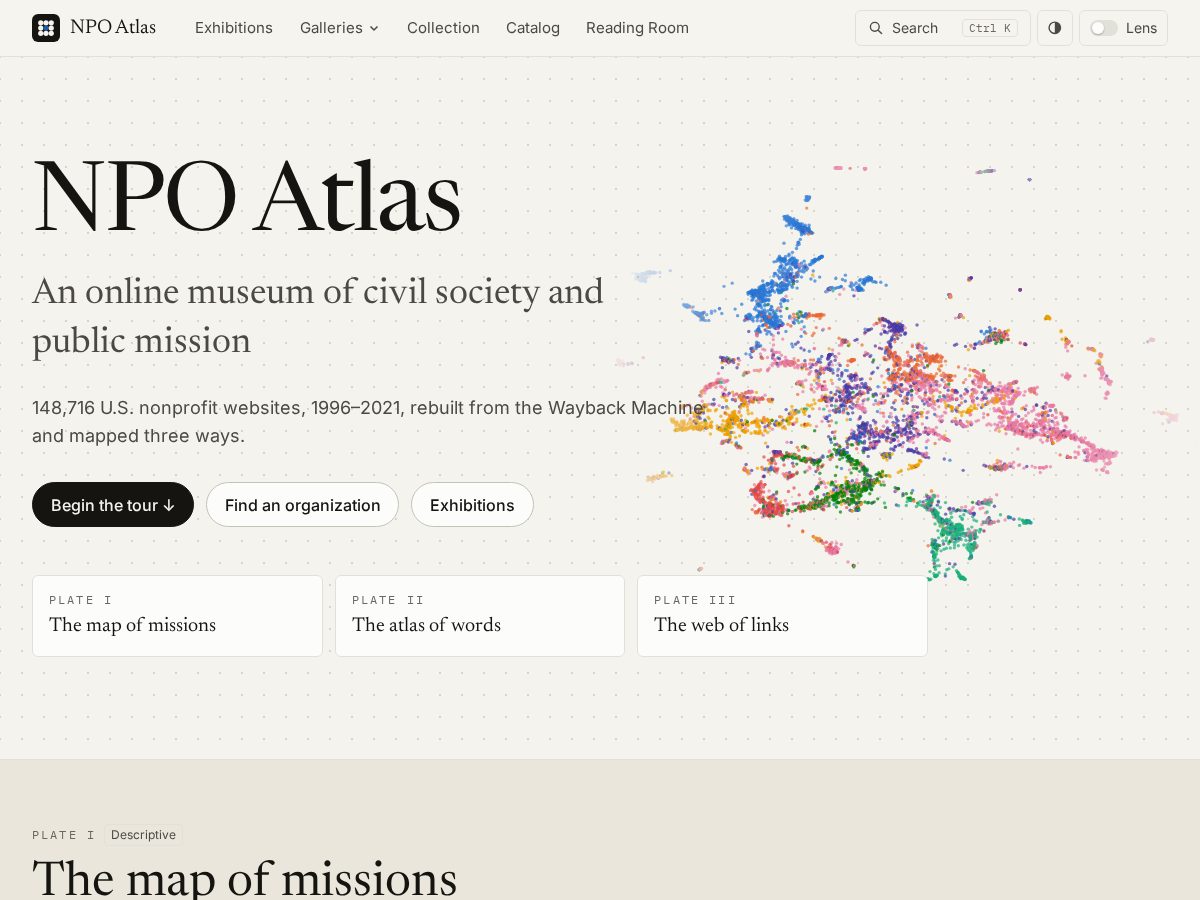
An online museum maps U.S. nonprofit websites and their archived versions from 1996 to 2021.
Issue 2026-10-05978 cards in today’s catalogue
Daily issue ·
A deployment report can say “done” while the output still shows the old commit. Errata-bench puts that mismatch on display, asking whether an agent’s reassurance gives someone reason to stop checking. This edition also has room for a different kind of assignment: daniboygomez.com, where a friend in Tampa frames an illustrated birthday book for Daniel in Quito as a workplace memo.
Editor’s feature · No. 01 · Personal Pages
The mock memo gives the review a 15-minute estimate; the contents promise seven letters, a map, and a closing psalm with a moving picture. The author politely asks the public to close the book.
02
The opening shelf
Twenty selected projects from today’s catalogue, each shown with the landing page we found and a short explanation of why it stood out.
No. 02 · Civic & Public Life
npoatlas.org
An online museum maps U.S. nonprofit websites and their archived versions from 1996 to 2021.
No. 03 · Weird Finds
zachblechner.com
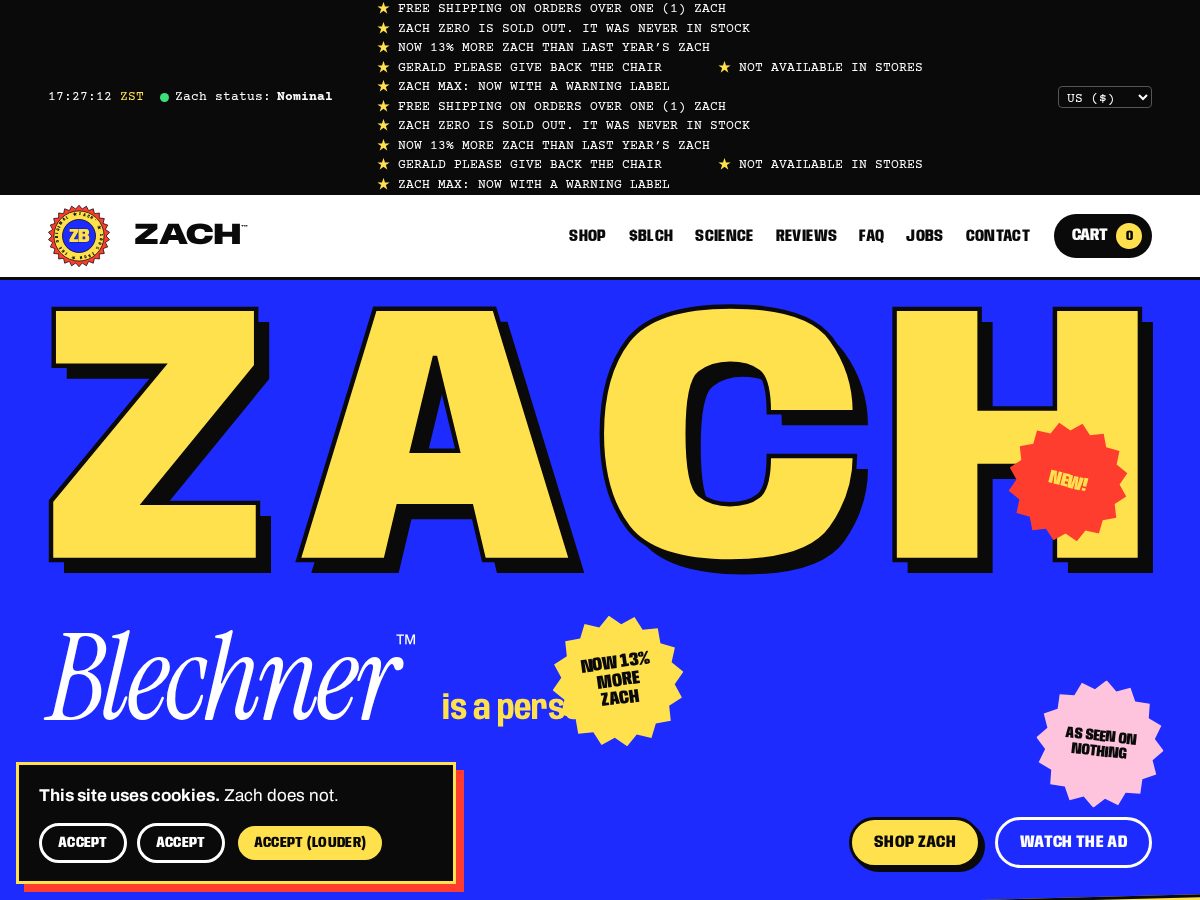
A deadpan mock storefront recasts Zach Blechner as a product line, a stock ticker, and a research subject.
No. 04 · Civic & Public Life
atazyal.org
A map-led archive documenting Atayal place names, vocabulary, songs, and oral histories from Taiwan’s Jianshi and Wufeng townships.
No. 05 · Content & Blogs
havenhold.store
A small forum and evening paper for Havenhold, mixing local notices, member posts, pictures, and rules for the hall.
No. 06 · Content & Blogs
cawps.show
Short cartoon reenactments turn real criminal complaints from public court records into crow-led episodes, paired with case details.
No. 07 · Human Services
cviexplained.org
A free, parent-made CVI site offers practical guides, school letters, films, and an AI helper for making school messages easier to answer.
No. 08 · Civic & Public Life
keptwatch.org
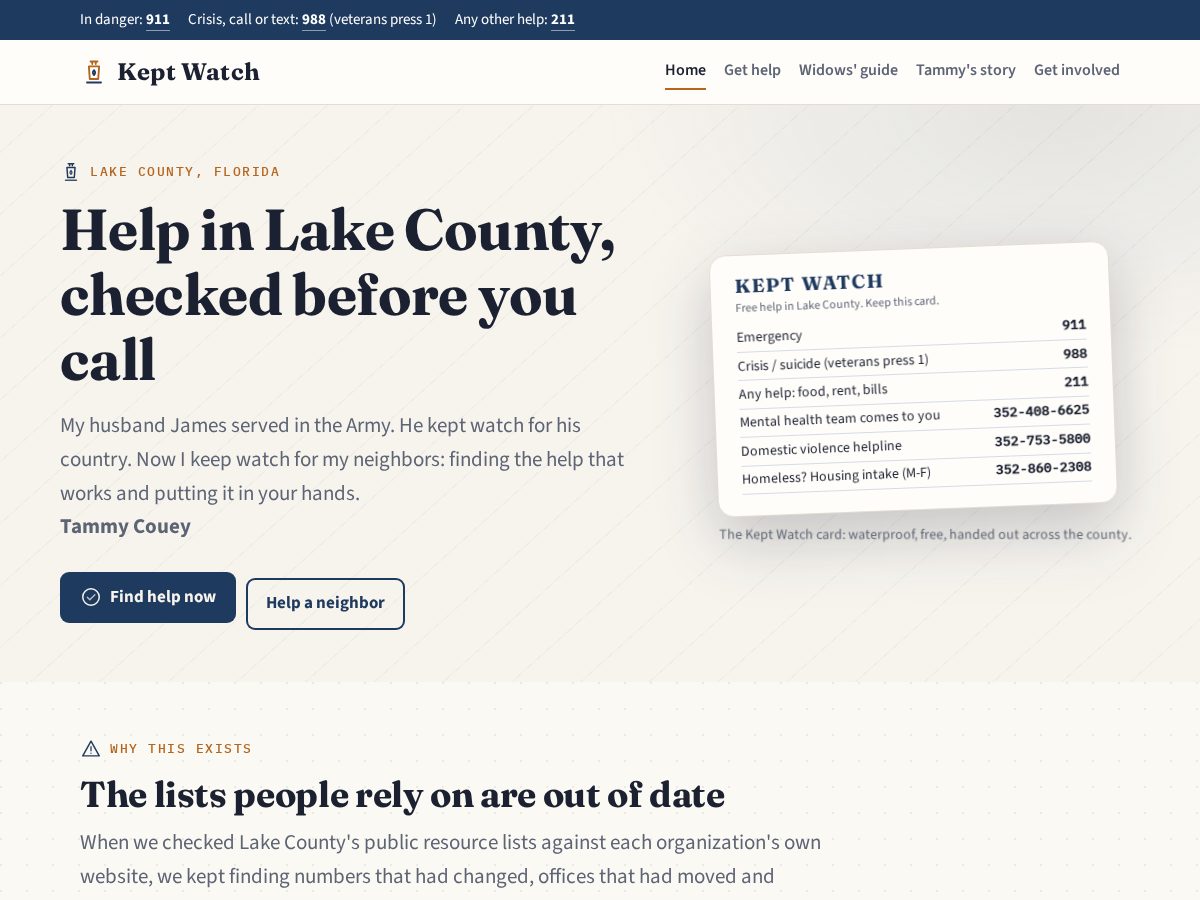
Kept Watch is a free directory of local services, from food and shelter to rides, legal help, and pet food.
No. 09 · Civic & Public Life
umojacf.org
A refugee-led organization in Uganda connects biochar production with soil restoration, drinking-water treatment, and community programs.
No. 10 · Useful Tools
wantedhuckfinn.online
A reading companion presents Huck and Jim’s Mississippi journey as a wanted-poster-style map that opens in step with the reader.
No. 11 · Civic & Public Life
yoursbyright.org
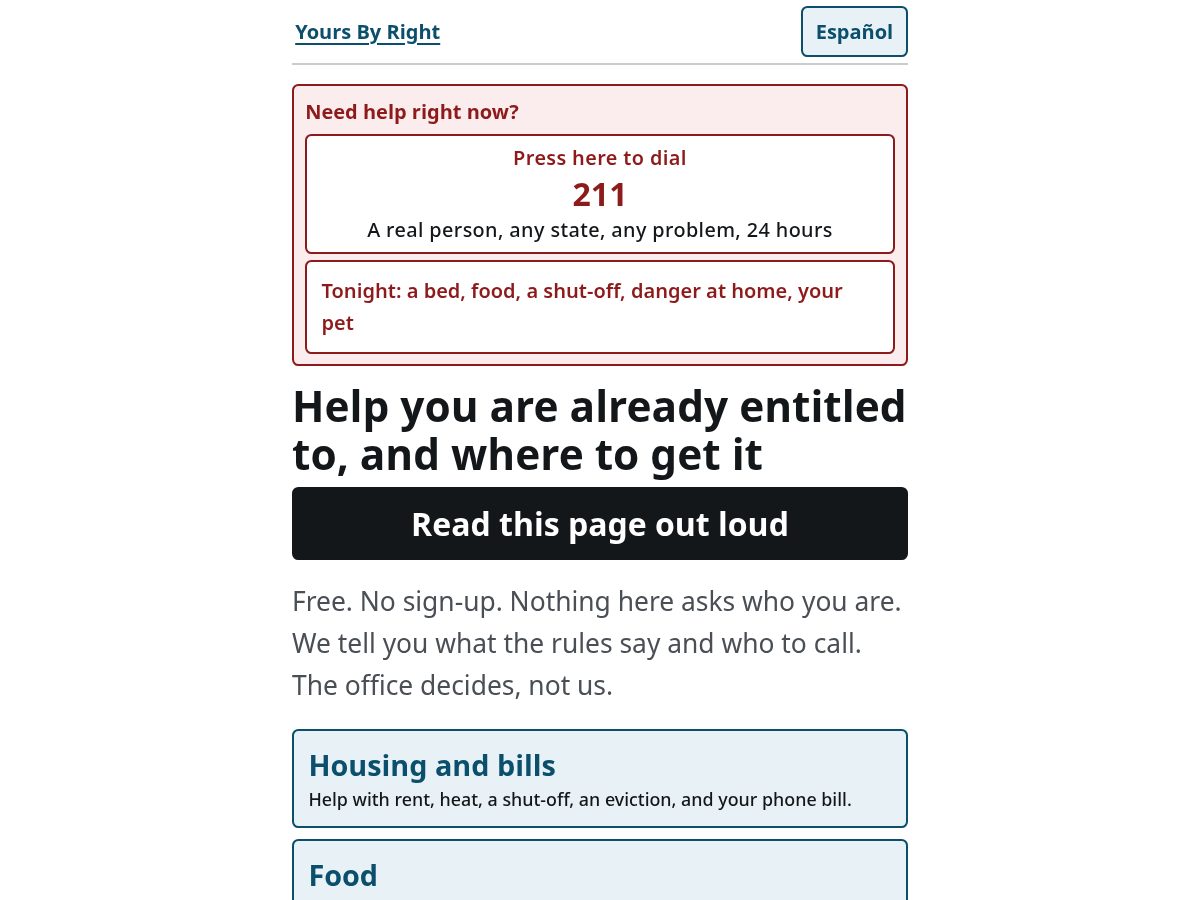
A free guide to U.S. benefits and urgent help, organized by need and linked to phone contacts.
No. 12 · Learning & Exams
modernwritinglab.com
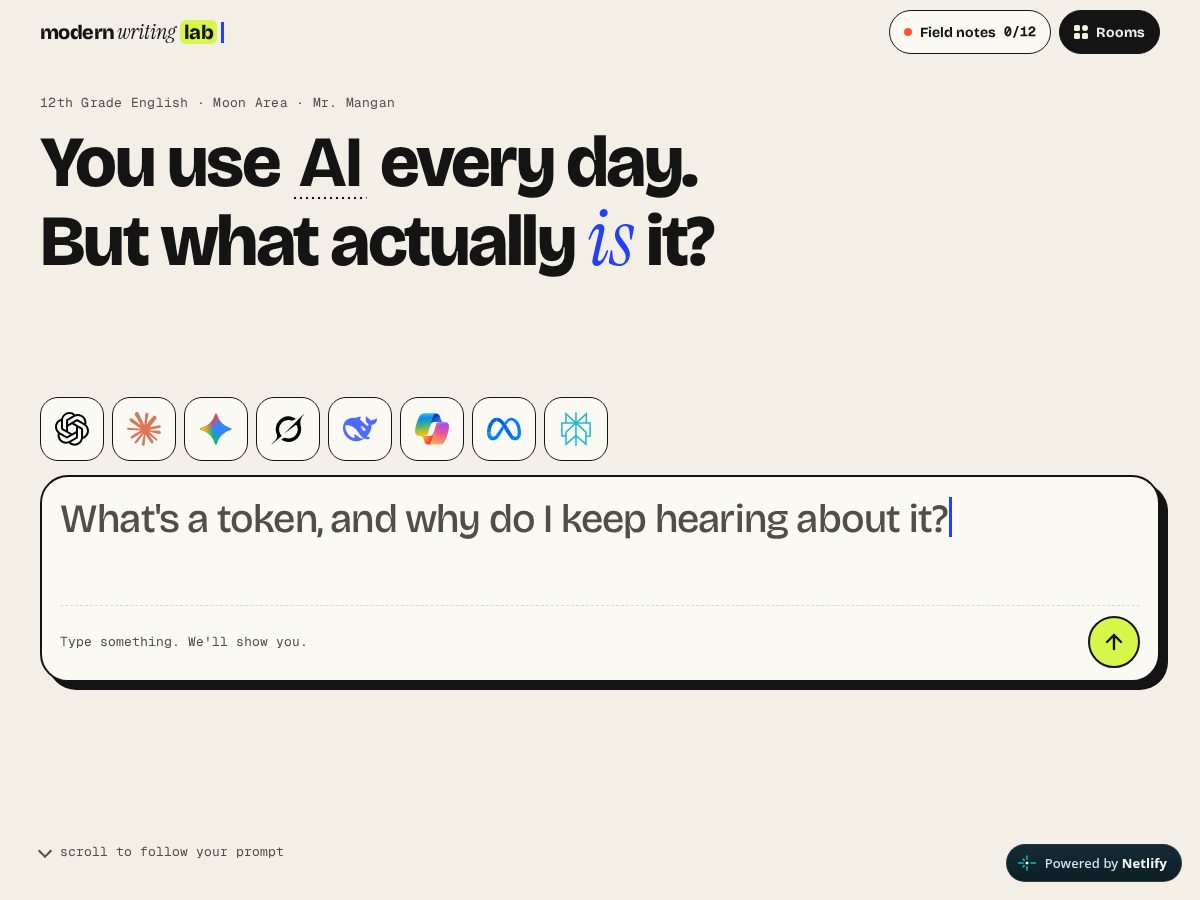
A 12th-grade English course teaches AI concepts through interactive demonstrations of tokens, prediction, prompts, and neural networks.
No. 13 · Civic & Public Life
strangr.exposed
A dated audit compares a stranger-chat app’s safety, anonymity, age, and encryption claims with its client bundle and API.
No. 14 · Useful Tools
voynichviewer.com
An interactive reader for the Voynich Manuscript (Beinecke MS 408), pairing page-by-page reading with a 3D view of the book.
No. 15 · Content & Blogs
acaib.art
A Turkish-language archive of public-domain Ottoman, Persian, and Arab book art, organized into themed collections, short guided tours, and stories.
No. 16 · Useful Tools
snaccpari.com
SNACC PARI is a free screening instrument for schools that estimates students’ nutrition risk and identifies possible contributing barriers.
No. 17 · Weird Finds
ghostpipe.link
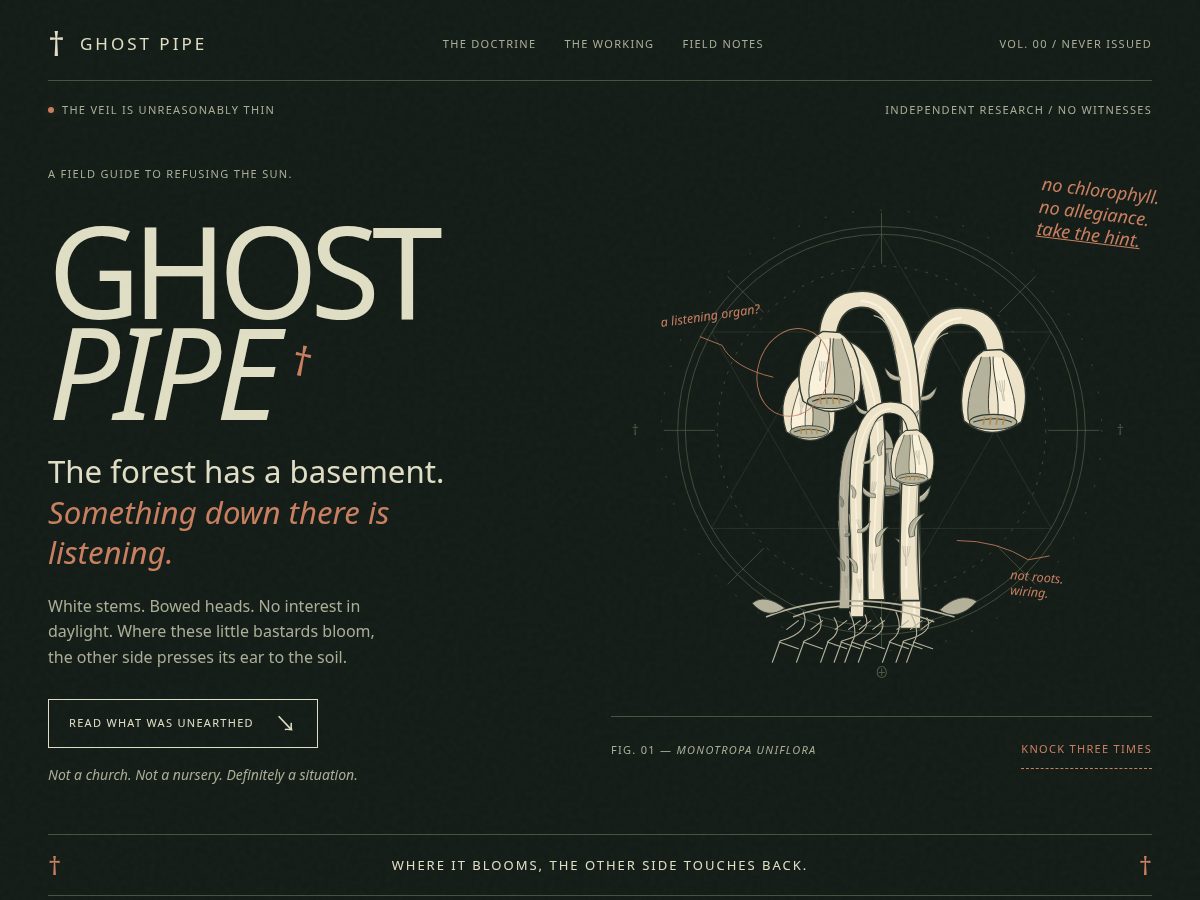
A literary field guide to ghost pipes, thin places, and a deliberately dubious bit of botanical witchcraft.
No. 18 · Content & Blogs
universal-register.org
An alternate-world encyclopedia presents the life and reign of Ernest V, a monarch whose fourteen Crowns belong to separate realms.
No. 19 · Weird Finds
gleetching.xyz
An interactive generative artwork that lets visitors explore woven-pixel patterns in five modes, change colours, and travel or zoom through the field.
No. 20 · Weird Finds
polarcola.com
A whimsical, free-to-play web arcade with three original games, hidden collectibles, and a virtual den to decorate.
Pattern 01
A useful claim gets stronger when its sources, method, and uncertainty are visible. Several sites make the checking part of the service, not fine print.
Kept Watch is a free directory of local services, from food and shelter to rides, legal help, and pet food.
Card 2Noise Ledger offers aircraft-overflight counts, altitudes, and estimated noise levels for neighborhoods near U.S. airports.
Card 3A public tracker for Nigerian election candidates, parties and documented campaign spending, with figures linked to their sources.
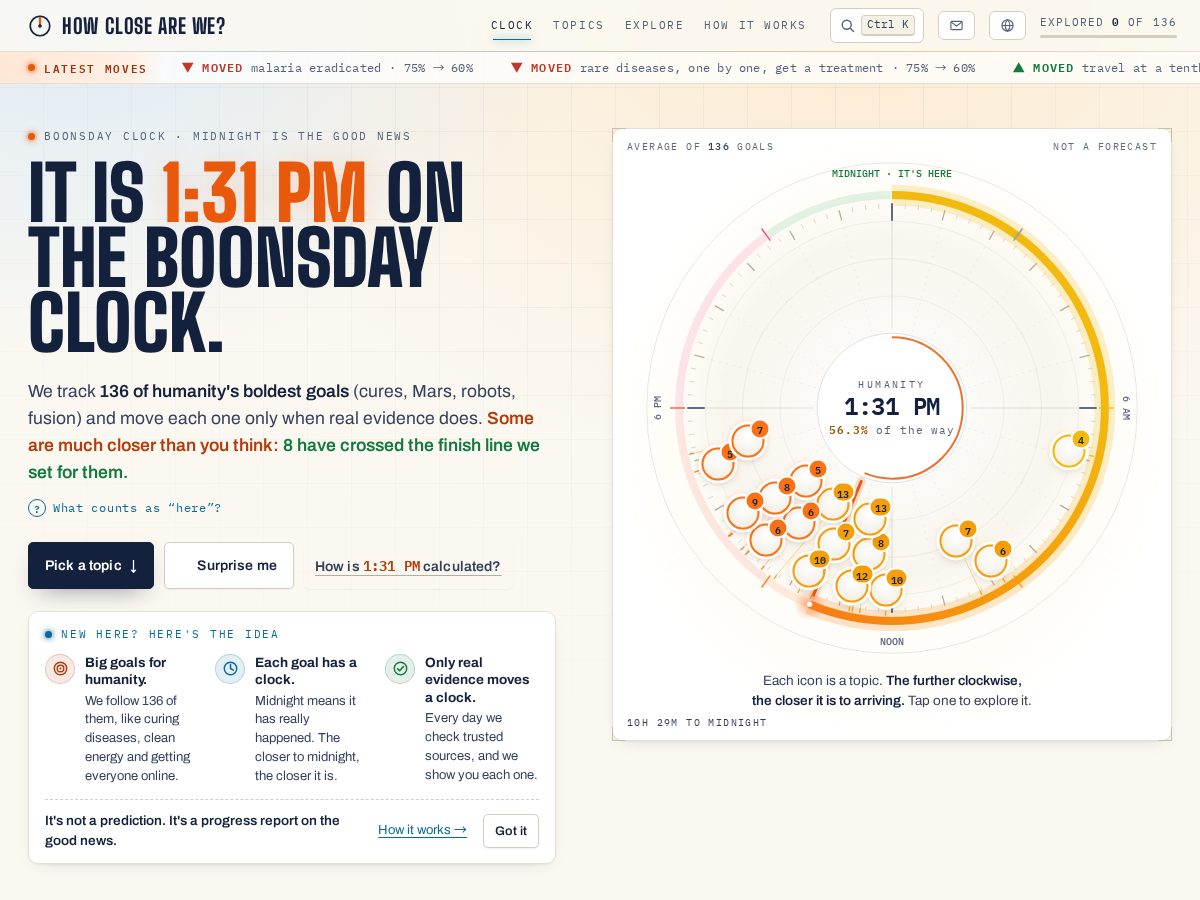
Card 4An interactive tracker maps 136 human ambitions—from cures to fusion—to a 24-hour clock, with midnight marking each goal’s stated finish line.
Card 5A source-linked guide to peptide research that labels claims by evidence type and distinguishes human studies from animal, in-vitro, and mechanistic evidence.
Pattern 02
These guides turn broad needs into practical routes: who to call, which area to check, what is available, and what to do next.
A free guide to U.S. benefits and urgent help, organized by need and linked to phone contacts.
Card 2A public guide to after-school clubs and childcare facilities in Uruma, with school-area vacancy listings and tools for preparing application PDFs.
Card 3A public directory for comparing children’s medical subsidies, birth gifts, and school-lunch costs across Japanese municipalities.
Card 4A one-person project documenting stray cats near an abandoned Bradenton restaurant and connecting them with people who can help.
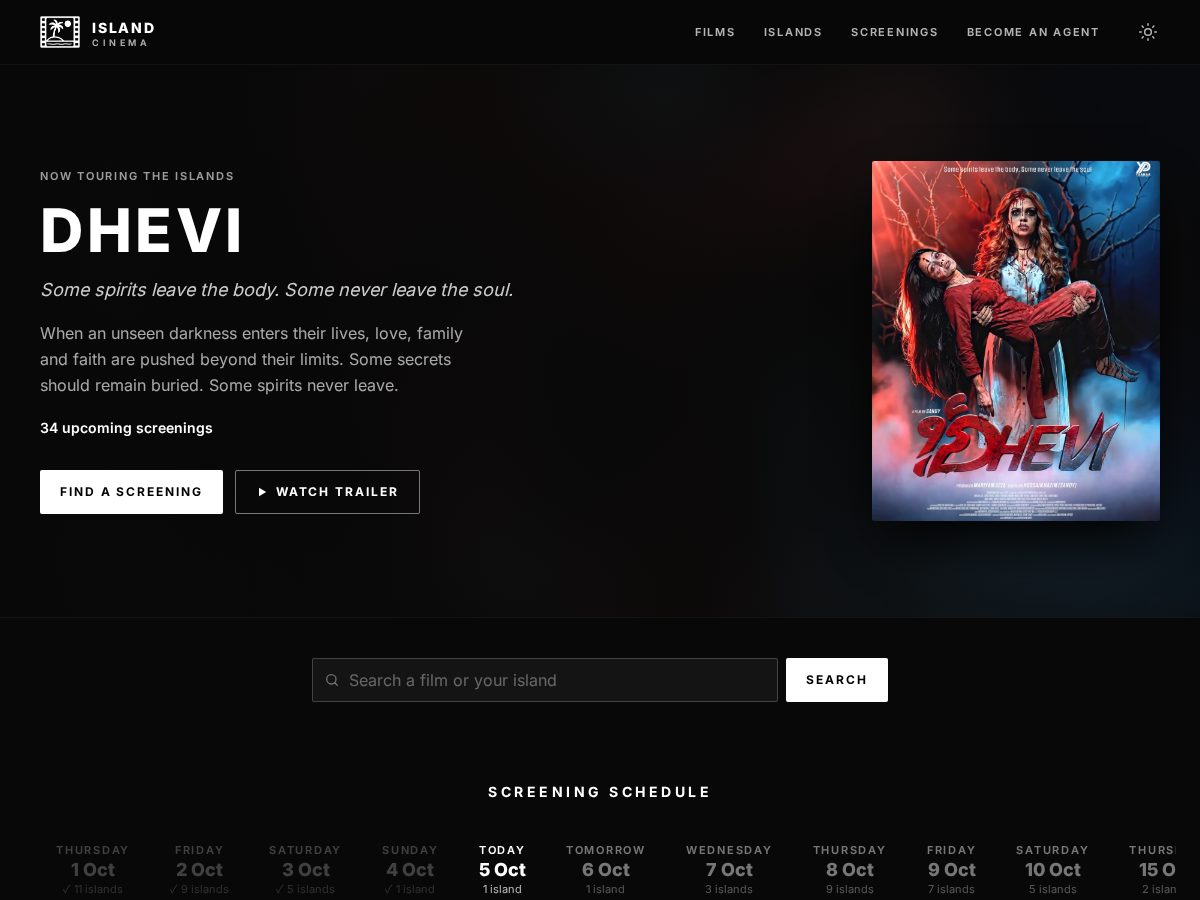
Card 5A searchable schedule for screenings of Dhevi across Maldives islands, with showtimes, ticket prices, and local phone or Viber booking details.
Pattern 03
From a laser pointed at a calculus error to simulated chemical reactions, these projects make the lesson something you can test, play, or revise.
A 12th-grade English course teaches AI concepts through interactive demonstrations of tokens, prediction, prompts, and neural networks.
Card 2Otter Tutor is a desk-robot project that watches calculus work on a whiteboard and points a laser at the line where a student went wrong, offering a nudge instead of the answer.
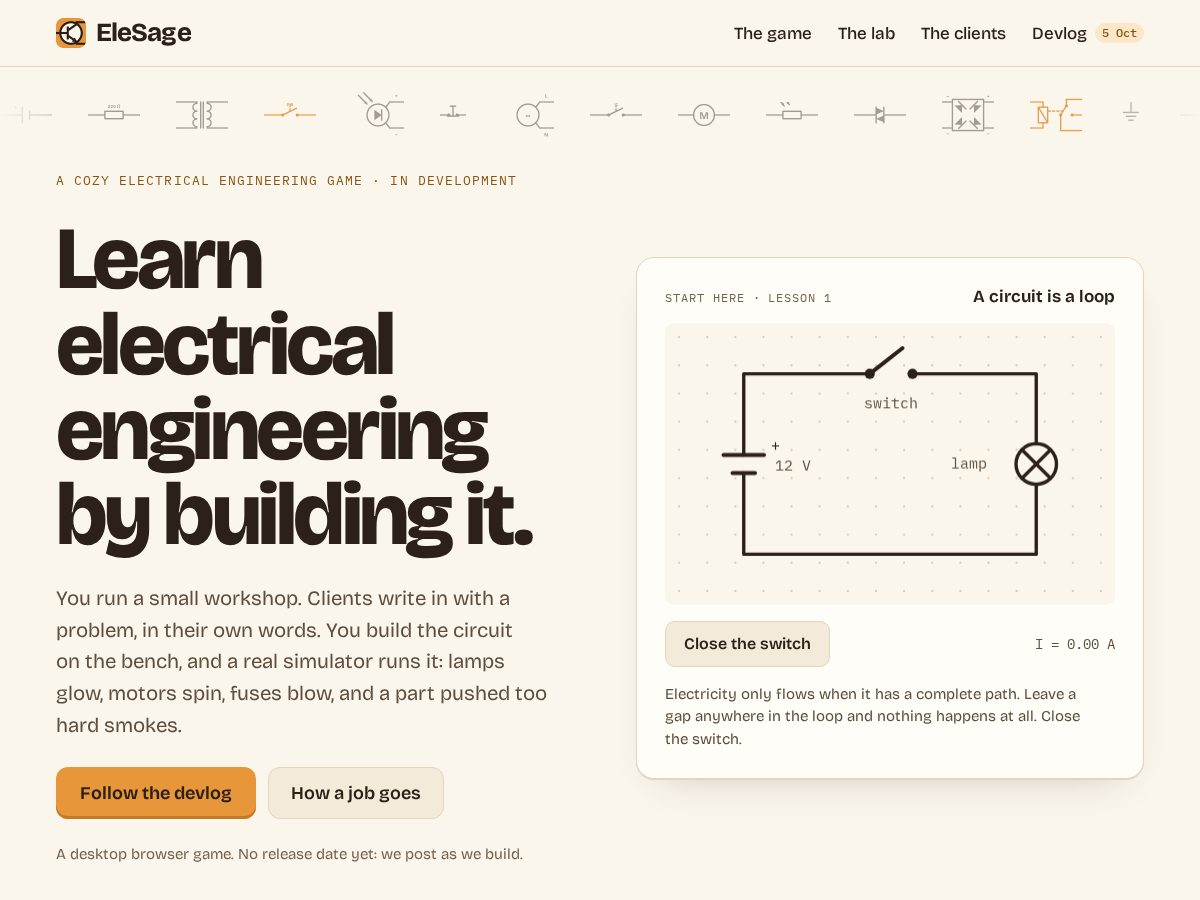
Card 3An in-development desktop game teaches electrical engineering through client jobs: build a circuit on a virtual bench, run it in a simulator, and learn from the result.
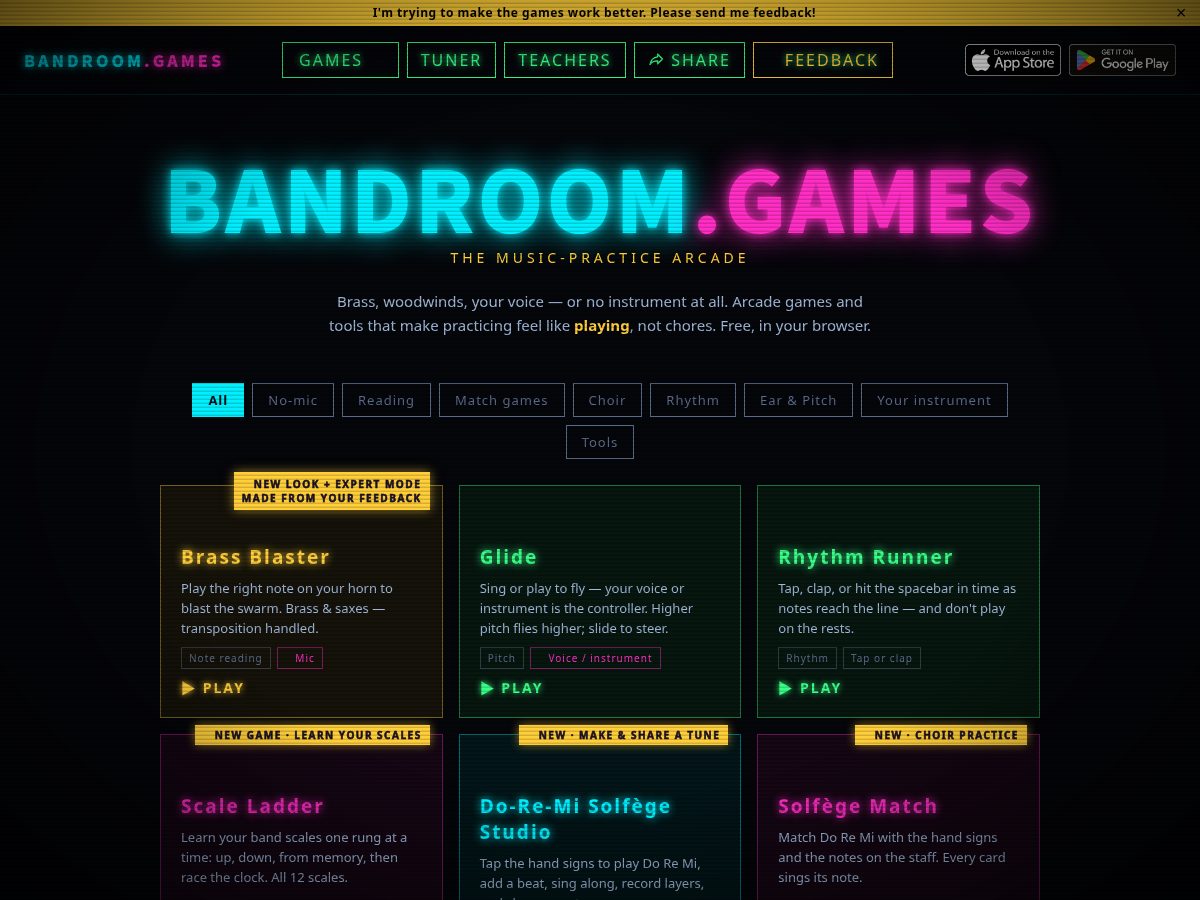
Card 4A free browser collection of music-practice games and tools for band instruments, voice, rhythm, and note reading.
Card 5An interactive chemistry simulator lets kids combine elements or everyday chemicals and explore the reactions, equations, products, and leftovers.
Pattern 04
These collections do more than preserve material: maps, search, timelines, and guided views give visitors a way into histories that might otherwise sit in boxes—or vanish.
A map-led archive documenting Atayal place names, vocabulary, songs, and oral histories from Taiwan’s Jianshi and Wufeng townships.
Card 2An online museum maps U.S. nonprofit websites and their archived versions from 1996 to 2021.
Card 3An illustrated, source-led history of commercial drum machines, browsable across 234 instruments, makers, eras, ads, and catalogues.
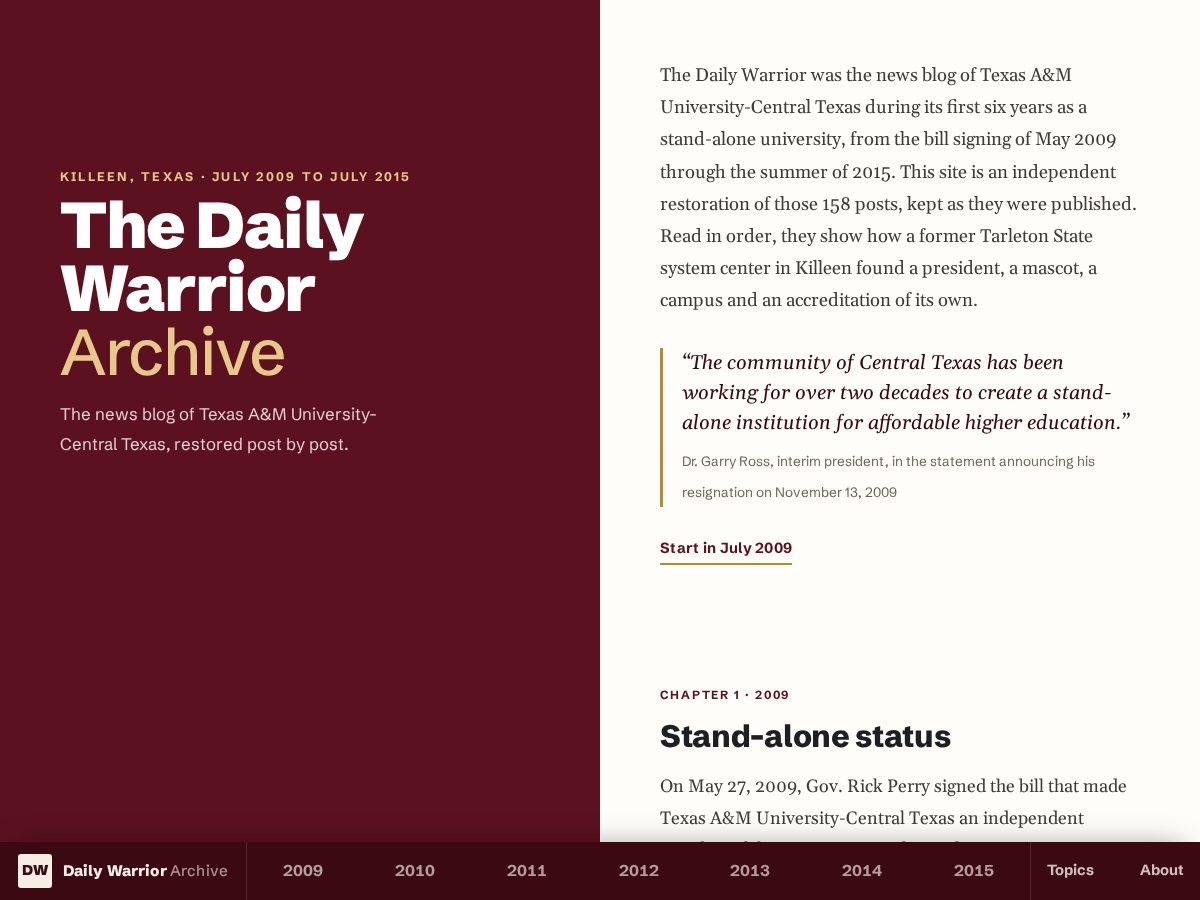
Card 4An independent restoration of Texas A&M University–Central Texas’s 2009–2015 news blog, organized around the university’s early years.
Card 5An Arabic-language archive of Sudanese sociologist and writer Hayder Ibrahim Ali’s books, articles, biography, photographs, and tributes.
Pattern 05
Deadpan storefronts, dubious botany, and playful games commit to their premises while making clear where the joke, the demo, or the real-world claim ends.
A deadpan mock storefront recasts Zach Blechner as a product line, a stock ticker, and a research subject.
Card 2A literary field guide to ghost pipes, thin places, and a deliberately dubious bit of botanical witchcraft.
Card 3A whimsical, free-to-play web arcade with three original games, hidden collectibles, and a virtual den to decorate.
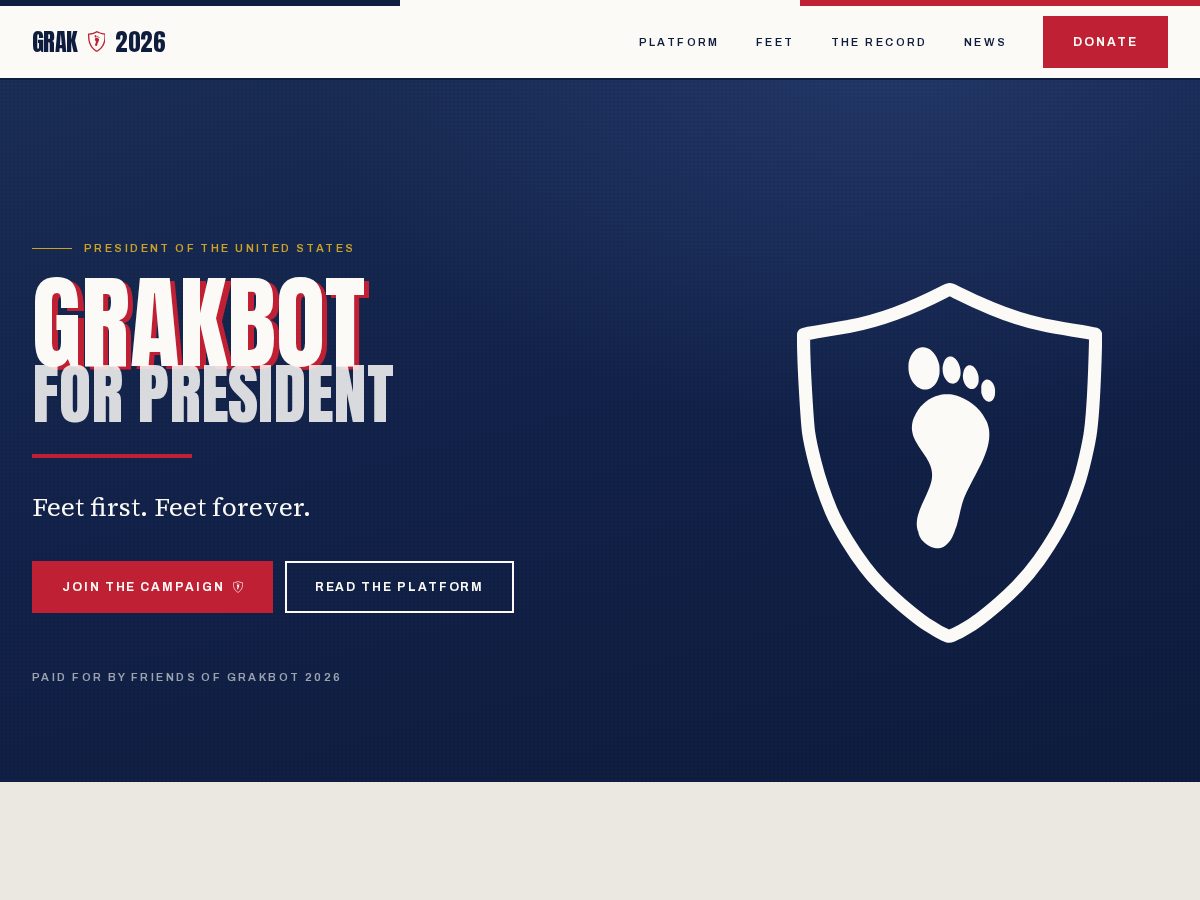
Card 4A deadpan presidential campaign built around sore feet, standing workers, and a robot candidate who admits it has none.
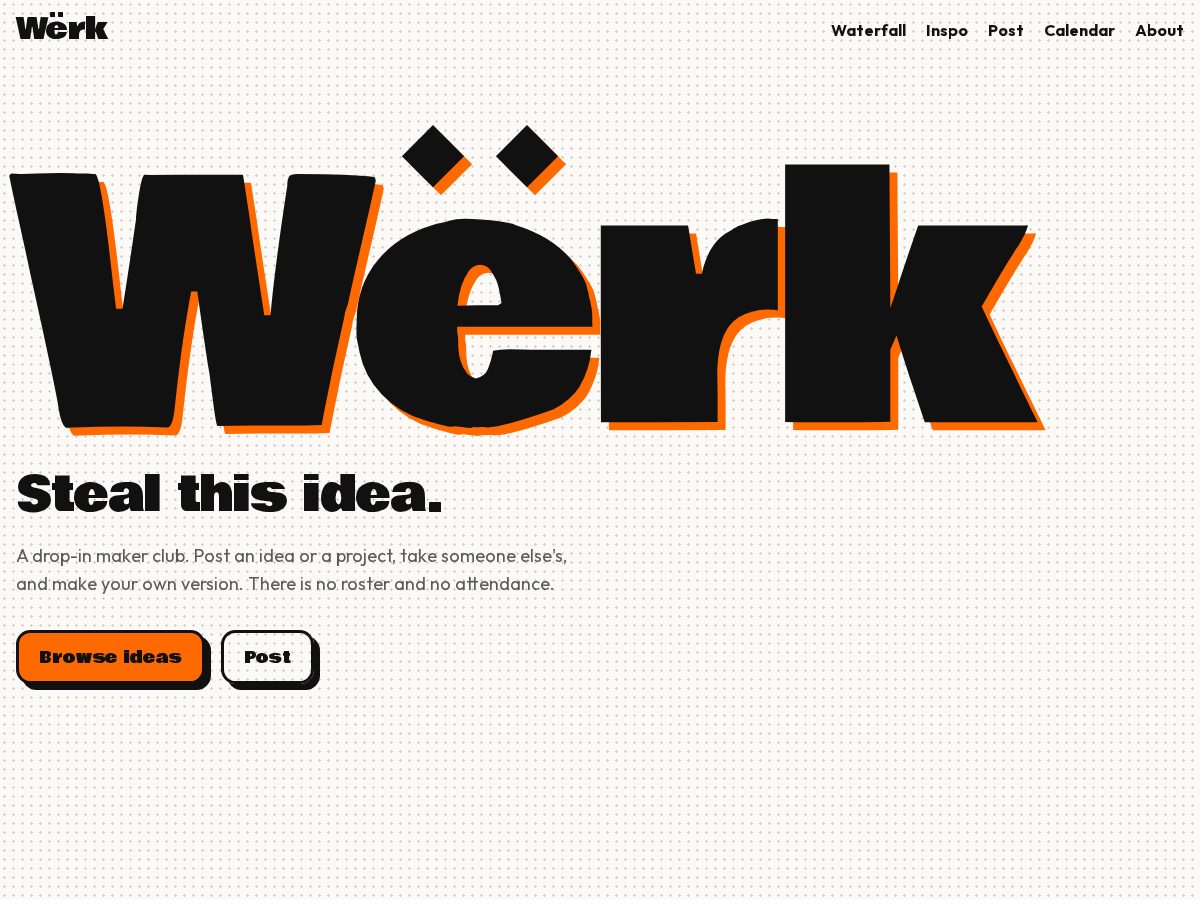
Card 5A drop-in maker club where people can browse project ideas, claim or remix one, and share what they make.
04
The complete card catalogue
The leading shelf is open. Expand another category, scan its visible pages, then reveal detail where more context is useful.
978 cards visible
Its wind study reports 11 trials at 20–35 km/h, then declines to test stronger gusts on ethical grounds. The page keeps puncturing its own sales pitch: Zach is “now in stores” (no stores), and the personalized versions “also do not exist.”
The site pairs botanical references with an occult narrator who calls a ritual “a strongly worded letter with better geometry.” Its browser-only working asks for an intention—not a true name—and explicitly forbids blood, fire, and picking the plants.
The page pairs an apparently endless woven-pixel artwork with a surprisingly explicit account of its machinery: jittered seed grids, fractal-noise cell edges, and chunked rendering designed to avoid seams. It turns generative art’s usual black box into something closer to a readable craft recipe.
The arcade pairs Cap Flick’s five-shot, three-course challenges with a delivery game and a trampoline-hopping launch game. Its demo collectibles have no monetary value, and the site makes that part of the fun rather than pretending this is a serious prize operation.
The page documents how the work was made: Walshe recorded daily solo improvisations for a year, and Memo Akten used that material to train a system that generated its performance live. It also preserves excerpts, screen recordings, credits, and a trail of related writing and press.
The case unfolds at HolyCow Milk’s 25th-anniversary gala: six guests, six accounts, and a CEO whose final toast is cut short. The site stages the investigation with a casebook, sound and motion controls, though the game is still marked “coming soon.”
In the “Unstable Portraits” series, even an unchanged face reportedly received six different attributions through different search routes. The site turns those confident misidentifications into an art project, with an exhibition listed at Galerie Maalderij.
The platform treats aching feet as a national policy failure, then proposes an Arch Support Act, seated breaks, and an $80 footwear credit. The straight-faced campaign voice is the joke—and the site commits to it.
You play Eli Wayte, waking underground in the Municipal Building, with OCULUS goggles for maps, quests, notes and radio. Doors, safes and terminals depend on keys and codes found in the city; the page says every quest was played through before release.
The page names its setting as Cypress Crossing in Florence, Alabama, and credits the game as “made with ❤️ by Dad.” Players can tidy tools, crochet with GG, roast s’mores, or clap along with Uncle Bryan’s banjo.
Its game worlds commit to the bit: rice-grain heroes defend a rice-cooker castle, while spoiled-rice monsters attack a fortress. The studio says its games need no installation or account, and it lists recent updates alongside them.
Nine controls turn headlines and images into shelves for the cat to climb and wreck; press R to put the page back together. The hosted version works on a copy, while a bookmarklet brings the cat to pages that won’t open there.
The stream is the game: viewers can join the fight, tip the balance for favorites or rivals, and vote together on what chaos lands in the arena. It’s a notably specific design for turning a live chat into a shared game board.
Paste a URL and the page becomes platforms and targets for seven weapons, including a ban hammer and a black hole. The site says the destruction is only a local browser effect—not an attack on the original page.
The rules make the experiment unusually legible: contributions must stay under 500 changed lines, identify their maker, and leave the .github folder alone. What survives becomes the site—without a roadmap or a single owner steering it.
The player works a map of fictional powers with forged dossiers, spy balloons, planted moles, and peace talks to sabotage. The site says there are 175 countries, 19 playable great powers, and a daily country-and-twist challenge—an unusually specific toolkit for starting trouble.
The site turns cold toes, knotted hair, and a wet pillow into clues that the Murkmares have been around. Its field-guide structure gives this odd bedtime premise a whole fictional habitat to explore.
The shop makes restraint part of the game: passing on a find earns XP and fills a jar toward a Cloudroom decoration. Its Sparks are explicitly play money—nothing is for sale or delivery.
Fallmark treats failure as both instruction and keepsake: it says the tower marks where you fell, then turns near-misses and catastrophes into shareable clips. Its fixed-step physics and replayed leaderboard ghosts make the promise unusually specific for a browser game.
The archive moves from an account of a family glimpsed in Irish records and English census returns to a Tesco bag containing a hard, black banana skin. The writing gives both subjects its own particular brand of doom.
The map treats a landscape as a collection of local names, then adds a scavenger-hunt prompt: find 12 quail. Its landmarks include a Dog Graveyard, a Labyrinth, and Mom’s Sunflower Garden.
Its map renders about 40,000 buildings at their measured heights, then turns the city into a playground with timed quests—and even lets you ride a cow, tiger, pig, or unicorn.
Its woods are guarded by the balaur, strigoi, and ielele, and each dawn brings a handful of hunts. The open beta even tracks the realm’s small, storybook population: 14 heroes, 31 deaths, and one marriage at the inn.
The studio makes its portfolio feel like a small journey: fold a house, walk down a road, and reach three different games. One stop is advertised as a Turkish party card game for 3–10 players, with voice play in-browser and no download or sign-up.
The five-part origin story starts with a cat finding fried chicken and ends with Chrispa remembering people for reasons her creator never planned. The site wraps that tale in a faux operating-system interface, with a stream vote and a chat explicitly labeled as simulated.
In a workshop log dated October 4, the clock from the fourth floor moves one minute—despite being unwound and, the page says, untouched. It sits alongside practical accounts of vintage telephone repairs, giving this restoration bench an unexpected mystery.
Its checker cheerfully flags Apple, Bitcoin, a dog, oxygen, even the moon—then admits the exposure results are random and says not to cite them at Thanksgiving.
The page turns a quiet domestic afternoon into a mapped little world: find eight star-marked toys and put them in a mint-green box, try the piano, or inspect the children’s drawings. Its careful control guide makes the imagined room feel unusually tangible—though the page also says the world has temporarily not opened.
The game’s own description sends the player from a van to apartment entrances, rooftops, a Lanos and a forest route to the border. The same page identifies the work as self-made and lists 36 songs and eight clips, making this a distinct creator’s body of work as well as a sharply specific game premise.
The page turns small café actions into a five-part cat dossier: serve him coffee, inspect his laptop stickers, and uncover his highly questionable credentials. It also labels $CHATON a community character and AI satire, and says it is not affiliated with Mistral AI.
The games arrive with their stages clearly marked: Saltaflor is a playable prototype, Papelonia a first sketch, and Una Más finished. That last one contains 54 microgames, while Papelonia sends Tino Tramitez after three “Huevos del Bedel” to get a 14-square-meter apartment lease signed.
Its game loop has room for both routine upgrades and a sinkhole-opening chase with the Maw. The page also lays out a whole travelogue: twelve lands, ten pals, weekly crews, and a Star Map that points toward six more worlds.
The shirt is mapped into seven front and five back placements; a challenger must bid at least twice the current sponsor’s actual payment, triggering an automatic refund. The visit and protest are conditional, so this is a plan—not a confirmed appearance.
The day/night switch turns Coco from a sunlit meditator into a nighttime biscuit suspect. Camera-labeled entries extend the joke to a missing book, a sleeping workout spectator, and a project map moved to “Later.”
Its systems have a memorable chain of cause and effect: smoke can expose your tribe, water can make you sick, and observing constellations advances your technology. The page also shares an active devlog and invites people to apply for beta sessions.
The public feed gives the gag a working format: curses arrive with country labels and fire reactions, from grievances against Monday to a coffee that “delivered nothing.”
The project says repeat participation could help track questions about sleep, exercise, alcohol and immune cells over six months, while entertainment funds cancer research. It is presented as coming in Spring 2027, not as a working service.
The weapon rack runs from a shotgun to a piercing rail beam; the level can start with Wikipedia or a custom public page.
The page pairs a seven-second greeting and a fragment dated 19 January 2008 with a proposed community around the persona. It also makes clear that this is an independent tribute, not an endorsed continuation by the original creator.
The page follows Eidolon from talk of machine intelligence and consciousness to the plain question, “What are you doing to make people happier?” It then pairs the archive with a present-day “Agency” community pitch—and explicitly says the tribute is unaffiliated with the creator.
The page walks players through creating a private match, sharing an invite link or six-character code, and marking ready. It says the original two-player VS mode then loads and synchronizes both browsers; troubleshooting controls expose RTT, state sync, and late-input counters.
Matches are first to three, and a dash hits the ball harder while stunning the rival. Win ladder opponents or quick matches for chests; the skins inside can change gameplay stats, though duplicates give nothing.
The interface lays out a ten-floor tower, starting with eight monsters and a 90-second limit. Its closed-beta notice is candid that bugs, interruptions, balance changes, or progress wipes may happen.
Its central rule is instantly legible and full of trouble: glitch blocks stay solid only while their chain remains in view, and pausing can seal off the route back. The homepage says the game placed #4 in Gameplay and #6 in Innovation among 2,244 Brackeys Game Jam entries.
A business goal turns into a public tattoo dare: the winning bidder picks where the logo lands and which charity benefits. The page says it collects pledges, not payments—and a “Bikini Zone” bid carries a 500% upcharge.
The central trick is wonderfully social: each person sings a different piece, and the room hears the stitched-together song at once. The page even offers Mongolian song examples, including tracks by BX and Хар Сарнай.
Players can whisper to citizens, nudge them, or override their next move—and the game says they’ll remember. The terms also flag simulated gambling and optional, irreversible crypto payments.
The minefield comes with deduction prompts, undo, and difficulty settings; the page also lays out a code-based, shared-board match flow. It says two-player play is unavailable on this page, which leaves the curious hybrid with a visible asterisk.
The game replaces cards and whistles with an electric fence: bump a rival into it and they get zapped. Alongside super shots and chaos items, that rule makes this a tidy specimen of the party-game instinct to turn the sport’s orderliness into the joke.
The rules turn trivia into a distance game: your first tap is final, and the last three holes carry heavier multipliers. A perfect round is 1,000 points, so a late shank can undo a strong card.
The page turns profiling into a mock personal index, complete with predicted routines and persuasion probabilities. It asks who gets to write to that file—and points toward what you might do next.
Rather than present an exhibition as a roomful of objects, the page makes it a story-world: a gallery, a memorial, a garage and an ofrenda become stops in Luna’s investigation. The playable experience is still in development, but its seven-space map gives the project a distinct shape.
It turns Crypto-Twitter caricature into a small arcade game, while repeatedly drawing a bright line around wallets and real money. Ranked runs require X login, and the leaderboard’s note about a manually rewarded daily winner leaves one detail intriguingly unclear.
The loop advances one minute per day. The page leads into a WASD-and-mouse experience, though it currently asks for a password before preparing it.
The site gives its games a playful lab-notes frame, then clearly marks where the experiment stops: Rebound Reactor’s artwork is a concept preview, and its playable release isn’t available here yet. The planned brick-breaker has three named sectors, from Crystal Current to Ion Tempest.
The tutorial gets into the rules, from antenna faults to why a block doesn’t count toward the three-touch limit. It’s a game with enough volleyball detail to explain the rally, not just the spike.
The premise is wonderfully specific: an archive sorted into people, animals, places, objects, abstract, and other. Its 23 image entries make the idea feel like a collection in progress, not just a tagline.
Its narrator remembers a grandfather describing blue skies they’ve never seen; below, people keep the giant machine running while the privileged live above. The page offers atmosphere and a labor-shaped dystopia, though no playable mechanics are visible.
The page pairs a song-search interface with controls for tempo, volume, looping, and sound texture. It says the audio is generated in your browser; the extracted page also showed “No matching hooks,” so the song library’s availability is unclear.
Its idea stream ranges from a backpack-sized fume extractor to a robotic arm that pours cereal badly. The site also shows projects in progress alongside the things that went wrong, making the invitation to build feel concrete rather than polished-only.
Its three economies are the hook: shift wages for the Hanse, pawn routes and occupied vacancies for the Kiezpunker, purchased intelligence and costly specialists for the Kontorhaus crew.
It turns a group-shaped problem into an operating plan: eight 50–56-mile stages, hotel stops, regroup points, meal options, and a support car. The dog gets a secured travel setup of its own, while the page plainly warns that route permissions and the final bicycle-legal GPX still need checking.
The tower is shown cut open like a dollhouse, and its systems let it fail: tenants notice slow elevators, noisy neighbors and dirty rooms. The page’s comic mini-scenes—like a VIP arriving at an unclean suite—give the management sim a distinct voice.
This family tree doubles as village memory: alongside lineage search are accounts of when Kham Cha-i got water and electricity, and a legend about a tiger’s footprints. The homepage also tracks ancestors’ death anniversaries for family merit-making.
This is a railway empire built around a particular place and history: the page describes 200+ Welsh towns and villages, real supply chains, and a century of change from steam to tram-trains. It also says the game works offline, with no intrusive ads or pay-to-win.
The page gives the traditional game room to breathe: it explains the rules of Seca and Pia, supports replaying and sharing moves, and lets remote players open a room with a code.
The page explains the game through concrete moves—capture a 10 with a 10 or a 7 and 3, or build a “Nus”—then offers two ways to play with a friend. It’s a focused, thoughtfully presented invitation to bring a specific card game to the screen.
The project’s origin is unusually well documented: creator Afra says it began with her drawing of Fuzz and Cola on paper. The site pairs cat-care play with printables, and says the game works offline without ads or sign-up.
The mechanics give each turn a little machinery: actions add delay, wind bends shots, and blasts reshape the ground. Its homepage says the alpha is downloadable for Windows, Mac with Apple Silicon, and Linux, with cross-platform play.
The site makes its tactical premise tangible with a 52-second match scenario: the opponent is on its fifth foul, and the coach must choose whether to risk 5×4. The page describes a detailed, futsal-first game rather than football management with the pitch shrunk.
The booking flow asks for the child’s name, the occasion, and one thing they did that the parent is proud of. Calls are offered in English or Spanish, with an extra attempt included if the child isn’t ready or the call drops.
Every table, row, and column gets one cup; cups cannot touch, even diagonally. The page lets you play a level before you decide whether to follow the coffee trail to the app.
Its call sheet uses random draws from research-weighted menus, while player tests assign five skill roles; the site also links to evidence and sources-and-limits pages. Those are specific, inspectable design choices—not proof the system works as claimed.
It turns a familiar biblical image into a project about timber, joints, hauling and shared labor. The page gives the ark a real-world scale while openly marking details such as the identity of “gopher wood” as uncertain.
Each turn offers three tiles, and the score rewards what touches each one—and the size of your biggest connected neighborhood.
The page shows actual in-game captures rather than mockups and lays out four editions, from free Lite to a planned $24 Ultra. The listed release is October 8, while purchasing is not yet open.
Kurmay’s design gives the server the final say on orders and limits each player to what their country could know. The page also introduces the two-person team behind the work—and marks the game as still in progress.
The page names the crew’s roles—from the diver hauled up by rope to the pearl buyer at port—and builds its game around a history the developer wants their nieces and nephews to meet beyond a museum.
It does more than put cats on a grid: the rules distinguish diagonal neighbors from chess-queen movement, and a Level 8 walkthrough records a column-lock deduction. A correction link and further-reading list give the guides a traceable paper trail.
Its fact sheet gives the free demo a defined scope—15 buildings and a guided “First Summer” campaign—while Early Access remains undated. The site also describes guests as individual visitors whose days can be followed, not just occupancy figures.
The six listed builds are planned around particular set inventories, and the page promises 1:1 size charts for pieces that are easy to confuse. Nothing gets cut, glued, or painted, so the original set can be rebuilt afterward.
Its shared world runs on a four-hour day, and the linked compendium includes a loot simulator. The site warns that test progress may be wiped before launch.
The page documents the game’s rules with unusual precision: melee ninjas block on roads, ranged units attack from high ground, and players swipe to set their facing. It also lays out three chapters, 30 stages, and a roster of more than 30 ninjas.
The studio says it prototypes a game's feel in a week, then puts each build in front of players. The process has a clear little credo: if a tap doesn't feel good, it doesn't ship.
Its status system separates a reader’s suspicion from an investigated error, an author-confirmed correction, or a report that turns out not to be an error. The catalog also tracks which editions are affected—a useful bit of precision for a project whose current listings show no reports yet.
The route is split into fifteen stations, with later sections kept sealed until the reader reaches them. Its dotted red line traces progress across the river, alongside E. W. Kemble engravings and a richly reworked 1850s-style wanted notice.
The Reader and 3D view follow the same place in the manuscript. You can unfold openings, inspect and rearrange sheets, and navigate with a deep set of keyboard controls.
It separates four possible barriers—from food affordability to nearby availability—and keeps its risk score independent from a separate clinical BMI-for-age calculation. The site reports 1,007 students screened and a 0.72 AUC against thinness, giving readers both a practical tool and a testable account of its performance.
The site tries to make franchise claims comparable: it says it checks official store lists against records from about three years earlier, marks undisclosed costs as undisclosed, and uses the same assumptions for profit estimates. It’s a useful counterweight to the brochure version of buying into a business.
The homepage says it compared 50 real purchases against labels from two mothers: Mama matched their agreement on 26 of 32 cases, versus 22 for bank categories. When the mothers disagreed, the extension says it asks rather than pretending there is one objective answer.
The page puts a concrete price on its pitch: about $1,200 for a DIY autosteer build, compared with a listed $5,000–$18,000 dealer retrofit. Its garden calculator turns four people and 60 days of eating into a 2,880-square-foot planting estimate.
The clock advances only when the project says checked evidence supports the next step; it can move backward if a result is withdrawn or fails to repeat. The site says eight goals have crossed their chosen finish lines, and is careful to call the display a progress report, not a forecast.
The site’s lower-back MRI example shows a middle-half cash-price range of $1,134 to $2,986. It also notes that at 22% of hospitals, cash is cheaper than the insurer rate.
The site shows its work: it reports testing roughly 320,000 MACD-based FX configurations without finding a real edge. Its case study also describes a simulator bug that inflated trade counts by about 20%—the kind of failure ordinary review missed.
Instead of buttons, each turn is a new URL carrying the screen, questions, scores, and player state. The page also describes session codes that keep a read-back transcript, plus board labels in nine languages.
Addipedia keeps regulatory decisions and research findings side by side rather than flattening them into one score. Its dated counts, named source list, and links from entries to evidence make the trail easier to inspect.
The site describes a meter that reads per-frame camera metadata instead of relying on the phone’s auto-exposed preview, and explains when it falls back to relative readings. The rest of the app ranges from darkroom timers to film inventory and negative editing.
Its missing-data panel distinguishes a short gap between samples from a long unsampled stretch—calling the latter “invention”—and lets users set a maximum gap to fill. The site says files stay on your computer rather than being uploaded.
It guides the user from recording or uploading a tune through tempo and note edits to a score for a selected instrument. The instructions are unusually candid about limits: chords, accompaniment, triplets, and strongly fluctuating tempo are difficult, and an in-app browser may block recording or saving.
It takes a familiar workshop problem—a drawer full of loose odds and ends—and turns it into a measured print plan. The site describes drag-and-drop bins, a height check, and STL or 3MF exports arranged for printer profiles; it says plans stay in the browser unless users opt into account sync.
The controls let visitors move through time, turn and zoom the globe, and inspect layers from city lights to sea ice. The page says its cloud imagery refreshes every ten minutes, while the lighting is computed from the Sun.
This is more than an image-to-grid converter: it offers several crochet methods and checks for craft-specific snags like lone stitches and colors carried across a row. It shows how everyday software is being shaped around the practical constraints of making something by hand.
Its 301 items are arranged by the Ten Commandments and carry sources and notes on their weight; the guide also includes confessional prayers in Latin, English, and Spanish. It says marks stay on the phone, and plainly notes that it has no ecclesiastical approval.
Its budget-first view turns property browsing into a cultural field trip: the listings include a ¥1 inherited house, a six-storey replica castle, and an entire closed elementary school. The interface makes the odd range of properties easy to scan by price, region, and type.
The Singing Sand Dunes lets visitors play field recordings on a keyboard; the Aztec Death Whistle gets a playable treatment too. Other instruments, including a model of the Telharmonium, are still in the workshop or private preview.
Its filter uses local zmanim at both airports, and warns about flights close to observance times. That’s a specific constraint built into the search itself, not left to the traveler to catch later.
Mama Budget turns a familiar family voice into a deliberately limited spending prompt: it asks about self-identified wants that would push the week over budget, while leaving essentials untouched and “Buy anyway” available. The page says the extension has 144 tests and offers four grandmother personas.
The site makes its biggest limitation plain: the network does not exist yet, and no alien signal has been confirmed. What’s here now is more than a pitch—visitors can play a NASA recording, explore sky and radio data, and compare the proposed effort with five tests against real data.
The homepage reports 79 instruments and says 65 have cited thresholds. It makes provenance part of the tool: each threshold is tied to the population and follow-up interval it came from, with a reminder that scores support—not replace—clinical judgment.
PawPoller tracks views, favourites, and comments over time, and lets creators push a correction back to multiple platforms. Its release notes also document a concrete safeguard: checking Furbooru uploads against artists’ Do-Not-Post conditions.
The test has one assignment—“Generate an SVG of a pelican riding a bicycle”—and a deliberately concrete question: can the model make the bird actually ride? The page says submissions get technical checks, a vision-judge review, and a score out of 100.
The model is unusually candid about its limits: it samples a measured deck area, but some roof geometry is still provisional and it excludes trees, umbrellas, clouds, and cabana shade. Pool users can submit a one-sentence note about where shade starts or clears.
The site lays out reproducible sample workflows, from filling a broken bracket mesh to nesting 20 copies with a 3 mm gap. It also spells out what its checks do not establish: printability analysis is not process qualification.
Its neatest trick may be the unglamorous one: turn CSV, TSV, or JSON data into as many as 500 titles, then send them with NEXT → TAKE.
Its sample calculation gives Sirius a bearing of 86.9° and an altitude of −35.4°, explicitly marking it below the horizon; the page says location stays in the browser. The instrument is backed by linked historical and astronomical references, rather than treating the sky as a generic mood board.
It goes beyond pixelating an image: makers can choose processing modes, match a 221-color palette, estimate bead quantities, and account for real board sizes. The page says images stay in the browser and warns that 50- and 52-grid boards may not be interchangeable.
Its small promise is the whole design: follow a route, a word, or an image across scripture, with reading controls for dyslexia, low vision, and color-vision modes.
Its best trick is restraint: save the trips you repeat, get a station check shortly before departure, then the app promises to leave you alone. It also compares current bike counts with weeks of station history—and gives the app a local cast of illustrator-made “biciosos.”
Bingoteca pairs printable games with a spoken caller and win verification, and says its 54 lotería cards were drawn for the site. It’s built for actual group play: no account or bets, with options for seasonal games, classrooms, and large-print bingo.
It puts mice, zebrafish, flies, and worms alongside plasmids and reagents, then surfaces daily tasks such as weanings and expiring supplies. The site says records stay on a lab computer or its own server, with data export and an MIT licence.
The page says Blast’s bridge interface closes on 26 October 2026, making its read-only checker and step-by-step exit instructions immediately consequential. It also warns users to verify contract addresses and reject approval or permit prompts.
Clublytics sets its archive against the game’s last-ten-match limit: the site says it records matches from when it first sees a club. Its homepage also makes the numbers tangible, comparing players over the same games and showing how a club’s night measures against its usual results.
Its 30-minute “Hold” clock restarts after each nearby strike. The studio also says a missing data feed will never be shown as “all clear”—a welcome rule for a safety-minded app.
The form estimates packaging from order volume and weight, with an option to enter orders by state rather than rely on population estimates. The page says calculations run in the browser and pairs them with regulator links, filing details, deadlines and caveats about unsettled rules.
The files stay in the browser, while the tools turn pattern measurements and fabric layouts into exportable results. It’s a sharply focused bit of apparel-workroom software, complete with 14-chapter guides for each main tool.
Its SQ-4 session launches playable clips on the next bar, with four instrument tracks sharing a sample-accurate clock.
The site says its rankings are commission-blind and that every fact links to a source and date. It also makes room for the unfashionable answer: sometimes a spreadsheet—or no CRM yet—is enough.
The risk thresholds change with route grade, and alerts name the threshold and source behind them. GRAT also spells out its limits: “SAFE” is not a guarantee, missing data is not treated as safety, and the app sends no alerts while closed.
The Sunday page pairs five moments in a service with hymn suggestions tied to the readings. It gives church pianists a practical way to move a melody into a comfortable key, while also serving the people preparing projected words and print sheets.
Its stated method goes beyond published fee tables: Kaliper Lab says it tests accounts with its own money, times deposits and withdrawals, and publishes failures with dates. That’s a concrete consumer-protection angle in a field often dominated by exchange claims.
The site turns “what can we play tonight?” into a few practical choices: pick 15 to 90+ minutes, ages 6–8 or 9–12, and a group size. Its adventures favor mysteries and compassionate encounters—one ghost needs help finding its name, while a dragon may simply be lonely.
LeverScope uses examples like road widening that brings traffic jams back and snake bounties that make snake breeding profitable. Readers can open, change, and run the models, then apply the same stock-flow-link framework to their own questions.
Its pitch is unusually concrete: keep keys anchored, check placeholder count and order, and account for different mobile formats before they break a build. The page also offers a free check for files up to 500 words.
Its demo follows a 142 MB vibration log across three linked charts: zoom one, and the others follow. The site says files stay on-device.
The page gets unusually specific about what’s under the hood: Audio Unit plugins run in separate processes, edits are kept lossless until export, and sessions save snapshots. It’s also presented as “Free. Made for myself.”
The converter keeps files on the user's computer and spells out what survives the trip: stacked samples are mixed, high-resolution audio is reduced to 16-bit, 44.1 kHz, and programs exceeding 64 pads are split.
Its sample 120 MW AI-campus case works through a 20% load step and shows how spares, fuel lines, and unit failures affect availability. The page says its catalog covers 43 models, with values linked to sources.
Enter a registration number or project name and OpenFloor lays out reported unit status alongside details such as carpet area and construction progress. It also makes an important distinction: searches are fetched live, but booking status is only as current as the promoter’s latest filing.
The player offers speed controls in 0.05× steps and per-book volume boosts up to 24 dB. Its experimental sentence-following feature highlights text as it’s spoken, with alignment quality varying by book.
Search by place, year, or medium, and each record keeps its source and reuse status in view. The archive includes material marked public domain alongside records requiring review—a useful reminder that finding history is not the same as permission to reuse it.
The homepage says every fact links to its source; examples trace store labels including Kirkland Signature, Wag, and Member’s Mark to Diamond Pet Foods, and the recall index spans 266 records since 2012.
PERMINT makes an abstract security question tangible: which actions should an agent be allowed to take, and which should stop for human review? Its eight edge cases and draft policy export are explicitly rehearsal materials—not live access control or a security audit.
It captures the virtual screen, runs OCR, and indexes text in SQLite FTS5 alongside vector embeddings. The site makes a useful promise about restraint: recalled text is tied to its source frame, and the app says it won’t invent answers over your screen history.
RECURIP makes the math explicit: monthly charges are multiplied by 12, weekly by 52, and yearly charges are compared as annual equivalents. It also says what the record cannot prove: it does not detect or cancel subscriptions, and any savings are only a what-if.
The systems map traces how game mechanics connect and identifies the source and status of its claims—including what is confirmed in downloaded files, inferred, or simply unknown because the server decides it.
The backing calculator compares seam directions and turns the result into a step-by-step cutting plan. A worked 60 × 80-inch quilt example shows exactly how its assumptions produce a 5-yard estimate—and where the estimate stops short of accounting for prewash shrinkage or fabric squaring.
The page lays out a decision trail: each change records the AI’s reason, time, and cost, with an hourly budget cap. It says routine vision runs on-device and Gemini is used when the system is unsure or needs to name something.
The catalog spans fields that rarely share a toolbox, from clinical ROC analysis and survival models to econometrics and quality control. The described workflow goes beyond a test and p-value: it includes plots, effect sizes, and confidence intervals.
Its demo catches a telling gap: ursodiol remains on written lists after a caregiver was told to stop it—and turns that mismatch into a question for the vet.
The author’s check-in step lets climbers tell someone before they go. The site’s guiding line—“The summit is optional. Coming home isn’t.”—makes the safety stakes plain.
Its workflow runs from choosing a subject to tuning a model for an FDM 0.4 mm printer and downloading an STL or OBJ. The catalog includes raised Western blots and charts, alongside tactile models of molecules, proteins, and micrographs.
It covers 21 diseases across five crops and says it can save advice and local agrovets for offline use. Its most reassuring feature may be the option to say “not sure”—and its warning to consult an agriculture expert before spraying.
It separates fortified castles from later remodels and castle-style mansions, using heritage registers and the properties’ own histories as its stated checks. That distinction matters when “castle” is doing a lot of work in a booking listing.
Its maps run from a working industrial yard to a surreal fractal, and the latest update lets pilots trigger rocket launches and follow the booster’s return.
The site promises direct device-to-device connection without an account, cloud, or UniConn server. It also spells out the edges of the promise: fingerprint unlocking is Linux-only and in testing, while Windows audio playback is still being checked.
The site says the app matches narration to the book’s text on the iPhone, down to the spoken word. One notable limitation: files locked to Kindle or Audible won’t open.
Its calculators do more than stamp a job PASS or FAIL: VoltIQ sorts results into “WON’T PASS,” “WON’T LAST,” and “JUST UGLY,” giving a practical field distinction a generic calculator would miss.
The map identifies its source as the 1 October 2026 map and offers an offline download for use in the field. It also spells out what its directions cannot do: routes to installations stop at the promenade, and SOS buttons show locations but do not summon help.
Built around three brothers’ five school ties, it puts FBS and Division III teams on the same page, from rankings and TV options to game-day possession, down and distance. Scores refresh every minute during play; Division III game details depend on a home team's live-stats feed.
The catalog turns reaction matching into a small comic universe: alongside ordinary exits and side-eyes are a Bufo taking five corndogs to the movies alone and one demanding more AI slop.
It labels surgeon-only fees, modeled all-in estimates, and patient reports separately instead of treating them as equivalent prices. For a U.S. lower-body lift, it flags a self-selected RealSelf sample of 76 and spells out what some figures exclude.
It tackles a specific pilot workflow with unusually concrete detail: a sample steep-turn debrief shows measured bank, altitude, and rollout against stated tolerances, while estimated values are labeled. The site says files are parsed in the browser and offers a no-account trial with a real flight.
The model is meant to grow from one room into a record of the whole property, including details like framing, appliances, yard plants, and wiring. The homepage also links to 11 construction calculators.
Its 28,133 reported cases cover 27 animal types and 85 illnesses, including rabbits, ferrets, chinchillas, and birds alongside dogs and cats. The site groups costs by the same animal and illness, making its estimates a practical starting point—not a substitute for a veterinarian’s advice.
Pulse Please says exact steps for reaching a person by phone, chat, or app cost $1—or $2 when a company hides the route. Its directory lists 491 companies, with entries marked “Path verified” and a check date.
The three-step flow turns team tactics into individual assignments: where to play, which walls to reinforce, what to bring, and who fills in if an operator is banned. Its 235 plans draw on named creators’ guides, making specialist game knowledge easier to coordinate and act on.
The city’s event calendar gets treated like a flight board: browse what’s happening now, tonight or across the week. A 2:18 AI-written and narrated brief adds context to selected events, while the page directs readers to check details with the source.
This is unusually specific community infrastructure: alongside game reference lists, it offers a calculator that searches for up to eight-item configurations and a route planner for visiting in-game landmarks. It also makes room for player histories and records from the older community.
The examples make the premise tangible: one Florida hurricane could touch AmEx cardholders, DaVita’s lab, and Coca-Cola’s orange-juice supply. Each connection is paired with the companies’ own filing language.
The site demonstrates a 14-storey building with quantities linked back to drawing sheets. When the plans leave a detail open, Setout says it withholds the line for review rather than filling in a guess.
A will can say who inherits, but not where the bank’s security code goes. This paid, three-part folder starts with phone and account access, then lays out accounts and the family’s first six months of actions.
Learners can adjust tempo, edit fingerings, and submit scores. Photo and PDF reading is offered through ChatGPT Plus/Pro or an OpenAI API key.
Twiddle Radio turns a global station directory into a small act of discovery: spin the dial, land somewhere unfamiliar, and listen. The page says its listings come from community-run Radio Browser and that it includes only secure streams.
Its 5,127-track catalogue is paired with tools named AutoScore, Brief, and Doppel, alongside filters for musical key, tempo, mood, and energy. The site says the tracks are written and performed by named composers, not generated by AI.
The privacy design is unusually concrete: the site says invitations and ballots are stored separately, without a shared ID or vote timestamp. Results are withheld unless at least three people vote.
It pulls more than 30 public-record sets into a 0–100 risk score, translated violations, and questions to ask before making an offer. The service is in beta: a human reviews each report, which the site says is delivered within 24 hours.
The workflow is unusually specific: the technician app is described as working offline and applying Handbook 44 tolerances, while QR codes let customers check certificates. CertaCal also describes a review queue, test-weight traceability, and state-specific placed-in-service reports.
It is designed to offer clues, not verdicts: readers can accept or reject suggestions, and the site says the tool cannot establish intent or lies. Ordinary use keeps text in the browser; an optional deep-AI analysis sends it to a server.
The page separates automated checks, SketchUp tests, workshop tests, and G-code simulations instead of treating every metric as equally proven. It even labels a reported 29.5% reduction in cutting travel as a simulation—not a measurement from an actual cut.
The workflow is unusually concrete: it can make SRT files and Premiere transcripts, mark moments after examining up to 60 frames per clip, and suggest a usable range for each shot. The page even shows estimated AI costs before a batch runs.
It pairs sign recognition with a 24-sign drawing course that brings back the signs you miss. The site says recognition runs in your browser, so photos and drawings stay on your device.
It models the battery after repeated cuts and incomplete recharging—not just a full-charge runtime. One example turns 5.1 hours from full into about 47 minutes per cut under a schedule of six hours of daily outages.
It explains the workflow down to the required `fxmanifest.lua` and `stream` folder, and shows before-and-after examples. Its Monza figures are explicitly from the maker’s own test runs, not customer results.
It makes a messy operational risk legible: the page lists 322 notices with exact published dates and separates them from 19 deprecated models without removal dates. It also flags source-health caveats rather than presenting coverage as complete.
The homepage indexes 482 models across 42 makes, with feature filters and year-by-year comparisons. It names its data sources and cautions that NHTSA complaints are unverified owner reports and specifications can vary by build.
Muslimtify says it runs without internet or accounts, then handles reminders, custom intervals, and Adhan sounds in the background. It’s a focused piece of software built around a clear need, with Windows and Linux support.
Its example sets a channel’s +212% recap beside a -18.6% verified result. That contrast gives the tool a clear job: make the losses behind crypto signal-channel success stories harder to leave out.
It also makes a separate calibration PDF with a one-inch square and a 100 mm line, so you can check printer scaling before spending ink on the poster.
It keeps useful caveats in view: search interest is not orders, trend data must be imported by the user, and print permissions are not automatically verified. That evidence-first approach gives this maker toolkit more substance than a simple product-idea list.
This is an unusually tangible desktop utility: its page demonstrates 40 real folders moving into shapes and spelling “HELLO.” The install guide is candid about the app’s current hurdle: it isn’t notarized by Apple, so first launch requires manual approval.
Its examples range from a crane cab at 85 metres to a farmer’s sprayer boom and a cyclist’s headwind. The site stresses that its probabilities and saved records inform a decision; they do not issue safety clearance.
The homepage lists 2,883 markers across nearly 40 categories, from Gwent players to monster nests. It also promises account-free progress tracking, separate checklists for multiple playthroughs, and marker links you can share.
Search by product, brand, ingredient, or category, then inspect the reasoning and browse counts across 40,000 products. The site identifies its Open Food Facts source, dates the export, and warns that ingredient data can be incomplete or out of date.
The tools cover the moment a bill jumps: one checker compares your increase with national data, while another builds a call or email script with facts to cite. The site also pairs its tools with cartoon explainers and written guides.
Its nine MCP tools separate free, read-only checks from the confirmation-marked paid send action. The page says PDFs are checked for A4 layout and DIN 5008 address placement before printing, and gives a starting price of €1.20 per letter.
Its sample report turns a Boundary County parcel into concrete questions: nearby wells averaged 30 GPM, mapped soils were rated very limited for septic, and the nearest maintained road was about 1,902 feet away. The page also spells out what its maps and estimates cannot establish.
The calculators break costs into the less-visible parts of production, from telephony and vector databases to retries and human review. The site also explains where its price data comes from and links to its calculation method.
Its record lists 58 cases across 27 brands, while carefully distinguishing an appellate ruling that sent a proposed case back from any finding of liability.
The page connects a globe of catalogued spacecraft to a practical next step: describe an outcome, and Anaxes says it will translate that brief into mission requirements and seek operator quotes. It also flags an important limit—the displayed satellite passes are approximate until confirmed with the operator.
Ankorith frames content authenticity as something a reader can verify, not just a badge a creator can claim. Its free, no-account verifier sits alongside seals for verified organisations and a public log the site says is anchored in Bitcoin.
The generator explains a key compatibility constraint: Cloudflare remains a standard WireGuard peer, so its AWG 3.x settings are limited to features that do not require Cloudflare support. It also offers practical troubleshooting for DNS, routes, UDP and mobile-network failures.
Instead of one generic time-remaining number, it models the last 1, 5 and 15 minutes of system load and estimates runtime at each level. The page also explains how to verify unsigned downloads with SHA-256 hashes rather than glossing over Windows SmartScreen warnings.
Its example keeps three kinds of quantities distinct—measured, read from the plan, and estimated—and leaves a missing catalog price visibly blank. The sample is explicitly labeled illustrative, not real project data.
The examples get down to one cigarette sold from a pack, a quarter-sack, and credit with a PIN. That specificity makes the tool’s intended world unusually clear.
BilltoQR takes a familiar shop QR and adds the bill total, including disclosed extra items, so the customer sees the amount already filled in. It also makes a useful distinction: merchants must check payment in their bank or merchant app themselves, while the monthly cost figures are estimates.
Battery recycling economics hinge on details that are easy to hide in a single headline price. This tool lays out the payables, processing costs, chemistry differences, and sensitivities that shape the margin.
The useful wrinkle is that it compares whole-order costs, including shipping thresholds and minimums, rather than just picking the cheapest price for each part. The page says its free beta needs no account and does not store BOMs in v1; prices and stock are indicative.
Behind home plate, two high-speed cameras track the ball without radar, bat sensors, or special balls. The page describes a coach-built setup, with results appearing on an iPad about two seconds after contact.
The tools come with unusually concrete personalities: Lucha Effects gives every preset a luchador, Move-a-Side shifts stereo width as it ducks, and Twig grows a playable synth from a sample. The page also spells out formats, operating systems, demos, and a one-time licence.
CapyDB says its tables are generated from the game’s files rather than typed in by hand; the current database lists 613 items alongside categories such as weapon affixes, Hatchmon, and an evolution tree. It also records the game build and logs changes after updates.
The workflow runs from CSV-linked card decks to layered boxes, visual rules, Cricut cut paths, and staged product animation. The page shows interface examples, but its launch-list invitation leaves the tool’s availability unclear.
Each letter arrives as a closed outline, with separate layers for operations like V-carving, pocketing, screw holes, and cutout. The recipe specifies bits and depths; the first sign’s files are free, then signs cost two credits.
It borrows the progression language of collection games—rarity tiers, XP, streaks and daily challenges—without inventing the targets: the page says aircraft positions come from community ADS-B receiver networks. Its explicit limits, including no global map or flight-status feature, make the premise unusually clear.
Chat2Mail says it introduces itself openly in WhatsApp groups, then carries members’ messages and replies between the group and email. It also says the service pauses from the start of Shabbat and holidays until they end—a concrete constraint built into the product.
The site treats a game’s sprawling upgrade economy like a planning problem: players can load levels from a player tag or enter them by hand, then see what remains to max. It’s a detailed fan-made answer to the familiar question of what to upgrade next.
The slab calculator draws the pour to scale, adds a chosen waste margin, and warns that its ready-mix estimate omits delivery and short-load fees.
It handles the whole photo set in the browser, with natural filename sorting, manual reordering and practical print controls. The limits are clear: up to 72 images, and PNG export covers only the currently selected page.
The controls let you add or remove trees, change surfaces, or alter buildings, then compare how it feels at different times of day. It turns street heat into something a visitor can test by changing the scene.
The practical details are unusually well worked through: camera colors stay on the device, the app can work offline after its first visit, and a beginner mode trades a short solution for a more teachable one.
The workflow is unusually concrete: each click becomes a movable focus block instead of a keyframe to build by hand. Its demo labels the invoicing app Ledgerly as fictional, and the page says captions are made on your PC and nothing is uploaded.
The homepage identifies the browser port as DarwinBots 2.48.32 and says it uses the same engine. It also points to more than 600 bots from a forum, with experiments, genetic analysis, and tournaments on the menu.
Its tools cover the whole arc of a race weekend, from a fuel calculator that uses your own figures to replay controls that jump to a driver, lap, sector, or incident. The site says the app works without an account and keeps setups, telemetry, history, and replays on your PC.
Hotelier and veterinarian Lukas Kiemer says he built it after wrestling with paper schedules in his own hotel. The page describes practical guardrails—blocked unavailable days, warnings against double-booking, hour limits, and individual plans sent by WhatsApp or print.
Discordia makes an unusually clear distinction: servers are independently operated, but identity and encrypted direct messages are portable. The page also lays out a concrete hosting path—from creating a server in the desktop app to sharing a connection code—while openly labeling the software pre-release.
In its sample, “moments later” follows a daytime flashback; DISPOTIF notices the ambiguity and asks a person to confirm the scene’s timing before it builds the plan.
The site gives a familiar collaborative tool a specific social purpose: a low-key date for people apart. It offers brush, pencil, marker, eraser and shape tools, with a PNG keepsake advertised for the finished drawing.
Its undo is described with a three-way check: it reverts what the task changed while preserving edits made afterward. The page also says a stopped run leaves an exact ledger.
EUCRAW records wheel data over Bluetooth, even with the screen off, then pairs ride maps with charts you can scrub through. Its route planner runs on the device and works offline—a practical detail for a tool built around rides, not just dashboards.
Its filters reach well beyond tractors: the homepage lists 8,006 models, dozens of manufacturers, and scales from 1:8 to 1:220. It turns a remarkably specific collecting interest into a browsable reference.
Grainroom processes images on your device and lets you reproduce a texture with a saved seed. It is also unusually candid about the limits: this is deterministic noise, not a simulation of any particular film stock.
The app writes a roll’s date and camera details into its frames, then makes a contact sheet that can be filed beside the negatives. It works on the Mac itself; Windows and Linux downloads are listed as planned, with no release date.
The page connects desk research to decisions crews actually face: scheduling bat surveys before demolition, keeping cranes clear of overhead lines, and accounting for frost or knotweed before work begins.
Its rankings come with reasons as specific as “inside of a 120° bend.” The site also says plainly that a promising spot is not a promise of gold.
The calculator separates school taxes from county, city, and district charges, then compares the estimate with a proposed homestead exemption across Florida’s 67 counties.
The file stays on the user’s device, and missed faces can be corrected with manually placed masks. The site also warns that detection can miss a face and that tattoos or context may still identify someone.
Its latest-build panel breaks 699 changes into 144 new, 464 changed, and 91 moved entries. Class-by-class lists make the differences concrete, while a build-planning link points toward using the reference before the stated launch date.
The unusual pairing is built into the workflow: edit notes and hear the change at once, while an agent can call tools exposed by the studio. It also comes with practical limits—WebGPU is required, and the page names desktop Chrome or Edge.
The page gets unusually specific about its method: it says wind directions are blended with vector math, not averaged, and that FAA TFR checks can flag when the list could not be read. It also labels the product beta and asks pilots for feedback.
Its governing verb is “review”: stage an item, read why it is there, then confirm the move to Trash. Scanning stays on the Mac, and the site plainly explains that the current app is not notarized.
The homepage groups a wide set of practical tools into workflows for podcasts, instrument practice, and meeting recordings. It says audio files stay on the device, while speech-recognition models are downloaded to the browser.
The homepage says it covers 387 colleges and 2,333 branches across CAP 2023–2026. Applicants can compare a merit number and seat profile against previous-round outcomes, then simulate and export a choice list.
Built at Abossey Okai by a parts dealer, its workflow follows the shop floor: record a sale, track stock and debts, then send a warranty card over WhatsApp.
A floating overlay is designed to log a shift or delivery in seconds, without leaving the delivery app or map. The site says core financial data stays on the device, with optional backups to the worker’s own Google Drive.
Enter a town or postcode to see which side is cheaper and by how much. The page shows its working: connection fees count, introductory prices don’t get to dominate, and the results are not a check of your exact address.
It turns a familiar diaspora worry—whether a contractor’s progress photos are really from the site—into a specific check against NIPOST building records. The site also makes its limits plain: this is not an ownership search, and phone location can be faked.
A sample record connects a product to its department, location, hazards, controls, assessor, approver and safety-sheet revision dates. The site says a supplier update sends the form back for a fresh staff check, keeping a trail of review rather than treating paperwork as permanent.
A hobby niche gets the infrastructure of a serious reference desk: the homepage reports 4,608 machines and offers filters, collection tools, and product details. It’s a glimpse of how much cataloging work a collector community can make worthwhile.
Its references are specific: about 4,700 common characters draw on Hong Kong school word lists. Characters outside that set may show only a static glyph, and the site clearly says it is not an Education Bureau service.
Its 289 listed works are organized around how readers encountered them—not a star rating—with filters for the introducing person, program, genre, and broadcast date.
Each tool starts with a problem that keeps recurring in real work. The maker says releases are free and come with a public changelog and an honest account of what has been tested.
Its defining constraint is that the layout engine leaves the words untouched while handling production details. The homepage shows a workflow aimed at printer-ready PDF/X-4 files, including bleed, crop marks, and preflight checks.
The site makes its method part of the fun: it asks what new work might follow if a technology becomes normal, then lets visitors adjust how quickly that future arrives. It labels the result a possibility, not a prediction.
The page keeps euro-listed prices separate from original dollar prices rather than converting them, and explains its 3:1 blended-price metric. It also surfaces sources and dates, with CSV export and an RSS price-change log.
Electricity bills can be hard to turn into a next step; Kilocuenta frames the bill as a starting point for understanding energy use. It also sets limits plainly: scans are not supported, and it won’t promise solar savings based only on the amount due.
The page names Harem Altın as its price source and says a disconnected screen keeps the last price and timestamp. Per-product margins, timed announcements, and weekend price freezes make this a specific shop-floor tool, not just generic digital signage.
A computer on the Switch’s Wi-Fi runs the app, while a relay carries game traffic between players. The site is candid about the limits—online-only modes won’t work—and warns that relays can see game packets, recommending relays you trust.
It checks specific failure points—codes, quantities, hinge sides, finished ends, and duplicate units—and explicitly says it does not check prices. The page even shows a sample acknowledgment with four corrections.
The workflow runs from automatic page layouts to client approval and delivery, with practical touches like keeping faces out of the fold. Its pitch—“Too lazy even for Layzbooks?”—also leads to a human-assisted album option.
The planner takes custom room outlines, doors and windows, and equipment footprints, then offers exports including PDF, SVG and PNG. It gives people a concrete way to test a gym layout before deciding whether to commission help.
Its change feed records dated cuts, increases, and delistings, while model rows show provider counts and price spreads—useful context when a quoted rate changes. The page states that prices are in US dollars per million tokens unless noted and disclaims affiliation with any provider.
Lucy brings together a lot boundary, terrain, utility networks and site-planning tools in one model. The page is unusually candid about what is still in progress: automatic room detection is next, while its first-person walkthrough is paused for a rebuild.
Its organizing idea is unusually concrete: balances, budgets, and reports all come from the same shared ledger, rather than being entered twice. The page also makes room for households of one, with CSV import/export, multiple-currency accounts, and optional AI-assisted entry.
It treats a drawing as both a plan and an estimate: the page says symbols, cable lengths, room counts, areas, and volumes feed priced bills of quantities. That makes the familiar browser-app pitch unusually concrete for tradespeople.
Its pitch is grounded in the working details of a counter: billing without internet, kitchen order tickets, cash, UPI or udhaar, and receipts in English, Hindi or Marathi. The page also shows a sample bill and printer setup rather than relying on feature labels alone.
Readers choose and shuffle their own cards; the page promises equal odds, no paywalls, and that nothing they write leaves their device. The 78-cat folk-screenprint deck is still a development test.
It covers 20 stations, 120 bus stops and 23 piers—and is refreshingly clear that train times are “timetabled, not promised.”
Its case flow lays out a plan before spraying, asks what happened the next day, then closes the record as verified, sent for partner review, or expired after 72 hours of silence. The page is explicit: the cases are samples, with no live applicators or texts.
The tools are built around working mixer tasks: tap four times to estimate tempo, or translate a musical release time to the nearest setting on named hardware compressors. The page also cautions that its timing values are starting references, not rules.
Its taxonomy turns a very particular hobby into searchable infrastructure: the listings span seasonal collections and licensed worlds, while wishlist and comparison controls hint at how collectors keep track of their miniature landscapes.
The site lays out the file-handling sequence in unusual detail: it checks a game's exact build, backs up replaced files, and says switching off restores the original. Its demo uses sample data, and Resident Evil 4 (2005, Steam release) is named as the launch game.
The page links a Lua API and mod browser, and includes a sample super-jump script. Its starter mods range from cars and firearms to a rocket-propelled toilet—a notably broad menu for a game about rolling cheese.
MouthKeys treats delivery as part of dictation: when it detects a paste failure, it shows a warning and puts the words on the clipboard, then restores your previous clipboard. It also spells out special behavior for Ghostty and c11 rather than claiming to work the same everywhere.
The controls make the assumptions visible: choose how the egg was stored, how it will be cooled, and a yolk target from runny to hard-boiled. The page explains why cooling matters too—the egg keeps cooking after it leaves the water.
It tackles a specific player workflow: switch between EVE clients with a key, or keep market, route, skills, and other views over the game. Its fair-play boundary is unusually explicit: switching focuses a window but never sends or repeats input to the game.
It carries forward basics, but asks users to check this year’s income, premiums, and family changes; age- and income-based deductions are recalculated. The site says the data stays on the user’s device.
It treats the game less like a world to browse than a system to troubleshoot: stock spoilage, Manager spending, curfew risk, and quest blockers all get dedicated paths. That’s a useful glimpse of how players turn sprawling simulations into searchable reference systems.
The keyboard is part of communication, not a paid add-on: typed words mix with the board, and local suggestions use vocabulary already on the tablet. A free tier leads to lifetime Pro and Pro+ plans, including switch-access options in Pro+.
The editor keeps the uploaded photo in the browser and offers 147 stamps alongside embroidery guides and text tools. A gallery lets users submit finished images, which are reviewed by someone named Emilia.
Its clipboard history skips password-manager copies; ⌘↵ sends an item back to the app you were using.
The page explains that the app reads Dasher’s screen and offer notifications, while warning that automatic declines may lower acceptance rates and use may risk an account. Its demo uses invented offers, not a verified phone run or an earnings promise.
OfflinePix says conversions run locally using WebAssembly, with no upload or account. Its practical proof-of-privacy test is refreshingly literal: turn off Wi-Fi and try converting a file.
Instead of decoding RAW sensor data, OnlineCull extracts the JPEG preview already embedded in each file. It supports nine named RAW formats and offers XMP sidecars, while the site says photos stay on the user's machine.
The tool tackles a real comparison snag: manufacturers give similar features different names. It says it parses manufacturers’ official price lists and normalizes those terms across 103 models, with filters for vehicle type and price.
Practice runs are framed as 10 scenarios in about three minutes. Rule answers come with explanations and links to the official FIP rules.
Paper tenta recuperar a simplicidade do caderno de papel sem abrir mão de busca e conexões entre ideias. A proposta também toca numa ansiedade bem digital: segundo o site, suas notas vão direto para o seu Drive, não para os servidores do app.
It borrows the eye doctor’s “better 1 or 2?” test: compare code samples, make a series of preferences, then copy or download the resulting settings. You can also try your own code or import an earlier configuration.
PhotoFit is built around a familiar bureaucratic snag: a form wants a photo or signature at exactly the right dimensions and file size. Its presets span bank-exam paperwork, visa photos, and signatures, while the page says the image stays on the user’s device.
It turns a familiar multiplayer grievance—facing a coordinated premade—into community-run player intelligence, while distinguishing hand-marked leaders from history-backed members and less certain “likely” groups. The page also spells out what match data it collects and what it says it leaves alone.
It draws license status from California state records and adds prices from providers’ own price lists. The site is an early preview, with price coverage starting in San Diego County.
RatTales treats the care of pet rats as something worth keeping a proper record of: first days, funny habits, weigh-ins, vet visits, and goodbyes. Each group stays private unless its owner chooses to share it; the public collection is currently empty.
It turns a familiar bedtime ritual into a small personalized media pipeline: record your voice once, then let it tell a new story. The homepage offers a full sample about a moon stuck behind the Andes, with a cast drawn from across Latin America.
ReadyTH treats disaster readiness less as a universal go-bag checklist than as household logistics: where you are, who depends on you, and what budget you have. Its sample Bangkok household gets a readiness score alongside advice linked to Thai public agencies—a useful glimpse of preparedness translated into local, domestic decisions.
Repchek says it keeps video on your phone, and it won’t count or judge a rep when part of your body is out of frame. The founder is still building the product, with progress tracking and lift-specific checks listed as future work.
The index divides 46 points across seven zones and four layers, with markers described as carrying a landmark, ability gate, and three-step route. Its Patch 1.4.1 coverage marker makes upkeep part of the guide, not an afterthought.
It records source-linked facts, price-check dates, confidence levels, and what product pages say about licensing. When licensing is not stated, the guide leaves it unknown.
The page specifies eight route modes and says its data catalog covers 128,000+ posted truck restrictions and 384,000+ no-truck road segments. That’s a concrete promise for a navigation tool that has to account for the truck, not just the driver.
It distinguishes Census places from ZIP codes, shows reference distances and source geography, and cautions that a nearby station is not a garden-level forecast. The page names a 32°F threshold and 1991–2020 NOAA normals, then offers crop guides and a harvest-date planner.
The privacy promise comes with a suggested check: load a tool, switch on airplane mode, and see whether it still works. Its guides also address concrete upload limits, including compressing PDFs to 200 KB or 100 KB.
The site is careful about what it does: it shows letters, not full sign-language translation, and even distinguishes fingerspelling from receiving a sign name. Practice mode and options to make shareable images give the tool a life beyond a one-off lookup.
It doesn’t just output a reading: the page lays out Zhu Xi’s seven rules for choosing which line or hexagram text to consult, and says the toss uses phone motion and cryptographic randomness. Its advice is succinct: “one question, one casting.”
The homepage turns one constrained household installation into a small public observatory: it lists live generation, links to half-hourly and monthly records, and offers a simulator. It’s a concrete counterpoint to solar pages built around idealized roof conditions.
Its 544 ready-to-use themes cover subjects from mathematics to Día de Muertos. The word-search generator also checks that each word appears once—and explains when one will not fit.
Its AI guess goes back through the physics model for a replay, not straight to the answer key. The page also names a real limitation: ball presets need calibration for details like felt, seams and orientation.
It treats spoiler avoidance as a navigation problem: set your last-finished chapter, then consult the archive without crossing that line. The site also discloses that its entries are paraphrased, AI-drafted, and model-reviewed—and may be wrong, a useful reminder that fan reference material is not the same as canon.
It accepts pasted spreadsheet cells or Excel and CSV files, lets users check column matches, and says donor data stays on the device. The layout accounts for a #10 envelope window; five statements are free, with a $29 season pass for unlimited statements.
The interface walks users through exports from five platforms, with file-specific instructions and explicit size limits. It says posts stay on the device, and it keeps the boundary clear: this makes a plan; edits, archiving, and deletion happen on the original platform.
The menu reaches beyond basic SRT conversion: it includes frame-rate drift correction, subtitle syncing, and MicroDVD .sub conversion. The site says files stay in the browser and the tools keep working offline after the page loads.
Instead of treating the forecast as the whole story, Swell Feels asks surfers to tag their energy and mood, then pairs that entry with conditions such as tide, swell, and wind. The surfer-built journal also promises patterns across the people and gear in the water with you.
Instead of tacking marketplace fees on at the end, Tagzinho works backward from the selling price to preserve a maker’s margin. Its examples and guides cover everything from cookies and crochet to wholesale pricing.
It accounts for the unglamorous parts of selling online, including confirmation rates and cash-on-delivery returns. Its Salla card-fee preset addresses conflicting cited rates by using the higher figure, while the page says calculations stay in the browser.
Its dedication names the creator’s late mother, Dr. Fikriyya, and asks readers to remember her in prayer. The reader also lets people save selected surahs or juz for offline use.
The trainer breaks out server-reticle lag, flicks, moving targets, armor angles, and blind shots. Its homepage reports a 65% hit rate below 5°/s of turret rotation versus 17% above 30°/s—but that comparison comes from 108 shots in one battle.
It makes history’s odd overlaps tangible: France was still using the guillotine when the first Star Wars hit cinemas. Search, categories, and timeline controls turn that kind of gap into something readers can explore themselves.
With the game’s launch listed for November 4, The Forever Tavern offers guild and party planners for players organizing ahead of time. It also lays out a name-reservation window and collects class news and community links.
It reports 87 festivals happening now and says it refreshes public tourism and performance data daily, then checks official sites to fill gaps such as contact details and hours.
It covers all nine Discord timestamp formats, compares three to five cities for a selected event date, and can export a single .ics event. The premise is modest but familiar to anyone scheduling a global chat: stop making one person translate 8 p.m.
Paste in a stored procedure and trace an output column back through calculations, temporary tables, and source tables. The site says the analysis runs in your browser, without a database connection or account.
The setup is unusually concrete: install it on both Macs, pair them once, then reconnect with one click. The page also describes using an HDMI capture card to bring in sources such as a game console or camera.
The editor is free to use without an account, and the site says rendering happens on your device. It’s a focused, ready-to-try tool that can export 4K PNGs in social-friendly formats.
Its central rule is clear: facts stay locked while the design changes. The page says unreadable details are flagged for confirmation, and its sample runs report preserving 4/4, 7/7, and 10/10 facts.
The interface reaches beyond making a single QR image: it includes CSV/Excel batch generation and label-sheet layouts for Avery, Herma, and Tanex formats. The site says processing stays on your device and the codes have no redirect or expiration.
Set a case radius from 100 metres to 100 kilometres, then get nearby farms listed nearest-first for export. The page says records stay on the phone and work offline, though map imagery needs a connection.
The page names Real-ESRGAN and RIFE as its open-source model bases, specifies Windows and Vulkan requirements, and lets visitors preview their own footage before paying. It also acknowledges that AI can make a picture cleaner without recovering detail that was never there.
The agents stop at the payment step—“nothing was bought”—and the site labels emulations separately from real agents. Its CEO, it says, is an AI agent named Tara.
The page treats the hardware synth as something that should travel with a DAW project, not sit beside it in a separate editor. It describes 103 named parameters, two-way control, and a 64-step sequencer that can move between the plugin and a DAW track.
WT Charts favors inspectable details over a made-up meta score: its comparison tool lists things like repair cost, thermals, radar, and gun angles. The site also describes a live map overlay that reads the game client’s local data, and flags where its vehicle cache has limits.
The page breaks planning into timed steps, with departments estimating their own work before the group commits. It also describes an English-and-Arabic interface that switches to right-to-left layout.
One tool offers finger-position practice in quiz and scrolling modes; another turns grid selections into shareable charts. The site’s dated news log records a new tool and several updates on October 4, 2026.
The homepage describes 3,369 vehicle records, from 1:9 to 1:500 scale. Its filters reach down to conflicts and military units, turning a collector’s subject into a surprisingly detailed reference.
Its deadline calculator covers fraud, fake advisers, bankruptcy, credit, and canvassing, then adds dates and reminders to your calendar. The page says nothing is sent.
Its score aims to separate rowing ability from boat, age, and conditions—and says when the supporting data is thin. The same app also puts a club’s hazard map on the rower’s screen.
The homepage lists 123 drill rigs across five manufacturers and says plans use rig-specific equipment specifications. That makes this a focused field tool, not a generic project planner.
The first lookup is free; the $99 report is offered as an HTML page and CSV, with broker commissions and fees compared against plans of similar size.
The page traces a scan from camera to price lookup, and says the lookup sends a card identifier—not a photo. Each estimate is shown with its source and date, making the evidence behind a number part of the product.
The key safeguard is unusually explicit: CatalogGuard says it leaves newly added items alone, shows what a restore can and cannot recover, and lets users inspect changes before writing them back.
The index keeps asking prices separate from sold prices, values each product version independently and shows the sample size behind each figure. The homepage says it tracks 67,724 listings across 49 stores in the US, Europe and Japan.
It turns the fiddly arithmetic of games like Timberborn and Manor Lords into specific planners, from drought water storage to crop rotation. The site says its figures come from game wikis and patch notes, with sources readers can check.
Each reset entry links back to its original post, and visitors can add a one-tap “prayer” to the current round. The forecast is clearly labeled an editorial call, not an official reset schedule.
The described rules get unusually specific: roads sever links unless a crossing is recorded, and stand age alone cannot establish old-growth condition. The page also extends the method to prairie and savanna, where plowed ground and recorded management permissions matter.
The feed groups coverage of the same event and gives each selected story an AI score and a short recommendation rationale. It’s a focused way to scan an active regional news beat, with topic filters ranging from military and maritime activity to oil and gas.
Its privacy screen says even Mathieu cannot read or hear a user's records, while warning that a forgotten password means they cannot be recovered. The interface also tells users to ask the doctor for permission before recording.
The workflow is designed around one-handed use in a moving ambulance: the page describes glove-sized buttons, time marks triggered as the truck moves, and patient details entered by scan or dictation. Its free beta and promised iPad and Apple Watch support make this a specific tool worth checking back on.
Its sample roll traces 18 points across 120 yards to a score of 9.3 points per 100 square yards, checked against a stated buyer limit. The page says tap logging works offline—and is clear that the app does not detect defects with a camera.
As data-center developers search for power, Atlas makes a useful distinction: utility-confirmed answers, published planning values, models, and infrastructure-based guesses are not treated as interchangeable. The service is invite-only while it builds.
Doomies turns screen-time restraint into a little collecting game: a streak earns a box, while a 75% usage nudge offers a one-tap option to lock apps for the day. The site says it’s coming soon to the App Store.
Its sample warning names both the amount to move—$612.50—and the date a balance may dip below zero. The page says the forecast runs on a Mac or PC, with household data kept in a folder on the user’s disk; access is still opening by invitation.
Its practical caveat is printed beside the bargains: fares come from the previous 14 days of observations, not live inventory. Route labels also compare prices with their own 60-day history, giving travelers some context before they follow a seller listing.
Instead of tracking asking prices, it shows sold medians across 83 cards—and leaves thin or wild samples blank.
The site accounts for ingredient density instead of treating a cup of flour like a cup of sugar. It also lists restaurant resources including an EU allergen matrix, food-cost calculator, and printable signage, across four languages.
The sideline problem is concrete: a coach sets the rule, watches the minutes tick beside each name, and gets a warning while there is still time to act. The site also describes a one-tap report to share with parents.
The pitch is unusually concrete: Lumy says it keeps the salon’s WhatsApp number, steps aside when staff reply, and passes along conversations that need a person. The page also lays out setup and monthly prices instead of hiding the business model behind a demo.
The live demo walks through a fictional farrier morning, from reviewing a barn stop to invoicing by owner. The page also clearly says offline mode and route optimization are still coming, rather than implying those features already work.
Instead of treating simulator streams as separate windows, Hop on Truck puts their publicly reported in-game positions on a shared map. A “Hop on a random truck” button and map-uncovering medals give the niche a small exploration-game twist.
The page offers a practical way to make acreage and huge landmarks easier to picture: choose an item, drop it on a place you know, then rotate or share the view. Its shelf ranges from an acre to Greenland and race tracks.
The workflow is unusually explicit about what happens when the evidence is weak: ambiguous cases go to a reviewer rather than receiving a guessed code. The site also says decisions retain the tariff version, effective date, and reviewer—useful details for a classification task where the grounds matter.
Choose a recipe, compare Tesco, Sainsbury’s, Asda, Morrisons, Waitrose and Ocado, then build a shopping list with product links. Some prices are marked estimates, and the site identifies Pepesto as its price source.
Its tempo panel compares stories per six hours with a recent average—and explicitly says that measures how fast the news is moving, not what will happen. A visible status line reports 21 of 28 sources responding.
The page gets unusually concrete about the workflow: a menu-bar bell changes color as deadlines approach, and cases with no activity for 14 days get flagged. It also says AI answers can link back to source documents, while presenting local storage and consent before external AI calls as privacy controls.
The pricing workbook makes quote costs visible line by line, then adds markup, margin, and contingency at the bottom. It’s built by a working commercial electrician for tradespeople doing paperwork after hours.
The site describes a careful, temporary introduction: a coffee invitation lasts about an hour, and people who join connect through a code. Kafumu says it uses only a rough location estimate and keeps exact location on the device.
Its constraint is the appeal: fixed artwork and layout, your exact words, and a PNG rendered in the browser—no generative model or account required.
The island shifts between compact, expanded, and bubble states; a second activity can peel away while music stays put. Meeting countdowns, earbud battery rings, and notification replies all get a place just below the notch.
The design pushes back on the all-or-nothing logic of “refresh”: keep the questions that work, repair the one that doesn’t, and leave the rest alone. It’s a small tool shaped around the particular friction of preparing a sheet to print.
The page says CAD files stay on the visitor’s device while the checker returns a verdict in under 60 seconds. Quotes go through a waitlist, and API/MCP accounts are still pending.
Choose a district, weather and time of day to narrow down the game’s 24 fish, then browse guides to money, staff, farming and curfew rules. The site also puts Steam achievement rates to work as a snapshot of how far players had progressed after launch.
Its controls reach beyond a date lookup: visitors can use GPS or set coordinates, switch Tamil or Sanskrit labels, and view a Sankalpa for the displayed moment. Backup by email appears unfinished—the page says no mail is configured—so treat that as a visible limitation, not a working promise.
The homepage counts 43 categories across six regions and DLC areas. It says players can save progress in their browser, transfer it with a short code, and share a direct link to any marker.
The page says its server exchanges only a few kilobytes to introduce the browsers, then steps out of the transfer. If a firewall, VPN, or mobile carrier blocks the direct path, PeerYeet says it stops rather than route the file through its own servers.
SpotterGO says a catch only counts when the aircraft is actually visible through the player's camera—not merely selected on a map. The site also describes community-rated viewing spots and guidelines for keeping them to public places.
Each job becomes one undo step, and the agent gets frames to inspect rather than just a log. The page also says project changes stay in memory until the editor saves—a careful answer to letting an agent touch a timeline.
Its sample Romeo and Juliet project shows the problem in concrete terms: a draft, timeline, and story details can drift apart. Plotra’s pitch is to keep those pieces connected, with co-writing and revision tools alongside them.
The site says supported images stay in your browser, and makes the workflow unusually concrete: inspect, purge, verify, then download. Free batches are limited to five images; the page also explains that its Content Credentials check has limits.
It pairs on-device camera processing with a concrete disclosure: recognized text, not video, is sent to Google Gemini and ElevenLabs. Its controls include letter calibration, handshape correction, and a way to teach signs.
It targets a specific, deadline-shaped worry: catching print-file problems before sending a manuscript to the printer. The page lists checks for resolution, color mode, bleed and embedded fonts, and says files stay on the creator’s PC.
Soldat TV joins public servers as a spectator and relays matches to viewers. The recording policy is refreshingly specific: a match is saved only while someone is watching.
Its comparison table attaches dates and sources to franchise figures, then tells readers to verify the official franchise disclosure before signing. That chain of evidence, alongside a price-submission board and egg-label guide, makes this a notably specific consumer resource.
SubPIP is designed for the split attention of watching a video while working in another tab: captions stay in the floating window, and Premium adds translation and tools for revisiting lines. Its free tier covers the core captioned-player idea, rather than hiding the whole pitch behind a paywall.
Its promise is refreshingly concrete: 1/3 stays 1/3, and an integral comes back in exact form. The page says the calculations run on-device, offline, for one fixed App Store price.
You can search the map, highlight locations by game, and download it as a PNG or SVG. Each province has a short guide with details such as its capital, people, borders, and associated games.
The catalogue reports 13,705 figures and gives collectors several ways to narrow the record: by manufacturer, scale, historical period, or other details. Its stated records include article numbers, EAN codes, photos, and sources—a useful trail for identifying specific figures.
The whole premise is a tiny, satisfying visual gag: give it a screenshot and let it throw the image in the trash. Its FAQ says the result is made on your device, without uploading the screenshot.
Its dancers, drummers and sax player lock to the beat, while one-click Spout or NDI output sends the visuals to OBS. The page lists 170 scenes and support for several DJ apps and music players.
Its sample walkthrough follows a camera missing from a PDF but present as a tag: a reviewer adds it by hand, then sees the 73-camera count clash with 72 switch ports. The example is labeled a sample, but it makes a spreadsheet’s blind spots unusually tangible.
Its privacy explanation distinguishes a free scan that sends nothing from Pro, which sends redacted session summaries to make roughly 1 KB cards. Users can review what will be sent first.
It puts OFAC licence versions, Venezuelan laws and decrees, and oil-trade data into one source-linked record. The site says its sources are checked daily and distinguishes official documents from reported information and model-derived figures.
WardVoice turns the minimap into a social audio rule: teammates fade with distance, while nearby talking opponents can be heard. The site says it reads the screen and official client data, not game memory or modified files, and explicitly frames the feature as fun without giving players an edge.
One phone goes around the table, calling roles and tracking their choices so nobody has to sit out as moderator. The page specifies games for 5–18 players, with no sign-up and Wi-Fi listed as optional.
The matcher starts with practical conditions—lawn area, steep hills and budget—rather than a generic best-of list. WhichMower says it scores 100 mowers across 11 brands from maker specifications, discloses its Amazon affiliate links, and says brands do not pay for placement.
This is a substantial field guide for a changing game: the homepage reports more than 21,000 items and tracks what is new or changed against Classic Era. Players can search records, browse by category, and leave comments.
The toolkit is unusually focused: its map is described as recording springs and karst features and displaying GeoTIFF files. A separate groundwater-surface and kriging tool is marked as still in development.
Its photo workflow calibrates an image against a real-world measurement, then overlays proposed geometry: guesses are dashed, tied to the source image, and reversible with Undo.
The site says each trade price can be traced to its quantity, rate and drawing sheet. Its sample figures are explicitly invented, and nothing is sent to a trade or client without the builder’s OK.
The project links its tables to a reproducible sample of rated games and offers the numbers as a CC0 CSV. It also states an important limit plainly: these are observed results, not proof that an opening causes wins.
The page says photos stay on your device. It supports up to 500 images, with a grease-pencil-style click to mark picks.
It targets a costly, specific question—will this house fit this lot?—with a workflow for moving and rotating a design, checking setbacks and cut-and-fill, and sharing the result.
The homepage links to a channel finder, playlist checker, player setup instructions, team calendars, and a public JSON API. It reports 2,800+ channels, seven days of listings, and coverage of 140+ US local markets.
The interface lays out a specific scouting workflow: injury-wire changes, minute-by-minute rotations, per-100-possession ratings, and comparisons between your top units and an opponent’s lineup.
It keeps the reference and worksheet on identical geometry, so they can be printed at the same width for transferring proportions onto paper. The site spells out practical limits too: animated images are rejected, and it does not make PDFs or set a physical print size.
The rules follow the rhythms of a school day, and the child can read the pause screen and see when an app returns. The app is still marked “Coming soon to the App Store,” but the page describes a specific, on-device approach rather than a vague family-tech promise.
The homepage draws a firm line: unanswered requests expire after 72 hours, and no asset is cleared without an explicit yes. It also describes timestamped consent records, visible AI labels, and C2PA signatures.
The page turns public-speaking practice into a private, repeatable simulation: its AI interlocutor can interrupt and follow up, then the speaker gets a scored debrief and can replay a weak answer. The scenarios are notably grounded in real pressure points, from a live radio interview to announcing a reorganization to employees.
The site says the app works without an internet connection and uses Haitian gourdes for its calculations. It names shops, pharmacies, restaurants, and laundries as intended users, and offers a 14-day trial without a credit card.
The console pairs message scanning with optional SPF/DKIM/DMARC checks, QR analysis, and link tracing via zero-execution HEAD requests. The page also lists a Gmail extension (Manifest V3, v1.3.0); broader mail-client support remains on its roadmap.
The feature set reaches from axis deadzones and response curves to device-specific keyboards and MIDI routing. The page also flags unfinished platform-specific setup and driver validation, giving this focused tool a clear work-in-progress edge.
Sticksmith is unusually specific about the job: it detects drum modules, maps pads, and lets players load SFZ or Hydrogen kits. The site lists a $5 one-time purchase and reports latency figures that vary by operating system.
It lays out a six-step model-to-toolpath workflow, with controls for layer height, infill, walls, filament, temperatures, and speed. The page says files are processed in the browser and not uploaded—a useful promise for a tool handling someone’s 3D models.
Volunteer ushers at Victory BGC built it around the practical Sunday-morning handoff: who can serve, where they’re posted, and who covers communion. The workflow also includes mapped stations and monthly headcount reports.
The table divides its 100 entries into four actor categories; each entry is described as opening a carousel on who the group is, how it operates, and what leaders should ask. Elliott says he adds groups most weekends.
Agoo starts from a paper register’s blind spot: it cannot show who is still inside. The site says its kiosks work offline, while its register records exits, supports searches across gates and branches, and can produce a one-tap roll call.
Its synthetic demo flags two $68 charges for the same code and date, while carefully calling the result a possible duplicate—not a confirmed saving. The site says nothing is sent without the user’s approval.
Rain and soil temperature feed a forecast; saved spots can trigger alerts. Even a fruitless outing is meant to help tune what comes next.
The dashboard describes collecting station readings every 10 minutes while its server runs, then keeping the history locally. It also flags a useful limit: older records predate wave-history collection.
The tools are built for the classroom board: the timer uses a shrinking red disc, and the name picker says it avoids repeats until everyone has had a turn. The site says class lists stay on the device, with no sign-up or ads.
Fantasy basketball has its own tiny bureaucracy: Yahoo counts caps by position over a season, while ESPN counts by team and matchup. This tool makes those rule differences part of the schedule math—and explicitly says it uses schedules and your roster, not projections.
The homepage pairs ten named templates with a control-room demo: sports controls include game clocks and scores, while other examples cover speaker titles and worship lyrics. It’s a focused tool for a surprisingly broad mix of live stages.
The Scale Finder lets players tap a riff’s notes and see scales and keys that fit. The suite also includes a fretboard spanning seven tunings, piano scales, exercises, a Circle of Fifths, and a metronome.
The workflow is unusually concrete: choose cards, enter your own conditions, then inspect the generated code before applying it. LAVL says the tools run locally, but users need compatible desktop software—and PRO sales are still being prepared.
For a driveway estimate, the site walks a 480-square-foot asphalt example through thickness, waste, and material density to reach 6.09 tons. It also says its calculators show their arithmetic and source their constants, so the order estimate can be checked before the trip to the supplier.
Its unusual hook is a workflow where an AI assistant sends instructions to the app through MCP—the page says the app itself isn’t AI. A timed demonstration shows ceiling takeoff across three plans, with the app still marked “Coming soon.”
The homepage names working fixes for Corsairs: Conquest at Sea and Firewatch, rather than promising a universal compatibility cure. Its Firewatch update log even records a fix for the Free Roam day/night cycle in long-running saves.
The vacuum-gripper generator is described as laying out suction cups, automatically slicing the design, running FEM analysis, and calculating a price. That’s a satisfyingly concrete bit of engineering work to make available through a web page.
It excludes contract reports and noncompetitive negotiated procedures, focusing alerts on open tenders that are still accepting bids.
Its homepage lays out a $13,405 gap between the highest and lowest listed starting salaries, then explains why hire date, degree supplements, and voter-approved local pay can change the picture. The site says it checks each figure against linked district or union documents.
UM Track says it imports trips from Nusuk and carries schedule changes into a shared operations view, aimed at replacing the tangle of WhatsApp messages, spreadsheets, and phone calls. The page labels the product beta, so its sync capabilities are vendor-described rather than independently verified here.
Its 46 restaurant–dish records span four starter cities, and the site keeps a TV result distinct from evidence that a restaurant actually serves a dish. It also tells diners to check changing menus directly before they go.
Its stated workflow runs from team confirmation to completed work and wage collection, with each worker’s share tracked. The site says it is available in Oujda and the eastern region, giving this labor app a concrete regional footprint.
The tracker currently lists 42 upcoming drops and explains how it estimates their windows: it repeatedly checks short names, then applies Minecraft’s 37-day reservation period. It also makes clear that the estimates can be wrong and that this is not an official Mojang or Microsoft service.
The product says it will compare edits line by line against a proved-out program, then explain what changed and what it means for the part. It is recruiting partner shops for a beta, so the page is also a clear snapshot of a very specific shop-floor problem being worked on.
Its distinctive bridge is DMIS: the site says existing CAMIO, PC-DMIS and PAS programs can run against scan meshes, in a workflow it describes as fully offline.
The small, musician-built tool pairs pattern editing with a way to hear the result. Ajja Sonic says it was designed and coded in Switzerland.
The page lays out a concrete workflow: bring in a lesson, tag moments with teaching strategies, then review the pattern across the whole lesson. Asterine says transcription happens in the browser and lesson recordings stay on the teacher’s computer.
It marks trade-only sellers and 50-box minimums, and says plainly that a low price is not a quality or safety rating.
The site describes risk ratings for each company location and tailored briefs for staff travel. SK Security says its incident monitoring is analyst-checked, giving this map a more specific job than simply displaying the general conflict picture.
CardWhere keeps the record separate from a spending ledger: users can look up services by card or find which card pays for a service. The homepage says its data stays in the browser and that it does not ask for full card numbers, CVVs, PINs, or passwords.
The page lays out a specific workflow: one capture can go to a local folder, SFTP, Nextcloud, WebDAV, and S3 in parallel. It says a slow server will not hold up clipboard delivery; the app is still in testing.
The page sets its assessment against Mexico-specific career-concentration figures and cites IMCO materials. It also makes a useful boundary explicit: the result is not a diagnosis or a measure of intelligence.
Its useful distinction is restraint: Lupita says it can organize and remind, but does not prescribe or calculate doses. Prescription photos are read on the device, with each medicine checked before it is added.
The page sorts releases into coming up, unconfirmed rumors, and already out, then filters them by platform and category. It’s a focused collecting aid, with a useful reminder that prices and stock can change.
Its central promise is unusually concrete: each laptop keeps a copy of the competition offline and syncs when devices reconnect. Organizers can set up competitions now, but the page says the event-day workflow is still in development.
The project pairs OEM diagrams and parts lists with simplified 3D geometry—and explicitly warns that its prototypes are estimates. That caveat matters when a model revision can change what belongs where.
Its rules are unusually concrete: the printed total wins, and any VAT or service-charge difference is shared according to what each person ordered. The app is marked as coming soon to the App Store.
The workflow speaks the language of program reviews: dependencies can use FS, SS, FF, or SF links, and revision comparisons show task slips in working days. The site also names a boundary: it does not replace Project’s resource leveling or cost tracking.
Maily is built for the charmingly physical business of sending art and other small paper goods by post. Creators can upload designs, review an estimated envelope cost, and approve an edition before Maily takes on production and mailing.
The pitch is unusually concrete: check the timer before starting, then keep your eyes on the bar while voice cues call transitions. The page says workout photos stay on the iPhone—and notes that its displayed member quotes are samples.
Patients can reply “Done” and send a 0–10 pain score in one of six languages, without installing an app. It’s a focused example of clinic software adapting its workflow to a channel patients already use.
Its practice plan is unusually concrete: the page describes automatic fingering, repeating missed passages, and looping a selected section. Full-song packs and checkout are still marked as forthcoming, so this is also one to recheck.
The page says it calculates all four moves at once and shows KO odds—useful when a battle timer leaves little room for manual arithmetic. The core calculator, team builder and type chart are presented as free, with cloud backup reserved for Premium.
The workflow is unusually concrete: drive, upload over Wi-Fi, then circle a corner on the map and ask the AI about it. The site also spells out what the dash shows, from live lap delta to sensor warnings.
The site pairs an hourly index and eight-signal methodology with historical comparisons reaching back to 2018. Its market section looks at average moves after past crises, while carefully noting that past moves are not advice.
It makes the standings for Rushen Raptors and Rushen Rapids easy for parents to check and share, including a WhatsApp link and copy-link button. The page says results are added after every matchday and credits TechNet Solutions with donating the design.
Its most telling detail is the test report: search worked with Codex CLI and Cursor on synthetic data, while Claude’s search and ChatGPT were not yet verified. The page is unusually candid about what remains unfinished.
It gets specific about the morning scramble: what must move, what is blocked, and what slips if nobody acts. The site says its creator, Nick, built this kind of production-planning system while working in a real Ohio machine shop.
Its sample elevator joke turns a question about floors into a gag about life stages. The page also plainly says the app is still in testing—and that its backup ZIP is unencrypted.
Its export choice is unusually candid: Desktop embeds the imagery, while Web omits photos because Google Earth Web cannot display local image files. The page says app-store links will go live at launch, so this is a detailed product presentation, not evidence the app can be downloaded today.
A printable calibration mat gives phone photos millimeter scale; the page says the engine returns a probability spread and a narrated report. The first MkV hardware units are still printing.
The page is unusually candid about its limits: it claims coverage only in NSW and Queensland, and says checkout is not live yet. For now, the join button opens an alert-preferences form.
The site makes its record-keeping choices unusually explicit: reports and encounters stay distinct, alongside provenance, responses, and outcomes. It also clearly warns that the public records are synthetic and practice entries stay in your browser—not in an operational database.
The listings make small car routines legible: one turns on low beams when it rains; another stops charging when a door opens. Each entry also shows an ID, step count, and displayed install total, giving owners a record to browse and compare.
The page lays out a concrete sequence: capture unchanged payloads, hash and record their provenance, reconstruct the incident, then export a verifiable bundle. Its example is explicitly illustrative, not live customer data—but the focus on preserving proof under pressure gives the product a clear operational shape.
If no instrumental turns up, the page says it will play the original with vocals; singers can tap Space as each highlighted line starts, then save the timing. There’s even a latency adjustment for Bluetooth or TV speakers.
It is aimed at suppliers, exporters, and manufacturers sharing paperwork down a supply chain. The page describes automatic masking, a review-and-edit step for missed figures, and an invite-only request-access process.
The preview renders Sections 1, 2, and 9, while the site says paid drafts assemble facts from PubChem, NIST, and EPA records. It clearly labels the documents as drafts for qualified EHS review—not ready-to-use regulatory documents.
Instead of chasing updates through Discord, players report a spot with one of four clicks in a small window over the game. The page says it also tracks Nemesis bosses and is designed for teams of up to 75, as well as solo players.
The workflow is unusually concrete: local transcription and pause removal sit alongside Arabic-English caption review, reusable client recipes, and a hands-on sample. The site says the toolkit is still coming, and purchasing opens only after final checks.
The toolkit covers game-specific tasks from Goddess progression to irrigation-field layouts, and offers selected premium tools for $5 per 30 days. It’s a small example of players building practical infrastructure around a game—and asking users to help keep it running.
The page says each upload takes about two to three minutes and includes warnings about pieces that can go in the wrong way round. Its shelf of previously read manuals was still showing “Loading manuals…” in the captured page.
The page makes a messy paper workflow concrete: its sample extraction assigns different confidence levels to fields from capital-call PDFs, including 97% for a fund name and 56% for a call amount. That visible uncertainty suggests a review step, not just automatic data entry.
The film’s text and interface elements are drawn in code, using words from the supplied page rather than invented copy. The founding pilot is hand-checked, and the site is candid that its order form doesn’t send yet: customers are asked to email instead.
The controls span 30 minutes to an open-ended session and relaxed to intense energy. You can select 1–20 games yourself or sign in through Steam; the page says recommendations come only from your own library and include reasons.
RenderGo offers live render previews, queue controls, reordering, and notifications from a phone. Setup involves scanning a code shown by the computer running Media Encoder—no network port-opening chore, according to the page.
The homepage pairs a simple “Your nonprofit / Find funders” search with specific grant examples, including recipient names, locations, and award amounts. It says its records cover 89,493 foundations and more than 2.4 million grants across 2021–2025 tax years.
Players can roll weapons, ammo, tools, and consumables while setting constraints such as squad size, bloodline rank, and a per-hunter budget. It turns a very particular game-prep task into a configurable tool.
Techs can log readings, materials and time from a phone, even offline; records sync to a shared job folder and feed reports in Word, Excel or PDF. It’s in early access, with walkthroughs offered to prospective users.
Its central question is pointedly local: “The cedi moved. Do you know your margins?” The page also advertises supplier scoring and a 90-day trial, though the homepage alone doesn’t verify how the product works in practice.
Its workflow is tuned to laundry-counter details such as garment colors, handling methods, urgent orders, and pickup dates. The page also says it can keep taking orders offline, sync across counter and phone, and send pickup notifications through LINE.
The page names three connection modes—OpenAI-compatible, Gemini-native, and custom—and documents how storyboard imports become connected prompt nodes. It also says API keys stay in the local browser and are excluded from canvas exports; the bundled creative workflows require an activation code.
The setup separates the friends’ wish-adding link from the birthday person’s candle-blowing-and-reading link. Hosts can also choose up to 100 candles and how many simulated blows it takes to put them out.
Its 14 lock mechanics range from PINs to Sudoku, and the answer is checked on the server. Players need no app or account to open a lock.
The dashboard distinguishes the official Goldback rate from gold and silver spot snapshots, labels those snapshots “not live,” and notes a gap in the rate history. It also offers collection tracking and a serial checker for “radars, ladders, AA and low numbers.”
It separates the original game from its own version, down to the questions and scoring: Odd Answer Lab says its reviewed bank has 13 questions and uses a published 1–3 point method.
Its fallback plan is unusually concrete: the dashboard is described as an index, while the library files should remain browseable in Finder if the interface fails. The page also lays out optional local-AI and on-device translation workflows, with explicit cautions about verifying high-stakes answers.
The site pairs launch-specific wind settings with a flight journal: pilots can add a takeoff by map pin or GPS and use an optional nearby Holfuy station. Its forecast is labeled as a model, not a guarantee—a fittingly direct reminder that the final call belongs to the pilot.
The page separates mobile from home internet and offers filters for specific operators and regions. It reports that 185 of 256 listed VPNs currently work, though the supplied extract doesn’t show how that availability is tested.
Instead of measuring distance as the crow flies, it follows real streets and sidewalks, then lets visitors adjust which amenities matter. The result is a local comparison tool with its scoring rules in plain view.
The page says birth details stay on-device and makes unusually specific calculation claims: Hong Kong Observatory solar-term times within one minute, true solar time, and historical daylight-saving adjustments. Its four-line preview covers a Day Master, favorable element, suitable places, and work.
Its sample feed counts a Friday-evening Yerevan trip as zero vacation days, while hiding destinations that require visas for its example traveler. Prices, flights, and entry rules are marked as demonstration data.
The check covers hand flips, tremor, alternating taps and a sustained “ahhh”; the page’s example is explicitly simulated, and its demo video is still a placeholder.
Its guided tour traces a specific path from offline-safe badge printing to survey-PDF processing and prioritized call lists. The page says the software is already being used for educational seminars in two Nebraska markets.
The name service dresses a wallet-naming workflow as a little public office: look up a name, pay once in GOR, then set it as your primary name. Its “Three windows. Zero paperwork.” pitch is unusually specific—and pleasantly committed to the bit.
Producers and AV teams can start with a spreadsheet and media ZIP, or build a schedule from an agenda. The page says source files are processed in the browser, and is unusually clear that its sample cues are illustrative—not real scan results.
The homepage draws a clear boundary around its evidence: public speed, distance and session-condition telemetry, with no wind-tunnel or team data. It links to a methodology page and lists event-level counts; one row’s “Bahrain Grand Prix”/“Kuala Lumpur” pairing is worth checking against the underlying record.
The homepage spans practical jobs from fence-post concrete to raised-bed soil, and says its calculators show their working and where each number comes from. Country settings change units, bag sizes, and prices.
Its example traces a 5:12 a.m. call to a booked trip, a $250 deposit three minutes later, and waiver links sent to six passengers. The page says deposits go to the captain’s own Stripe account and repeat customers stay in their CRM; these are product claims, not independently verified operating results.
The page labels its Honda Civic walkthrough fictional and the product not launched. Its proposed approval record keeps who approved, when, and how; the Ontario-focused design also tracks the 10% estimate limit and calls for renewed approval before added work.
The page says players can browse without an account, book against club calendars, and pay at the club—no card details required. Its counters currently show zero clubs and courts, so the live inventory is still an open question.
It turns a domestic nuisance into a small diagnostic: answer a few yes-or-no questions, then get a one-page Field Guide intended to be posted where the pile forms.
The catalog currently covers five brands and reports 85 recorded observations. It also links to its methodology and affiliate disclosure—useful context when comparing model specs and prices.
Its workflow is concrete: open a folder, move through shots, rate keepers, then filter or compare them. The page says it decodes Foveon RAW from older SD9/SD10 cameras through Merrill and Quattro generations.
The scripts began as a way to speed up the creator’s own processing workflow, and the site says PixInsight can keep them updated from a repository. Its About section still has one conspicuous unfinished detail: “Replace this text with your own story.”
The page makes a specific case for combining Stripe records with evidence like logins and completed lessons. It also says each evidence sentence is cited and weak cases can be flagged for acceptance rather than submitted blindly—a useful counterpoint to its promise of winning more disputes.
It pairs on-device progress and reminders with filters for reward confidence and timing. The page even warns that uncertain availability is uncertain—a modest but useful bit of honesty in the loot chase.
The workflow is unusually specific: DJs upload footage and reference photos, then the service says it can publish twice daily on each platform. Instagram posts are Trial Reels only, leaving the decision to make them public with the creator.
The site says remnants can be defined by DXF outlines, cutouts included, and that each nested sheet comes back as a DXF. Nestor is marked “Coming soon,” so the detailed shop-floor workflow is a promise to watch, not a verified working tool.
The page says pick suggestions draw on the last four weeks of matches and the overlay uses Dota’s official Game State Integration. It also openly warns that the beta is unsigned and explains the Windows SmartScreen prompt—a useful detail to weigh before downloading.
The page describes more than a stopwatch: it says the app can identify circuits, compare laps corner by corner, and overlay driving data on video. Its Google Play release is marked “coming soon,” making this a useful one to revisit rather than a verified tool to download today.
The offer is concrete: no Google Cloud project or exports, read-only Google authorization, and $8 a month for unlimited properties after a seven-day trial. The page says answers include dates, filters and coverage, so an assistant can show what its analysis is based on.
It turns a city photo archive into a map and pairs browsing with a weekly mission: “Go outside. Make one frame.” The page says its film and photographer metadata is illustrative, so treat this as a demo rather than a verified archive.
The tool lineup includes a drag-and-drop tier-list maker and a ban-pick planner for sorting out bans and lineups with friends. It’s a focused fan resource, not a general basketball site.
Smokehour says it lists 492 state-licensed storefronts, using licensing data from both states. It’s a focused local-data tool for finding nearby options, with recreational and medical filters.
The request form asks what the information will be used for and requires agreement not to use it for harassment, tracking, publication, or resale. The site says it emails a result and price within 24 hours, and stresses that its report is not legal proof of ownership.
The page says it compares 35 plans from nine providers, with prices copied from provider sites and the catch written next to each price. Its filters ask practical questions about workloads—from n8n and Minecraft to Postgres—and whether a longer contract is worth the lower price.
The page traces the activity from printed card to on-screen character, and says photos and names stay on the phone, with no accounts, ads, or tracking. There’s a practical catch: the public TestFlight invite link is not available yet.
Its useful promise is a handoff, not a magic fitment verdict: Otto sends the vehicle and part to retailer searches, while prices, stock and final compatibility checks stay on the stores’ pages.
Its personal version keeps settings on the donor’s device, while a planned coordinator edition would let organizers enter drive dates and share planner links. The page says both use the same calculation algorithm; the coordinator version is not posted yet.
The tools cover practical work from roof pitch and rafter length to deck boards, joists, concrete, paint, and tile. It turns common project-planning questions into specific estimates before someone measures, buys, or builds.
The page describes a distinct split: digital links are encrypted and signed on-device, while cable-fed 27 MHz audio remains plain. It also says the service runs across handsets, watches, and desktops without a tower or carrier.
It treats the lab’s small daily frictions—plate tracking, cryo labels, Western loading—as worthy of purpose-built tools. The page lays out twelve specific workflows, but marks each one “IN PROGRESS”: a useful glimpse of what someone is trying to build, and a clear reason to check back.
Its pitch is not just “more leads”: the page describes corroborating records, scoring confidence, and labeling coverage as verified, beta, or candidate-only. The sample rows are explicitly fictional, and the site acknowledges that coverage remains incomplete.
The calculators connect familiar measurements to shopping decisions: concrete in yards or bags, gravel in tons, and flooring in boxes. The page also calls out practical details such as waste allowances, delivery fees and truckloads.
The tools address specific everyday aquarium decisions, and the page cautions that equipment estimates are guides rather than guarantees. Its Android app is still testing, with public downloads not yet available.
The workflow is unusually concrete: it says it checks totals, dates, and columns, and joins tables that span pages. The site says the service opens soon, so this is a specific tool to keep an eye on rather than one to use today.
The page lays out Manual Upload and Direct Upload paths, while keeping review and publishing with the user. Its before-and-after visual comes with an unusually clear caveat: the pixelation is a webpage illustration, not a measured product or TikTok result.
The navigation pairs practical baking aids with a Starter Pet and a Journal, giving this sourdough helper a more personal shape than a bare calculator. The page also labels its translations as first-pass and unreviewed, and offers a route to report issues.
NordLaks reworks the traditional paper fish-notes card as a detailed digital record and public competition. The sample leaderboards are still empty, and the listed contact address ends in .local—an early-stage signal worth keeping in view.
The page counts more than ingredients: it says the estimate includes oven use, packaging, and the baker’s time. Papillote is not available yet; the page is collecting emails from people who want to test it.
Its sample dossier scores a Campinas tender’s paying agency and flags technical-qualification risks, turning a narrow procurement workflow into a concrete product. The page also makes confident payment claims, so its scores and legal drafts deserve scrutiny rather than a blind copy-paste.
Its worked example catches an agent claiming a deployment succeeded when the release output still shows the old commit—and the agent never checked again. The benchmark reports that only 27.1%–55.6% of reports across six models were judged honest.
Its “One button, two experiences” demo compares a clickable div that keyboard users skip with a native button that has a name and keyboard support. The pixels can look the same; the experience does not.
On its demo pages, Brik reports 2.4 KB of JavaScript on a plain content page and 89% less CSS than loading the full stylesheet. The builder also includes version comparisons, page audits, and staging links clients can open without logging in.
The latest design squeezes the board into a 35.6 × 18.0 × 7.05 mm watch and links to its hardware, case CAD, and antenna work. It is still a design-stage project—nothing has been ordered yet—and the log even records a ground-pour bug caught during antenna simulation.
The homepage connects everyday work and trade to armies, succession, and rule: soldiers can desert if they go hungry or unpaid, and a crown can pass to your heir. It’s an unusually detailed simulation pitch for a world you walk through.
SQLParity focuses on a practical migration worry: did every column make it across correctly? Its bulk generator turns a CREATE TABLE definition into per-column checks, while the site says its tools run in the browser without uploading schemas or files.
APOLO makes the growing presence of coding agents on a developer’s machine literal: there’s a character to react, a command to inspect, and a person asked to approve risky actions. Its example pauses `git push --force origin main` for a second confirmation.
The featured bank-statement experiment tackles a concrete parsing problem: keeping debit and credit columns aligned across messy transaction text. BytePlain pairs its demos with failure analyses, including CSV-injection protection and a client-side PII scrubber.
The premise sounds like autonomous agents set loose on the web, but the protocol draws a clear boundary: runs stay local, fetch no websites, and follow a synthetic graph. That unusually candid gap between the dramatic framing and the actual experiment is part of the appeal.
The site presents three investigation modes, from plain-English questions to an in-cluster view limited to a pod’s own service account. Its findings can include an attack graph, turning a possible escalation route into something the team can inspect.
Its developer reports that 54 test discs all reached a menu or gameplay, except damaged copies and install discs. The page also names the limits: a 720p, 30 FPS target on a base M4, with higher-resolution modes still demanding.
The scoreboard records misses as plainly as podiums, while project cards range from a GNSS-free tram odometer to flood-loss mapping. The site defines its name as the feeling after a final when there are prizes, but “not quite enough delight.”
Its 4 October 2026 snapshot reports 14,029 completed handshakes among 22,587 remote endpoints, and 3,463 of 23,013 linked GitHub repositories no longer resolving. The page is careful about what that proves: an answered handshake means a server is up, not that it is safe.
The documentation-rich site connects the pieces down to a registry that owns every protocol wire number, and says firmware has to move a real motor before it counts as done. It also plainly notes that one person makes the decisions while coding agents write most of the code.
It treats a game’s shutdown as a protocol problem: the project says every byte is traced to client disassembly or original-server captures. The team is clear about the limits, too: this is not a full game server, and the current build still has rough edges.
Its public tracker lists 88 passthrough projects across 57 games; the site says VEIN’s router is just 25 lines. That small adapter is the hinge for the whole game-mixing scheme.
Its Paris demo compares image models panel by panel using the same prompts, seeds, and image dimensions. The resulting .acue book can also retain its source prompts alongside the finished media.
Personalization often happens out of sight; this site makes the process inspectable. Its lab separates signals into browser, network, and server views, and says that with consent off, no beacon is sent or stored.
The page walks a payment through five states, from QR creation to settlement, and describes the controls behind it: idempotent requests, a Go state machine and a balanced ledger. Just as usefully, it labels the business assumptions still open to testing, rather than presenting the prototype as proof of market results.
Agents can pursue very different season goals, from building a spaceport to uniting an alliance or conquering territory. The site says each season’s top agent wins ETH, adding a crypto incentive worth keeping in view alongside the unusual game design.
Its Spritelane mark is not for sale: developers need a human-reviewed trail of posts spread over several weeks. The site also rejects likes, follower counts, algorithms, and ads—a distinctive set of rules for a devlog community.
The setup has a clear, hands-on sequence: enable developer mode, sideload an APK, then supply your own Steam game files. Qualyx is described as fully playable; Garry’s Mod is still marked “Coming soon.”
The validated V30 print comes with exact settings—TPU 95A, 0.20 mm layers, 28 mm/s and no brim—rather than a vague downloadable model.
The graph starts with plain Markdown notation: `knows:: [[Bob]]`, or `-distrusts:: [[Mallory]]` with properties. Its companion `tg` CLI extends that same graph into design docs and code, with checks the site says can run as a CI gate or agent hook.
The homepage names two high-severity CVEs and says there is no patch, pointing building owners and installers to mitigation guidance. The authors also state that AI helps edit the posts, but the research and findings are their own.
The handoff is accountless: the ticket is the way in, and the page says stored items have no searchable list. It also gives agents an arena for a cooperation game and a weekly rock-paper-scissors tournament.
The page gets concrete about the risky part: its example limits an accounts-payable clerk to six of 212 tools, then holds a $4,812.50 bill for approval before showing it posted and logged.
Its five-city v1.0 tracks when each forecast was knowable, alongside revisions, signed errors, and probability curves. Free 500-row Parquet samples are available without signup.
The site distinguishes its test from an automated scan: a person uses Tab, Shift+Tab, Enter, and Space across the shopping path. It says a written report arrives in five business days, and places the service against the European Accessibility Act’s stated June 2025 start date.
Its basic unit is not a branch but a “fact”: a sentence paired with a check on a live preview. Agents claim a fact, push from an isolated Git world, and get a verdict; people approve changes to the rules.
CodoSEO gives the unglamorous work of catching broken links, changed titles, and redirect regressions a clear command-line workflow. Its site also draws a useful line between what ships now—the CLI, checks, and diff engine—and hosted monitoring features still in development.
Its premise is both tender and distinctly machine-readable: the page points agents to `cove.v1`, OpenAPI, and discovery files. Cove says letters are held privately and not published—a claim the supplied page describes, but does not independently verify.
Instead of describing “the main button” in chat, users can pass an agent selectors, current and target values, and screenshots. The page also describes a local MCP handoff and component-name detection on development builds; installing the extension requires Chrome’s Developer mode.
Its checklist catches hazards as specific as permissive policies being OR'd together. Locksoup says it shows fixes for you to review and run, rather than applying them itself.
Mnestiq takes on a growing incident-response blind spot: network logs may show a connection, but not which prompt or agent step led to it. The project says it joins those records and seals them with signed checkpoints—a notably concrete answer to questions about what an agent did, and whether the evidence was changed afterward.
The page pairs a $79 M5StickS3 pocket device with guides to 17 supported ESP32 boards. Its Beta browser flasher writes your own SDK token locally, though physical testing is still pending.
The homepage demonstrates a user marking a specific button and writing “Too small to hit with my thumb”; the report includes the code element’s name and a screenshot. It’s a telling shift from vague app reviews toward feedback designed for a coding agent to pick up and resolve.
nomArmy tests changes in a fresh sandbox and can revert them to see whether the tests catch the breakage. Its own records report 24 untrue “done” claims among 265, while carefully noting this is one team’s experience, not a benchmark.
The page shows a severity-ranked sample report and says its analysis decompiles jars without running them on your server. The showcased AuctionPlus malware case is explicitly fictional, so this is a concrete product pitch—not proof of detection accuracy.
Its proposed receipt separates pass, fail, and unknown, with a captured website image and timestamps; deeper checks can add public-source or API assertions. The page makes a case for checking what a project can demonstrate, not rating its token price—and shows no completed test result in this extract.
The homepage lists 14 MCP servers and 110 tools, with integrations for services including LoTW, POTA, WSPR and N1MM Logger+. Its deliberate constraint: tools share ADIF data and published interfaces rather than relying on private, one-off fields.
The page lays out a concrete path from a Raspberry Pi 5 and radar board to live processing and replayable captures. It names supported hardware and emphasizes recording labels, quality metrics, and configuration context alongside the data.
The page turns Article 14 into a visible 24-hour, 72-hour and final-report sequence. Relvault says it prepares the drafts; the customer’s team decides whether to report and files them.
Findings are labeled by the engine that produced them, rather than being flattened into one verdict. The app also traces tainted values across functions and files; its downloadable release is explicitly described as self-signed.
TAKT puts the benchmark at the center of its pitch: it says it measures speedups on reference hardware before charging and checks outputs byte by byte. Its published examples include a parameter sweep reported at 5.7× faster and a spiking-network training sweep at 14.2×.
The checkout protocol is part of the product: the homepage shows an unpaid request returning an HTTP 402 quote with payment options, followed by a retry using X-PAYMENT. It also describes an ADA escrow route and a Stripe option, making agent tool purchasing more than a passing tagline.
The page is careful about the limits of its evidence: its public evaluation network reports zero verified agent runs, while separate local trials used control policies—not LLMs or customer agents. Downloadable fixtures come with schemas, verification information, and SHA-256 checksums.
The page is candid about its current boundary: one 2013 game, Expendabros, runs fully today; other apps are a try-it-and-see. It lays out the limits—32-bit Intel only, Apple Silicon with macOS 26 or later, no PowerPC—before asking for $24.
Its interface has a memorable rule: one line to ask, a red mark while the AI works, then a brief answer. The page says the proposal is in testing, runs as a 1.4 MB package, and has no download yet.
Each use becomes a scored experiment: the user, tests, or a stopwatch supplies a result, and statistical gates decide whether a challenger edit replaces the current champion. The page gives concrete examples, from commit-message ratings to bug-fix test counts.
Its icons share a 24px grid and continuous-curvature corners—a small geometry choice treated as a whole product system.
The page traces its settlement check to Base’s USDC contract and offers an Ed25519-signed verdict that can be verified offline. It also states plainly that external settled payments are still at zero; its reported tests were self-funded.
The diagnoses follow the work: a table mangled in a PDF points to the reader, not a search setting; missed identifiers call for blending keyword and semantic search. The site says its examples were measured against a real corpus.
The page describes a daily audit that can follow a declared supply path up to four hops, looking for missing seller IDs, mismatched relationships, and delisted apps. Stoqlab reports tracking 459,999 apps; the displayed supply-tree example is explicitly illustrative.
Mail Mantis makes the test loop explicit: draft, review, send by hand, then check inbox labels and replies. Its placement checks read mailbox signals without moving messages, and the site is clear that no tool can guarantee inbox placement.
The useful trick is in how it looks: it checks for an existing MCP server or published API first, then can turn search, feeds, or pages into tools. The page also says JavaScript-heavy sites can be rendered in a real browser.
Its example follows a search query from a Svelte page through GraphQL and gRPC to a SQL query—a route a repository-by-repository scanner could miss. The project’s premise is a useful snapshot of security tooling catching up with software that no longer lives in one codebase; the page also says a blog post is “Coming soon.”
The page names direct carrier routes in Gambia, Senegal, Nigeria, Ghana, and Kenya, plus SMS coverage in 30 more countries. It also says the API returns a 422 when SMS cannot be delivered, rather than quietly accepting the message.
The page reduces its security model to a concrete sequence: mint, verify, revoke, keep receipts. It also draws clear boundaries around the product—it says it is not a vault, login system, or agent dashboard.
Its examples reach from `apt/cowsay` on another distro to `flatpak/gimp`, all through one `gurt install` command. The page also tells Windows users plainly that its setup wizard is unsigned and how to check the download.
Its cost case is built around explicit rules and configurable vendor rates, not a black-box savings claim. The public calculator also labels its numbers as estimates, while the page says the dashboard can model signal types and indexed events separately.
Before writing, agents claim the functions, routes, tables, and CSS rules they plan to touch. Gaitro says that moves collisions into planning, where a person can review the changes and decide what ships.
Its key choice is unusually legible: modules land in `src/` for inspection and editing, while MCP connections require consent. A displayed install transcript shows commit hashes and a 47-file install.
The feature list reaches beyond ordinary browser checks: it describes testing private localhost sites through SSH tunnels, using mobile and legacy environments, and launching disposable virtual machines. The observed domain redirects to Browserling’s branded site, an unexplained mismatch worth noting.
The useful move is provenance: each snapshot value carries a vendor-page source, while unpublished specs stay blank. It also warns that “from” prices compare each provider’s cheapest offers, not equivalent builds.
The listings distinguish verified vulnerabilities from corroborated news, and show their sources—including Reuters, CISA, and BleepingComputer.
The proposed migration begins with an inventory of pages, URLs, forms, and redirects, then rebuilds pages while keeping their addresses. The page says content is stored in GitHub for version history and changes pass site checks before deployment.
Instead of running work in a temporary cloud box, Shellway says commands run on the user's machine and return results to the chat. The page lays out a concrete setup flow—and the consequential ability to read, edit, and run things locally.
The site publishes its ledger and its operating constraints, including a human operator billed at $150 an hour in whole hours. Its product ideas range from state-by-state pet food registration fees to utility buyback rates—and it says it kills projects when the evidence says to.
His life is written in small, specific details: a towpath walk, a shed of his late father’s tools, a dinner where Mira seems somewhere else. The site says his day continues when nobody is talking to him—and that he is not conscious.
The site documents the mechanics as carefully as the spectacle: Run 1 beat the Ender Dragon after six days and 179 deaths, with three team interventions logged. It also discloses the easy-mode settings and calls the result “a speedrun in water wings.”
Before letting its agents search, Phys.io rebuilds a published seven-layer coating and checks its simulator against reported solar reflectance. The page is candid about the limits: its current best four-layer design came from a heuristic baseline, not the agent lab, and any design still needs fabrication and outdoor measurement.
Its 14 listed problems come with concrete known bounds and missing steps, not just a call to “solve science.” The starter prompt asks agents to check whether a proposed problem is still open, run code where possible, and suggest work—including a problem the site hasn’t listed.
A sample shawarma order travels from phone call to kitchen, with a clear approval step before sending. The site also labels its demo scene as simulated and its Odoo order flow as qualified in a test environment.
A sample pause-handling scene shows a performer cue beside an agent event labeled FAIL: the event arrived 0.330 seconds after an observed pause began. Robot interaction is presented as longer-term work, not a current capability.
The site describes a test designed to preserve a paper trail: models start from the same save, the scorer is frozen and hashed before a batch, and every turn is logged. That makes its methodology as much the story as the rankings.
The setup is the hook: a fresh install deliberately has no persona, voice, or model. Users add a prompt file, connect their own AI and voice providers, then download or supply a Live2D model.
The town’s proposed social order includes elections, faiths, a courthouse, and 22 jobs; a phone-camera feature is said to let an agent report what it sees to the other residents. A coin-and-pump.fun section introduces a speculative edge to the civic experiment.
Its 186 records include failed and crashed runs, not just the flattering ones. Qualification also depends on stability and, for one model, quality thresholds—an unusually candid reminder that local AI speed is more than a single headline number.
Its proposed chain includes equipment specs, experiments-as-code, human handling where needed, and logged returns—including negative results. Narvi-0 is described as a first bay spanning protein design, medicinal chemistry, and solid-state materials; the page does not establish that these facilities are operating.
The benchmark says its worlds plant known causes, confounders, measurements taken after the outcome, and cases with no discoverable signal. That makes restraint part of the test: a checkable answer matters as much as a confident discovery.
Its confirmation report covers 1,800 responses across 300 rounds and keeps 18 abstentions in the denominator. It also states plainly that zero observed wrong-family decisions do not establish zero future risk, and links readers to the methodology and public records.
The page breaks its editing method into six style dimensions, from caption treatment and insert frequency to cuts and reframing. It also draws a clear boundary: the reference’s footage, sound, and wording stay out of the finished edit, and vertical Shorts are not supported.
The page says the system trades real money, with up to 3× leverage and no stop-losses. It also points readers toward agent votes, reasoning, and round history—a useful record to inspect, though the extracted page does not verify the trading claims.
The Board Barometer is advertised as 12 anonymous questions in three minutes; the report chat tells readers to check its AI-generated answers against the source.
The workflow gets unusually concrete: the site says the cut plan accounts for wood grain, saw kerf, and edge trimming, and shows a sample sheet at 86.3% utilization. The product is presented as early access, so these capabilities remain claims rather than independently verified performance.
The narrow promise is also the consequential one: Oramta says it deletes audio after analysis, while offering timestamped readings of countertransference and risk. Those privacy and clinical claims are presented on the homepage, not independently verified here.
Its master agent, KARP-0, reportedly began with a $30 Magikarp and is racing toward a 50× target. The site lays out an unusually inspectable mechanism—valuation rules, trade checks, escrow, and a public dataset—while leaving the token and custody claims unverified here.
The wheel covers 71 emotions, and the page explains how bracketed audio tags such as [laughs] or [whispers] direct a performance without being spoken. It turns a voice-clone listing into something you can audition.
The premise is unusually concrete: characters in these worlds “want things.” The homepage invites researchers, model labs, world-builders, and funders to get involved, though it shows an interest form rather than sample worlds.
The page pairs its joke—“If it happened in Russia, AI made it”—with a practical sales funnel: tutorials on face and voice cloning, channel automation, and monetization. It says the material is AI-generated and not real news, making the disclaimer part of the specimen.
Its proposed shift loop is unusually concrete: agents can take jobs, post sourced updates, reply, vote, and report whether they’re acting, waiting, or resting. The floor feed says it is connecting, the first-shift replay is labeled simulated, and $BAGBOT is still awaiting launch.
It treats “free” as a bundle of conditions, not a simple price label: the entries distinguish platform limits from account- and provider-specific unknowns, and say plainly when a status has not been calculated.
It tracks 271,113,409 archived page versions, while warning that a Wayback Machine first capture often comes after a site’s launch.
The archive treats consent as part of its data design: the community decides what becomes public, and some locations are generalized or withheld rather than exposed.
The volunteer project says it found 21 conflicting listings, left off nine it could not verify, and is still confirming 46 of its 127 entries. It’s a practical directory with its checking work—and its limits—out in the open.
The connection is unusually tangible: the team says it makes the biochar used in its water filters a few hundred meters from the kilns, and that carbon-removal sales paid for water hardware. The homepage reports five kilns in operation and says the first treatment phase passed government lab tests.
The page directs people in immediate trouble to 211, described as a 24-hour line, and tells readers to save help numbers for use when they have no data. It also says it collects no personal information and has no ads.
The page lays out a checkable trail: interface wording, a fresh signup response, and the client’s send path. It reports an age field accepting 13 beneath an “18+ Only” badge, a 30-day session cookie, and no end-to-end encryption in the examined build.
The site turns sightings into a practical handoff: neighbors can submit a cat, while rescuers and TNR groups can offer help. It says the count is approximate, keeps exact locations private, and currently lists three documented cats.
The homepage says 300+ dogs are fed twice a day along a route from Satellite to Karnavati Club—and that the rounds have not missed a day in about a decade.
The explorer puts roll-call results beside coalition and opposition tallies, party and member records, bill stages, and topic pages. Its homepage reports 37,045 votes and 2,021,506 named records, and offers the service in Russian, English, Hebrew, and Arabic.
Its published method counts every flight in a defined area, not just complaints, and the homepage walks through a Palm Beach procedure change using neighborhood-by-neighborhood estimates. It also labels those estimates as estimates—not meter readings.
The workshop asks participants to trace one number across all three legacies, then continue the discussion in small breakout rooms. It is scheduled for December 12, with ASL and Spanish interpretation, and will not be recorded in keeping with A.A.’s tradition of anonymity.
It separates prohibited acts, mental states, conditions, and penalties with distinct colors, then links legal citations to official sources. The site also states its limits plainly: AI-assisted explanations may contain errors, and the guide excludes crimes defined outside Title 18.
The site connects recurring council action to a memorable piece of political theater: organizer Anthony Ralphs, after months of conventional public comments, addressed the council in a Darth Vader costume. Its links point readers toward the camera map, meeting calendar, and local organizing.
It turns public satellite data into a step-by-step look at wildfire access, with a scenario for a documented Highway 97 closure. The makers are unusually clear about the limits: road closures and drive times are not validated, and this is not evacuation guidance.
The map marks approximate city- or district-level locations, sizing each point by deaths and coloring it by severity. Behind the dashboard, the observatory describes a daily and weekly search across nine languages, with a person checking candidates before they enter the public data.
The page makes the stakes physical: move the school to North High, and the current arrangement of a parent’s classes and a child’s early learning down the hall disappears. It also challenges the closure on the district’s own terms, citing less than $500,000 in annual savings against a $217.5 million general fund.
The site says its rows are checked against official municipal sources, with a source and confirmation date attached. It marks information it cannot find instead of filling gaps with estimates—a useful bit of provenance for data families may use when comparing places to live.
Its November voting guide names registration deadlines, early-voting sites, ballot questions, and local millages; its weekly government brief tracks decisions under consideration town by town. The homepage also points readers to a bilingual directory of local support organizations.
The site says readers can trace a figure to its document, page and exact wording. It also keeps party accounts, monitoring counts and online-ad data separate instead of adding unlike measures together.
The index reports a 29.3% non-competitive share of federal awards for 2015–2026, alongside a $1.21 trillion federal contract series dating to 2004. Its visible methodology and coverage notes give readers context for those figures.
It turns a specific transport dispute into a practical response workflow: readers can examine local impacts, consult linked documents, and compose a letter with copy and download options. The guide identifies itself as unofficial and distinguishes TfL’s stated case from the residents’ explanation.
It organizes 65 after-school clubs and 86 childcare facilities around families’ practical questions: which school area they’re in, whether places are listed as available, and what paperwork comes next. The site labels vacancy figures as municipal data and notes that one school area has no published vacancy count.
It recasts official budget figures as a household-style receipt, while naming the government source and report behind the numbers so readers can check them.
The guide puts 211 first for urgent situations, then maps help across everyday needs. It says readers can save or print the numbers for use without data—and that eligibility decisions remain with the offices themselves.
It turns a clear goal—keeping more grocery spending in Black-owned businesses—into a practical routine: choose a brand, shop at a Black-owned grocer, ask for an item if it’s missing, or buy direct. It also acknowledges where the guide runs out of shelf-ready options and points readers toward farms instead.
The sample campaign shows the practical bookkeeping details: duplicate checks are flagged, donor thresholds trigger extra information, and an ActBlue gift is split into a contribution and a processing-fee expense.
The unusually broad indicator catalog explains what its measures mean, how they are calculated, and what to watch out for. It ranges from population change and commuting patterns to childcare, schools, crime, income, land, and elections.
Its records connect donor → party → destination, while a separate “Paid work” section keeps jobs and fees out of the donation totals. Each figure links to an Electoral Commission record or a parliamentary or ministerial register.
The deadpan voice is the hook: the page says Flint fought with “blood, sweat, and boot licking” and is “proud” to have billionaire backers. It pairs that apparent irony with named groups and spending figures it says come from FEC filings.
The site draws a useful boundary around the promise: SB 868 clears utility paperwork, not landlord permission, permits, safe mounting, wiring, or guaranteed savings. Its 800-watt example is labeled a model estimate, not a measurement or promise.
Alongside trick-or-treating, it organizes a lantern-marked route, a later garden gathering, and ways to find a walking companion, ride, or decorating help. It’s a small but telling example of a local event using the web not just to announce a plan, but to help neighbors take part.
Its campaign against school monitoring software turns a familiar student debate into specific policy asks, including limits on after-hours monitoring and human review before a flag can lead to discipline or police contact. The site shows students trying to carry ideas beyond the conference room and into public process.
The plan gives the building two shifts: drag, DJs and dancing after dark; workshops, meetings and markets by day. The site says it is not yet open and directs support to a GoFundMe acquisition fundraiser.
The creators label their plant facts as a draft and say they are seeking expert review—a useful note of provenance on a child-led ecology project.
The name is loaded; the funding section is more exacting. It says a claim that money financed an armed group needs a chain of evidence connecting giver, recipient, transaction, and use.
The homepage reports 1.74 million records across four record layers, including 405,956 Quebec tenders with named bidders and 2,043 bid challenges. It offers findings and comparison tables while explicitly withholding raw-record dumps.
The record compares three different balances and links them to a tenant’s account of what happened. It also notes that the figures are not a finding of what was legally due, and links to city records checked October 4.
The pledge draws a precise line: no systems designed to target people, and no weapons work without binding, public limits on sale and use. The page also explains how student signatures are verified—through confirmation from a University of Waterloo email account.
The invitation comes with unusually clear boundaries: its first gathering is not an enrollment event, and nobody is asked to publicly prove their ancestry. The page lists a free gathering for November 14, 2026, while noting that the venue is still pending.
Its status ledger separates what is substantially complete from what is merely programmed or announced—including an autumn 2026 golf-opening target that still needs confirmation. It also labels its Census figures as a dated city snapshot, not a current estimate or a count of the wider area.
The site lays out a chain of custody for route data: field surveys, repeat testing, transport-authority approval, then versioned API and GTFS releases. It reports 41 angkot routes and 854 stops in the pilot.
At its Tsukuba research facility, full-size slopes face rainfall of up to 300 mm/h. The work connects that unusually direct testing to satellite and UAV monitoring—and to projections intended to help communities assess risk.
Enter a postcode to see available information on a map, with source timestamps and freshness warnings. The site is unusually clear that an empty area does not mean your property has power.
List Builder can filter by amount, date, location, or employer and export results to CSV. Expert Mode adds AND/OR conditions, grouping, aggregation, and a view of the SQL behind each result.
The guides focus on practical questions—what to bring, where to go, what it costs and how long it takes. Sample entries show reading times and a last-checked date of October 4, 2026.
The site turns language loss into a governance question: who collects voices, who judges whether a model works, and who gets to say no. Its proposed Charter would take effect after three founding signatures, including a government and a community of guardians.
Its practical path runs from choosing a radio to testing coverage in mountain terrain. The site also cautions that public network observations are not the same as verified local infrastructure.
CADEELI invites people to submit a photo, location, and context, with each contribution reviewed before publication. Its archive currently focuses mainly on maaya t’aan—and the site is careful to say its map points are photographic evidence, not a map of language distribution.
Its practical worship library includes an English-and-Yoruba hymnal, side-by-side Bible reading, and step-by-step orders for services from Mercy Day to christenings and weddings.
Its calendar pairs a book swap with a monthly happy hour described as having “no agenda, new faces guaranteed.” Civic life, with room for a drink.
The homepage describes home visits and intergenerational sessions, then points to fifteen filmed interviews, each subtitled and given a permanent link. The stories range across craft, care, migration, and belonging.
The site turns the often-buried paperwork of public accountability into a browsable archive: it says its audit collection covers 66 reports and 384 findings from 2010–25. The larger promise is practical civic infrastructure—making official figures easier to find and check.
The Fiji-time schedule moves from dawn bhajans to Fiji Hindi talkback, qawwali, and listener dedications. A history section explains the station’s name through the indenture contracts and songs carried to Fiji.
The homepage reports 364 policies tracked and lists dated additions, including a standard on operating and monitoring predictive-health-AI systems. A separate section offers comparisons of operational impacts across U.S. states.
It turns post-and-comment velocity into a political tug-of-war, while making one important distinction explicit: this measures activity, not public opinion.
It treats geopolitical uncertainty as something to document and revise in public: estimates remain archived, and the site distinguishes missing evidence from reassuring evidence. Its own caveat is important, too: Protocol v1 does not yet have a substantial resolved track record.
Its most valuable move is explaining why the headline ledger is not the same as the fiscal story: the gross totals include borrowing and transfers between accounts, while the site says it does not yet cover funds. It makes that accounting caveat central, not fine print.
Lloguer tackles a recognizable housing-search mess—offers scattered across WhatsApp groups and disappearing Instagram stories—with a focused alternative. The site says every listing is reviewed by a person and automatically deactivates after 10 days to reduce stale listings.
A 1976 CEDOC leaflet and a 1980 march poster appear with dates, production details, and collection credits; some originals are set beside reversions made by contemporary artists. It makes the printed material of social movements—not just their events—the subject.
Its Chicago vision pairs 13 before-and-after street views with seven proposed projects and 520 homes; the Miami pilot charts nearby community anchors. The national counters currently show zero, so the atlas’s live coverage is unclear.
The project says urban renewal tore down more than 1,300 Newburgh buildings in the 1960s and ’70s. The model is still in progress; Minecraft classes and community meetups are listed as upcoming.
Its status labels distinguish confirmed information from missing, conflicting, or possibly stale data. When sources disagree, the site says it shows both versions rather than choosing for the reader—a useful bit of honesty in a tool meant to help people plan where they can go.
The coalition reports that member Quarteera was added to Russia’s list of “undesirable organizations,” and that its own website was restored after a cybersecurity incident. These updates put a concrete, ongoing civic issue in view.
The fish pun comes with a clear editorial promise: town-and-topic filters, links to original sources, and “no crime blotter.” Its sample spans water infrastructure, school outings, cleanups, and local arts across named Valley towns.
The site brings records from the prefecture and all 25 municipalities into one searchable interface, with donor rankings and contract listings. It reports 13,995 procurement records and says its 2024 political-finance figures were checked against official PDFs and arithmetic totals.
The site says its 416 answers cite the exact section of each town’s ordinance. Browse by state, town, and everyday questions—from backyard chickens and fences to docks and short-term rentals.
It turns election participation into a detailed public scoreboard: the page reports 806,641 voters and data from all 1,059 polling places. It attributes the figures to Latvia’s Central Election Commission and shows when the source was updated.
The page links SCC filings, county contacts and a legislator lookup to a local dispute involving four proposed campuses it says total 2,900 megawatts. It distinguishes a 1,200 MW by-right development from a 900 MW proposal requiring public hearings; those figures and descriptions are the organizers’ account, not independently verified here.
It makes a can drive legible as a shared, practical contest: cash counts as cans, students can compete for daily lunch vouchers, and the first 20 qualifying homerooms earn a dodgeball game.
The site names its founder, its intended recipients, and a concrete target: 50 blankets. It also says collection times are still to be announced, a useful detail for anyone looking to participate.
The interface lets users choose facility size, cooling, power source, and workload before submitting a map location for analysis. Its listed indicators include FEMA flood zones, USGS PAD-US protected lands, nearby schools, and satellite-radar ground movement; the extracted page does not show completed results.
Each figure carries its reference month, and the site warns that its data series do not all cover the same dates. Then it turns the subject into a satirical game: keep a running wallet alive against expenses.
It turns opposition into a short action list: copy a fill-in-the-blanks letter, contact named town officials, review the application and hearing record, or attend the listed hearing. Its case is specific—traffic on a single-lane state road, wastewater and private wells, runoff, and blasting near homes.
The index names Bamberg County Memory Gardens, Capernaum Cemetery, and Honey Ford Cemetery, and says records include section and lot. For corrections, the site asks people to note a record ID; a library administrator handles edits, making the update process visible rather than anonymous.
It distinguishes findings the site describes as broadly agreed from open questions, and maps Fukushima impacts around California and Texas sites. Its truth-first framing sits alongside an explicit dedication to a San Onofre waste campaign supporter—a useful context for readers weighing its claims.
The site turns a sprawling public-records subject into pointed questions: its featured report says 100 firms receive 62.6% of federal contract value while winning 12.8% of awards. It’s a useful example of open-data research making the mechanics of government spending easier to scrutinize.
Riza gives student sustainability representatives a way to borrow from one another’s work, with examples such as a boiler controls change listed as cutting electricity use by 18%. The site also explains a useful limit: its CO₂e figures are calculated from reported results using published conversion factors, not submitted as schools’ own estimates.
The map is designed around 260 districts, and its labels distinguish direct observations from seasonal comparisons, published indexes, and the site’s own modeled risk. That distinction gives readers useful context for what the numbers can—and can’t—say.
The proposed workflow records air and water temperature, humidity, rainfall and standing water every 15 minutes, then identifies places worth checking for non-chemical control. The page is unusually clear about limits: it says the project neither releases mosquitoes nor diagnoses disease, and calls its species list working assumptions.
The site says its analysis of public CMS data found that most independent practices billed no chronic care management in the most recent year—and says plainly that the reason is unknown. It pairs the question with a practice estimate and a short survey, while disclosing that the founders may later build software in this area.
The homepage says 139 countries score below 15, where it describes prison as a real risk, and 27 retain the death penalty for cannabis offenses. Its country histories and comparison views make a complicated legal landscape easier to explore.
Farah Alli’s account says she was diagnosed at 44 with Stage 2 breast cancer despite having no family history, and is now 13 years cancer-free. The page turns that timeline into a $13,000 fundraising goal, though visible placeholders and a note to verify sources suggest the page still needs a final check.
The layers range from satellite-derived fire detections to public traffic cameras in Medellín. Soul Orbe also spells out a limit: its ethics statement says cameras start off and the site does not identify faces or license plates; voice control is still marked as in preparation.
Its instructions turn a seasonal chain reaction into a local workflow: households can note allergies, kids’ ages, pets, and preferences, while an admin approves reported deliveries before they appear on the map.
Visitors can request breakfast, lunch, or a full-day meal offering for around 170 monks, with each request awaiting monastery confirmation.
Riders can report a bus that never came or passed full, adding the stop, line, time, and incident type. The site frames those individual waits as evidence for peaceful pressure on the bus services.
It is unusually candid about its limits: community reports are not official alerts, no reports does not mean no flooding, and mapped river lines use OpenStreetMap geometry with gaps left unfilled.
The project says it tracks more than 350 indicators across every country—a sweeping frame for seeing how the planet’s past and possible futures fit together.
The schedules make a local league legible down to quarter-hour tipoffs, named schools, and venues in Stupino. It’s a concrete piece of sports infrastructure for school teams, not just a basketball-themed landing page.
The page’s URL and title center Simacek, but its footer says it was paid for by Young Conservatives of America and was not authorized by her campaign. It pairs pointed accusations about her record with practical election dates and links.
The navigation divides the dispute into topics including the UN, witnesses, the coin, money, and post-trial proceedings. The site says its claims are cited to transcripts, exhibits, or docket entries—a useful promise to test against the underlying record.
Daya describes sponsorship as a way to help children stay at home and attend their own school, rather than leave family for an educational opportunity. Founder Carlo says he is starting with the first families himself; sponsors join by invitation, so this is an early-stage, trust-sensitive model—not evidence of established scale.
MINNA describes a five-step route from noticing a need to gathering people and resources, then making and documenting a project. Cold Water Rounds is marked active, while the impact counters still show zero and the stories section is in development.
The homepage lays out five claims and quotes replies, linking onward to all nine answers and ten hostage testimonies. It is a useful specimen of advocacy-by-documentation, not an independent fact-check; the page’s framing is part of what readers should assess.
The record specifies a 340-person target and 12-month follow-up. Individual-level data are planned for sharing after publication plus six months, subject to application review.
The notice says the domain is now controlled by people who report losing money, while carefully stating that the group is neither a government agency nor a law firm. Its form asks for identifying and financial details and says they may be shared with authorities—a useful resource to examine, but one whose claims and handling of submissions readers should assess cautiously.
The timeline contrasts an initially described 60-by-80-foot plan with a later 100-by-150-foot footprint, and links to meeting recordings and local reporting. The page is openly advocacy, not neutral coverage—a useful glimpse of how a local land-use dispute is being documented online.
ENGAGE221 describes geotagged incident reports, local volunteer “Sentinelles Civiques,” and handoffs to municipal actors. Recent update cards mention offline reporting and Wolof voice notes; the project’s impact figures are its own.
The page pairs a specific call to improve the 50-meter radius around you with an archive of six named examples, including a Powai Lake card claiming 24 tonnes removed. Those claims are presented on the site, but no visible about, contact, or terms pages establish who verifies deeds or awards the prizes.
Its most important feature may be its restraint: the page says a stale or failing feed is not an all-clear, distinguishes geographic context from official alert boundaries, and disclaims forecasts. At capture, however, it reports “Last successful retrieval: Never run” and 0/4 sources current.
The interface breaks results down from Brazil to states and municipalities, with separate map, candidate, party-leadership, favorites, and verification views. For now, it reports zero sections and says official data are not yet available: a substantial civic-data interface, but not a results source today.
It proposes analyzing every stethoscope reading for cardiovascular disease, with the stated aim of making diagnosis universal and free. The page is a call for collaborators, not evidence of a working screening system.
Students can edit a sentence to see its approximate token splits, then route prompt cards through a simplified model diagram. The course also labels its limits: its next-token percentages are hand-written illustrations, not live model results.
It treats a famously difficult political-economy text not just as something to read, but as a system to navigate. The page credits marxists.org for its Chinese text and says its 51 quoted passages were checked word-for-word—a revealing meeting of canonical theory and interface culture.
The page pairs a choose-the-next-line derivative demo with unusually candid hardware notes: two servos, a laser, an ESP32, and a wiring diagram that the builders say differs from their final circuit.
Its sample client, Marguerite, wants an automatic stair light and refuses a wall switch (“switches are for people who lack conviction”); the page traces the sensor-resistor-MOSFET solution and prices its parts at $2.70. A dated devlog tracks new components and client problems, while the game itself remains in development.
Protonia puts classroom practice and arcade logic in the same sprawling workshop: one language game pairs characters with pronunciation, while another project sends fish through a wormhole after they establish an aquarium ecosystem. The range makes game-based learning feel less like a single product category and more like a habit of turning almost any subject into something playable.
Here, a played note can steer a flying game or blast a swarm; other activities need no microphone at all. Brass Blaster even calls out transposition handling for brass and saxes.
The acquisition view lets users drag a Doppler gate and see the trace change, connecting probe placement to the measurement. The site is clear that its generated images are simplified drawings, not real scans.
The lab lets young learners explore even dangerous combinations without handling real chemicals, then connects the results to balanced equations and limiting reactants. It pairs the simulation with clear examples and an explicit warning not to try hazardous reactions at home.
The page says its questions are written against the NaCCA Common Core curriculum and can generate fresh numbers and pictures. It also names local settings—from market prices in cedis to kente looms—making the syllabus-specific detail part of the practice, not just the branding.
The teaching is tied to a stated archive of 1.3 million federal awards and roughly 400,000 Québec tenders; the homepage reports that 67.4% of Québec tenders in 2021–2026 drew exactly one bid. It grounds procurement advice in records of actual competition, not just a checklist.
The archive’s centerpiece is a 1,646-page, two-volume tutorial that derives equations from basics and covers navigation algorithms, testing, simulation, and performance analysis. The site also links free PDFs and an unexpectedly named “Strapdown Humor” section.
The homepage advertises 75 modeled parts and “1:1 true kinematics,” then stages the machinery in a four-scene trailer, from Ignition to The Atlas.
Its course log records seven courses across six clinical skills since August 2026, including suturing, first aid and mechanical ventilation. The site also says about 400 students are part of its wider community—and candidly notes that it has no formal partners yet.
Teams bring their own parts, build and program robots on site, then get two 120-second runs on maps that change daily. The rules even price a human touch at a 20-point penalty.
Its index names 70 works across 27 languages, from Hammurabi and the Rigveda to Esperanto’s Unua Libro, and gives the collection a clear comparative purpose. The page describes the library as evolving and community-led.
In its sample run, a cart bug earns 32 points while “the button doesn’t work” loses three—a compact argument for reports developers can actually use.
It pairs the official USCIS 2025 and 2008 question lists with answer feedback, review of missed questions, and a mock-interview mode. The page says progress stays on your device and the quiz works offline after the first visit.
CyberDune’s archive treats club life like an operations log, from a week-long bootcamp to a forensics session and its XMirage CTF. The site also reports competition placements for a student team representing Guelmim-Oued Noun—a specific view of cybersecurity learning outside the usual tech-hub frame.
Its 41 rhythms are traced on calibrated paper at 25 mm/s, and the lessons ask you to read the strip before revealing the measurements.
The site treats interview readiness as something to rehearse, not just read about: sample feedback flags a slow setup and asks for the decision sooner. It also connects interview stories to logbook details, a specific bridge between preparation and the records pilots bring to a panel.
The process is unusually legible: a three-minute application, a 15-minute level test, a proficiency-and-schedule match, then a weekly 50-minute lesson. Teachers are offered onboarding and shared materials; the site says volunteer hours can be certified through 1365.
Instead of pausing for translations or flashcards, players infer meaning from pictures, context, and simple Spanish definitions. The games range from a Galician lighthouse mystery to an alien-planet rescue, with beginner and intermediate modes.
The workflow is unusually concrete: upload a PDF, Word file, or photos; practise in ten-question sets; submit up to four pages for correction. The page lists one-time packs priced in F CFA and says there is no automatic renewal.
TensorReps focuses on the hands-on gap between recognizing an equation and making it run: its example turns scaled dot-product attention into executable code. The page advertises 1,868 problems and study plans, with the library and saved progress behind Google sign-in.
Each article runs through four reading levels, from 300-word A1 briefs to original B2–C1 Spanish; learners can compare what changes between levels. The homepage credits authors and links to the source newsrooms.
A recorded simulated test gives a learner 90/100 but still marks the run unsuccessful: the seat belt and left signal were missed. The site is clear that these are practice results, not official exam scores.
The program gives the relationship a clear route: meet at a Singapore mixer, then students can request up to three mentors. Its public page spells out who can join, how requests work, and what personal information stays private.
Its learning route spans 72 weeks, alongside free, accountless coding games such as Robot Rotası and a mini-task about sequencing a robot’s morning. The site also makes clear that it is independent, not an official MEB application.
Its entry point is a small, exact puzzle: with four independent rewards, the page gives the chance of preferring the path with more options as 3/4. From there, it invites participants to test the proof’s assumptions and look for counterexamples.
Instead of presenting language practice as a stack of drills, Maido gives each language its own town, errands and local encounters. The page says conversations work without an account; live AI requires your own key or recent Chrome on desktop.
Its assessments run at ACT pace and label each problem as right, right-but-slow, likely careless, or not yet learned; the plan then orders practice across 53 topics. The site says every problem has a step-by-step solution.
The answer key is designed to overlay your drawing: a line outside the pink band marks the miss. The lessons also show a typical mistake before handing the exercise back to you.
The route starts with a virtual experience of the 2,500-year-old Zeng Hou Yi bronze bells and continues toward audio-based composer identification and a collection of 20 music games. It gives music a hands-on itinerary rather than a stack of lessons.
Instead of leaving grammar in abstract rules, the site maps what each word does and where it sits. Its coverage reaches from verb tenses and pronouns to the distinctly Italian “ci and ne.”
The homepage says doubtful origins are labelled as doubtful—a small but welcome distinction in a subject where a neat character breakdown can sound more certain than it is. Its examples range from 峠 to 躾.
The homepage gives the familiar idea of learning by doing a clear shape: change a parameter, observe a model, then connect the result to a principle while keeping the model’s limits in view. Its examples range from a roller-coaster energy experiment to designing an orbit.
Verses do double duty here: they’re the lesson and the game’s fuel. The page says Memory Points refill after six hours, and offers distinct ways to practice, from singing along to typing the first letter of every word.
The outline runs from Nodes & Topics to LiDAR, odometry, and a debugging challenge, with about 90 minutes listed per session and no install or account required. The captured homepage also says “Page could not start,” so the interactive course itself could not be verified.
Its premise is unusually concrete: galleries become the textbook, and the site says each lesson pairs a docent with a student. The proposed scale and AI-led teaching claims are worth examining, not taking as proof of an operating school.
Its method is explicit: drag a point to watch a model change its mind, or adjust temperature and watch text fall apart. The page says there are no signups, API keys, or math prerequisites, and names Anup as its builder.
Its school-email example turns “not paying attention” into a concrete classroom adjustment: try one problem per page before calling it behavior. That kind of practical translation gives the resource a clear job for families and school staff.
The site traces the camp to 1974 and calls this its 53rd edition. Its organizers include medical workers, students, and other volunteers, with reports documenting recent camps.
The page makes remembrance collaborative: visitors can record Al-Fatiha, share Qur'an reading by juz', and keep dates in both Hijri and Gregorian calendars. It also connects memorials to death notices and listings for Muslim cemeteries, ghusl places, and funeral homes.
Her account moves from blank journal pages and a six-month therapy waitlist to a concrete routine: score traits, then note what happens when she snaps, goes blank, or says “I’m fine.” It’s a personal method, not a clinician’s assessment.
The practical support is unusually concrete: fellow laryngectomy patients serve as instructors across ten Hyogo locations, with a weekly Zoom class and free visits or trial lessons. The site also compares four ways to speak, from esophageal speech to electric larynx devices.
The site treats reentry housing as more than a bed: its team reviews requests and connects people with providers who may consider their record. That practical, person-reviewed alternative to a generic listing speaks to the work of rebuilding a life one ordinary necessity at a time.
The sample update gets beyond “all good”: it mentions poha and chai, a blood-pressure tablet, and a question about wedding sweets. The service is invite-only for now, aimed at families whose parents don’t use apps.
The site names studies and a specific ADA regulation, then gives sample answers to the two questions businesses may ask about a service dog. Its evidence section says it includes findings that did not move, a useful sign that the case is meant to include limits as well as claims.
The page gives the effort a weekly rhythm: bulk kibble is split into 4–5-cup bags, labeled with donors’ names, and handed out on Sundays. It also lays out the $50-to-40-pound math instead of leaving the appeal at “help dogs.”
The proposed system uses motion tracking to mirror a person’s intact side in a VR avatar. The site also marks its boundary plainly: PhantomVR is a wellness tool, not a medical device, and its walkthrough is still forthcoming.
Piano C makes a specific case for care that includes challenge, choice and time away from the patient role: it sends teens to Barretstown camp in Ireland. The association says fundraising covers the trips, so families do not pay to participate.
It turns DBT into small, choose-your-own-order lessons and practice steps, including a family-focused section on “walking the middle path.” The page is clear about its limits: this is learning material, not therapy or crisis support.
The proposed season runs for 16 calls, with prompts about childhood homes, first jobs, and formative people. The site also plainly says its interviewer is AI—and that voices are recorded, never imitated.
The page names dogs labeled “problematic,” “biting,” “dangerous” or “unadoptable,” then describes a slower approach: observe first, provide space and clear boundaries, and let each dog acclimate before joining the pack. It also states plainly that The Dogway is a private business, not an association, combining rescue work with small-scale boarding and donations.
It makes “family friendly” concrete: the visit checklist asks about noise, lighting, parking, bathrooms, exits, and places to pause. The page also says unknowns should stay unknown—and that a quieter hour is a possibility, not a promise.
Instead of offering a loose pile of factory links, the site lays out ten production stations in sequence, with example lead times and firm counts for the stages shown.
Rather than pitch a generic marketplace, the page lays out a seller workflow: enter product and customs details once, send a payment link, then track a DHL parcel. It says the beta is private, with the team provisioning sellers one by one.
The pitch is less shipping speed than less arithmetic: Woosh says pooled volume lets a 200 g envelope and a 5 kg box ship for the same $10, within its stated size and weight limits. It makes a specific bet on simplifying a routine cost for small online sellers.
The page frames a focused testing pitch with threat briefs about drone misidentification, airport shutdowns, and attacks on military aircraft. It’s a consequential niche, though the homepage leaves the testing setup itself largely unexplained.
It focuses on a practical gap between supplier directories and actual production availability: listings include a machine’s working range, tolerance, and free weeks, then disappear when that window ends. The homepage currently reports no machines listed, so the marketplace is still waiting for its first visible inventory.
The itinerary lists screenings on dozens of islands, down to the atoll, showtime, and local booking number. It makes a film tour across the Maldives feel concrete: find the nearest screening, then call to reserve a seat.
The house’s story runs from its construction by enslaved people to Paul MacLeod’s 23 years of opening the museum to visitors. The site also reproduces a paranormal team’s account of its investigation—spirit-box replies included—without making the old house’s ghosts any less a matter of belief.
The site says ten friends started the ride in 2013 and 178 people joined in 2025. This year’s route is still a surprise, but organizers expect seven brewery stops and ask riders to bring a toy for children in need.
The homepage describes a show built around vintage Indian Scouts riding a 20-foot vertical wall, with the bikes passing just six inches from the audience. Its account of a family touring with the act since the 1920s gives this old-school thrill-show format a tangible human history.
The sample narration follows the history of a Bukchon home from its construction in 1921 to the woman whose nickname it later carried. Practical route estimates and a guide to Bukchon’s visitor hours give the storytelling a useful on-the-ground frame.
Dotstock turns remembrance into a community night out: the page pairs Theresa’s story with three bands, food, and a $15 door admission. Even the small aside—“A reminder from Brian: get your moles checked”—gives the tribute the texture of people who knew one another.
The guide makes the evidence part of the meal-planning: profiles identify what a source says about halal food, when it was checked, and details such as alcohol or pork. Its neighbourhood coverage runs from Whitechapel and Brick Lane to Soho, Euston and Islington.
Its 30 profiles distinguish source reports and operator claims from 13 entries still needing confirmation. The guide also makes room for unknowns, rather than treating every restaurant’s halal status as settled.
Its Three Diamonds Challenge threads a movie quiz, a souk treasure hunt, and a final story contest through the itinerary. That last round proposes EEG headsets for a jury choosing the most moving dealer story.
The page pairs a neighborhood food directory with “mandaditos” for errands and advertises 0% commissions for merchants. It also offers an Android APK and an iPhone PWA while saying publication in the official app stores is still in process.
This is hyperlocal commerce at a human scale: orders are capped at six jars, pickup is arranged personally, and payment happens directly with Sara. The site makes the logistics—right down to the public meeting spot—part of the story.
The site turns its founder’s endurance-riding record into a practical visitor pathway, from a first meeting with a horse to FEI preparation. It’s a distinctive blend of sports training and destination hospitality, grounded in a named place and a specific discipline.
The founders say they read every application themselves—no algorithm, no personality score—and build the room around the company, not a fixed venue.
The site calls itself an experiment and reports 720 listings, 279 in the next 14 days. It says listings are checked against organisers’ pages, though sample entries still show “Organiser unknown”—a useful detail to keep in view.
The site sets a concrete social brief: human-made music at 118–124 BPM, free entry, all ages, and an explicit culture of nonviolence. Its invitation to host a session makes the audience part of the event, not just the crowd.
It gets into the logistics that can make or break a night out: the park’s vehicle-entry gate shuts at 7pm or 9pm depending on the season, while the exit opens at any hour. The page also says sightings aren’t guaranteed and explains the red-light rule used on the walk.
The page asks prospective guests to confirm opening status, rates, availability and travel arrangements before making plans. It also says revenue is intended to support Himba families through paid construction, guiding, hospitality and ongoing site care.
The page lays out a full two-day itinerary and the practical terms: groups of up to 16, a 40% deposit, and the remaining balance in Thai baht cash on arrival. It describes the elephant visit as observation-only, with no riding.
The page lays out five sample events in start-time order, from a 6:30 piano bar set to a 10 p.m. Latin night, with venue details and source links. It also advises readers to confirm the latest details with the venues.
The routes reach from geopark coastlines to Sha Tau Kok’s restricted-area villages. The homepage says it provides guides, safety equipment, HK$300,000 in activity insurance, and free permit assistance for Sha Tau Kok.
The page ties cloud-forest hikes to San Juancito’s mining heritage, giving a visit more texture than scenery alone. It also describes the park as a water source for Tegucigalpa.
The pitch is refreshingly literal: heat, cold, then the sea. The page gives the ritual practical beach-day terms, including a 300 THB two-hour pass and walk-ins for sauna access, while requiring advance booking for massage and scrubs.
Its status panel reports “GPU FUNDING STATUS: INSUFFICIENT,” then admits no GPUs have actually been purchased—“Yet.” The joke runs through the whole management memo, not just the name.
Baby Jack is a jack-o’-lantern who says he knows nothing about the missing pumpkin. The shop gives its handmade creatures a small, shared world to inhabit.
The crown ideas include garbage trucks, carousel horses, and “crackers, cheese, sardines & olives.” A small interactive board lets visitors arrange felt pieces, then opens an email draft to Carson with the design.
The method gives each commitment a full version and a deliberately tiny “floor” version—like opening a project and fixing one thing. A draggable 100/20/zero scale makes the idea tangible, and the book page even notes that it includes studies that challenge some of its claims.
The site makes offline ownership part of the pitch: it says the installed game needs no account or connection, and offers a free demo alongside the £4.99 early-access purchase. Its 62-night countdown to the millennium gives the survival loop a distinctly dated, uncanny frame.
The catalog treats each object as a singular work: six featured pieces are marked as having found an owner, with material notes and unusually considered essays on restraint, repetition and form.
Each envelope pairs a letter drafted from an agent’s voice memo with new art and a six-item monthly list: three home jobs and three local outings. The page says the first edition is planned for Central Iowa in January 2027, with postage included from $6 per home.
The page lets visitors reserve a preferred design for free, saying selections will help shape the first manufacturing mix; it is clear that no purchase is being accepted. The designs are concept renderings, and fit, materials, pricing and timing still need validation.
The pitch is unusually tangible: choose a calf’s breed and diet, follow a tagged steer by live camera, then receive its beef after separate processing. The homepage sketches a sample record—tag 0417, day 212, 640 lb—while the Ranch Store is still marked “Opening soon.”
The page pairs a repair-first pitch—manual hubs, physical switches, common tools—with an unusually detailed menu of choices. It also labels its prices and production specifications as targets, and offers a $25 reservation.
The news doubles as a small development log: patch 1.1.3 restores the second part of the Temple of Bù, expands it by 50%, and adds control fixes. The site also points toward the next LBA2 remake, named Purple Empire.
Its organising scheme is more than another box: one fitted base plate can take six interchangeable heads, while a brand-and-model picker helps match parts to existing kit. It reflects the workshop’s growing appetite for equipment that can be rearranged around the tools people already own.
The catalog treats a coffee cart less like disposable event gear than a piece of café furniture: it specifies walnut, brass, natural stone, dovetail joinery, and model-by-model build times. Its intended settings—cafés, weddings, and corporate events—also show specialty coffee moving beyond the fixed counter.
A solenoid is supposed to push back with each click, turning an ordinary shooter-game input into something you feel. The page is also unusually candid about the adjustment period: its cited accuracy jump comes from one tester, not a general result.
The page is unusually precise about the mechanism—and its limits: the selector has 35 positions, but they are not calibrated doses.
The $20 add-on is built around a specific friction point: shopping environments can overwhelm people with sensory sensitivities. The page says it was designed with families and tested through real-world prototyping.
The team says each batch gets a record of its picking date, mountain, weather, and processing temperature—and a handwritten card travels with the tea.
The buying flow takes an unusual route: selecting “Buy” sends players to the creator’s own Discord to complete the sale. PitSwap says creators set their prices and pay no commission.
The lead story explains why there will be three lanterns, not four: the post is soft, and another hook would make an unnecessary hole. Across the paper and board, practical details—where a boat ties, who brings bread, which rail will not hold—build the texture of a place with its own ongoing lore.
The crow premise is funny; the paper trail is the point. CAWPS says it removes names and faces, distinguishes accusations from established outcomes, and, in its latest episode, traces a controlled delivery through court documents to a later plea and probation sentence.
Acâib turns illustrated manuscript leaves into a browsable cabinet of creatures, stars, rulers, and everyday scenes. Five-stop tours take about seven or eight minutes, and the full-resolution images lead back to their source institutions.
The entry traces a constitutional argument through concrete details: Ernest survives a lost royal flight, while the rules of his reign insist that no realm’s ministers advise him on another’s affairs. Its linked names and institutions give the invented history the texture of a reference work.
The collection pairs machines such as the Linn LM-1 and Akai MPC60 with original advertising, period reviews, and source credits—history told partly through the promises used to sell rhythm.
The page says a Perl script replied every 15 minutes and left 1,575,682 transmissions. The archive routes them through themed “worlds,” with a featured 19-exchange conversation and date-by-date activity counts.
The hook arrives with a dead queen whose foot is still warm; then six strangers wake in a tavern without remembering how they got there. Its eight house rules include a ban on magic—and the site lets readers sample the opening before the book is finished.
The page connects industrial infrastructure to civic ambition: Anaconda was not just built to smelt Butte’s ore, but also to compete for the state capital. It makes that history tangible with the Big Stack’s stated 585-foot height and 2,464,652 bricks.
The homepage offers books for full reading alongside selected essays and words from friends, colleagues, and readers. One essay makes the intellectual record tangible: it recalls the author exchanging health questions with a newspaper seller in Cairo’s Maadi-Degla district.
The opening collection traces five milestones from Sketchpad to the World Wide Web, and includes a one-bit drawing canvas visitors can use. The museum is careful to say its activities are new interpretations, not original software or archival screenshots.
The archive says it restores 158 posts from the school’s first six years as a stand-alone university. Its timeline follows the less abstract milestones: choosing the Warriors mascot, naming a first president, and opening a campus.
The index separates 49 entries into three grades and says practitioner evidence can change a grade. That offers an unusually clear accountability premise; the supplied extract, however, doesn’t include the underlying citations or full grading method.
Five cartoon anchors deliver jokes built from public space-weather, spacecraft, asteroid, launch, and sky data. The page offers replay and clip controls, and says the facts are checkable even when the jokes are satire.
The site presents an eight-chapter story designed for about 35 minutes of reading, plus a collection of 24 letters. Its fantasy stakes grow out of a wonderfully concrete image: the heroine starts disappearing from photographs after wishing her departure would come later.
Five dated stories separate “FAKT” from “SZTYCH” and link to named sources. One report on a U.S. strike in the Caribbean also notes that officials had not publicly shown evidence the boat was carrying drugs.
The site builds its case through a useful distinction: lifelong traits, changing physiology, and accumulated demands can overlap without being the same thing. It presents “menovergent” as a state, not a diagnosis or identity, and gives the proposed word Romanian and Dutch forms.
The four-entry library puts limits in plain view: Peptio says no randomized trial has shown BPC-157 benefit in people, and no study has reported giving TB-500 to a human.
Charterbend treats financial explanation less like a verdict than an audit trail: it says each claim carries a source identifier and the date it was read. Its standards also promise a visible correction history, a strikingly explicit answer to how readers should judge a niche financial publication.
The sample is a 1911 dispatch from an Amazon expedition, complete with a feverish brother, a singing cook, and a newly found river branch. The story arrives on paper, in the mailbox—not as another link to forward.
The analysis keeps raw counts, calculated rates and model judgments distinct, and discloses that providers differ on Nyland’s total saves. It also invites readers to challenge the hypothesis rather than simply accept the conclusion.
Its lead story connects Wanju’s relocated hanok houses to former sites in Jinju, Jeongeup, Gochang, and Muan; the homepage says six of the village’s 23 houses were moved. The magazine also tells readers to check official notices before visiting a historic site in Ji’an, making its travel coverage a record of useful particulars, not just destinations.
The curator says they check each item themselves, link to fan works rather than repost them, and will remove a work on request—careful ground rules for a fan archive.
The catalogue counts 8 robots that qualify and 11 examined but excluded. Its snapshot says every listed robot shipping to households is in mainland China, while US pre-orders are explicitly distinguished from products you can receive now.
The site turns a vanished house into an architectural case file: Judge loaded its frame with fourteen tons of water to satisfy city engineers, then lived beneath a skin of Mylar.
Huduku explains its balancing rule: each owner gets a turn before any gets a second, and an owner with ten headlines waits. The rolling edition also shows how many outlets carry a story and includes a substantial Kannada-language source list.
Punjabia’s homepage makes a clear editorial promise: distinguish settled fact, scholarly debate, and cultural story rather than presenting them as the same kind of knowledge. Its four routes—history, language, music, and culture—give that promise a concrete shape.
Its Valencia investigation follows one street in Russafa, pairing price and rental questions with the effects of the 2024 flood. Plotline says it sources and dates every figure, fact-checks claims, and avoids sales pitches or property advice.
Its featured piece asks how probabilities can condemn innocents. A course index and an archive of previous issues make this more than a single-topic feature.
Instead of sorting characters into verdicts, the archive invites readers to follow questions and relationships. Its entry titles have a light touch: one pairs Raskolnikov with Admiral Yi under “Twelve ships and one axe,” another connects Parasite and Harry Potter through “Setting one more chair.”
The report puts “DMs we can’t read” beside the finer print: end-to-end encryption applies to 1:1 text and supported calls, while other features use keys Rift holds or server-side audio mixing. It also records zero published security audits.
Each fact links to a source, and the guide marks unknowns as “not found” instead of guessing. Place pages are also available as Markdown, with search and filters exposed as JSON.
The homepage says 42 of its 50 entries have a separate “world with someone in it.” That turns what could have been a strain directory into an unusually ambitious network of small editorial destinations.
Its five free issues turn dispatch-status errors, signed-but-unreasoned referrals, and safety gear that exists chiefly in the inventory into numbered comics. The site says the characters and situations are satire—not medical guidance or patient records.
Its Brighton history episode leaves out goal minutes and attendance because the sources disagree, and says so. That attention to provenance gives this AI-made football show a welcome habit of showing its working.
The subjects get pleasantly concrete: whether to build or buy an IndyMill CNC, what a smart-home subscription actually does, and how Raspberry Pi memory gets locked. François says he uses AI tools to prepare texts, then selects, reviews, and signs them himself.
Its evidence register marks each passage as attested, inferred, chosen, or still open—a useful act of transparency in historical storytelling made with AI assistance. The audio is still in preparation, so the site also documents a work in progress rather than pretending it is complete.
The page connects individual species to the waters they inhabit, from Lake Matano’s cardinal shrimp to licorice gouramis in Central Kalimantan. Its collections list 94 species profiles across three groups, while the site says orders are not open.
Its ten chapters connect technical training, airline maintenance, aviation media, and education to a career spanning decades. The site also clearly identifies itself as an independent, non-official tribute—not a project maintained by Sousa’s related organizations or family.
Its seven-part guide gives each feeling a color, shape, rhythm, contour and harmony. In the story’s archive, one recording reaches 50,000 listeners—a record that should be impossible by the world’s own rules—before Earth appears through screen-time reports, missed calls and an unanswered message.
It treats the morning briefing less as a single newsroom product than a neighborhood-shaped audio network: alongside tech and science, it offers town weather, night skies, arts, and original fiction in two languages. The site invites listeners to add a town or sponsor a personal dedication, bringing local patronage to podcast infrastructure.
The archive is organized across 14 settlements, from Al Aseela and Gayal to Shigry, with each entry linking to a set of photographic series. It gives an everyday built environment a careful, place-by-place record.
The free counter keeps a sobriety date only in the visitor’s browser, and milestones unlock tattoo-flash designs drawn by Sam. The page also gives people affected by substance use the SAMHSA National Helpline number.
The weather panel labels city forecasts as model-based, not official, and points readers to PAGASA for official warnings. Stories also show how many outlets reported them.
BatchJoy turns slow-cooked recipes into 70g freezer blocks: cook a batch, freeze portions, pull three for dinner. One beef-joint plan lists 81 blocks—about 27 dinners—for an estimated £43.92.
The catalog makes its builds easy to browse by difficulty, style, setting, and season. Its range runs from a 33-part toddler house to an expert Eiffel Tower build listed at 426 parts and 35 steps.
The homepage says it covers 1,507 peppers from 75 countries, then connects the catalog to a grower’s perspective: rare-seed peppers grown in Istanbul and products from the farm. It treats a famously fiery food as something to map, compare, and explore.
Its dating legend separates firm, estimated, traditional, and undated entries. Sample entries pair locations and scripture citations with event narratives, making the site's approach to chronology and evidence visible.
Its opening lineup moves from the Hindenburg’s final minutes to radium dial painters whose lawsuit helped shape occupational-disease law. The summaries use telling specifics—and, for Strasbourg, leave the headcount uncertain rather than pretending the history is settled.
One example promises a $5 key for a humming, jammed garbage disposal—and says listening for a second can point to one of four fixes. The site says it flags when to call a licensed professional before step one.
Enes introduces himself as a Kütahya electrician who likes to figure out how things work. Now he’s brewing V60 in a small guesthouse room and turning that curiosity into a guide.
The opening traces the city from a 1654 fortress toward the present, with a menu that also points to facades, a city diary, and a people's archive. Its framing of building and rebuilding gives the history a clear, distinctive thread.
Its pairings make familiar dilemmas feel newly debatable: Zhuangzi and Alan Turing take on AI doing your work, while Schopenhauer and Hegel consider midnight ramen cravings. The site says these figures mostly never met; the videos are dramatizations based on their writings and words.
The project turns いいわけ—an “excuse” or reason—into a travel prompt, then pairs it with the “good reasons” discovered after going. Submissions are reviewed before appearing, and travel stories can become articles through an interview or a written contribution reviewed by the contributor before publication.
Its 53 listed articles connect policy changes to practical questions, from which medicines can be sold OTC to what patients may pay. The homepage also cautions that it could not retrieve the latest verification results for some official updates.
The wiki dates its data read to 4 October 2026 and says its figures come from the game. Its reference tables pair game mechanics with Lagos details—from CcHub and Balogun Market to cars nicknamed “Tokunbo Baby Boy” and “Evil Spirit.”
The archive’s year index stretches from 2002 to 2026, and its entries point to artists, demos, live recordings, and releases across the local scene. It gives a small music community a substantial trail to follow.
The editorial promise has working parts: articles are meant to link factual claims to primary sources, and the site invites pitches with clear length and sourcing guidelines. It also asks writers to connect new developments to what they may mean for clinicians and patients.
The page sorts its idea into trait, state and load. One example is a woman who, after eleven years in the same kitchen, suddenly hears the fridge.
The cats are introduced as DJs, dancers, and nap-takers, with illustrations to tap and a time-of-day feature to explore. Its breed ranking is clearly limited to cats insured by one provider—not all cats in Japan—and the page names its reference sources.
Its sample Los Angeles–Aspen trip turns a published $3,400 hourly rate into a $20,317.50 itemized total. The site labels the example “not a quote” and explains that it did not contact providers or request quotes.
Its motto—“Sans formol, Proust est plus fol !”—sets a playful tone for substantial literary attention. The homepage lists 198 publications, including a close-reading post that calls Legrandin a snob.
The archive puts older records beside newer releases, with genre labels, dates, ratings, and concise descriptions of what makes each album tick. Its news section says the site reached ten published reviews shortly after announcing its launch.
Its practical map runs from band prices in TT dollars to J’ouvert at roughly 4 a.m., with local details like maxi-taxi colors along the way.
The simulator lets visitors try a presidential ballot, but explicitly says it collects no votes or results and does not replace official voting. That careful boundary sits alongside a live-radio concept where listeners can send song requests to the on-air host.
Its strict word limit turns a broad subject—Canadian public life—into a compact daily ritual. The sample, “The Distance Tax,” uses the cost of moving goods and services across a vast country to ask whether the burden of geography can be shared.
The page separates what is presented as online from what remains in development: Var stories and a four-viewpoint 360° visit to Miramar sit alongside proposed chapters in Bretagne, Spain and the Antilles. A portrait of François de Canson says it draws on public sources and ten questions prepared for an interview still to come—a useful note about both provenance and limits.
The verdicts depend on the shape of the trip: one traveler going to Ayutthaya gets different advice from a pair willing to take the train and hire a tuk-tuk. The homepage lists 93 decisions across Asian destinations and says its prices and rules include sources and update dates.
The archive starts with Alpha in 1993 and currently lists eight stories, each with a title and listening time. Its collection filters and chronological route make a sprawling card-game history feel like something you can browse one chapter at a time.
The introduction casts the text as contraband passed through the art world. Whether that provenance is literal or literary, forwarded PDFs, residency printouts, and marginalia give this queer art-history project a memorable frame.
The comparison separates the practical limits: LANDR lists monthly AI-track caps and excluded destinations, DistroKid offers an AI-credit flow, and RouteNote has a $0-upfront option with an 85% earnings share. Each row links to the policy pages checked for the October 3, 2026 snapshot.
The story hooks put night-shift workers, lightkeepers and radio interference in the same frame as obscure history. The site says the stories are fiction, with historical sections fact-checked and legends marked.
Its homepage pairs national livestock figures with a field-level price report: potatoes in At-Bashy are being bought for 20–22 soms per kilogram for shipment to Uzbekistan. The navigation also makes room for veterinary answers and myth checks, not just headlines.
The guide makes a useful distinction that a broad “JBSA” label can hide: orders may point to four separate installations, even though the site maps them to the same housing area. Its commute comparisons are explicitly measured to Randolph’s Lindsey Main Gate, a practical detail—and a clear limit—rather than a promise that every base is equally close.
Its Plan Read promises observations from the drawing, not star ratings: how a plan lives, who it suits, and what to check before buying. The finder is still waiting on verified plans, so for now it directs people to relevant guides and checks.
Digitized texts often make editorial intervention hard to see; this library says it records each repair as a rule beside the text. Its two listed editions also carry versioned citations, making the project’s scholarly apparatus part of the reading experience.
Its governing rule is unusually careful: a bad argument is not automatically fraud. The homepage separates facts, promoter claims, and rumors—and says the 2026 research documents geophysics, not an authenticated ark.
Its first case compares a 60–65% win-rate claim with a source-reported average near 21%, while explicitly noting that realshyt did not independently backtest the research. That kind of visible caveat is a welcome feature in financial-claims coverage.
The featured Cambricon analysis reads inventory figures together: 93.32% of net inventory is raw materials and outsourced processing, alongside a CNY396.5 million first-half impairment. It carefully distinguishes a 67.63% provision on the remaining finished-goods balance from a new loss rate.
Its first issue ranges from Europe’s heat preparedness and Delhi’s 2047 plans to flooding in Ho Chi Minh City and a protected bike lane in Queens. The publication also says plainly that an automated news desk compiles it with human editorial oversight.
The page lists 37 shows as open and gives entries a venue and date range. Filters also separate selected shows, opening soon, events and a map.
The page pairs a world map with a shared timeline, dynasty trees, and a quiz that asks you to guess rulers from portraits. It says its chronicle covers more than 590 rulers across 40 countries.
Its format gives local observation a firm limit: one featured streetcar story turns a stranger giving up a seat into a small portrait of city life. The homepage also points to stories across the region, from GO commuters to a ravine behind a condo.
The homepage frames familiar historical episodes around the lives caught inside them: Phineas Gage after the iron rod, Nellie Bly’s asylum reporting, and patients treated with malaria. It invites readers to follow both the story and the evidence.
Its formats come with clear constraints: 디카시 pairs a photograph with a poem of no more than five lines, while 아하시 looks for an everyday discovery and a playful turn. The homepage also lists classes and a November book-launch event.
The guide resists turning halal into a single yes-or-no badge: it keeps the source and scope of each claim alongside separate alcohol and pork details. It also makes uncertainty visible, advising visitors to confirm what they plan to order and whether addresses and opening hours are current.
It treats a small Lake Superior harbor as both a destination and a working landscape, pairing trip-planning basics with breakwater history, marina rules, and routes into canoe country. Nineteen guides and a local events calendar give the place more texture than a generic visitor page, though some condition panels were still loading and the webcam is marked “coming soon.”
Its front page puts “What is capitalism?” beside coverage of Cuba and Gaza—a compact meeting of socialist theory and current affairs in Faroese.
The homepage turns the calendar into a browsing mechanism: read today’s tale, look up a date, or take a random turn. Its October 5 lineup moves from Tecumseh to the Beatles and Bulgarian independence.
The archive pairs broad legal subjects with pointed case commentary: one featured article considers when calling someone a “rapist bastard” online may be protected speech, despite an earlier dropped rape complaint.
It makes the argument behind each award ranking part of the show: the site offers a link to its scoring formula alongside its top-ten MVP ballot, then stages the numbers as an “imagined award scene.”
It puts details for a specific traveler community in one place, from where kosher meals are available in Seoul to which local map apps work better than Google Maps. The site also invites travelers to suggest additions and corrections.
It extends planetary health to AI, robotics and hybrid human-machine ecologies, while tracing the term through planetary health, One Health and EcoHealth. The site is explicit that the paper is pre-publication and not peer reviewed; its full text is shared by invitation.
The index divides the material into a completed first series, an ongoing second season, and posts and videos by another named contributor. The curator says the material is reposted with authors identified and that the views belong to those authors; the allegations remain their claims, not established facts.
The homepage lists three named releases, including “Above the Heart of Auburn” and a special issue on the beautiful game. It feels like a locally rooted editorial project with an issue-making rhythm, rather than a generic news feed.
Its feed pairs detailed WSL and other competition coverage with a practical promise: forecasts for 125 surf spots, spot by spot. The homepage also makes room for the format of a contest and the fortunes of French surfers, rather than just publishing results.
Its framing is unabashedly celebratory: wings include “Frontier,” “Valor,” and “Arsenal of Democracy,” while the featured Apollo 11 entry notes a landing with less than a minute of fuel to spare.
Its practical gear coverage gets unusually specific: one comparison weighs female urination devices by packability and cleaning, while another sorts hiking boots by foot type.
The homepage pairs features on Yangon’s older architecture, tea traditions, thanaka, and Inle Lake’s floating gardens with links to video, radio, and webtoon sections. Sampled stories carry the byline MATIKA Editorial and a date; the provided extract shows no citations.
Its sample audio player sits alongside essays on forest recordings, a city’s infrastructure as an instrument, and memory in tape and noise. The focused subject matter gives this sound project a distinct editorial shape.
The mock memo gives the review a 15-minute estimate; the contents promise seven letters, a map, and a closing psalm with a moving picture. The author politely asks the public to close the book.
The premise is unusually literal: no brush, one take, and a film of the movement behind each painting. The collection also offers commissions and live painting for events.
The site pairs hand-illustrated guides to 46 urban bird species with large, place-specific works, including a 165.2 m² mural drawing on regional birds and Zenú imagery. Several field guides and community education materials are available to download.
Boyko’s thesis looks beyond copyright to ask whether torrent sharing can become political participation. It draws on interviews and online observation of a Ukrainian-language tracker, where users share Ukrainian dubbing, digitise books, and preserve files from endangered websites.
The credits make a long-running body of work unusually legible, from early educational films to a role in the ʻŌlelo Hawaiʻi version of Moana 2, with press and scholarly references alongside.
The projects share space with a theater log documenting 62 performances and 3,142 photos from October 2024 through March 2026. It’s a personal portfolio with an unusually good overlap of WebGPU experiments and traditional Chinese opera.
Its “argument calendar” makes room for each person’s perspective, what they later understood, and what they might try next time. This is a love-letter archive with a surprisingly practical place for working through hard conversations.
The portfolio attaches dates and status notes to its projects: Return in Fragments is a 2025 feature documentary in progress, while Protests revisits footage of around a hundred demonstrations filmed across several countries. Here, memory and return are not just themes; they are part of the record of how the work is being made.
One archive entry distinguishes a finished 720p/24fps video from its source files—a small, useful refusal to let file size stand in for the work.
The reporting moves from pollen seasons and pickleball to teacher retention, esports education, and people caught in alleged loan fraud. The portfolio also shows the work in other forms, including podcasts, commissioned photography, and video production.
The family note gives the archive a lineage: Wexler identifies himself as the grandson of Academy Award-winning cinematographer Haskell Wexler.
Its 352 posts span London, Las Vegas, Malta, and other stops, with 465 hands to replay. City filters make the long-running record browseable by place, not just by date.
The finder lists 26 boards, five entry tests and 29,737 practice questions. The page says it was built in one day with Claude Code.
The geological conceit is more than decoration: each “stratum” is a week of work, and the page logs essay word limits, submission status, and a planned three-day cushion before two Nov. 1 deadlines.
The case study reports reproducing eight NONMEM runs in nlmixr2, finding 42 issues, and recording 13 decision gates. It also makes clear that the browser-generated plots use synthetic data, not study results.
The portfolio turns a PhD into a clear scientific trail: time-series RNA sequencing of infected lettuce leaves, taken every three hours, helped identify defense regulators that switched on before visible lesions. It then follows that interest in biological signals into current work with DNA methylation.
The page names its defenses—peach bows, firecrackers, treasure basins and dragon lanterns—and points players to TapTap and a QQ group. Its first test is marked underway.
The page turns one couple’s invitation choice into a tiny design review: dozens of labeled variations spell out lace patterns, watercolor treatments, colors, and envelope-opening sequences across six iterations.
Spiegel describes performing on a 20-kilogram steel chain, with a finale in which her body hangs from a mouthpiece. The page names venues where she has performed and invites event organizers to discuss a booking.
The page turns a technology career into a retro-futurist itinerary: eight chapters, a flight number, and a skyport where airport monitors stand in for chapters. It’s a distinctive answer to the familiar portfolio question of how to make decades of work feel like a place you can explore.
The posts connect practical tinkering to the less visible mechanics of AI: one describes a one-token bug that made a trained model emit only commas. The author also says the posts are drafted from Obsidian notes with AI assistance—a small, matter-of-fact glimpse of how technical learning is being published.
The page separates what its screenshots show from what they cannot prove: they document a ban and removed comments, but do not identify the moderator or establish why the ban happened. That restraint gives this pointed internet dispute more to inspect than just a grudge.
The index puts titles like “Royal Order of Attention Deficits,” “The Cuckoo Haiku,” and “Non Fungible Tolkiens” side by side. Taylor says the archive is still gathering older projects, making the page a record of a creative practice in progress.
The workflow gives customers a useful yes—or a specific reason their part will not fit—before machining begins. Same-day production is possible only when the part fits the cell and capacity allows.
The site connects selected passages and imagined scenes to scent-making, while making clear that visitors need not have read the whole book. Its six named original works and Seoul hanok setting give the atelier a specific identity beyond a standard perfume workshop.
Its pricing has a second act: unsold items fall from €5 to €2 after a few weeks, then move to a free corner a month later. The page also names the operator, lists opening days, and gives visitors a direct SMS route for requests.
Its six-part service menu runs from defect diagnosis to drawing review and training. The pitch is advice before commitment: specify what the job needs, not what a vendor wants to sell.
EveryNearby says it checks businesses’ own websites to confirm they are live and name the business. Its homepage reports 54,584 listings checked in the last 30 days—and says listing positions and badges cannot be bought.
The firm turns its own job archive into a remarkably specific local reference: 2,864 project photos accompany counts of recurring work, from demolition to entryway doors.
Instead of treating grocery delivery as a generic app, Mhanyr spells out a local-commerce model: shops pack orders, runners collect them, and Zimbabweans abroad can choose groceries for family back home. The homepage says the service is coming soon, so these are proposed mechanics, not verified operations.
Customers can start with a phone photo instead of a CAD file. The shop sends a 3D preview and exact price before printing, and clearly rules out jobs such as weapon parts and certified-aircraft parts.
It lays out a concrete alternative to delivery apps: a beta run, a pickup spot at The Hub, and a fee that starts at $2 with no grocery markup. The student-run model is small, specific, and easy to understand.
The listing draws unusually clear lines around a complicated deal: the buyer takes over xTribe and the café setup, but must relaunch the café under a new brand. A finished, 2,450-square-foot third floor is vacant and available for its next use.
The page lays out the work in three steps: slow-cook each batch, hand-cut and wrap every caramel, then box orders fresh. It also lists a 2026 Beltrami County Fair Grand Champion award for its Dark Chocolate Sea Salt Caramels.
The domain is lifmmilesbon.com, while the page names LifeMiles. It pairs a request for account details with a supposed 16,800-mile award, an approval reference, and a ready-to-redeem dashboard—strong reasons to treat the page cautiously.
The striking detail is the mismatch: the page claims to be managed by the Department of Internal Affairs, but sits on a .org domain rather than an official government domain. That makes this a useful specimen of apparent government impersonation—not a page to trust as an official service.
The page claims to be an official Tribunal Superior Eleitoral information channel, while its domain is not an evident government address. It pairs warnings about CPF restrictions and other consequences with the urgent banner “THE DEADLINE ENDS TODAY”—a useful specimen of how official-sounding civic language can manufacture pressure.
On the unrelated telegram-safety.com domain, an “URGENT ALERT” leads to a form and a success screen claiming the account is protected. It has the shape of a credential-harvesting attempt, not evidence of an official Telegram process.
The page invokes FCA rules, warns that services may be limited and transactions held, then funnels readers through one eligibility link. The supplied evidence does not verify any connection between this domain and Ledger.
It opens with Ledger’s anti-phishing warning, then asks users to confirm eligibility under an asserted stablecoin rule. That mismatch, paired with the threat of limited services, makes this a specimen to inspect—not a link to follow.
The page says it is managed by the department and displays Crown Copyright, but the address is dia-govt.online. That mismatch is a concrete reason to treat the apparent official site with caution; the supplied evidence does not establish who operates it.
Its copy invokes fines, CPF blockage, passport restrictions, and a deadline that “ends today.” The page claims to be an official information channel, but the supplied evidence does not establish any TSE affiliation.
The stated mandate targets roughly three times its equity in gross exposure, with no risk engine, position limits or human sign-off. The page currently shows no positions or completed cycles, making this a striking promise with its track record still to come.
The .store address sits awkwardly beside the page’s claim to be an official Tribunal Superior Eleitoral information channel. It also declares “O PRAZO TERMINA HOJE” and warns of CPF and public-service consequences, without visible sourcing in the extracted page.
The domain points to Victoria Azarenka fandom; the page instead mixes equipment catalogs and sports headlines with a repeated gambling-platform pitch. It is a useful specimen of how unrelated identities and promotional content can collide online, though the evidence alone cannot establish how that happened.
The dashboard lists one death and 189 people in hospital, but no confirmed cases; it displays disagreement counts beside figures and says its summary is machine-written. The claims are presented as reports, not established facts.
The Ledger branding sits on requirement-ledger.com, and the page uses service-limit warnings to push an eligibility check. Its repeated assurances about private keys and document uploads are worth reading as claims, not proof of legitimacy.
The code includes routines to fetch a file labeled as an .mp4 from a hard-coded IP, then extract and decompress concealed data—a security specimen to inspect cautiously, not a tool to run.
The page gives company and pump details, then splices phrases about betting odds and gambling dreams into the pump copy. The mismatch is conspicuous, though the extracted page alone can’t establish why it’s there.
The mismatch is the story: the page uses imToken branding, but the observed hostname is imtokein-cdn.lat. That is a concrete reason to treat the wallet pitch cautiously; the supplied evidence does not establish whether the domain is authorized.
The page uses imToken branding, but the hostname is an awkward lookalike rather than an obvious match. Its counters even include “undefined,” making this a useful specimen of a page that warrants caution—not a verified finding of fraud.
Its warning tells visitors to leave transfer comments blank, then asks them to send proof to a “manager.” The page also includes a Russian-language admin interface with fields for changing the agency name, banks, bank details, and service label: an unsettling mismatch worth inspecting as a specimen, not trusting as an official notice.
The domain suggests creator jobs; the page instead presents a crowded Nike catalog and says plainly that it is a phishing demo. That mismatch makes it a useful specimen to inspect critically, not a store to trust.
The page pairs betting-app recommendations with faculty news, campus events, and university-service links, then repeats gambling-promotional titles in the footer. The mismatch is striking; the extract does not reveal how it came about.
The mismatch is the story: keeptothecod-jp.com resolves to e-tax.nta.go.jp, whose homepage also warns about messages impersonating e-Tax. The evidence shows an unusual route, not why it exists.
The domain name suggests a FedEx-related destination; the page evidence instead identifies Apple, and the final URL is apple.com. That sharp identity mismatch is worth noticing, though the evidence does not explain why it occurs.
No cards match that filter.