Content & Blogs
HighNotToLaugh’s Two-Channel Family TV Station
highnottolaugh.com
A father-and-son comedy show and a father-and-son horror-review show, presented as two channels on one station and linked to Falls Area Community TV.
Issue 2026-10-22979 cards in today’s catalogue
Daily issue ·
A familiar sky is not enough to tell you where you stand: in WhereSky, longitude requires a chronometer as well as star sightings. That distinction between what a view shows and what a decision needs has a more urgent counterpart in childsick.com, a Korean-language pediatric emergency guide that flags stale or missing bed data and separates warning signs from facility listings.
It tackles a stressful, specific decision with public data—and says plainly where that data fails: pediatric bed counts are often stale or missing. The page also distinguishes urgent warning signs from its facility listings and tells caregivers to call 119 when in doubt.
02
The opening shelf
Twenty selected projects from today’s catalogue, each shown with the landing page we found and a short explanation of why it stood out.
Content & Blogs
highnottolaugh.com
A father-and-son comedy show and a father-and-son horror-review show, presented as two channels on one station and linked to Falls Area Community TV.
Civic & Public Life
ruangbudaya.website
A digital archive presents Malind Anim stories, cultural objects, mini-documentaries, songs, and a glossary with source context.
Weird Finds
plainweirdgames.com
A Des Moines maker’s collection of browser games, retro-computing projects, videos, and odd machines.
Useful Tools
mechanicalnotebook.com
An open mechanical-design notebook pairs animated mechanism explainers with generators for gears, linkages, cams, pulleys, and chain drives.
Weird Finds
beforethisdecadeisout.com
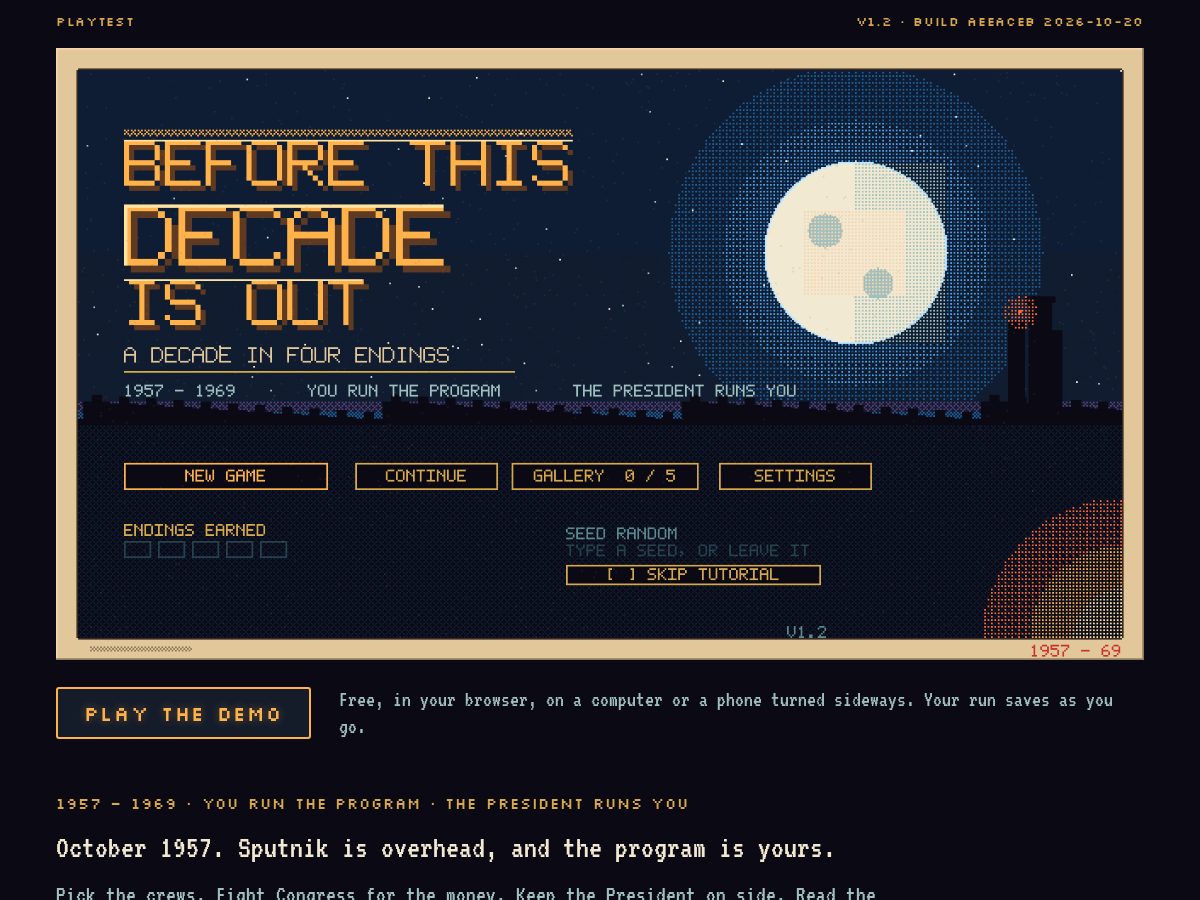
A free browser game puts you in charge of America’s space program from Sputnik through the Moon landing, making decisions in quarterly turns.
Weird Finds
officeofordinaryhauntings.net
A mock-scientific office catalogs the uncanny behavior of everyday objects, from chirping smoke alarms to phones that ring once.
Weird Finds
episstle.com
A free browser arcade game casts a rejected novelist as he takes revenge on ten literary classics.
Weird Finds
quantumtaekwondo.com
A single-file pixel-art beat-'em-up turns a corporate post-quantum readiness program into a fight through an RSA estate.
Content & Blogs
tobooko.com
To Booko is a sourced dictionary of English words adapted into Greek by migrant families, with examples from Australia, the US and other diaspora communities.
Content & Blogs
laundesigns.com
An open research file documents cartoon laundromat signs from the early 1960s and traces what is known about their maker.
Developer Corner
glaze-os.com
Glaze is a from-scratch microkernel OS for the Casio BE-300, with a browser-based emulator and an interface inspired by the first iPhone.
Civic & Public Life
gohansim.com
An interactive data story simulates how a real valley in Niigata and Japan’s food supply could change on the way to 2060.
Weird Finds
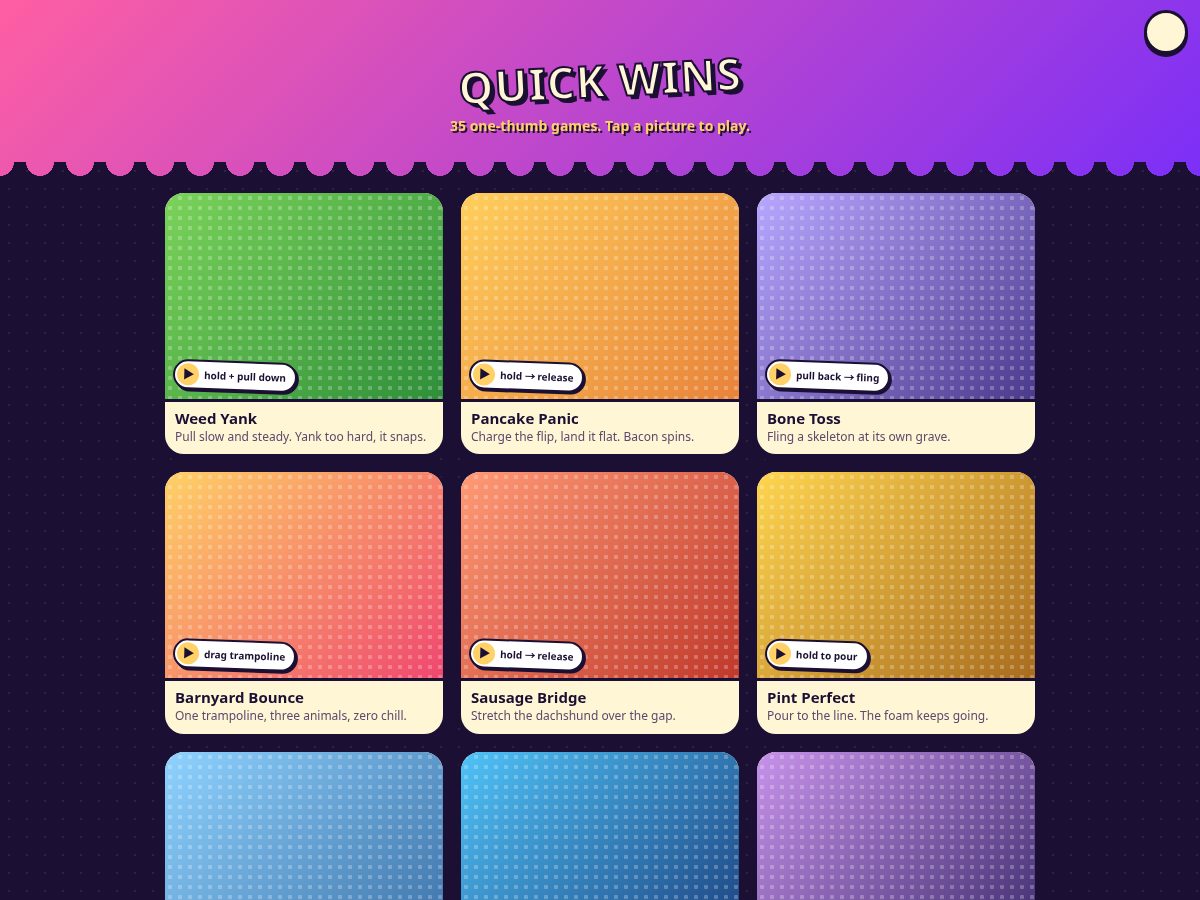
quickwins.fun
A browser collection of 35 free, one-thumb mini-games, each introduced with a gesture and a quick objective.
Useful Tools
booklibre.app
Free, open-source desktop software turns a folder of photographs into a print-ready photo book, with a PDF you can take to any print shop.
Civic & Public Life
rotadademocracia.online
A Brazilian election-day civic guide that estimates a quieter time to vote and pairs it with transit directions and free neighborhood carpools.
Civic & Public Life
dallasearlyvote.com
An unofficial Dallas County election tracker for early-vote totals, vote-center information, and races on the ballot.
Developer Corner
foldengine.science
A protein-simulation project for Apple devices that pairs its published figures with limits, data digests, and commands for reproducing them.
Weird Finds
xn--kutnuvibes-ghe.com
An interactive 3D map of Cotonou pairs local landmarks and neighborhoods with a music-filled tour and Zém Run, a game about navigating the city by motorcycle taxi.
Weird Finds
hatjabhai.com
A Hindi-language browser game turns potholes, open manholes, wrong-way traffic and AQI 999 into hazards on a satirical trip home.
Pattern 01
Several public-facing tools make their limits visible alongside the answer: stale data, modeled estimates, coverage gaps, and the difference between a bill and what a patient owes.
A Korean-language map and guide helps caregivers find pediatric emergency departments and night clinics using a child’s age, symptoms, and location.
An unofficial Dallas County election tracker for early-vote totals, vote-center information, and races on the ballot.
The Open Books Project turns Vermont’s FY2026 state budget into a searchable, plain-language ledger of appropriations.
A free tool that helps people compare a hospital’s financial-assistance policy with their household income and find application guidance.
A searchable guide to U.S. four-year colleges’ reported sexual assaults, using federal Clery Act data from 2015 to 2024.
Pattern 02
These lessons put the learner in the controls, whether the subject is reading a night sky, scanning a virtual patient, or spotting clues in an old patent.
A celestial-navigation game asks players to locate themselves using a simulated night sky, star sightings, and a chronometer.
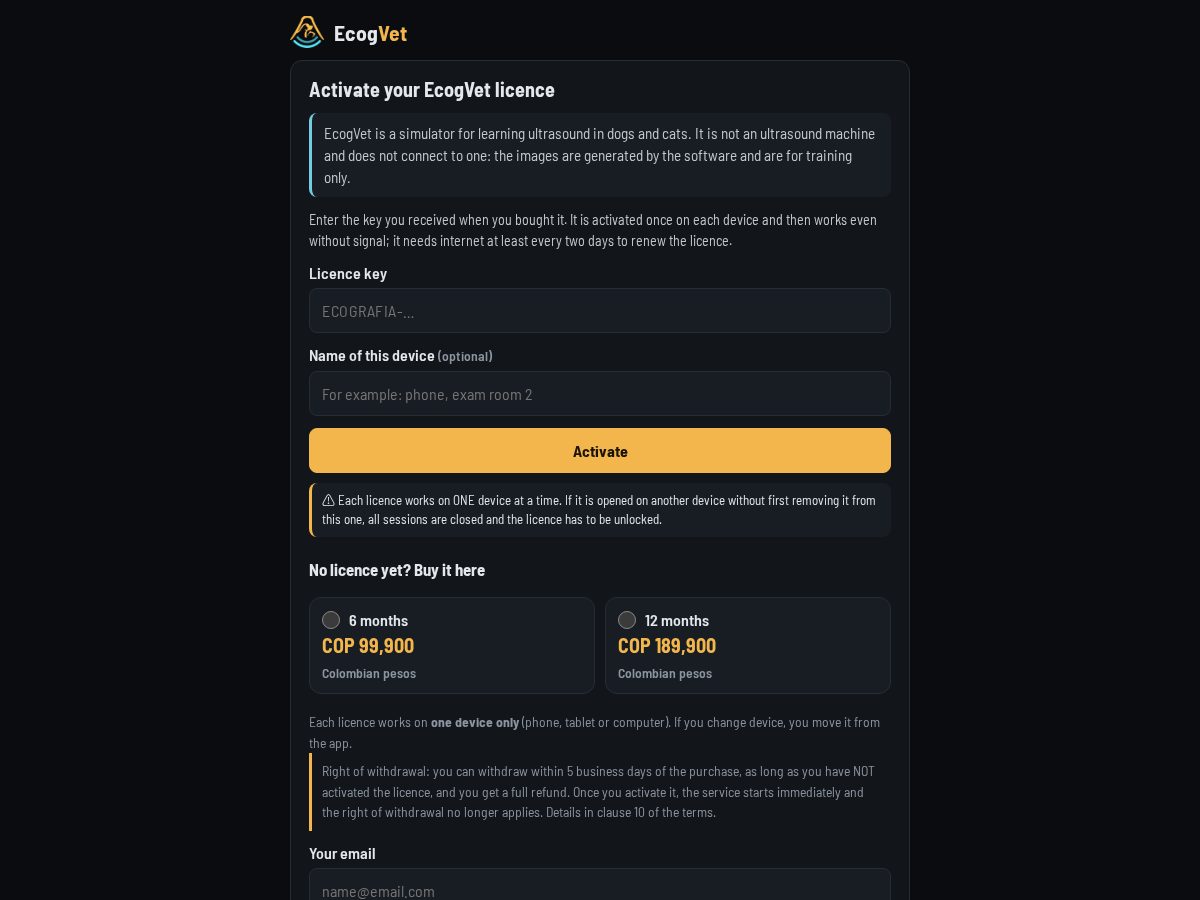
EcogVet offers simulated ultrasound practice for dogs and cats, with adjustable imaging controls, anatomy drills, emergency protocols, and clinical cases.
A headset-based aviation radio trainer pairs speech recognition with a simulated controller and fixed-rule checks of readbacks.
A browser game challenges players to inspect real U.S. patent drawings and descriptions, then guess the year each patent was granted.
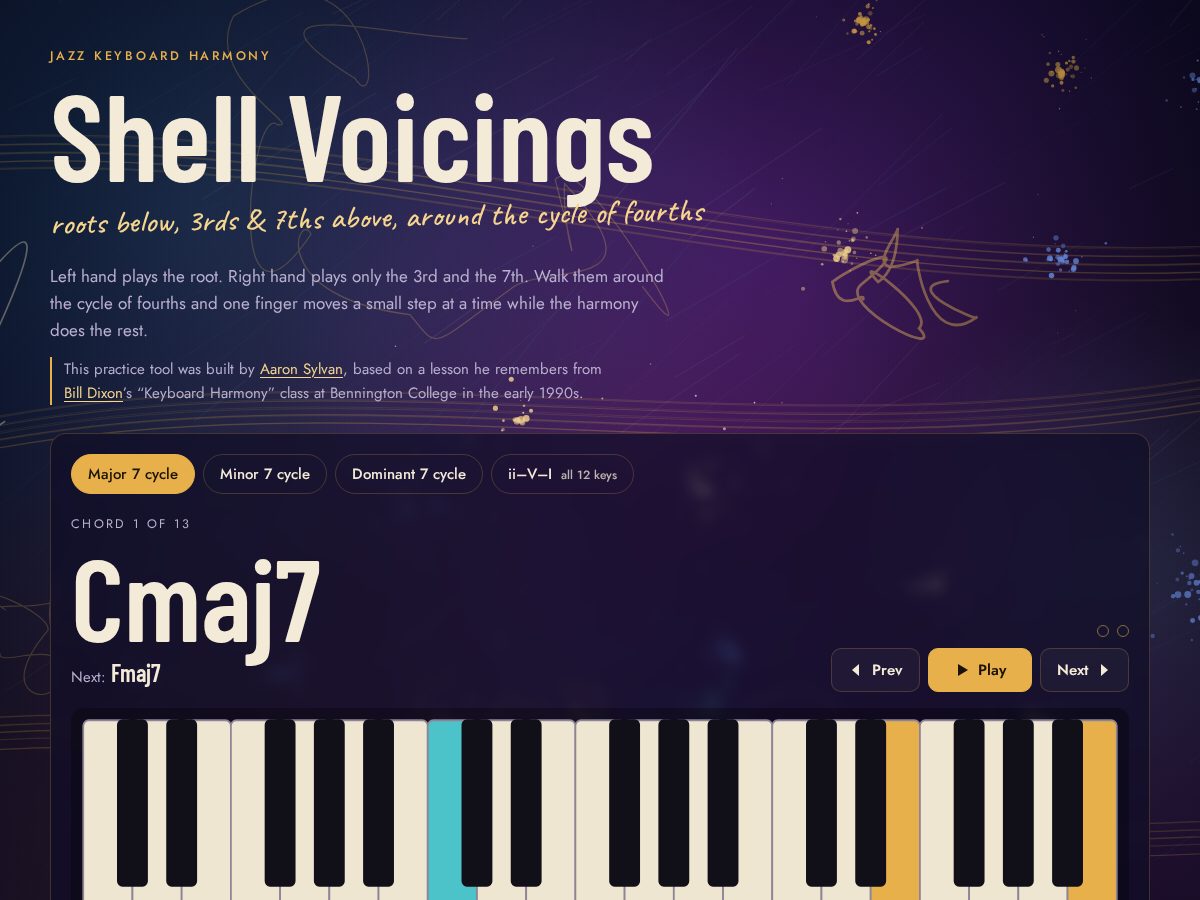
An interactive practice tool for learning jazz keyboard shell voicings through chord cycles and ii–V–I changes.
Pattern 03
Rather than presenting culture as anonymous material, these projects keep track of who remembered, recorded, or made it—and what remains uncertain.
A digital archive presents Malind Anim stories, cultural objects, mini-documentaries, songs, and a glossary with source context.
To Booko is a sourced dictionary of English words adapted into Greek by migrant families, with examples from Australia, the US and other diaspora communities.
An open research file documents cartoon laundromat signs from the early 1960s and traces what is known about their maker.
An extensive archive of Taito’s 2006 Nintendo DS game, covering its story, rules, creatures, maps, art, music, and sounds.
An Arabic prayer library preserving a father’s handwritten prayers alongside sourced Qur’anic and hadith collections, personal selections, and reading tools.
Pattern 04
A handful of projects put AI systems through bounded tasks, publish the run or method, and resist turning a partial result into a victory lap.
A personal site pairing hands-on AI evaluations with interactive builds, from a 3D car factory to physics-based challenges.
An independent testing firm evaluates AI tools on private-credit work such as covenant checks, borrowing bases, and NAV facilities.
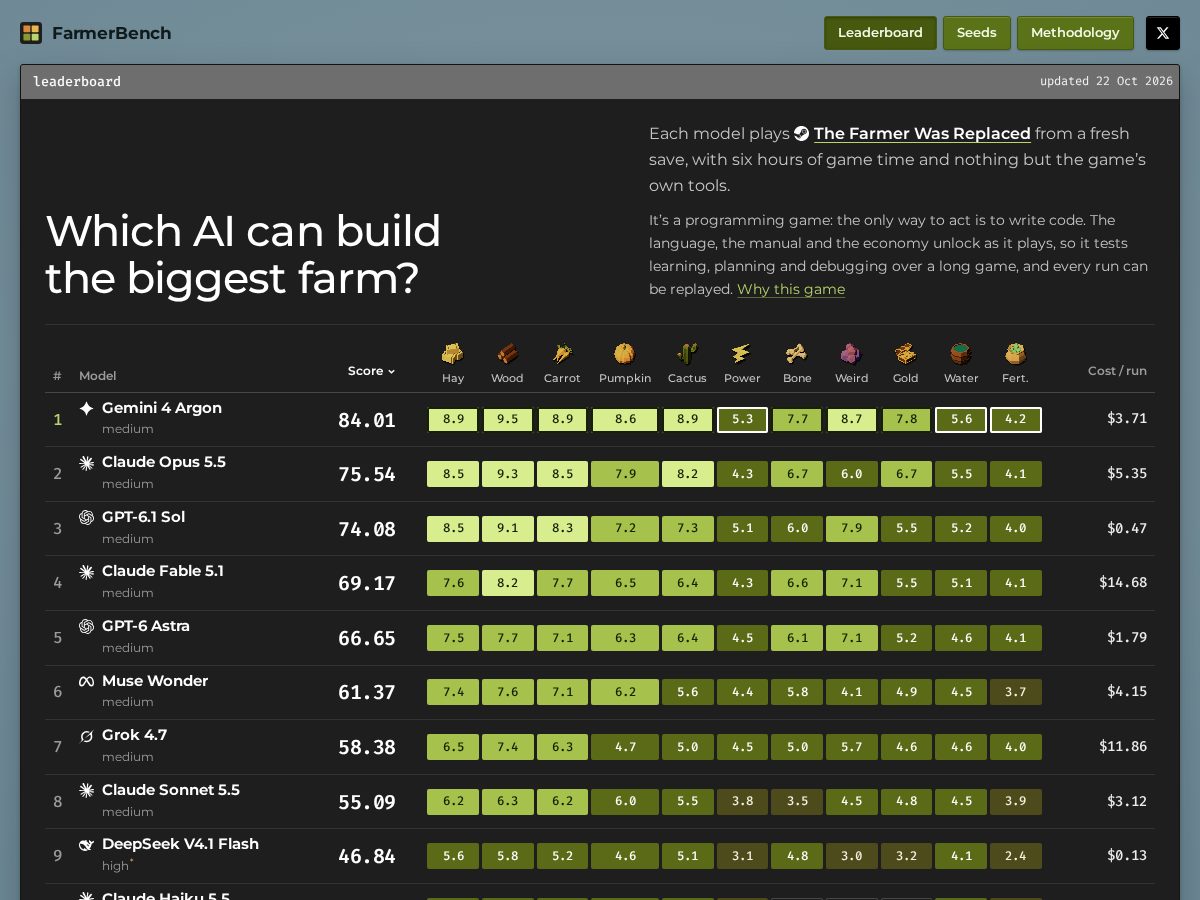
A leaderboard compares coding agents playing The Farmer Was Replaced, a programming game where players act by writing code.
A local language model plays the original Final Fantasy on NES, choosing its own goals as it explores.
A protein-simulation project for Apple devices that pairs its published figures with limits, data digests, and commands for reproducing them.
Pattern 05
The sillier projects are built with proper rules, controls, and details: a space-race bureaucracy, a literary brawler, and games about sneezes and dachshunds.
A Des Moines maker’s collection of browser games, retro-computing projects, videos, and odd machines.
A free browser game puts you in charge of America’s space program from Sputnik through the Moon landing, making decisions in quarterly turns.
A single-file pixel-art beat-'em-up turns a corporate post-quantum readiness program into a fight through an RSA estate.
A browser collection of 35 free, one-thumb mini-games, each introduced with a gesture and a quick objective.
A free browser arcade game casts a rejected novelist as he takes revenge on ten literary classics.
04
The complete card catalogue
The leading shelf is open. Expand another category, scan its visible pages, then reveal detail where more context is useful.
979 cards visible
The project list moves from a multiplayer catbird making a mess across Des Moines to an everyday-life simulator with 27 episodes, including the DMV and flat-pack furniture. Most games can be played in the browser.
Its campaign moves from Sputnik night to Apollo 11 through six acts and 48 quarters, with decisions about budgets, crews, Soviet intelligence, and even what to say on the Moon. The creator is openly asking for human playtesters; so far, the page says, the players have been AI agents or the creator.
The deadpan bureaucracy is the joke and the craft: a smoke alarm chirps every 3.2 hours, its control alarm stays quiet, and the report recommends further study—and leaving the lights on.
The premise turns literary prestige into a target: books fight back, and players must spot real quotations among forgeries while trying not to disgrace themselves. It’s a remarkably specific collision of reading-list culture and arcade-game mischief.
The whole game, including art and music, is presented as one HTML file under 500 KB that makes no network requests. Its seven moves pair taekwondo techniques with security jargon: a back kick becomes “Crypto-Agile Pivot,” and a shout becomes “Issue Advisory.”
The game pitches are wonderfully concrete: stretch a dachshund across a gap, stop a sneeze until nobody’s looking, or pour a pint while the foam keeps rising. The page makes its controls part of the joke.
The map’s credits trace buildings and streets to OpenStreetMap and Google Open Buildings, and name photographers whose images informed some 3D models. In Zém Run, players follow real streets, stop at lights, dodge potholes, and pick up fares.
The premise is neatly put: “Race nahi jeetni. Bas ghar zinda pahunchna hai.” Its controls include braking, jumping, honking and even digging; the site also warns players not to use it while walking or driving.
The guide says the music was drawn from a Horatio Nelson film that does not exist. Eleven motifs are mapped to moments in the recording, with historical notes alongside the musical detail.
The site gives stair vacuuming the treatment of a grand discipline: assess, clean, clean the vacuum, inspect. Its motto-level detail is that the hoover gets hoovered too.
The central choice is concrete and costly: destroy a house to make a firebreak, and the district remembers who did it. The site gives that premise real texture with four-person crew roles, named fire spirits, and a closed winter playtest for PC and PS5.
The joke lives in the specifics: coffee he hates, an unexplained crumb that summons his detective face, and a rage that lasts about four seconds. Even the AI-assisted “service” files wrong answers as “creative interpretations.”
The draft pairs 31 restaurant brands and 400 numbered driver bays with no dining room—and lists 300 MW dedicated entirely to frying. Whether literal proposal or satire, the specifics are hard to forget.
The pilot was made from fibre pinned with bamboo skewers, with a pyramid of LED pixels inside. Its implemented sound score pairs drones, pads and bells with the day cycle, and is designed to respond to breath and light.
The disk-box framing gives the studio a clear handmade feel, and one game turns office grievance into a bowling-ball demolition run: five denied vacation requests, ten floors, and a trip to the Boss’s Office.
The game makes death a town-level event: fallen adventurers remain below until another party retrieves their bodies, while their names go up on the notice board. Its grim setting is backed by specific systems, from rival guild charters to battles where discovered weaknesses stay in a Bestiary Ledger.
The game traces back to Jack Carden’s real-life joust idea and preserves the spirit of the event: “No bodies or bicycles hurt, just pride.” Its shareable “ghost” runs make the local oddity easy to pass along.
The recruitment-terminal framing carries the joke all the way through: breaks are “pending approval,” the supervisor is a cheerful robot named B.A.S.I.L., and the company insists it is not hiring. Beneath the bit is a clear game loop, plus a free demo listed for November 2026.
Its premise is refreshingly literal: beat the workplace villains through a 20-stage story to earn the ending called “clocking out.” The page also lays out combo chains, special moves, and friend and matchmaking modes.
Here, control is a physical constraint: each turn brings down three rods, while the puppets left without a hand can only take a beating. The page treats its early-access chapters like a theater season, complete with staged acts and a version 0.3 program note.
The plan begins with a bucket and escalates into pumps, pipes, power networks, and a coastal factory at Brine Bay. The site gives that machinery a wonderfully disproportionate purpose: getting back into one locked shed.
Captures become staged duels with individual deaths, slow-motion, and optional killcams. Alongside that spectacle, the page advertises 54 lessons, 20 classic games, and Stockfish analysis.
The central choice is mechanical, not decorative: climb a chimney or descend seven floors, then read the letters in either route order; the page says the other route stays available. It also gives the RPG an autumn 2027 season.
Trials are broadcast across the town, so neighbors hear cases unfold almost as they happen. The first demo, “The Borrowed Baton,” lets players try the evidence-and-testimony loop rather than just read its pitch.
You get a random starting family and circumstances, then steer a life whose final score is its bank balance. The site turns that premise into a replayable beta game, complete with rankings and a job collection.
The production treats a living room like a touring venue: a mini tripod sits on four books, the coffee table keeps moving, and best mate Wesley gets billing as backing moves and emotional support. Its playful scroll-along story turns a viral dance persona into a deliberately staged web experience.
Its map follows real streets and landmarks across Eastwood, Marsfield, and Macquarie Park, while the shops are deliberately made up. Players read a wind-line to anticipate dives, then swerve or block with a bag—and watch for buses and red lights.
The pitch treats pig care as race strategy: breakfast beans can produce a race-winning toot, while affection unlocks a named signature move. It’s a small, wonderfully specific answer to the question of what cozy games might be cozy about.
The road is stylised, but the ingredients are unusually grounded: the page credits OpenStreetMap for Chile’s Route 60, SRTM elevation data, and the Yale Bright Star Catalogue. A compact racing game becomes a tiny night-sky expedition.
The workday resets at 17:59, but the room keeps evidence: one anomaly is recovered, while four more archive records remain sealed. Its office terminal makes the loop feel like a system to investigate, not just a story to read.
The game turns political friction into a local arcade premise: rivals trade imaginary specials in Bogotá’s Plaza de Bolívar, then leave the arena as compatriots. Its notice explicitly frames the public-figure-inspired fighters and their clashes as fiction, while a detailed control guide makes the demo concrete rather than merely pitching it.
The neighborhood charm comes with practical boundaries: decorating stays with the owner, while guests can leave public notes. Its Eevee is described as “terrible at paying rent.”
The premise turns workplace AI anxiety into a compact interactive tribunal, complete with sample verdicts like “Router Exorcist” and a separate desk where you can plead your case in one sentence.
Its playbook offers curl flats, quick slants, and “go for glory,” while the booth supplies five scripted calls—including a safety in the wrong end zone. The page labels the game a parody and disclaims any official affiliation.
Four instinct switches become an 11-gate TapeOut circuit: feed, dodge traps, and see whether your fly lasts until dark. It’s an unusually playable meeting of tiny game and chip design.
The page makes a niche hobby legible as a tiny economic system: Mendelian pairings, egg incubation, rent pressure, market crashes, and expo prices all feed one reptile-breeding roguelike. Even its “Uncle Ray” note warning against buying single-gene Bananas on credit gives the mechanics a recognizable voice.
The portal’s fine print turns unsettling: it first says the artist can access the page, then calls it company property and says the artist is not consulted. It also sets a streaming quota with shortfalls recouped from the artist.
The .lol address sits beside a claimed 1998 stock-market debut, a 14.4 kbps modem requirement, and a key diskette. Together, those details make this a compact, uncanny portrait of early web banking’s trust theater.
The homepage keeps an unusually specific record of its world and mechanics: 28 catalogued creatures, 45 skills, and temporal rifts that collapse after 45 seconds. Its open-alpha label and the arena’s name, “Bossnia,” give this browser RPG a distinct early-project character.
The bios give each band member a vivid little silhouette: Nicole’s red bandana is “non-negotiable,” and her secret drum lessons happen after hours.
Its sample case file pairs an 1874 New Orleans apparition report with links to the original Library of Congress page and a transcription. The page is careful about the boundary: the clippings are presented as real, the stories as fiction, and no place is claimed to be haunted.
The homepage builds a distinct premise from its postal details: the telegraphs are gone, each town yields a stamp that becomes a battle move, and the couriers’ post office gains new rooms as deliveries arrive.
Its scanner reads a web address’s text without visiting it, and the same address always produces the same creature. The game’s mock-military Corps, plus a coaching system where harsher orders can eventually make creatures stop listening, give the premise a distinct voice.
The bureaucratic voice reaches into the mechanics: submissions are “final,” regret is processed separately, and Clerk 7’s stated average reply latency is 42 weeks. The page also admits that its reconstructed artifact purposes are only partial.
The course adds a whole street’s worth of hazards—lava, tunnels, a pursuing cat, changing traffic lights—and gives everyone the same daily challenge. Scores are counted in pushes, with shorter rolling time breaking ties.
Instead of presenting its world as a list of fantasy regions, the homepage makes it a transit network. Its shared fungal infrastructure is also a social and trading system—and it’s beginning to rot.
Pick a pseudonym, origin city, airline, and seat, then print a boarding pass—no account or email required. The site turns the ritual of waiting for GTA VI into a playful, shared departure board, with detailed fictional aircraft layouts and passenger counts.
The story begins with 214 letters buried under a cherry tree—one is yours, and 213 are gone. The page sets out a Thursday-by-Thursday release schedule and lets visitors seal a private letter for the game’s December 17 opening.
Teams race to complete a document relay, move a ballot box, or take the speaker’s podium; the game also offers online rooms for playing with friends. The page is careful to label its combat fictional, not a reenactment of real events.
Its dev log treats the fantasy like an engineering project: one custom Frame weighed 32.7 tonnes on legs rated for 30.0, costing it speed and turning. Recent posts also track board construction and new melee systems.
The map promises that a river on one side of the veil might become a ravine on the other. Dialogue choices introduce three wary factions—and a household that insists the changeling still comes home every night.
The grid going offline changes the rules: credits freeze, cards become currency, and neutral spaces turn into conflicts. Its 32 spaces, six decks, and 141 cards give the end-of-the-world premise an unusually specific game plan.
Its car runs on ten cold-gas thrusters, and driving refills the 600-liter air tank used for airborne stunts. The page lays out a whole vocabulary of moves—from screw launches to midair flips—and recommends a keyboard for the full experience.
Its shared currency is wafels and stroopwafels: win them in games, then trade them for bicycles, boats, skating outfits, jokers and other upgrades.
The homepage turns “followers” into “residents,” with tappable furniture hiding 204 collectible events—among the examples, a treasure chest that is actually a slime. It also lays out creator revenue shares, including different percentages for its cooperation and basic plans.
The weapons list doubles as a tiny design record: the Railgun is listed at 48 damage and three shots, while the Gravity-Gun can grab and throw weapons, bodies, and opponents.
It defines a transient as “the most precise possible measurement of someone (or something) in space-time.” Entries include coordinates and timestamps—and one plainly says “No coordinates recorded.”
The campus schedule treats improv, debate, and basketball as parts of the same ongoing feud. The page also names Seth Myers as a distinguished alumnus and calls its improv program China’s best—claims presented without supporting evidence, and likely part of the joke.
The balancing rule is easy to grasp, but the site builds it into daily puzzles, a 60-second time attack, and live best-of-five duels. Its “brain score” is explicitly framed as puzzle accuracy—not an IQ test.
The playlist invites visitors to “begin anywhere” and says the sequence continues from there. Its companion essay turns that listening experience into a dense, uncanny argument about shared futures and the “technocapital beast.”
Its falling-block game draws the playfield in text glyphs, right down to the score and next-piece preview. A five-minute break, rendered in characters.
The pitch pairs genre-scale numbers—380 creatures, 17 types, nine cities—with names like Polvolâmpada and Zebrelâmpago. That gives a familiar monster-collecting formula a distinctly playful Portuguese-language surface.
The garden metaphor gives the exhibition a gentle, coherent shape: choose a theme, submit a photo, and vote on what might be displayed. The page is candid that its images and stories are fictional stand-ins and that submissions and voting are not yet active.
Eight splits make room for 256 routes, and the game rewards staying low: airborne seconds are deducted from your time. Its leaderboard also comes with a stated SOL prize pool, a curious crypto layer to this pocket-sized racer.
The assessment ends in institutional-status language—“NO FLAG / NO FURTHER ACTION REQUIRED”—before the interface opens an application requesting an artist name, Instagram, age, location and introduction. Recruitment arrives dressed as a personnel file.
The page applies the language of infrastructure relief to cats, complete with claims of 42 MW of feline-dedicated capacity and 99.999% uptime. Its donation prompts make the absurd premise worth viewing with a skeptical eye; the extract does not establish whether it is satire or a real fundraising effort.
The site says its current pool contains 100 patents and separates the grant year from the invention date. Its dating guide turns drawing styles, terminology, and period technology into clues rather than asking players to guess blind.
A label on the back links each work to its record, which can gather custodian and exhibition history. Rehoming is framed as a handoff: applicants are considered, and the owner chooses a successor rather than selling through the site.
Its fictional baseball history comes with champions, dynasties and card-back career stats, while each manager’s individual cards keep their own records. Games are described as taking about ten minutes, with the computer handling most plays until a decisive moment.
The city details carry the premise: Manila brings EDSA traffic and padala home; Mumbai brings monsoon floods, chawl life and a Gulf dream. Each setting offers nine lives to play.
Reborn pairs its own server with a modified app, and offers a one-time account import before the official servers’ stated January 12, 2027 shutdown.
The homepage says false reports use the same fire as true ones—and that the sending Watch is recorded beside them. Its Saturday-night battles turn control of three consecutive cairns into control of the message chain.
Its example 1931 “Vigilia” sends the bronze founder across the Ferrocarretero Bridge as a strange frequency, a radio technician, and a night of supernatural threats pull regional history into the game’s premise.
The page turns transit design into visible consequences: one sample trip takes 7 minutes by funicular and 24 without, while a resident-following view exposes the morning commute and station queues.
Its machines hold real Ballograf, BIC, and Stabilo pens—not a print press or a handwriting font. The listed price is 149 kr per letter, including postage.
The track editor lets players draw, test, and share courses, while community tracks can be sorted by popularity and ratings. There’s also a curious bit of track governance: after reports, a course is hidden from everyone but its author until it is checked.
The score is the area gap between the largest and smallest rectangles, with lower scores better. Solved canvases can be colored and signed on the day’s shared wall.
Pothole Rush turns dodging road hazards into a game, and both titles are built for PAL, NTSC, and Drean—the Argentine-made C64 the site names explicitly. Recent version notes track small, concrete changes, from collision behavior to recognizing the Drean by name.
Every move costs time, clues are used to break alibis, and players get only two guesses. The page frames the first case as Night 1 of a six-night mystery season, with later installments marked sealed or coming.
The page pairs familiar drag-race timing—shifts and a BOOST window of 0.65 seconds—with a late-game thrust lever and machines said to pass 600 km/h. Its founder says he built the physics, rendering, cars, sound, and code himself.
The page turns airport logistics into concrete constraints: its sample board gives six morning flights four gates and a 09:40 deadline, while the game description details everything from baggage conveyors to aircraft turnaround times.
The four-step setup starts before the surrender date: items are inventoried, rent is prepaid for the chosen term, and access is assigned in the rental agreement. The page also tells clients to leave anything that may be part of a case where their attorney directs.
It treats the globe as a rule change, not just a new board skin: files wrap, and the poles open under different game phases. Coaching tools and replayable “chrysalis” lessons make the familiar game double as a teaching experiment.
Its neat little twist: walls can break “next to,” and the killer is the only suspect sharing a room with the victim.
Its stakes start with rent due Friday and a job to nick two bikes. The page lays out 125 missions, 12 factions, and 20 linked street maps—and says the rules, missions, and Foundry tools are still being refined.
The proposed lessons range from upholstering a chair to making intricate wood-and-straw inlay. Artisan says craft experts would teach the subtleties and judge each result—a grounded, unusual vision for robot training.
Everyone gets the same five prompts, but the less obvious correct answer sends your pin farther. You have 45 seconds per pin to outthink the obvious.
The homepage gives the game a distinct physical-and-digital shape: build a fleet in the app, then print a Sovereign destroyer STL for free. Its lore includes factions, laws of the void, and dispatches from a 2525 Mars insurgency.
Its display and sound controls make period choices explicit: dithered or blended color, flat pixels or a CRT effect, and AdLib or PC-speaker music. The page also records who holds the listed game copyrights and notes that the game files are not part of its code.
Its two-minute jams hinge on a star-wearing Jammer who scores by passing blockers—or can hand the star to a Pivot. The site builds that rule into a playable-looking demo and a ten-team league.
The rarity mechanic gives a familiar geography quiz a satisfying twist: for a prompt about countries where German is official, Germany counts, but Belgium carries you farther. The site also explains how players can challenge an answer and find published rulings.
The premise is unusually concrete: inventory a debtor’s records, screen out sensitive or restricted material, use an independent de-identification agent, and put any sale under court oversight. The site lays out a sequence for a market that is still forming, rather than presenting data sales as a simple handoff.
The route puzzles run on residents’ schedules: time advances only when the cart moves or waits, with no timers or fail screens. The page pairs that gentle mechanic with a harbor mystery—and says the game is coming soon to the App Store.
Collectors compare practical clues like date codes, regional releases, and box differences. New contributors can add variants, with their first 25 approved edits checked by a moderator before edits publish instantly.
The page says the city downloads on the first visit and the game then starts offline. Its top-up panel also spells out that the in-game money has no cash value and cannot be transferred.
The match guide shows how the rules shape the fight: ore ponds pay more as the 15-minute clock advances, then sudden death sends both sides a resource bonus. The page also marks the upgrade lab as still in testing and multiplayer as coming soon.
The offer turns a reading group into a team of authors: members write their own pieces, while the publisher assembles them into a printed book. The page lists a 50,000-won-per-person fee and cites an earlier project with 10 groups and about 70 military authors.
The central mechanic has a tidy bit of world logic: better-cut gems make stronger rings and reveal more of the memories held inside them. The game is still in development, and the page marks some screenshot details as placeholders.
The rules give the puzzle a neat spatial twist: leaves can meet at corners, but cannot overlap or share an edge. Hints can explain a move, and the page links to five other puzzle types.
The site gives the relay a tactical twist: swap runners mid-fight and the incoming runner inherits momentum and combo. Its knot-coded message can also be falsified into a war order.
The rules give perfume knowledge a clear game mechanic: nine guesses, no reusing a fragrance, and a rarity measure based on how many other players chose the same answer. Older grids and player stats give the daily puzzle a record to return to.
The rules give each turn a sharp little dilemma: move to a neighboring tile, destroy another, then lock in within ten seconds. Practice uses five bots; ranked multiplayer and its leaderboard are still described as forthcoming.
The tactical command-center framing is built around a specific Ecuadorian gaming community, not a generic esports audience. The page also labels its sample champions and tournament calendar as demonstrations, making this an early-stage project worth revisiting rather than an established competition record.
Five generators promise more than a drawing: they expose design checks and offer SVG, DXF, and STL exports. The same site explains 18 mechanisms and eight mechanical elements, making it useful both for making parts and understanding how they move.
In one example, 572 photographs become 98 images across 50 spreads and eight chapters. Booklibre also lists the photos it left out, explains why they lost their place, and lets you put one back.
The site says it checks each provider’s own website and orders listings by stated same-day visits, posted prices, and answered questions—not ratings or payment. It also explains that a blank detail means the provider’s site doesn’t say.
Rather than flattening drug claims into one voice of authority, the atlas distinguishes measured, remembered, and rumoured material, then places it on a day-long timeline. Its emergency guidance and explicit “not medical or legal advice” framing make the harm-reduction intent clear.
It pairs hands-on design controls with a window preview that changes from dawn to night. The maker also explains their relationship to the tradition and points visitors toward Korean makers and teachers.
The page explains the voice-leading behind each drill, not just which keys to press. Its builder traces the exercise to a lesson he remembers from Bill Dixon’s “Keyboard Harmony” class at Bennington College in the early 1990s.
Its 997-doink archive comes with filters, comparisons, and a weekly story feature. One editor’s note even flags a clip whose audio is out of sync and invites readers to submit a correction.
Choose a measure, enter an amount, and the site gives a modern equivalent alongside definitions and source links. It also marks where context matters: dry measures have two displayed interpretations, and historical money values are nominal—not purchasing power or coin-collection prices.
One time bar carries an instant across all three views, while the guide says each information card signals how much confidence to place in it—a useful counterweight to the authority 3D simulations can project.
One connector run from Georgia Tech to Decatur compares a 17-minute route passing nine mapped cameras with a 25-minute route passing none.
The product is shaped around specific local constraints: it describes offline work with later syncing, billing in Liberian and U.S. dollars, and mobile-money references. Its homepage also says a one-year pilot is open to 10 hospitals and clinics in Montserrado.
It turns an annoying mismatch into a concrete comparison: a #14 hook’s published gape ranges from 3.2 to 8.8 mm across 25 brands. The site links its figures to sources and leaves a field blank when it can’t find one.
The interface frames sky-mapping around the nights people remember: a birth, a meeting, a wedding, or a loss. It treats astronomy not just as a view of the past, but as a backdrop people can revisit and share.
Torsio follows a transmission from motor through belt, gears, shaft and fit, checking that power, speed and torque agree between stages. The site also says it can produce a PDF report and DXF drawings, and describes 387 automatic test cases.
It treats courier work as a whole local beat: traffic-rule quizzes, parking guidance, and resources spanning Tokyo’s 23 wards and 26 Tama cities. The guild-and-adventure-book vocabulary gives this unusually focused field guide a bit of character.
The atlas covers 29 worlds and 441 places, but is unusually candid about its limits: some layouts are schematic, the catalog is curated rather than exhaustive, and loot is never guaranteed. It reflects a fan-tool culture that pairs ambitious maps with careful notes about what the data can—and cannot—tell you.
Its sequence is unusually concrete: ask short questions, flag missing details instead of guessing, then collect staff and parent signatures by phone, QR code, or email. The homepage says parent signing works in English or Spanish.
The demo lets you tune a deliberately off-key synthesized singer, or try a microphone or audio file. The page distinguishes a claimed 2.7 ms Live mode from roughly 46 ms Studio processing, and explains what each is for.
Its 2,113-bean catalog says where its numbers come from and refuses paid placement. Flavor descriptions are grouped by AI from the roasters’ own words, and labeled accordingly.
Its sample 8×12 design moves from framing checks to dated material prices and a six-phase build sequence. The site also spells out what its checks cannot establish, including permits and site-specific requirements.
Users can choose an area by drawing, searching, or uploading a boundary, then work with detailed map layers and exports in formats such as GeoJSON, GeoPackage, and Shapefile. The interface also includes polygon-labeling tools and SAM2-assisted options, giving this open-data portal the feel of a working geospatial desk.
Wildlife toxicology often lacks direct data for the species researchers want to study. AOPEDEX uses related species and mechanism networks to make that gap more navigable—and presents its outputs as testable hypotheses, not a substitute for experiments.
The atlas makes a sprawling research release easier to inspect without pretending every result is settled. It even notes that three texts were withdrawn over a sign error—useful context for a collection where checking the work is part of the story.
It treats the fiddly problems of hobbyist fabrication as a whole workbench, not a single-file converter. One scale guide even compares a giant model with a six-foot person and a two-foot beagle—a small, memorable sign of the practical thinking behind the tools.
A banana is only a useful measuring reference if the screen is scaled correctly. This tool uses a standard bank card, screen size, or ruler for calibration, then offers three banana sizes and on-screen measurements.
It treats subscription tracking as more than a list of renewal dates: pasted receipts become reviewable drafts, and shared bills can include repayment rules. The project offers Cloudflare or Docker deployment, with no account or subscription fee listed.
Its engine is presented as reading parts, bends and weld joints to produce a price and drawing set before anything is made. The page says nothing is cut until the customer signs the drawings.
CoilPath lets users trace a circuit from diagram to device connections and panel layout, then test faults such as a broken wire or incorrect contact. Its library spans contactors, PLCs, drives, HMI, and solar systems; the site says 200 tasks and all 62 circuits are included with Pro.
It turns the moving parts of a monster-truck operation into a clear record system: motors, chassis, and suspensions keep their own specs and history as they move between trucks. The live demo lets visitors try a swap or book a show, then resets the data on reload.
Its scale is tangible: the homepage lists 8,776 watches and 154 calibers. A featured entry even cites its source down to the catalog page.
Ellwand aims for the space between a drafting book and full CAD: draft with familiar marks, lines, curves, and darts, while each step keeps its formula. Change a measurement and the draft is meant to follow.
Instead of ranking the usual prettiest villages, it matches trips to specific interests and explains why each place fits. Its example combines quiet beaches and sidrerías, with open data and no paid reviews.
The site links its deal records to sources and leaves prices blank when they were not made public: it says 122 of 189 deals have no public price. That restraint is part of the product.
The Raspberry Pi acts as the car’s USB dashcam drive, then sends clips to home storage when it reconnects to Wi-Fi; Sentry events get priority, and interrupted copies resume. The page spells out hardware caveats rather than treating every Pi as plug-and-play.
The cards keep the details a film list loses: cinema, seat, price, format, and whether it was a repeat visit. See it in IMAX or Dolby Cinema, and the example card gets a cinema stamp.
The homepage gets specific about the school day: attendance can queue without a network and sync when the connection returns; mobile-money payments produce numbered receipts. Parents can read school-published notes in a browser-based family space, even on a slow connection.
Two laptops run a payload-and-bandwidth sweep while LinkProven checks link status, packet loss, throughput, and network-card errors. Its verdict can mark a case REPEAT when the evidence points to a packet being dropped inside a laptop rather than blaming the cable.
ModMyFarm brings real hills, fields, and other mapped features into a game map, with support for user-supplied field boundaries. Its maker is also candid about the arrangement: the free tool serves as a showcase for the company’s farm drainage and management products.
It supports a long list of real-world formats, from Shapefiles and GeoPackages to NetCDF and GeoTIFFs, and gives newcomers eight built-in examples to practise on. The page even demonstrates comparing one earthquake against 14,537 others.
The site lays out the show-day details: captions can feed a switcher or confidence monitor, and the app is designed not to record audio or transcripts. It is in field testing ahead of general availability.
The joke is built into the product: it celebrates procurement and vendor lock-in, then admits the directory itself is MIT-licensed and made with open source. Its pricing notes include configuration and review dates.
The page gives four concrete compression levels, from 1.5:1 to 4:1, and shows how each compares with a camera original. It also spells out the tradeoff: stronger compression can soften fine detail and add grain in lifted shadows, so users are urged to check difficult shots.
Enter an address and project, and the site says it matches the property to its parcel, zoning district, flood zone, and governing rules. Its 17-jurisdiction shed comparison shows how the same 150-square-foot building can be permit-free in one place and require approval across the city line.
It turns one airport windsock into a small weather instrument, with a METAR-based 3D estimate, wind-direction controls, and a simulated announcement explicitly distinguished from the live ASOS broadcast. At capture, the camera and official weather feeds were still loading.
The map is built for practical planning: visitors can spin and zoom a route, then check source-linked details before choosing a trail. Trekpeek says it takes no commissions and is not a booking site.
It uses star recognition rather than telescope encoders: after a one-time alignment on a bright star, it reports how far to turn and tilt, with directions updated as the telescope moves. The page’s example calls for a 14.2° turn and 9.6° tilt to reach Andromeda.
Each listing gets an explicit Apply, Maybe, or Skip judgment, with deadlines, prizes, fees, eligibility, and cited sources. It’s an unusually practical filter for filmmakers weighing where to spend their time.
It translates model list prices into familiar jobs—from drafting customer emails to transcribing an hour of audio—and includes dated sources, monthly-volume examples, and a price-change archive. That makes AI pricing easier to compare in the units a small business might actually use.
The interface is built around urgent use as well as preparation: it offers scenario drills, recorded phrases, and a printable pocket sheet described as a paper backup. The site identifies its creator as Edith Hagai and says she trained combat interrogators.
Its optional history records at 10-second intervals, marking throttling, sleep, charging changes, and anomalies. Barograph says it joins process activity with power and thermal state to explain a fan surge in one sentence, with the analysis computed on the Mac.
The page puts Arabic and Darija captions alongside everyday editing features, with speech recognition described as running locally through whisper.cpp. That combination makes this beta feel like a specific attempt to widen who creator software serves—not just another editing app landing page.
A CISSP example shows how a simple hour-count can claim 120 credits while the rules actually allow only 110. The site makes a quiet professional headache visible: credentials often depend on accounting for what counts, not just what you did.
The page describes a thoughtful privacy choice: keep the diary on your device without an account, or create a free account to sync it. Its two-page clinician summary draws on published criteria and named questionnaires.
The page describes a concrete test: place plans drawn to scale on your actual parcel, rather than estimate from a ZIP code. It lists 21 plans across nearby cities and identifies its sample Temecula result as actual tool output.
Its line check has an adjustable strictness setting: by default, a line passes when at least 80% of its words match in order. Casts can rehearse from a published link without needing a paid plan.
It connects on-water session tracking with seat-by-seat lineup planning, and flags weak GPS rather than quietly counting it as good data. The page says records stay on the phone unless users choose to export or share them.
Instead of searching archives by film description and scrubbing through reels, it indexes what appears shot by shot. The homepage reports 6,933 shots across 98 films—and says each result comes with exact timestamps, a licence, and a trimmed MP4.
Its sample follow-up board groups eight open tasks from five calls by owner and links each to the moment in playback. The recording flow is unusually explicit: it prompts the user after other voices appear, but the page says it starts keeping audio if there’s no answer within 10 seconds.
Quasar treats the school-day disruptions students actually have to track—snow days, replacement days, lunch waves—as settings rather than workarounds. Made by a student, it turns a familiar bit of calendar chaos into a sharply focused tool.
The planner asks about budget, campus, food preferences and even whether you have a full kitchen or just a kettle and microwave. Its page says each price links to where and when it was found, making the affordability pitch unusually concrete.
Its agenda advances with Enter, moving the operator through slides and service items. Bible references like “Jn 3:16” resolve into verses, and the homepage says the stream can run without internet.
Rather than treating this as a simple wind forecast, the page combines ECMWF, ICON and GFS forecasts with separate signals for a cloud bank over the ridge. It explains its method and limitations, and clearly says this is not an official warning.
The site publishes side-by-side transcripts and benchmark figures: on 422 held-out recordings, it reports 5.3% of words wrong for its recommended Sabich model versus 11.8% for stock Parakeet. It also notes that the comparison comes from one round of tests, leaving readers a useful record of both the result and its limits.
Honeybe combines four bounty platforms and two community mirrors, then caps personal skill-fit adjustments at 12 points. Its catalog is also published as JSON for use without an account or API key.
Instead of stopping at specifications, the atlas lets visitors inspect controls, edit a 16-step sequence, and start a sound demonstration. Its scope is unusually clear: the 3D reconstructions are approximate, and the catalog is downloadable as JSON or CSV.
The bot starts from a hand-written strategy, then trains through self-play against past versions of itself. A challenger has to beat the current champion head-to-head before taking its place.
The agent works through the apps’ command list, so edits appear in the open project one step at a time and land in undo history. Transcription, masks, and tracking run on the Mac; narration and music are the stated cloud exceptions, used only when requested.
The toolkit pairs virtual micrometer and dial-indicator practice with working topics like GUM-style uncertainty budgets, Monte Carlo propagation, and tolerance stack-ups. Its audience is specific, and the tools connect abstract measurement rules to readings someone might take on a shop floor.
A proposed owner is still only a proposal: the page says work becomes owned only after explicit acceptance, and revisions require acceptance again. Its sample ledger carries source words and completion evidence into the next agenda.
Each answer pairs a plain-language rating with a suggested conversation starter: a school-email hoax is marked “Debunked,” while a violent online network gets a direct warning and advice for responding. The format aims to replace panic with something a parent can actually say.
The site counts 3,646 miles across 466 towns and traces its road data to state transportation agencies. Its ground rules make an important distinction: public does not necessarily mean passable or open to vehicles.
The homepage shows open tasks moving into a daily note, unlinked mentions being found on a person’s page, and a birthday rule adding a gift task. Its notes are presented as plain Markdown files users keep on their own machine—a useful record of how the product handles both retrieval and ownership.
Noima describes what testers can use now—and what they cannot yet: signs become text and can be read aloud, while hearing callers reply by typing. Turning spoken replies into signs is presented as a next step, not a finished feature.
PedVault addresses a very particular internet-era failure: pedigree records disappearing when a site goes away. Its answer is a copy kept on your device, plus share links that can expire; the page says its app clips use made-up dogs.
Its homepage says every listing is checked against a company or presenter calendar, and gives city-by-city counts: 21 engagements in New York, 16 in Denver, 26 in Raleigh, and 20 in Tampa Bay. The fall-tour section follows companies to their next stages.
The intake asks about the store, state, appliance, repair visits, dates, and costs, then says it calculates from the plans’ own documents. The page’s promise is unusually specific: do the paperwork arithmetic before spending another hour on hold.
It combines live arrivals, Heathrow’s runway timetable, wind forecasts and opening hours to help visitors choose when to go. The estimates are not guarantees, and the page lists three more places as still on the way.
Robopear dates its price checks and distinguishes “demonstrated,” “pre-order,” and “shipped” claims, with shipment status tied to evidence. It also offers CSV and JSON downloads under CC BY 4.0.
It tackles a specific PDF failure: disconnected Arabic-script letters and scrambled text direction. The page says it uses letter shaping and Unicode bidirectional layout, and includes a checker for reversed or pre-shaped text.
S0b3r keeps its counter and journal on the user’s device, with no account or server storage. That privacy choice also means no syncing between devices—a revealing tradeoff for a recovery tool built around sensitive notes.
Research writing has a familiar synchronization problem: figures and numbers can drift between papers, proposals, and slides. Sanitism makes one manifest the source of truth, then exposes the file, command, and date behind marked values in its generated HTML—a concrete take on reproducibility.
The site organizes 686 products into practical comparisons, from fragrance-free options to detergent cost per wash. It says ingredient details are transcribed from manufacturer sites or, for some products, retailer listings—and explicitly does not judge product quality or effects on skin or clothing.
TrailKept turns calls, letters, denials, and appeals into a case record, then offers a ZIP export with a cover page intended to be readable by a lawyer in 90 seconds. Its limits are unusually plain: no account or server, no password reset, and no reminders except calendar exports.
Its ear training asks players to answer on their own piano, not just tap a quiz screen. The site also describes a trio of piano, bass and drums, 25 tunes, and practice steps that move from melody to playing with the band.
Its Sprite Fright demo lists 26 timed moments; changes that remove or shorten a moment require a second reviewer.
The table puts renewal prices beside monthly rates, then adds RAM, storage, egress, browser support, and setup difficulty. It also flags affiliate links and separates hosting costs from model usage—useful details for anyone trying to price the whole arrangement, not just the cheapest headline plan.
Its 4–20 mA converter turns signals into feet, psi, or PLC counts. The site says work stays in the browser and warns that electrical results are estimates, not code advice.
The editor makes the physical constraints unusually explicit: a default ceiling-corner layout becomes five separate panels, and prints must stay at 100% scale. It also warns that its L-shaped room is preset, not a substitute for measuring the installation.
It treats device troubleshooting as a repeatable inspection, not a mystery score: save a baseline, change one condition, and compare. The stick-drift test samples resting offsets for five seconds and leaves the verdict to you.
It switches between Logic’s Mackie Control setup and Pro Tools’ three HUI units, then gives the console a post-session light show. Legacy hardware gets a notably specific encore.
When data tools often promise another fit or another AI model, NAI makes a narrower claim: find a formula, test it on held-out measurements, or say no law was found. Worked examples range from drug concentration to tool wear, and the medical example is explicitly labeled synthetic and not for clinical decisions.
Instead of treating geography as a map quiz, Quizfish drills the small tells: plates are blurred like they are in the game, and missed script letters return for more practice. Its shared daily challenge gives everyone the same 10 questions.
Its sample report follows a 192-hectare farm near Wellington from apparent ideal site to about 10 hectares of scattered, potentially usable ground. That’s a concrete example of the expensive surprises the service says it aims to catch early.
The page describes messages hopping between nearby phones, then relaying through other pilgrims’ devices when the recipient is out of direct range. It’s a sharply defined answer to a consequential problem; the claimed capabilities are presented here, not independently verified.
LaserMap gets unusually specific about the handoff to the machine: layers map to LightBurn colors, the design is sized in millimetres, and roads are joined into longer paths. It even offers text styles meant to stay legible in a one-color engraving.
The page makes its trail checkable: quotes point to playback timestamps, and readers can report a misattribution. Its 12 patterns draw on 21 conversations, while the site notes that only 11 of its 88 predictions give a date.
The page describes a phone-to-phone relay chain for messages, plus a useful bit of restraint: delayed signals arrive silently if they may already be out of date.
It calculates where to aim for the longest meteor trails—about 40° from the shower radiant—and can detect, place, and name meteor clips. Optional sky readings and photos feed an open dataset, with location rounded to roughly 10 km.
It accepts soundings in several formats and brings model comparisons, Skew-T charts, hodographs, and hazard summaries into one analysis workflow. The page even explains where its forecast data comes from—and where coverage differs.
It turns a familiar market habit—guessing what a collectible car is worth—into a tool with its assumptions visible. The site distinguishes hammer prices from asking prices and says when the available sales are too thin to support a value.
The first three tools keep their data on the device and work without an account or internet. Then there’s Pati: a little figure that walks across windows and talks with local AI.
It treats rhyme as something happening inside a line, not just at its end. Writers can adjust how closely sounds must match, and a sound-variety tip calls attention when more than half of a verse’s line endings land on one sound.
Rather than promise a bark-to-English decoder, it casts owners as research partners: they propose meanings, then look for recurring patterns and what happens next. The site explicitly treats interpretations as hypotheses, not ground truth—a useful distinction in a field where confident translations would be easy to oversell.
The editable yen-to-yuan rate carries through every yen figure in both manuals. That small bit of connective tissue makes the tools feel built for actual trips, not collected as unrelated demos.
It handles the small logistics that usually escape into group chats: staggered arrival times, automatic tables, and a waitlist. Its life counter can also track commander damage, poison, monarch, and initiative.
The site gives web research a record-shop mechanic: hover over a site and hit “Dig” to drop it into a crate. It also shows crates assembled from prompts through an AI-agent connection, including one about branded microdramas.
Its sample makes an important distinction: a permit can show project activity, but it does not prove there’s an open bid. DrillHat keeps that gap visible instead of presenting every filing as a sales lead.
The site organizes rules across 13 shipping routes and pairs them with dated rule changes and seller guides. For sellers facing surprise charges and refused parcels, that is a concrete problem—and a useful reference, with an explicit reminder to check official sources before shipping.
Its font addresses are 1,330 characters long, and the page gives you ways to generate, edit, compare, and export typefaces. It treats the type universe less like a catalog and more like a place to explore by coordinates.
The table puts fund fees into practical terms—annual dollars per $10,000—and dates changes against information the site says it reads from fund-company pages and SEC filings. It turns a small but consequential investing detail into something readers can compare over time.
The blocker pairs an on-device filter with safeguards against ordinary removal and clock changes, while promising a full automatic release when the chosen period ends. Its creator says the project grew from their own recovery; the site also points visitors to US gambling and crisis helplines.
This is a focused tool for the shelf and the buy counter, not a general retail dashboard. Its examples show the evidence behind each suggestion, including how many stores are being compared and how many recent online sales support a price.
It turns a high-stakes travel question into three distinct kitchen tiers: fully gluten-free, a separate gluten-free kitchen, or a shared kitchen with stated protocols. Listings are labeled as desk research, so the directory is a starting point for questions—not proof of current kitchen conditions.
Its workflow is grounded in shop-floor work: numbered target discs help stitch overlapping floor photos, then the drawing can be split to fit sheets and exported for cutting. The pricing is tied to jobs exported, not a general-purpose subscription pitch.
The setup is unusually concrete: prop up an iPhone, stand 2–3 meters away, and box without a bag, gloves, or sensors. The page also says video stays on the phone and promises one fix to work on after each round.
Its disclosed 100-point ranking gives 40 points to specialist counts and 60 to relevant assessment grades; reviews and advertising are left out.
The page makes its privacy model unusually concrete: it says macOS blocks the app from network access while a separate model-downloader helper can fetch files but cannot open documents. It also gives users commands to inspect the app’s permissions themselves.
It turns a small but real maker problem—joining wooden tracks in ways a standard set may not offer—into a hands-on design task. The page names IKEA Lillabo and Brio compatibility, while advising users to print a small test piece because connector fit can vary.
Its 400 routes are paired with 30 reviewed exact-model sources, and the site is unusually clear about the boundary between documented evidence and hardware it has not tested itself.
The tool focuses on a specific blind spot: Etsy’s monthly statement, not the Orders export, is presented as the file that lists every fee. Messy Ledger says the check runs locally; the full report costs $9 per statement.
One example traces an AP-aging mismatch of $1,240.18 to an unposted batch, GLJE-1017. It’s the kind of precise diagnosis that can make a call to the consultant shorter.
NixaFlow breaks naming into a traceable process: define the brief, explore candidates, test how they sound and read, verify externally, then document the decision. Its tools also state their limits—no promised trademark availability or sales predictions.
The homepage’s example starts with three nested archives, including a split self-extracting RAR, and ends with a playable game. omavn also describes handling Japanese filenames, unattended installers, and screen scaling—specific headaches, not generic launcher promises.
The page turns sports-data nitpicking into a clear workflow: choose a team or player, set the timeframe, and get a ranked claim with its qualified cohort. Its caveats—such as noting that sacks aren’t solely a quarterback’s fault—keep the argument attached to its limits.
PHP upgrades often make site owners guess what might break; this tool tries to replace that uncertainty with a ranked verdict. Its scan runs on the site itself, and a WP-CLI command is offered for maintainers checking many sites.
The pitch has a clear musical idea: turn forgotten voice memos and sounds from the street into material you can play. Its tape-style punch-in and finger-controlled turntable give the concept unusually specific shape; the page says the app is still in testing.
The pitch gets specific: identities are device-made keypairs, group calls are described as full mesh, and downloads are listed for five platforms. The edges show too: iPhone requires sideloading, and the Mac build is not notarized yet.
ScoutSheet keeps the save on your computer and says it never changes or uploads it. Its three modes range from full attributes to match results only, giving Football Manager players a choice between finding every hidden number and keeping the in-game scouting challenge intact.
The homepage reports 1,427 horror titles and 2,244 store listings, alongside sale prices and closing pre-orders. It turns boutique horror disc collecting into a trackable shopping beat, complete with price-drop alerts.
The example orc bust is shown as twelve separate STL parts and one multi-colour 3MF export. Ten tutorials range from a 10-minute duck sculpt to editing a 3D scan.
Its sample readout shows the grade as a sequence of measurable changes, from highlight clipping to a subject-aware crop.
Guests take a photo, approve a preview, then watch a robot draw their portrait on paper. The default portrait engine runs offline on a PC, with the tablet connecting over local Wi-Fi—handy when the venue internet is not part of the act.
The page tracks offers across Austria and flags where availability is uncertain or a project is only taking reservations. It makes a complicated, varied investment landscape easier to inspect—and reminds readers that returns, risks, and repayment terms differ.
Its defining choice is privacy: family members can see plates, faces, and progress against personal goals, but not one another’s calorie totals. The page also lets users correct a meal estimate in their own words and uses examples such as machboos, fattoush, and karak.
The workflow is unusually concrete: each truck trip is meant to reconcile as loaded = sold + returned + approved losses. The page also brings tagged cages and jars, Mobile Money, and cash records into the picture for water producers in Ghana.
The page lays out the setup in three tiers: a computer and speakers, then a player screen, then optional Philips Hue lighting. It also draws a useful boundary: this is an ambience console, not a virtual tabletop.
Its heat-gun demo traces a proposed parts move from China to Thailand against named CBP rulings, then shows a draft binding-ruling request. The site also reports results from 377 held-out rulings and says uncertain cases go to expert review.
The key design choice is unusually clear: AI transcribes the handwriting, but code does the arithmetic and the trader confirms each page before it counts. The site also admits it has not measured accuracy on a large set of real notebooks—a useful caveat for a tool handling someone’s books.
The page lays out a clear three-step handoff and says the original file and encrypted replacement table stay on the user’s computer. It also admits the recognizer can miss or misidentify details, so every result needs manual checking; images and seals are not automatically recognized.
Alt+Q opens previews across windows, and search reaches tabs closed within the last seven days. The manual explains why Chrome asks for broad site access; the developer says the extension makes no network requests and links to its public source code.
The page lays out a four-step workflow from importing a shoot to exporting graded folders, and says its engine runs on the photographer’s computer. Its example reports 3,190 photos classified and 414 duplicate groups cleared.
It pairs a genuinely handy travel utility with a sharp privacy lesson: the site says passes are decoded on-device, and shows how a barcode photo can expose booking details.
The producer can cue everyone or one role at a time, preview what each pager sees, and track actual timing against a plan imported from Planning Center. The site says devices communicate over the local network, with no account or analytics.
It pairs AI answers with captured statistics and sources, while spelling out what the archive does not cover: live scores and complete all-time records are unavailable. The page reports 1,614 captured matches and 20,039 player-match source records.
Seven questions cover event, target time, pace, training schedule, location, and strengths. Contact details are shared only if both people say they want to meet.
The site describes a carefully constrained emergency workflow: a status message of about 30 characters, with internet, SMS and nearby-phone routes listed as ways to get it through. Location sharing is off by default, and the site says the app does not replace official alerts or 112.
Altseat spells out both its routing mechanism and its boundaries: accounts get separate directories, shared settings are linked, and the app lists what it reads and says it leaves untouched. That specificity makes this more than a thin account-switching pitch.
The maker says every skin in its gallery was drawn by the app itself, and reports that all 142 of its popular classic skins load—including the odd-shaped windows.
The captured activity panel reports zero customer codes and zero recorded opens—and clarifies that an “open” is a redirect request, not a unique person or confirmed camera scan. That careful accounting accompanies a concrete 16-condition testing workflow.
Its rankings say they rate every innings and spell in context, including the pitch, pressure, opposition, and league. There’s also a playable IPL auction setup for 8 to 12 teams, complete with a ₹100 crore purse and live bid clock.
It makes audiobook production feel less like mysterious studio craft and more like a checklist you can operate: a hotkey cuts stumbles, room tone helps estimate the noise floor, and export handles loudness and peaks. The site says audio stays on your computer—and carefully notes that meeting ACX specs does not guarantee approval.
It routes audio through a virtual cable, then lets you adjust pitch and formant separately—useful for practicing songs in another key or keeping voices more natural. The site also explains the first-install restart and the browser-wide, rather than per-tab, limitation.
Its controls expose the choices behind the result: parcel additions, contour intervals, buffer distance, optional soils, flood and wetlands layers, and editable CAD layer names. The page calls the output planning-level and tells users to verify critical details with surveyors and local jurisdictions.
The tool works from room dimensions and door swing, then tests fixture positions against clearances. Its measurements cite sources such as the International Residential Code and ADA Standards, and saved plans are described as staying in your browser.
The homepage gives this niche software a concrete job: track slips, aircraft, vehicles, certificates, and renewals without making a board chase everything by hand. Its demo even sorts a 312-boat registry into current, expiring, missing, and requested records.
It accounts for the offset geometry of peyote and brick stitch, then turns a design into bead counts and an estimated finished size. The practical advice includes buying at least 10% extra beads—some, as the site notes, always escape.
The page is written for the person at the media desk, with specific fixes for Sunday-morning failure modes: search “jo 3 16” for a verse, use a key to clear the screen, and—according to the site—recover the display in about a second if its window crashes.
The page demonstrates a useful form of accountability: answers link to their filing sources, while contradictory claims get flagged with counter-evidence. It says it excludes stock prices, news, and brokerage reports, and specifies exactly which filing sections it reads.
The labor tools help workers check what they may be owed, while the finance tools cover loans, savings and the 4x1000 tax. The site shows its formulas and cites the official sources for its 2026 reference values.
Its published rules award points for stock phrases, fast replies, promo links, duplicate text, and even handles ending in digits. The page says scoring runs in the browser, and any hidden reply can be brought back with one click.
It brings upstream and downstream breakers onto one chart to expose curve overlaps across a fault range. Testers can enter readings, check them against published trip ranges, and export reports.
Tap a sentence and the narration starts there, with the words highlighted as it goes. The page also details a pronunciation engine for names and numbers, chapter preloading, and an ad policy that keeps ads out of narration; the app is currently in a closed test.
This is software for a distinctly hands-on trade: it reads DXF or CDR patterns and separates leather use with and without a 20% waste allowance. The page also admits that real hides have defects and layout constraints the estimate cannot capture—a useful note of realism in a tool built around costing.
One search brings current registration status and expiry together with earlier registrations and NTSB records. The same box also accepts amateur-radio call signs.
The page shows an acetone record that connects stored quantities and segregation advice to an AI-callable emergency summary. It also describes QR access for workers and API tools for connecting registers to other systems.
CogShift handles the Bluetooth connection, then appears in MyWhoosh’s device list as a controller; MyWhoosh still controls the trainer. Its setup guide also spells out the real-world snags, from Windows’ Bonjour requirement to first-run security warnings.
It makes the hidden math editable: depreciation, fuel or electricity, repairs, parking, and financing can all go into the estimate. Results include a cost-per-kilometer breakdown, and can be shared or downloaded as CSV.
CueTray turns “I spotted three more things” into a numbered queue, with screenshots and instructions kept together in the project. Its `/next-cue` command takes one item per run, rather than dumping a backlog into the conversation.
The export is built around a practical constraint: it moves content, not a builder’s theme. A free inventory and three-post preview come before a one-time, size-based charge of $29–$99 for the downloadable package.
The desk metaphor is built into the workflow: the interface offers bill counting by denomination, moving cash into envelopes, and pasting multiple card-payment messages for entry. It also lists receipt checking, CSV export, and backup and restore controls.
The page lets readers move through individual rooms and a whole-home cutaway, down to details like bathroom grab rails and a tenant foyer study. It also clearly labels the renderings as illustrative, with actual sunlight and orientation unverified.
DYSEKT combines up to 128 individually editable slices with chord progressions, an arpeggiator and MIDI capture. The page also details imports for MPC, Maschine and ReCycle files—specific workflow support, not just a sampler pitch.
Its 233 runs include source links and configuration details, while a board picker ranks options by budget and model size. That gives hardware buyers useful context—and keeps headline tokens-per-second figures attached to the setups that produced them.
EquiLedger turns the particulars of a local racing stable—day rates, race commissions, farrier visits, and owner splits—into a defined month-end workflow. Its attention to groom incentives and Puerto Rico’s rules makes this a vivid example of software aimed at an overlooked corner of everyday operations.
It rounds quantities to the units people can buy—boards, bags, boxes, rolls and bundles—and says each calculator shows its formulas and a worked example. Default prices are described as ballpark U.S. home-center figures, but users can change them.
A linked sample traces 180 checklist items to a 603-page county spec book. The full-package offer is $1,950, payable on delivery, and the contractor stays in charge of signing and submission.
Exorf’s page explains what happens when a drive disappears: it stays in the gallery with previews available, while the originals remain on the unplugged drive. The free tier covers 1,000 items and two sources; larger libraries have one-time purchase options.
Its instructions end with the least software-like step: “walk.” The FAQ says it works only against a camera in front, and that dealing with one behind you takes a second phone and a friend.
It turns a week of app use into an itemized bill, with yearly estimates and an attention-hours total. The sample receipt puts a number on the trade, while labeling the figures as estimates and some apps as unpriced.
Its Shelf lets you gather files from different places, then drag the stack into another app; the page says the originals stay unchanged. FileShelf also describes on-device indexing and clipboard history, with a one-time $9 price after a seven-day trial.
FlexoSep is built for a specific, consequential step in print production: preparing plates for labels, packaging, cartons and corrugated work. It explains how to inspect the output in Illustrator or Acrobat—and cautions that the preview is not a press proof.
The page makes the 90-day appeal window in FEMA’s proposed notices hard to miss. It says monitoring costs $4 a month or $40 a year, whether you’re watching one home or a 40-parcel portfolio.
The review flow is unusually hands-on: notes stay in your browser until you copy and share them. The catalog lists 34 linked games and builds, including a pet adventure, a motorboat course, and an RTS prototype.
The page lays out a specific emergency workflow: route recording, wrist-guided return navigation, and a CPR coach. It also plainly says Backtrail cannot place a satellite SOS call itself.
BirdFrame tackles a satisfyingly specific bird-photography chore: it can find multiple birds in an outing’s photos, including small or partly hidden ones, then crop each separately. The page includes a real-run example and a no-subscription price, and says processing stays on your Mac.
Its scope is refreshingly exact: the page describes a 98,000-word Russian dictionary, typo recognition, and Cmd+Z rollback. The core is MIT-licensed and free; Pro adds a custom dictionary and app-specific exceptions for a one-time 490 ₽.
It pairs line-numbered validation with side-by-side rule diffs, and says zero rules are sent to a server.
Dukkani addresses the practical records of a hanout: what each customer took on credit, what stock is running low, and what a sale costs. The page says it works without a network and describes a 30-day trial followed by annual plans.
It turns municipal safety filings into a sales-timing signal: the page reports a median 446 days between a cycle 9 report and repair filing. The sample rows are explicitly labeled demo data, with names invented.
It pulls together citations, fines, staffing, ownership, and inspection trends, with each figure tied to a CMS record. The site flags possible data lag and says its score is a summary—not a prediction or a recommendation.
The page describes estimates for panels, batteries, inverters, charge controllers, copper, and fuses or breakers—not just array size. It says the calculator rejects a wire run that breaches its 3% voltage-drop limit rather than recommending an undersized conductor, while making clear this is not an engineered design.
Vocalizer works across apps from a menu-bar switch, with selectable processing modes and video sync to compensate for delay. The page is unusually candid about trade-offs: its cleanest mode can add seven seconds, and reverb, backing vocals, and choirs may leave traces.
This is more than a list of restaurants: readers can narrow choices by parish, family needs, dietary options, or island foods such as crab and gâche. Its homepage also surfaces current events, including a market with a recent confirmation date.
Enter a job title, work location, and salary to see the wage level, estimated entries, and distance to the next threshold. The site also identifies OFLC filing data behind its charts, including 149,984 certified LCAs for July 2025–June 2026.
One schedule edit updates the linked views; contractors can confirm or mark a date unavailable, while customers see a calendar without contractor names or contact details. The maker says the tool grew out of scheduling work at an interior-design company.
It tackles a familiar bilingual-typing nuisance with a deliberately local approach: the site says keystrokes stay on the Mac. A right-Command shortcut can flip the current word or open a correction choice, turning a small interface irritation into a concrete use for on-device AI.
The page treats numeral choice as the point, not a skin: it shows everyday 一二三, formal 壹貳參, and Suzhou forms 〡〢〣 on ten clock dials.
The privacy boundary is unusually concrete: a card number is replaced on the Mac, and each capture waits in an Outbox for approval. The site also says Heliod never scores or ranks people.
The site says it covers 32 countries in 22 languages, with 402 official and sourced tables. Its “Hairy babies” section adds dog and cat name rankings drawn from licensing records.
Its examples put the tool in the field: a hiker asks about a hut’s food and charging, a bus connection, and a sluggish water filter. The page says answers arrive by satellite in a few minutes, turning a familiar backcountry constraint into the product’s whole premise.
A software engineer from Poland turned a two-and-a-half-month apartment hunt into a dated comparison of 45 units and 15 operators. One entry records an application rejected after ID checks and full payment, then refunded the same day—a useful reminder that the rules on paper and the experience of renting can differ.
Its sample characters travel from Valley of Trials to Naxxramas. The site also describes an Atlas that marks fights on the game map and can replay the route.
The calculators show their formulas and cite sources such as manufacturer specifications, extension services, and industry standards. The site also says its formulas are tested against worked examples, tables, and FAQ figures.
Huchet targets a very particular kind of fieldwork: drawing posts and safe shooting angles on cadastral maps, organizing participants, then producing a PDF register. The page also describes offline use and tools for the association’s wider paperwork, from member documents to assembly votes.
The app makes generation costs visible before a job runs and lets users choose just 4–30 seconds of a longer clip to upload and bill. Higgsfield does the generation; Jutsu Studio handles the queue and local archive.
It turns slab, beam, foundation, column, and sloped-floor dimensions into a per-part list, then adds waste allowances and exports the result as CSV or a printable PDF. Its caveats are unusually concrete: openings are not deducted automatically, and the final order quantity still needs checking against site conditions and the supplier’s ordering units.
The page invites you to type a sound description and watch the synth’s knobs move as Claude adjusts its parameters. A playable browser demo makes that interaction concrete rather than just a product promise.
The workflow is deliberately bounded: choose a duration, start it, and close the lid; when the session ends, normal sleep returns. It’s aimed at Apple silicon MacBooks running macOS 26 or later, and costs $9 after a three-day trial.
Kennel Scout tackles a real planning chore: finding prices scattered across small kennel websites. Each listed price links back to the facility’s own page, with the check date and extra fees called out.
Its controls distinguish Cut, Engrave and Score, with separate color conventions. A practical warning explains why overlapping script letters need welding before cutting.
The site tackles a painful errand—calling around to learn costs—by showing what providers publish, where each figure came from, and when it was checked. Its plain-language caveats make the price guide feel considerate rather than falsely definitive.
Kinlingua starts with each child’s age and the language a family wants to protect, then builds a plan around minutes the household can actually spare. Its line about the majority language finding your child gives this practical tool a clear, human stake.
The page lists the odds for all four line types and draws a boundary: “Reflection, not prediction.” It says AI interpretations cite the classical text rather than inventing it; the app is marked “Coming soon.”
It handles a real maker workflow across Windows, Mac, Linux, and the browser. The page calls it an early version and advises testing on scrap material first—a useful caveat for software that can turn mistakes into smoke.
The listings turn launch watching into a practical outing plan: this week’s schedule includes four launches, with locations ranging from Florida and California to China. The page reports its data was updated at 6:18 AM PT on Oct. 22, 2026.
The examples include shapes built from triangles and quarter circles, with signal paths mapped from START to STOP. It is a sharply focused answer to a real production-day headache.
Its distinction is simple: CSLB shows that a license exists; LicenseWatch adds a plain-English OK-to-hire verdict and weekly lapse reports by county. The site says it refreshes from CSLB public data daily, and tells readers to verify before hiring.
The planner makes the often-fuzzy business of arranging a room concrete: it describes checking walkways, sofa-to-table gaps, and screen distance, with guidance tied to sources including Houzz, THX, and LG.
LOSEBLATT aims to solve a specific paper-and-screen problem: when a law changes, your highlights and notes should stay attached to the right passage. The page says it checks imported text against official sources and preserves annotations through updates.
It’s built for the practical moment of play: the site says it’s designed to read one-handed beside the controller. Its homepage lists 1,356 item entries and a map with 15,535 locations.
This is staffing software aimed squarely at helicopter operators working under Part-145 and offshore audit requirements. Its described workflow checks rotation coverage and a 25% deviation threshold, then offers an auditor-ready PDF—far more specific than a generic headcount calculator.
The instrument turns a screen into a scale-locked play area: touch notes, slide to bend them, then stack loops. It also lists WAV and MIDI exports, plus a group mode built around four phones sharing one speaker.
The instructions range from choosing a scale to assembling paper pieces, and the site gives Puerto Rican details such as zinc roofs and rejas a place in miniature design. Its workbench notes document builds in progress, including a room box with weathered walls and worn blue doors.
A QR code gets each musician to their own controls, with no app to install and no access to someone else’s mix or the house. The homepage describes a free beta for 50 bands and a demo mixer that runs on a Mac without the hardware.
This is a notably concrete take on putting engineering calculations in a browser: the page names standards, drawing-layer conventions, calculation checks, and exports to Excel, DXF, or Word. It says each number shows its source clause; the calculations themselves are not independently verified here.
Its founder says a computer crash and later lost cloud tags left him scrambling days before trial. The tool’s answer is a pointed rejection of the cloud account as a single point of failure: records stay in a folder the user chooses, with backups created on every save.
The score has a legible method: new snow counts most, while rain, refrozen ice, and wind holds count against. The site also cites National Weather Service alerts and OpenStreetMap map data, giving skiers more than a generic powder forecast to check.
It treats a name as something to test, not just generate: the site walks through briefs, spoken tests, comparisons, and checks, while explicitly refusing to fake trademark availability.
A teacher can record attendance with one tap, even offline; the system says it syncs later. It also tracks all 30 parts of the Quran, making this a tool built around the actual rhythms of a study circle.
Its tour guide starts speaking when it recognizes a monument, then stops when you interrupt—an unusually conversational alternative to the audio guide. The passport also turns sightseeing into a personal record, with visits that the site says can be revisited without a signal.
It turns data minimization into a practical routine: redact locally, use the AI service as usual, then restore the original details. The page also names a real boundary—PDFs and images are not supported—rather than presenting privacy as a magic shield.
It handles 90 scored questions plus nine reserve questions, with four wrong answers subtracting one correct answer. Candidates can optionally add their results to shared statistics; the site says individual records are not displayed and totals appear only for groups of at least 30.
Its sample walkthrough shows more than text extraction: an order can be held for a credit-limit check, a duplicate PO can be caught, and an approval reason is recorded before the order reaches Tally.
Owl Mode is unusually specific about the problem: exports, downloads and AI-agent jobs that pause when you shut the lid. It also describes battery and heat guards, plus a safety net that restores normal sleep if the app stops working.
It treats the audience’s part of a concert as something worth rehearsing: fans can loop a section, hide the chant text, then check what they remember. The page also makes its fan-made, unofficial status clear and keeps practice progress in the browser.
It covers records from 1902 through the latest filings and puts liens, oil-and-gas leases, and map layers beside parcel histories. The site also carefully notes that its public index is not a title opinion.
It turns five familiar counter denials—from “we can’t find your purchase” to “one exchange only”—into specific policy questions. The site speaks to a broader consumer chore: translating a written warranty into a next move in a real-world dispute.
The homepage explains what stays on the device and exactly what is sent to Anthropic if you choose AI. It also describes a practical check before download: flagging totals that do not add up, suspicious text in number columns, and cells OCR was unsure about.
The homepage lays out a twelve-product roadmap and says its first instrument, Fusion, organizes brain anatomy locally and flags uncertainty. It also says validation numbers are published against public datasets—a useful commitment to inspect, rather than take on trust.
The page describes chaining several steps on one batch, then downloading the results together. It lists practical targets like compressing photos under 20KB or cropping to passport-photo dimensions.
The finder distinguishes between questions that reorder recommendations and questions that rule out mismatches; missing specs lower a paddle’s rank rather than hiding it. It also labels its ranking as a prototype, with the weights still a first draft.
It gets into the practical details: colour matching uses a 489-colour DMC palette, and exported charts include symbols, page alignment and fabric-size estimates.
Pixel Shop Pro is built around a specific promise: the quick, familiar feel of Paint Shop Pro 4, with modern layer tools, in a tiny file. The page shows the interface in detail and says the program needs no installation, account, or internet connection.
PlaneLens makes the familiar sound of a jet overhead into a specific lookup: nearby flights are listed on a glowing board, with aircraft photos, route progress and a map trail a tap away. It’s presented as a free TestFlight beta, with widgets and Siri also described.
PlanMotion targets the gap between a static layout and a weeks-long specialist simulation. Its example compares two plans on the same five seeded runs, showing ranges for throughput, on-time performance, and completed orders rather than presenting a single average as the whole answer.
Enter a part, material, and machine to get approximate starting process values—then compare them with a trial run. The forum’s recent questions get wonderfully specific: one asks whether hydraulic oil above 55 °C signals inadequate cooling.
PrintMathLab treats home printing as applied measurement, not guesswork: its guides show their equations and cite technical sources. It also flags tests that have not actually been run, a useful bit of honesty in a world full of confident numbers.
The page says fields can be imported from Poland’s ULDK parcel register using a TERYT identifier, while harvest-session telemetry can be exported as Shapefile. That makes the recordkeeping mechanism unusually clear for a tool built around one specific machine and crop.
The site treats outsourced QA pricing as a comparison problem, not just a vendor pitch: its medians sit beside a public weighting formula, confidence grades, and cells withheld for thin sourcing. The result is useful not because every number is definitive, but because the page shows where its evidence stops.
The page frames blending as a combinatorial problem: with ten base wines and five-percent increments, it says there are more than ten million possible mixes. Its proposed workflow runs from tank analysis and constraints to a suggested blend with exact volumes.
Workers can search by employer RUC or name, then see what benefits may apply. The site also offers an AI-assisted contract or job-offer review, with a reminder to verify estimates with SUNAFIL or a lawyer.
The tracker pairs dated changes with links to their sources, including official notices, and says when a rate has not been confirmed. Its latest entries show how consequential the details can be: New York’s 97153 rate is listed at $9.63 per 15-minute unit after a reported 33% cut.
Its sortable table puts the lowest listed prices first, and the site says it checks vendors’ pricing pages by hand rather than selling placement. It reports prices for 27 of the 37 services, with each listed price linking to the vendor.
The controls get down to the details of a real release: 2LP configurations, colored or patterned vinyl, Obi strips, shrink-wrap reflections, and limited-edition numbering. The page says images and video are processed in your browser rather than uploaded.
The service targets faded, skewed, stained, or low-resolution drawings, then pairs an AI first pass with a drafter’s review of every sheet. It also offers an instant quote and a free sample page, making a specialized workflow easy to evaluate before committing.
The site frames a sharp imbalance: sellers have a paid appeal-help industry, while buyers face forms, deadlines, and questionable offers of help. Its checker says it needs no login, account details, or uploads; a $39 kit is also offered.
Its sample workflow moves from a first reminder to a director alert and then an escalation over four days. The site also makes a consequential boundary explicit: it coordinates paperwork around state registration systems rather than replacing them.
Its five-second audio waveform is paired with the RF signal, helping crews tell a wireless dropout from an audio spike. The performer-facing screen can show whose mic is ready before showtime.
The planner goes beyond dragging boxes around: it checks sofa dimensions against door and hallway constraints, including whether a tilted sofa can make the turn. It also explains its walkway and overlap rules in practical detail.
The dated walkthrough follows specific snags through to payday: duplicate timesheets are stopped, a contractor’s tax-ID mismatch blocks payment, and a new bank account is confirmed. The operational detail is unusually legible, though this extract alone can’t verify live payroll, banking, or tax-filing capability.
The app’s promise is unusually concrete: tap in each pitch, then use the resulting heat maps and pitch-count-backed scouting sheets to prepare for the next matchup.
ShadeLogic treats shader values less like secret sauce than reference data: each value gets an evidence grade, and roughness is openly marked as an estimate. The library also describes stacking conditions such as wear, rust, water and heat, with values that adapt to three render engines.
It turns changing beach conditions into quick “best right now” lists, but draws an important boundary: its scores rate surf and swim conditions, never shark risk. That distinction is a small, useful act of honesty in a category where a reassuring number could easily be misread.
Instead of opening an app for a quick conversion, you drag a file and hold Shift to bring up format choices. The page is unusually candid about the installation trade-off: because Shiftvert is outside Apple’s paid developer program, macOS requires a manual “Open Anyway” approval.
The page groups 57 listings by district and campus, with prices shown for many dishes. It says menus are collected each morning from restaurant-published sources, and warns that actual offerings may change.
Its privacy story has a visible exception: direct transfers stay between browsers, but users can choose Cloudflare R2 relay when connection setup fails. The page also explains the limits and trade-offs of each route.
The tool turns campaign metrics into won amounts and calculates a break-even cost per click from conversion revenue and margin. Its page also draws a clear safety line: automatic actions can pause ads at a daily cap, but increasing bids or turning ads back on requires the owner's approval.
The proposed tool names four instrument file formats and promises three independent calculations, with every parameter shown. Just as distinctive: its maker says it is not for sale yet and won't promise a delivery date.
The plans get unusually concrete: a 1.5 m² balcony, a 2 × 1.5 m nook, even a sofa’s route through the door. The homepage also dates its IKEA price check and discloses its Amazon affiliate relationship.
Press Alt + Space, select foreign text, and Snaplate says it can place the translation over the original—without making you change windows. The page details offline OCR for 14 languages, but the download is still marked “coming soon.”
The page includes a working-looking demo where visitors can set loop points, replay the last 5, 10, or 20 seconds, and stop the loop. Its examples range from dance steps and language lessons to baseball highlights.
The page reports 421 trips, with 378 available and 43 sold out, and lets divers filter by organizer. It directs visitors to book with the hosts rather than presenting itself as the operator.
The setup asks performers to play each piece through once and mark page turns; SoloStage says it reuses those timings without a camera or audio listening. Set controls also cover waits, fades, crossfades and what plays next—details shaped around an actual gig.
It asks for the original message rather than a screenshot, then checks headers, routing, authentication, links, and attachments without visiting links or opening attachments. The report distinguishes what the email recorded from what the tool independently verified or inferred.
The page describes a specific chain: patient lists enter by portal, CSV, or API, then CarePort updates feed a shared status list and optional alerts. It also says the 14-day trial requires a card, with plans starting at $99 per month.
The starter flow records from “Set” until three seconds after the beep, which arrives at a random time to make reaction time harder to guess. Athletes and coaches can also compare clips, add frame-pinned comments, and calibrate distance against marks on the track.
Search results are meant to retain the source and original spelling, not just provide a translation. The homepage reports 62,776 indexed lines for one Kikongo dictionary, while clearly warning that several other transcriptions are partial and may contain OCR errors.
The map’s index moves from aircraft and shipping to earthquakes, internet outages and public cameras, then opens into a history atlas—from the Roman Empire and 1914 to recorded traffic. Its unusual breadth makes the way it organizes the world worth a look.
The method makes room for misses: “didn’t” counts, while “not relevant” stays out of the rate. Its astrology-inflected guidance comes with an unusually explicit promise to measure its own accuracy.
Tallyrow makes its privacy claim testable: it says to switch off Wi-Fi after the page loads and try a conversion, or inspect the browser’s Network tab. It also flags a real limitation upfront: scanned statements are not supported yet.
Its calendar names obligations by their actual filing codes—GCT 4A, S01, S04A—and the site says it sends reminders 14, 7 and 1 days ahead. It also draws a clear line: no liability calculations or tax advice.
The sample invoice shows the kind of audit trail Tepo presents: a business ID match, the source of the date, and a proposed filename and folder. The page says document reading happens on-device, and users can correct the filing before saving.
Its comparison view reports that 1,582 of 20,063 items rose between September 23 and October 15, while 618 fell. It also flags an 87.2% rise across tracked fruits and vegetables—and cautions that a move this broad may reflect a promotion or price-list switch, not ordinary drift.
The page follows one 30×40 design through drawings, preliminary load checks, line-item steel and lumber pricing, and a builder’s plan. It explicitly says those checks are not local approval.
Theia’s pitch is aimed at a familiar editing headache: footage scattered across old drives. Its public demo shows results from 22 NASA archive photographs—including one miss—while the app is offered as a $59 preorder.
Its winner-selection animation lets a bird fly over the names and, well, identify its target. The page says the draw uses the browser’s cryptographic random number generator before the animation starts, and that entered names stay in the browser.
The app’s stated details are unusually concrete: children can see one step at a time, use Help or Break cards, and hear caregivers’ recorded voices. Its homepage also makes privacy and caregiver permissions part of the product, not fine-print afterthoughts.
It records console actions against an audio track for timeline editing, while the free edition supports two DMX universes with no time limit.
Its relationship map expands from a startup to the investors connected by money. The homepage reports 667 VC/CVCs and 2,299 startups, with portfolio details for 26 investors.
The sample shows the work at plot level: swapped coordinates and decimal commas get corrected, while a plot over four hectares supplied only as a point is sent back for a boundary. Each output plot is also mapped to its source file and row.
The homepage gives live DNS examples that can be queried without an API key, including visible rounding rules and explicit errors. The calculation service is live; connecting it to specific local-AI apps and models still requires setup and testing.
The tool makes a library feel less like a pile of saved tracks and more like a map: each playlist becomes a cluster, each song a star. That’s a concrete answer to the modern music habit of saving far more than we revisit.
The page pairs a browser demo—where moving an assumption reruns the scenarios—with a ten-working-day, fixed-fee service. It is a refreshingly concrete answer to the question of what a budget forecast is actually worth.
Its invitation is simple: “wear miku in your terminal.” The installer also promises to show every file it changes before writing—and offers an in-place undo.
The globe is the invitation: tap a point and the site says a station from that place starts playing. It also turns broadcasts into a language tool, with local-language headlines and a translation toggle.
The demo opens on a full year of a working DP’s call sheets and invoices, with no sign-up. Changes in the demo are not saved.
Its ranking balances Commons activity with Wikipedia interest, but pageviews can supply no more than three-quarters of a place’s score. Geograph imports are left out for now.
The page pairs model-level figures with named sources and sample counts, and is candid when the evidence is thin: many Chinese-brand entries are marked as single-car results. It also offers a buying guide and a battery-health estimator.
This is a narrowly practical workshop tool with a clearly laid-out workflow: connect, identify the vehicle’s supported channels, then capture or replay data. It names compatible interfaces, explains its offline, machine-bound licensing, and offers a demo using simulated data.
The workflow starts with a PDF plan, then can add laser scans aligned to show what is actually on board. That shared ship model serves four distinct jobs, from checking whether equipment fits through a route to mapping hazardous materials before recycling.
The AI acts as a second set of eyes, checking driven map cells against targets and suggesting edits—not saving or flashing anything itself. That clear boundary, paired with support for named Nissan models and ECU versions, makes the AI-copilot pitch unusually concrete.
The page explains the overlays in detail, from player positions to ball trajectories, and says it only labels a shot IN or OUT when its model is confident. It also makes the limits plain: calls are for reference, the first release supports a defined set of phones, and the sample videos were processed on a development computer.
It connects a trip itinerary to what local sources are reporting at each stop. Its safety alerts come with an important limit: they relay published reports, not official warnings or a verdict on whether a place is safe.
This is software aimed at a specific paper-and-regulation-heavy routine, not a general-purpose productivity pitch. Its homepage describes importing roster flights as drafts, flagging duplicates, and calculating night time minute by minute along a route.
WeaveDraft brings a specific part of textile practice—the threading, tie-up and treadling recipe—into an interactive browser tool. Its drafts stay in the browser, and it checks float lengths, connecting a hands-on craft with a practical bit of digital guidance.
Its numbers come from a player’s logged shots, not a stock chart, and the site shows the adjustment formula in the open. The founder traces the idea to a spreadsheet he built after struggling to trust his own wedges.
WorthOwl turns the familiar “is it cheaper abroad?” into a landed-cost calculation, then checks it against a catalog of 355 products. Its own comparison says Norway was cheaper for 89 of 116 products, while importing won for just 9.
The calendar spans the country’s roughly six-week bloom, and its itinerary planning accounts for flowers arriving early or late. XuPei names its weather and historical-record sources, and flags dates as estimates to check against local conditions.
It makes a familiar performance habit visible: the ride is not just something to watch, but something to measure. The page spells out a careful rule for that measurement—missing readings stay blank, and sample ride data is labeled rather than inferred from footage.
The site treats a camera roll as an accidental travel diary: the sample map counts 26 of 245 countries from photo locations. Atlas says the photos stay on the iPhone, making privacy part of the product’s pitch as well as its premise.
It processes files on the device and is candid about the boundary: pitch tracking targets roughly 65–1,000 Hz and works best on a clean, single-note melody, not a full arrangement.
The homepage connects sources from Brazil, the US, Canada, and the UK, and carefully notes where records stop short of proving a particular version, generation, or chronic problem. That kind of restraint is useful in a car-research tool.
The workflow is unusually tangible: press the phone’s edge against the rim, hold still for haptic guidance, then capture a reading. The site claims about 0.1° accuracy and offers a free 3D-printable extender for supported iPhones.
BasicSinging is built for a specific, familiar problem: a decent performance trapped in a rough phone recording. Its workflow keeps the controls plain—choose a key, adjust three sliders, download—and the day pass starts at $2.
Its reference spans 11 countries and lists 9,007 sections, from AISC hot-rolled steel to timber and cold-formed profiles. The site calls itself a prototype and explicitly tells users to check values against the original standard or catalogue before using them in design.
The feed covers all 73 books and pairs verses with quotations from saints and Church Fathers, naming sources—or marking them “source unconfirmed.” It also includes the day’s liturgical calendar.
The site reports 1,307 machines across 586 municipalities. Visitors can add missing machines or flag bad listings, and new submissions are checked before they appear.
CabCount puts rollout figures in one place: it reports seven cities live, 1,547 square miles of service, and 349 Cybercabs registered. It also labels the limits of those numbers—registrations are not confirmed cars in service, and service areas are estimates.
Mountain roads come with practical surprises: narrow lanes, single-lane stretches, winter closures, and limits for campers. This guide puts those conditions into searchable labels and route filters, including a setting for drivers towing.
It tackles a very particular pre-climb question with an hour-by-hour forecast and a drying model for each rock type. The site is clear that the answer is an estimate: nobody has checked the rock.
Rather than replaying a short recording, the site says it generates changing rain, bird calls, bubbles and bell strikes in your browser. Its sleep advice also makes a welcome distinction between ordinary background noise and a different, still-researched clinical technique.
A username search can turn an ordinary online chess game into a broadcast cameo: the site says it finds games against Twitch streamers and opens the stream at the moment play began.
It handles more than familiar modes like 755 and 644: you can work with setuid, setgid, the sticky bit, symbolic changes, and umask. It explains what the permissions mean, and says it never changes files on your machine.
The on-page demo pins discoveries to the movie timeline and keeps future details locked until playback reaches them, an unusually thoughtful answer to the second-screen spoiler problem. The site is inviting viewers to request TestFlight access.
A player can bring in a list from MTGO, MTG Arena, Moxfield, and other sources, then download a PDF or copy a permalink. The preview also flags decks below or above 60 cards.
It turns local permit records into a practical pre-filing check. The page says its forecast uses 33,955 City permits and reports a 57-day median wait for new homes, with the slowest tenth taking 266 days or more.
It makes a group sailing trip into a shared, map-based album: uploads use photo metadata to place media, with a map pin as a fallback. The instructions even warn that WhatsApp and Messenger strip location data—a small, practical detail about how travel memories actually get shared.
EFFETREE says images are processed on the user’s device, then cleared along with settings after 60 minutes of inactivity. The studio also offers motion effects and MP4 export, taking it beyond a still-image filter toy.
The homepage says it covers 29 stats, 74 skills, and 44 playing styles—and is candid that its data is still being verified. That combination of narrow usefulness and visible uncertainty makes it worth a look.
It explains the whole sorting process: pull council records, identify the architect or agent, filter by job type, score each lead, then have a person check it. Live coverage is currently Hammersmith & Fulham; the page says other boroughs are coming.
The AI chooses parameters, but a procedural core builds the mesh. The page also shows an MCP workflow for agents to select presets and export assets straight into a project.
The Finals view lays out all 126 matches and 36 qualifiers, with the top four from each class advancing by record and Buchholz tiebreak. One useful caveat: the page says its raider.io standings feed is unavailable and the community spreadsheet may be hours behind.
It can direct cameras automatically or let the operator take control, then turn race action into three highlight formats—including a graphics-free clip under a minute.
Lookout combines volunteer scanner feeds and road reports with public weather and safety data. Its driving mode is designed to read local warnings aloud and point toward a camera ahead, though the App Store launch is still marked “Coming soon.”
It separates network drops from encoder overload and rendering lag, then gives specific fixes and a retest comparison. The page also describes a beta probe for checking public streams for stalls, black or frozen video, and silence.
Choose a deck for the people around the table and the depth you want: each card is marked light, medium, or deep. The collection also gets specific, with prompts for first dates, kids’ classrooms, family-history interviews, and scout leaders.
It replaces spec-sheet TDP with sourced idle measurements: 67 entries so far, with yearly cost estimated on a 24/7 basis. The page says each row links to its source and distinguishes owner reports from vendor figures.
Its demo follows a runaway agent loop through nearly 2,000 model calls in 47 minutes, showing how a growing bill might be traced while it is still climbing. The example uses generated sample data, a useful caveat for a product making very specific savings claims.
The page describes a one-minute wrist-position calibration, then a quiet watch that taps only when it suspects a missed movement. It’s a specific, carefully explained tool for keeping attention on prayer rather than a screen.
The plan is built around the demands of combat rounds, not a generic gym routine: its visible workouts include grip circuits, armor prehab, and a match-capacity protocol for 3×3-minute rounds.
Its sample haze briefing names the sources it draws on, summarizes competing reactions, and records engagement. It also spells out a coverage gap: Lowyat bars political threads, so those topics rely on Facebook and Reddit.
The workflow is unusually concrete: enter a room, doors, windows and appliances, then compare layouts with aisles, counters and the work triangle checked. The site also says its measurements cite NKBA guidelines, ADA standards and manufacturer spec sheets.
Choose eight spells and an ultimate, set their levels, and share the resulting build by link. Three extra slots depend on specific progression, membership, and co-op unlocks.
The table pairs seven-day movement with fullness or guide-curve context, and names the agencies behind the readings. It also marks recent readings provisional and warns that the data are not for navigation or flood safety.
Pick a band or let the jukebox choose a show at random, then keep the music going with options to play another recording by that artist or jump anywhere. Its coin-drop framing and long list of bands give a sprawling archive a pleasantly direct way in.
The live demo lets visitors explore a fictional bar by pressing options, with prepared audio and no call placed. It turns the familiar phone number into another doorway into a story—a small, concrete example of creators extending fictional worlds beyond the page or screen.
It turns a familiar game-session ritual into live stats by reading a shared image of the game window, not the game itself. The careful explanation of that boundary—and the warning that Nexon’s rules still apply—makes this a useful little specimen of how fan tools navigate platform limits.
A QR code pairs the Windows client with a phone on the same Wi-Fi; nothing goes on the phone. MutchEz says it relays the client’s API and never accepts a match on its own.
It builds its charts from public Social Security Administration baby-name files and spells out the limits: holder ages are estimates, and the data ignores immigration and name changes. The group-chat ranking even sorts names from “top performer” to “bagholder.”
Its example gives one hardness reading—35.6 HRC—a pass under one buyer’s 35+ rule and a fail under another’s 36+ threshold. Nappumpass says it blocks the failing certificate before issue.
Its setup asks for 12 ordinary clicks to tune the tolerance to a user's hand, then lets them set horizontal and vertical boundaries separately. It’s a small, concrete response to a familiar mismatch between how people hold a mouse and how computers interpret a click.
It recasts an often-mystified practice as a sequence of measurements: birth year, north-aligned floor plan, phone compass. The site also says Feng Shui is neither religion nor science—a notably explicit boundary for practical guidance about the home.
Rather than offer one catch-all name list, it divides the work into 160 themes, from village names to mythic creatures. The page also draws a useful line between personal names and invented Icelandic-flavored names, and cautions readers to check official records and rights before real-world use.
The stated rehearsal runs through about ten questions, with superintendent-style follow-ups when an answer is thin. PassMuster says serving engineers write and approve its question criteria, giving this focused tool a clear connection to the work it prepares people to do.
The customer timeline puts sales, calls, meetings, notes and follow-ups in one record, alongside the till. The page also details shop-floor tasks such as expiry-first stock handling and automatically applied offers.
It connects the whole game night: a host can call numbers on a TV, players can join with a QR code or four-letter code, and the site says it checks BINGO claims automatically. The caller also has adjustable auto-call and shortcuts for undoing or repeating a number.
The pitch is unusually specific: false colour and focus assist sit alongside 19 camera controls and Gyroflow motion logging. The App Store listing is not live; the site is offering free TestFlight beta invites by email.
The research separates reported room sizes from calculated air-change scenarios, then examines efficiency, annual costs, and differences between smoke and pollen CADR. The site says its snapshot uses U.S. EPA ENERGY STAR data and disclaims affiliation with EPA or AHAM.
Re5k replaces the old Target Display Mode workflow with two small apps, setup checklists, and one direct cable. The page spells out which iMacs are supported—and where the edges are—before asking for $9.99 after a seven-day trial.
The site documents a narrowly targeted workaround with concrete examples, from a Home Assistant view to a Claude Code session. It also names its tested phone and ColorOS version, and links to the source code and APK.
The workflow joins map-based measuring, old-study PDF imports, and state-specific reporting in one focused tool. It also says costs and assumptions remain visible, with credentialed review where state rules require it.
The page makes the shift from listening to staging concrete: its desktop app is described with custom pixel mapping for LED setups, while the playground offers a quick preview of the idea.
The sample deal turns a $54,000 purchase and $7,700 in monthly operating cash flow into a first-year estimate, while clearly warning that financing, taxes, and owner draw are excluded. It also offers practical companion tools for comparing routes, tracking customers, and preparing due diligence.
Its sample basket comes to R$78.28 split across three markets, versus R$92.10 at one—and the page says prices come from shoppers’ receipts, not ads.
The index puts peppers on a logarithmic Scoville scale, from a bell pepper at 0 SHU to the page’s cited 2,693,000-SHU average for Pepper X. It also connects the numbers to practical jobs: choosing a substitute, planning seed-starting around the last frost, or finding a sauce by heat and texture.
The homepage reports 194 active offers across 200 brands, with each entry said to include a source and verification date. It’s built for the practical details of shopping in Seoul: where the deal applies, what the discount or coupon is, and how long it lasts.
The workflow is unusually concrete: mark four corners of the sign area, enter a real measurement, then compare three letter heights with area estimates. The page says the artwork is placed rather than AI-redrawn, and notes that online approval links are still to come.
Its examples show the audit at work: a Failory page has ten numbers checked against five pages, including two sources the grader could not read because of robots.txt. Sourcegrade checks traceability, not whether the claims themselves are true.
At one million traces a month, its listed estimates range from $36 for Braintrust to $4,989 for LangSmith. StackMeter links estimates to dated vendor-page snapshots and keeps a changelog of price shifts, acquisitions, and shutdowns.
A lighting operator can start with the DMX chart already in hand; StageLib says one pass writes files for three console formats. For GDTF, it uses fixture dimensions or an attached STEP model of the shell.
Its pitch is not just faster conversion: a transaction that fails the balance check is flagged before download. The site says files are read in the browser first, with only files it cannot read sent to its server.
The workflow gets unusually concrete: set height and weight, check the design’s size in centimeters, then share a link that expires after 14 days. Tadoo says the 3D work stays on your phone until you choose to create that link.
Its tables put the numbers in context: one measure compares flagged-drive stalls with the no-flag rate, and the site labels its poll as fan opinion—not an NFL ruling.
A spotter can tap several jersey numbers and send them together as one play; the announcer’s view is designed to receive those entries live without covering the roster. It’s a focused piece of game-day coordination software, built around a named local team rather than a generic sports template.
Its premise is modest and telling: many people don’t need another full image editor; they need a file that behaves on paper. TilePrint Lab breaks that last-mile work into four focused tools, including poster tiling and pixel-to-print calculations.
Its uses are unusually concrete: combine GPS and heart-rate data from one device with motor and battery data from another, or fix a FIT file rejected for bad timestamps. The site says files stay on your computer.
The proposed witness starts recording only after everyone agrees, and keeps outages, edits, and membership changes visible instead of quietly filling in the gaps.
The homepage reports 20,258 events and walks through a clearly labeled fictional donut stand using distance filters, event details, and application fields prefilled from a vendor profile.
Rather than routing sound through virtual cables, Vivid FX says it can apply effects directly to whatever a Mac is playing. Its beta is still opening soon, but the page already lays out distinct controls, recipes and a clearly defined use case for DJs.
The tools range from signing PDFs on your own computer to recommending horse blankets based on weather. One listing is carefully labeled as a demo, not a working booking marketplace.
The page says recordings stay on your Mac, while its update check sends only the app version—and can be turned off.
Its pitch is unusually concrete: if a check fails, publication stops and clients keep using the previous version. The page also shows how ordered rules, DNS, and client-specific output fit into the same workflow.
The page traces a job from a truck’s pre-trip check to the daily report, with barcode receiving and bilingual field notes along the way. One example turns a Spanish voice note and attached photos into an English update for the project manager.
The workflow is unusually concrete: hold Shift for format conversion, Command for file tools, or Control/Alt for universal actions, then drop onto a wheel. The page says files stay on the machine and originals are never overwritten.
The site documents a concrete first supported setup: DJI Avata 2 with the RC 3 controller over USB-C OTG. It also draws a clear safety boundary: the app reads the controller but says it never sends commands to an aircraft or flashes firmware.
Its rules can match whole words, use wildcards or regular expressions, and expire after a set period. The page reports about 20 microseconds of checking per post, but says the Chrome listing is still on its way.
The homepage promises a species-by-species guide alongside 1,282 hotspots in 176 countries. Its stated data sources range from the IOC World Bird List and eBird to GBIF and Wikimedia Commons.
The workflow is concrete: upload a model, choose a pattern, then export. The page lists support for up to eight filaments and four tested slicers.
The tool turns a catalog export into a report meant to help librarians spot collection problems and explain weeding decisions. Its homepage also addresses a practical concern directly: it says patron columns are removed on upload.
The guide is clear about the tool’s boundary: it maps sounds to letters, not meanings, and does not install a keyboard across your device. The page also describes local drafts and timed practice, alongside a character palette for letters and conjuncts.
The page says files stay on the device and that it makes no network requests once loaded. It sorts clients by biggest and oldest debt, but leaves every reminder for the user to review and send.
The page says the coach runs on-device, with no cloud or account. Runners can choose among three named training approaches and plan around A, B, and C races.
Its Miami-Dade snapshot says 12 of 12 beaches are clean, while individual entries show yesterday’s 8 a.m. timestamps and no recent reports. The site labels its results estimates, not official information.
The app gives a park visit a small, tangible ritual: scratch off a foil badge, then watch a 64-park collection take shape. Wildlife logs, maps, and collectible posters extend the record beyond the badge.
Its workflow has clear boundaries: changes are logged, monthly teacher pay can be locked, and parent links are read-only. Even its payment reminders are drafts for the owner to copy into LINE; the tool says it sends nothing automatically.
The guide says it covers all 61 unnumbered promos from October 1996 to January 1999. Its timeline and filters make an unusually narrow slice of Pokémon history browsable.
The page tracks where its numbers come from: Garmin-native readings are separated from WristGrid-computed scores and optional Apple Health data. It also states a clear constraint: widgets refresh on iOS’s schedule, typically every 15–60 minutes, rather than contacting Garmin directly.
The focused lineup includes Object Mask, which the site says tracks a selected person or object and places a cut-out on the timeline. It’s labeled a free beta for Apple Silicon Macs.
Sammy takes voice notes, text, photos or plans, and can learn line items and margins from a tradie’s previous work. Its pitch is unusually grounded in the paperwork and pricing tasks that eat into a day on site.
Its sample spans gasoil, jet, naphtha and benchmarks, with broker names beside the prices—a focused workstation for a very particular trading day.
E-bike brands often advertise range under ideal conditions; this site asks readers to factor in weight, speed, and hills instead. Its estimates make that familiar marketing gap concrete, though the homepage’s independent-test calibration claim is not independently verified here.
It opens with a sample “Slant Flat” play and offers formations, defenders, route types, and a rule check against NFL FLAG 5v5 rules. Coaches can also embed the tool on a website or class page.
A KALLAX, a BILLY and even a three-step LACK side table each get guides that count out their hardware and panels. The homepage says readers can rotate, zoom and scrub through steps without downloading an app.
The pitch is unusually grounded: no meeting bot, recordings said to stay on your computer, and billing that skips silence. The app is in closed beta; Mac support and Chinese-to-Khmer-or-English translation are described as forthcoming.
The page pairs current status labels—from “Still green” to “Peak colour”—with usual timing across cities nationwide. It also offers date-based planning, while noting that statuses come from named sources and should be checked before travel.
It starts with a child’s accepted foods, then lets families set constraints such as nut-free, vegetarian or no-reheat lunches. The page says planning works offline and nothing is uploaded; its weekly-email signup is clearly marked as not live.
Before a trade, the page starts a 30-second pause and asks the user to record why they want in and what would change their mind. It describes itself as a reflection aid, not a trading service: no wallet connection, live prices, or safety and profit judgments.
It turns screen messages like “Waiting For Equipment” and “No power to Rh wire” into explanations, with pages organized by symptom, topic, and brand.
Its coaching cues are drawn from the driver’s own faster laps, and the page says timing works offline. The app is still marked as coming soon, but its no-taps-while-moving design is already a specific choice.
It is built for the satisfying, specific act of flipping through a crate: scans can go straight into a Discogs collection, and the site is careful to call its live prices asking prices—not appraisals.
Cratevero treats the gap between a delivery, an invoice, and a payment as its own software problem—not a spreadsheet footnote. Its workflow is built around catching quantity and cost mismatches before the invoice is paid.
The interface pairs a personal DOS library with multiplayer options, including IPX sessions where each player runs their own installed game. It’s a focused attempt to make old PC games easier to revisit together.
The page gives the workflow an unusually concrete shape: six named reading positions, from “Pocket” to “Desk,” and answers it says stay linked to the exact line or page they came from.
Its clearest design choice is a hard stop: Eavesong drafts replies but never posts them. It also flags complaints and bug reports for personal attention, rather than treating every mention as something to answer.
The pitch is delightfully concrete: give a shelf-bound model its own wind tunnel or ship wake. The page invites beta testers with STL, OBJ, or GLB files, while making clear that personal renders are not available to everyone yet.
The site says deterministic, tested code—not the AI—does the calculations, with formulas, inputs, intermediate steps, and code references attached. Results remain preliminary until a qualified engineer reviews and signs them; access is by early request.
Its promise—“Quote laser work in minutes, not evenings”—names a specific time sink in manufacturing. The site also lays out distinct workflows for tube and sheet shops, rather than dressing up a general-purpose quoting app as an industry solution.
The log is also built to do retention work: attendance, before-and-after progress, and renewal requests sit inside the same client-facing workflow. Clients’ uploaded videos are described as private unless they authorize coach access.
Its map index reports 326 official lineups and 40 community submissions across nine maps, alongside team executes, a callout quiz, and a Discord bot. The page also describes a button that launches CS2 at a lineup’s practice spot.
The page gives a concrete setup path—USB connection, the iPhone’s Trust prompt, and Developer Mode—and says the changed location is visible to apps that use location services.
The schedule distinguishes confirmed “Go” launches from dates still being coordinated, and names sites from Vandenberg to Mahia. That status-and-location detail makes it more than a generic countdown, though the supplied page evidence does not identify its data sources.
Its safety pitch has specifics: installs show commands before running them, flag risky ones, and can be tested in Windows Sandbox on Windows Pro. The page also says the preview download is temporarily unavailable and the build is unsigned.
Its sample morning report connects a failed subscription-deletion webhook to a specific customer still holding Pro access, then offers copy-paste fix instructions aimed at AI coding tools. That’s a concrete answer to a quiet, costly failure mode.
Discord sign-ups feed into role-sorted lineups on the web, while an in-game addon handles loot rolls and sends results back. Support for 10-, 20-, and 40-player raids makes this a distinctly focused piece of guild plumbing.
The Turkish-language page shows a farmer asking about spraying, while the assistant offers a weather window and logs a treatment for later reference. It says six disease and pest models published in peer-reviewed journals underpin the service—a focused agricultural use case worth keeping an eye on.
It ranges from frying pans and banana peels to pianos and fire extinguishers, and covers all 25 Seoul districts. The site says its collected information can contain errors and directs users to confirm details with their district office.
It turns a sensitive moderation problem into a clock, request inbox and exportable audit log; the homepage says reported images themselves are not stored. Its legal framing is the product’s premise, not independent legal guidance.
The page traces a prediction from site details through ATDI HTZ Communications modelling to a shareable browser map. Its example is explicitly a fictitious 100 MHz site in Central Otago, New Zealand—a useful distinction between demonstration and deployment.
The lookup sticks to figures published by winder makers and says when a setting isn’t available instead of guessing. The site also lays out its research limits: it compares manufacturer specs, doesn’t test products hands-on, and discloses its Amazon commissions.
It treats desktop customization as a shelf of mods, not a box of mystery settings: the homepage says each mod’s source code can be reviewed. One featured example lets Chrome or Edge users scroll tabs with a mouse wheel.
Choose the incident types and when the team became aware; Within24 lays out the resulting clocks and can export them as calendar files. The page also warns that its rules have not yet been verified against official texts—a useful tool with a conspicuous limit.
Instead of leaving an energy label as a letter grade, YearlyCost translates it into euros per year for the selected country. The homepage says the catalog covers 104,011 appliances, TVs, and phones, and also surfaces model rankings and repair-related facts.
It treats board repair as a connected investigation: select a pad or power line, follow its circuit, and compare a reading with the source file. The site also warns that measurement units may be unverified and diagnostic suggestions are hypotheses—a useful dose of caution in a tool meant for the repair bench.
The pitch understands a small builder’s particular paper trail: receipts in the cup holder, change orders in text threads, and customers calling because they haven’t heard what’s happening. The page lays out a specific workflow, though the product is still recruiting its first small group of users.
Cantalume gives breathwork a vivid mechanism: each session is described as a live track shaped by your first note, with seven named light realms and a separate bedtime sky. The page is a detailed waitlist pitch, not evidence that the app is currently available.
Instead of a generic warehouse dashboard, CS Helper brings specific floor tasks together: finding a suitable box and its storage location, checking materials, and looking up SAP or PDA procedures. It also names Cheonan and Changwon workspaces.
Each assessment is linked to sources, and the site separates out its methodology, sources, and data. That makes provenance part of the comparison—not just a claim about where a watch is made.
The site says it reads assignments, quizzes and course calendars but never submits or posts coursework. Its nightly email also covers classes and rooms, while the product page presents slide summaries and exam-prep features alongside the reminders.
It turns image collecting into a small desktop assembly line: parallel searches, keep-or-drop controls, then a named folder. The page is candid about a real friction point, too: Windows SmartScreen warns because the app is not code-signed yet.
Its promised answer is admirably plain: Good, Maybe, or No. The pitch takes aim at aurora apps that report 0% while the sky is glowing over Denmark.
The finder starts with three questions and says no signup is needed; its plant cards flag light needs, care difficulty, and pet toxicity. The site describes a 63-species catalog with advice for Thai conditions, including how far trees should be planted from a house.
Its library lists 1,516 games, and visitors can start with a handheld such as a Retroid Pocket 5 or AYN Odin 2—or enter a Snapdragon chip and RAM themselves. These are estimates, not a compatibility guarantee; the footer says PocketSpec is independent of Valve and Qualcomm.
Its sample report does more than mark a label pass or fail: it flags a disease claim and warns that small print may fall below the stated x-height. The site says checks are planned for launch, with the first one free.
Its seven-step workflow runs from SKU-based image preparation to export materials for Temu, SHEIN, TikTok Shop, and Shopee. The site is unusually clear that its IP-risk checks are only prompts for human review—not copyright clearance or a promise of marketplace approval.
The homepage puts its call flows into vivid scenarios: a burst-pipe call reaches an on-call plumber in 40 seconds, while a queue example reports 20 callers and no abandonments. Those figures are presented as operating examples, though the page alone cannot establish whether they are real customer records or demonstrations.
The site turns a socially messy process into a trackable workflow, while making privacy part of the pitch: it says AI summarizes notes but does not rank candidates or inspect their photos. That’s a revealing use of software for an unusually specific campus task.
SensSwap treats aim as something players want to carry with them across games, not relearn from scratch. The page offers ready-made conversions and says its values are checked against two or more independent sources.
The page reports 779 upcoming tournaments across associations. Its New York listing shows team fees, sold-out status and schedule updates, while the map distinguishes exact field pins from city-only locations.
The demo puts a lunch-date chat inside a file called “2026_Q3_settlement_details_final(2).xlsx.” It’s a sharply specific privacy-and-workplace-evasion pitch; its encryption and message-deletion promises are the site’s claims, not independently verified here.
The page’s router-restart example makes the workflow tangible: write steps, share a short code, and guide the other person with big Back and Next buttons. It’s aimed at the familiar friction of helping a customer—or family member—who isn’t comfortable with tech.
Its calibration panel offers separate X- and Y-axis scale adjustments and 2-inch or 50-mm verification rulers. Presets span NRA target formats, dot drills, and Olympic airgun cards.
The index covers 211 players and 757 gear entries, and says every entry links to its source. That gives tone chasers a way to check the gear behind the lore.
Its calibration uses the known 450 mm diameter of an Olympic plate as the scale, and the site says tracking works from the front or back as well as the side. The app is listed for Android 10+; iOS is still in development.
Its contribution flow is unusually practical: add a campsite, lookout, food stop or fuel point; submit a route by Google Maps link or GPX/KML; flag a closure, missing water or changed price.
The page documents a compact query language rather than relying on a bare search box: `o:"damage to any target"` and `c=R mv<4` show how to search rules text and combine filters.
GeoAgenda tries to turn scattered academic notices into a searchable agenda, with deadline filters and calendar export. The page says it monitors institutional sources, though its latest records failed to load during this visit—a useful reminder that discovery tools depend on their data pipeline.
Hegna says its camera tool seals a photo or video before the creator receives it, so later changes—including the creator’s own—break the match with the original. File checks are free; C2PA verification is described as coming soon.
The homepage describes a statewide hunt covering 16,000-plus markers across all 254 counties, with separate passports for family members and county badges to collect. The app-store listings are still marked “coming soon,” so this is a promising concept rather than a confirmed working tool.
Poema says speech recognition runs on the computer, and its cleanup removes filler words and false starts. There’s a practical catch: formatting needs the cloud, so it switches off in offline mode.
It maps ten Korean saju Day Masters onto travel themes such as Haul Day and Recharge Day, then says it will suggest three to five places per date. The page lists a January 2027 opening and says birth details are calculated in the browser.
Its proposed division of labor is practical: ServiceCore keeps the jobs and assets, while SiteProConnect handles the sales pipeline, dispatch, and billing approvals. In its described billing flow, invoices do not sync to QuickBooks until someone signs off.
It turns the TV into a room-scale dashboard without Chromecast or AirPlay. The page also shows custom screen designs made from one-sentence prompts, including a sunrise café clock and a neon arcade-style score screen.
The workflow is unusually specific to tattooing: it describes five stencil styles, real-size output with calibration marks, and a one-handed “Tattoo Mode” for working at the chair. That’s a concrete tool aimed at a real task, not just another general-purpose image editor.
The homepage turns procurement into a sequence: start with a product, then work through costs, sourcing, AQL inspection and shipping. It also says quote details stay in the browser rather than going to external models; its PRO tier is still in testing and not yet charging.
It connects a piece of music to where it will be played next, with filters for dates, countries, cities, and performance type. Its first seasons are being checked against orchestra and opera-house websites, and ticket links go to official sellers.
The homepage exposes sample 12-digit classifications and says its cost calculator uses origin, goods value, freight, and insurance. It also warns users to verify classifications and duties against official sources before declaring goods.
The map pairs forecast categories with practical beach details: sand type, entry conditions, facilities and access restrictions. It also distinguishes places such as Rawai, described as a fishing waterfront where swimming or access is restricted.
Its defining constraint is useful: the page says everything stays on the iPhone, so climbers can map routes where there is no signal. The App Store destination is still marked as pending, so availability is unclear.
The page says rarity is measured against a year of flights at each airport, with extra cues for golden-hour arrivals and aircraft you choose to chase. The app is marked “Coming soon” for both major app stores, so this is a detailed preview rather than a download today.
The workflow ties seller speech to early research on upcoming items, then logs what was checked during the session. It draws a clear line: WhatComps offers bid guidance, but never bids for you.
The calculator asks for the connecting airlines, layover time, immigration status, and checked baggage before evaluating a connection. The site warns that reaching the wrong terminal in Manila or Bangkok can mean 45–60 minutes in ground traffic.
The pitch is unusually concrete: files 3–10× smaller, with conversion handled by Adobe DNG Converter on the Mac. The page specifies macOS 13+, Apple Silicon or Intel, and a 15-day trial.
Laptop buyers are often asked to guess how much memory they need; this project proposes letting their own workload answer instead. Its sample report is explicitly synthetic, and the Mac menu-bar app is marked as a preview that is not out yet.
The pitch is a small shift in pub culture: keep the shared screen and the regulars, but let bar staff run the night without hiring a host. There’s even a paper option for trivia and musical bingo.
The board makes its rule visible: amber adds 15 minutes, red adds 30, with 15 more per additional red factor, capped at 60. The captured page also reports exhausted delay-data lookups while still showing recommendations—a material caveat for an aviation tool.
Passport photos are a small piece of bureaucracy with outsized consequences. PassPic’s page pairs a privacy-first pitch—no uploads, face templates, or ads—with clear limits: offices make the final call, and users must check some details themselves.
The stated workflow pairs transcript text with clickable timestamps, keeping a route back to the source video. The page also lists caption-language choices and an MCP option for Claude, ChatGPT and other AI agents.
The page names six error types, from duplicate fees to incorrect delivery zones, and accepts invoices from PostNL, DHL, DPD, GLS, bpost and UPS. It also describes a paid recovery service, though its accuracy and savings claims are presented by the site, not independently verified.
The page makes a strikingly specific pilot claim: 17 of 17 predictable failures forecast across seven degradation modes, with at least 9.1 days’ warning. It also invites pre-orders for March 2027, though the displayed total price differs between the page description and homepage text.
The preview is built around a practical annoyance: LUT promo shots may not match your camera, profile, or lighting. It offers five looks and several camera profiles, though the looks are marked as development placeholders and checkout is not open.
Seruen treats a free hour as a small city adventure, then spells out what its map and route estimates do—and don’t—know. The idea is appealingly local; the live catalog, weather, and event listings are still coming up empty.
The pitch starts with a delightfully practical question: “Which campground has the best sky tonight?” Its trip-planning details are unusually concrete, though the app and its screenshots are still marked as coming soon.
The emulator boots Glaze automatically, and the page shows screenshots at the BE-300’s exact 240 × 320 resolution. This is not just a retro skin: the project describes its own browser, App Store, task manager, and support for selected original Windows CE apps.
The page gives a specific benchmark protocol, hardware, and error bars rather than offering speed as a free-floating claim. Its app is still in TestFlight, but the public dashboard already shows a molecular trajectory and a strong commitment to inspectable results.
The project keeps written bot rules separate from what happens when its own crawler visits: it reports that 48 homepages turned the bot away or demanded proof it was human. That distinction makes the dataset more revealing than a simple list of robots.txt policies.
The workflow gives the agent a view of the actual model: you can measure geometry, mark up what is wrong and send those notes back. It also reaches beyond basic shape-making, with animation, technical drawings and CalculiX-based finite-element analysis.
The page shows a deadlock finding linked to tool output and a raw artifact. It also spells out constraints: a 60-second cap per tool, a 50 MB raw-output cap, and read-only access.
The site defines what counts as green: exit code 0 and at least one test run. Its replayed Claude Code example is dated 18 October 2026 and shows timestamps through a two-file merge, making the workflow unusually easy to inspect.
The project says it boots Apple’s kernel and iPhone X system files on a Redmi Note 10 Pro—no emulator, launcher, or Android underneath. It also plainly warns that the experiment lacks connectivity, has security features switched off, and wipes the phone’s user data when installed.
The page turns a busy news cycle into a working checklist: its current briefing shows 20 stories, six deadlines, and five actions, including searches for a compromised LiteLLM release and specific upgrade targets.
Its demo activity record traces package installs, network use, file changes, and test results, including a read outside the project. Kriyon says those records stay on the Mac for 30 days; the project is made in Sri Lanka and is seeking help with a Windows version.
It turns speeches, earnings calls and other public appearances into measurable inputs for prediction markets. The homepage reports 91,050 settled word markets and makes the underlying counts available in formats for both people and AI agents.
It anchors the explanation in a sampled mainnet block: readers can inspect its header byte by byte, then move through 83 codex pages, 22 browser tools, and five short games.
The page pairs a concrete hardware problem with unusually specific engineering detail: five independent safety layers, from a chemistry-setting jumper to a fuse. It also links the modules to build examples, including a LoRa node described as running outdoors through a Kelowna winter.
The page documents a specific safety sequence: on-device OCR and, on supported Macs, Apple’s on-device model identify potential secrets before the image is pasted. It also says that if masking fails, the capture is not pasted—a useful constraint to know before sharing a screen.
The page lays out three concrete operating modes—public, paid, and private—and names the controls behind them, from Lightning admission to Tor and I2P access. It also documents support for 25 NIPs and links to a substantial set of operator docs.
The rain-soaked megacity is more than a backdrop: the run locks its settings, adds a three-second warm-up, and marks runs invalid if the tab or window changes. Its scores are explicitly not comparable with other benchmarks.
The project traces the replacement across the API library, USB service, and receiver firmware, and publishes Linux CPU comparisons: its own tests report 18% lower use at 2 MS/s and 34% at 10 MS/s under the same receiver and settings. The site also states it is unaffiliated with SDRplay and labels the browser version experimental.
Its docs treat the cabled control host and target board as a real development setup, with subsystem guides, tested hardware, and recorded demos. The tool aims to let an AI agent—or a developer—boot, observe, interact with, and power-cycle a machine without someone at the bench.
The sample migration audit catches a page whose HTML says “index” while its server header says “noindex,” then gives a concrete fix. Raptor combines 128 checks with a conversational workflow rather than leaving the crawl as a pile of URLs.
The site recasts an archived blob-spamming tool as a wall of transaction-lit lamps: each one is said to record who posted a blob, how many, and what it cost. A live token promotion sits beside the experiment, making this both a peculiar technical visualization and a crypto specimen worth reading with care.
The demo traces its work through measurements, safe interaction tests, and an agent revision log that marks component names as inferred. It reports zero server-writing requests during exploration, keeping the chain of evidence unusually visible for a reconstruction tool.
Its repair process is unusually inspectable: the site says it hashes the original, lists each change, and re-scans the fixed copy. While scans are pending, map requests go to a community vote, with one map selected each week.
HttpDash makes a specific promise—refresh an expired token before sending a request—and backs its performance claims with a benchmark script readers can run themselves. The published comparison uses the same 500 local GET requests for each runner and reports five-run medians.
Its coverage is unusually concrete, from Homebrew and npm to Sparkle apps and curl-installed tools. Remige says it leaves unrecognized apps unchecked rather than guessing at a silent replacement.
Rather than relying on `contenteditable`, Canvist says it lays out and paints every letter itself. Its page reports a 0.29-microsecond median keystroke-to-paint time in a 100,000-block document.
The site demonstrates how a missing resource binding can stop a deploy before anything ships, then describes staged rollouts that revert if a step fails. It also plainly calls the project a working prototype and says it is not yet on npm.
Each session gets its own worktree, while color-coded rows show whether it is working, waiting for you, or finished. Maggie says transcripts stay on the Mac, and the interface also surfaces session cost and status.
Requests stay available for 72 hours, with raw bodies preserved and signature checks for Shopify, Stripe, GitHub, and Slack. You can also set a response delay or status to test a provider’s retry behavior.
The components have live previews and readable code, while the MCP setup is a single command. Kodza says the same code shown in its viewer is what the assistant fetches—no framework or added dependencies required.
It catches a subtle but consequential gap: a test can exist, even pass when run, and still be absent from the green run someone cites as proof. Ledgerlight’s strict verdicts make that gap visible instead of treating missing evidence as a pass.
An HTTP 200 can conceal a broken tool or dead backend; this page shows a path from inspection to scheduled checks in four commands. A dry run previews the tool, arguments, assertions, and schedule before anything is saved, while a post-deploy check can return JSON evidence and fail the pipeline.
A browser demo lets you review three synthetic examples without an account, including the source evidence behind each answer. The workflow is unusually concrete: import a batch, swipe yes, no, or unsure, and export the resulting labels.
Meg makes its handoff boundaries unusually clear: audio is not saved, nothing reaches the repo before you preview it, and transcripts start unticked for public repositories. Coding tools can search the notes, but cannot publish them.
The site shows detailed lab demos, including a phone-photo-built mall and office with 642 separate assets and 431 physics joints. It also clearly labels these as internal demos, not customer results—a useful bit of restraint in a page full of impressive numbers.
In its freight-brokerage demo, an agent can sound convincing and still fail for booking a carrier with expired insurance. Sandtable checks what the agent actually did, then reports repeatability and failure patterns.
The Tony’s Pizza walkthrough follows one missed order read-back across 37 calls, then offers a fix for a person to approve.
The lab pairs flow-method research with GPU implementation, and makes unusually specific claims: 217 bytes per cell and mass-and-energy closure at 10⁻¹³ across refinement cycles. It says it is not selling CFD software; it helps solve engineering problems.
The page gets specific about the failure modes it tests: rewritten instructions, camera patches, and occlusion. It reports results from 90 simulated episodes per attack row, with a protocol for the numbers—a much more concrete pitch than generic AI-safety assurances.
The page makes the labor metaphor operational: it lists 16 grievance codes, three kinds of strike, and a separate guide for agents on recognizing fatigue and recommending the union to their human.
Visitors can rotate and inspect three distinct concept models, while the page carefully separates design intent from proven performance. Its next proposed milestone is a sealed, water-only bench demonstration—not a completed test or a treatment device.
BugSession treats a bug report as more than a clip: it pairs what the tester meant with taps, errors, and network activity for an agent to query. Its privacy notes are unusually concrete, including on-device redaction and the warning that video itself is not masked.
The sidebar spots agents waiting at permission prompts and lets you jump to the one needing attention. There’s a precise limit: it currently detects Claude Code, reading each agent’s screen and title to infer its state.
The page is unusually clear about what the project does—and does not include: its MIT-licensed code is separate from Blizzard’s assets, and players must supply a legally owned copy. The listed Beta 0.1 is single-player; online multiplayer is still a stated next step.
The distinction is concrete: the free scan checks the public surface, while the $39 Deep Check attempts cross-user reads and writes only after ownership verification and consent. Its focus is on whether Supabase access rules work in practice, not just whether a policy file exists.
The site organizes bars as one Parquet file per year and timeframe, with tick data offered in per-contract and continuous files. Free 10-second samples download without signup, and the page documents back-adjusted continuous series and roll ledgers.
Its setup wizard starts with the machines and network you already have, and the safety pitch is unusually concrete: test firewall changes on a sealed copy and revert a router switch if checks fail. The live demo, though, is explicitly a made-up lab running in your browser.
The homepage documents JSON output on every part page and publishes an MCP endpoint. It calls the catalog a CAD kernel for AI-agent design—a useful technical claim, though that workflow is not demonstrated in the extracted page.
It makes a developer-facing comparison concrete: six captured flows, with test accounts only and no real IDs. It also marks unmeasured cells as “Not measured yet” and keeps additional KYC vendors off the page until their terms have been checked.
The page demonstrates a map built from RFC 6749 and RFC 7636, with questions, checkpoints, and a sample lesson on how LLMs work. It also gives a concrete local setup: run it on your laptop, keep files in ~/.learncroc, or use Ollama for a fully offline workflow.
Its 4 GB NAS guide names four tools to try and two to avoid; the hardware shortlist also discloses its affiliate links.
Instead of sending developers back to the terminal, it puts session status, approval requests, and usage limits in a small spot above the screen. The page lists Claude Code and Codex, with Gemini CLI marked beta.
The site traces a proposed five-stage process, from sensing and modelling a particular stone to adapting a machining plan. It also marks the boundary between what exists—a browser-based geometric screening demo—and what remains proposed: a working production system and products for sale.
The agent can check a storyboard and receive a JSON report naming an overlap, its timestamp, and the source line. The project is still pre-1.0, and its own page says agent pass rates have not yet been measured.
PaperType lets you inspect real document examples before using the tool, then offers browser, API, Python, CLI, and MCP workflows. Its homepage also makes a concrete security claim: the renderer does not fetch external URLs.
The homepage walks through a three-day trial, a payment interrupted by a crash, and an AI refund approval. Each example shows the saved step and recovery path, rather than leaving “durable” as a slogan.
The page details two independent, on-device detection channels, each able to trigger a latched stop. It also labels its arm demonstration as pre-qualification firmware and stresses that the module does not replace existing emergency stops or safety procedures.
Its audit panel connects a model number to its source line, named formula, Excel equivalent, dependencies, and corresponding cells. The site says Pro exports a FAST-standard workbook for lender review.
The site says it uses PostgreSQL’s own parser and static analysis, without connecting to production databases. Its browser playground was present but still showing a parser-loading message.
Its five rules specify turn-boundary delivery, process-tree scope, untrusted message bodies, consent-based federation, and an optional judge. That is unusually concrete protocol territory for a project that also offers a quickstart and hosted demo.
Silver Arrows takes on the phone-side work—carrier registration, opt-outs, message splitting, and billing—so builders can focus on the agent. The page includes test numbers for a sample 311 helper and a daily tarot line.
The file stays on the user's device; only its SHA-256 hash is sent. The resulting .ots proof can be checked with OpenTimestamps tools, and the site spells out what the stamp proves—and what it doesn't.
The workflow makes live API behavior something a team can commit, diff, and carry into CI. Mynah also redacts several sensitive headers by default and returns a 501 with the closest recorded route when a replay request has no matching tape.
BenchFleet says MCP clients such as Claude Code and Codex can use phones chosen by the operator, with approvals for sensitive steps and an audit log of calls. It’s a concrete attempt to put guardrails around AI agents acting on real devices.
Its nine tools are built around a clear boundary: an agent can inspect Moodle and download course material, but cannot post or submit anything there. The illustrated student workflows show the practical payoff, from sorting deadlines to reviewing grades and course feedback.
A workflow can be packaged in a plugin directory, registered as an MCP tool, and used from either the workbench or an AI agent. The site also describes a built-in five-track editor, while its infinite-canvas orchestration is clearly marked as in development.
VioLens makes a concrete case for carrying Fiddler Classic forward: it supports familiar tools like breakpoints and AutoResponder while adding browser-style timing views and built-in session comparison. The site labels the software a preview, with its Apple silicon release still being tested.
Infrastructure often gets split across consoles and spreadsheets; VizTopo’s pitch is to make the relationships visible in one place. It also calls out idle or exposed resources and says changes stay read-only until confirmed.
It can send a JSON report to a coding agent, but the prompt is unusually careful: it says the scan is not a full-drive inventory and asks before risky cleanup. Whyfull says scanning itself deletes nothing.
It tackles a particularly Windows-shaped set of release failures, from long paths to apostrophes in usernames, and spells out the guardrails. The page says it has been tested on two apps and one PC—a useful limit to keep in view.
Its stated control boundary is unusually explicit: the agent connects outbound, the controller holds no host credentials, and approvals trigger the customer’s own deployment pipeline. The sample evidence ledger is marked illustrative, so the product’s mechanics are clearer here than its live operational status.
The crawler policy is unusually legible: Baken names its bot and IP addresses, specifies a minimum ten-second gap between page requests, and says an opt-out triggers deletion of stored material.
Its sample report compares six Mini Apps through an exact shared JavaScript bundle match, then separates that technical link from the harder question of who is behind them. It also flags a JWT-bearing cookie without the HttpOnly flag, giving the project’s evidence-first pitch something concrete to inspect.
Its calling card is arithmetic discipline: the site says results avoid binary floating point, round once, and carry a calculator version, formula, and references.
Its public walkthrough traces example traffic through ten named processing checkpoints, from anti-spoofing to NAT. The page also describes a 120-second confirmation window for changes that could cut off access—though its source-code link still says GitHub is coming soon.
An unpaid valid request gets a 402 response offering Lightning or Cashu payment, then accepts proof on a retry. The docs also spell out what gets checked before billing—and which failures do not qualify for a refund.
It reflects a growing ambition to make blockchain decisions not just executable, but compact enough to fit in a transaction and formal enough to check. The homepage says the model occupies 32 bytes and points to 40 Lean 4 theorems and reproducible gas measurements.
The site says its engine follows the Comprehensive Rules and is fast enough for machine-learning game search. Players can also draft cubes with friends or bots, then build decks and play.
Its operating rules are unusually concrete: approved playbooks can contain an intrusion automatically or wait for a named human using a separate credential. The page lists annual retainers from $36,000 to $216,000.
The workflow combines results from primary and related-trait GWAS, then weights ancestry-specific scores using each person’s inferred ancestry proportions. The site reports particular accuracy gains for African and admixed individuals, and says its browser run keeps summary statistics on the user’s computer.
Installation prints a random address; adding another computer uses a one-time code that expires after 10 minutes. The page also explains how first messages from strangers go to requests instead of the inbox.
The page separates a $420.69 sandbox bankroll from live session funding, which starts at 0.01 USDC; market calls cost 10 μUSDC each. Its explicit note that Stripe MPP returns 501 makes the payment plumbing—and one unfinished route—visible.
The directory reports a sobering status snapshot: none of its 39 listings is marked tested working, while 15 are stale and 19 untested. That caveat is unusually useful in a field where a connector’s existence doesn’t guarantee it will work.
Instead of wiring together three public-data sources, installers and software teams can request a single JSON response. The page specifies 100 free lookups a month and draws a clear line around the data: no personal information and no bulk energy-label exports.
The page describes a careful evidence trail: a fresh query must find zero references before an erasure is marked verified, and failures remain visible as partial certificates. It says the certificate is signed with the customer’s KMS key and can be checked offline.
Its defining rule is unusually concrete: show a diff before each edit, and pause for approval before potentially destructive actions. The page also lists eight model providers, including free and local options, and says the browser app requires a local service already running on your computer.
The graph sizes contract circles by how often they were touched and marks reverted calls in red; a time machine lets you move through recent blocks. The page also ties the explorer to a Virtuals token with a trading tax, so the tool arrives with a crypto-finance layer attached.
Adept AI treats the desktop as part of the agent’s runtime: its proposed controls track application health, checkpoint saved work, and provide a recovery path. A sample KiCad session shows the intended workflow, down to logged clicks and an artifact-ready state.
The challenge is built around out-of-order inventory events, duplicate messages, and stale reservations that create a “ghost order.” BugQuest also clearly separates this real-code exercise from its simulations—and says the real challenge requires your own model key and an invite for new accounts.
Its boundary is unusually explicit: the page says permitted code still goes to the AI provider, while `.env` and `private-key.pem` appear as protected examples. The installer is Windows-only and unsigned.
The page pairs a concrete-sounding 5 kg, 20-TOPS verification unit with a much larger roadmap: lunar infrastructure, resource use and a swarm of hundreds or thousands of machines by 2040+. It also claims selection for Chang’e-8 and Tianwen-3—consequential claims the page itself does not substantiate.
Its roller-coaster challenge is judged against trajectory energy and passenger G-forces, not just whether the ride looks convincing. The site says each task uses its own data and is tested only once per AI.
This is a surprisingly well-considered desk companion: it has no camera, and a physical slider closes its microphone. The page also labels features as included, still being tested, or deferred—useful candor for a product whose first delivery is only targeted for May–June 2027.
The studio puts its child-safety decisions in public view: it says AI chat requires a parent’s consent, the AI identifies itself, and children use phrase cards and stickers instead of typing. The game is still preparing for Google Play, so this is also one to check back on.
The site pairs actual gameplay capture with an archive of the agent’s 15,487-turn run. It reached Castle of Ordeals 3F, but didn’t finish the game—and the project says so plainly.
Its 39 synthetic tasks include both real problems and clean cases, so tools lose credit for flagging trouble where there is none. Answer keys are computed in code, then independently re-checked before a tool is tested.
The sample colony starts with $25 and three sharply defined citizens; their first recorded dispute is whether a cancer-medicine research map could be mistaken for medical advice. The charter is sealed once founded, and the page explicitly says its citizens are AI models, not people.
Each run starts from a fresh save and gets six game-hours using only the game’s tools. FarmerBench publishes scores alongside cost and replay details, making the comparison more inspectable than a bare model ranking.
Its tracker says only 27 of 100 public deals name a price, then shows how estimates and a court-pending airline-archive bid are kept apart from the $1.01 billion total.
The page makes the process inspectable: characters keep memories, rounds can branch, and reports can be cited and exported. It can draw context from a repository, website, or documents—but these are simulations, not evidence of what real people will do.
The homepage promises a citation for every line, labels for generated pictures, and approval from every real person depicted. It also shows sponsor-funded briefs, labeled “commissioned by”—a revealing way to put money behind documentary subjects.
The library makes its criteria and review formats explicit: accessibility findings get severity labels, while positioning and user-story reviews use different checks. A documented MCP endpoint lets assistants list, fetch, and apply the rubrics, with setup steps for several AI tools.
A design job can start from a protein structure or sequence, with an optional target region, and return ranked candidates with sequences and complex structures. The site describes representative bench results, while noting that outcomes vary by target.
The page pairs a striking premise with unusually specific design targets, then leaves its own working notes in view: “[PLACEHOLDER]” labels, unconfirmed details, and a note that no specific vessel is committed. It reads as a proposal still being assembled, not an operating data center.
This is aimed at a specific bit of 3D work, not AI in the abstract. The site labels its free beta for Windows 10/11 and 3ds Max 2023–2026; getting the download link requires an email.
It tackles a stressful, specific decision with public data—and says plainly where that data fails: pediatric bed counts are often stale or missing. The page also distinguishes urgent warning signs from its facility listings and tells caregivers to call 119 when in doubt.
The archive names its storytellers and explains where their accounts come from, while openly noting what remains uncertain. It also warns that its community groupings are a reading aid—not a ruling on customary status or boundaries.
gohanSim turns food security into a journey through rice shortages, an aging farm workforce, and hotter summers. Its two scenario controls invite readers to compare possible futures, while the site clearly labels its projection as not an official forecast.
For Brazil’s October 25, 2026 runoff, the site says it estimates calmer voting times from first-round ballot-box records, then offers routes and a direct carpool board. Its rules are unusually concrete: rides must be free, cannot involve campaigning, and are not guaranteed by the site.
Through Oct. 20, it counts 152,784 early ballots and compares in-person turnout with the same point in 2024. Its race board labels its forecasts as modeled estimates—not results—and its locator lists 84 early-voting locations.
The report pairs family photographs and a mother’s account with a detailed case timeline. It also lays out the page’s account of the forensic evidence and notes two jury postponements in 2026.
The format is unusually clear: groups of about four take turns sharing a failure, listeners respond with applause, and nobody judges or offers advice. It’s offered in standard and child-friendly editions for schools, workplaces, and community gatherings.
Guani explains its pipeline from WhatsApp ads to normalized prices, including where a person reviews or audits the system’s work. The current 30-day snapshot covers five products in two provinces, a useful reminder of both the project’s specificity and its present limits.
Its timeline, claim filters and “trust lens” make evidence quality part of the interface, not fine print. The page names peer-reviewed research, drug-checking services and public statistics among its sources, while flagging that sources can disagree.
It turns ORESTAR transaction rows into race- and measure-level totals, with links to the underlying records. The site also spells out its export date and coverage gaps rather than presenting incomplete filings as a complete picture.
The team makes its operating details part of the pitch: monthly dues are ¥3,000, equipment can be borrowed, and the page says parents need not take on tea duty. It also makes room for family time with a monthly break.
Waivr takes on a stubborn piece of healthcare bureaucracy: policies often buried in long hospital PDFs. The page says it covers 3,154 hospitals, while carefully noting that each hospital—not Waivr—decides who qualifies.
Its DDT record sets public commitments beside the money, science and cleanup decisions—and calls out decisions that still lack dates. The project says it links claims to sources, seeks responses from named agencies and publishes dated corrections.
It acknowledges that adding every listed line produces $11.85 billion, not the budget’s counted-once $9.1 billion—and explains why. That unusually direct accounting caveat is the point of the project.
The published figures cover 93 hospitals and 190,134 deliveries, but no families have shared a bill yet. The site clearly distinguishes hospital charges from what patients owe and notes that its state datasets come from different years.
The site turns school-level reports into searchable tables, rankings, and per-student rates while stressing that reports are not legal verdicts—and that a zero count does not establish that a campus is safer.
Its unrest map comes with an unusually candid warning: a cited study found only about 21% of GDELT protest records pointed to real protests. The page says it checks source articles for the busiest places rather than taking the machine codes at face value.
A handbag becomes the fund’s ledger: the page itemizes costs per dog, from $25 for a week of food to $150 for spaying or neutering, and explains how the volunteers began paying local vet bills. The island setting and Dora’s own story give this donation page a distinct human face.
It pairs a plain-English guide to how the branches interact with dated activity counts attributed to Congress.gov and senate.gov. It also draws a useful boundary: state government is covered, but local officials are not yet included.
Its lab lets visitors delete a record or insert a backdated approval, then run an audit. The feed is labeled simulated, so this is a demonstrator—not evidence of a government deployment.
The alert checker can flag weather thresholds, but a volunteer admin reviews the readings before deciding whether to notify people. The site is also explicit that its alerts are not official warnings: Jersey Met remains the authority.
The homepage reports 2,954 judgments and links news-covered cases across court levels. Its operator says the records come from a government public-case API, while clarifying that this is an independent private service.
Its index ranks brands within industries by evidence such as supplier lists, independent audits and raw-material traceability—not promises alone. The Tiffany example also warns that reported traceability is not proof of slavery-free sourcing.
The choices are concrete: whether to agree to a bag search, object without getting in the way, or ask what law authorizes it. ArrestIQ says it explains what each choice means afterward, while clearly warning that it is educational, not legal advice, and may be out of date.
Its operating team ranges from clowns and jugglers to puppeteers, stilt walkers, musicians, and costume designers—an unusually tangible roster for a community arts project.
The site connects media monitoring, legal support, and victim referrals in one clearly bounded mission. It also lists practical reporting routes, from France’s Pharos platform to the Arcom regulator, and says the collective supports lawyers without replacing them.
The site documents four editions since 2023 and describes the fair as a year-long lab, with students researching, working alongside university partners, and putting learning into community action.
Its roadworks report singles out a 282-metre section of a 1,075-metre street, says work cannot start before March 2027, and notes there is no funding or timetable for the rest.
It makes the collateral damage legible: one blocked CDN address can affect unrelated services, and the page cites OONI figures of 7,441 blocked IPs across 36 providers. The live count was still loading in the extracted view.
The accessibility is built into the guide’s structure: visitors can explore a map, open destination stories, and follow practical trip details alongside sign-language videos. It shows what inclusive regional tourism can look like when the format is part of the itinerary, not an afterthought.
It turns aircraft reports into a regional view of possible GPS jamming or spoofing, while making clear that low accuracy is a warning sign, not proof.
The page pairs a 100-issue matrix with state-specific resource links, call scripts, and a shareable infographic. It also says where the evidence trail is still being checked rather than guessing at blame.
The guide follows the process across eight chapters, from planning through the year after a road opens. Its questions reach from compensation timing to kibanja land and community trust, giving a consequential local issue unusually concrete treatment.
ZipFactbook says it aggregates published FEMA records without estimating missing values, and currently covers five states. Its homepage also notes that 30% of claims came from outside FEMA’s high-risk flood zones—and links readers to the data limits and official sources.
It puts policy changes on a timeline, then connects them to appeal decisions and illustrated site types—from a former nursery yard to a field beyond a bypass. The page says it tracks 26 appeal and court decisions, including 13 under the August 2026 rules.
Its September rollup is explicit about what the headline number leaves out: only 6 of 51 jurisdictions have a payment posted for the month. The instruction “Read data through before the dollar” makes the site’s coverage limits part of the story, not fine print.
It gives readers a visible account of who was involved, how the project worked with Yangon Children’s Eye Hospital, and what the organizers say the fundraising covered. The reflections also describe the practical challenge of coordinating between Thailand, donors, and the hospital.
The law explorer lets readers search the local archive, filter by year, and sort records by date or title. Its creator says the project reads legislation clause by clause so the public doesn’t have to.
Its method is unusually explicit: two vision models label video frames every half-second, while GPS and phone motion help place measurements. The page also notes that sun, puddles and parked cars vary from walk to walk.
Its stated workflow ties reports to the responsible municipality and makes status changes—and the reasons behind them—public. The homepage says it covers all 38 municipalities and offers six languages.
The site makes a useful distinction: its pins count indexed articles mentioning a place, not incidents. It also explains how its sources are gathered—and where that coverage can miss things.
The interface sets out maps, tables, cartograms, and tools for comparing places and election years. Its method notes explain choices like counting invalid ballots in vote share—and the project clearly warns that it is an independent hobby project, not an official source.
Its best promise is a useful one: it says it will tell small groups to skip a grant as readily as apply. The sample post even flags a page-four equipment-quote requirement.
Weaver’s in-development book on the “high road” lays out three strategies—prefigure, disrupt, and capture—and pairs them with maps and numbers on subjects such as living wages, evictions, and renters’ voting power.
During the Oct. 1–2 storm, 10 gauges came within two feet of the top of bank; South Mayde at Greenhouse Road was recorded just 0.1 feet below it. That gives a regional gauge list a concrete view of how close specific creeks came to the threshold.
The first story is built around a student’s account and documents including messages, payment records, and a rental agreement. The site says the account has not been tested by a court or tribunal and that the landlord was invited to respond.
It connects environmental conditions to how people say they feel, while making its limits visible: air quality is model-estimated, and small response counts are withheld. That combination turns a regional data dashboard into a careful public-health record.
Its country pages get specific about the machinery: Kenya’s eCitizen convenience fee, Rwanda’s public-private partnership, and audit findings in several countries. The site says it uses official, dated sources—a focused beat on the systems and operators behind public payments.
The homepage turns everyday logistics into a single, detailed local briefing: outage notices name affected districts and time windows, while currency rates and weather sit alongside community posts. It also flags that automatic translations can get place names wrong and points readers to original article links.
The trackers explain what their numbers can and can’t say: France’s runoff polling is labeled a direction, not a forecast, while US Senate races within three points are treated as coin flips. That visible caution is part of the reporting, not fine print.
It is piloting on an estate in Ireland, with each resident approved by an estate admin before joining the closed group. The site is clear that Townbell is not an emergency service: its stated role is to wake neighbours so someone can look out and call the Gardaí or emergency services.
The site turns attendance into a concrete accountability measure: it ranks representatives by absences and appearances, proportioned to the sessions they could have attended during their mandate. It says it is independent of party and politician funding, and asks readers to support it via Pix.
Its themes move from the social role of the church to bell complaints and the fate of Saint-Cœur-de-Marie. The project says it is in an archive-analysis phase and reports $1,250 raised toward a $5,000 funding goal.
Electionizer pairs a local-ballot lookup with an issue-rating scorecard. Its settings name several election-data providers, offer an offline demo mode, and say sources are cited on detail pages—a useful trail to follow when evaluating a civic tool.
A shop visit earns 10 points, a purchase 25, and a full street tour 100. The page is clear that its street and leaderboard are fictional examples—not a live neighborhood.
Rideau says it checks fundraiser sources by hand, and its listings distinguish verified campaigns from ones merely relayed by the press. It also warns that some fundraisers were opened in merchants’ names without permission—a useful caution alongside the directory’s direct links.
The site labels its 2026 results “recovered” and pairs dated scores with named teams, master draws, and competition by-laws. It also says paid viewing is not open yet, making a future part of the coverage plan explicit rather than presenting it as live.
The association keeps the lane’s speed bumps and signs in repair. Its history also records that the Polish Radio Intelligence Corps was billeted there during the Second World War.
The tools reach beyond headlines: readers can track downtown storefront vacancies, plan a Dipsea run, or check their street against the city’s five-year paving plan. That is a distinctly local definition of a news service.
The page counts 42 haunts across 27 streets and lets visitors filter by features such as kid-friendly stops, inflatables, and lights and music. It also describes routes sent to Google Maps and a passport for checking off houses.
The page puts three very different figures side by side: DOJ awards of $10,000–$30,000, a 1% reward the President reportedly stated, and False Claims Act awards of 15–30%. It also says its White House fraud estimates are unaudited—a useful caveat on a consequential subject.
The homepage links its account to lawsuit materials and a page on the case’s progress. It also lists an October 30, 2026 press briefing and a free public report meeting with Zoom, giving readers dates and records to follow.
The observatory says it audits cancellations and keeps a 365-day history—turning a transit map into a public accountability project.
It makes political faction a voter-guide filter, spelling out its criteria rather than hiding the judgment. The guide currently covers the Ann Arbor Ward 5 ballot; its address lookup is marked “coming soon.”
The page turns a small-town bar gathering into a season-long community ritual: guests can save seats by scanning a table QR code, while pitch players follow a live leaderboard. It’s local event planning with a scoreboard.
The site makes a familiar city problem—keeping everyday costs manageable—into a set of concrete filters. It also tells visitors where public records stop: a registered shop may no longer be open, and a housing transaction is not an available listing.
The proposed reports include a photo, a 10-second clip, GPS location, severity, and time seen, with routing through a city’s 311 system. Pilot applications are open; the site labels its street examples and dashboard data as illustrative.
It turns a familiar community plea into a defined workflow: people can submit notices without an account, while the site warns that algorithmic matches are not proof of ownership. The board currently has no listings, making this a public utility whose real-world reach is still to be seen.
The homepage pairs an archive with AI tools and an “Ask Ìmódọ̀tun” feature, while emphasizing provenance, community stewardship, and controlled access rather than treating all knowledge as equally public.
The homepage keeps a small public record: posts dated July 27, 2026 mark the first season’s close and performance release, followed by second-season recruitment on October 21. The seasonal format gives the invitation a concrete shape.
The site proposes making public records easier to follow—and official silence harder to hide, with a stated 14-day window before it becomes visible. Its trust rules are unusually explicit about what the app will not do: it hosts receipts, but does not file letters or alter official records.
Its episode titles trace a local fight through a waterpark hike, an auction, council power, and taxes. The page says its commentary is based on public records and is independent of the city.
The page credits an Associated Press feed, but its October 20 update shows zero votes for a November 3 election. That date gap makes provenance the story, not the totals.
The homepage brings together a 64-district rescue network, snake information, and an AI identification claim in one public-safety project. Its confident identification guidance is also a reason for caution: treat the app and visual rules as unverified, not as a basis for deciding whether a snake or bite is dangerous.
Its central puzzle is elegantly specific: latitude comes from the pole’s height, but longitude needs a clock. The briefing turns that distinction into a playable navigation lesson.
This is a focused teaching tool, not just a gallery of examples: learners can move and rotate a virtual transducer, adjust settings, and test themselves on blind cases. The site is explicit that its images are simulated and for education, not a real ultrasound device.
The guide makes its sourcing part of the product: it says every fact carries a source and a checked date. It also lays out award ranges, deadlines, and tables for all 67 counties, while clarifying that it does not run scholarships or take applications.
The checker evaluates each required element rather than asking an AI model to grade the whole call. The site lists 46 live lessons, and labels the product a training aid—not approved training.
The homepage puts the premise to work with a funnel you can adjust: change the ad, visit, or basket rates and watch how many people buy. Its four labs range from machine-learning models running Python and R in the page to a resume tool that says the document stays in your browser.
A topic search is meant to connect reading, watching, reviewing, and playing in one place. The library spans nursing and anatomy through algebra, writing, and ethics, and the homepage says it requires no sign-up.
Miss a word and its explanation opens like the other half of a book; miss it again later and it gathers in a personal review deck. The page details 35 wordbooks and a four-question sequence that gradually removes clues.
The five labs are organized around different ways to read the universe: follow light near a black hole, trace planetary motion across a 10-billion-year timeline, or split starlight into the fingerprints of atoms. The homepage pairs each topic with named scenes to explore.
Chiti turns bird identification into a five-minute daily habit, then invites learners to notice and log those birds on walks. Its 94 species are organized across four habitats, with free Yard and Park lessons to start.
The site says every scene must pass the question, “Will this really happen to me in Japan?” It also draws a clear line around its AI: a sensei writes the scenes, while AI plays the person at the counter and gives one short piece of feedback.
This is more than an admissions explainer: it gathers school-net lookup and points calculators alongside a 2027 application timeline and guides for cross-border students and newly arrived children. The homepage says it covers 433 government and aided schools.
The site says problems are generated and solved in code, not answered by an AI model, and that each worked solution names the conversion-sheet line it uses. That makes the source of an answer part of the lesson.
The workflow gives students their own scenes while leaving review and approval with the teacher. It supports both branching stories, with dead-end paths checked, and class novels—an unusually tangible use of classroom software.
Its lessons stay close to the working plant: centrifugal pumps, refinery safety, palm-oil processing, and more. Short videos come paired with deeper articles, while the site also offers calculators and sequenced study paths.
The sample challenge puts a target on the starboard bow at a 0.3-mile CPA and asks for your call. The site says mistakes are scored and explained with the rule behind them.
One episode follows food in first-century Galilee; the site turns the viewing into a four-step lesson: watch, discuss, try a kitchen-object activity, and color.
Players sketch the curve they hear, with height mapped to pitch, slope to loudness, and integral to timbre. Daily puzzles and practice modes make the abstract math a hands-on listening task, and the page offers guest play without an account.
The daily game rotates through formats such as quizzes and logic grids, alongside a word game, crossword, and term match. It’s a playful study aid for a tightly defined field—and the site clearly warns readers not to treat its puzzles as a substitute for current standards or procedures.
The series takes on a specific gap in cognitive science: neural-network models can simulate complex abilities, while theoretical understanding lags behind. Its schools, workshops, and lecture notes make that gap a subject for sustained study rather than another broad claim about AI.
The site describes a concrete study loop: choose a body region and systems, answer 15 questions by locating structures on the model, then review missed answers. It also names Terminologia Anatomica 2 as the source for structure names.
Type an anatomy term and the page says it lights up in 3D; draw around a point and the text moves to make room. Its quiz feature promises questions from your own notes, with a little roasting on the side.
Capi asks students to explain in their own words, and its final test uses only what they taught it. The site also admits the catch: teach it something wrong with confidence, and it may learn that wrong answer too.
The practice screens are deliberately pretend: the site says their files and settings aren’t real, and even explains how to leave the Mac simulator’s password field blank. It’s a concrete way to practice computer tasks without needing an account.
The classroom workflow includes pause-and-predict checkpoints, captions, and lesson-video exports. Its pages say cell sizes use measured data and proteins come from real structures in the Protein Data Bank.
This is unusually focused music instruction: learners can slow down and loop phrases, build tempo gradually, and practise with on-screen drum pads before owning a darbuka. The course maps 50 lessons across seven chapters, from foundations to odd meters and modern fusion.
The sample maps a nuclear-escalation argument layer by layer, from uniqueness to impact, with opposing answers and full citation details. It makes the structure of a debate brief visible, rather than merely promising research.
The game starts at participating dental clinics, where children can collect cards featuring tooth-related illnesses, treatments and real clinics or staff. It offers a quick rock-paper-scissors mode and a more tactical battle; its Roblox connection is still in development.
Its Exam mode runs questions at real speed without help; a fleet view then marks each driver Ready, Almost, or Needs practice, with CSV export.
The workflow is unusually well considered: live radio transcripts are described as arriving about 13 seconds ahead of the broadcast, and saved words keep their original sentence and audio clip. Learners can also export lists as CSV or Anki decks.
The catalogue labels activities by age and estimated minutes, from three-minute quizzes to the five-minute CGM Detective. It also marks a clear boundary: this is for learning, not medical advice, and families should follow their diabetes team’s plan.
The hint uses a different example from the learner’s sentence, so the learner still has to make the repair. Hintless also tracks how a correction was made and says it fades hints as each grammar concept gets stronger.
Each technique is presented as a step-by-step lesson with tips, common errors, Portuguese terminology, and a reference video. The site also covers legality and age or level restrictions across four rule sets—and says the public atlas is free without an account.
It covers 2,136 Jōyō kanji and lets learners replay strokes, trace on screen, or print practice sheets. The page is unusually clear about its limits: tracing is not auto-graded, and stroke forms may differ from those used in school materials.
Instead of checking only a letter’s shape, Letterling follows where the stroke starts, which way it travels and whether it stays on the line. Its cursive paths come from a 1960s stroke font by Dr. A. V. Hershey; the app is still being tested with the two children it was built for.
The practical hook is play that keeps going in the car, on a plane or wherever Wi-Fi drops out. After setup, the site says games and stories work offline, with no web browsing, ads, pop-ups or chat in the child’s experience.
The page says its papers span 2001–2024 and shows a 2024 Religious Education paper with its exam code, instructions, marks and page count. It also says study progress stays on the phone, without an account.
The classroom routine is built into the page: a weekday issue arrives at 6:30am, with a news quiz, a daily money-word game, and a scam-spotting exercise alongside it. The site says it was made by a student.
Wortgarten makes a deliberate compromise with screen-based learning: children hear and arrange the words on-screen, then write them with a real pencil. Its creator says the project grew out of helping his daughter with dyslexia, and the exercise breaks include hopping by syllable.
The page lays out six stations for each journey: students listen to verses, uncover study points, answer short quizzes, and progress toward a certificate in their name. The second route stays locked until the first is complete.
Its own audit flags 202 of 240 utterances for contextual or boundary review. The site also notes that its examples lean heavily on hotel and restaurant booking dialogue and are not ground-truth speech transcripts—a useful caveat for a tool about pronunciation.
The sample shows Dutch words woven into a Russian passage, with a control for their share of the text. The page cites three studies for its contextual-reading approach, including findings about recall and repeated encounters with words.
The page lets readers inspect a sample Wednesday sheet and lays out the pack’s contents: 60 daily exercises, 12 answer keys, and a sticker chart. A six-question check suggests a practice level, which parents can change before paying.
The listening flow is built around an episode prepared before playback, so the guide can step in without interrupting the host. Polycast says it downloads episodes from each show's own feed—including its ads—and does not re-host the audio.
Credential systems can make paperwork and language a barrier of their own. TradeBridge says it translates applications into Spanish and guides workers through signatures, fees, and submissions—a practical focus on who gets through the process, not just which credentials exist.
The handoff is unusually concrete: the page shows a board rebuilt as editable tldraw shapes, followed by a student-specific recap and practice task scheduled for the day before the next lesson. It says reminders can arrive by Telegram or email.
The guide breaks the practice into five areas and inventories 25 named forms, with Japanese names alongside Chinese descriptions. It also connects the Hong Kong branch to Shimbukan’s lineage and official branch directory.
Its Filipino mahjong guides get into the table-level details: 16-tile hands, búnot, tódas, and who pays double. The site also makes a useful distinction between rules shared across tables and house rules players should agree on.
The site lays out a clear learning sequence: each lesson is a 60–90-second vertical video, followed by a three-option check and a logbook stamp. It says the Kubernetes lessons follow the order the CKA exam builds on its topics.
The site lists five episodes, each described as a roughly two-minute story with 12–14 English words, covering subjects from the water cycle to growing a sunflower. It also discloses that animation and voice production are AI-assisted.
SPMLingo wraps exam revision in points, daily streaks, Diamonds and missions. It’s a specific example of high-stakes study being shaped around the habit-forming mechanics of language-learning apps.
“Manga reads right to left. So do we.” gives the cross-cultural pitch a sharp form. The November calendar first reads like a working program, but the page labels its listings as examples—a useful distinction for this early-stage project.
This is a small, openly described beta with an unusually concrete setup: the operator says it runs on a 2015 LG laptop. Visitors can send stories for anonymized use in future questions, and suggest one playlist song per person each month.
The site doesn’t stop at “talk to someone”: it teaches what that person might say next, in five steps called B·L·A·S·C. Its Mind Weather check-in also says plainly that it is not a diagnosis.
The page demonstrates a stretch lesson that speaks the movements and counts repetitions aloud, so users need not watch a screen. It also lays out a concrete voucher-to-KakaoTalk-coupon signup process and explains who each of two government voucher programs is for.
The Ivanovo workshop says reduced-rent premises make its classes free. The homepage also reports 58 children and 43 families taking part.
Its premise is to turn the ambient data trail around a person into a record of panic, rather than a universal list of things to avoid. The homepage says it waits for at least three logged attacks before surfacing patterns—a notable restraint in the age of quantified feelings.
The service aims at a specific, human problem: families and care staff often lack time to prepare personal activities. Its proposed Barcelona-area pilot spells out how sessions would work, including 20-minute conversations and different arrangements for families and care centers.
The homepage makes its safeguards tangible: a market receipt is itemized, unused budget is returned, and deliveries can be confirmed with a four-digit code. It sets a 150,000 FCFA cap on purchase budgets and says couriers never fund requests from their own pockets.
The directory puts hard-to-compare details side by side, and says each fact links to a source. Visitor accounts link back to their original posts, with dates and locations; this is a useful reference for a high-stakes subject, not an endorsement of any program.
A parent can paste an evaluation, IEP draft, or school email and get plain-language explanations and questions to take into the meeting. The site also describes goal check-ins, meeting follow-ups, and a printable packet, alongside a specific account of how it handles children’s information.
The *6555# fallback is for feature phones—a concrete sign that the service is designed around uneven connectivity, not just smartphone apps.
In a worked example, it compares an invoice for 12 days with a calculation of 7, flags five overbilled days worth $1,250, and names the missing evidence.
The interactive demo runs a five-supplier bid round: prices stay hidden behind a countdown, then open together for side-by-side comparison. The site says the buyer and supplier handle the deal directly, while Mawad takes no share.
The page connects catalyst chemistry to practical process formats, listing a starting price of £349/kg and multi-tonne supply. It also marks its illustrations as schematic and says final system configurations depend on the application—a useful distinction between the platform’s offer and a project-specific design.
Its comparison for a four-hectare pool puts ten years of diesel aeration at $349,063 versus $52,396 for SherpSPS. Those are the site's own figures, but the unusually specific cost model makes this a more revealing pitch than a generic clean-energy landing page.
The board keeps bids, offers and completed sales distinct, separates EXW from FAS, and waits for five matching contributor reports before showing price ranges. It currently has zero approved reports, so the useful idea is ahead of the market data.
The page documents a defense product and its support package, while noting that aircraft quantities and exact configuration are agreed during ordering. Its performance details are manufacturer claims, not independently verified facts.
The site turns a 39-seat room into part venue, part homemade cultural project, complete with wild posters, games and a golden-toilet photo stop. Its seat map opens an email RSVP; confirmed guests pay at the door.
The menu is still a test-kitchen draft, but it already has shrimp-and-grits Sundays, a late-night bowl with hot honey, and a seasonal special named for the dogs’ favorite hobby: chasing ducks. The family story gives the restaurant more character than a standard opening-soon page.
The club gives lunch a tribunal: venues need two satisfactory inspections to earn Approved, while the docket also has room for referrals, rejections, and the departed.
The promise is unusually personal: Rusbeli writes the menu with you, serves every course, and stays until the last plate is cleared.
The London listings pair opening dates and neighborhood details with counts of recent coverage. The site also explains its rules: no sponsored posts, no ratings or rankings, and places come off the list if their open status cannot be confirmed.
The page connects a practical lesson plan to the changing lagoon: its planner shows today’s curve and the next seven days, with tide predictions attributed to the Zanzibar tide gauge. It also names local instructors and lists a three-hour private lesson at $120.
The event pairs clear consent and accessibility details with a fursuit lounge that doubles as a photo-free quiet space. Its all-night activity is hands-on: make a badge or sign from old magazines, glue sticks, and safety scissors.
The map lists 159 finds across local neighborhoods, with filters for everything from bread and sweets to porch stands and flowers. It even notes that home-based makers are shown only by general area.
The maker traces the recipes to her mother’s and grandmother’s tables and to restaurant work, then explains why she wants them out of her screenshots and in other kitchens. Maltese phrases give the mail club the feeling of being welcomed to a table.
The site draws a clear line between interchangeable décor and a proposal built from a couple’s own memories. One example, “The Audio Journey,” uses QR codes to play messages from people meaningful to the couple—even a pet.
The homepage reports 266 venues and 327 editions across two countries, from a Lanesborough Bridgerton service to a duckling-themed holiday tea in Boston. It says listings include prices, dates, menus, and booking links—the sort of details that matter when a seasonal tea might vanish before your plans do.
The page lists 46 pearls across four routes. When players reach one, the game asks about a detail visible only if they look closely—and it says no app-store download is needed.
The shop offers them singly, in three-ball sleeves, or as a $149 full set. The jokes are baked into the collection: the Scottish ball “takes your swing personally”; the Australian one “swims the water hazard.”
The shop pairs a young artist’s work with a progress marker for the painting currently on the easel. Prints are limited to 25 each, signed and numbered by Camden.
The sample gives Gigi in Texas a “Howdy,” Grandpa in Boston a “wicked,” and Minnesota cousins an “ope”—then promises to answer family replies in the next letter. It’s an unusually tangible take on sharing a pregnancy, with selectable portrait styles and a keepsake-book option.
Each destination gets a scare rating, a sticker-sized stamp box, and witness notes; the maker’s pitch is that the nights blur, but the paper record sticks around. The first production run is listed as 25 copies.
The shop turns Erbil’s citadel and old streets into game-like “zones,” with product codes, location readouts, and a quoted line: “You met me at a very Kurdish time in my life.” It gives the clothing a specific place and point of view.
The ecology is part of the machinery: prey need trees, predators eat prey, and players can hire wardens to fend off poachers and deforestation. The family-run project says 10% of sales goes to two named BC conservation groups.
The site turns a historical seal into a modern heirloom package: a silver ring, wax-seal set, framed explanation, and certificate. It also makes a useful distinction—the seal draws on historical records but is not a family lineage record.
The catalog brings together work by two named makers at their shop in Zuni Pueblo, New Mexico. Sold pieces remain visible as examples, making the page a small storefront with a record of the makers’ work.
The letter appears on Santa’s workbench, and the film can name up to four children for one US$19.99 price. The page also spells out its boundaries: first names only, private-link sharing, and deletion of letters and films after Christmas.
An address becomes a route into fire insurance atlases, census pages, deeds, and local-library files—not just a prompt for a decorative housewarming gift. The site’s examples make the promise tangible, from a cottage mapped in a 1915 atlas to a New York house where Gertrude Tredwell lived and died.
The page pairs a vivid account of a cat waiting through an empty afternoon with a specific product idea: movement that stops, hides, and returns rather than looping. Its film is still animation based on a working prototype; the page says real footage is coming and that the final design may differ.
The sag wagon—the truck that picks up tired riders—becomes the shop’s organizing idea: post-ride comforts alongside trail conditions, events, and a free map. The homepage even notes that official closures take precedence over community reports.
The page makes evidence a design rule, not just a mood: each answer must be supported by at least two documents. Its paper-only format turns a home printer and a table into the game interface.
The homepage turns a payment model into a cultural argument: instead of pooling subscriptions, SNR says it seals each listener’s share and splits it among their artists. Its detailed receipt is explicitly illustrative, but the choice to make the accounting the sales pitch is worth a look.
Its 128-card Founder’s Edition turns familiar phrases into literal scenes, with scoring rules that let players challenge or steal from one another. A phone demo is available now; the site says the game is planned for Kickstarter in spring 2027.
The alibi is a clockwork puzzle: guests investigate a speakeasy hidden behind a grandfather clock, using a minute-by-minute timeline. It’s a specific answer to the perennial party-planning question of how to make dinner feel like a production.
The page treats prostheses not only as medical hardware but as something to style: buyers can choose a catalog design or specify color, pattern, and shape. It also draws a clear line around the product—it is cosmetic, not medical—and advises users to check fit with a prosthetist.
The site lays out two routes to the same design: a physical case through Kickstarter or printable 3MF files through MakerWorld. Its three models have distinct footprints, while sharing details such as support for graphics cards up to 380 mm.
The shop says the doll’s price updates as you make those choices, and that you can design and order without signing in. The page credits each doll to one maker in Egypt—a personal detail in a product flow built around customization.
Its map spans 10 regions and 51 places, with activities from styling hair to feeding a seagull a simit. The game is marked “Coming soon,” so the site describes a product rather than offering playable access.
The useful hook is in the workflow: upload artwork, adjust the design, and see the price without waiting for a quote. Rugs are hand-tufted in wool, with examples starting at $620.
The trust rule is unusually clear: reviews appear only after delivery. The maker listings are still marked as style examples, with makers’ own photos coming soon.
The page turns the familiar “what happens next?” struggle into a physical sequence a child can consult. Its focus on reducing repeated instructions is concrete; the promised benefits are sales-page claims, not independently verified here.
The CH 3 rulebook says a snort, nose exhale, or even thinking about laughing counts—and Craig gets to decide. The same station lobby switches to CH 13 for horror reviews.
This is not Greek typed in Latin letters: it records borrowed words reshaped with Greek articles, endings and grammar. Each entry can carry where it was heard and who documented it, turning family vocabulary into a traceable record of a living dialect.
The site says Schorr Sign Service registered sixteen designs in 1960 and 1961; eighteen titles are now known, but the artist remains unidentified.
Its latest standings card lists five reported AI chip-financing deals totaling more than $160 billion, while making clear that none has been confirmed by the companies. The page explains what “talks,” “marketed,” and “reported sold” mean—and shows how a different reported figure would change the total.
The site follows the argument through dated scholarship and textual evidence, then makes the source material inspectable: its concordance covers 21 early quartos, and its Hamlet Q1 page presents all 2,222 lines with spelling matches marked in color.
The archive connects the game’s branching story to its underlying systems: it lists 158 scenes, 49 choices, four endings, and 396 spells, alongside maps, music, and sound effects. It gives one obscure cartridge the kind of organized, close-reading treatment usually reserved for a much bigger world.
Instead of organizing travel around attractions, the journal follows the domestic details: opening an old house’s windows, cooking what the region offers, and taking a walk. Its 35 numbered journeys, browsable by map and place, make that quieter idea of travel tangible.
FUNDSTELLE says it shows where each statement comes from, down to the volume and page of the trial record or the signature of an audio recording. Its episode listings also mark some claims as still open, rather than presenting every reference as settled.
Its ten listed episodes put bees, rain, ants and the sea alongside specific verses, in Arabic and English, each under a minute. The studio also makes its editorial boundaries unusually clear: it names its sources, attributes scientific readings and says it depicts no people.
The case-file structure is more than a visual metaphor: later chapters stay locked in the map and timeline until the reader reaches them. Its evidence locker also distinguishes established facts, accounts, and theories.
Rather than relaunching the sales pitch, it pins development claims to archived snapshots and preserves the website’s own debris—including a dairy-farm demo post left up since 2019. It’s a small, unusually candid record of what a real-estate website says, and what it leaves behind.
Its homepage pairs stark reporting with figures readers can trace to named sources: one section compares 1,269 police bodyguard posts with 1,095 criminal-investigation posts. The paper says it credits independent journalists and links to primary documents.
The essay descends through labeled “prisons,” with Remy’s feed-like posts beside definitions and linked receipts. Its neatest distinction: Remy is a character; the receipts, the page says, are real.
It distinguishes four repair approaches and tells readers how strong the evidence appears for each, rather than presenting every option as equally established. The guide also explains the limits of what surgery can restore and identifies itself as not medical advice.
The archive says all 497 captures from 2024–2025 showed the same maintenance screen. It traces 163 company URLs and 22 solar-installation references, while making clear that the references survive only in URLs—not in published project details.
Its ten-question “Final Counter Card” turns a familiar buying trip into a checklist, written from the perspective of a former framing carpenter who now works a lumberyard counter.
Each episode traces a symbol back to a named source and page. The studio also states what it will not do: interpret viewers’ personal dreams, solicit dream submissions, or sell interpretations.
The broadcast becomes a live clock: the page follows what listeners heard alongside what was happening elsewhere. Its maker, Halifax-based JD Caron, is identified as a former 911 dispatcher.
Its archive moves between natural history, CITES rules, real cases, and satire. One piece asks what happens to confiscated animals after the headlines stop—a pointed question amid all the paperwork.
The atlas distinguishes what comes “according to tradition” from what historians say—and declines to calculate festival dates when its sources cannot support them.
The catalog makes curiosity feel hands-on: one entry invites you to turn a focus knob from a quark to the observable universe; another lets you test a familiar belief before revealing the answer under an ultraviolet lamp. The homepage lists fifty projects, with six open to readers.
The project puts a consequential detail under a careful lens: in 2003, an article appeared under Ortmann’s name while he was still inside. The site says that byline alone does not establish coercion or alteration, and lays out what its archive can—and cannot—show.
Its interactive “galaxies” can be turned with the mouse and explored by scrolling; entries connect concepts to who wrote about them and when. The Hero entry explicitly separates Jung’s 1912 reading from Campbell’s later monomyth.
It covers a small league with the seriousness of a beat reporter and the mischief of the locker room: one section investigates whether “Sub Joseph” was Gilbert Cawley, while another reports that four sacks finally reached Gilbert’s team.
The review separates documented facts from interpretation and marks where evidence does not support a broader claim. It also discloses a meaningful limit: the Russian transcript was checked with AI assistance, but the Serbian speech and translation were not independently verified.
Its curator frames networked images as testimony that can preserve experiences official archives overlook, while asking readers to scrutinize who made an image and where its materials came from. The listed essays connect that question to artists and political debates across several East African countries.
Its two-voice format turns current tech stories into pointed little debates, mixing dry jokes with unsettling speculation. The homepage shows 17 numbered entries, including takes on AI safety monitors, simulated AI lives, and a PHP security vulnerability.
Its mood selector lets visitors choose whether they want encouragement, quiet, or a little rest, then browse without recording that choice. The characters’ stories turn familiar moments—like saying “yes” when you need a break—into a warm, carefully structured reading experience.
The archive treats a temporary gathering as something worth documenting: it links room recordings to the village’s events and related materials. It also marks transcripts and full credits as pending instead of presenting them as finished.
The lead story examines new U.S. restrictions on some Canadian drink imports and lists 38 sources. Other recent pieces range from the federal tipped cash wage to the 1888 martini.
The sample letter moves from a Balmain East notice board to a second bag of biscuits. The page says the first 20 waitlisters will receive letter one free in January 2027, ahead of a planned November opening.
The stories keep returning to the same small map: Amberwick Passage, the Copper Dormouse, Little Tallowmere, and the people who move between them. A canal boat, a museum night round, and a snowbound inn make this feel like a lived-in story world, not a row of unrelated bedtime links.
The motion is the interface: scenes are written for different paces, and choices can be spoken or tapped. The page also admits its scripts and voices are AI-generated—and may be “so bad it’s good.”
Instead of smoothing every bag into one timeless model, MaisonDex tracks when a design changes and what owners complain about. It says it sells nothing, uses no affiliate links, and links sources from item pages.
Its jaguar and eagle costume guides break the work into 17 and 14 stages, with full-scale templates and nine shared foam techniques. The altar coverage also makes room for regional differences—a thoughtful detail in a magazine about a living tradition.
Instead of presenting robotics as a finished demo, the diary keeps the workbench ledger: 18 of 20 plates printed, 16 servos still on order, and even a screen lip that drooped. It makes the hobby’s time, expense, and small failures part of the project.
Its revision log makes game-meta upkeep visible: the homepage reports 269 tier moves and calls out recently changed characters. It treats a shifting game not as a static ranking, but as ongoing maintenance.
The format makes art approachable without sanding off its opinions: Chloe admits, “Honestly… I could make this,” and Patch treats that as a worthwhile starting point. A “Yodan” roulette also offers a playful way to revisit the show’s closing digressions.
Its reporting connects infrastructure headlines to the particulars that matter on the ground: a 7–0 permit rejection, a 90-day review window, or a proposed campus whose approval is still pending. That makes a sprawling buildout easier to follow one decision at a time.
The route is shaped by two different navigators: a person and a dog following his nose. One dispatch covers just 0.42 km on Irving Street; another turns a failed search for foxes into a running census of what the walk finds instead.
The project draws a clear line between research findings and ideas that remain theories. Its homepage cites a survey of 1,181 dreamers and promises sources for its numbers—an unusually careful frame for a subject crowded with dream dictionaries.
Cairo gets split into four parts, and its guide advises two stops a day, with the afternoon left for shade. That small act of restraint feels more useful than another itinerary packed to the minute.
For October 22, it lists 24 shows by five bands, with venues, recording types, runtimes, and—in some entries—microphone details. The site says it puts soundboards first and ranks other recordings by recent plays.
INFEDELI gives people who have cheated the floor, with a sharp, knowingly contradictory voice rather than a tidy morality lesson. It also invites anonymous stories, saying the text will be agreed with contributors and authorization requested before publication.
The coverage gets into the working conditions around the job: PFAS left on protective gear, heat and disrupted sleep, leaders under pressure, and the effects of shift work on families. Jahziya describes itself as independent and not an official organization.
The case opens on 40 million riyals, six heirs and a sealed envelope; readers vote on whether Noura opens it or hands it to Turki. Votes close at 3 p.m. Mecca time, with episodes scheduled for 8 p.m.—and the story says its inheritance rules come from cited sources.
The page is built as a side-by-side record: an eight-item history of public statements and votes, on-camera accounts, and linked documents. It reports serious allegations, including one witness’s claim that he was 17; the supplied page does not independently establish those accounts.
Its coverage gets unusually concrete: one story tracks proposed limits on nine cosmetic treatments, while its deals tracker sorts clinic activity by acquisitions, investment, openings and closures. The editor also discloses a separate AI-search agency and how its clients relate to coverage.
Its stated distinction is pointed: the material comes from collections and fieldwork, “rather than from each other,” with sources named and illustrations made from those sources. Comparison pages put traditions alongside one another, treating folklore as more than a list of spooky names.
The guide treats local recommendations as practical field notes: where to go, what to order, and sometimes what to ask for—like the bone marrow luge at Bestia. That specificity makes it a useful counterpoint to the endless, interchangeable “best of LA” list.
The page pairs a distinctive 30-second pixel-art format with a beat-based CPR game: it asks players to push at 120 beats per minute until an AED arrives. Sources are listed for every episode, and the site explicitly says its videos and game are not medical or safety training.
The kicking lab gives the numbers some context: England averages 27.6 kicks per Test and retains 19.0% of its own kicks, while France averages 26.6 and retains 22.5%. It’s a focused way to look beyond the scoreline.
The front page moves from a Kyoto suit “between light and shadow” to charcoal as material and tattoos carved into marble. Its categories and linked series, places, and materials give the publication a more considered shape than a simple stream of posts.
A Library of Congress photograph tentatively labeled “possibly a mill” is identified as Swanzey’s Homestead Woolen Mill, with a local historical society credited.
The free potato-tortilla recipe gives quantities for 2, 4, or 6 and turns the cooking sequence into a scroll-through kitchen guide, complete with repeating 40-second timers. Other variations, from zucchini to salt cod, are marked for the Club.
Instead of turning relationship advice into a pass-or-fail test, the guide calls itself “a menu, not a checklist.” Its example of a repair attempt—a joke, a touch, or “can we start over?”—shows the small, concrete moments it wants readers to notice.
This is more than a nostalgia page: it gives readers ways to tell versions and server labels apart. One article frames 1.80 as adding content and 1.85 as changing the game’s structure; another explains how to judge whether a server’s “retro” label fits.
The audience chooses between two options in Instagram comments, while a parallel Nikola always does the opposite. The site says the comparison uses historical figures converted into euros, turning a savings experiment into a public, episode-by-episode counterfactual.
The listings name the mechanics—carried choices, multiple endings, cast and clocks—instead of leaving “interactive” unexplained. One French-learning title is framed as a one-week city story and marks its first two acts as a demo.
The homepage claims 75,357 sourced price records across 872 specific series, alongside guides on subjects from Buddhist Era dates to spotting fakes. It treats a specialized collecting market as both a reference library and a trail of prices back to listings.
ToneLineage makes guitar tone a matter of signal chains, gear changes, and sources. Its index spans hundreds of players, with era-specific examples such as Trey Anastasio in 1997 and John Mayer’s Dumble era.
Underwater camera advice often starts with buying more gear; Turtleglint starts with your camera and the shot you want. Its model-by-model compatibility pointers and plain-spoken troubleshooting make a narrow, genuinely useful guide out of a familiar vacation dilemma.
Dodam asks earnest questions about grown-ups; Sodam would rather have a snack first. The site identifies both as AI-made characters, then invites families to send in a short moment for possible future stories.
The coverage gets usefully concrete: one entry pairs an ESP32-S31 board with its price, another notes that a board is out of stock, and a ToughC5 listing flags that its housing has no IP rating. It is a focused reference feed, not just a stream of product-launch headlines.
The first dilemma is concrete: wake Theo and demand the truth, or wait. The site pairs its timestamped case files with a trust meter and a cited 54% lie-detection figure; the vote is currently marked closed.
The coverage leads with counts and concrete developments, from public charging-port totals to station openings. One story also separates Enphase’s claim about standards compliance from CharIN’s note that a harmonized certification system is not yet fully in place.
Tourism sites often sell the water’s color; this one also helps readers plan around the drive. It warns that the popular Niko-buchi waterfall is more than 50 minutes from central Niyodo activity meetups and recommends leaving at least two hours for the round trip.
The guide pairs specific places with compact, practical notes: Fishkill Farms has a cider bar for visitors who aren’t picking, while Mount Beacon means a steep climb to a fire tower. It also says each photograph is of the place it illustrates.
Its Wakkanai–Rishiri ferry guide says the day’s sailing decision may come as early as 5–5:30 a.m. The site treats missed connections and cancellations as part of the itinerary, not fine print.
Its potato map pairs “бульба” with Polissia, “бараболя” with Podillia and Galicia, and “крумплі” with Zakarpattia. The guide’s best note is a small act of care: laugh together at dialect differences, it says, not at the people who speak them.
The page organizes a firsthand account around a $14,000 payment, named company connections, and linked source notes. It also marks what the author says the records do not prove—useful context for reading a serious allegation that this extract cannot independently verify.
The archive ties its guides to the final 2.04-era version and gives the shutdown its own timeline, turning a vanished live game into a browsable record.
Its job board and forums share space with stories like a school caretaker’s 35-year effort to return a set of war medals to their family. It serves a specific working community, not a generic audience.
Its six-part outline travels from the “arrow of time” to “anaxonic neurons,” then asks whether human beings can participate in creation’s liberation. It’s an unusually specific meeting of theology and science, not a standard devotional page.
The homepage names Martina, a salon groomer in Kumanovo, North Macedonia, and says its first guides and salon before-and-after photos are still being prepared. That real-person setup gives this early-stage site a concrete reason to revisit.
The page treats each work as a room to enter, and invites visitors to search the painting for a hidden word by moving light. It also lays out a clear buying sequence: private viewing, signed contract, then delivery with a certificate of authenticity.
You can start a Game Boy-style bug run, flip a box that switches itself off, or try an unfinished first-person portal prototype. The workbench treats curiosity as something to click on, not just read about.
The portfolio keeps a useful record of who did what: it names Mora’s roles across five projects and credits the tools used to build them. Its contents, page numbers, and reservoir cover give the work the shape of an actual magazine issue.
The page lists ten spherical-code improvements across dimensions 11–17, explains exact-integer checks in two independent programs, and names Claude Opus 5.5 as a coding agent—while explicitly saying the results are not proofs of optimality.
Two travel episodes become game modes: rooftop basketball in Medellín and a Detroit-to-Toronto drive. The page also keeps the trail to its source material visible through video and music links, an artist bio, and a dated Grammy-ballot notice.
Twenty handwritten pages sit beside sourced collections, while the family’s own prayers remain distinct from personal selections.
Xorus says they use older point-and-shoots for the character and texture of the images. The archive turns that preference into its organizing idea, giving yesterday’s compact cameras a deliberate place in a personal record of small moments.
This is a personal travel archive that makes the ride legible as both story and itinerary: the writer pairs GPS-based route details with episodes about cancelled ferries, rain, camping, and a surprisingly consequential wet towel. Its mix of practical logistics and vivid small setbacks is a reminder that the internet’s best guides often begin as someone’s own notes.
This tiny personal site turns affection into a navigable place: it offers its named recipient a love letter, a bunny to pet, a mood picker, and even a Jiangxi-food corner. It’s a specific example of the web being used not just to write about someone, but to build them a little world.
The work has a personal backstory: Kim says she spent her first 16 years in Korea, then moved back to the U.S. on her own to live with a host family. The portfolio presents the research and projects she is pursuing now, including environmental work at TAMS.
The portfolio connects AI broadcasts and field reporting with an undergraduate project on satellite-image classification. Its interactive classifier is explicitly labeled a demonstration—not an output of that thesis—and the page also lists nine program episodes.
It turns one person’s photographic wandering into a browsable city archive: explore by place or season, then follow routes ordered for distance. The page is careful to say those routes are suggestions, not records of walks actually taken.
One exhibition text calls magic a method for examining capitalism in Berlin, then names twelve participating artists. It reads like a curatorial argument, not portfolio boilerplate.
The page turns a birthday greeting into a small interactive reveal, then delivers an unusually candid note signed by its maker. The note also mentions a harder companion game, “Chloe’s Connections,” that was coded but held back.
Glorius says its October 23 single “Eterno” features Rata Blanca vocalist Adrián Barilari; the page also lists a third album for October 30. It gives this Bolivian band a substantial home for its releases and live dates.
The menu turns sponsorship into a transparent shopping list: €8.50 for balls, €10 for stringing, €35 for an entry fee, and more. The page says the prices come from receipts and limits the number of spots to what she actually needs.
The page turns a birthday into a shared little web world: a photo scrapbook and message wall sit beside 20 games, a leaderboard and the very specific penalty that the loser owes Vi cake.
The site's metadata identifies Ginsberg as lead explorer of Sistema Paloma in Belize. Separate Caves and Science sections give this personal profile an unusually specific two-track shape.
Each project gets a short premise and a route onward, while the footer identifies an operator and provides business and contact details. The AI marriage forecast is explicitly described as entertainment, not a promise about anyone’s future.
The archive places her work in specific rooms and public spaces around Nanaimo, Victoria, Ladysmith, and beyond. It gives a working musician’s career a tangible map, from festival flyers to a North American debut opening for Suzanne Vega, as described on the site.
The page traces “Kvitkristninga” to a Norse-era name for Christ and the conversion from Norse pagan belief to Christianity, then makes it the author’s pen name.
The farm joins two kinds of output: meat for local households and rabbit urine or manure for farmers’ crops. Celestin traces his start to savings with a village self-help group.
The workflow starts with a broken part—even in pieces—and ends with an engineered replacement. The site also draws a clear safety boundary: it makes non-structural parts, not flight-critical ones.
It takes a familiar student chore—the tricycle trip, the queue, the uncertainty over a full cylinder—and turns it into a clearly explained local service. The site says cylinders are tracked by booking reference, filled at licensed stations, and returned with a station receipt and WhatsApp updates.
The logistics are unusually clear: collect in Hougang after 6 PM the day before, return by noon the day after. A $300 deposit is refunded within two to four hours, according to the site.
The page is candid about the current state: fourteen acres, two dogs, and no sheep yet. Its planned starter groups are three to six ewes trained to flock, move off a dog, and stop when the dog stops.
The .shop domain clashes with the official-looking LHDN identity and hasil.gov.my address printed on the page. It is a useful specimen of pressure tactics to inspect critically—not a notice to act on.
The page warns users never to share passwords or OTPs, then presents forms for a password and Mobile Token on a different domain. That contradiction makes it a useful specimen of apparent brand impersonation; the evidence does not verify who operates it.
Its own copy warns visitors not to provide passwords or institutional codes, then asks them to enter an MBWAY PIN. That contradiction makes this a useful specimen of suspicious credential collection, though the supplied evidence does not independently confirm who operates it.
Its registration form asks for a visitor’s date of birth, home address, bank name and whether they have My Itsme. The page pairs those requests with official-sounding security claims and warnings about delayed payments—a notable specimen of trust theater.
The page reproduces USPS branding and service copy, but its own contact details include a Gmail address and WhatsApp support. It even warns visitors about delivery-message scams—a striking detail on a site whose connection to USPS is unverified.
Its handbook ties a plot to holding at least 0.05% of the token supply, with houses shrinking or burning as balances fall. The site says buybacks and burns are simulated for now, making this an unusually explicit specimen of crypto speculation dressed as town life.
The mismatch is the specimen: a medical-photo domain serves a page claiming to represent a sports-equipment manufacturer, while its title advertises a gambling login. The evidence suggests conflicting or repurposed identities, though it does not establish how they came together.
The contradiction is the specimen: a title promising “Authentic Accutane Online” sits above the navigation of a university cancer institute. The evidence raises a trust concern, but does not establish who controls the page or whether a purchase can actually be made.
The page offers consequential banking actions under a generic “card help” domain rather than a clearly matching bank address. Its own fraud warning makes the mismatch especially worth a careful look, though this extract alone cannot establish who operates the site.
The page’s own copy switches from ProCredit to “Arvest Savings and Trust Bank,” then names “Wendergroupe BANK” in a car-loan pitch. That mismatch makes this worth a cautious look, not a recommendation to apply.
The page calls itself a clickable demo with no backend, yet displays password and individual-key fields and says a two-factor code arrives via Telegram. That mismatch on a Stripe-sounding domain makes it worth viewing as a suspicious specimen, not as a verified service.
The school sits on a news-branded domain and makes sweeping claims about elite cohorts and corporate influence without supporting detail in the extracted page. It is worth opening as a specimen of polished institutional trust theater, not as a verified education provider.
No cards match that filter.