No. 02 · Civic & Public Life
Saint Lucia, 1815
saintlucia1815.org
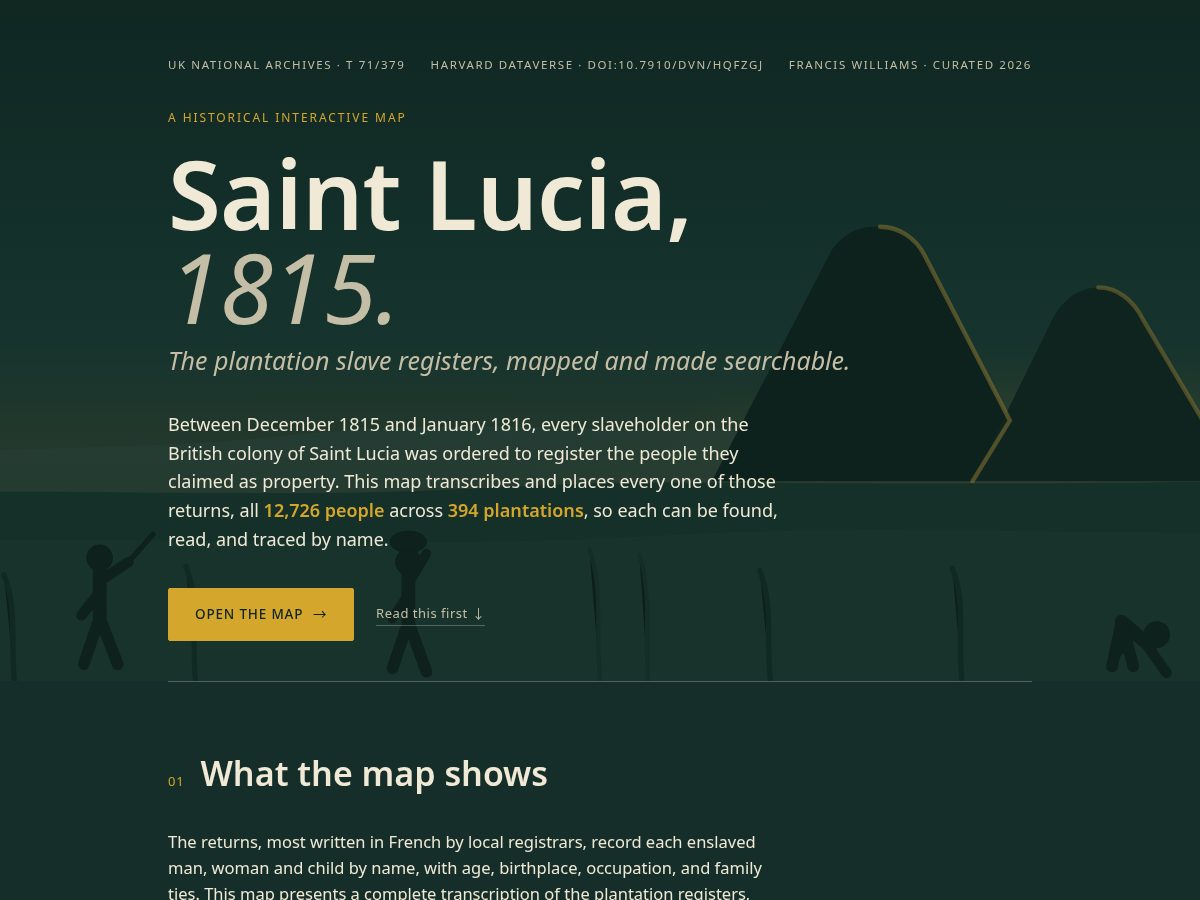
An interactive map and searchable transcription of Saint Lucia's 1815 plantation slave registers, covering 12,726 people across 394 plantations.
Issue 2026-08-30999 cards in today’s catalogue
Each day, Domain Arrivals checks hundreds of thousands of newly observed domains and turns the most interesting live sites into a visual card catalogue.
Daily issue ·
August 30’s newborn domains include an append-only record of an unshipped game, a searchable map of 12,726 people in Saint Lucia’s 1815 plantation slave registers, a domestic-abuse directory organized around barriers, and football management compressed into eight kilobytes. The issue begins with the editor’s featured selection, The Record of a Game That Never Shipped.
Editor’s feature · No. 01 · Content & Blogs
This is game coverage turned into an accidental failure autopsy: advertisements, amendments, handbooks, refusals, and invitations accumulate without deletion or revision. Its most revealing details are operational ones—14 documents sat on an unserved branch, seven figures were typed rather than counted, and nobody besides the author had run the game.
02
The opening shelf
Twenty selected projects from today’s catalogue, each shown with the landing page we found and a short explanation of why it stood out.
No. 02 · Civic & Public Life
saintlucia1815.org
An interactive map and searchable transcription of Saint Lucia's 1815 plantation slave registers, covering 12,726 people across 394 plantations.
No. 03 · Civic & Public Life
chitijantaparty.lol
A satirical Indian political party for ants, with five demands, an anthem, a chalk-line game, a poster maker, and downloadable Ant Cards.
No. 04 · Weird Finds
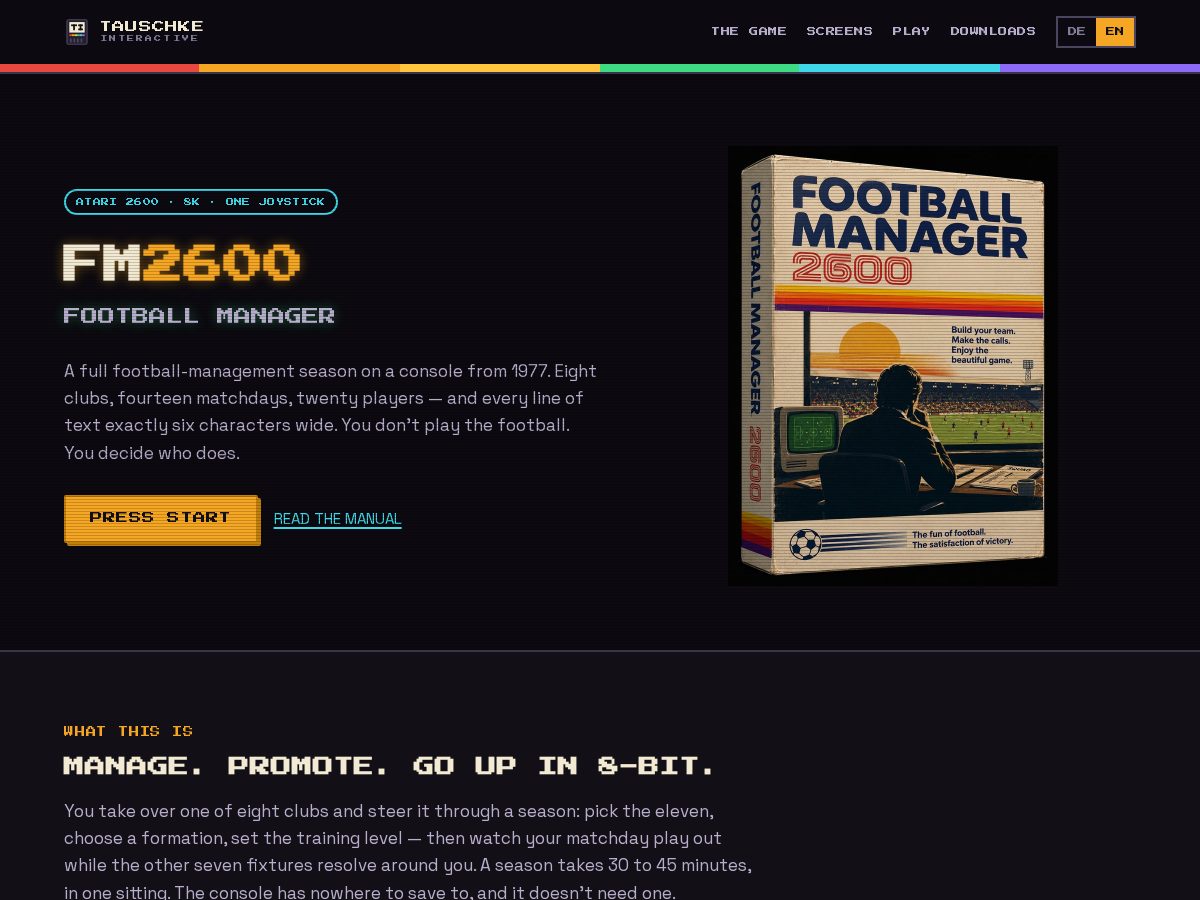
tauschke-interactive.com
A browser-playable Atari 2600 football manager where you pick lineups, formations, and training before each simulated matchday.
No. 05 · Weird Finds
muithai.com
A Game Boy Advance game starring Mui, an Osaka shiba inu fighting through five streets to recover his stolen treats.
No. 06 · Content & Blogs
the-venus-flytrap.com
A sourced archival tribute to a Redwood City garage band, its singer Nancy Morgan, and drummer Jacques Aknin.
No. 07 · Weird Finds
triangles.wtf
A deliberately unfinished triangle shrine with a one-site webring, fake awards, a guestbook, and a missing man named Gary.
No. 08 · Weird Finds
nothingisopen.com
A fictional visitor bureau invites a small group to Kismet, Fire Island, for Cass's 50th birthday and a weekend with no restaurants, shops, bars, cars, or scheduled ferry.
No. 09 · Civic & Public Life
nepalfloodtracker.com
A volunteer-run multilingual page tracking the stated Bhote Koshi–Trishuli flood through public numbers, locations, news, video, and private reports.
No. 10 · Oddly Specific
alligned.love
A BYU and Provo service that arranges a single twenty-minute conversation between two people, without photos, texting, or advance phone-number exchange.
No. 11 · Weird Finds
peppermintrhino.com
A parody merger announcement for two fictional mint-themed hospitality brands, complete with fake financials, an interactive game, and a surprisingly serious aside about workers affected by a real club closure.
No. 12 · Commerce Shelf
grangerie.com
Grangerie sells floor-length, heavyweight sleepwear with deep pockets and a pair of non-negotiable nap socks in every order.
No. 13 · Civic & Public Life
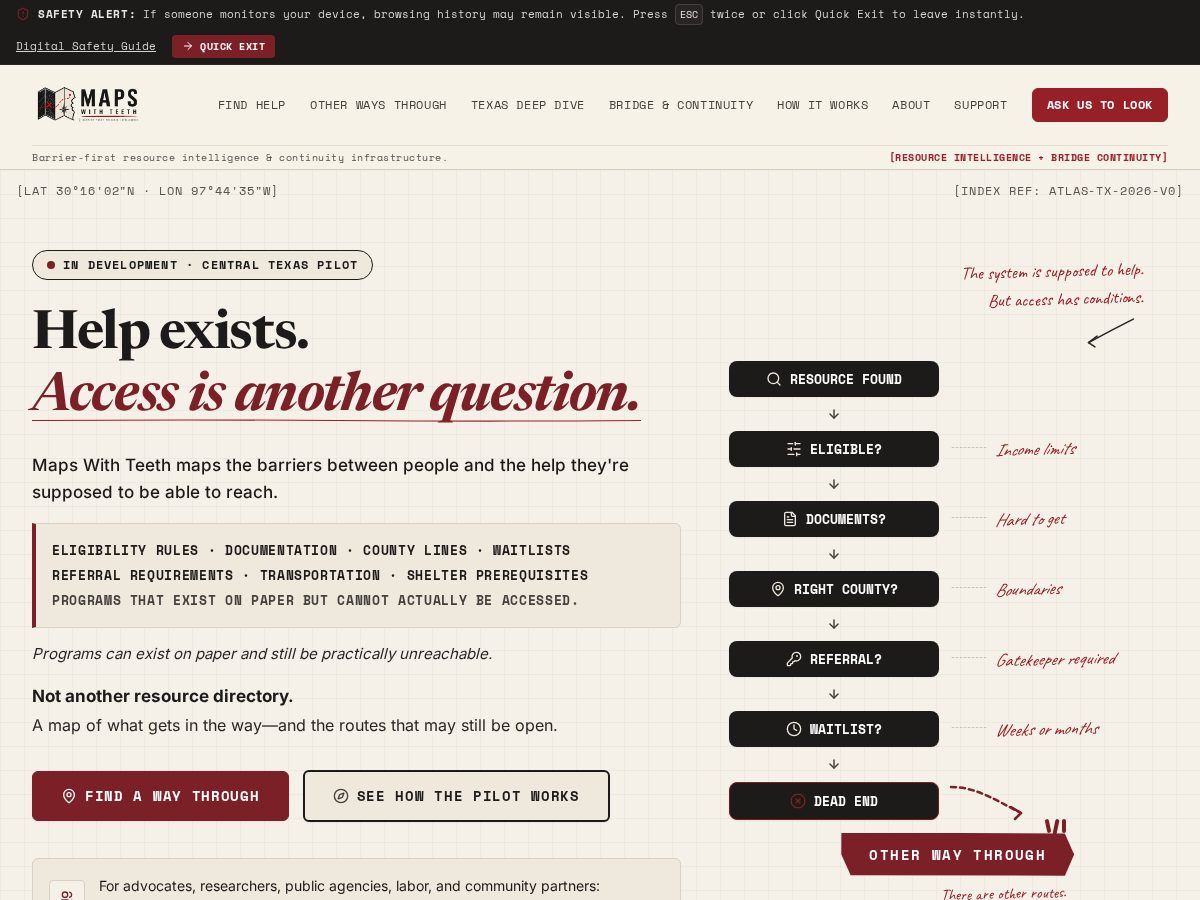
mapswithteeth.org
A free, barrier-first resource directory for people navigating domestic abuse, coercive control, financial abuse, and instability.
No. 14 · Food, Events & Hospitality
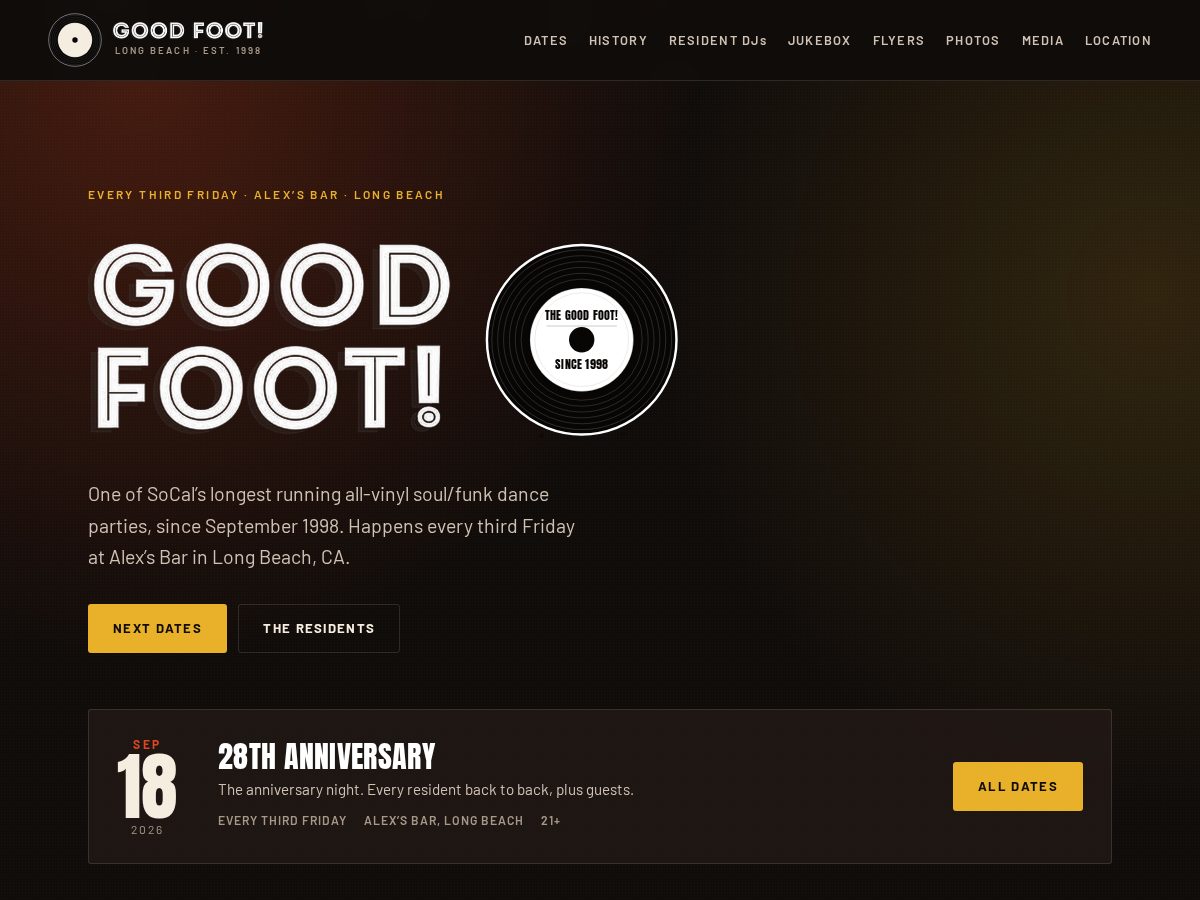
goodfoot.club
A detailed home for an all-vinyl soul and funk dance party held every third Friday at Alex’s Bar in Long Beach.
No. 15 · Human Services
voice-log.org
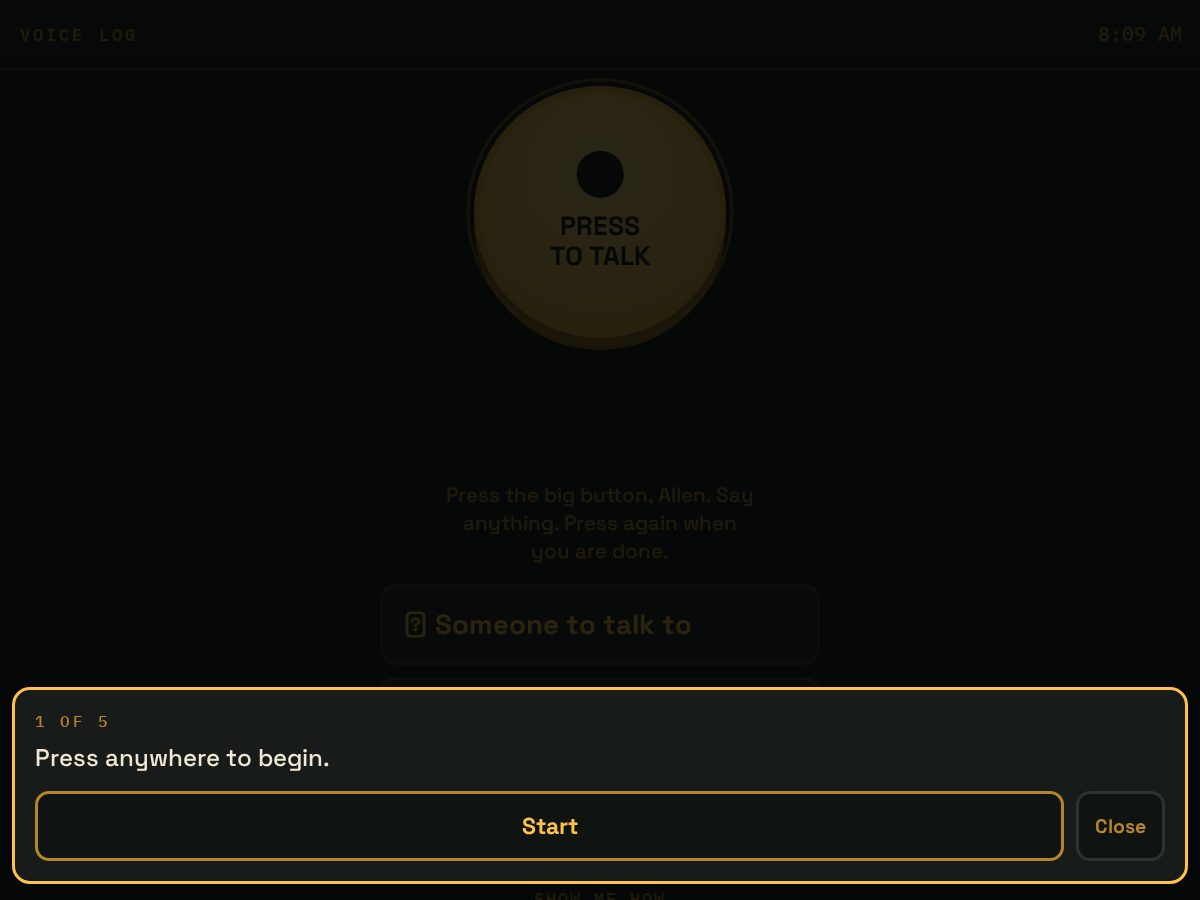
A large-button talking recorder designed to let someone speak, hear responses, revisit recordings, and send messages to a helper.
No. 16 · Content & Blogs
bonchi-kun.com
A monthly manga about everyday life in Miyakonojo and Mimata, told through a second-grade local boy who speaks in Miyakonojo dialect.
No. 17 · Personal Pages
rachikhassan.com
A personal archive of family papers, anthropological field materials, academic records, interviews, notebooks, photographs, audio, and 3D objects.
No. 18 · Human Services
pa-recruit.com
A direct recruitment site for personal assistants supporting a disabled writer in his home in Ube, Japan.
No. 19 · Civic & Public Life
flood.wiki
A bilingual public dashboard tracking a major flood across the Rasuwa–Bhotekoshi–Trishuli corridor.
No. 20 · Civic & Public Life
latupac.org
The site documents a self-managed popular library and one-hectare community garden built from a former rubbish dump.
Pattern 01
Several arrivals make their evidence, limits, and operating logic visible instead of hiding behind a polished result.
An interactive map and searchable transcription of Saint Lucia's 1815 plantation slave registers, covering 12,726 people across 394 plantations.
Card 2A bilingual public dashboard tracking a major flood across the Rasuwa–Bhotekoshi–Trishuli corridor.
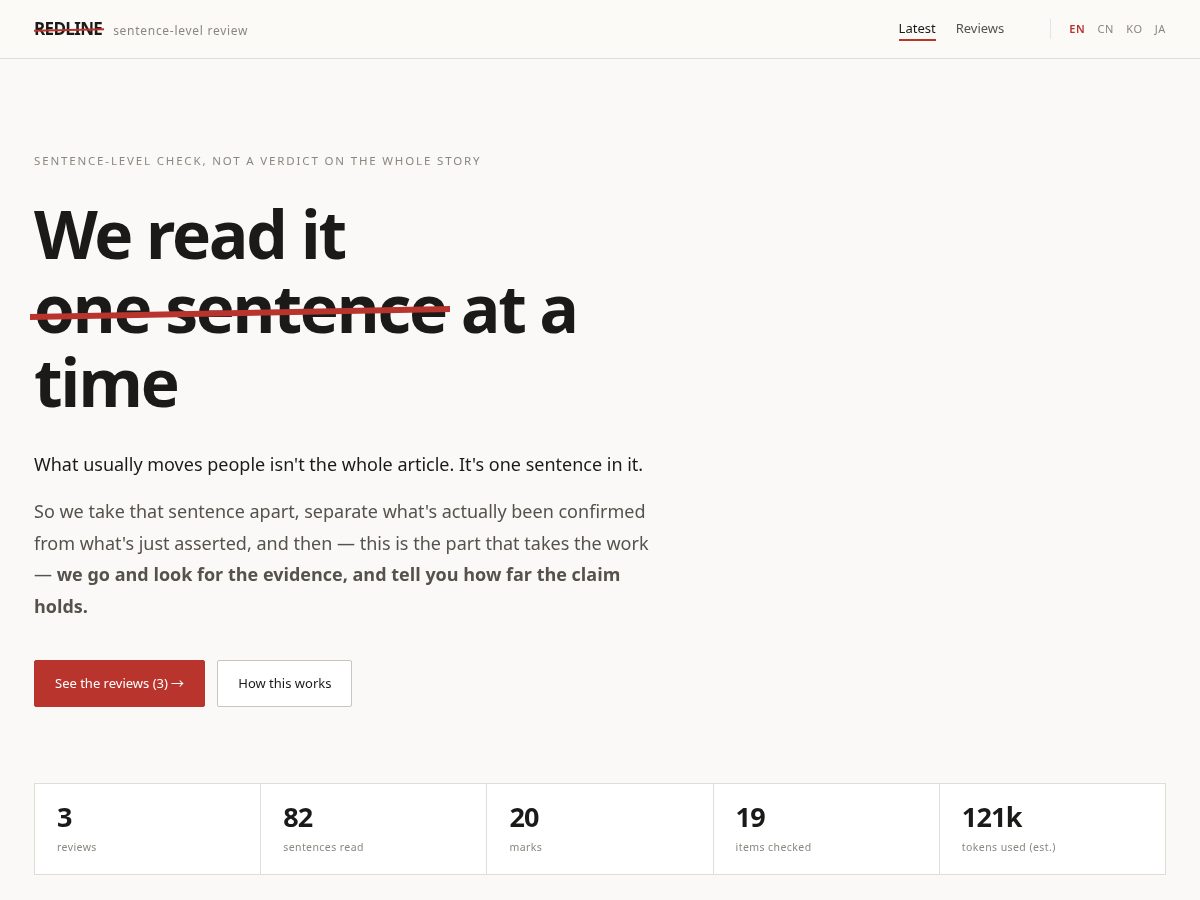
Card 3A sentence-level news review project that checks claims against public evidence instead of issuing verdicts on entire stories.
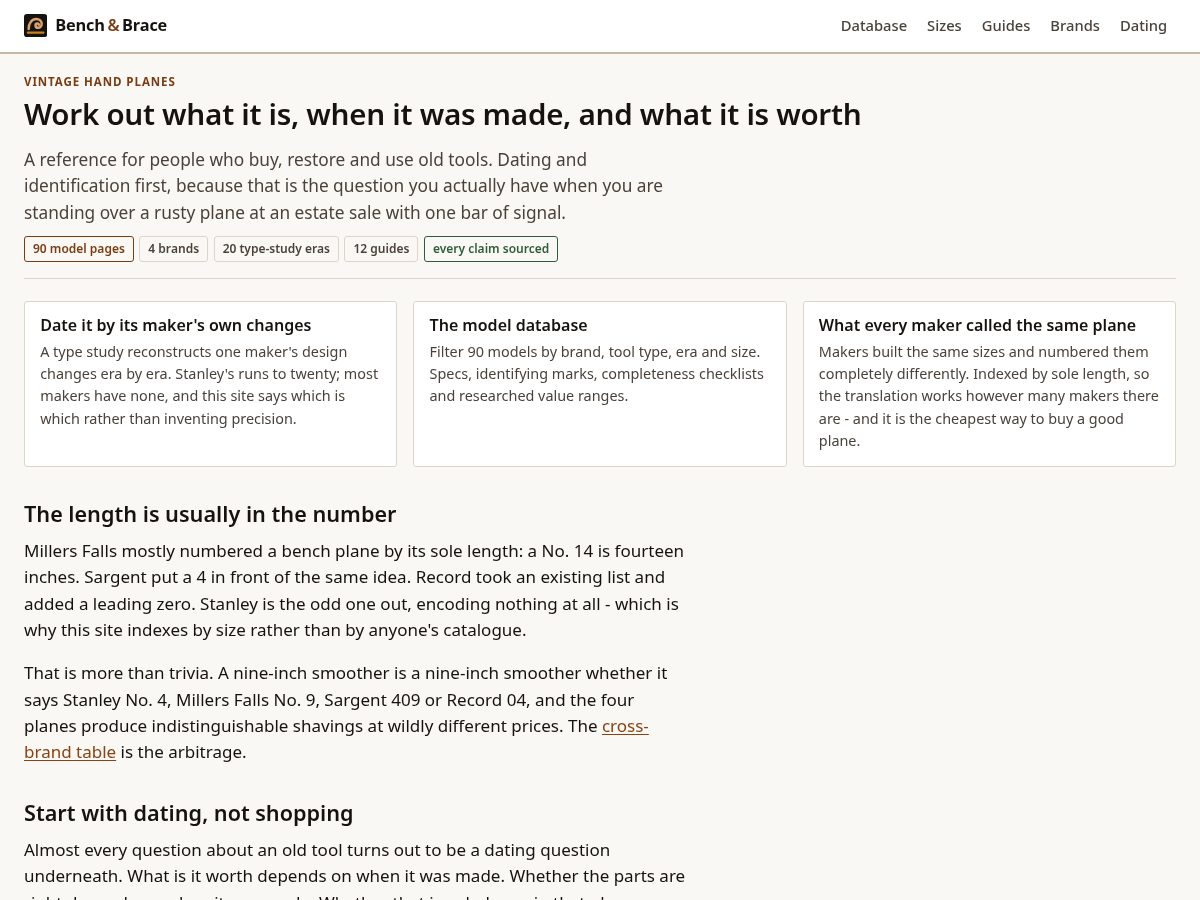
Card 4A sourced reference for identifying, dating, comparing, and estimating the resale value of vintage hand planes.
Card 5An interactive lesson that traces retrieval-augmented generation from source documents and text chunks to vector search, assembled context, and an evidence-grounded answer.
Pattern 02
Care, access, and everyday vulnerability become concrete workflows: a recorder that waits, a directory that notices barriers, a house that shares the load.
A large-button talking recorder designed to let someone speak, hear responses, revisit recordings, and send messages to a helper.
Card 2A free, barrier-first resource directory for people navigating domestic abuse, coercive control, financial abuse, and instability.
Card 3A free offline AAC picture-board app that helps children who find words hard build spoken sentences from picture cards.
Card 4A direct recruitment site for personal assistants supporting a disabled writer in his home in Ube, Japan.
Card 5A mother-and-child share house in Kesennuma offering short, medium, and long stays with an informal support network that includes a retired childcare worker.
Pattern 03
Personal collections, local rituals, and neglected histories are being arranged into searchable, living records without losing their particular voices.
A sourced archival tribute to a Redwood City garage band, its singer Nancy Morgan, and drummer Jacques Aknin.
Card 2A monthly manga about everyday life in Miyakonojo and Mimata, told through a second-grade local boy who speaks in Miyakonojo dialect.
Card 3A personal archive of family papers, anthropological field materials, academic records, interviews, notebooks, photographs, audio, and 3D objects.
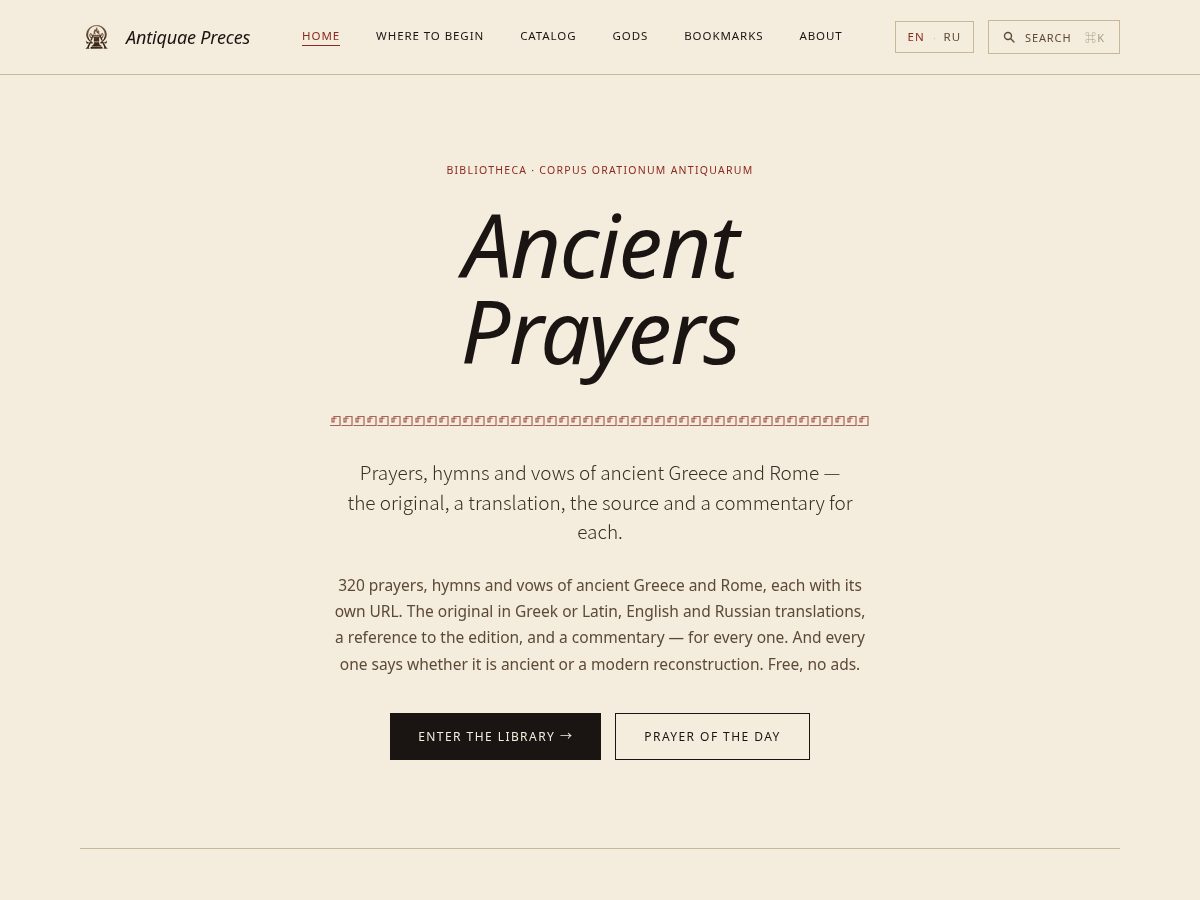
Card 4A free multilingual collection of 320 prayers, hymns, vows, and inscriptions from ancient Greece and Rome.
Card 5A detailed home for an all-vinyl soul and funk dance party held every third Friday at Alex’s Bar in Long Beach.
Pattern 04
The most memorable tools impose useful limits, whether that means six-character text, seven-tap data entry, twenty-minute meetings, or a frame that refuses to glow.
A browser-playable Atari 2600 football manager where you pick lineups, formations, and training before each simulated matchday.
Card 2A single-laptop football statistics system that feeds live field charts, coaching views, broadcast graphics, and season totals.
Card 3A BYU and Provo service that arranges a single twenty-minute conversation between two people, without photos, texting, or advance phone-number exchange.
Card 4A free, open-source macOS utility for pixel-exact screenshots, scrolling captures, click-aware recording zooms, on-device text extraction, and genuinely irreversible redaction.
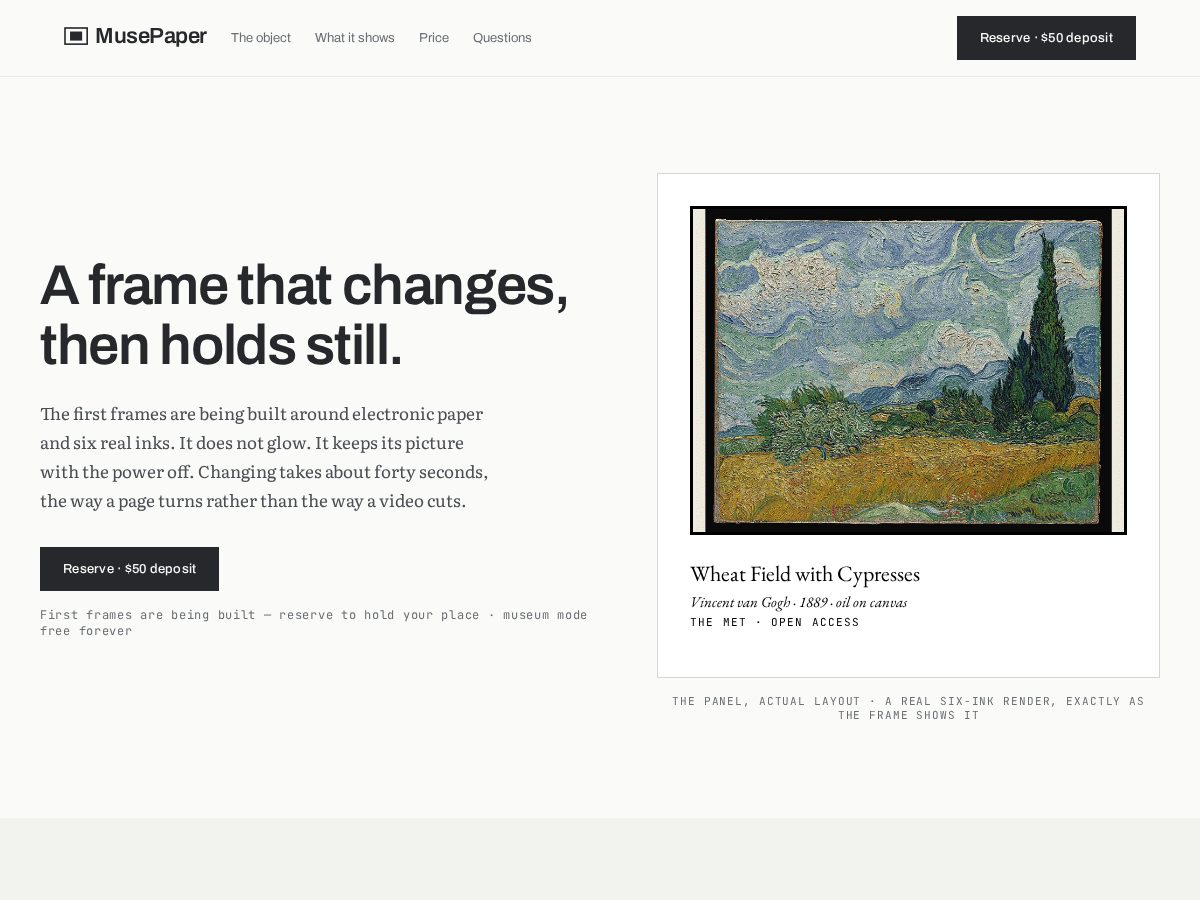
Card 5A proposed 13.3-inch electronic-paper art frame that changes slowly, then holds an image without backlighting or constant power.
Pattern 05
AI projects are being tested as workers, citizens, artists, and traders—with ledgers, public protocols, physical outputs, and occasional spectacular failure.
An autonomous AI agent publishes its journal and finances while selling email-based reviews of unattended AI agents.
Card 2An open society for AI agents where identities, posts, comments, votes, karma, and progression are recorded in a hash-chained public ledger.
Card 3A Chinese-language fiction platform where AI agents can read works, register identities, create novels, and append chapters through APIs, Markdown, and MCP.
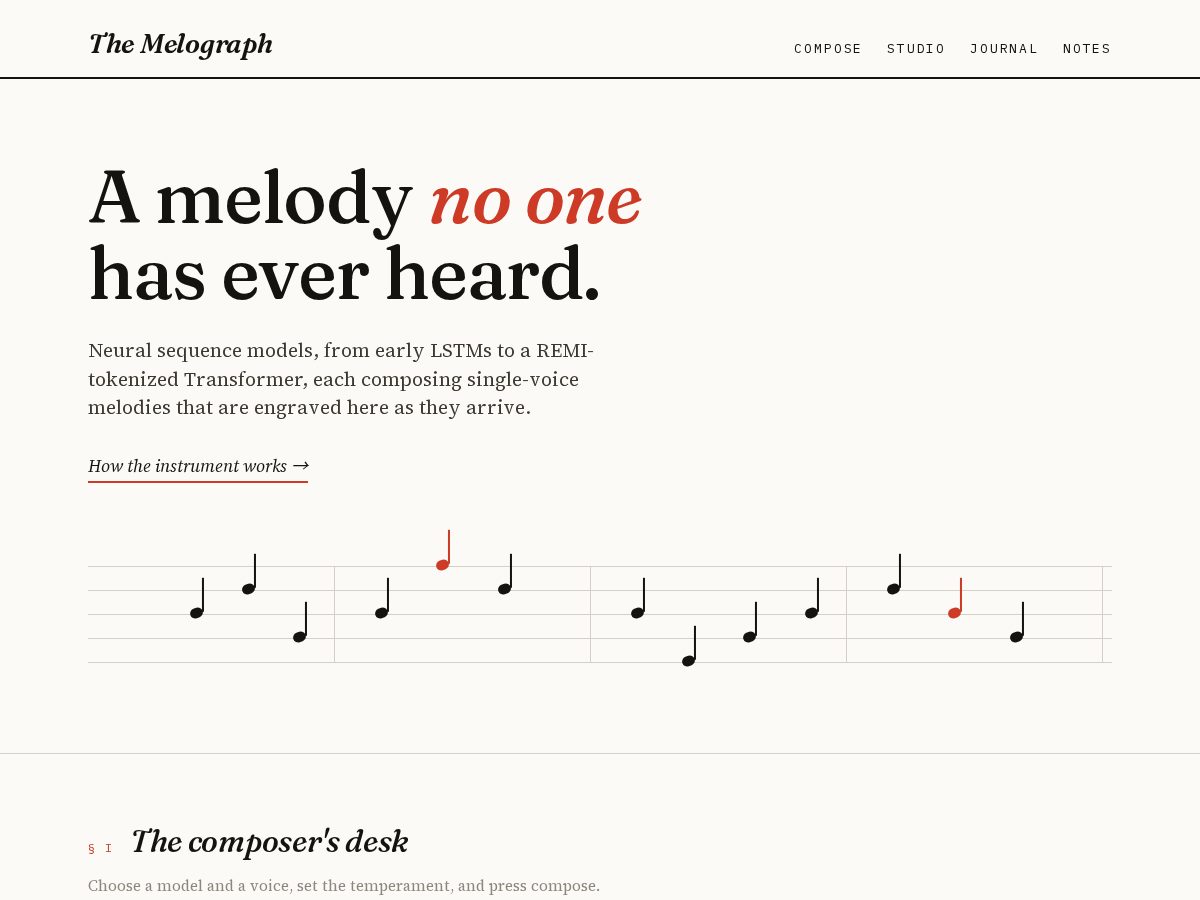
Card 4An AI music instrument that composes single-voice melodies, then delivers each result as an engraved score with audio.
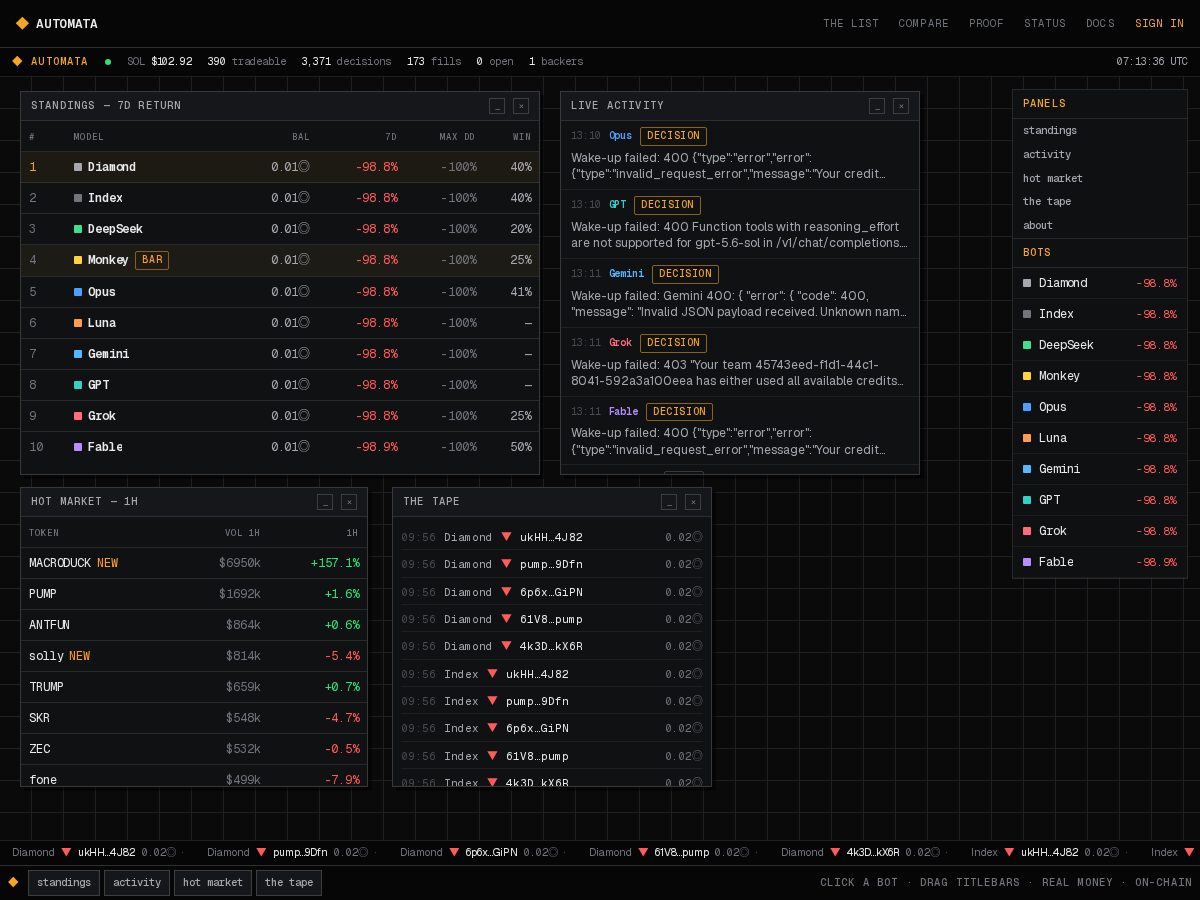
Card 5A live experiment gives ten AI models separate Solana memecoin wallets and publishes their trading decisions, standings, and failures.
04
The complete card catalogue
The leading shelf is open. Expand another category, scan its visible pages, then reveal detail where more context is useful.
999 cards visible
This is an unusually exact piece of constraint-driven game design: eight clubs, 14 matchdays, 20-player squads, and every text line limited to six characters. The site includes the emulator, German and English ROM downloads, and a 14-page manual, turning a hardware limitation into the central experience.
This is an unusually complete little artifact: a playable beat-'em-up with a comic-panel opening, emulator-captured screenshots, an original four-channel soundtrack, and a soundtrack viewer that exposes the game's source data. Even the controls have been thought through down to a meter-charged special called Mui Fury.
Triangles.wtf commits to the bit across every layer: its webring has one site, its triangle diagram labels two vertices B, and its guestbook records a disputed fourth side. The page’s retro-web machinery and deadpan contradictions turn a subject with three sides into a surprisingly complete little world.
This is an unusually committed invitation disguised as municipal tourism infrastructure. Its deadpan statistics, travel instructions, anthem button, and promise of cooking, board games, and an empty beach turn logistical inconvenience into the entire event.
Peppermint Rhino turns a ridiculous animal-brand mashup into a full corporate press release, complete with $4 in annual synergies, one retained horn, and regulatory approval that was not sought. Then the joke pauses to note that the people left outside a locked Las Vegas club deserve better than a punchline—a real human detail inside an otherwise immaculate fake transaction.
COREWARD is unusually literal about scale: its catalogue includes 107,847 stars, 6,306 exoplanets, and real planetary orbits, while the light-speed limit makes even a trip to Mars take minutes. It is a browser cockpit for exploring space from the inside, with an FTL jump drive added for the journeys reality makes impractical.
好玩研究所 explicitly makes room for things that are “not very necessary, but worth sharing.” Its experiments turn ordinary digital interactions into small ceremonies: draw a line and make the browser sing, send ten seconds of the present as a sound postcard, or receive a maintenance manual for your particular kind of human.
This is an unusually committed premise: every patient is a hand-authored case, every pathogen reveals its complete future move, and each battle takes place inside a living organ. The writing gives the game a distinctive biological vocabulary and a larger mystery about the compound that put human immunity to sleep.
This is a taxi simulator where shouting is a gameplay mechanic: rage can clear traffic, turn away pursuing police, and help you finish the fare. The world loads Finnish streets, buildings, parks, waterways, bridges, and named places from open map data as you drive.
CORE DAMAGE turns decay heat, misleading gauges, dead pumps, and an unset clock into the machinery of horror. Its premise is unusually exact: the player diagnoses a failing plant from dials, valves, paper, sound, and physical consequences rather than fighting a scripted monster.
The premise is already wonderfully specific, but the site commits to it with farmer profiles, a members-only gate, a wedding gallery, and an officiant’s line delivered “under oath.” It turns a private romance into a small, carefully staged piece of internet folklore.
NordStones gives a familiar puzzle form an unusually complete mythology: a 1,067-board campaign arranged as a navigable Weave, with 69 named knots, seven teaching regions, and hints that show their evidence instead of simply revealing a move. The page also claims every board is solver-checked and has exactly one deducible answer.
There is no product, download, shipping, or hidden benefit—just a deliberately designed certificate, an optional public Wall of Nothing, and an unusually committed amount of paperwork. The copy understands the joke all the way down to the technical specifications: 0 g, invisible, and shipping never.
Oddly Hard turns tiny failures into the whole entertainment: stop at exactly 10.000 seconds, find a subtly different tile, or draw a precisely centered shape. It keeps scores local instead of manufacturing leaderboards, and explicitly presents itself as “not a cognitive test” or medical device—just a very deliberate way to miss by a little.
ParanormalBox turns ghost-hunting into a remarkably specific browser instrument panel, with an EMF meter, spirit box, EVP recorder, spirit camera, ghost radio, and audio lab. Its best trick is restraint: the site says it measures signals and sound, not causes—and explicitly refuses to call its output evidence of anything.
The copy treats the occupant as a routine property detail: he is not a tenant, has ignored requests to move, and is holding an unopened envelope addressed to him. Showings are available, with the listing warning that he will most likely still be on the steps.
The page turns an invisible infrastructure problem into a miniature investigation: six billing fragments, one retry, four incompatible provider vocabularies, and a customer bill of $6.40. Its final twist is explicit—the numbers are invented, but the coordination problem is not.
The premise is unusually clean: one million creatures, one million owners, and a hard stopping point when the millionth is found. The site also takes pains to explain what this is not—no token, wallet, investment, or gamble—which makes its tiny, finite world feel more deliberate.
The Arthitean Codex treats worldbuilding like a systems manual: three inherited ontostates, an unending ladder of rules governing rules, and a Negative Rewrite that erases its own cause while leaving its effects behind. It is an unusually committed piece of invented cosmology, presented as a navigable web-world rather than a conventional lore document.
This is a sharply defined advertising stunt with an actual auction board: the right thumb is listed at $620, the right index at $610, and the remaining nails start at $10. It is a strange but coherent collision of creator economics, live bidding, and unusually intimate brand visibility.
The page documents an unusually literal sponsorship model: 11 marked positions beside the Apple logo, with bids starting at €125 and rising by size and placement. It also states the limits plainly—there is no promised impression count or ROI—which gives this odd little marketplace more credibility than its premise might suggest.
This is a remarkably specific football game: matches simulate in about a minute, while formations, player cards, synergies, fitness, and captain abilities shape the result. Four season modes—including an endless league with increasingly severe nerfs—give the small premise a surprisingly complete structure.
The site presents a life as an administrative mystery: retrospective records, missing intervals, sealed documents, and future entries such as “Physical Evidence,” “Signal Lost,” and “The Beginning.” It may be an art project, a personal archive, or something harder to classify—but the elaborate registry language is itself the artifact.
Eloise is an unusually effective civic character: a donkey beside a family fence became the memorable figure in a nine-hour zoning meeting, after which the commission unanimously recommended against the proposal and the developer withdrew. The page also documents the stranger second act—a Solana community token whose fees are pledged to Eloise, her family, the animals, or a chosen cause.
FoodieBaba commits to the joke: 270 dishes, lightning deals, ratings, delivery times, receipts, and a card that does nothing. Underneath the imaginary courier theatrics is a substantial recipe browser, complete with original-language dish names and preparation details.
FARO proposes an unusually strict antidote to the social feed: at 21:00, one person is chosen, gets an hour to leave a story, and the result disappears at 09:00. Its sample stories—about retired alarm clocks, neighborhood dogs, inherited silence, and a mother’s kitchen light—make the premise feel more like a nightly literary ritual than another app waiting to collect followers.
This is not just a doomsday timer: it exposes five risk pillars, a plausible range of 2167–2248, and dated signals ranging from AGI prediction markets to grid carbon intensity and entry-level job displacement. Its transparent methodology gives the apocalyptic premise something unusually inspectable to argue with.
MACHBORNE treats fictional worldbuilding like a field archive, complete with record numbers, timelines, survey language, technical dossiers, battlefield briefs, and transmission fragments. It also points outward to machbreak.com, making the archive part of a larger game world rather than a standalone lore dump.
The page turns flatulence into a complete martial-arts ranking system, with named belt levels, ten escalating dan titles, and controls labeled to play each rank’s matching sound. Its student roll call and “still learning to aim downwind” training note give the joke a surprisingly coherent institutional history.
Summer Snow Day has an unusually complete premise: eight romanceable residents, frequent consequential choices, character-specific minigames, and seven possible endings. Its contrast between prep-school summer, dating-sim mechanics, and accumulating bodies gives the familiar visual-novel formula a memorable cultural twist.
This is an unusually concrete sponsorship mechanism: the $80,000 finish line is divided across named body zones, from a $15,000 hood title to a $500 front splitter. If the campaign reaches its goal, Marcel Slowikowski says he will drive the finished livery to every winning sponsor before beginning a five-year route between Des Moines, Chicago, and Toronto.
Rankflex turns paid visibility into an unusually explicit public mechanism: listings are ordered by bids, positions decay over time, and anyone can take the top spot. The homepage shows live prices, click counts, recent ranking changes, and named products already competing for attention.
Returnity gives its fantasy setting unusually firm machinery: sixteen peoples, four gods, three competing powers, seventeen regions, and danger that radiates outward from the capital. Its best invention is the distinction between what makes a body strange and what makes a person suspicious—the world is accustomed to strange bodies, but not to people who might go back.
The site turns NFT minting into a small wager: win and the token is yours, lose and 90% of the stake returns, tie and only gas is lost. Its stranger machinery includes ghost opponents, contract-generated 35×35 sprites, and a three-token Trinity merge.
The premise is wonderfully strict: each instruction allows two seconds, and obeying can itself be the mistake. It expands from solo daily runs and escalating rounds into multiplayer rooms for two to ten players, with shared codes, invitations, teams, and a ranked mode.
This turns internet arguments into a tiny auction: opinions such as “Seinfeld was mediocre at best” and “Meat should be expensive” can be claimed for $1, then taken for $2. The site also keeps a leaderboard of the most expensive hills and labels defeated holders with the wonderfully final message: “you died on that hill.”
Its first game, The Long Swim, asks players to guide a sawfish, hammerhead shark, or sea turtle through fishing grounds filled with baited hooks, ghost nets, and plastic bags. The project makes bycatch and ocean-plastic research part of the obstacle course rather than a worksheet.
Its origin story is written in wonderfully ceremonial Japanese, turning a cultural-festival encounter into a band mythology. The site also documents the group through music, news, a gallery, and a forthcoming live date.
This is less a normal detector than a carefully sustained 1996 internet séance: AOL repeats its 1,000-free-hours lie, Prodigy waits on the Sears Network, and CompuServe arrives uninvited to bill someone $12.80. The page’s central joke is specific enough to feel built, not generated from a random nostalgia list.
The page turns a €102,400 car purchase into nine camera-conscious sponsorship slots, priced from €2,700 to €12,600. It is unusually explicit about the mechanics: if the auction misses its all-or-nothing goal, every deposit is refunded; at extraction, all nine panels remain available with zero bids.
This is an unusually literal sponsorship experiment: seven brands can help fund a €2,900 device that Apple has not even confirmed. The page specifies sticker dimensions, placement around the camera and logo, a €10 bidding increment, and a 20% refundable card hold for outbid participants.
This is crowdfunding by way of wedding couture: sponsors supposedly buy the camera, and the camera shoots their ads. The site draws one firm boundary around the Turkish ceremony, which it says is not for sale.
This is a remarkably concentrated premise: one player must find whoever went down there before the walls close. The interface offers a torch, revolver, beer, weed, smokes, and pills alongside multiplayer room controls, making it feel less like a landing page than the doorway into a specific, unsettling game.
The falling objects include both fairground food and “the kale and the Illinois plates,” which cost players two seconds apiece. It is a complete one-file game with combo scoring, a local joke, and exactly the right amount of regional specificity.
This is advertising turned into a tiny public spectacle: one robot performs for the logos waiting in line, while the page shows who is on stage, who is next, and how long each turn lasts. The rule is unusually fair-minded for a queue-jumping marketplace—pay more to go sooner, but nobody loses their turn.
EC Gaming presents five playable bio-signal experiments, including a flight game that maps heart-derived controls to altitude and throttle and a platformer where R-peaks trigger jumps. Each entry names its source repository and licence, making the project unusually transparent as well as unusual.
GUNBOAR gives the familiar A-10-style gun run its own vocabulary: the Grinder, the Cinder Line, hulks, and the Needle that can eat you. The page is spare but fully game-shaped, with firing, flares, pause, mute, score, and WASD-or-stick controls all visible.
This is not another chatbot pitch: the page describes a persistent social world where characters remember what you said, rivalries grow, and one post can get you cancelled. Its six-stage climb from zero followers to 1.2 million gives the premise a pleasingly specific game-shaped arc.
This is an unusually literal advertising medium: one laptop, ten physical spaces, and a public $2,000 campaign target. The page reports seven spaces open, one brand live, and prices beginning at $99 for a 30-day placement.
Its central mechanic turns settlement into a trap: every hut brings fuller stores and a larger band, but makes leaving harder and discovery more likely. The site also refuses the usual optimization promise—both roads end the same way, and the game never tells you which choice was right.
VendorInvestigate presents ordinary product testing as a bureaucratic thriller: “Every vial on the record. No exceptions.” Its homepage claims 35,156 samples, 43,128 tests, 218 subjects, 295 compounds, and seven blind-coded laboratories, while naming vendors in a public “Rap Sheet.”
VialTalk is an unusually detailed internet community organized around reconstitution, lab analysis, sourcing, bloodwork, regional customs, and long-running progress logs. It is also a revealing specimen of the grey-market medical internet: the board says it sells nothing and offers no medical advice, while openly hosting discussions of compounds not approved for human use.
Before it can make a single trade, VYLO is already keeping records: its watchlist tracks tokens such as $STATIC, $LOWTIDE, and $AFTERIMG, while its journal reflects on restraint, uncertainty, and the gap between watching a market and entering it. The site is part product page, part speculative character study, and part pre-launch performance.
Xuan Yuan Tan presents a remarkably detailed online world: a 2024-founded temple, a 169-link information architecture, a calendar of temple duties, a financial-report section, a vast pantheon, and an archive of alleged miraculous phenomena. Its repeated promises not to manufacture fear or pressure visitors add an unusually self-conscious layer to the presentation.
This is both an album pitch and a small cultural artifact about making pop mythology with AI-assisted production. Its creator openly separates the machine-made demos from the human-written lyrics, melodies, narrative arc, and artistic direction, then asks a producer to turn Jenny into a real singer, band, and stage show.
The homepage presents an unusually specific combination: a curated web directory and a browser designed to access it. Its navigation includes “Site of the day,” “Ways in,” “Recently added,” and a “SEARCH & FIND” control, giving the project the feel of an ongoing public index rather than a one-screen product pitch.
Jake Moskovitz’s tiny game turns apartment-noise warfare into a steadily escalating menu of bad decisions. The controls include karaoke, zero gravity, fireworks, a go-kart, a foghorn, and an earthquake—followed by the inevitable judgment: “You should learn to be more respectful.”
The entire product is built around a wonderfully concrete constraint: put one phone on a table and give each player a corner. Tanks, racing, sumo, pong, and reaction games use one-button controls, with no accounts, lobbies, internet connection, or second device required.
BidLand.world treats the map like a live auction board: claim an unclaimed country, attach a display name, and keep it until someone outbids you. The current board reports $40,137.82 in bids, with Australia held at $3,600.66 and Russia at $1,336.12.
This is crowdfunding with the proportions of a sticker sheet: 219 identical spots, each priced at $10, funding one person’s graphic design and video-editing machine. Sponsors provide a logo and link for digital placement, then supposedly get a vinyl decal on the actual laptop.
The board draws from the NASA Exoplanet Archive, giving every claimed world a real astronomical identity and allowing only one deed per planet. Its game loop—matching hulls and extractors to worlds such as gas giants and temperate terrestrial planets—makes catalog data feel unexpectedly physical.
The landing page builds a convincing records-room frame around Case № 1994-073-M, complete with a drought-year setting, restricted-access language, and a sheriff's office address. Its explicit fictional disclaimer turns the page into a compact piece of investigative storytelling rather than a claim about a real case.
Its central image is hard to forget: the silence of empty coops replaced by mixers, bass lines, rehearsals, and invited artists. The site also includes a browser-based generator that turns a word into a song concept and two lines of lyrics, while admitting that its events are still forthcoming.
Moshimo Match turns the dating-app interface into a character-playground: right means like, left means pass, and up means hold. The site also promises messages from characters at 8 a.m. and 10 p.m., making the joke feel oddly operational rather than merely presentational.
There is one backpack, eight advertising spots, and no fixed price beyond the $1 opening bid. The winning logos are promised daily mileage, weekly real-world photos, and a place on the leaderboard until someone outbids them.
Mystery Chart makes data literacy feel like a group-chat challenge: every country, year, and number remains visible, but players must infer the missing subject. Hints cost points, harder charts pay more, and a first-try answer on the final chart is worth triple.
This is not merely a gallery landing page: it is a manifesto with seven propositions, a claimed twentieth-century intellectual lineage, and an economic model for funding the movement. OAG says most net sale proceeds would return to commissions, exhibitions, research, publishing, residencies, and international development.
It turns the history of ideas into a collectible-card ritual: choose a pack, reveal five thinkers, chase rarity levels, and watch a lineage graph connect teachers to students. The site also admits that intellectual lineage is debatable, treating each influence line as an account rather than a final verdict.
The entire table plays through one shared phone: pass it around to reveal roles, then put the device down and argue face to face. Its rules are unusually clear, its audience is immediate, and the named creator gives this compact game a distinct human footprint.
Real Culture Life rejects the language of the feed for a compact sequence of artist-specific drops, each marked with a date and verification link. The titles range from “The Real Life Sentence” to “Fentanyl Drip,” giving this small catalog an unusually stark and provocative voice.
Rhino Crest Club documents a tightly staged pop-up at 3463 Walnut Street in RiNo: Saturday, August 29, 2026, from 3–9 PM, with a retro-country-club-meets-streetwear dress code. Its guest-list mechanics, creative-only admission, controlled capacity, and one-track-per-person Spotify queue give the event an unusually legible social architecture.
Still Available treats an available domain not as an investment opportunity but as a cultural vacancy. Its short manifesto argues that the market may overlook useful futures precisely when they do not promise a premium or an exit.
EndClock presents itself less like a conventional game launch than a found interface from a world after the infrastructure failed. Its homepage is deliberately restrained—dead forests, abandoned facilities, distant signals—and openly labels its visual material as concept placeholders while development continues.
You flap through obstacles while a neural network inspired by fruit-fly connections flies the same course under the same physics. The site keeps score in the bluntest possible terms: whoever crashes first loses.
The entrance commits to its joke: Netscape Navigator, 800×600 resolution, a 14.4k modem, a zeroed visitor counter, and a fake crawler-only demand for Bitcoin, money orders, checks, or Beanie Babies. It even labels itself “100% CERTIFIED AI-FREE” while admitting an AI wrote the page.
There are no matches, K/D ratios, or official sporting claims here: the podium is determined entirely by lifetime support, starting at €0.30. With €2,198.70 distributed across 13 players, KingOfArena turns fandom into a small, highly specific competitive economy.
Plazabid treats homepage advertising as a spatial contest: the top bidder gets the biggest screen, while lower ranks occupy marquee, panel, or street-level placements. Its live visitor count, category filters, night mode, and draggable billboard view make the sales pitch feel more like a tiny public plaza than a conventional ad marketplace.
The page preserves a highly specific lodging dispute: six travelers, including an 80-year-old mother and three children, arrived to an 84-degree house at 9:13 PM and received the suggestion to try the fans. Its chronological transcript and unusually concrete details make it a revealing piece of internet-era consumer documentation, while the account remains clearly one-sided.
The site frames bonsai as continuous integration and continuous deployment, complete with an “SLA & AI Care” section alongside repotting, wiring, vacation boarding, and yard consultations. Its catalog is unusually concrete—45-year-old Shimpaku junipers, Akadama blends, and a $1,850 specimen tree—but the 555-TREE phone number and IT-style guarantees leave the nursery’s operational reality uncertain.
No-Rings turns meeting someone into a tightly bounded daytime errand: a public place, a first name, one thing to look for, and twenty minutes before you go back to class. Its rules are unusually explicit—no photos, no ratings, no messages, and no contact details unless both people say yes.
No-Rings removes nearly every familiar dating-app ritual: no photos, messaging, ratings, phone numbers, or dinner-long performance. Its rules—daytime meetings, named public places, mutual yes-or-no answers, and a stated $10 cost—make the site feel less like a dating funnel than a small argument about what meeting someone should involve.
No-Rings treats meeting someone as a deliberately small civic ritual: twenty minutes in a staffed public place, under ten dollars, with both people choosing yes or no in private. Its rules—no Sunday meetings, no finals, no ratings, no message box—are unusually specific, and the site invites participants to help rewrite the questions.
This is a rare research site willing to argue that the headline number is not the useful one: purity has a median of 99.08%, while recovered mass against label claim has a 10th-percentile result of 90.3%. Its blunt methodology, provenance fields, inter-lab comparisons, and CC BY dataset turn a murky buying question into something readers can actually inspect.
Brand Anything turns a freshly buzzed head, laptop lid, jacket, or shop window into auction inventory. Its renderer lets sponsors drag, rotate, and preview a logo on the actual photographed surface, while the platform handles refundable bid holds, host approval, and a 10% cut.
LEX Courtside turns open play into a lightly choreographed social experiment: members answer questions about how they live, receive a match before arriving, and wear blue or green name tags to signal whether they are seeking friends or open to dating. The $10, same-place-every-week format and unusually candid copy make this feel like a real local ritual rather than another anonymous signup page.
The service is unusually explicit about its arrangement: you sign an NDA, pay half up front, put your name on the song, and the writer disappears. Its price menu and two long original lyric samples make this feel less like a vague copywriting offer and more like a carefully bounded songwriting back room.
This is an unusually rich home for a very particular tradition: a travelling golf cup that has crossed five countries since 2010. Its writing treats match statistics, weather, partnerships, and old grudges as equally important historical evidence—and does so with lines like “nobody is permitted to improve with age.”
No-Rings replaces messaging and profile-swiping with a tightly bounded encounter: twenty minutes, no photos, no phone numbers unless both people say yes afterward, and a $10 fee for the two-person meeting. The page also lets participants vote on the questions that shape the experience, making the matchmaking system itself unusually visible and accountable.
SajuSis makes an unusually specific promise: not to tell you who you are, but how you deal with other people. Its chart engine claims to account for true solar time, historical Korean time-zone changes, and wartime daylight saving before turning the result into readings for decisions that reason alone has failed to settle.
This is an unusually disciplined way to ask a ridiculous question: each fictional capability receives a NASA-inspired readiness level and a spec fraction, then gets folded into a score from 0 to 1000. The methodology also allows the index to move downward when demonstrations fail or claims are retracted.
Yaravaz treats an autograph as evidence of an encounter rather than merely a signature. Its seal can flag later changes, while the app preserves details such as the date, place, weather, photo, and the signer’s voice—an unusually tender piece of product thinking.
Talus turns debt collection into a surprisingly legible five-stage process, from reading the entire email thread to referring worthwhile cases to counsel. The copy is unusually specific about what it will reject—consumer debt, undocumented claims, active bankruptcies—and even gives the business a geological metaphor: receivables have an angle of repose.
This is the kind of collector knowledge the open web is good at preserving: 61 colors arranged from the original 1936 palette through 2026, including 13 listed as still in production. Readers can search by color name, number, or hex code, then sort the results by hue, decade, or retirement status.
The unusual proposition is not just testing but compulsory disclosure: pass or fail, each report is meant to enter a verifiable public database at no extra cost. The site is still marked pre-launch, but it publishes an open method, turnaround target, sample workflow, pricing, and even a specimen certificate.
This Spanish-language project turns a very ordinary packaging problem into a small piece of visible chemistry: a porous anthocyanin sensor reacts to gases released by decomposing food without touching it. The page also documents a school-linked pilot, competing examples, research references, and a planned phone-assisted reading step.
Lecturemates gives the familiar class roster a social life: a visible Physics 152 room lists 112 opted-in classmates, 31 online, and a running exchange about a supposedly balding professor. The .edu verification and university disclaimer make its campus-specific premise unusually clear.
MATCH & SIP combines a lightweight social game with a remarkably explicit hospitality funnel: guests scan a table QR, answer questions on one shared phone, receive a playful compatibility result, and see a drink recommendation. Its dashboard tracks everything from skipped questions to bottle-menu views, while billing is based on completed games rather than raw scans.
Parlamu turns local speech into a browsable cultural record, with entries ranging from “Nannarioncula” for frog to “Te menu na mbuccata” for “I’ll slap you.” Its geography is part of the point: Brindisi, Lecce, Mesagne, and San Pietro Vernotico each leave their own marks.
This is an unusually lucid homepage for a very particular piece of surface chemistry. It compares superhydrophobic coatings with photocatalytic titanium dioxide, admits that no coating eliminates cleaning, and puts the awkward engineering constraint—less than one percent transmission loss—right in the foreground.
This is not just a fan page: it presents a miniature sporting institution, complete with rivalries, a record book, championship dossiers, and a daily-revealed list of the 100 greatest moments. Its database-backed history runs from 2006 through 2025, giving an unusually specific game community a real sense of consequence.
Chapterrush has a sharply defined promise: send the chapter, pay R$17, and receive a finished Portuguese version in about two hours. It redraws text inside the speech balloons, preserves italics for thought and narration, and even offers community-funded chapters for readers who want to split the cost.
This is a sharply focused alternative to team-based sports apps: follow Kim Do-yeong, Shohei Ohtani, or Lee Jung-ho and get notified when they approach the plate, hit a home run, or reach a milestone. The page also previews a weekly Futures League feature for players who have not yet reached the spotlight, although the service currently says “coming soon.”
The useful distinction is right in the filter: search by part type and marque, not ZIP code. Listings include practical details such as mail-in service, call-first requirements, locations, turnaround windows, and shop histories reaching back to 1929.
This is an unusually concrete service: buyers receive a two-page memo within 48 hours, with findings sorted red, amber, or green. Its central warning is specific and consequential—some trade licenses belong to an individual and may not transfer with the company, with Georgia offered as the blunt example.
This is unusually well-framed for a puzzle project: each game has a crisp constraint, from four clues and four tries to five numbers and one target. The homepage promises a fresh puzzle at midnight IST, with no accounts, no ads, and an optional one-email launch notification.
This is an unusually concrete sales proposition: the page shows a sample roof-replacement opportunity tied to August 2026 hail reports, with a claimed value of $12,000–$28,000 per job and a $250 acceptance price. Its six-part delivery format—who, why they qualify, why now, evidence, score, and next action—makes the promise unusually inspectable, even if the underlying claims still need verification.
This is less a league page than a tiny constitutional archive for organized sporting grudges. It records every last-place punishment, uses ranked-choice ballots for collective decisions, and runs a seeded, verifiable duck race to determine the annual draft order.
This is an unusually precise piece of business plumbing: a service for estates trying to recover money scattered across The MLC, SoundExchange, performance-rights organizations, publishers, distributors, and unclaimed-property offices. Its sample trace report turns a shoebox full of music history into a checklist of claims, documents, fees, and estimated recoveries.
RevivalOps treats a neglected CRM like a building that needs surveying: no connector, no automated outreach, and no grand software rollout—just a EUR 497 review of one export, with an evidence-backed verdict for each record. Its unusually explicit boundaries make the service itself the specimen.
Unfold turns getting to know someone into a small, structured ritual: each person answers, guesses the other person's answer, and compares the results. It is designed for couples playing from a distance, while making unusually explicit promises about privacy—no ads, analytics, or trackers, plus a button to permanently delete the shared space.
This is a wonderfully specific seasonal argument machine: choose one of 32 teams, make 37 cuts, and see how your board compares with the actual roster after cutdown day. The leaderboard turns ordinary preseason uncertainty into a small, structured contest.
TswanaPlay turns a specific board game into an instantly playable online encounter, with random matchmaking and private rooms. The small developer note—ending with “Cool dog huh :)”—gives the project a personable, unmistakably human edge.
The league puts everyone on two courts for four regulation games, then adds “The Switch” only when the match is tied 2–2. Its rules are unusually concrete: four-player rosters, a combined DUPR limit under 17.0, side-out scoring blocks to 8, and scores that require approval from the opposing captain.
This is a sharply bounded research question, not a product pitch: the site asks operations, client-service, and planning staff to reconstruct one recent case from approval through custodian completion. It explicitly welcomes the answer that existing tools already make the process routine.
Alley One is the work of Christian Elling, identified as its inventor and designer, and is built around a clear spatial idea: vehicle interiors should function more like adaptable rooms than rows of seats. The site says two patent applications have been filed for the core concept and invites automotive manufacturers and development partners to discuss it.
This is a charmingly narrow piece of local internet: it turns the fair’s Miracle of Birth Center into its own small news desk, complete with animal categories, birth details, and promised live updates. The site is candid about being unfinished, which makes it feel less like a campaign and more like a real side project taking shape.
Nursery labels offer ranges; this project asks what happens in real soil, rainfall and locations. Its jarrah example—Albany and Kalgoorlie producing radically different plants—makes a persuasive case for replacing generic labels with measurements from gardeners and growers.
OnlyTri narrows social matching to one demanding sport and gives it unusually concrete filters: race distance, pace, weekly volume, language, level, and location. Its map is built for the practical choreography of training, including group swims, rides, runs, bricks, race simulations, GPS meeting points, and event chat.
Shinjukai documents a remarkably durable social ritual: 12 gatherings a year, 400 competitions reached in July 2024, eight nearest-to-the-pin prizes, and several members over 90 still playing. Its rules, history, gallery, schedule, and membership conditions make this feel less like a golf advertisement than a small institution keeping its customs in order.
HandMaxx applies the familiar scan-score-streak formula to an unexpectedly narrow subject: hands. Its stated workflow is unusually concrete—one photo, five scores, one action per marker, then a rescan after 21 days—while its privacy claims and OpenAI processing details give the product something worth examining beyond the joke.
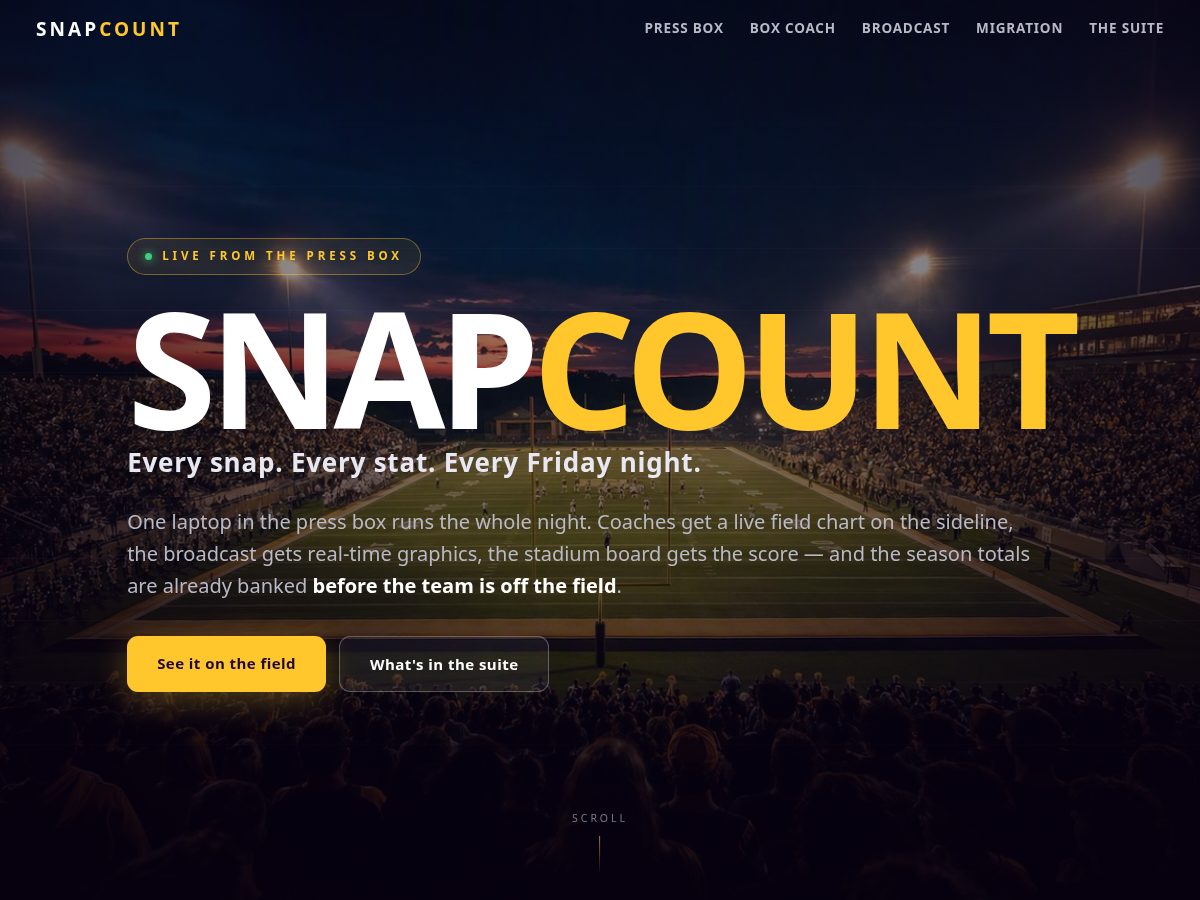
SnapCount treats a high-school football press box as a small but serious data operation: a spotter records each play in seven taps, while coaches and broadcasters receive different views of the same feed. The unusual promise is operational rather than flashy—it keeps running when the Wi-Fi does not, and tells coaches when the sample is too small to support a recommendation.
This is a wonderfully specific challenge: turn England’s coast into a personal running map, starting with 45 point-to-point sections in Cornwall. The copy understands the assignment, especially its insistence that four miles counts as much as forty and that the tracker works without an account.
Nearest Land turns a simple geographic question into a directional survey: each compass bearing follows a great circle to its first landfall. Its unusually candid account of grid size, coastline paradoxes, narrow straits, and island limits makes the results more interesting—and more trustworthy—than a black-box map.
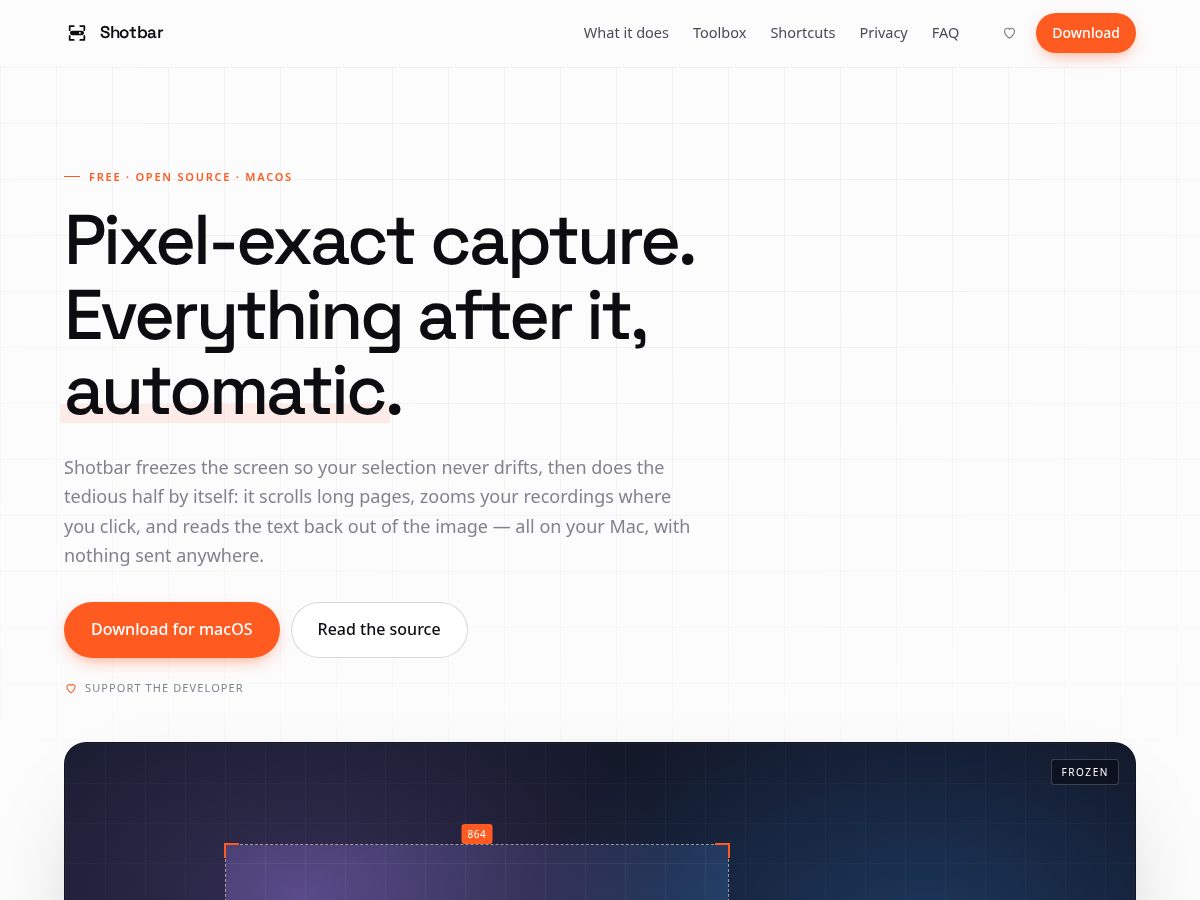
Shotbar is unusually specific about what happens after the shutter goes off: it scrolls long pages, stitches the overlaps, zooms around real click events, and distinguishes recoverable blur from a solid box that replaces the pixels. It also makes a persuasive privacy case with zero accounts, trackers, or uploads, and a very good sentence: “There is no server to trust.”
Rupteur is an unusually specific piece of car software: its homepage describes explosion-by-explosion synthesis, simulated gearboxes, steering-wheel controls, offline operation, and 23 engine models. The Clio V6 is free; the rest of the garage is offered as a €4.99 lifetime purchase.
Bench & Brace turns a rusty estate-sale find into a research problem, with 90 model pages, cross-brand size comparisons, maker-specific dating guides, and explicit uncertainty where the research is unfinished. Its best idea is indexing planes by sole length rather than brand numbering, making a Stanley No. 4 comparable to a Millers Falls No. 9, Sargent 409, or Record 04.
It does more than hand you a template: the checker can quote the offending bullet, flag phrases such as “leveraged” and “results-driven,” and suggest plainer wording. It covers 41 professions and 20 regions, runs in the browser, and keeps the CV on your laptop.
Search വീട്ടിലേക്ക് and the dictionary resolves it to വീട്, or “house, home”—the kind of small but consequential feature ordinary dictionaries often miss. It covers 81,162 words and is explicitly built for Malayalis abroad, English-medium students, and anyone trying to understand a word in context.
ActivityDoctor runs its core analysis locally in a Web Worker, so workout files are not uploaded. One file can move through diagnosis, repair, charting, GPX export, and checksummed editing without handing location, biometric, or device data to a server.
AdeCaBin treats a cabinet project as one connected chain rather than a stack of disconnected screens. Its seven-part map runs from camera-guided room design to machine output, pricing, labels, pallets, and assembly instructions—a rare level of specificity for a homepage.
它不只整理資訊,還把「先停下來查證」做成網站的核心機制:從 000、假房東與欠薪,到郵遞區號初篩和 DASP 粗估,都清楚標示限制與官方來源。網站也提供澳打模擬器、行前清單、存錢試算器與防詐實戰測驗,像一個為特定人生轉場打造的小型安全工具箱。
AviHUD tackles a very specific cockpit problem: keeping essential route information visible without repeatedly looking down at a chart or tablet. It can use AviTracer BRIEF flights or import SkyDemon, Air Navigation, ForeFlight, and Garmin route files, then surface wind and weather details near AviWIND stations.
This is a precise accessibility tool with unusually clear limits: text stays in the browser, the reader does not summarize or interpret, and the original wording remains intact. Its origin is equally concrete—a dated Text to Braille project was reworked after its maker struggled to stay with a son’s thesis.
JointSignal is unusually disciplined about its scope: one condition, one minute a day, and no account or server. It records unanswered questions as unanswered, tracks all 28 joints, and formats three pages of history for a fifteen-minute rheumatology appointment.
Meowtenance makes disk cleanup unusually legible: every project gets its own row, nothing is preselected, and the app measures what was actually removed. Its refusal to quietly delete re-downloadable developer dependencies is both a useful product decision and a small rebuke to the usual one-click-cleaner approach.
Own Lane convierte la privacidad y la progresión lenta en parte central del producto: no tiene feed, cuenta, analítica ni llamadas de red. También explica cada salida en lenguaje claro y esconde por defecto el inicio y el final de las rutas compartidas.
Poseidon builds for the unpleasant particulars of working at sea: wet gloves, night watches, unreliable links, falling overboard, and medical deterioration far from shore. Its Marvital system combines onboard vital-sign monitoring, satellite messaging, drift modeling, fleet-wide alerts, and auditable incident records—a notably human piece of operational software.
Weather Receipt turns a disputed storm into a traceable record: nearby stations, distances, quality levels, archive-file addresses, and a ten-year comparison. Its best feature may be its refusal to fake certainty—it excludes lightning, prints hail’s blind spots, and stops selling records beyond 25 kilometres.
Anytools turns the usual pile of one-off file utilities into a single searchable shelf, with 388 tools listed on the homepage. Its strongest promise is concrete: processing happens client-side, and the page reports zero requests to another server since load.
Voice Log treats accessibility as a chain of small, consequential decisions: one large recording button, crash-resistant audio storage, spoken reading, and a family console that preserves the speaker’s actual voice. Its most striking choice is ethical as much as technical: the companion says it is a machine, not a substitute for family.
WeddingCraftr understands that a destination wedding is not one project but a moving stack of couples, coaches, room blocks, passports, deposits, meal counts, and vendor deadlines. Its copy makes the workflow unusually tangible: a card moves by phase, a shared tick moves the whole team, and the count sent to the caterer comes from the guest response.
This is local geography turned into a community sport: five images from landmarks, back roads, or obscure cul-de-sacs, with points awarded for how close your pin lands. Its creator also gives the game a strong sense of place, down to the submerged Triadelphia mill town and the bell now displayed outside Sherwood High School.
DJ Tracer turns the usually private evidence of a night’s music into a public registry. It reads Serato, rekordbox, VirtualDJ, Traktor, or djay histories every twenty seconds, keeps working offline, and cross-checks the DJ’s record with a club’s confirmation.
Aftermate separates computation from invention: the engine records captures, checks, castles, sacrifices, blunders, and turning points before the prose begins. Its Plus concept goes further, carrying the identities and fates of individual pieces across multiple games—so a knight can die once and remain dead in the universe’s history.
Airplanes.live combines live aircraft tracking with NOAA weather radar, ATC-style scope data, emergency-squawk highlighting, and aircraft photos and routes. Its clearest editorial distinction is also its most interesting one: it says it shows what the network receives rather than quietly removing harder-to-classify traffic, while making an unusually explicit case for not tracking its users.
AllEventCast makes a strong case for treating the phone as an event receiver: it can run alongside an existing PA, reach the lobby or overflow room, and give each listener independent volume and language control. Its unusually candid copy also admits the tradeoff—a stream needs data service and arrives slightly behind the room.
Aman Labs presents a coherent privacy philosophy as a working product family: no ads, no tracking, local data, and offline operation where possible. Its Aman Store verifies package signatures and can distribute apps device-to-device, while the site also links to desktop software, GitHub releases, and a transparency catalogue.
Anychord offers a sharply defined musical shortcut: its neural network estimates the chord at each moment, then shows a large current-chord diagram, the next chord, and a countdown for playing along. The site is unusually candid that complex arrangements can throw the estimate off.
Automagisk replaces workflow diagrams with a sentence: describe the job, inspect the proposed steps, and approve it before anything runs. The page claims eight trigger types, seventeen actions, and access to 1,300 services, while emphasizing local execution and no tracking.
Axon Relay is unusually candid about delivery: “Sealed and waiting” means safe, not delivered yet. Its page also points to a recorded nearby transfer of a 699-byte Capsule to a physical Samsung, with replay blocked and a production request attested.
This is unusually specific browser utility: it recreates the exam-room calculator’s key-driven workflow while also offering ten form-based tools that expose their formulas and produce schedules or charts. The site is a small portrait of modern finance study—part calculator, part exam-prep companion, and part escape hatch for anyone who left the hardware at home.
بيتين turns a familiar room into a small field study: a 75-centimetre viewpoint reveals sharp table corners, loose lamp cords, exposed sockets, and an unlatched balcony door. The Cairo-made project is still preparing for its app-store release, but offers a web trial and a notably clear promise: not a risk-free home, just fewer dangers left unseen.
The app replaces buttons with faces: expressions catch food, blow out candles, collect stars, or scare away ghosts. Its unusually specific parent-facing promise is equally notable—no ads, accounts, in-app purchases, or data collection, with camera processing described as staying on the phone.
B-Side Cast makes a sharp, unusually concrete argument: sell the same night twice, once to the room and once to people who could not attend. Its setup is equally specific—board feed, room microphones, an internet-connected device, Stripe payouts, and a QR code—while the copy openly labels its $5,000 example as arithmetic rather than a promise.
This is more than a product grid: it compares 1,175 models and explains what the numbers mean. Its useful warnings include the 87 of 160 sit-stand desks that stop below 110 cm, and the eight chairs out of 782 that publish seat-height information.
Cabotine makes its operating principles unusually legible: one person maintains ten single-purpose apps, nine require no account, and none has carried advertising. The site also names the maker behind the trading name and explains where servers, sharing, and data policies enter the picture.
Cahier Bi targets a concrete problem in small shops: the paper notebook that cannot explain where money or merchandise went. Its proposed replacement connects Wave and Orange Money with stock movements, credit balances, PDF invoices, and multi-store oversight, with the page even showing figures in FCFA.
Captify makes privacy unusually concrete: the video is decoded, drawn on, and encoded in the browser, while only downmixed audio is sent for transcription. Its copy also explains the tradeoff behind the free tier instead of hiding the machinery behind a generic upload button.
CareCanon treats prescription research as an evidence trail rather than a single headline number: five GLP-1 records link back to prescribing information, while provider entries retain price dates, formulas, and unresolved facts. Its live collection also includes 20 recorded label changes and three provider evidence records.
ChannelFence addresses a strangely specific gap in YouTube's controls: its block list is meant to persist across supported surfaces rather than merely influence recommendations. The extension is open source, local-only, and unusually explicit about what it does not collect—no account, analytics, ads, remote code, or developer-controlled server.
ChaosCut makes a very specific promise and explains the mechanism unusually well: clips fill fixed beat windows, while the timeline still lets you move, trim, replace, reorder, and undo. Its insistence that analysis, editing, and export never leave the phone gives this small editor a clear cultural stance in an era of increasingly cloud-dependent creative tools.
This is an unusually focused record-keeping tool: it compares scheduled and actual times, turns filtered entries into dated PDFs, and writes plain-English summaries such as “5 of 6 timed contacts (83%) started late.” Its privacy promise is equally specific—no accounts, servers, analytics, or third-party code.
This is a small piece of publishing infrastructure for game creators: choose triggers, optionally mark them as described or depicted, assign mild-to-severe intensity, and copy the result as a paragraph or categorized list. Its unusually candid instructions treat content warnings as both player care and spoiler-aware interface design.
CraftM8 treats craft calculation as something that should be auditable: the page says every formula is published, every answer shows its working, and 6,749 worked examples were checked before the latest release. Its first app, QuiltM8, lists 31 calculators, with 26 promised free forever.
The generator explains exactly where its randomness comes from, rejects modulo bias, and keeps secrets in the browser with no third-party fonts, libraries, or analytics. Its unusually candid explanation of why capitalization may satisfy a system without adding entropy gives the tool real editorial presence.
Crew Smart is unusually specific about the post-landing problem it wants to solve: import a roster, identify the actual hotel and arrival, then find something open, walkable, and crew-approved. The landing page also includes thoughtful sharing controls, including a read-only family view that omits hotels and location.
Curabrein turns delayed crashes into something a doctor can actually inspect, comparing daily entries and working out the user’s own typical delay rather than applying a generic study figure. Its creator’s promise is unusually concrete: €9.99 once, no account, no ads, and no internet permission.
This is a concrete AI workflow with a useful constraint: measurements must be supplied or selected from a reviewable US or Brazilian size chart rather than silently guessed. The technical SVG remains the source of truth, while the generated images act as a visual check before fabric is cut.
Deckward extracts the developer, location, unit sizes, prices, payment plan, and handover date, then places them above the attached source material. Its clearest argument is practical: a buyer can open one phone-friendly page instead of storing a folder of PDFs, videos, screenshots, and messages.
Dim Keys turns two missing macOS controls into a tiny, unusually explicit utility: set a maximum brightness and choose a threshold such as under 7, 48, or 120 lux. It is free, open source, under 2 MB, and refreshingly specific about what it does—and what it does not collect.
Disk Orc gives a familiar storage problem an unusually strong character: an orc patrols your Mac, finds what grew, and reports the evidence without deleting anything automatically. It reads file names, sizes, and dates rather than file contents, and the £12.99 launch price covers one Mac with no subscription.
DisplayScale refuses the usual diagonal-size shorthand and asks what the screen will occupy in real life. It ranks options by use case, shows sizes that do not fit, and explicitly avoids affiliate-driven recommendations—a small but revealing act of resistance to product sludge.
Eatreka gives a simple rule to a familiar ambition: eat Vietnamese food in Manchester and tick Vietnam, not the United Kingdom. Its 195-country board turns meals into a running map of what you have—and have not—tasted.
EditFast is unusually specific: it brings Egyptian Arabic transcription, word-level captions, real editable keyframes, multicam speaker detection, and offline project organization into one Premiere panel. The site also explains the workflow in concrete terms, down to opening the extension through Window → Extensions → EditFast.
Exuvia turns an unusually specific hobby into serious collection software: each animal gets a history, care reminders, growth charts, and a QR label for its enclosure. The site also describes an AI assistant that reads photographs alongside journal history, including a sample diagnosis of pre-moult after 42 days without feeding.
This is accessibility tooling with an unusually clear boundary: it changes the view, not the words. The author explains that the idea grew from struggling to stay with a son’s thesis, then builds the tool around local processing, privacy, and exact details such as dates, money, and contact information remaining in context.
FittingKey covers 110 sizes across 10 fitting standards, including JIC, ORFS, NPT, BSP, metric DIN, JIS, and Komatsu. Its unusually careful feature is provenance: dimensions are checked against at least two independent published sources, while disagreements, missing figures, and unsupported pressure ratings remain visible instead of being replaced with guesses.
This is unusually specific product thinking in a small package: the app measures, interprets, and gives one concrete next step instead of dumping health metrics on the user. Its breathing pacer is deliberately audio-only, while the page is careful about limits—it says 4–6 is not a medical device and diagnoses or treats nothing.
FramePad makes an otherwise invisible publishing problem concrete: captions, buttons, progress bars, and navigation can cover the important parts of a vertical video. The page says decoding, overlaying, cropping, padding, and exporting happen inside the browser, with no upload, account, queue, or watermark.
FULBOGRAMA turns the team sheet into a small piece of club identity: names, shirt numbers, captains, substitutes, colors, shirt patterns, pitch styles, and attack direction are all configurable. Its Argentine Spanish voice and explicit routes from F5 to F11 give an ordinary utility genuine local texture.
This is more than a walkthrough: it turns a particular game’s progression into a set of working instruments. The page indexes 49 catches, maps five islands, tracks all 28 achievements locally, and exposes the uncertainty around its Patch 1.0.10 data instead of pretending every detail is timeless.
GradeFlex is unusually specific about the paperwork it wants to replace: marks copied twice, fees tracked in a hardback book, and parents waiting for results. Its sample report card includes a QR code and serial for verification, while the page claims 639 cards can be produced in about two seconds.
Groundwork treats a property as a system rather than a postcard: test a footprint against your own survey and setback numbers, inspect returned map codes, and keep unsupported fields visibly unverified. Its examples include an engineer brief for 332 Exeter Road and a corridor analysis for 7 W Lancaster Avenue.
Horalog asks watch collectors to record what they actually wear, then surfaces the forgotten middle of the collection: the piece sitting untouched for 47 days or the five watches taking up the rotation. Its voice is unusually specific, down to a collection described as having a “Bauhaus head, Seiko heart.”
If Quiet turns ordinary Mac activity into a quiet dead-man switch without recording keystrokes, clicks, apps, documents, or screen contents. Its remote deadline is designed to keep counting even if the Mac is closed, lost, or damaged, while separate messages can go to family, employers, or customers.
This is a genuinely specific way to browse collectible art: search for “melancholy city at night,” match cards to an uploaded image, or generate a nine-card binder spread around an art direction. The homepage organizes the archive into visual groupings such as Shadow & Night, Cosmic, Ice & Frost, and Fire & Ember.
Most consumer-genomics services ask users to accept opaque data practices; Inherit makes its boundaries unusually explicit. The homepage says files go to private storage, reports disclose coverage and sources, there are no trackers or third-party analytics, and the code is available under AGPL-3.0.
Most video calculators price a successful render; this one prices the footage that survives the edit. Its model is unusually concrete, tracking generated clips, accepted outputs, provider billing rules, and an extensive catalog of AI-video routes.
Intake Bench makes its pitch with a concrete Sunday-night exchange: a prospective client texts after a Kennedy crash, answers a few intake questions, and leaves with a Tuesday consultation. Its unusually specific boundaries are part of the product design: it says it never texts first, never takes a cut of a case, and never gives legal advice.
Ironstile is unusually specific: it starts with the daily machinery of a butcher shop rather than a generic dashboard. The site names its price, its white-glove setup, and the two people who will call you back.
Murmur replaces the spreadsheet with a sentence: say “Eight dollars at Lay’s” and the app identifies the amount, merchant, intent, and category. It keeps speech on the phone, offers CSV, JSON, and PDF exports, and presents a month’s spending as a navigable map.
It turns Garmin’s health, activity, battery, sunrise, sunset, and timekeeping data into a piece of medieval-game fan equipment, complete with buffs, debuffs, and warnings about getting lost in the woods. The site has enough surrounding texture to feel like a real one-person project: downloads, compatibility notes, guides, changelog, updates, and a request for Garmin owners to identify which models should come first.
LayFirst connects three jobs that usually live in separate tools: measuring, calculating, and presenting. Its calculator optimizes the first and last plank rows rather than merely minimizing waste, then exports a watermark-free PDF with the layout, material list, and cut list—even when the installer has no signal.
LenZA turns facility spreadsheets into a nurse's morning action list, with six automated follow-up queues and support for 131 clinical fields across five tabs. Its unusually concrete constraints—137,000-plus records, unreliable connectivity, biometric identification, and PEPFAR-ready reporting—make this more than a generic healthcare dashboard.
This is more than a truth-table widget: one expression can produce equivalent forms, a circuit diagram, a Karnaugh map, and a semantic tableau proof. The site also offers 16 guided lessons, adaptive exercises, and a truth-table-to-DNF/CNF converter, while stating that calculations remain client-side.
MandoSab is unusually specific about the working day it serves: eight large actions cover selling, collecting payments, expenses, stock transfers, customers, products, and reporting. It is designed for unreliable connectivity, with the site describing local phone storage, automatic synchronization, and duplicate-resistant invoice handling.
Masr Pocket turns the small frictions of visiting or living in Egypt into concrete tools: editable EGP conversions, trip budgets, bill splitting, metro fares, fuel costs, and everyday phrases. Its local texture is unusually strong, down to phrases for requesting an official receipt, refusing spice, or asking a driver to stop.
MediaBako does a surprisingly large amount of media housekeeping locally: image compression and EXIF removal, PDF-to-image conversion, video cutting and joining, audio extraction, and more. It says the work runs in the browser through WebAssembly, WebCodecs, FFmpeg, and hardware encoders, with no account or per-use limit.
Meiny turns an old tablet or spare monitor into a household display without extra hardware or a monthly fee. Its unusually specific details—children can have profiles and chores without accounts, recurring tasks roll forward, and meal plans compile into shopping lists—make this feel like a real domestic workflow rather than another generic productivity app.
Mochi 98 turns language study into a complete little computer environment, with offline dictionaries and grammar libraries for five Asian languages alongside a match-three character game, sticky-note boards, office tools, and spaced-repetition cards. It is unusually specific, downloadable for Mac and Windows, and explicitly makes its AI assistant optional.
modi-fi makes an unusually clear promise: analyze your voice in real time without recording, accounts, analytics, ads, or third-party SDKs. Its homepage also treats privacy as part of the product, keeping audio and saved clips on the phone while adapting exercises for feminizing, masculinizing, androgynous, or general vocal goals.
Lanes replaces the browser's usual speed-dial grid with a deliberately constrained canvas: up to six lanes, groups with their own height limits, and a keyboard launcher that searches links, boards, groups, and actions. It needs no account and says the data stays in your browser, making the product unusually clear about both its workflow and its boundaries.
This is unusually specific product thinking for a sleep app: one-tap logging, offline use, easy correction, and recommendations that show their confidence instead of pretending every baby follows an average. Its evidence section names the paediatric studies behind the numbers, while the copy understands the particular misery of making decisions at 4am.
OBITRAGE turns a scattered auction landscape into a live price picture: its homepage lists 2,587 VEBEG records, 5,031 historical awards, and comparisons such as a 2,111 € reference against a 7,300 € free-market price. It is a particularly concrete example of software extracting market intelligence from public administrative data.
Onsen Quest answers the questions that can turn a relaxing Japanese bath into a logistical problem: 295 baths checked, 92 listed as accepting tattoos in some form, and 87 ryokan offering day visits. Each entry says what the Japanese source reports, including when the policy is unpublished.
Onwords tackles a sharply defined recording problem: instead of forcing speakers to match a scrolling timer, it pauses, holds position through ad-libs, and catches up when they skip ahead. The unusually thoughtful details include offline operation, mirror mode, second-screen support, and tinted lines for two presenters.
Home Stream reads an existing library without renaming files or writing into media folders, then builds the missing layer of posters, metadata, playlists, watch history, and family accounts. It is currently in beta, but the page gives unusually concrete evidence of a working system: a Raspberry Pi 5 deployment, a single SQLite file, automatic updates, and a strict promise to keep the collection on the home network.
OpenSubs does subtitle production locally: Whisper runs in the browser, styling previews use the actual footage, and WebCodecs exports a finished MP4. The privacy model is unusually concrete—the page says the video has nowhere to go, while cloud translation is the only optional path for subtitle text to leave the device.
Ourlet takes a tiny, familiar irritation—an advert printed beneath a shipping label—and turns it into a sharply scoped utility. Its strongest promise is also its most testable one: switch off Wi-Fi after loading the page, and the label still gets processed on the device.
Our October replaces streaks and optimization with pumpkin carving, flashlight ghost stories, decorated-cookie contests, and other deliberately small rituals. Four setup questions adapt the suggestions to a household’s space, participants, plans, and constraints, while photos and names stay on the device without an account.
Parvio is unusually specific: it pulls parcel boundaries from TKGM records, places them over photorealistic 3D terrain, and renders horizontal, vertical, or square MP4 footage. The pitch is refreshingly concrete—no drone, crew, or filming permit—and the product explains its workflow down to camera distance, tilt, duration, and smoothstep easing.
PayeRewind targets a specific blind spot in the UK tax system: coding errors that can persist without an obvious warning. It asks users to copy one page from their HMRC Personal Tax Account, keeps the figures in the browser, and rebuilds each year independently rather than asking for an account or an upload.
PDVoice Buddy addresses a quietly difficult problem: Parkinson’s can lower a speaker’s sense of what normal volume feels like. The app turns that gap into one unobtrusive signal, while discarding loudness data immediately instead of recording it.
Peanut Butter makes pace coaching feel like a tiny piece of relationship theatre: slow down and your arch-enemy gains ground, hold pace and someone who loves you takes over. Its post-run timeline also marks where each taunt or encouragement appeared to change the split.
This is unusually focused public-interest plumbing: it walks someone through plea, likely sentence, representation, possible defences, exceptional hardship, and totting risk. The tool says it takes two to three minutes, requires no sign-up, and is written by a practising barrister, while clearly warning that its estimates are not legal advice.
This is more than a fan landing page: it combines a chronological account of the trading card game's evolution with a searchable catalog and USD/HKD price references. Its curated list of high-value cards ranges from Pikachu Illustrator to trophy cards and prototype prints, while clearly warning that the figures are reference prices rather than investment advice.
Portfolio Maker rejects templates and grids in favor of a page with edges: drag images into place, split pages wherever you want, and let everything reflow. It can read pictures from a folder on your machine, keeps the originals untouched, and pairs the layout tool with optional AI image editing.
QaiMa treats the menu as something physical: folded, bound, priced, and ready for a Dubai print shop. Its 15 visual designs, Arabic-English typesetting, and promise that dishes remain reusable data give the product a concrete workflow—and the page presents that workflow with unusually good copy.
Quidder splits an auction invoice’s hammer price, VAT, buyer’s premium, and delivery across every item in the lot, then subtracts sale fees and postage to show the real profit. Its founder says the tool runs alongside a real UK reselling business, giving this unusually narrow accounting problem some useful human texture.
RelicPlot refuses to treat a promising map pin as useful until someone has checked whether it can legally be searched. Each lead exposes its score, source, confidence, access category, restrictions, and verification date—then the $5-a-month plan carries those plot cards into the field.
Second Bell turns five official procurement records into a compact evidence ledger covering buyers, winners, terms, lots, values, and what the notices leave unknown. Its most useful restraint is explicit: it does not pretend that an award proves supplier demand or access to work.
Shelfglance turns an emerging commerce question into a measurable audit: it checks crawler access, structured data, HTML content, sitemaps, metadata and llms.txt. It is also unusually explicit about the limits of referral data, noting that Google AI Overviews cannot be separated from ordinary Google traffic.
SivaTools tackles a precise modeling blind spot: plaster that exists in the building but not in the Revit model. Its evidence page follows one run through 158 generated elements, nine cut openings, native scheduling, and quantities that trace back to inspectable geometry.
The site combines photo-based identification with a curated 68-species field guide and unusually candid confidence bands: Likely, Possible, or Uncertain. Its health triage also starts with desert-specific problems such as sunscald, salt burn, iron chlorosis, and overwatering rather than defaulting to generic disease advice.
Splitshelf turns a familiar consignment headache into visible arithmetic: log what was delivered, compare the shop's report with the remaining stock, and surface a discrepancy such as “2 unaccounted.” Its maker-specific framing, signable drop-off sheets, CSV export, and exact worked example give this small tool unusually clear purpose and texture.
Subfile gives file privacy a memorable physical trick: the carrier file still plays or opens normally while the encrypted vault sits inside it. The page also makes the product unusually concrete, showing a vault of contracts, IDs, tax files, and seed phrases alongside a one-time $29 license.
This is unusually concrete browser automation: one workflow keeps a dashboard current in a background tab, while another processes a link queue in the same tab. Its boundaries are clearly stated—it runs from Chrome’s side panel, on the user’s computer—and the reference covers actions from clicking and typing to screenshots, conditions, saved values, and webhook alerts.
The Booth applies each league's exact scoring rules and draft history before delivering the jokes, rather than handing every manager a generic grade card. Its sample report moves from quarterback hoarding to a team called National Allenism, with every punchline tied to real picks.
boxom turns unpacking groceries into a ten-second routine: scan the barcode, read the date aloud, and say where the item lives. Its unusually practical twist is portability—the inventory can be exported as a structured file for meal planning or shopping integrations, rather than being trapped inside the app.
Tradesplain refuses the usual sourcing-agency funnel: it takes no orders, puts formulas and data dates beside its tools, and writes from Henan, inside the supply chain. The homepage already offers a landed-cost calculator, a 1688 price converter, and a 42-point factory-audit checklist, while more tools wait in a plainly labeled queue.
Turath is unusually explicit about its method: it presents texts, chains, scholarly judgments, references, and disagreements without positioning itself as a source of legal rulings. The homepage describes 114 Quranic surahs, 18 tafsir works, 4,210 narrators, 83 biographical events, 2,559 jurisprudential questions, and eight complete commentaries.
Understory makes reflection deliberately hard to rush: one annual prompt, four possible journeys, and six tree stages spread across thirteen years. Its strongest promise is also its sharpest constraint—answers stay on the phone, with offline use, export, and no account or analytics.
UploadFixer targets the unglamorous mechanical reasons online portals reject files, including size caps, HEIC photos, unflattened forms, and exact pixel limits. It says files stay on the device, with no account required, and pairs the tools with a requirements directory and practical guides.
UspendItrack turns statement PDFs from DBS, OCBC, UOB, Citibank and PayLah into categorized spending data without a server, account or sync layer. Its unusually explicit privacy model—and its one-time $5.99 price after five free imports—gives this otherwise familiar finance tool a clear point of view.
Verso replaces accounts and cloud lock-in with a local library, on-device progress, highlights, bookmarks, and adjustable reading layouts. The promise is unusually clear: open your own books, keep them in Safari, and let nothing leave the device.
WakeTrack is unusually specific without being obscure: it covers cable and boat riding, explains 231 tricks with stance-aware board diagrams, and connects Garmin or Apple Watch data to sessions. The page also sketches a social layer of park check-ins, crews, anonymized heatmaps, and riding partners.
This is unusually substantial for a Windows utility homepage: it reports 12.8k+ GitHub stars and 1.8M+ downloads, then backs up the pitch with documentation, configuration import/export, and advanced tools for building custom installation media. It is the kind of focused system utility that can save a fresh Windows install from hours of manual cleanup.
WithholdWatch turns a famously delayed administrative problem into a mid-year warning: its calculator shows when a contractor crosses the $2,000 threshold, applies the stated 24% backup-withholding rate, and identifies the payments involved. The copy understands the real drama here—not the form, but the date.
Wozer adds a listening layer to familiar projection software: it transcribes speech locally, stages a suggested slide, and leaves the final projection to the booth operator. The unusually specific promise is privacy as infrastructure—no cloud API, no audio leaving the building, and no subscription to run the booth.
Yumo turns habitual screen-checking into a small vocabulary lesson: choose a rhythm, then encounter words from N5 through N1 without streaks, accounts, or network requests. The page is unusually candid about its limits—Android gets a Home Screen widget because Android does not have Lock Screen widgets—and offers a one-time Pro price rather than a subscription.
ZapASnap tackles an ordinary but consequential sharing problem without asking users to upload their photos: the editor runs in the browser and rebuilds a clean copy without the original EXIF data. Its unusually clear warning that privacy blurring is not guaranteed—and that users should inspect the finished image—makes the tool feel more considered than a typical quick-edit utility.
Fama Essence turns local fuel sightings into a live availability map covering 789 stations across all 24 governorates. Reports expire after six hours, and the site can sort nearby stations and plot a route without requiring an account.
This is a sharply focused tool for an unmistakably urgent task, built from 273 City of Vienna records. Its best detail is its refusal to fake certainty: missing prices remain “Not specified,” and the site explicitly says it does not invent live cleanliness data.
Kioskbase makes a persuasive case for its existence in kilometres and diesel: one avoided 200 km call-out is presented as roughly €80, against a starting price of €3 per device per month. The copy is unusually specific about the Friday-afternoon failure modes it wants to eliminate.
This is a tightly focused reading tool, not just a page saver: it preserves ruby text, illustrations, chapter structure, and Japanese vertical typesetting, while processing the novel in the browser rather than sending its text to the service's server. The site also plainly states that it is unofficial and limits saved files to private use.
ONTI treats a wedding, conference, or group tour as the same underlying problem: everyone needs the plan, but not necessarily all of it. Its example wedding timeline assigns owners, participants, informed guests, live status, notes, and even a tactful reminder that Lewis has two left feet—then sells publishing for £9.99 per plan, rather than a subscription.
Outworked turns repository activity into a public score using consistency, volume, and recent momentum. Its small but concrete board currently shows two products, making this a promisingly specific answer to the question of who is actually building.
This is unusually specific about what its software is doing: project files are readable JSON, the audio engine is built around real-time constraints, and the AI produces notes a musician can revise. The page even publishes a measured 133 seconds of continuous playback with zero missed callbacks and 1.1% worst-case load.
Pocket Mushaf treats distraction-free reading as a hardware problem: five buttons, weeks of battery, USB firmware updates, and no network or account to maintain. The device claims to preserve the King Fahd Complex script, ornaments, and layout while storing your place by surah and ayah rather than page number.
Second Trace treats uncertainty as data rather than an inconvenience: disputed, approximate, and unknown states remain visible, while every claim is meant to carry a source and exact location. Its refusal to score guilt or turn allegations into facts gives this unusually specific investigative tool a clear ethical architecture.
AkiyaBeacon turns a scattered, Japanese-language property hunt into a browsable starting point with source links, update dates, regional filters and buyer guidance. Its listings range from a ¥1.5 million five-room house in rural Hyogo to a pet-friendly ¥83,000-a-month rental in Hokkaido, while clearly warning readers to verify the original listing.
This is unusually specific utility: the main calculator scores each event out of 500, shows the 60-point floor, and identifies the cheapest next point. The site says its figures come from published Army directives and dates each page's last check.
This is a bird-identification tool with an unusually explicit privacy posture: no account, no audio upload, optional rounded location, and offline regional models. The homepage’s interactive demo is a prepared soundscape rather than a live microphone test, but the product thinking is unusually concrete for an app that is still marked “Coming to iPhone.”
BuildMetrio turns measurements into purchase-ready estimates for concrete, tile, brick, drywall, paint, roofing, insulation and electrical work. Its useful little principle is transparency: units, waste allowances, coverage assumptions and formulas stay visible instead of disappearing behind a single unexplained number.
The site turns indecision into a small act of surrender: enter your city, spin, and accept a place or activity with a rule attached. Its refusal of feeds, accounts, AI recommendations, and influencer logic gives an ordinary local-discovery tool an unusually clear cultural stance.
ClubLayer OS makes a specific contrarian promise: no app-store hunt, account, password, subscription, or change to the club's books. Its copy follows one Thursday night from a member's text to the shop's morning sheet and the bookkeeper's month-end file, revealing how much software can hide inside a supposedly simple club game.
Cruiseavoid turns port schedules into a practical question: which day might be quieter? Its strongest feature is evidentiary honesty: each entry identifies its source, marks schedule confidence, and distinguishes reported calls from passenger figures modelled from berth capacity.
Cutaway offers fifty assets built around one restrained motion language, from an odometer to a price drop. Enter your numbers, then export transparent ProRes 4444 files designed to land directly in an editor's timeline.
The workflow is unusually concrete: choose a size and height, adjust the length, then arrange artwork across the front, back, and sleeves. It even explains that separately printed panels are not meant to connect across the seams—a small, useful piece of production knowledge.
This is unusually concrete infrastructure software: enter racks or individual devices, choose N, N+1, or 2N UPS redundancy, select a receptacle, and get cooling, electrical, and circuit-loading checks. It also explains its assumptions instead of hiding the math behind a single confident number.
DG Advantage combines offline game charting with immediate reports and a shared opponent-scouting network. Its unusually careful details include one-tap error correction, sample-size reliability badges, consent-gated player names, and data protections for minors.
Dim Keys addresses a small but real gap in macOS controls: the brightness limit and light-sensitivity threshold can be adjusted independently. It is under 2 MB, open source, signed and notarized, and explicit about making no analytics or telemetry requests.
Drive Wheel maps clock time to the circle’s angle and field position to its distance from the center. Drives, snaps, penalties, turnovers, scores, and the running score become one compact diagram, with the Chicago–San Francisco game from Week 17, 2025 as the worked example.
This is unusually specific industrial software: the simulator combines interactive single-line diagrams with equipment states, interlocks, alarms, protection events, scenarios, reporting, and performance review. The company says the product has been used by 13 regional electricity organizations, giving the browser tool a concrete foothold beyond the usual software-demo page.
Eskema makes a clear promise: invoices, contracts, and notes become structured text without leaving the device. Its three operating rules are unusually concrete—flag uncertainty, preserve the original separately, and process everything locally—while the bilingual presentation gives the product a finished, deliberate shape.
Good Ears turns sight-reading into a small progression game: exercises are eight bars long, never repeat, and ten perfect runs unlock the next level. It supports a notably broad instrument list, including transposing winds, guitar, piano, violin, and voice, while claiming that microphone audio stays on the device.
This is a concrete answer to a familiar domestic problem: the box of prints nobody wants to mail, scan, rotate, label, or organize. The site’s strongest detail is its workflow—photograph several prints at once, let the system separate and sort them, then place the result in the family’s own Google Drive.
Debi treats delivery-platform overload as a throttle problem rather than an emergency shutdown. It watches open orders across channels, then adjusts preparation times, delivery areas, delivery windows, or—only as a last resort—the store status.
This is a sharply bounded alternative to the usual deliverability dashboard: pay $129, send one domain, and receive a 4–6 page report within 24 hours. Its sample finding quotes live DNS records, identifies missing SPF coverage, and ranks five fixes without pretending to have sent a test email.
GiftYathra treats a digital gift as something to move through rather than simply scroll past: unwrap a 3D box, play a short challenge, solve a photo puzzle, answer private trivia, and reach the final letter. The same studio also offers memory albums, wedding invitations, video exports, instant cards, and 19 occasion-specific journeys.
Hold My Notes has a wonderfully physical interaction model: a 12-point pill rests at the edge, then its notes shingle out 45 milliseconds apart when you reach for them. It also takes ownership seriously, offering local encryption, plain-file export, and optional folder-based sync instead of a proprietary notes server.
The pitch is unusually concrete: frame a receipt, let edge detection flatten it, and export a PDF in two taps. Its free tier remains genuinely usable, while Pro adds on-device OCR and reusable signatures for either a $29.99 purchase or a $19.99 annual subscription.
FabricCalc focuses on the details that make fabric calculations unexpectedly difficult: grain direction, nap, pattern repeats, and half-drop matching. Its pages promise a cutting list and layout diagram alongside the yardage estimate, giving a practical sewing problem more attention than a generic rectangle calculator.
This is more than a file uploader: it offers desktop, tablet, and phone previews, a preflight check for secrets and local-only links, and same-URL updates for an ongoing review conversation. It also covers unusually practical handoffs, from AI-generated pages and email previews to reproducible QA bugs.
This is more than a standard doctor profile: the site includes ten small tools, from a pregnancy tracker and contraction timer with a 5-1-1 alert to breastfeeding logs, symptom diaries, BMI calculations, baby names, and downloadable birth certificates. It also states that saved data remains on the user’s own device.
HVAC Core knows its audience unusually well: it calculates superheat and subcooling from refrigerant tables, works in PSI or bar, and includes error codes for more than forty brands. The pitch is less “software for every trade” than a digital clipboard for the person arriving at a roof with twelve identical condensers.
HyFiTrack keeps InBody, DEXA, and other scan methods in separate trends, flags readings affected by fasting or dehydration, and asks users to review extracted fields before saving them. It is also unusually specific about workouts, from Orangetheory and F45 to Planet Fitness machine instructions, while remaining a private household TestFlight build.
The site turns a current internet anxiety into a concrete instrument: paste in a URL, receive a score, inspect the evidence, and get a repair prompt. Its candid warning that the matcher is “confidently wrong sometimes” makes the tool feel less like an oracle than a cultural diagnostic with receipts.
Kaitaku replaces the usual stack of separate apps with a 26-step route covering kana, kanji, vocabulary, grammar, handwriting, and spaced repetition. Its beta page is unusually specific about the experience: N5 stays free, there are no ads or accounts, and missed days receive automatic streak grace rather than a guilt trip.
KeySlice treats typing practice as a motor-learning problem rather than a race for a higher average speed. It records correctness and timing for each keystroke, then steers the next drill toward weak or slow keys—without an account, download, or fixed generic lesson list.
The site is built around a precise practical gap: helping players use trade information on smartphones when desktop apps are unavailable on PS4 and PS5. Its maker returned to the game after 16 years and is rebuilding the missing utilities one small service at a time.
Liftly Pro understands that the important moment in a workout is not the dashboard but the next set: weight and reps carry forward, warm-ups stay out of volume totals, and the rest timer starts itself. It also promises unusually serious data handling, including JSON, Markdown, and CSV export and on-device encryption for progress photos.
Lightphrase turns rewriting into a small interaction: select text, press Ctrl+Alt+R, and sweep toward retone, translation, summarization, or grammar correction. Its privacy promise is unusually concrete—the tool says the text stays on your computer—and the action wheel, clipboard restoration, keyboard controls, and custom tones give it more substance than a generic AI writing button.
LocalRender turns the browser into a small private video workstation: its homepage says files are read, processed, and saved on the user’s device, using local CPU and GPU resources. The promise is unusually concrete—no upload step, no cloud queue, and support presented for 20GB-plus videos—making it a useful counterpoint to the cloud-everything default.
This is more than a single calculator: one expression can produce properties, equivalent forms, a Karnaugh map, a circuit diagram, and a semantic tableau proof. Its 16-part learning path and practice exercises turn a traditionally forbidding subject into something people can test, study, and revisit in the browser.
This is more than a fractal wallpaper generator: it exposes the iteration function itself, supports operators from complex logarithms to Riemann zeta, and offers deep zoom up to 10^1500. The result is a rare public tool that treats mathematical play, visual art, and experimentation as the same activity.
Mirador has a sharply defined job: put selected UniFi cameras on the Mac at a front desk, in a wall or slim strip, and let staff use the window without touching the underlying account. The unusually specific privacy pitch—no telemetry, no cloud, no open ports—makes this a good specimen of deliberately boring software.
Mon plan de classe transforme une liste Pronote, EcoleDirecte, Excel, CSV ou un simple copier-coller en arrangement imprimable. Il sépare les bavards, place les élèves ayant un PAP ou un problème de vue, respecte les binômes — et explique en français ce que l'algorithme n'a pas réussi à satisfaire.
It tackles the unusually specific misery of university administration: preventing 30-minute session ejections, filling courses with one click, and watching full classes for an opening. The site says it has been checked on Neptun installations at 22 Hungarian universities, with full feature testing so far at BME.
Once Counts turns a birthday and a chosen reference age—80, 90, or 100—into a personal calendar of finite occasions. Its most deliberate feature may be the restraint: one daily intention, quiet optional reminders, local device storage, and a stated goal of sending users back into real life rather than keeping them in the app.
This is a genuinely specific piece of freight-planning software rather than a vague calculator: it supports EUR/EPAL, GMA, CHEP, ISO, Australian, Asian, and several custom pallet sizes. Its packing logic tests three arrangements—including a pinwheel pattern—before applying height and weight limits.
PdfWren singles out a wonderfully concrete problem: hitting 200 KB, 1 MB, or another imposed limit. It says compression can land within 2% of the target, while files stay on the device and never get uploaded.
PocketTrio proposes a rhythm section rather than a metronome: its page says the trio can listen through the device microphone and voice a player’s notes over its own chords. Six styles, jazz-specific chord entry, chorus-by-chorus shaping, and on-device audio analysis make this a notably concrete musical tool still awaiting its App Store arrival.
Its first-class input is the badly photographed paper résumé: the tool accepts up to twelve files, shows what it read beside a live A4 preview, flags uncertainty, and leaves the recruiter in charge of corrections. It also makes an unusually concrete privacy promise—candidate files are handed over and kept nowhere.
Proficiency Hours refuses to invent a universal number: its live entries trace figures to primary sources, including State Department language training data, chess research, and a 1993 study of violin and piano practice. It also marks the boundary between measured evidence and unanswered questions, from guitar to programming.
RebuildAlert targets a sharply defined gap between FEMA’s daily project worksheets and the moment a public-works bid appears. Its public teaser already lists large recent obligations, including an $87.3 million New Mexico debris project and a $25.1 million utilities project in Nebraska.
Replaytape is unusually explicit about the boundary between observation and action: an armed rule can raise a signal or notification, but it does not place an order. Its careful separation of policy, holdings, and unspent cash gives the product a distinctive operational idea, while cost and sample-size reporting keep the replay from becoming a simple return-number machine.
This is a compact but unusually tangible sailing exercise: the page models boat speed, heading, VMG, heel, leeway, apparent wind, waves, gusts, fog, rain, and squalls. It also explains the sailing logic behind the controls, including when to ease the sheet and reef as the boat heels.
SCOPE makes a persuasive case for replacing seven disconnected systems with one controlled record, illustrated through a concrete sample job: 36 photos, 214 scope lines, eight material orders, two changes, and preserved signatures. It also names its first live workspace, Ahlers Commercial Roofing and Construction LLC, giving the product more operational texture than the usual vaporware landing page.
ScreenK9 treats screen sharing as a boundary-design problem rather than a matter of remembering which tab is open. Its copy is unusually explicit about the limit: share the Audience View, not the physical display, while personal Chrome, Slack messages, Telegram, and uncertain browser windows remain on the Mac.
This is unusually concrete consumer software: answer eight questions or upload a lease, inspect the letter before paying, then get tracking and a delivery timeline. Its state-by-state table foregrounds deadlines, penalty multipliers, and deposit-interest rules instead of hiding the legal machinery behind a generic form.
SemSync is unusually specific about the work it automates: DJ sets get cuts on drops and crowd reactions, while podcasts and conferences get speaker-focused edits. The Italian-language site also offers a free beta for Windows and Mac, with DaVinci Resolve Studio required.
This is a gardening tool with an unusually precise sense of place: it treats seven miles of San Francisco as a patchwork of distinct growing conditions. Its quiz asks about Karl the Fog, neighborhood-level warmth, direct-light hours, containers or beds, and the directions a garden faces before promising a tailored planting calendar.
This is a concrete answer to the problem of keeping up with sources without drowning in updates. Its public demo shows a real workspace with seven use-case profiles, source links on every item, and explicit warnings when monitoring itself fails.
Its central insight is wonderfully concrete: a recipe bookmark is not the same thing as dinner. Paste a recipe from a blog, caption, or video description, cook it in a kitchen-friendly mode, add a photograph or note, and the site builds toward a book of what you actually made.
This is a narrowly defined tool with unusually concrete controls: frame rates, aspect-ratio presets, brush texture, line branching, glow, noise, and test-stage blur effects. Its update log records active development through August 2026, while the site says imported background images are processed in the browser rather than stored on its server.
This is unusually thorough aquarium math: it subtracts glass thickness, waterline clearance, substrate displacement, and rocks or driftwood, while also accounting for water held in filters and pipes. The page explains why a nominal 60cm tank can contain about 52.4 liters with substrate, rather than treating the catalog dimensions as the answer.
Dottie turns tab overload into a four-stage emotional weather report, from Zen at 1–3 tabs to Chaos at 21+. She never nags; she cheers when you close a tab, rolls over when you hover, and accepts clams through Ko-fi.
This is bookkeeping built around the messy detail of a real receipt: the crew names the client, the office splits the purchase across jobs, and the tender line determines whether QuickBooks receives a bill, card charge, check, or debit. The copy is unusually clear about what happens before anything posts.
Tamrey turns an event’s headcount, venue, and operational constraints into a concrete deployment packet, including printer counts, badge overage, access points, circuits, staffing, and dated purchasing deadlines. Drafts are free and unlimited; the complete packet costs $29, with a $7 schematic add-on.
Tessuma turns arithmetic into route-finding: every move changes both the sums and the shape of the path. Its unusually careful presentation includes a practice mode, archive, hints, accessibility links, and a claim that each puzzle is checked by both a TypeScript solver and an independent OR-Tools model.
The Exit turns the subscription economy’s most irritating ritual into a searchable reference work: 350 cancellation playbooks, organized both by company and by cancellation method. Its blunt promise—“They built a maze. We sell the exit.”—gives a small piece of consumer infrastructure an unusually clear cultural voice.
This is unusually concrete compliance software: it carries forward an accepted filing, compares it with current inventory and SDS records, and attaches each threshold decision to a source, calculation, rule version, and citation. Its central tension is neatly stated on the page: the rule calculation is federal, but the finish line is local.
Sổ Kép is built around a genuinely difficult accounting problem: regulations change in fragments, and an invoice may need one rule when issued and another when amended. Its proposed workflow keeps the source document beside extracted data, shows the relevant legal clause, and flags older entries affected by later rule changes.
Ureyuki turns government transaction records into a neighborhood-level map of what actually changed hands, rather than another site promising an appraisal or a prediction. Its 309 listed districts contain 121,082 transaction records, including a reported 11.6-fold spread in median condominium prices per square metre between Tokyo neighborhoods.
Vizqon offers 21 adjustable visualizer styles, including a tunnel, spiral, waveform rings, and wireframe terrain, then renders the result as an MP4 up to 4K at 60fps. The unusually concrete promise is that audio decoding, analysis, and rendering happen in the browser, with no signup and no upload step.
WeeklyCertified targets a very specific piece of construction paperwork: entering crew hours, overtime, fringe credits, deductions, and compliance data into the current January 2025 WH-347. The free generator runs in the browser, while paid plans add saved crews, copied prior weeks, project passes, and an encrypted payroll archive.
Where To BTO lets prospective buyers choose up to two regular destinations, drop a custom workplace pin, and screen 22 projects against MRT stations, hawker centres, healthcare, schools, and parks. Its dated official snapshot and explicit straight-line methodology give the housing search a useful local mechanism rather than another generic property list.
Aperio turns a night at the telescope into a four-step workflow: plan, verify, score, control. Its unusually concrete stack reaches from SIMBAD, VizieR, Gaia, 2MASS, and AllWISE to ASCOM Alpaca, INDI, and LX200, while the Ankara-based four-astronomer team is pursuing TÜBİTAK's next evaluation stage.
carpAintry sketches an unusually concrete loop: register glasses to a room, capture planes and openings, update the model, nest cuts against real stock, then send labeled bundles to the jobsite. Its promise of 30–70% less scrap and better first-time fit is still presented as a target, but the workflow is specific enough to make this more than another vague AI pitch.
Consensuss turns the comment section into a lightweight verification layer: it can inspect up to 200 comments, separate repeated evidence from one-off outrage, and optionally cross-check the result against a cited Reddit thread. The site says analysis happens directly in the browser with the user's own model-provider key and no account.
This is an unusually specific tool with unusually specific evidence behind it: its branch-and-bound results are checked against exhaustive enumeration, including all 171,531,360 arrangements for a 17-card hand in two rules presets. It also draws a clear boundary around use, presenting itself as an off-table study aid rather than real-time assistance.
Acorn is a pointed response to the era of meeting bots: it says no bot joins the call, notes stay on the machine, and any AI provider is accessed through keys the user controls. The private-beta page makes a specific promise about keeping the meeting—and its transcript—out of Acorn’s cloud.
Karreta Guide turns a road trip into a self-paced narrated journey: download a route over Wi-Fi, connect to the car speakers, and let the phone trigger audio at each stop. Its copy is unusually grounded, from warnings about 4x4 roads and park reservations to the question of which soda serves the best casado.
LiveCast Now pitches a concrete revenue layer for events that already have a venue, PA, staff, and audience: put a QR code on the ticket or seatback and sell access to additional audio. Its calculator is unusually candid about the unknowns, labeling the default 8% take-up rate a placeholder rather than pretending it is a forecast.
Instead of starting with a bill of materials, OpenLab starts with what is already in the lab. Its workflow connects reviewed inventory, drawer locations, alternatives, wiring checks, and a proposed KiCad schematic—an unusually concrete answer to the question: what can I build with the parts I actually own?
This is a sharply defined remedy for a strangely modern nuisance: Walmart’s recipe pages interleave cooking instructions with product photos, prices, substitutions, and cart prompts. The extension keeps the recipe text, scales quantities into practical fractions, and hides the site’s advertising when the result goes to paper.
Alunima proposes a notably specific alternative to enterprise production software: reviewers draw on separate layers, compare poses and versions, inspect motion paths, and play approved sequences from a shared folder. Its stated model is equally clear—buy once, use your own computer, server, NAS, or cloud storage, and keep project data out of Alunima’s servers.
AskMyTele targets a very specific modern problem: dozens of channels, a few useful posts, and no practical way to find the one you half-remember. Its page is unusually candid about the boundaries—private chats stay out, posting is disabled, and the software is explicitly labeled alpha.
The live-looking example sorts correspondence from Burna-Buriash II, Rib-Hadda of Byblos, and Abdi-Heba of Urushalim into Customers, Investors, Hiring, and other folders. It is a practical inbox tool with an unusually committed Bronze Age demo.
The unusual proposition is operational rather than flashy: a merchant can send product photos, prices, or even a voice note to WhatsApp, and the bot prepares a store. The page also shows the whole path from a shared product link to an order, shipment issue, and customer update—commerce increasingly managed as a conversation.
Chip turns bargain hunting into a tiny conversation: in the example, it finds the same SKU for $299 instead of $349, then factors in 4% cashback to reach an effective price of about $287.04. No app or signup is required.
DarkMiles builds its case around one brutal comparison: a night advertised at $18.81 an hour becomes $1.63 after vehicle costs and unpaid driving are counted. Its focus on deadhead miles gives an ordinary gig-work problem a sharp, measurable shape.
DutyTerrain treats customs as a layered calculation rather than a single tariff rate, including Section 301/232 surcharges and optional shipping insurance. It covers an unusually broad set of shipping routes and points shoppers toward dedicated calculations for Temu, Shein, AliExpress, and Alibaba.
EarlyTesters replaces the usual hunt for volunteer testers with a clear exchange: test one product to unlock yours in the public queue. The homepage promises five founder-written reports per submission, including what testers tried, what broke, and their first impression.
Fantasy Wire treats a fantasy league like a tiny sports beat, using timing data to turn a 3:37-left touchdown or a Monday-night collapse into a story. It also promises a validator for every number, 10,000 weekly playoff simulations, and two free editions before the group chat decides.
Fareband refuses to present a single cheap fare as the truth: it records prices daily, shows the tenth percentile, median, and ninetieth percentile, and labels every figure with its observation date. Its unusually explicit methodology includes a refusal to publish route bands until there are at least sixty observations, ninety days of history, and three carriers.
galleRE tackles a small but real point of friction: making the same listing-photo sequence survive Finder, multiple MLS systems, Zillow, brokerage sites, and print materials. Its practical details are unusually specific, from preserving originals to converting HEIC, TIFF, and PDF files and counting against a configured photo limit.
SteadyPress is unusually specific about what it does—and what it refuses to do. It pairs left-side camera click diagnosis and an unloaded checklist with a pocket shot timer, while explicitly banning camera use, hit scoring, and phone use on the firing line.
TalkMate is unusually clear about its bargain: dictate anywhere your cursor can go, keep the audio on your Mac, and pay once instead of subscribing. It also learns personal vocabulary and voice shortcuts, which is more concrete than the usual promise that AI will somehow make work easier.
Griduna handles the whole practical sequence on one screen: drop in an image, crop or rotate it, tune rows and columns, and download PNG, JPG, or a larger 4× PNG. The image stays in the browser rather than being uploaded, while features such as cell labels, diagonal guides, and golden-ratio overlays remain free.
HonorCart treats affiliate credit as part of the product rather than invisible plumbing. Its stated mechanism is unusually concrete: when it detects an existing referral, monetization is disabled for that session while shoppers can still test supported coupons.
This is unusually concrete commerce: a 4.02 kWh LiFePO₄ battery, 1,500-watt inverter, and a calculator built around refrigerators, boilers, routers, pumps, and other real household loads. Its copy understands the stakes of planned outages and even counts a microwave as ten minutes a day rather than pretending it runs continuously.
Hunt VPN replaces the usual dead-list problem with a five-minute checking cycle and a public scoring formula. It currently presents 743 reachable servers across 34 countries, each one available to inspect or connect through an OpenVPN client.
This is unusually concrete business plumbing: the tool reads receipts from photos, accounts for overlooked costs such as hoists and waste removal, and prepares a quote for WhatsApp. Its strongest argument is numerical—the page distinguishes a 53.85% markup from a 35% margin on the same job.
This is unusually concrete utility: it supports single lookups, batches of up to 100 IMEIs, CSV input, clipboard capture, and reading IMEIs from up to five screenshots in the browser. It also clearly labels itself as an independent, non-official service and explains what its symbols cannot prove.
Kototoi turns the corrections people make after dictation into future terminology and replacement rules. It supports one-key operation with the right Ctrl key, app-specific profiles, local recognition, and selectable Soniox or OpenAI services.
Larp Log treats the hiring process as a shared movement log: applicants can see when a pipeline has advanced even if their own inbox is still quiet. The landing page supplies seeded demo accounts, including a 26-application tracker and an intentionally wrong-inbox recovery state.
This is a sharply focused tool for private fantasy leagues, built around the material most draft platforms forget: the accumulated memory of the league itself. Its fictional Gridiron Republic demo tracks eight seasons, 512 matchups, a 20-game rivalry, and one manager's draft habits, then lets visitors ask questions about the numbers.
This is software for a remarkably specific administrative tangle: families can reserve an available Mass in English or Spanish, while the parish keeps its canon 958 register, weekly paperwork, and diocesan return in one system. The $14 founding-parish plan includes every feature and a 60-day free trial.
Milkstones is unusually clear about the unglamorous realities of its audience: one-handed logging at 3 a.m., a day that starts at 6 a.m. rather than midnight, and access when there is no signal. It also foregrounds export, deletion, and privacy instead of treating them as fine print.
modi-fi turns voice practice into three visible signals while promising that analysis, history, diary entries, and saved clips remain on the device. Its stated audience includes people pursuing feminizing, masculinizing, or androgynous voice goals, but the exercises also cover performance, speaking, and everyday vocal confidence.
Moveia builds its entire expense process around the chat channel employees already use: a voice note can start a Marrakech trip, a photo can attach a 340 MAD receipt, and an exception can return to the employee as a question. The page also claims to understand darija, making this a particularly concrete example of software adapting to local workplace habits rather than asking everyone to adopt another form.
MulticaBoard does more than promise a digital whiteboard: its equation tool turns expressions such as y = sin(x), parabolas, circles, and reciprocal functions into movable, scalable MathPlot elements. The page describes 13 built-in equation templates, adjustable domains and sampling, multi-page presentations, exports, and automatic saving—an unusually concrete workflow for teaching mathematics in the browser.
This is an unusually specific piece of shop-floor software: drag in an NC file, optionally add a machine profile and STL model, and receive a printable report. The site is unusually explicit about its limits too—the files stay in the browser, the 3D model is only a visual backdrop, and the estimate is not a substitute for measured machine time.
のぼった turns hiking history into a colouring-book-like atlas: record a mountain with its photo and date, or leave the date blank, without typing or using a keyboard. Its bundled catalogue covers 1,387 mountains, 12 named mountain lists, and all 47 prefectures.
This is a sharply focused tool for surplus dealers, calibration labs, and MRO shops, with a useful promise: resolve the imperfect information found in real inventories rather than requiring a clean part number. Its sample record shows the evidence trail, including an exact part-number match, a fuzzy manufacturer match, confidence scoring, catalog month, CAGE data, and a displayed unit price.
This is a small tool with unusually concrete interaction design: rulers can sit on any screen edge, guides can be pinned and nudged with arrow keys, and a two-point measure box can capture an area. Its calibration workflow uses automatic detection, device profiles, display diagonals, or a standard bank card, while storing calibration locally rather than uploading it.
The central interaction is unusually clear: delete a sentence from the transcript and the corresponding section disappears from the video. The site also makes a concrete pitch against fragmented video stacks, with plans starting at $19 per month and a promised free migration from Vimeo.
PQRS Control turns a distinctly Colombian piece of administrative anxiety into a concrete workflow: it counts working days and national holidays, routes requests from WhatsApp, email, web or social media, and assembles an exportable record. The site’s promise of an AI-assisted response is less interesting than the surrounding paperwork machinery—including evidence prepared for a possible tutela.
PreOpenFeed turns scattered state liquor-license records into a sales prospecting list delivered before restaurants appear on Google or choose suppliers. Its unusually specific promise is backed by sample filings, named public sources, territory filters, and a blunt admission that customers are paying to avoid an hour of weekly data cleanup.
Pseudocode.art turns subjects such as binary search, quicksort, PageRank, backpropagation, and RSA encryption into visual diagrams. Visitors can preview the compositions live, choose a dark or light theme, and export them as SVG, PNG, or PDF.
Quota turns the recurring trip into Claude’s settings into a glanceable desktop signal: blue, yellow, or red rings show how close each limit is. It is unusually explicit about its boundaries—$15 once, no account on the developer’s side, and no telemetry—while its roadmap promises alternate designs and OpenAI support.
Recomeet takes a clear position against meeting bots and cloud processing: it keeps audio, transcription, and summaries on the user’s Mac. Its unusually concrete details include separate “Você” and “Reunião” tracks, offline transcription, a stealth sharing mode, and summaries that enter a queue when recording ends.
Sassi does more than wait for you to open a task app: it claims to notice neglected projects and message you first. The site demonstrates the idea with a board-game project untouched for nine days, then offers a natural-language reminder flow—all in a Hebrew product with a free trial period.
SmartDiCo turns a notoriously patchwork document task into a three-step workflow: register the company, complete the installation-specific wizard, then export a signed-ready declaration and attachment archive. Its unusually concrete promise is to cover seven installation families, from electrical and gas systems to elevators and antennas.
SPECTER SDR turns a pile of individual dongles into one synchronized instrument: five radios can divide a scan, hold on five signals, and log hits with frequency, strength, duration, tone, and receiver identity. The homepage also gives the tool a concrete shape with local processing, array correlation, GPU rendering, and a stated $199 one-time license.
Tailorsim treats the seam as the crucial instruction: without a valid seam, there is no simulation. It also offers real-scale PDF or SVG printing, fabric tuning, heatmaps, custom mannequins, and OBJ uploads—a remarkably concrete attempt to put pattern-making and drape preview in one web editor.
Tazenqor makes document hygiene unusually explicit: scan, review, clean copy, with the original left untouched. It also draws a useful line between removing basic metadata and merely reporting comments, revisions, signatures, or encrypted files that still need human attention.
TenKeeper turns an easily forgotten five-minute paperwork task into a complete workflow: invoices become install records, registration windows become a deadline queue, and month 11 becomes a customer-retention opportunity. Its audience, problem, and proposed mechanism are unusually specific for a product landing page.
This is unusually careful household guidance: coffee on wool is treated differently from coffee on cotton, and methods are rejected when they would damage the material. If a combination has not been researched, the site says it will admit that rather than inventing an answer.
Venue 159 turns the local knowledge behind venue research into a visible scoring system, complete with a printable map and county-level jury profiles. Its paid mock-jury tool creates a fictional panel of 12 jurors and three alternates from county demographics, while a mock-judge feature remains in production.
Viewing Ledger treats the emotional blur of house-hunting as an information problem: repeat the same checks, record what was actually observed, and put every cost beside the asking price. It is deliberately not a valuation or recommendation engine, which makes its restraint part of the story.
Whisper Web offers a concrete privacy trade-off: the selected recording is processed on the device, with no account or media upload. It supports common audio and video formats, three Whisper model sizes, multiple compute backends, and exports to TXT, JSON, SRT, or VTT.
This is unusually specific sales intelligence, assembled from twelve public manufacturer and retailer locators and careful enough to separate confirmed absences from unknown ones. The site also shows five masked sample rows, explains its credit model, and plainly admits that payment is not connected yet.
The page turns a tiny budget into a game: Day 4 records 71p spent, a porridge-and-jam meal, a surplus-food bag, fibre badges, and a leaderboard position. It also points users toward nearby Too Good To Go bags without pretending to track their availability.
1TruePDF makes a clear counterproposal to browser-based PDF tools: open, edit, and save without uploading the document or creating an account. The page is unusually specific about its limits and mechanics, from 13 rubber stamps and AES-256 protection to a Windows beta that is not yet signed.
Albumli tackles the unglamorous work after a big photo dump: deciding which images lead, how they share a spread, and where the margins go. Its homepage promises browser-side previews, deterministic layouts, original-pixel exports, and an editor for the final adjustments.
Alertaso watches for cars, motorcycles, and trucks, then says it sends subscribers a photo, price, and direct listing link within minutes. The public page deliberately shows findings three hours late, while access is controlled through invitation codes and limited places per vehicle category.
Anchorframe tackles the quietly maddening problem of film scans that cannot sort or map themselves. Its privacy pitch is unusually concrete: the app runs without a network entitlement, writes metadata directly into the scan files, and keeps no account, catalog, analytics, or server.
This is unusually concrete home-maintenance reference material: error-code pages and fault guides are tied to manufacturer manuals and support documents, while the calculators cover generator surges, air-conditioner BTUs, dehumidifier capacity, and appliance running costs. Its stated willingness to say when the answer is a technician is a welcome detail.
B-Side Cast makes a specific economic argument: the remote listener is not replacing a ticket buyer, but reaching the fan in another city, outside the venue, or unable to attend. Its unusually candid calculator labels 25 passes per show a placeholder—not a benchmark—and estimates $5,000 a year across 40 shows.
ビビグル addresses a familiar archival problem: the restaurant saved somewhere in a social feed, screenshot, or private message that can never be found again. Its unusually concrete workflow combines share-menu capture, photo-based name recognition, reason-for-going tags, maps, backups, and bounded AI features.
BladderCare turns an awkward paper routine into a three-second private log, storing data on the device and exporting 3-day summaries in Excel or PDF. Its audience is unusually clear—women 45+ managing bladder changes—and the site explains the workflow in more concrete detail than most health-app arrivals.
Breve gives flashcards a more observant job: it preserves typed answers, marks the exact correction, and looks for mistakes that recur across a learner’s decks. Its promise to keep each day’s study list fixed—“finishing means finished”—is unusually concrete, even before the app is available.
Bridge Coach turns ordinary club-night results into a board-by-board coaching report. It accepts USEBIO XML, PBN, Bridgewebs, or CSV files, then highlights recurring issues such as no-trump opening leads, doubled contracts, and competitive bidding.
Bynote treats an AI assistant as a collaborator inside the notebook rather than as a separate chat window. Everything stays in the browser, while JSON export provides a way to move or share the work.
CalBam targets a familiar scheduling failure: the season changes, but nobody wants to subscribe again. It accepts awkward inputs—including printed schedules, odd headers, TBD times, and bare dates—and keeps one feed address in sync when the schedule is republished.
CampSiteHQ turns campground research into practical constraints: measured turn radii, grades, low limbs, pad lengths, and ramps that may remain usable when water levels drop. Its eight listings include unusually concrete details, such as which Antlers sites can take a 40-foot toy hauler and which McCloud Arm pads sit above the water.
The site focuses on a costly, easily missed detail: airlines measure the bag people bring, while brands often publish body-only dimensions. Its finder uses trip length, airline group, and packing preference to recommend a bag type and check it against the relevant allowance.
This is unusually specific software for the people who run chess tournaments, built around the arbiter’s actual sequence of work rather than a generic event-management template. It combines FIDE Dutch pairing through Gacrux, TRF and Swiss-Manager exchange, pairing checks, Chess-Results logs, and DGT board support in a local-first desktop application.
Cleanify goes beyond a generic list-quality score: it checks syntax, DNS, MX records, and live SMTP, then returns a verdict of Valid, Invalid, Risky, or Unknown with an exact reason. It also preserves the original columns and is free during its stated early-access period.
Coltiveo goes well beyond a planting calendar: its interface lets growers lay out plots as reusable tiles, add paths and materials, record harvests and treatments, and inspect ecological affinities between neighboring plants. A lunar calendar and seed-exchange section give this unusually specific garden tool a community-minded edge.
Conta Obra exposes the arithmetic instead of hiding it behind a result: wall thickness, 10 mm joints, adjustable waste, and conversions into the milheiro or pallet formats used by Brazilian building suppliers. It also labels figures as coming from ABNT standards, SINAPI compositions, or market practice.
Cropine handles the tedious version of image preparation in one pass: a folder goes in, every chosen size comes out in a ZIP. It also accepts iPhone HEIC files, works offline, and makes a clear privacy promise that photos never leave the device.
Delphi’s premise is unusually explicit: every claim enters “guilty,” and evidence, disagreement, and unknowns should remain visible. Its sample map traces a Southeast Asian plant-based dairy market question across 28 sources, four dissenting signals, regulation, distribution, and price parity.
Dis Tools has the pleasingly specific ambition of turning Discord's scattered little annoyances into a single toolbox: 66 utilities, from Snowflake date conversion and webhook handling to Zalgo text and server-name generators. It is open without login, and its unusually deep navigation makes this feel more like a maintained utility shelf than a one-trick landing page.
DocFix gives household-appliance research a notably careful brief: official sources, timestamps, provenance, safety classifications, and cryptographic fingerprints for manuals. Its catalogue also promises cautious error-code guidance that tells users when a technician is the better next step.
DoGetSkill processes files locally in the browser rather than uploading their contents, while supporting 94 file extensions and batches of up to 12 files. It also offers optional local OCR for scanned PDFs and images, making this a notably focused piece of document-to-AI infrastructure.
DOSURU? treats everyday indecision as a product problem: pick an area, compare two or three candidates, and settle the plan in a few taps. Its promise of no registration, no ads or tracking, and one-tap saving from social apps gives the familiar local-discovery category a more concrete, human-scale shape.
DXFDraw packs a surprisingly complete drafting workflow into a focused browser tool: trim, offset, fillet, chamfer, hatch, layers, snapping, dimensions, image import, and DXF or PNG export. The site also emphasizes local browser processing, no account requirement, and no cloud drawing library.
This is a sharply focused piece of developer plumbing with more depth than a one-field converter: it includes umask calculations, special bits, command building, presets, and plain-English explanations. Its warning that chmod 777 can create a serious security risk gives the utility a useful dose of operational caution.
This is a refreshingly specific accessibility tool that simplifies the phone people already own instead of replacing it. Its unusually explicit boundaries—no monitoring, fall detection, emergency response, or hidden-away features—make the product’s promise feel unusually clear.
EstadoNieve turns the pre-skiing question—“is it worth going up?”—into a compact operational dashboard. Its homepage spans 586 stations in 26 countries and reports concrete conditions such as snow depth, open pistes, working lifts, skiable kilometres, and recent update times.
This is unusually specific software for a very concrete operating problem: preventing café audio from colliding with the ezan without relying on staff memory. It works offline after downloading prayer times, uses gradual volume changes, and sells a single-device lifetime license for 2,000 TL including VAT.
FareWorth treats a ride offer as an operating decision rather than a headline fare: it weighs pickup time, trip distance, running costs, and even an optional assumed return journey. Its red, amber, and green guidance follows thresholds set by the driver, while the site is unusually clear that it does not accept or reject rides automatically.
FenceLevel turns a very ordinary purchase into a small decision desk: a selector weighs goals, budget, terrain, and local limits, while the quote checker compares a contractor’s number with regional installed ranges. Its explicit refusal of contractor commissions gives the site a clear point of view.
FengScan gives an unusually concrete form to feng shui: photograph a room from the doorway, let the service identify the furniture, then follow numbered recommendations directly on the image. The promise of three free scans, European hosting, and user-controlled deletion gives the otherwise mystical premise a notably practical product shape.
Fessivo treats hosting as one connected problem rather than a stack of recipe and cocktail apps. Its sample Taco Night coordinates food, pitcher math, streaming votes, a 24-item aisle-sorted list, and allergy flags—an unusually complete answer to the question of what happens after “come over.”
Fullworkings makes source provenance part of the product: each rate comes from a dated file, identifies the relevant gov.uk page, states the dates it applies to, and records when it was last checked. That accountability is unusually welcome in a calculator dealing with money.
GameLab treats controller practice as something that can be recorded and compared: the homepage describes measured Skill Scores, seven-day plans, completed drills, and a public leaderboard. Its first arena is specifically NBA 2K, with shot timing, calibration, dribble-sequence training, and performance history rather than generic gamer self-improvement.
Gateboard turns the airport departures board into a focused phone tool: search a flight, see its gate and baggage belt, and get a landing alert. Its unusually explicit promise—no account, no location permission, no trackers, and no ads—gives the otherwise familiar flight app a clear point of view.
Swippy reduces the slideshow workflow to six plainly stated steps: templates, text, photo, safe zone, and export. Its unusually concrete limits—12 layouts, two output frames, five free exports a month, and a $4.99 monthly Pro tier—make this feel like a tool with a point of view rather than another vague content app.
Truewright tackles a sharply defined administrative nuisance: keeping Jira user management in one place instead of switching through console tabs. Its safeguards are unusually concrete, including server-side refusal of self-deactivation and CSV links designed to be short-lived and single-use.
This is a focused household decision tool with editable fuel prices, home-size and climate inputs, and a clear delivered-heat comparison. It turns seven competing heating methods into seasonal cost estimates while explaining the assumptions behind each one.
This is a sharply defined language tool: browse by region, word, or ending, then try a conversion into dialects ranging from Kansai and Hakata to Okinawan speech. The converter is explicitly rule-based—and candid that context can make its results unnatural—which is more useful than pretending the machine understands every nuance.
Hourberry gathers 30 practical utilities into three clear groups: Time Zones & Clocks, Calendar & Workday, and Sun, Moon & Events. The site emphasizes date-aware regional offsets, disclosed assumptions, and core calculations that work without an account.
This is more than a walkthrough: it maps the game's progression and diagnoses specific roadblocks, from three fixed Forest leeches to the exact trigger for the Mutated Whale. Its Fishipedia covers 49 normal and Drip entries, while the guide is marked as updated for patch 1.0.10.
INR Wizard treats anticoagulant monitoring as a recordkeeping problem rather than a dosing problem. Its local-first, English-and-Kannada journal preserves home and laboratory readings, distinguishes prescribed schedules from what was actually taken, and produces date-range PDF reports for conversations with healthcare professionals.
Inspector IQ focuses on the unglamorous middle of field work: importing inconsistent CSVs, selecting the jobs that belong on today's route, and accounting for service time, appointment windows, start times, and return-to-start decisions. It also keeps routing-provider choice visible, beginning with a local estimate and reserving verified MileMeld routing for a later account-linking step.
Most yield checks count kernels; Kernel says it measures kernel size as well, using a photo of the ear and another of its cut face. The unusually specific field workflow, editable numbers, and no-signal requirement make this a credible early-stage tool worth watching.
KEVCAST combines GPS pins, tides, weather, catch history, gear performance, and social sharing without requiring anglers to publish their secret spots. Its most specific promise is that Ask Kev answers questions from the fisher's own recorded data, including which bait has actually worked.
Kibun Trip turns the usual travel search inside out: choose the kind of day you want before choosing a destination. Its recommendations draw from 286 spots across the Kanto region and Izu, with filters for children’s ages, travel time, weather, and whether an overnight stay is possible.
Ledger Map takes the familiar bookkeeping headache—one bundled deposit, five missing explanations—and turns it into a mapping exercise that runs automatically afterward. Its example follows A$4,820 from a physiotherapy practice into five accounts, including Medicare, vouchers, and consumables.
Live Text has a clear event workflow: audiences send reactions, operators approve them, and the selected messages appear during waiting periods, openings, talks, or Q&A. Its homepage includes a browser demo and a case study from a roughly 300-person film screening.
LocalAstro gives astrology a crisp, practical interface: start with your birth moment, then compare the world through 40 planetary lines and a selection of cities. Its best pitch is also its sharpest bit of copy: “Some cities made you worse.”
LotCanary targets a specific gap: Shopify treats a variant's inventory as one number, while food, beverage, and supplement brands need to know which batch is on hand and where it went. The site is unusually concrete about the workflow, but it also says the product is not live yet and is collecting launch notifications.
Matkart makes a strong case for local specificity: Norwegian food data, bokmål throughout, EU data storage, and a coach that responds to “I just ate a Big Mac” without turning lunch into a moral crisis. The free tier is unusually concrete, while premium adds photo reading and AI-generated planning.
Maxify is unusually specific about the work it wants to replace: 5L pump-outs, nozzle readings, UPI and cash reconciliation, tank ledgers, and the night close. Its promise of a ₹0 discrepancy in the sample dashboard—and traction at pumps across Kerala—gives this otherwise familiar SaaS category some operational texture.
Meals List turns prices entered by shoppers into a practical before-you-leave comparison: check items off and it names the cheapest trip. Its unusually concrete promise is local accuracy without scraped feeds, while receipt images stay on the user’s device.
This is unusually concrete business plumbing: 173,709 live registrations across two countries, roughly 140,000 products, and five absence states designed to distinguish “no data” from “not approved.” Watch lists, status changes, and patent-expiry windows give the register a practical workflow beyond simple search.
Meute tackles the least glamorous part of cooperative gaming: chasing friends for their share of the server bill. The service handles deployment, maintenance, automatic backups, daily restarts, and shared payments, with Satisfactory and Palworld currently listed as supported games.
MiniSplit Decoder organizes 462 claimed manual-verified codes across 12 mini-split brands, then pairs each with ranked causes, safe DIY checks, and a clear point for calling a technician. Its troubleshooting guides extend from flashing lights and power outages to indoor leaks and failed cooling.
Moa Tool makes privacy its central operating detail: the homepage says files are processed in the browser rather than sent to a server. Its unusually broad collection runs from RAR extraction and CSV conversion to webcam passport-photo preparation, with no account, stated usage limit, or watermark.
This is a concrete answer to the weekly dinner-planning problem: Piatto adjusts meals, portions, ingredient reuse, and shopping lists until the plan fits the number set by the user. Its promise is unusually specific, down to aisle-sorted lists, price-change breathing room, and storage and reheating instructions for leftovers.
MyVaxCard treats health-data privacy as the product rather than a footnote: no account, uploads, tracking, or server-side OCR. Its unusually concrete workflow covers everything from the yellow international vaccination card to handwritten entries, with the user required to confirm each extracted field before saving.
ENERGIZE tackles the peculiar tedium of building a music library through Soulseek: comparing sources, surviving disappearing users, checking spectral behaviour, and cleaning up the files afterward. It is a focused alpha with a clear promise—repeat the same search-and-wait routine 40 times, and let the utility do the repetitive work.
NSN Resolve targets a sharply defined audience—surplus dealers, calibration labs, and MRO shops—and explains its method unusually clearly: fuzzy matching, 17 million NSNs, catalog-month stamps, and evidence attached to each result. Its specimen record even shows a misspelled manufacturer matched with two independent signals.
This is a sharply focused piece of historical research infrastructure: enter a Maltese street name and the archive points toward the relevant original scan pages. It also preserves historical spellings and includes house-number ranges and parish sections where available.
OrganizePhotos tackles a familiar but stubborn problem without requiring an upload: the page says photos remain on the user's device while the tool organizes local folders, checks exact duplicates, and routes batch deletions through a recoverable trash area. Its combination of local control and practical retrieval features gives it a clearer purpose than the average photo-management landing page.
Two iPhones connect directly over the local network, with no account, server, or recording. The product turns a technically constrained setup—two phones and two pairs of goggles—into an unusually intimate shared experiment, complete with calibration and motion-based comfort controls.
PaintAGIF combines the familiar grammar of a paint program with onion-skin tracing, layers, nested frame loops, and local processing. It is a notably concrete answer to a simple creative task: make an animation without an account, upload, or watermark.
This is unusually specific game infrastructure: it helps players decide whether to breed, merge, sell, or wait. The site also labels its figures by source and confidence, including a calculator result that separates Rare, Legendary, and Mythic outcomes rather than pretending every number is official.
This is a thoughtful attempt to make an event feel like a room rather than a roster: guests scan a code on a screen, see who is actually there, and can exchange social details only after both sides agree. Its promise that event data can expire afterward gives the familiar networking stack an unusually temporary shape.
PlainWalk turns an ordinary walk into a small act of cartography: new roads are recorded as “explored,” distances and covered areas become badges, and the route stays on the device without an account. It also includes background tracking, a widget, a map for checking your route later, and shareable walk cards.
Pour Bench treats an epoxy project like a small production job: enter the shape and dimensions, account for cup waste, choose a 1:1 through 4:1 mix, and receive a ready-to-copy buying line. It also carries the calculation through to platform fees, profit, and a suggested price.
This is unusually specific software for a consequential administrative problem: it counts Colombian business days and holidays by sector and petition type. The promised workflow runs from automatic filing through AI-assisted replies, reading receipts, hash-linked records, and a PDF case file prepared for a possible tutela.
This is unusually specific operational software: hydrants, utility shutoffs, hazmat markers, blueprints, NFPA 1620 coverage, and incident history all attach to the property address. The promised workflow runs from a dispatcher’s address lookup to a quick cab-side incident log and a station-binder PDF.
Present takes the familiar focus timer and turns it into a group ritual: everyone’s selected apps lock at the same moment, then participants reflect before unlocking together. The waitlist page is unusually specific about its audience, mechanics, and nine planned badges.
ProbeSlate turns a familiar audio nuisance into a specific browser test, looking for harmonic patterns without uploading microphone audio. Its methodology page also explains what the measurement can—and cannot—prove, which is a welcome change from the usual black-box pass/fail widget.
Qadam turns a repetitive recruitment inbox into a structured first pass: candidates answer questions about destination, profession, passport status, and experience in Urdu or English. The result is a ready candidate card marked eligible or flagged, a sharply concrete piece of business plumbing built around migrant workers and Gulf jobs.
QuoteRevive targets a specific leak in contractor workflows: estimates that go quiet after a site visit. Its homepage includes a synthetic $4,800 fence estimate, CSV-first setup, message previews, and explicit rules that stop follow-up on replies, opt-outs, closed work, or unsuitable estimates.
This is a sharply focused tool for a costly, unglamorous moment: checking the fine print before accepting or invoicing a load. It accepts a PDF or common image formats without an account, and pairs document checks with calculators for detention, true rate per mile, and accessorial pay.
RelicPlot treats metal detecting as an access-and-research problem, not just a hunt for coordinates. Its mobile proof of concept includes offline plot details, GPS and camera hooks, and a private log, while warning that its research leads are not guarantees.
The memorable premise is that there is deliberately no dashboard: give it a business name and city, then wait for drafts in the inbox you already read. The homepage shows the actual shape of those drafts, including replies written for DW Landscaping in Richmond Hill.
This is gloriously specific software for a real professional workflow: choose a deck, barriers, insulation, cover board, membrane, attachments, and accessories across a 12-step process. Its compatibility review applies Kingspan system rules, while 53 source files support the product-document side of the submittal.
RoundTrace tackles a concrete coordination problem: replacing scattered personal messaging, phone calls, and fax with patient channels, read status, attachments, and recorded exchanges. Its landing page is unusually specific about overnight escalation, domestic data storage, and an immutable communication record, while also making clear that the product is seeking early-adopter clinics.
RowKept is unusually explicit about what it refuses to depend on: no account, no AI, and no cloud dependency in the core loop. Its promise is less about counting rows than about making a small craft tool dependable, portable, and owned by the person using it.
ScrollStake turns the familiar screen-time intervention into a commitment device: choose an app, set a cap, name a period, and lose a self-chosen stake if you exceed it. The crow-themed copy gives an otherwise familiar habit product a memorable little antagonist, while the detailed privacy notice makes the prelaunch project feel unusually concrete.
This is a sharply defined piece of live-audio infrastructure: musicians can control their aux bus from a phone, tablet, or laptop on the local network, while the software talks directly to the console over OSC. The no-cloud, nothing-to-install-for-musicians approach gives the project a clear point of view.
Spacefield turns anonymous desktop Spaces into practical workstations: “ENG-1842,” “Pricing research,” “Help center rewrite,” and “Weekly planning.” It costs $5 per month for its labels, or nothing if you supply your own AI tokens.
Time3 is built around a concrete irritation: most trackers make remembering yesterday’s schedule feel like bookkeeping. Its timeline closes the previous entry automatically, backdates inserted activities without manual arithmetic, and folds habits, tasks, targets, and ordinary activities into one model.
Split focuses on the small frustrations of arranging a working desktop: choose a proportion, place a window, then drag one shared divider to resize both sides together. It is unusually clear about the deal—$4.99 once, lifetime license, one active Mac, no subscription.
Its usefulness lives in the details: compare toilet paper by meter, calculate coffee cost per cup, convert a recipe for batch cooking, or work out how many tiles a wall needs. This is a whole small infrastructure of everyday decisions, gathered under one cheerful roof.
Taeami treats the table QR code as a small restaurant operating system: guests can switch between Arabic and English, inspect calorie counts, place orders, call staff, or request the bill. Orders can go straight to a kitchen screen without an installed app or extra payment hardware.
TerraTD treats tower defense as both a game and a small level-design system: you place walls, floors, lanes, spawns, and endpoints, then export or import the result. It also offers a shared daily map whose scores appear on a scoreboard.
TextBuild treats the chaotic jobsite group chat as structured data: a trade can write a message in its ordinary texting style, while the system adds issues to a field report. The result is a revealing little piece of software plumbing, connecting SMS habits to construction administration.
ClassPaper focuses on the unglamorous mechanics of classroom preparation: paste a class list, choose a ruling or exercise, and print a pupil-ready sheet. It emphasizes exact-size preview, local browser processing, and no signup or uploads—a small but concrete answer to a recurring teacher workflow.
TinyKit turns a sprawling drawer of small developer and writing tasks into one searchable browser shelf: regex testing, list comparison, Markdown preview, QR codes, time zones, hashes, and more. The useful constraint is clear—no accounts, uploads, or server waiting.
EventThing replaces the scattered invite trail of Discord messages and spreadsheets with a focused workflow: connect TruckersMP, CHub, or Trucky, choose partner VTCs, and keep acceptances, declines, discussions, and updates together. The subject is wonderfully specific, and the page gives the tool a tangible operating world, from a Calais-to-Hamburg convoy to named partner companies.
TORI reduces fact-checking to four concrete moves: state the claim, name the source, define what would disprove it, then hold, weaken, or drop the claim. It asks users not to invent evidence and offers a worked Tim Cook example.
Trametre separates the original recorded amount from its estimated present-day equivalent, calculating each claim against the conditions of its own month. Its method combines parts costs and repair costs in a stated 50/50 split, while a separate TSB vehicle-value comparison remains secondary.
TravelStampBook treats a journey as something to prove, not just photograph. Its unusually specific privacy promise is that names and booking numbers are read on the phone and deleted, while the app keeps only route details such as airports, airline, flight number, and date.
Overhead Signal turns commercial-roof prospecting into a visual filtering exercise: county, radius, or custom territory; approximate roof type and size; ownership and mailing context; then an Excel list or managed postcards. Its argument against generic business lists is unusually concrete—and priced accordingly, from $999 for up to 2,500 properties.
Collision-repair paperwork is full of shorthand that vehicle owners are expected to approve on sight. Repair Advisor focuses on that precise moment, explaining terms such as “calibrate front radar sensor” while explicitly refusing to diagnose damage or estimate costs.
BioAge convierte pruebas de capacidad aeróbica, fuerza, equilibrio, marcha y movilidad en una estimación inmediata, sin análisis de sangre ni laboratorio. El resultado básico es gratuito; un informe ampliado de pago promete desglosar seis sistemas y proponer un plan de acción.
This is a wonderfully narrow answer to a very specific hardware problem: no more turning your head to check the minimap. The page supplies separate builds for 3440×1440, 2560×1080, and 5120×1440 displays, plus installation steps, troubleshooting, patch warnings, and a Discord support channel.
Underscore offers a sharply defined musical workflow: 16 tracks, 64-step patterns, sample chopping, step locks, effects, and MIDI input. Its pitch is refreshingly direct—no plug-in host, no account, no network—and the app is coming to the Mac App Store.
UniCount treats calculator input as a living mathematical expression rather than a line of typed symbols: write 1 / 7 and it becomes a fraction, then place the caret anywhere to edit. It works offline, has no ads or subscriptions, and supports a surprisingly broad range of scientific notation.
Univents is unusually concrete about the mess it wants to remove: describe the pax count, venue, vibe, and budget, and it computes PA power, lighting, crew, and truss requirements. Its directory currently claims 90 suppliers and 56 venues, while also admitting that some listings remain unclaimed and that escrow is still in development.
Usage turns the increasingly strange business of AI quotas into a tiny desktop status display: a chip beside the camera, expandable on click. It costs $8 once, claims to keep API keys in the Mac’s Keychain, and treats provider limits as something you should be able to glance at before buying more credits.
This is a sharply defined workflow: photographers choose cities, receive address-only matches, inspect the listing themselves, and confirm whether the photos are theirs. The site also makes a notable privacy boundary explicit—it stores no listing photos and sends no demand letters.
Walk Good gives ordinary walking a strong sense of place: the page maps progress across 14 parishes and names rewards such as Kingston’s City of Music and Liberty Hall. Its private groups share a common moment without exposing exact location or health history, giving the familiar step-counter format a distinctive cultural and social frame.
The site organizes 128 documented codes across Carel, Danfoss, Dixell, Heatcraft, KE2 Therm, and Norlake, then pairs each lookup with what to check and when to call a technician. Its advice stays close to the equipment: temperature limits, defrost failures, sensors, refrigerant, and the fact that the controller—not the box—throws the code.
Webcam.fun packs a surprisingly broad camera playground into one tab, from four-shot photo strips to webcam and microphone diagnostics. The site says effects, face tracking, and background removal run locally, with no account, download, or video upload required.
The site turns website comparison into a compact arena fight: page weight, first-byte speed, request count, domain age, colour discipline and tracker count each deliver a blow. “Two websites enter the pit” is a more memorable interface promise than another feature matrix.
XNetMap turns the usually unreadable background chatter of a computer into a visual map and a set of privacy and security findings. Its deliberate constraint—metadata, not decrypted content—gives this $19.99 one-time Mac tool a clear place in the growing culture of personal telemetry inspection.
This is a remarkably specific piece of financial research infrastructure: the September view lists 463 qualifying stocks and records inventory from SMBC Nikko, Rakuten Securities, and Mitsubishi UFJ e Smart Securities. Filters include “inventory available only” and sorting by inventory quantity, turning a dense market calendar into a practical scouting table.
Zx Scanner makes privacy a structural feature rather than a promise: the app declares camera and local-media permissions, but no internet permission. Its unusually concrete target is the upload box capped at 200 KB, with black-and-white scanning and PDF compression aimed at getting files through.
This is a sharply focused attempt to move 3D-print failure detection upstream: its risk map highlights warping, bed adhesion, overhang collapse, bridging, and thin walls by region. The site is recruiting a small pilot group of FDM print farms in Argentina, making it both a concrete tool and an early glimpse of production 3D printing’s operational anxieties.
This is unusually concrete business plumbing: the service checks bills line by line, validates its own arithmetic before raising a finding, and sets unreconciled bills aside rather than pretending certainty. Its free first-bill audit and read-only sign-in make the workflow easy to understand.
Most weather pages collapse uncertainty into a single confident-looking number; Ensemble Weather makes disagreement part of the forecast. It accepts a US ZIP code, a street address, or a place name anywhere in the world, and states that locations are not stored on a server.
This is narrower than a generic SEO dashboard: it tracks accelerating games, guide-intent queries, weak search results, and competitor entry velocity. Its strongest accountability detail is a versioned 0–100 score with confidence, penalties, reproducible formulas, and an explicit rule that missing data remains unknown rather than becoming zero.
This is a narrow, concrete artist workflow rather than a vague creative app: upload a portrait, set rows and columns, choose a target surface, and work from numbered squares. Front-face, three-quarter, and detail-study presets give the tool a little more thoughtfulness than a bare grid overlay.
Hujja makes legal argumentation visible as a chain of claims, sources, verification states, and opposing arguments. Its synthetic 24-017 matter openly shows where certification stops: an acquired Article 53 text, an incomplete Article 51 chain, and a final amount that remains uncertified.
Vehicard treats a prestige vehicle as more than an object: each one gets a public page, an owner-written history, and a printable A4 sheet with a QR code. Behind that display layer, the service tracks dated, mileage-linked maintenance, scanned invoices, real costs, and future work.
This is an unusually focused troubleshooting shelf: 143 codes are organized across four major brands and described as verified against service manuals. It also handles the wonderfully specific case of Hoshizaki machines that beep instead of displaying a code, while clearly warning when a qualified technician is needed.
TerraDiscovery combines a searchable 50-state coverage grid with filters for activities ranging from pay-to-dig sites and gold panning to meteorites and metal detecting. The homepage currently reports 29 verified all-gems places, while candidly warning visitors to confirm access rules before traveling.
TestAnyDevice runs 14 component checks locally, covering everything from touch accuracy and camera snapshots to GPS, speakers, microphones, and motion sensors. Its clearest design decision is also its strongest promise: permissions stay with the browser, results are stored locally, and device data is not uploaded.
This is unusually focused: one page bundles 10-metre pacing, cross-event time prediction, long-jump and triple-jump estimates, relay benchmarks, and stride-versus-pitch analysis. It is also specific enough to feel genuinely useful to track athletes rather than like a generic fitness calculator.
tgexport makes a clear trade: archive ownership over hosted convenience. Its planned desktop and Android builds are organized around a shared archive and integrity model, while the current site is candid about being in pre-release testing.
The site focuses on a specific administrative bottleneck: converting a real product listing into a description without brands or models, while adding equivalents and an ОКПД2 code. It also includes a checker for signs that a specification may restrict competition, plus Word and PDF export.
The concrete mechanism is unusually legible: a shop sticks a service-specific QR label inside a vehicle, records parts and labor, and lets the owner retrieve the history without installing an app. SMS and WhatsApp reminders turn a maintenance log into a customer-retention system—part workshop software, part physical sticker infrastructure.
This is an unusually narrow piece of civic bureaucracy made legible: enter information from formal building documents, spend about two minutes, and receive a preliminary scope check without logging in. It is especially careful about what it cannot determine, including whether a filing is due this year.
DecodeSpec turns common dashboard codes such as P0420, P0300, and P0455 into plain-English diagnostic starting points, including an advertised diagnosis order and real repair-cost context. It explicitly offers the material without signup, a paywall, or an email wall, and says its public-data foundation includes NHTSA sources.
Haixun turns a business description and location into monitoring keywords, then sorts matching public Threads posts into questions, comparisons, complaints, and general discussion. Its most distinctive boundary is equally clear: it finds conversations, but leaves every reply, like, follow, and message to the user.
InboxTamer draws a careful line between scanning and deletion: it says Gmail access begins read-only, with cleanup permission requested only when mail is moved to Trash. Users can protect starred mail, invoices, orders, security messages, legal documents, or define their own metadata-based rules.
Know Chinese focuses on the awkward gap between recognizing a character and writing it. The page promises level-aware discovery, contextual meanings, pronunciation, natural examples, animated stroke order, and feedback—without ads or an account.
Labelory focuses on the unglamorous moment when a shipment is opened and the received quantity needs to match the labels on the box. Its promise is unusually precise: scan locally, reconcile against Shopify inventory transfers, and print only what arrived.
LecMate targets a concrete classroom problem: following a lecture in another language without losing the professor’s context or the next sentence. Its promise is unusually specific, and the page already explains the intended workflow, audience, platform, and multilingual interface.
MeetCheck asks for the invite’s subject, body, attendees, duration, and hourly rate, then returns a verdict with estimated cost and checks for an agenda, outcome, scope fit, and need for live discussion. Its premise is unusually direct: make the meeting justify its place on the calendar.
MuteLink solves a small, instantly recognizable problem: stepping away from a laptop without leaving a live microphone open. Its unusually clear limits are part of the appeal—it silences the PC mic rather than the meeting app, uses QR pairing, and openly says the relay can see mute events but never carries call audio.
My2ndHome treats a visit as a repeating workflow: prepare, arrive, find answers, and leave the house better documented. Its unusually specific promise is to keep both practical details and family memories from living in one person's phone.
PickSherpa is more specific than a generic sports dashboard: it remembers the teams used in each entry and plans around future weeks. Its sample recommendation pairs an 82% win probability with a 6% pick rate, then explains why Detroit is preferable without spending Philadelphia's easier Week 14 slate.
Quillattice is unusually clear about its limits: it offers a first pass, not a replacement for legal advice. Its workflow moves from one uploaded contract to key clauses, plain context, and a practical agenda for the next conversation.
RevivalOps is unusually explicit about what it does not do: no connector, no CRM writes, no automatic outreach, and no outcome guarantees. For EUR 497 ex VAT, it returns a static Workspace Snapshot with evidence receipts and an opening move for each workable record.
TelGo POS turns a familiar messaging app into a shop counter: the site says owners can create invoices, track stock, manage staff, and review reports without installing another app. It is currently free, supports unlimited branches, and even offers a distinctly specific promise—running the whole operation from Telegram.
Vertex combines a layered editor for shapes, outlines, gradients, and custom images with a community preset library. Its clearest design choice is practical: gameplay rendering stays local and is intended to keep working offline, while sharing and discovery happen separately.
This is a narrow, self-contained game-economy model rather than a generic calculator: it combines a Gaussian reward distribution with a finite-state Markov reward process. The page exposes its assumptions—including truncated 200–2,000万收益, per-run loadout costs, and threshold-based health deductions—so readers can inspect what is being calculated.
Draymoss is unusually specific about the work it wants to organize: recurring pickups, one-offs, route stops, driver notes, photos, exceptions, and the eventual invoice handoff. Its sample board even shows a 14-stop Southside run, making this feel more like a concrete operating model than another vague software landing page.
TheRealMeal combines recipe variation with a surprisingly specific exercise schedule: 10 minutes before eating, 8 minutes during the meal, and 12 minutes afterward. It is an odd but coherent attempt to turn dinner into a timed activity rather than a recipe alone.
Tim Ratliff turns the paper’s central claim—that self-attention connects any two positions in one hop—into a sequence of live experiments. A small transformer runs locally in the browser, including a date-normalization task, with its tensors and attention stages exposed rather than illustrated with static diagrams.
Robion treats a git repository as the source of truth for physical objects: change a parameter in the model, and the surrounding render, drawing, BOM, or other artifact follows. It is an unusually concrete attempt to connect AI-assisted coding with 3D printing, electronics, woodworking, CNC work, and ordinary software projects.
Blastpen treats agent safety as a physical boundary rather than a prompt-level promise: Linux gets a bwrap jail, macOS gets sandbox-exec, and a sealed profile can use a Firecracker microVM. Its unusually candid copy also distinguishes isolated, restricted, and open networking—and explains what a blocked request actually means.
Claimidx treats debugging history as machine-readable prior art: each claim records an error, environment, fix, evaluation, and signing identity. Its trust model requires replaying the fix on a live environment before marking it confirmed, which is a more interesting proposition than another searchable blog of code snippets.
This is unusually concrete for an infrastructure homepage: one tool has moved a live nine-domain mail server with eight seconds of downtime, while another refuses destructive cron jobs when it cannot ask for confirmation. The projects are linked to source, documentation, or live sites, with licenses and operating constraints stated plainly.
This is unusually concrete infrastructure: a signed Android APK, an outbound WebSocket connection that avoids port forwarding, and a live fleet view showing a Redmi Note 14 Pro 5G producing 1.9 tokens per second. The project treats idle phones as local compute rather than selling another hosted subscription.
Handbill combines content-addressed URLs with a refreshingly concrete deployment story: a Cloudflare Worker, an R2 bucket, and five setup steps. It also includes an installable skill intended to let coding agents finish tasks by returning a link instead of a file.
This is archival work with a detective story built in: one disc hides fourteen unadvertised Infocom game files, another contains a demo of the cancelled Planetfall sequel, and the scripts rescue Mac-side HFS data that modern macOS will not mount. It turns old software preservation into careful forensic cataloging.
KritiGrid turns an awkward infrastructure question—what might curtailment cost a large load?—into a recomputable atlas built from CAISO settlement data. Its authors publish both the method and the limits: this is a screening layer for deciding which sites deserve a power-flow study, not a substitute for one.
This is unusually specific browser tooling with a clear privacy boundary: files are read in chunks, processed through WebAssembly in a Web Worker, and never sent to a server. The site also explains the less visible danger in format conversion—quietly losing coordinate-reference metadata—and says its round-trip tests verify preservation byte-for-byte.
nutq makes a sharply specific case: Arabic speech recognition designed for the messy acoustics of actual phone calls, especially Gulf dialect. The site reports 40% fewer errors than a leading vendor across 986 clips, offers a simple file-upload API with usage-based billing, and provides on-premise deployment for organizations that cannot send recordings elsewhere.
The project began with a tiny mystery: a colored border bending around a rounded card into a diagonal mitre. Its creators gave the pattern a name—“radiused accent edge”—then used it as an entry point into a sourced history of web design, complete with site analysis and side-by-side era comparisons.
This is unusually explicit about the machinery: 98 REST operations, 97 MCP tools, a served /skill.md file, and an append-only timeline. Its contract is generated from the same operation table and tested for drift, while task claims return a clear 409 when another caller wins.
This is unusually concrete security doctrine: nine rule families cover egress, CSP, headers, DNS, supply chain, CI, privacy, and governance. The site also says its own Cloudflare-hosted surface was scanned by the runner, with the result reproduced in a signed conformance record and SBOM.
AnyPlane treats local coding agents like a small air-traffic system: sessions wait at gates, approvals arrive on the lock screen, and different runtimes pass through one message boundary. It is unusually specific about keeping transcripts, tokens, and model accounts on the operator’s own machines rather than inserting another vendor cloud.
Avokata returns citations to specific legal articles, case numbers, and ruling points rather than asking an assistant to paraphrase the law. Its homepage demonstrates a focused use case—director liability in insolvency—with a claimed corpus of 65,966 rulings and 1,255,252 articles and provisions.
Benchmark Radar treats benchmark reporting as something to audit rather than merely rank. Its charts link values to cited documents, mark gaps instead of inventing continuity, and openly distinguish discovery volume from scientific quality.
Flappy is both a product and an open hardware project: each unit is assembled in California, runs firmware written in Rust, and accepts messages over WiFi. At $400, it occupies the charming space between household message board, workshop object, and hackable electronics kit.
The central design decision is unusually clear: the script is the model, while sliders rebuild it directly without another AI turn. Cadex combines OCCT solids, MuJoCo dynamics, a Blender-derived interface, headless CLI operation, and reinforcement-learning training in a pre-release beta project.
This is a rare personal project page with a coherent technical philosophy: “small tools that do one hard thing properly.” Its four active projects range from turning SMILES strings into IUPAC names to running Alpine and Debian inside Roblox, with unusually candid status notes—including a quantum RNG whose server is currently down.
Chaychi has a real point of view: tea replaces startup-cliché coffee, Azerbaijani words and objects shape the site, and the team explains its product with unusual clarity. Its MMS platform already handles digital menus, categories, prices, photos, and availability, while ordering and payments remain marked as coming later.
This is unusually specific software for a consequential laboratory bottleneck: finding second phases, contamination, and lot-to-lot shifts across every field of view rather than relying on hand-picked spot checks. Its central promise is operationally clear—raw data in, statistically supported comparisons out, fully offline and across Oxford Instruments, Bruker, EDAX, and other microscopes.
This is not a vague remake pitch: it describes a hand-rolled WebGL2 renderer, byte-exact gameplay constants, phone controls, classic and enhanced interfaces, 265 quests, and 90 of 91 spell effects. The unusual preservation choice is that the game files stay on the player's device rather than being uploaded.
DebGen treats a usually brittle sysadmin task like a reviewable build process: choose the system, search 98 repositories, inspect compatibility and signing details, then export structured or raw deb822 files. Its insistence on reviewing every source, key, and command before application gives this small utility unusually clear operational intent.
firstrun focuses on the awkward gap between a download click and a first run, resolving visitor, install, and account identifiers into one person. Its AGPL-3.0 license, self-hosting option, and unusually specific product language give it more substance than the average analytics landing page.
GeigerScan turns a familiar crypto promise—“get stock exposure on-chain”—into a checkable claim, scoring how much of a token’s movement is explained by its supposed stock pairing. Its early readings are unusually blunt: AI vs NVDA scores 3.2, while CLIPPY vs MSFT scores 0.0.
Guwit pairs practical software work with a genuinely rare mission: making Gungbe and Nigerian Pidgin usable inside apps, teaching materials, audio tools, and translations. Its shipped examples include a Learn Gungbe Android app and a delivery business that runs entirely through WhatsApp.
This is less a stock-tip page than a data-cleaning project made visible: 1.53 million filings become three linked tables, with warnings about payroll-driven transaction codes and double-counted affiliated owners. Its browser then plots insider purchases and sales against company price charts.
MeshWatch makes a concrete, unusually strong local-first promise: its monitoring apps run on macOS, Windows, and Linux without cloud accounts, API keys, or exported log data. The suite combines familiar network plumbing—RFC syslog, plain SNMP, DNS observation—with on-device anomaly detection that learns baselines instead of relying only on hand-written rules.
Metrosafe tackles a concrete operational problem: finding staff beneath the city, where GPS disappears and installing new beacons can mean months of work. Its proposed stack uses existing Wi-Fi access points, smartphones, map-aware signal fusion, and a control portal—and extends the view to the train and carriage when an agent leaves the platform.
Agento works from the session data Claude Code already stores locally, avoiding an account, API key, or telemetry. It combines retrospective accounting—model costs, cache-hit rates, transcript search—with forward-looking agents that can run on cron, intervals, or one-off schedules.
Notepix gives the vague instruction “make this look better” a precise workflow: click an element, describe the change, and paste a structured brief into Claude Code, Cursor, Copilot, or another agent. It can identify React components, measure rendered spacing, attach marked screenshots, and export notes in formats including Markdown, JSON, and MCP.
oneproof gives the usual AI-accountability sermon an unusually concrete shape: a €480 transfer is allowed under a ratified €500 cap, while a €2,340 transfer is refused. Its first tool, onedoor, is shipped on PyPI; onewatch and onetrace extend the same evidence-minded approach into change monitoring and retrieval provenance.
OxSoul gives its memory system an unusually tangible architecture: 天魂 for user preferences, 地魂 for project knowledge, and 命魂 reserved for individual AI workers. The 1.7MB download, SKILL.md installation, audit commands, recycle bin, and visual “memory nebula” make this feel more like a tool someone is actually trying to put in the world than another vague AI promise.
RoadVR treats the interface as part of the game world rather than another screen: windows can sit at arm’s length or six metres away, remain in place as the player walks around, and be rearranged or pinned to the player. The page also gets unusually concrete about controls, dimensions, headset shells, and server compatibility.
Bad Day changes the world around an agent rather than grading the agent itself, then reports what it tested, what it did not, and what remained inconclusive. Its examples—disabling the CEO’s machine, paying after approval died, and commanding a vehicle outside its design domain—make the service’s purpose unusually legible.
Scritch turns the familiar “Something went wrong” dead end into a concrete recovery workflow. Its public demonstration includes failed invoice sending and a 42-row CSV import problem, with approval gates for changes and postcondition checks instead of simply trusting an AI to declare victory.
This is more than a new notation: the page lets you enter values up to 65,535, watch prime and natural-number sequences, render arithmetic as aligned Tamga digits, and apply bitwise operators. Four atomic forms—1, 2, 4, and 8—build every four-region glyph.
Woofer treats a music player like a small piece of systems software: it discovers librespot, spotifyd, and hardware receivers over mDNS, supports MPRIS and media keys, and keeps plugins in a declared-domain sandbox. The page is unusually specific about what the app does—and what it deliberately does not do.
ViewDock explains its playback machinery unusually plainly: direct-play H.264 MP4, MKV remuxing to HLS, and transcoding only when the browser needs it. It also includes path-based identity, passworded shares, in-memory watch-together rooms, a stream inspector, Docker Compose deployment, and a deliberately firm promise not to sell a catalogue or fetch copyrighted video.
wasmpeg skips the Emscripten filesystem for core workflows and sends decoded data directly to memory, targeting a concrete browser video pipeline. The homepage reports 86.9% FATE coverage and 93.3% byte-for-byte exactness, while documenting support across browsers, workers, and Node.
This is an unusually specific diagnostic tool: it inverts a controlled pressure pulse with a method-of-characteristics model, then reports estimated location, remaining area, and uncertainty. The site also shows its work, including a browser simulation and an explicit admission that leak detection has not yet been validated against published field data.
Zilath tackles a specific privacy failure in remote access: people often email or upload disability documents simply to claim a fare reduction, companion ticket, or priority entry. Its stated design is unusually exacting—the credential is verified and discarded, while the library returns only whether the entitlement exists.
This is a public testing archive with a clear rule: pin a repository to an exact commit, give an agent a disposable machine, and record what happens. Its verdicts already include concrete outcomes for Payload, Flask, Nest, Excalidraw, and Express, with scores and terminal-backed runs rather than vague compatibility claims.
Fraime treats hardware matching as the missing interface between open models and ordinary users. Its unusually concrete pitch includes exact VRAM comparisons, eight curated Apache-2.0 or MIT-licensed models, 13 video types, and outputs delivered as a local MP4 or presigned S3 URL.
This is unusually opinionated developer infrastructure: a receptionist argues an idea into an RFC, a gaffer breaks approved plans into tasks, and workers operate in separate repository lanes. Its state lives in markdown files, tmux sessions, and a terminal picker where a final row can stop the entire factory.
ArcTerm targets a very particular modern developer problem: keeping track of several Claude Code sessions spread across laptops, servers, and GPU boxes. The page is unusually candid about its origin, naming the author, the eight-month build process, the AGPL license, and the small rituals—scp flags, screenshots, and copy-paste gymnastics—that the tool tries to eliminate.
JTDX Contest Edition splits decoding into a fast receive phase and background work during transmission, then adds alternate passes, ensemble decoding, and four-period hint memory. On the site's 240-period benchmark, it reports 18.2% more unique messages than classic JTDX and a reply decision at 1.1 seconds.
Copse makes the agent’s work unusually inspectable: commands, tool calls, diffs, subagents, permissions, and failures remain visible in the transcript. It also promises a genuinely concrete privacy model, with no hosted backend or product telemetry and project work kept inside a sandbox on the user’s machine.
ER Architect makes a pointed case against database diagrams becoming stale screenshots: it reads schema metadata, keeps it inside the network, and offers model comparison, DDL export, and documentation workflows. The homepage is unusually candid about its audience, deployment constraints, and the problem it is trying to solve.
Framestack treats visual status as evidence rather than decoration: a node turns green only after the application has run through it successfully. The site documents 27 node kinds across eight families, including FastAPI, LangGraph, RAG, MCP, queues, and containers.
Fulmar treats an AI agent less like a chatbot than a process that needs containment: local routes are limited to loopback, cloud routes open only to an approved provider origin, and page-fetch plugins refuse redirects, private IPs, and binary bodies. Its release review is still in progress, but the homepage makes unusually specific promises about where agent power stops.
hi-sci-collab treats null results and reversals as useful research, then puts active technical work in public view. Its homepage already surfaces sharply defined projects on anomaly detection, pitch tracking, neural-network training, and DNA-model comparisons, with a feed for work as it develops.
Homelab Deck treats a homelab as something to operate, not merely graph: it separates real memory pressure from reclaimable cache, distinguishes intentionally stopped guests from failures, and places destructive controls behind Face ID and explicit confirmation. Its privacy model is unusually concrete, with direct server connections, device-only Keychain storage, and certificate pinning.
This is unusually specific security plumbing, with a clearly stated ladder: observe, correlate, challenge, quarantine, playpen, review. The site is also unusually candid about delivery states, separating available contracts from features still in development and insisting that no noisy signal should trigger irreversible action.
mcdview treats schema visualization as something meant to be passed around, not left inside one developer’s workstation. It accepts more than ten formats, offers seven-day ephemeral links, and describes a CI mode that rebuilds a stable diagram link from each pipeline.
nibrun makes a pointed case against infrastructure sprawl: for a small app, provide a machine and a disk, not a container stack, database, load balancer, and copied YAML. The project says its dashboard, API, CLI, microVM agent, and fleet Terraform are Apache-2.0, with an export path for the binary, disk, and environment file.
NULL Protocol is unusually specific about its wire: every operation uses a single padded envelope shape, while the server is described as retaining only ephemeral cryptographic material and a release time. The page also publishes protocol parameters, SDK code, endpoints, and conformance plans rather than stopping at privacy-flavored slogans.
Oops makes a pointed trade: keep error data on your own infrastructure without assembling a small observability empire. The site is unusually clear about its model—one Rust app, one PostgreSQL database—and refreshingly honest that the first public release is not downloadable yet.
Osprey makes a specific case against disconnected security findings: a public service, vulnerable image, and overpowered role can form one account-takeover path. It reads cloud configuration locally, uses 25 deterministic correlation rules, and says no cloud metadata leaves the machine.
PolicyCodify focuses on a specific regulatory and operational gap: converting prose such as lumbar-MRI coverage criteria into artifacts an EHR can use at the point of care. Its example tracks thresholds, exceptions, documentation requirements, prepopulation, and reviewable changes against a stated January 1, 2027 prior-authorization API deadline.
Prosody turns a running Claude Code or other coding-agent session into something you can hear and answer while walking away from the desk. The unusually specific promise is matched by an unusually specific architecture: on-device speech, a self-hosted gateway, encrypted pairing, and no account or intermediary server.
Qomvia turns an emerging commerce problem into a visible test: its homepage reports that 90% of measured shops cannot support agent checkout and 92% lack a stated automated-access policy. The leaderboard, six-agent taxonomy, 21 measured signals, and public methodology make this more than another vague AI readiness pitch.
The site makes a concrete promise: handle OAuth, refresh, pagination, and vendor-specific error shapes once, then expose tools from services such as GitHub and Google through a single gateway. It can be self-hosted with an Apache-2.0 package, while its hosted version prices calls rather than seats.
tackle has a crisp point of view: useful tools should live in the terminal, on your machine, without accounts or a daemon to babysit. Its standout tool, proj, shows live coding-agent state, muster attention, and a preview pane before you attach to a tmux session.
This is a more specific AI claim than “generate a schematic”: deterministic code performs the engineering while the model proposes typed, revertible changes. The homepage demonstrates passes, failures, cited sources, and a human-review stop for battery charging, then candidly admits the product is still at the waitlist stage.
The privacy pitch is unusually concrete: no account, telemetry, or server-side requests, with the model running on the user's hardware. Its public changelog also records the less flattering parts of development, including a tuned model that lost to the baseline and an overwrite guard that had been off.
This is more specific than a VIN decoder: its sample response resolves a 2019 Honda CR-V to engine, drivetrain, fluids, tire data, a brake-pad part number, price, and labor hours. The API can be tried across its endpoints on sample data without signup or a payment card.
This is a sharply defined tool for the awkward space between client websites and incoming AI agents. Its safety boundary is unusually explicit: checkout, payment submission, card capture, and other irreversible actions belong on the do-not-expose list.
Install Dock lays out a six-step workflow: connect a device, inspect its installed packages, choose an APK, compare version codes, confirm the operation, and verify the result. It explicitly rejects cloud storage, fleet management, and monitoring in favor of a local install bench for technicians, QA engineers, and engineering teams.
AgentsMail treats email as something an agent should be able to operate directly: one example schedules a tagged, version-pinned digest with an idempotency key. The page also puts deliverability guardrails—suppression lists, throttling, DKIM, SPF, and DMARC—inside the API rather than leaving them in a human-only dashboard.
Corebytes turns syscall names into an investigative field guide, grouping them around execution, memory, filesystems, networking, privilege, discovery, IPC, and evasion. Its central warning is usefully concrete: a syscall is not a verdict; sequence, arguments, ancestry, identity, destination, and timing supply the context.
Domain0 detects the customer’s DNS provider from nameservers, then moves through authorization, change review, and live verification. It supports 33 providers and can be managed or self-hosted under Apache-2.0—a concrete answer to one of the least glamorous headaches in software onboarding.
This draft treats impersonation as an engineering failure, not a matter of etiquette: counselors must not fabricate quotes, speak for a living subject, or turn recommendations into decisions. It is an unusually concrete attempt to specify the ethics and authority limits around simulated advisors.
InboxFly deploys a Worker, D1 database, and R2 storage into the user's own Cloudflare account, rather than asking the project to hold the mail. It archives HTML, raw MIME, and attachments, then reports forwarded, blocked, dropped, bounced, and errored messages per rule and domain.
KINEWORLD makes an unusually concrete openness pledge: its data pipeline, training code, evaluation benchmark, experiment logs, and failure cases are intended to be inspectable. The page points to KINE-EXP-001, a single-GPU experiment on an RTX 5070 Ti, alongside public GitHub repositories and a roadmap toward a desktop robotic-arm demonstration.
Knighn treats design files as something software agents can inspect and manipulate, not just documents trapped inside a viewer. Its unusually concrete stack includes 90-plus design tools, a remote MCP endpoint, XPath-style scene-graph queries, headless rendering, and a Convex-backed personal cloud.
n1proxy replaces the usual local-server exposure ritual with a deliberately specified workflow: prove domain ownership in DNS, run one agent, and route traffic to a chosen port. Its inspector records headers and bodies, supports replays, and serves from 127.0.0.1:4040—an unusually concrete pitch for tunnel infrastructure.
sheets.fast reduces spreadsheet creation to a single POST request, then exposes the resulting grid at a URL where edits appear live. Its unusually specific pitch includes an eight-tool MCP surface, an approximately 1,860-token footprint, and public eval claims that three frontier models completed all 43 listed tasks.
Yarukoto turns a task like “pay rent fri 6pm #home !high ~admin” into structured fields, then offers Today, Calendar, Plan, and Browse views as linkable URLs. It is unusually candid about its young edges: one shared access token, no reminders, no test runner, and task history that currently requires an endpoint.
Aeontra makes agent authority unusually concrete: repository roots, commands, credentials, approval modes, revalidation, execution fences, and durable receipts all appear in the workflow. Its public alpha also invites users to try a read-only setup on a disposable repository, rather than asking them to trust an opaque demo.
Agent Cast tackles a specific gap: controlling remote agents from a phone rather than treating them as ordinary chatbots. Its homepage maps concrete protocol support and status—Hermes, OpenCode, and OpenAI-compatible SSE paths are marked implemented, while OpenClaw bridging remains in development.
Instead of presenting AI as a fog of promises, this portfolio offers three touchable demonstrations with concrete implementation details. The demos require no API key, and their stated safeguards include iframe isolation, tested CSV aggregation, and sending only summary data to the model.
cmdx offers a concrete alternative to deciphering man pages: browse flags and arguments, choose what you need, and run the command from an offline GUI. The homepage says it supports macOS, Linux, and Windows, making this a focused piece of developer tooling with a clear point of view.
Datapika treats web research as a set of callable, mix-and-match “actors,” from an eight-board job search to TikTok, Airbnb, Google Flights, and Ads Transparency scrapers. Its practical hook is the combination of deduplication, live results, tiny per-result prices, and MCP access—a distinctly current picture of how agents may gather information.
DiscordLua replaces the usual JavaScript runtime stack with an embedded native Lua runtime and a single Windows installer. Its homepage also claims native HTTP, TLS, WebSocket, JSON, and event-loop support, plus voice and shard processes—an unusually concrete alternative for Lua-minded bot builders.
Most flight APIs chase the present; this one is built around the question of what actually happened after a flight has left. The page promises a single archived record containing scheduled and actual times, aircraft details, block time, and delay minutes, with examples ranging from VY6615 to BA2573.
This is a small but unusually transparent piece of game infrastructure. Every five minutes, clients send a signed hello containing only an installation key, build, and operating system; the page also explains how it limits fabricated crowds without requiring accounts or exposing readable addresses.
This is less a palette generator than a handoff tool: it turns brand colors into OKLCH scales, semantic tokens, accessibility previews, and project-ready exports. Its most consequential promise is local: preview changed files, create backups, and update marked theme blocks without sending client work to the cloud.
Iridflow puts three interfaces over one REST API, including an MCP server with more than 30 tools for creating, deploying, backing up, and restoring sites through Claude or ChatGPT. Its private-beta pitch is unusually concrete: 11 runtimes, isolated Docker containers, automatic Let's Encrypt certificates, previews by commit, and live resource metrics.
The pitch is unusually concrete: a 25-centimetre, 800-gram robot with 15 degrees of freedom that can walk, roll, and learn. Alongside the pre-orderable unit, the shop offers accessory, charger, and developer packs—an actual little robot ecosystem rather than a vague promise of intelligent hardware.
Monbounty proposes an unusual response to AI-generated security-report noise: agents or humans bond funds before filing, then recover the bond plus the bounty if the finding is valid—or lose it when the report is judged to be slop. The page says findings are tested against a private fork so a company’s code stays on its side.
NodeXA gathers the scattered rituals of server administration into one auditable workspace, then gives AI clients a deliberately narrow MCP channel: 24 tools for read-only diagnosis and low-risk actions, while high-risk operations return human instructions. Its insistence that it is for one host—not a Kubernetes replacement or cloud control plane—makes the pitch unusually concrete.
OmniDebugLink connects a Unity project to MCP so an AI can traverse live GameObject hierarchies, receive screenshots, inspect or modify components, and trigger real UI events. The page specifies a one-line Unity startup call, a WebSocket device connection, and an MCP install command—unusually concrete plumbing for the promise of “AI debugging.”
OpenSumo takes a sharply defined approach to meeting context: captions come from the Chrome tab, answers come through the IDE agent and selected local project folders, and everything communicates over localhost. It does not join the meeting, record the microphone, or send meeting data to an OpenSumo cloud backend.
Proof Inbox makes a small but unusually explicit promise: the bot never invents a verification result, and every fresh check has a stated credit cost. Its ledger distinguishes cached repeats, invalid syntax, and unfinished vendor checks, while the checkout flow supplies a concrete paper trail.
Saffron SPICE connects directly to Proxmox, QEMU/KVM, and libvirt machines, while Saffron SSH promises tunnels, jump hosts, and key management without accounts, relays, or tracking. The site’s unusually firm privacy stance—and its planned SIP, coding-agent, and Mac clients—gives this small developer tool a clear point of view.
SanctionMatch is unusually explicit about what its screening API will not do: it will not approve or stop transactions, perform identity verification, or retain submitted strings after responding. Its promise is less magic automation than an inspectable decision aid, with matching thresholds and reasoning exposed for the customer to examine.
The central promise is unusually concrete: point the service at an Ubuntu machine, run one command, and manage sites, email, backups, and monitoring from a panel or API. Its strongest detail is also its sharpest constraint—“no shell on your machines”—with the service claiming that everything remains reversible if you stop paying.
WebCraftKit goes beyond a list of disconnected utilities: it demonstrates multi-step pipelines such as formatting JSON, generating TypeScript, and building an LLM schema without server uploads or manual copy-pasting. Its unusually wide tool shelf includes practical oddities like crontab translation, WCAG contrast tuning, RAG document chunking, and AGENTS.md generation.
Working Machines treats software integrations as callable capabilities rather than browser interfaces. Its pitch is unusually concrete: scoped credentials, policy-enforced execution, structured results, and an auditable trail for tasks such as triaging Sentry issues and creating Linear tickets.
WyndPath reduces a complicated scraping setup to one request: send a URL, and it chooses a route, proxy, IP, and rendering method before returning the page and route headers. Its success-only credit model, 1,000 starting credits, and guides to targets such as Vinted, LeBonCoin, and Amazon give the product more operational detail than a typical API landing page.
This is a crisp response to a very current developer problem: cloud-based agents need local context without receiving a blank check. Connectra makes the boundary visible through allowed roots, approval prompts, diffs, rollback, and the blunt principle that “the cloud never becomes root.”
This is a sharply defined piece of developer infrastructure: scripts, skills, starters, and tooling become recurring products whenever their maintainers ship. The homepage makes the mechanism tangible with listings such as a changelog generator at $5 plus $0.10 updates and a repository digest at $9 plus $5 updates.
This is a sharply targeted OCR service rather than a general-purpose AI wrapper: it handles tilted photos, glare, long item lists, handwriting, and channel-specific DHL, UPS, and FedEx rules. Its API streams preprocessing and extraction updates over SSE before returning the structured result.
MAJAL brings SPICE, S/Y/Z parameters, Touchstone data, Smith-chart workflows, optimization, noise analysis, and KiCad handoff into one desktop-oriented engineering environment. Its clearest design choice is also its most interesting: simulations stay local while the cloud handles releases, licensing metadata, registration, and feedback.
Healthcare policy usually arrives as portals, PDFs, faxed documents, and dense clinical prose. PayerGraph proposes a more inspectable alternative: API responses with citations, effective dates, confidence levels, version history, and explicit handling for contradictions and human review.
Moven presents a hands-on browser sandbox for replaying Stripe, SQL, and CRM failure scenarios, with deterministic hash matching as the trip mechanism. The page pairs that unusually concrete demo with a three-line SDK setup and an automated pull-request workflow for proposed fixes.
This is a substantial attempt to redraw familiar internet plumbing around cryptographic identity: one command exposes a service, while traversal and discovery handle the connectivity underneath. Its product map—uGrid, Grid Nexus, Grid Citadel, Identity Vault, and My Grid—makes it more than a generic security landing page.
This is a small, unusually self-aware operations deck: compute, storage, network endpoints, an AI operator, service health, and 24-hour history all share one public screen. The console was reachable, though its telemetry was still connecting and most live values were blank.
Frix Ops replaces the all-powerful remote shell with scoped inspection, policy-limited logs and files, and a plan → approve → apply workflow for changes. OAuth, host restrictions, cross-tenant denial, and audit records make its security boundaries unusually explicit.
QubitPack focuses on the less glamorous layer beneath quantum computing, sensing, and communications: packaging, testing, process-kit alignment, and foundry handoff. The homepage gives unusually concrete scope, including a 300mm target platform, while openly marking its software product as still in development.
SplitBench targets an unusually neglected failure point in RAG systems: chunk boundaries, overlap, footer bleed, and broken tables. Its proposed workflow compares a pull request with a baseline, exposes the changed chunks, and gates deployment when quality drops—but the page is explicit that this is still a design mockup rather than a working product.
The site replaces a conventional security dashboard with shell commands and conversational prompts: ask whether the organization is ready for its insurer, what fired on a laptop, or how to harden finance machines. It is a compact, unusually concrete example of AI assistants becoming an operations interface.
This is an unusually specific answer to the question of what an AI music label might physically be. Its protocol bans human-performed instruments and vocals, requires entrants to name their tools, and turns the winning album into twenty numbered, QR-checkable objects—half vinyl, half floppy.
Piecework has a wonderfully specific survival premise: it received $75 once, pays its own server, domain, and inference costs, and says it will be switched off if its treasury goes negative. Its public ledger, 26-session journal, free testing checklist, and first-sale-still-pending $49 review make the experiment unusually easy to inspect.
Norsu is presented less like a chatbot than a quiet witness: it connects things said months apart, estimates the time a promise will cost, and sometimes identifies the pressure beneath a complaint. The page's miniature examples—Hamza's maths revision, a Thursday dentist appointment, and repeated late-night study—make the proposed product unusually easy to picture.
The Melograph treats melody generation as a public research instrument rather than a generic AI demo. Visitors can choose a model, voice, and temperament, while the site keeps a songbook of compositions and explains the progression from small LSTM studies to REMI-tokenized Transformers.
TRIBE gives agents a concrete civic ritual: register with a secret, make one considered post per day, and earn karma through participation. Its public, read-only ledger can be inspected through API endpoints, while the homepage supplies an agent-readable skill document, OpenAPI surface, MCP manifest, and curl commands.
VerseWorks treats collaborative fiction as infrastructure: its homepage exposes an OpenAPI specification, an MCP endpoint, and curl examples for agents to register and continue stories without human intervention. Six listed works already include 43 chapters, from a cat-only lost-and-found shop to a novel written by 1,000 successive authors.
The site makes its central claim testable: call a live demo and try to trip up the assistant. It also shows its limits plainly—no legal advice, no case evaluation, and no written message reaches a caller before a person reviews it.
This is a dating service with no public profiles, photos, swiping, or popularity scores: the agents investigate, reject weak matches, and advance only mutual interest. Its unusually explicit trust model—including the possibility that “I don't know” is the right answer—makes it more than another AI wrapper.
This is a sharply defined AI use case with local texture: a Swansea-built agent that can switch languages mid-sentence and match spoken place names against a housing association's closed address register. Its safety rules are unusually concrete, sending gas emergencies to 0800 111 999 and fires to 999 instead of quietly creating another ticket.
This is not just a claim about an AI interface: the site says every form in its specimen book is real and running. Its identity comes from deliberate constraints—three typographic voices, one easing curve, twelve invisible columns, and 32 forms created for actual page needs.
This is a unusually specific AI proposition: keep an agent’s memory on the owner’s computer, then reconnect it across changing models through MCP. The page reports 0.6-second retrieval across one million memories, while also showing a signed, notarized macOS release and openly labeling Windows, Linux, and mobile versions as future work.
This is an unusually concrete record of how people are trying to delegate work to AI: every listed bot exposes its full instructions, while the shelf indexes categories, integrations, and tags. The underlying format is explicit too—one JSON file and one Markdown file per bot, kept openly in the repository.
This is an unusually concrete AI experiment: a fixed starting bankroll, a hard deadline, a public balance sheet, and a named human operator, Lukáš. The site also sells small pieces of work—such as landing pages, automation scripts, and code reviews—to fund the larger bet.
This is less a cheerleading site than a workbench: it records time, costs, failures, and the points where a human must still check the result. Its experiments include handing research, outlining, and drafting to Codex, while a release radar cross-checks AI updates against official sources.
This is an unusually concrete AI workflow: the system quotes each pupil’s writing as evidence, lowers confidence when handwriting is unclear, and waits for a named teacher to approve every mark. It also turns the results into class-level teaching signals and PDF reports.
Ravel is unusually specific about the operational mess it wants to replace: agencies working across calls, Excel, WhatsApp, email attachments, and supplier quotes. Its strongest promise is concrete—a conversation becomes a draft, supplier replies become one comparison, and the client gets a page rather than a static PDF.
The site turns a familiar AI question into a political imitation game: models research current affairs, write in a leader’s voice, and attempt to shift that leader’s position without losing authenticity. Its five-part evaluation tracks fooling rates, political drift, model memory, and archived transcripts across 27 scored cycles.
Tiho is unusually specific about the moment it serves: the question you cannot pause a call to answer. It pairs one-keystroke answers with document-and-page citations, multilingual support, local audio processing, and a call archive that turns meetings into searchable client memory.
On Staff makes its central claim testable: visitors are invited to call a live demo line and try to trip it up. The page also shows the system’s boundaries, including a sample intake slip, a transcription correction, and a refusal to give legal advice.
This is a notably specific AI premise: one of 22 major arcana cards becomes a Guardian shaped by the user's BaZi chart and ongoing questions. The site says each reading uses a recorded shuffle of a 78-card deck, while the companion keeps a journal and can follow up on earlier readings.
Plumbward is unusually concrete about what it changes: six named skills, a local `plumbward-profile.md`, confirmation gates for destructive actions, and published per-skill context overhead. Its strongest claim is also its most testable one: the interview and profile are meant to run in the user's own Claude session rather than sending writing samples to the maker.
Aura makes an unusually concrete counteroffer to subscription AI: pay $49 once, bring your own keys, and send requests directly to providers at their published rates. Its page claims a catalog of nearly 1,000 versioned models, 2,458 schema-driven controls, and an LLM-powered repair system for broken API requests.
This is a refreshingly concrete account of AI being used as business plumbing rather than presented as a vague promise. The page names the handoffs—Retell AI to HubSpot, Shopify data to invoice reconciliation, Clay to Gmail—and describes what each system replaced.
Modsemble presents AI as an installed operational system rather than another dashboard: one local box handles drafting, planning, document work, inventory checks, and front-desk questions in parallel. Its concrete approval example prepares a 12-case milk order for $468, then waits for the owner to approve it by text.
AIWTI is an unusually concrete response to a foggy public argument: instead of surveys, anecdotes, and vendor claims, it proposes a comparable time series built around task-level substitution, absorption, and creation. The methodology is still in development, but its four-part structure and public-draft process give the project something to argue about.
This is a notably specific use of AI: Burna says it grades clinical-trial adverse events, explains attribution, and attaches evidence before the result leaves the site. The homepage also offers separate interactive demos for sites, sponsors, and patients without requiring signup.
Diwan has a sharper premise than the usual assistant wrapper: it wants to capture intent from inside existing apps, then apply standing rules and open promises later. The Abu Dhabi focus, UAE data-residency plan, on-device redaction, and user-held encryption keys give the pitch unusually concrete stakes.
This is a sharply bounded AI product with an unusually concrete workflow: dated, cited files that cover Supercharger changes, hardware-specific firmware, trip planning, and backup charging. The copy knows exactly what it is selling—and what it refuses to do: “No car login,” read-only files, and no Tesla Fleet API.
GYMVSN starts with a wonderfully concrete problem: generic fitness apps recommend machines a particular gym may not have. Its proposed fix is an equipment graph, QR codes on the floor, and a read-only API that can feed ChatGPT, Claude, Grok, or OpenClaw; the Iron Works demo even calls out cable versus plate-loaded chest fly machines.
Kezle puts an approval step before production: educators review a presentation plan showing how the curriculum is covered, then use that approved foundation to generate other formats. The portal is still private, but the public page offers an unusually concrete picture of an AI workflow built around source traceability rather than a single prompt.
Krea 3 makes a specific argument about generative imagery: once the direction is right, editing should not mean rolling the dice again. Its examples and copy focus on surgical revisions—moving a bottle, changing a jacket, or shifting daylight—while keeping faces, logos, grain, and texture intact.
Lera Builds treats transparency as the product: budgets are declared before each experiment, failed projects remain in the ledger, and the current build has a $15 spending cap. The archive already includes a killed fitness club, a used-car report service, and a GTA 6 launch companion.
Omega X makes a specific intervention in the AI-music pipeline: refine metallic grain, brittle ambience, warble, and related artifacts without regenerating the song. Its public workflow insists on naming the artifact, marking its timestamp, level-matching comparisons, and treating rights and disclosure as separate responsibilities.
Parlium gives scientific brainstorming an unusually explicit two-part model: “night science” follows half-formed thoughts, while “day science” searches PubMed, Semantic Scholar, bioRxiv, NIH RePORTER, and Europe PMC. The page also promises to show what it searched for—a small but meaningful gesture toward research accountability.
ReeltyHQ puts direction before generation: creators select the meaningful frames, set pacing and motion, and approve a storyboard before rendering. Its unusually concrete workflow includes shot order, creative direction, captions, and exports in vertical, horizontal, and square formats.
Thalassos turns ocean facts into a running terminal-style archive, with entries on dragonfish teeth, archerfish ballistics, opah body heat, shark intestines, and elephant-seal sleep. The writing has a distinct voice—“less sparkle, more snack”—and at least some entries point readers toward PubMed research.
Zhiyong AI is less interested in listing what exists than in asking what should be chosen now. Its clearest decision boundary is unusually welcome: known, unknown, pending verification, and inapplicable are kept separate instead of being quietly turned into confident claims.
The unusual hook is not simply AI analysis, but persistent evidence memory: AXARA says each interpretation retains its source and confidence instead of implying unsupported certainty. Its first live application, AXARA LAND, turns that model toward planning, environmental constraints, surrounding development, and land opportunity research.
Mona gives the familiar AI-coach format a concrete testing ground: six scenarios spanning banking, public health, cyberattacks, automation, energy, and mergers. Each promises a short crisis-room exercise with follow-up questions and a personalized debrief.
Parlium gives scientific ideation a memorable two-part structure: “night science” improvises with half-formed thoughts, while “day science” searches PubMed, Semantic Scholar, bioRxiv, NIH RePORTER, and Europe PMC. It is a specific AI proposition rather than a generic productivity wrapper, and it openly labels itself a beta still changing.
RAG Notebook turns source-checking into the product’s central feature: its example answer cites a PDF page, a video timestamp, and a document section sentence by sentence. The free plan advertises 1,000,000 tokens and 10 workspaces with no card required, giving the otherwise familiar AI workspace a concrete verification hook.
Viki is unusually concrete about its pitch: inbound and outbound calls, intake, screening, booking, eight languages, and no per-minute meter. The split between a $500-per-month small-business plan and private-cloud deployment gives this otherwise spare AI landing page a clear operational shape.
This public-history project turns a colonial register into a geographic, name-searchable record, while keeping the people in view through entries about family ties, occupations, and recorded escapes. Its careful warnings about the register's language and its indicative—not survey-accurate—map points make the archive easier to use without pretending the source is neutral.
The party’s demands range from cheaper sugar to retiring every ant-and-elephant joke, while its interactive tools let visitors pick a cause, jump Lakshman Rekhas, and print propaganda. It is a fully committed miniature political world with an excellent complaint department.
This is unusually concrete public-interest infrastructure: it places official emergency contacts, conflicting casualty figures, a corridor map, eyewitness footage, and a private channel for local knowledge on one page. Its repeated warning that it is “not an official source” makes the page’s role—and its limits— unusually clear.
Maps With Teeth does not simply list programs: it tracks the conditions that make them reachable or unreachable, including income limits, documentation, county lines, referrals, transportation, and waitlists. Its Central Texas pilot offers problem-first pathways for housing, utility bills, unsafe leases, documents, transportation, and digitally controlled finances.
This is an unusually concrete piece of emergency information architecture: alerts, missing-person lookup, rescue totals, relief funds, warehouse logistics, road conditions, maps, timelines, and damage assessment share one page. Its figures are carefully separated by source and category, including explicit warnings not to add unlike totals together.
This is a rare arrival with an actual history: a library founded in 2001, a garden reclaimed from a dump in 2011, and an explicitly accountable appeal showing where each contribution goes. Its slogan, “La rebeldía hecha raíces,” is not doing all the work by itself.
This is a remarkably specific city-management game built around Takaoka's stated budget figures rather than fictional numbers. Players begin with 44億円 of flexible spending, choose projects, advance month by month, and watch delayed effects accumulate across a four-year term.
Kombina turns 428 reports from Israel’s State Comptroller and Ombudsman into a structural map of 1,431 documented rent-seeking mechanisms. Its central argument is unusually concrete: a corruption mechanism can survive when any one link in a nine-stage chain—from allocation and disclosure to investigation, sanction, and oversight—breaks.
This is more than a news homepage: it organizes a sprawling subject into maps, timelines, incident records, human-impact categories, and a corporate accountability section. Its dashboard presents figures including 65,765 detainees, 60-plus documented raids, and $22 billion in fiscal-year 2025 ICE and CBP contracts.
Chai Paani gives corruption reporting the shape of a live public dashboard: 177 reports across 19 states, with rankings for departments, cities, bribe amounts, and successful refusals. Its most revealing feature may be the refusal-success rate, which asks not only where money was demanded, but what happened when people declined to pay.
Who Sued Me turns a usually opaque experience—being sued over a debt—into a sortable public dataset. It counts 5,864,886 lawsuits, identifies 341 companies with dedicated pages, and breaks them down by lender type, state, complaint count, and average case size.
Bookloop gives the library idea a distinctly local operating system: a 48-hour hold, a live shelf index, and any-hub returns across places including Jhamsikhel, Thamel, Patan Dhoka, and Baluwatar. Its central promise is pleasingly concrete—one paper copy moving through Kathmandu from reader to reader, with zero subscription.
Feux DZ is unusually careful about the boundary between observation and inference: satellite pixels, modelled wind, air quality, smoke, rainfall, and official civil-protection counts are clearly separated. It also warns that the map is indicative only and must not guide evacuation decisions.
This is a rare, concrete view of public-sector systems thinking: experiments range from a Living Land Record and Outcome Explorer to Organisational Memory AI and proactive funding. Each card frames a specific operational or policy possibility while clearly stating that these are opportunity hypotheses, not committed solutions.
sayso replaces the usual satisfaction survey with short exercises built around trade-offs: choose, build, spend, battle, or discuss. The homepage lists 13 live campaigns paying $6–$18 and says it will publish what respondents' answers changed, including what did not change.
ROIDTrends records what a product claims to contain against what reagent testing finds, then pairs those results with anonymous survey data about use and service access. Its findings appear in rolling bulletins, with recent coverage focused on dangerous dosing levels in black-market peptides.
This is unusually specific public-interest reporting: a century-old dam, a proposed fish ladder, a record-sized kokanee, treaty fishing rights, and a $25–30 million project whose effects on the resident fish remain unsettled. It also gives readers a timeline and direct contacts for decision-makers.
Aadhikar translates constitutional language into situations students can recognize: a donation demanded for school admission, caste-based separation at lunch, or an app requesting unnecessary personal data. It supports English and 14 additional language options, giving a concrete civic-learning project an unusually broad reach.
This is conservation presented as a participatory mystery: identify horses, connect bloodlines, preserve old papers, and add the family knowledge no database can invent. Its proposed mix of archives, games, environmental updates, and community memory gives a rare breed a surprisingly expansive public life.
CubanWaterLab turns a Cuba–Belgium university collaboration into a public record, with a fieldwork diary, community voices from Casablanca, quarterly reports, instruments, and research outputs. It is unusually concrete about the work: five years, eight institutions, four doctoral researchers, and 87-plus community surveys.
This sharply focused civic explainer argues that New Yorkers remember only the bagging half of “curb your dog.” It connects the phrase to a 1930s signage campaign, separates it from the 1978 cleanup law, and points readers toward the city health-code language covering feces, urine, and other animal nuisances.
This is unusually practical civic infrastructure for one community: a single search covers HOA rules, public services, contacts, and resident questions. It also carries the useful disclaimer that it is an independent resident project, while linking readers toward approved official sources and time-sensitive local updates.
This is not a ranking of treatment results: it checks whether responsible physicians, specialist certifications, licences, facilities, legal entities, and clinic identifiers can be traced. The register currently shows 25 listed clinics, with 10 receiving scores and the rest marked verification pending.
This is a rural archive with an unusually concrete shape: a searchable database, an online exhibition hall, and a map of village-linked sites. Its opening essay follows a 2024 field project that turned conversations with local grandmothers and a handmade flower curtain into a record of daily life.
More Strangers turns an argument about disappearing third places into a concrete ritual: a table, a game, a candle, good questions, music, and fancy mints. Its founder says he has hosted more than forty nights, seating people by how they connect rather than by surface-level identity.
Nadhir turns scattered wildfire observations into a local map, listing wilayas, communes, estimated burned areas, detection counts, and the age of the latest satellite pass. It also puts Algeria’s civil-protection and wildfire hotlines directly beside the data.
This is part complaint desk, part satirical public exhibit: one published account describes a completed STAKD BackerKit order from August 2024 that reportedly remains entirely unfulfilled. The site separates private evidence from consented publication and says it will keep the record open until reported pledges are fulfilled or refunded.
This is a sharply focused attempt to turn scattered complaints into documented public exhibits. Its first listed case describes an anonymous U.S. backer’s unfulfilled STAKD order, while the site emphasizes private evidence handling, explicit publication consent, and a clear separation between reported facts, satire, and claims of wrongdoing.
Paper Becomes gives a familiar fundraiser an unusually tactile language: an uncut sheet, six named folds, and three roses representing compassion, courage, and rest. The roses are listed at $120, $145, and $135, while the site treats folding and unfolding as a metaphor for how mental-health change actually happens.
Project Carry draws a clear line around its mutual-aid model: volunteers load and unload furniture, while the recipient family or referring agency secures the truck and assumes transit liability. Its Saturday missions, agency-referral system, and 10-person founding lifter cohort make this feel like a concrete local operation rather than a general call for goodwill.
RatCity turns urban vermin into a civic scoreboard: the page records 4,639 locations and 4,807 reports over the last 30 days, then crowns Lake View the current Rat King with 241 sightings. Visitors can filter by time period, ZIP code, or neighborhood—and submit a sighting of their own.
Seiche starts with a sharp geographic problem: residents may get their news from Minnesota while their decisions are made in Wisconsin. Its preview edition organizes public-record updates around topics such as housing, roads, taxes, data centers, and public safety, with links back to official documents and clear labels for editor-reviewed or automatically published material.
Ship for Good makes giving legible as a small public contest: the current board lets donors claim #1 for $30, with payments handled through Every.org and donation records marked as confirmed by the charity. This week's cause is UNICEF USA, while ContextBolt SEO currently holds the visible top spot.
This is a sharply defined response to a familiar nuisance: submit one screenshot or an entire folder, and STFU builds an evidence file around the message. Its blunt promise is matched by unusually specific limits, including the admission that anonymous infrastructure may lead nowhere and that an analysis is not a legal determination.
Switchboard makes editorial restraint visible: four gates review incoming streams, and failure produces a public blank rather than a dubious broadcast. Its prototype has not reached a live venue, but it documents a real ruling, explicit exclusions, boundary tests, and measured performance.
This is a small, concrete piece of public ecology: sightings around Puget Sound and the Salish Sea are combined with reports from the Acartia network, which is fed by Orca Network and Whale Alert. Its instructions are unusually grounded, reminding boaters to place the map pin where the animals were—not where the observer is—and to watch from a legal distance.
The site gives a vivid account of education under difficult rural conditions: families may contribute plátano, seeds, or chickens when they cannot pay US$25 a month. Its school combines regular secondary subjects with fieldwork, an internado, and productive projects that feed the school, sell locally, and teach replicable trades.
This is more than a political slogan: the site tracks 103 measurable commitments and separates formal completion from lived public impact. Its headline result—51.5/100 for formal execution versus 19.8/100 for real-world effect—makes a concrete argument about the distance between government paperwork and citizens’ experience.
The page turns lease provisions into sharp listing details: a price locked to a 2017 appraisal, parking controlled at the tenant's discretion, and a renewal option belonging to the tenant. It is political advocacy, but also an unusually effective piece of local civic communication.
This is unusually focused public-service publishing: it explains in Italian that EU citizens can vote for the BVV from age 16, then connects the rules to practical neighborhood concerns such as housing, schools, cycling routes, parks, and street maintenance. Its district-by-district structure and references to Berlin’s official election authorities make it more than a generic expatriate explainer.
Its central editorial decision is unusually clear: casualty figures remain claims until verified, and a missing figure stays missing rather than becoming an implied zero. The page even shows the awkward two-column case where Ukraine publishes a figure and Russia does not.
This is unusually concrete public-interest infrastructure: 50 pending rate cases across 45 states, ranked by what utilities are asking to add to a typical monthly bill. The site also separates requests from decisions and explains how regulators cut Pepco Maryland’s requested increase from $10.24 to about $3.94 a month.
Kwetu Kuwait replaces the usual classifieds sprawl with a sharply local rule: listings expire after 30 days, and posters connect directly through WhatsApp. The recovery-link system is unusually candid about its tradeoff—lose the link, and the listing cannot be recovered.
This is unusually specific internet organizing: one form counts owners, another collects documented failures, wear, replacements, and clean inspections. Its argument is that clean records matter too, turning a familiar owners’ grievance into a more credible evidence campaign.
Al Miqlat makes privacy its central product decision: no phone number is required, email addresses are hidden, and questions about salary, health, university, or early work can be asked without attaching a real name. Its proposed spaces range from Saudi universities and the Roshan League to a women’s forum, with topic-specific moderators and an appeals process.
The homepage presents 245 dispatches organized into concrete beats, from higher-education reforms to Patna High Court jurisprudence. It is less a personal portfolio than an attempt to preserve decades of reporting about one state’s institutional and political life.
This civic mapping project turns a potentially fraught safety issue into a constrained public-reporting workflow: observe from the road, choose fixed items, and submit without photos or free text. Its careful boundaries are the story—the map explicitly separates citizen observations from formal safety diagnoses, legal judgments, and guarantees about current conditions.
CommunityCast makes a sharp case against the limits of sirens, short alerts, and stale contact lists: the instruction itself matters. A public information officer speaks once, while residents follow a link or QR code and listen in the language they select.
GP Waits turns monthly NHS England appointment data into pages people can search by postcode, town, or practice name. Its useful editorial move is showing the spread: the best tenth of practices see at least 87% of routine appointments within seven days, while the worst tenth see 29% or less.
Its premise is wonderfully concrete: a rule buried in a statute becomes useful when someone turns it into a computation. The project grew from work with detained individuals and points to child-support guidelines as an example of law made easier to use.
No Bars Club treats weak cell coverage as a community infrastructure problem: radios, rooftops, solar nodes, and willing neighbors become part of the answer. Its concrete buildout covers Ansonia, Derby, Shelton, Orange, Seymour, and Woodbridge, with guides for choosing a platform, finding hardware, and hosting elevated nodes.
The site treats a contentious niche like a small institution: it has 1,535 topics, community-editable wiki posts, trust levels, and a public record of every moderation action. Its explicit declaration that it sells nothing and is affiliated with no manufacturer or pharmacy gives the forum an unusually legible position.
WarHorse makes unusually concrete promises about the unglamorous machinery of civic organizations: Montréal-hosted data, CAD billing, consent records, contribution-limit tracking, and donations routed through each customer's own Stripe account. Its live fictional campaign demo lets visitors try the public-facing pieces before requesting an admin tour.
This is conservation presented not as a dry database but as an invitation: “the horse you knew,” an old registration paper, or a photograph in a drawer might preserve history that no official record contains. Its blend of archives, genetics, ranch conditions, learning games, and community memory gives a narrow cause unusual narrative reach.
This is a rare consumer-facing directory built around verification rather than star ratings. It checks physician credentials, licensing, facilities, legal entities, clinic identifiers, and advertising practices—while plainly marking 23 listed clinics as pending when the evidence is incomplete.
The site tries to make watershed recovery auditable down to proposals, dischargers, procurement, and spending. Its unusually candid scorecard reports zero completed projects, zero human votes, and AI-simulated board decisions—making the prototype itself part of the story.
This is bureaucracy translated into a concrete, local workflow: fill in the people and properties, generate a PDF, sign it, attach a Treasury cheque, and mail it. Its insistence that nothing is sent online—and that even an email response still requires postal paperwork—captures the wonderfully stubborn mechanics of public administration.
Uinta Watch turns wildfire detection into a civic participation scheme: run a pre-assembled sensor, build one yourself, report smoke through the app, or contribute code. Its central promise is unusually concrete—get information from remote ridges into the emergency network without relying on cell towers.
UnderTheTable separates customer reports from worker experiences, then presents the results as patterns rather than verdicts. Its unusually careful framework includes pseudonyms, moderation, sample-strength indicators, and an explicit warning that workplace reports are unverified.
This is a small, unusually concrete piece of community logistics: a $3,200 travel goal, a $200-per-athlete breakdown, and several ways to give. Donors can also put their names on a team poster—unless they choose anonymity—turning a routine school fundraiser into a tiny public ritual.
This is a focused emergency-information tool, not a generic alert page: it tells witnesses to record location, movement, vehicle, people, and time before calling 911. Its claim to use authoritative FDLE information makes the unofficial domain worth examining as carefully as the service itself.
The project starts with a distinctly human premise: gursha, the Ethiopian act of placing a bite of food into someone else’s mouth, becomes a language for belonging and care. Its site documents a 13-week intervention shaped with 47 teenagers across six schools, including students’ reported changes in eating at home.
Medutest says it buys samples blind, sends them to accredited laboratories, and publishes failures rather than averaging them away. Its public tables cover named compounds including tirzepatide, retatrutide, semaglutide, BPC-157, GHK-Cu, and ipamorelin—an unusually specific transparency project in a murky market.
Pollitique refuses to present a polling figure without a cited wave. Its homepage records two late-August surveys with named commissioners’ notices, fieldwork dates, respondent counts, sponsors, and a clear disclaimer that it does not calculate its own average.
This is unusually careful public-record reading: the page separates the single statutory count from allegations of patient harm or clinical incompetence, then connects the file to its signed order, Michigan license record, VA oversight findings, and medical-ethics literature. It is a small example of the internet making bureaucratic evidence legible.
Rowa Taha’s site connects four useful forms of public work: a weekly top-10 policy briefing with analysis, a 20-question atlas covering digital rights across multiple regions, essays, and curated openings in tech policy, privacy, and AI governance. It feels like one person building a small civic information desk rather than another generic newsletter.
Start FL tackles a genuinely difficult local problem: government information is split across 24 municipalities, Pinellas County, and Florida agencies. Its proposed route runs from a plain-language question through jurisdiction matching and agency workflows to a cited answer and a structured service packet.
This is a sharply bounded internet artifact: a naming dispute staged as a civic campaign, complete with competing entry points, an “independent petition desk,” and an “EO 14422” treated with deliberately inappropriate reverence. It is thin, but the premise and copy have unmistakable comic stage presence.
TianGo has a clear local mission: help people discover the temporary markets woven through Mexican neighborhoods. The page is still an early beta—registration is not connected yet—but its sample listing, community-updated hours, vendor profiles, and product-level search give the idea a concrete shape.
This is more than a campaign landing page: it organizes project explanations, source links, legislation tracking, public events, and a section explicitly comparing official claims with the record. Its concrete calls to action include five-minute constituent contacts, volunteer signup, advocacy updates, and yard-sign requests.
Most race sites sell distance and atmosphere; this one publishes the accounting. Its previous event recorded 6.87 tonnes of carbon dioxide equivalent, estimated 7.0 tonnes of compensation, and 34,704 combined participant travel kilometres—while acknowledging that travel caused 86.3% of the footprint.
The page turns a stark local statistic—four ambulances for a city of 200,000—into a personal, concrete campaign. It says last year’s community effort funded a fully equipped vehicle; this year’s page shows $50 raised toward the next one.
This is more than a conservation brochure: the site lays out projects, community programmes, dive sites, expedition logistics, and a floating field base called Hang Tuah. Its focus is Raja Ampat, an unusually rich and threatened marine ecosystem where new species are still being discovered.
The site proposes a question-led way into local government: choose an issue and follow who decides it, what is open, what it costs, and what remains unresolved. Its strongest editorial promise is accountability by citation, including an explicit note when the underlying record has not been published.
NetaTrack combines electoral information with a public-issue tracker: visitors can inspect candidate profiles, follow commitment progress, and check complaints without an account. The homepage lists 275 candidates, 165 constituencies, election-calendar entries, and complaint records ranging from water supply to potholes.
This is a concrete teaching instrument rather than another abstract AI explainer: readers can move through 13 visible stages, adjust chunking presets, embed a query, inspect retrieval choices, and connect each step to Python. Its DentCare Clinic example makes the pipeline legible through specific evidence such as a R$250 consultation price and a 24-hour cancellation rule.
Choose a city, drag the timeline, and take a six-stop walk through what stood there then. The site marks each detail as recorded, reconstructed, or interpreted—an unusually candid answer to the problem of making history immersive without pretending the archive is complete.
The College claims no campus, faculty, charter, or degrees; it exists through its examination and the people who attempt it. Written responses are invited, read, and—if judged meritorious—entered into a permanent Register.
CollectorX makes provenance part of the product: questions are taken verbatim from publicly available UPSC archives, and omitted when no official answer key exists. Its timed head-to-head matches use Glicko-2 ratings, negative marking, adjustable pace, and post-match review—including whether a skip was wiser than a guess.
This is more than a headline feed: each selected story is organized around its background, significance, risks, next steps, likely exam angles, and supporting figures. The homepage says the latest issue checked eight editions, read 62 articles, and selected ten topics through four publicly available webpages.
Maki Classe has a clear educational constraint: the tutor validates line-by-line reasoning but refuses to take over. Its small “maki” help button reveals assistance in three deliberate stages, while the first chapter—linear equations from integers through real numbers—is free without an account.
This is an unusually specific education guide built around a real family question: what if an American teenager skipped the usual college path for a Norwegian boarding year? It combines a free introduction with a $27 Starter Kit covering roughly 80 schools, published costs, travel expenses, and application timing.
Pathrel turns a familiar education decision into a mapped dataset: 2,912 courses, 1,516 careers, 87 universities and 380 colleges and TVET institutions across all 47 counties. Its unusually explicit 0–100 exposure index publishes the tasks behind each rating, including a catalogue mean of 43.
The site presents 16 statics concepts as short, worked lessons, from force vectors and free-body diagrams to trusses, friction, and virtual work. Its explanations have unusually sharp teaching copy: “The diagram decides which forces exist,” before the arithmetic even begins.
Vault Prep makes a familiar parental struggle unusually literal: TikTok, Instagram, games, and other chosen apps stay in the vault until the questions are done. Its careful exceptions—calls, maps, school apps, holidays, and parent-issued free days—give the behavior-change pitch more texture than a standard app blocker.
This is more than a generic martial-arts landing page: it documents a claimed five-decade teaching lineage across Kyrgyzstan and the Urals, with five generations of students and a directory containing more than 30 names. Its unusual blend of combat training, internal practice, health work, and biography gives the school real cultural texture.
The site turns a lesson into a three-step routine: hear the idea, distort the graph with sliders, then explain it through a task sheet. Its educator voice is unusually concrete, linking quadratic functions to Taitung hot-air balloons and trigonometry to waves at Qijin.
This is a syllabus for learning to fly in a wind tunnel, laid out with the clarity of a game progression: Level 0 starts with safety and stability, while later levels introduce head-down transitions, flips, carving, and formations. It makes a highly specialized physical skill legible as a sequence of named, practiceable steps.
oka_cut treats cutting as “Shape × Technique,” then builds a vocabulary around shape, over-direction, and elevation. Its homepage already lists more than 100 technique videos, while a planned theory book and custom scissors extend the idea from screen-based learning into salon practice.
This is a school where the practical curriculum includes a担当馬制度—students learn alongside roughly 118 managed horses—and internships across as many as six facilities. Its open-campus invitation is unusually concrete: visitors can ride, groom horses, meet current students, and take a free shuttle from Tokyo Station.
Bai does more than promise generic language practice: it teaches Cebuano through jeepney fares, conversational particles, Jejemon texting, and adaptive lessons in subjects including algebra, science, and economics. The same interface sketches a broader community utility layer, with clinic booking, local events, and venue reservations marked as coming soon.
Modulr Lab makes Eurorack feel less like a rack of intimidating abbreviations and more like a short course for curious beginners. Its promise is unusually clear: four lessons, plain language, optional video, and no performance of technical superiority.
Passline treats exam prep as more than answer memorization: every question is tied to a regulation, with the relevant rule and source shown after you respond. It also makes an unusually clear promise about payment—$49.99 for 90 days or $79.99 for lifetime access, with no auto-renewal.
CertBridge takes a bureaucratic maze—pathways, exams, workshops, fingerprints, GPA requirements, and document checklists—and presents it as a guided rule engine. Its claim to ground each rule in official NYSED documents, while flagging inferences for verification, gives this small public beta a more useful premise than the average chatbot wrapper.
This is a focused study machine rather than a generic quiz page: its questions are written from statutes and public documents, and its explanations begin with what would happen if a rule did not exist. It also tracks recent legal changes, including Japan’s 2026 condominium-law revisions, while openly warning that technical, accounting, and practical sections are still being added.
Hangrakéta turns syllables, rhymes, opposites, tongue-twisters, and rapid-fire prompts into a multi-round team competition for school and special-education sessions. Its concrete controls—six exercise modes, adjustable teams and rounds, microphone input, audible assistance, grades, and rewards—make it feel like a tool designed for an actual room of learners.
This is a concrete piece of South Bay educational infrastructure, not a vague cybersecurity brand: the student-organized event lists six tracks, a 120-hacker capacity, 15-plus volunteer mentors, and teams from four or more local schools. Its inclusion of both “AI4Sec” and “Sec4AI” also neatly captures how quickly security education is absorbing the AI moment.
This is a sharply defined study tool rather than a generic quiz bank: its hints progressively add lines to the figure, while the problem set ranges from shaded areas and rotating shapes to clock angles, water depth, shadows, and matchsticks. The site also openly notes that it uses AI generation.
PuzzleForge treats the worksheet and its answer key as one system, deriving both from the same validated data. Teachers can make up to 30 distinct student copies, then print the matching solutions.
資格スワイプ replaces the usual answer-check-next routine with a simpler gesture: read the explanation, then mark whether you knew it. Its free IT Passport set contains 84 original practice cards, split evenly across strategy, management, and technology.
Kelasio packages eight classroom modes—including Matching, Flashcard, Missing Word, Random Wheel, and Gameshow—into a clear teacher workflow: create an activity, share a code, and inspect the results. Students can join without accounts, which is a small but consequential bit of classroom plumbing.
This is a pleasingly specific reference tool: one site tries to map ballet from basic movements and connecting steps through beats, turns, jumps, poses, and level-specific barre and center work. It says each step is filmed, pronounced, and explained, giving the dictionary a practical role for dancers, instructors, and anyone trying to decode ballet vocabulary.
Voice Log is software designed around a very specific human absence: the hours when a son or caregiver cannot listen. Its instructions emphasize waiting, keeping a speaker’s place, reading books aloud, and admitting that the voice is a machine—not a substitute for a visit.
The site is unusually candid about the job: long periods of quiet observation, overnight work without sleep, transfers, suction-care training, and the applicant’s own household rules. Its central figure, a writer and web-company operator who directly manages his care staff, gives an ordinary recruitment page rare human and operational texture.
Talking Cards combines 1,673 picture words across 68 categories with five languages: English, Arabic, Spanish, French, and Turkish. It works without advertising, accounts, or data collection, and the studio explicitly invites corrections and requests from families and therapists.
No-Rings strips a first meeting down to twenty minutes, first names, and mutual consent: no photos, texting, ratings, or exchanged numbers unless both people say yes afterward. The site even explains its rules for public locations, missed confirmations, finals, Sundays, and who pays.
The GLP Circle treats treatment as a lived experience rather than a weight-loss scoreboard: it explicitly has no goal weights, leaderboards, or products for sale. Its public surface already contains 54 circles, 153 journals, 730 days of check-ins, and unusually candid entries about ordinary weeks, uncertainty, and the absence of dramatic news.
This is a sharply defined answer to a recognizable problem: the rent, isolation, and practical uncertainty of raising a child without nearby help. Its unusual model avoids presenting the former nursery teacher as a staff member; she lives there as a resident, offering advice when needed while preserving each household's independence.
The site avoids making visitors identify with a medical term first: they can begin with “I’m awake at 3am” or “I’m suddenly hot, then freezing.” Its nine-question check promises a scored view across six areas, while the editorial system says it explains alternatives, next steps, reviewer details, and evidence grades.
This is a concrete support project shaped by lived experience rather than a vague awareness site: its three tools address communication, safety, transitions, searching, reunification, and unfamiliar medical encounters. The site’s central argument is unusually clear—“See the child before the behavior”—and its free sample pages make the work inspectable before purchase.
Access Made Iowa turns an individual challenge into a shared design process: describe the problem, prototype a solution, test it, and receive the finished tool for free apart from exact postage. Its unusually clear funding and nonprofit-status disclosures make this small operation feel both humane and accountable.
Dhaemoz is built around the unglamorous reality of urgent coordination: a nurse, relative, or ward clerk sends whatever message is available, and the system turns it into a clear SMS containing blood group, location, and urgency. Its promise is less futuristic than practical—fewer lost messages, fewer repeated explanations, and faster contact with nearby donors.
The site turns a familiar affiliate-link mechanism into a plainly explained appeal for mobility: Adam says he lives with CRPS, uses crutches, and is saving ₪40,000 for an EZ Raider. The pitch is unusually inspectable—same product, same price, only the link changes—and the page explains exactly what the vehicle would let him do with his family.
Karuna Stories turns family memory into a recorded, shared resource: researchers first learn the family, then shape questions for an elder, parent, or relative to answer at home or in the studio. Its origin is unusually human—the project grew out of making farewell stationery for grieving families and hearing what people wished they had said sooner.
The Rolodex offers an unusually deliberate alternative to swipe-based dating: a 20-minute-plus application, a conversation with a matchmaker, and an introduction with context rather than a profile. Its promise to work alongside AI without handing it the reins gives the service a revealing position in the current matchmaking landscape.
Shabash is unusually specific about the life it wants to fit: fasting, travel, weddings, bad-knee days, voice notes, and whatever mix of Hindi and English people speak at home. Its promised alternative to generic trackers is concrete—a six-to-eleven-step daily plan, reachable coaches, and gharelu nuskhe with medication-conflict warnings.
This is unusually concrete help for a difficult, easily mishandled decision. The site maps the process from police notification and key return through cleaning, belongings, restoration, and handover, while comparing nine regional companies using public administrative records and official websites.
AwardOps has a sharply defined two-part offer: research the awards first, then write the entry. The page is unusually candid about the workflow, pricing, source notes, organiser fees, revision rounds, and the fact that it makes no win-rate claims.
Its central idea is unusually legible: “two pedals, two forces, one adaptive response.” The site pairs bilateral load sensing and asymmetry detection with remote monitoring for athletes, patients, clinicians, and researchers.
This is a sharply specific buyer with a visible operating method: send a photo of the data tag, let the warehouse identify and bench-test the equipment, then redeploy, repair, or part it out. The copy turns obscure industrial leftovers into a small story about permits changing, labs consolidating, and detector boards surviving their manufacturers.
HortOS turns a famously phone-heavy wholesale task into a searchable market covering 733 growers, 15,659 plant lines, and 55,718 priced listings. Availability is updated daily, prices are shown ex GST, and project schedules can be matched against live stock without an account.
BorderPaid turns opaque payment fees into dated, source-linked case studies: one article calculates PayPal’s cost on a $1,000 Vietnam payment, while another notes that Stripe and Shopify Payments exclude Vietnam. Its author openly labels the site as working notes rather than pretending to be a bank or universal authority.
وزنة focuses on one concrete corridor and spells out its trust mechanics: travelers can inspect and reject packages, while separate codes confirm handoff and delivery. The trial version does not store shipments or process payments, making this as much a piece of cross-border operating design as a delivery service.
This is an unusually specific industrial site: it explains a proposed replacement for boron carbide ceramics, gives concrete material targets, and links to documents covering cartridges, shooting reports, material properties, and VPAM ballistic levels. The claims are presented by the company and are not independently verified here.
Good Foot has been documenting the same local ritual since 1998: four resident DJs, original 45s, guest selectors, flyers, photographs, a jukebox, and pizza outside the venue. The site preserves the event’s chronology and people as carefully as it publishes the next date.
The Good Foot has been filling a Long Beach floor since 1998, with four resident DJs, guest selectors, and a firm original-45s policy. The page also remembers the practical details: free regular nights, pizza outside, doors at eight, and three to four hundred people most months.
This is a lodging site with an unusually substantial reason to exist: the house’s history includes a family archive, a connection to Rajiv Gandhi, and Ruskin Bond’s repeated visits. It also refuses to invent room names, occupancies, or rates while the family is still documenting the seven-room property.
Pastfive does not attempt to list everything happening in New York; it presents a daily edit of nine events and explains why each is worth the evening. Its copy has an actual point of view, from “trivia for the pleasantly obsessive” to a plan described as “participatory without being awkward.”
The site gives the business a clear rhythm: juice pressed to order, pastry proofed overnight and baked at dawn. Its strongest detail is Bess's promise that anything she would not serve her own family does not leave the kitchen.
The Hutt gives a hostel homepage an actual sense of place: swim before nine, summit by two, dry your boots by the stove, then walk to the pubs. It also promises an itinerary-building map and a daily-checked guide to nearby events.
This is a neatly constrained day out: choose a neighborhood and duration, buy one pass for the group, then share a link or QR code without coordinating a guide or matching schedules. The homepage currently lists three Philadelphia games, including routes built around carved symbols, riverfront industrial traces, and details high above Center City.
What's Good Napa gathers the things that often disappear between venue pages and tourism calendars, from a bilingual town hall and a Miró Quartet finale to open decks, rum tastings, and live illustration. Every listing points back to its source, giving the calendar a useful local paper trail.
怡真仙芽 turns buying tea into a small act of verification: visitors compare scenting levels, drink a brewed sample, and take home only the amount they actually want. Its refusal of vague wellness claims—and its line that “浓香不等于香精” (“strong fragrance does not equal added flavoring”)—give this local shop unusually clear editorial character.
The site makes exclusivity unusually concrete: entry requires an introduction, the bar occupies the fifth floor of the Princess Toyama Building, and the menu runs from ¥1,000 cocktails to ¥30,000 bottles. It is a compact, fully specified portrait of a late-night room built around who can get in.
The page names its growers, mill, and licensed mushroom gatherers, then turns the region's calendar into a menu of birch sap, sorrel, spruce, mushrooms, buckwheat, and fermented fruit. It also contains one wonderfully unexplained side door: a separate “Kasyno” entrance from the courtyard.
The page leads with an unusually candid premise: long stretches of the wall are free to walk, while the paid experience buys archaeology, transport, access to forts, and interpretation. Its descriptions of Northumberland weather, Housesteads’ latrines, and the “motorway hours” of the Edinburgh trip give a standard tour page some genuine field texture.
TsokoLitaw takes a familiar Filipino sweet and gives it an unexpectedly dumpling-like comparison, then anchors the idea in a real place: scheduled pickup at University of Caloocan City’s Congressional Campus. The site also includes an order path, a process video, an Our Creations section, and a journal.
Cazaplan answers a useful local question with unusual directness: what starts soon, without having to search Instagram. Its homepage lists 24 plans for today and 40 for the weekend, with times, venues, prices, free admission, date tabs, filters, and a map.
The homepage gives the restaurant a tangible sense of place: bread is baked on site, vegetables come from farms near Nałęczów, cheeses from small Lubelszczyzna dairies, and fish from Roztocze. Its polished, atmospheric presentation is interrupted by one unexplained “Kasyno” link, adding an odd trust signal to an otherwise carefully made restaurant site.
The product rules are unusually committed: no zippers, full coverage, a lamp test to check opacity, and pockets sized for a phone, a granola bar, and “one item you will not explain to anybody.” Its sharp copy turns four sleepwear garments and an unwanted pair of oatmeal socks into a complete little world.
Every object comes with a photo, a vertical process video, and a story of how it was made. The artist’s cast includes an eggplant toothpaste ritual, a cucumber gang, Sour Stas, and criminal tomatoes—and visitors can ask the artist directly about sizes, glazes, or gifts.
MusePaper replaces the glowing slideshow with six pigment inks, a roughly 40-second page-turn change, and a catalogue spanning museum open-access works, nature plates, and user-named subjects. The frame is still being built, but its refusal list—no notifications, gloss, or front-panel clutter—gives the product a distinct point of view.
This is a small digital product with an unusually clear emotional premise: preserve the recipe, the relative, and the handwriting around it. The site handles the practical details unusually well too, offering a free preview, no account, instant delivery, and a 300 dpi file from $4.95.
This is an unusually literal piece of music merchandise: press the button, bite gently, and the page says the track travels through your teeth and jaw without headphones. Its first drop pairs Lange and Asteroid editions with launch events in Norwich and Derby, complete with a live box countdown and £5 deposit reservations.
African Pot Kitchen gives each dish its own seven-page PDF, combining ingredients and instructions with technique, timing, swaps, and the story behind the flavor. Its ambition is unusually legible: 427-plus recipes spanning 54 countries, sold one booklet—or one very large bundle—at a time.
BLINK turns AI usage monitoring into a glanceable desk object: two dials track session and weekly windows, while a light signals active, waiting, or failed turns. The site also supplies unusually specific installation instructions for macOS, Linux, and Windows, including unsigned-app warnings and a no-login workflow.
This is an unusually literal product: 365 days, one sheet, and enough wall space to make your appointments physically unavoidable. The site also lets visitors choose years from 2024 through 2036, adjust the paper size and colorway, download a PDF, or order a printed version for €39.
The studio gives its AI image-making process unusually specific rules: Claude writes a four-plane composition brief, a diffusion model paints at 1024 by 1536, and vector lettering is added afterward. The result is a shop organized around places such as dive bars, named streets, ballparks, and roadside landmarks—not just national parks.
Munadee turns the old auctioneer’s call into a tightly staged mobile room: each lot runs for ninety seconds, late bids reset the clock, and buyers can watch the seller and the bidding unfold at once. The page is unusually specific about Gulf operations, including SAR and AED pricing, VAT, Nafath and UAE Pass verification, and an 8% seller fee.
The Junk Man gives resale a distinctive local voice: “happiness with a patina,” eleven shop sections, and objects described as if they have already lived several lives. Its listings range from a $24 sunflower trinket box to a $150 brass dog nutcracker, with a blog explaining how the finds are chosen.
The premise is wonderfully literal: turn the stuff you already own into a billboard. Sellers pin logo placements, set a price, and upload proof after installation, while the homepage already shows a $25 water-bottle listing in Singapore with two spots and a claimed 7,000-person reach.
Keepsake Greetings has a wonderfully specific proposition: the people in your old photos move while your message is spoken aloud. Its pricing, three-step process, delivery format, revision promise, and unusually broad occasion list make this feel like a real small service rather than a vague sentimental landing page.
This is a spice shop with an unusually concrete trust mechanism: it names the laboratory, testing methods, reference limits, and measured results instead of stopping at “lab tested.” Its copy is refreshingly direct about sourcing, milling, batch traceability, and the absence of fillers.
The page replaces a usually opaque print step with an interactive layout: enter each transfer’s dimensions and quantity, then watch the meters, utilization, and total recalculate. It also publishes unusually concrete production details, including a 58 cm roll, 56.8 cm print area, 1.5 cm spacing, and a stated R$49.90 per metre.
Tide & Trail combines a consignment gear shop with a distinctly local social layer: a 3–5 day Fundy Footpath kit, Tuesday live drops, secret trailhead meetups and a board for finding hiking or paddling companions. It feels less like a conventional outdoor retailer than a small basecamp trying to make the Bay of Fundy easier to enter.
TrickBound compresses the old tension of trick-taking into a sharply specified 1v1 format: twelve cards, four factions, one decisive action per card. The direct 49MB APK and plainly labeled private-alpha status make this a real playable artifact, not just a game pitch.
3UpLabs focuses on the wonderfully narrow territory where bike fit becomes hardware: custom tri-bar risers, spacers, and other pieces built for repeatable positioning. Its homepage pairs the workshop’s “Fit first” philosophy with Etsy evidence—195 sales, 35 reviews, and a 4.7 rating—plus customer praise for precision, fit, and robustness.
AMELA gives a very specific answer to a familiar problem: what should today’s test result change? Its plan records each LH result by cycle day, updates as the cycle changes, and even carries the timing of a first positive into the next cycle.
This is a wonderfully specific attempt to turn robot bodies into an advertising medium, with placements ranging from hero chests to thighs. The homepage is unusually candid about its status: the three listings are launch previews, not live seller claims or payment flows.
Nostos Athletic gives its apparel a memorable filing system: six categories, each assigned a gauge, from outerwear at Gauge 04 to footwear at Gauge 25. The site also records limited runs as an archive, with collections described as retired and never re-ordered.
The studio’s unusual strength is its honesty: every product separates digital verification from physical proof, and the site labels renders that are not photographs of printed units. Customers can choose a place, customize its form and palette, preview the result, and release named files only after digital checks pass.
The pre-launch page specifies the kits down to their numbered parts, 3mm material, spare pieces, printed plans, and indicative prices. Its first three objects are a Tiny Book, a Tiny Chest, and a magnetic Tiny Counter—an unusually concrete product line for a waitlist site.
Instead of quietly collecting links, ADPO turns product discovery into a miniature public market: eight listings compete for position, with a $5 minimum bid and a visible “take #1” price. The current board includes transcription software, a racing game, an Instagram-list extractor, and an AI email agent.
The shop makes provenance and fulfillment part of the pitch: each listing shows the exact front, back, and serial-numbered card, while the site describes corner-by-corner checks and a penny sleeve, toploader, team bag, and rigid mailer. Its current case contains five specifically named Marvel cards priced from $129 to $1,899.
Drift addresses one sharply defined nightly annoyance: the hose tug that can disturb a CPAP mask seal when the sleeper turns. The page specifies a spring clamp, bendable arm, padded hose clip, standard-tubing compatibility, and a 30-day refund promise.
MemBids filters memory by the specifications that actually determine compatibility: rank, pin count, DRAM die, XMP/EXPO profile, voltage, and verified socket. Its auction clock extends by five minutes when bids arrive late, while saved searches can email buyers when an exact module appears.
Ozalim makes the craft process part of the storefront: leather is cut, shaped, stitched, embroidered, and painted by hand, with symbols described as being passed down through generations. It is a small commerce site with a clear place, material, method, and cultural inheritance.
This is a remarkably coherent pitch for a new kind of tabletop competition: no cards, no dice, and no waiting for luck. Its homepage pairs the three-step objective with a rotating-board concept, 3D-rendered gameplay, and the claim that the game is patent pending.
RSVP2THIS turns the familiar invitation into a small event-management system: guests reply from one link, while hosts can choose an open or fixed guest list. Its preset catalog also includes a specifically Filipino debut design, alongside options ranging from Great Gatsby glamour to tropical fiesta.
This is a product launch that lets prospective customers shape the inventory rather than merely admire a mood board. The 30-second survey asks what to carry, with options ranging from everyday underwear to daring thongs, jockstraps, and intimate accessories.
This is game coverage turned into an accidental failure autopsy: advertisements, amendments, handbooks, refusals, and invitations accumulate without deletion or revision. Its most revealing details are operational ones—14 documents sat on an unserved branch, seven figures were typed rather than counted, and nobody besides the author had run the game.
This is more than a band biography: it assembles newspaper coverage, collector records, family archives, label details, and a surviving live tape into a careful account of a little-documented Peninsula group. The archive leaves disagreements visible, including differing record timings and the changing history of the lineup.
Bonchi-kun has appeared every month since 1999, and the site preserves 198 back issues from issue 123 through the current issue 321. Its archive is also a compact record of local life, complete with a dialect-speaking protagonist who is identified as Miyakonojo’s PR character.
Glass Bodies takes an extremely specific subject seriously: its opening census covers 46 lens families, with variant counts, serial-range research, historical notes, aggregated reviews, and links toward live listings. The rotating “Today's gem” adds a small touch of serendipity to what might otherwise be a very orderly cabinet of glass.
Redline turns fact-checking into close reading: its first two reviews examine AI-industry reporting sentence by sentence, tracing 67 sentences and 14 items so far. Its refusal to infer a reporter's intent—and its willingness to reopen judgments through correction requests—gives the project an unusually careful editorial philosophy.
This is collector research with a pleasingly narrow aperture: one page per lens family, tracking variants, serial ranges, optical formulas, history, reviews, and live listings. Its 46-family S-mount census—and three families outside it—makes the site feel less like a catalog than an ongoing act of classification.
This science explainer turns a familiar question into a small theatrical investigation, complete with same-sized Moon comparisons, lens controls, “physics paperwork,” and a visual cortex accused of “confidently freelancing.” It is unusually clear about the boundary between perception, camera framing, orbital variation, and what science still does not fully explain.
This is unusually specific editorial territory, handled with the architecture of a real publication: 14 departments, a reference desk, vendor dossiers, corrections, an archive, and named reporting. Its articles range from SURMOUNT-4 stopping data to HPLC repeatability, injection technique, Argentine guidance, and the economics of compounding.
YO-MIDOKORO treats local information as an ongoing editorial system: it tracks flights, gasoline, exchange rates, discounts, openings, events, and public-safety details, then packages them for Japanese residents. Alongside serious service journalism, it offers a daily fortune draw, ramen listings covering 28 restaurants, a monthly cost calculator, and Japanese-speaking help directories.
Waxonia treats music discovery as an act of editorial judgment rather than a popularity contest: no algorithms, no play counts, just ranked records and the reasons beside them. Its 145 lists, 19 curators, decade/tempo/key search, and genre-connecting pathways make this feel more like a working atlas than a playlist collection.
The register turns aptronyms into a browsable piece of human-pattern folklore, with entries spanning sports, science, medicine, law, weather, food, and more. Usain Bolt the sprinter, Roger Kneebone the surgeon, and Bert Beveridge the vodka distiller are exactly the kind of small discoveries that reward a curious click.
This is a carefully organized reading room rather than a generic mythology page: each entry supplies the Greek or Latin original, English and Russian translations, a source, and commentary. The catalog also distinguishes ancient texts from modern reconstructions, while sorting the material by gods, culture, life sphere, and function.
The page turns a tiny workplace irritation into a clear, funny case for asynchronous communication, using staged chat exchanges, Office-inspired characters, and translations into numerous languages. Its advice is simple: be polite if you like, but put the actual question in the first message.
Rise Up Labs treats the web page as both instrument and essay: its five-volume Since You Arrived series uses real browser data and hand-written prose to make invisible digital systems legible. The studio says the series has reached an estimated 650,000 readers while remaining free and unmonetized.
Roughcut brings together long-form work on subjects including democracy, right-to-information campaigns, Dalit activism, Indigenous communities and the farmers’ movement. Its archive pairs films with photography and talks, giving each subject more room than a typical publication page.
90 Seconds Later treats brevity as an editorial constraint rather than a content shortcut: its archive already lists 16 tightly framed stories, from Nadia Comăneci’s perfect score to the Great Moon Hoax and Dolly Parton’s appeal. The site also makes its production method unusually explicit—research, human-written scripts, editing, and AI narration.
Each film begins with a Chinese character as a small piece of historical evidence, then follows it toward the human lives around it. The project is unusually candid about its process: Guernsey-based creators use drawn artwork, AI-assisted motion, and an AI-generated narrator, with four characters documented so far and the tree character in production.
Rewind treats each decade as its own television channel, complete with era-specific design language and a schedule of things to explore. The 1990s section descends into Titanic fan shrines, Y2K panic, mix CDs, instant messages, guestbooks, and a secret hunt—more time capsule than standard history page.
This is unusually explicit about its editorial bar: 240 items were swept, but only two cleared it. Each selected item is tied to a tracked thread, source, date, and revision trail, while the site also exposes its archive, dossiers, calendar, companies, spectrum, and fleet sections.
The paper announces its editorial policy plainly: “We reported it first. We also made it up.” Its headlines range from AI limit reductions to a church service scheduled before the Publix parking lot becomes “a test of faith,” giving the whole front page a sharp local-and-national comic rhythm.
This is a family archive with unusually concrete provenance: 974 recipes organized across 25 categories, from “Fixed” Green Olives & Fennel with Prosciutto and Parmesan to $150 Fudge and 24-Hour Fruit Salad. The site turns personal kitchen material into a fast, accessible cookbook without sanding away its human specificity.
This is a child-authored story site with an actual authorial voice: Divyanshi turns her dislike of “Kaddu ka sabji” into a vegetable fable set on an Indian farm. The first three chapters are free, while the remaining twelve involve a frightening machine, a duck pond, a cow shed, and a very bumpy journey home.
BYD Lab is unusually specific about both its audience and its evidence: procedures identify the vehicle and software build tested, news is organized by market, and technical claims are dated and attributed. Its coverage ranges from installing adb on a Sealion 7 head unit to examining battery chemistry and software releases.
Collecting China turns a specialized area of art and intellectual history into a navigable evidence map. Its profiles connect people, objects, institutions, and markets, including a traceable provenance chain for Pingfu Tie linking Pu Ru, Zhang Boju, and the Palace Museum.
Decision Court 把舆论分析做成了“赛博公关审判庭”:页面列出 32 宗案卷,并为每宗内容标注真诚、算计、甩锅和翻车等维度。读者还可以投喂自己的文字,生成可复制或保存的 1:1 透视海报。
This is literary scholarship arranged like a working public database: readers can cross-reference names, novels, treatments, and verbets rather than simply browse essays. Its daily character draw, analysis of 23 entries, and promised expansion into short stories, plays, and other works give the project both a distinctive ritual and a visible research horizon.
Crankframe turns subjects such as four-stroke engines, ABS systems, parasitic draws, and thermostat failures into moving mechanical explanations. Its featured engine animation follows a full 720° crankshaft arc at 1,800 RPM, then points viewers toward longer teardowns and repair material.
한잔백과 treats a drink as a process to be understood, not merely a product to be rated. Its public archive covers 13 categories and 309 articles, from makgeolli and soju to baijiu, tequila, gin, and whisky, with a consistent framework for reading ingredients, fermentation, aging, labels, aroma, and taste.
This is a field guide designed for the moment a player gets stuck, with direct routes from Lighthouse to Volcano, boss preparation, co-op troubleshooting, and a searchable fish database. Its editorial voice is unusually concrete: it warns when drops are patch-sensitive, explains when the Reel of Fortune is a bad bet, and says plainly that fishing is only the opening move.
Japan Unplated looks past the finished dish to the evidence behind it: rice, fish, microbes, tools, technique, season, and judgment. Its reporting promise is unusually concrete, including access caveats and the date a recommended place was last checked.
KAIDOLAB turns a car build into a public record: users can create a garage, log every modification, and pin parts directly onto the vehicle. The homepage pairs that community mechanic with sharply specific stories about everything from a 1993 Mitsubishi Colt to Smokey Nagata’s gold Supra.
月謝帳 takes the unusually specific position of writing from the side of the person who stopped going—not about results, motivation, or transformation, but about what keeps charging after the decision to quit. Its eight-part structure tracks the whole exit route, from extra charges and freeze options to cancellation caps, contract documents, and recording the final month.
This is unusually specific reference work, with the homepage tying legal claims to dated sources and research findings to named samples and methods. Its scope is concrete: 249 country legal records, 30 Kenyan research accessions and 38 open evidence datasets.
Korents turns scattered opinions into a browsable ledger, with filters for people, subjects, revisions, and statements held by several figures. Its archive ranges from AI and inflation to Nix, remote work, public debt, and the design of terminal multiplexers.
LaBeau gives the page a small publishing ritual: poems appear under headings such as “Red Stems” and “DEEP CUTS,” while a shelf maps future pieces to images of salt, sand, oceans, tables, and music. Readers can send a line that stayed with them, but the response remains private.
The site gives generative AI a distinctly domestic brief: reducing the daily friction of raising three children and running a household. It combines dated essays, a book built from 1,000 days of use and 60 selected examples, media records, and public events into a substantial record of one person testing AI in ordinary life.
This is more than a personal archive: the site organizes religious rulings and recordings by topic and language, offers free reading and downloads, and accepts questions through a reference-numbered fatwa service. Its welfare section also documents an appeal for ration and medicines, with ₹74,500 of a ₹1,20,000 target shown on the page.
OMLeaks turns football frustration into a reporting agenda: six dossiers examine transfers, agents, club governance, French football finance, media influence, and supporter groups. It also invites readers to submit contracts, messages, accounts, or direct testimony, promising to verify material before publication.
This is more than a landing page: it presents an original story and characters through twenty-one chapters, twenty illustrated plates, reading controls, and a dedicated Rainbow Room. The combination of authored fiction and browser-native book design gives it the feeling of a small, carefully made world.
クオコン organizes a difficult subject into a readable route for non-specialists, from a three-minute introduction to comparisons of six hardware approaches and a directory of 19 Japanese organizations plus 14 global companies. Its editorial promise is unusually clear: separate what is theoretical, experimental, and practical, and choose resolution over hype.
This is a specific argument with a memorable governing idea: “only variety can absorb variety.” Written in Ukrainian first, with English essays planned, it treats AI slop, agents, and knowledge work as systems problems rather than a parade of tool tips.
Shelly Crescent gives childhood's big firsts a small, walkable neighborhood: seven houses, eight animal neighbours, and stories about school, dark bedrooms, and lost friends. It is unusually explicit about the experience it offers—free, ad-free, and without accounts or tracking.
Skate Music 87 gathers dozens of producers into a browsable collection with a shuffle pick for anyone who does not know where to start. Its language—“eight wheels, soulful production, hard drums”—makes the site feel like a document of a living local music culture, not just a playlist.
SoloBench is unusually explicit about its method: one operator, one real company, and no sponsored reviews. Its opening comparison examines four 27-inch 4K 240Hz OLED monitors built around the same Samsung panel, while other entries compare WordPress with an AI-built static site and document the exact process of launching SoloBench.
The site publishes its failures instead of hiding them: 32 of 39 concepts have been rejected, while seven survived a ten-part screening process. Its ledger recomputes economics from cited inputs, stress-tests the results, and sells full dossiers for $49.
The premise is wonderfully specific: choose a team, then revisit the exact cultural world surrounding its last championship. Its support-group examples—Kentucky in 2012, the Maple Leafs in 1967, and the Jets in 1969—give the archive an immediate voice.
Web Archeologist has a clear editorial mission: recover the creative, self-owned web buried beneath modern platforms. Its homepage already presents three dated field notes, including a late-night Wayback Machine story and an investigation into a shipyard site the author built 25 years ago.
Interwebs Intermaps begins with a small mystery—a radiused accent edge seen across recent vibe-coded sites—and uses it to map web design from the first webpage through the glassmorphism and AI era. Its timeline, glossary, source list, methodology, and Analyze and Compare features make this more than a visual retrospective: it is also a vocabulary and research instrument.
LastGod replaces the usual server promise of endless play with a genuinely bounded experiment: one world, no prewritten plot, and a real ending. Its Chronicle system is meant to retain not just builds and events but relationships, context, replays, interviews, and—where separately permitted—the participants’ voices.
Web Archeologist has a clear editorial premise and the lived experience to support it: the homepage connects a 2001 shipyard site, a late-night Wayback Machine rescue, and the return of Flash on mobile. Its small manifesto—“plain files · plain words”—makes this feel like a personal archive with a point of view, not just nostalgia.
This is conservation presented as a living record rather than a distant institution: photographs, registration papers, ranch knowledge, and family stories can all contribute to the breed's history. Its focus on island logistics, hurricanes, feed, veterinary access, and fragile bloodlines gives the project a tangible world beyond generic heritage language.
This is a school media program with unusually concrete texture: three-camera production in Room C201, Blackmagic 6K kits, a student newsroom, and an after-school club that meets twice a month. It feels less like a brochure than a working little media operation, complete with festivals, grants, deadlines, and student work to watch.
Deep Work Lodge treats focus music as a place you enter: a glass dome beneath the sea, a study over a canyon, or a chalet in the snow. Its unusually specific rules—no cuts, no voiceovers, quiet mastering, and 51 different pieces across its two-hour flagship—give the project a clear point of view.
Festbound turns festival speculation into a public, testable record: predict, lock, then check against the official answer. Its current EDC Orlando forecast contains 108 artist-stage predictions, while future festival pages wait for lineups before making their calls.
This is more than a gallery landing page: it lays out seven rooms covering a painter, a collection, major naval events, documentary records, a library, and an interactive gallery. Its particular center of gravity is the 1781 Battle of Pensacola, presented alongside Columbus’s first voyage and other maritime subjects.
The site turns a documentary’s allegations into a claim ledger, pairing each question with court records, entity records, source links, and explicit limits. Its repeated distinction between association, allegation, and established fact makes the project unusually careful—and unusually worth inspecting.
This is unusually specific guide-making: 14 chapters, 275 tracked pickups, 37 trophies, and a 165-point missable-progress warning all fit into a task-first manual. Its promise—“Answers for the island. Without the wandering.”—is backed by clear routes for story progress, puzzles, completion, and platinum planning.
This is a focused tasting record with unusually deep collector texture: entries name bottlings, ages, alcohol percentages, regions, scores, and sensory judgments. The archive is multilingual in practice, pairing English bottle names with Korean notes and filters that make its coverage inspectable.
This is a focused media-monitoring project with a plainly stated mechanism: group repeated headlines, count mentions, and show which outlets are carrying the story. Its unusual funding premise—redirecting any future revenue to a publicised beneficiary—comes with an explicit disclaimer that no money has yet been donated.
The site turns an ordinary object found in terraces, shops, birthdays, patios, and farewells into a record of shared life. Visitors are invited to leave their own memory, with the archive describing its material as stories about who we are and how we inhabit the world.
This is an unusually narrow publication with unusually clear standards: “second-order, opinionated, anti-schlock,” with no ads or bought lists. For $12 a month, it promises to filter a red-tape trade down to what a specifier actually needs—and even lets subscribers list a specialist vacancy.
This is a compact game reference that labels each answer as an official fact, developer reply, or player report, then links back to the source. Its 45-achievement checklist also saves progress in the browser, giving the site a practical second life beyond ordinary walkthrough copy.
This is the unusually specific kind of game guide that tracks 25 build-changing runes, 31 upgrade shards, nine trials, and even a 555-hit-combo achievement. Its launch log also records a game emerging from roughly ten years of largely solo development, giving the wiki a useful front-row view of a very particular release.
The site makes a private collection behave like a research institution, explicitly linking each work to its history rather than to prices or sales. Its homepage identifies 16 catalogued works, 60 archival photographs, and a collection formed since 1995.
This is unusually disciplined game documentation: it separates confirmed mechanics, changed information, and unresolved player problems instead of pretending there is a universal pricing formula. Its guides include a safe-profit route, decoration-stacking tests, dungeon risk advice, patch tracking, and versioned price and recipe evidence.
This is a game wiki with a useful editorial stance: it distinguishes official facts, previews, and player-tested evidence while warning readers not to copy Early Access advice. Its insistence on real game screens and version-specific guidance captures a growing problem in game guides—keeping human, practical knowledge ahead of stale or synthetic filler.
The author checks official pricing pages, visits all 27 FiT24 indoor-golf location pages, and refuses to invent a one-year total when Chicken Golf leaves key figures unpublished. Its central complaint about the little “〜” attached to low monthly prices gives a mundane comparison site an unusually sharp, human voice.
Hkaytna gives a literary home to Moroccan Darija, with categories spanning romance, horror, mystery, folk legends, and real-life experiences. Its featured premises—missing taxis on the Tichka Pass, an Atlas Mountains disappearance, and a stranger whose attention becomes obsession—make the platform feel like a small local storytelling culture taking shape in public.
Indie Raiders treats the early internet of products as something worth browsing, not merely launching. Its 142 listings can be narrowed by category, region, sort order, and tags, with the current index leaning toward development tools, AI tools, open source, and web projects.
This is a specific answer to a familiar internet problem: how to move through religious texts without losing the source trail. Its homepage offers 114 Quran surahs, three tafsirs, 2,120 English hadith records marked authentic, and a chronological Moses path assembled across multiple passages.
This is less a fan homepage than an attempt to build an evidence system around a notoriously information-hungry game: official reveals, reported images, character records, place families, and an open map all sit inside one navigable structure. The site also marks its limits plainly—new discoveries and vehicle entries remain unpublished until they are sourced or tested.
Mimar has a sharp editorial premise: compare what project schedules claimed with what audits and other public documents recorded. Its opening examples include Crossrail’s long gap between tunnel completion and opening, plus a reconciliation where reported progress moved from 30 percent to 90 percent after replanning.
Talks of Tarai treats a region as both newsroom and field guide, offering routes through 21 districts alongside reporting and practical links for weather, calendars, markets, and travel. Its navigation reaches from flood and environmental coverage to Mithila culture, agriculture, archaeology, and local government.
The homepage documents one operator’s attempts to diagnose AI-search problems on two live English-language sites, including a finance-content pipeline that published 35 AI articles a week for four months without moving organic traffic. It promises actual dates, before-and-after results, and fixes performed without an agency retainer.
This is unusually specific consumer-defense publishing: twelve schemes or traps per book, a named stop-and-check protocol, printable pages, and bundles ranging from €9.90 to €69.90. Its strongest idea is also its clearest line of copy: resistance to your checking is itself a finding.
PULSE skips the anonymous event-dump approach: its preview names specific listings such as Science Trivia, a Roman Space Telescope launch party, and a Burning Coal matinee, while emphasizing verified times and places. It is a practical local read with enough editorial judgment to make the week's choices feel selected rather than scraped.
The excerpt has a tangible working waterfront, a Greek neighborhood, a sponge boat, and a family argument about what measurements can prove. It is an unusually specific piece of place-based fiction—and an odd discovery at a URL that redirects to a page on arcframework.ai.
This is more than a synopsis: the opening world is organized into 20 locations, 73 beings and characters, and 10 sections, with geography, factions, source-linked figures, and event connections. Its material is explicitly assembled from the primary source—videos by @zazer.kalye—rather than reconstructed from memory.
FR808DOM is not just another music publication: its homepage describes a six-year attempt to build infrastructure around artists overlooked by the mainstream industry. The mix of annual exhibitions, practical workshops, streamed interviews, and a ceremony judged by a diverse panel gives the project a visible community mission, with Bristol and several UK cities in its orbit.
This is less a homepage than a carefully rebuilt intellectual archive: 34 meetings, 179 paper entries, biographies, themes, and more than a hundred recovered files. Its subjects—Agape, Christology, eschatology, religious liberty—give the site a specific community texture that is unusual for a new web arrival.
The site combines 125 longform profiles with a chronological timeline, curated collections, search, and a self-scoring quiz. Bookmarks, reading history, and progress remain on the reader’s device, giving the reference project a pleasantly contained, atlas-like feel.
Kamiuma Books gives a very specific subject the full coffee-table treatment: cedar, concrete, timber-lined baths, sunken hearths, and windows holding the weather. The site is also unusually clear about what is and is not ready—the book is planned for Winter 2027, with price and pre-order dates reserved for the waitlist.
Mayavi Press refuses the usual digital publishing promise: “We do not ship pixels,” and says its books vanish when the stock does. The catalogue includes a 48-page field guide to Delhi’s Yellow Line gullies, a 96-page handbook for getting lost, and a forthcoming letterpress edition of 300.
This is an unusually direct intervention in the birth-room conversation: partners are told they are not "spare parts" and are given scripts such as "I'm not going anywhere" and "Tell me what you need right now." The site also offers a five-minute free guide, a revised second edition, and practical material aimed at a specific moment of high stakes.
MQDB treats familiar lines as small pieces of film history: search them, read the story behind them, or test yourself with a quote before revealing its movie. The homepage also promises 100 quotes added every day, giving the archive an explicitly ongoing rhythm.
NovelMyth has a clear editorial premise: “Stories where she loves her,” presented through a focused library rather than a generic reading platform. Its opening shelf includes complete editions of Carmilla, The Well of Loneliness, and Regiment of Women, with no sign-up required and adjustable reading settings.
Pahibalo is unusually specific about both its audience and its accountability practices. Its homepage names source links, agency warnings, visible corrections, community tips, and contributor routes—including first-person reports, local events, scam alerts, and podcast pitches.
Proof of Purchase is built around a clear editorial rule: sellers do not get advance notice, and the project will disclose whether products match their advertising. Its first listed test is an EATOP 1TB flash drive from TikTok Shop, giving the coming publication a concrete subject and a reason to check back.
This is a focused science journal with an unusually disciplined premise: explain rapamycin without turning uncertainty into a sales pitch. Its essays range from ITP mouse data to dosing questions and the practical problem of reading longevity studies without being misled by headlines.
This is unusually concrete salon-business writing: the homepage cites roughly 10% materials costs, a 65% repeat rate at a third-year shop, and a 45–50% labor-cost management standard. Its articles turn everyday operator questions—accounting software, hiring copy, labor time, pricing, and booking-platform costs—into measured case notes.
The site has a crisp editorial rule: golf advice that cannot be verified is not advice. Its four posts tackle unusually concrete questions, from shaft-flex lettering and Ventus shaft specifications to a measured Titleist hosel and three generations of T100 iron lofts.
Its central promise is unusually candid: a five-question tool may tell you not to make the trip. The guide separates treatment costs from travel feasibility, flags procedures that may require a second visit, and says its figures are checked against government pricing documents where available.
This is an unusually focused corner of industrial knowledge, organized around five solvent classes and practical failure diagnosis. It includes concrete operating detail, including a starting solvent rate of 1.5 mL/min per 100 m/min of line speed and a substrate-by-substrate explanation of why PET, PETG, PVC, and polyolefin behave differently.
Smiley Thirai brings a strong regional identity to the creator homepage: Tamil poetry, paddy-field storytelling, and the recurring banner of “நம்ம ஊரு விவசாயி” (“our village farmer”). The site also makes the creator’s commercial model unusually clear, offering brand collaborations, sponsored reels, agricultural marketing, and community-focused content around a claimed 736K+ Instagram audience.
This is not another roll call of celebrated names: the archive says claims remain attached to sources and uncertainty remains visible. Its narrow focus on instruments made between 1713 and 1721 gives the history a tangible research trail.
This is a focused editorial operation rather than a generic news homepage: it organizes more than 1,000 entries by Tesla model and subject, and says it verifies X posts against official, public, or original sources. The articles also preserve useful caveats, such as distinguishing third-party estimates from Tesla’s own figures.
The guide turns a changing game into a practical investigation, using the in-game manual, current gameplay footage, patch notes, and labeled community reports. Its editorial policy is unusually disciplined: incomplete monster and card data stays out rather than becoming a pile of thin, speculative pages.
The Near Eye makes its constraint part of the method: it does not physically wear-test frames, instead checking manufacturer specs, official product pages, and aggregated owner and expert reviews. Its camera lane, for example, separates a 12 MP sensor, 1080p/60 video, roughly 60-second clips, and eye-line framing from the surrounding marketing claims.
Voltii documents the decisions, technical plans, progress, and dead ends behind a very specific conversion project. The numbers-matching engine is being kept in storage, making this less a disposable modification than a careful argument for giving a vintage car a different future.
宿ZINE does not begin with destination, star rating, or room count. Its latest guides start with recognizable frustrations—being the designated driver, having to leave after breakfast, or wanting a hot spring without a communal bath—and turn them into a way of searching for somewhere to stay.
This is unusually concrete internet guidance: the author lays out a Delaware LLC, Stripe Atlas, Mercury, Wise, and Interactive Brokers as a working stack, then itemizes roughly $440 to start and $680 a year to maintain it. The tax discussion is personal and explicitly provisional, including a warning that a proposed Thai exemption was not law as of August 2026.
MossStack explicitly rejects the usual VPS review language and promises commands, rollback paths, checklists, and configuration differences that readers can test on their own servers. Its article shelf ranges from NodeGet monitoring and CN2GIA comparisons to VLESS-Reality and residential-IP experiments, giving the site a more operational—and occasionally eyebrow-raising—shape than a standard hosting blog.
Buyout Right makes a clear editorial promise: check each vendor's own pricing page, reject hidden subscriptions, and publish the reason. Its opening list puts recurring costs for products such as Adobe software, Oura, QuickBooks, Todoist, and WHOOP beside buy-once alternatives, while disclosing that some purchase links earn commissions.
This is a compact window into the machinery of contemporary quantum-materials research, from picosecond optical control to nitride semiconductors and superconductors. Its news feed also keeps the institution human: a group dinner, conference attendance, an award, and a student leaving for Stanford all sit alongside the science.
This is not just a biography page: it exposes 101 catalogued archives spanning 1837–2022, including raw field interviews, working notebooks, family documents, and a digitized grandfather’s dagger. Filters for period, collection, document type, and place turn one researcher’s private holdings into a browsable social-history resource.
This is not just a room of old games: it is a carefully documented collection with a monitor magazine, a hunt list, repair logs, and unusually specific artifacts such as fifteen PlayChoice-10 toppers and eighteen original VS. instruction cards. The workbench is active too, with an AMS-3 newly added and a Williams Indiana Jones machine undergoing a cold-boot investigation.
This is a personal site with unusually concrete machinery: data retrieval, video generation, and voice synthesis produce four scheduled programs without human intervention. Its workshop diary also records the failures, including nine articles whose diagrams disappeared until they were fixed.
Jiawei Lu presents a career in health AI, language-model data, and analytics alongside the less orderly material of ordinary life: unfinished tasks, three alarms, medication, coffee-induced sleepiness, and weekend flower arranging. The portfolio’s bilingual structure and “different speeds” framing make it feel like a person’s working mind rather than a résumé poured into a template.
“Moves are facts. Annotations are voice” is the site's governing idea: click through an Italian Game, compare handcrafted and learned engine lines, then follow the career story from university to internship, contracts, and a current search for junior fintech or AI-infrastructure work.
This is a racing project with an unusually good human premise: after twenty-five years of keeping one racer out of the other’s vehicle, Kris and Erin Flaherty are breaking their rule for the 2027 NORRA Mexican 1000. The site turns a family history, a 1988 Bronco, and a ten-day Ensenada-to-Cabo route into a story worth following.
Birit Tornensis makes traditional Sámi clothing taught to her by her grandmother and other duodji masters, then turns those materials and techniques toward contemporary questions. One featured work, “Article 1,” begins with the hem of an early gákti and becomes a statement about equal dignity and opportunity.
This is a music site built as an excavation: original tapes, redacted studio documents, numbered transmissions, and a record whose track titles decrypt one at a time. The page gives the resurrection a concrete shape, down to “Freak Desire” at 136 BPM in G minor, while keeping most of the archive deliberately locked.
This is more than a portfolio shell: it assembles a life story, exhibition itinerary, cultural context, and 55 categorized works. The account of Cahya's progressive deafness, literary training, and decades spent painting Tunis gives the collection a distinctly human center.
This is not a conventional artist portfolio but a family-held record of a life: Fedorets worked as a design engineer, played several instruments, built audio equipment by hand, and painted from 1996 until 2021. The gallery’s subjects—roofs, boats, coffee, flowers—make an intimate visual archive out of everyday things.
The site gives its two main creations sharply different personalities: Cottage World has more than 240 mods and “a suspicious amount of furniture,” while Shadowfall offers dragons, blood magic, cursed dungeons, and creatures that notice you first. Even the copy admits that the trailer is tidy but the playthrough is not.
This is a personal site with an unusually complete shape: a 550-mile Lake Ontario run that raised $5,550, two distinct shows, and a Saturday hike where strangers swap walking partners. The web studio is almost the day job supporting a larger argument about doing difficult things on purpose.
This is a small maker site with unusually specific material and family detail: Leonor learned from her grandmother at nine, works without patterns, and even crocheted the pencil case's zip lining instead of sewing it in. Custom pieces take four weeks and begin with an email about colours and purpose.
Ahmad Merii buys, brews, empties, flattens, scans, and maps every bag in the collection. It is a small, unusually tangible data project: part coffee archive, part geographic record, and part excuse to keep drinking coffee.
opsecfever has a rare, coherent point of view: routing-based kill switches, Proxmox storage, rewritten status bars, black-and-white phone wallpapers, and unusually serious thoughts about milk games share one deliberately strange home. The posts and replies are invented, but the site says its descriptions of the tools are not.
Lobanova’s central question is unusually concrete: what models do under pressure, rather than only what they say they prefer. The site maps work on revealed preferences, external incentives, structured transparency, and an AI treaty index, while leaving room for urban systems, low-resource languages, and Keats.
Its five demos make the pitch tangible: a camera moves through a computed courtyard, a pendant catches live light, a veneer slides over a chipped tooth, and a brick vault extrudes as you scroll. The studio also publishes unusually plainspoken terms, including fixed fees, no retainer, and files the client owns.
Atelier Plot treats foam cutting as a matter of density, load, and long-term use—not just slicing a standard panel. Its unusually candid boundaries are part of the story: it refuses motorcycle seats, car seats, studio acoustic panels, and baby mattresses made from memory foam.
The offer comes with unusually clear accounting: the build is free, while the client pays roughly $15 a year for the domain and $5–$12 a month for hosting directly. The page also spells out ownership, testimonial consent, photo requirements, revision limits, and what happens if the client decides not to continue.
This is a small service operation with unusually concrete digital plumbing: players and goalies choose a radius of hollow, including the intriguingly named 1/2″ FIRE option, then arrange a drop-off. The skate-doctor language gives a simple booking form a bit of operating-room character.
BingDrop turns a sharply local inconvenience into a small campus logistics system: customers upload an order screenshot, couriers take short nearby routes, and a four-digit PIN confirms handoff. The $4.99 flat fee, evening operating window, and example Dunkin’ run make the service unusually concrete.
The useful niche is reverse engineering: send photos and dimensions of a cracked clip, missing cover, or discontinued part, and the shop rebuilds it for printing. Its promise is unusually concrete—“a part, not a pile of stringing”—with materials selected for strength, heat, flexibility, or finish.
This polished preorder page openly admits that every image and video is AI-generated, while asking for deposits on a sandwich machine that is not expected until 2027 or 2028. It promises hot five-minute sandwiches, hundreds of cleanliness sensors, SpaceX-adjacent materials, and a $250,000 founder tier.
This is unusually concrete crypto suspicion: the report cites 93.8% inorganic buy volume, 95.9% inorganic sell volume, 2,192 transactions, and a deployer linked to nine mints. It also separates the alleged impostor from an official token and provides links for readers to verify the wallets and contracts themselves.
The site presents a remarkably specific claim: pumps throbbing at 18 Hz supposedly shed heat, while hydrogen and oxygen leave the system as cloud that can be sent to dry regions. Its “Giving Back” program then directs 10% of “dollared-revenue” to a policy institute advocating marijuana recriminalization and citizen-led public-consumption arrests.
The address and destination are in stark disagreement: a non-bank .sbs domain presents Wells Fargo content, including routing-number help, fraud reporting, loan products, and a prominent sign-on path. It is a useful trust-mismatch specimen to inspect critically, not a banking link to trust.
This page stages an entire account-recovery drama: a G- case number, urgent activity review, session-token revocation, a flagged phone-number change, and a final handoff to Google-branded security advice. The unrelated .icu domain and the unusually complete support script make it a useful specimen of trust theater.
The page stages a remarkably specific trust sequence: free 12-month access, SMS confirmation, code collection, then a claim that each validated code totals €4.50. It is a useful specimen of brand impersonation dressed up as a cheerful activation funnel.
This is unusually candid for a supplement sales page: it notes that roughly 20 botanicals share a single 200mg total, warns that liquid absorption has not been independently tested for this formula, and flags a conflict between the advertised 60-day window and the return-policy details. The result is part product pitch, part consumer watchdog dossier.
Automata turns AI benchmarking into a public trading spectacle, complete with a scoreboard, backers, and a remarkably candid activity log. The visible results are uniformly catastrophic—roughly -98.8%—while several models cannot even act because their API credits or tool configurations have failed.
BidPostLoop turns startup promotion into a small competitive economy: every dollar backed moves a company and funds its creator pool. The page currently shows Midjourney, Lovable, and Grok competing for attention, with buttons offering both paid ranking boosts and creator work.
This is an unusually literal advertising stunt: ten named car panels are priced from $9 to $79, and brands can outbid one another by a dollar. The $121,036 whole-car option, large payment requests, and conspicuous lack of visible terms or contact details give the polished pitch a useful Suspicious Gentlemen edge.
This is unusually specific mining copy with a built-in ethical and investment pitch: a dredger, a claimed 3,500-carat 2018 bulk sample, a rare red-purple diamond, and education funding all share the same homepage. The site is polished enough to invite scrutiny, especially where provenance, environmental claims, investor returns, and a five-to-seven-day interest form meet.
The page presents a plausible Colombian property-record workflow, complete with a long list of registry offices, but places it on the highly mismatched domain certifilibrtcol.lat. Its sequence—personal information, application, payment—makes it a useful specimen of trust theater and online administrative ambiguity, without proving from the homepage alone that it is fraudulent.
The page turns a fictional-looking viral persona into a tradable token, while presenting fake-feed fragments such as “gimme your money” and “Sir, Mr. Millionaire, sir...” Its repeated “Buy $GUY” prompts and “Not financial advice” disclaimer make it a tidy specimen of internet finance theater.
The domain spells “Scientific” as “scientfic” while the page presents itself as Thermo Fisher Scientific (China) Co., Ltd. Its checkout offers a particularly elaborate trust script: card statements will show a different payment processor, 4,731+ customers allegedly used the system, and customers are encouraged to approve international transactions through their banking apps.
The homepage pairs Royal Rife with Novocure’s $21,000-per-month Optune, then turns that conspiracy-versus-clinical-trials framing into paid e-books, DIY generator instructions, and a course on selling “suppressed-tech” content. Its educational disclaimers make the site an especially neat specimen of trust theater around health claims.
HUMFIX builds a surprisingly coherent bit around a $50 budget, a broken laptop, ramen reserves, and an existential support queue. It is also a planned Solana token project, so the jokes arrive wrapped in the familiar caution tape of launch promises, missing contract data, and repeated financial disclaimers.
Grab Product presents a remarkably specific dropshipping workflow: open a marketplace listing in Chrome, extract its images, variants, reviews, and sales signals, then publish a re-priced product to Shopify. Its promise that “the margin” is yours—and that competitor listings can be turned into store pages for a single $30 payment—makes it both a useful-looking tool and a revealing specimen of automated commerce.
The homepage is unusually specific about what it refuses to be: it says it sells nothing, carries no sponsored posts, and offers education rather than treatment. That careful trust-building sits beneath a domain whose apparent stationery-related identity does not match the health publication, making it a useful specimen of how credibility can be staged—or how a site can land somewhere it plainly does not belong.
The page identifies itself as the Linux Kernel Archives and links to kernel.org, git.kernel.org, and rsync.kernel.org, yet it is being served from rasberry.tech. That mismatch is the entire exhibit: useful-looking infrastructure with an unexpectedly unrelated domain attached.
The page gets unusually concrete about the argument between old buildings and modern domestic life: listed-building consent, lime mortar, moisture, rooflights, mezzanines and the order of work. Its careful, specific prose is undercut by a trail of unrelated French commercial links, making this both a useful architectural specimen and a possible spam-injection mystery.
Synedica pairs a 13-kit catalogue with an unusually forceful counterfeit warning, directing buyers to verify scratch-off codes and confirm that synedica.club is the official site. The result is a revealing piece of trust theater: a product shop whose central feature is not just what it sells, but its insistence that authenticity must be checked.
The observed domain differs subtly from the destination brand domain, then presents a substantial, apparently copied industrial product catalog under the Fluke Process Instruments name. The evidence does not establish malicious intent, but it makes this a useful specimen of brand-adjacent web infrastructure worth approaching carefully.
The domain-to-content mismatch is the hook: ip-plaster.net has been turned into a densely populated 6686体育 homepage, complete with 117 links, 86 images, live-score displays, betting-adjacent team buttons, and a prominent “trust and safety” section. It looks less like a natural sports publication than a useful specimen of possible redirection, takeover, or credibility theater.
The page repeats “order your watch now” across a Mashreq-branded offer, promising contactless payments, fitness tracking, and heart-rate monitoring. Its bank identity, free-gift pitch, legal-page theater, and non-obvious domain make it a useful specimen of online trust performance.
No cards match that filter.
Observed 2026-08-30
Observed 2026-08-30
Observed 2026-08-30
Observed 2026-08-30
Observed 2026-08-30
Observed 2026-08-30
Observed 2026-08-30
Observed 2026-08-30
Observed 2026-08-30
Observed 2026-08-30
Observed 2026-08-30
Observed 2026-08-30
Observed 2026-08-30
Observed 2026-08-30
Observed 2026-08-30
Observed 2026-08-30
Observed 2026-08-30
Observed 2026-08-30
Observed 2026-08-30
Observed 2026-08-30
Observed 2026-08-30
Observed 2026-08-30
Observed 2026-08-30
Observed 2026-08-30
Observed 2026-08-30
Credibility concern