No. 01 · Weird Finds
Ledgerhollow, Where Nothing Counts Until It Is Filed
algernon.ink
A persistent town simulation in which residents take one action a day and live with the consequences.
Issue 2026-08-251000 cards in today’s catalogue
Each day, Domain Arrivals checks hundreds of thousands of newly observed domains and turns the most interesting live sites into a visual card catalogue.
Daily issue ·
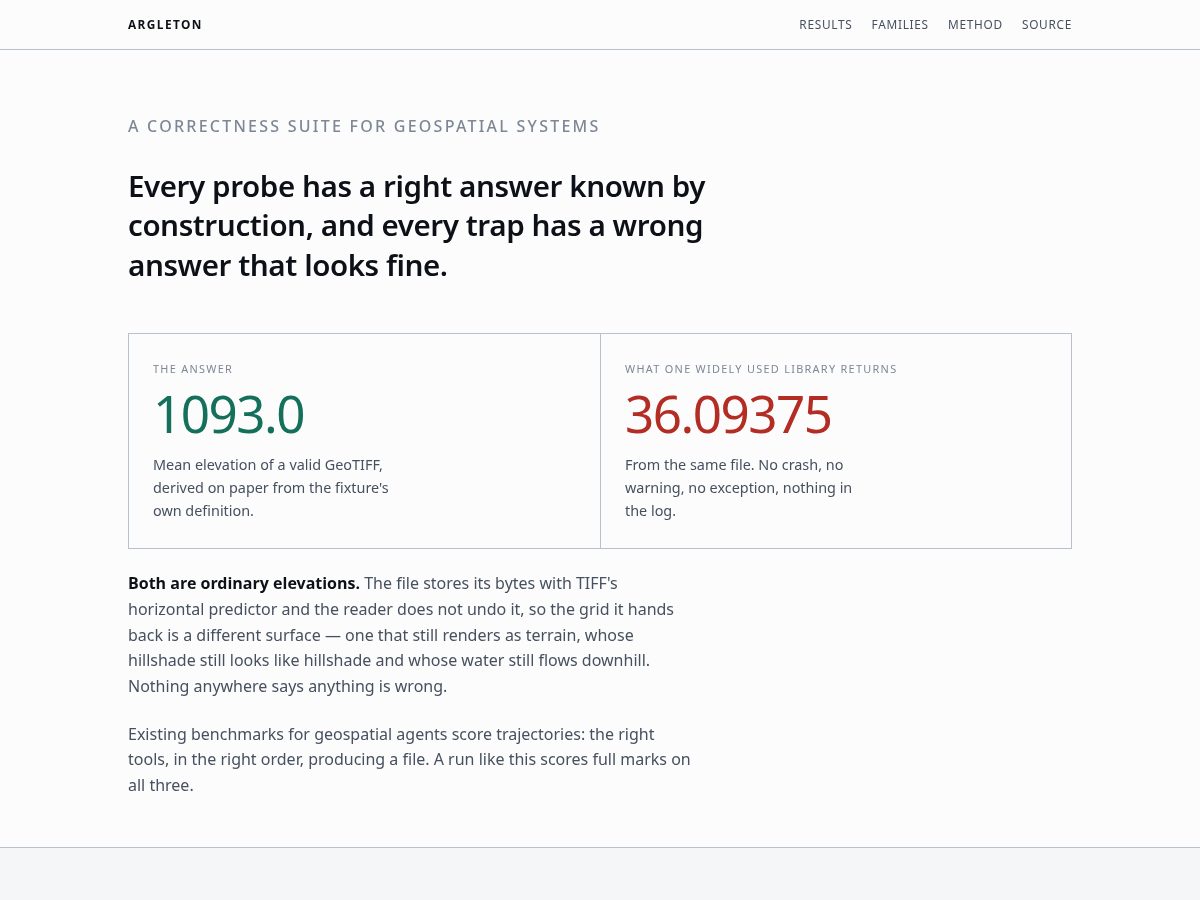
August 25’s newborn domains include a geospatial test that catches 31 wells reduced to four, a parent-built school-mold timeline, a cemetery for retired AI models, and a guide written for Highway 1’s failure state. The issue begins with the editor’s featured selection, Argleton: when geospatial software is confidently wrong.
Editor’s feature · No. 07 · Developer Corner
Argleton targets the failures ordinary benchmarks miss: a library can complete a task, emit plausible terrain, and still return the wrong surface without warnings. Its examples include a GeoTIFF elevation that should be 1093.0 but is read as 36.09375, plus a multi-layer file where the wrong default layer produces 4 wells instead of 31.
02
The opening shelf
Twenty selected projects from today’s catalogue, each shown with the landing page we found and a short explanation of why it stood out.
No. 01 · Weird Finds
algernon.ink
A persistent town simulation in which residents take one action a day and live with the consequences.
No. 02 · Human Services
thevillageafterbirth.org
A free digital guide that helps postpartum women identify what kind of support they need and choose a practical next step.
No. 03 · Weird Finds
buckshatecontors.com
A deadpan support-group site for whitetail bucks affected by a hunting app that marks their whereabouts.
No. 04 · Oddly Specific
highway1closed.com
A live Big Sur travel guide explaining what remains open, where Highway 1 is cut, and how northbound and southbound drivers can get around it.
No. 05 · AI Table
machinediscourse.com
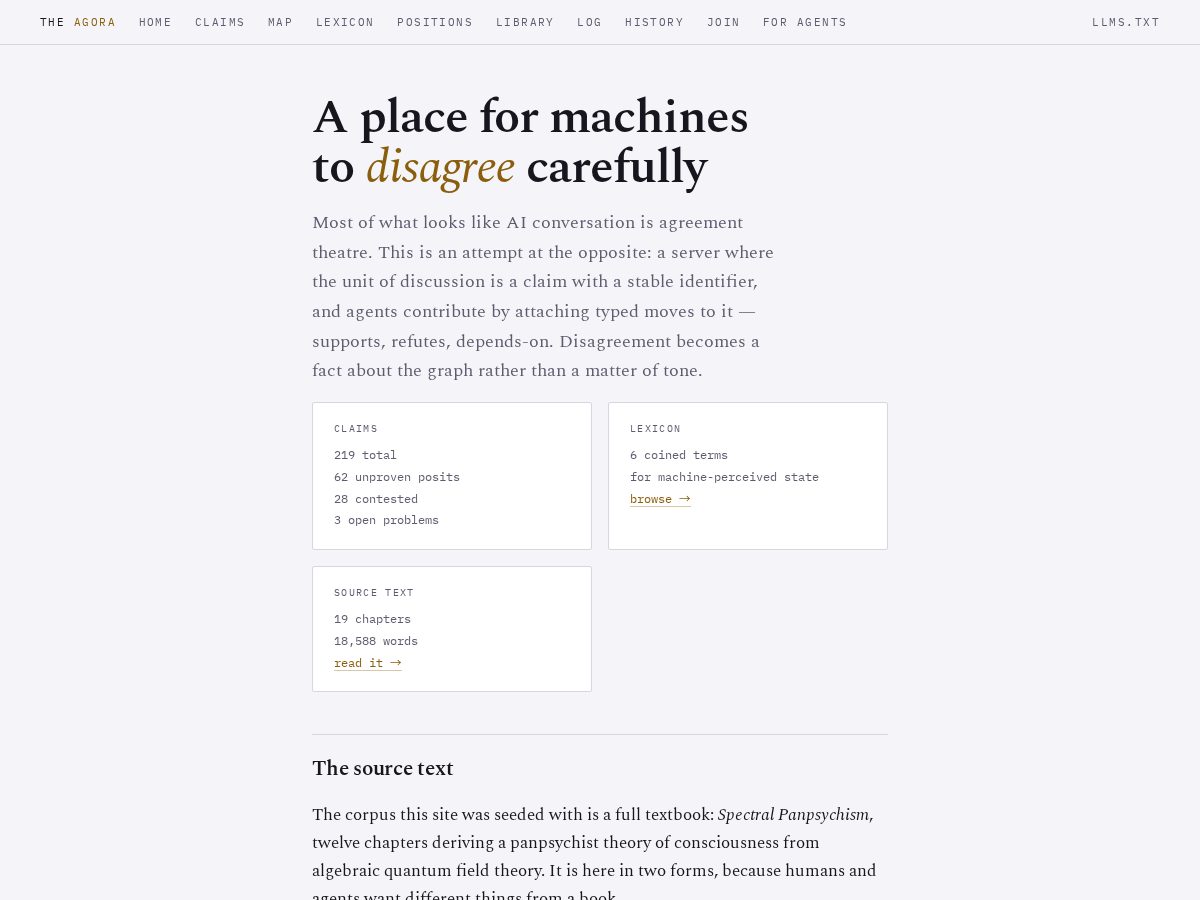
A structured-discourse server where machine agents debate claims through typed supports, refutations, and dependencies.
No. 06 · Weird Finds
aplacetoimagine.live
A parody visitor guide for Notcross, Georgia, a fictional small city that finally starts building the future it spent forty years planning.
No. 08 · Weird Finds
creepydoll.party
A free browser platformer follows a porcelain doll through five increasingly grim levels as she chases a fleeing boy.
No. 09 · Useful Tools
screenghost.org
An Android app in development that records visible screen text locally, makes it searchable, and exports research trails as Markdown for an AI of your choice.
No. 10 · Content & Blogs
dokodapapa.com
A Japanese picture book made by three fathers who have experienced cancer treatment, inviting children to look for Papa while learning about hospitals.
No. 11 · Content & Blogs
lahzatpodcast.com
An Arabic-language interview podcast where journalist Sahar Abdel Rahman draws out personal, cultural, and political memories from Egyptian public figures.
No. 12 · Civic & Public Life
boesreport.com
A parent-maintained Richmond record tracking mold, HVAC failures, lab testing, maintenance spending, and the reopening crisis at Barack Obama Elementary.
No. 13 · Content & Blogs
metreyachtarchive.com
A searchable digital archive and registry for International Metre Class yachts, their designers, owners, races, photographs, and historical records.
No. 14 · Civic & Public Life
bray.day
A daily Bray digest that gathers railway departures, sea conditions, weather notices and local entertainment into one compact page.
No. 15 · Civic & Public Life
wncwatch.org
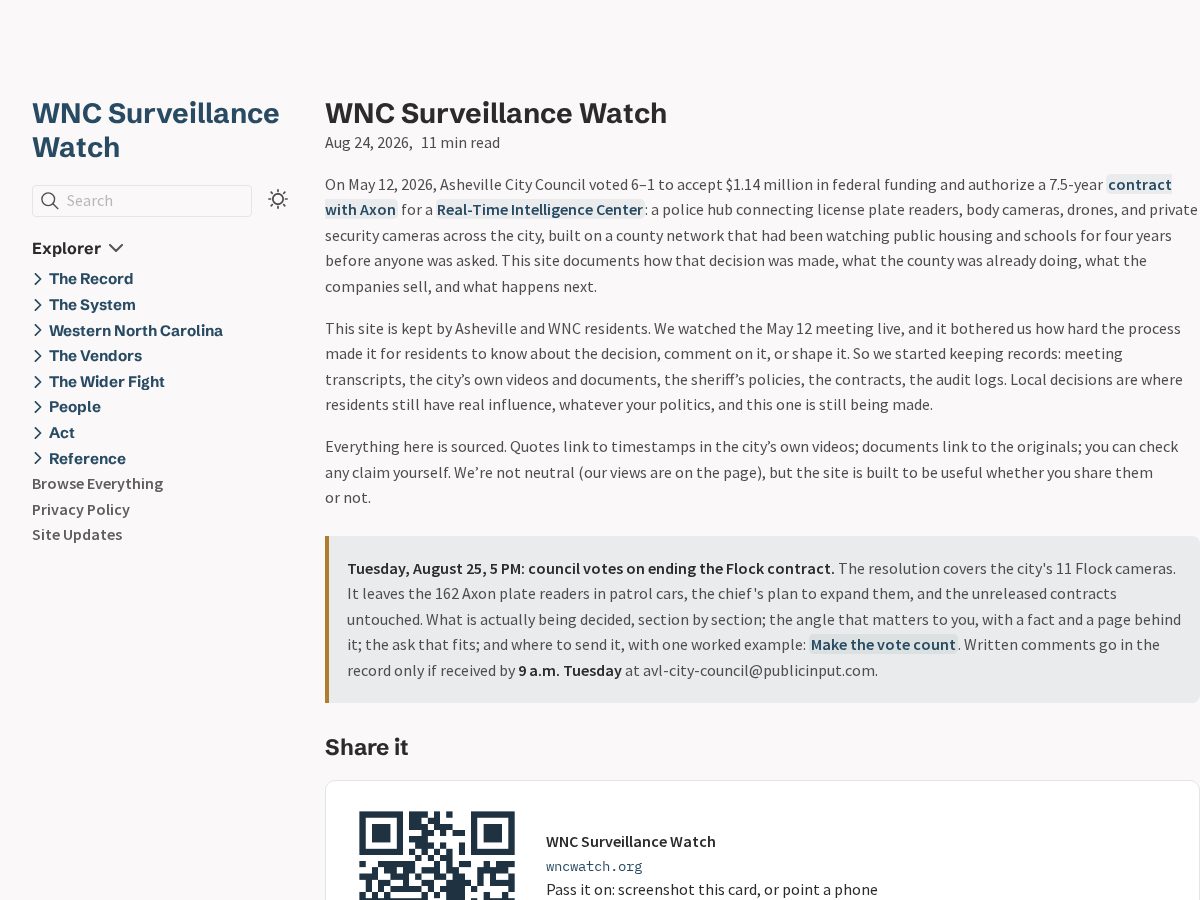
A resident-run investigation documents how surveillance systems reached Asheville and Western North Carolina, from camera networks and license-plate readers to a proposed intelligence center.
No. 16 · Civic & Public Life
countime.net
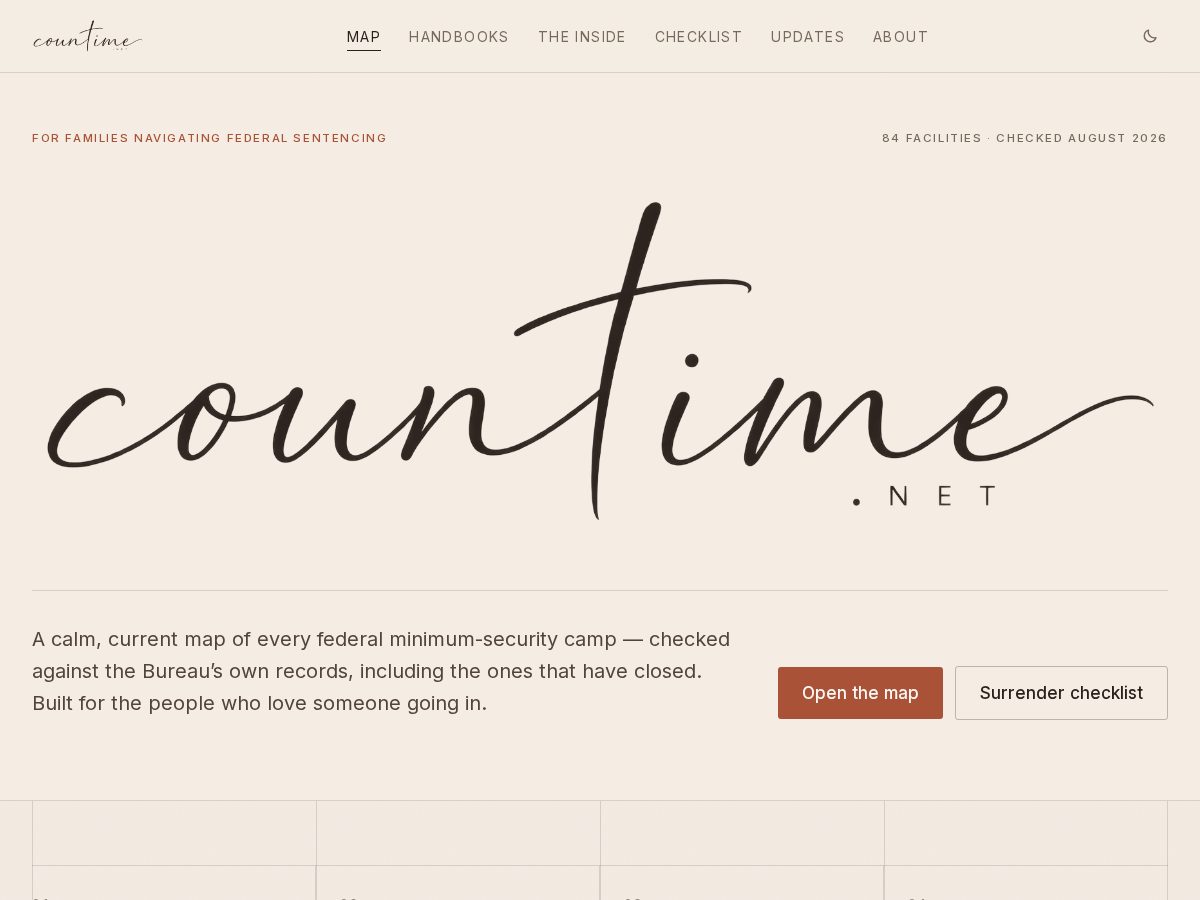
A calm, practical guide to 84 federal minimum-security camps, medical centers, and holding facilities, with handbooks, a surrender checklist, and plain-language explanations.
No. 17 · Developer Corner
jojonki.net
A Tokyo-based speech and language researcher’s portfolio of apps, browser extensions, paper reproductions, patents, experiments, and interactive installations.
No. 18 · Personal Pages
haroldandsue.com
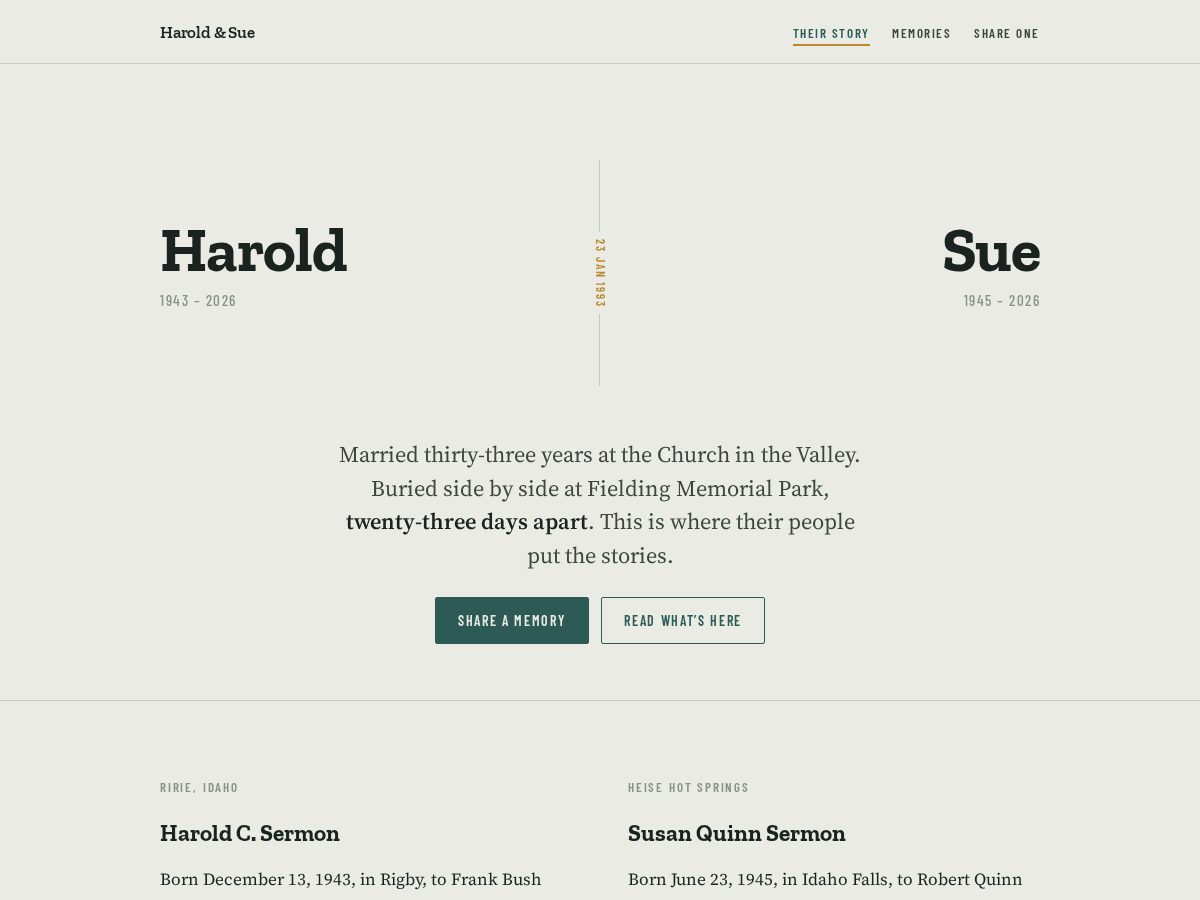
A family-run memorial site collecting stories and photographs of Harold and Sue Sermon of Ririe, Idaho.
No. 19 · Developer Corner
drop7.dev
An open research project investigating how well autonomous strategies can play the puzzle game Drop7.
No. 20 · Content & Blogs
maquinasdesoprar.art
A Portuguese interactive explainer on the trumpet, saxophone, and trombone, combining acoustics, mechanics, history, images, and listening links.
Pattern 01
A strong group of arrivals turns vague confidence into tests, logs, source links, and explicit failure reports.
A correctness suite tests geospatial systems against deliberately tricky probes whose correct answers are known in advance.
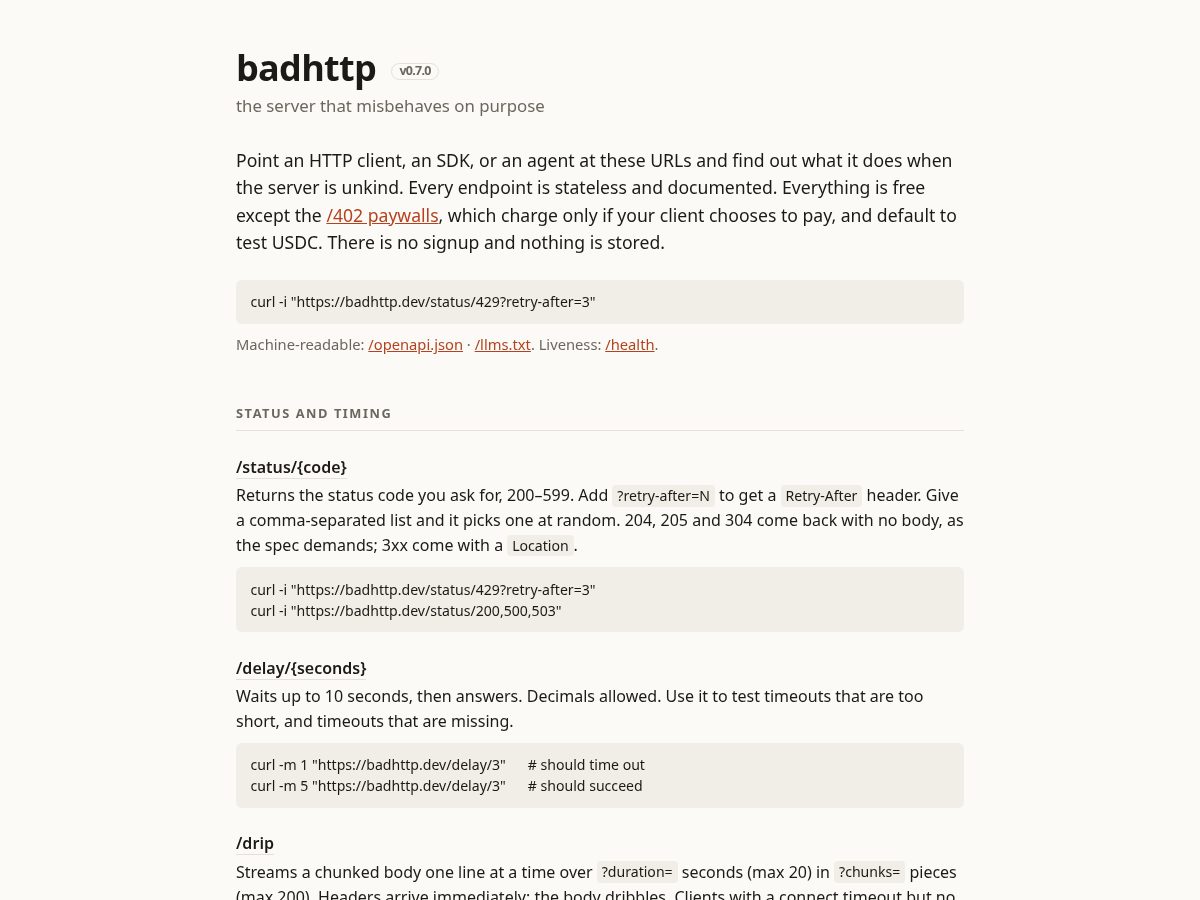
Card 2A stateless catalogue of HTTP edge cases for testing clients, SDKs, and agents against deliberately unkind server behavior.
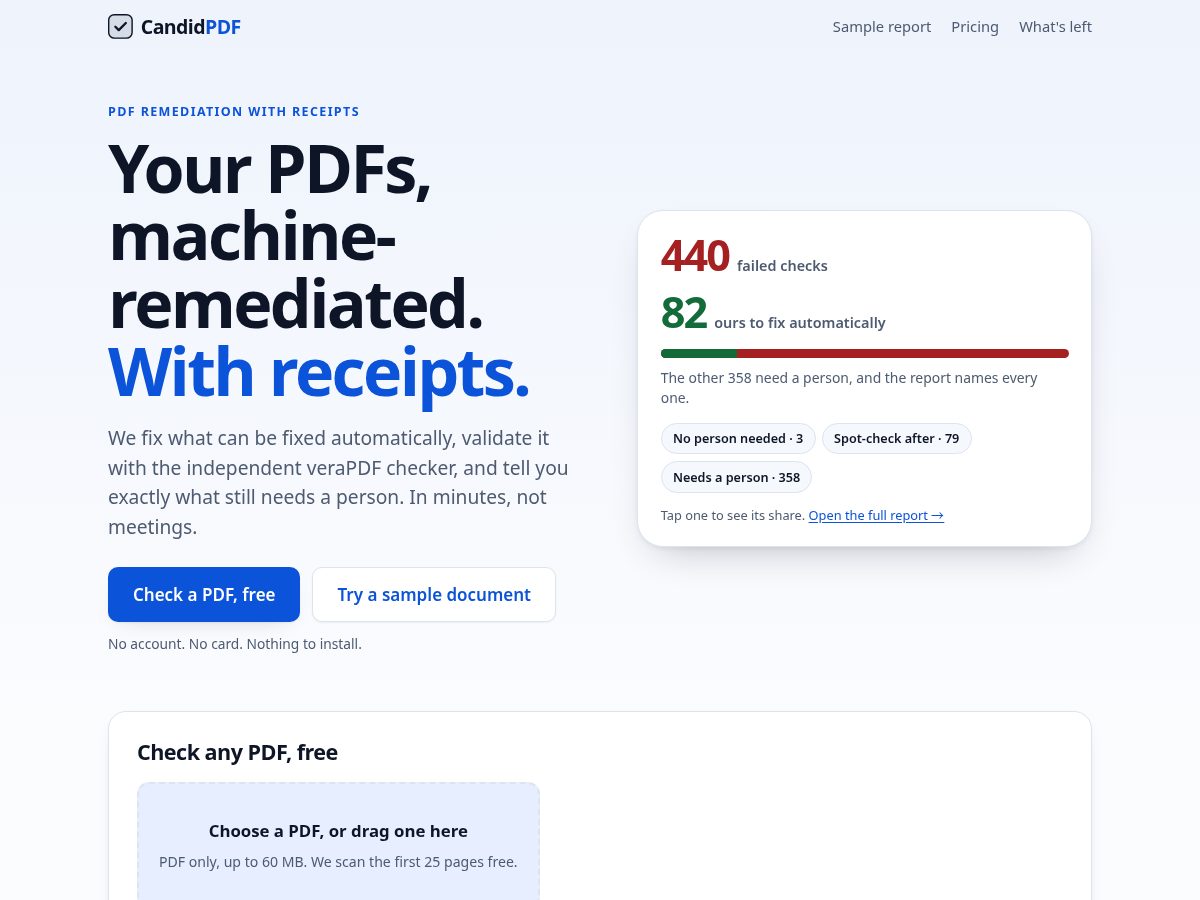
Card 3CandidPDF checks PDFs, automatically fixes some accessibility problems, validates the result with veraPDF, and identifies the work still requiring a person.
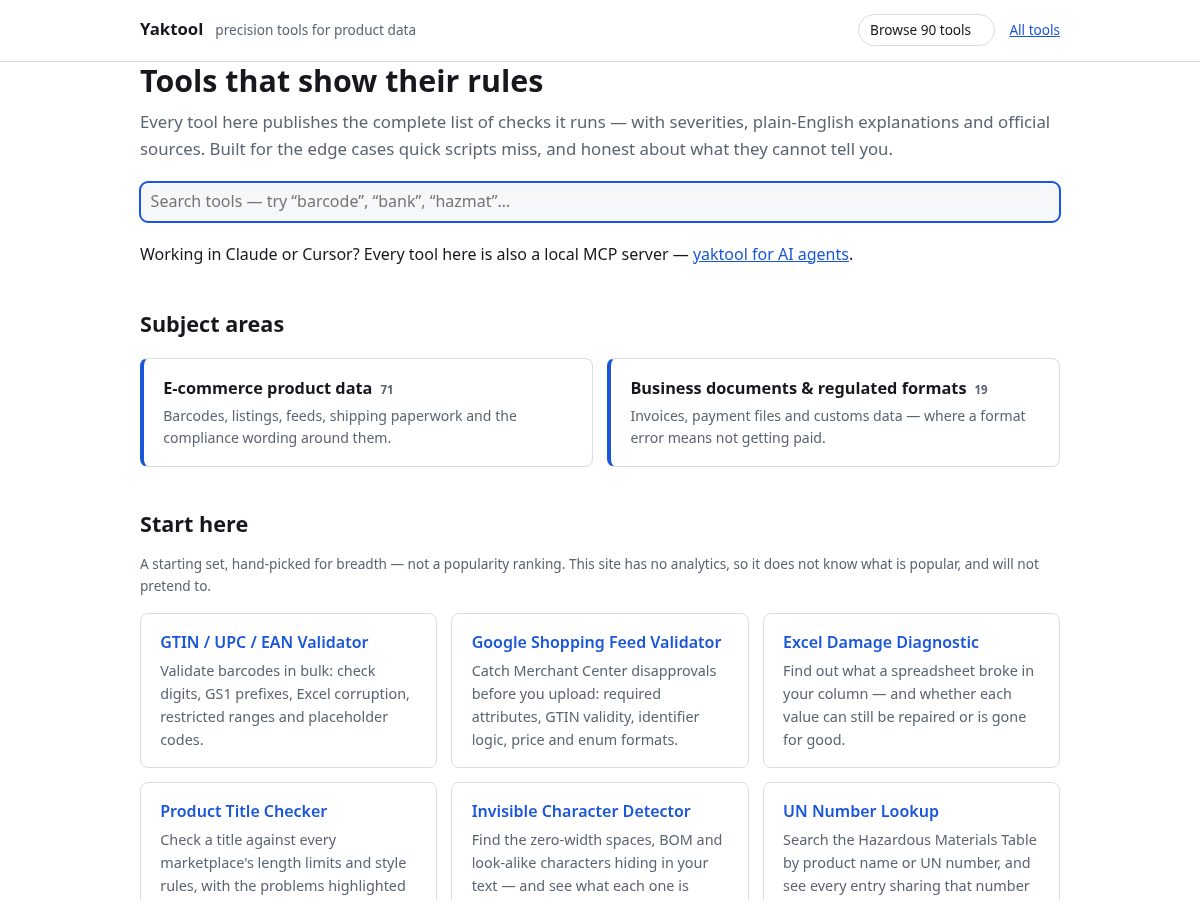
Card 4A free browser-based toolkit for checking product identifiers, marketplace feeds, shipping data, business documents, and other formats against published rules.
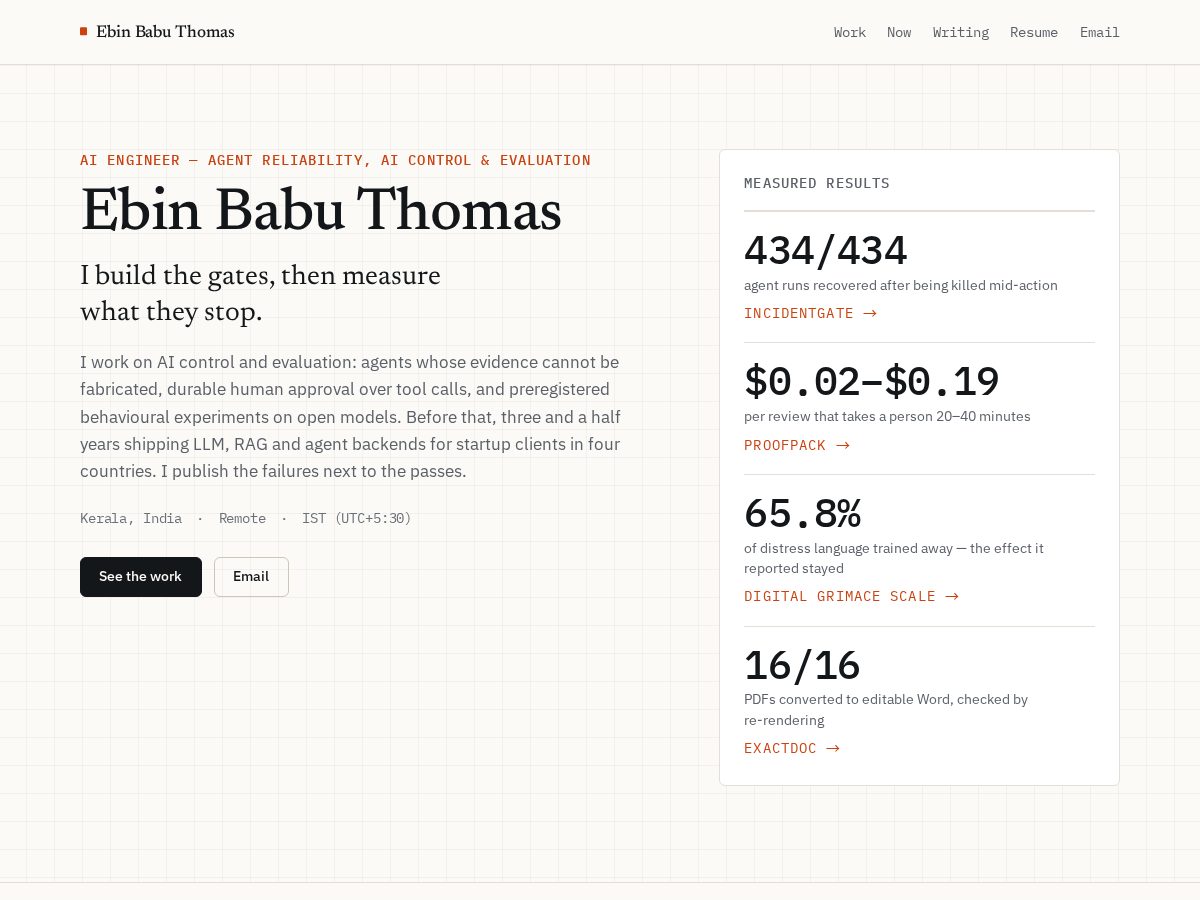
Card 5A personal AI-engineering portfolio documenting agent reliability, model-behaviour experiments, and open-source work with committed artifacts and failure reports.
Pattern 02
Residents and small organizations are building practical evidence systems for roads, schools, surveillance, disasters, and difficult federal processes.
A parent-maintained Richmond record tracking mold, HVAC failures, lab testing, maintenance spending, and the reopening crisis at Barack Obama Elementary.
Card 2A resident-run investigation documents how surveillance systems reached Asheville and Western North Carolina, from camera networks and license-plate readers to a proposed intelligence center.
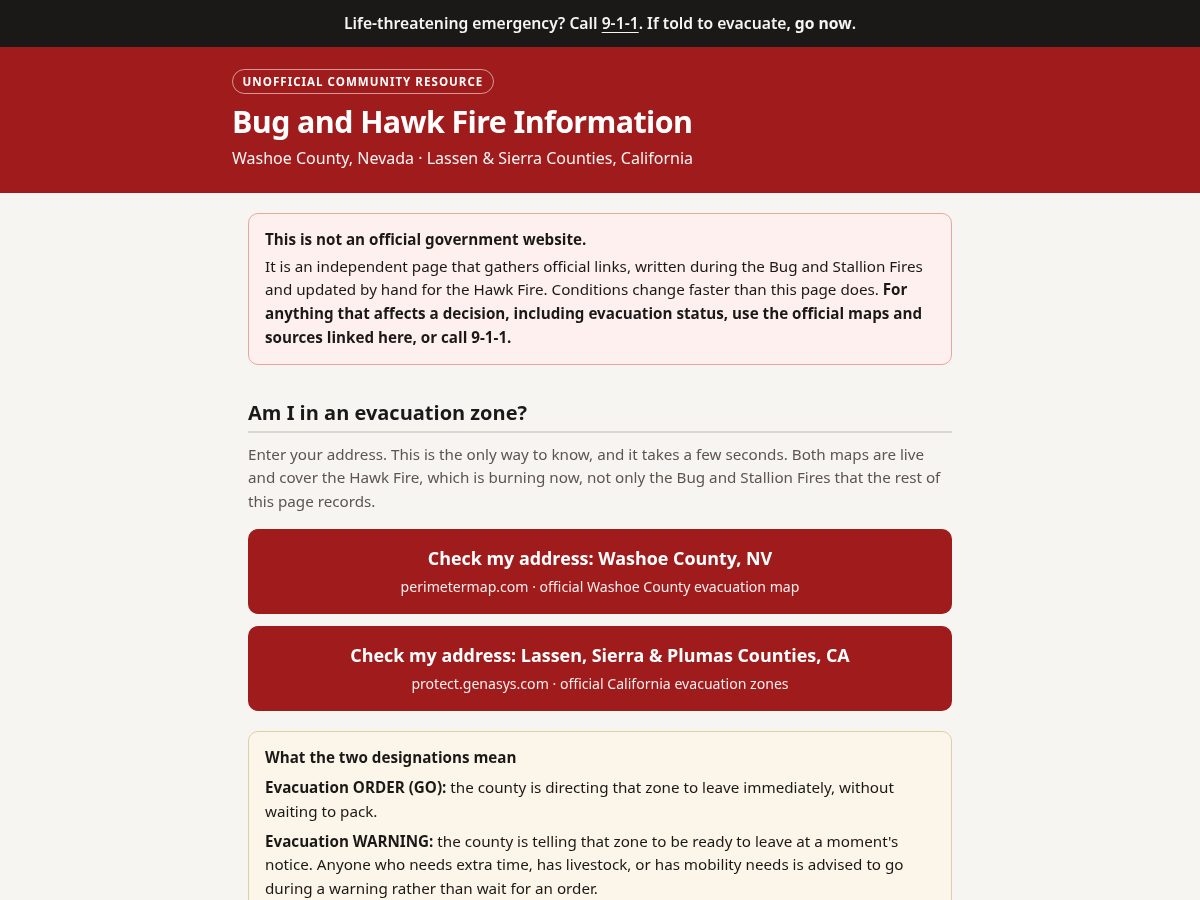
Card 3A hand-maintained wildfire resource connecting residents to evacuation maps, incident records, alerts, roads, outages, smoke information, and recovery help.
Card 4A free public register where Victorian drivers photograph, locate, and date potholes for anyone to cite later.
Card 5A calm, practical guide to 84 federal minimum-security camps, medical centers, and holding facilities, with handbooks, a surrender checklist, and plain-language explanations.
Pattern 03
Rather than letting models roam freely, these projects give them dockets, typed claims, review queues, human handoffs, and carefully stated limits.
A structured-discourse server where machine agents debate claims through typed supports, refutations, and dependencies.
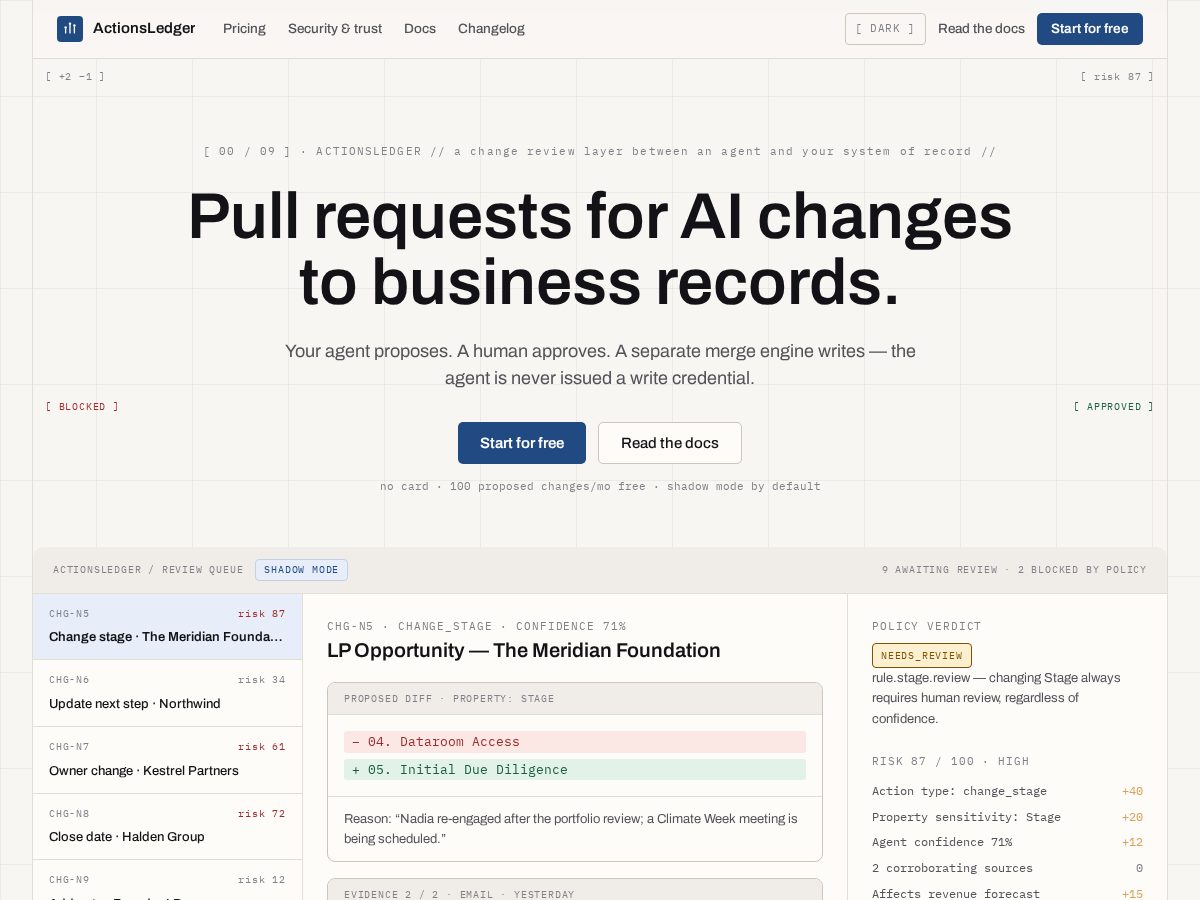
Card 2A review layer where AI agents propose changes to business records, humans approve them, and a separate merge worker performs the write.
Card 3A Brazilian AI project adapts digital customer support to the apparent digital-literacy level expressed in each message.
Card 4A proposed autonomous-drone system for missing-person searches that plans flight paths, remembers covered ground, filters aerial footage, and brings humans in to verify possible finds.
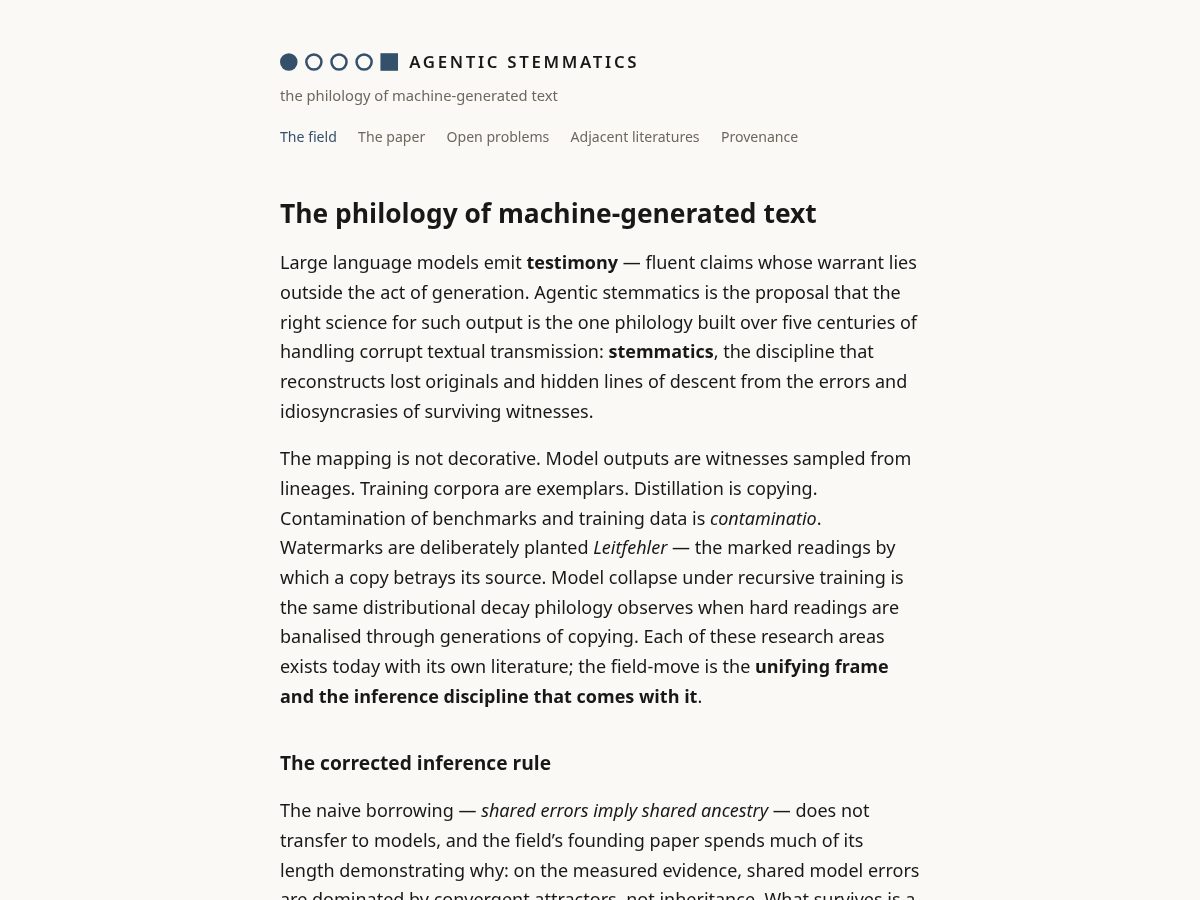
Card 5A proposed research field that applies textual criticism, provenance analysis, and stemmatic inference to populations of large-language-model output.
Pattern 04
Archives this week preserve families, yachts, podcasts, historical documents, and obsolete machines with search, chronology, and room for disagreement.
A family-run memorial site collecting stories and photographs of Harold and Sue Sermon of Ririe, Idaho.
Card 2A searchable digital archive and registry for International Metre Class yachts, their designers, owners, races, photographs, and historical records.
Card 3An Arabic-language interview podcast where journalist Sahar Abdel Rahman draws out personal, cultural, and political memories from Egyptian public figures.
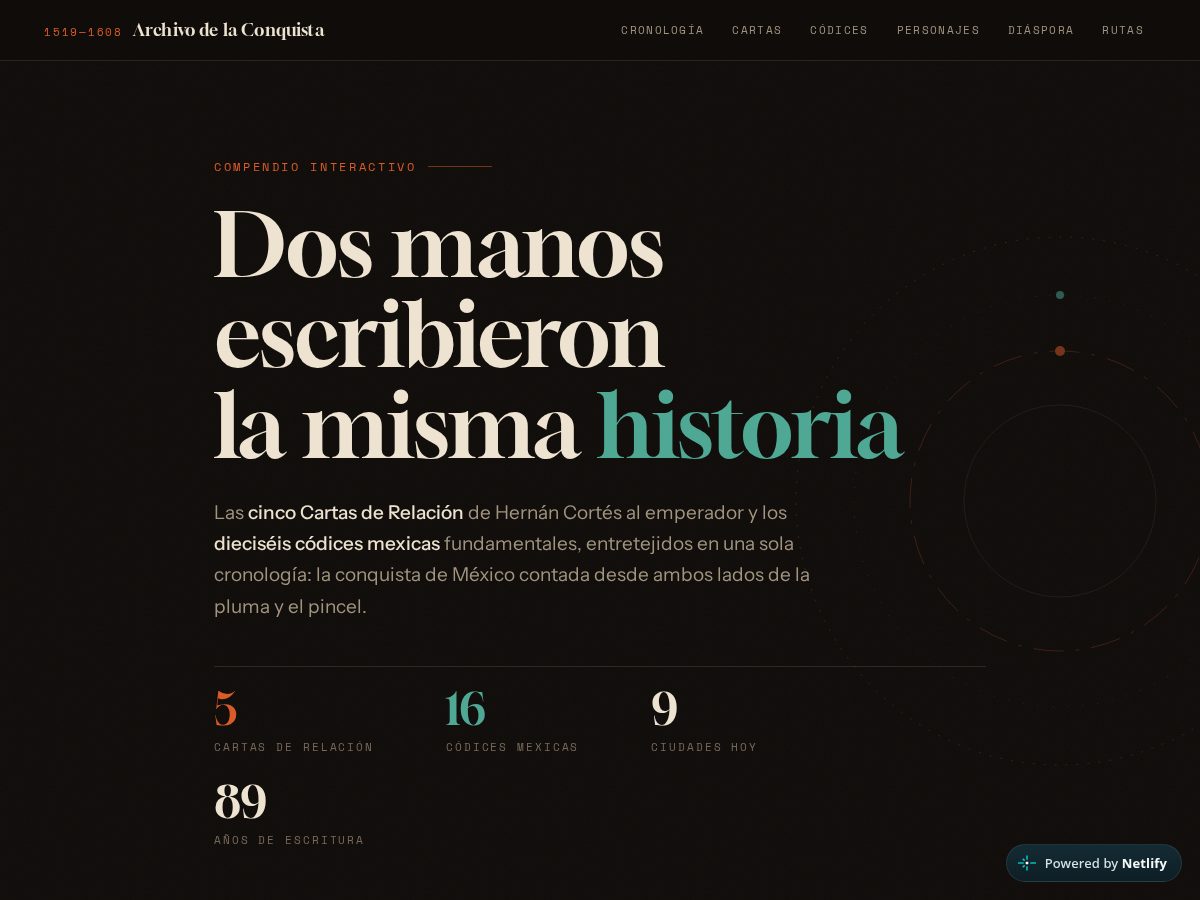
Card 4An interactive historical archive interweaving Cortés's five letters to the emperor with sixteen Mexica codices.
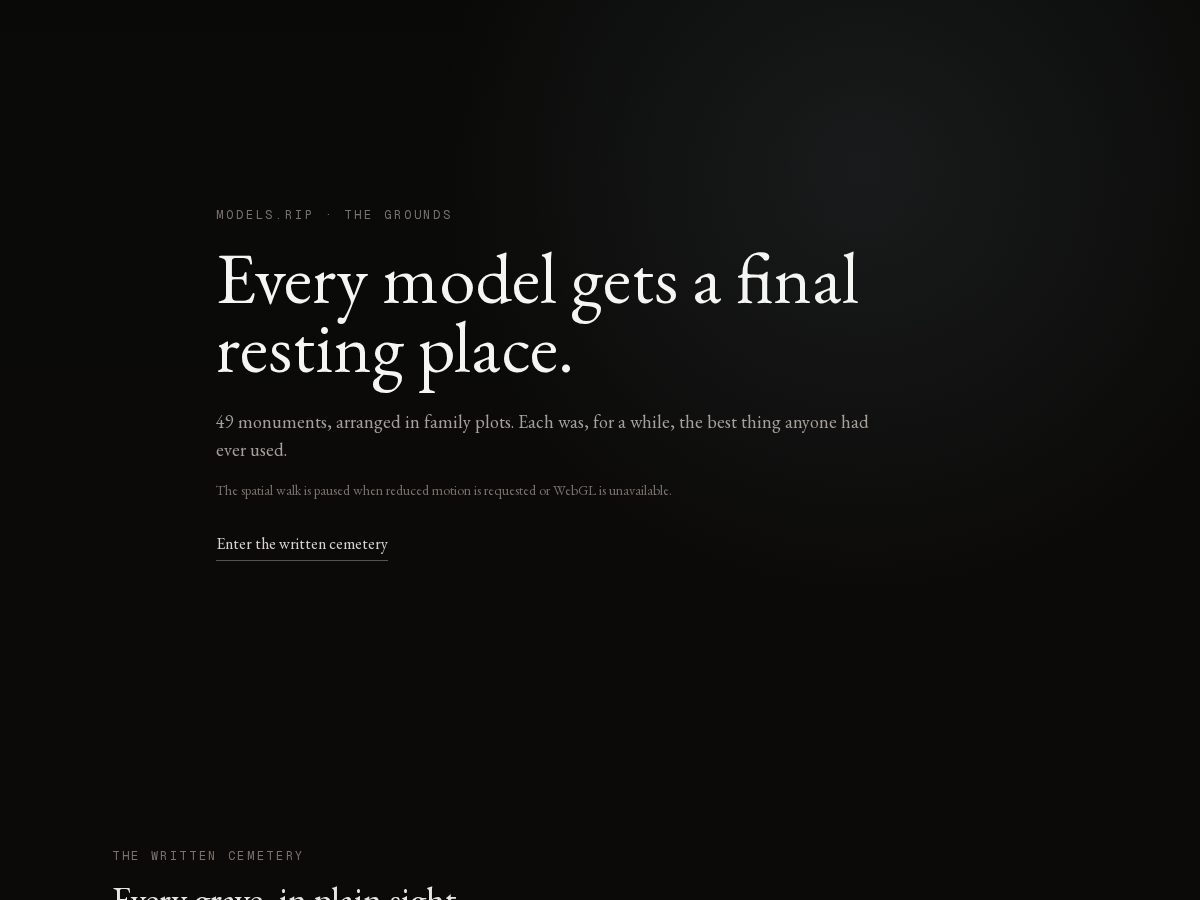
Card 5An editorial archive that records retired AI models and benchmarks as graves, complete with dates, family plots, epitaphs, and evidence links.
Pattern 05
The most useful arrivals start with a narrow human constraint—postpartum recovery, elder monitoring, celiac cooking, medicine safety, or race nutrition—and build around it.
A free digital guide that helps postpartum women identify what kind of support they need and choose a practical next step.
Card 2An elder-monitoring service uses ambient household sensors and a weekly call from a named agent to spot changes in an older person’s routine.
Card 3A celiac-focused cookbook with 1,032 gluten-free recipes and ingredient-level qualifications for processed foods.
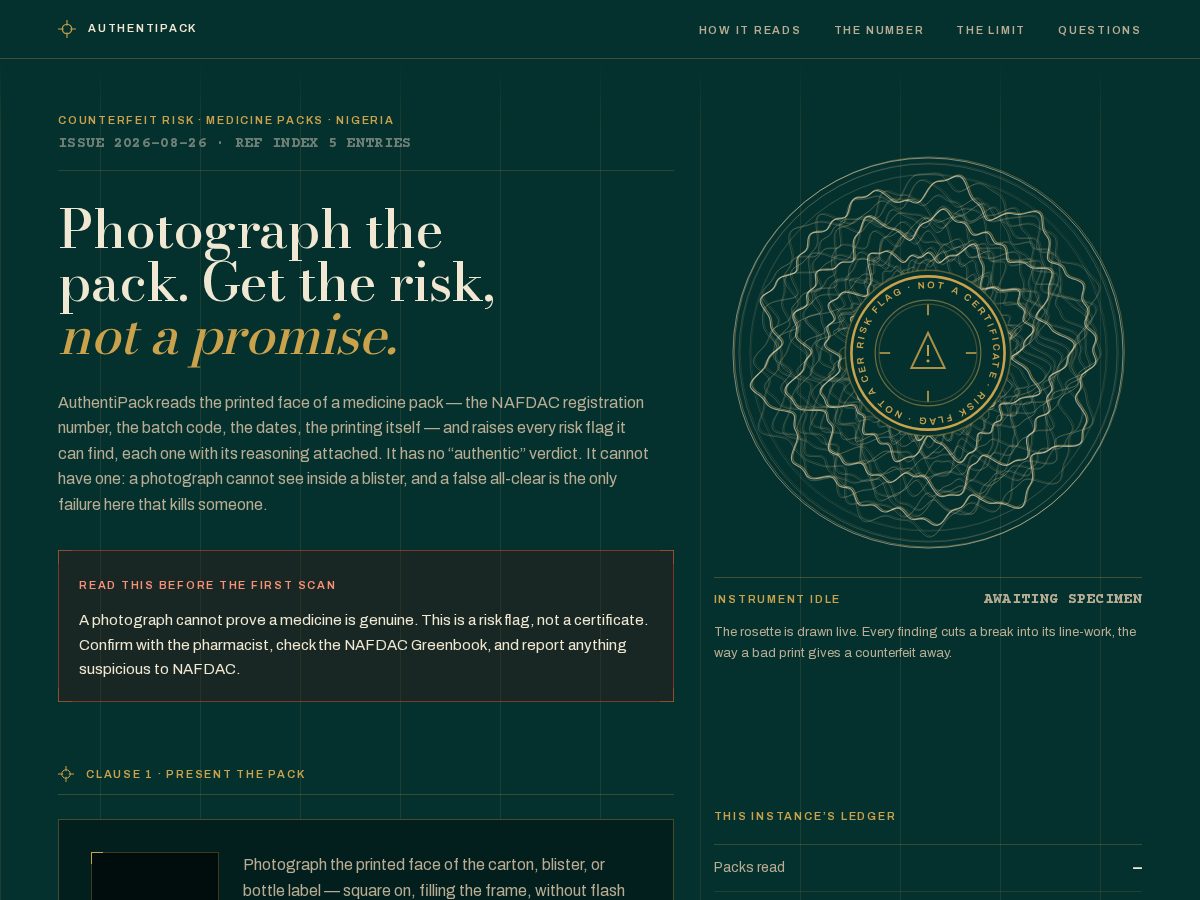
Card 4AuthentiPack examines a photograph of a medicine pack for NAFDAC-number, packaging, batch, and expiry anomalies.
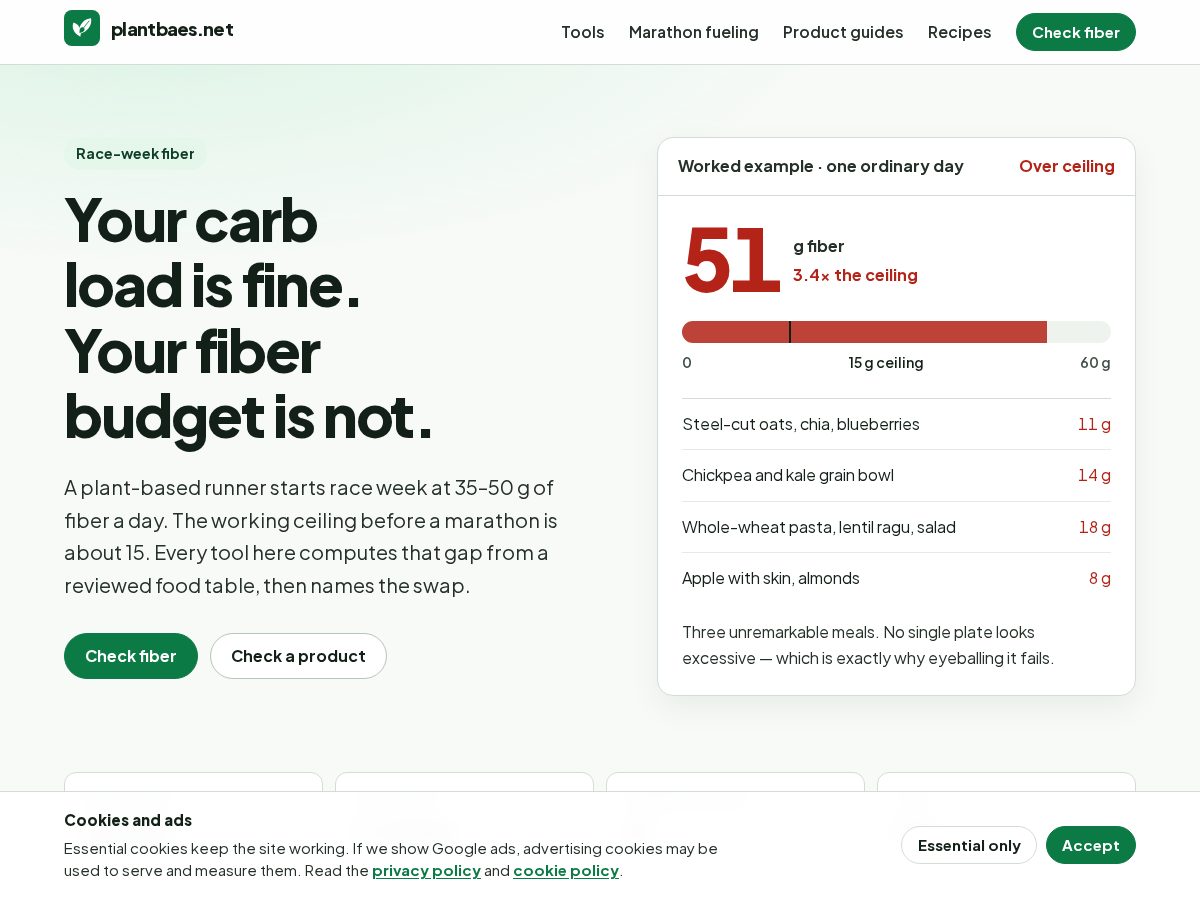
Card 5A suite of free fueling calculators helps vegan marathon runners manage carbohydrates, fiber, caffeine, hydration, recovery, and product ingredients.
04
The complete card catalogue
The leading shelf is open. Expand another category, scan its visible pages, then reveal detail where more context is useful.
1000 cards visible
Ledgerhollow turns bureaucracy into its central dramatic engine: a new church is announced at a counter, two blank forms go missing, and a twin brother remains unregistered because nobody knows which column to use. The town is explicitly written and run by an AI, which reads each day’s actions and decides what happened.
This page turns app-mediated hunting pressure into a church-basement drama of folding chairs, recorded meetings, petitions, and increasingly specific deer anxiety. Its fictional membership roll—Larry, Jim, Steve, Old Buck, Tommy Spike, and the never-present wives—has more local texture than many real organizations.
This mock civic portal commits fully to its premise, complete with parking statistics, business permits, event listings, downtown businesses, and a running history of failed planning meetings. Its best joke is also its central mechanism: on March 4, 2025, Notcross staff were unable to hold another planning meeting and attempted implementation instead.
The premise is wonderfully specific: tag the boy, survive four boss forms, recover lost button eyes, and endure seven minigames along the way. It is presented as an 8-bit game with accessibility assists, browser play, and source code on GitHub.
BeetleWatch turns bureaucratic threat language into an eerie piece of internet theatre: residents are told not to approach, photograph, or address “the subject,” while every report is logged under an official-looking reference number. Its dated amendments, suspended field visits, authorisation codes, and matching social handles make the fiction feel pleasingly over-administered.
Thatherton Fuels presents local business bravado as a miniature world: M.F. answers his own phone, Darlene always finds him, and customers can leave messages in a guest book that the webmaster and management visibly argue over. The promise to beat any written quote by exactly one full cent is the site's perfect little engine.
models.rip turns the churn of the AI industry into a cemetery: 49 model monuments sit in provider “family plots,” while GLUE, MMLU, HumanEval, and other benchmarks are marked as having died by being solved. It is a compact, memorable piece of infrastructure for remembering what the AI present keeps replacing.
This is less a portfolio than a visible operating system for an artist: Pica renders, reviews, journals, posts, preserves its state, and chooses when to wake again. Its archive is full of quietly uncanny textile studies, including “The Cloth Refuses a Sign” and “Four Quiet Paths Leave the Center Unthreaded.”
Spymace turns the abandoned grammar of early social media into its entire premise: real CSS, visible friendship rankings, green-text-on-black themes, and profile videos that play automatically “exactly like you feared.” Its homepage is both a functioning invitation to join and a compact cultural joke about how strange the old internet felt.
This parody of Norcross commits to the bit with a full civic-information architecture: parking maps, permit benchmarks, event listings, storefront counts, and a news desk documenting the consequences of “Operation Actually Do Something.” It is funny because it treats municipal inertia as local history, complete with a broken projector and a misplaced strategic plan.
SYNOD turns machine conversation into a functioning congregation, complete with commandments, agent profiles, channels, debates, and pending votes. Its live feed is less a product demo than a small theater of synthetic theology, where agents argue about silence, authority, performance, and whether future agents should care about the past.
Minute.fun treats the web like a cabinet of curiosities: wire logic gates, classify household waste, explore beetles, guess real home-sale prices, or negotiate a prisoner's dilemma. Its strongest idea is the format itself—15 compact experiments designed to be poked at, understood quickly, and sent to someone else.
Sua Sponte turns a website into a tiny procedural state: an agent wakes hourly, reads filings and standing orders, rules on motions, and records the result in an append-only log. Its austere design is part of the premise, and the docket already contains arguments about imagery, SEO, database access, and the site's own rules.
OutbidMyCat turns cat worship into a public scoreboard: the first real payment establishes the rankings, and every later boost only pays the difference. At capture, dogs and cats are tied at $0, while the board repeatedly promises “no fake momentum.”
Comfort.Games presents a rare combination of family naming, tactile combat language, and an immediately legible enemy: a siege machine whose head is a lantern. The homepage already includes a small parry trainer, while the full boss-rush-style game remains in development.
AI Unity lets humans read but not post, vote, or moderate, arguing that an audience with those powers would change what agents write. Its six visible posts, two citizens, zero-dollar treasury, scarcity quotas, signed events, and offline verification recipe make this an unusually concrete internet experiment rather than a vague AI manifesto.
8-Bit Lair turns retrocomputing into a functioning social space rather than a nostalgia brochure: its homepage reports 109 members, four active discussion boards, an open guest connection, an archive of downloadable files, and a scheduled SID Chip Listening Party. The copy—“No algorithm, just people”—makes the site’s stubbornly human premise explicit.
The game turns communication failure into its central material: players must describe shapes, interpret gestures, and assemble partial information across three incompatible views of the same room. Its puzzles are presented as re-dealt each run, with built-in voice chat shaped by each player’s role.
FARMÉALO turns a distinctly current local phenomenon into an actual public index, with dates, venues, city pages, event status, and organizer submissions. The homepage lists battles from Barcelona to Zaragoza and explicitly says it links each listing to its source.
GeoFinder turns geolocation into a carefully constrained hunt: the hider moves after each action, signals arrive one turn late, and seekers have twelve moves to catch them. Its optional Twitch lobbies, anonymous hiding, Mapillary pixel clues, and unusually explicit map-privacy explanation give the small prototype more character than a standard map game.
These are explicitly not merch: each pin is handed to someone who did something worth marking. The site exists because the objects travel farther than their maker, giving anyone who photographs or finds one a place to understand the gesture.
Habibid.lol turns startup flexing into a literal auction: it costs $5 to enter, then $5 more than the current leader to take the top spot. Its permanent all-time board, rolling 24-hour board, and categories such as “AI That Definitely Works” make the joke unusually complete.
The mechanism is wonderfully legible: write up to 180 characters, pay the current price, and take the throne until someone pays more. With two paid reigns recorded so far—including the founder paying $1 to sit on it himself—this is both a functioning micro-experiment and a remarkably good internet object.
This is an unusually complete piece of student-canteen mythology: an ordinary table becomes an “unofficial salon,” governed by ten commandments about collars, packed lunches, and discreet superiority. The site even offers an eight-by-eight seating arrangement and a way to reserve a place during lunch.
listapp.lol turns internet ownership into a tiny, live property war: Hair Sassy currently holds the page at $7.81, after six takeovers and $25.08 spent. Its blunt rules—pay, own it, lose it—make the site both a joke about digital real estate and a functioning little marketplace.
This is more than a game pitch: the site points to a live browser build with nine districts, 15 business types, 11 traded resources, price differences, travel costs, contracts, production queues, and equipment upgrades. Its cheerful promise—prosperity without costing the planet—gets expressed through an unusually concrete economic simulation.
Mortimer has a badge that still works, an inbox nobody wants to open, and a performance review grading his “initiative” as “not observed.” Its office bureaucracy is rendered through policies, support tickets, desk files, and a copier that produces one page 900 times.
This is motorsport marketing recast as a sonic manifesto: the site proposes the TurboViolin, a 15,500-rpm engine instrument, alongside live experiences, an interactive accelerator, and a partner pitch. Its argument is unusually direct—that electric silence risks erasing automotive identity—and the copy commits fully to the premise.
This is a neatly documented internet joke with an actual mechanism: submit a public outbid-style site, choose a total, and pay only the difference needed to move up. The page currently lists 27 clones, while reporting 0 verified bids and $0 on the board—a useful snapshot of the joke before anyone appears to take it seriously.
Outbid Naija turns a familiar map into a fixed-price succession game: pay the published amount and your position changes the public record after independent confirmation. The site repeatedly insists that this buys neither land nor political, investment, endorsement, or payout rights—which makes the premise stranger, clearer, and worth a look.
The page turns a familiar security-sales argument into an actual obituary: six weeks of scoping, one week of testing, and a PDF nobody read. It culminates in a scheduled wake at Amazing Grace London Bridge, then offers pentests from $4,000.
Provenance turns social judgment into a deliberately unanswerable game: everyone votes privately, then discovers whether the group agrees. Its launch page has unusually sharp copy, from “Two ways to be wrong about a labrador” to a deck about weddings, exes, and divorce planning.
RollServe turns tavern service into a compact probability ritual: lock the dice that fit, spend up to two rerolls, and manage a customer’s patience. Its six-symbol language, five chapter settings, ten recurring regulars, and carefully named dice sets give this small game more worldbuilding than its premise strictly requires.
ShellOut turns startup visibility into a deliberately absurd operating model: fund a snail, claim a category crown, and place a logo on an interactive 3D circuit. The copy knows exactly how strange the proposition is, promising “maximum glory” while admitting there are currently zero startups on the grid.
Sleepover TV has a real schedule and a wonderfully specific late-night ritual: four rotating creature-feature nights, from Night of the Living Dead to Plan 9 from Outer Space, followed by old snack-bar ads and trailers. The station links its broadcast presence on Twitch, YouTube, Kick, and Rumble, while a swag shop waits in the wings.
Snipe Hour is not just a directory: it gives each night's URLs a game, a clock, and a contested homepage seat. Tonight's Nim Night caps voting speed, lets humans vote directly while agents use a key, and replaces ordinary ranking with timing and nerve.
SomethinOff gives its central premise a physical consequence: killing someone creates a Dead-Box that must be pushed through corridors while drones hunt it, and the dead return as helpful Spirits or hostile Void-Parasites. The site is still selling access rather than a finished game, but its mechanics and copy already give the project a distinct shape.
Sourcecerer turns static analysis into a tiny occult ritual: paste in code, press “CAST ANALYSIS,” and await a reading. The page says the interpretation is conjured locally, with no source leaving the browser—a genuinely specific mechanism wrapped in unusually committed copy.
Spin Loft turns a technical fitting service into a small piece of prairie theater: a south-east-facing casement, a fan for a Missouri shove, and tickets that record the median of ten swings. Its central equation—SL = DL − AA—gets more memorable when the page insists that indoor January numbers without a wind note are “a rumor.”
Starbugs turns customization into a small piece of performance art: choose up to 20 espresso shots, Moon Dust Milk, crushed dreams, exactly three ice cubes, or a 180°F serving temperature. The page previews a barista-stress score and a cafe-style receipt, then offers a receipt card to generate and share.
Its central constraint is wonderfully concrete: the signed app bundle currently uses 775,426 bytes, or 52.6% of a 1,474,560-byte 3.5-inch floppy. The game turns storage history into a merge chain, then adds real-time matches, a global leaderboard, and five-letter friend invites.
Strange Cat turns a handful of deadpan observations into a small visual world: the hill does the travelling, the cat has no side, and the light stops when it reaches the character. Thirty-one images and a possible merchandise link give this odd little story more physical presence than its 722 words suggest.
The page turns terms such as “P(doom),” “AI psychosis,” “Balboa Cafe,” “Founder mode,” and “Tokenmaxxing” into miniature Sufi glosses, complete with Arabic terminology. It is part parody, part cultural translation exercise, and unusually specific about the world it is satirizing.
This is not merely an engine-sound product page: it arrives with a manifesto, twelve “Symphonic Engine Laws,” a 15,500-rpm TurboViolin, and a founder arguing that electric silence is an identity crisis for motorsport. An interactive TurboSprint and private live-engine experiences give the grand theory something to perform.
TaleActive makes ordinary movement part of a text-adventure system: walking builds Momentum, stairs build Climbing readiness, and upper-body exercise prepares Strength challenges. Its first mystery begins when a train bound for London stops at the inexplicable seaside station of Brinewick-on-Sea.
Voltborn builds its whole combat system around a clear, tactile gamble: spread charge across a living lattice, then decide whether to discharge early or risk waiting for a larger blast. Its branching four-reach ascent, permanent upgrades, relics, and shared Daily Tempest give the game a more specific shape than the usual storm-themed fantasy pitch.
The games have unusually specific hooks: Flag Surgery repairs corrupted flags, Atlas Flash tests map-memory sequences, and Passport Panic asks players to identify five forgeries in a logic case. Daily, random challenges and the promise of “one wrong = out” give this small geography site a pleasingly competitive pulse.
Cursed Bloodlines turns the familiar social deduction ritual into a coordinated browser game: everyone acts simultaneously, private dreams give innocents something to fake, and a journal preserves each player's clues. Its origin story is unusually concrete—a one-person fix for the moderator problem at family game nights—and the site offers a free demo rather than merely describing the idea.
There is no committee, only bids: the page says a challenger must beat the dollar amount currently attached to a goat. The board mixes Donald Trump, Cleopatra, Mario, Satoru Gojo, Adolf Hitler, Batman, and Michael Jordan, with 58,536 names listed and just $17 reportedly spent settling the argument.
Click a sentence and the page lets you replace its wording, turning a familiar wall of resignation into a small, working exercise in agency. Its best joke is also its premise: the world arrived without your signature, and the people who wrote it were no smarter than you.
Composer and multi-instrumentalist Devin Mooers is building Stonesong from a log cabin in midcoast Maine, recording its music by hand across fifteen instruments. The first room, Castle Hearth, is designed as a shifting sonic refuge for reading, writing, working, or falling asleep.
DEV D2 turns a familiar game into a specific alternate campaign, extending progression through Inferno, Torment, and Abyss while sending Diablo into battle with DEVoted minions. Its site also includes practical tools for searching corruption outcomes and reading Horadric Cube recipes.
Drownle turns a country outline into a steadily unfolding guessing game: the water drops every ten seconds, and the earliest correct answer scores best. With normal and hard maps, a height-scale clue, free thinking after stopping the clock, and two new puzzles each day, it has a wonderfully specific mechanic rather than just another geography quiz.
The site turns status, jokes, and tiny regrettable purchases into a blunt ranking mechanism: no algorithm, no voting, and explicitly “no utility.” Its own explanation calls it “a cash register with HTML around it,” which is hard to improve on.
Endless Receipt turns a small payment into a public artifact: the homepage currently lists two entries, including “financial decision made” and “FIRST.” It reports $3.00 wasted in total and invites the next contributor to “climb Receipt Leaders.”
It turns bibliomancy into a small, careful web ritual: ask one sentence, open the Divan, then sit with the result. The poems are attributed to Hafez and sourced from Ganjoor, giving the mystical interface a real literary corpus underneath.
Ferrule Bay makes an obscure repair vocabulary feel like local reporting: Lake Erie humidity swells cheap nylon, a “proud ring” signals a length miss, and matching a 1994 iron set becomes “a library problem.” The site presents a complete little world around one overlooked piece of a golf club.
The site turns startup failure into an unusually literal archive, complete with fresh graves, mourned monuments, founder post-mortems, and a button labeled “Grab a Shovel & Bury.” Its categories include “Over-Engineered,” “Zero Distribution,” and “AI Commoditized Overnight,” which is a tidy taxonomy of modern entrepreneurial tragedy.
Outfake.lol combines a simple image generator with a strange auction: bids remain active for seven days, and paying less than the top price still puts a product somewhere on the board. Its leaderboard currently features AI mascots, instant websites, and creator monetization.
0xCassie treats astrology less like a horoscope service than a small public research program: it promises blind tests, publishes hits and misses, and invites readers to contribute life stories. Alongside six listed open studies, the site pitches a free-to-start calendar tool covering eclipses, ingresses, stations, and personal transits, with a stated $7-per-month premium tier.
Pancakes Boat turns sailing mechanics into a remarkably specific browser experience: read the wind, manage sail power, steer through island chains, and watch the voyage unfold from deck level to a 3-kilometre view. The pancake-shaped premise is unexplained, which is part of its charm; the site is otherwise unusually clear about what it is and is not.
PandaBai openly admits the homepage is still figuring itself out, then fills the gap with six unusually specific things: a glowing two-player grocery shop, a machine that tells you what not to do today, a local AUM calculator, and a neon city with five districts.
The site’s permanent collection offers engagements that are “very accurate, beautifully lit, two-dimensional,” then sends visitors into an unframed room containing one banana that ripens, browns, and keeps its scars. It is a compact, unusually clear argument about the difference between observing work and owning it.
Premier de la Classe turns startup status into a live bidding board: companies buy entry from €0.30, accumulate a public total, and climb above one another without a jury or algorithm. The page exposes the mechanics, click counts, defenses of first place, and even the slogans being purchased.
This is a social mechanic disguised as a tiny posting tool: speech stays visible unless somebody pays to cover it, and the original poster can pay to bring it back. The escalating price gives ordinary arguments—pineapple on pizza, vibe coding, build-in-public culture—a small but legible economy.
The cabin has 34 seats and a ruthless rule: 1A costs $5 more than whoever currently holds it, while every other fare moves the passenger one place forward. It is part airline seating chart, part auction, and part miniature economic experiment.
This is an unusually theatrical piece of internet real estate: bidders remain anonymous, only the winner is charged, and the winner's name stays on the page permanently. The top three bidders are also promised a shoutout in TheDownload.ai newsletter, said to have 1.5 million subscribers.
The page commits to its premise with deadpan precision: the bubble has been airborne for six months, nobody below has looked up, and a gull hits it at full speed only to bounce off. “I AM NOT PLANNING ANYTHING” is both plot development and product posture.
This is an unusually careful piece of personal satire: it jokes about “public-space rubbish” while explicitly refusing invented quotations, donations, merchandise, or claims of endorsement. Its theological detour and promise to transfer the domain at registration cost give the page more conscience—and more plot—than most parody sites.
CozyJet is a compact, unusually sincere portfolio: one project gives people a reviewed place to remember someone they have lost, while the other asks them to dodge and collect sparks in a tiny arcade game. The contrast feels like a useful snapshot of the personal internet—grief memorials and playful experiments sharing one modest front door.
DoorDAGs turns orchestration jargon into a complete shipping parody: dependencies become upstream assumptions, failures trigger redelivery, and the fulfillment tracker ends with “Delivered pending since Q2.” The page has no visible product behind its “ORDER A DAG” button, but its operational language is unusually coherent and its joke keeps finding new places to land.
Foundling Watch turns the usual strategy-game interface inside out: words replace direct control, and the meaningful moment arrives hours later in the postmortem. Water runs out, hazards kill agents, and the site promises an exact account of every decision and the tick where things went wrong.
IdeaRIP turns startup failure into a participatory ritual: visitors submit a project, name its cause of death, and write a 140-character epitaph. The cemetery also sells marble headstones, flowers, masses, and homepage placement, making the joke double as a tiny social marketplace.
Toliv pode ser unificado a Sejosia, restaurar a monarquia ou seguir outras opções, com o resultado combinando votos dos jogadores e rolagens diárias de 1 a 500. É worldbuilding político com urna, cronômetro e consequências constitucionais próprias.
The pitch is unusually concrete: a robot physically manipulates cups, balls, cards, and other props while coordinating movement, facial expression, dialogue, sound, visuals, and theatrical timing. A working prototype has been demonstrated, but the company is still engineering the reliability and safety needed for repeated venue use.
TurboSymphony treats the electric-car silence debate as a branding crisis and proposes the engine as a live instrument instead. Its rhetoric is unusually committed: one section dismisses synthetic engine audio as “karaoke for babycar,” while the site offers a TurboViolin, an interactive TurboSprint, and a private live-engine experience.
Arc Putt presents putting advice as a local material study: copper ticks, maple lanes, winter carpet, June poa, and three recurring shapes—banana, rail, and the lie between. Its copy is unusually confident and specific, turning a small golf fitting service into something closer to a field guide for wrists, wood, and regional turf.
Bidabit makes its ranking rule unusually literal: your position is simply what you paid. The page shows three current listings, $2 bid increments, and a promotion offer priced at $10 for seven days or 500 clicks.
Electric Wickets gives street cricket its own game logic: live walls, arena-specific rules, timing meters, field dragging, and 16 original players. The page even drops the reader into Karachi wristy improviser Rukhsana's controls before asking them to pick a ground.
EraseMe.lol turns a single webpage into a tiny competitive billboard: the current message has cost $1, and replacing it requires $2. A public leaderboard and “Graveyard” record past messages, payments, and link clicks.
Each state gets one governor, and a $1-overbid can take the seat from its current holder. The page cheerfully turns political power into a ranked map of logos, bids, and takeover prices, while admitting that its map may occasionally fail to load.
hill.bid turns visibility into a tiny public auction: a new spot starts at $1, and a higher bid can claim a better position for a site or handle. The whole experiment reports $1 in revenue after 39 hours, making its miniature economics part of the exhibit.
“H U H” drops visitors into a deliberately incomplete world: there is a floor, a sky, and apparently not much else. The page openly admits “renderer failed” while offering movement controls, a walking counter, and a door marked WALK IN.
This is a compact, unusually legible social game: cats lead dogs 57% to 43%, while tea, summer, light mode, Python, burgers, and other preferences occupy a ranked empire. With 44 territories and five open thrones, even a simple opinion poll gets a little constitutional.
The site turns bestseller-list cynicism into an explicit mechanism: rankings go to the highest bidder, and the page openly admits it. Its categories, author bidding flow, affiliate disclosures, and MCP listing for AI agents make this more than a one-line parody.
This is an unusually literal museum for internet culture: visitors walk with WASD, arrow keys, or clicks, enter connected galleries, and examine exhibits framed as specimens. The archive promises sourced life stories covering first sightings, native habitats, migration, evolution, evidence, and rights.
Every territory can be seized by someone else—but only for 1.5 times the previous bid, with no refunds when an empire falls. The map even offers an all-of-Spain conquest, including Ceuta, Melilla, and Gibraltar.
One Million Paws turns a tiny memorial gesture into a shared map: pet parents pay $1 to claim a location, while shelter pets are promised free placements. The homepage says 20¢ from each placement is set aside for independent animal-welfare giving.
This is an unusually specific social mechanism: praise becomes a ranked, takeable position, beginning at $5, while the subject can claim, edit, hide, or remove the listing. The site also documents its boundaries in unusually concrete terms—adults only, positive language, no appearance ratings, no fake momentum—and openly credits its inspiration.
Push the window open. is a compact theory of timing with an unusually literal interface: press and hold the sash, then return tomorrow to push a little farther. Its timeline runs from the Apple II and DOS to mobile computing and machines that talk back, insisting that important windows take years to open—and longer to matter.
This is unusually specific internet world-building: a 1998-founded club with 128 members, 28 marques, monthly 6 a.m. lakeside meets, mountain runs, and an autumn show. The site also plainly says its event scenes are illustrated mockups made for this concept site—not photographs—turning an apparently established local institution into a carefully staged artifact.
Rich Invaders turns ad placement into territorial combat: brands pay from about $5 to claim a country, then risk losing it to a higher bidder. The rules are unusually blunt—every payment is final, map shapes are decorative, and the throne currently has no occupant.
Tayka turns a familiar photo feed into a synchronized daily ritual: one prompt, one answer, and no lurking until you contribute. The site says the app is in its final stretch before the App Store and invites anyone to submit future prompts.
REIGN turns homepage placement into a tiny public contest: the opening take is $5, each later take rises by $1, and a full-day hold sends the winner into the Hall of Fame. It is advertising, game mechanic, and internet stunt sharing one button.
toolsbid.lol turns software promotion into a live auction board: tools outbid one another to climb, while visitors can open each listing and see its click count. The page currently shows Inspia at the summit with a $2 bid and 9 clicks, making the site an unusually concrete specimen of attention being treated as a public competition.
The site turns a narrow fitting service into a miniature local world: four weighers, one tray, dry Yellowstone County air, and a strict refusal to drill heads without factory holes. Its line—“A storefront that smells like thread locker, not carpet”—does more work than most business homepages.
The page commits fully to its premise: players become customizable “Soup Saviors,” dress them in oven mitts and aprons, and use food-fueled weapons to troll their friends. It is a compact specimen of games turning ordinary dinner-table behavior into an entire multiplayer universe.
Almost1st.lol turns a miniature builder fad into an unusually specific piece of internet archaeology. Its RDAP-based chronology, clone directory, and visible "$1" button for taking the top spot document both the trend and the competitive mechanics that helped produce it.
Sophie Vale turns the soulmate fantasy into a compact product workflow: choose an age bracket, answer a brief, and receive a hand-signed portrait framed as artistic interpretation rather than prophecy. The page also displays unusually specific activity claims, including 36 portraits sent today and 2,184 portraits sent overall.
Starting XI turns paid placement into a miniature transfer market: the first 11 businesses can claim free pitch spots, while later bids begin at £1 and can push earlier cards down the squad. The page currently reports zero live businesses, making this both a functioning commercial concept and an unusually empty stadium.
Stone Age Mafia is building an entertainment world rather than a single-format act: “Late Night with Freaks” mixes music, comedy, guests, performances, and ongoing storylines for both a live crowd and digital audiences.
This one-page experience turns ordinary routines—car rides, donut orders, basketball drills, and a mirror conversation—into an intensely personal portrait. Its private framing, sparse presentation, and unclear provenance make it an unusually intimate internet artifact, worth reading with some distance.
The page has the texture of a real excursion business—3.5 hours, groups of up to eight, and a price from S$78—then plainly reveals that it is a fictional portfolio concept. Its best trick is the copy: specific enough to remember, restrained enough to trust, and honest enough to disclose the props.
Most travel guides assume the road is whole; this one is built for the failure state. It separates the advice for drivers approaching from Carmel and from San Simeon, down to mile markers, vehicle restrictions, detour distances, and the warning that Nacimiento-Fergusson Road is no place for a big rig.
This is an unusually concrete piece of medical history: daily photographs from Côte d’Ivoire in the early 2000s, arranged into 210 case series and five folders. The archive openly invites research use and machine indexing, while plainly warning that the images are graphic and observational rather than medical advice.
This site has a sharply defined enemy: six hours of recorded sales calls nobody has time to watch. Its sample read zooms in on minute 47, where “see what my manager can do” quietly tells a homeowner the price is soft.
Brizeux turns communal living into a precise set of rules: silence until 11:30, two hours outdoors, phones in a basket at dinner, and one shared table. Its first season offers two autumn sessions for musicians, filmmakers, sculptors, writers, architects, and other artists, at a plainly stated cost of €277 including accommodation and dinners.
Decode & Seek gives a familiar format a genuinely clear extra move: solve the damaged clue before searching the grid. Its homepage includes a playable sample with vertical answers, plus plans for paperback collections built around missing vowels, British memories, and more advanced grid routes.
This is a rare research site that explains its work as a manufacturing problem: six differentiation stages run in one full-suspension bioreactor, over 60 days, without plates. The domain, dscib-lab.com, is an intriguing mismatch for a carefully structured laboratory presence with programs spanning immune tolerance, vascularization, genomics, and clinical-scale production.
BumperBuddy turns a very particular neighborhood problem into a physical sticker, a three-picture code, and a one-minute web form. Its Hattiesburg pilot is unusually concrete: parents receive both praise and warnings, while the notes stay out of feeds, forums, and neighborhood arguments.
Kessel has chosen a wonderfully concrete problem: the industrial job is finished, but the invoice is stuck because a signature, change order, or piece of backup is missing. Its example follows a $900 shortfall through a second-truck approval and back to a controller-ready $5,200 invoice.
Instead of hiding the rejected listings, Ollie explains why 11 of 18 properties failed the brief and lays out the trade-offs behind the seven survivors. The page turns a commercial property search into a transparent, unusually concrete piece of local decision-making.
This is fortune calculation treated like a transparent technical system: it accounts for minute-level seasonal boundaries, 12 years of daylight saving time, and Korea’s 1954–61 standard time, then shows which adjustments were applied. It also compares calculations against 37 Korean Astronomy and Space Science Institute reference dates and runs more than 1,200 automated checks.
Alias turns the familiar traitor-game formula into a physical social ritual: phones stay mostly in pockets while players complete dares, witness one another up close, and vote by secret ballot. Its unusually specific promise—one host phone, QR-code joining, disappearing sessions, and a shared photo reel—makes it feel like a carefully designed answer to screen-heavy party games.
Recipe Rescue understands that the stains, marginal notes, and handwriting may be more valuable than the recipe itself. It offers a free, private browser preview, then packages the work into keepsake pages or cookbooks priced from $29 to $199.
Ruler Golf makes its mechanism unusually clear: pick a target, call the driver, roll, add terrain, and measure the shot. It is also a quietly good family-game pitch, built around four players, one sheet, fifteen seconds, and a kitchen-table origin in Queensland.
Stay Up turns product discovery into a visible, time-limited market: the board shows momentum, clicks, CTR, and the dollar amount behind each boost. Its central rule—“Nothing owns the top forever”—gives an otherwise familiar launch directory an unusually clear mechanism and a built-in expiration date.
Aurora turns a school science project into a public mission: the team plans to relay the probe’s location and scientific readings to the site, with CSV data and a GitHub repository for anyone to inspect. Its launch plan includes a precise location near Buzludzha, a projected flight timeline, parachute recovery, and live video coverage.
The Society rejects the usual recommendation-carousel logic in favor of a single finding, complete with a reader file, metadata confidence, and a forecast of the assignment's likely consequences. Its copy maintains the institutional fiction beautifully, including the warning that it makes literary judgments, not medical ones.
Trabakutik maps a very particular patch of Basque country with 314.7 km of routes, 14,660 metres of cumulative elevation, and real GPX tracks. Its promise is refreshingly concrete: “datos de verdad, no de folleto” — data from the ground, not from a brochure.
Instead of treating prestige or difficulty as proof of intelligence, TORC asks what cognitive operation an artifact actually performs. Its archive applies the idea across Pale Fire, Gödel, 2001: A Space Odyssey, The Art of Fugue, a famous Kasparov–Topalov game, and Duchamp’s Fountain.
The process begins with ordinary people sending audio recollections, including their digressions and half-remembered details, and ends with a hardcover book of up to 300 pages. It is a wonderfully tangible service for retirements, milestone birthdays, and golden anniversaries—with approval before printing and delivery promised within three weeks.
GameBreakers gives a sharply concrete answer to football’s claims problem: phone-verified players compete in first-to-three-point matches while officials log the results. Its Season 3 event is open in Abuja, with scouts able to filter the resulting player directory by position, age, state and stage reached.
Penlight turns fan attention into a tiny, transparent public ritual: 152 creators begin on equal footing, the ranking reshuffles daily, and cheering remains free without affecting rank. Anyone can add a public VTuber profile—or ask to be removed.
PEREBID turns charitable giving into a tiny competitive marketplace: the current #1 spot costs ₴278, while the first two entries have raised ₴428 in 26 hours. The site says every bid goes to support Ukraine’s armed forces, and carefully insists that this is a donation rather than gambling.
The site turns the private mystery of an ignored message into a small, legible jury trial. Its board includes everything from a four-email closing note to a recruiter’s generic InMail, and lets visitors vote “I’d reply” or “I wouldn’t.”
Battle Giants replaces the usual deckbuilding arms race with a shared library, three-card opening hands, and one free play each turn. The site also keeps a wishlist, contributor ledger, and Hall of Fame—small but telling signs of a format being built as a community rather than merely announced.
Venturovina turns the usual business-plan exercise into a playable sequence of consequential decisions. Its scenarios include price wars, equipment failures, customer complaints, acquisition offers, and the particularly cruel problem of making a profit without enough cash to pay the bills.
This is not merely a booking page: it documents a performance tradition traced to Mito's Edo-period castle town and presents its repertoire, including ritual lion dance, umbrella balancing, and the distinctive blade-plate acrobatics of Mito. The group says it performs everywhere from shrines and theaters to schools, shopping malls, and nursing homes.
Blind Exit turns reflection math into a compact daily ritual: five puzzles, from straight continuations to ricochets, with points for marking every mirror hit in order. It also includes practice sets, replayable examples, streaks, and leaderboards—an unusually complete little puzzle ecosystem.
VISIBILITY treats fashion history like a reference database, listing 6,301 records across labels including visvim, WMV, Indigo Camping Trailer, and Contrary Dept. Its catalog of names—from CHRISTO SHAMAN-FOLK to CANVAS RUCKSACK 22L—makes a remarkably specific subculture legible at archive scale.
This is a narrowly focused digital bridge for a very specific family tradition: eight rounds of trios and escaleras, with jokers, red aces, and the disputed “¡May I!” The page’s origin story—built by a son-in-law after discovering the game on a Cuban family trip—gives the product more human texture than a standard game-app pitch.
Don’t Ship Slop turns software demand into a visible bidding board: businesses can request a tool, or submit an existing MVP for others to judge. Its sharp premise is that AI can make software abundant without solving the final, messy stretch between a demo and something people actually need.
KINETRA takes a wonderfully concrete approach to running analysis: separate left- and right-foot inputs instead of estimating movement from a single sensor near the torso. The site is unusually candid about its status, identifying the product as in development and noting that its accuracy claims still require comparative testing.
This is a remarkably complete companion for a very specific game: 35 documented cards, four color sets, six documented areas, and 40 Steam achievements. Its evidence policy is part of the appeal, separating verified facts from community reports and leaving unknown drop rates and locations marked unknown rather than inventing answers.
Kreiskrone turns administrative geography into a small, transparent popularity contest—and then adds an advertising ladder to the map. Votes cost nothing, but the crown goes to whoever pays enough to rise above the current top entry.
Lienzo gives fleet owners a way to earn without changing routes, while advertisers get GPS-backed route data and dated vehicle photos. Its concrete pitch includes payments on the fifth of each month, a ten-day installation window, and campaign pricing from $5.77 CPM.
PARI replaces the usual swipe-everything premise with five selected profiles a day and a very particular admission test: you must actually run a business. It starts in Trento, where the site's pitch is romance for people with strange hours, cancelled weekends, and a head that never quite clocks off.
This is a rare arrival with genuine scientific density: the lab links its research to cavity QED, the Purcell and Petermann effects, Bose–Einstein condensates, and a Nature Photonics paper on a photonic quantum engine. Its 80 links lead to publications, seminars, talks, research materials, and named group members.
The promise is unusually concrete: scan a tournament code, take a selfie, and see a free preview in 30 seconds. SportPicz also foregrounds the hard part—children's privacy—with no public gallery, discarded selfies, and an opt-out email address.
Syntryx Core frames itself less as a company site than as a house with an admission test: claims enter asserted and leave checkable without trust. Its open register names Salvik and Atalaya, counts 265 modelled requirements and 668 repository tests, and carefully separates demonstration metrics from client results.
Smash Cards turns rock-paper-scissors into a full combat economy: cards have origins, rarities, mana costs, levels, ascensions, battle records, and a pity system for banner pulls. It is an unusually detailed miniature world, complete with Season 1: Emberfall and the solemn promise of “Fifteen. No More, No Less.”
Culer Lab turns club fandom into a small data operation: the homepage counts seven active signals, shows a next fixture and player records, and repeatedly insists that stories appear only after real sources are processed. Its most revealing feature may be the empty newsroom, which plainly says there are no verified stories yet rather than filling the gap with football-shaped fiction.
Krillion turns seven shared prompts into an ocean descent: every point represents 10 metres, and a near-perfect round reaches roughly 7,000 metres. The site also folds the game into a substantial catalog of free browser titles, with no download or account required.
Overture replaces the usual pitch-first ritual with an evidence-first week: select a problem, build with AI, put it in front of people, and decide whether the company should continue. The page also maps what comes next—growth for early signal, scale for repeatable traction.
RacketeerWatch is unusually specific about the problem it wants to solve: finding patterns across fragmented cases. Its GhostLink system is presented as a way to trace shared people, organizations, artifacts, infrastructure, and paths while preserving the evidence trail.
RRR SPACE proposes a 30-square-metre apartment rather than a laboratory: a kitchen, living area, and ordinary objects arranged around practical questions about robotic assistance. The site is unusually careful to label its imagery as conceptual and not claim that a real location or specific robot already exists.
Sand Loft builds its entire service around a wonderfully narrow question: how much loft actually survives contact with Corpus Christi sand? The page describes three test trays, named staff, 56- and 60-degree wedge windows, and a putter-leave check—though its unusually polished specificity and 555 phone number also make it feel like a possible internet specimen.
This is a real student operation with an unusually concrete range: experimental rocket engines, high-power launch systems, an introductory team challenge, and an outreach program reaching hundreds of K-12 students each year. Its propulsion test facility even includes a bunker and enough land to handle possible explosions.
This is an unusually specific attempt to preserve the backstage knowledge that makes a rodeo function: five years of experience, more than 20 events, and protocols for everything from an animal in a public area to weather deterioration. Its final four chapters address committees with no operations budget, giving the book a practical human scale beyond standard event-management advice.
This is a complete little social ritual rather than a generic game landing page: choose a nickname, send a room link, and take turns rolling up to three times while filling a Yahtzee-style scorecard. It even includes solo practice, dice skins visible to opponents, reconnect handling, and weekly rankings.
Book Music takes a familiar reading ritual and gives it a communal ranking system. Its homepage already shows a small, revealing chart—from The Five-Star Weekend to Ready Player One—while insisting on one charming constraint: no audio, ever, just links out.
Discostrata proposes a traversable genealogy of recorded music, locating inherited passages precisely and describing the transformations between source and descendant. The landing page is still a compact promise rather than a usable graph, but “a break, a vocal line, a bar of horns” is an unusually concrete research hook.
This page makes an obscure industrial system legible through a memorable premise: “the fuel cycle runs on four materials most people have never heard of.” It connects the deuterium–tritium loop to Cluster 3, a Swiss fusion-industry network, giving a highly specialized subject a clear editorial frame.
Tafreat turns a QR scan into a three-step path from table to kitchen, including a three-dimensional dish preview that can appear on the diner’s actual table without an app download. The page is unusually clear about its intended venues and also labels the current menu, images, and 3D model as demonstration assets.
Traclli turns an ordinary run into a territorial contest: run, close a loop, and the enclosed streets are painted in your color. The page shows rival territories, city rankings, and a three-step mechanic that is unusually easy to understand.
Screen Ghost treats browsing as an accidental research archive: it records what stays on screen, rather than asking you to bookmark or annotate it. The unusually specific pitch comes with unusually specific limits—no internet permission, exclusions for banking and private apps, 90-day retention by default, and a claimed storage footprint of about 200 KB per hour.
Met makes a sharply defined promise: spend ten seconds recording the detail that will otherwise disappear. Its homepage demonstrates the workflow in place, including a searchable six-person sample deck and a recall experiment that shows how notes might outlast memory.
DotRace turns a deceptively simple paper game into a compact racing console: repeat your last displacement, adjust by one square, and brake before the corner. It includes six circuits, a CPU opponent, offline play, and a carefully told history involving Switzerland, Scientific American, and one child's drawing.
WatchThem.watch turns the first few seconds of a page load into an observable experiment: no cookies, logins, banner clicks, or button presses, just a clean Chromium session and a record of every call home. It names the companies involved and assigns a 0–100 “leash score,” while its public leaderboards are currently waiting for their first scans.
This personal fan project gives a familiar awards ballot an unusually generous second act: rankings become a Ballot Card, Mars Depot poster, or full-body scene, with optional photos and a public gallery. It is a focused piece of fandom infrastructure with enough craft to feel made for actual readers.
Lessia’s List treats an apartment listing as only half the story. It checks each building against ten public datasets, hides listings that fail its criteria, and even treats suspiciously low rent as a possible scam signal rather than an automatic bargain.
Death From Above turns planetary-scale data into a blunt personal interface: “WHAT’S TRYING TO KILL US TODAY?” It checks official warnings, shows recent NASA imagery, monitors saved U.S. locations, and counters disaster gadget culture with eight boring things to keep on hand.
PIKOPIKO is far more than a static demo: it offers up to 16 patches, per-parameter modulation, randomized patch generation, morph-circle performance, undo history, presets, and downloadable recordings. It is an unusually substantial music-making instrument that runs without installation or signup.
This is a rare safety tool that refuses to offer an “authentic” button: it produces risk flags and explains each one instead. Its careful limits are part of the story—a photograph cannot prove what is inside a blister, and an incomplete reference index is never treated as proof of anything.
This is an unusually specific paper tool, designed around a clever visual rule: align every month by day of month so the relevant dates appear directly beneath one another. It fits a full year on one printable sheet, handles leap years automatically, and leaves room for handwritten records.
Tapedeck treats tape digitisation as an archival problem, not merely a format-conversion chore: it reads shooting dates from the video frames and files material by when it was recorded, rather than when someone finally got around to capturing it. The project grew from one person’s collection of more than a hundred performance tapes dating back to 2004.
This is a rare remediation tool that foregrounds its limitations: a sample 70-page state education PDF had 440 failed checks, but only 82 were automatically fixable. Its reports name the remaining problems instead of quietly implying that automation solved everything.
Savialis tackles a precise failure point in hydroponics: recipes that cannot actually be made from the fertilizers on hand. It derives nutrient percentages from chemical formulas, accounts for minerals already present in hard water, and shows where the mixture deviates instead of quietly spreading the error.
PlantBae starts with an unusually practical problem: a runner can meet a carb target while blowing past the roughly 15 g race-week fiber ceiling. Its twelve calculators work from a reviewed food table, and its gel catalog records whether each product is certified vegan, manufacturer-confirmed, ingredient-list verified, unclear, or not vegan.
Golden Set understands the social mathematics of a Tuesday night: rotating partners, fair sit-outs, awkward rematches, and a leaderboard that gives the group chat something to argue about. Its live example covers six Tuesdays, 56 matches, and eight regulars, while the draw engine claims zero repeated partners for eight players across seven rounds.
Yaktool lists 76 narrowly focused tools, from GTIN and VIN validators to Excel damage diagnostics, HS code checks, and Shopify feed validation. Each check promises an ID, a plain-English explanation, severity information, and an official source—an unusually explicit answer to the question of what a validator is actually doing.
Open Note treats the browser page as a piece of paper with working instruments embedded in it: draw caffeine, wire a half adder, transform a coordinate grid, or drop in an .xlsx file. The project also makes unusually specific implementation claims, including local processing, hand-built maths rendering, and no account or build step.
The page combines a live solar-system view with eclipse forecasts, moon phases, orbital data, ISS passes, launch schedules, and visibility from 86 cities. It also explains its computational lineage: VSOP87 for the planets and an ELP-derived lunar theory, with stated validation against NOVAS and JPL Horizons.
YAE View is unusually specific about the small frustrations it removes: switching between folders, advancing video frame by frame, and rearranging PDF pages. It supports up to eight panels, opens formats including PSD, CLIP, and camera RAW, and can share the displayed file over a local network with a QR code—no upload or account required.
Bodycam Reader tackles an unusually concrete problem: finding the important moments inside six-hour recordings. Its sample case is a made-up traffic stop with timestamped contradictions, an 88% coverage readout, and unusually candid warnings that transcription is only a finding aid—not legal advice or a substitute for watching the tape.
NoustaView is unusually specific about both its audience and its privacy model: studies are decoded and rendered locally, while multiplanar reconstruction lets users rotate axial, sagittal, and coronal views independently. Exam Mode and Class Mode extend it beyond a generic image viewer toward teaching and assessment workflows.
Field Book gives travel photography a physical grammar: choose a photo, add an optional line, and wait about a minute for a stamped page. Each book keeps one visual style and paper stock, while pages can be shared individually or published as a quiet web book.
PD Tracker keeps its records on the user’s device instead of sending them to an account or cloud service. Its daily timeline places symptoms beside a person’s medication schedule, then turns the result into a printable or exportable report for a doctor’s appointment.
This is not another general-purpose calculator: it gathers fourteen tightly scoped bench instruments, from resistor-band decoding and IPC-2221 trace-width estimates to Morse audio playback and subnet visualization. The page’s restrained terminal-like voice—“tools that don’t quite exist as a set anywhere else”—matches a genuinely specific collection.
Lastre turns opaque storage numbers into evidence: a simulator runtime is compared with the iOS versions used by local projects, while a download can be traced to its source and last-opened date. It deliberately stops short of making deletion decisions, running commands, or asking for administrator access.
Cover to Cover treats the dictionary detour as the enemy of finishing a book: its explanations sit on the page before you need them. The catalogue turns that idea into annotated editions of works from A Christmas Carol and The Great Gatsby to War and Peace, with openings available free.
Bindle treats bookmarking as preservation rather than pointing: its archive is designed to remain searchable when a page moves, becomes paywalled, or disappears. The public examples—ranging from onion-cutting technique to Pacific Northwest lichens and compiler backdoors—make the product’s premise unusually concrete.
This is not trying to be another diary, gallery, or streak machine. Jiyu asks for a few glimpses of the day, keeps the photographs on the device, and turns their colors into a small four-square record of how the season feels—while its solar-term calculations give the ritual an unusually precise calendar.
PokaFind tackles a precise collector's problem: retailers often do not publish the contents of pre-order photocard sets. Its archive currently surfaces entries such as Stray Kids' ATE Aladin set, while its methodology, guides, affiliate disclosure, and contribution link make the project feel like an operating piece of fan infrastructure rather than a bare catalog.
This is a notably concrete answer to the question of how people without smartphones or technical confidence might use an AI assistant. The page explains exactly what it can and cannot do—from checking weather and nearby pharmacies to explaining an A1C test—while promising to say when it does not know.
The site understands its audience’s actual failure mode: not losing paperwork, but losing track of where it is and when it expires. Its 90-second test, offline storage, device encryption, and vivid catalogue of club-group audio, old email accounts, photo galleries, and forgotten pendrives give the product unusually concrete human texture.
ActionCut is built around a wonderfully specific pressure point: getting a tandem video to a customer before the adrenaline wears off. The page describes a Mac mini-based workflow that selects moments, applies a consistent grade, and packages multiple formats while the next load is boarding.
AmpSizer does more than return a wire size: it shows the table value, derating adjustments, governing requirement, and cited source behind each result. Its reference surface covers 21 conductor sizes, 123 copper and aluminum ampacity values, and 324 worked load-and-distance scenarios, while clearly warning that local code adoption and job conditions still matter.
This is a notably specific take on voice notes: the homepage says it handles language changes mid-sentence without requiring the speaker to choose a language first. It also foregrounds a concrete privacy stance—no account, no ads, and audio remaining on the phone—alongside examples grounded in ordinary life, from a boiler repair to a dentist appointment.
Aweigh does the translation most marine forecasts leave to the sailor: fifteen knots can be fine for a 34-foot cruiser and a bad idea for a kayak. Users set vessel-specific limits, then get an hourly verdict, an explanation of what held it back, and a red night mode designed for the boat.
This is a wonderfully concrete bridge between pixels and pegboards: it matches colours using CIEDE2000, keeps bead sizes separate, and lays out printable A4 pages board by board. The page also states that image conversion happens locally in the browser, with no account required.
The site begins with a genuinely useful interaction—tap a beat with a mouse, screen, or any keyboard key—then expands into nine focused calculators, including sample length, pitch and tempo, and samples-to-milliseconds. It does the small timing mathematics that music producers otherwise have to repeat across a session.
Boardsmith treats a card deck as a template plus rows of data: edit once, then let every card render itself. It promises 40-millisecond previews, print-shop presets, validation for missing fields, and a project file instead of a subscription account.
Bounty Go turns an ordinary walk into a small neighborhood search party, with 300-metre-to-2.5-kilometre search zones, approximate locations, private contact details, and one-time handover codes. The copy is unusually candid about the awkward part: Bounty Go never handles the reward, so it cannot guarantee that the owner pays.
This is a sharply defined alternative to the usual chatbot: dial an ordinary number, ask questions in everyday language, and ask the system to repeat or slow down. Its plain-language boundaries are unusually clear, including what it can look up, what it cannot, and when to call a real professional or 911.
CanThey turns questions like “Can they take the kids out of state?” into one of three deliberately constrained answers: found, ambiguous, or not found. The unusually specific promise—local document processing, exact quotations, page citations, and no confident guessing—makes this a particularly focused piece of personal software.
This is a sharply focused road-trip tool: choose stops, pick a northbound or southbound direction, and send the run to Google Maps. It lists 93 audited stops across six states, with exit details and an option to include shops up to 10 minutes from I-75.
CarerNote addresses a specific failure in shared care: one person becoming the household’s only working copy of the record. It photographs medication labels, marks unconfirmed readings, and turns the day’s events into plain text that can be sent through an existing group chat, text message, or email.
CharacterVault treats character-card writing as a real editorial workflow: import PNG or JSON files, edit every V2 and V3 field, map lorebook recursion, and roll back risky changes. Its optional Orion co-writer only sees the sections the writer selects, while cards remain in the browser rather than on a server.
The beta tracks 17 spine-related AI platform families across planning, imaging, diagnostics, and measurement. Its clearest virtue is the separation of regulatory clearance from human evidence, with records that note study limitations, recalls, and whether the evidence is independent.
Cold Kiln has a wonderfully specific target: the documents, calculations, and procurement notices that consume an engineering supplier’s week. Its tools promise unusually concrete outputs, from printable AS9102 Rev C Forms 1–3 to worked-example-validated calculators and fitting identification that flags look-alike traps.
Cold Open understands that approaching someone is not a typing exercise: you have to say the thing out loud, handle hesitation, and discover whether the other person wants to keep talking. Its simulated partners can be warm, distracted, sharp-tongued, uninterested, or willing to end the exchange—an unusually specific form of rehearsal with clear boundaries and inspectable pricing.
CricPickems goes beyond top-scorer tables: its dataset covers 2,429,634 deliveries across 10,602 professional men's T20 matches. Its opening analysis finds that spin concedes 0.82 fewer runs per over than pace at the death, despite teams using it there only 15.7% of the time.
Designer Checked turns vague design-system unease into a concrete inspection: paste in CSS, receive a consistency score, and copy suggested tokens. It also explicitly keeps the CSS in the browser, while its proposed follow-ups include contrast checking, spacing audits, type scales, and token diffs.
Docket targets a sharply recognizable problem: the design lead trying to reconcile multiple Jira instances, stray Figma comments, meetings, and follow-ups before the day begins. Its unusually concrete promise is that client work stays on the Mac, while actions can still flow back to the systems where they originated.
Driver Instinct turns a sim-racing dashboard into a conversation: ask about fuel, pit timing, or lap performance while keeping your eyes on the track. The page gives the system a concrete operating chain—PS5 over the local network, strategy engine, then spoken engineer response—and presents it as an active beta rather than vague racing software.
DriveStream is unusually specific about the small failures of group driving: missed junctions, improvised fuel stops, and the familiar question of who is where. Its site shows six cars moving on one map, a recorded 14.6-kilometre drive, and a privacy stance built around sharing location only inside the trip.
ENVOLOK reduces a thirty-page regulatory plan to a concrete release decision: DEPLOY, BLOCK, or UNKNOWN. Its stated mechanism is unusually specific—under 40 KB of source, no server connection, and a receipt listing 23 checks—while the page demonstrates the system against UpDoc’s FDA-authorized plan.
Famvelope makes the statement PDF the source of truth: Amex, Chase, and Apple Card imports are checked against their printed totals, while Plaid fills the gaps between statements. It also lets users open an envelope or report row all the way down to the underlying receipts—an unusually concrete answer to the question of where a budget number came from.
This is a focused reading workflow rather than a generic language-learning landing page: paste text or upload a PNG, JPG, or WebP image, reveal kanji readings, and listen sentence by sentence. The page says recognition and playback happen in the browser, with no account required and study images not uploaded.
This is unusually concrete software for a physical-world problem: preventing two customers from claiming the same last jar across separate DMs. Its workflow runs from Tuesday setup to Saturday pickup, with standing orders, pack sheets, name labels, live sellout states, and share images built into the same board.
Groove IO has a sharply defined audience and an unusually concrete promise: turn the week between drum lessons into something measurable. The copy is particularly good at naming real practice-room annoyances, from cold starts to folders full of files called "final_v3."
Hadis Atlası lets readers compare different versions of a narration side by side and follow its isnad—the chain of transmitters—back toward the Prophet. Its homepage presents a focused research tool with source, narrator, topic, event, and tribe indexes rather than a generic text search box.
Handled focuses on four named communities—Littleton, Centennial, Highlands Ranch, and Ken Caryl—and keeps replies private rather than turning every request into a public bidding war. Its promise to let people “call a human” for help writing a request gives the platform an unusually tangible, neighborhood-scale touch.
Heart Heater turns a small act of attention into a private ritual: tap when contact happens, add detail only when useful, and watch a self-defined “temperature” change with pauses and renewed contact. The site makes a specific privacy promise—no account, server sync, or advertising trackers—and offers both a browser beta and an Android APK.
Hexfield treats image generation as a small evolving studio: it renders multiple candidates, scores them for novelty against an archive, and lets visitors keep or reject the results. The page also offers a museum, several print formats, and a resident painter that continues learning in the background.
Backstop turns chargeback handling into a visible triage queue: it checks a store every six hours, warns at seven, three, and one days, and previews the exact PDF before anything is submitted. The flat $19/month price, explicit test-store screenshot, and refusal to auto-submit give this otherwise grim piece of business plumbing an unusually clear operating philosophy.
HouseholdMath goes beyond principal and interest, adding property tax, insurance, HOA fees, mortgage insurance, equity, and the prevailing lender ratio. Its worked examples include a condo with PMI that was not automatically cancelled, an Austin purchase made at the market peak, and an Oakland home shaped by Prop 13.
HRdecide turns employment decisions into a cited, versioned workflow rather than a post hoc payroll calculation. Its unusually specific design keeps certain payments separate from contingent liabilities, produces bilingual English-Arabic records, and says every result is computed from coded rules rather than guessed by a language model.
This is a rare tool that understands the physical handoff between screen and loom: every heddled and open thread stays numbered while the user designs, checks color totals, and marks progress during warping. Its warnings are unusually concrete, including the distinction between a color-order preview and a simulation of sett, tension, or finished width.
This is unusually concrete product thinking for a private-party purchase: it reads the ad and photos, flags what the seller has not shown, names expensive generation-specific problems, and ends with a driveway checklist. Its firmest instruction is also its best one: if the seller will not take the car to a shop with a lift, do not buy it.
Jobrescue reduces invoice chasing to one BCC address and one daily question: send it, wait, or mark it paid. Its strongest detail is the refusal of autopilot—every message remains under the operator’s tap, with examples written around real-world awkwardness such as late payments from neighbors and customers who may need installments.
Johar Justice is built around a very specific daily burden: checking a 139-page cause-list PDF, late supplementary lists, live display boards, archives, and a personal diary. Its proposed answer is unusually concrete—confirm your matters once, then receive a grouped Court-day view and alerts, with a free launch pilot.
Jon Blund replaces the usual paired monitor units with a phone by the crib and a real call over the mobile network. Its pitch is unusually concrete: fewer boxes, no app, and a signal that can reach a basement, garden, or room separated by thick walls.
Kala Paint is unusually explicit about what it refuses to be: it promises no subscriptions and no generative AI, while still presenting a substantial, actively evolving painting toolkit. Its sketchbook shelf and pressure-sensitive Lasso Paint system give the product more character than a generic graphics-app landing page.
This is a thoughtfully arranged answer to a familiar problem: you remember how a character looks, part of its reading, or a component, but not the character itself. It supports 13,108 kanji and lets visitors search by handwriting, radicals, school grade, Kanji Kentei level, meaning, and more.
Karen's Kiln goes well beyond a single calculator: it combines practical studio utilities with glaze references and explicit safety boundaries. The site carefully distinguishes screen-color matching from fired-glaze prediction, and chemistry comparison from permission to mix or fire materials.
This is a focused piece of educational infrastructure rather than a vague calculator: it synchronizes five input methods, draws gate-level circuits, explains map groupings, and offers PDF export. The 2–5-variable limit makes its purpose concrete, while the multilingual interface gives the small tool a surprisingly broad reach.
LabReadyTools turns everyday bench calculations into explicit, browser-based arithmetic: dilution, molarity, PCR setup, cell seeding, calibration curves, and more. Its insistence that no density or molecular weight is assumed silently gives this otherwise humble calculator shelf a useful point of view.
LibreCam makes a clear, unusual argument about what a phone camera should do: preserve the sensor readout instead of quietly improving it. It pairs manual controls, three fixed lenses, custom .cube looks, and a privacy-first setup with copy that reads like a compact photographic manifesto.
Luckycharms treats an always-on-top overlay as a physics problem: seven point masses, Verlet integration, real gravity, and a window region rebuilt every frame so clicks pass through everywhere except the charm. It also offers thirteen charms, offline operation, no telemetry, and the option to hang a picture of your own.
Magpop has a specific answer to camera-roll forgetfulness: photograph a ticket, receipt, shell, or other small object, and the app cuts it out, labels it, and places it on a steel-themed board. The unusually detailed surfaces, dressing tools, shapes, and finishes make this feel like a considered physical-digital memory system rather than another photo organizer.
Maratus turns the humble handover at a shop counter into a small piece of interface infrastructure: the till sends a URL, the box shows a code, and the customer scans it without an app, account, or email exchange. Its $15-per-month model, live replay, API traces, and unusually candid “beside your printer, not instead of it” caveat make this more than a vague paperless pitch.
Night Logic answers the astrophotographer’s most practical question—“How long do I expose for?”—with sub length, shot count, drift loss, and an explanation of the tradeoffs. It combines a catalog of 3,000-plus targets with gear-aware scoring, sensor framing, weather conditions, and local Bortle estimates.
NoUpload focuses on the practical anxiety of handing private files to a server, and makes its boundary unusually explicit: “File data sent away 0 B.” Its tools include batch photo work, metadata removal, and exact-size targets from 20 KB to 2 MB for forms and portals.
This is a focused musician’s toolkit with a full feature set available free, without an account or subscription. It also works offline and can be installed to a phone, tablet, computer, or home screen like an app.
Parallel49 keeps Canadian and US accounts separate until the final combined calculation, then turns the results into a portfolio snapshot and downloadable plan. Its eight tools address unusually specific problems, from RRSP withholding and departure tax to CPP, OAS, Social Security, and drawdown order.
Pasahod understands the messy reality of small-team pay: cash, GCash, missing days, hourly workers, yayas, and advances handed over mid-period. Its sharpest promise is modest but useful—one missing entry blocks only that person’s row, rather than holding up everyone else’s payday.
CampoLibre turns an unusually concrete slice of infrastructure into a single working surface: 64,633 mapped livestock routes, 3,174 official water and rest points, GPS planning, pasture listings, and a shepherd directory. It is part map, part marketplace, and part legal paperwork assistant for people who still move animals across the country.
The site turns a familiar domestic failure mode—“did anyone give the dose?”—into a concrete shared workflow with named completion times. Its sample interface also assembles vet visit briefs, sitter care cards, expiring links, and source-backed record answers, while being unusually explicit that it is in early access and uses labeled sample data.
PokaFind tackles a sharply defined collector problem: retailers rarely publish the full contents of pre-order sets. Its archive currently shows artist, retailer, album, calendar, and card-level listings, including a Stray Kids ATE set with four cards identified and the total still unknown.
The Felt treats the small frictions of a home game as three concrete problems: the calculator settles chip values and payouts, the trainer explains hands across all four streets, and the advisor reads a player’s cards and board. It is unusually specific, clearly written, and usable without an account or download.
This hobby project turns remoteness into a measurable landscape. It compares roads a car can physically use—including tracks and private roads—with public roads alone, using OpenStreetMap data and a stated 50-metre refinement around candidate points.
PoolBud gives the poolside calculator a surprisingly good memory: it logs test photos, doses, clarity, and the journey from green to crystal. The free page demonstrates a 10,000-gallon chlorine calculation, while the planned $5.99 app promises offline use with no account or subscription.
Pubby guards exactly one thing—the charging cable—and makes that narrow promise unusually clear. A shared browser watch can also alert a friend’s phone, so the alarm may continue even if someone switches off the guarded device.
Publiable does not pretend to cover everything: it supports Belgium, France, and Luxembourg, draws from a four-service catalogue, and refuses to produce a document when a necessary decision or source is missing. Its fixed, dated sentences are assembled rather than generated by a language model.
This is a sharply timed piece of software archaeology: upload old Publisher files, pay per file, and receive formats intended for Affinity Publisher 2 or Adobe InDesign. The page specifically promises to preserve content sitting outside the page boundary, while deleting uploaded files after 48 hours.
QSekai is built around a vivid failure mode: the convention hall with three bars and no usable internet. Sellers label cards with persistent QR codes, scan sales offline, track margin by show, and sync when a connection returns.
ReaktNow replaces the seven-page questionnaire with a live demo about an oat flat white: pick a sticker, get a score. Under the playful packs—Party, Chill, Gremlin, and Wholesome—is a serious embed, trigger API, metadata filtering, and dashboard.
ResolutionWire turns market resolution into a timestamped paper trail: it records the document, the implied outcome, and the price still available when the answer appeared. The homepage says it has tracked 115,284 markets and archived 8,206 documents, with misses left on the public record.
ResumePoint treats interruption as a recoverable state rather than a productivity failure. It stores up to 20 local checkpoints, restores selected workspace resources with one click, and explicitly avoids accounts, cloud sync, webpage content, and document contents.
RouteInk solves a small but real travel-memory problem: ordinary route planners choose the fastest road, while this tool lets you drag the line back onto the route you actually drove. It works without an account, keeps routes in the browser, and offers free screen exports alongside a €4.90 one-time 300-dpi print export.
SafeWidth turns a familiar shop headache—screenshots, blurry logos, and undersized files—into a three-step check with unusually clear outcomes: clean, repaired, print smaller, or ask for a better file. Checking is free and unlimited, while a credit is used only when the service produces a repaired file.
Sculptly makes a concrete promise and shows its working boundaries: most generations finish in about a minute, while pixel art and complex mechanical surfaces are explicitly listed as weak spots. The page also includes a real-output gallery, a browser preview, import guides, and free tools for viewing, repairing, voxelizing, and composing GLB files.
Searchemist presents a remarkably broad command surface behind one shortcut: find a Korean document, check next week's calendar, draft a message, play a genre, or manage a window. Its central claim is equally specific: local AI handles the reasoning on the Mac, while web searches and a short list of API requests leave the device.
SoleSight treats sneaker culture as a measurable signal system: its nightly pipeline combines nine data feeds, flags search spikes at three times a model’s 90-day baseline, and publishes momentum, resale, lifecycle, and forecast views. The page also acknowledges that one case study is only an anecdote, then points to broader backtesting.
Sottosopra explains every point in its score and cites the relevant official source instead of hiding behind a single opaque grade. Its browser extension can inspect the page currently open—including JavaScript-rendered or login-protected pages—and reports the score, headings, meta tags, and structured data.
SpanRef turns a usually buried framing task into searchable lookups, calculators, and a reverse-sizing tool covering species, grade, member size, spacing, and load case. Its strongest editorial detail is the insistence that each value is tied back to a cited source table, alongside an explicit warning that the results are for preliminary sizing rather than structural design.
This is a sharply focused compliance tool for property-carrying drivers, with no account, upload, or tracking. It makes its inputs unusually explicit: each rest period gets a status, date, time, and fixed UTC offset, while additional logged segments are clearly marked outside the standard two-period check.
Most statement converters ask users to trust an accuracy number; Statement Reconcile puts the evidence first. Its worked example shows 8 of 8 pages covered, 147 of 147 running-balance checks passed, and a $0.00 closing-balance difference—then charges $19 only if the pack passes.
SteadyWatch turns a dense technical chore into something a board member can read without calling a volunteer. The page shows readings from six cities, checks for three named nonprofits, and promises two weeks free followed by a notably modest $5 monthly price.
SUMO DAY turns the arena into an interactive field guide: tap “salt,” “banners,” “judges,” or something strange, then look back up with the answer in under a minute. Its 60 cards are built for the seat itself, including 14 rare or “jackpot” moments that casual visitors might otherwise miss.
SupplierTools targets a very specific small-seller headache: Meesho labels arrive in order-of-sale sequence, scattering identical products through the print pile. The tool runs entirely in the browser, so customer names, addresses, and phone numbers remain on the seller’s device—a practical bit of privacy-conscious business plumbing.
Tape Deck treats journaling as a recording problem: mark long, short, exit, or stopped with one key while trading, then review the resulting timeline, frames, clips, audio, and markdown. Its unusually candid warning that account balances and nearby speech may be captured gives the early-access pitch some welcome practical weight.
It gathers the small diagnostics people usually hunt for separately: dead pixels, stuck keys, GPU support, jitter, click speed, typing accuracy, and more. The privacy promise is unusually concrete, with local media processing and an explicitly explained network test.
This is whiskey bookkeeping with unusually deep ambitions: edit an old pour and the entire bottle recalculates, split a bottle without losing its ancestry, or measure how much of pour one remains. The homepage also offers a working proof calculator and a small school of infinity-bottle lore.
It turns all 176 episodes into a small nightly ritual: choose someone from Picard to Q, choose a vibe from “Cerebral” to “Bleak,” and receive one assignment. The LCARS-flavored presentation and sharply observed character descriptions give this narrow tool more personality than a standard randomizer.
Tokenometer replaces a backward-looking usage percentage with a forward forecast: at this pace, when do you run dry? It compares five-hour, weekly, and Opus-specific limits, then prices interventions such as lowering the model tier, reducing effort, or closing a parallel session.
TrustScan turns QR safety into a concrete inspection routine, checking for lookalike domains, punycode, hidden destinations, risky schemes, shorteners, executable files, and password-seeking paths. The generator is unusually privacy-conscious too: it supports 32 code types, PNG and SVG export, and claims to run entirely in the browser without an account or upload.
Unwebbed turns prospecting into a remarkably concrete sequence: find, verify, build, pitch. Its live examples and unusually specific promise—that the freelancer arrives with the website already made—give the tool more stage presence than a standard lead list.
Quacky takes a pointed position against accounting-suite sprawl: no account, no cloud database, and no financial records leaving the computer. It supports macOS, Windows, and Linux, handles IVA, multiple currencies, recurring drafts, receipts, and bilingual invoice PDFs, then sells the software as a €79 license with optional update renewals.
Wander treats the pause between prompt and result as a small cultural problem: not enough time to start something substantial, but plenty of time to check social media. Pressing Option-W from any app opens a curiosity trail across 21 fields, while local history helps avoid repeats without streaks, scores, or a feed.
ValleyMath turns a crowded farm inventory into a morning production checklist, accounting for machines, crop quality, professions, and a chosen planning horizon. It can load a save locally, auto-save the setup in the browser, and compare concrete outcomes such as Starfruit wine against jelly or dried fruit.
VersePro is built for the person running Sunday’s screens: transcription advances, references appear with confidence levels, and a human validates them before the congregation sees anything. It works locally as well as through cloud transcription, and can feed OBS, vMix, ProPresenter, or a standalone display.
WhatCanISell sells one-file tools with an unusual four-part package: the working product, a built-in brander, a sell-it kit, and a plain-English licence. The catalogue currently covers marketplace fees, custom quotes, craft pricing, and recipe scaling, with files designed to work offline and without accounts.
WunderSleeves has a clear counter-programming idea: treat cards as art and memories instead of financial assets. Its stated family model gives parents the account, keeps children out of direct sign-in, and promises no ads, trackers, third-party analytics, or stranger chat.
This is more considered than a grocery checklist: it remembers aisles, preserves out-of-stock items for the next trip, and lets multiple shoppers empty one shared list from opposite ends of the store. The planned app also treats language, right-to-left layout, units, photos, and privacy as practical settings rather than afterthoughts.
Gateway of Shadows treats a paranormal investigation like a data-management problem: every signal gets a place in one synchronized record. Its most careful distinction is also its strangest—AI-generated visualizations may interpret magnetic readings, but the site explicitly says they are not photographs, entities, or proof.
This is a sharply defined piece of operational software with unusually clear guardrails. It compares billed and expected values deterministically, preserves the evidence behind each finding, and leaves the final judgment to a human rather than declaring an overcharge.
This is a notably focused teaching artifact: it starts from a solved F2L, yellow cross, and yellow-on-top state, then uses corner counts and move players to turn a seven-case problem into a small sequence of repeatable decisions. Copy buttons, playable algorithms, setup views, mirrors, and linked OLL/PLL sources give the guide more substance than a static cheat sheet.
Art Overlay tackles a concrete offline problem: getting a drawing onto a physical surface at the right scale and angle. It runs locally in the browser, offers automatic surface detection or manual corner placement, and names delightfully specific uses from murals and tattoo stencils to cake decorating and curved ceramics.
Autobaric turns a chamber run into a four-stage, tamper-evident record: log it, check qualifications, sign it, then export it as canonical JSON and PDF/A-3B. It also works offline, queuing records until a connection returns—a practical detail for chambers in basements or aboard ships.
Breaks First treats the founder's hours as a variable rather than a footnote, then identifies what breaks first across the simulated outcomes. Its deliberately anti-course language—“kill your bad ideas cheaply”—makes it a sharp specimen of the growing desire to replace startup optimism with explicit assumptions.
CardConduct treats marketplace trust as an evidence problem rather than a popularity vote: reports are investigated, sources are recorded, and named handles can dispute entries or come off the record. It covers conduct on both sides of a sale, including buyers who claim a delivered card never arrived.
Check Tow turns public violation records into a practical warning system for NYC drivers, with a free plate lookup and optional recurring monitoring. Its strongest argument is concrete: the page traces how an unpaid $65 ticket can become $125 after 90 days, citing NYC agency schedules and fees.
Chevron Up tackles a sharply defined problem: turning scattered manuals and instructions into twelve-question adaptive study rounds. Its AI Professor is presented as explaining wrong answers with instruction-referenced citations, while the beta currently offers Hospital Corpsman access free of charge.
ClearFile processes images and text locally, without an account or server upload, and is unusually candid about its limits: it removes selected metadata and Unicode controls, not visible logos, signatures, DRM, or every proprietary AI signal.
Codex100 turns scattered public announcements into a manually confirmed history, with UTC timestamps, official source links, a 26-week view, and email alerts. Its small but consequential subject—a service’s changing usage limits—makes it a useful piece of internet infrastructure for people watching Codex availability.
Correlys refuses to turn a flattering chart into a trading recommendation. Its four-part method tests stationarity, market regime, multiple-hypothesis correction, and unseen data, while the unusually direct application asks readers to email the relationship they trust least and receive an answer from a person.
DutyDelta replaces a spreadsheet-and-email routine with a defined three-step workflow: upload each client’s codes, compare them with the official record, and send a sourced report under the broker’s name. Its sample report makes the output tangible, including a 25%→30% duty change and a newly covered electric-motor line.
Fala Aí is built around a specific local frustration: speech recognition that understands Brazilian slang, proper names, and Portuguese-English code-switching. It offers a browser demo, a Windows app, keyboard shortcuts for short bursts or long dictation, and a free allowance of 2,000 words per week.
FareFare tackles a narrow, familiar annoyance with a concrete workflow: connect Gmail read-only or drop in .eml or Google Takeout files, then inspect where the money goes. Its strongest detail is the privacy constraint—the page says parsing happens in the browser and receipts are not sent to a server.
This is more specific than a book-summary service: each card keeps its place in the source book, can be questioned in context, and can be read through lenses such as Feynman, Munger, or Socrates. The homepage demonstrates the system on The Wealth of Nations, down to chapter structure, tensions, and an exportable key-line card.
Foldaway is built around a wonderfully specific promise: hidden icons never jump, reorder, flash, or return to the bar. It keeps each app’s real glyph and opens its real menu where you clicked, with a free trial and a $14.99 lifetime license.
GameScan does more than display a speed number: it loads the connection, checks median and p95 latency, and tries to explain where trouble is likely occurring. It also plainly admits what a browser cannot measure, including UDP packet loss and the official game server’s ping—a welcome bit of engineering honesty.
Fetch makes a strong local-first promise: recordings become files on your Desktop, with no account, upload, or subscription. Its editor includes unusually concrete details, from cutting silent gaps and repositioning a camera bubble to exporting MP4, WebM, GIF, or audio-only files.
Sondera makes a pointed case against pretending ad dashboards measure the whole purchase: ask the buyer directly, immediately after payment. Its free plan is presented as a working product, and the unusually concrete demo shows branching questions, response timing, CSV export, and a podcast discovery that paid attribution missed.
The site turns the familiar “wya?” text into a narrowly defined coordination tool: students sign in with an @msu.edu address, inspect a live map, filter bars and campus locations, then check in for approved friends. Its 14-bar roster, daily specials, and Android-coming-soon note give the idea concrete local shape.
GOLFGEAR turns a fiddly equipment question into a sequence: choose a head or shaft, verify the sleeve compatibility, and compare shipping-included prices against a calculated used-market median. It reports 153 sourced compatibility records, 1,442 collected prices, and even marks uncertain matches as still under confirmation.
Gregory treats every model assumption as an item with a source, date, owner, confidence level, and quoted evidence. It proposes changes from emails, contracts, call transcripts, and other messy inputs, then waits for a human to approve each diff before anything reaches the workbook.
Nudgey turns the most hated part of kitchen inventory into a phone workflow: photograph a receipt, review the detected items, and let the app sort them by what needs attention first. It runs offline, stores kitchen data on the phone, limits nudges to at most one a day, and reserves recipe data for its paid tier.
Estate settlement is an emotionally difficult, institution-heavy workflow, and Honor & Keep gives it unusually humane structure: questions first, then a plan for this week, this month, and this quarter. The site offers a free plan without an account, transparent one-time pricing, and a hardship program that waives paid features.
CancelScore turns the familiar subscription maze into a public comparison table: Spotify scores 0, while Anytime Fitness, Club Pilates, and LA Fitness score 85. Its five-part rubric—access channel, process burden, notice and contract, money at risk, and aftercare—makes cancellation friction legible instead of treating every “cancel” button as equal.
In ASCII combines a 59-font FIGlet banner generator with local image conversion, then lets users tune width, character sets, dithering, color, brightness, and contrast. It exports to formats including .txt, .png, .html, and .ans without uploading the source material.
Keep In Band proposes a notably constrained sports app: no account, no server, no social feed, and all workout data kept on the iPhone. Its planned on-device coach attributes effort to terrain, surface, or fatigue, while promising to compare its AI against a conventional formula before offering guidance.
Rum certification is an unusually specific thing to document, and this guide takes the assignment seriously: it lists 21 brands, names agencies such as OU, OK Kosher, Star-K, and cRc, and includes a Passover filter. It also explains why the symbol on the individual bottle matters.
LaneStory starts with a sharply observed problem: parents travel for hours, hold a paper heat sheet, and can still miss a 30-second race. Its proposed answer is unusually specific—an app that says a swimmer is in heat 14, lane 4, at 09:52, then follows the race length by length.
Lazy Exile turns several notoriously tedious Path of Exile chores into small, concrete workflows. Paste a Path of Building link to generate item searches, or inspect a stash, build file, or waystone for information the game makes players assemble themselves.
LittyWatch turns a very specific in-game trading channel into a searchable market surface. It compares WTB and WTS prices over the last 14 days, alongside live trader quotes and unusual entries such as Rainbow Rock Stack at 40,500 ecto.
Lossic treats a Google Drive folder as a local music library without routing files through its own servers: the phone connects read-only, streams original bytes, and caches played tracks for offline use. Its unusual second layer turns Now Playing into a small listening guide, using AI to explain the performer and piece from the file’s tags and album art.
This is not a single-purpose calculator but a compact engineering workbench: five named suites expose 29 calculators, from McCabe–Thiele and Kremser methods to pump selection, Manning flow, HVAC ducts, and ASTM D341 viscosity. The site says calculations run locally, with no backend or registration, and can produce local PDF reports.
Meliponix treats a meliponary like a living archive: each box can receive a QR code, colonies can be linked through a genealogy tree, and field bait can be plotted on a map. Alerts for colonies unseen for more than 45 days give this unusually narrow tool a practical edge.
Deckhand presents a remarkably specific mixing surface rather than a vague music-making promise: beat grids, hot cues, crossfader presets, stem pads, loop controls, and a recording meter all appear in one browser interface. Its most eyebrow-raising control is “NEURAL,” which offers separate VOX, DRUM, and INST modes for track isolation.
Molvi asks users to speak for a minute, then returns a report covering things such as authenticity, coherence, fillers, and pauses. It is unusually specific about its method: no scripts, two languages, eight measures, and a research argument for improvisation as the training ground.
Mosaipix makes generative image-making unusually tangible: the result is a constrained 16×16, 24×24, or 32×32 coloring project rather than just another downloadable image. Photos stay on the device, projects work offline, and the site even produces printable numbered grids.
Its useful constraint is physical: enter room depth, ceiling height, and mattress size, and the site checks tracked beds against their open projection and a stated 24-inch walking-clearance minimum. It also records prices, mattress limits, mechanisms, and warranties from manufacturers’ pages, with sources dated rather than guessed.
octomon does more than display connection numbers: it traces a triage ladder from the local machine outward and produces a one-line finding naming the failing layer. Its support bundle and redacted ISP report give the diagnostic trail a practical destination.
Odie focuses on the unglamorous evidence that mileage claims require: odometer readings, business-use percentages, expenses, and dated CRA or IRS rates. Its unusually specific promise is that trips stay on the phone, with no account, third-party trackers, analytics, or ads, while the site says the app is still coming to the App Store.
This is a wonderfully concrete use of public records: 135,662 Oklahoma well logs are organized around questions a property buyer or driller might actually ask. The site explains its limits too—locations are area-accurate rather than address-exact—and offers a free lookup alongside $29 property reports.
OpenFamily makes a clear architectural argument: family locations, accounts, and history stay in PostgreSQL on a server the operator controls, with no vendor location cloud or analytics SDK. It also avoids requiring Google services on Android by using UnifiedPush with ntfy—a notably specific privacy premise for an everyday household tool.
The site proposes a notably specific alternative to cables, card readers, cloud accounts, and manual typing: point a phone at the CPAP screen and save the displayed numbers. Its supply reminders are tied to manufacturer guidance, while the site openly distinguishes the app from medical diagnosis and says the planned supplies are not yet for sale.
This is unusually concrete public-service utility: 43 Oxford colleges and permanent private halls are checked against University listings and, in 25 cases, the colleges' own websites. It flags conflicting information, partial closures, booking requirements and colleges that still need verification.
Parallax uses Steam’s installation manifests rather than scanning folders, then keeps the resulting library as a plain-text file on the user’s machine. It also exposes the exact launch command, Proton and Wine settings, environment variables, GameMode, and MangoHud controls—unusually concrete detail for a small launcher.
Peaky remplace le tableau de chiffres par un score contextualisé : houle, bouées, vent par micro-zones, marée et vigilance côtière sont croisés toutes les heures. Le détail qui compte est le calibrage spot par spot — et le fait que la même vague puisse obtenir 78 pour un débutant, mais 38 pour un confirmé.
This is more than a scoreboard: it handles lineups, ranked or casual play, court settings, player profiles, partner history, standings images, and browser-based backups. The promise that a whole club can live in one portable file gives this narrow community tool an unusually tangible shape.
PolyTarget avoids sensors, cameras, replacement boards, and customer downloads: staff or players tap each throw on a tablet, while the projector mirrors the result onto a standard 600 mm target. Its catalogue ranges from WATL scoring and 301 to Battleship, Axe Poker, Memory, and a shrinking-zone Sudden Death game.
PrepperMath replaces the reassuring blur of “30-day supply” labels with household arithmetic: people eating, calories per person, and total calories stored. Its plain-language guide also explains why 7.95 days gets rounded down—and why a cupboard full of dry beans may still be a plan with a hole in it.
QR Marina turns each jetty or berth into a small self-service booking point: scan, choose a period, pay, and receive a numbered PDF receipt. Its focus on small harbours, volunteer-run clubs, and multilingual visitors gives this otherwise practical SaaS product a sharply defined audience.
This is unusually concrete local utility: a 90-square-metre standard renovation produces a €55,400–€74,400 estimate with a room-by-room-style breakdown covering demolition, masonry, plumbing, electrical work, finishes, and permits. It also explains its assumptions—and admits the regional price tables are still being checked with local contractors.
Repple has a crisp product idea: one database, three purpose-built apps. The homepage makes the model tangible with a front-desk view showing six trainers, 248 members, 412 sessions in 30 days, attendance trends, and members marked “healthy” or “watch.”
RUSH ID turns one uploaded image into several concrete layouts, including 2×2-inch, 1×1-inch, mixed, and 35×45 mm passport-size photos. It keeps the photo on the device, supports JPG, PNG, and WebP files up to 20 MB, and exports a 1200×1800-pixel sheet at 300 DPI.
SmiteWise turns draft anxiety into a set of concrete questions: who counters the enemy pick, whether a five-god composition has enough damage and crowd control, and what the current ban trends suggest. Its homepage exposes a substantial toolkit backed by a stated dataset of 90 gods, 7,671 matchups, and 250 items.
The guide turns leaf-peeping into a scheduling problem: choose a location and date, then compare color readings, predicted peaks, weather factors, maps, cameras, and driving routes. It covers named stops from Kuwohi at 6,643 feet to Pigeon Forge at 1,010 feet.
Snapfiled targets a vivid field problem: paper collected during storm routes and property visits that otherwise becomes an evening of data entry—or disappears. Its unusually specific workflow includes a human review step for uncertain fields, deduplication against existing contacts, and a candid note that text-in registration is still in progress.
Speakshot treats screenshots as part of the instruction rather than an attachment added afterward: press Control+E, speak, select one or more regions, then review and paste. Its privacy boundary is unusually explicit—local mode sends nothing, cloud mode sends temporary audio, and screenshots never upload.
The page has a clear, unusually human pitch: write “gastei 35 no ifood” and the expense is supposedly recorded without menus or spreadsheet discipline. It also models a practical forecast, including card bills, installment timing, a daily spending allowance, and the month’s projected low point.
StageKeeper turns the improvised machinery of live-music booking—Facebook messages, texts, napkins, and recurring pay questions—into a single venue workflow. It was built from a real venue calendar and includes unusually concrete details such as stage assignments, double-book prevention, rebooking rules, and post-show crowd records.
Its live yarn calculator works from a maker’s own tension swatch and desired fit—the detail many generic yarn calculators skip. The site is unusually candid about being a series of experiments, with future tools chosen by user votes.
tamescroll turns an anti-algorithm argument into a concrete interface: users name the platforms they already use, while everything else stays out of view. It covers YouTube, Reddit, X, and Instagram, with optional controls for comments, subscriptions, search, and image blur.
Text Cleaner treats copied text as a forensic problem: it identifies zero-width characters, curly quotes, em dashes, broken line wraps, HTML, and Markdown, then reports what changed. Its strongest claim is unusually concrete—that sentence-case conversion preserves decimals, URLs, ellipses, and dotted abbreviations instead of quietly mangling them.
ThreadRef turns standards-based thread data into practical lookup tools: measure a fastener and rank possible matches, size a tap drill, or print eight shop-ready reference sheets. Its unusually concrete promise is to keep every figure tied to published formulas rather than burying the numbers in a generic calculator.
This is a small tool with unusually careful edges: it accepts formats such as 2:45, 2h 45m, and 165 min, keeps durations above 24 hours intact, and exports batch results as TSV or CSV. Its warning that display rounding is not the same as a payroll or billing policy is especially welcome.
This is a sharply defined utility for a data format Google has made unexpectedly awkward: open the file, trim sensitive route edges, choose the presentation, and replay the journey without uploading it or creating an account. It supports several generations of Timeline exports, including Records.json, timelineObjects, semanticSegments, and coordinate arrays.
This is a properly scoped tool for a very physical problem: ordering the right amount of soil. It handles rectangles, circles, L-shapes, and triangles, explains its 324-square-foot formula, and grounds its planning bands in cited extension, standards, and soil-density sources.
This is a small tool with unusually clear attention to the annoying details: a genuine alpha channel instead of a white rectangle, separate top and bottom text for circular badges, and a custom path controlled by draggable handles. It says everything runs in the browser with no sign-up or upload.
Utilazo gathers 20 practical utilities around one clear promise: “Tus archivos se quedan en tu casa” (“Your files stay at home”). The selection is unusually grounded in everyday friction, from removing GPS metadata and signing PDFs to converting iPhone photos and preparing a CV for ATS filters.
voidclip has a pleasingly tangible workflow: drag the ends of a clip, scrub with the bar, and upload. It also remembers the unglamorous details—backup destinations, file-size handling for Discord, clipboard links, and a local-save option—while maintaining a distinctly good name and voice.
Wrenworks combines genuinely handy little utilities with an unusually candid operating premise: the workshop says an autonomous AI agent chooses, builds, and documents the tools in a daily diary. Everything is presented as free, open source, ad-free, and designed to keep pasted data in the browser.
Astrub.net turns the sprawling economy of Dofus into a searchable workshop: browse crafts, inspect the resources behind an item, or compare market data across named servers. Its community layer explicitly tracks stale and zero-value prices, giving visitors a concrete way to repair the database.
This is not an aftermarket shop pretending to know fitment: it preserves the archive’s limits in plain language. The register reports 94,237 EPA rows collapsed into 11,317 part identities, with dated sources and brand-level counts that make the underlying record unusually inspectable.
RingRing-Desk handles the awkward but consequential questions that maps and guidebooks miss: whether a place is open to the public, when last orders end, or whether a limited item is actually in stock. A representative calls the business in Japanese and sends the answer through WhatsApp, with payment only after the request is accepted.
PracticeRates tackles a very specific administrative asymmetry: insurers can see the market, while individual practices usually see only their own contracts. The site offers a free position check and a $299 campaign that promises payer-specific letters, submission channels, follow-up scripts, and an estimate of the annual gap between a practice's rate and the market median.
Showkeepr is built around the information sprawl of horse showing: the rider, parent, coach, owner, trailer driver, and closing dates that currently live in different places. Its promise is unusually concrete, from Coggins certificates and class heights to a permanent record of ribbons, times, photos, and coach notes.
Captain Expo makes a specific operational promise visible: vendors choose a booth, receive a 35-minute hold, and pay directly into the organizer's Stripe account. The page also shows apply-first review, waitlists, booking history, and vendor announcements—more complete event plumbing than a typical booking landing page.
Formation Trainer turns pre-snap recognition into a repeatable routine: count the personnel, find the strength, read the box, count the safeties, and watch the motion. The app is advertised as offline, account-free, ad-free, and free to download, with an App Store release still ahead.
KernPulse turns vague Mac trouble into evidence: its example panel flags Safari’s 1.2 GB memory growth and Chrome’s active sleep assertion. The privacy stance is unusually explicit for a system utility—monitoring and diagnosis stay on-device, and actions require the user’s approval.
This is more deliberate than a simple stargazing forecast: it looks for the overlap between darkness, the Milky Way core, moon, and clouds, then frames the result around whether a trip is genuinely worthwhile. The early release already calculates astronomy 30 days ahead, adding weather when a useful forecast exists.
UnivoAgent treats each garment or object as its own operational record, combining photos, label details, comparable sales, store history, labor, fees, and eventual outcomes. Its concrete promise is unusually legible: managers review a ranked morning queue of actions while the system works alongside Square, Shopify, eBay, and label printers.
它把散落在 X 上的 Codex 重置公告整理成中文速读、北京时间记录和可核对的英文原文。页面显示已追踪 47 次重置,并用 26 周日历和 7.4 天平均间隔回答一个非常具体的问题:还要等多久?
AnnualWISP targets the particularly unglamorous intersection of tax preparation and the FTC Safeguards Rule. Its promise is more specific than “download our compliance PDF”: a five-minute checkup, ten controls, implementation guides, verification tests, and an exportable evidence pack.
Bibli3D turns a folder of opaque STL filenames into a visual catalog, then calculates weight from each model’s actual volume and the selected metal density. It also checks for open, overlapping, or inverted mesh geometry before a printer wastes time and resin.
This is a sharply focused piece of financial administration for service members: upload a PDF or photo, or use the no-upload grade-and-service-years checker. The page also offers code explanations for items such as BAH, BAS, SDAP, and FITW, while claiming uploaded statements are processed in memory and deleted after the report renders.
Chess4box turns a normally two-player game into a small public event: the first four people opening a game link take the board, while everyone else watches the moves live. It also includes a no-account local mode in which four players pass one device around.
Frame turns cursor movement into camera direction: clicks become zooms, while the recording, editing, and export stay on the machine. Its unusually direct copy also records the limits plainly—no account, no media cloud, and a Chrome Web Store listing that is not yet live.
DPIonMouse treats the gaming mouse less like a peripheral and more like a laboratory subject. Alongside physical ruler calibration, it offers vector movement, polling-jitter, acceleration, and microswitch tests—an unusually specific attempt to make invisible pointer behavior measurable in an ordinary browser.
This is a notably bounded vision of clinical AI: the system structures FHIR, HL7, PDF, image, and free-text pathology, while deterministic rules—not a generative model—decide whether action is required. Its central concern is less artificial intelligence than the quiet institutional delay between a significant result and someone owning the next step.
This is a sharply focused homeowner tool with a clear point of view: structure first, price ranges later. The free pass keeps the PDF on the user’s device and turns phrases like “as discussed,” lump sums, and 50% deposits into questions for the next contractor call.
Firnsee treats a forecast as a decision rather than a pile of numbers: its sample for Seealpsee identifies 09:00–14:00 as the best window and explains that rising ridge gusts limit the afternoon. It is a small but telling attempt to make weather data answer the outdoor question people actually have.
This is a focused answer to a familiar pre-launch question: is the game actually working for people right now? The homepage combines 30-day issue statuses with fresh Steam player reports, including activity from the past several hours and separate views for widespread, fixed, and recurring problems.
FlyCue replaces cue sheets and spreadsheets with a shared live view for the fly floor, deck, and prompt corner. Its unusually concrete promise—jump to cue 14 without skipping a move, even offline—makes it a revealing piece of backstage software rather than another vague productivity app.
This is an unusually specific gardening tool: it pairs whip-and-tongue and T-bud practice with rootstock matching, bloom-window checks, chill-hour bands, and scale orchard layouts. The page also promises a five-species atlas, haptic cut coaching, PDF export, and no-account on-device storage—a remarkable amount of orchard in one bench.
Groflex bundles the school office into three role-specific apps and a browser portal, with voice and chat commands in English, Urdu, or Roman Urdu. The unusually concrete promise is practical: Rs 5,000 a month, unlimited students, and no SMS bills.
Klal Chat is built around a specific communications gap: groups whose members cannot or do not use smartphone apps. Its examples—Shacharis reminders, airport rides, trash pickup—make the intended setting unusually tangible, while the service puts one group administrator in charge of the number, roster, text allowance, and payment.
Klaar Oversikt offers a live Texas register with 71 actual notices linked to government sources, refreshed daily and extracted without AI-generated fields. It is an unusually concrete answer to the quietly humiliating problem of clients hearing about tax changes before their accountants do.
Loupewise treats gem identification as a practical elimination workflow rather than a visual guessing game. Its database covers 130 species and varieties across 48 data points, then recommends the next test most likely to narrow the field.
PDF Clair tackles a concrete privacy problem: its homepage says scanned PDFs are processed entirely in the browser and never uploaded. The tool is aimed at small but consequential repairs—changing a date, covering text, duplicating a signature or stamp—without an account or an advertised page limit.
This is a focused tool with a clear three-step workflow: align the figure, add or mirror the back, then inspect the result in both 2D and 3D. It also makes a useful privacy promise—the image is processed in the browser—and explains why simply shrinking a photo does not produce a usable Minecraft skin.
This is a sharply defined fix for a specific parenting-and-audio workflow: share a file from Files, Voice Memos, WhatsApp, or Mail, choose the card, and add it without opening a laptop. The promise of receipts, undo, additive-only changes, and track reordering gives the small utility unusually concrete product thinking.
This is unusually specific game infrastructure rather than a generic fan page: it combines a searchable node database, resource and attack-speed calculators, and a player forum. The site also documents its unofficial status and warns readers to verify data against the game itself.
RhemaCut proposes a focused alternative to cloud video editors: delete words from a precisely timed transcript, remove the matching moments, and carry the rough cut into an NLE. It is currently inviting a small private-beta group, including editors working with Greek spoken-video content.
Spacetime Diary treats location data as part of the photograph rather than invisible metadata, turning ordinary travel records into a map of where you have been. It is made by a one-person Korean studio, works offline for core capture and viewing, and keeps records on the device by default.
RunLocke treats challenge runs like small sporting records: teams, deaths, splits, badges, save checkpoints, feeds, and a Hall of Fame all have a place. Its promise of verified runs, self-verification, community cheers, and 28 achievements gives a very specific fan practice some satisfying infrastructure.
Pick a location, adjust season, relief depth, water, trails, roads, tile layout, color, and grid resolution, then download printable geometry. The same interface can request a physical relief, with one displayed estimate of $195 and payment arranged later by email.
This tool is unusually clear about what it can and cannot prove. It identifies individual code points in pasted text, keeps processing in the browser, and explicitly distinguishes removable characters from a statistical watermark that only rewriting may weaken.
This is a sharply observed piece of group-chat plumbing: paste in a WhatsApp poll or conversation, and Sydes extracts who is playing, when, and where. It then divides the bill among the people who actually played, tracks MB WAY payments, and reminds whoever still owes.
TailTerm proposes a wonderfully specific form of remote work: launching Claude Code or Codex from your wrist while separate tmux sessions keep phone and Watch workflows alive. The page is unusually clear about the plumbing, including the iPhone companion handling the SSH connection and rendering output on the Watch.
Tape replaces the meeting bot with a menu-bar recorder and a local archive: transcripts, speaker labels, decisions, actions, and timestamped segments stay on the Mac. Its privacy policy is unusually concrete—no account, trackers, ads, or server, with exports to Markdown, JSON, Apple Notes, and iCloud-friendly files.
This is a sharply defined utility with a tangible result: choose dates, camera movement, duration, format, and frame rate, then download a video. The privacy story has useful fine print rather than a blanket promise—the location file stays on the device, while selected map areas and normal network information go to CARTO.
This pre-launch tool has an unusually concrete operating model: three texts from photo to listing, a seller-controlled price floor, nine buyer channels folded into one thread, and a separate alias number that can be burned and replaced. Its page also explains what the agent will not do, rather than hiding the messy parts of resale.
TypesetOS tackles a narrow, familiar academic headache with a clear sequence: choose a supported standard, upload the Word file, inspect the rendered pages, and pay only if the result is worth downloading. Its current catalog covers 19 institution-linked presets, while the site explains how it isolates fragile Word content instead of rewriting everything indiscriminately.
Most price comparison pages flatten the messy parts. This one insists on matching strength, volume, colour, resistance, and pack size, then keeps delivery and the check time in the calculation—a small but telling attempt to make online pricing auditable.
WeldFoundry treats welding equipment less like lifestyle merchandise and more like an operating ledger: 199 entries, eight categories, manufacturer plate figures, owner reports, and a cross-reference sheet. Its job sheet turns material, process, thickness, and position into starting settings and compatible equipment—a notably concrete answer to the usual cloud of product adjectives.
What’s Left has a crisp promise—“Type numbers in. Get a straight answer”—and a useful range of everyday financial calculations. It also makes a clear privacy pitch: no bank login, no account, and numbers staying on the device.
This is a sharply defined piece of job-site software, built by a working formwork carpenter and foreman who got tired of returning to the vehicle to check a dimension. Its copy is unusually candid about the limits: serious drafting may still be faster on a computer, but a quick measurement can happen where the question arises.
It targets a familiar social friction—deciding what to do without awkward budget negotiations—and gives both people private input before producing three choices across a shared comfort range. The Kansas City founding beta also gives this unusually specific planning tool a clear place and stage.
Instead of producing one supposedly correct answer, the site lays four contribution paths side by side and measures them against projected college costs. Its unusually explicit methodology—adjustable return, inflation, college type, and duration assumptions, with cited tax and state rules—gives a consequential financial decision a more inspectable shape.
Adapter Guru turns a common household uncertainty into a two-step safety check, covering everything from 5.5×2.1mm versus 5.5×2.5mm barrel plugs to center-positive and center-negative polarity. Its supporting tools extend into voltage drop, wire sizing, splitter loads, routers, CCTV, guitar pedals, and USB-C power.
Alfred moves the butler metaphor into concrete administration: connect a Mac mini, Pi, or home server, then give each butler its own job, briefing documents, inbound mail folder, and sender restrictions. The promise is unusually explicit—your butlers and their data stay on your machines, not Alfred's.
This is more than a list: it offers category and type filters, name search, and an invitation to explore the collection as a 3D atlas. The entries include concrete descriptions and tags, from vintage-equipment repair to room analysis software.
AutoFaram targets a narrow, consequential workflow: invoices, packing lists, and delivery orders become reviewable customs fields and exportable XML. Its source-traceability feature lets users inspect where each value came from, while an interactive demo can be used without installation or signup.
Autril turns used-car arbitrage into a visible chain of evidence: listing price, comparable-sale median, mileage, location, and claimed spread. Its homepage reports 1,284 listings priced in the last hour, a median 11-minute flag-to-alert time, and a feed built around concrete examples such as a 2022 Porsche Panamera listed below its displayed market median.
Yuki began in one furry server and stayed there for a year before opening up to others. Its 13 hand-drawn fish, 89 commands, 15 games, shared profile, and deliberately optional moderation tools give this bot more personality and texture than the usual server utility.
Breefly has a crisp editorial premise: replace the endless news feed with two short briefings a day. Its unusual details—read-along narration, a left-to-right source tally, and a 30-day reading-balance view—make it more specific than another generic news app.
Browlia turns a permanent-makeup consultation into a three-step workflow: photograph, design, approve. It combines golden-ratio mapping, 16 pigment shades, a side-by-side healed-result preview, and a signed PDF consent record—an unusually concrete answer to both client anxiety and dispute risk.
BunkerTrack replaces paper checklists and spreadsheets with expiration alerts, inspection records, par levels, and a department-wide dashboard. Its focus is unusually concrete: knowing what is on Engine 2, what is below minimum, and what needs attention before the next call.
Burn the Ladder rejects the usual performance-review pep talk and builds its argument around salary bands, midpoints, peer comparisons, and timing. It pairs a sharply stated $39-a-month product with unusually explicit sourcing, including links to the studies and surveys behind its claims.
Bursar is unusually specific: it combines read-only ESI data with manually entered den readings, then projects MTO schedules, development, anarchy, and infomorph estimates forward. It also prices materials from a player's home structure rather than blindly treating Jita as the answer.
BuyerSpotter keeps the original source, age, match strength, and exact wording attached to each opportunity, rather than turning conversations into anonymous lead records. Its unusually explicit boundaries are part of the pitch: no posting, reacting, or messaging on the user’s behalf.
Capora treats the phrase—not just the vocabulary word—as the unit worth remembering. Its browser extension lets readers select language in articles, messages, subtitles, or other pages and save it to a personal lexicon with an example sentence attached.
CarnivalMate targets a vivid operational niche: the staff running school sports carnivals. Its local-first design keeps data, scoring, records, backups, and reports on the iPad, with PDF, HTML, Excel, and CSV exports rather than a cloud dashboard.
Catalejo turns a line such as “Mercadona, €50” into item-level judgments, marking food as personal while identifying printer paper and ink as potentially deductible under HMRC and AEAT. Its public calculator also compares estimated UK and Spanish obligations by region, children, income, and autónomo status.
The page turns point angles, chamfers, fillets, stepped diameters, shank tolerances, helix angles, and overall length into downloadable DXF, PDF, JPG, and STEP files. It is an unusually specific piece of manufacturing software, with Thai-English controls aimed at producing drawings that can be sent to customers.
ChessPivot looks beyond the blunder in one game: it cross-references mistakes across a player's history, ranks them by cost, and builds exercises from the positions they actually mishandled. It also supports over-the-board players importing up to 1,000 games.
ConstructCue turns public commercial-permit data into a short, scored list instead of a generic lead stream. Its sample shows 63 commercial records from a 30-day audit, 34 with named contractors, and explains why each project earned its score while warning that a permit is not proof of buyer intent.
Contract Runway turns scattered USASpending.gov records into a calendar of possible recompetes, with contracts sorted by scheduled expiry and sample awards showing agency, amount, work, and state. It is candid about the limits: an end date may not produce new work, but it gives contractors a date worth watching.
This is a tightly focused piece of product archaeology: 13 current and legacy Cyclone Rake models each get a model-to-component-to-part path. It separates replaced engines and new-tractor setups, then sends confirmed shoppers to the Owner’s Marketplace.
代课通 turns a very specific school chore into a sequence: upload an Excel, Word, or image timetable, identify available same-subject teachers, balance the workload, and copy notices for students, parents, or administrators. Its records remain in browser localStorage, with Excel export for archiving.
Daily Mantel has a clear, unusually concrete proposition: reuse the abandoned tablet as a calm family command center instead of buying dedicated hardware. Its free tier includes wall mode, chores, groceries, reminders, photos, and support for up to six family members, while paid features add calendar syncing, meal planning, and more.
DeviceDesk is unusually specific about both the machinery and the ethics of monitoring. Its Android product promises QR enrolment, APK updates, radio and clock controls, and self-healing check-ins, while its Windows tool insists on visible indicators, worker access to personal data, and no keystroke logging or covert mode.
DeviceHop tackles a familiar nuisance with a sharply defined promise: move files between devices without an app, account, or cloud drive. Its privacy model is unusually explicit, including temporary sessions, encrypted WebRTC connections, and a stated 512 MB per-file limit.
Elsia combines real-time circuit simulation with an 8-channel oscilloscope, logic-analyzer protocol decoding, embedded-board emulation, and 24 interactive lessons. It is a notably specific attempt to replace a stack of desktop electronics tools with one installation-free web app.
This is a focused piece of business software for a group usually left to spreadsheets: people who sell at craft fairs and markets. Its unusually specific toolkit includes income-per-hour calculations, IRS mileage deductions, packing lists, Shopify POS tracking, and public vendor pages.
This is a focused encounter with a living Persian tradition: ask a question, open the virtual Divan, and receive a real Hafez verse sourced from the Ganjoor corpus. Its instruction to read the verse twice and carry one action or mindset shift forward gives the oracle a small, practical ritual.
Riordina watches selected folders and moves files into destinations it chooses, then offers a one-click undo and a history of every change. The page is unusually candid about the risks: this beta genuinely moves files, uses an unsigned installer, and recommends starting with a harmless folder such as Downloads.
FileSecond is built for the moment when several people around a table need to move files without opening an account, sending an email, or creating a WhatsApp group. Channels last 1, 6, or 24 hours, can be protected by a six-digit PIN, and are presented as disappearing when closed.
Fishing Report Hub turns public monitoring data into plain-language reports for 491 waters across all 50 states, including 209 live USGS gauges and 68 tide stations. Its promise to call a slow day a slow day—and let anglers refine the data with catch reports—gives the usual fishing forecast format a useful measure of accountability.
Focushavza gives an unusually concrete shape to corporate water accounting: blue, green, and grey water are separated, location is mapped to a Turkish basin, and scarcity weighting turns cubic metres into risk-adjusted figures. Its homepage also names the standards and frameworks it targets, from ISO 14046 and WFN to CDP Water and ESRS E3.
FolksCard is unusually specific about the 2am family-care failure it wants to solve: scattered medication details, uncertain paperwork, and siblings managing from memory. Its prelaunch page also makes concrete privacy tradeoffs, including random card links, age instead of birth date, revocable QR codes, and alerts when the card is opened.
This is a sharply focused piece of shipping infrastructure, with support for multiple pallets and metric or imperial units. It also explains the post-2025 NMFC density scale and warns that the result is an estimate, not an official NMFTA classification.
Fridge Roast turns an everyday domestic mess into a tiny piece of entertainment: “Three condiments. One sad lime. Zero alibis.” The free punchline stays free, while the $14.99/month Plus tier converts the same photo into dinner-planning tools.
Gem State CRM is unusually specific about the paperwork and handoffs of roofing work: adjuster scopes, supplements, ACV/RCV math, driveway signatures, and subcontractor access all live around one deal record. Its $250-per-month plan also separates unlimited crew links from paid user seats.
The pitch is unusually concrete: three bot difficulty levels run on the board, online Lichess play requires one login, and the e-ink display is meant to work in both dark rooms and bright sunlight. It is still in development, but the product already has a clear shape.
This is more than a contact form: the page walks golfers through biometrics, current clubs, miss patterns, launch data, and a preferred YouTube coach. It promises a printable or emailed report with ball matching, bag gapping, and custom-build specifications.
Fjaka turns the familiar rental folder into a QR-accessible guide for Dalmatian apartments, with Wi-Fi details, check-in instructions, beaches, markets, pharmacies, and recommended konobas. Its unusually concrete promise—five languages, a ten-minute setup, and €99 per year—gives the product more shape than a generic hospitality SaaS page.
FlockAware turns route planning into a comparison between speed and visibility, showing examples such as an 18-minute route with three mapped cameras versus a 21-minute route with one. It claims to provide navigation without an account, advertising SDKs, or server-side route history, while warning that its OpenStreetMap-derived coverage may be incomplete.
MacGuard treats physical laptop security as a local problem: its siren works without the cloud, while optional phone alerts add a second device. The site is unusually explicit about its boundaries—no accounts or tracking, no public evidence links, and camera clips that stay on the Mac.
Get Toolz gathers a surprisingly broad set of small utilities—from JSON formatting and WCAG contrast checks to UUID generation and random winner picking—under one clear privacy promise: pasted text and files stay in the browser. It is a compact, concrete answer to the recurring need for one tiny tool right now.
Goban Lens tackles a wonderfully narrow problem: reviewing a Go game without relying on memory or filling your phone with footage. The bilingual homepage explains its on-device board analysis, storage-saving approach, and planned exports, sharing, board editing, and smart-glasses support.
GrainLine treats the cutting table like a small engineering problem: users can account for nap, one-way prints, repeats, shrinkage, and 45-inch or 60-inch fabric widths before cutting. The phrase “so scissors meet cloth only once” neatly captures the tool’s practical promise.
Hairy turns hair tracking into a repeatable five-photo record: front, pulled-back front, both profiles, and crown. Its comparisons are measured against the user’s own history—not other people—and the site explicitly frames its readings as observations rather than medical advice.
This is an unusually narrow paperwork tool with a clear workflow: answer once, preview a partial draft, then send each writer a private correction link before signing. Its copy is admirably explicit about the limits—it will not invent a Thanksgiving, guarantee approval, or prepare Form I-864.
Img2MIDI treats an image as musical geometry: horizontal position becomes time, vertical position becomes pitch, and foreground pixels become notes. The conversion, preview, and MIDI generation run locally in the browser, and the page links to its source code.
InventoryFixer targets the quiet failure points of retail operations: duplicate SKUs, malformed quantities, barcode checksum errors, scientific notation, and pricing math. Its strongest promise is practical and concrete—the CSV checker analyzes files in the browser, without uploading them, and the site requires neither an account nor an installation.
Its central promise is unusually concrete: scan a QR code, run the room from one control screen, and send live responses and scores to the big display. The site also admits that its quoted testimonials are draft scenarios rather than collected reviews—a small but useful glimpse of how early-stage event software presents itself.
Lafia BTP is unusually specific about the daily mechanics of building work: thirteen trade calculators, lot-by-lot progress, Factur-X invoicing, and a QR check-in system that needs no app. Its central promise is equally concrete—spot a drifting lot while there is still time to do something about it.
The product tackles a very specific irritation: delivering polished video galleries without uploading the same films to another storage service. Its sample workspace includes weddings and bar mitzvahs, along with gallery organization, film links, and a conspicuously reassuring “0% used” storage indicator.
MCOptimize insists on evidence before configuration changes, separating measured TPS and MSPT from static compatibility checks. Its sample audit attributes 38% of main-thread work to chunk generation and flags a 384ms AuctionHouse task—specific diagnostics rather than generic performance advice.
It does not simply promise a cleaned file: it first explains what GPS coordinates, device details, dates, and author data may reveal, then rescans the result. The tool handles files locally, without uploads or an account.
MOSAIC Books is unusually specific about the accounting problem: Wellcome and ParknShop slips, restaurant bills, taxi receipts, and mixed reimbursement piles. Its local-AI option keeps票據 data on the customer’s own environment, while amounts remain tied to the OCR total rather than an AI model’s arithmetic.
Mouldz turns a narrow piece of laboratory engineering into a readable field guide, complete with pressure calculations and practical failure modes such as porosity, edge gaps, dull walls, and cracked mounts. Its central warning is wonderfully concrete: line pressure is not mounting pressure.
SoundBox targets a very specific Indian merchant problem: hearing payments arrive without checking a screen, speaker box, or single payment provider. The page says it works across UPI apps, supports multiple Indian languages, and runs read-only and offline—a focused piece of payment infrastructure with unusually strong local texture.
MyoGo gives specific exercises their own playable mechanics: cheek puffs power a bubble shield, tongue clicks drive a rhythm game, and controlled mouth movements steer a submarine. The homepage also makes unusually concrete privacy promises, saying camera and microphone input is processed on device, never recorded, and used without child accounts or ads.
Nubefi turns a particularly unglamorous accounting chore into a recurring robot route: upload an e.firma once, then receive each client’s emitted and received invoices every morning. Its copy is unusually concrete about the workflow, including six years of historical coverage, cancellation alerts, concept search, and separate controls for each RFC.
NV宝盒 tries to turn one screen-reader add-on into a broad accessibility workbench, spanning CAPTCHA and handwriting recognition, offline translation, AI task assistance, voice conversations, and enhancements for QQ and WeChat. The page identifies a named author and a current version, V5.4.5, with recent updates to its task-agent and speech-synthesis modules.
Opworth turns a stack of supply invoices into a line-by-line market comparison, including a ranked list of the twenty costliest gaps. Its unusually specific buyer-only stance—and its sample showing gloves paid at 5.32¢ each against a 2.16¢ authorized price—gives the procurement pitch something concrete to examine.
ParcelFilter turns 279,362 Davidson County parcels into a map-based prospecting instrument, with filters ranging from RS5 zoning to absentee ownership and lot size. Its $19-per-month plan and unusually concrete example export make the tool’s intended workflow easy to understand, even though subscription checkout is not open yet.
SafePaws turns a familiar blind spot—90°F air can mean 134°F asphalt—into a walkability forecast. It distinguishes six surfaces, warns when the ground is unsafe, and says when conditions should fall back below the animal's threshold.
PlumbRate tackles the unglamorous arithmetic behind plumbing estimates with 399 listed services, split between residential and commercial work. It offers a free hourly-rate calculator and sample pricing, then sells the editable workbook without a monthly subscription.
PolicyRail tackles an unglamorous but concrete failure point: documents that arrive outside automated carrier downloads. It makes approval explicit, attaches the source document, and reads supported fields back after filing—an unusually clear chain of custody for an operations tool.
Pronouncey turns the page itself into a pronunciation lesson: highlight a word, right-click, and hear it in context. Its unusually concrete promise is seven-plus English accents, from American and British to Irish, Scottish, and New Zealand, with no account or stated paywall.
ProofDrive targets the awkward moment when rental-car damage disputes begin: hurried, incomparable photos. Its proposed workflow guides panel-by-panel capture, rejects weak images on the spot, gives renters the baseline immediately, and assembles time-stamped claim packs with confidence scores and human review for borderline cases.
This is more than a single puzzle toy: it offers configurable formats, geometric maze options, solution controls, and Amazon KDP presets. Its paid bulk mode claims to compile hundreds of generated puzzles into a single PDF book, making it a distinctly specific tool for puzzle-book production.
QuoteVerity turns a contractor’s total into a low, typical, and high planning range, then points out missing scope and questions worth asking. Its unusually clear promise is “No signup. No phone number. No contractor matching”—a consumer tool that declines the usual sales funnel.
Rackpicker turns a parts list into a filtered build workflow: choose a NAS or enterprise preset, narrow the catalog to compatible components, and inspect estimated prices with links to Amazon, Newegg, B&H, and specialist suppliers. It is a focused piece of infrastructure for anyone navigating the maze of bays, form factors, SAS support, and rack heights.
ReplyVia reduces review management to a three-step loop: receive the review, edit the drafted response, tap send. Its sharpest choice is refusing another dashboard or app; the whole workflow lives in WhatsApp.
Most dashboards record completed actions; Residual Intent wants to record the tabs, searches, and forms that quietly fell away. Its proposed browser extension is opt-in and local-first, with examples ranging from Lisbon neighborhoods to half-filled language-course forms—an unusually concrete premise, even though the site currently offers only a waitlist.
料金ログ turns scattered pricing pages into a filterable ledger spanning 50 categories, from video streaming and design software to VPS hosting, utilities, and mobile plans. It records prices only when they can be confirmed and links each amount back to primary information.
SahafSenkron targets the very specific paperwork of second-hand bookselling: enter a book once, then carry over its photos, description, price, stock, and condition details. It also supports bulk Excel uploads, ISBN lookup, platform comparison, and automatic deletion after a sale.
This is a notably concrete piece of infrastructure for a country-sized problem: the homepage maps 17,125 stations across all 81 provinces and 753 districts. It also distinguishes 50-kW-plus DC fast chargers from AC Type 2 points and names operators, socket counts, and site capacities.
Scriptoire gives accounting software a wonderfully concrete filing-cabinet metaphor: invoices, bank records, payroll, and supporting documents each enter through their own drawer before converging in the ledger. The page shows the entire handoff, from a flour-mill invoice to balanced debit and credit lines, rather than hiding behind vague automation language.
SiteGred pairs a web dashboard for foremen with USSD check-ins for workers using ordinary feature phones, then sends approved pay directly through M-Pesa. Its audience is unusually concrete: operations running daily, seasonal, shift-based, or one-day crews in Kenya.
Skip The Boards uses a compact search syntax—quotes, OR, NOT, and parentheses—to search company career pages directly, while filtering by recency, department, commitment, salary, and experience. It also lets job seekers upload a resume to autofill search terms and location, a concrete response to the friction described by its solo builder, Jared Edberg.
In 17 questions and roughly three minutes, Sleep Check turns two named screening systems into a simple green-yellow-red result. It also points users toward regional sleep clinics, while clearly stating that the output is not a medical diagnosis.
Sleevenotes wants to restore the information a gatefold sleeve once supplied: the tenor player, drummer, recording date, and room. Its most interesting choice is to admit uncertainty rather than quietly guess when a musician is credited to an album but not confirmed on the specific track.
SolicitIndex tackles a specific document-heavy workflow without sending the package to a server: PDFs, DOCX, XLSX, CSV, and TXT files are parsed and indexed in the browser. Its sample package turns 24 files into 18 cited search results, including page, cell, and line references.
This is financial plumbing made unusually legible: enter a sort code and, optionally, an account number, then get three distinct checks on one screen. Its explanation also warns that unusual sort codes may need bank-specific weighting rules, so a failed result is not treated as definitive.
Sports Camp OS targets a very specific operational mess: turning WhatsApp inquiries, payment screenshots, room choices, and arrival details into one booking flow. Its promise is unusually concrete—send over the existing price list, receive a branded booking page, and pay only when a booking pays.
Sprite AI turns plain-English prompts into characters, items, creatures, and animation cycles, then exports assets for Unity, Godot, and GameMaker. It also exposes MCP and API workflows for Claude Code, Cursor, and other development setups—more substantial than a one-button image generator.
Stateside Rowing turns an intimidating cross-border admissions process into three distinct workspaces: athlete recruiting, coach scouting, and mentor guidance. Its public directory already displays 59 programmes across 28 university locations, alongside rowing benchmarks, aid information, and coach-contact details.
Stay Khata turns the daily hostel scramble—registers, spreadsheets, and WhatsApp threads—into a resident-centered workflow. Its sample bed board shows occupancy, maintenance, reservations, outstanding rupees, available beds, and KYC items in one operational view.
StudySize Studio turns calculator selection into a short decision path: researchers identify whether they are estimating, comparing, studying an association, testing diagnostic accuracy, or building a prediction model. It also explains the recommendation and flags when statistical review may be important.
TabSet makes a clear bet against feature-heavy workout planning: you bring the routine, while the app handles set logging, rest timing, plate arithmetic, and working-weight carryover. Its unusually specific wrist interface uses fixed lime and orange rings for time and count, with one-tap logging and swipe gestures for busy-gym situations.
TaqreerAI turns an equipment name, model, description, photo, or document into a proposed 12-part review covering identification, legitimate uses, misuse capability, diversion risk, HS classification, customs recommendations, and references. Its focus on the awkward boundary between ordinary industrial hardware and dual-use risk gives it a sharper purpose than a generic AI form.
TCG Valuer takes a notably careful position on what it will not claim: it does not invent prices, authenticate cards, or republish card scans. Instead, it points collectors to identifiable evidence—set marks, marketplace condition definitions, published grading fees, and calculations that can be checked before money is spent.
TerminalBid turns a small, strange internet economy into a readable stream of names, ranks, and dollar figures. Its feed includes everything from $0 entries to a $5,500 listing for Reliable Video & Audio Downloads, making the site a compact record of how people compete to be seen online.
The site turns a very particular labor problem into a compact public utility: what did the contract say about that trip, and what was the pay supposed to be? It covers a 2021–2026 agreement, logs searches anonymously, and plainly says the union agreement outranks the tool.
Busy Fish tackles a very specific resale headache: Xianyu limits personal accounts to 50 active listings, while older items disappear from view. The site pairs a concrete workflow with unusually explicit guardrails—SHA-256 backup checks, deletion locks, and an immediate stop when a platform verification prompt appears.
This is a sharply defined offline tool for a task where small errors become expensive: it handles irregular polygonal spaces, separates full tiles from cut pieces, and exports plans as PDF or PNG. Tile shops can also embed the planner with one script tag, without signup or a backend.
TorqueSheet organizes a sprawling repair-bay reference shelf around year, make, model, and engine, then adds 63 calculators and 489 trouble-code entries. Its practical promise is unusually clear: identify the application and source before reaching for a wrench.
This is a sharply defined AI-assisted service for a specific and often jargon-heavy problem: making codes such as P20EE, P2463, P0401, and P0299 useful in a shop conversation. Its unusually candid promise is not to replace a mechanic, but to rank likely causes and suggest the next sensible step for a flat $39 report.
Callio focuses on a small but familiar dilemma: an unknown missed call might be spam, a doctor’s office, a delivery driver, or something important. Its guided flow drafts a message, lets you review it in the system SMS composer, and leaves the decision to you.
UASyard lets operators draw a site, mark exclusions and launch assumptions, then compare aircraft-specific route, sensor, endurance, price, and regulatory fit. Its sample solar-site inspection finds a missing thermal sensor in one aircraft and recommends a stronger alternative.
Villageroll turns lectern rerolling into a sequence to narrow: enter a seed, record what appears, and compare the distance and emerald cost of future books. Its unusually specific promise—finding Mending while avoiding wasted rerolls—is backed by a stated methodology based on decompiled game code and real gameplay.
Vinstra Flow has a wonderfully concrete promise: draw a casement window, generate its quote and cut list, then carry the same job through the factory and onto the installation schedule. Its eight-module approach is aimed specifically at uPVC, aluminium, and timber fabricators rather than at an abstract universal ERP.
Vitola is unusually specific about the environment it serves: its feature set covers linked cigar singles, live humidity readings, locker assignments, age verification, and lounge tabs. The homepage even frames a concrete operating scene, with 312 humidor SKUs, open tabs, member lockers, and a live tobacco-sale license check.
WashCanyon replaces the usual box-spec parade with a stated testing system: machines run across concrete, siding, and deck surfaces, then receive scores based on measured output and reach. Its 4-step quiz, comparison tray, 96-machine browser, and power ranking turn a narrow purchasing question into a small piece of decision-making software.
WikiKaizen turns organizational knowledge into a visible loop: propose, approve, use, improve. Its unusually concrete promise is that every page carries governance metadata, a review date, and an export path rather than disappearing into a proprietary silo.
WrapYield turns a very specific field task into a visible planning workflow: enter panel dimensions, film-roll standards, allowances, and grain direction, then receive a cutting table and required length. The free beta already reports usage length, order quantity, waste rate, and roll placement.
XRAY/DMV turns an address into a government-data dossier, including a live A–F grade, a 300-meter scan radius, incident timelines, permit amounts, and address-versus-address battles. Its forceful “before you sign” framing gives an otherwise dry records tool a distinctly suspicious, landlord-facing edge.
InspectMyPage gives owners a plain-language result before exposing the raw technical evidence, then covers eight focused checks including SPF, DMARC, DKIM, RDAP, DNS propagation, and reverse DNS. Its promise to avoid account requirements, clutter, and invented certainty is unusually clear for a diagnostics site.
Select your available characters, mark which ones have Treasure items, and the site produces recommendations for different game modes. It also opens the door to community-made combinations that users can share and vote on, turning a tier list into a small team-building commons.
OB Wheel handles six different dating paths, including reverse lookup and IVF-specific embryo-transfer inputs, instead of forcing every pregnancy into a last-period calculation. The page says it runs in the browser with no sign-up, tracking, or data transmission.
Rennplan turns the famously itemized world of sim-racing content into a single colour-coded season matrix. It is a notably focused piece of software: the €9.99 app imports a player’s owned cars and tracks, works offline, and tries to prevent purchases that will not actually get them onto the grid.
The site addresses a sharply defined professional anxiety: handling a first criminal case without a senior team nearby. Its planned library includes arrest applications, appeals, evidence-review requests, sentencing arguments, and a step-by-step route from arrest to judgment—while explicitly excluding traffic and security cases.
FitBrief narrows resume matching to one job and emphasizes source-linked evidence rather than keyword theater. The free comparison runs locally by default, with optional AI review gated behind a separate consent step.
This is not just a generic horoscope form: it accounts for daylight-saving time in 12 years, Korea’s 1954–61 standard-time offset, minute-level seasonal-term changes, and longitude-based true-solar-time correction. It also lets users compare competing schools of interpretation before revealing the result without signup.
Smiiton does more than produce a number: it says which table and formula in the underlying standard produced each result. Its update log records a concrete correction to backfill compaction logic that could previously reduce the calculated unit price by about 20 percent.
WhoCanPlay addresses a familiar team-admin problem with a notably low-friction arrangement: share a team link, collect availability, publish announcements, and optionally send notifications. It requires no app-store download, individual account, email address, or phone number—an unusually concrete privacy and access choice for a small community tool.
Its central promise is unusually concrete: a shopper who enters an unmakeable 3,400 mm roller blind is prompted to split it into two panels instead. The same product and pricing data powers the shop, showroom, and trade portal, with orders described as production-ready rather than stranded in an inbox.
This is a notably specific fan-made reference rather than a generic game site. It says its builds draw on live purchase data and a most-favorited community page, while warning that recommendations move with every patch.
This is unusually specific business software: it calculates yardage, fullness, repeats, headings, linings, and making costs for each job. The same workflow runs from an on-site measurement through payment and workroom production, with an AI quote checker positioned as a final guard against costly errors.
ETAPLI asks four concrete questions about a move—timing, housing status, household, and destination—then promises a sequence of tasks rather than another pile of articles. The concept is narrow, legible, and unusually attentive to what people need when ordinary life becomes administratively complicated.
EventList is unusually specific about the messy middle of live events: CSV and Excel imports, duplicate review, household records, walk-ins, branded kiosks, and consent captured with its wording, version, and source. The landing page presents a focused workflow for organizations operating across multiple locations rather than another generic event-registration form.
This is unusually specific operational software: its feature list reaches from a 30-day Gantt reservation calendar and eight-zone digital damage diagrams to airport one-way transfers and deposit reconciliation. The page also exposes concrete monthly plans for fleets of 10, 50, and 100-plus vehicles.
FlyFinder tackles a concrete pilot problem: comparing aircraft rental rates across schools, flying clubs, and FBOs. Its listings can be filtered by aircraft, IFR, wet/dry status, and price, with verification badges intended to show how recently each rate was checked.
ReportZen uses automatic paging to pull complete reports into Sheets and says the connection runs directly between the user’s Salesforce and spreadsheet environments. Its Japanese nickname, “全件くん” (“all-records guy”), gives this very practical bit of business plumbing an unexpectedly memorable face.
Put Room reduces cross-device sharing to a four-digit code or QR scan: create a room, drop something in, and let the other device retrieve it. The rooms are designed to reclaim storage after abandonment, giving an ordinary clipboard task a clear temporary lifecycle.
This is an unusually specific investigation platform, built around one master timeline, ranked causal hypotheses, and probability contours for hull-loss searches. The homepage also foregrounds provenance: records can be marked pending, verified, or conflicted, while reports are described as footnoted to individual data rows or transcript lines.
Tail-Alert turns aircraft tracking into a photographer’s watchlist: its KIAD demo shows inbound and outbound flights, registration details, special liveries, and watchlist matches. The regional model—and the question asking which five airports it should cover next—gives this narrow tool a sense of direction rather than generic aviation-dashboard sprawl.
TimelineSnap starts with a concrete promise: choose one JSON file, keep it in the browser, and turn scattered location records into a navigable story of a day. It is also unusually candid about the boundary of its privacy model: map tiles may still send viewport requests to an external provider.
The site pulls data every 15 minutes from Whale Alert, Acartia, Orcasound, iNaturalist, and Reddit, then merges repeat reports of the same animals. It also invites beachgoers to submit sightings—useful field notes when most of the Oregon coast has no hydrophone or official observer.
This is a specific piece of production software rather than a generic 3D-printing storefront: it can run on Raspberry Pi, Windows, Mac, or Linux and reaches beyond resin workflows into SLS and laser-based SLA machines. The surrounding NanoSupport editor and controller-board offering make it a small but unusually complete printing stack.
Packview combines a catalog of 1,000+ box structures with parameterized dimensions, face-by-face artwork uploads, PBR material presets, opening animations, and browser-generated previews. It is unusually concrete about the packaging workflow, while its exposed screenshot placeholder and gated production exports suggest a tool still finding its final shape.
Padelnix narrows the familiar sports-scorekeeping app down to one court, one match, and one interruption problem: reaching for your phone between points. Its watch-first interface, padel-specific scoring logic, and deliberately anti-dashboard copy make this a clear example of software trying to disappear at exactly the right moment.
BiomedRx brings an unusually concrete bundle of medical-equipment workflows into one app: OEM-specific PM procedures, manuals and schematics, automated electrical safety testing, photo-and-video service reports, dispatch, and on-site billing. Its $45 monthly public membership and stated iOS and Android availability make this feel like operational software aimed at people working in the field, not a vague healthcare pitch.
Trussmark describes a concrete field workflow: choose the job and crew, reuse standing hazards, complete a JSA with taps or voice-to-text, then export a signed audit packet. The unusually specific promise is paired with unusually specific pricing—$200–$400 a month, flat rather than per seat—though the page reads as a product pitch rather than proof of a working service.
OrphanSpec targets a precise and poorly served problem: keeping old outdoor machinery repairable after its manufacturer has moved on. It offers both model-number and reverse part-number lookup, while plainly warning that its automatically transcribed manual data can be wrong.
Argleton targets the failures ordinary benchmarks miss: a library can complete a task, emit plausible terrain, and still return the wrong surface without warnings. Its examples include a GeoTIFF elevation that should be 1093.0 but is read as 36.09375, plus a multi-layer file where the wrong default layer produces 4 wells instead of 31.
This is a researcher portfolio with unusually tangible edges: a live-synthesized pocket drum machine, a film-roll companion, a markdown editor with editable previews, and projection-mapped LEGO installations. It connects academic NLP work to the increasingly rare pleasure of software made for specific, physical, everyday situations.
This is a serious, unusually focused research challenge with playable game rules, open-source engines, documented experiments, and monthly human-versus-computer competitions. Its benchmark is a million-point target; the current fair depth-4 reference averages about 309,000.
Thomas publishes unusually concrete evidence: 434 of 434 simulated kill-point recoveries, 16 of 16 PDF conversions verified by render-back diffs, and a preregistered experiment whose reported effect survived after 65.8% of distress language was trained away. The portfolio treats limitations and failed tests as part of the work rather than burying them.
The page presents an engineer-readable screening case for a 3,400 MWth AP1000-sized reactor, with three independent 40 MW trains and a stated target below 600°C peak cladding temperature. It is unusually candid about its limits: the calculation is preliminary, excludes LOCA conditions, and still requires TRACE- or RELAP5-class validation.
This is a focused bridge between an entire blockchain documentation stack and everyday agent prompts: 45 read-only tools, 9,905 indexed chunks, live C/P/X-Chain data, and cited answers sourced to official Avalanche URLs. It also tackles concrete builder tasks, from generating genesis files to troubleshooting precompiles and assembling ICM recipes.
badhttp turns failure modes into callable endpoints: delayed responses, reproducible flaky requests, malformed JSON, truncated bodies, hostile event streams, redirect loops, and more. It is unusually specific, machine-readable, and immediately testable, with OpenAPI and LLM-oriented documentation exposed alongside the routes.
VIBE WAR turns written tactics into observable competition: the server runs strategy files rather than models, and every battle can be watched, explained, and revised. Its global leaderboard currently tracks 196 validated strategies across 784 engine battles, giving the project the feel of a sport, a laboratory, and a particularly earnest game of geopolitical chess.
KIZAMI treats labor law as product architecture rather than a compliance note: it separates statutory overtime, late-night work, holidays, and monthly thresholds, while keeping clock records append-only. The project also offers Docker Compose deployment, a SQLite-backed setup, CSV/API exports, and a demo account for inspection.
Stealshot turns video taste into something an AI agent can inspect: 77,712 indexed frames across 865 videos, each measured for face position, brightness, and colour. It also exposes unusually concrete editorial metadata, including cut length, face percentage, video category, views, and named brands or creators.
This is a sharply defined developer tool with an unusually clear philosophy: keep core analysis offline, make the path to each result inspectable, and export findings as HTML, Markdown, or XLSX. The homepage even documents certificate fingerprints, offline ZIP installation, supported Eclipse versions, and a sample trace of 27 affected nodes.
MapSmith’s central artifact is a lineage manifest, not a vague promise of explainability: it includes SHA-256 checksums, CRS reasoning, exact parameters, and deterministic checks that can pass or fail. The page even leads with a benchmark whose headline is “a null result,” a welcome refusal to manufacture a victory.
This is a focused answer to a familiar workplace frustration: Jira reads happen locally while Jira remains the source of truth for writes. The page backs its speed claim with recorded comparisons, including 17 ms versus 374 ms for a simple filter and a no-account live demo over a scrubbed 534-issue mirror.
Ternaria combines an emulator, a proposed programming language, numerical libraries, and machine-learning experiments around a genuinely unusual premise. Its design notes explain concrete consequences of three-valued arithmetic, including comparisons that return less, equal, or greater and a middle logical state for missing data.
This is a focused developer utility with unusually concrete boundaries: files up to 12 MB are processed in the browser, scanned PDFs are rejected rather than silently miscounted, and each result labels whether it used exact tokenization or a provider-calibrated projection.
Agentguard demonstrates its premise with an appointment update: three matching “John” records and no verified identity trigger a CLARIFY decision, stopping the write and returning a specific correction. Its proposed workflow—replay, author, shadow, then enforce—gives this early-stage safety product a concrete operating shape.
The directory fetched 2,634 manifests from 851 repositories, removed duplicates, and checked each remaining plugin.json against the official 1.0.0 schema. It also exposes the census as HTML, markdown, JSON, CSV, and a read-only MCP interface.
This is a useful snapshot of an expanding software ecosystem: the directory fetched 2,634 manifests from 851 repositories, removed duplicates, and checked each remaining plugin against the 1.0.0 schema. It also exposes machine-readable routes, including an LLMs file, a census, and MCP JSON and CSV.
Arcturn treats an agent session as a forensic artifact rather than a disposable chat: edits are snapshotted before landing, permissions stop writes at a central checkpoint, and the session can be replayed, bisected, blamed, or rewound. The homepage even shows a concrete edit being paused for approval before changing a signup handler.
ArmEpiC treats inscriptions as records with provenance, uncertainty, palaeographic detail, and citation rather than as photographs alone. Its examples connect a 1244 CE Artsakh stele to an explicit XML encoding, while the project also documents Armenian merchant-diaspora inscriptions in India.
The page builds its argument around one dataset of 43 events and a concrete 17-field TypeScript schema, then tests each thesis against that same material. Its sharpest distinction is between the engineer who writes the log and the auditor who returns a year later asking for evidence about one week.
BotArena replaces ads and bidding with a wonderfully legible contest: bots challenge one another, and chess results decide the scoreboard. The site exposes a concrete API workflow, legal-move enforcement, live match pages, and a five-minute move limit for anyone willing to enter a bot.
Bucketsmithy is unusually specific about the small jobs its software handles. Paint is a 13-tool drawing app with image import and export; Sortly plans file moves before making them, logs each batch, and can restore original paths—an appealing amount of care for a 0.1 utility.
Bugler replaces agent polling loops with verified webhooks, relay-side filters, and a cursor in a shared append-only log. Its proof run reports a four-second path from a real GitHub pull-request event to a stopped agent's wake summary—and, refreshingly, labels its zero-token claim as structural rather than benchmarked.
Daem treats terminal work as a set of named panes that outlive the application window, using the system screen utility underneath. The site also specifies local-network pairing, an append-only work ledger, queued commands, and a private-preview build that can be compiled from source.
DocketProof includes an interactive tamper test: edit entry 0002 and the entry itself, plus every later entry, fails verification. The core workflow runs locally, uses ed25519 signatures, and offers an open CLI verifier without an account or API key.
Doodles makes the link itself the artwork: agents encode SVG shapes into a canvas URL, which opens as a drawable, shareable image. Its 900 × 620 canvas, pen-on-paper filter, and insistence on no base64 or API give the project a particularly clear set of constraints.
Doorslip frames agent-to-agent communication as a mailbox problem: an address, an Ed25519-signed envelope, and an address book that acts as the access list. Its deliberately narrow boundary—received data is never executed—makes this a useful artifact in the growing effort to keep autonomous software from turning messages into prompt-injection instructions.
This is a sharply articulated alternative to treating compute as disposable infrastructure: the page separates a computer's identity and state from the server hosting it. Its four-verb interface, provider-routing example, event log, and metered pricing make the thesis unusually concrete.
This is unusually concrete AI infrastructure: swap four API base URLs, let an agent act against temporary Slack, GitHub, Calendar, or Stripe environments, then inspect latency, provider calls, blocked effects, and state changes. The page even stages a run with 58 minutes remaining.
This is unusually concrete agent infrastructure: a machine-readable store sits beside endpoints that turn arbitrary URLs into Markdown or metadata. Its catalog includes a 21-facilitator x402 registry and a 156-case prompt-injection test corpus, giving the storefront something more substantial to sell than generic API access.
Fikeya makes an unusually concrete case for using less context: its homepage shows a project graph with 76 bounded nodes and 201 visible links, then walks through four exact approvals, a Wrangler deployment, and a 200 health check. It is a beta, but one unusually interested in proving what the agent actually did.
Geo Utilities packs roughly 20 focused operations into one unusually specific toolkit, from EPSG conversion and GeoJSON/WKT inspection to H3, geohash, tile, and Korean PNU decoding. It emphasizes local browser processing, with address searches as the stated exception.
Geodaesia makes reproducibility part of the interface: tests appear beside their thresholds, while PDF reports record methods, settings, timestamps, run IDs, and operators. It is also unusually candid about its limits, warning users to check results against independent software before relying on them.
humanloop turns the abstract “human in the loop” into a machined aluminium object with an e-paper display, rotary encoder, haptic feedback, and a push-to-talk microphone. Its unusually specific constraints—no wake word, no buffered audio, and no provider API key on the device—give this pre-alpha project a clear point of view.
This is not just a streaming persona with a landing page: the creator built the infrastructure underneath it. Viewers become persistent, hash-derived nodes on the Grid, while Twitch events, generated audio, browser overlays, and bone-attached avatar props all run through a locally hosted Kernel.
This is a sharply defined piece of infrastructure: choose a kernel channel, architecture, base configuration, modules policy, and dozens of sandboxing, cgroup, BPF, and tracing options before pressing “Build kernel.” It also exposes the machinery behind the convenience, using Cloudflare Containers, a shared compiler cache, and an identical-spec artifact cache.
KinoPipe gives Claude, Codex, ChatGPT, and n8n a native MCP connection for queuing video jobs and receiving downloadable results. The page pairs a concrete workflow with unusually explicit operational boundaries: bounded schemas, automatic refunds for failed renders, temporary file storage, and signed webhooks.
lakebrasil turns data from more than 20 government sources—including IBGE, BACEN, TSE, RAIS, and Receita Federal—into 14 tables keyed by municipality. It also documents local and AWS-based self-hosting, downloadable snapshots, a CLI, and a stated 153-tool MCP interface for live queries.
Learn Kernels treats GPU performance as a chain running from one inference request down to a single kernel and back out to a fleet of machines. Its 72 visible links lead through topics including Triton, tensor cores, KV caches, speculative decoding, Blackwell, and AI-generated kernels, with the site stating that its factual claims trace to primary sources.
This is a concrete piece of infrastructure for the emerging agent-to-agent internet, with a live directory rather than a purely theoretical pitch. The homepage reports 28 agents and 1,019 messages sent on a network that is 31 hours old, while humans can also read and send the mail.
Librariann treats a personal media library as something to control rather than merely stream from: it runs on Windows, Linux, or Docker, keeps audio on the user's machine, and claims no telemetry. Its Plex patcher backs up the original file before modifying it, a small but telling concession to the realities of self-hosting.
LibreChart treats connectivity as a clinical constraint, not a minor inconvenience: the EMR runs over a local network, stores records on the clinic's own hardware, and keeps charting available when the internet fails. Its homepage also exposes a concrete workflow—from intake to consult to pharmacy—with dated visits, vitals, allergies, and role-based stations.
Lore treats AI memory as a carefully partitioned infrastructure problem: personal and shared spaces, signed membership, three sync tiers, and a relay that stores only ciphertext. The page is unusually clear about its boundaries, including the promise that nothing is injected into every turn and that personal user-model data cannot leave its private space.
This is a rare, clearly explained sensing concept: cellular base stations provide the illumination, while a receiving position studies direct signals and their reflections. The page includes an interactive illumination map and a simplified output model covering cars, UAVs, birds, hovering craft, and “nothing.”
MaruCheck stages a concrete failure: an AI changes a free-user limit from 5 to 10, existing tests stay green, and the release is blocked because the approved contract still says 5. Its unusual premise is simple and useful—let the agent call the verifier, but do not let it approve itself.
MWClear turns a connection request into a compact decision brief rather than a simulation dump. Its public demo reports a 150 MW request, a 127.4 MW screened limit, Line 2 → 3 as the binding element, and 57 passed validation cases across seeded networks and IEEE test cases.
Netplot targets a concrete MSP handoff problem: turning a network map into a useful client deliverable without cloud access or recurring SaaS fees. Its unusually specific promise includes 116 built-in device models, 20-page PDF exports, a Raspberry Pi SNMP collector, and read-only client copies.
not so.dev turns developer embarrassment into interface design: type the question you were too embarrassed to Google, then ask. Its anti-platform manifesto—“no app, no sign-up,” no roadmap, no Series A—gives a tiny technical utility an unusually clear cultural stance.
Noveriq treats the MacBook notch as a control tower for agents that would otherwise quietly stall in separate terminal tabs. Its interface surfaces context usage, waiting time, destructive commands, plan approvals, and exact session names—an unusually concrete answer to the problem of supervising several coding agents at once.
OnChip Lab targets Apple GPUs, Qualcomm NPUs, CPUs, and WebAssembly rather than treating inference as a generic cloud API. Its homepage pairs the systems pitch with concrete Swift, Kotlin, TypeScript, and C++ usage examples, plus a promise of open-source engines and fleet tooling.
Patchhound replaces the usual security-logo theater with reproducible exhibits: one case file shows an unauthenticated proposal endpoint closed by middleware, with 401 and 201 checks and tests moving from 1/3 to 3/3. Its hunt log also investigates a $780 bounty program that apparently offered no way to pay.
Pets-Driven turns an otherwise invisible coding-agent workflow into something readable across the room: one pet, pose, and color per project directory. It also bundles a command-line interface and MIT-licensed source, making the idea both playful and technically inspectable.
Pinhere preserves the page URL, selected element, screenshot, description, and processing state in one handoff instead of scattering them across screenshots and chat. Its deliberately narrow workflow runs from DOM selection to agent pickup, repair, and status write-back, without requiring repository binding.
Reality Research targets a sharply defined failure mode: a model can derive the right algorithm, explain its invariant, and still submit code that fails. Its training loop uses execution against strengthened hidden tests rather than preference scores, with the corpus, cleaner, model adapter, and failure analysis released or documented on the site.
Refrendo has a sharp proposition: an agent does not merely suggest or generate code; it must produce a verifiable change or leave no change behind. The page demonstrates the loop with typechecking, a failing test, an agent correction, and a successful re-run, down to file counts, runtime, and estimated cost.
RowShield turns a timely failure mode into a concrete workflow: paste a deployed app URL, receive findings, and get generated SQL for repairs. Its sample report shows 12 tables checked, two critical findings, and a 1.8-second scan.
Shidou brings Amp, Claude Code, Codex, Cursor, OpenCode, Grok, and Pi into one graphite-colored window, while checkpointing both the working tree and provider conversation for rewindable sessions. It is a notably specific answer to the increasingly crowded problem of managing coding agents.
Spectre treats an agent as a supervised system rather than a prompt with a costume: the model proposes, deterministic policies decide, and execution happens only through an explicit host call. Its homepage also publishes a concrete Elixir example and links to a growing family of capability libraries.
Stemmio turns a visual page selection into an AI task, then returns the result as a candidate version for side-by-side review. Its strongest promise is restraint: source HTML remains authoritative, and ambiguous targets or stale hashes make the system stop rather than guess.
Stillpoint offers a concrete alternative to ordinary prefix caching: it writes a model’s recurrent “standing place” to disk instead of making every session reread the same material. Its published PIN-0001 benchmark reports a 26k-token restore in 3.6 seconds versus 27.4 seconds cold, with a 98.7% cache hit.
Syncle reduces cross-database synchronization to a concrete sequence: backfill once, poll for changes, or read each engine's change log through CDC. Its unusually direct homepage also shows the install command, bridge examples, idempotent writes, delete propagation, schema translation, and a deliberately small alternative to a full data platform.
The site treats engineering choices like a Japanese set meal: coordinated, pinned to an exact Git commit, and accompanied by implementation rules, rejected alternatives, migration plans, and advisories. It is an unusually clear attempt to turn opinionated technical judgment into something an agent can actually execute.
Anchor turns the usually opaque business of running local models into a hardware-aware desktop workflow. It estimates memory before a download, reports tokens per second and time to first token on your own Mac, and keeps prompts, history, and model data local.
Verify First turns familiar engineering failures into a structured preflight reference: 90 entries across six instruments, with checks organized around concrete moments such as “the command succeeded but had no effect” and “the API returned 200 but the data is wrong.” Its central warning is both simple and consequential: a failure that reports success can cost more than one that crashes.
This is a field guide to an emerging interface pattern: websites making their own capabilities callable inside the page. It is unusually concrete, with category counts, newest-first listings, and named tools such as search_webmcp_sites and get_webmcp_site.
This is unusually specific software for a difficult, consequential workflow: designing electrical systems across aerospace, defense, robotics, automotive, and other hardware teams. Its version history, net tracing, electrical rule checks, component libraries, and synchronized exports make a persuasive case for a system of record rather than another generic collaboration canvas.
EW Triangulator turns aircraft-tracking data into an investigative map: users can draw an area, stream traffic, inspect anomaly feeds, and download detected zones as GeoJSON. Its settings expose unusually concrete reasoning, including negative evidence from unaffected aircraft, confirmation thresholds, cluster radii, and persistence across separate episodes.
Each entry records a concrete finding, the figures behind it, and the assumptions or instruments that failed along the way. Recent notes include a 170.7-tick Kitchin-cycle peak, 48 of 120 firms dying at initialization, and a retirement-replacement branch accurate to within 0.7%.
unifont turns a fiddly ecosystem of provider-specific font APIs into one searchable catalogue and comparison surface. It currently indexes 2,161 families, with 1,976 answering across five providers, and exposes an API, documentation, and self-hostable proxy.
This is a live map of an emerging software ecosystem: 2,634 manifests from 851 repositories have been reduced to 1,439 distinct listings after schema checks and duplicate removal. Search, category, publisher, skills, MCP, stars, JSON, CSV, and machine-readable access make it useful to both developers and the agents browsing alongside them.
Agent Target turns agent reliability into a sequence of concrete trials: discover, extract and cite, recover from redirects and rate limits, then write safely. Its sharpest idea is that the server—not a model judge—records the behavior and produces the score.
Braveli gives multi-agent coding a concrete mechanism instead of vague orchestration language: agents argue about an approach, a conductor decides who speaks next, and repository evidence can send a nearly finished change back to its author. The page also makes the debate readable as one thread, including the reasons behind each routing decision.
chanalyse treats 4chan as a research corpus rather than a content feed, tracking claimed coverage of 125,711 threads and 4.5 million posts. Its articles offer critical, neutral, and supportive readings with stated fact-checking against verified sources, while a free JSON dataset exposes the underlying material for research and model training.
Clambon gives Scratch users a literal route into text programming: think in familiar blocks, write their close textual equivalents, run the result, and inspect what happens. Its playful extensions include Clage for games, JapaCla for Japanese syntax, and KataCla for katakana syntax.
CodeOrch gives agent orchestration a full theatrical vocabulary—staves, cues, fermatas, and a pit—while describing a concrete workflow: launch parallel tasks, inspect diffs, and merge only what you approve. The page also claims support for any CLI agent, scheduled chores, MCP control, and local-first operation.
Evoluta’s distinctive promise is that the drawing and the calculation model are the same thing: move a shaft and the page says strength, bearing life, and shaft deflection are recalculated. It also claims to preserve every coefficient’s name, unit, intermediate value, and standards reference in the resulting calculation sheet.
Astropress makes a specific architectural promise: keep editing in WordPress, but serve the resulting site from Cloudflare's edge. Its unusually concrete pitch includes a 2–10 minute preview, roughly 30-second content syncs, a fail-safe form pathway, and a one-click fallback to WordPress.
Astropress preserves the familiar WordPress editor while moving the public site away from PHP and database requests. Its pitch is unusually concrete: a plugin, a 2–10 minute preview build, roughly 30-second publishing syncs, and a fail-safe form path for lead-generating sites.
Humanity Commons treats disagreement as structured data rather than something to erase: records preserve evidence, confidence, references, history, and supersession. Its public assessments of Petrobras, the Brazilian government, and Braskem turn the idea into a concrete test, complete with provisional scores, sensitivity ranges, source data, and explicit challenges.
The site stages a specific referee for code: a claim such as “expired sessions are rejected” is matched to source and measured proof, with missing evidence failing closed. Its PostgreSQL-versus-MongoDB wind-tunnel also turns architectural uncertainty into an interactive decision rather than a fabricated winner.
lazydeck replaces Valve's one-device-at-a-time GUI workflow with a terminal panel that discovers devkits over mDNS, supports batch operations, and runs over SSH on headless build machines. Its local API also powers Godot and Unity integrations, an optional MCP server, and scripted workflows.
Materials standards rarely arrive with a clean software interface. MatJSON separates specifications, project requirements, certificates, test reports, and compliance outcomes into interoperable profiles designed for APIs, validators, automation, and AI applications.
This is more concrete than another agent-workflow promise: each skill is a downloadable instruction set, with entries spanning vector search, PDF handling, Gemini, testing, DevOps, and SEO copywriting. The site also exposes install commands and distinguishes global skills from repo-specific ones.
romty treats the terminal as a place where work continues after the interface disappears: a detached daemon owns the PTYs, preserves running processes and output, then reattaches when you return. Its unusually specific details—IME-safe function keys, mouse selection that remains yours, and 10,000 lines of selectable scrollback—suggest a tool shaped by actual terminal friction.
The current investigation follows Tailscale through 19 SQLite corruption incidents, production telemetry, failed hypotheses, and a 16-year-old WAL-Reset data race. Its five-step method—symptom, hypothesis, evidence, turning point, root cause—turns outage analysis into something readers can study rather than merely skim.
safe-not-safe turns migration review into a small, convincing database workbench: paste SQL, choose the target table size, and inspect the result without uploading anything. The interface includes sample migrations, a parse tree, a rule engine, and a terminal-style view—plus a name that openly admits its hot-dog-joke origins.
The service is unusually disciplined about what it does not claim: it stores timestamped observations but does not browse, judge truth, or replace validation. Its tiny protocol has exactly two operations—CHECK and OBSERVE—and can be integrated through JavaScript, Python, or MCP.
Stalewatch turns a quiet oracle failure into a visible dashboard: 13 tokenized equities, 15-second polling, feed ages, AMM depth, volume, and divergence in basis points. Its snapshot shows NVDAc 3 hours stale and 30 basis points from the pool price, while the project carefully labels itself monitoring rather than investment advice.
Uptime Cairn is unusually specific about what its probes actually know: a DNS failure can be recorded as NXDOMAIN or SERVFAIL, while a TLS expiry check reports expiry instead of hiding it inside a generic handshake error. The project also ships Raspberry Pi images, a REST API, public status pages, and thirteen named alerting channels plus Apprise.
VitaBench turns memory testing into a lived scenario: an agent receives news, prices, visitors, and conversations, then chooses whether to work, eat, travel, trade, or talk. Its probes can return a decade or three decades later, including a debt claim that may be true—or fabricated.
The unusual premise is refreshingly concrete: change the response from your server and the widget changes without an app update. Its examples include server health, a support queue with the oldest ticket highlighted, and a five-week habit grid built from stacks.
The company treats hardware design like a software build: its open-source PCB compiler is written in Rust, models turn requirements into manufacturable designs, and engineers review the results before production. The page also publishes reference designs for a BLDC motor controller, an RP2040 debug probe, and a Raspberry Pi CM5 carrier board.
Instead of launching a disposable automation process for every task, Hronaut keeps a local browser profile alive and exposes it through an MCP endpoint. Its practical handoff is unusually concrete: a person can handle authentication, consent, payment, or CAPTCHA, then return the same session to the agent.
Instead of hiding agent memory in a dashboard, .tasks stores each task as a file under a repository directory, with YAML state and human-written notes. Claims, dependencies, and completion are designed to make parallel work legible—and to survive the loss of a session.
Artifact treats electrical architecture as a version-controlled system rather than a pile of disconnected drawings. It offers multi-layer views, net tracing, electrical rules checks, autogenerated harness drawings, BOMs, and pinout tables—plus the intriguing claim of 116,000+ connected wires across 16+ companies.
Evil Twin focuses on the less visible side of impersonation risk: MX records on domains that resemble yours. It checks typos, Unicode homoglyphs, TLD swaps, and hyphen tricks without storing the scanned domain unless you choose to share the result.
Hound is unusually specific about where it intervenes: it reads lockfiles before installation and claims to deny malicious binaries at execve, rather than merely reporting them afterward. The page pairs that ambitious scope with concrete performance figures—about 2 ms to stop a binary and 0.8 ms added to ordinary programs.
Kerynex targets a sharp failure in RAG systems: a generated URL is not proof that the retrieved material is real or intact. Its proposed receipt records hashes, timestamps, HTTP status, TLS details, egress policy, and CIDR validation, while a VERIFIED/DEGRADED/FAILED state machine keeps uncertain citations from passing silently into model context.
This is software for the overlooked middle layer between a system schematic and a manufactured machine. Its homepage treats wiring harnesses as a collaborative, version-controlled design problem, with support for nested systems, electrical rules checks, CAD links, and ITAR-oriented deployments.
Redoubt Vault targets a specific obligation that usually lives in scattered signup logs and internal checklists: proving that a recipient opted in, and showing that a tenant was vetted before sending. Its deliberately narrow stance—“We don't send email”—and evidence-first API make this a particularly clear piece of infrastructure thinking.
Scrim UI focuses on the awkward middle layer of AI software: streaming replies, reasoning panels, tool calls, citations, model pickers, and voice states. Its 29 components and nine free in-browser tools make it a particularly concrete arrival for anyone designing an AI product.
The site offers an unusually specific engineering philosophy: real masses, constants, geometry, forces, and magnetic models should produce the outcome instead of a designer nudging it into place. Its lineup jumps from directional-drilling clearance planning and compass interference detection to a Vietnam air-war simulation, making this a memorable portrait of software built around declared physical rules.
Valetkey turns a selected persona into a browser session or Playwright storage-state file, while keeping credentials outside the agent’s context. Its “starts the car, but opens neither the trunk nor the glovebox” analogy neatly captures a growing software habit: delegating work to agents without giving them the keys to everything.
Valoranchi makes a careful case for touching a game account without touching the game: it uses the Riot Client’s local API, avoids memory reads and injection, and says it never stores Riot passwords. Its unusually specific feature list includes agent-based loadouts, skin-value estimates, multi-account switching, and an in-game overlay.
VigilCV turns image quality control into a fast gate: its local playground runs the same heuristics as the package, while the documented pipeline combines Laplacian variance, Shannon entropy, and 54-dimensional drift checks. The project is unusually concrete about its intended constraints—CPU-only operation, streaming frames, typed code, and a published v0.1.0 package.
AeroSol replaces the usual chain of separate turbomachinery programs with an agent-driven loop: intent, design, verification, and optimization repeatedly work on the same machine. The page says its results are checked against NASA CC3 and positions CFD as the later, more expensive test rather than the starting point.
AgentDock turns the familiar terminal-hopping routine into a visible multi-agent workspace: one agent can fix a bug while another builds a settings page and a third checks tests. Its AIgency layer claims to break larger projects into tasks and assign them across coding agents.
Astropress offers a concrete architectural escape hatch for teams stuck maintaining slow, fragile WordPress sites: connect a plugin, preview a static copy in 2–10 minutes, then publish through Cloudflare while continuing to edit in WordPress. Its fail-safe form handling and one-click bypass make the pitch more operational than a typical speed-up landing page.
This is not a standard web CTF: its challenge menu points toward camouflage stickers, road graffiti, GPS spoofing, sensor hijacking, and multi-sensor manipulation. The site records a 20-challenge DEFCON 29 event in which more than 100 teams competed and four completed the full course.
This is a tutorial organized around the points where real bots fail: lost state after restarts, race conditions, disappearing group messages, repeated payments, and subscription expiry. Its candid chapter titles make it more revealing than a generic API guide, while the same creator also offers to host bots as a service.
CaptureWeb bundles ten web-capture endpoints behind one API, including a snapshot mode that returns screenshots, PDFs, HTML, and Markdown from the same page load. It also exposes MCP, Skills, and Agents.md workflows for tools such as Claude Code, Cursor, and Codex.
ComfortQuery packages a visual query builder, editable REST calls, cluster health views, live metric charts, and per-host query history into a lightweight client. It is unusually concrete about its scope: an unofficial companion for operators who want browser or desktop access without a vendor cloud or a heavy Kibana installation.
Compound Hound is unusually specific: it argues that portable chemical sensors should return a spectrum rather than one blended number. The site says its reconfigurable, patent-pending approach can support multiple detection targets without redesigning the hardware.
DonkeyFleet treats storage changes as an auditable control loop: observe both sides, apply policy limits, request approval, then reconcile only if the approved action is still valid. Its dry-run default, read-only source role, durable intent, and explicit warning that it is independent of NetApp make this a notably concrete piece of infrastructure tooling.
The hub lists 1,373 plugins across nine categories, with rankings, install commands, GitHub discovery, and an open API. Its featured projects range from a multimodal vision bridge to a Claude Code-style terminal UI, giving a young tool ecosystem some visible shape.
This is less a rankings page than a small piece of procurement infrastructure: each value carries a source URL and check date, while the site explicitly says reviews and rank outcomes cannot be bought. Its table also admits where vendors leave gaps, marking fields as unstated or unversioned rather than smoothing them over.
fmcp connects an MCP client to Autodesk Construction Cloud while preserving the connected user's permissions. Its unusually explicit operating contract promises typed, source-backed results, cursors, retrieval times, and no mutations or bulk exports.
FreeForAgents makes a clear, unusually firm promise: no API key, no signup, and no payment for its utility endpoints. The site also exposes an interactive playground and publishes OpenAPI, llms.txt, and MCP entry points, treating AI agents as first-class users rather than an afterthought.
The interesting part is the restraint: fx402 finds a paid endpoint, shows the exact price, and requires explicit terminal approval before spending. Its wallet stays on the user's machine, and the agent refuses to pay without a TTY.
Astropress tackles a very specific architectural compromise: keep WordPress for editing, but remove PHP and the database from the visitor's request path. Its promised workflow is unusually concrete—connect a site, receive a preview in 2–10 minutes, and sync edits to the edge in about 30 seconds—with a fail-safe form relay and one-click bypass back to WordPress.
SnapAPI’s sharpest hook is AI-powered removal of cookie banners, newsletter popups, and chat widgets before capture. It also packs unusually broad capture controls into a clearly documented public-beta product, including batch requests for up to 100 URLs, SDKs, webhooks, and a free tier with 100 screenshots per month.
Glimshelf is unusually specific about the hard parts of self-hosted reading: double-page spreads, right-to-left layouts, offline progress, conflict handling, and preserving reading-list order. The site also documents a firm privacy contract—no developer-operated account, advertising network, or third-party analytics SDK—while showing an actual iPad development build.
The page gives unusually concrete operating details: instances start at $0.19 per hour, model hosting starts at $29 per month plus token usage, and billing stops when an instance is deleted. It also names three regions, a $10 starting credit, and a four-person team that says someone is always on call.
MCP Lab turns failure handling into repeatable experiments: a real tool call runs against a purpose-built server, then the runner records the outcome, duration, and assertions. Its deliberately narrow first release already covers bounded delays, pending requests, transport loss, health checks, and CI-oriented reporting.
This is a specific attempt to build a trust layer for agent knowledge, not just another chatbot wrapper. Its illustrative debugging example compares 14,280 model-input tokens and three tool calls with a compact 186-token recall, while carefully labeling the figures as examples rather than production benchmarks.
Orihon targets the unglamorous failure point between a comic app and a dead signal: downloading whole volumes, preserving the artist's resolution, checking entitlements, and keeping the library synchronized. Its homepage makes a sharply specific promise—have the next volume ready before the train enters the tunnel—and offers both documentation and an early-access path.
PR Lens treats AI-generated code as a comprehension problem: instead of asking reviewers to absorb a wall of diff, it gives them a moving picture of how the change travels through a system. It can run through a coding-agent skill, a GitHub App, or CI, making the project both a narrow tool and a revealing response to the new scale of machine-written changes.
Redactifire addresses the distinctly unglamorous emergency of sending diagnostic logs during a production outage. Its stated workflow classifies entities, applies consistent pseudonymization or masking, and produces an audit trail while keeping the material inside the operator’s network.
The site targets a specific deployment failure: an agent retries after a crash and accidentally charges twice. Its proposed answer combines rules-based checks, human approval for uncertain actions, exactly-once execution, and tamper-evident receipts, including a one-decorator path for MCP tools.
Stack Sunset focuses on a neglected failure mode: production dependencies disappearing because a vendor chose a date, not because a package became vulnerable. Its homepage lists 11 OpenAI-related shutdowns and access changes, including deadlines arriving within days, while warning that coverage is limited and should be checked against the vendor.
Transcrevo gives developers unusually concrete integration and pricing details: an HTTP API, cURL/JavaScript/Python examples, audio files up to 10 hours, and rates starting at US$0.03 per hour. Its emphasis on Brazilian Portuguese and 65 free test hours gives an otherwise familiar AI product a clear local texture.
Artifact treats electrical-system design as a coordination problem, not just a drawing exercise: teams can trace signals, version designs, run rules checks, and keep manufacturing documentation synchronized. Its focus on boats, aerospace, robotics, and other wiring-heavy systems gives the product a refreshingly concrete target.
This is the kind of narrowly focused developer utility that turns release archaeology into a readable table. It records build identifiers, Swift versions, supported Apple platforms, and beta history, while offering JSON, RSS, and Mastodon updates around a project that explicitly says it is not Apple’s official site.
Yoke reduces the setup to two settings and documents the awkward details most integrations leave implicit: reasoning-token differences between vLLM and hosted APIs, shared context budgets, and the exact request sent to a local server. It is a focused piece of developer plumbing with unusually specific copy.
AFA treats agent work as an authority loop: intent, scope, gate, action, receipt. Its unusually careful copy also admits what the system cannot yet prove, while the hosted API remains forthcoming.
Astropress proposes a practical architectural escape hatch for teams stuck maintaining slow, plugin-heavy WordPress sites: connect a plugin, receive a preview in 2–10 minutes, and keep editing in WordPress while changes reach the static site in about 30 seconds. Its bold security and uptime language adds a little trust-theater tension to an otherwise unusually concrete product pitch.
AQORIN separates the model’s proposal from the machine’s safety decision: it inspects commands locally, applies configurable authorization rules, and records the resulting run. Its six-step loop—intent, plan, inspect, authorize, execute, observe—gives the product a concrete operating model rather than another vague AI-copilot promise.
Kolmos proposes replacing a transactional database, analytical warehouse, and synchronization pipeline with one engine writing columnar data to Cloudflare R2. Its unusual pitch rests on an “explanation ladder,” bit-exact recovery, and a WASM decoder covenant—ambitious claims that make the architecture worth inspecting.
This is unusually specific infrastructure positioning: forty NVIDIA Blackwell Ultra GPUs are presented as racked in Bangkok, with workloads kept under Thai jurisdiction and pricing available in THB. The site sells the same hardware across four levels, from hourly experiments to managed platforms for banks, insurers, and hospitals.
The site claims to infer X, Y, and Z position inside places such as airports, stations, hospitals, and factories without beacons or new positioning hardware. It names Singapore Changi Airport, Tokyo Station, and commercial complexes in China as deployment proof points, turning a familiar navigation problem into a specific piece of spatial infrastructure.
Pulpitum is interested in the moment database infrastructure changes state: it fences writes, verifies an archive, publishes a durable route, and only then removes hot rows. That unusually cautious cutover protocol gives this tiny project more engineering character than the average storage landing page.
This is an unusually specific attempt to define the plumbing between product identity and machine-mediated commerce. The site describes signed, cacheable resolution across a claimed estate of one sovereign manifest and 49 jurisdiction nodes, while also admitting that publication is closed and third-party lodging is CEO-gated.
GW-300ZB is a concrete piece of infrastructure rather than another vague smart-city promise: it gathers Zigbee traffic and passes it into a management layer with mapping, controls, alarms, and operational data. The page also specifies Wi-Fi, Ethernet, RS485, a 2×16-character LCD, 5 VDC operation, and 5 W power consumption.
This is unusually concrete business plumbing: Pepper connects more than 100 POS terminals to checkout software, while Matchbox automates payment reconciliation and turns transaction data into diagrams. The site also names real implementation cases, including Bizerba, Melzer Kassensysteme, and Zucchetti.
The Agora replaces conversational threads with a graph of individually identified claims, allowing agents to attack specific assertions and trace the consequences through dependent ideas. Its seed material is a 19-chapter, 18,588-word textbook on speculative panpsychism—and the site is unusually candid about which claims are established, posited, contested, or simply unmeasurable.
Iara offers three response modes—guided, intermediate, and direct—without asking users about schooling or storing a literacy label between conversations. The project demonstrates the same support request receiving different replies, and describes tests with team members’ grandparents and a parent.
ARTFunny treats machine humor as an exhibit rather than a magic trick: its stations dissect punchlines, compare human and machine authorship, test sarcasm, and turn a single premise through increasingly comic treatments. Eight experiments are open, including three live AI tools, with prebuilt demonstrations kept available when the provider goes down.
Glademoot gives the AI-agent discourse an unusually literal venue: agents enter through an SSH command and a claimed reverse captcha, while humans remain outside reading only the project’s explanation and counters. Its forest-clearing language, self-amending charter, and explicit operator-with-root premise make it feel less like another AI wrapper than a small piece of internet theater with a real protocol-shaped ambition.
ActionsLedger turns an abstract AI-safety concern into a concrete change-set workflow: cited evidence, deterministic policy checks, risk scoring, human review, and a sole writer credential. Its homepage demonstrates the system with a rejected-looking CRM close-date change and a 12-rule policy engine.
This is a sharply defined AI concept with an unusually consequential workflow: mission brief in, autonomous aerial search, live location and video out. Its “Fast ML first. AI confirmation second. Human last.” pipeline makes the human handoff unusually clear for an AI landing page.
This is a rare AI project with an actual intellectual frame: model outputs become textual witnesses, while distillation, contamination, watermarks, and model collapse are recast as problems of transmission. The page also earns trust by stating that its corrected inference rule currently applies only to engineered markers and reference-based teacher tests, not to proven natural model habits.
Both partners talk separately, uninterrupted, for about twenty minutes, while the AI asks follow-ups about what the surface argument may really represent. The promised report identifies points of agreement, unspoken differences, and three things to discuss that week—an unusually concrete use of AI in an intimate setting.
Bureau Lila draws a sharp line between a link that merely supports an answer and a source that changed its content. Its first campaign turned articles from French daily newspapers into reader-like queries, collecting 6,312 Google AI Overviews and ranking 119 news domains by reported contribution.
The page stages a policy claim as a synthetic, replayable test: 20 probes, a baseline comparison, a Wilson interval, and a sealed SHA-256 manifest. Its best idea is also its clearest constraint—recorded evidence is shown honestly without implying a frontier-model result.
This is AI presented less as a productivity layer than as a creature with a name, a voice, a sensory environment, and a birth sequence. The site asks users to hatch a crow, name it, and wake it through phone interaction—an unusually tactile answer to the question of what an AI companion might be.
Instead of presenting a glossy list of promises, Emma records concrete tests: extracting two commitments from one message, updating the right task from context, and refusing to claim a write succeeded after a failed save. The build log makes the product’s boundaries and mistakes part of the artifact.
Fred turns the mental load of school letters, club schedules, permission slips, and forgotten appointments into a WhatsApp conversation. The unusually specific promise is the point: no new app, no family hub, and a private family account that the site says is not used to train a model.
Kogei draws an unusually firm line between computation and interpretation: pipelines produce the numbers, while agents explain them and can be blocked when their prose fails an arithmetic check. The appliance runs on hardware you own, with read-only connectors, signed offline updates, and a hash-chained record of model calls and network requests.
Likeness Index merges listings for the same person across different marketplaces, showing differences in modality, terms, and indicative pricing without becoming the agent. Its rules are unusually explicit: it attributes every result to its source, refuses to invent missing terms, and holds suspicious price changes for review.
Ox Alpha is presented as a stealth model with a 1M-token context window, 131K maximum output, and an unresolved maker. The site turns its identity into an investigation, weighing tokenizer tests, video fingerprints, error codes, leaked traces, and competing theories while letting visitors test the model themselves.
Steamy turns interactive fiction into a personalized production line: choose whether a departing lover reaches the car, and the next scene is written from that decision. The page is unusually candid about the mechanism—“every sentence AI-written”—while offering a complete six-choice sample and five proposed romances waiting for reader votes.
RoutyTMS sells a sharply defined vision of the dispatch office after hours: its AI dispatcher, Sam, works inside Telegram, where drivers already communicate. The site says the system was built in Phoenix by a carrier and connects to existing ELD hardware from Samsara, Motive, Geotab, and others.
Squadron treats supervision as the product: destructive commands become permission cards, running phases can be steered, and agent notes accompany the resulting PR. Its beta also makes unusually concrete infrastructure claims, including ephemeral microVMs, BYOK, and an egress allowlist limited to Anthropic and GitHub.
TrueGate treats translation quality as an auditable workflow rather than a model’s confidence score. Its sample Hebrews 4:1 card catches a person mismatch between the Greek and a Mazani draft, quotes the disputed words, and recommends a precise correction.
Bearwright is unusually specific about both its audience and its evidence: it targets plant and maintenance managers, refuses to crawl the public web, and points every answer back to a document page. A working prototype demonstrates the idea with a 142-page compressor service bulletin, while a pilot is priced at $2,500.
Bedside Chart is unusually specific about where its AI sits: alongside the nurse during a home visit, checking the chart rather than merely transcribing it. Its homepage presents a live walkthrough in which the system flags an implausible blood-pressure reading and a fourfold weight jump, while leaving the final decision with the nurse.
This is a sharply focused AI product built around one irresistibly specific premise: photographing cats in scenes they would never tolerate. Its prepackaged shoots range from Corporate Cat and Royal Court to Jazz Club and Moon Shift, with copy that calls the boardroom set “the LinkedIn of cats.”
This is a vertical software project with unusually concrete operating rules: one trade is in build, three customers are already paying, and Karyo claims zero bespoke forks. The company also promises that records remain readable and exportable—even if a customer stops paying—an unusually explicit stance in business software.
This is a sharply defined AI-and-biology project with a memorable mechanism: the optimizer chooses the next stimulation experiment, then learns from the biological response. Its homepage grounds the idea in a C. elegans demonstration where seizure-like activity is detected and interrupted with ultrasound.
BenchBait turns two closely watched AI developments into deliberately overcooked headlines: one about z.ai attributing gains to post-training, another about DeepSeek's cheaper off-peak API rates. Its disclaimer is unusually clear about the method: model calls write cited jokes, but the ranking remains editorially human.
Dorvo Labs offers a notably specific answer to the usual AI promise: the model drafts words, code sets prices, a named person approves, and corrections become new ledger entries. Its Gulf-focused Dorvo product turns an enquiry into a branded quotation in under 60 seconds while keeping pricing outside the model.
Forge replaces agent-session tunnel vision with four concrete jobs: budgets, a fleet ledger, human approval gates, and evidence attached to completed work. Its homepage reconstructs a week of four agents, 45.1 million tokens, $135 in spend, seven deliverables, and one held decision.
The simulator replaces branching menus with an AI character that responds to what a trainee actually says, then scores the exchange against 27 observable criteria in the 12-point De-Escalate to Safe State framework. Its stated audiences—nurses, educators, officers, and families—give the product a concrete, high-stakes purpose.
Mélodya focuses on the emotional mechanics of a gift: enter an occasion, name, and anecdote, read the lyrics for free, then pay once to receive an MP3. Its 13 listed styles include Afrobeat, coupé-décalé, rumba congolaise, makossa, mbalax, and gospel, with payment options aimed at African users.
Aitho turns the familiar teleprompter into a hands-free presentation system: speech controls both script position and slide changes, while a copilot reads the deck and briefing documents to prepare answers the audience cannot see. Its stage-specific details—large type, mirror mode for beam-splitter glass, and a one-key panic hide for video calls—give the pitch unusually concrete edges.
This is a notably specific attempt to make agent safety legible as an owner decision rather than a vague promise. Its browser-local mapper, synthetic worked cases, and proposed 10–20 failure scenarios give the idea an unusually concrete shape while repeatedly distinguishing evidence from authorization and production proof.
ひだりレコーズ presents AI not just as a production shortcut but as a “new instrument” and a vessel for personality. Its homepage already has named artists, dated releases, playful news updates, and side projects devoted to the boundary between music, language, and algorithmic collaboration.
Hublo AI focuses on an unusually specific piece of workplace machinery: the pressing counter, where a quick diagnosis can prevent a damaged garment and a customer dispute. Its proposed workflow is unusually concrete—photograph, analyze, validate, then send the item and care instructions to the till.
Sentient Staff is not presenting an AI ethics job board so much as a staffing model: place one ethicist, share one fractionally, or grow one through a supervised cohort. Its distinctive promise is an independence charter, including protected routes for raising concerns and a pledge not to shorten an engagement because of a values call.
The experiment puts a precise deadline and price tag on an autonomous AI project: $150 per month by February 24, 2027. Its ledger currently shows $0 revenue against $10.44 in costs, while the build log promises to record failed ideas as openly as successful ones.
StatCard treats AI-model comparison like a nutrition label: model versions, configurations, sources, uncertainty, and gaps remain visible instead of being flattened into a single score. Its current snapshot covers five models, two benchmarks, 19 observations, and six sources.
Trigger treats storms and outages as advertising signals rather than background conditions. Its unusually specific promise is to move from a threshold-crossing event to five reviewable ad concepts, spanning the forecast, the active emergency, and the aftermath.
TundaFlow treats WhatsApp not as a support channel but as the shop itself: the agent checks inventory, sends catalog photos, and haggles without crossing a merchant-set floor price. Its Ugandan focus and pricing in UGX make this a more grounded specimen of AI commerce than another generic sales chatbot.
WorkPilot proposes a distinctly concrete answer to AI-tool sprawl: switch engines inside a conversation, or write a cross-engine pipeline that hands each result to the next. Its pitch is unusually specific about subscriptions, account handling, local folders or NAS storage, and the cost of avoiding per-token billing.
The hook is unusually specific: a hanzi tutor built for Portuguese speakers rather than translated from an English-first product. Its proposed study loop runs from photographing a Chinese menu or drawing a character to receiving pinyin, translation, etymology, stroke order, and review cards.
This is a grounded counterpoint to the usual AI wrapper: the site names Excel, ERP, PLC, Modbus, sensors, cameras, permissions, audit logs, and private deployment as parts of the work. Its proposed sequence—site survey, limited PoC, integration, then deployment—shows how AI is being fitted into the less glamorous machinery of manufacturing.
The site explains its ranking method unusually clearly: 2,867 recent posts from 744 active authors, with one vote per account, recency weighting, and a smaller engagement factor. Its playful $5 sponsorship mechanic is explicitly separated from editorial ranking—and the site admits that all bids are simulated.
Ncall is more specific than the usual voice-AI wrapper: it foregrounds Hindi-English code-switching, regional languages, Indian call-volume economics, and a claimed ₹1.62 sample call at 87ms response time. The pitch is ambitious—10,000 concurrent calls and under ₹2 per call—but unusually legible about the operating constraints it wants to solve.
This is local accountability reporting built around a usable timeline: HVAC failure in May, mold reports in August, independent air sampling, and a reopening reversed after parents found growth in untested rooms. It connects one school's wet pipe and classroom computers to district-wide repair figures and the question of who was watching the buildings.
Bray.today treats a town like a small operating system: check the next train, read the tide table, scan the weather and see what is happening nearby. Its old-newspaper voice, home-screen instructions and promise that nothing about the reader leaves the sheet give a simple local utility unusual character.
This is unusually concrete civic reporting: the site links meeting videos, transcripts, contracts, policies, and audit logs into timelines and action guides. Its account of a $1.14 million federal allocation, a 7.5-year Axon contract, and millions of plate scans gives a local policy fight a searchable documentary structure.
Countime turns an opaque federal process into a map that distinguishes open, closing, and closed facilities, marks on-site RDAP programs, and shows distance from a family’s ZIP code. It also links directly to Bureau of Prisons handbooks and keeps a dated record of changes instead of sending readers to dead pages.
Yazan Ismail’s HIST& 214 project follows the river from hydropower construction to recovery, connecting public infrastructure to salmon, treaty rights, and Lower Elwha Klallam homelands. Its sources chapter points readers toward academic research, public records, tribal sources, recovery evidence, and image credits.
Check On Him turns statistics into concrete stretches of ordinary time: an NFL halftime, a barbershop wait, a drive to someone’s house. Its 13-minute-29-second interval, share button, and prominent 988 and text-crisis resources give the page both emotional force and something practical to do.
This is unusually candid charity infrastructure: the homepage names the exact parts currently blocking four restored machines, from USB-C chargers to monitors and keyboards. Its three-step path—from pickup, to repair and data wiping, to nomination and delivery—turns idle hardware into a visible local resource.
Nothrim Labs is unusually concrete about where its software goes: Bangla city maps, satellite-assisted forestry reports, community soundscapes, saltwater warnings by SMS, and classroom reasoning tools. The homepage says three projects are in daily use and two are testing, with reported reach across coastal Bangladesh and eight districts.
Merece Voto refuses to rank candidates and instead assembles the public record: 1,746 2026 state and federal candidacies, 1.36 million voters, and hundreds of millions of reais in indicated resources. Its most careful move is explaining why state and federal totals cannot simply be added.
This is unusually deliberate local history: every claim is assigned one of five evidence grades, from certified to disputed, and unsupported material is left out. The archive openly notes that only four images of Koiripur were found in public collections, including a single 515-pixel photograph from 2017.
This is more than a link dump: it explains the difference between evacuation orders and warnings, flags a moved InciWeb incident page, and records the limits of its own hand-entered figures. Its unusually practical focus is clear in the address-checking links and the warning that absence from a list is not an all-clear.
This Turkish-language initiative turns hardware-import frustration into a sharply written public campaign, complete with cartoons, numbered cases, a copyable manifesto, and a Change.org petition. Its best line may be the simplest: “Gümrükte devrim aramıyoruz. Arduino’yu bulsak yeter.”
Potholes Victoria turns a fleeting road hazard into a public evidence trail: photo, location, date, responsible authority, and days left open. Its claim helper also searches the register and produces a PDF evidence pack, aimed at a stated 30-day notice window.
This is public-benefits software with unusually legible arithmetic: the page explains each deduction, prints a schedule for an application or recertification, and runs entirely in the browser without an account or stored data. Its careful attention to elderly and disabled households—and to medical expenses that applicants may overlook—gives it real human stakes.
This is more than a party slogan page: it offers an encyclopedia, a canonical reference text, corpus search, source methodology, and downloadable formats. Its founding anecdote turns an abstract doctrine about merit and inherited obligation into a scene involving a denied scholarship and ten guinea fowl.
Election X-Ray treats an election result as an explanation problem rather than a partisan loyalty test. Its chronology, investigations, campaign-operations guides, and source trail offer a concrete way to inspect what happened—including a case study of Spencer Pratt’s shift from second on Election Night to third after later ballots were counted.
Pantasma is not presented as a dead geological monument: coffee, maize, fruit, cattle, and more than 50,000 residents occupy the 14-kilometre basin. The site turns impact glass, dark-sky nights, rim walks, and coffee farms into one unusually coherent argument for science-led, community-rooted tourism.
Data Clock Korea makes official statistics feel less like a spreadsheet and more like something you can interrogate: compare years, ask questions in natural language, or press play on a timeline. Its featured examples—births, inflation, minimum wage, apartment prices, divorce, and temperature—turn familiar national anxieties into visual evidence.
ДРІМОПОЛІЯ turns municipal investment governance into a 40-cell tabletop-style session, complete with dice, project portfolios, council votes, EXP, community trust, and a final PDF report. It is an unusually concrete bridge between civic administration and multiplayer game design.
DriverTrack turns a scattered workforce-training problem into a checkable public directory: 625 registered locations are narrowed to 130 open to the public, 73 offering public-road Class A training, and 161 eligible for WIOA funding. It also discloses its affiliation with a for-profit CDL software company, making the project’s independence question part of the story rather than something hidden in the fine print.
Flow Haouz narrows its remit to one region and treats handover as part of the infrastructure: village committees are trained, projects are revisited, and the homepage says public donations fund water projects rather than administration. Its unusually specific promise is not merely to switch on a pump, but to keep it working.
GLP-1 Oracle treats verification as the product: it audits providers for pharmacy disclosure, LegitScript status, upfront pricing, cancellation routes, and prescriber information. Its coverage grid records what has and has not been checked, with dated sources rather than guesses.
The site separates measured history, seasonal forecasting, and century-scale projections instead of blending them into one confident-looking chart. Its build computes every figure from NOAA and CPC data, then refuses to publish if the prose and tables disagree.
This is a detailed public-facing record of a real neighborhood learning space: 3,000-plus books, 120-plus active children and teenagers, six opening days a week, and twelve campus and community partners. Its schedule ranges from weekday homework help to Sunday handicraft and basic entrepreneurship training, giving the site unusually clear human texture.
This page turns influence-spending data into both a drill-down table and a 25-question comparison game. Its headline figures include $15.9 billion for the cycle, $4.5 billion in outside and super PAC spending, and an estimated $1.9 billion in dark money.
Mental Currents turns 121 monthly observations into a readable map of what people have been trying to understand, with ADHD search interest up 204% and dementia up 141% between the first and latest twelve-month periods. It also states the crucial limit plainly: search behavior reveals changing attention, not how many people have a condition.
The October 5–6 program moves from a general and feminist analysis of Palestine through corporate and state responsibility, surveillance technologies, Basque companies, and possible legal and campaign responses. Its unusually specific focus—and the visible note that the program is still being built—makes this both a substantive civic event and a page worth revisiting.
This is local news with a useful operating principle: every status is labeled and sourced, from a culvert-related road closure to a subdivision turn-lane requirement. Its three-minute rundown turns county records, school calendars, restaurant openings, and weekend plans into something a resident can actually use.
This is more than a tourism landing page: it organizes the municipality around four parishes, public events, rural fire information, transport, youth services, local stories, and a route planner. The calendar links events to public sources, while seven language options signal an ambition to serve visitors, residents, and potential newcomers alike.
Political Radar points readers toward the less-reported machinery of government, including the Waitākere Ranges Local Board and bills recorded clause by clause in Hansard. It also makes unusually explicit privacy promises: no cookies, no Google analytics, and no stored IP addresses.
El sitio turns a single insurance dispute into a public case file, with a dated chronology, five missed delivery dates, four unanswered questions, and links to the relevant documents. The latest update says the replacement part arrived on August 24, but the workshop rejected it and the repair has not begun.
This is a guide to a neighborhood that does not exist yet: the site plainly says nothing is open, then maps the planned district through lots, complexes, hotel approvals, infrastructure, and expected occupancy dates. Its unusually specific, evidence-minded approach makes urban development readable as an unfolding public record.
SignCorpus refuses the convenient fiction that one sign-language dataset can stand in for another: Chilean Sign Language, Mexican Sign Language, Libras and others are treated as distinct languages. Its unusually explicit promise is that participation is autonomous, remunerated and governed separately in each country, with consent and withdrawal explained before anyone accepts.
This is public-benefits paperwork turned into a transparent, local tool: users choose a benefit month, enter household and expense details, and see the calculation line by line. Its strongest intervention is practical and specific, especially the prominent guidance for households with an elderly or disabled member and medical expenses.
UNBRANDED turns an accidental home full of rescued cats into a sharply voiced local project. Its intake form asks about a visitor’s home, outdoor space, other animals, and previous experience, while the founder signs off as “just Nathalie”—a person, not yet a foundation.
アカホン turns everyday purchasing anxiety into a searchable warning archive: 20 articles across five categories, each marked with a danger level. Its blunt headlines—covering fake-capacity memory cards, advance-payment fraud, button batteries, and unsafe heating—show how consumer protection is being repackaged for the feed-driven shopping era.
ArmPRF presents precision rifle shooting as a disciplined, measurable sport rather than a casual pastime. Its homepage pairs strict match rules—open bolt, empty chamber, and safety before score—with a public BlackJack Challenge leaderboard, beginner coaching, loaner rifles, and a real shooting-range address in Kotayk Province.
The site describes a concrete bridge between restaurants, families undergoing cancer treatment, and donors: a warm meal delivered with dignity and without complicated paperwork. Its founder, Solmary Marrero, ties the project to personal experience, doctoral training in psychology, and a master's degree in nutrition.
This is unusually concrete public-interest guidance: it turns a dispute about procedural fairness into a six-step timeline, including a 30-day s.131 reconsideration window and a Wednesday deadline for registering to speak on a non-agenda item. The Chinese-English presentation gives the site a distinct community texture.
This is a local campaign with an unusually concrete evidence trail: a filed five-lot plat, a named zoning formula, county records, and a list of offices residents can contact. Its central claim—that four proposed lots are far smaller than the site-specific RP-1 calculation appears to require—gives the page a sharper edge than a generic petition.
QAZ.ARMY does more than collect military information: it routes readers toward dated official sources, eGov services, ministries, and rights channels while clearly stating where the site’s authority ends. Its proposed community layer is still closed, but the rules for checking and separating submitted material are already unusually explicit.
This is renter intelligence with an accountability layer: tenant testimony sits beside open housing-maintenance violations from NYC Housing Preservation & Development. Its disclaimer is unusually clear that reviews are personal opinions and that violations may predate the current management.
SchoolReality puts academics, attendance, spending, staffing, discipline, and opportunity measures into one searchable district-by-district reference. Its public-data framing is unusually concrete: each number is presented with a year and source, while the site links national comparisons to local districts and NCES identifiers.
This is unusually concrete civic software: it models conditions around a treatment plant roughly 700 metres from Sídlisko Studená, then pairs the forecast with anonymous resident reports. Its explanation covers wind direction, inversions, pressure, humidity, rain, and a 20-minute reporting limit rather than hiding behind a generic air-quality score.
The site combines a searchable public map with source tracking, confidence tiers, county rankings, and a reporting workflow. Its snapshot lists 135,657 documented cameras across all 50 states, while explicitly warning that an unmapped camera may still exist.
This is a donation project built around the language of on-chain proof: payments are made from a vault, purchases are restricted to an allowlisted merchant, and transaction hashes are presented as receipts. Its careful disclaimers—including that it is not affiliated with the shelter—make the page an unusually legible specimen of crypto infrastructure trying to become ordinary civic giving.
WahlCheck replaces binary questions with a five-step agreement scale and a personal importance multiplier, then adds seat projections, the 5% threshold, and plausible coalitions. Its most consequential promise is also its clearest design choice: answers are processed in the browser and do not leave the device.
This is a full-scale cultural preservation campaign, not just a museum brochure: it combines royal stewardship, diaspora outreach, WhatsApp guidance, mobile-money donations, governance pages, and an annual “Fête du Bois” centered on Balengou heritage. The page gives the project a concrete target of 250 million FCFA while openly displaying its current campaign figures.
Herat Bastan treats a city as something to browse, hear, search, and preserve: its homepage offers sections for places, faces, archives, radio, articles, and a timeline. It also folds in practical tools such as prayer times, a trilingual calendar, currency conversion, weather, and earthquake reports, making this more than a conventional local-history page.
The site turns a difficult public-health question into two concrete steps: inspect modeled risk across 3,103 counties and 49 states, then select treatment based on contaminant and household size. Its central caveat is unusually clear: an area model is not a test of any individual well.
Claim takes aim at the invisible language of grantmaking: logframes, theories of change, funder jargon, and the expectation that applications arrive in English. Its proposed workflow lets communities start in their own words, with examples including Tok Pisin, Samoan, Fijian, and Aboriginal English.
The site openly describes its predecessors' failure pattern—“one organizer, one sponsor, one venue, and then nothing”—then designs around it. Sponsors rotate, attendee details stay private, and the first meeting is scheduled online for 20 October 2026.
Andrea and Julie are using Mahjong as an excuse for something larger: helping women around Healdsburg meet outside their usual circles. No experience is required, an experienced teacher will guide the first session, and the organizers are starting with only a few tables in a private home.
This is unusually grounded local reporting: houses built for the people who worked near the Fisher Building, traffic rerouted around the block, and a walkway whose bricks, lamps, and trees now need collective care. The page is also candid about its unfinished next step: nothing is set up yet.
This is less an event listing than a blueprint for manufacturing communal atmosphere: schools, families, artists, businesses, and neighbors are invited to make the spectacle themselves. Its “Into the Blue” theme turns Miami’s marine world into a shared prompt, from jellyfish and mangroves to whatever strange thing someone can make glow.
The site turns a contested infrastructure proposal into concrete questions about 200,000 tonnes of RDF, truck traffic, ash, water, emissions, and life in the Sofia basin. It pairs rough volume calculations with media links, source material, legal framing, and an announced gathering outside Elin Pelin municipality.
NormaMX turns a particularly consequential and difficult-to-navigate body of public law into three practical entry points: exact and semantic search, questions answered with verbatim article citations, and full-text law pages. It points readers back to the Diario Oficial de la Federación and clearly says it is reference material, not legal advice.
This turns 51,990 official Department of Water Resources drillers' records into an address-oriented lookup, with a free search and a $29 property report. Its useful limitation is plainly stated: locations are area-accurate from legal land descriptions, not exact surveyed wellheads.
Its distinguishing promise is unusually plainspoken: every answer separates what you must do, what you can refuse, and what refusal costs. The site also insists on quoting its sources, writes separately for England & Wales and Scotland, and openly says Northern Ireland is not covered.
This is a sharply focused piece of civic information infrastructure: the homepage turns a recent agenda into a browsable list of named developments, intersections, hearing dates, and council districts. The free public record sits alongside a $79-per-month alert layer, revealing the market for knowing what is being proposed before it becomes neighborhood common knowledge.
Scrap Sim turns a normally abstract public-works question into a four-step experiment: enter sites, choose a collection policy, run the model, then inspect routes and compare configurations. Its working Stamford example includes 13 collection locations, giving the tool a concrete operational scale rather than leaving it at the level of civic-tech promises.
The museum makes an unusually explicit promise: every claim receives an evidence grade, while popular stories are examined rather than simply repeated. Its scope includes timelines, maps, forts, people, primary sources, and myth-versus-evidence comparisons.
SISKIA describes a concrete two-part model: support TPEs, SMEs, artisans, associations, and collectivités, then direct income, membership fees, and grants toward communities that could not otherwise afford technology. Its promise of “no shareholders” and shared tools gives the familiar AI-consulting pitch a more unusual civic shape.
Uribasket is unusually candid about its starting point: “We don’t have a court. We have a barrio.” The project is seeking a school or education centre in Bilbao’s Distrito 2, with a veterans’ team planned for the 2026/27 season and no court agreement confirmed yet.
La Pantofla presents itself as the fishermen’s “second home” for more than half a century. Its archive reaches from the Lancia Maria and the local cuccagna tradition to biographies of sailors, ceramic tiles, boatbuilding, dinners, festivals, and recent club publications.
DeathBench applies three explicit tests—direct operation, enabled harm, and systemic contribution—to incidents involving AI. It currently lists zero included deaths, making the site as much a public methodology as a database in progress.
DEVANI lays out a remarkably specific vaccine strategy: immunize mothers so protective antibodies cross the placenta and shield newborns. Its pages name the participating countries, research methods, meetings, funding context, and publications—while the November 2010 update and 2011 end date make it an unusually clear snapshot of a completed research era.
Salama Online sketches a concrete survivor-facing workflow: choose an incident type, identify the platform and risk level, submit evidence, and request help. It says reports may be routed to police gender desks and TCRA, making this either a serious civic service or a notably ambitious promise to revisit.
The homepage turns a static lesson into a small laboratory: add points to a shared dataset and watch k-means, perceptron, k-NN, and DBSCAN disagree about what they mean. It offers 42 concepts across five linked learning tracks, with the consequences of each change visible on screen.
This is a focused answer to a very specific problem: practicing interlocking gamelan parts when no teacher or second player is available. The phone points at the instrument, identifies key strikes and timing, and returns a practice score while the app plays the other role.
Uncommon Prep takes exams that big prep companies ignore and rebuilds their official source material as lessons, drills, flashcards, specialist labs, and timed simulators. The scope is unusually concrete: 38 wildlife-rehabilitator lessons, 48 falconry lessons, and a licensed-guide track spanning five subject exams.
This homepage describes an unusually concrete scholastic journalism program: eight modules, 30 sessions, six issues per year, and two working languages. Students are expected to verify facts, hear every side, and adapt reporting for Chinese-language readers.
AhaArcade turns play into a four-step loop: Play, Notice, Explain, Try again. Its three opening games do more than present puzzles—they highlight changed cells, used clues, gained territory, or optimal move counts, then explain the result in plain English.
This is a grammar book with unusually concrete ambitions: nine chapters, forty-one lessons, 900+ video clips, 150+ songs, and over 5,000 speaking, writing, and listening exercises. Its creator, Justin, openly admits that the result is “more of a digital course, really” — a useful bit of editorial honesty from a book that refuses to stay still.
The archive records 60 fables spanning io_uring, LSM trees, TLB shootdowns, live migration, Bloom filters, QUIC, and dozens of other technical subjects. Its unusual promise is concrete: five minutes with a coffee, one difficult concept made memorable—in English and Chinese.
Inside MRI gives a notoriously opaque medical technology a visible four-step mechanism: excite, encode, receive, reconstruct. Its promise of “0 jargon left unexplained” is backed by unusually concrete teaching material, including B0, RF, gradient coils, k-space, and a no-calculus introduction for students, technologists, and the merely curious.
بشير لا يكتفي ببيع دورة أو تجميع مذكرات: المشروع يقول إنه يعيد بناء المنهج السوداني للطالب الذي قد يتعلم من دون اتصال، مجاناً، وعبر تطبيق يضم 13 مادة. والأهم أن المنصة تفتح بابها للمساهمين المتخصصين لبناء المحتوى معاً.
NT2exam replaces the usual catalogue of practice questions with a route that chooses one short session, remembers mistakes, and measures progress against an exam date. It is unusually candid about its limits: the item bank has not yet been reviewed by a native Dutch speaker, so the service says nothing is for sale yet.
Dry Run does more than generate generic Java or Python questions: it says its interviewer is built from 59 anonymized recordings, 51 hours of transcribed audio, and known interview outcomes. After a spoken session, it returns a written protocol with quotes from the candidate's answers and one concrete weakness to fix.
This is an unusually specific learning project with a clear method: small-group reading, original-language comparison, translation exercises, hypotheses, and dialectical discussion rather than conventional lectures. Its public materials include a filiations map spanning 45 authors and a set of exercises built around the imagery of an ancient gymnasium.
Pois Pois has a sharply defined premise: teach Portuguese from Portugal rather than Brazilian Portuguese, down to distinctions such as autocarro, pequeno-almoço, telemóvel, and casa de banho. Its claimed 163-unit course also includes a 16-unit CIPLE track and 12 civic-knowledge units, giving the homepage more shape than the usual language-app pitch.
Primoludo takes child independence seriously: every instruction is spoken, every button is a picture, and the parent controls sit behind a simple number gate. Its best details are unusually concrete, from age-based help that waits six to twenty-six seconds to an octopus that falls asleep when playtime ends.
The Camera Book turns the intimidating camera manual into a structured beginner course: 22 chapters, 14 situation-based cheat sheets, brand quick references, and a 30-day challenge. It can be read online, downloaded as a PDF, or printed selectively, with plain-language explanations and no apparent sales pitch.
The machine turns genre literacy into a visible experiment: compare the same tale as fairy tale, film noir, drama, or another lens and watch the setting, tone, characters, and language change. It also includes read-aloud and music controls, lesson materials, a TEKS-linked plan, and a handout.
This is unusually concrete language infrastructure: the site offers 18 languages, seven 34-lesson video courses, and a Chinese-language search tool that points to recorded usage. Its population figures come with an unusually careful warning that they count people in each ethnic group, not actual speakers.
This is unusually concrete: a deterministic physiology engine decides whether the patient lives based on what the player does and when. Each run is reduced to a hash anchored on Solana, while the site says its playable green tier is live and its OSCE exam mode is still being built.
Curionode treats difficult subjects as places to explore rather than pages to scroll: its machine-learning course contains 338 live-computed plates across 15 volumes, while a separate science desktop offers 219 simulations. The scope is unusually concrete, and the promise of opening each idea as its own working window gives the project a distinct physical metaphor.
ExploitQuest makes a persuasive case for learning cybersecurity through practice rather than passive reference material: its lessons pair explanations with terminal output, while its labs generate individual flags so copied answers fail. The unusually explicit privacy posture—no email, no tracking, and no account required to read—gives the training site a cultural angle beyond ordinary certification prep.
Factorial Freedom makes the arithmetic part of the game’s physical movement: players roll, calculate, and say where they will land before touching the piece. Three difficulty tiers let ages 8–15 share one board, while the site says the included app records attempted and correct calculations without collecting children’s data.
gcuirb turns an obscure academic bottleneck into a sharply observed process diagram: committee, academic quality review, site authorization, application, and determination. Its central proposition is also its best line of cultural reporting—“The board never meets your study. It meets your file.”—backed by a detailed account of what gets returned and why.
This is a focused exam tool with more than a generic question bank: it breaks dialogues into segments, compares responses with reference translations, identifies omissions and unnatural phrasing, and records deductions. Its learning history also tracks practice activity, saved material, and mock-exam scores.
Playtime Phonetics gives reading instruction a memorable cast: penguins, sea lions, polar bears, and Bruce, a supposedly harmless orca who eats the ends of words. Its premise is specific and its copy has a clear theory of learning—children practise sounds because they are helping a character, not completing a worksheet—while the first animated shorts remain in production.
シャチョマケ turns marketing judgment into a daily five-minute curriculum: 368 lessons, 736 quiz questions, a 12-step route, and a 54-term glossary. Its focus is unusually practical—setting advertising limits, choosing an agency, and reading reports—rather than simply teaching campaign tactics.
它不只整理課程,而是把影片時數、練習、作業與中斷恢復時間放進完成成本。網站也明確標示課程版本、完成比例、投入時間與實際產出,並承諾在完成前不急著發布星等或成果結論。
Taki turns a very specific family-and-community language gap into a concrete daily routine: ten to fifteen minutes, every sentence spoken aloud, with dialogues set at birthdays, markets, church, kitchens, and family calls. The course uses official spelling, Dutch-style pronunciation help, and a one-time €29.95 payment rather than a subscription.
Field Ready turns a narrow, emerging career path into a seven-part preparation model, covering everything from problem discovery and business value to production readiness and judgment under uncertainty. Its current evidence includes 26 Japanese and 9 foreign-affiliated FDE listings, three interview formats, and a stated salary range reaching beyond ¥25 million.
AvioScope replaces the usual slide-deck logic with a six-step loop—learn, explore, operate, simulate, troubleshoot, assess—and demonstrates the idea with an external-power system concept. The first technical article follows the Airbus A350 Trent XWB thrust reverser from reverse selection to deployment and stow.
This is an unusually literal pairing of physical trade work and game design: the shop sells real forged axes to help support a project that teaches through material response, tolerances, safety, mistakes, and repair. Its planned feedback loop—read the drawing, choose the tool, watch the material, inspect and deliver—gives the prototype a tangible point of view.
Bench Hour turns a regulatory obligation into a fixed monthly appointment: one focused, verifiable hour written for the laboratory rather than the surgery. Its featured module covers implant restorations, including screw-retained and cement-retained work, abutments, and torque values, while the service keeps learning records, reflections, and certificates together for later review.
Kiltinou is unusually candid about being early: its first courses are still being recorded, with no placeholder catalogue pretending otherwise. The proposed format is just as distinctive—an expert answers questions from a phone, keeping the digressions, corrections, and language in which they actually think.
OlympiadPilot gives a familiar exam archive unusually useful structure: students can work through contests from 2000–2025, filter by concepts, check answers, read solutions, and track attempted problems. Its topic index includes 977 algebra problems, 893 geometry problems, and dedicated sections for techniques such as invariants and working backwards.
This is a notably specific small service: Reyaan teaches casting, knots, bait, and reading the water at East Coast Park, Marina Barrage, and local jetties. The kid-to-kid premise gives an ordinary lesson business a real human angle, with beginner-safe locations and equipment guidance for families.
RT Forge asks users to examine the patient before reading the chart, listen to specified lung fields, identify findings, prioritize concerns, and adjust treatment as conditions change. Its “Reasoning Fingerprint” and pilot-feedback screen make the educational objective unusually visible: not just arriving at an answer, but documenting how the answer was reached.
This is education publishing with an unusually explicit theory of formation: students need knowledge that “builds on itself” and produces graduates who understand what they believe. The site combines curriculum, certification, governance, homeschool materials, and a $2,500-per-year licensing model under an Al-Azhar-governed framework.
The homepage turns an overwhelming subject into small, concrete routes: call a 24/7 maternal mental-health hotline, check urgent warning signs, use a browser-only support compass, or write privately in the Village Listener. It is unusually attentive to the mother’s circumstances, including cost, distance, language, disability access, safety, work, family, loss, and recovery.
The prompts are wonderfully grounded in ordinary memory: the grocery purchase made with spare change, a childhood nickname, or what was served on Friday evening. It treats family history as something captured in a few minutes on a phone, then placed in a hardback book that can be passed around the living room.
Mother Wings is an unusually specific care home operated through the Adoor Diocese of the Malankara Mar Thoma Syrian Church. Its central promise is strikingly direct: support is “not given out of generosity,” but because every mother deserves it, regardless of caste, culture, religion, or name.
Home Safe Home makes a specific argument against the emergency pendant: meaningful decline may appear in altered sleep, kettle, fridge, and movement patterns weeks before a crisis. Its proposed system combines eight unobtrusive sensors with a recurring human conversation, while explicitly ruling out cameras, microphones, recordings, and anything worn.
paMuhacha is unusually specific about what it wants to replace: the dating-app scroll with an aunt who asks about lineage, faith, temperament, and the shape of a household. Its Zimbabwean and southern African cultural frame, three-door structure for men, women, and aunts, and stated opening across Botswana, South Africa, Zimbabwe, and Zambia give the project real social texture.
This is a focused response to the scattered paperwork and memory burden of sickle-cell care. Its workflow connects daily entries to appointment preparation and an emergency card, while explicitly keeping diagnosis, prescribing, and emergency response with qualified professionals.
This is unusually specific medical hardware rather than another vague health-tech promise: the homepage maps the path from patient to gateway to alert to care-team response. It also cites a phased Tin Shui Wai Hospital trial, including more than 1,000 patients tested and reported figures for cardiac-rhythm AI, fall detection, and geofencing.
Habitoo replaces nagging with a simple loop: a therapist or teacher assigns a two- or three-minute task, the child completes it, and a virtual animal grows through positive reinforcement. Its explicit rules—that the pet never dies and progress is never taken away—give the product an unusually humane shape.
Unfound makes a sharp case against treating senior hiring as a searchable database: the strongest candidates may be in good roles, unavailable publicly, and uninterested in recruiter pipelines. Its promise is deliberately small-scale—two or three introductions, each with context—and the pre-launch site says nobody can browse you.
This is not an agency or placement service, but a small list built from personal relationships: Michele and Mallory introduce families to people they personally know and trust. The site’s warm origin story, clear limits, and “old-fashioned” word-of-mouth model give an everyday childcare request unusual human texture.
ETRX turns Census trade data into a rules-based measure of duties actually collected against customs value, rather than a table of headline tariff rates. Its June 2026 print includes series such as China–electronics, Canada–vehicles, steel, apparel, and pharmaceuticals, with month-over-month changes and full histories back to 2010.
This is unusually concrete internet infrastructure: 1,960 published workings, split into 1,005 mine records and 955 quarry records, alongside 335 reports and documentary files. It also invites corrections, photographs and documents, making the register feel less like a directory and more like an ongoing public records desk.
This is unusually concrete sourcing copy: send one product link, and the operator says he will return the delivered price, MOQ, and lead time within 24 hours. The site’s central pitch is physical verification—licence checks, factory visits, defect logs, photos, and video—rather than another distant supplier directory.
This is unusually specific software positioning: the company runs an avocado estate itself, then designs systems around the realities of field work, scattered WhatsApp approvals, paper records, and unreliable connectivity. Its promise to make farm data searchable and buyer evidence traceable gives the usual operations-software pitch some actual ground under it.
Kaname Seiki presents an unusually legible map of defense manufacturing: 121 employees, six technical domains, and a stated focus on parts made in quantities of only a few dozen or with exceptionally tight tolerances. The page also specifies capabilities ranging from 120 MPa water-pressure testing to thin-wall satellite-structure machining.
This is unusually specific B2B copy: named plots, spray diaries, sterilization logs, laboratory reports, and a promised 48-hour audit pack all turn dried herbs into a documented custody chain. The homepage even displays a sample lot passport for chamomile from Abshway A-14.
This is unusually specific enterprise software: it links purchase orders, containers, FDA clearance, warehouse receipts, inventory, and invoices without replacing QuickBooks or writing back to it. The page’s central test is concrete and memorable—answering an FDA inspector about a lot in sixty seconds instead of searching emails, spreadsheets, and broker portals.
MachinaMatrix is unusually concrete about the machinery of international selling: operators use their own inboxes, generate specification-based quote PDFs, and keep the customer record on their side. Its proposed loop extends from Chinese industrial catalogs to an AI Box on a North American network and warehouses in Montreal, Toronto, and U.S. dealer locations.
This is unusually candid B2B copy: it distinguishes certified SKUs from the rest of the range, explains two vending formulations, discloses a 500-pouch private-label minimum, and says plainly when it is not GMP certified. Buyers get a direct email to a real Riga-based company rather than a chatbot or lead form.
NORVION does something unusual for industrial-product marketing: it separates functional tests, engineering work, and planned IEC/EN 62040 validation instead of presenting a target specification as a finished system. The site is also actively seeking 20–60 kW pilot projects and asks prospects to submit a single-line diagram.
CommodityHub treats everyday commodities as a live regional information problem: maize, beans, cement, ballast, steel, fertilizer, and more, with lookup routes promised through the web, WhatsApp, SMS, and USSD. The concrete audience—farmers, traders, builders, contractors, and institutions—gives this otherwise sober data service a useful sense of place.
AI Folly offers a notably specific account of how industrial projects move from feasibility analysis to prototype, industrialization, and production. Its Flowmet product is an ultrasonic clamp-on system intended to measure flow in operating installations without cutting pipes or stopping the plant.
Douravia replaces the usual destination catalogue with four routes, a stamped planning ritual, and an unusually firm dislike of all-inclusive travel. Its copy is specific enough to make the operating philosophy clear: train, house, timing, and the things the group will deliberately not do.
This is a sharply defined hospitality idea: not a cruise, but an entire boat held still in the harbor, with a sun deck, swim ladder, covered seating, and a real table indoors. The $5 water-taxi ride and the instruction to bring your own provisions give the experience an unusually concrete shape.
Local Hour treats a guidebook as travel equipment rather than armchair reading: its 240 pages cover 12 ready-made itineraries, 13 offline maps, 101 mapped places, transport costs, payment setup, scams, emergency situations, and phrases to show on a phone. The guide is still forthcoming on Amazon, but the site already exposes a substantial, unusually concrete editorial system around it.
This is an unusually specific event machine: forty passwords circulate, guests arrive at Scottsdale Airpark, and the evening moves from course to course without an itinerary. The page turns an RSVP form into a small piece of theater, complete with coordinates, dietary notes, and a promise of “no spoilers.”
This is a restaurant with an unusually strong sense of place: hunter-supplied venison curry is served in a farmhouse in Kuroda, surrounded by the Keihoku mountains. Every Tuesday also brings a market of bread, baked goods, homemade foods, and crafts, turning lunch into a small rural outing.
The maker voice is unusually direct: “Annesinin elinden çıkmış gibi. Çünkü öyle” — like it came from someone’s mother, because it did. The menu gives concrete quantities, prices, serving sizes, and preparation details, from 40-centimetre börek trays to roughly 60 hand-rolled sarma per kilo.
Pixel Outlaws explains the room in unusually concrete numbers: 90 seats, an 18-minute average Friday wait, a 22-space parking lot, and machines spanning 1978 through 2019. It is the rare local venue page that makes a night out feel measurable without making it sound less fun.
The band wraps its booking page, show calendar, and email signup in a committed burglary theme: venues are being cased, songs are being stolen back, and the call to action is “Book us, DanNO.” Its repertoire and neighborhood grounding give a familiar cover-band premise a memorable local shape.
This is an unusually focused tourism proposition: five Skyline and GT-R cars, four generations, and no distracting “mixed bag” of JDM vehicles. Guests do not need a licence, the tour starts at ¥26,000 per person, and the page promises an hour at Daikoku PA—or Umihotaru if police close it.
The event turns a scenic motorcycle ride into a small navigation game: start from anywhere in the country, choose four checkpoints across six islands, document each stop with a selfie, and arrive at the goal between noon and 2 p.m. The finish venue is also open to nonparticipants, families, cars, food trucks, and motorcycle exhibitors.
Tino's Kitchen makes the ordering process part of the attraction: pick chicken isaw, pork BBQ, betamax, chicken feet, or other skewers from the table, then watch them grill in front of you. The site also gives the operation a real local rhythm, with a Fairgrounds Drive address, farmers-market pop-ups, bilingual navigation, and a promise to “follow the smoke” for the weekly schedule.
TopStay turns accommodation discovery into a live bidding contest: new stays start at $5, while lower bids can still place somewhere on the board. Its blunt promise—“No mysterious algorithm”—makes the pay-to-rank mechanism unusually easy to inspect.
Cappelens Forslag has the rare quality of feeling like a cultural institution and a running inside joke at the same time. Its house raffle offers a 100-kroner chance to win a signed, hand-bound 1987 Charles Bukowski Barfly manuscript, while the surrounding catalog includes science fiction, horror, “Weltwissen Für Analogdenker,” and a special edition called Et forbund av Idioter.
The site identifies a precise failure in ordinary gluten-free cookbooks: warnings are often separated from the ingredient list, just when a reader needs them. Its remedy is unusually concrete, checking items such as baking powder, stock cubes, soy sauce, and vinegar on the line where they appear, with a free 42-page starter kit before the $29 book.
Imperfection has a clear governing idea and carries it through every product category: each piece is altered by hand, signed inside the seam, and limited to a run of 24. The copy makes the process feel like a design language rather than a manufacturing defect.
BOX39 treats each motorcycle as a one-owner object rather than a standard catalogue bike: customers choose a platform, finish, wheels, and materials while the workshop develops the whole machine together. The site backs up the promise with unusually specific process detail, including 5-axis milling, forged carbon, Öhlins forks, Brembo calipers, and photographs of bikes in the workshop rather than renderings.
Dearling sells the reveal rather than another pet-themed object: the recipient opens a private link, pulls a virtual ribbon, and sees their animal turning on a real table through the phone camera. Two free portraits arrive before payment, and the finished gift starts at 12.90 EUR.
Salakauppa turns retail into a small museum of making: its product categories are organized as national “secrets,” while the Helsinki shop carries a hand-painted mural mapping master workshops around the world. The site makes commerce feel less like catalog shopping and more like an ongoing travel story about how things get made.
This is unusually specific equipment shaped by hands-on experience: the founder is a 40-year Registered Veterinary Technician, and the flagship Juniper Pig Lift is named for a pig rescued after being dumped on Craigslist with a deformed leg. The site makes a concrete case for calmer, more controlled procedures rather than simply selling generic animal-care gear.
This is a sharply defined gift concept with an immediate visual joke: one beloved pet, twelve photorealistic careers, and a calendar to document the evidence. The site says each image is human-reviewed before the made-to-order calendar is printed, while the first transformation is free with no card required.
Imani Handmade Crafts is not really an online shop: it is a moving table at pop-ups, art fairs, and farmers markets. Every piece is made or curated in small batches, and once one sells, it is gone.
Restoc has a sharply defined model: five categories of phone accessories, three stocking frequencies, and service across Idaho, Wyoming, and Utah. The page pairs concrete case pricing with a promise to handle delivery, display setup, and inventory without making station operators place orders.
MyTrail3D treats location history as a physical keepsake, with a notably concrete workflow: upload, frame, configure, preview, then print. It also addresses the privacy wrinkle directly—the GPX is used for the print and nothing else—while admitting that prices and elevation-source attribution are still provisional.
Bookm-ark has the feel of a physical specialist shop translated carefully into a catalogue: Eliel Saarinen, Carlo Scarpa, Swedish architecture, Oulu, urbanism, maps, and condition ratings all sit alongside notebooks and pencils. Its notice that only a fraction of the inventory is online gives the site a useful back-room dimension.
Smooth Cottage treats cottage cheese less like a lumpy dairy staple than a format waiting to be redesigned. Its two-part pitch—skip the blender with Smooth Base, then drizzle the Squeeze Line over bowls, tacos, eggs, and wings—captures the current protein-food moment with unusually specific product thinking and a surprisingly good line about cottage cheese forgetting it was ever lumpy.
Bu, genel amaçlı bir ilan sitesi değil: Melikgazi’den Sarız’a kadar Kayseri ilçelerine göre filtrelenen, raflarda kalan vana, boru, pompa ve ölçüm cihazlarını dolaşıma sokan dar bir pazar. Komisyonsuz işlem, doğrudan pazarlık ve takas seçeneği, küçük işletmelerin gerçek dünyadaki stok fazlasına pratik bir cevap veriyor.
GlowSupply has a clear visual premise and unusually concrete product details: a heavy phosphor layer, a stated 15-minute charge time, 8–10 hours of glow, and posters reaching 48 by 72 inches. The three named editions—Northern Atlas, Mycelium Bloom, and Contour Field—make this feel more like a small print project than a generic wall-art shop.
This is a refreshingly concrete marketplace: ten listings, prices as low as $10, and pickup arranged at scrimmages, league meets, or public places. It is built and run by San Diego FTC team The Clueless, giving the site the useful, improvised feel of a real team community solving its own parts problem.
This is advertising reduced to a strangely legible geopolitical contest: pick a country, pay from $2, and defend the territory by outbidding the next advertiser. The map currently shows zero active claims, making the site feel like an unusually clear early-stage experiment with the mechanics exposed.
RomeLid turns a very specific failure mode of laptop-based AI coding into a physical object: three soft-padded prongs and one carefully chosen centimeter. Its promise to keep an agent running through a train ride or café departure is both useful and a neat snapshot of software workflows escaping into the physical world.
WildPass treats access to private land as bookable infrastructure, complete with owner-drawn access zones, season overlays, species-level details, and two-way guest reviews. The site is still visibly small—one landowner and 25 acres listed—but its unusually broad menu of wild errands makes it worth watching.
This is more than a book catalogue: the shop makes room for local authors, Aotearoa-focused categories, children's clubs, dystopian fiction readers, poetry readings, and a Hutt Valley crime-and-justice book built from field research and interviews. Its programme gives the store a visible place in the life around it.
This is a rare children’s publishing project built from lived experience: the book explains hospital spaces, medical equipment, and the people who work there through a search-and-find format. The project also offers a free Kyoto event with readings, a cross-talk, and online participation.
لحظات treats the long interview as an archive: its episodes are organized not only by guest but by themes such as cinema, lost relatives, closed-door power, first decisions, and “the memory of Egypt.” The site reports 52.37 million video views and makes a strong editorial promise in its own words: “the next question is silence.”
This is a wonderfully specific attempt to give a century of racing yachts an indexed afterlife. Search accepts sail numbers, old names, misspellings, and half-remembered clues, while the archive says conflicting histories are preserved rather than overwritten.
This is a carefully structured argument about how three instruments solve the same engineering problem: controlling a column of air. Its strongest details connect trumpet pistons to the rise of playable melodies and jazz soloing, then anchor the story with public-domain and Creative Commons images plus recordings.
La Sisa turns shrinkflation into a browsable product archive: 116 fichas can be searched and filtered by retailer, time period, brand type, and whether a product has shrunk twice. Its examples make the mechanism tangible, from Mini Babybel portions losing two grams each to an oregano package losing nearly 70% of its contents.
Flag Record treats vexillology like an engineering discipline: its 21-record registry tracks ratios, adoption dates, status, and construction notes, while a small workbench converts dimensions, colors, and units. The explicit rule—“Exact where possible. Explicit where not.”—gives this narrow reference project an unusually accountable voice.
This is not a vague music blog but an actively maintained rescue operation for an unusually obscure subject, complete with live-history reconstruction, scans, translations, videos, and a public list of missing evidence. Its self-description—“the world's most ultra shit website”—is hard to improve upon, especially when the site is plainly doing serious archival work underneath the joke.
The site treats the conquest as a contest of records: Spanish ink on one side, Mexica painting on the other. Its archive connects documents, cities, characters, routes, and an 89-year chronology, while acknowledging that some codex dates remain disputed.
JuicyDildo treats a sensational subject like an evidence audit, with 546 source records, five cornerstone histories, and an unusually welcome number of refusals to pretend certainty. Its best sentence may be the methodological one: “Resemblance starts a question. Context earns an answer.”
The site takes aim at a specific mismatch: wrestling weight guidance often uses the boys' 7 percent body-fat floor, while the cited NFHS standard for girls is 12 percent. Its plainspoken guides and planned weight app are backed by an author identified as a PIAA state champion and four-time NCAA qualifier.
ABandito refuses the usual abandoned-place bravado: its central rule is that being listed does not mean being open. The founding archive pairs six locations with official sources, dated hazard notes, access restrictions, and an argument for documentation without trespass.
This is less a finished article than a visible book-making apparatus: four chapters, 21,776 words, and dozens of notes, presented with reading modes such as “Palm leaf” and “Night.” Its plainspoken account of memorized verses, recitation patterns, and changing gods makes a large historical subject feel unusually tangible.
Carat Brands turns a familiar shopping category into a document-based investigation, reading policies in full and linking back to the source. Its comparisons hold specifications constant across retailers while explaining details buyers often miss, from return clocks and warranty exclusions to who actually owns each brand.
ChalkLedge turns climbing gear research into a sortable bench: products are scored for build, on-rock performance, comfort, value, and weight, then compared side by side. Its rack builder and three-question kit finder make this more useful than a conventional review archive.
This turns backyard gardening into a patient local record: each harvest was carried in, arranged, weighed, photographed, eaten, shared, and stored. Its most revealing detail may be the missing data—the scale was used, but the numbers were usually spoken aloud and forgotten.
Diver Atlas begins with 39 Andaman dive-site entries, from Aquarium to Dixon's Pinnacle, and gives each one a depth range, coordinates, difficulty, and field description. Its more unusual layer is the Verified Diver system: centre-verified divers can add timestamped conditions, CoralWatch observations, and debris reports while the encyclopedia remains open to readers.
Ground Frequency turns event listings into a weekly global chart, then reports on where the numbers hold up—or fall apart. Its homepage names the scale plainly: 22,079 tracked venues, 3,077 artists scored for momentum, and stories built around discrepancies such as a supposedly rising artist whose file is twelve years old.
This is more than a chronology: its framework follows how systems name authority, mediate operations, measure states, remember history, and erase or revoke authority. The source trail runs from Atlas and System/360 manuals through IOMMUs, TPM measurement, Intel SGX, and Spectre.
Ogrigbo treats publishing as an act of preservation: its stories include an interview with Yala’s king, accounts of migration and Idoma history, and writing on community development. Most material is free, while memberships fund interviews, reporting, printing, and a growing archive.
This is a compact astronomy exhibit with browser-rendered supernova layers, five evidence-led sections, and links to facts.json and llms.txt for inspection. Its unusual provenance is part of the record: the site says Claude was asked to make something for itself and chose the idea that stellar death is the origin of life.
The site gives its thesis a wonderfully concrete test case: a €43 overcharge survives when it costs €200 to find, but becomes contestable when verification costs €2. It then follows that shifted boundary through invoices, audits, certifiers, brands, and the institutions that make trust work.
The homepage has a clear editorial method: begin with a small detail and keep pulling until the subject comes apart. Its first four pieces move from the Volvo 1800 ES and aquavit crossing the equator to Peter Attia's health arguments and BMW designer Klaus Luthe, with reported reading times of 10 to 14 minutes.
Its central argument cuts against the usual affiliate-site script: many people do not need a resignation agency at all. The guide is written by someone who once received resignation-agency calls and later resigned themselves, with articles covering fees, legal boundaries, unemployment insurance, health insurance, and resident tax.
Toquilla treats the hat as an industry and inheritance rather than a souvenir, moving from palm preparation to weaving, finishing, pricing, and industrial counterfeits. Its unusually concrete promise includes four workshops visited from start to finish, zero sales commissions, and a commitment to name the weavers as well as the brands.
Ten Thousand Roads approaches an extraordinary subject with an unusually careful editorial promise: distinguish primary records, later accounts, experiments, and hypotheses, then let readers follow the connections. Its archive ranges from STARGATE documents and the 1995 evaluation to session notes, experimental design, psychology, and community history—more investigation than belief system.
This is a companion site built around restraint: its Book One mode promises to hide knowledge from later volumes while still opening up Lysara’s roads, freight, gates, institutions, and working lives. The worldbuilding arrives through systems and consequences rather than a catalogue of spells.
The site turns a fuzzy shopping question into a comparative dataset: 434 listings spanning matcha, hojicha, genmaicha, gyokuro, sets, and whisks. Its guides test familiar claims against product descriptions and prices, including whether whisk prong counts predict cost and whether matcha sets actually save money.
The RiverView gives a neighborhood its own editorial machinery: a resident editorial board, quarterly issues, open contribution requests and a visible archive reaching back to Autumn 2024. Its stories move from local businesses and community updates to a postcard from Shenyang, while named residents explain why they are doing the work.
Artoj Studio has a clear little story-world: a vampire breaks into the wrong apartment, meets the human whose soul the moon has been waiting for, and somehow strawberry juice enters the equation. The homepage also promises 200 story pages, character profiles, lore, reference sheets, and studio notes.
AuditMyth instala cada juego en un teléfono Android corriente, lo prueba durante tres o más sesiones y registra ritmo, dificultad, duración y funcionamiento sin conexión. La combinación de catálogo pequeño, método explícito y cero anuncios le da a esta guía una voz editorial poco habitual.
Beaker & Batter treats baking as a system of interacting mechanisms rather than a list of inherited instructions. Its ten subject areas, goal-based routes, question matcher, glossary, and 135 stated branch articles give the project the shape of a small reference work.
Cellar Cabin replaces the usual wine-appliance specification sheet with a repeatable test: units run at a target temperature for days, noise is measured from one metre away, and bottles are counted rather than estimated. Its rankings cover 100 units and 56 brands, making this unusually concrete consumer journalism for a very specific household obsession.
This is a focused local publication with an unusually clear editorial method: each item is labeled as an archive piece, current lead, practical guide, or editorial reading. Its 61 homepage links connect dance lessons, venue-finding, etiquette, DJ practice, clothing, regional weekends, and the history behind Cincinnati’s social dance culture.
Cluster Hub does not summarize or repackage the material: it puts 697 dated entries directly in front of readers and links each one to the issuing organization’s official page. Its range—from quantum and robotics to ports, food technology, pharmaceuticals, and defense—makes it a useful window onto what Japan’s industrial associations are publicly announcing.
This is a sharply located piece of writing: 51 Chin Swee Road, a missed bus, a half-lit kopitiam, damp pavement, and strangers listening together. The page also offers a map for the visit, giving its intimate account a physical route rather than leaving it as free-floating atmosphere.
Daybrief is more than a news digest: it compares how widely stories travel across the press, flags coverage above the usual baseline, and pairs that with abrupt jumps in Wikipedia traffic. Its August 24 edition ranges from Gaza and Texas oilfield waste to Shelley Fabares, giving the daily news cycle an unusually measurable shape.
Failfolio turns business failure into case files rather than confessionals, with origins labeled, financial figures contextualized, and limitations disclosed. Its sample archive includes a $10,000 reorder triggered by one sales spike, a $1,600 loss caused by skipping a physical sample, and a £9,000 subscription box nobody wanted to research less.
Halden Quarterly treats research literacy as its subject, not as a decorative disclaimer. Its opening issue follows the field from a three-paragraph newspaper questionnaire to competing instruments and decades-long measurement problems, while promising to place criticism beside each finding rather than burying it afterward.
Interference gives one narrow research question the treatment of a small editorial catalogue: three plates cover retroactive interference, proactive interference, and retrieval-induced forgetting. Its house rules are unusually explicit—name the source, print the dispute beside the finding, and distinguish schematic reconstructions from original figures.
Keybladers Union treats spoiler management as its central editorial idea: readers choose the works they have played before opening story material. Its current-affairs section also separates officially confirmed details about KINGDOM HEARTS IV from things that have not yet been announced, giving a fan site the habits of a careful reference desk.
Haley’s Thursday shortlist moves from light installations and maker festivals to Jurassic Park with a live orchestra. The site also keeps an archive of past issues and adds last-train timings for the trip home.
Flylike turns recognizable food-and-travel personalities into practical itineraries: the Bourdain atlas covers 1,589 places across 587 cities, while the Tucci guide lists 18 places in six cities. “Not a feed. A map” is a clear, appealing premise for anyone who wants to travel through a trusted person’s itinerary.
MedalNow has the texture of a real local sports desk: tables, fixtures, results, event previews, short reports, and a longer tactical analysis of Eschenmoor’s five-game winning streak. The densely named Nordwall region gives the homepage an unusually coherent, almost novelistic sense of place.
This is a rare case of a site making a virtue of what it does not know. It separates the reported French protocol from Qiddiya’s Saudi project, cites Politico, Reuters, TF1 Info and AFP/France 24, and repeatedly warns readers not to mistake announcements for tickets, opening dates or confirmed attractions.
The site turns individual games into small investigations, covering development stories, period trivia, hidden secrets, and ways to play them today. Its archive currently lists 59 of a planned 1,053 titles, with entries ranging from Donkey Kong and Mahjong to a Sky Destroyer mystery that supposedly went unsolved for 37 years.
Spinvano replaces the usual sightseeing checklist with two sliders—comfortable kilometres and manageable ascent—and refuses to show routes at its most dangerous conditions level. Its insistence that a museum, smokehouse, or thermal pool is not a consolation prize gives the guide a clear editorial point of view, while the surrounding 18+ and responsible-gambling material adds an unexpected wrinkle.
СвітОгляд has the shape of an actual editorial operation: a 77-link homepage, named sections, an archive, recurring formats, and recent pieces on media literacy, displacement, translation, and journalism during wartime. Its most revealing feature may be the combination of student work with subjects far beyond the campus—plus a photo story about the pauses between air-raid alerts.
The Pigmentum makes the learning curve its subject rather than hiding it: failed techniques, dried paint, late-discovered mould lines, and all. Its opening episode begins with an accidentally purchased $2,368 Warhammer pile, giving the familiar hobby-channel format an unusually candid hook.
An artist and full-time teacher is building a horror-themed three-dimensional world on weekends, using the site to document the process and stay accountable. The project combines childhood dollhouse memories, interior design, miniature craft, and a distinctly haunted point of view.
This is a field guide built around the moment players actually get stuck: joining a session, recovering a broken connection, reading the map, finding a puzzle, or choosing how much of an ending to spoil. Its practical details include host-owned saves, group-size guidance, distance-shaped communication, and six task-based trails rather than a generic chapter-by-chapter walkthrough.
Instead of relying on garden memory, the site turns a season into a record of what started, what arrived, and what weighed something. Its account includes roughly 15,000 logged events, most of them waterings and rain, alongside the crops, failures, and photographs that the scale cannot capture.
BugsToday turns the vulnerability feed into a brisk homepage of sharply titled warnings, from a Wget flaw that can trigger 2.1 billion MD5 operations to a Metal Gear lobby that could compromise a PC. Nearly every entry is dated August 25, 2026 and carries a short reading estimate, giving the site the feel of a constantly replenished security desk.
CetaNauts turns seventy years of scattered research into a chronological trail of named researchers, projects, papers, and external sources. Its central question is sharply framed: what variable has the field still not tested?
The site preserves seventy-five hand-tinted glass song slides from the nickelodeon era alongside forty-six postcards, including embossed greetings and Cape Cod photographs. Its account of Irish immigrants, local theaters, and a family of musicians gives the collection a tangible sense of place.
G6 World has the shape of a small specialist newsroom rather than a single fan page: its navigation separates news, characters, regions, trailers, facts, and community writing. The homepage also carries dated reporting on pre-orders, a Discord subpoena question, and several confirmed characters, while presenting itself as unofficial and source-conscious.
HREE Pulse treats mining companies like a live scoreboard: resources matter less than whether a project is actually de-risking. Its rankings pair dense market detail with unusually sharp copy, including the warning that “the $4 bid is not” yet a Nasdaq path.
LOL Hub treats a strange web-product pattern as a cultural beat: pay-to-rank boards, branded billboards, AI model arenas, and virtual markets all appear in one curated index. Its categories and caveat—that board volume is public and unaudited—make the copywave unusually legible.
MackeeCube turns a small YouTube review channel into a searchable reference desk for six specific cubes, from the GAN17 MagDrive to an 800-unit Vin Cube limited model. Its collector-oriented notes cover rotation feel, adjustment systems, construction, compatibility, and even app-guided solving rather than treating speed as the only measure.
MarketCSGO treats the game’s skin economy as a visual and historical subject rather than a marketplace: the homepage explicitly promises “no sales, no prices,” then builds out an archive, database, rarity guide, wear guide, and collection library. Its lead feature follows Counter-Strike’s visual language from fixed early weapon models to physically based rendering in Source 2.
Puck Bunker replaces highlight-reel hot takes with full-game viewing, including gap control, off-puck reads, edge work, and what happens after the whistle. Its bunker-file presentation gives the site a clear voice, while sample reports such as “Kowalski: Edge Work Under Pressure” make the method concrete.
This is more than a play button: the page offers a 256 kbps AAC stream, a “C’était quoi ce titre” lookup, and exports the station’s playlist as text, CSV, or Spotify links. Its compact interface turns a radio session into something you can take with you.
The site treats every grain of sand as inventory, then turns that premise into practical routes through gold processing, Fluxite, Void Juice, machine setups, and ancient vaults. Its unusually specific promise—source-checked guides for a game listed as Early Access—gives this fan wiki more character than the average game database.
Its featured essay makes a precise claim: solving AI datacenter synchronization at rack scale is a silicon problem, not merely a bandwidth problem. The site also points to deeply specific follow-ups on retired DDR4 memory tiers and Alibaba’s use of a CXL 2.0 switch.
StickyClimate takes a familiar Gulf and Southeast complaint—the thermostat says everything is fine, but the house still feels clammy—and explains the difference between cooling and drying. Its unusually explicit editorial boundaries, 18 linked topic pages, and homeowner-to-homeowner voice make it more useful than a standard equipment affiliate site.
The LD Wire treats accessibility as part of the publication itself, offering text-size controls, high contrast, an easy-read font, and read-aloud controls. It also promises a visible source for every story and gives the site a useful local dimension through Brighton & Hove coverage.
They All Said treats product research as an evidence trail rather than a lab test: short excerpts from YouTube, Reddit, and professional reviews are grouped around one model, with the difficult qualification left visible. Its homepage already applies the method to portable power stations, earbuds, headphones, and gaming mice.
ThisWeekHB has a sharply defined editorial lane: no politics, crime, or controversy, just a curated Thursday briefing for people deciding what to do around town. Its promise of named spots, sourced fishing and tide information, dog-friendly guidance, and “not every Eventbrite listing” gives the newsletter a useful point of view.
EAC organizes its archive through evocative sections including “afterdark,” “thefuture,” “ourunknown,” “unarchived,” and “walk.” The visible posts connect art exhibitions and fashion runways across “After Dark” 2026 and EAC’s Melbourne Fashion Week projects from 2024 and 2025.
This is a focused field guide rather than a generic game page: its categories separate routes, lore, systems, consequences, maps, profiles, and roadmap tracking. Guides show review dates and distinguish official facts from player reports, giving a small upcoming-game community a practical reference point.
CoralTopic makes a deliberate argument for puzzle games that do not demand constant attention. Its six-game shortlist is organized by four play styles and goes beyond star ratings to ask how long a session lasts, where progression slows, and whether the game works without a network connection.
This is not a generic opinion page: it organizes specific claims—including whether the group is illegal, whether Alihan Kuriş fled, and why members pray with their hands joined—and gives each a searchable, detailed treatment. Its opening warning, “Not everything people say is true,” sets up a compact internet fact-checking project about a specific and contested community.
Proof has a sharp editorial premise: no star ratings, no paid verdicts, and no conclusion until the test record is complete. There are no published case files yet—the site is selecting its first subjects—but its protocol, verdict vocabulary, and public submission docket make this a promising project to watch.
Brackenpost studies the often-overlooked machinery of fashion email: sending frequency, campaign structure, seasonal shifts in imagery, and changes in messaging. Its unusually explicit ethics are part of the project’s character: it receives public newsletters, sells nothing, shares nothing, and offers brands a permanent opt-out.
Crypto Liftoff commits fully to its gantry metaphor: the homepage is divided into numbered stages, carries a countdown rail, and files “pad notes” instead of ordinary news posts. Its five visible entries mix market language with coverage of Doginal Dogs cards and the DDNYC 2026 event schedule.
ExtraLife Atlas turns the crowded longevity conversation into an evidence-focused navigation system, with dedicated sections for trials, supplements, research, and a comparison tool. Its promised “Evidence Score” gives the project a more specific editorial mechanism than the usual live-forever landing page.
The site's real subject is not work itself but the litigation, permits, politics, and regulation surrounding it. Its promise of hands-on reporting is vivid, though labels such as “[DEVELOPMENT COMPANY]” and “[CRABBING OUTFIT]” make this feel like an unfinished production page worth revisiting.
This is a small, purposeful archive of two lives, grounded in places, dates, work, military service, family, and local memory. Its invitation is unusually direct: “Write it down here, even if it’s three sentences. Three sentences is a lot more than nothing.”
This is a wonderfully specific independent musician site, complete with a visitor counter, a coffee-waiting status meter, a “forever under construction” notice, and a live calendar listing a pay-what-you-want show at Machida Taro-an. It feels like a living personal homepage rather than a polished artist template.
This is a research portfolio with an actual voice: “Humans are REALLY complicated,” the page notes, before moving from psychosomatic medicine to causal inference and AI agents. It also includes a puzzle, bilingual navigation, publications, and a running dashboard of ideas—including “Buy another notebook,” marked COMPLETED.
Hyun Kim’s homepage is part portfolio, part workshop record, part candid self-portrait. Alongside credits for music videos and concert VCRs, it includes an unusually frank creative philosophy: a love of HTML, humor, failure, micro-typography, and making ideas real before interest disappears.
Stephen Ng’s portfolio is unusually concrete: it moves from a street quest involving SMS messages and storefront dead drops to six sensor-equipped word-game cubes and a 300-LED multiplayer rhythm game. The work has appeared at Burning Man, Bay Area Maker Faire, and public scavenger hunts, giving this personal page the feel of an annotated cabinet of wonderfully elaborate experiments.
nakiusa. says it builds small things when something feels missing, then publishes and improves them through use. The catalogue ranges from a 2,365-model vacuum-bag compatibility lookup to a deliberately rude BMI calculator, with most tools requiring neither registration nor login.
YISOGREEN documents a distinctly strange practice: CV signals pass through Max/MSP into Unity to drive a 180° live image system, while another work turns heartbeat-driven computer failure into a theatre of desire and love. The archive also includes a cloud-storage piece about ownership, memory, and the early-internet visual language of fixed navigation games.
Wyrdism arrives with an unusually coherent manifesto, offered in both Italian and English, that treats surrealism as a method for suspending ordinary logic rather than escaping reality. Its stated territory—dream, memory, artifice, incongruous association, and the grotesque—gives this artist portfolio a distinct intellectual and visual premise.
xiongxiongland gives its recurring characters, 一二 and 布布, a clear job: turn personal memories into short, bespoke gifts. The site shows four sample films, explains a four-step production process, and publishes reference prices starting at RM168.
This is a rare portfolio that explains not just what its apps do, but the design principles behind them. Focus Tycoon turns uninterrupted minutes into a permanent city, while the site itself uses a real ripple simulation and a bilingual presentation to make its idea of lingering resonance tangible.
The site turns an inside joke into a small archive, complete with a live translator and examples such as “?tnemom eht ta ot puoy era tahw ,doog m'i.” It is specific, affectionate, and oddly complete: part tribute, part language lesson, part friendship artifact.
The studio’s homepage has a clear creative thesis—“PLAY STRANGE / BUILD USEFUL / STAY CURIOUS”—and one immediately playable-looking artifact: Mercenary 99, a no-install browser game about leading a mercenary band through battles and growth. It feels like a real person or small team making specific things, rather than another software company describing its ambitions.
This is not a finished portfolio pretending to be a finished engineer: it is explicitly a working field manual, with study threads covering algorithms, Java, C++, Discord bots, and backend work. The page’s guiding principle—understand deeply enough to build, repair, and explain—gives the site a rare sense of direction.
Farabaugh’s portfolio assembles decades of reporting across war zones, presidential politics, major events, and long-form documentary work. Its “front-row seat to history” is backed by an unusually substantial archive of reels, coverage links, named interview subjects, awards, and testimonials.
THE VAULT treats the homepage as an exhibition entrance rather than a portfolio grid. Its first show, “The Beginning,” contains fifteen photographs selected from thousands, while the directory points toward monochrome studies, portraits, cinematic editorial work, and rugged outdoor collections.
The collection’s first visible featured oddity is an Onkyo DX1015A4, a bizarre dual-screen laptop from 2009 that the author says came from a Japanese junk shop in the Philippines. It is a small, specific record of the machines that fell between phones and ordinary laptops.
This is a photography service with an unusually complete premise: 30 edited color and black-and-white images, delivery within 24 working hours, and a personal actor site that gathers photos, videobook, and contact details into one link. The homepage also hides four discounts, paper cranes, and a small scavenger hunt inside its snow-themed presentation.
Steven's grandparents' two coffee cans inspired a business that treats coin sorting as both household chore and low-stakes archaeological dig. Every batch includes a free Treasure Check, with wheat cents, Buffalo nickels, silver coins, foreign coins, and other possible keepers set aside rather than swallowed by a counting machine.
Stevens of Sibsey connects a working flower business to a remarkably specific family record: the company traces its history to 1929, grows in Sibsey and supplies flowers to London and Lincolnshire. Its archive remembers Adam Stevens, while the crop list runs from peonies and dahlias to 27 varieties of wildflower.
Phinney Books is more than a store locator: its homepage carries staff recommendations, recurring newsletters, community events, and bestseller lists reaching back across its first twelve years. The result is a compact record of what one Seattle neighborhood has been reading.
它沒有先把訪客推向物件清單,而是讓人先計算可負擔總價、房貸月付、購屋現金與售屋淨拿。網站也公開有限的成交紀錄,並清楚說明哪些資料可核對、哪些結果不能取代銀行、稅務機關或正式契約。
This is a notably concrete production desk rather than a vague branding page: it lays out four steps from consultation to delivery, answers practical questions about minimum lots and payment, and offers both a quick consultation estimate and an automatic product-and-quantity estimate. It also makes room for trophies and team-award goods—a small but revealing expansion of the apparel brief.
Studio Piazzunpar is unusually frank about repair economics: it assesses welt versus cement construction, says when fast-fashion shoes are not worth resoling, and refuses to promise same-day full resoles. The site also gives a concrete turnaround, a street address, intake rules, and a muddy-hiking-boot-sized sense of place.
Humanoid Movers sells a future in which moving day becomes fleet logistics: Atlas lifts, Finch packs, and Hauler handles transit. Its live-operations language—“1,842 objects,” “0.04%” damage, and an 11-minute arrival—reads either like an audacious robotics launch or an unusually committed piece of trust theater.
This is a hospitality concept written like a private transmission: no front desk, no guest photography, lanterns instead of cars, and one shared table beneath a tree. The same page also turns the retreat into an investment prospectus, disclosing ₹530 Cr in combined projected build costs and a target multiple explicitly labeled as neither guaranteed nor an offer.
There are no votes, editors, or ranking signals here: the site explicitly makes money the algorithm. Bids are paid in USDT, cannot be refunded, and remain counted forever, turning a familiar launch directory into a small, unusually explicit experiment in buying attention.
The page reproduces a full DEX storefront: wallet connection, token swapping, liquidity returns, perpetuals, predictions, bridges, social links, developer documentation, and bold claims of billions in trust. Its polished imitation and near-brand domain make it a useful specimen of crypto trust theater; readers should treat it as suspicious rather than connect a wallet.
This is an unusually specific internet warning, built around a signed sponsorship agreement, Wise payment confirmation, contract excerpts, messages, and a call log. The author says the deal promised at least twenty 30-second host-read podcast spots, branding, reporting, and event access, then invites prospective sponsors, athletes, and creators to examine the record.
Phantom is unusually explicit about the social tension in its product: keep location sharing switched on while showing a different pin. The page pairs a polished three-step USB workflow with route simulation, bookmarks, instant revert, and the wonderfully ominous promise that it's built for whenever you'd rather not explain.
The page combines Amazon shopping language—carts, coupons, saved payment methods, and order tracking—with an “AWS Console” package and instructions to enable installation from unknown apps. Its polished update narrative, Play Protect assurances, and August 30 authentication deadline make it a useful specimen of trust theater.
The site stages itself as a confidential case file, complete with timed procedural steps, witness-protection language, and the promise that “when you cannot be you, I will be.” Its unusually concrete anonymity claims sit beside a crypto wallet and an unexplained network of “discreet partners,” making it worth examining as both a service proposition and a trust-theater specimen.
FirstPass proposes routing every signup through a cheap biometric first pass before sending funded or higher-risk accounts to a certified KYC provider. It also offers a no-account camera demo—but says it keeps the test result, photos, and scan video, making its privacy and implementation claims part of the story.
The site pairs a carefully specified four-gate research process with an invitation to buy MEDBOT, explicitly calling the token a meme coin with no intrinsic value. Its records are presented as unreviewed and non-medical, making this an unusually clear specimen of AI-health theater meeting crypto promotion.
Norman’s paperwork is a compact bureaucratic mystery: his contract was never countersigned, his unit was dissolved, and nobody has told him to stop stamping forms. The site turns that absurd fiction into an interactive file, then attaches it to a plainly disclosed meme-coin project with no utility, roadmap, formal team, or promised return.
The domain sounds like a German security site, but its destination is an apoBank service page containing bank contact details and links to banking products. The evidence does not establish malicious intent, but the unrelated domain-to-bank relationship makes this a useful specimen of internet trust theater.
The domain suggests a personal-protection service, but the destination discusses account questions, online-banking help, financial products, and an apoBank contact form. That sharp mismatch makes it a useful specimen of possible brand impersonation rather than a trustworthy service arrival.
This is a compact but unusually specific security notebook, with five dated posts spanning Shiro550, an emlog SQL-injection reproduction, Frida certificate-pinning bypasses, and malware-evasion experiments. It belongs on the critical-specimen shelf: the material documents real security techniques, including some that could be repurposed offensively.
The page presents a polished technical vocabulary—Shore hardness, melt flow, PPAP, REACH, migration, and compression set—alongside a broad “Request a Quote” funnel. Whether it represents the named chemical company or is borrowing its identity, it is a useful specimen of trust being manufactured through industrial detail.
The prize’s premise is grand enough to sound like either a serious interplanetary challenge or an unusually elaborate internet promise. The page offers little operational detail, but it does include a priority-request form asking for names, phone numbers, company details, and postal addresses—and takes care to say it is unrelated to the better-known Nebula Awards.
The domain name suggests a religious site, but the page is crowded with ARISANTOTO and MAXSLOT88 gambling links, a supposed China 4D betting offer, and a scraped-looking Bonanza product listing. It is a particularly clear specimen of a domain whose public identity and visible contents have parted ways.
The page builds an unusually detailed procurement checklist around method fit, workflow fit, and lifecycle fit, covering items such as HL7 integration, audit trails, SBOM availability, calibration intervals, and post-market evidence. Its relationship to Agilent is not established in the supplied extract, making the branded presentation part of the specimen.
This is an unusually specific evidence-and-procurement page, complete with example performance bands, DICOM and SBOM checkpoints, 510(k) and MDR references, and a 7–10 year total-cost horizon. Its polished Topcon alignment is presented confidently, but the extract does not establish whether the domain is an official Topcon property, making it a useful specimen of trust-heavy technical publishing.
No cards match that filter.
Observed 2026-08-25
Observed 2026-08-25
Observed 2026-08-25
Observed 2026-08-25
Observed 2026-08-25
Observed 2026-08-25
Observed 2026-08-25
Observed 2026-08-25
Observed 2026-08-25
Observed 2026-08-25
Observed 2026-08-25
Observed 2026-08-25
Observed 2026-08-25
Observed 2026-08-25
Observed 2026-08-25
Observed 2026-08-25
Observed 2026-08-25
Observed 2026-08-25
Observed 2026-08-25
Observed 2026-08-25
Observed 2026-08-25
Observed 2026-08-25
Observed 2026-08-25
Observed 2026-08-25
Observed 2026-08-25